EP0940678A1 - Analytisches Testgerät - Google Patents
Analytisches Testgerät Download PDFInfo
- Publication number
- EP0940678A1 EP0940678A1 EP98200634A EP98200634A EP0940678A1 EP 0940678 A1 EP0940678 A1 EP 0940678A1 EP 98200634 A EP98200634 A EP 98200634A EP 98200634 A EP98200634 A EP 98200634A EP 0940678 A1 EP0940678 A1 EP 0940678A1
- Authority
- EP
- European Patent Office
- Prior art keywords
- sample
- taker
- antibody
- test strip
- head
- Prior art date
- Legal status (The legal status is an assumption and is not a legal conclusion. Google has not performed a legal analysis and makes no representation as to the accuracy of the status listed.)
- Withdrawn
Links
Images





Classifications
-
- A—HUMAN NECESSITIES
- A61—MEDICAL OR VETERINARY SCIENCE; HYGIENE
- A61B—DIAGNOSIS; SURGERY; IDENTIFICATION
- A61B10/00—Instruments for taking body samples for diagnostic purposes; Other methods or instruments for diagnosis, e.g. for vaccination diagnosis, sex determination or ovulation-period determination; Throat striking implements
- A61B10/02—Instruments for taking cell samples or for biopsy
- A61B10/0291—Instruments for taking cell samples or for biopsy for uterus
-
- A—HUMAN NECESSITIES
- A61—MEDICAL OR VETERINARY SCIENCE; HYGIENE
- A61B—DIAGNOSIS; SURGERY; IDENTIFICATION
- A61B10/00—Instruments for taking body samples for diagnostic purposes; Other methods or instruments for diagnosis, e.g. for vaccination diagnosis, sex determination or ovulation-period determination; Throat striking implements
- A61B2010/0003—Instruments for taking body samples for diagnostic purposes; Other methods or instruments for diagnosis, e.g. for vaccination diagnosis, sex determination or ovulation-period determination; Throat striking implements including means for analysis by an unskilled person
- A61B2010/0006—Instruments for taking body samples for diagnostic purposes; Other methods or instruments for diagnosis, e.g. for vaccination diagnosis, sex determination or ovulation-period determination; Throat striking implements including means for analysis by an unskilled person involving a colour change
-
- A—HUMAN NECESSITIES
- A61—MEDICAL OR VETERINARY SCIENCE; HYGIENE
- A61B—DIAGNOSIS; SURGERY; IDENTIFICATION
- A61B10/00—Instruments for taking body samples for diagnostic purposes; Other methods or instruments for diagnosis, e.g. for vaccination diagnosis, sex determination or ovulation-period determination; Throat striking implements
- A61B10/0045—Devices for taking samples of body liquids
- A61B2010/0074—Vaginal or cervical secretions
-
- A—HUMAN NECESSITIES
- A61—MEDICAL OR VETERINARY SCIENCE; HYGIENE
- A61B—DIAGNOSIS; SURGERY; IDENTIFICATION
- A61B17/00—Surgical instruments, devices or methods
- A61B17/32—Surgical cutting instruments
- A61B2017/320004—Surgical cutting instruments abrasive
- A61B2017/320008—Scrapers
Definitions
- the invention relates to an analytical test device specifically intended for home use, for determining the presence or amount of an analyte in a sample taken from a body cavity.
- test assays that require samples that are even more difficult to obtain, such as samples to be taken from body cavities have also been described.
- these assays consist of two parts, a sample taker part and a diagnostic assay.
- Many of the devices intended for home use provide the user with a sample taker and means for the transport of the sample to a laboratory, where the diagnostic assay is then to be performed
- Such devices are typically provided with a swab, suited to take a sample from a particular body cavity. If the analyte to be detected is a micro-organism, the sample is then transferred to a suitable medium to support growth of that micro-organism. In case the micro-organism is a bacterium, growth might take several days, whereas culturing a virus may take two weeks. After that, the micro-organism has to be identified by biochemical, chromogenic or microscopic methods. Examples of such devices are described in US patents US 4,778,758, US 3,966,558, US 3,883,396, US 4,465,078 and EP 095,630.
- US 4,562,043 describes a swab device for detecting occult blood in a faecal sample by a chromogenic method.
- US 4,355,113 and US 3,954,563 describe a swab device for self-detection of Gonorrhoea in males and females respectively with a colour indicator next to the swab and a saline ampoule for release after the sample has been taken.
- Such simple staining techniques however do not provide sufficient specificity for the majority of micro-organisms.
- immunological methods provide a more rapid and convenient method for the detection of micro-organisms when compared with chromogenic methods. Moreover, immunological methods usually provide more specific information about the analyte than chromogenic methods. The high sensitivity of immunological methods often allows the direct detection of micro-organisms or other analytes in cases where chromogenic methods would require prior culturing or other amplification steps.
- Immunological methods may conveniently be performed in solution or suspension. Samples taken from body cavities rarely contain sufficient fluid for direct use in an immunoassay and therefore analytes are usually released from the sample taker by placing the sample taker in a solution. It may be necessary to use detergents, mechanical forces, enzymes or acids to solubilize the antigen. The extracted material may then be used in an immuno assay by mixing it with other reagents.
- a device where the process of taking a sample from a body cavity as well as the diagnostic assay may be performed at home; is described in US patent 5,250,412 wherein an immunoassay is described for an analyte obtained with a swab, in which the analyte is then absorbed. Detection of specific analyte is performed by first immersing the swab in a solution containing a fluorescent antibody and subsequently by washing the swab in an aqueous wash fluid. Reading the result requires the swab being illuminated by UV light. This method requires the user to handle different potentially harmful reagents and also requires the availability of a UV light source.
- PCT patent application WO 88/04431 also describes a swab device where the sample collector is pushed through different chambers containing reagents for detection of the analyte while on the swab. This method requires the user to perform a manifold of complex manipulation steps and is therefore error-prone.
- Analytes may be bacteria, viruses, fungi or molecules and structures that constitute analysable parts thereof, but analytes may also be molecules not foreign to the human or animal body such as for instance secreted proteins, immunoglobulines, hormones and the like.
- the device according to the present invention is especially useful for the detection of a fungus, for instance of the genus Candida, such as the species C. albicans, C. parapsilosis, C. tropicalis and/or C. glabrata.
- a fungus for instance of the genus Candida, such as the species C. albicans, C. parapsilosis, C. tropicalis and/or C. glabrata.
- sample we refer to any material that can be obtained from body cavities, specifically bodily excretion products like saliva, urine or stool, or samples from oral, vaginal or intestinal mucous membranes, undefined compositions like vaginal smears, excretions of the outer ear, the nose or fluids in wounds.
- the device according to the invention is especially suited for the detection of an analyte in a sample such as a vaginal smear taken from a human female.
- a body cavity may be any cavity of the human or animal body, especially the natural cavities such as mouth, throat, ear, vagina, cervix, rectum, urethra or cloaca, but cavity may also refer to non-naturally occurring openings such as wounds.
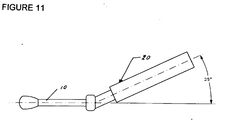
- the sample taker may comprise a longitudinal body (17) having an anterior and a distal end with a housing attached to the distal end and also comprises means to collect and withdraw the sample (11) attached to the anterior end.
- the longitudinal body may be dimensioned to be received in the vagina of a human female positioning the means to collect and withdraw the sample at the appropriate location of the vagina where the sample is to be taken.
- Means to collect and withdraw the sample from the interior of the body cavity may comprise absorbing material with for instance bibulous, sponge-like or fibrous characteristics.
- the means to collect and withdraw the sample may essentially consist of non-absorbing material.
- said means to collect and withdraw the sample may be provided with mechanical means like openings, notches, excavations, intrusions or protrusions, all designed to retain sufficient material when inserted into the body cavity.
- the sample taker and means to collect and withdraw the sample essentially consist of a non-absorbing, non-degradable, inert, synthetic material such as a synthetic polymer, more preferably polystyrene, polypropylene, polyethylene or ethylene vinylacetate.
- a synthetic polymer more preferably polystyrene, polypropylene, polyethylene or ethylene vinylacetate.
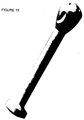
- the sample taker comprises means to collect and withdraw the sample (11) which comprise a rounded head, thicker than the longitudinal body (17) of the sample taker, said head having a front end (13) and a distal end (14), said distal end being attached to the sample taker, the border between said ends being formed by the largest diameter of the head (15), wherein the distal end comprises notches (12) dimensioned to receive sufficient sample volume, said head also containing fluid channels (16) with openings at said front end of the head and at said notches, said openings at said notches being dimensioned such that the sample is released from the notches when fluid is applied under slight pressure at the opening of said channels at the front end of the head.
- Housing refers to a hollow casing suited to hold a test strip (30) and protect said strip from being mechanically or chemically damaged or contaminated.
- the housing preferably comprises openings through which the results of an immunological reaction on the test strip can be read.
- the housing may also comprise an opening (21) for reading the result of the immunological reaction with the analyte and another opening for reading the result of an immunological integrity control reaction.
- the housing may advantageously provide a handle with which the sample taker is to be manipulated when inserted into the body cavity.
- the holding device comprises also an absorber (34), which is located downstream adjacent to the test strip, to remove excess test liquid.
- the material of the absorber is not critical and can be any material that is capable of absorbing liquids, for example a paper-like material or sponge-like materials.
- the test strip can be extended so that the strip itself can function as an absorber. In the latter case no additional absorber is needed. In order to gain space this extended test strip can be rolled or zigzag-folded.
- the holding device may contain a moisture-absorbing agent (35), such as silica, to guarantee a better stability of the analytical system on the test strip.
- This moisture-absorbing agent should not be in contact with the test strip.
- a test strip is a porous carrier through which a liquid is to be transported, said liquid comprising the analyte dissolved or suspended in extraction fluid, said carrier having an antibody specific for the analyte attached thereto, whereby part of said antibody is provided with a label and freely mobile within the porous carrier when in the moist state, and the other part of said antibody is immobilised in a detection zone on said porous carrier, the positioning of the labelled and immobilised antibody being such that test sample, when applied to the porous carrier, will first pick up the labelled antibody and thereafter will migrate to the detection zone.
- the labelled antibody and the freely mobile antibody may be of identical or of different specificity.
- the test strip advantageously consists of a material which transports the test liquid essentially by capillary forces.
- Advantageously absorbent, porous or fibrous material is used, which is suitable for rapid uptake of liquid.
- Suitable materials involve amorphous sponge-like structures or various porous synthetic materials such as polypropylene, polyethylene, polyvinylidene fluoride, ethylene vinylacetate copolymer, polyacrylonitrile and polytetrafluoroethylene.
- certain materials with an inherent hydrophobicity can be pre-treated with surface-active agents to such an extent that they are able to take up a test liquid and transport it by capillary forces.
- Other suitable materials include multilayer materials and materials which are already generally used in analytical test strips such as paper or paper-like materials, for example nitro-cellulose.
- antibodies may be found in two different zones of the porous carrier. From upstream to downstream: a first zone (31) with antibody which is provided with a label and which is freely movable in the porous carrier after contact with test liquid, and a second zone (32) with unlabelled antibody which is immobilised on the porous carrier.
- Antibodies are preferably monoclonal antibodies prepared according to routine methods or obtained commercially. In a preferred embodiment these monoclonal antibodies react at least with Candida albicans and/or Candida tropicalis and/or Candida parapsilosis and/or Candida glabrata.
- the reagents can be introduced onto the test strip in a variety of ways. For example, it is possible to use printing processes known per se for this purpose. In this case, the reagents may either merely be applied to the surface of the test strip or impregnated into the test strip. It is sometimes also advantageous to introduce the reagents in a microencapsulated form.
- the binding reagents such as antibodies or avidin can be immobilised onto the test strip by covalent binding or absorption. These reagents can be immobilised as such or bound to particles, as for example latex particles. If the test strip consists, for example, of nitro-cellulose, antibodies can be coupled directly without a previous chemical treatment of the test strip.
- test strip After coupling, however, the remaining binding sites on the test strip should be blocked with, for example, treatment with hydrophilic synthetic polymers, such as polyvinylalcohol, or hydrophylic biopolymers, such as human and bovine serum albumin, ovalbumin and the like. If the test strip consists of other materials such as paper, covalent coupling can be achieved with CNBr or carbonyldiimidazole.
- hydrophilic synthetic polymers such as polyvinylalcohol
- hydrophylic biopolymers such as human and bovine serum albumin, ovalbumin and the like.
- labels have been used in immunoassays (see T.C.J. Gribnau et al. in the J. of Chromatography, 376, (1986) 175-189).
- indirect labels which require an additional reaction step before detection (e.g. enzymes) or direct labels (e.g. coloured particles) which do not require an additional step, but which can easily be detected by the naked eye, or if desired with the aid of a simple optical instrument.
- visible particulate labels are used.
- these particulate labels are gold or carbon sol particles. The preparation of these so particles as well as the preparation of antibody-so particle conjugates is among others described in EP 0 007 654, EP 0 032 270, WO 94/22011, US 5,529,901.
- the labelled antibody is coated on the porous carrier in such a way that it is freely movable on the porous carrier when in the moist state, i.e. upon addition of test liquid.
- This is achieved by addition of blocking agents either to the conjugate buffer or to the porous carrier (except for the detection zone).
- Suitable blocking agents are for example proteins or detergents as used routinely in immunoassay buffers to prevent non-specific adsorption to the solid phase.
- Unlabelled antibody is immobilised in the detection zone of the porous carrier and is not freely movable on the porous carrier when in the moist state. Immobilisation can either be achieved by covalent coupling or a simple absorption procedure. In the latter case care should be taken that no blocking agents, such as proteins or detergents, are present in the coating solution or on the detection zone of the porous carrier.
- the porous carrier has preferably also a control zone (33) which generates a colour signal irrespective of whether the sample contains the analyte or not.
- a control zone contains for example immobilised antibodies, anti-antibodies or other binding reagents which react with the labelled antibodies.
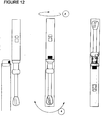
- a separate container in which the sample taker closely fits.
- the container may be dimensioned as a tube with an internal diameter only slightly larger than the largest diameter of the head of the means to collect and withdraw the sample and a depth sufficient to receive the sample taker in its entirety.
- the container should also be suited to hold an extraction fluid (50) in which the sample is to be dissolved or (re)suspended. This extraction fluid may be provided in the container but can also be added to the container either from an outside source or from a source contained within the device.
- extraction fluids may be used for solubilisation or (re)suspension of the sample, such as phosphate or Tris buffers.
- Extraction fluid may also contain detergents, enzymes, acids or any other agent facilitating solubilisation or resuspension.
- the device further contains means (60, 61, 62) to allow for the autonomous transport and application of material from the sample suspended in the extraction fluid (i.e. test liquid) onto the test strip.
- the test liquid migrates towards the housing of the device by gravitational force simply by placing the device on a horizontal plane.
- Protrusion (60) ensures that the separate container (40) assumes a position such that liquid is autonomously transported towards the housing.
- the housing may be equipped with openings (61) through which the test liquid may reach filter means (62) that may consist of sponge-like material. From there, the test liquid is transported further to the test strip (30) by capillary force. The test liquid is then transported through the strip by capillary action.
- any antigen which is present in the test liquid reacts with the specific labelled antibodies from the first zone (31).
- the labelled antibody/antigen complex formed is then transported with the test liquid into the detection zone (32), where it is fixed by the immobilised antibodies.
- the antigen present in the test liquid can then be detected by reading the colour in the detection zone. Furthermore the test performance is controlled by observing the colour at the control spot (33), which always should give a positive result.
- the device is used for the diagnosis of vulvovaginal Candidiasis.
- Vulvovaginal candidiasis is a mucosal infection caused by Candida species.
- Candida albicans a dimorphic commensal organism of the genital and gastrointestinal tracts, is the causative agent of VVC in approximately 85 to 90% of patients with positive vaginal fungal cultures. The remainder of the cases are due to other Candida species, the most common of which are Candida glabrata, Candida krusei, Candida parapsilosis and Candida tropicalis. An estimated 75% of all women will experience an episode of Candida vaginitis in their lifetime.
- vaginitis is among the most common clinical problems in women of childbearing age. Apart from Candida, Trichomonas vaginalis is the most common etiologic agent, whereas Hemophilus vaginalis and non-specific fungi are less frequent. Differentiation among these pathogens represents a significant aid in choosing proper treatment of cases of vaginitis
- mice were immunised intraperitoneally with 50 ⁇ g Candida albicans or Candidine (fragments of the Candida albicans cell-surface) diluted in Freunds Complete Adjuvans. After 1 month the mice were boosted intraperitoneally with 50 ⁇ g antigen diluted in Freunds Incomplete Adjuvans, while after 3 months the last immunisation was given intravenously. The immune response in the mice sera was checked with the Candiquant-Ig assay (Biomerica). Those mice which gave the highest response were used for fusion experiments. Lymphocytes from mouse spleen cells were isolated and fused with myeloma cell line NS-1 at a ratio 1:1 using the standard PEG-fusion technique.
- Fused cells were resuspended in 96-well tissue culture plates containing Hypoxanthine-Aminoptereine-Thymidine selection medium. Hybrid clones producing Ig against Candida antigen were selected, cultured to 100% clonality, and stored in liquid nitrogen.
- Gold sols with an average particle diameter of 50 nm were prepared according to the method described by Frens (Nature Physical Science Vo. 240, 1973, 20).
- a solution of 1 mg monoclonal mouse anti-Candida IgM (code nr. AF 1) per ml sodium chloride (9 g/l) was adjusted to pH 9.0 using 0.1 M sodium hydroxide.
- 1 l of the gold sol solution was adjusted to pH 9.0 with 0.1 M sodium hydroxide, mixed with 20 ml of the monoclonal anti-Candida IgM solution and subsequently postcoated by adding 40 ml of a 20 M polyethylene glycol solution, pH 9.0.
- the postcoated gold sol conjugate was sedimented by centrifugation for 20 min. at 3500g at ambient temperature. After removing the supernatant by suction the gold sol pellet was resuspended to an A540 value of 50.0 in a solution containing 1% (v/v) calf serum, 160 g/l sucrose, 2% (w/v) Triton X100 and 3M Tris, pH 8.8.
- a first mobile reaction zone was formed by applying, along the width, 10 ⁇ l of a solution of gold sol conjugate (see under 3).
- a second immobilised reaction zone was formed by pipetting , 40 mm from the bottom edge, 1 ⁇ l of a 1 mg/ml solution of monoclonal anti-Candida IgM solution (code no. AF 1) in 9 g/l sodium chloride, adjusted to pH 9.0 with 0.1 M NaOH.
- a third reaction zone was formed by pipetting, 50 mm from the bottom edge, 1 ⁇ l of a solution of 3.3 mg/ml monoclonal rat anti-mouse IgG solution (anti-kappa; code no. OT-1) in 9 g/l sodium chloride, adjusted to pH 9.0 with 0.1 M NaOH.
- the detection and control zones were subsequently air-dried (50° C).
- a sample taker as shown in figure 15 was constructed, pre-weighed and used to collect vaginal smears from symptomatic candidiosis patients. Sample takers were subsequently weighed in order to determine the weight of the sample. The vaginal smears were extracted by forcing the sample taker by means of a single stroke into a narrow tube which contained 1 ml of phosphate buffered saline. The thus obtained test fluid was then contacted with a test strip as described under example 4. The colour of the detection zone on the test strip was read after 4 min. Any colour remaining in the detection zone was read as positive and indicative for a vaginal Candida infection.
Landscapes
- Health & Medical Sciences (AREA)
- Life Sciences & Earth Sciences (AREA)
- Medical Informatics (AREA)
- Molecular Biology (AREA)
- Reproductive Health (AREA)
- Engineering & Computer Science (AREA)
- Biomedical Technology (AREA)
- Heart & Thoracic Surgery (AREA)
- Gynecology & Obstetrics (AREA)
- Pathology (AREA)
- Surgery (AREA)
- Animal Behavior & Ethology (AREA)
- General Health & Medical Sciences (AREA)
- Public Health (AREA)
- Veterinary Medicine (AREA)
- Investigating Or Analysing Biological Materials (AREA)
Priority Applications (1)
| Application Number | Priority Date | Filing Date | Title |
|---|---|---|---|
| EP98200634A EP0940678A1 (de) | 1998-03-02 | 1998-03-02 | Analytisches Testgerät |
Applications Claiming Priority (1)
| Application Number | Priority Date | Filing Date | Title |
|---|---|---|---|
| EP98200634A EP0940678A1 (de) | 1998-03-02 | 1998-03-02 | Analytisches Testgerät |
Publications (1)
| Publication Number | Publication Date |
|---|---|
| EP0940678A1 true EP0940678A1 (de) | 1999-09-08 |
Family
ID=8233429
Family Applications (1)
| Application Number | Title | Priority Date | Filing Date |
|---|---|---|---|
| EP98200634A Withdrawn EP0940678A1 (de) | 1998-03-02 | 1998-03-02 | Analytisches Testgerät |
Country Status (1)
| Country | Link |
|---|---|
| EP (1) | EP0940678A1 (de) |
Cited By (11)
| Publication number | Priority date | Publication date | Assignee | Title |
|---|---|---|---|---|
| WO2001002854A1 (en) * | 1999-07-06 | 2001-01-11 | Panbio Pty Ltd | Analyte detection |
| EP1523947A1 (de) * | 2003-10-16 | 2005-04-20 | DST Diagnostic Science & Technology GmbH | Universelles Verfahren und Vorrichtung zur in vivo Simulation und anschliessender in vitro Analyse von biochemischen Körperreaktionen an Gewebeschichten |
| WO2007099355A1 (en) * | 2006-03-03 | 2007-09-07 | Ethicon, Inc. | Sample collection and testing device with swing arm |
| US7829112B2 (en) | 2003-04-29 | 2010-11-09 | The General Hospital Corporation | Methods and devices for the sustained release of multiple drugs |
| WO2012145379A1 (en) * | 2011-04-19 | 2012-10-26 | Porex Corporation | Liquid sampling, storage, transfer and delivery device |
| CN103690198A (zh) * | 2013-12-29 | 2014-04-02 | 宁波市鄞州云帆工程咨询有限公司 | 轴向导流式无损悬滴器 |
| USD825075S1 (en) | 2016-02-23 | 2018-08-07 | Flora Bioscience, Inc. | Test strip holding device |
| US10071381B2 (en) | 2015-04-17 | 2018-09-11 | Neoteryx, Llc. | Method and apparatus for handling blood for testing |
| CN110244049A (zh) * | 2019-07-31 | 2019-09-17 | 河南美凯生物科技有限公司 | 致病性念珠菌检测和鉴定方法 |
| US10531821B2 (en) | 2011-11-04 | 2020-01-14 | Neoteryx, Llc. | Method and apparatus for acquiring blood for testing |
| WO2025224360A1 (fr) * | 2024-04-26 | 2025-10-30 | Contipharma | Test salivaire combiné |
Citations (14)
| Publication number | Priority date | Publication date | Assignee | Title |
|---|---|---|---|---|
| US3883396A (en) | 1973-03-30 | 1975-05-13 | Jr Charles A Thomas | Gonorrhea detecting |
| US3954563A (en) | 1971-10-29 | 1976-05-04 | Mennen Frederick C | Apparatus especially useful for detection of neisseria gonorrhoeae and the like in females |
| US3966558A (en) | 1974-11-05 | 1976-06-29 | Calva Pellicer Cesar | Device for collection of samples for microbiological studies |
| US4355113A (en) | 1981-06-19 | 1982-10-19 | Mennen Frederick C | Over the counter swab kit for self detection of gonorrhea in the male using saline ampule |
| EP0095630A1 (de) | 1982-05-28 | 1983-12-07 | MERCK PATENT GmbH | Sammel- und Transportvorrichtung für Mikroorganismen |
| US4465078A (en) | 1982-09-30 | 1984-08-14 | Medtest Corporation | Method for cell sampling in a body cavity |
| US4635488A (en) * | 1984-12-03 | 1987-01-13 | Schleicher & Schuell, Inc. | Nonintrusive body fluid samplers and methods of using same |
| EP0262966A2 (de) * | 1986-10-01 | 1988-04-06 | Animal House, Inc. | Entnahmevorrichtung |
| US4778758A (en) | 1985-08-01 | 1988-10-18 | Ab Biodisk | Device for susceptibility testing of microorganisms |
| GB2204496A (en) * | 1987-05-15 | 1988-11-16 | Syntex Inc | Device for collecting biological material |
| EP0346732A1 (de) * | 1988-06-09 | 1989-12-20 | Becton, Dickinson and Company | Biologische Sammel- und Transportvorrichtung |
| US5250412A (en) | 1987-03-23 | 1993-10-05 | Diamedix Corporation | Swab device and method for collecting and analyzing a sample |
| WO1994009704A1 (en) * | 1992-10-23 | 1994-05-11 | Lonsten Pty. Limited | Endocervical probe for pap smear sampling head |
| WO1995015717A1 (en) * | 1993-12-07 | 1995-06-15 | Zango Haley Linda | Device for diagnosis and application of pharmaceuticals |
-
1998
- 1998-03-02 EP EP98200634A patent/EP0940678A1/de not_active Withdrawn
Patent Citations (14)
| Publication number | Priority date | Publication date | Assignee | Title |
|---|---|---|---|---|
| US3954563A (en) | 1971-10-29 | 1976-05-04 | Mennen Frederick C | Apparatus especially useful for detection of neisseria gonorrhoeae and the like in females |
| US3883396A (en) | 1973-03-30 | 1975-05-13 | Jr Charles A Thomas | Gonorrhea detecting |
| US3966558A (en) | 1974-11-05 | 1976-06-29 | Calva Pellicer Cesar | Device for collection of samples for microbiological studies |
| US4355113A (en) | 1981-06-19 | 1982-10-19 | Mennen Frederick C | Over the counter swab kit for self detection of gonorrhea in the male using saline ampule |
| EP0095630A1 (de) | 1982-05-28 | 1983-12-07 | MERCK PATENT GmbH | Sammel- und Transportvorrichtung für Mikroorganismen |
| US4465078A (en) | 1982-09-30 | 1984-08-14 | Medtest Corporation | Method for cell sampling in a body cavity |
| US4635488A (en) * | 1984-12-03 | 1987-01-13 | Schleicher & Schuell, Inc. | Nonintrusive body fluid samplers and methods of using same |
| US4778758A (en) | 1985-08-01 | 1988-10-18 | Ab Biodisk | Device for susceptibility testing of microorganisms |
| EP0262966A2 (de) * | 1986-10-01 | 1988-04-06 | Animal House, Inc. | Entnahmevorrichtung |
| US5250412A (en) | 1987-03-23 | 1993-10-05 | Diamedix Corporation | Swab device and method for collecting and analyzing a sample |
| GB2204496A (en) * | 1987-05-15 | 1988-11-16 | Syntex Inc | Device for collecting biological material |
| EP0346732A1 (de) * | 1988-06-09 | 1989-12-20 | Becton, Dickinson and Company | Biologische Sammel- und Transportvorrichtung |
| WO1994009704A1 (en) * | 1992-10-23 | 1994-05-11 | Lonsten Pty. Limited | Endocervical probe for pap smear sampling head |
| WO1995015717A1 (en) * | 1993-12-07 | 1995-06-15 | Zango Haley Linda | Device for diagnosis and application of pharmaceuticals |
Non-Patent Citations (1)
| Title |
|---|
| "Antibodies, a laboratory manual", vol. 14, 1988, COLD SPRING HARBOR, article E. HARLOW AND D. LANE |
Cited By (23)
| Publication number | Priority date | Publication date | Assignee | Title |
|---|---|---|---|---|
| WO2001002854A1 (en) * | 1999-07-06 | 2001-01-11 | Panbio Pty Ltd | Analyte detection |
| US7829112B2 (en) | 2003-04-29 | 2010-11-09 | The General Hospital Corporation | Methods and devices for the sustained release of multiple drugs |
| US7833545B2 (en) | 2003-04-29 | 2010-11-16 | The General Hospital Corporation | Methods and devices for the sustained release of multiple drugs |
| US7838024B2 (en) | 2003-04-29 | 2010-11-23 | The General Hospital Corporation | Methods and devices for the sustained release of multiple drugs |
| US7883718B2 (en) | 2003-04-29 | 2011-02-08 | The General Hospital Corporation | Methods and devices for the sustained release of multiple drugs |
| EP1523947A1 (de) * | 2003-10-16 | 2005-04-20 | DST Diagnostic Science & Technology GmbH | Universelles Verfahren und Vorrichtung zur in vivo Simulation und anschliessender in vitro Analyse von biochemischen Körperreaktionen an Gewebeschichten |
| WO2007099355A1 (en) * | 2006-03-03 | 2007-09-07 | Ethicon, Inc. | Sample collection and testing device with swing arm |
| US7955572B2 (en) | 2006-03-03 | 2011-06-07 | Systagenix Wound Management (Us), Inc. | Sample collection and testing device with swing arm |
| JP2014515108A (ja) * | 2011-04-19 | 2014-06-26 | ポーレックス コーポレイション | 液体試料の採取、保存、輸送および送達用器具 |
| US9696241B2 (en) | 2011-04-19 | 2017-07-04 | Porex Corporation | Liquid sampling, storage, transfer and delivery device |
| WO2012145379A1 (en) * | 2011-04-19 | 2012-10-26 | Porex Corporation | Liquid sampling, storage, transfer and delivery device |
| US8852122B2 (en) | 2011-04-19 | 2014-10-07 | Porex Corporation | Liquid sampling, storage, transfer and delivery device |
| US8920339B2 (en) | 2011-04-19 | 2014-12-30 | Porex Corporation | Liquid sampling, storage, transfer and delivery device |
| US10531821B2 (en) | 2011-11-04 | 2020-01-14 | Neoteryx, Llc. | Method and apparatus for acquiring blood for testing |
| CN103690198B (zh) * | 2013-12-29 | 2016-02-17 | 宁波市鄞州云帆工程咨询有限公司 | 轴向导流式无损悬滴器 |
| CN103690198A (zh) * | 2013-12-29 | 2014-04-02 | 宁波市鄞州云帆工程咨询有限公司 | 轴向导流式无损悬滴器 |
| US10071381B2 (en) | 2015-04-17 | 2018-09-11 | Neoteryx, Llc. | Method and apparatus for handling blood for testing |
| US10894257B2 (en) | 2015-04-17 | 2021-01-19 | Neoteryx, Llc | Method and apparatus for handling blood for testing |
| USD825075S1 (en) | 2016-02-23 | 2018-08-07 | Flora Bioscience, Inc. | Test strip holding device |
| CN110244049A (zh) * | 2019-07-31 | 2019-09-17 | 河南美凯生物科技有限公司 | 致病性念珠菌检测和鉴定方法 |
| CN110244049B (zh) * | 2019-07-31 | 2022-05-06 | 河南美凯生物科技有限公司 | 致病性念珠菌检测和鉴定方法 |
| WO2025224360A1 (fr) * | 2024-04-26 | 2025-10-30 | Contipharma | Test salivaire combiné |
| BE1032575B1 (fr) * | 2024-04-26 | 2025-12-01 | Contipharma | Test salivaire combiné |
Similar Documents
| Publication | Publication Date | Title |
|---|---|---|
| US7780914B2 (en) | Sample collection and testing system | |
| US4632901A (en) | Method and apparatus for immunoassays | |
| JP4623536B2 (ja) | 口腔液の検定用採集装置 | |
| AU709403B2 (en) | Diagnostic detection device and method | |
| EP0514489B1 (de) | Vorrichtung und verfahren zur ausführung von immunoassays | |
| EP1824991B1 (de) | Vorrichtung und verfahren zur erkennung von analyten | |
| AU701396B2 (en) | Improved diagnostic detection device | |
| EP0480497B1 (de) | Vorrichtung zur Durchführung einer raschen einfachen Handprüfung | |
| US4853325A (en) | Saliva test for feline leukemia virus | |
| JPH08508097A (ja) | 特異的に反応する物質を検出するための装置 | |
| AU8114394A (en) | Rapid immunoassay for detection of antibodies or antigens incorporating simultaneous sample extraction and immunogenic reaction | |
| WO1999022238A1 (en) | Analyte assaying device | |
| US20090286226A1 (en) | Simple membrane assay method and kit | |
| US20080112847A1 (en) | Collecting and testing device and method of use | |
| JPH11510601A (ja) | 診断装置 | |
| US5137030A (en) | Diagnostic methods | |
| US5427739A (en) | Apparatus for performing immunoassays | |
| US20040002063A1 (en) | Rapid vaccinia antibody detection device, method and test kit | |
| EP0537827A1 (de) | Verfahren, Testvorrichtung und Satz zur Bestimmung eines spezifischen Bindungsliganden unter Verwendung eines kontrollierten Durchflusses durch eine Filtrationsmembran | |
| JP2003215126A (ja) | 微生物抗原の抽出方法 | |
| EP0884594A2 (de) | Immunochromatographische Vorrichtung zum Fixieren von Analyten | |
| AU769427B2 (en) | Sample collection and testing system | |
| AU601731B2 (en) | Saliva test for feline leukemia virus | |
| CA2052909A1 (en) | Device for performing a rapid single manual assay |
Legal Events
| Date | Code | Title | Description |
|---|---|---|---|
| PUAI | Public reference made under article 153(3) epc to a published international application that has entered the european phase |
Free format text: ORIGINAL CODE: 0009012 |
|
| AK | Designated contracting states |
Kind code of ref document: A1 Designated state(s): AT BE CH DE DK ES FI FR GB GR IE IT LI LU MC NL PT SE |
|
| AX | Request for extension of the european patent |
Free format text: AL;LT;LV;MK;RO;SI |
|
| STAA | Information on the status of an ep patent application or granted ep patent |
Free format text: STATUS: THE APPLICATION HAS BEEN WITHDRAWN |
|
| 18W | Application withdrawn |
Withdrawal date: 19990917 |