EP0940822B1 - Résistance variable - Google Patents
Résistance variable Download PDFInfo
- Publication number
- EP0940822B1 EP0940822B1 EP99104205A EP99104205A EP0940822B1 EP 0940822 B1 EP0940822 B1 EP 0940822B1 EP 99104205 A EP99104205 A EP 99104205A EP 99104205 A EP99104205 A EP 99104205A EP 0940822 B1 EP0940822 B1 EP 0940822B1
- Authority
- EP
- European Patent Office
- Prior art keywords
- case
- ring
- shaft
- variable resistor
- stepped surface
- Prior art date
- Legal status (The legal status is an assumption and is not a legal conclusion. Google has not performed a legal analysis and makes no representation as to the accuracy of the status listed.)
- Expired - Lifetime
Links
- 239000000758 substrate Substances 0.000 claims description 13
- 239000002184 metal Substances 0.000 claims description 5
- 229910052751 metal Inorganic materials 0.000 claims description 5
- 230000002093 peripheral effect Effects 0.000 claims description 4
- 229910000881 Cu alloy Inorganic materials 0.000 claims description 3
- 229910001369 Brass Inorganic materials 0.000 claims description 2
- RYGMFSIKBFXOCR-UHFFFAOYSA-N Copper Chemical compound [Cu] RYGMFSIKBFXOCR-UHFFFAOYSA-N 0.000 claims description 2
- 239000010951 brass Substances 0.000 claims description 2
- 229910052802 copper Inorganic materials 0.000 claims description 2
- 239000010949 copper Substances 0.000 claims description 2
- 229920001973 fluoroelastomer Polymers 0.000 claims description 2
- 229920005560 fluorosilicone rubber Polymers 0.000 claims description 2
- 239000000463 material Substances 0.000 claims description 2
- 150000002739 metals Chemical class 0.000 claims description 2
- 229920002379 silicone rubber Polymers 0.000 claims description 2
- 239000004945 silicone rubber Substances 0.000 claims description 2
- 229920001971 elastomer Polymers 0.000 claims 1
- 238000005476 soldering Methods 0.000 description 7
- 230000035882 stress Effects 0.000 description 7
- 238000003780 insertion Methods 0.000 description 6
- 230000037431 insertion Effects 0.000 description 6
- 210000000613 ear canal Anatomy 0.000 description 5
- 230000002411 adverse Effects 0.000 description 3
- 238000002788 crimping Methods 0.000 description 3
- 238000000034 method Methods 0.000 description 3
- 230000009467 reduction Effects 0.000 description 3
- 238000007789 sealing Methods 0.000 description 3
- KDLHZDBZIXYQEI-UHFFFAOYSA-N Palladium Chemical compound [Pd] KDLHZDBZIXYQEI-UHFFFAOYSA-N 0.000 description 2
- 210000000078 claw Anatomy 0.000 description 2
- 230000000694 effects Effects 0.000 description 2
- 230000007613 environmental effect Effects 0.000 description 2
- 230000008642 heat stress Effects 0.000 description 2
- 238000007747 plating Methods 0.000 description 2
- 239000012858 resilient material Substances 0.000 description 2
- 230000008646 thermal stress Effects 0.000 description 2
- 229920005992 thermoplastic resin Polymers 0.000 description 2
- 230000008859 change Effects 0.000 description 1
- 238000004891 communication Methods 0.000 description 1
- 230000006870 function Effects 0.000 description 1
- PCHJSUWPFVWCPO-UHFFFAOYSA-N gold Chemical compound [Au] PCHJSUWPFVWCPO-UHFFFAOYSA-N 0.000 description 1
- 229910052737 gold Inorganic materials 0.000 description 1
- 239000010931 gold Substances 0.000 description 1
- 229920006015 heat resistant resin Polymers 0.000 description 1
- 238000010438 heat treatment Methods 0.000 description 1
- 238000009413 insulation Methods 0.000 description 1
- 201000005299 metal allergy Diseases 0.000 description 1
- 229910001092 metal group alloy Inorganic materials 0.000 description 1
- 238000012856 packing Methods 0.000 description 1
- 229910052763 palladium Inorganic materials 0.000 description 1
- 239000012466 permeate Substances 0.000 description 1
- 239000004033 plastic Substances 0.000 description 1
- 239000010970 precious metal Substances 0.000 description 1
- 230000002265 prevention Effects 0.000 description 1
- 230000008569 process Effects 0.000 description 1
- 229920005989 resin Polymers 0.000 description 1
- 239000011347 resin Substances 0.000 description 1
- 229910052709 silver Inorganic materials 0.000 description 1
- 239000004332 silver Substances 0.000 description 1
- 239000010935 stainless steel Substances 0.000 description 1
- 229910001220 stainless steel Inorganic materials 0.000 description 1
- 210000004243 sweat Anatomy 0.000 description 1
- 230000009466 transformation Effects 0.000 description 1
Images


Classifications
-
- H—ELECTRICITY
- H01—ELECTRIC ELEMENTS
- H01C—RESISTORS
- H01C10/00—Adjustable resistors
- H01C10/10—Adjustable resistors adjustable by mechanical pressure or force
-
- H—ELECTRICITY
- H01—ELECTRIC ELEMENTS
- H01C—RESISTORS
- H01C10/00—Adjustable resistors
- H01C10/30—Adjustable resistors the contact sliding along resistive element
- H01C10/32—Adjustable resistors the contact sliding along resistive element the contact moving in an arcuate path
Definitions
- This invention relates to the small-sized variable resistor which is used for a hearing aid, a measuring device, a communication apparatus, a sensor, in addition to industrial apparatuses, etc.
- the size of hearing aids has become smaller.
- the progression has been from the pocket type to the ear suspending/hanging type, and further to in an ear canal type (canal type).
- ear canal type a person can wear the main body of the hearing aid in the ear canal.
- ear canal type hearing aid smaller components are particularly required.
- the humidity is high when it is worn. Since there is a possibility that sweat may permeate inside the hearing aid and cause a failure, a waterproof and moisture-proof structure is desired for a variable resistor which is used in the apparatus.
- Fig. 1 - 3 of the present application shows an example of it.
- This variable resistor comprises a case 1, a resistance substrate 2, a rotor 3, a slider 4, and a shaft 5 for external operation.
- a circular opening hole 11 and a stepped surface 12 on the periphery thereof are formed on the upper surface of the case 1.
- the stepped surface 12, on which an O ring 6 is disposed has an annular ring shape.
- a recess 13 in the shape of an annular ring, which a part of the shaft 5 fits, is formed on the periphery of the stepped surface 12.
- An internal space 14 of a cylindrical shape contains the rotor 3 and the slider 4 and is formed on the inside of the case 1.
- a stopper part 15 (Fig. 3) protrudes into the internal space 14.
- the resistance substrate 2 defines a rectangular plate which fits to an opening 16 of the case 1 at the lower end. Sealing resin 20 is injected in the gap between the resistance substrate 2 and the lower-end opening 16, and in the hole at the base of the resistance substrate 2 (Fig. 3). The lower-end opening 16 of the case 1 is thus sealed.
- a first terminal 21 is inserted in the resistance substrate 2 toward the central portion of the resistance substrate 2 from one side.
- Second and third terminals 22 and 23 are insert molded to project toward the central portion from the opposing side.
- Recesses 19a, 19b, 19c in lower edges 18 of the case 1 receive the first through third terminals 21, 22, 23 when the resistor substrate 2 is sealed to the bottom of the case 1.
- One end of the first terminal 21 is exposed to the surface of the central portion of the resistance substrate 2 forms a collector electrode 25.
- One of the end parts 22a and 23a of each of the second and third terminals 22 and 23 are also exposed to the surface of the resistance substrate 2.
- a circular resistor 24 is formed on the exposed electrode end parts 22a and 23a. The resistor 24 is formed concentrically on the periphery of the collector electrode 25 .
- a sleeve 31 protrudes from the middle of the rotor 3 at the upper surface.
- the sleeve 31 is inserted into the opening hole 11 of the case 1 and is rotatable.
- An insertion hole 32 is formed so as to penetrate the central part of the sleeve 31 along its axis vertically.
- a notch groove 33 is formed in the diameter direction on the upper end of the sleeve 31.
- a disc-shaped flange portion 34 is formed on the lower part of the rotor 3.
- a stopper part 35 protrudes in the radial direction from the flange portion 34. When either side of the stopper part 35 abuts both sides of the stopper part 15 of the case 1 (Fig. 3), the rotation angle of the rotor 3 is limited.
- a recess for fitting the slider 4 is formed on the bottom surface of the rotor 3, particularly the bottom of the flange portion 34 and the stopper part 35.
- the slider 4 is made of the conductive metal plate having springy or elastic property, such as a copper alloy, a stainless steel, and a precious-metal group alloy.
- a base portion 41 is provided as part of the slider 4 in the central section so as to be attached with the rotor 3 with the aid of tabs 44 on two edges of the slider 4.
- An approximately U-shaped first arm portion 42 is formed on one end of the base portion 41.
- a second arm portion 43 is formed on the other end.
- the first and second arm portions 42 and 43 are respectively bent in the opposing direction to form bent portions 42b and 43b.
- a first contact-portion 42a (Fig. 3) slidably contacted with the circular resistor 24 is formed on the end of the first arm portion 42.
- a second contact-portion 43a (Fig. 3) having a hemisphere surface which contacts the collector electrode 25 is integrally formed on the end of the second arm portion 43.
- the shaft 5 has a large diameter operating part 51 on one end.
- a groove 52 for engaging a driver is formed in the diameter direction on the surface of the operating part 51.
- a small diameter axial part 53 protrudes at the other end of the shaft 5 so as to be inserted into the insertion hole 32 of the rotor 3.
- Two projection parts 54 are formed on the sides of the axial part 53 symmetrically to be engaged with the notch groove 33 of the rotor 3.
- the assembly of shaft 5 to the above-mentioned case 1 is performed as follows.
- the O ring 6 is arranged on the step surface 12 of the case 1.
- the axial part 53 of the shaft 5 is inserted into the insertion hole 32 of the rotor 3 contained inside the case 1.
- the projection part 54 of the axial part 53 fits into the notch groove 33 of the rotor 3.
- the rotor 3 and the shaft 5 are integrated by crimping and expanding an end portion of the axial part 53 which projects to the lower surface of the rotor 3.
- a crimped portion 53a is shown in Fig. 3. In this state, the O ring 6 is pressed and maintained between the internal surface of the operating part 51 of the shaft 5 and the bottom of the step surface 12, the gap between the shaft 5 and the case 1 is sealed.
- the rotor 3 and the shaft 5 are often formed with a heat resistant resin.
- a thermoplastic resin which has good fabricability and workability there was a problem that it was easy to receive the influence of the above-mentioned heat.
- US-A-4,117,444 discloses a potentiometer and switch combination suitable for use as a hearing aid volume control.
- a control cap positioned over the potentiometer body is provided with an integral cam which performs the function of switch actuation.
- Positive seal is provided by an O-ring formed from a flexible, resilient material.
- the body of the potentiometer holds the control cap in place by means of heat stakes over a lip on the housing and a post having a chevron at its upper end which mates with a recess in the control cap.
- the cap is positioned by heat staking to press the stiffly flexible, resilient material of the O-ring into frictional sealing relation with an abutting member and thereby seal the interior of the potentiometer housing.
- the sealing arrangement also introduces a torque which opposes the rotation of the control cap, thus providing positional stability and positive operating feel.
- the switch includes conductive strips held by the body, one strip forming a first contact surface and another strip forming a spring detent and a second contact surface. Rotating the cap moves the cam so as to actuate the switch, and also causes the spring detent to snap so as to give the operator a positive switching feel.
- It is the object of the present invention is to provide an improved variable resistor preventing the generation of slack between the shaft and the rotor caused by a change in the resiliency of an O ring.
- variable resistor according to claim 1 or 9.
- the inventive variable resistor has a secure air-tightness, hermeticity, even if heat stress is imposed.
- a variable resistor of the present invention comprises a case, a rotatable rotor inside the case, a shaft projected on the upper surface of the case and engaged with the rotor. Further, a resistance substrate having a collector electrode on the central portion of the surface thereof and a circular resistor formed concentrically on the periphery of the collector electrode is stored in the case. A slider having a first contact portion contacting the collector electrode and a second contact portion slidably contacting the resistor is provided with the rotor. A stepped surface supporting the peripheral surface and the bottom surface of an O ring is formed on the upper surface of the case. A boss portion contacting the inner circumference of the O ring is formed on the shaft.
- An operating portion projecting on the upper surface of the case and covering the stepped surface of the case is formed on the shaft.
- the inner and outer circumferences of the O ring are pressed and contacted with the stepped surface of the case and the boss portion of the shaft.
- a gap is provided between either the upper or lower end surface of the O ring and the stepped surface and the bottom surface of the operating portion.
- the inner and outer circumference of the O ring contacts in a radial direction the stepped surface of the case and the boss portion of the shaft.
- the gap is provided such that the stress is not affected in the axial direction. Therefore, the slack in the engagement of the shaft and the rotor by the resiliency of the O ring can be prevented. Even if heat stress is added at the time of the soldering, floating of the shaft does not occur since the resiliency of the O ring does not affect to the axial direction of the shaft, thus air-tightness or hermeticity is not reduced.
- a variable resistor comprises a case, a rotatable rotor inside the case, a shaft projected on the upper surface of the case and engaged with the rotor. Further, a resistance substrate having a collector electrode on the central portion of the surface thereof and a circular resistor formed concentrically on the periphery of the collector electrode is stored in the case. A slider having a first contact portion contacting the collector electrode and a second contact portion slidably contacting the resistor is provided with the rotor. A stepped surface supporting the peripheral surface and the bottom surface of an O ring is formed on the upper surface of the case. A boss portion contacting the inner circumference of the O ring is formed on the shaft.
- An operating portion projecting on the upper surface of the case and covering the stepped surface of the case is formed on the shaft.
- the O ring is formed in the ellipse such that cross section of the O ring has a major axis thereof in the radial direction.
- the length of major axis of the ellipse is formed longer than the distance in the radial direction between the stepped surface and the boss portion.
- Figs. 4 - 6 shows an example of a variable resistor according to the present invention. This variable resistor is partially changed with respect to the variable resistor shown in Figs. 1 - 3.
- the same reference numerals used in Figs. 1 - 3 are used for the same members in Figs. 4 - 7 and the corresponding explanation is not repeated in its entirety.
- a rotor 3 has the same shape as the rotor 3 shown in Figs. 1 - 3, except that the sleeve 31 protruding on the upper part of the rotor 3 is formed fairly short so as not to contact the O ring 6.
- the shaft 5 is made of metals with simple plastic working characteristics, such as copper, a copper alloy, red brass or the like.
- the cylindrical shaped boss portion 55 is formed between the operating part 51 and the axial portion 53.
- the axial portion 53 is formed to be hollow.
- the axial portion 53 is inserted into the insertion hole 32 of the rotor 3.
- An end portion of the axial portion 53 is crimped so as to be extended or flattened to the outside and a crimped portion 53a is formed.
- the shaft 5 is engaged with the rotor 3.
- the shaft 5 and the rotor 3 are rotatably engaged by engaging the groove 33 of the rotor 3 with a protrusion 54 (shown in Fig. 6) of the shaft 5.
- the operating part 51 formed on the upper end of the shaft 5 covers the stepped surface 12 of the case 1.
- plating may be applied on the surface of the shaft 5 for rust-proofing.
- Gold, silver, or a palladium plating or the like is preferable to serve as both ornament property and metal allergy prevention.
- the O ring 6 arranged on the stepped surface 12 is made of silicone rubber, fluororubber, fluorosilicone rubber or the like such that the packing effect and the electrical characteristics to the heat changes of the soldering or the operating temperature can be stablely obtained.
- the O ring 6 has a circular shape in cross section in a free condition (i.e. when stress is not imposed on the O ring 6).
- the diameter U of the O ring 6 is smaller than the depth W of the stepped surface 12 and is larger than the distance R in the radial direction between the inner circumference of the stepped surface 12 and the outer circumference of the boss portion 55.
- the relationships of U, R and W are expressed as follows: R ⁇ U ⁇ W .
- the inner diameter di of the O ring 6 in the free condition is smaller than the outer diameter Ds of the boss portion 55 of the shaft 5.
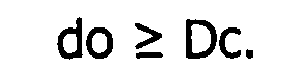
- the outer diameter do of the O ring 6 is made equal to or larger than the inner diameter Dc of the stepped surface 12 of the case 1.
- the O ring 6 is fitted into the stepped surface 12 of the case 1 and the shaft 5 is fitted into the case 1.
- the inner and outer circumference of the O ring 6 is compressed in the direction of the diameter between the inner circumference of the stepped surface 12 and the outer circumference of the boss portion 55.
- the O ring 6 is transformed to have an ellipse shaped cross-section having a major length in the axial direction (in the vertical direction of Fig. 4).
- a gap ⁇ is provided between either upper or lower end surface of the O ring 6 and the bottom surface of the operating portion 51 of the shaft 5 or the upper surface of the stepped surface 12.
- the case 1 and the shaft 5 can be sealed reliably. Moreover, since the gap ⁇ is provided such that the stress does not affect adversely in the axial direction of the O ring 6, slackening or loosening of the engagement of the shaft 5 and the rotor 3 can be prevented.
- the shaft 5 does not float in the case 1 because the resiliency of the O ring 6 does not affect to the axial direction of the shaft 5 and thus the reduction of air-tightness or hermeticity can be avoided.
- the O ring 6 having a circular shape in the cross section in the state without any stress being imposed is used.
- O rings having cross-sectional shapes such as an elliptical shape, a star shape, and a square shape, may be used.
- Figs. 7A, 7B and 7C show a second preferred embodiment of the present invention.
- the cross-sectional shape of the O ring 6 in the free state is made elliptical in the radial direction, as shown in Fig. 7A.
- the cross-sectional length L (major axis) in the direction of axial diameter of the shaft 5 is larger than cross-sectional length S (breadth) in the direction of axial center of the shaft 5.
- the major axis L is smaller than the depth W of stepped surface 12.
- the major axis L is larger than the distance R in the radial direction between the inner circumference of the stepped surface 12 and the outer circumference of the boss portion 55.
- the breadth S is equal to or smaller than the distance R in the radial direction between the inner circumference of the stepped surface 12 and the outer circumference of the boss portion 55.
- the relationships of the major axis L, the breadth S, the distance R and the depth W are expressed as follows: S ⁇ R ⁇ L ⁇ W .
- the inner diameter di of the O ring 6 is smaller than the outer diameter Ds of the boss portion 55 of the shaft 5.
- the outer diameter do of the O ring 6 is nearly equal to the inner diameter Dc of the stepped surface 12 of the case 1.
- the relationships of the inner and outer diameter of the O ring 6 di and do, the outer diameter Ds of the boss portion 55 and the inner diameter Dc of the stepped surface 12 are expressed as follows: di ⁇ Ds , do ⁇ Dc .
- the shaft 5 is fitted into the case 1.
- the inner circumference of the O ring 6 is pressed by the end surface of the boss portion 55.
- the O ring 6 becomes twisted approximately 90 degrees in the cross sectional view. Therefore, the material's memory or stability to return to the original state works toward the O ring 6 (indicated by an arrow F in Fig. 7C). Due to the stability, the O ring 6 is pressed to contact the inner circumference of the stepped surface 12 of the case 1 and the outer circumference of boss portion 55 and the O ring 6 seals securely.
- the gap is definitely formed between either upper or lower end surface of the O ring 6 and the bottom surface of the operating portion 51 of the shaft 5 or the upper surface of the stepped surface 12. Hence, the resiliency of the O ring 6 in the axial direction does not affect the shaft 5 adversely.
- the engaging method of the shaft 5 and the rotor 3 is not restricted by above embodiments.
- a claw portion may be formed on the axial portion 53, for example.
- the claw portion may be engaged with the reverse side of the insertion hole 32 so as to prevent the axial portion 53 from removing or dropping inadvertently.
- the shaft 5 is made of thermoplastic resin crimping may be performed by heat.
- other fixing means such as a screw, a bonding or the like, may be employed.
- the slider 4 is not restricted to the embodiment of the present invention as the slider 4 is formed such the first arm portion 42 having a U-shaped and the second arm portion 43 having a bar shape are bent in opposing directions. Sliders having various shapes can be employed.
- the stepped surface 12 of the upper surface of the case 1 may be made deeper beforehand.
- the recess 13 can also be provided in the periphery of the stepped surface 12.
- the gap is provided such that the stress might not affect adversely in the axial direction, the load to the engagement of the shaft and the rotor due to the thermal stress from the soldering or the operating environment can be reduced.
- the slacking or loosening and floating of the shaft can be prevented and the air-tightness can be maintained. Therefore, the reliable variable resistor with respect to environmental characteristics, particularly humidity, can be obtained.
Landscapes
- Engineering & Computer Science (AREA)
- Microelectronics & Electronic Packaging (AREA)
- Adjustable Resistors (AREA)
- Details Of Resistors (AREA)
Claims (12)
- Résistance variable comprenant :un boîtier (1) ;un rotor rotatif (3) logé dans le boîtier (1) ;un arbre (5) dépassant d'une surface supérieure du boîtier (1) engagé avec le rotor (3) ;un substrat de résistance (2) comportant une électrode collectrice (25) formée sur la partie centrale de la surface de celui-ci et une résistance circulaire formée de manière concentrique sur la périphérie de l'électrode collectrice (25) logée dans le boîtier (1) ; etun dispositif coulissant (4) possédant une première partie de contact (42a) en contact avec l'électrode collectrice (25) et une seconde partie de contact (43a) en contact coulissant avec la résistance équipée du rotor (3),
caractérisée en ce quele boîtier (1) comprend une surface échelonnée (12) sur une surface supérieure du boîtier (1), la surface échelonnée (12) supportant la surface périphérique et la surface inférieure d'un joint torique (6),l'arbre (5) comprend une partie de bossage (55) en contact avec la circonférence intérieure du joint torique (6) et une partie de fonctionnement (51) dépassant de la surface supérieure du boîtier (1) et recouvrant la surface échelonnée (12) du boîtier (1),les circonférences intérieure et extérieure du joint torique (6) sont en contact comprimé avec la surface échelonnée (12) du boîtier (1) et la partie de bossage (55) de l'arbre (5), etun espace (δ) est prévu entre la surface d'extrémité supérieure ou inférieure du joint torique (6) et la surface échelonnée (12) et la surface inférieure de la partie de fonctionnement (51). - Résistance variable selon la revendication 1, dans laquelle ledit arbre (5) est composé de métal, ledit métal étant sélectionné dans un groupe de métaux constitué par le cuivre, un alliage de cuivre et le laiton rouge.
- Résistance variable selon la revendication 1 ou 2, dans laquelle ledit arbre (5) comprend une partie axiale creuse (53), dont une extrémité est gaufrée.
- Résistance variable selon l'une quelconques des revendications 1 à 3, dans laquelle le joint torique (6) est composé d'un matériau caoutchouteux sélectionné dans un groupe constitué par le caoutchouc de silicone, le caoutchouc fluoré, le caoutchouc de fluorosilicone.
- Résistance variable selon l'une quelconques des revendications 1 à 4, dans laquelle le joint torique (6), dans un état non tendu, a un diamètre U et la surface échelonnée (12) a une profondeur W et une distance R dans la direction radiale entre la circonférence intérieure de la surface échelonnée (12) et la circonférence extérieure de la partie de bossage (55), le diamètre U, la profondeur W et la distance R ayant la relation suivante :

- Résistance variable selon l'une quelconques des revendications 1 à 4, dans laquelle le joint torique (6), dans un état non tendu, a un diamètre intérieur di et un diamètre extérieur do, et la partie de bossage (55) a un diamètre extérieur Ds et la surface échelonnée (12) du boîtier (1) a un diamètre intérieur Dc selon la relation suivante :


- Résistance variable selon l'une quelconques des revendications 1 à 6, dans laquelle, dans l'état assemblé, le joint torique (6) est transformé, passant d'une coupe transversale circulaire à une coupe transversale en forme d'ellipse, avec une longueur majeure dans la direction axiale de l'arbre.
- Résistance variable selon l'une quelconques des revendications 1 à 6, dans laquelle le joint torique (6), dans un état non tendu, a une coupe transversale sélectionnée dans un groupe de coupes transversales constitué par une forme circulaire, une forme elliptique, une forme d'étoile et une forme carrée.
- Résistance variable comprenant :un boîtier (1) ;un rotor rotatif (3) logé dans le boîtier (1) ;un arbre (5) dépassant d'une surface supérieure du boîtier (1) engagé avec le rotor (3) ;un substrat de résistance (2) comportant une électrode collectrice (25) formée sur la partie centrale de la surface de celui-ci et une résistance circulaire formée de manière concentrique sur la périphérie de l'électrode collectrice (25) logée dans le boîtier (1) ; etun dispositif coulissant (4) possédant une première partie de contact (42a) en contact avec l'électrode collectrice (25) et une seconde partie de contact (43a) en contact coulissant avec la résistance équipée du rotor (3),
caractérisée en ce quele boîtier (1) comprend une surface échelonnée (12) sur une surface supérieure du boîtier (1), la surface échelonnée (12) supportant la surface périphérique et la surface inférieure d'un joint torique (6),l'arbre (5) comprend une partie de bossage (55) en contact avec la circonférence intérieure du joint torique (6) et une partie de fonctionnement (51) se projetant sur la surface supérieure du boîtier (1) et recouvrant la surface échelonnée (12) du boîtier (1), etle joint torique (6), dans un état non tendu, a une coupe transversale elliptique avec un axe majeur de la coupe transversale dans la direction radiale oùune longueur d'axe majeur de l'ellipse est plus longue que la distance dans la direction radiale entre la surface échelonnée (12) et la partie de bossage (55), et le joint torique (6) est dimensionné pour être pressé et inséré entre la surface échelonnée (12) du boîtier (1) et la partie de bossage (55) de l'arbre (5) pour appliquer une force de torsion ou de déformation au joint torique (6). - Résistance variable selon la revendication 9, dans laquelle le joint torique (6), dans un état non tendu, est elliptique dans la direction radiale, avec une longueur L de coupe transversale le long d'un axe majeur et une épaisseur S de coupe transversale, la surface échelonnée (12) a une profondeur W dans une direction axiale de l'arbre (5) et une distance R existe est présente entre une circonférence intérieure de la surface échelonnée (12) et une circonférence extérieure de la partie de bossage (55) selon la relation suivante l'axe majeur L, l'épaisseur S, la distance R et la profondeur W sont exprimés comme suit :

- Résistance variable selon la revendication 9, dans laquelle le joint torique (6), dans un état non tendu, a un diamètre intérieur di et un diamètre extérieur do, la partie échelonnée (12) a un diamètre intérieur Dc et la partie de bossage (55) a un diamètre extérieur Ds selon la relation suivante :

- Résistance variable selon l'une quelconque des revendications 9 à 11, dans laquelle le joint torique (6) est tordu d'approximativement 90 degrés sur la vue en coupe transversale.
Applications Claiming Priority (2)
| Application Number | Priority Date | Filing Date | Title |
|---|---|---|---|
| JP06954998A JP3271579B2 (ja) | 1998-03-03 | 1998-03-03 | 可変抵抗器 |
| JP6954998 | 1998-03-03 |
Publications (3)
| Publication Number | Publication Date |
|---|---|
| EP0940822A2 EP0940822A2 (fr) | 1999-09-08 |
| EP0940822A3 EP0940822A3 (fr) | 2000-09-06 |
| EP0940822B1 true EP0940822B1 (fr) | 2007-01-03 |
Family
ID=13405926
Family Applications (1)
| Application Number | Title | Priority Date | Filing Date |
|---|---|---|---|
| EP99104205A Expired - Lifetime EP0940822B1 (fr) | 1998-03-03 | 1999-03-02 | Résistance variable |
Country Status (6)
| Country | Link |
|---|---|
| US (1) | US6040757A (fr) |
| EP (1) | EP0940822B1 (fr) |
| JP (1) | JP3271579B2 (fr) |
| KR (1) | KR100296849B1 (fr) |
| CN (1) | CN1132196C (fr) |
| DE (1) | DE69934619T2 (fr) |
Families Citing this family (6)
| Publication number | Priority date | Publication date | Assignee | Title |
|---|---|---|---|---|
| JP3557978B2 (ja) * | 2000-01-04 | 2004-08-25 | 株式会社村田製作所 | 可変抵抗器 |
| JP4751506B2 (ja) * | 2000-11-06 | 2011-08-17 | 日本電産コパル電子株式会社 | 可変抵抗器 |
| US6744347B2 (en) | 2001-01-04 | 2004-06-01 | Murata Manufacturing Co., Ltd. | Variable resistor |
| JP4945848B2 (ja) * | 2001-04-02 | 2012-06-06 | 株式会社村田製作所 | 可変抵抗器 |
| KR101420328B1 (ko) * | 2011-01-27 | 2014-07-16 | 삼성디스플레이 주식회사 | 디스플레이 장치용 가변 저항 장치와, 이를 이용한 가변 저항 조정 방법 |
| CN109906492B (zh) * | 2016-11-16 | 2021-03-16 | 东京Cosmos电机株式会社 | 可变电阻器用开关装置 |
Family Cites Families (8)
| Publication number | Priority date | Publication date | Assignee | Title |
|---|---|---|---|---|
| US3579169A (en) * | 1969-02-05 | 1971-05-18 | Allen Bradley Co | Variable resistor for dual operation |
| FR2059769A5 (fr) * | 1969-07-29 | 1971-06-04 | Electro Resistance | |
| US3654581A (en) * | 1971-03-15 | 1972-04-04 | Beckman Instruments Inc | Rotor and shaft assembly for variable resistor |
| US3760324A (en) * | 1972-09-26 | 1973-09-18 | Bowins Inc | Single-turn potentiometer |
| US4109230A (en) * | 1977-02-16 | 1978-08-22 | Allen-Bradley Company | Compact electrical control |
| US4117444A (en) * | 1977-07-14 | 1978-09-26 | Bourns, Inc. | Hearing aid volume control |
| US4329676A (en) * | 1980-01-10 | 1982-05-11 | Resistance Technology, Inc. | Potentiometer |
| JPH03180001A (ja) * | 1989-12-08 | 1991-08-06 | Copal Electron Co Ltd | 可変抵抗器 |
-
1998
- 1998-03-03 JP JP06954998A patent/JP3271579B2/ja not_active Expired - Fee Related
-
1999
- 1999-02-25 US US09/257,530 patent/US6040757A/en not_active Expired - Lifetime
- 1999-03-02 DE DE69934619T patent/DE69934619T2/de not_active Expired - Lifetime
- 1999-03-02 EP EP99104205A patent/EP0940822B1/fr not_active Expired - Lifetime
- 1999-03-03 CN CN99102783A patent/CN1132196C/zh not_active Expired - Lifetime
- 1999-03-03 KR KR1019990006885A patent/KR100296849B1/ko not_active Expired - Lifetime
Also Published As
| Publication number | Publication date |
|---|---|
| CN1227955A (zh) | 1999-09-08 |
| KR19990077543A (ko) | 1999-10-25 |
| US6040757A (en) | 2000-03-21 |
| JPH11251117A (ja) | 1999-09-17 |
| JP3271579B2 (ja) | 2002-04-02 |
| CN1132196C (zh) | 2003-12-24 |
| DE69934619T2 (de) | 2007-10-11 |
| EP0940822A2 (fr) | 1999-09-08 |
| KR100296849B1 (ko) | 2001-07-12 |
| DE69934619D1 (de) | 2007-02-15 |
| EP0940822A3 (fr) | 2000-09-06 |
Similar Documents
| Publication | Publication Date | Title |
|---|---|---|
| US4983271A (en) | Oxygen sensor | |
| JPH08288021A (ja) | 同軸コネクタ | |
| KR100371079B1 (ko) | 가변저항기 | |
| KR100287482B1 (ko) | 가변저항기 | |
| EP0940822B1 (fr) | Résistance variable | |
| JP2005129471A (ja) | サーマルプロテクタ | |
| US4855541A (en) | Electronic component having improved rotary switch detent spring construction and improved terminal seal structure | |
| US4465994A (en) | Adjustable enclosed potentiometer | |
| US6972386B1 (en) | Digital pulse generator and manufacturing method thereof | |
| JP4563470B2 (ja) | 回転型電気部品 | |
| US3946182A (en) | Pushbutton actuator switch with pop-in head | |
| JP4174222B2 (ja) | 回転型センサ | |
| EP0769794B1 (fr) | Dispositif de protection pour composant électrique | |
| US4225845A (en) | Open frame single turn potentiometer with helical coil spring wiper and resilient member | |
| EP1098327B1 (fr) | Résistance variable | |
| KR100255487B1 (ko) | 단자 부착 구조 | |
| JP4945848B2 (ja) | 可変抵抗器 | |
| JP3458779B2 (ja) | 可変抵抗器 | |
| KR200238836Y1 (ko) | 이어폰 잭 | |
| JP4272463B2 (ja) | 差圧スイッチ | |
| JPH048588Y2 (fr) | ||
| KR100255486B1 (ko) | 단자 부착 구조 | |
| JPH1116709A (ja) | 可変抵抗器 | |
| JPH1116710A (ja) | 可変抵抗器 | |
| JPH103832A (ja) | ロータリスイッチ |
Legal Events
| Date | Code | Title | Description |
|---|---|---|---|
| PUAI | Public reference made under article 153(3) epc to a published international application that has entered the european phase |
Free format text: ORIGINAL CODE: 0009012 |
|
| 17P | Request for examination filed |
Effective date: 19990302 |
|
| AK | Designated contracting states |
Kind code of ref document: A2 Designated state(s): DE DK |
|
| AX | Request for extension of the european patent |
Free format text: AL;LT;LV;MK;RO;SI |
|
| PUAL | Search report despatched |
Free format text: ORIGINAL CODE: 0009013 |
|
| AK | Designated contracting states |
Kind code of ref document: A3 Designated state(s): AT BE CH CY DE DK ES FI FR GB GR IE IT LI LU MC NL PT SE |
|
| AX | Request for extension of the european patent |
Free format text: AL;LT;LV;MK;RO;SI |
|
| AKX | Designation fees paid |
Free format text: DE DK |
|
| GRAP | Despatch of communication of intention to grant a patent |
Free format text: ORIGINAL CODE: EPIDOSNIGR1 |
|
| GRAS | Grant fee paid |
Free format text: ORIGINAL CODE: EPIDOSNIGR3 |
|
| GRAA | (expected) grant |
Free format text: ORIGINAL CODE: 0009210 |
|
| AK | Designated contracting states |
Kind code of ref document: B1 Designated state(s): DE DK |
|
| PG25 | Lapsed in a contracting state [announced via postgrant information from national office to epo] |
Ref country code: DK Free format text: LAPSE BECAUSE OF FAILURE TO SUBMIT A TRANSLATION OF THE DESCRIPTION OR TO PAY THE FEE WITHIN THE PRESCRIBED TIME-LIMIT Effective date: 20070103 |
|
| REF | Corresponds to: |
Ref document number: 69934619 Country of ref document: DE Date of ref document: 20070215 Kind code of ref document: P |
|
| RAP2 | Party data changed (patent owner data changed or rights of a patent transferred) |
Owner name: MURATA MANUFACTURING CO., LTD. |
|
| PLBE | No opposition filed within time limit |
Free format text: ORIGINAL CODE: 0009261 |
|
| STAA | Information on the status of an ep patent application or granted ep patent |
Free format text: STATUS: NO OPPOSITION FILED WITHIN TIME LIMIT |
|
| 26N | No opposition filed |
Effective date: 20071005 |
|
| PGFP | Annual fee paid to national office [announced via postgrant information from national office to epo] |
Ref country code: DE Payment date: 20180322 Year of fee payment: 20 |
|
| REG | Reference to a national code |
Ref country code: DE Ref legal event code: R071 Ref document number: 69934619 Country of ref document: DE |