EP0941338B1 - Methoden zur herstellung von nukleotidintegrasen - Google Patents
Methoden zur herstellung von nukleotidintegrasen Download PDFInfo
- Publication number
- EP0941338B1 EP0941338B1 EP97952201A EP97952201A EP0941338B1 EP 0941338 B1 EP0941338 B1 EP 0941338B1 EP 97952201 A EP97952201 A EP 97952201A EP 97952201 A EP97952201 A EP 97952201A EP 0941338 B1 EP0941338 B1 EP 0941338B1
- Authority
- EP
- European Patent Office
- Prior art keywords
- intron
- group
- rna
- sequence
- protein
- Prior art date
- Legal status (The legal status is an assumption and is not a legal conclusion. Google has not performed a legal analysis and makes no representation as to the accuracy of the status listed.)
- Expired - Lifetime
Links
- 239000002773 nucleotide Substances 0.000 title claims abstract description 104
- 125000003729 nucleotide group Chemical group 0.000 title claims abstract description 104
- 108010061833 Integrases Proteins 0.000 title claims abstract description 87
- 238000000034 method Methods 0.000 title claims abstract description 54
- 102000012330 Integrases Human genes 0.000 title abstract description 24
- 108020004414 DNA Proteins 0.000 claims abstract description 118
- 108090000623 proteins and genes Proteins 0.000 claims abstract description 115
- 102000004169 proteins and genes Human genes 0.000 claims abstract description 108
- 108091029499 Group II intron Proteins 0.000 claims abstract description 98
- 108091032973 (ribonucleotides)n+m Proteins 0.000 claims abstract description 77
- 102100034343 Integrase Human genes 0.000 claims abstract description 70
- 102000053602 DNA Human genes 0.000 claims abstract description 57
- 108700026244 Open Reading Frames Proteins 0.000 claims abstract description 51
- 239000002245 particle Substances 0.000 claims abstract description 45
- 238000000338 in vitro Methods 0.000 claims abstract description 21
- 230000001939 inductive effect Effects 0.000 claims abstract description 5
- 108091028043 Nucleic acid sequence Proteins 0.000 claims description 45
- 239000000758 substrate Substances 0.000 claims description 41
- 102000004389 Ribonucleoproteins Human genes 0.000 claims description 39
- 108010081734 Ribonucleoproteins Proteins 0.000 claims description 39
- 241000588724 Escherichia coli Species 0.000 claims description 12
- 101150031929 ltrA gene Proteins 0.000 claims description 9
- 230000002068 genetic effect Effects 0.000 claims description 7
- 238000002955 isolation Methods 0.000 claims description 6
- 230000001580 bacterial effect Effects 0.000 claims description 5
- 230000002950 deficient Effects 0.000 claims description 5
- 125000003275 alpha amino acid group Chemical group 0.000 claims 2
- 230000000694 effects Effects 0.000 abstract description 15
- 238000013518 transcription Methods 0.000 abstract description 7
- 230000035897 transcription Effects 0.000 abstract description 7
- 101710163270 Nuclease Proteins 0.000 abstract 1
- 210000004027 cell Anatomy 0.000 description 81
- 235000018102 proteins Nutrition 0.000 description 76
- 239000013612 plasmid Substances 0.000 description 32
- 238000003776 cleavage reaction Methods 0.000 description 17
- 230000007017 scission Effects 0.000 description 17
- 102000039446 nucleic acids Human genes 0.000 description 14
- 108020004707 nucleic acids Proteins 0.000 description 14
- 150000007523 nucleic acids Chemical class 0.000 description 14
- 101001003004 Anas platyrhynchos Ferritin heavy chain Proteins 0.000 description 13
- 238000002360 preparation method Methods 0.000 description 13
- 239000012634 fragment Substances 0.000 description 11
- 239000000499 gel Substances 0.000 description 11
- 239000000047 product Substances 0.000 description 9
- 230000000052 comparative effect Effects 0.000 description 8
- 238000011534 incubation Methods 0.000 description 8
- 108020004705 Codon Proteins 0.000 description 7
- 108700024394 Exon Proteins 0.000 description 7
- 108010092799 RNA-directed DNA polymerase Proteins 0.000 description 7
- 238000000746 purification Methods 0.000 description 7
- 239000006166 lysate Substances 0.000 description 6
- 108091081021 Sense strand Proteins 0.000 description 5
- 239000011543 agarose gel Substances 0.000 description 5
- 150000001413 amino acids Chemical group 0.000 description 5
- 229930006000 Sucrose Natural products 0.000 description 4
- CZMRCDWAGMRECN-UGDNZRGBSA-N Sucrose Chemical compound O[C@H]1[C@H](O)[C@@H](CO)O[C@@]1(CO)O[C@@H]1[C@H](O)[C@@H](O)[C@H](O)[C@@H](CO)O1 CZMRCDWAGMRECN-UGDNZRGBSA-N 0.000 description 4
- 239000000872 buffer Substances 0.000 description 4
- 238000005119 centrifugation Methods 0.000 description 4
- 230000000295 complement effect Effects 0.000 description 4
- 238000007796 conventional method Methods 0.000 description 4
- 239000003550 marker Substances 0.000 description 4
- 235000004252 protein component Nutrition 0.000 description 4
- 239000005720 sucrose Substances 0.000 description 4
- 239000013598 vector Substances 0.000 description 4
- 101100232406 Arabidopsis thaliana IBS1 gene Proteins 0.000 description 3
- 101100041621 Arabidopsis thaliana SAC6 gene Proteins 0.000 description 3
- 239000004475 Arginine Substances 0.000 description 3
- UXVMQQNJUSDDNG-UHFFFAOYSA-L Calcium chloride Chemical compound [Cl-].[Cl-].[Ca+2] UXVMQQNJUSDDNG-UHFFFAOYSA-L 0.000 description 3
- 102000004594 DNA Polymerase I Human genes 0.000 description 3
- 108010017826 DNA Polymerase I Proteins 0.000 description 3
- PEDCQBHIVMGVHV-UHFFFAOYSA-N Glycerine Chemical compound OCC(O)CO PEDCQBHIVMGVHV-UHFFFAOYSA-N 0.000 description 3
- 108020005091 Replication Origin Proteins 0.000 description 3
- 101710137500 T7 RNA polymerase Proteins 0.000 description 3
- 239000007983 Tris buffer Substances 0.000 description 3
- 229960000723 ampicillin Drugs 0.000 description 3
- AVKUERGKIZMTKX-NJBDSQKTSA-N ampicillin Chemical compound C1([C@@H](N)C(=O)N[C@H]2[C@H]3SC([C@@H](N3C2=O)C(O)=O)(C)C)=CC=CC=C1 AVKUERGKIZMTKX-NJBDSQKTSA-N 0.000 description 3
- 239000000427 antigen Substances 0.000 description 3
- 102000036639 antigens Human genes 0.000 description 3
- 108091007433 antigens Proteins 0.000 description 3
- 238000013459 approach Methods 0.000 description 3
- ODKSFYDXXFIFQN-UHFFFAOYSA-N arginine Natural products OC(=O)C(N)CCCNC(N)=N ODKSFYDXXFIFQN-UHFFFAOYSA-N 0.000 description 3
- 238000003556 assay Methods 0.000 description 3
- 239000001110 calcium chloride Substances 0.000 description 3
- 229910001628 calcium chloride Inorganic materials 0.000 description 3
- 150000001768 cations Chemical class 0.000 description 3
- 238000004587 chromatography analysis Methods 0.000 description 3
- 238000009826 distribution Methods 0.000 description 3
- 125000000487 histidyl group Chemical class [H]N([H])C(C(=O)O*)C([H])([H])C1=C([H])N([H])C([H])=N1 0.000 description 3
- 238000004519 manufacturing process Methods 0.000 description 3
- 230000001404 mediated effect Effects 0.000 description 3
- 230000009466 transformation Effects 0.000 description 3
- 230000001131 transforming effect Effects 0.000 description 3
- LENZDBCJOHFCAS-UHFFFAOYSA-N tris Chemical compound OCC(N)(CO)CO LENZDBCJOHFCAS-UHFFFAOYSA-N 0.000 description 3
- YBJHBAHKTGYVGT-ZKWXMUAHSA-N (+)-Biotin Chemical compound N1C(=O)N[C@@H]2[C@H](CCCCC(=O)O)SC[C@@H]21 YBJHBAHKTGYVGT-ZKWXMUAHSA-N 0.000 description 2
- 102100022717 Atypical chemokine receptor 1 Human genes 0.000 description 2
- 241000894006 Bacteria Species 0.000 description 2
- 102000007260 Deoxyribonuclease I Human genes 0.000 description 2
- 108010008532 Deoxyribonuclease I Proteins 0.000 description 2
- 102000005720 Glutathione transferase Human genes 0.000 description 2
- 108010070675 Glutathione transferase Proteins 0.000 description 2
- 101000678879 Homo sapiens Atypical chemokine receptor 1 Proteins 0.000 description 2
- 241000194035 Lactococcus lactis Species 0.000 description 2
- TWRXJAOTZQYOKJ-UHFFFAOYSA-L Magnesium chloride Chemical compound [Mg+2].[Cl-].[Cl-] TWRXJAOTZQYOKJ-UHFFFAOYSA-L 0.000 description 2
- FAPWRFPIFSIZLT-UHFFFAOYSA-M Sodium chloride Chemical compound [Na+].[Cl-] FAPWRFPIFSIZLT-UHFFFAOYSA-M 0.000 description 2
- 235000014897 Streptococcus lactis Nutrition 0.000 description 2
- 238000001042 affinity chromatography Methods 0.000 description 2
- 230000000692 anti-sense effect Effects 0.000 description 2
- 230000015572 biosynthetic process Effects 0.000 description 2
- 238000012512 characterization method Methods 0.000 description 2
- 238000006243 chemical reaction Methods 0.000 description 2
- 238000010367 cloning Methods 0.000 description 2
- 210000004748 cultured cell Anatomy 0.000 description 2
- 238000001962 electrophoresis Methods 0.000 description 2
- 125000000524 functional group Chemical group 0.000 description 2
- LEQAOMBKQFMDFZ-UHFFFAOYSA-N glyoxal Chemical compound O=CC=O LEQAOMBKQFMDFZ-UHFFFAOYSA-N 0.000 description 2
- 238000001727 in vivo Methods 0.000 description 2
- 238000010348 incorporation Methods 0.000 description 2
- 238000003780 insertion Methods 0.000 description 2
- 230000037431 insertion Effects 0.000 description 2
- 101150043593 ltrBE2 gene Proteins 0.000 description 2
- 229910001425 magnesium ion Inorganic materials 0.000 description 2
- 210000004962 mammalian cell Anatomy 0.000 description 2
- 238000002703 mutagenesis Methods 0.000 description 2
- 231100000350 mutagenesis Toxicity 0.000 description 2
- 239000008188 pellet Substances 0.000 description 2
- 229920002401 polyacrylamide Polymers 0.000 description 2
- 238000002741 site-directed mutagenesis Methods 0.000 description 2
- 238000010186 staining Methods 0.000 description 2
- 210000005253 yeast cell Anatomy 0.000 description 2
- QFVHZQCOUORWEI-UHFFFAOYSA-N 4-[(4-anilino-5-sulfonaphthalen-1-yl)diazenyl]-5-hydroxynaphthalene-2,7-disulfonic acid Chemical compound C=12C(O)=CC(S(O)(=O)=O)=CC2=CC(S(O)(=O)=O)=CC=1N=NC(C1=CC=CC(=C11)S(O)(=O)=O)=CC=C1NC1=CC=CC=C1 QFVHZQCOUORWEI-UHFFFAOYSA-N 0.000 description 1
- 102000002260 Alkaline Phosphatase Human genes 0.000 description 1
- 108020004774 Alkaline Phosphatase Proteins 0.000 description 1
- NLXLAEXVIDQMFP-UHFFFAOYSA-N Ammonia chloride Chemical compound [NH4+].[Cl-] NLXLAEXVIDQMFP-UHFFFAOYSA-N 0.000 description 1
- 108700010070 Codon Usage Proteins 0.000 description 1
- 101710130472 DNA endonuclease Proteins 0.000 description 1
- KCXVZYZYPLLWCC-UHFFFAOYSA-N EDTA Chemical compound OC(=O)CN(CC(O)=O)CCN(CC(O)=O)CC(O)=O KCXVZYZYPLLWCC-UHFFFAOYSA-N 0.000 description 1
- 238000002965 ELISA Methods 0.000 description 1
- 108010067770 Endopeptidase K Proteins 0.000 description 1
- 241000701867 Enterobacteria phage T7 Species 0.000 description 1
- 102000004190 Enzymes Human genes 0.000 description 1
- 108090000790 Enzymes Proteins 0.000 description 1
- 241001198387 Escherichia coli BL21(DE3) Species 0.000 description 1
- 208000009889 Herpes Simplex Diseases 0.000 description 1
- 101001126471 Homo sapiens Plectin Proteins 0.000 description 1
- 108091092195 Intron Proteins 0.000 description 1
- FYYHWMGAXLPEAU-UHFFFAOYSA-N Magnesium Chemical compound [Mg] FYYHWMGAXLPEAU-UHFFFAOYSA-N 0.000 description 1
- JLVVSXFLKOJNIY-UHFFFAOYSA-N Magnesium ion Chemical compound [Mg+2] JLVVSXFLKOJNIY-UHFFFAOYSA-N 0.000 description 1
- WAEMQWOKJMHJLA-UHFFFAOYSA-N Manganese(2+) Chemical compound [Mn+2] WAEMQWOKJMHJLA-UHFFFAOYSA-N 0.000 description 1
- 108010062010 N-Acetylmuramoyl-L-alanine Amidase Proteins 0.000 description 1
- -1 Na+ or K+ Chemical class 0.000 description 1
- 239000000020 Nitrocellulose Substances 0.000 description 1
- 108020002230 Pancreatic Ribonuclease Proteins 0.000 description 1
- 102000005891 Pancreatic ribonuclease Human genes 0.000 description 1
- 102100030477 Plectin Human genes 0.000 description 1
- 102000002067 Protein Subunits Human genes 0.000 description 1
- 108010001267 Protein Subunits Proteins 0.000 description 1
- 102000006382 Ribonucleases Human genes 0.000 description 1
- 108010083644 Ribonucleases Proteins 0.000 description 1
- 241000700584 Simplexvirus Species 0.000 description 1
- 108091081024 Start codon Proteins 0.000 description 1
- 239000004098 Tetracycline Substances 0.000 description 1
- 102100036407 Thioredoxin Human genes 0.000 description 1
- XSQUKJJJFZCRTK-UHFFFAOYSA-N Urea Chemical compound NC(N)=O XSQUKJJJFZCRTK-UHFFFAOYSA-N 0.000 description 1
- 230000003622 anti-hsv Effects 0.000 description 1
- 229960002685 biotin Drugs 0.000 description 1
- 235000020958 biotin Nutrition 0.000 description 1
- 239000011616 biotin Substances 0.000 description 1
- 239000004202 carbamide Substances 0.000 description 1
- 230000015556 catabolic process Effects 0.000 description 1
- 230000003197 catalytic effect Effects 0.000 description 1
- 239000013592 cell lysate Substances 0.000 description 1
- 210000000170 cell membrane Anatomy 0.000 description 1
- 239000007795 chemical reaction product Substances 0.000 description 1
- 239000003795 chemical substances by application Substances 0.000 description 1
- 239000002299 complementary DNA Substances 0.000 description 1
- 239000006184 cosolvent Substances 0.000 description 1
- 238000006731 degradation reaction Methods 0.000 description 1
- 239000003398 denaturant Substances 0.000 description 1
- 238000004925 denaturation Methods 0.000 description 1
- 230000036425 denaturation Effects 0.000 description 1
- 230000008034 disappearance Effects 0.000 description 1
- 230000005782 double-strand break Effects 0.000 description 1
- 238000004520 electroporation Methods 0.000 description 1
- 229940088598 enzyme Drugs 0.000 description 1
- 230000037433 frameshift Effects 0.000 description 1
- 238000001502 gel electrophoresis Methods 0.000 description 1
- 238000001641 gel filtration chromatography Methods 0.000 description 1
- 238000002523 gelfiltration Methods 0.000 description 1
- 238000010353 genetic engineering Methods 0.000 description 1
- 229940015043 glyoxal Drugs 0.000 description 1
- PJJJBBJSCAKJQF-UHFFFAOYSA-N guanidinium chloride Chemical compound [Cl-].NC(N)=[NH2+] PJJJBBJSCAKJQF-UHFFFAOYSA-N 0.000 description 1
- 238000009396 hybridization Methods 0.000 description 1
- 239000002198 insoluble material Substances 0.000 description 1
- 230000010354 integration Effects 0.000 description 1
- 238000004255 ion exchange chromatography Methods 0.000 description 1
- BPHPUYQFMNQIOC-NXRLNHOXSA-N isopropyl beta-D-thiogalactopyranoside Chemical compound CC(C)S[C@@H]1O[C@H](CO)[C@H](O)[C@H](O)[C@H]1O BPHPUYQFMNQIOC-NXRLNHOXSA-N 0.000 description 1
- 238000000464 low-speed centrifugation Methods 0.000 description 1
- 230000002934 lysing effect Effects 0.000 description 1
- 239000011777 magnesium Substances 0.000 description 1
- 229910001629 magnesium chloride Inorganic materials 0.000 description 1
- 229910001437 manganese ion Inorganic materials 0.000 description 1
- 238000013507 mapping Methods 0.000 description 1
- 239000011159 matrix material Substances 0.000 description 1
- 108020004999 messenger RNA Proteins 0.000 description 1
- 229910021645 metal ion Inorganic materials 0.000 description 1
- 239000000203 mixture Substances 0.000 description 1
- 229920001220 nitrocellulos Polymers 0.000 description 1
- 238000003752 polymerase chain reaction Methods 0.000 description 1
- 230000012846 protein folding Effects 0.000 description 1
- 230000017854 proteolysis Effects 0.000 description 1
- 239000012429 reaction media Substances 0.000 description 1
- 239000011541 reaction mixture Substances 0.000 description 1
- 101150079601 recA gene Proteins 0.000 description 1
- 238000009877 rendering Methods 0.000 description 1
- 238000011160 research Methods 0.000 description 1
- 108091008146 restriction endonucleases Proteins 0.000 description 1
- 239000003161 ribonuclease inhibitor Substances 0.000 description 1
- 210000003705 ribosome Anatomy 0.000 description 1
- 150000003839 salts Chemical class 0.000 description 1
- 239000000523 sample Substances 0.000 description 1
- 238000000926 separation method Methods 0.000 description 1
- 239000011780 sodium chloride Substances 0.000 description 1
- 238000002415 sodium dodecyl sulfate polyacrylamide gel electrophoresis Methods 0.000 description 1
- 239000006228 supernatant Substances 0.000 description 1
- 229960002180 tetracycline Drugs 0.000 description 1
- 229930101283 tetracycline Natural products 0.000 description 1
- 235000019364 tetracycline Nutrition 0.000 description 1
- 150000003522 tetracyclines Chemical class 0.000 description 1
- 108060008226 thioredoxin Proteins 0.000 description 1
- 229940094937 thioredoxin Drugs 0.000 description 1
- 238000011144 upstream manufacturing Methods 0.000 description 1
- 239000013603 viral vector Substances 0.000 description 1
- 238000012800 visualization Methods 0.000 description 1
- XLYOFNOQVPJJNP-UHFFFAOYSA-N water Substances O XLYOFNOQVPJJNP-UHFFFAOYSA-N 0.000 description 1
- 238000001262 western blot Methods 0.000 description 1
Images




Classifications
-
- C—CHEMISTRY; METALLURGY
- C12—BIOCHEMISTRY; BEER; SPIRITS; WINE; VINEGAR; MICROBIOLOGY; ENZYMOLOGY; MUTATION OR GENETIC ENGINEERING
- C12N—MICROORGANISMS OR ENZYMES; COMPOSITIONS THEREOF; PROPAGATING, PRESERVING, OR MAINTAINING MICROORGANISMS; MUTATION OR GENETIC ENGINEERING; CULTURE MEDIA
- C12N9/00—Enzymes; Proenzymes; Compositions thereof; Processes for preparing, activating, inhibiting, separating or purifying enzymes
- C12N9/14—Hydrolases (3)
- C12N9/16—Hydrolases (3) acting on ester bonds (3.1)
- C12N9/22—Ribonucleases [RNase]; Deoxyribonucleases [DNase]
Definitions
- Nucleotide integrases are molecular complexes that are capable of cleaving double stranded DNA substrates at specific recognition sites and of concomitantly inserting nucleic acid molecules into the DNA substrate at the cleavage site. Thus, nucleotide integrases are useful tools, particularly for genome mapping and for genetic engineering.
- nucleotide integrases are ribonucleoprotein (RNP) particles that comprise an excised, group II intron RNA and a group II intron-encoded protein, which is bound to the group II intron RNA.
- RNP ribonucleoprotein
- nucleotide integrases are made by two approaches. The first approach involves isolating the nucleotide integrase from source organisms; both the RNA and protein subunits of the nucleotide integrase are encoded by the DNA in such organisms. In order to obtain nucleotide integrases other than wild type, the source organisms are mutagenized. The mutagenesis is a laborious, multistep process which yields limited quantities of nucleotide integrase.
- the second approach used to prepare nucleotide integrases involves combining, in vitro, an exogenous, excised, group II intron RNA, with an RNA-protein complex in which the group II intron-encoded protein is associated with a splicing defective group II intron RNA rather than the excised, group II intron RNA. Therefore, the RNA-protein complex lacks nucleotide integrase activity.
- the exogenous RNA displaces the splicing defective group II intron RNA to form a nucleotide integrase.
- the RNA-protein complex is obtained by isolating RNA-protein complex from source organisms.
- the source organism In order to obtain the RNA-protein complex or to obtain a group II intron-encoded protein other than wild type, the source organism must be mutagenized.
- the mutagenisis is a laborious, multistep process which yields limited quantities of the RNA-protein complex.
- this method also provides limited quantities of the nucleotide integrase.
- nucleotide integrase which are not laborious and which permit the nucleotide integrase to be readily modified from the wild type and which do not yield limited quantities of the nucleotide integrase.
- Zimmerly et al. (1995) Cell 83: 529-538 is concerned with group II intron RNA, and proposes that this is a catalytic component of a DNA endonuclease involved in intron mobility.
- the authors propose that the site-specific DNA endonuclease that makes the double-strand break is a ribonucleoprotein complex containing the a12-encoded reverse transcriptase protein and excised al2 RNA, with the al2 RNA catalyzing cleavage of the sense strand of the recipient DNA.
- the present invention provides new, improved, and easily manipulable methods for making nucleotide integrases.
- the nucleotide integrase is prepared by introducing a DNA molecule which comprises a group II intron DNA sequence into a host cell.
- the group II intron DNA sequence is then expressed in the host cell such that RNP particles having nucleotide integrase activity are formed in the cell.
- RNP particles comprise an excise introduced DNA molecule and a group II intron-encoded protein encoded by the introduced DNA molecule. Thereafter, the nucleotide integrase is isolated from the cell.
- the nucleotide integrase is prepared by combining in vitro an excised, group II intron RNA, referred to hereinafter as "exogenous RNA", with a group II intron-encoded protein.
- exogenous RNA is prepared by in vitro transcription of a DNA molecule which comprises the group II intron sequence.
- the group II intron-encoded protein is made by introducing into a host cell a DNA molecule which comprises the open reading frame sequence of a group II intron, and then expressing the open reading frame sequence in the host cell such that the group II intron-encoded protein encoded by the open reading frame sequence is formed in the cell. Thereafter, the cell is fractionated and the protein is recovered.
- the nucleotide integrase is prepared by combining in vitro an excised, group II intron RNA, referred to hereinafter as "exogenous RNA", with an RNA-protein complex which comprises a group II intron-encoded protein.
- exogenous RNA is prepared by in vitro transcription of a DNA molecule which comprises the group II intron sequence.
- the RNA-protein complex is made by introducing into a host cell a DNA molecule comprising a group II intron DNA sequence which encodes a splicing-defective group II intron RNA. Thereafter, the cell is fractionated and the RNA-protein complex is isolated.
- the present invention also relates to a nucleotide integrase and an improved method for making RNA-protein complexes for use in preparing nucleotide integrases in vitro.
- Nucleotide integrases are enzymes that are capable of cleaving double stranded DNA substrates at specific recognition sites and of concomitantly inserting nucleic acid molecules into the DNA substrate at the cleavage site.
- the nucleotide integrases insert an RNA molecule into the sense strand of the cleaved DNA substrate and a cDNA molecule into the antisense strand of the cleaved DNA substrate.
- Nucleotide integrases are ribonucleoprotein (RNP) particles that comprise an excised, group II intron RNA and a group II intron-encoded protein, which is bound to the group II intron RNA.
- RNP ribonucleoprotein
- Excised group II intron RNA refers to the RNA that is, or that is derived from, an in vitro or in vivo transcript of the group II intron DNA and that lacks flanking exon sequences
- the excised, group II intron RNA typically has six domains and a characteristic secondary and tertiary structure, which is shown in Saldahana at al., 1993, Federation of the American Society of Experimental Biology Journal, p15-24 .
- the excised, group II intron RNA also includes at least one hybridizing region which is complementary to a recognition site on the substrate DNA.
- the hybridizing region has a nucleotide sequence, referred to hereinafter an the "EBS sequence", which is complementary to the sequence of the recognition site of the intended substrate DNA, referred to hereinafter as the "IBS sequence”.
- the group II intron-encoded protein has an x domain, a reverse transcriptase domain, and, preferably, a Zn domain.
- the X domain of the protein has a maturase activity.
- the Zn domain of the protein has Zn 2+ finger-like motifs.
- Group II intron RNA may be produced containing desired EBS sequences which hybridize to corresponding nucleotides on substrate DNA.
- group II intron RNA may be produced containing additional nucleotides in domain IV.
- both of these group II RNA molecules are produced from an isolated DNA which is then introduced into a cell.
- Such isolated DNA typically is synthesized using a DNA synthesizer or is genetically-engineered, such as by in vitro site directed mutagenesis.
- the nucleotide integrase is made by introducing an isolated DNA molecule which comprises a group II intron DNA sequence into a host cell.
- Suitable DNA molecules include, for example, viral vectors, plasmids, and linear DNA molecules.
- the group II intron DNA sequence is expressed in the host cell such that excised RNA molecules encoded by the introduced group II intron DNA sequence and protein molecules encoded by is introduced group II intron DNA sequence are formed in the cell.
- the excised group II intron RNA and group II intron-encoded protein are combined within the host cell to produce the nucleotide integrase.
- the introduced DNA molecule also comprises a promoter, more preferably an inducible promoter, operably linked to the group II intron DNA sequence.
- the DNA molecule further comprises a sequence which encodes a tag to facilitate isolation of the nucleotide integrase such as, for example, an affinity tag and/or an epitope tag.
- the tag sequences are at the 5' or 3' end of the open reading frame sequence. Suitable tag sequences include, for example, sequences which encode a series of histidine residues, the Herpes simplex glycoprotein D, i.e., the HSV antigen, or glutathione S-transferase.
- the DNA molecule also comprises nucleotide sequences that encode a replication origin and a selectable marker.
- the DNA molecule comprises sequences that encode molecules that modulate expression, such as for example T7 lysozyme.
- the DNA molecule comprising the group II intron sequence is introduced into the host cell by conventional methods, such as, by cloning the DNA molecule into a vector and by introducing the vector into the host cell by conventional methods, such as electroporation or by CaCl 2 -mediated transformation procedures.
- the method used to introduce the DNA molecule is related to the particular host cell used. Suitable host cells are those which are capable of expressing the group II intron DNA sequence. Suitable host cells include, for example, heterologous or homologous bacterial cells, yeast cells, mammalian cells, and plant cells. In those instances where the host cell genome and the group II intron DNA sequence use different genetic codes, it is preferred that the group II intron DNA sequence be modified to comprise codons that correspond to the genetic code of the host cell.
- the group II intron DNA sequence typically, is modified by using a DNA synthesizer or by in vitro site directed mutagenesis to prepare a group II intron DNA sequence with different codons.
- DNA sequences that encode the TRNA molecules which correspond to the genetic code of the group II intron are introduced into the host cell.
- DNA molecules which comprise sequences that encode factors that assist in RNA or protein folding, or that inhibit RNA or protein degradation are also introduced into the cell.
- transformed host cell means a host cell that has been genetically engineered to contain additional DNA, and is not limited to cells which are cancerous. Then the RNP particles having nucleotide integrase activity are isolated from the transformed host cells.
- the nucleotide integrase is isolated by lysing the transformed cells, such as by mechanically and/or enzymatically disrupting the cell membranes of the transformed cell. Then the cell lysate is fractionated into an insoluble fraction and soluble fraction.
- an RNP particle preparation is isolated from the soluble fraction.
- RNP particle preparations include the RNP particles having nucleotide integrase activity as well as ribosomes, mRNA and tRNA molecules. Suitable methods for isolating RNP particle preparations include, for example, centrifugation of the soluble fraction through a sucrose cushion.
- the RNP particles are further purified from the RNP particle preparation or from the soluble fraction by, for example, separation on a sucrose gradient, or a gel filtration column, or by other types of chromatography.
- the RNP particle may be further purified from the RNP particle preparation by affinity chromatography on a matrix which recognizes and binds to the tag.
- NiNTA Superflow from Qiagen, Chatsworth CA is suitable for isolating RNP particles in which the group II intron-encoded protein has a His 6 tag.
- the nucleotide integrase is formed by combining an isolated exogenous RNA with an isolated group II intron-encoded protein in vitro to provide a reconstituted RNP particle.
- the exogenous RNA is made by in vitro transcription of the group II intron DNA.
- the exogenous RNA is made by in vitro transcription of the group II intron DNA and the DNA of all, or portions, of the flanking exons to produce an unprocessed transcript which contains the group II intron RNA and the RNA encoded by the flanking exons or portions thereof. Then the exogenous RNA is spliced from the unprocessed transcript.
- the purified group II intron-encoded protein is prepared by introducing into a host cell an isolated DNA molecule.
- the introduced DNA molecule comprises the DNA sequence of the open reading frame (ORF) sequence of the group II intron operably linked to a promoter, preferably an inducible promoter.
- a promoter preferably an inducible promoter.
- 3S the introduced DNA molecule comprises (1) the ORF sequence and (2) at least some portion of the DNA sequence of the group II intron which lies outside of the ORF sequence and (3) a promoter which is oriented in the DNA molecule to control expression of the ORF sequence.
- the introduced DNA molecule also comprises a sequence at the 5' or 3' end of the group II intron ORF which, when expressed in the host cell, provides an affinity tag or epitope on the N-terminus or C-terminus of the group II intronencoded protein. Tagging the protein in this manner facilitates isolation of the expressed protein.
- the DNA molecule may comprise at the 5' or 3' end of the ORF, for example, a sequence which encode a series of histidine residues, or the HSV antigen, or glutathione-S-transferase.
- DNA molecules may also comprise at the 5' or 3' end of the ORF a sequence that encodes thioredoxin or any other molecule which enhances distribution of the protein encoded by the ORF into the soluble fraction of the host cell.
- the DNA molecule also comprises nucleotide sequences that encode a replication origin and a selectable marker.
- Suitable host cells include, for example, heterologous or homologous bacterial cells, yeast cells, mammalian cells, and plant cells. In those instances where the host cells either lack or have limiting amounts of the tRNA molecules for one or more of the codons which are present in the ORF, it is preferred that a DNA molecule encoding the rare tRNA molecules also be introduced into the host cell to increase the yield of the protein.
- the DNA sequence of the ORF is modified to match the preferred codon usage of the host cell.
- the ORF sequence is then expressed in the host, preferably by adding a molecule which induces expression, to provide a transformed host cell. Then the transformed cell is lysed, and preferably fractionated into a soluble fraction and an insoluble fraction. Then the group II intron-encoded protein is isolated, preferably, from the soluble fraction.
- Methods of isolating the protein from the soluble fraction include, for example, chromatographic methods such as gel filtration chromatography, ion exchange chromatography, and affinity chromatography, which is particularly useful for isolating tagged protein molecules.
- the protein is incubated with the exogenous RNA, preferably in a buffer, to allow formation of the nucleotide integrase.
- the protein and RNA are denatured prior to the incubation using guanidinium hydrochloride or urea. Then, during incubation, the denaturant is removed in the presence of cosolvents like salts and metal ions to allow proper folding of the protein and RNA in the nucleotide integrase.
- the nucleotide integrase is prepared by combining the exogenous RNA with an RNA-protein complex that has been isolated from an organism that has been genetically engineered to produce an RNA-protein complex in which the desired group II intron-encoded protein molecules are associated with RNA molecules that include a splicing defective, group II intron RNA but which lack the excised group II RNA.
- the exogenous RNA is prepared by in vitro transcription of a DNA molecule which comprises the group II intron sequence.
- the RNA-protein complex is made by introducing into a host cell an isolated DNA molecule which comprises a group II intron sequence operably linked to a promoter, preferably an inducible promoter.
- the group II intron sequence encodes a splicing defective group II intron RNA.
- the DNA molecule also comprises nucleotide sequences that encode a replication origin and a selectable marker. Then the group II intron DNA sequence is expressed in the host cell.
- the group II intron encodes functional group II intron-encoded protein and a splicing-defective group II intron RNA.
- the RNA-protein complex made in this manner lack excised, group II RNA molecules that encode the group II intron-encoded protein.
- the RNA-protein complexes do, however, contain the functional group II intronencoded protein associated with RNA molecules that comprise the mutant, unspliced form of the group II intron RNA as well as other RNA molecules.
- RNA-protein complex is isolated from the host cell and then incubated with the exogenous RNA, preferably in a buffer, to form the nucleotide integrase. During the incubation the group II intron-encoded protein becomes disassociated from the RNA molecules which are present in the RNA-protein complex and combines with the exogenous RNA to form the nucleotide integrase.
- nucleotide integrases enable production of increased quantities of nucleotide integrases.
- Conventional methods produce approximately 0.1 to 1 ⁇ g of nucleotide integrase per liter of cultured cells. In the present invention, at least 3 to 10 mg of nucleotide integrase is produced per liter of cultured cells.
- These methods also offer the further advantage of permitting the sequences of the RNA component and the protein component of the nucleotide integrase to be readily modified.
- a nucleotide integrase comprising an excised RNA which is encoded by the Ll.ltrB intron of a lactococcal cojugative element prSO1 of Lactococcus lactis and the protein encoded by the ORF of the Ll.ltrB intron were prepared by transforming cells of the BLR(DE3) strain of the bacterium Escherichia coli, which has the rec A genotype, with the plasmid pETRLtrA19.
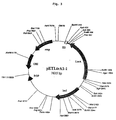
- Plasmid pETLtrA19 which is schematically depicted in Figure 1, comprises the DNA sequence for the group II intron Ll.ltrB from Lactococcus lactis, shown as a thick line, positioned between portions of the flanking exons ltrBE1 and ltrBE2, shown as open boxes.
- pETLtrAl9 also comprises the DNA sequence for the T7 RNA polymerase promoter and the T7 transcription terminator. The sequences are oriented in the plasmid in such a manner that the ORF sequence, SEQ. ID. NO. 2, within the Ll.ltrB intron is under the control of the T7 RNA polymerase promoter.
- the ORF of the Ll.ltrB intron encodes the protein 1tra .
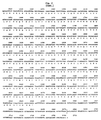
- the sequence of the Ll.ltrB intron and the flanking exon sequences present in pETLtrA19 are shown in Figure 2 and SEQ. ID. NO. 1.
- Vertical lines in Figure 2 denote the junctions between the intron and the flanking sequences.
- the amino acid sequence of the ltra protein, SEQ. ID. NO. 4 is shown under the ORF sequence, SEQ. ID. NO. 2, in Figure 2.
- exon binding sites are encoded by sequences from and including nucleotides 457 go and including 463 (EBS1) from and including nucleotides 401 to and including nucleotides 406 (EBS2a), and from and including nucleotides 367 to and including 367-372 (EBS2b).
- Domain IV is encoded by nucleotide 705 to 2572.
- pETLtrA19 was prepared first by digesting pLE12, which was obtained from Dr. Gary Dunny from the University of Minnesota, with HindIII and isolating the restriction fragments on a 1% agarose gel.
- a 2.8 kb HindIII fragment which contains the Ll.ltrB intron together with portions of the flanking exons ltrBE1 and ltrBE2 was recovered from the agarose gel and the single-stranded overhangs were filled in with the Klenow fragment of DNA polymerase I obtained from Gibco BRL, Gaithersburg, MD.
- the resulting fragment was ligated into plasmid pET-lla that had been digested with Xba I and treated with Klenow fragment.
- pET-lla was obtained from Novagen, Madison, WI.
- pETLtrA19 was introduced into the E. coli cells using the conventional CaCl 2 -mediated transformation procedure of Sambrook et al. as described in "Molecular Coning A Laboratory Manual", pages 1-82, 1989 .
- Single transformed colonies were selected on plates containing Luria-Bertani (LB) medium supplemented with ampicillin to select the plasmid and with tetracycline to select the BLR strain.
- LB Luria-Bertani
- One or more colonies were inoculated into 2 ml of LB medium supplemented with ampicillin and grown overnight at 37°C with shaking. 1 ml of this culture was inoculated into 100 ml LB medium supplemented with ampicillin and grown at 37°C with shaking at 200 rpm until OD 595 of the culture reached 0.4.
- isopropylbeta-D-thiogalactoside was added to the culture to a final concentration of 1 mM and incubation was continued for 3 hours. Then the entire culture was harvested by centrifugation at 2,200 x g, 4°C, for 5 minutes. The bacterial pellet was washed with 150 mM NaCl and finally resuspended in 1/20 volume of the original culture in 50 mM Tris, pH 7.5, 1 mM EDTA, 1 mM DTT, and 10% (v/v) glycerol (Buffer A). Bacteria were frozen at -70°C.
- lysate To produce a lysate the bacteria were thawed and frozen at -70°C. three times. Then 4 volumes of 500 mM KCl, 50 mMCaCl2, 25 mM Tris, pH 7.5, and 5 mM DTT (HKCTD) were added to the lysate and the mixture was sonicated until no longer viscous, i.e. for 5 seconds or longer. The lysate was fractionated into a soluble fraction and insoluble fraction by centrifugation at 14,000 x g, 4°C, for 15 minutes.
- the resulting supernatant i.e., the soluble fraction
- 5 ml of the resulting supernatant were loaded onto a sucrose cushion of 1.85 M sucrose in HKCTD and centrifuged for 17 hours at 4°C, 50,0000 rpm in a Ti 50 rotor from Beckman.
- the pellet which contains the RNP particles was washed with 1 ml water and then dissolved in 25 ⁇ l 10 mM Tris, pH 8.0, 1 mM DTT on ice. Insoluble material was removed by centrifugation at 1,500 x g, 4°C, for 5 minutes.
- the yield of RNP particles prepared according to this method comprise the excised L1.1trB intron RNA and the 1tra protein.
- a nucleotide integrase comprising the ltra protein and the excised Ll.ltrB intron RNA was prepared as described in example 1 except the plasmid pETLtrA19 was used to transform cells of the BL21(D3) strain of E. coli.
- a nucleotide integrase was prepared by transforming cells of the E. coli strains BLR(DE3) with pETLtrAl9 as described in Example 1 except that the transformed E. Coli were grown in Super-Broth (SOB) medium and shaken at 300 rpm during the 3 hour incubation.
- SOB Super-Broth
- a nucleotide integrase was prepared by transforming cells of the E. coli strain BL21(DE3) with pETLtrAl9 as described above in Example 2 except the cells were also transformed with plasmid pOM62 which is based on the plasmid pACYC184 and has an approximately 150 bp insert of the argU(dnaY) gene at the EcoRI site.
- the argU gene encodes the tRNA for the rare arginine codons AGA and AGG.
- the ltrA gene contains 17 of the rare arginine codons.
- the transformed cells were grown in SOB medium as described in Example 3 and fractionated into a soluble fraction and an insoluble fraction as described in Example 1.
- the ltra ORF was tagged at the C-terminus with a His 6 affinity tag and an epitope derived from the Herpes simplex virus glycoprotein D.
- the plasmid adding the tags was made in two steps by using PCR. In the first step, a fragment containing exon 1 and the ltra ORF was amplified using primers LtrAexl.Xba having the sequence 5' TCACCTCATCTAGACATTTTCTCC 3', SEQ. ID. NO. 5 which introduces an Xba I site in exon 1 of ltrB, and ltrA expr3 5'CGTTCGTAAAGCTAGCCTTGTGTTTATG 3', SEQ. ID. NO.
- intron sequences 3' to the ORF and exon 2 were amplified using pLE12 as a substrate and the 5' primer LtrAConZnl, having the sequence 5'CACAAGTGATCATTTACGAACG 3', SEQ. ID. No. 7 and the 3' primer LtrAex2, which has the sequence 5'TTGGGATCCTCATAAGCTTT GCCGC 3', SEQ. ID. NO. 8 .
- the PCR product was cut with Bcl l and BamH l, the resulting fragment filled in, gel-purified and cloned into pIntermediate-C, which had been cleaved with Bpu11021 and filled in.
- the resulting plasmid is designated pC-hisLtrAl9.
- the 1tra ORF was tagged at the N-terminus with a His, affinity tag and the epitope tag XPRESS TM which was obtained from Invitrogen, San Diego, CA.
- the plasmid adding the tags was made in two steps by using PCR. In the first step, a fragment was made in two steps by using PCR mutagenesis.
- the 1trA ORF and 3' exon were amplified and BamHl sites were appended to both the 5' an 3' end of the ltrA ORF using pLE12 as a substrate and the following pair: 5' primer N-LtrA 5', having the sequence 5'CAAAGGATCCGATGAAACCAACAATGGCAA 3', SEQ. ID. NO. 9; and the 3' primer LtrAex2, SEQ. ID. NO. 8.
- the PCR product was cut with BamHl and the resulting restriction fragment was gel purified and cloned into the BamMl site of plasmid pRSETB obtained from Invitrogen, San Diego, CA.
- the resulting plasmid pIntermediate-N fuses the N-terminus of the 1trA ORF to a His 6 purification tag, and adds an XPRESS TM epitope tag from the vector.
- the 5' exon and Ll.ltrB intron sequences 5' to the ORF were amplified using pLE12 as a substrate and the 5' primer NdeLTR5, having the sequence 5'AGTGGCTTCCATATGCTTGGTCATCACCTCATC 3', SEQ. ID. No. 10 and 3' primer NdeLTR3', which has the sequence 5' GGTAGAACCATATGAAATTCCTCCTCCCTAATCAATTTT 3', SEQ. ID. NO. 11.
- the PCR product was cut with Nde I, filled in, the fragment gel purified and cloned into pIntermediate-N, which had also been cut with Nde I. Plasmids were screened for the orientation of the insert, and those oriented such that the 5' exon was proximal to the T7 promoter were used to transform the host cells.
- the resulting plasmid pFinal-N expresses a message under the control of the T7 polymerase promoter which comprises the E1 and E2 portions of the exons 1trBE1 and 1trBE2 , and the 1trA ORF fused at the 5' end with an His, purification tag and the XPRESS TM epitope tag.
- Plasmid pETLtrAl-1 was used to prepare a partially-purified preparation of the ltra protein, which is encoded by the ORF of the Ll.trB intron.
- Plasmid pETLtrAl-1 is a derivative of pETLtrA19 and lacks exon 1 and the intron sequences upstream of the ltrA ORF. Accordingly, the ltrA ORF is directly downstream of the phage T7 promoter following the Shine-Dalgarno sequence in the plasmid.
- the plasmid map of pETLtrAl-1 is shown in Figure 3.
- PETLtrAl-1 was made by using the polymerase chain reaction to amplify the ltrA ORF using the 5' primer LtrAexpr 5' AAAACCTCCATATG AAACCAACAATG 3', SEQ. ID. NO. 12, which introduces an NdeI site and 3' primer LtrAex2, SEQ. ID. NO. 8.
- the PCR product was cut with NdeI and BamHI, gel purified on a 1% agarose gel, and cloned into pET20-11a.
- the inserts of pLE12, pETLtrA19 and pETLtrAl-1, each of which contain the 1trA ORF is depicted in Figure 4.
- PETLtrA-1 was introduced into cells of the E. coli strain BLR(DE3) as described in Example 1 and the transformed cells grown for 3 hours in SOB medium at 37°C as described in Example 3. Thereafter, the cells were lysed and the resulting lysate fractionated into a soluble fraction and insoluble fraction by low speed centrifugation as described in Example 1.
- a nucleotide integrase is prepared in vitro by combining an exogenous RNA comprising an excised Ll.ltrB intron RNA with a purified LtrA protein.
- the purified LtrA is obtained by subjecting the partially-purified ltra protein of example 7 to standard chromatographic methods.
- the exogenous RNA is prepared by cloning the Ll.ltrB intron together with its flanking exons into a plasmid downstream of a T7 promoter, linearizing the plasmid downstream of the exon 2 using a restriction enzyme, and transcribing the intron with T7 RNA polymerase.
- the in vitro transcript is incubated for one hour at 37° C in 500 mM NH 4 Cl and 50 mM MgCl 2 , 10 mM DTT, 2 units RNase inhibitor, to increase or produce excised intron RNA.
- the exogenous RNA and purified ltra protein are then incubated in a buffer to form the nucleotide integrase.
- the nucleotide integrase is then isolated from the reaction mixture.
- RNP particles were prepared as described in Example 1 from cells of the BLR(DE3) strain of E. coli that had been transformed with plasmid pET11a, which lacks a group II intron. Accordingly, these RNP particles do not comprise excised, group II RNA or group II intron-encoded proteins and therefore, do not have nucleotide integrase activity.
- RNP particles were prepared as described in Example 1 from cells of the BLR(DE3) strain of coli that had been transformed with plasmid pETLtrAl9FS, which comprises the sequence of an ltra ORF having a frame shift 372 base pairs downstream from the initiation codon of the 1tra ORF. frame. Accordingly, these RNP particles contain a truncated 1tra protein, i.e. an 1tra protein lacking the Zn domain and, therefore, do not have nucleotide integrase activity.
- the reverse transcriptase activities of the RNP particles of examples 1 and 2 and the RNP particles of comparative examples A and B were assayed by incubating each of the RNP particle preparations with a poly(ra) template and oligo (dT18) as a primer.
- the RNP particles of examples 1 and 2 exhibited reverse transcriptase activity, while the RNP particles of comparative examples A and B exhibited no reverse transcriptase activity.
- the reverse transcriptase activity that is present in nucleotide integrases allows incorporation of a CDNA molecule into the cleavage site of the double stranded DNA which is cut by the nucleotide integrase.
- a portion of the insoluble fraction and soluble fraction of the lysates from the cells transformed and cultured according to the methods described in examples 1, 2, 3, and 4 were subjected to SDS polyacrylamide gel electrophoresis. Following electrophoresis, the SDS gels were stained with Coomassie blue to compare the yield of the 1tra protein and the distribution of the 70 kDa ltra protein prepared by the methods of examples 1, 2, 3, and 4.
- a portion of the insoluble fraction and soluble fractions of the lysates from the cells transformed and cultured according to the methods described in examples 5 and 6 and in comparative examples A and B were subjected to electrophoresis on duplicate SDS-polyacrylamide gels. one of the gels was stained with Coomasie blueand the proteins on the duplicate were transferred to nitrocellulose paper by Western blotting.
- a primary antibody to the HSV antigen or the and an alkaline phosphatase-labeled anti-mouse IgG secondary antibody were used in an enzyme-linked immunoassay to identify proteins carrying the HSV epitope or the XPRESS TM .
- the results of these assays showed that the anti-HSV antibody and the anti-XPRESSTM antibody bound to a protein having a molecular weight of approximately 70 kDa, which is the molecular weight of the ltra protein.
- the HSV tagged ltra protein and the xpress TM tagged ltra protein were found in the soluble and insoluble fractions from cells transformed with pIntermediateC and bIntermediateN but not in the soluble fractions and insoluble fractions of cells transformed with pet 27b(+) and PRSETB.
- the methods of examples 5 and 6 are useful for preparing a tagged group II intron encoded protein.
- Nucleotide integrases are useful for cleaving one or both strands of a double-stranded DNA substrate, catalyzing the attachment of the excised, group II intron RNA molecule to one of the strands of the substrate DNA and catalyzing the formation of a CDNA molecule on the other strand of the cleaved double-stranded DNA substrate.
- the nucleotide integrases are useful analytical tools for determining the location of a defined sequence in a double-stranded DNA substrate.
- the simultaneous insertion of the nucleic acid molecule into the first strand of DNA permits tagging of the cleavage site of the first strand with a radiolabeled molecule.
- RNA molecule onto one strand of the DNA substrate permits identification of the cleavage site through hybridization studies that use a probe that is complementary to the attached RNA molecule.
- An attached RNA molecule that is tagged with a molecule such as biotin also enables the cleaved DNA to be affinity purified.
- the cleavage of one or both strands of the double stranded DNA and the concomitant insertion of a nucleotide sequence into the cleavage site permits incorporation of new genetic information or a genetic marker into the cleavage site, as well as disruption of the cleaved gene.
- nucleotide integrases are also useful for rendering the substrate DNA nonfunctional or for changing the characteristics of the RNA and protein encoded by the substrate DNA. While nucleotide integrases can be used to cleave doublestranded DNA substrates at a wide range of temperatures, good results are obtained at a reaction temperature of from about 30° C to about 42° C, preferably from about 30° to about 37° C.
- a suitable reaction medium contains a monovalent cation such as Na + or K + , and a divalent cation, preferably a magnesium or manganese ion, more preferably a magnesium ion, at a concentration that is less than 100 mM and greater than 1 mM.
- the divalent cation is at a concentration of about 5 to about 20 mM.
- the preferred pH for the medium is from about 6.0-8.5, more preferably about 7.5-8.0.
- the substrate which is cleaved by the nucleotide integrase comprising the excised Ll.trB intron RNA and the 1tra protein is schematically depicted in Figure 6(a).
- the IBS1 and IBS2 sequence of the substrate is shown in figure 6(b).
- the IBS1 and IBS2 sequences which are complementary to the EBS sequences of the Lltr.B intron RNA are present in exon 1 of the ltrb gene.
- the RNP particles prepared according to the method of example 1 cleaved the sense strand of the substrate at position 0, which is the exon 1 and exon 2 junction, and the antisense strand at +9.
- RNADNA products withstand denaturation with glyoxal indicates a covalent linkage between the intron RNA and the DNA substrate.
Landscapes
- Health & Medical Sciences (AREA)
- Life Sciences & Earth Sciences (AREA)
- Chemical & Material Sciences (AREA)
- Molecular Biology (AREA)
- Organic Chemistry (AREA)
- Engineering & Computer Science (AREA)
- Bioinformatics & Cheminformatics (AREA)
- Zoology (AREA)
- Wood Science & Technology (AREA)
- Genetics & Genomics (AREA)
- Microbiology (AREA)
- Biotechnology (AREA)
- Biomedical Technology (AREA)
- Biochemistry (AREA)
- General Engineering & Computer Science (AREA)
- General Health & Medical Sciences (AREA)
- Medicinal Chemistry (AREA)
- Preparation Of Compounds By Using Micro-Organisms (AREA)
- Enzymes And Modification Thereof (AREA)
- Pharmaceuticals Containing Other Organic And Inorganic Compounds (AREA)
- Micro-Organisms Or Cultivation Processes Thereof (AREA)
- Nitrogen Condensed Heterocyclic Rings (AREA)
Claims (21)
- Verfahren zur Herstellung einer Nucleotid-Integrase, bei der es sich um ein Ribonucleoprotein-Partikel handelt, das eine exzidierte Gruppe-II-Intron-RNA und ein von einem Gruppe-II-Intron kodiertes Protein umfasst, die ein doppelsträngiges DNA-Substrat spaltet, wobei das Verfahren folgende Schritte umfasst:(a) das Bereitstellen eines DNA-Moleküls, das eine Gruppe-II-Intron-DNA-Sequenz umfasst, worin die Gruppe-II-Intron-DNA-Sequenz für eine Gruppe-II-Intron-RNA kodiert und eine offene Leserastersequenz umfasst, die für ein von einem Gruppe-II-Intron kodiertes Protein kodiert;(b) das Einführen des DNA-Moleküls in eine Wirtszelle;(c) das Exprimieren der Gruppe-II-Intron-DNA-Sequenz in der Wirtszelle, um eine exzidierte Gruppe-II-Intron-RNA und ein von einem Gruppe-II-Intron kodiertes Proteinmolekül bereitzustellen, worin sich das Protein und die RNA in der Wirtszelle verbinden, um die Nuclectid-Integrase zu bilden;(d) das Gewinnen der Nucleotid-Integrase aus Schritt (c) aus der Wirtszelle.
- Verfahren nach Anspruch 1, worin das DNA-Molekül weiters einen Promotor umfasst, der operabel an die Gruppe-II-Intron-DNA-Sequenz gebunden ist.
- Verfahren nach Anspruch 2, worin der Promotor ein induzierbarer Promotor ist.
- Verfahren nach Anspruch 2, worin das DNA-Molekül weiters eine Nucleotidsequenz umfasst, die für eine Markierung kodiert, um die Isolation der Nucleotid-Integrase aus der Wirtszelle zu vereinfachen; und
worin das Verfahren weiters das Exprimieren der Nucleotidsequenz, die für die Markierung kodiert, in der Wirtszelle umfasst, um ein markiertes, von einem Gruppe-II-Intron kodiertes Protein bereitzustellen; und
worin Schritt (d) das Einsetzen der Markierung zur Gewinnung der Nucleotid-Integrase umfasst. - Verfahren nach Anspruch 4, worin sich die Sequenz, die für die Markierung kodiert, am 5'-Ende oder 3'-Ende der offenen Leserastersequenz der Gruppe-II-Intron-DNA-Sequenz befindet.
- Verfahren nach Anspruch 2, weiters folgende Schritte umfassend:das Einführen einer DNA-Sequenz, die für eine tRNA kodiert, welche dem genetischen Code der Gruppe-II-Intron-DNA-Sequenz entspricht, in die Wirtszelle vor Schritt (b) unddas Exprimieren der für tRNA kodierenden DNA-Sequenz in der Wirtszelle.
- Verfahren nach Anspruch 1, worin das DNA-Molekül durch die folgenden Schritte hergestellt wird:das Herstellen einer synthetischen Gruppe-II-Intron-DNA-Sequenz; worin die Gruppe-II-Intron-DNA-Sequenz eine Sequenz von Nucleotiden umfasst, die an die Erkennungsstelle der Substrat-DNA binden, unddas Inkorporieren der synthetischen Gruppe-II-Intron-DNA-Sequenz in das DNA-Molekül.
- Verfahren nach Anspruch 1, worin die Gruppe-II-Intron-DNA-Sequenz die DNA-Sequenz des LI.ItrB-Introns umfasst und die Ribonucleoprotein-Partikel eine exzidierte LI.ItrB-Intron-RNA und ein ItrA-Protein umfassen.
- Verfahren nach Anspruch 1, worin die Gruppe-II-Intron-DNA-Sequenz eine modifizierte DNA-Sequenz des LI.ItrB-Introns umfasst und die RNP-Partikel eine modifizierte exzidierte LI.ItrB-Intron-RNA und ein ItrA-Protein-Molekül umfassen.
- Verfahren nach Anspruch 1, worin die Gruppe-II-Intron-DNA-Sequenz eine modifizierte DNA-Sequenz des LI.ItrB-Introns umfasst und die RNP-Partikel eine modifizierte exzidierte LI.ItrB-Intron-RNA und ein modifiziertes ItrA-Protein-Molekül umfassen.
- Verfahren nach Anspruch 1, worin die Wirtszelle E. coli ist.
- Verfahren nach Anspruch 8, worin die Wirtszelle E. coli ist.
- Verfahren zur In-vitro-Herstellung einer Nucleotid-Integrase, bei der es sich um ein Ribonucleoprotein-Partikel handelt, das eine exzidierte Gruppe-II-Intron-RNA und ein von einem Gruppe-II-Intron kodiertes Protein umfasst, folgende Schritte umfassend:(a) das Bereitstellen einer isolierten exzidierten Gruppe-II-Intron-RNA;(b) das Bereitstellen eines isolierten, von einem Gruppe-II-Intron kodierten Proteins; und(c) das Inkubieren der exzidierten Gruppe-II-Intron-RNA mit dem von einem Gruppe-II-Intron kodierten Protein ausreichend lange, um eine Nucleotid-Integrase zu bilden, welche die exzidierte Gruppe-II-Intron-RNA an das von einem Gruppe-II-Intron kodierte Protein gebunden umfasst.
- Verfahren nach Anspruch 13, worin das von einem Grüppe-II-Intron kodierte Protein durch ein Verfahren hergestellt wird, das folgende Schritte umfasst:(a) das Bereitstellen eines DNA-Moleküls, das eine offene Leserastersequenz eines Gruppe-II-Introns umfasst, wobei die offene Leserastersequenz operabel an einen Promotor gebunden ist;(b) das Einführen des DNA-Moleküls aus Schritt (a) in eine Wirtszelle;(c) das Exprimieren der offenen Leserastersequenz in der Wirtszelle, um das von einem Gruppe-II-Intron kodierten Protein bereitzustellen; und(d) das Isolieren des von einem Gruppe-II-Intron kodierten Proteins aus der Wirtszelle.
- Verfahren nach Anspruch 13, worin das DNA-Molekül weiters eine Sequenz umfasst, die für eine Markierung kodiert, welche die Isolation des von einem Gruppe-II-Intron kodierten Proteins aus der Wirtszelle vereinfacht; und
worin das Verfahren weiters das Exprimieren der Nucleotidsequenz, die für die Markierung kodiert, in der Wirtszelle umfasst, um ein markiertes, von einem Gruppe-II-Intron kodiertes Protein bereitzustellen; und
worin Schritt (d) das Gewinnen einer markierten Nucleotid-Integrase aus der Wirtszelle umfasst. - Verfahren nach Anspruch 15, worin sich die Sequenz, die für die Markierung kodiert, an einer Position befindet, die aus dem 5'-Ende und dem 3'-Ende der offenen Leserastersequenz ausgewählt ist.
- Verfahren nach Anspruch 13, worin die offene Leserastersequenz für das ItrA-Protein kodiert und worin die exzidierte Gruppe-II-RNA aus der Gruppe ausgewählt ist, die aus einer unmodifizierten, exzidierten LI.ItrB-Intron-RNA und einer modifizierten, exzidierten LI.ItrB-Intron-RNA besteht.
- Verfahren zur In-vitro-Herstellung einer Nucleotid-Integrase, bei der es sich um ein Ribonucleoprotein-Partikel handelt, das eine exzidierte Gruppe-II-Intron-RNA und ein von einem Gruppe-II-Intron kodiertes Protein umfasst, folgende Schritte umfassend:(a) das Bereitstellen einer exogenen RNA, die eine exzidierte Gruppe-II-Intron-RNA umfasst;(b) das Bereitstellen eines RNA-Protein-Komplexes, worin der RNA-Protein-Komplex ein Protein mit einer Aminosäuresequenz, für die ein Gruppe-II-Intron kodiert, und eine RNA, die frei von exzidierten Gruppe-II-Intron-RNA-Molekülen mit einer Sequenz ist, die für das Protein kodiert, umfasst; wobei der RNA-Protein-Komplex durch die folgenden Schritte hergestellt wird:(i) das Bereitstellen eines isolierten DNA-Moleküls, das eine Gruppe-II-Intron-DNA-Sequenz umfasst, worin die Gruppe-II-Intron-DNA-Sequenz für ein von einem Gruppe-II-Intron kodierten Protein und eine spleißdefekte Gruppe-II-RNA kodiert;(ii) das Einführen des DNA-Moleküls in eine Wirtszelle;(iii) das Exprimieren der Gruppe-II-Intron-DNA-Sequenz in der Wirtszelle, worin ein RNA-Protein-Komplex, der das von einem Gruppe-II-Intron kodierte Protein umfasst, und die spleißdefekte Gruppe-II-RNA in der Zelle gebildet werden;(iv) das Gewinnen des RNA-Protein-Komplexes aus Schritt (iii) aus der Wirtszelle; und(c) das Inkubieren der exogenen RNA aus Schritt (a) mit dem RNA-Protein-Komplex ausreichend lange, um eine Nucleotid-Integrase zu bilden, welche die exzidierte Gruppe-II-RNA und das Protein mit einer von einem Gruppe-II-Intron kodierten Aminosäuresequenz umfasst.
- Verfahren nach Anspruch 1, worin die Wirtszelle eine homologe Bakterienzelle ist.
- Verfahren nach Anspruch 1, worin die Wirtszelle eine heterologe Bakterienzelle ist.
- Verfahren nach Anspruch 13, worin die Gruppe-II-Intron-RNA eine modifizierte Gruppe-II-Intron-RNA ist.
Applications Claiming Priority (3)
| Application Number | Priority Date | Filing Date | Title |
|---|---|---|---|
| US08/752,238 US5804418A (en) | 1996-11-19 | 1996-11-19 | Methods for preparing nucleotide integrases |
| US752238 | 1996-11-19 | ||
| PCT/US1997/021076 WO1998023756A1 (en) | 1996-11-19 | 1997-11-18 | Methods for preparing nucleotide integrases |
Publications (3)
| Publication Number | Publication Date |
|---|---|
| EP0941338A1 EP0941338A1 (de) | 1999-09-15 |
| EP0941338A4 EP0941338A4 (de) | 2004-08-18 |
| EP0941338B1 true EP0941338B1 (de) | 2007-08-08 |
Family
ID=25025474
Family Applications (1)
| Application Number | Title | Priority Date | Filing Date |
|---|---|---|---|
| EP97952201A Expired - Lifetime EP0941338B1 (de) | 1996-11-19 | 1997-11-18 | Methoden zur herstellung von nukleotidintegrasen |
Country Status (7)
| Country | Link |
|---|---|
| US (2) | US5804418A (de) |
| EP (1) | EP0941338B1 (de) |
| AT (1) | ATE369430T1 (de) |
| AU (1) | AU5587198A (de) |
| CA (1) | CA2271785C (de) |
| DE (1) | DE69737996T2 (de) |
| WO (1) | WO1998023756A1 (de) |
Families Citing this family (16)
| Publication number | Priority date | Publication date | Assignee | Title |
|---|---|---|---|---|
| US6027895A (en) * | 1995-09-12 | 2000-02-22 | The Ohio State University Research Foundation | Methods for cleaving DNA with nucleotide integrases |
| US5804418A (en) * | 1996-11-19 | 1998-09-08 | The Ohio State University Research Foundation | Methods for preparing nucleotide integrases |
| AU2973799A (en) | 1998-02-26 | 1999-09-15 | Ohio State Research Foundation, The | Methods for cleaving single-stranded and double-stranded dna substrates with nucleotide integrase |
| US20040005673A1 (en) * | 2001-06-29 | 2004-01-08 | Kevin Jarrell | System for manipulating nucleic acids |
| US6358712B1 (en) | 1999-01-05 | 2002-03-19 | Trustee Of Boston University | Ordered gene assembly |
| JP2002537762A (ja) * | 1999-01-05 | 2002-11-12 | トラスティーズ オブ ボストン ユニバーシティ | 改良型核酸クローニング |
| WO2001029059A1 (en) * | 1999-10-15 | 2001-04-26 | The Ohio State University Research Foundation | Methods for analyzing the insertion capabilities of modified group ii introns |
| EP1774016A2 (de) * | 2004-06-14 | 2007-04-18 | The University Of Texas At Austin | Verfahren zur expression von rnp-partikeln in eukaryotischen zellen |
| WO2005123962A2 (en) * | 2004-06-14 | 2005-12-29 | The University Of Texas At Austin | Gene targeting in eukaryotic cells by group ii intron ribonucleoprotein particles |
| DE102006009038A1 (de) * | 2005-02-28 | 2006-08-31 | Harmonic Drive Systems Inc. | Getriebemotor |
| US7399620B2 (en) * | 2006-03-15 | 2008-07-15 | Sigma-Aldrich Co. | Polypeptides and bacterial strains for increased protein production |
| US7919322B2 (en) * | 2006-03-29 | 2011-04-05 | Sigma-Aldrich Co. | Targeted deletions using retroelement-mediated placement of recombination sites |
| GB0612301D0 (en) * | 2006-06-21 | 2006-08-02 | Morvus Technology Ltd | DNA molecules and methods |
| EP2511285A3 (de) | 2007-05-09 | 2012-11-28 | Mascoma Corporation | Mesophile und thermophile Knockout-Organismen und Verfahren zu deren Verwendung |
| EP2267141A1 (de) | 2009-06-26 | 2010-12-29 | Metabolic Explorer | Verfahren zur biologischen Herstellung von n-Butanol mit hohem Ertrag |
| US9272027B1 (en) | 2014-09-08 | 2016-03-01 | The United States Of America As Represented By The Secretary Of The Air Force | Francisella tularensis live vaccine strains and methods of use |
Family Cites Families (3)
| Publication number | Priority date | Publication date | Assignee | Title |
|---|---|---|---|---|
| US5498531A (en) * | 1993-09-10 | 1996-03-12 | President And Fellows Of Harvard College | Intron-mediated recombinant techniques and reagents |
| US5698421A (en) * | 1995-09-12 | 1997-12-16 | The Ohio State Research Foundation | Ribonucleoprotein particles for cleaving double-stranded DNA and inserting an RNA/DNA molecule into the cleavage site |
| US5804418A (en) * | 1996-11-19 | 1998-09-08 | The Ohio State University Research Foundation | Methods for preparing nucleotide integrases |
-
1996
- 1996-11-19 US US08/752,238 patent/US5804418A/en not_active Expired - Lifetime
-
1997
- 1997-11-18 AU AU55871/98A patent/AU5587198A/en not_active Abandoned
- 1997-11-18 AT AT97952201T patent/ATE369430T1/de active
- 1997-11-18 DE DE69737996T patent/DE69737996T2/de not_active Expired - Lifetime
- 1997-11-18 CA CA002271785A patent/CA2271785C/en not_active Expired - Fee Related
- 1997-11-18 WO PCT/US1997/021076 patent/WO1998023756A1/en not_active Ceased
- 1997-11-18 EP EP97952201A patent/EP0941338B1/de not_active Expired - Lifetime
-
1998
- 1998-05-27 US US09/085,603 patent/US6001608A/en not_active Expired - Lifetime
Non-Patent Citations (1)
| Title |
|---|
| MILLS D.A. ET AL: "Splicing of a group II intron involved in the conjugative transfer of pRS01 in lactococci", JOURNAL OF BACTERIOLOGY, vol. 178, no. 12, June 1996 (1996-06-01), pages 3531 - 3538 * |
Also Published As
| Publication number | Publication date |
|---|---|
| EP0941338A4 (de) | 2004-08-18 |
| CA2271785A1 (en) | 1998-06-04 |
| DE69737996T2 (de) | 2008-05-29 |
| WO1998023756A1 (en) | 1998-06-04 |
| US6001608A (en) | 1999-12-14 |
| ATE369430T1 (de) | 2007-08-15 |
| EP0941338A1 (de) | 1999-09-15 |
| DE69737996D1 (de) | 2007-09-20 |
| AU5587198A (en) | 1998-06-22 |
| US5804418A (en) | 1998-09-08 |
| CA2271785C (en) | 2009-05-05 |
Similar Documents
| Publication | Publication Date | Title |
|---|---|---|
| EP1303530B1 (de) | Klonierung und herstellung von n. i bst /i nbi nicking endonuclease und verwandte methoden zur verwendung von nicking endonucleasen in der einzelstrang-verdrängungsamplifikation | |
| JP2563258B2 (ja) | 制限および修飾遺伝子のクロ−ニング | |
| US5804418A (en) | Methods for preparing nucleotide integrases | |
| US5869634A (en) | Method of making an RNA particle for use in cleaving nucleic acid molecules and inserting a nucleic acid molecule into the cleavage site | |
| EP0522018A1 (de) | Kloniertes kpni-restriktionsmodifizierungssystem | |
| EP0605854B1 (de) | Klonieren und Expression von Restriktionsendonukleasen und Modifikationsmethylasen von Karyophanon | |
| EP0590129A1 (de) | Klonierung und expression von restriktionsendonukleasen und modifizierbaren methylasen aus -i(xanthomonas) | |
| JP3162059B2 (ja) | NdeI制限エンドヌクレアーゼおよびメチラーゼの製造方法 | |
| US5534428A (en) | Cloned Ssti/SacI restriction-modification system | |
| US5532153A (en) | Method for cloning and producing the SacI restriction endonuclease | |
| JP5210530B2 (ja) | RrhJ1I制限・修飾酵素およびその遺伝子 | |
| AU739106B2 (en) | Methods of making an RNP particle having nucleotide integrase activity | |
| JP3889098B2 (ja) | 大腸菌によりScaI制限エンドヌクレアーゼをクローニングし生産する方法 | |
| US5637476A (en) | Method for cloning and producing the SFII restriction endonuclease and methylase | |
| JPH04293489A (ja) | NlaIII制限エンドヌクレアーゼ及びメチラーゼの製造方法 | |
| JPH0698779A (ja) | NaeI制限エンドヌクレアーゼ及びメチラーゼをクローン化し産生する方法 | |
| JPH06205683A (ja) | SphI制限エンドヌクレアーゼをコードする単離DNA及び該制限エンドヌクレアーゼを製造するための方法 | |
| EP0707066B1 (de) | Verfahren zur Herstellung der SspI Restriktionsendonuklease und der entsprechenden Methylase | |
| US5731185A (en) | Isolated DNA encoding the hphi restriction endonuclease and related methods for producing the same | |
| US20020086323A1 (en) | Methods for cleaving single-stranded and double-stranded DNA substrates with nucleotide integrase | |
| JP3836168B2 (ja) | BalI制限・修飾系酵素遺伝子 | |
| JP5626263B2 (ja) | RrhJ1I修飾酵素およびその遺伝子 | |
| JP2004121069A (ja) | 新規dnaヘリカーゼ |
Legal Events
| Date | Code | Title | Description |
|---|---|---|---|
| PUAI | Public reference made under article 153(3) epc to a published international application that has entered the european phase |
Free format text: ORIGINAL CODE: 0009012 |
|
| 17P | Request for examination filed |
Effective date: 19990608 |
|
| AK | Designated contracting states |
Kind code of ref document: A1 Designated state(s): AT BE CH DE DK ES FI FR GB GR IE IT LI LU MC NL PT SE |
|
| A4 | Supplementary search report drawn up and despatched |
Effective date: 20040701 |
|
| RIC1 | Information provided on ipc code assigned before grant |
Ipc: 7C 07K 14/315 B Ipc: 7C 12N 9/02 B Ipc: 7C 12N 15/31 B Ipc: 7C 12N 15/52 A |
|
| 17Q | First examination report despatched |
Effective date: 20041203 |
|
| 17Q | First examination report despatched |
Effective date: 20041203 |
|
| GRAP | Despatch of communication of intention to grant a patent |
Free format text: ORIGINAL CODE: EPIDOSNIGR1 |
|
| GRAS | Grant fee paid |
Free format text: ORIGINAL CODE: EPIDOSNIGR3 |
|
| GRAA | (expected) grant |
Free format text: ORIGINAL CODE: 0009210 |
|
| AK | Designated contracting states |
Kind code of ref document: B1 Designated state(s): AT BE CH DE DK ES FI FR GB GR IE IT LI LU MC NL PT SE |
|
| REG | Reference to a national code |
Ref country code: GB Ref legal event code: FG4D |
|
| RAP2 | Party data changed (patent owner data changed or rights of a patent transferred) |
Owner name: THE OHIO STATE UNIVERSITY RESEARCH FOUNDATION |
|
| REG | Reference to a national code |
Ref country code: CH Ref legal event code: EP |
|
| REG | Reference to a national code |
Ref country code: IE Ref legal event code: FG4D |
|
| REF | Corresponds to: |
Ref document number: 69737996 Country of ref document: DE Date of ref document: 20070920 Kind code of ref document: P |
|
| NLT2 | Nl: modifications (of names), taken from the european patent patent bulletin |
Owner name: THE OHIO STATE UNIVERSITY RESEARCH FOUNDATION Effective date: 20070829 |
|
| PG25 | Lapsed in a contracting state [announced via postgrant information from national office to epo] |
Ref country code: ES Free format text: LAPSE BECAUSE OF FAILURE TO SUBMIT A TRANSLATION OF THE DESCRIPTION OR TO PAY THE FEE WITHIN THE PRESCRIBED TIME-LIMIT Effective date: 20071119 |
|
| ET | Fr: translation filed | ||
| PG25 | Lapsed in a contracting state [announced via postgrant information from national office to epo] |
Ref country code: BE Free format text: LAPSE BECAUSE OF FAILURE TO SUBMIT A TRANSLATION OF THE DESCRIPTION OR TO PAY THE FEE WITHIN THE PRESCRIBED TIME-LIMIT Effective date: 20070808 |
|
| PG25 | Lapsed in a contracting state [announced via postgrant information from national office to epo] |
Ref country code: GR Free format text: LAPSE BECAUSE OF FAILURE TO SUBMIT A TRANSLATION OF THE DESCRIPTION OR TO PAY THE FEE WITHIN THE PRESCRIBED TIME-LIMIT Effective date: 20071109 Ref country code: DK Free format text: LAPSE BECAUSE OF FAILURE TO SUBMIT A TRANSLATION OF THE DESCRIPTION OR TO PAY THE FEE WITHIN THE PRESCRIBED TIME-LIMIT Effective date: 20070808 |
|
| PG25 | Lapsed in a contracting state [announced via postgrant information from national office to epo] |
Ref country code: PT Free format text: LAPSE BECAUSE OF FAILURE TO SUBMIT A TRANSLATION OF THE DESCRIPTION OR TO PAY THE FEE WITHIN THE PRESCRIBED TIME-LIMIT Effective date: 20080108 |
|
| PLBE | No opposition filed within time limit |
Free format text: ORIGINAL CODE: 0009261 |
|
| STAA | Information on the status of an ep patent application or granted ep patent |
Free format text: STATUS: NO OPPOSITION FILED WITHIN TIME LIMIT |
|
| PG25 | Lapsed in a contracting state [announced via postgrant information from national office to epo] |
Ref country code: MC Free format text: LAPSE BECAUSE OF NON-PAYMENT OF DUE FEES Effective date: 20071130 Ref country code: SE Free format text: LAPSE BECAUSE OF FAILURE TO SUBMIT A TRANSLATION OF THE DESCRIPTION OR TO PAY THE FEE WITHIN THE PRESCRIBED TIME-LIMIT Effective date: 20071108 |
|
| 26N | No opposition filed |
Effective date: 20080509 |
|
| PG25 | Lapsed in a contracting state [announced via postgrant information from national office to epo] |
Ref country code: LU Free format text: LAPSE BECAUSE OF NON-PAYMENT OF DUE FEES Effective date: 20071118 |
|
| PG25 | Lapsed in a contracting state [announced via postgrant information from national office to epo] |
Ref country code: IT Free format text: LAPSE BECAUSE OF NON-PAYMENT OF DUE FEES Effective date: 20071130 |
|
| PGFP | Annual fee paid to national office [announced via postgrant information from national office to epo] |
Ref country code: AT Payment date: 20131101 Year of fee payment: 17 Ref country code: FR Payment date: 20131118 Year of fee payment: 17 Ref country code: GB Payment date: 20131127 Year of fee payment: 17 Ref country code: DE Payment date: 20131127 Year of fee payment: 17 Ref country code: IE Payment date: 20131125 Year of fee payment: 17 Ref country code: CH Payment date: 20131127 Year of fee payment: 17 |
|
| PGFP | Annual fee paid to national office [announced via postgrant information from national office to epo] |
Ref country code: NL Payment date: 20131126 Year of fee payment: 17 Ref country code: FI Payment date: 20131127 Year of fee payment: 17 |
|
| REG | Reference to a national code |
Ref country code: DE Ref legal event code: R119 Ref document number: 69737996 Country of ref document: DE |
|
| REG | Reference to a national code |
Ref country code: NL Ref legal event code: V1 Effective date: 20150601 |
|
| REG | Reference to a national code |
Ref country code: CH Ref legal event code: PL |
|
| REG | Reference to a national code |
Ref country code: AT Ref legal event code: MM01 Ref document number: 369430 Country of ref document: AT Kind code of ref document: T Effective date: 20141118 |
|
| GBPC | Gb: european patent ceased through non-payment of renewal fee |
Effective date: 20141118 |
|
| PG25 | Lapsed in a contracting state [announced via postgrant information from national office to epo] |
Ref country code: LI Free format text: LAPSE BECAUSE OF NON-PAYMENT OF DUE FEES Effective date: 20141130 Ref country code: CH Free format text: LAPSE BECAUSE OF NON-PAYMENT OF DUE FEES Effective date: 20141130 Ref country code: FI Free format text: LAPSE BECAUSE OF NON-PAYMENT OF DUE FEES Effective date: 20141118 |
|
| REG | Reference to a national code |
Ref country code: IE Ref legal event code: MM4A |
|
| REG | Reference to a national code |
Ref country code: FR Ref legal event code: ST Effective date: 20150731 |
|
| PG25 | Lapsed in a contracting state [announced via postgrant information from national office to epo] |
Ref country code: AT Free format text: LAPSE BECAUSE OF NON-PAYMENT OF DUE FEES Effective date: 20141118 Ref country code: NL Free format text: LAPSE BECAUSE OF NON-PAYMENT OF DUE FEES Effective date: 20150601 |
|
| PG25 | Lapsed in a contracting state [announced via postgrant information from national office to epo] |
Ref country code: GB Free format text: LAPSE BECAUSE OF NON-PAYMENT OF DUE FEES Effective date: 20141118 Ref country code: IE Free format text: LAPSE BECAUSE OF NON-PAYMENT OF DUE FEES Effective date: 20141118 Ref country code: DE Free format text: LAPSE BECAUSE OF NON-PAYMENT OF DUE FEES Effective date: 20150602 |
|
| PG25 | Lapsed in a contracting state [announced via postgrant information from national office to epo] |
Ref country code: FR Free format text: LAPSE BECAUSE OF NON-PAYMENT OF DUE FEES Effective date: 20141201 |