EP0942614A2 - Drahtloses Zugriffnetzwerksystem fähig zur Verringerung von Anrufverlustwahrscheinlichkeit - Google Patents
Drahtloses Zugriffnetzwerksystem fähig zur Verringerung von Anrufverlustwahrscheinlichkeit Download PDFInfo
- Publication number
- EP0942614A2 EP0942614A2 EP98121423A EP98121423A EP0942614A2 EP 0942614 A2 EP0942614 A2 EP 0942614A2 EP 98121423 A EP98121423 A EP 98121423A EP 98121423 A EP98121423 A EP 98121423A EP 0942614 A2 EP0942614 A2 EP 0942614A2
- Authority
- EP
- European Patent Office
- Prior art keywords
- base station
- call
- call processing
- access network
- idle
- Prior art date
- Legal status (The legal status is an assumption and is not a legal conclusion. Google has not performed a legal analysis and makes no representation as to the accuracy of the status listed.)
- Withdrawn
Links
Images




Classifications
-
- H—ELECTRICITY
- H04—ELECTRIC COMMUNICATION TECHNIQUE
- H04W—WIRELESS COMMUNICATION NETWORKS
- H04W84/00—Network topologies
- H04W84/02—Hierarchically pre-organised networks, e.g. paging networks, cellular networks, WLAN [Wireless Local Area Network] or WLL [Wireless Local Loop]
- H04W84/10—Small scale networks; Flat hierarchical networks
- H04W84/14—WLL [Wireless Local Loop]; RLL [Radio Local Loop]
-
- H—ELECTRICITY
- H04—ELECTRIC COMMUNICATION TECHNIQUE
- H04W—WIRELESS COMMUNICATION NETWORKS
- H04W72/00—Local resource management
- H04W72/50—Allocation or scheduling criteria for wireless resources
- H04W72/56—Allocation or scheduling criteria for wireless resources based on priority criteria
- H04W72/563—Allocation or scheduling criteria for wireless resources based on priority criteria of the wireless resources
Definitions
- the present invention relates to an access network system that is connected to an existing local switch, includes a base station connected through a wireless circuit with fixed terminals such as user terminals installed in subscriber's houses, and is employed as an access network like a WLL (wireless local loop) with a concentrating function of user channels.
- the access network refers to a network that connects the local switch of a caller with a called user, excluding the local switch and the user terminal themselves.
- Fig. 7 is a block diagram showing a configuration of a conventional access network like a WLL.
- the reference numeral 1 designates a WAC (WLL Access Controller) which is the controller of a WLL; and 2 designates a base station that is connected with the WAC 1 through a trunk line 5.
- the reference numerals 3a-3b each designate user equipment connected with the base station 2 through a wireless circuit 4; and the reference numeral 6 designates a service node including the local switch.
- the reference numerals 7 each designate a subscriber line connecting the WAC 1 with the service node 6; 8a-8b each designate a user terminal connected to the user equipment; and the reference numeral 9 designates a service node interface installed in the WAC 1 for interfacing the WAC 1 to the service node 6.
- This configuration shows an example in which the subscriber lines 7 use analog lines.
- Fig. 8 a sequence diagram illustrating the operation of the conventional access network as shown in Fig. 7, when a call request takes place from the service node 6 but the base station 2 detects a channel busy state in the access network.
- the service node 6 issues a ringing (call request) to the WAC 1, and switches the state of the current subscriber line 7 connecting the service node 6 with the WAC 1 into an incoming call state.
- the WAC 1 transmits a paging message to the entire base stations 2.
- each of the user equipment 3 accepts the paging from the service node 6 through the base station 2, it sends a link channel setup request back to the base station 2 to request a setup of a wireless channel.
- the base station 2 checks whether any idle channel is present in the wireless circuit 4. If the base station 2 cannot detect any idle channel in the wireless circuit 4, it sends back to the user equipment 3 a link channel assignment rejection response indicative of being unable to setup a wireless channel.
- the base station 2 Even if the base station 2 detects an idle channel afterward, it cannot achieve the incoming call to user equipment 3 because the base station 2 does not include any means for carrying out the call processing again.
- the service node 6 in response to the abandonment of the call by an originating terminal, switches the subscriber line 7 from the incoming call state to a normal state, and stops the paging signal. Detecting the halt of the paging signal by the service node 6, the WAC 1 releases the paging.
- the conventional access network system cannot achieve the call to the user equipment 3, when the service node 6 makes a call request, but the wireless circuit 4 between the base station 2 and the called user equipment 3 is busy (no idle channel is present in the wireless circuit 4), or the trunk line 5 between the WAC 1 and the base station 2 is busy.
- the base station 2 detects an idle channel afterward, it cannot achieve the calling processing again in spite of the incoming call state of the current subscriber line 7 of the service node 6 because the base station 2 does not comprise any means for carrying out the call processing subsequently. This presents a problem of increasing a call loss.
- the present invention is implemented to solve the foregoing problem. It is therefore an object of the present invention to provide an access network system that can reduce the probability of the loss of a call made by the service node during a busy state of the trunk line or wireless circuit in the access network.
- an access network system comprising: a controller of an access network, which is connected to a local switch through subscriber lines, and has a concentrating function of the lines; a base station that is included in the access network, and is connected to the controller; and at least one user equipment that is connected to the base station through a wireless circuit, and is connected to a user terminal
- the base station comprises: first notification means for notifying the controller of an absence of an idle wireless channel when no available channel is present in the wireless circuit between the user equipment and the base station at a time when the local switch makes a call request to the user terminal; monitor means for detecting an idle wireless channel in the wireless circuit; and second notification means for notifying the controller of a presence of an idle wireless channel when the monitor means detects an idle wireless channel
- the controller comprises: call processing reserving means for reserving a call processing of the call request when the absence of the idle wireless channel is notified; and call processing means for releasing, when the presence of the idle
- an access network system comprising: a controller of an access network, which is connected to a local switch through subscriber lines, and has a concentrating function of the lines; a base station that is included in the access network, and is connected to the controller; and at least one user equipment that is connected to the base station through a wireless circuit, and is connected to a user terminal
- the base station comprises: notification means for notifying the controller of an absence of an idle wireless channel when no available channel is present in the wireless circuit between the user equipment and the base station at a time when the local switch makes a call request to the user terminal
- the controller comprises: call processing reserving means for reserving a call processing of the call request when the absence of the idle wireless channel is notified by the notification means; a timer for counting a predetermined timer value; call processing means for starting the timer at a beginning of a reservation of the call processing, for releasing, when the timer completes counting of the predetermined timer value
- an access network system comprising: a controller of an access network, which is connected to a local switch through subscriber lines, and has a concentrating function of the lines; a base station that is included in the access network, and is connected to the controller; and at least one user equipment that is connected to the base station through a wireless circuit, and is connected to a user terminal
- the base station comprises: first notification means for notifying the controller of an absence of an idle wireless channel when no available channel is present in the wireless circuit between the user equipment and the base station at a time when the local switch makes a call request to the user terminal; first monitor means for detecting an idle wireless channel in the wireless circuit; and second notification means for notifying the controller of a presence of an idle wireless channel when the first monitor means detects an idle wireless channel
- the controller comprises: call processing reserving means for reserving a call processing of the call request; second monitor means for detecting an idle channel in a trunk line that connects the base station with the controller
- the access network system may further comprise means for releasing the reservation of the call processing for the call request, when the local switch disconnects the call request during the reservation of the call processing, wherein the call processing means may complete the call processing when the call reservation is released.
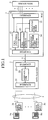
- Fig. 1 is a block diagram showing an entire configuration of an access network system like a WLL (wireless local loop) in accordance with the present invention.
- the reference numeral 1 designates a WLL access controller (WAC) of the network like a WLL.
- the WAC 1 is connected on one hand with a service node 6 of an existing network through subscriber lines 7, and on the other hand with a base station 2 (usually, with a plurality of base stations) through a trunk line 5.
- the base station 2 accommodates a plurality of user equipment 3a-3b through a wireless circuit 4.
- the user equipment 3a-3b are connected with user terminals 8a-8b which provide communication services, respectively.
- the base station 2 comprises an interface 21, a controller 22 and an interface 23.
- the interface 21 interfaces the base station 2 with the wireless circuit 4. Besides, the interface 21 monitors the wireless circuit 4 to detect an idle channel in the wireless circuit 4.
- the controller 22 controls the entire processing of the base station 2. In particular, when the server 6 makes a call request to the base station 2, the controller 22 notifies the WAC 1 that no idle channel is present in the wireless circuit 4 if the interface 21 cannot detect any available channel in the wireless circuit 4, and notifies the WAC 1 that an idle channel is detected when the interface 21 detects it.
- the interface 23 interfaces the base station 2 with the WAC 1.
- the WAC 1 comprises an interface 11, a call processor 12, a call reservation portion 13, a repeated call timer start portion 14, a repeated call timer 15 and an interface 16.
- the interface 11 interfaces the WAC 1 with the base station 2, and monitors the trunk line 5 to detect whether there is any idle channel in the trunk line 5.
- the call reservation portion 13 reserves a call processing of a call request when it receives a notification from the base station 2 through the interface 11 that there is no idle channel in the wireless circuit 4, or from the interface 11 that no idle channel is detected in the trunk line 5, and releases the call processing reservation when any idle channel is detected in the wireless circuit 4 and trunk line 5. In addition, it releases the call processing reservation when the call is disconnected by the service node 6.
- the call processor 12 carries out the entire processings associated with the call.
- the call processor 12 carries out the call processing for the user equipment 3a-3b when it receives from the base station 2 the notification that an idle channel is detected in the wireless circuit 4 during the call processing reservation.
- the repeated call timer start portion 14 reserves once again the processing of the call request and activates the timer 15, if the interface 11 cannot detect any idle channel in the wireless circuit 4 again.
- the timer 15 counts a predetermined time interval for the call processing reservation.
- the call processor 12 has the repeated call timer start portion 14 release the call processing reservation, and carries out the call processing once again after confirming the presence of the call.
- the interface 16 interfaces the WAC 1 with the service node 6 through the subscriber lines 7. Thus, the WAC 1 controls the entire user equipment 3a-3b connected to the base station 2.
- Fig. 2 is a sequence diagram illustrating a normal operation of an incoming call to one of the user equipment 3 of the access network as shown in Fig. 1, which is carried out when no channel busy is present in the wireless circuit 4 and trunk line 5.
- the normal incoming call sequence as illustrated in Fig. 2 is an example when the subscriber lines 7 are analog channels, and user terminals 8a-8b are analog terminals.
- the wireless circuit interface between the base station 2 and the user equipment 3a-3b is assumed to be PHS (Personal Handy-phone System) wireless circuit, which is shown as a mere example, and can be replaced with an alternative interface.
- Figs. 1 and 2 are used in the following descriptions of the other embodiments, as well.
- the call processor 12 of the WAC 1 sends a paging message to the called user equipment 3 via the base station 2.
- the base station 2 transmits it to the user equipment 3 via the wireless circuit 4.
- the user equipment 3 sends to the base station 2 a link channel setup request for requesting setup of a wireless channel between them.
- the base station 2 If the base station 2 holds, when it receives the link channel setup request from the user equipment 3, a wireless channel to be assigned, it sends to the user equipment 3 a link channel assignment response indicative of setting up the wireless channel. Subsequently, if wireless layers 1 and 2 have been established in this order between the base station 2 and the user equipment 3, the user equipment 3 sends back to the base station 2 a paging response message indicating that the paging sequence has been successfully achieved. Receiving the paging response message, the base station 2 sends it to the WAC 1.
- the WAC 1 When the WAC 1 receives the paging response message, it sends back to the base station 2 a setup message for setting up the call. Receiving the setup message, the base station 2 transmits to the user equipment 3 a setup message for setting up the call. Receiving the setup message, the user equipment 3 carries out a setup processing, and sends a call proceeding message back to the base station 2 as a response. When the base station 2 receives the call proceeding message, it sends a call proceeding message back to the WAC 1. Afterward, the WAC 1 carries out with the user equipment 3 through the base station 2 an authentication check and a predetermined signal sequence, thereby establishing connection between them.
- Fig. 3 is a sequence diagram illustrating the operation of the present embodiment 1 of the access network system in accordance with the present invention.
- the call processor 12 of the WAC 1 sends a paging message to the called user equipment 3 via the base station 2.
- the base station 2 transmits it to the user equipment 3 via the wireless circuit 4.
- the user equipment 3 sends to the base station 2 a link channel setup request for requesting setup of a wireless channel between them.
- the controller 22 sends to the user equipment 3 a link channel assignment rejection indicative of being unable to setup a wireless channel, and to the WAC 1 an idle wireless channel absent message.
- the base station 2 detects no idle channel in the wireless circuit 4 when it receives the paging message from the WAC 1, it can sends the idle wireless channel absent message to the WAC 1 without transmitting the paging message to the user equipment 3.
- the interface 21 of the base station 2 starts detecting an idle wireless channel when the interface 23 transmits the idle wireless channel absent message to the WAC 1, and when the interface 21 detects an idle wireless channel, the controller 22 of the base station 2 sends an idle wireless channel detection message to the WAC 1 through the interface 23.
- the call reservation portion 13 of the WAC 1 sets the incoming call in a call reservation state. Subsequently, receiving the idle wireless channel detection message from the base station 2, the call reservation portion 13 releases the call reservation, and the call processor 12 carries out, if the current subscriber line 7 from the service node 6 is still in the call state, a call processing again by sending the paging message to the base station 2, thereby achieving the call successfully. Since the following sequence as shown in Fig. 3 is the same to that of Fig. 2, description thereof will be omitted here.
- the present embodiment 1 carries out the call processing again by notifying the WAC 1 of the detection of the idle channel, even if an idle channel is not detected at first when the service node of the existing network makes a call request to the access network. This offers an advantage of being able to reduce the call loss for the incoming call.
- Fig. 4 is a sequence diagram illustrating an embodiment 2 of the access network system in accordance with the present invention.
- the sequence is the same as that of Fig. 3 from the transmission of the ringing from the service node 6 to the WAC 1 up to the transmission of the idle wireless channel absent message from the base station 2 to the WAC 1 when the base station 2 cannot detect an idle wireless channel.
- the call reservation portion 13 of the WAC 1 sets the current incoming call in the call reservation state, and activates the repeated call timer 15 using a timer value stored in the repeated call timer start portion 14 in advance.
- the call reservation portion 13 sets the incoming call in the call reservation state again, and reactivates the repeated call timer 15 to retry the repeated call processing.
- the present embodiment 2 causes the WAC 1 to carry out the repeated call processing at a fixed interval, even if an idle channel is not detected when the service node 6 of the existing network makes a call request to the access network. This offers an advantage of being able to reduce the call loss more easily than the foregoing embodiment 1.
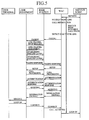
- Fig. 5 is a sequence diagram illustrating the operation of an embodiment 3 of the access network system in accordance with the present invention. If the trunk line 5 between the WAC 1 and base station 2 that accommodates the called user equipment 3 is busy when the WAC 1 receives the ringing from the service node 6, the call reservation portion 13 of the WAC 1 sets the current incoming call in the reservation state, and the interface 11 of the WAC 1 starts idle channel monitoring to detect whether any channel in the trunk line 5 becomes idle. If the interface 11 of the WAC 1 detects an idle channel in the trunk line 5, the call reservation portion 13 releases the call reservation of the current incoming call, and the call processor 12 carries out the normal call processing as shown in Fig. 2, thereby achieving the incoming call successfully.
- the WAC 1 if the WAC 1 cannot obtain an idle channel in the trunk line 5 between the WAC 1 and base station 2 when the service node 6 of the existing network makes a call request to the access network, and detects an idle channel in the trunk line 5 afterward, the WAC 1 carries out the repeated call processing. This offers an advantage of reducing the loss of the incoming call.
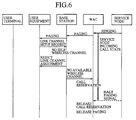
- Fig. 6 is a sequence diagram illustrating an embodiment 4 of the access network system in accordance with the present invention. This is a case in which an incoming call from the service node 6 is disconnected from the current subscriber line 7. In Fig. 6, the operation up to the call reservation is the same to that of the embodiments 1 and 2. If the incoming call from the service node 6 is disconnected from the subscriber line 7, the call reservation portion 13 of the WAC 1 releases the reservation of the incoming call, thereby setting the state of the WAC 1 in an idle state (incoming call released state).
Landscapes
- Engineering & Computer Science (AREA)
- Computer Networks & Wireless Communication (AREA)
- Signal Processing (AREA)
- Mobile Radio Communication Systems (AREA)
- Small-Scale Networks (AREA)
Applications Claiming Priority (2)
| Application Number | Priority Date | Filing Date | Title |
|---|---|---|---|
| JP10063414A JP2938846B1 (ja) | 1998-03-13 | 1998-03-13 | アクセスネットワークシステム |
| JP6341498 | 1998-03-13 |
Publications (2)
| Publication Number | Publication Date |
|---|---|
| EP0942614A2 true EP0942614A2 (de) | 1999-09-15 |
| EP0942614A3 EP0942614A3 (de) | 2000-09-20 |
Family
ID=13228619
Family Applications (1)
| Application Number | Title | Priority Date | Filing Date |
|---|---|---|---|
| EP98121423A Withdrawn EP0942614A3 (de) | 1998-03-13 | 1998-11-11 | Drahtloses Zugriffnetzwerksystem fähig zur Verringerung von Anrufverlustwahrscheinlichkeit |
Country Status (5)
| Country | Link |
|---|---|
| US (1) | US6219525B1 (de) |
| EP (1) | EP0942614A3 (de) |
| JP (1) | JP2938846B1 (de) |
| CN (1) | CN1134961C (de) |
| ID (1) | ID22178A (de) |
Cited By (3)
| Publication number | Priority date | Publication date | Assignee | Title |
|---|---|---|---|---|
| WO2001076305A1 (en) * | 2000-04-05 | 2001-10-11 | Telefonaktiebolaget L M Ericsson (Publ) | A method and apparatus for call completion in congested cells |
| US6704567B1 (en) * | 2000-09-18 | 2004-03-09 | International Business Machines Corporation | Wireless communications device and method |
| US8041827B2 (en) * | 2002-08-02 | 2011-10-18 | Broadcom Corporation | Interoperability of a network interface protocol with an internet interface protocol |
Families Citing this family (6)
| Publication number | Priority date | Publication date | Assignee | Title |
|---|---|---|---|---|
| US7127043B2 (en) * | 2001-11-01 | 2006-10-24 | Net2Phone, Inc. | Secondary subscriber line override system and method |
| US7187946B2 (en) * | 2003-10-02 | 2007-03-06 | Sprint Communications Company L.P. | Method and system for delivering wireless telephone service to customer premises via local loop telephone lines |
| US7990917B2 (en) * | 2004-06-14 | 2011-08-02 | Nextel Communications Inc. | Wireless communications system including an originator base station capable of notifying of channel resource reservation status |
| JP2006101039A (ja) * | 2004-09-28 | 2006-04-13 | Fujitsu Ltd | 情報を収集するための機能を備えた基地局装置 |
| JP4907579B2 (ja) * | 2008-03-24 | 2012-03-28 | 株式会社エヌ・ティ・ティ・ドコモ | ページング信号送信方法、無線基地局及びネットワーク装置 |
| CN115568017A (zh) * | 2021-07-02 | 2023-01-03 | 哈尔滨海能达科技有限公司 | 信道资源的分配方法、装置、系统、设备和可读存储介质 |
Family Cites Families (8)
| Publication number | Priority date | Publication date | Assignee | Title |
|---|---|---|---|---|
| JPS6053339A (ja) | 1983-09-02 | 1985-03-27 | Nec Corp | 無線回線接続方式 |
| CA1258545A (en) | 1986-04-09 | 1989-08-15 | Toshimitsu Shimizu | Communication network capable of automatically informing a subscriber of occurrence of an idle channel |
| JPH0198359A (ja) | 1987-10-12 | 1989-04-17 | Nec Corp | 加入者集線通信システム |
| US5173933A (en) * | 1990-09-25 | 1992-12-22 | World Communication Systems, Inc. | Interface between mobile telecommunication stations and trunks that link to communication carriers |
| JPH04216221A (ja) | 1990-12-17 | 1992-08-06 | Nippon Telegr & Teleph Corp <Ntt> | 移動通信着信制御方式 |
| US5226071A (en) * | 1990-12-18 | 1993-07-06 | At&T Bell Laboratories | Call path resource allocation in a wireless telecommunications system |
| US5574977A (en) * | 1995-04-17 | 1996-11-12 | Telefonaktiebolaget Lm Ericsson | System and method for providing priority access and channel assignment in a cellular telecommunication system |
| US5799012A (en) * | 1995-08-11 | 1998-08-25 | Motorola, Inc. | System controlled asymmetrical automatic repeat request protocol method |
-
1998
- 1998-03-13 JP JP10063414A patent/JP2938846B1/ja not_active Expired - Fee Related
- 1998-10-13 US US09/170,058 patent/US6219525B1/en not_active Expired - Fee Related
- 1998-10-22 CN CNB981245536A patent/CN1134961C/zh not_active Expired - Fee Related
- 1998-11-11 EP EP98121423A patent/EP0942614A3/de not_active Withdrawn
- 1998-11-25 ID IDP981533A patent/ID22178A/id unknown
Cited By (4)
| Publication number | Priority date | Publication date | Assignee | Title |
|---|---|---|---|---|
| WO2001076305A1 (en) * | 2000-04-05 | 2001-10-11 | Telefonaktiebolaget L M Ericsson (Publ) | A method and apparatus for call completion in congested cells |
| US6631270B1 (en) | 2000-04-05 | 2003-10-07 | Telefonaktiebolaget Lm Ericsson (Publ) | Method and apparatus for call completion in congested cells |
| US6704567B1 (en) * | 2000-09-18 | 2004-03-09 | International Business Machines Corporation | Wireless communications device and method |
| US8041827B2 (en) * | 2002-08-02 | 2011-10-18 | Broadcom Corporation | Interoperability of a network interface protocol with an internet interface protocol |
Also Published As
| Publication number | Publication date |
|---|---|
| US6219525B1 (en) | 2001-04-17 |
| ID22178A (id) | 1999-09-16 |
| CN1134961C (zh) | 2004-01-14 |
| JP2938846B1 (ja) | 1999-08-25 |
| EP0942614A3 (de) | 2000-09-20 |
| CN1229317A (zh) | 1999-09-22 |
| JPH11262068A (ja) | 1999-09-24 |
Similar Documents
| Publication | Publication Date | Title |
|---|---|---|
| RU2188517C2 (ru) | Способ работы радиотелефонной системы для предоставления экстренного обслуживания радиотелефона и радиотелефон, приспособленный для использования в совместимой радиотелефонной системе | |
| US5327480A (en) | Method and apparatus in a communication system for completing an inbound call | |
| US6215782B1 (en) | Method for reconnecting calls in a wireless telecommunications system | |
| US20010021650A1 (en) | Communication control for a user of a central communication center | |
| JP2001522213A (ja) | ネットワーク要素の監視 | |
| US6219525B1 (en) | Access network system capable of reducing call loss probability | |
| JP2996730B2 (ja) | 通話の衝突を処理する方法 | |
| KR20010028105A (ko) | 이동통신망에서의 불완료호 처리 방법 | |
| JP3083752B2 (ja) | 緊急呼制御方式 | |
| KR100250432B1 (ko) | 이동 교환기에서의 데이터 서비스 제어 방법 | |
| EP1190559A4 (de) | Verfahren und system zur benachrichtigung eines anrufes über die verfügbarkeit eines mobieltelefonziels | |
| KR0145379B1 (ko) | 이동통신 시스템에서의 발신 정보 서비스 방법 | |
| JP3367605B2 (ja) | コールバック通信制御方法とそのシステム | |
| JP3080901B2 (ja) | 多方向多重通信システムにおけるisdnサービス方法 | |
| JP3233216B2 (ja) | Wllシステムの発信加入者番号表示サービス付加入者端末の着信呼処理方法とその装置 | |
| JP3478249B2 (ja) | 緊急呼自動再接続方式 | |
| JP3028936B2 (ja) | デジタルコードレス電話システムとデジタル電話システム | |
| JPH08223647A (ja) | 優先接続通話機能を有する移動通信システム | |
| JP2000106692A (ja) | 携帯型電話機 | |
| JPH05130022A (ja) | 移動体通信網における隣接通話帯域予約接続方式 | |
| JP3319587B2 (ja) | ワイヤレスローカルループシステム | |
| JP3397719B2 (ja) | 電気通信網による呼の保留・接続方法 | |
| KR100315694B1 (ko) | 이동통신시스템의 우선 발신 대기호 유지 시스템 및 방법 | |
| JP2000023231A (ja) | 自動再接続方法 | |
| JPH05327581A (ja) | スケルチ検出時の通話回線処理方式 |
Legal Events
| Date | Code | Title | Description |
|---|---|---|---|
| PUAI | Public reference made under article 153(3) epc to a published international application that has entered the european phase |
Free format text: ORIGINAL CODE: 0009012 |
|
| AK | Designated contracting states |
Kind code of ref document: A2 Designated state(s): DE ES FI FR GB SE |
|
| AX | Request for extension of the european patent |
Free format text: AL;LT;LV;MK;RO;SI |
|
| PUAL | Search report despatched |
Free format text: ORIGINAL CODE: 0009013 |
|
| AK | Designated contracting states |
Kind code of ref document: A3 Designated state(s): AT BE CH CY DE DK ES FI FR GB GR IE IT LI LU MC NL PT SE |
|
| AX | Request for extension of the european patent |
Free format text: AL;LT;LV;MK;RO;SI |
|
| 17P | Request for examination filed |
Effective date: 20001122 |
|
| AKX | Designation fees paid |
Free format text: DE ES FI FR GB SE |
|
| 17Q | First examination report despatched |
Effective date: 20050117 |
|
| RAP1 | Party data changed (applicant data changed or rights of an application transferred) |
Owner name: MITSUBISHI DENKI KABUSHIKI KAISHA |
|
| GRAP | Despatch of communication of intention to grant a patent |
Free format text: ORIGINAL CODE: EPIDOSNIGR1 |
|
| STAA | Information on the status of an ep patent application or granted ep patent |
Free format text: STATUS: THE APPLICATION HAS BEEN WITHDRAWN |
|
| 18W | Application withdrawn |
Effective date: 20070403 |