EP0945834A2 - Verbesserte Vorrichtung und System zum Lesen von optischen Karten und Verfahren zu dessen Gebrauch - Google Patents
Verbesserte Vorrichtung und System zum Lesen von optischen Karten und Verfahren zu dessen Gebrauch Download PDFInfo
- Publication number
- EP0945834A2 EP0945834A2 EP99400659A EP99400659A EP0945834A2 EP 0945834 A2 EP0945834 A2 EP 0945834A2 EP 99400659 A EP99400659 A EP 99400659A EP 99400659 A EP99400659 A EP 99400659A EP 0945834 A2 EP0945834 A2 EP 0945834A2
- Authority
- EP
- European Patent Office
- Prior art keywords
- read
- memory
- write component
- write
- electronic
- Prior art date
- Legal status (The legal status is an assumption and is not a legal conclusion. Google has not performed a legal analysis and makes no representation as to the accuracy of the status listed.)
- Withdrawn
Links
Images

Classifications
-
- G—PHYSICS
- G07—CHECKING-DEVICES
- G07F—COIN-FREED OR LIKE APPARATUS
- G07F7/00—Mechanisms actuated by objects other than coins to free or to actuate vending, hiring, coin or paper currency dispensing or refunding apparatus
- G07F7/08—Mechanisms actuated by objects other than coins to free or to actuate vending, hiring, coin or paper currency dispensing or refunding apparatus by coded identity card or credit card or other personal identification means
- G07F7/10—Mechanisms actuated by objects other than coins to free or to actuate vending, hiring, coin or paper currency dispensing or refunding apparatus by coded identity card or credit card or other personal identification means together with a coded signal, e.g. in the form of personal identification information, like personal identification number [PIN] or biometric data
- G07F7/1008—Active credit-cards provided with means to personalise their use, e.g. with PIN-introduction/comparison system
-
- G—PHYSICS
- G06—COMPUTING OR CALCULATING; COUNTING
- G06K—GRAPHICAL DATA READING; PRESENTATION OF DATA; RECORD CARRIERS; HANDLING RECORD CARRIERS
- G06K7/00—Methods or arrangements for sensing record carriers, e.g. for reading patterns
- G06K7/0004—Hybrid readers
-
- G—PHYSICS
- G06—COMPUTING OR CALCULATING; COUNTING
- G06Q—INFORMATION AND COMMUNICATION TECHNOLOGY [ICT] SPECIALLY ADAPTED FOR ADMINISTRATIVE, COMMERCIAL, FINANCIAL, MANAGERIAL OR SUPERVISORY PURPOSES; SYSTEMS OR METHODS SPECIALLY ADAPTED FOR ADMINISTRATIVE, COMMERCIAL, FINANCIAL, MANAGERIAL OR SUPERVISORY PURPOSES, NOT OTHERWISE PROVIDED FOR
- G06Q20/00—Payment architectures, schemes or protocols
- G06Q20/30—Payment architectures, schemes or protocols characterised by the use of specific devices or networks
- G06Q20/34—Payment architectures, schemes or protocols characterised by the use of specific devices or networks using cards, e.g. integrated circuit [IC] cards or magnetic cards
- G06Q20/341—Active cards, i.e. cards including their own processing means, e.g. including an IC or chip
-
- G—PHYSICS
- G06—COMPUTING OR CALCULATING; COUNTING
- G06Q—INFORMATION AND COMMUNICATION TECHNOLOGY [ICT] SPECIALLY ADAPTED FOR ADMINISTRATIVE, COMMERCIAL, FINANCIAL, MANAGERIAL OR SUPERVISORY PURPOSES; SYSTEMS OR METHODS SPECIALLY ADAPTED FOR ADMINISTRATIVE, COMMERCIAL, FINANCIAL, MANAGERIAL OR SUPERVISORY PURPOSES, NOT OTHERWISE PROVIDED FOR
- G06Q20/00—Payment architectures, schemes or protocols
- G06Q20/30—Payment architectures, schemes or protocols characterised by the use of specific devices or networks
- G06Q20/34—Payment architectures, schemes or protocols characterised by the use of specific devices or networks using cards, e.g. integrated circuit [IC] cards or magnetic cards
- G06Q20/357—Cards having a plurality of specified features
- G06Q20/3576—Multiple memory zones on card
-
- G—PHYSICS
- G06—COMPUTING OR CALCULATING; COUNTING
- G06Q—INFORMATION AND COMMUNICATION TECHNOLOGY [ICT] SPECIALLY ADAPTED FOR ADMINISTRATIVE, COMMERCIAL, FINANCIAL, MANAGERIAL OR SUPERVISORY PURPOSES; SYSTEMS OR METHODS SPECIALLY ADAPTED FOR ADMINISTRATIVE, COMMERCIAL, FINANCIAL, MANAGERIAL OR SUPERVISORY PURPOSES, NOT OTHERWISE PROVIDED FOR
- G06Q20/00—Payment architectures, schemes or protocols
- G06Q20/38—Payment protocols; Details thereof
- G06Q20/40—Authorisation, e.g. identification of payer or payee, verification of customer or shop credentials; Review and approval of payers, e.g. check credit lines or negative lists
- G06Q20/409—Device specific authentication in transaction processing
- G06Q20/4093—Monitoring of device authentication
Definitions
- the present invention generally relates to a method, system, and apparatus for reading from and writing to a multi-memory card, such as a bankcard, credit card, smart card or the like.
- CMOS complementary metal-oxide-semiconductor
- CMOS complementary metal-oxide-semiconductor
- IC integrated circuit
- Magnetic stripe memories are used to provide identifying information when inserted into a conventional reader and are not generally known for their ability to have information written thereto, although this function is possible.
- the optical stripe is useful for its' ability to function in both a reading and writing capacity with significantly more memory than the magnetic stripe memories.
- the chip memories while more limited in memory capacity than the optical stripe memory, are extremely useful in their ability to actually store and run programs for manipulating transaction data.
- the apparatus of the system includes reading devices, writing devices, and controllers for transporting the multi-memory cards between read/write components.
- the method of the present invention includes a method for controlling the reading from and writing to multi-memory cards.
- the software applications of an embodiment of the present invention integrate control of a magnetic read/write component, an optical read/write component, an electronic read/write component and their respective transport mechanisms.
- the software applications thus integrate the multiple read/write components to allow such functions as for example bank and medical transactions to be performed utilizing a single multi-memory card.
- An embodiment of the present invention includes a method for controlling the reading from and writing to a multi-memory card comprising: positioning a first memory of the multi-memory card within a first read/write component to facilitate reading from the first read/write component; reading information from the first memory; providing selectable functions in the form of a menu to a user; receiving a first selected function, the first selected function having an associated second read/write component; transporting the multi-memory card to the second read/write component according to the first selected function; positioning a second memory of the multi-memory card within the second read/write component to facilitate reading from and writing to a second read/write component; and performing the first selected function.
- An embodiment of the present invention includes a system for reading from and writing to a multi-memory card comprising: means for positioning a first memory of the multi-memory card within a first read/write component to facilitate reading from the first read/write component; means for reading information from the first memory; means for providing selectable functions in the form of a menu to a user; means for receiving a first selected function, the first selected function having an associated second read/write component; means for transporting the multi-memory card to the second read/write component according to the first selected function; means for positioning a second memory of the multi-memory card within the second read/write component to facilitate reading from and writing to a second read/write component; and means for performing the first selected function.
- An embodiment of the present invention includes a system for reading from and writing to a multi-memory card comprising: a read/write device; a transport device connected to the read/write device for transporting the multi-memory card within the read/write device; and a control device operatively coupled to the transport device and the read/write device for controlling the transport device and the read/write device.
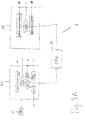
- a first embodiment of the present invention includes a dual memory read/write system 1 comprising an optical read/write component 35 having a laser type module as is known in the art, for use with an optical stripe (described above) and an electronic read/write component 25 having an electronic contact or contactless module as is known in the art, for use with a chip memory (described above) located on the same card.
- a dual memory read/write system 1 comprising an optical read/write component 35 having a laser type module as is known in the art, for use with an optical stripe (described above) and an electronic read/write component 25 having an electronic contact or contactless module as is known in the art, for use with a chip memory (described above) located on the same card.
- optical read/write technology is similar to a readable and writeable compact disc read-only memory (CD ROM) and requires a very precise writing and reading of the information on the optical stripe for a multi-memory card.
- an embodiment of the present invention includes a conventional optical read/write component 35 having a laser head that moves in a precise manner, such that writing occurs on the optical stripe. High precision is necessary to accommodate the physical size of the cards, such as smart cards or credit cards, and the relatively small size of the stripe compared to the size of the card.
- the card is moved in both an X and a Y axis, via motor 37 by an optical transport mechanism 36 in the form of two linear accelerators inside the invention.
- the operation of the optical read/write component 35, including the motor 37 and the optical transport mechanism 36, is controlled by an optical transport controller 38 such as a microprocessor.
- An embodiment of the present invention also includes an electronic contact module meeting the International Standards Organization (ISO) 7816-2 and 7816-3 standards or a contactless module adhering to ISO-14443 standards (currently in work) for use with the chip memory of the multi-memory card.
- the electronic read/write component 25 for use with the chip memory includes either a conventional reader for contacting at least six of the eight contact points comprising the electronic contact module or a conventional contactless reader that utilizes known antenna/receiver technology in order to transfer data to and from the contactless antenna module embedded in the multi-memory card.
- This multi-memory card employing both an optical stripe as well as a chip memory, requires a dual read/write system.
- an electronic read/write component is attached to the front of an existing optical read/write component as is illustrated in Figure 5A.
- an electronic motor controlled transport mechanism hereafter “electronic transport mechanism" 26 that draws the card to a read/write station, where the electronic read head (contacts) are brought down on the chip memory module on the multi-memory card, or, in the case of a contactless chip memory module, the module is brought within an appropriate distance of the contactless reader.
- optical sensors for example, are utilized to determine positioning.
- the electronic transport mechanism 26 may be directed via an electronic transport controller 28 and a central processing unit 39 to feed the multi-memory card into the optical read/write component 35. Likewise, the steps of transporting and positioning the multi-memory card may be reversed and/or repeated as necessary, depending on user input commands.
- a multi-memory read/write system 10 includes a combination of a magnetic read/write component 20, having a magnetic read/write head for use with a magnetic stripe; an optical read/write component 35, having a laser type module for use with an optical stripe (described later) and an electronic read/write component 25, having an electronic contact or contactless module for use with a chip memory (described above) located on the same card.
- the magnetic read/write head it is possible to configure the magnetic read/write head such that it moves relative to a stationary multi-memory card via a customary servo-motor and control circuitry or via a conventional spring powered system.
- the magnetic read/write head may remain stationary while the magnetic contact module portion (e.g., magnetic stripe) of the multi-memory card is moved via a motor controlled magnetic transport mechanism 21.
- the operation of the magnetic read/write component 20, including the magnetic transport mechanism 21 and motor 22, is controlled by a magnetic transport controller 23, such as a microprocessor.
- optical and electronic read/write components comprising this second embodiment are substantially the same as those employed in the above embodiment.
- a second embodiment of the present invention includes a magnetic read/write component attached to the front of an existing electronic read/write component, which in turn fits onto the front of an existing, independent optical read/write device (illustrated in Figure 5B).
- the magnetic read/write component e.g., the magentic read/write head
- the second embodiment further includes a magnetic transport mechanism 21 that initially draws the multi-memory card to a first read station, where a magnetic contact module of the card is mechanically moved relative to the stationary magnetic read/write component so as to obtain identification information about the card user.
- This identification information could, for example, include social security number, driver license information, and passport information.
- the magnetic transport mechanism 21 feeds the multi-memory card to an electronic transport mechanism 26, which transfers the card to an electronic read/write component 25, where, depending on the type of electronic module section (e.g., contact or contactless), the electronic read/write head contacts are brought down on the electronic memory module on the card or the electronic transport mechanism 26 positions the card in close enough proximity to the electronic read/write antenna component so as to facilitate data transfer. If after reading has been performed, it is determined that additional information exists on the optical stripe memory, the electronic transport mechanism 26 may be directed via user command and/or software programming programming to feed the multi-memory card to an optical transport mechanism 36, which transfers the card to an optical read/write component 35.
- the functions of transporting and positioning between and within the different read/write components may be repeated and reversed as required by user selected functions and/or software programming.
- the user commands in both of the first and second embodiments are performed via a program on a central processing unit (CPU) 39, such as a personal computer (PC), a customer activated terminal (CAT), or an automatic teller machine (ATM), to direct the magnetic transport mechanism 20 via a magnetic transport controller 21 or the electronic transport mechanism 26 via an electronic transport controller 28, to feed the multi-memory card into the appropriate read/write component.
- CPU central processing unit
- PC personal computer
- CAT customer activated terminal
- ATM automatic teller machine
- the PC, ATM or CAT are capable of performing the conventional input/output functions via keyboards, touchscreens, display screens and the like.
- separate software applications control the individual elements of the separate read/write components (e.g., an optical software application developed by Laser Card TechnologyTM is used to read from and write to the optical stripe, while another application acts to prompt the separate control applications in response to user input and to collect and synthesize the read/write information from the magnetic, electronic and optical read/write components, respectively.
- an optical software application developed by Laser Card TechnologyTM is used to read from and write to the optical stripe
- another application acts to prompt the separate control applications in response to user input and to collect and synthesize the read/write information from the magnetic, electronic and optical read/write components, respectively.
- control of the various components of the present invention is provided by connection to a CPU in the form of a PC that includes connection to numerous ports through separate cables or through stand alone operation, which is accomplished by combining into a cabinet a single board PC computer running a user interface, such as a system in Windows® software.
- the keyboard and a monitor are centrally connected to the stand-alone system.
- An advantage of the single board computer embodiment is that more secure transactions are performable since communication to the subsystem can include encryption of data. For example, in one embodiment, decryption key is generated from the chip memory and is used to encrypt data that is put on the optical stripe. These steps are performed in a single enclosure so that connection between components is less susceptible to interference or compromise.
- the individual read/write components connect into the PC separately. If a single PC is used, there is a possibility of interference with or compromise of the security of the encrypted data.
- the electronic read/write component 25 includes a conventional electronic read/write component, such as the BULLTM reader and other conventional elements developed by OmronTM of Kyoto, Japan, which improved it so as to fit it on the front of the optical read/write component 35.
- Conventional operating elements contemplated by the electronic read/write component 25 of the present invention include side-plates, mountings, belts, gears, rollers, a motor, and a card control head, which has a solenoid-operated card contact tip, examples of which are made by GEMPLUSTM USA of Montgomeryville, Pennsylvania and BULLTM of Louveciennes, France. These conventional operating components are known in the art.
- inventions of the present invention may include an improved face-plate for the electronic read/write component 25, which is extended and remounted to the front of the electronic transport mechanism.
- the face plate of one embodiment extends about 2 3/4 inches.
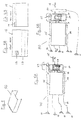
- Figure 3 shows a cover 50 for the multi-memory card read/write system described in embodiments of the present invention and illustrated in Figures 5A and 5B.
- the cover 50 shown in Figure 3 serves as a cover for the multi-memory card read/write systems, shown in Figures 5A and 5B.
- the first multi-memory card read/write system 70 includes an optical read/write component 35 and an added electronic read/write component 25.
- Figure 5A shows the optical read/write component 35 with a power cord 53 and a connector 54 connectable to a PC (not shown) controller.
- the electronic transport controller 28 Independent of this optical read/write component 35 is the electronic transport controller 28 that attaches to the side of the optical read/write component 35 and is bolted in place.
- the existing front cover (not shown) is removed from the optical read/write component 35, and a new cover (not shown in FIG. 5A; see FIG. 3) is refastened to the optical read/write component 35 and additional components.
- the new cover (not shown) is fabricated so that it is longer by the length of the electronic transport controller.
- components of an embodiment of the present invention depicted in Figure 5A include an electronic contact head 56 on the electronic transport mechanism 26; the electronic contact head (solenoid 57 operated) 56 is also adjacent to the motor 27. Also part of the electronic read/write component is a separate off-the-shelf chip reader 51. The output of this chip reader 51 is connected to, for example, a COM1 port on a PC (not shown). The chip reader 51 is also connected 60 to the electronic contact head 56.
- an electronic transport controller 28 for providing motor 27 control and optical card position sensor 30 control in conjunction with the solenoid 57 control.
- the electronic transport controller 28 comprised of a circuit board with programming on it, centers and positions the card 15 via the electronic transport mechanism 26, underneath the electronic contact head 56. Control is via a solenoid 57; the card is pulled down so that the contacts on the electronic contact head 56 contact the contacts on the smart card (not shown in Figure 5A; see Figure 4A).
- the circuit board (not shown) of the electronic transport controller 28 is also connected 59 to, for example, the COM2 port 55 of a PC (not shown).
- the two connectors -- from the chip reader 51 and the electronic transport controller 28-- are connected to COM1 52 and COM2 55 of a PC (not shown).
- a software application on the PC controls reading from and writing to the multi-memory card, positioning of the multi-memory card, and moving of the multi-memory card through this mechanism into the optical read/write component 35.
- the present invention thus includes software for the optical read/write component 35, and the necessary control and timing is also provided by the software to move and retrieve the multi-memory card from the optical read/write component 35.
- a conventional magnetic read/write component 20 is added to the front of the electronic read/write component 25 without adding any significant length to the first multi-memory card read/write system 70, the result being multi-memory card read/write system 80 as is shown in Figure 5B.
- Magnetic read/write component 20 is connected to a PC (not shown) via, for example, a COM port connection 61. Since the conventional magnetic read/write component 20 will have a face plate (not shown) incorporated thereon, the face plate that was added to the electronic read/write component 25 corresponding to the first embodiment of the present invention is no longer necessary and its length can be replaced by the magnetic read/write component 20, such that cover 50 may be used to enclose either system 70 or system 80.
- the magnetic transport mechanism 21 first receives the card 15 and upon completion of reading from and/or writing thereto, passes the card off to the electronic transport mechanism 25. At this point, system 80 operates in accordance with system 70 described below.
- the optical read/write component 35 when the optical read/write component 35 completes its function of reading and/or writing, it ejects or passes the card 15 back to the electronic read/write component 25 via the electronic transport mechanism 28, which either repositions the card 15 if further reading from or writing thereto is necessary, or dispenses the card 15 directly to the user.
- the electronic transport mechanism 26 passes the card to the magnetic read/write component 20 via the magnetic transport mechanism 21, which dispenses the card 15 to the user.
- the electronic transport controller 28 is located separately from the electronic read/write component 25. It is bolted to the bottom of the optical read/write component where it takes up relatively little space due to its circuit board configuration.
- the optical transport controller 38 and the magnetic transport controller 23 are relatively compact in their configuration compared to the electronic transport controller 28 due to their prolonged public use, which has resulted in refinement and significant improvement in lowering size specifications.
- Figures 4A and 4B depict the front and back views of a credit card sized card 15 that has an optical stripe 13 on the front of the multi-memory card, which is approximately 3/4 of an inch in width and runs the full length of the card 15 on the lower third of the card 15, in accordance with to the standard set forth in the ISO.
- the optical memory covers one entire side of the multi-memory card so as to expand memory capabilities.
- Figure 4A also shows an electronic memory module 12, which is located in the standard ISO position on the front of the card.
- Figure 4B depicts a magnetic stripe on the back of the card in conformance with applicable ISO standards.
- a third embodiment of this invention provides a method for controlling the reading from and writing to a multi-memory card by exploiting the ability of the present invention to have independent software programs running the optical read/write component, the electronic read/write component and the electronic transport controller, while simultaneously employing another software program to integrate the data from the individual programs and provide appropriate commands and information to the user.
- an embodiment of the present invention includes a graphical user interface (GUI) in the integrating software.
- GUI graphical user interface
- An embodiment of the GUI includes user screens or menus.
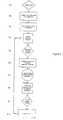
- a user screen begins with a screen that asks the user to "Please insert your card.”
- the card is then inserted and received initially by the electronic read/write component S1.
- the user is then provided with a first menu having a series of selectable functions on the menu S4.
- the selectable functions provided to the user via the menu include, reading information from the card and writing information to the card.
- the selectable functions include but are not limited to, resetting select memories, reviewing accounts (e.g., checking, savings, money market, mutual fund, and medical), reconciling accounts with retrieved information from one or both of an internal source and an outside source, updating account balances with information retrievable from outside sources (e.g., deposit information and other recent transaction information), transferring money or balances between memories, and dispensing the card from the system.
- reviewing accounts e.g., checking, savings, money market, mutual fund, and medical
- reconciling accounts with retrieved information from one or both of an internal source and an outside source updating account balances with information retrievable from outside sources (e.g., deposit information and other recent transaction information), transferring money or balances between memories, and dispensing the card from the system.
- the upper level application engages the lower level application S6 to perform the transporting and positioning of the multi-memory card.
- the invention under the direction of the CPU and the upper level application, automatically transports the card into the optical read/write component S7, positions the card in order to facilitate read/write functions S8, and obtains information from the optical stripe or adds information to the optical stripe, in response to user's selection from the menu S9.
- the results of the selected function are displayed to the user S10 along with another menu S4, thus beginning the process again.
- the card upon the user inserting the card in response to the "Please insert your card” prompt, the card is received by the magnetic read/write component S1, positioned therein S2 and information is read for this component for identification purposes S3.
- the user is presented with the menu S4, as in the previous embodiment, and the multi-memory card is automatically repositioned or ejected in response to the user's selected function.
- a selectable function for the user is to "Read my transaction log," and the system proceeds to read the transaction log from the chip memory and displays the read information on the screen associated with the CPU. If there are multiple tracks of transaction logs (e.g., for a checking account, savings, purchases), the next screen that comes up after pressing "Read transaction log” asks the user to specify "Which one?" of the accounts from which to read the transaction log. The user can then bring up these logs and see what transactions have been performed as recorded on the chip memory.
- the user upon insertion of the multi-memory card and presentation of the menu, the user chooses the selectable function of performing a transaction in the chip memory.
- the user has reached the limit of the number of transactions that the user may conduct and store in the chip memory.
- the menu provides the user with a selectable function to reset the chip memory transaction log, which, in this example results, in recorded transactions being written to the optical stripe for long term storage.
- the sequence for this example is as follows: the user is prompted to confirm, "Reset my transaction logs," or "Reset my chip memory”; upon confirmation, the electronic transport mechanism feeds the card into the optical transport mechanism, which positions the card to facilitate optical read/write functions.
- the application After the user selects the selectable function to "Reset my chip memory,” the application obtains the transaction logs from the chip memory, stores these transaction logs in a buffer, and ultimately writes the transaction logs to the optical stripe.
- the user Upon completion of these reading and writing steps, the user is again provided with a menu having selectable functions, including the function, "Review the backup logs.” If the user selects this function, the backup logs are displayed to the user on the screen.
- the user is provided with an option to review not only the most recent logs, but also information over any time period the user selects. This option is performed either through programming or by retrieval from the optical stripe portion of the card.
- the user upon insertion of the multi-memory card and presentation of the menu, the user chooses the selectable function, "Update balances" or "Reconcile balances". These are balances resulting from the user conducting purchases with the multi-memory card at merchants using checking, savings, or stored value accounts. These transactions are also part of the transaction logs that are generated, and these selectable functions reconcile balances for these accounts and transactions on the multi-memory card's optical stripe with dates and other information, as necessary.
- the user upon insertion of the multi-memory card and presentation of the menu, the user chooses the selectable function, "Add deposits" which is followed by a menu of selected functions asking the user "To which account” (e.g., checking, savings, money market). Selection of this selectable function results in the upper level application checking the system for available deposit value information and adding the information to the selected track of the multi-memory card's optical stripe.
- the system automatically performs the function of reconciling with the balance in the selected account, and the user is provided with another menu that includes the selectable function of transferring money to the chip memory to, for example, replenish what the user may have used in previous transactions from checking, savings, or stored value.
- the user can select to have less than the total amount in the chip memory, select to indicate what is available in the chip memory, and select to designate an amount of money to use for transactions (e.g., for the next week of transactions).
- the user is provided with and may select the selectable function, "Exit,” which dispenses the card from the system and returns to the original screen of the CPU which prompts the next user to "Please insert your card.”
Landscapes
- Engineering & Computer Science (AREA)
- Business, Economics & Management (AREA)
- General Physics & Mathematics (AREA)
- Physics & Mathematics (AREA)
- Accounting & Taxation (AREA)
- Theoretical Computer Science (AREA)
- Strategic Management (AREA)
- General Business, Economics & Management (AREA)
- Microelectronics & Electronic Packaging (AREA)
- Computer Networks & Wireless Communication (AREA)
- Computer Security & Cryptography (AREA)
- Computer Vision & Pattern Recognition (AREA)
- Artificial Intelligence (AREA)
- Finance (AREA)
- Credit Cards Or The Like (AREA)
- Signal Processing For Digital Recording And Reproducing (AREA)
- Financial Or Insurance-Related Operations Such As Payment And Settlement (AREA)
Applications Claiming Priority (4)
| Application Number | Priority Date | Filing Date | Title |
|---|---|---|---|
| US7850698P | 1998-03-18 | 1998-03-18 | |
| US78506 | 1998-03-18 | ||
| US7936698P | 1998-03-26 | 1998-03-26 | |
| US79366 | 1998-03-26 |
Publications (2)
| Publication Number | Publication Date |
|---|---|
| EP0945834A2 true EP0945834A2 (de) | 1999-09-29 |
| EP0945834A3 EP0945834A3 (de) | 2001-05-02 |
Family
ID=26760620
Family Applications (1)
| Application Number | Title | Priority Date | Filing Date |
|---|---|---|---|
| EP99400659A Withdrawn EP0945834A3 (de) | 1998-03-18 | 1999-03-17 | Verbesserte Vorrichtung und System zum Lesen von optischen Karten und Verfahren zu dessen Gebrauch |
Country Status (3)
| Country | Link |
|---|---|
| US (1) | US6840446B2 (de) |
| EP (1) | EP0945834A3 (de) |
| JP (1) | JP2000067185A (de) |
Cited By (2)
| Publication number | Priority date | Publication date | Assignee | Title |
|---|---|---|---|---|
| WO2002011081A1 (de) * | 2000-07-31 | 2002-02-07 | Orga Kartensysteme Gmbh | Datenträger mit optischem speicher |
| EP1125261B1 (de) * | 1998-11-07 | 2005-09-07 | NCR International, Inc. | Chipkarte mit Konsolidierungsmitteln und Verfahren zu ihrem Betrieb |
Families Citing this family (13)
| Publication number | Priority date | Publication date | Assignee | Title |
|---|---|---|---|---|
| US7805378B2 (en) * | 2001-07-10 | 2010-09-28 | American Express Travel Related Servicex Company, Inc. | System and method for encoding information in magnetic stripe format for use in radio frequency identification transactions |
| DE10317257A1 (de) * | 2003-04-14 | 2004-11-04 | Giesecke & Devrient Gmbh | Kontaktloser Datenträger |
| DE10318121A1 (de) * | 2003-04-22 | 2004-11-11 | Robert Bosch Gmbh | Vorrichtung zur Programmierung eines Steuergerätes |
| US7013365B2 (en) | 2003-06-16 | 2006-03-14 | Michael Arnouse | System of secure personal identification, information processing, and precise point of contact location and timing |
| US7043754B2 (en) * | 2003-06-12 | 2006-05-09 | Michael Arnouse | Method of secure personal identification, information processing, and precise point of contact location and timing |
| US7472275B2 (en) * | 2003-06-13 | 2008-12-30 | Michael Arnouse | System and method of electronic signature verification |
| US7500107B2 (en) | 2004-02-09 | 2009-03-03 | Michael Arnouse | Log-in security device |
| JP4781033B2 (ja) * | 2004-08-10 | 2011-09-28 | キヤノン株式会社 | 認証システム、処理方法、プログラム及び記録媒体 |
| US7441709B2 (en) * | 2005-03-23 | 2008-10-28 | Endicott Interconnect Technologies, Inc. | Electronic card assembly |
| US8033467B2 (en) | 2007-07-30 | 2011-10-11 | Lasercard Corporation | Portable optical card readers |
| US20090159709A1 (en) * | 2007-12-24 | 2009-06-25 | Dynamics Inc. | Advanced dynamic credit cards |
| US9792463B2 (en) * | 2011-07-28 | 2017-10-17 | Kenneth L. Miller | Combination magnetic stripe and contactless chip card reader |
| US9949545B2 (en) * | 2014-11-26 | 2018-04-24 | L'oreal | Hair coloring appliance |
Family Cites Families (26)
| Publication number | Priority date | Publication date | Assignee | Title |
|---|---|---|---|---|
| US4609812A (en) * | 1981-02-27 | 1986-09-02 | Drexler Technology Corporation | Prerecorded dual strip data storage card |
| JPS6191790A (ja) * | 1984-10-12 | 1986-05-09 | カシオ計算機株式会社 | カ−ド照合装置 |
| NL8503410A (nl) * | 1985-12-11 | 1987-07-01 | Philips Nv | Inrichting voor het overdragen van informatie tussen een elektronische geheugenkaart en een dataverwerkende eenheid. |
| US4804825A (en) * | 1986-06-17 | 1989-02-14 | Casio Computer Co., Ltd. | I C card system |
| WO1988001818A1 (en) | 1986-09-02 | 1988-03-10 | Wright Christopher B | Automated transaction system using microprocessor cards |
| JPS63253493A (ja) * | 1987-04-09 | 1988-10-20 | Mitsubishi Electric Corp | 情報記録システム |
| FR2618002B1 (fr) * | 1987-07-10 | 1991-07-05 | Schlumberger Ind Sa | Procede et systeme d'authentification de cartes a memoire electronique |
| JPH01222391A (ja) * | 1987-11-27 | 1989-09-05 | Nhk Spring Co Ltd | 情報記憶カードリーダライタ |
| DE68919483T2 (de) * | 1988-02-20 | 1995-04-06 | Fujitsu Ltd | Chipkarten. |
| US5012076A (en) * | 1988-03-02 | 1991-04-30 | Hitachi, Ltd. | Transaction method wherein transaction amount is compared with account balance before ID is entered |
| JPH0622030B2 (ja) | 1988-10-03 | 1994-03-23 | 富士通株式会社 | 取引の正当性確認方式 |
| US5276312A (en) * | 1990-12-10 | 1994-01-04 | Gtech Corporation | Wagering system using smartcards for transfer of agent terminal data |
| US5332890A (en) * | 1991-08-08 | 1994-07-26 | Olympus Optical Co., Ltd. | Hybrid card and its recording/reproducing apparatus |
| US5708851A (en) * | 1991-12-18 | 1998-01-13 | Olympus Optical Company, Ltd. | System for managing information by using hybrid card in main and subdata processing apparatuses |
| JPH05205115A (ja) * | 1992-01-28 | 1993-08-13 | Nec Corp | 磁気ストライプ付カード |
| JPH07141446A (ja) | 1993-11-15 | 1995-06-02 | Hitachi Ltd | 現金自動取引装置及び顧客携帯用取引きカード |
| US5530232A (en) * | 1993-12-22 | 1996-06-25 | Datamark Services, Inc. | Multi-application data card |
| US6021393A (en) * | 1994-04-19 | 2000-02-01 | Nippon Conlux Co., Ltd. | Medical information management system |
| US6029887A (en) * | 1994-07-18 | 2000-02-29 | Ntt Data Communications Systems Corporation | Electronic bankbook and processing system for financial transaction information using electronic bankbook |
| GB9422803D0 (en) * | 1994-11-11 | 1995-01-04 | At & T Global Inf Solution | A card reader |
| DE19528297A1 (de) * | 1995-08-02 | 1997-02-06 | Bayer Ag | Einheit aus Datenspeicherkarte und Schreib-/Lese-Gerät |
| JPH0950492A (ja) * | 1995-08-09 | 1997-02-18 | Olympus Optical Co Ltd | 情報処理装置 |
| JPH09114944A (ja) * | 1995-10-19 | 1997-05-02 | Nippon Conlux Co Ltd | カード及びその処理装置 |
| CA2197283A1 (en) * | 1996-02-13 | 1997-08-14 | Mikio Horiuchi | Card and information recording card and method of using the same |
| JPH09237298A (ja) | 1996-02-29 | 1997-09-09 | Hitachi Ltd | 電子通貨決済システム |
| US5834756A (en) * | 1996-06-03 | 1998-11-10 | Motorola, Inc. | Magnetically communicative card |
-
1999
- 1999-03-17 EP EP99400659A patent/EP0945834A3/de not_active Withdrawn
- 1999-03-17 US US09/271,206 patent/US6840446B2/en not_active Expired - Lifetime
- 1999-03-18 JP JP11073190A patent/JP2000067185A/ja active Pending
Cited By (2)
| Publication number | Priority date | Publication date | Assignee | Title |
|---|---|---|---|---|
| EP1125261B1 (de) * | 1998-11-07 | 2005-09-07 | NCR International, Inc. | Chipkarte mit Konsolidierungsmitteln und Verfahren zu ihrem Betrieb |
| WO2002011081A1 (de) * | 2000-07-31 | 2002-02-07 | Orga Kartensysteme Gmbh | Datenträger mit optischem speicher |
Also Published As
| Publication number | Publication date |
|---|---|
| JP2000067185A (ja) | 2000-03-03 |
| US20030052159A1 (en) | 2003-03-20 |
| EP0945834A3 (de) | 2001-05-02 |
| US6840446B2 (en) | 2005-01-11 |
Similar Documents
| Publication | Publication Date | Title |
|---|---|---|
| US6840446B2 (en) | Apparatus and system for optical card reading and method of use | |
| US5712472A (en) | Card read/write method | |
| US6237848B1 (en) | Reading data from a smart card | |
| EP0784290B1 (de) | Gerät zur Ausgabe von Datenkarten | |
| EP0933731B1 (de) | Elektronisches transaktionssystem | |
| US6138907A (en) | Electronic transaction processing system and method for operating same | |
| US7357331B2 (en) | Selectable multi-purpose card | |
| US7925538B2 (en) | Card with embedded bistable display having short and long term information | |
| US6422459B1 (en) | Method and system for off-line loading of stored value cards using a batch-load terminal | |
| US7591426B2 (en) | Method and system for data writing/reading onto/from and emulating a magnetic stripe | |
| KR0149946B1 (ko) | 전자통장시스템 및 그 거래방법 | |
| EP1125261B1 (de) | Chipkarte mit Konsolidierungsmitteln und Verfahren zu ihrem Betrieb | |
| US6345762B1 (en) | Automatic vending machine | |
| JPH0766402B2 (ja) | 携帯型データ処理端末機及び同端末機を用いたデータ処理システム | |
| EP0945833A2 (de) | Verfahren und System zum Durchführen von entfernte Banküberweisungen mittels Mehrfachspeicher-Chipkarten | |
| EP0827101B1 (de) | Lesegerät für magnetische Karte | |
| JPH03100791A (ja) | 磁気カード自動販売装置 | |
| JP4793139B2 (ja) | 自動販売機 | |
| US20060003842A1 (en) | Coin-shaped recording medium, recording medium processing device | |
| JPS6134686A (ja) | Icカ−ド | |
| EP0961241A2 (de) | Persönliches Überweisungsystem mittels Chipkarten mit mehrfachiger Speicher | |
| JPS6224388A (ja) | 自動販売機 | |
| CN1245946A (zh) | 数据处理及方法 | |
| KR0186180B1 (ko) | 아이씨카드 자동정산장치 및 방법 | |
| KR20030022772A (ko) | 데이터 캐리어 카드 처리장치 |
Legal Events
| Date | Code | Title | Description |
|---|---|---|---|
| PUAI | Public reference made under article 153(3) epc to a published international application that has entered the european phase |
Free format text: ORIGINAL CODE: 0009012 |
|
| 17P | Request for examination filed |
Effective date: 19990408 |
|
| AK | Designated contracting states |
Kind code of ref document: A2 Designated state(s): AT BE CH CY DE DK ES FI FR GB GR IE IT LI LU MC NL PT SE |
|
| AX | Request for extension of the european patent |
Free format text: AL PAYMENT 19990408;LT PAYMENT 19990408;LV PAYMENT 19990408;MK PAYMENT 19990408;RO PAYMENT 19990408;SI PAYMENT 19990408 |
|
| PUAL | Search report despatched |
Free format text: ORIGINAL CODE: 0009013 |
|
| AK | Designated contracting states |
Kind code of ref document: A3 Designated state(s): AT BE CH CY DE DK ES FI FR GB GR IE IT LI LU MC NL PT SE |
|
| AX | Request for extension of the european patent |
Free format text: AL PAYMENT 19990408;LT PAYMENT 19990408;LV PAYMENT 19990408;MK PAYMENT 19990408;RO PAYMENT 19990408;SI PAYMENT 19990408 |
|
| RIC1 | Information provided on ipc code assigned before grant |
Free format text: 7G 07F 7/10 A, 7G 06K 7/015 B, 7G 06K 7/00 B |
|
| AKX | Designation fees paid |
Free format text: AT BE CH CY DE DK ES FI FR GB GR IE IT LI LU MC NL PT SE |
|
| AXX | Extension fees paid |
Free format text: AL PAYMENT 19990408;LT PAYMENT 19990408;LV PAYMENT 19990408;MK PAYMENT 19990408;RO PAYMENT 19990408;SI PAYMENT 19990408 |
|
| STAA | Information on the status of an ep patent application or granted ep patent |
Free format text: STATUS: THE APPLICATION IS DEEMED TO BE WITHDRAWN |
|
| 18D | Application deemed to be withdrawn |
Effective date: 20011001 |