EP0947585A1 - Méthodes, trousses et réactifs améliorés pour le criblage de défauts de la coagulation sanguine - Google Patents
Méthodes, trousses et réactifs améliorés pour le criblage de défauts de la coagulation sanguine Download PDFInfo
- Publication number
- EP0947585A1 EP0947585A1 EP98105043A EP98105043A EP0947585A1 EP 0947585 A1 EP0947585 A1 EP 0947585A1 EP 98105043 A EP98105043 A EP 98105043A EP 98105043 A EP98105043 A EP 98105043A EP 0947585 A1 EP0947585 A1 EP 0947585A1
- Authority
- EP
- European Patent Office
- Prior art keywords
- protein
- factor
- ions
- activator
- exogenous
- Prior art date
- Legal status (The legal status is an assumption and is not a legal conclusion. Google has not performed a legal analysis and makes no representation as to the accuracy of the status listed.)
- Granted
Links
- 238000000034 method Methods 0.000 title claims abstract description 124
- 239000003153 chemical reaction reagent Substances 0.000 title claims abstract description 66
- 238000012216 screening Methods 0.000 title claims abstract description 17
- 238000000338 in vitro Methods 0.000 title claims abstract description 11
- 230000023555 blood coagulation Effects 0.000 title claims abstract description 10
- 206010053567 Coagulopathies Diseases 0.000 title description 14
- 229960000856 protein c Drugs 0.000 claims abstract description 201
- 102000017975 Protein C Human genes 0.000 claims abstract description 199
- 101800004937 Protein C Proteins 0.000 claims abstract description 198
- 101800001700 Saposin-D Proteins 0.000 claims abstract description 198
- BHPQYMZQTOCNFJ-UHFFFAOYSA-N Calcium cation Chemical compound [Ca+2] BHPQYMZQTOCNFJ-UHFFFAOYSA-N 0.000 claims abstract description 79
- 229910001424 calcium ion Inorganic materials 0.000 claims abstract description 76
- 230000000694 effects Effects 0.000 claims abstract description 65
- 230000037361 pathway Effects 0.000 claims abstract description 60
- 239000000758 substrate Substances 0.000 claims abstract description 58
- 238000006243 chemical reaction Methods 0.000 claims abstract description 51
- 150000002500 ions Chemical class 0.000 claims abstract description 51
- 239000003146 anticoagulant agent Substances 0.000 claims abstract description 50
- 229940127219 anticoagulant drug Drugs 0.000 claims abstract description 50
- 229910052751 metal Inorganic materials 0.000 claims abstract description 47
- 239000002184 metal Substances 0.000 claims abstract description 47
- 210000004369 blood Anatomy 0.000 claims abstract description 45
- 239000008280 blood Substances 0.000 claims abstract description 45
- 230000015271 coagulation Effects 0.000 claims abstract description 44
- 238000005345 coagulation Methods 0.000 claims abstract description 44
- 102000015081 Blood Coagulation Factors Human genes 0.000 claims abstract description 26
- 108010039209 Blood Coagulation Factors Proteins 0.000 claims abstract description 26
- 239000003114 blood coagulation factor Substances 0.000 claims abstract description 26
- 230000014508 negative regulation of coagulation Effects 0.000 claims abstract description 21
- 108090000790 Enzymes Proteins 0.000 claims abstract description 19
- 102000004190 Enzymes Human genes 0.000 claims abstract description 19
- 229940088598 enzyme Drugs 0.000 claims abstract description 19
- 230000031915 positive regulation of coagulation Effects 0.000 claims abstract description 16
- 230000005714 functional activity Effects 0.000 claims abstract description 5
- 239000012190 activator Substances 0.000 claims description 75
- 108090000190 Thrombin Proteins 0.000 claims description 59
- 229960004072 thrombin Drugs 0.000 claims description 59
- 102000029301 Protein S Human genes 0.000 claims description 52
- 108010066124 Protein S Proteins 0.000 claims description 52
- 229940096437 Protein S Drugs 0.000 claims description 52
- 108010074860 Factor Xa Proteins 0.000 claims description 46
- 230000004913 activation Effects 0.000 claims description 44
- 229910001425 magnesium ion Inorganic materials 0.000 claims description 43
- 210000002381 plasma Anatomy 0.000 claims description 42
- 108010014172 Factor V Proteins 0.000 claims description 36
- JLVVSXFLKOJNIY-UHFFFAOYSA-N Magnesium ion Chemical compound [Mg+2] JLVVSXFLKOJNIY-UHFFFAOYSA-N 0.000 claims description 36
- -1 Cu+ ions Chemical class 0.000 claims description 33
- 229910021645 metal ion Inorganic materials 0.000 claims description 31
- 108010026668 snake venom protein C activator Proteins 0.000 claims description 30
- 150000003904 phospholipids Chemical class 0.000 claims description 29
- 230000035772 mutation Effects 0.000 claims description 27
- 230000007547 defect Effects 0.000 claims description 23
- 108010014173 Factor X Proteins 0.000 claims description 21
- 229940012426 factor x Drugs 0.000 claims description 21
- 239000000203 mixture Substances 0.000 claims description 19
- 101710111620 Protein C activator Proteins 0.000 claims description 18
- QTBSBXVTEAMEQO-UHFFFAOYSA-N Acetic acid Chemical compound CC(O)=O QTBSBXVTEAMEQO-UHFFFAOYSA-N 0.000 claims description 16
- 108010000499 Thromboplastin Proteins 0.000 claims description 16
- 102000002262 Thromboplastin Human genes 0.000 claims description 16
- 108010074105 Factor Va Proteins 0.000 claims description 15
- 239000007864 aqueous solution Substances 0.000 claims description 15
- 102100027378 Prothrombin Human genes 0.000 claims description 13
- 108010094028 Prothrombin Proteins 0.000 claims description 13
- 229940039716 prothrombin Drugs 0.000 claims description 13
- 230000002950 deficient Effects 0.000 claims description 12
- 102100022641 Coagulation factor IX Human genes 0.000 claims description 10
- 108010076282 Factor IX Proteins 0.000 claims description 10
- 229960004222 factor ix Drugs 0.000 claims description 10
- 239000003998 snake venom Substances 0.000 claims description 10
- 229910001427 strontium ion Inorganic materials 0.000 claims description 10
- 108010048049 Factor IXa Proteins 0.000 claims description 9
- 108010054265 Factor VIIa Proteins 0.000 claims description 9
- 229940012414 factor viia Drugs 0.000 claims description 9
- JPVYNHNXODAKFH-UHFFFAOYSA-N Cu2+ Chemical compound [Cu+2] JPVYNHNXODAKFH-UHFFFAOYSA-N 0.000 claims description 8
- 108010061932 Factor VIIIa Proteins 0.000 claims description 8
- 102100026966 Thrombomodulin Human genes 0.000 claims description 8
- 108010079274 Thrombomodulin Proteins 0.000 claims description 8
- 102100023804 Coagulation factor VII Human genes 0.000 claims description 7
- 108010023321 Factor VII Proteins 0.000 claims description 7
- 108010054218 Factor VIII Proteins 0.000 claims description 7
- 102000001690 Factor VIII Human genes 0.000 claims description 7
- 229940012413 factor vii Drugs 0.000 claims description 7
- PWYYWQHXAPXYMF-UHFFFAOYSA-N strontium(2+) Chemical compound [Sr+2] PWYYWQHXAPXYMF-UHFFFAOYSA-N 0.000 claims description 7
- VYPSYNLAJGMNEJ-UHFFFAOYSA-N Silicium dioxide Chemical compound O=[Si]=O VYPSYNLAJGMNEJ-UHFFFAOYSA-N 0.000 claims description 6
- 229960000301 factor viii Drugs 0.000 claims description 6
- 108090000765 processed proteins & peptides Proteins 0.000 claims description 6
- 108090000623 proteins and genes Proteins 0.000 claims description 6
- 102000004169 proteins and genes Human genes 0.000 claims description 6
- 239000011541 reaction mixture Substances 0.000 claims description 6
- 102000009123 Fibrin Human genes 0.000 claims description 5
- 108010073385 Fibrin Proteins 0.000 claims description 5
- BWGVNKXGVNDBDI-UHFFFAOYSA-N Fibrin monomer Chemical compound CNC(=O)CNC(=O)CN BWGVNKXGVNDBDI-UHFFFAOYSA-N 0.000 claims description 5
- 229950003499 fibrin Drugs 0.000 claims description 5
- 230000006623 intrinsic pathway Effects 0.000 claims description 5
- 229920001184 polypeptide Polymers 0.000 claims description 5
- 102000004196 processed proteins & peptides Human genes 0.000 claims description 5
- 102000008186 Collagen Human genes 0.000 claims description 4
- 108010035532 Collagen Proteins 0.000 claims description 4
- 108010054964 H-hexahydrotyrosyl-alanyl-arginine-4-nitroanilide Proteins 0.000 claims description 4
- 229920001436 collagen Polymers 0.000 claims description 4
- 239000000284 extract Substances 0.000 claims description 4
- 239000003112 inhibitor Substances 0.000 claims description 4
- 238000006116 polymerization reaction Methods 0.000 claims description 4
- 239000012429 reaction media Substances 0.000 claims description 4
- WXPZDDCNKXMOMC-AVGNSLFASA-N (2s)-1-[(2s)-2-[[(2s)-1-(2-aminoacetyl)pyrrolidine-2-carbonyl]amino]-5-(diaminomethylideneamino)pentanoyl]pyrrolidine-2-carboxylic acid Chemical compound NCC(=O)N1CCC[C@H]1C(=O)N[C@@H](CCCNC(N)=N)C(=O)N1[C@H](C(O)=O)CCC1 WXPZDDCNKXMOMC-AVGNSLFASA-N 0.000 claims description 3
- 210000004556 brain Anatomy 0.000 claims description 3
- 230000006624 extrinsic pathway Effects 0.000 claims description 3
- 108010017446 glycyl-prolyl-arginyl-proline Proteins 0.000 claims description 3
- 238000011534 incubation Methods 0.000 claims description 3
- 239000000126 substance Substances 0.000 claims description 3
- 210000001519 tissue Anatomy 0.000 claims description 3
- YDMBNDUHUNWWRP-VJBWXMMDSA-N (2s)-1-[(2r)-2-amino-3-phenylpropanoyl]-n-[(2s)-5-(diaminomethylideneamino)-1-(4-nitroanilino)-1-oxopentan-2-yl]piperidine-2-carboxamide Chemical compound C([C@@H](N)C(=O)N1[C@@H](CCCC1)C(=O)N[C@@H](CCCN=C(N)N)C(=O)NC=1C=CC(=CC=1)[N+]([O-])=O)C1=CC=CC=C1 YDMBNDUHUNWWRP-VJBWXMMDSA-N 0.000 claims description 2
- RUFPHBVGCFYCNW-UHFFFAOYSA-N 1-naphthylamine Chemical compound C1=CC=C2C(N)=CC=CC2=C1 RUFPHBVGCFYCNW-UHFFFAOYSA-N 0.000 claims description 2
- 241000271039 Agkistrodon Species 0.000 claims description 2
- 241000271045 Agkistrodon contortrix contortrix Species 0.000 claims description 2
- 239000005995 Aluminium silicate Substances 0.000 claims description 2
- 102000002322 Egg Proteins Human genes 0.000 claims description 2
- 108010000912 Egg Proteins Proteins 0.000 claims description 2
- AFSDNFLWKVMVRB-UHFFFAOYSA-N Ellagic acid Chemical compound OC1=C(O)C(OC2=O)=C3C4=C2C=C(O)C(O)=C4OC(=O)C3=C1 AFSDNFLWKVMVRB-UHFFFAOYSA-N 0.000 claims description 2
- ATJXMQHAMYVHRX-CPCISQLKSA-N Ellagic acid Natural products OC1=C(O)[C@H]2OC(=O)c3cc(O)c(O)c4OC(=O)C(=C1)[C@H]2c34 ATJXMQHAMYVHRX-CPCISQLKSA-N 0.000 claims description 2
- 229920002079 Ellagic acid Polymers 0.000 claims description 2
- 235000010469 Glycine max Nutrition 0.000 claims description 2
- 244000068988 Glycine max Species 0.000 claims description 2
- 241001465754 Metazoa Species 0.000 claims description 2
- 108010039286 S 2238 Proteins 0.000 claims description 2
- 235000012211 aluminium silicate Nutrition 0.000 claims description 2
- 239000008119 colloidal silica Substances 0.000 claims description 2
- 239000000287 crude extract Substances 0.000 claims description 2
- 235000013345 egg yolk Nutrition 0.000 claims description 2
- 210000002969 egg yolk Anatomy 0.000 claims description 2
- 229960002852 ellagic acid Drugs 0.000 claims description 2
- 235000004132 ellagic acid Nutrition 0.000 claims description 2
- NLYAJNPCOHFWQQ-UHFFFAOYSA-N kaolin Chemical compound O.O.O=[Al]O[Si](=O)O[Si](=O)O[Al]=O NLYAJNPCOHFWQQ-UHFFFAOYSA-N 0.000 claims description 2
- FAARLWTXUUQFSN-UHFFFAOYSA-N methylellagic acid Natural products O1C(=O)C2=CC(O)=C(O)C3=C2C2=C1C(OC)=C(O)C=C2C(=O)O3 FAARLWTXUUQFSN-UHFFFAOYSA-N 0.000 claims description 2
- 229910002055 micronized silica Inorganic materials 0.000 claims description 2
- 210000002826 placenta Anatomy 0.000 claims description 2
- 238000002360 preparation method Methods 0.000 claims description 2
- 210000002966 serum Anatomy 0.000 claims description 2
- 239000000377 silicon dioxide Substances 0.000 claims description 2
- 239000002435 venom Substances 0.000 claims description 2
- 210000001048 venom Anatomy 0.000 claims description 2
- 231100000611 venom Toxicity 0.000 claims description 2
- 239000012911 assay medium Substances 0.000 claims 4
- 230000003213 activating effect Effects 0.000 claims 2
- PGOHTUIFYSHAQG-LJSDBVFPSA-N (2S)-6-amino-2-[[(2S)-5-amino-2-[[(2S)-2-[[(2S)-2-[[(2S)-2-[[(2S)-4-amino-2-[[(2S)-2-[[(2S)-2-[[(2S)-2-[[(2S)-2-[[(2S)-5-amino-2-[[(2S)-5-amino-2-[[(2S)-2-[[(2S)-2-[[(2S)-2-[[(2S,3R)-2-[[(2S)-5-amino-2-[[(2S)-2-[[(2S)-2-[[(2S,3R)-2-[[(2S)-2-[[(2S)-2-[[(2S)-2-[[(2S)-2-[[(2S)-5-amino-2-[[(2S)-1-[(2S,3R)-2-[[(2S)-2-[[(2S)-2-[[(2R)-2-[[(2S)-2-[[(2S)-2-[[2-[[(2S)-2-[[(2S)-2-[[(2S)-2-[[(2S)-1-[(2S)-2-[[(2S)-2-[[(2S)-2-[[(2S)-2-amino-4-methylsulfanylbutanoyl]amino]-3-(1H-indol-3-yl)propanoyl]amino]-5-carbamimidamidopentanoyl]amino]propanoyl]pyrrolidine-2-carbonyl]amino]-3-methylbutanoyl]amino]-4-methylpentanoyl]amino]-4-methylpentanoyl]amino]acetyl]amino]-3-hydroxypropanoyl]amino]-4-methylpentanoyl]amino]-3-sulfanylpropanoyl]amino]-4-methylsulfanylbutanoyl]amino]-5-carbamimidamidopentanoyl]amino]-3-hydroxybutanoyl]pyrrolidine-2-carbonyl]amino]-5-oxopentanoyl]amino]-3-hydroxypropanoyl]amino]-3-hydroxypropanoyl]amino]-3-(1H-imidazol-5-yl)propanoyl]amino]-4-methylpentanoyl]amino]-3-hydroxybutanoyl]amino]-3-(1H-indol-3-yl)propanoyl]amino]-5-carbamimidamidopentanoyl]amino]-5-oxopentanoyl]amino]-3-hydroxybutanoyl]amino]-3-hydroxypropanoyl]amino]-3-carboxypropanoyl]amino]-3-hydroxypropanoyl]amino]-5-oxopentanoyl]amino]-5-oxopentanoyl]amino]-3-phenylpropanoyl]amino]-5-carbamimidamidopentanoyl]amino]-3-methylbutanoyl]amino]-4-methylpentanoyl]amino]-4-oxobutanoyl]amino]-5-carbamimidamidopentanoyl]amino]-3-(1H-indol-3-yl)propanoyl]amino]-4-carboxybutanoyl]amino]-5-oxopentanoyl]amino]hexanoic acid Chemical compound CSCC[C@H](N)C(=O)N[C@@H](Cc1c[nH]c2ccccc12)C(=O)N[C@@H](CCCNC(N)=N)C(=O)N[C@@H](C)C(=O)N1CCC[C@H]1C(=O)N[C@@H](C(C)C)C(=O)N[C@@H](CC(C)C)C(=O)N[C@@H](CC(C)C)C(=O)NCC(=O)N[C@@H](CO)C(=O)N[C@@H](CC(C)C)C(=O)N[C@@H](CS)C(=O)N[C@@H](CCSC)C(=O)N[C@@H](CCCNC(N)=N)C(=O)N[C@@H]([C@@H](C)O)C(=O)N1CCC[C@H]1C(=O)N[C@@H](CCC(N)=O)C(=O)N[C@@H](CO)C(=O)N[C@@H](CO)C(=O)N[C@@H](Cc1cnc[nH]1)C(=O)N[C@@H](CC(C)C)C(=O)N[C@@H]([C@@H](C)O)C(=O)N[C@@H](Cc1c[nH]c2ccccc12)C(=O)N[C@@H](CCCNC(N)=N)C(=O)N[C@@H](CCC(N)=O)C(=O)N[C@@H]([C@@H](C)O)C(=O)N[C@@H](CO)C(=O)N[C@@H](CC(O)=O)C(=O)N[C@@H](CO)C(=O)N[C@@H](CCC(N)=O)C(=O)N[C@@H](CCC(N)=O)C(=O)N[C@@H](Cc1ccccc1)C(=O)N[C@@H](CCCNC(N)=N)C(=O)N[C@@H](C(C)C)C(=O)N[C@@H](CC(C)C)C(=O)N[C@@H](CC(N)=O)C(=O)N[C@@H](CCCNC(N)=N)C(=O)N[C@@H](Cc1c[nH]c2ccccc12)C(=O)N[C@@H](CCC(O)=O)C(=O)N[C@@H](CCC(N)=O)C(=O)N[C@@H](CCCCN)C(O)=O PGOHTUIFYSHAQG-LJSDBVFPSA-N 0.000 claims 1
- 101000635804 Homo sapiens Tissue factor Proteins 0.000 claims 1
- 241000270295 Serpentes Species 0.000 claims 1
- 229910001431 copper ion Inorganic materials 0.000 claims 1
- ZYGHJZDHTFUPRJ-UHFFFAOYSA-N coumarin Chemical group C1=CC=C2OC(=O)C=CC2=C1 ZYGHJZDHTFUPRJ-UHFFFAOYSA-N 0.000 claims 1
- 238000003556 assay Methods 0.000 description 32
- FAPWRFPIFSIZLT-UHFFFAOYSA-M Sodium chloride Chemical compound [Na+].[Cl-] FAPWRFPIFSIZLT-UHFFFAOYSA-M 0.000 description 14
- 230000035602 clotting Effects 0.000 description 13
- 238000012360 testing method Methods 0.000 description 13
- 238000001514 detection method Methods 0.000 description 11
- 206010051292 Protein S Deficiency Diseases 0.000 description 10
- 238000004458 analytical method Methods 0.000 description 10
- 241000283690 Bos taurus Species 0.000 description 8
- 238000012544 monitoring process Methods 0.000 description 8
- 230000035945 sensitivity Effects 0.000 description 8
- 206010056867 Activated protein C resistance Diseases 0.000 description 7
- 201000005660 Protein C Deficiency Diseases 0.000 description 7
- 238000002835 absorbance Methods 0.000 description 7
- 239000003593 chromogenic compound Substances 0.000 description 7
- 208000013746 hereditary thrombophilia due to congenital protein C deficiency Diseases 0.000 description 7
- 239000011780 sodium chloride Substances 0.000 description 7
- 230000001965 increasing effect Effects 0.000 description 6
- 239000012898 sample dilution Substances 0.000 description 6
- 238000012032 thrombin generation assay Methods 0.000 description 6
- QKNYBSVHEMOAJP-UHFFFAOYSA-N 2-amino-2-(hydroxymethyl)propane-1,3-diol;hydron;chloride Chemical compound Cl.OCC(N)(CO)CO QKNYBSVHEMOAJP-UHFFFAOYSA-N 0.000 description 5
- 108091003079 Bovine Serum Albumin Proteins 0.000 description 5
- UXVMQQNJUSDDNG-UHFFFAOYSA-L Calcium chloride Chemical compound [Cl-].[Cl-].[Ca+2] UXVMQQNJUSDDNG-UHFFFAOYSA-L 0.000 description 5
- 230000015572 biosynthetic process Effects 0.000 description 5
- 229940098773 bovine serum albumin Drugs 0.000 description 5
- 239000001110 calcium chloride Substances 0.000 description 5
- 229910001628 calcium chloride Inorganic materials 0.000 description 5
- 239000003805 procoagulant Substances 0.000 description 5
- TYMLOMAKGOJONV-UHFFFAOYSA-N 4-nitroaniline Chemical compound NC1=CC=C([N+]([O-])=O)C=C1 TYMLOMAKGOJONV-UHFFFAOYSA-N 0.000 description 4
- PWHULOQIROXLJO-UHFFFAOYSA-N Manganese Chemical compound [Mn] PWHULOQIROXLJO-UHFFFAOYSA-N 0.000 description 4
- 150000001450 anions Chemical class 0.000 description 4
- 230000015556 catabolic process Effects 0.000 description 4
- 238000003776 cleavage reaction Methods 0.000 description 4
- 230000003247 decreasing effect Effects 0.000 description 4
- 238000006731 degradation reaction Methods 0.000 description 4
- 239000011572 manganese Substances 0.000 description 4
- 229910001437 manganese ion Inorganic materials 0.000 description 4
- 230000003287 optical effect Effects 0.000 description 4
- 230000007017 scission Effects 0.000 description 4
- 239000000243 solution Substances 0.000 description 4
- 239000011550 stock solution Substances 0.000 description 4
- 102000004506 Blood Proteins Human genes 0.000 description 3
- 108010017384 Blood Proteins Proteins 0.000 description 3
- VEXZGXHMUGYJMC-UHFFFAOYSA-M Chloride anion Chemical compound [Cl-] VEXZGXHMUGYJMC-UHFFFAOYSA-M 0.000 description 3
- 206010014522 Embolism venous Diseases 0.000 description 3
- 229910004373 HOAc Inorganic materials 0.000 description 3
- 101000651439 Homo sapiens Prothrombin Proteins 0.000 description 3
- 101500025568 Homo sapiens Saposin-D Proteins 0.000 description 3
- 230000003024 amidolytic effect Effects 0.000 description 3
- 239000004019 antithrombin Substances 0.000 description 3
- 230000007812 deficiency Effects 0.000 description 3
- 230000001419 dependent effect Effects 0.000 description 3
- 239000012895 dilution Substances 0.000 description 3
- 238000010790 dilution Methods 0.000 description 3
- 229940100689 human protein c Drugs 0.000 description 3
- 229940039715 human prothrombin Drugs 0.000 description 3
- 230000005764 inhibitory process Effects 0.000 description 3
- 208000014674 injury Diseases 0.000 description 3
- 238000011835 investigation Methods 0.000 description 3
- YIXJRHPUWRPCBB-UHFFFAOYSA-N magnesium nitrate Chemical compound [Mg+2].[O-][N+]([O-])=O.[O-][N+]([O-])=O YIXJRHPUWRPCBB-UHFFFAOYSA-N 0.000 description 3
- 150000002739 metals Chemical class 0.000 description 3
- 230000002947 procoagulating effect Effects 0.000 description 3
- 239000013589 supplement Substances 0.000 description 3
- 230000001732 thrombotic effect Effects 0.000 description 3
- 230000008733 trauma Effects 0.000 description 3
- 208000004043 venous thromboembolism Diseases 0.000 description 3
- TZCPCKNHXULUIY-RGULYWFUSA-N 1,2-distearoyl-sn-glycero-3-phosphoserine Chemical compound CCCCCCCCCCCCCCCCCC(=O)OC[C@H](COP(O)(=O)OC[C@H](N)C(O)=O)OC(=O)CCCCCCCCCCCCCCCCC TZCPCKNHXULUIY-RGULYWFUSA-N 0.000 description 2
- 101710112282 Adenomatous polyposis coli protein Proteins 0.000 description 2
- 102100034540 Adenomatous polyposis coli protein Human genes 0.000 description 2
- OYPRJOBELJOOCE-UHFFFAOYSA-N Calcium Chemical compound [Ca] OYPRJOBELJOOCE-UHFFFAOYSA-N 0.000 description 2
- 108010080865 Factor XII Proteins 0.000 description 2
- 102000000429 Factor XII Human genes 0.000 description 2
- 108010071241 Factor XIIa Proteins 0.000 description 2
- 108010080805 Factor XIa Proteins 0.000 description 2
- ZWZWYGMENQVNFU-UHFFFAOYSA-N Glycerophosphorylserin Natural products OC(=O)C(N)COP(O)(=O)OCC(O)CO ZWZWYGMENQVNFU-UHFFFAOYSA-N 0.000 description 2
- 101000924577 Homo sapiens Adenomatous polyposis coli protein Proteins 0.000 description 2
- 101000911390 Homo sapiens Coagulation factor VIII Proteins 0.000 description 2
- 101000577630 Homo sapiens Vitamin K-dependent protein S Proteins 0.000 description 2
- 229910002651 NO3 Inorganic materials 0.000 description 2
- 208000001435 Thromboembolism Diseases 0.000 description 2
- 208000007536 Thrombosis Diseases 0.000 description 2
- 102100030951 Tissue factor pathway inhibitor Human genes 0.000 description 2
- 229930003448 Vitamin K Natural products 0.000 description 2
- 230000005856 abnormality Effects 0.000 description 2
- 150000001413 amino acids Chemical group 0.000 description 2
- 230000010100 anticoagulation Effects 0.000 description 2
- 230000033228 biological regulation Effects 0.000 description 2
- 208000015294 blood coagulation disease Diseases 0.000 description 2
- 239000011575 calcium Substances 0.000 description 2
- 229910052791 calcium Inorganic materials 0.000 description 2
- 230000008859 change Effects 0.000 description 2
- 238000004737 colorimetric analysis Methods 0.000 description 2
- 230000009977 dual effect Effects 0.000 description 2
- 230000002708 enhancing effect Effects 0.000 description 2
- 238000011156 evaluation Methods 0.000 description 2
- 238000002657 hormone replacement therapy Methods 0.000 description 2
- 102000055691 human APC Human genes 0.000 description 2
- 102000052932 human PROS1 Human genes 0.000 description 2
- 229940099815 human protein s Drugs 0.000 description 2
- 230000007062 hydrolysis Effects 0.000 description 2
- 238000006460 hydrolysis reaction Methods 0.000 description 2
- 230000001771 impaired effect Effects 0.000 description 2
- 208000012442 inherited thrombophilia Diseases 0.000 description 2
- 230000002401 inhibitory effect Effects 0.000 description 2
- 108010013555 lipoprotein-associated coagulation inhibitor Proteins 0.000 description 2
- 238000005259 measurement Methods 0.000 description 2
- 229940127234 oral contraceptive Drugs 0.000 description 2
- 239000003539 oral contraceptive agent Substances 0.000 description 2
- WTJKGGKOPKCXLL-RRHRGVEJSA-N phosphatidylcholine Chemical compound CCCCCCCCCCCCCCCC(=O)OC[C@H](COP([O-])(=O)OCC[N+](C)(C)C)OC(=O)CCCCCCCC=CCCCCCCCC WTJKGGKOPKCXLL-RRHRGVEJSA-N 0.000 description 2
- SHUZOJHMOBOZST-UHFFFAOYSA-N phylloquinone Natural products CC(C)CCCCC(C)CCC(C)CCCC(=CCC1=C(C)C(=O)c2ccccc2C1=O)C SHUZOJHMOBOZST-UHFFFAOYSA-N 0.000 description 2
- 239000006187 pill Substances 0.000 description 2
- 238000003752 polymerase chain reaction Methods 0.000 description 2
- 230000003389 potentiating effect Effects 0.000 description 2
- 238000011895 specific detection Methods 0.000 description 2
- 238000006467 substitution reaction Methods 0.000 description 2
- 238000001356 surgical procedure Methods 0.000 description 2
- 230000001960 triggered effect Effects 0.000 description 2
- 235000019168 vitamin K Nutrition 0.000 description 2
- 239000011712 vitamin K Substances 0.000 description 2
- 150000003721 vitamin K derivatives Chemical class 0.000 description 2
- 229940046010 vitamin k Drugs 0.000 description 2
- JKMHFZQWWAIEOD-UHFFFAOYSA-N 2-[4-(2-hydroxyethyl)piperazin-1-yl]ethanesulfonic acid Chemical compound OCC[NH+]1CCN(CCS([O-])(=O)=O)CC1 JKMHFZQWWAIEOD-UHFFFAOYSA-N 0.000 description 1
- LDOMKUVUXZRECL-UHFFFAOYSA-N 2-aminobenzene-1,3-dicarboxylic acid Chemical compound NC1=C(C(O)=O)C=CC=C1C(O)=O LDOMKUVUXZRECL-UHFFFAOYSA-N 0.000 description 1
- VIIIJFZJKFXOGG-UHFFFAOYSA-N 3-methylchromen-2-one Chemical compound C1=CC=C2OC(=O)C(C)=CC2=C1 VIIIJFZJKFXOGG-UHFFFAOYSA-N 0.000 description 1
- 101100491335 Caenorhabditis elegans mat-2 gene Proteins 0.000 description 1
- 102100026735 Coagulation factor VIII Human genes 0.000 description 1
- RYGMFSIKBFXOCR-UHFFFAOYSA-N Copper Chemical compound [Cu] RYGMFSIKBFXOCR-UHFFFAOYSA-N 0.000 description 1
- 206010051055 Deep vein thrombosis Diseases 0.000 description 1
- 101001065501 Escherichia phage MS2 Lysis protein Proteins 0.000 description 1
- 108010074864 Factor XI Proteins 0.000 description 1
- 108010071289 Factor XIII Proteins 0.000 description 1
- 108010049003 Fibrinogen Proteins 0.000 description 1
- 102000008946 Fibrinogen Human genes 0.000 description 1
- 206010020608 Hypercoagulation Diseases 0.000 description 1
- FYYHWMGAXLPEAU-UHFFFAOYSA-N Magnesium Chemical compound [Mg] FYYHWMGAXLPEAU-UHFFFAOYSA-N 0.000 description 1
- 102000018697 Membrane Proteins Human genes 0.000 description 1
- 108010052285 Membrane Proteins Proteins 0.000 description 1
- NHNBFGGVMKEFGY-UHFFFAOYSA-N Nitrate Chemical compound [O-][N+]([O-])=O NHNBFGGVMKEFGY-UHFFFAOYSA-N 0.000 description 1
- 108090000113 Plasma Kallikrein Proteins 0.000 description 1
- 229940122791 Plasmin inhibitor Drugs 0.000 description 1
- 208000010378 Pulmonary Embolism Diseases 0.000 description 1
- QAOWNCQODCNURD-UHFFFAOYSA-L Sulfate Chemical compound [O-]S([O-])(=O)=O QAOWNCQODCNURD-UHFFFAOYSA-L 0.000 description 1
- 239000007983 Tris buffer Substances 0.000 description 1
- 206010047249 Venous thrombosis Diseases 0.000 description 1
- 239000007825 activation reagent Substances 0.000 description 1
- 230000002429 anti-coagulating effect Effects 0.000 description 1
- 238000013459 approach Methods 0.000 description 1
- 238000003149 assay kit Methods 0.000 description 1
- 230000009286 beneficial effect Effects 0.000 description 1
- 230000004071 biological effect Effects 0.000 description 1
- 239000000872 buffer Substances 0.000 description 1
- 239000003795 chemical substances by application Substances 0.000 description 1
- 150000003841 chloride salts Chemical class 0.000 description 1
- 239000013065 commercial product Substances 0.000 description 1
- 229910052802 copper Inorganic materials 0.000 description 1
- 239000010949 copper Substances 0.000 description 1
- 150000004775 coumarins Chemical class 0.000 description 1
- 238000004132 cross linking Methods 0.000 description 1
- 230000006735 deficit Effects 0.000 description 1
- 238000013461 design Methods 0.000 description 1
- 238000011161 development Methods 0.000 description 1
- 239000012897 dilution medium Substances 0.000 description 1
- 229940042399 direct acting antivirals protease inhibitors Drugs 0.000 description 1
- 231100000673 dose–response relationship Toxicity 0.000 description 1
- 239000000839 emulsion Substances 0.000 description 1
- 210000002889 endothelial cell Anatomy 0.000 description 1
- 239000000262 estrogen Substances 0.000 description 1
- 108010091897 factor V Leiden Proteins 0.000 description 1
- 108010074361 factor V clotting antigen Proteins 0.000 description 1
- 229940012444 factor xiii Drugs 0.000 description 1
- 229940012952 fibrinogen Drugs 0.000 description 1
- 238000004108 freeze drying Methods 0.000 description 1
- 230000009395 genetic defect Effects 0.000 description 1
- 230000023597 hemostasis Effects 0.000 description 1
- 102000057593 human F8 Human genes 0.000 description 1
- 102000056549 human Fv Human genes 0.000 description 1
- 108700005872 human Fv Proteins 0.000 description 1
- 230000006872 improvement Effects 0.000 description 1
- 238000001727 in vivo Methods 0.000 description 1
- 230000002779 inactivation Effects 0.000 description 1
- 206010025135 lupus erythematosus Diseases 0.000 description 1
- 239000011777 magnesium Substances 0.000 description 1
- 229910052749 magnesium Inorganic materials 0.000 description 1
- 238000012423 maintenance Methods 0.000 description 1
- 229910052748 manganese Inorganic materials 0.000 description 1
- SQQMAOCOWKFBNP-UHFFFAOYSA-L manganese(II) sulfate Chemical compound [Mn+2].[O-]S([O-])(=O)=O SQQMAOCOWKFBNP-UHFFFAOYSA-L 0.000 description 1
- 239000002609 medium Substances 0.000 description 1
- 239000012528 membrane Substances 0.000 description 1
- 239000002773 nucleotide Substances 0.000 description 1
- 125000003729 nucleotide group Chemical group 0.000 description 1
- 239000000137 peptide hydrolase inhibitor Substances 0.000 description 1
- 239000002806 plasmin inhibitor Substances 0.000 description 1
- 230000035935 pregnancy Effects 0.000 description 1
- 230000002265 prevention Effects 0.000 description 1
- 230000008569 process Effects 0.000 description 1
- 239000000047 product Substances 0.000 description 1
- 230000006337 proteolytic cleavage Effects 0.000 description 1
- 239000000376 reactant Substances 0.000 description 1
- 230000035484 reaction time Effects 0.000 description 1
- 238000011160 research Methods 0.000 description 1
- 230000004044 response Effects 0.000 description 1
- 239000007787 solid Substances 0.000 description 1
- 230000000638 stimulation Effects 0.000 description 1
- 229910021653 sulphate ion Inorganic materials 0.000 description 1
- 238000002560 therapeutic procedure Methods 0.000 description 1
- 201000005665 thrombophilia Diseases 0.000 description 1
- LENZDBCJOHFCAS-UHFFFAOYSA-N tris Chemical compound OCC(N)(CO)CO LENZDBCJOHFCAS-UHFFFAOYSA-N 0.000 description 1
- 239000002821 viper venom Substances 0.000 description 1
- XLYOFNOQVPJJNP-UHFFFAOYSA-N water Substances O XLYOFNOQVPJJNP-UHFFFAOYSA-N 0.000 description 1
Images


Classifications
-
- G—PHYSICS
- G01—MEASURING; TESTING
- G01N—INVESTIGATING OR ANALYSING MATERIALS BY DETERMINING THEIR CHEMICAL OR PHYSICAL PROPERTIES
- G01N33/00—Investigating or analysing materials by specific methods not covered by groups G01N1/00 - G01N31/00
- G01N33/48—Biological material, e.g. blood, urine; Haemocytometers
- G01N33/50—Chemical analysis of biological material, e.g. blood, urine; Testing involving biospecific ligand binding methods; Immunological testing
- G01N33/86—Chemical analysis of biological material, e.g. blood, urine; Testing involving biospecific ligand binding methods; Immunological testing involving blood coagulating time or factors, or their receptors
-
- C—CHEMISTRY; METALLURGY
- C12—BIOCHEMISTRY; BEER; SPIRITS; WINE; VINEGAR; MICROBIOLOGY; ENZYMOLOGY; MUTATION OR GENETIC ENGINEERING
- C12Q—MEASURING OR TESTING PROCESSES INVOLVING ENZYMES, NUCLEIC ACIDS OR MICROORGANISMS; COMPOSITIONS OR TEST PAPERS THEREFOR; PROCESSES OF PREPARING SUCH COMPOSITIONS; CONDITION-RESPONSIVE CONTROL IN MICROBIOLOGICAL OR ENZYMOLOGICAL PROCESSES
- C12Q1/00—Measuring or testing processes involving enzymes, nucleic acids or microorganisms; Compositions therefor; Processes of preparing such compositions
- C12Q1/56—Measuring or testing processes involving enzymes, nucleic acids or microorganisms; Compositions therefor; Processes of preparing such compositions involving blood clotting factors, e.g. involving thrombin, thromboplastin, fibrinogen
-
- Y—GENERAL TAGGING OF NEW TECHNOLOGICAL DEVELOPMENTS; GENERAL TAGGING OF CROSS-SECTIONAL TECHNOLOGIES SPANNING OVER SEVERAL SECTIONS OF THE IPC; TECHNICAL SUBJECTS COVERED BY FORMER USPC CROSS-REFERENCE ART COLLECTIONS [XRACs] AND DIGESTS
- Y10—TECHNICAL SUBJECTS COVERED BY FORMER USPC
- Y10S—TECHNICAL SUBJECTS COVERED BY FORMER USPC CROSS-REFERENCE ART COLLECTIONS [XRACs] AND DIGESTS
- Y10S435/00—Chemistry: molecular biology and microbiology
- Y10S435/975—Kit
Definitions
- the present invention relates to in vitro photometric methods, kits and reagents for qualitative screening and quantitative determination of the functional activity of components of the Protein C anticoagulant pathway of blood coagulation, comprising measuring the conversion rate of an exogenous substrate by an enzyme, the activity of which is related to the Protein C anticoagulant activity, in a blood sample of a human comprising coagulation factors and said exogenous substrate after at least partial activation of coagulation through the intrinsic, extrinsic or common pathway and triggering coagulation by adding calcium ions: and comparing said conversion rate with the conversion rate of a normal human blood sample determined in the same way,
- coagulation Factors IX and X tissue factor
- FVII Factor VII
- the anticoagulant events comprise 1) inhibition of already formed thrombin by antithrombin (AT) and ⁇ 2 -macroglobulin and 2) prevention of further thrombin formation by the Protein C anticoagulant pathway.
- APC activated Protein C
- FVIIIa, FVa activated forms
- Faczor Xa is also accomplished by antithrombin and tissue factor pathway inhibitor (TFPI), the latter also inhibiting the tissue factor/Factor VIIa complex.
- TFPI tissue factor pathway inhibitor
- Factor VIIIa and Factor Va act as cofactors in the activation of Factor X and prothrombin, respectively, and increase the reaction rates of these processes about 1000-fold each.
- these cofactors act as potent stimulators of the coagulation. Their inactivation by APC therefore essentially stops further thrombin generation, thus providing a strong anticoagulant effect.
- Protein S and also Factor V act as cofactors to activated Protein C (APC).
- the activation of coagulation through the intrinsic or extrinsic systems results in the activation of Factor X, a key component in the final common pathway.
- the initial event is the activation of contact factors (Factor XII, prekallikrein) followed by the activation of Factor XI, which in turn activates Factor IX.
- Factor IX and Factor X are activated by the tissue factor/Factor VIIa complex.
- Defects in the Protein C anticoagulant pathway may cause a risk of thrombosis due to a decreased capacity to prevent thrombin formation. Such defects may be due to deficiencies in the activity of Protein C and/or its cofactor Protein S.
- Another recently detected defect is a point mutation in the Factor V gene (G ⁇ A) at nucleotide 1691, resulting in the amino acid substitution Arg (R) ⁇ Gln (Q) at position 506 in FactorV/FactorVa, denoted FV:Q 506 or Factor V Leiden. Heterozygosity and homozygosity for this mutation are often denoted FV:R506Q and FV:Q506Q, respectively.
- This mutation is at one of the three APC cleavage sites (amino acids 306, 506, 679) in Factor Va, which confers an impairment of its degradation by activated Protein C (APC), denoted APC resistance.
- APC resistance is to be considered a blood coagulation disorder recognized by an abnormally low anticoagulant response to activated Protein C (APC) and the determination of said APC resistance may be used to screen for and diagnose thromboembolic diseases, such as hereditary thrombophilia or for determining the risk for a human to acquire a manifestation of this blood coagulation disorder (Dahlbiere B., EP-608 235 ).
- APC activated Protein C
- Protein C activity is typically measured after activation of the endogenous Protein C, contained in a plasma sample, by thrombin or by a snake venom enzyme from Agkistrodon contortrix contortrix (Stocker K.. EP 203 509 ), commercially available as the reagent Protac®C (Pentapharm AG, Basel, Switzerland).
- the concentration of Protac®C in the activation mixture is typically about 0.1 U/mL or above since otherwise an insufficient activation of Protein C may be obtained (Martinoli J., Stocker K. Thromb Res 43, 253-264 (1986); Mc Call F. et al. Thromb Res 45, 681-685 (1987)).
- the protein C activity is determined with a clotting or chromogenic assay (Bertina R. Res Clin Lab , 20, 127-138 (1990); Marlar R., Adcock DM. Hum Pathol 20, 1040-1047 (1989), Rosén S., EP 486 515).
- clotting methods coagulation is triggered through the intrinsic pathway by using APTT reagents or through the extrinsic pathway with the use of tissue factor. In both cases calcium ions are added to a final concentration of usually 5-10 mmol/L.
- Protein C activity such as ActiclotTM C (American Diagnostica), Stachrom Protein C (Diagnostica Stago), Staclot Protein C (Diagnostica Stago), Coamatic® Protein C (Chromogenix AB) and Protein C Activator (Behring Diagnostica).
- thrombomodulin an endothelial cell membrane protein
- Esmon CT and Owen WG. Proc Natl Acad Sci 78, 2249-2252 (1981) The use of thrombin/thrombomodulin as activator of Protein C for analysis of Protein C and/or Protein S activity in plasma samples, utilizing a photometric method, is also known (Pittet J-L. and Aiach M., FR Pat Appl. 2689 640-A1 ).
- Protein S activity is determined from its stimulation of the activity of APC in its degradation of Factor Va and/or Factor VIIIa.
- a standardized amount of APC is added to a plasma sample or activation of endogenous protein C is performed whereafter the clotting time is determined after a simultaneous or separate coagulation activation via the intrinsic system using an APTT reagent, via the extrinsic system using tissue factor or by Factor Xa (Bertina R., loc cit ; Preda L. et al,Thromb Res 60, 19-32 (1990); D'Angelo S. et al, Thromb Res 77, 375-378 (1995)).
- Chromogenic activity assays for protein S have also been published, utilizing Factor IXa as activator and monitoring Factor Xa generation (van de Waart P, Woodhams BJ, EP 567 636 ) or thrombin generation (Rosén S., EP 486 515 ). In all these methods calcium ions are added as mentioned above.
- the Factor V mutation (FV:Q 506 ) in the Factor V molecule may be detected with molecular biology methods based upon the use of the polymerase chain reaction (PCR) technique (Bertina RM et al, Nature 369, 64-67 (1994)) or by methods in which the functional activity of APC is determined.
- PCR polymerase chain reaction
- Such activity methods may be coagulation-based (Dahlbburg B, EP 608 235 ; Rosén et al, Thromb Haemost 72, 255-260 (1994)) and include the use of predilution of sample plasma with a plasma with no or a low Factor V activity (Dahlbburg B, EP-A-94 905 908.3 ; Jorquera JI et al, Lancet 344, 1162 - 1163 (1994); Svensson PJ et al, Thromb Haemost 77, 332-335 (1997)).
- the latter assay principle i.e.
- a coagulation-based assay using predilution of sample plasma is also utilized in a commercial product, Coatest® APC Resistance V (Chromogenix AB).
- Coatest® APC Resistance V Chromogenix AB
- chromogenic methods may be used (Dahlbburg B, EP 608 235 ; Rosén et al, Thromb Haemost 73, 1364, Abstract 1778 (1995), Japanese GAF et al. Thromb Haemost 76, 404-410 (1996)).
- VTE venous thromboembolism
- thrombophilia i.e. patients from families with an increased tendency to VTE
- One concept for a global test is based upon the activation of Protein C in plasma with Protac®C and activation of coagulation via the intrinsic or extrinsic pathway (Bartl et al, USP 5,001,069 ; Kraus M, EP-A- 696 642 ).
- Results obtained with a commercial kit application of this test ProC Global (Behring Diagnostica, Marburg, Germany), in which intrinsic activation of coagulation is accomplished through addition of an APTT reagent, show a sensitivity for Protein C deficiency, Protein S deficiency and for FV:Q506 of, respectively, about 90%, 50-80% and more than 90% on analysis of healthy individuals and thrombotic patients (Dati F et al, Clin Chem 43, 1719-1723 (1997); Ruzicka K et al, Thromb Res 87, 501-510 (1997)).
- the specificity is about 50% in thrombotic cohorts (Dati F et al. loc cit), i.e. a substantial proportion of positive results are obtained, which can not be linked to known defects in components in the Protein C anticoagulant pathway, such as in protein C, protein S and Factor V. Thus, this test lacks sufficient specificity.
- results from analysis of pregnant women lacking any of the known defects in the Protein C anticoagulant pathway are clearly different from analysis of normal healthy individuals (Rang ⁇ rd B, Wagner C, Annals Hematol 74: Supplement II, Abstract 74, A77 (1997); Siegemund A et al, Annals Hematol 74: Supplement II, Abstract 188, A105 (1997)), which necessitates separate ranges for these cohorts. This as yet uncharacterized interference limits the general applicability of the test.
- An alternative global method for the detection of defects in the Protein C anticoagulant path-way, based upon activation of endogenous plasma Protein C by Protac C utilizes tissue factor as trigger of the coagulation (Preda L et al.
- the sensitivity should be high, at least 90%, for all these defects.
- the specificity should be high, above 60%, suitably above 70% and preferably above 80% in order to considerably reduce the number of false positive results.
- the state-of-the-art methods do not provide a satisfactory solution to these requirements.
- the technical problem underlying the present invention is the provision of in vitro methods with improved sensitivity and specificity for screening and for the specific detection of defects in the Protein C anticoagulant pathway of blood coagulation in a human.
- a further recognized problem is to improve the stability of components in such methods.
- the invention also constitutes a new excellent global method for the Protein C anticoagulant pathway.
- divalent metal ions provide for an unexpected improvement of the stability of the reagents used either when used separately or when used in test kits for determining the anticoagulant activity of components of the Protein C anticoagulant pathway in blood samples with photometric and/or clotting methods.
- Subject-matter of the present invention thus is an in vitro photometric method for qualitative screening and quantitative determination of the functional activity of components of the Protein C anticoagulant pathway of blood coagulation, comprising measuring the conversion rate of an exogenous substrate by an enzyme, the activity of which is related to the Protein C anticoagulant activity, in a blood sample of a human comprising coagulation factors and said exogenous substrate after at least partial activation of coagulation through the intrinsic, extrinsic or common pathway and triggering coagulation by adding calcium ions; and comparing said conversion rate with the conversion rate of a normal human blood sample determined in the same way, said method being characterized by adding further metal(s) ions to said sample.
- the present invention is thus concerned with a novel in vitro method for screening for, in a human, defects in the Protein C anticoagulant pathway due to e.g. Protein C deficiency, Protein S deficiency and Factor V mutations such as the FV:Q506 mutation, or other Factor V defects related to APC resistance and/or APC cofactor activity.
- a method may be designed for the specific detection of either of Protein C deficiency. Protein S deficiency or of mutations in Factor V/Factor Va which affect the cleavage rate by APC.
- One preferred embodiment of the present invention comprises a global test for the Protein C anticoagulant pathway.
- metal(s) ions stands for the fact that ions of one or more of said further metals may be present.
- Preferred ions of said further metals are divalent metal ions or the ions of monovalent copper, such as Mg 2+ , Mn 2+ , Zn 2+ , Cu 2+ , Ni 2+ , Sr 2+ , and/or Cu + ions.
- blood sample is defined to cover a blood sample, such as whole blood, or a blood derived sample such as a blood plasma sample or a blood serum sample.
- photometric assay is defined to cover colorimetric, fluorimetric and luminometric assay methods.
- coagulation factors stands for such factors comprising components in the intrinsic, extrinsic and common pathway (procoagulant events see Figure 1) and in the Protein C anticoagulant pathway (anticoagulant events see Figure 1) and being either solely endogenous, i.e. being inherent in the blood sample, or comprising also the addition of such exogenous factors.
- phospholipid(s) may be added in the method when utilizing any of the intrinsic, extrinsic or common pathway for activation of coagulation.
- Said novel method will thus allow improved screening and diagnosing of defects in the Protein C anticoagulant pathway in investigation of patients with thromboembolic diseases such as deep venous thrombosis and/or pulmonary embolism.
- thromboembolic diseases such as deep venous thrombosis and/or pulmonary embolism.
- said novel method is also suitable for investigation of family members of such a patient in order to determine the possible inheritance of defects within said pathway.
- Said novel method is also suitable for diagnosing of defects In the Protein C anticoagulant pathway in investigation of patients before surgery, patients with trauma or in pregnant women or in women receiving oral contraceptive pills or hormone replacement therapy such as oestrogen therapy.
- global methods may be designed to allow the detection of known defects and of hitherto unrecognized defects in the Protein C anticoagulant pathway.
- the invention may also allow the design of specific photometric and/or clotting methods for such as yet unrecognized defects in said pathway.
- any of the above methods encompasses monitoring of conversion of a photometric exogenous substrate for either Factor Xa or thrombin, containing as leaving group a chromophore, a fluorophore or a luminophore.
- photometrically measurable leaving groups are p-nitroaniline (pNA, chromophore) for use in colorimetric methods, e.g. naphthylamine and coumarin derivatives such as methylcoumarine, aminoisophthalic acid and its derivatives (fluorophores) for use in fluorimetric methods and e.g. isoluminolamide (luminophore) for use in luminometric methods.
- the invention is most unexpected in light of the present knowledge in the field which, In fact, teaches that several divalent ions increase the procoagulant activity of certain vitamin K-dependent coagulation factors in the presence of calcium ions (see procoagulant events in Figure 1), so that it could not be expected that the addition of such further metal(s) ions could enhance tests relating to the anticoagulant activity , specifically in the Protein C anticoagulant pathway.
- Mg 2+ stimulates the activity of Factor IXa (Byrne et al, J Biol Chem 1980; 255: 1430-1435; Sekiya F et al, J Biol Chem 1995; 270: 14325-14331; Sekiya F et al, J Biol Chem 1996; 271: 8541-8544; Morita T et al. Thromb Haemost 1997; 78, Supplement: 430, Abstract PS-1755) and also enhances the activation rate of Factor IX by FXIa and tissue factor (Sekiya F et al, loc sit 1995, loc cit 1996; MoritaTet al., loc cit ).
- Mn 2+ ions have also been shown to enhance the binding of Factor IX to procoagulant phospholipids in the presence of calcium or Sr 2+ ions, the latter thus also having a procoagulant effect (Liebman et al, J Biol Chem 1987; 262, 7605-7612).
- Mg 2+ and Mn 2+ ions have been shown to increase the amidolytic activity of Factor VIIa, i.e. the cleavage rate of low molecular weight synthetic peptide substrates (Butenas S et al, Biochemistry 1994; 33: 3449-3456; Persson E, Petersen LC , Eur J Biochem 1995; 234: 293-300) whereas Zn 2+ ions have been reported to have an inhibitory effect on the amidolytic activity of Factor VIIa but no effect on the amidolytic activity of Factor Xa, thrombin or activated Protein C (Pedersen AH et al, Thromb Haemost 1991; 65: 528-534).
- Mn 2+ ions have also been shown to substitute for calcium ions in the activation of Factor X by Russell Viper Venom enzyme, albeit providing a lower activation rate (Bajaj P et al, J Biol Chem 1977; 252: 4758-4761).
- the present invention providing an increased anticoagulant activity of the Protein C anticoagulant pathway through the use of metal(s) ions such as e.g. divalent metal ions or Cu + in addition to calcium ions, could not be derived or expected from the state-of-the-art knowledge in the field.
- metal(s) ions such as e.g. divalent metal ions or Cu + in addition to calcium ions
- a preferred embodiment of the present invention thus covers a method for the global screening for defects in the Protein C anticoagulant path-way of blood coagulation In a human, comprising
- a further preferred embodiment of the present invention relates to a method for the determination of free Protein S activity, comprising:
- Another preferred embodiment of the present invention relates to a method for the determination of Protein C activity, comprising:
- a fourth further preferred embodiment of the present invention covers a method for screening for Factor V mutation(s) in a blood sample of said human, comprising:
- step A) comprises incubating the blood sample of said human comprising coagulation factors in the presence of the added further metal(s) ions used according to the present invention with
- steps 1) to 4) can be performed separately and/or simultaneously, i.e. in different sequential combinations providing for so-called “one-stage” to "four-stage” methods as follows:
- the components for steps 1) and 2) may first be combined followed by simultaneous addition of the exogenous substrate with calcium ions (3) and 4)), or b) all the components but for calcium ions (1)-3)) may be added simultaneously, the addition of calcium ions (4) then comprising the second step,or c) the components for step 1), 2) and 4) may be included simultaneously and step 3) be performed as a separate step.
- steps 1) and 2) are combined and steps 3) and 4) performed as separate steps, or b) steps 1) and 2) are performed as separate steps and steps 3) and 4) are performed simultaneously, or c) steps 2) and 3) are performed as separate steps, and steps 1) and 4) are performed simultaneously, or d) step 1) is performed as a separate step, steps 2) and 4) are performed simultaneously, followed by step 3).
- steps 1) to 4) are performed as separate steps in the order as described or in any other different order.
- All one-, two-, three- or four-stage methods may be used in chromogenic, fluorimetric and luminometric methods.
- inventions comprise clotting methods, utilizing activation through the intrinsic, extrinsic or common pathway.
- said further metal(s) ions used according to the present invention may be added either initially or at a later stage to any of said reagents.
- a Protein C activator such as in methods for Protein C activity and global methods for the Protein C anticoagulant pathway
- one preferred mode of the invention is to include said further metal(s) ions in the Protein C activation step, especially when Protac®C is used as the Protein C activator.
- the invention concerns the addition of divalent metal ions or of the monovalent Cu + ion in view of increasing the resolution between different levels of, respectively, Protein C activity and Protein S activity as well as providing a high discrimination for the presence of the FV:Q 506 mutation, resulting in an improved sensitivity and specificity for detection of defects in components of the Protein C anticoagulant pathway of blood coagulation.
- the range of concentrations of metal ions within which the anticoagulant activity of the Protein C system is stimulated varies with respect to the actual metal ion.
- the optimal concentration for Mg 2+ ions is considerably higher than that for other metal ions.
- the concentration range for metal ions other than Mg 2+ comprises 1 ⁇ mol/L - 2mmol/L, suitably 5 - 400 ⁇ mol/L and preferably 10 - 80 ⁇ mol/L.
- the concentration range comprises 20 ⁇ mol/L - 10 mmol/L, suitably 100 ⁇ mol/L - 2 mmol/L and preferably 200 ⁇ mol/L - 1 mmol/L.
- the counter ion should be selected in such a way to allow the above described available concentrations of metal ions.
- Suitable counter ions are mono-, di- and trivalent anions, preferably mono- and divalent anions, such as chloride, sulphate and nitrate anions.
- Metal ions could also be provided in form of a metal ion complex with protein(s) such as blood protein or on a solid surface such as a metal ion coated wall of a reaction vessel.
- photometric and clotting methods are used for monitoring the anticoagulant activity of components in the Protein C anticoagulant pathway.
- the generation of Factor Xa and thrombin according to the invention is influenced by the Protein C anticoagulant activity in the reaction mixture, containing a test sample from an individual, the measurement of the conversion rate of said substrates by said enzymes is suitably performed for determination of said Protein C anticoagulant activity.
- the measurement of said conversion rate is suitably compared with the corresponding conversion rate obtained when using a normal human plasma pool as a test sample.
- the conversion rate may be measured kinetically, i.e. by monitoring the change in optical density (OD) versus time, expressed as e.g. ⁇ OD/min, or measured after a fixed incubation time, expressed as OD.
- the determination of the conversion rate of synthetic substrates is performed with instruments suitable for monitoring the release of the leaving group from the actual substrate chosen.
- the conversion rate is determined in a microplate reader, it is suitable to perform readings in the so called dual wavelength mode In order to eliminate possible differences between microplate wells. In such readings, one wavelength is selected for detecting the release of the leaving group whereas the other wavelength is selected in a wavelength range where the released leaving group does not have any appreciable absorbance.
- a colorimetric leaving group such as paranitroaniline (pNA)
- pNA paranitroaniline
- a further aspect of the invention is the use of diluted blood samples in said photometric methods in order to avoid interference of blodd sample components in the test sample, such as e.g. antibodies against phopholipid-protein complexes (present in e.g. patients with Lupus anticoagulant).
- the final concentration, i.e. the concentration in the sample the optical density of which is determined, of sample may vary depending on the actual method used. For colorimetric methods said blood sample concentration may be below 10% and preferably below 5%.
- Any activator of endogenous Protein C may be used such as thrombin with or without thrombomodulin, both from human or non-human sources or being produced by recombinant technology as wild-type proteins or as modified polypeptides to provide the suitable functional property, or alternatively a snake venom enzyme which activates Protein C.
- Suitable snake venom enzymes are preferably selected from the Agkistrodon snake family and may be added as crude venom or in a purified state as the product Protac®C.
- Suitable snake venom enzymes may also be produced by recombinant technology as wild-type proteins or as modified polypeptides to provide the suitable functional property.
- the concentration of the Protein C activator may vary depending on the actual conditions used.
- the concentration may vary between 1 x 10 -3 and 1 U/mL, preferably 2 x 10 -3 and 0.3 U/mL during the activation of Protein C in a global method for the Protein C anticoagulant pathway or in specific methods for Protein C and free Protein S activity or for a method for detection of mutations in Factor V/Factor Va which affect the cleavage rate by APC.
- the activation of Protein C in the blood sample preceeds or occurs simultaneously with activation of coagulation.
- a suitable activator of coagulation is being used.
- Such activators may be selected to activate the so-called intrinsic, extrinsic or common pathway.
- Activation through the intrinsic system may be accomplished with an APTT reagent containing a suitable contact activator, or with the separate addition of a contact activator.
- suitable compositions of phospholipids and contact activators may be used.
- Phospholipids may be added as a mixture of purified phospholipids or as crude extracts from biological sources such as e.g. brain, placenta, egg yolk or soybean.
- contact activators ellagic acid, collagen or collagen related substances or various forms of silica (kaolin, micronized silica, colloidal silica) maybe used.
- Factor XIIa Factor XIa
- Factor XIa Factor XIa
- Factor IXa may be used in combination with phospholipids as activators of the intrinsic pathway rather than using a contact activator.
- components such as prothrombin, Factor VIII/Factor VIIIa and Factor X may be added. Photometric substrates selective for Factor Xa or thrombin are used.
- Activation through the extrinsic system may be accomplished by tissue factor from human or non-human tissues or produced by recombinant technology as a wild-type protein or as a suitably modified polypeptide with or without the addition of Factor VII/Factor VIIa.
- activation may be accomplished by Factor VIIa in combination with said phospholipids.
- reagents such as prothrombin.
- Factor V/Va, Factor IX and Factor X may be added.
- Photometric substrates selective for FXa or thrombin are used.
- Activation of the common pathway may be accomplished by addition of exogenous Factor Xa or by exogenous Factor X in combination with an exogenous activator of Factor X, such as a snake venom enzyme, e.g. a snake venom enzyme from Russeli Viperii.
- exogenous activator of Factor X such as a snake venom enzyme, e.g. a snake venom enzyme from Russeli Viperii.
- said exogenous activator of Factor X may be added for activation of endogenous Factor X.
- prothrombin and/or Factor V/Va may be added. Photometric substrates selective for thrombin are used.
- interferences due to e.g. variable functional levels of components in the sample may be minimized by including a suitable amount of plasma deficient of the Protein C anticoagulant pathway component to be measured.
- plasmas may be deficient of e.g. Protein C, Protein S or Factor V.
- a plasma deficient of Protein C, Protein S and Factor V may be added.
- exogenous Protein C may be added as a plasma deficient of Protein S and Factor V. respectively.
- Protein S may be added in methods for Protein C activity or for detection of said mutation(s) in Factor V.
- Factor Y/Factor Va may also be added to minimize interference from mutated Factor V present in the sample, vz mutations which affect the degradation of Factor V/Va by APC.
- coagulation factors and components of the Protein C anticoagulant pathway are of human or non-human origin, suitably bovine or human origin.
- Said coagulatlon factors may also be produced by recombinant technology as wild-type or as modified polypeptides with suitable biological activity.
- a fibrin polymerization inhibitor may be added to the reaction mixture such as Gly-Pro-Arg-Pro.
- any chromogenic substrates for Factor Xa may be used, such as e.g. Benzoyl-Ile-Glu-Gly-Arg-pNA (S-2222, Chromogenix AB, Mölndal, Sweden), N- ⁇ -Z-D-Arg-Gly-Arg-pNA (S-2765, Chromogenix AB), CH 3 SO 2 -D-Leu-Gly-Arg-pNA (CBS 31.39, Stago Diagnostica) and MeO-CO-D-CHG-Gly-Arg-pNA (Spectrozyme Xa, American Diagnostica, Greenwich, USA).
- Benzoyl-Ile-Glu-Gly-Arg-pNA S-2222, Chromogenix AB, Mölndal, Sweden
- N- ⁇ -Z-D-Arg-Gly-Arg-pNA S-2765, Chromogenix AB
- CH 3 SO 2 -D-Leu-Gly-Arg-pNA CBS 31.39, St
- any chromogenic substrates for thrombin may be used, e.g. H-D-Phe-Pip-Arg-pNA (S-2238, Chromogenix AB), pyroGlu-Pro-Arg-PNA (S-2366. Chromogenix AB), D-Ala-Pro-Arg-pNA (S-2846, Chromogenix AB), Z-D-Arg-Sarc-Arg-pNA (S-2796, Chromogenix AB), AcOH*H-D-CHG-But-Arg-pNA (CBS 34.47, Stago) and H-D-HHT-Ala-Arg-pNA (Spectrozyme TH, American Diagnostica).
- H-D-Phe-Pip-Arg-pNA S-2238, Chromogenix AB
- pyroGlu-Pro-Arg-PNA S-2366. Chromogenix AB
- D-Ala-Pro-Arg-pNA S-2846, Chromogenix AB
- a further subject matter of the present invention is a kit for use in the the above methods comprising the following components:
- a further preferred embodiment of the present invention relates to a kit for use in the the above methods comprising the following components:
- a still further embodiment of the present invention comprises a reagent for use in the above methods comprising at least two of the following components a) to f):
- One preferred embodiment of said reagent comprises activated Protein C, with or without calcium ions and said further metal(s) ions.
- One further preferred embodiment of said reagent comprises coagulation factors and-Protein C activators and said further metal(s) ions, if desirable in combination with phospholipid(s).
- One further embodiment comprises Factor IX/IXa, Factor X/Xa and/or calcium ions and said further metal(s) ions or said further metal(s) ions in combination with Factor V/Va, Protein C and prothrombin.
- Factor VIII/VIIIa and/or thrombin may be combined with said further metal(s) ions.
- said further metal(s) ions are combined with a Protein C activator, such as Protac®C or thrombin/thrombomodulin.
- Said reagent embodiments are suitably comprised in a container in aqueous solution or in lyophilized form.
- Suitable embodiments include preparation in aqueous solution or lyophilization in a container of one or more components presented in the above Table 1 such as a protein with and without metal(s) ions, optionally in the presence of phospholipid to provide suitable reagents for use in the method according to the invention.
- Said embodiments may comprise e.g. Protein C or APC and said further metal(s) ions and with calcium ions and with or without an active enzyme such as Factor IXa or Factor Xa.
- Other embodiments may comprise metal(s) ions with any or a combination of Factor V/Va, Protein S, prothrombin, Factor X, Factor VIII/VIIIa, thrombin.
- a further embodiment may comprise a Protein C activator such as Protac®C or thrombin/thrombomodulin with metal(s) ions.
- the methods of the present invention allow for convenient reaction times such as 1-10 min, preferably 2-5 min, to provide for easy applicability to automated coagulation instruments.
- kits and reagents for use in the above in vitro methods for screening and diagnosing for Protein C and Protein S deficiency and for mutations in Factor V which affect the anticoagulant activity of APC.
- the invention is further concerned with a kit for an in vitro method for screening and diagnosing for defects in the Protein C path-way, caused by e.g. Protein C deficiency, Protein S deficiency and Factor V mutations.
- Said kits comprise a suitable selection of components listed in Table 1, prefereably present as reagents in one or more container(s) comprising said components in aqueous solution or in lyophilized form.
- Chromogenic thrombin substrate S-2796 (Chromogenix AB), 2 mmol/L
- This assay is carried out as a three-stage method comprising, in the first stage, combining 50 ⁇ L of the diluted plasma with 50 ⁇ l of the Protein C activator Protac®C and incubating this mixture for three minutes at 37°C, whereafter coagulation is activated by adding 50 ⁇ L of Reagent 1 and 50 ⁇ L of Reagent 2 and incubating the mixture for five minutes at 37°C, whereafter, in the third stage, the substrate hydrolysis is carried out by adding 50 ⁇ L of the chromogenic thrombin substrate S-2796 and incubating for four minutes at 37°C. The reaction is then terminated by lowering the pH through addition of 50 ⁇ L of 20% acetic acid.
- OD 405-490nm optical density (OD) of the samples in the microwells is recorded at 405 and 490 nm and the difference in optical density between 405 and 490 nm.
- OD 405-490nm is calculated.
- This three-stage reaction is schematically shown as follows: Protein C activation: Plasma dilution 50 ⁇ L Protein C activator 50 ⁇ L 3 min, 37°C Coagulation activation Reagent 1 50 ⁇ L Reagent 2 50 ⁇ L 5 min, 37°C Substrate hydrolysis S-2796 50 ⁇ L 4 min, 37°C HOAc, 20% 50 ⁇ L Recording of OD 405-490nm
- Protein C IU/mL 0 0.1 0.5 1.0 Ca 2+ , 6 mmol/L 0.542 0.515 0.503 0.467 Ca 2+ , 1.5 mmol/L + Mn 2+ , 0.04 mmol/L 0.564 0.441 0.231 0.076 Ca 2+ , 1.5 mmol/L + Mg 2 +, 0.4 mmol/L 0.541 0.441 0.230 0.069
- Results The results are shown in the table below with all primary data, which also includes a comparison between final concentrations of 0.04 and 0.08 mmol/L for Mn 2+ and Zn 2+ .
- Protein C IU/mL 0 0.1 0.5 1.0 Ca 2+ , 6 mmol/L 0.652 0.633 0.559 0.505 Ca 2+ , 1.5 mmol/L 0.640 0.585 0.504 0.438 Ca 2+ , 1.5 mmol/L + Mn 2+ , 0.04 mmol/L 0.725 0.689 0.503 0.237 Ca 2+ , 1.5 mmol/L + Mn 2+ , 0.08 mmol/L 0.627 0.469 0.145 0.056 Ca 2+ , 1.5 mmol/L + Mg 2+ , 0.4 mmol/L 0.627 0.583 0.361 0.123 Ca 2+ , 1.5 mmol/L + Zn 2+ , 0.04 mmol/L 0.513 0.446 0.334 0.129
- Chromogenix Factor Xa substrate S-2765 (Chromogenix AB), 1.8 mmol/L.
- the assay 50 ⁇ L of the diluted plasma sample was mixed with 50 ⁇ L of the above Factor reagent, whereafter the mixture was incubated for three minutes at 37°C. Thereafter, 50 ⁇ L of the Start reagent comprising human APC and calcium chloride was added and the mixture incubated for four minutes at 37°C. Following that, 50 ⁇ L of the chromogenic substrate S-2765 was added to and the reaction mixture incubated for two minutes at 37°C, whereafter 50 ⁇ L acetic acid was addedto terminate the reaction. The absorbance of the sample was then determined according to Example 1 and expressed as OD 405-490 nm .
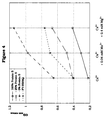
- Figure 3 shows that the addition of Mg 2+ or Mn 2+ ions results in a greater resolution, (i.e. a greater slope of the curve) as well as in a more linear dose response when compared to the use of Ca 2+ alone, thus constituting an improved method for determination of Protein S activity.
- Example 5 The experimental details are as disclosed in Example 5 but with the Factor reagent stored for one hour before assay.
- Chromogenic thrombin substrate S-2796 (Chromogenix AB), 1.8 mmol/L
- the assay 50 ⁇ L of the diluted plasma sample was mixed with 50 ⁇ L of the Protein C activator, whereafter the mixture was incubated for two minutes at 37°C. Thereafter, 50 ⁇ L of the reagent comprising the tissue factor was added and the mixture incubated for two minutes at 37°C. Following that, 50 ⁇ L of the chromogenic substrate S-2796 was added and the reaction mixture incubated for four minutes at 37°C, whereafter 50 ⁇ L acetic acid solution was added to terminate the reaction. The absorbance of the sample was then determined according to Example 1 and expressed as OD 405-490 nm .
- Microplate Assay Sample dilution 50 ⁇ L Protac C activator 50 ⁇ L 2 min, 37°C Reagent 50 ⁇ L 2 min, 37°C S-2796 50 ⁇ L 4 min, 37°C HOAc, 20 % 50 ⁇ L
- Samples Human normal plasma pool (NPL), three plasmas from healthy individuals (N1-N3), four plasmas from pregnant women (P1-P4) and plasmas with 0% and 50% deficiency of Protein C and Protein S, respectively, the 50% levels being prepared by adding purified human Protein C (Chromogenix AB) or Protein S (Chromogenix AB) to plasmas deficient in either Protein C or S (both from Biopool AB).
- CTR CT+/CT- .
- a low CTR corresponds to a pronounced thrombin formation also in the presence of Protac®C and hence an impaired Protein C anticoagulant pathway activity.
- Chromogenic thrombin substrate S-2796 (Chromogenix AB), 1.8 mmol/L
- Reagent A 50 ⁇ L Reagent B 50 ⁇ L Incubate at 37°C for 3 min Plasma dilution 50 ⁇ L 2 min, 37°C S-2796 50 ⁇ L Kinetic reading
Landscapes
- Health & Medical Sciences (AREA)
- Life Sciences & Earth Sciences (AREA)
- Chemical & Material Sciences (AREA)
- Engineering & Computer Science (AREA)
- Hematology (AREA)
- Organic Chemistry (AREA)
- Molecular Biology (AREA)
- Immunology (AREA)
- Proteomics, Peptides & Aminoacids (AREA)
- General Health & Medical Sciences (AREA)
- Biotechnology (AREA)
- Analytical Chemistry (AREA)
- Microbiology (AREA)
- Physics & Mathematics (AREA)
- Urology & Nephrology (AREA)
- Wood Science & Technology (AREA)
- Zoology (AREA)
- Biochemistry (AREA)
- Biomedical Technology (AREA)
- Biophysics (AREA)
- General Engineering & Computer Science (AREA)
- Genetics & Genomics (AREA)
- Bioinformatics & Cheminformatics (AREA)
- Cell Biology (AREA)
- Neurosurgery (AREA)
- Food Science & Technology (AREA)
- Medicinal Chemistry (AREA)
- General Physics & Mathematics (AREA)
- Pathology (AREA)
- Investigating Or Analysing Biological Materials (AREA)
- Measuring Or Testing Involving Enzymes Or Micro-Organisms (AREA)
Priority Applications (16)
| Application Number | Priority Date | Filing Date | Title |
|---|---|---|---|
| DK98105043T DK0947585T3 (da) | 1998-03-19 | 1998-03-19 | Forbedret in vitro-fremgangsmåde, kits og reagenser til screening for blodkoagulationsdefekter |
| ES98105043T ES2162361T3 (es) | 1998-03-19 | 1998-03-19 | Metodos, kits y reactivos mejorados para el muestreo de defectos de la coagulacion sanguinea. |
| AT98105043T ATE203567T1 (de) | 1998-03-19 | 1998-03-19 | Verbesserte in vitro verfahren, testkits und reagenzien zum screening von blutgerinnungsfehlern |
| DE69801210T DE69801210T2 (de) | 1998-03-19 | 1998-03-19 | Verbesserte in vitro Verfahren, Testkits und Reagenzien zum Screening von Blutgerinnungsfehlern |
| EP98105043A EP0947585B1 (fr) | 1998-03-19 | 1998-03-19 | Méthodes, trousses et réactifs améliorés pour le criblage de défauts de la coagulation sanguine |
| PT98105043T PT947585E (pt) | 1998-03-19 | 1998-03-19 | Metodo in vitro melhorado, kits e reagentes para a peaquisa de defeitos de coagulacao sanguinea |
| PCT/EP1999/001599 WO1999047699A1 (fr) | 1998-03-19 | 1999-03-11 | Criblage au moyen d'ions metalliques aux fins de determination de defauts de coagulation sanguine |
| NZ506747A NZ506747A (en) | 1998-03-19 | 1999-03-11 | Screening for blood coagulation defects using metal ions |
| AU30339/99A AU758831B2 (en) | 1998-03-19 | 1999-03-11 | Screening for blood coagulation defects using metal ions |
| CA002334935A CA2334935C (fr) | 1998-03-19 | 1999-03-11 | Criblage au moyen d'ions metalliques aux fins de determination de defauts de coagulation sanguine |
| US09/273,413 US6395501B1 (en) | 1998-03-19 | 1999-03-19 | In vitro methods for screening for blood coagulation disorders using metal ions |
| GR20010401728T GR3036865T3 (en) | 1998-03-19 | 2001-10-11 | Improved in vitro method, kits and reagents for screening for blood coagulation defects |
| US10/050,441 US6730490B2 (en) | 1998-03-19 | 2002-01-16 | In vitro methods for screening for blood coagulation disorders using metal ions |
| US10/331,731 US6800450B2 (en) | 1998-03-19 | 2002-12-30 | Vitro methods for screening for blood coagulation disorders using metal ions |
| AU2003212064A AU2003212064B9 (en) | 1998-03-19 | 2003-07-03 | Screening for blood coagulation defects using metal ions |
| US10/856,108 US7118880B2 (en) | 1998-03-19 | 2004-05-28 | Kits for screening for blood coagulation disorders |
Applications Claiming Priority (1)
| Application Number | Priority Date | Filing Date | Title |
|---|---|---|---|
| EP98105043A EP0947585B1 (fr) | 1998-03-19 | 1998-03-19 | Méthodes, trousses et réactifs améliorés pour le criblage de défauts de la coagulation sanguine |
Publications (2)
| Publication Number | Publication Date |
|---|---|
| EP0947585A1 true EP0947585A1 (fr) | 1999-10-06 |
| EP0947585B1 EP0947585B1 (fr) | 2001-07-25 |
Family
ID=8231624
Family Applications (1)
| Application Number | Title | Priority Date | Filing Date |
|---|---|---|---|
| EP98105043A Expired - Lifetime EP0947585B1 (fr) | 1998-03-19 | 1998-03-19 | Méthodes, trousses et réactifs améliorés pour le criblage de défauts de la coagulation sanguine |
Country Status (12)
| Country | Link |
|---|---|
| US (4) | US6395501B1 (fr) |
| EP (1) | EP0947585B1 (fr) |
| AT (1) | ATE203567T1 (fr) |
| AU (2) | AU758831B2 (fr) |
| CA (1) | CA2334935C (fr) |
| DE (1) | DE69801210T2 (fr) |
| DK (1) | DK0947585T3 (fr) |
| ES (1) | ES2162361T3 (fr) |
| GR (1) | GR3036865T3 (fr) |
| NZ (1) | NZ506747A (fr) |
| PT (1) | PT947585E (fr) |
| WO (1) | WO1999047699A1 (fr) |
Cited By (2)
| Publication number | Priority date | Publication date | Assignee | Title |
|---|---|---|---|---|
| EP1337660A4 (fr) * | 2000-10-27 | 2005-08-17 | Bio Merieux Inc | Procede de determination de la coagulabilite globale et du potentiel hemostatique |
| EP3124978A1 (fr) * | 2015-07-30 | 2017-02-01 | Sysmex Corporation | Procédé de mesure de durée de coagulation, dispositif de mesure de durée de coagulation, réactif de mesure de durée de coagulation et trousse de réactifs |
Families Citing this family (28)
| Publication number | Priority date | Publication date | Assignee | Title |
|---|---|---|---|---|
| US6429017B1 (en) | 1999-02-04 | 2002-08-06 | Biomerieux | Method for predicting the presence of haemostatic dysfunction in a patient sample |
| US6321164B1 (en) | 1995-06-07 | 2001-11-20 | Akzo Nobel N.V. | Method and apparatus for predicting the presence of an abnormal level of one or more proteins in the clotting cascade |
| US6898532B1 (en) | 1995-06-07 | 2005-05-24 | Biomerieux, Inc. | Method and apparatus for predicting the presence of haemostatic dysfunction in a patient sample |
| US6502040B2 (en) | 1997-12-31 | 2002-12-31 | Biomerieux, Inc. | Method for presenting thrombosis and hemostasis assay data |
| ES2162361T3 (es) * | 1998-03-19 | 2001-12-16 | Instrumentation Lab Spa | Metodos, kits y reactivos mejorados para el muestreo de defectos de la coagulacion sanguinea. |
| ATE282208T1 (de) | 1999-02-04 | 2004-11-15 | Bio Merieux Inc | Verfahren und vorrichtung zum vorhersagen von haemostatischer funktionsstörung in patientenproben |
| US7632803B2 (en) * | 1999-10-01 | 2009-12-15 | Dmi Life Sciences, Inc. | Metal-binding compounds and uses therefor |
| US7592304B2 (en) * | 1999-10-01 | 2009-09-22 | Dmi Life Sciences, Inc. | Metal-binding compounds and uses therefor |
| US20030130185A1 (en) * | 2000-09-29 | 2003-07-10 | David Bar-Or | Metal-binding compounds and uses therefor |
| US7179612B2 (en) | 2000-06-09 | 2007-02-20 | Biomerieux, Inc. | Method for detecting a lipoprotein-acute phase protein complex and predicting an increased risk of system failure or mortality |
| EP1260817A3 (fr) | 2001-05-08 | 2002-12-18 | Warner-Lambert Company | Procédé de mesure directe du facteur de coagulation VIIa dans du plasma |
| JP2004535461A (ja) * | 2001-07-19 | 2004-11-25 | ディーエムアイ バイオサイエンシズ インコーポレイテッド | プロテインcの不活性化を抑制するための銅キレート剤の使用 |
| US6902904B2 (en) * | 2001-08-27 | 2005-06-07 | Pharmanetics Incorporated | Coagulation assay reagents containing lanthanides |
| EP1367135A1 (fr) * | 2002-05-29 | 2003-12-03 | Pentapharm AG | Procédé amélioré pour l'évaluation de formation de thrombin dans plasma sanguine |
| US20040091952A1 (en) * | 2002-07-25 | 2004-05-13 | Sysmex Corporation | Reagent kit for detecting lupus anticoagulant |
| ES2390271T3 (es) * | 2003-09-22 | 2012-11-08 | University Of North Carolina At Chapel Hill | Fosfolípidos solubles para uso en ensayos de factores de coagulación |
| EP1562047B1 (fr) * | 2004-02-06 | 2008-05-14 | Sysmex Corporation | Trousse de réactifs pour détecter d'anticoagulant de lupus. |
| EP1833982B1 (fr) * | 2005-01-07 | 2010-12-01 | Stichting Katholieke Universiteit | Analyse de l'hemostase |
| JP4639904B2 (ja) * | 2005-03-30 | 2011-02-23 | チッソ株式会社 | 蛍光活性を有するルシフェラーゼの活性増強方法 |
| JP4609177B2 (ja) * | 2005-04-28 | 2011-01-12 | チッソ株式会社 | カルシウム結合型発光蛋白質溶液の発光時間延長方法 |
| US7957521B2 (en) * | 2005-11-30 | 2011-06-07 | On-Q Telecom Systems Co., Inc. | Method and system for user prioritization within telecommunication services and in particular within call completion services |
| FR2908892B1 (fr) * | 2006-11-21 | 2009-02-20 | Hyphen Biomed Soc Par Actions | Procede pour le dosage chromogenique de l'activite du facteur viii:c et necessaire de dosage chromogenique de l'activite du facteur viii:c,dans les plasmas ou les fractions therapeutiques |
| FR2909180B1 (fr) * | 2006-11-29 | 2009-02-20 | Diagnostica Stago Soc Par Acti | Methode de mesure fonctionnelle de l'activite de la thrombomoduline plasmatique. |
| WO2010016762A1 (fr) * | 2008-08-05 | 2010-02-11 | Synapse B.V. | Méthode et ensemble pour mesurer une génération de thrombine dans du plasma |
| US9057574B2 (en) | 2012-06-14 | 2015-06-16 | Ra Brands, L.L.C. | Thumb safety for model 1911 handgun |
| JP6595247B2 (ja) | 2015-07-30 | 2019-10-23 | シスメックス株式会社 | 凝固時間の測定方法およびその装置、凝固時間測定用試薬ならびに試薬キット |
| CN110568117B (zh) * | 2019-09-19 | 2022-03-22 | 青岛海洋生物医药研究院股份有限公司 | 一种多靶点抗血栓活性物质的液相色谱-质谱筛选方法 |
| CN111707837A (zh) * | 2020-05-29 | 2020-09-25 | 上海太阳生物技术有限公司 | 狼疮抗凝物确认试剂盒(凝固法) |
Citations (2)
| Publication number | Priority date | Publication date | Assignee | Title |
|---|---|---|---|---|
| US5001069A (en) * | 1986-03-07 | 1991-03-19 | Boehringer Mannheim Gmbh | Process for photometric determination of protein C and/or protein S |
| WO1993010262A1 (fr) * | 1991-11-20 | 1993-05-27 | Baxter Diagnostics Inc. | Dosage de la proteine s a l'aide d'un chromogene |
Family Cites Families (15)
| Publication number | Priority date | Publication date | Assignee | Title |
|---|---|---|---|---|
| DE203509C (fr) * | ||||
| US5055412A (en) * | 1989-03-21 | 1991-10-08 | Proksch Gary J | Factor sensitive reagent for testing of blood coagulation containing ellagic acid and divalent metal ions and method of making the same |
| SE464135B (sv) * | 1989-07-14 | 1991-03-11 | Kabivitrum Ab | Foerfarande foer bestaemning av funktionell aktivitet av fritt protein s eller protein c i ett plasmaprov |
| GB8927722D0 (en) * | 1989-12-07 | 1990-02-07 | British Bio Technology | Proteins and nucleic acids |
| US5637452A (en) * | 1992-10-02 | 1997-06-10 | Analytical Control Systems, Inc. | Kit for an initial screen for abnormal platelet condition comprising propyl gallate or tannin and a metal ion |
| DE4402631A1 (de) * | 1994-01-29 | 1995-08-03 | Boehringer Mannheim Gmbh | Verfahren zur Bestimmung von Gerinnungsparametern |
| DE69520569T2 (de) * | 1994-04-22 | 2001-10-04 | Stichting Sanquin Bloedvoorziening, Amsterdam | Mittel für die behandlung von störungen des blutgerinnungsprozess |
| JP2002506515A (ja) * | 1997-04-25 | 2002-02-26 | ペンタファルム アクチェンゲゼルシャフト | 蛋白質c−系における障害の機能的検出法 |
| DE19749197A1 (de) * | 1997-11-07 | 1999-05-12 | Dade Behring Marburg Gmbh | Verfahren zur Bestimmung des antikoagulatorischen Potentials einer Probe |
| AUPP159698A0 (en) * | 1998-02-02 | 1998-02-26 | Life Therapeutics Limited | Improved blood coagulation test |
| US6245573B1 (en) * | 1998-02-12 | 2001-06-12 | University Of Medicine And Dentistry Of New Jersey | Rapid assessment of the coagulant activity of blood |
| ES2162361T3 (es) * | 1998-03-19 | 2001-12-16 | Instrumentation Lab Spa | Metodos, kits y reactivos mejorados para el muestreo de defectos de la coagulacion sanguinea. |
| US6743596B1 (en) * | 2000-10-27 | 2004-06-01 | Biomerieux, Inc. | Method of determining global coagulability hemostatic potential |
| JP2004527239A (ja) * | 2001-03-02 | 2004-09-09 | テイ・エイ・シー・スロムボシス・アンド・コアグラシヨン・エイ・ビー | プロテインc変異体 |
| US6902904B2 (en) * | 2001-08-27 | 2005-06-07 | Pharmanetics Incorporated | Coagulation assay reagents containing lanthanides |
-
1998
- 1998-03-19 ES ES98105043T patent/ES2162361T3/es not_active Expired - Lifetime
- 1998-03-19 PT PT98105043T patent/PT947585E/pt unknown
- 1998-03-19 DK DK98105043T patent/DK0947585T3/da active
- 1998-03-19 DE DE69801210T patent/DE69801210T2/de not_active Expired - Lifetime
- 1998-03-19 EP EP98105043A patent/EP0947585B1/fr not_active Expired - Lifetime
- 1998-03-19 AT AT98105043T patent/ATE203567T1/de not_active IP Right Cessation
-
1999
- 1999-03-11 WO PCT/EP1999/001599 patent/WO1999047699A1/fr not_active Ceased
- 1999-03-11 CA CA002334935A patent/CA2334935C/fr not_active Expired - Fee Related
- 1999-03-11 NZ NZ506747A patent/NZ506747A/xx unknown
- 1999-03-11 AU AU30339/99A patent/AU758831B2/en not_active Ceased
- 1999-03-19 US US09/273,413 patent/US6395501B1/en not_active Expired - Lifetime
-
2001
- 2001-10-11 GR GR20010401728T patent/GR3036865T3/el not_active IP Right Cessation
-
2002
- 2002-01-16 US US10/050,441 patent/US6730490B2/en not_active Expired - Lifetime
- 2002-12-30 US US10/331,731 patent/US6800450B2/en not_active Expired - Lifetime
-
2003
- 2003-07-03 AU AU2003212064A patent/AU2003212064B9/en not_active Ceased
-
2004
- 2004-05-28 US US10/856,108 patent/US7118880B2/en not_active Expired - Fee Related
Patent Citations (3)
| Publication number | Priority date | Publication date | Assignee | Title |
|---|---|---|---|---|
| US5001069A (en) * | 1986-03-07 | 1991-03-19 | Boehringer Mannheim Gmbh | Process for photometric determination of protein C and/or protein S |
| WO1993010262A1 (fr) * | 1991-11-20 | 1993-05-27 | Baxter Diagnostics Inc. | Dosage de la proteine s a l'aide d'un chromogene |
| EP0567636A1 (fr) * | 1991-11-20 | 1993-11-03 | Baxter Diagnostics Inc | Dosage de la proteine s a l'aide d'un chromogene. |
Non-Patent Citations (6)
| Title |
|---|
| F.SEKIYA, T.YAMASHITA, H.ATODA, Y.KOMIYAMA, T.MORITA: "Regulation of the Tertiary Structure and Function of Coagulation Factor IX by Magnesium(II) Ions", JOURNAL OF BIOLOGICAL CHEMISTRY, vol. 270, no. 24, 16 June 1995 (1995-06-16), pages 14325 - 14331, XP002067666 * |
| H.A.LIEBMAN, B.C.FURIE, B.FURIE: "The Factor IX Phospholipid-binding Site Is Required for Calcium-dependent Activation of Factor IX by Factor X", JOURNAL OF BIOLOGICAL CHEMISTRY, vol. 262, no. 16, 5 June 1987 (1987-06-05), pages 7605 - 7612, XP002067668 * |
| J.D.SHORE, D.E.DAY, P.E.BOCK, S.T.OLSON: "Acceleration of Surface-Dependent Autocatalytic Activation of Blood Coagulation Factor XII by Divalent Metal Ions", BIOCHEMISTRY, vol. 26, no. 8, 1987, pages 2250 - 2258, XP002067669 * |
| M.J.HEEB, A.GRUBER, J.H.GRIFFIN: "Identification of Divalent Metal Ion-dependent Inhibition of Activated Protein C by alpha2-Macroglobulin and alpha2-Antiplasmin in Blood and Comparisons to Inhibition of Factor Xa, Thrombin, and Plasmin", JOURNAL OF BIOLOGICAL CHEMISTRY, vol. 266, no. 26, 15 September 1991 (1991-09-15), pages 17606 - 17612, XP002067667 * |
| M.M.BERNARDO, D.E.DAY, S.T.OLSON, J.D.SHORE: "Surface-independent Acceleration of Factor XII Activation by Zinc Ions", JOURNAL OF BIOLOGICAL CHEMISTRY, vol. 268, no. 17, 15 June 1993 (1993-06-15), pages 12468 - 12476, XP002067665 * |
| S.BUTENAS, J.H.LAWSON, M.KALAFATIS, K.G.MANN: "Cooperative Interaction of Divalent Metal Ions, Substrate, and Tissue Factor with Factor VIIa", BIOCHEMISTRY, vol. 33, no. 11, 1994, pages 3449 - 3456, XP002067670 * |
Cited By (4)
| Publication number | Priority date | Publication date | Assignee | Title |
|---|---|---|---|---|
| EP1337660A4 (fr) * | 2000-10-27 | 2005-08-17 | Bio Merieux Inc | Procede de determination de la coagulabilite globale et du potentiel hemostatique |
| EP3124978A1 (fr) * | 2015-07-30 | 2017-02-01 | Sysmex Corporation | Procédé de mesure de durée de coagulation, dispositif de mesure de durée de coagulation, réactif de mesure de durée de coagulation et trousse de réactifs |
| CN106405120A (zh) * | 2015-07-30 | 2017-02-15 | 希森美康株式会社 | 凝固时间测定用方法、装置、试剂和试剂盒及其制造用途 |
| US10132819B2 (en) | 2015-07-30 | 2018-11-20 | Sysmex Corporation | Method for measuring clotting time, measurement device for clotting time, and reagent kit |
Also Published As
| Publication number | Publication date |
|---|---|
| US6800450B2 (en) | 2004-10-05 |
| NZ506747A (en) | 2003-03-28 |
| AU758831B2 (en) | 2003-04-03 |
| US7118880B2 (en) | 2006-10-10 |
| GR3036865T3 (en) | 2002-01-31 |
| AU2003212064B2 (en) | 2005-10-20 |
| US6395501B1 (en) | 2002-05-28 |
| US20020115127A1 (en) | 2002-08-22 |
| AU2003212064B9 (en) | 2005-11-24 |
| ATE203567T1 (de) | 2001-08-15 |
| DE69801210D1 (de) | 2001-08-30 |
| US6730490B2 (en) | 2004-05-04 |
| US20030199014A1 (en) | 2003-10-23 |
| WO1999047699A1 (fr) | 1999-09-23 |
| AU3033999A (en) | 1999-10-11 |
| CA2334935A1 (fr) | 1999-09-23 |
| PT947585E (pt) | 2001-11-30 |
| DE69801210T2 (de) | 2002-05-02 |
| ES2162361T3 (es) | 2001-12-16 |
| US20040235078A1 (en) | 2004-11-25 |
| EP0947585B1 (fr) | 2001-07-25 |
| DK0947585T3 (da) | 2001-10-01 |
| AU2003212064A1 (en) | 2003-08-14 |
| CA2334935C (fr) | 2009-10-13 |
Similar Documents
| Publication | Publication Date | Title |
|---|---|---|
| EP0947585B1 (fr) | Méthodes, trousses et réactifs améliorés pour le criblage de défauts de la coagulation sanguine | |
| US7892842B2 (en) | Procedure for the determination of the activity of the protease which activates factor VII from protein solutions | |
| US5525478A (en) | Soluble thrombomodulin-based one-stage assay for vitamin-K dependent coagulation-inhibiting proteins | |
| Dahlbaeck et al. | Binding of anticoagulant vitamin K-dependent protein S to platelet-derived microparticles | |
| US5001069A (en) | Process for photometric determination of protein C and/or protein S | |
| US5439802A (en) | Method for determining the functional activity of free protein S or protein C in a plasma sample | |
| JP3533012B2 (ja) | プロテインc/プロテインs系の障害を検出する方法 | |
| Michiels et al. | Laboratory diagnosis of hereditary thrombophilia | |
| AU3142393A (en) | Protein s chromogenic assay | |
| EP1317671A2 (fr) | Procede de mesure de l'activite de l'antithrombine | |
| EP1068536B1 (fr) | Essai de coagulation sanguine ameliore | |
| AU2006200265B2 (en) | Screening for blood coagulation defects using metal ions | |
| AU729843B2 (en) | Method for the functional detection of disorders in the protein C system | |
| Triplett et al. | New methods in coagulation | |
| AU748476B2 (en) | Improved blood coagulation test | |
| Hayashi et al. | Prevalence of activated protein C resistance in acute myocardial infarction in Japan | |
| Mariani et al. | Factor VII activity and antigen |
Legal Events
| Date | Code | Title | Description |
|---|---|---|---|
| PUAI | Public reference made under article 153(3) epc to a published international application that has entered the european phase |
Free format text: ORIGINAL CODE: 0009012 |
|
| 17P | Request for examination filed |
Effective date: 19980922 |
|
| AK | Designated contracting states |
Kind code of ref document: A1 Designated state(s): AT BE CH DE DK ES FI FR GB GR IE IT LI LU MC NL PT SE |
|
| AX | Request for extension of the european patent |
Free format text: AL;LT;LV;MK;RO;SI |
|
| GRAG | Despatch of communication of intention to grant |
Free format text: ORIGINAL CODE: EPIDOS AGRA |
|
| AKX | Designation fees paid |
Free format text: AT BE CH DE DK ES FI FR GB GR IE IT LI LU MC NL PT SE |
|
| GRAG | Despatch of communication of intention to grant |
Free format text: ORIGINAL CODE: EPIDOS AGRA |
|
| GRAG | Despatch of communication of intention to grant |
Free format text: ORIGINAL CODE: EPIDOS AGRA |
|
| GRAH | Despatch of communication of intention to grant a patent |
Free format text: ORIGINAL CODE: EPIDOS IGRA |
|
| GRAH | Despatch of communication of intention to grant a patent |
Free format text: ORIGINAL CODE: EPIDOS IGRA |
|
| RAP1 | Party data changed (applicant data changed or rights of an application transferred) |
Owner name: INSTRUMENTATION LABORATORY S.P.A. |
|
| GRAA | (expected) grant |
Free format text: ORIGINAL CODE: 0009210 |
|
| AK | Designated contracting states |
Kind code of ref document: B1 Designated state(s): AT BE CH DE DK ES FI FR GB GR IE IT LI LU MC NL PT SE |
|
| REF | Corresponds to: |
Ref document number: 203567 Country of ref document: AT Date of ref document: 20010815 Kind code of ref document: T |
|
| REG | Reference to a national code |
Ref country code: CH Ref legal event code: EP |
|
| REG | Reference to a national code |
Ref country code: IE Ref legal event code: FG4D |
|
| REF | Corresponds to: |
Ref document number: 69801210 Country of ref document: DE Date of ref document: 20010830 |
|
| REG | Reference to a national code |
Ref country code: CH Ref legal event code: NV Representative=s name: A. BRAUN, BRAUN, HERITIER, ESCHMANN AG PATENTANWAE |
|
| REG | Reference to a national code |
Ref country code: DK Ref legal event code: T3 |
|
| ITF | It: translation for a ep patent filed | ||
| ET | Fr: translation filed | ||
| REG | Reference to a national code |
Ref country code: PT Ref legal event code: SC4A Free format text: AVAILABILITY OF NATIONAL TRANSLATION Effective date: 20010814 |
|
| REG | Reference to a national code |
Ref country code: ES Ref legal event code: FG2A Ref document number: 2162361 Country of ref document: ES Kind code of ref document: T3 |
|
| REG | Reference to a national code |
Ref country code: GB Ref legal event code: IF02 |
|
| REG | Reference to a national code |
Ref country code: GR Ref legal event code: EP Ref document number: 20010401728 Country of ref document: GR |
|
| PLBE | No opposition filed within time limit |
Free format text: ORIGINAL CODE: 0009261 |
|
| STAA | Information on the status of an ep patent application or granted ep patent |
Free format text: STATUS: NO OPPOSITION FILED WITHIN TIME LIMIT |
|
| 26N | No opposition filed | ||
| PGFP | Annual fee paid to national office [announced via postgrant information from national office to epo] |
Ref country code: AT Payment date: 20030312 Year of fee payment: 6 |
|
| PGFP | Annual fee paid to national office [announced via postgrant information from national office to epo] |
Ref country code: FI Payment date: 20030313 Year of fee payment: 6 |
|
| PGFP | Annual fee paid to national office [announced via postgrant information from national office to epo] |
Ref country code: DK Payment date: 20030318 Year of fee payment: 6 |
|
| PGFP | Annual fee paid to national office [announced via postgrant information from national office to epo] |
Ref country code: PT Payment date: 20030319 Year of fee payment: 6 |
|
| PGFP | Annual fee paid to national office [announced via postgrant information from national office to epo] |
Ref country code: IE Payment date: 20030327 Year of fee payment: 6 Ref country code: GR Payment date: 20030327 Year of fee payment: 6 |
|
| PGFP | Annual fee paid to national office [announced via postgrant information from national office to epo] |
Ref country code: LU Payment date: 20030328 Year of fee payment: 6 |
|
| PGFP | Annual fee paid to national office [announced via postgrant information from national office to epo] |
Ref country code: MC Payment date: 20030331 Year of fee payment: 6 Ref country code: CH Payment date: 20030331 Year of fee payment: 6 |
|
| PGFP | Annual fee paid to national office [announced via postgrant information from national office to epo] |
Ref country code: BE Payment date: 20030522 Year of fee payment: 6 |
|
| PG25 | Lapsed in a contracting state [announced via postgrant information from national office to epo] |
Ref country code: LU Free format text: LAPSE BECAUSE OF NON-PAYMENT OF DUE FEES Effective date: 20040319 Ref country code: IE Free format text: LAPSE BECAUSE OF NON-PAYMENT OF DUE FEES Effective date: 20040319 Ref country code: FI Free format text: LAPSE BECAUSE OF NON-PAYMENT OF DUE FEES Effective date: 20040319 Ref country code: AT Free format text: LAPSE BECAUSE OF NON-PAYMENT OF DUE FEES Effective date: 20040319 |
|
| PG25 | Lapsed in a contracting state [announced via postgrant information from national office to epo] |
Ref country code: MC Free format text: LAPSE BECAUSE OF NON-PAYMENT OF DUE FEES Effective date: 20040331 Ref country code: LI Free format text: LAPSE BECAUSE OF NON-PAYMENT OF DUE FEES Effective date: 20040331 Ref country code: DK Free format text: LAPSE BECAUSE OF NON-PAYMENT OF DUE FEES Effective date: 20040331 Ref country code: CH Free format text: LAPSE BECAUSE OF NON-PAYMENT OF DUE FEES Effective date: 20040331 Ref country code: BE Free format text: LAPSE BECAUSE OF NON-PAYMENT OF DUE FEES Effective date: 20040331 |
|
| BERE | Be: lapsed |
Owner name: *INSTRUMENTATION LABORATORY S.P.A. Effective date: 20040331 |
|
| PG25 | Lapsed in a contracting state [announced via postgrant information from national office to epo] |
Ref country code: GR Free format text: LAPSE BECAUSE OF NON-PAYMENT OF DUE FEES Effective date: 20041006 |
|
| PG25 | Lapsed in a contracting state [announced via postgrant information from national office to epo] |
Ref country code: PT Free format text: LAPSE BECAUSE OF NON-PAYMENT OF DUE FEES Effective date: 20041015 |
|
| REG | Reference to a national code |
Ref country code: CH Ref legal event code: PL |
|
| REG | Reference to a national code |
Ref country code: PT Ref legal event code: MM4A Free format text: LAPSE DUE TO NON-PAYMENT OF FEES Effective date: 20040930 |
|
| REG | Reference to a national code |
Ref country code: IE Ref legal event code: MM4A |
|
| REG | Reference to a national code |
Ref country code: FR Ref legal event code: PLFP Year of fee payment: 19 |
|
| REG | Reference to a national code |
Ref country code: FR Ref legal event code: PLFP Year of fee payment: 20 |
|
| PGFP | Annual fee paid to national office [announced via postgrant information from national office to epo] |
Ref country code: SE Payment date: 20170329 Year of fee payment: 20 Ref country code: NL Payment date: 20170326 Year of fee payment: 20 Ref country code: FR Payment date: 20170327 Year of fee payment: 20 |
|
| PGFP | Annual fee paid to national office [announced via postgrant information from national office to epo] |
Ref country code: GB Payment date: 20170327 Year of fee payment: 20 |
|
| PGFP | Annual fee paid to national office [announced via postgrant information from national office to epo] |
Ref country code: IT Payment date: 20170324 Year of fee payment: 20 |
|
| PGFP | Annual fee paid to national office [announced via postgrant information from national office to epo] |
Ref country code: DE Payment date: 20170329 Year of fee payment: 20 |
|
| PGFP | Annual fee paid to national office [announced via postgrant information from national office to epo] |
Ref country code: ES Payment date: 20170328 Year of fee payment: 20 |
|
| REG | Reference to a national code |
Ref country code: DE Ref legal event code: R071 Ref document number: 69801210 Country of ref document: DE |
|
| REG | Reference to a national code |
Ref country code: NL Ref legal event code: MK Effective date: 20180318 |
|
| REG | Reference to a national code |
Ref country code: GB Ref legal event code: PE20 Expiry date: 20180318 |
|
| PG25 | Lapsed in a contracting state [announced via postgrant information from national office to epo] |
Ref country code: GB Free format text: LAPSE BECAUSE OF EXPIRATION OF PROTECTION Effective date: 20180318 |
|
| REG | Reference to a national code |
Ref country code: SE Ref legal event code: EUG |
|
| REG | Reference to a national code |
Ref country code: ES Ref legal event code: FD2A Effective date: 20200904 |
|
| PG25 | Lapsed in a contracting state [announced via postgrant information from national office to epo] |
Ref country code: ES Free format text: LAPSE BECAUSE OF EXPIRATION OF PROTECTION Effective date: 20180320 |