EP0949508A1 - Verfahren, Antigen-Komplex und Satz zur Diagnose Lyme-Borreliose - Google Patents
Verfahren, Antigen-Komplex und Satz zur Diagnose Lyme-Borreliose Download PDFInfo
- Publication number
- EP0949508A1 EP0949508A1 EP99610026A EP99610026A EP0949508A1 EP 0949508 A1 EP0949508 A1 EP 0949508A1 EP 99610026 A EP99610026 A EP 99610026A EP 99610026 A EP99610026 A EP 99610026A EP 0949508 A1 EP0949508 A1 EP 0949508A1
- Authority
- EP
- European Patent Office
- Prior art keywords
- borrelia
- peptides
- carrier
- ospc
- attached
- Prior art date
- Legal status (The legal status is an assumption and is not a legal conclusion. Google has not performed a legal analysis and makes no representation as to the accuracy of the status listed.)
- Withdrawn
Links
- 208000016604 Lyme disease Diseases 0.000 title claims abstract description 122
- 239000000427 antigen Substances 0.000 title claims abstract description 94
- 102000036639 antigens Human genes 0.000 title claims abstract description 94
- 108091007433 antigens Proteins 0.000 title claims abstract description 94
- 238000000034 method Methods 0.000 title claims abstract description 57
- 108090000765 processed proteins & peptides Proteins 0.000 claims abstract description 173
- 102000004196 processed proteins & peptides Human genes 0.000 claims abstract description 118
- 108700023315 OspC Proteins 0.000 claims abstract description 99
- 241000589968 Borrelia Species 0.000 claims abstract description 95
- 210000003495 flagella Anatomy 0.000 claims abstract description 85
- 241000908522 Borreliella Species 0.000 claims abstract description 18
- YBJHBAHKTGYVGT-ZKWXMUAHSA-N (+)-Biotin Chemical compound N1C(=O)N[C@@H]2[C@H](CCCCC(=O)O)SC[C@@H]21 YBJHBAHKTGYVGT-ZKWXMUAHSA-N 0.000 claims description 130
- 108010090804 Streptavidin Proteins 0.000 claims description 81
- 235000020958 biotin Nutrition 0.000 claims description 67
- 229960002685 biotin Drugs 0.000 claims description 65
- 239000011616 biotin Substances 0.000 claims description 65
- 230000027455 binding Effects 0.000 claims description 42
- 239000007787 solid Substances 0.000 claims description 40
- 150000001413 amino acids Chemical class 0.000 claims description 36
- 239000004816 latex Substances 0.000 claims description 35
- 229920000126 latex Polymers 0.000 claims description 35
- 241000589969 Borreliella burgdorferi Species 0.000 claims description 34
- 239000002245 particle Substances 0.000 claims description 32
- 239000012634 fragment Substances 0.000 claims description 21
- 102000004190 Enzymes Human genes 0.000 claims description 15
- 108090000790 Enzymes Proteins 0.000 claims description 15
- 238000001514 detection method Methods 0.000 claims description 14
- 239000007791 liquid phase Substances 0.000 claims description 8
- 241001465754 Metazoa Species 0.000 claims description 7
- 239000012530 fluid Substances 0.000 claims description 7
- 125000001433 C-terminal amino-acid group Chemical group 0.000 claims description 5
- 210000004027 cell Anatomy 0.000 claims description 5
- 229920000592 inorganic polymer Polymers 0.000 claims description 5
- 239000004005 microsphere Substances 0.000 claims description 5
- 229920000620 organic polymer Polymers 0.000 claims description 5
- 108010015840 seryl-prolyl-lysyl-lysine Proteins 0.000 claims description 5
- PAHHYDSPOXDASW-VGWMRTNUSA-N (2s)-6-amino-2-[[(2s)-6-amino-2-[[(2s)-1-[(2s)-2-amino-3-hydroxypropanoyl]pyrrolidine-2-carbonyl]amino]hexanoyl]amino]hexanoic acid Chemical compound NCCCC[C@@H](C(O)=O)NC(=O)[C@H](CCCCN)NC(=O)[C@@H]1CCCN1C(=O)[C@@H](N)CO PAHHYDSPOXDASW-VGWMRTNUSA-N 0.000 claims description 4
- YFOCMOVJBQDBCE-NRPADANISA-N Val-Ala-Glu Chemical compound C[C@@H](C(=O)N[C@@H](CCC(=O)O)C(=O)O)NC(=O)[C@H](C(C)C)N YFOCMOVJBQDBCE-NRPADANISA-N 0.000 claims description 4
- 210000004899 c-terminal region Anatomy 0.000 claims description 4
- 150000001875 compounds Chemical class 0.000 claims description 3
- 108010001336 Horseradish Peroxidase Proteins 0.000 claims description 2
- 210000003743 erythrocyte Anatomy 0.000 claims description 2
- 239000002923 metal particle Substances 0.000 claims description 2
- 125000003275 alpha amino acid group Chemical group 0.000 claims 3
- 230000009870 specific binding Effects 0.000 claims 1
- 238000005406 washing Methods 0.000 abstract description 6
- 238000002405 diagnostic procedure Methods 0.000 abstract 1
- 238000003556 assay Methods 0.000 description 29
- 239000000523 sample Substances 0.000 description 27
- 238000012360 testing method Methods 0.000 description 19
- 238000002965 ELISA Methods 0.000 description 17
- 210000002966 serum Anatomy 0.000 description 17
- LWIHDJKSTIGBAC-UHFFFAOYSA-K tripotassium phosphate Chemical compound [K+].[K+].[K+].[O-]P([O-])([O-])=O LWIHDJKSTIGBAC-UHFFFAOYSA-K 0.000 description 14
- 239000000725 suspension Substances 0.000 description 13
- 238000006243 chemical reaction Methods 0.000 description 12
- 238000005859 coupling reaction Methods 0.000 description 12
- 239000000243 solution Substances 0.000 description 11
- 210000004369 blood Anatomy 0.000 description 9
- 239000008280 blood Substances 0.000 description 9
- 230000008878 coupling Effects 0.000 description 9
- 238000010168 coupling process Methods 0.000 description 9
- 229940088598 enzyme Drugs 0.000 description 9
- 238000002360 preparation method Methods 0.000 description 9
- FAPWRFPIFSIZLT-UHFFFAOYSA-M Sodium chloride Chemical compound [Na+].[Cl-] FAPWRFPIFSIZLT-UHFFFAOYSA-M 0.000 description 8
- 238000005119 centrifugation Methods 0.000 description 8
- 239000003153 chemical reaction reagent Substances 0.000 description 8
- 230000000536 complexating effect Effects 0.000 description 8
- 238000002474 experimental method Methods 0.000 description 8
- 230000035945 sensitivity Effects 0.000 description 8
- -1 9-fluorenylmethoxy-carbonyl (Fmoc) Chemical class 0.000 description 7
- 239000000872 buffer Substances 0.000 description 7
- 238000011534 incubation Methods 0.000 description 7
- 229910000160 potassium phosphate Inorganic materials 0.000 description 7
- 235000011009 potassium phosphates Nutrition 0.000 description 7
- 108090001008 Avidin Proteins 0.000 description 6
- ZMXDDKWLCZADIW-UHFFFAOYSA-N N,N-Dimethylformamide Chemical compound CN(C)C=O ZMXDDKWLCZADIW-UHFFFAOYSA-N 0.000 description 6
- 125000003178 carboxy group Chemical group [H]OC(*)=O 0.000 description 6
- 102000004169 proteins and genes Human genes 0.000 description 6
- 108090000623 proteins and genes Proteins 0.000 description 6
- 108010040721 Flagellin Proteins 0.000 description 5
- 239000011324 bead Substances 0.000 description 5
- 238000010790 dilution Methods 0.000 description 5
- 239000012895 dilution Substances 0.000 description 5
- 239000008188 pellet Substances 0.000 description 5
- 229920001223 polyethylene glycol Polymers 0.000 description 5
- 239000011347 resin Substances 0.000 description 5
- 229920005989 resin Polymers 0.000 description 5
- XLYOFNOQVPJJNP-UHFFFAOYSA-N water Substances O XLYOFNOQVPJJNP-UHFFFAOYSA-N 0.000 description 5
- 238000001262 western blot Methods 0.000 description 5
- SXGZJKUKBWWHRA-UHFFFAOYSA-N 2-(N-morpholiniumyl)ethanesulfonate Chemical compound [O-]S(=O)(=O)CC[NH+]1CCOCC1 SXGZJKUKBWWHRA-UHFFFAOYSA-N 0.000 description 4
- KCXVZYZYPLLWCC-UHFFFAOYSA-N EDTA Chemical compound OC(=O)CN(CC(O)=O)CCN(CC(O)=O)CC(O)=O KCXVZYZYPLLWCC-UHFFFAOYSA-N 0.000 description 4
- 206010062488 Erythema migrans Diseases 0.000 description 4
- 239000002202 Polyethylene glycol Substances 0.000 description 4
- 229920001213 Polysorbate 20 Polymers 0.000 description 4
- DTQVDTLACAAQTR-UHFFFAOYSA-N Trifluoroacetic acid Chemical compound OC(=O)C(F)(F)F DTQVDTLACAAQTR-UHFFFAOYSA-N 0.000 description 4
- 230000006287 biotinylation Effects 0.000 description 4
- 238000007413 biotinylation Methods 0.000 description 4
- XUJNEKJLAYXESH-UHFFFAOYSA-N cysteine Natural products SCC(N)C(O)=O XUJNEKJLAYXESH-UHFFFAOYSA-N 0.000 description 4
- 238000003745 diagnosis Methods 0.000 description 4
- 201000010099 disease Diseases 0.000 description 4
- 208000037265 diseases, disorders, signs and symptoms Diseases 0.000 description 4
- 230000008105 immune reaction Effects 0.000 description 4
- 238000003018 immunoassay Methods 0.000 description 4
- 125000005647 linker group Chemical group 0.000 description 4
- 239000000256 polyoxyethylene sorbitan monolaurate Substances 0.000 description 4
- 235000010486 polyoxyethylene sorbitan monolaurate Nutrition 0.000 description 4
- 239000011780 sodium chloride Substances 0.000 description 4
- 238000004448 titration Methods 0.000 description 4
- FPIRBHDGWMWJEP-UHFFFAOYSA-N 1-hydroxy-7-azabenzotriazole Chemical compound C1=CN=C2N(O)N=NC2=C1 FPIRBHDGWMWJEP-UHFFFAOYSA-N 0.000 description 3
- GVJXGCIPWAVXJP-UHFFFAOYSA-N 2,5-dioxo-1-oxoniopyrrolidine-3-sulfonate Chemical compound ON1C(=O)CC(S(O)(=O)=O)C1=O GVJXGCIPWAVXJP-UHFFFAOYSA-N 0.000 description 3
- IAZDPXIOMUYVGZ-UHFFFAOYSA-N Dimethylsulphoxide Chemical compound CS(C)=O IAZDPXIOMUYVGZ-UHFFFAOYSA-N 0.000 description 3
- 238000008157 ELISA kit Methods 0.000 description 3
- LYCAIKOWRPUZTN-UHFFFAOYSA-N Ethylene glycol Chemical compound OCCO LYCAIKOWRPUZTN-UHFFFAOYSA-N 0.000 description 3
- 102000001706 Immunoglobulin Fab Fragments Human genes 0.000 description 3
- 108010054477 Immunoglobulin Fab Fragments Proteins 0.000 description 3
- SJRJJKPEHAURKC-UHFFFAOYSA-N N-Methylmorpholine Chemical compound CN1CCOCC1 SJRJJKPEHAURKC-UHFFFAOYSA-N 0.000 description 3
- 206010052057 Neuroborreliosis Diseases 0.000 description 3
- 238000003759 clinical diagnosis Methods 0.000 description 3
- 238000003771 laboratory diagnosis Methods 0.000 description 3
- 238000000926 separation method Methods 0.000 description 3
- 239000000126 substance Substances 0.000 description 3
- 239000000758 substrate Substances 0.000 description 3
- JWDFQMWEFLOOED-UHFFFAOYSA-N (2,5-dioxopyrrolidin-1-yl) 3-(pyridin-2-yldisulfanyl)propanoate Chemical compound O=C1CCC(=O)N1OC(=O)CCSSC1=CC=CC=N1 JWDFQMWEFLOOED-UHFFFAOYSA-N 0.000 description 2
- 125000003088 (fluoren-9-ylmethoxy)carbonyl group Chemical group 0.000 description 2
- NWUYHJFMYQTDRP-UHFFFAOYSA-N 1,2-bis(ethenyl)benzene;1-ethenyl-2-ethylbenzene;styrene Chemical compound C=CC1=CC=CC=C1.CCC1=CC=CC=C1C=C.C=CC1=CC=CC=C1C=C NWUYHJFMYQTDRP-UHFFFAOYSA-N 0.000 description 2
- RUVRGYVESPRHSZ-UHFFFAOYSA-N 2-[2-(2-azaniumylethoxy)ethoxy]acetate Chemical group NCCOCCOCC(O)=O RUVRGYVESPRHSZ-UHFFFAOYSA-N 0.000 description 2
- 241001148604 Borreliella afzelii Species 0.000 description 2
- RTZKZFJDLAIYFH-UHFFFAOYSA-N Diethyl ether Chemical compound CCOCC RTZKZFJDLAIYFH-UHFFFAOYSA-N 0.000 description 2
- NJCALAAIGREHDR-WDCWCFNPSA-N Glu-Leu-Thr Chemical compound [H]N[C@@H](CCC(O)=O)C(=O)N[C@@H](CC(C)C)C(=O)N[C@@H]([C@@H](C)O)C(O)=O NJCALAAIGREHDR-WDCWCFNPSA-N 0.000 description 2
- 239000007821 HATU Substances 0.000 description 2
- MHAJPDPJQMAIIY-UHFFFAOYSA-N Hydrogen peroxide Chemical compound OO MHAJPDPJQMAIIY-UHFFFAOYSA-N 0.000 description 2
- AEDWWMMHUGYIFD-HJGDQZAQSA-N Leu-Thr-Asn Chemical compound [H]N[C@@H](CC(C)C)C(=O)N[C@@H]([C@@H](C)O)C(=O)N[C@@H](CC(N)=O)C(O)=O AEDWWMMHUGYIFD-HJGDQZAQSA-N 0.000 description 2
- 239000007987 MES buffer Substances 0.000 description 2
- PEEHTFAAVSWFBL-UHFFFAOYSA-N Maleimide Chemical compound O=C1NC(=O)C=C1 PEEHTFAAVSWFBL-UHFFFAOYSA-N 0.000 description 2
- BZLVMXJERCGZMT-UHFFFAOYSA-N Methyl tert-butyl ether Chemical compound COC(C)(C)C BZLVMXJERCGZMT-UHFFFAOYSA-N 0.000 description 2
- 102000003992 Peroxidases Human genes 0.000 description 2
- CKDXFSPMIDSMGV-GUBZILKMSA-N Ser-Pro-Val Chemical compound [H]N[C@@H](CO)C(=O)N1CCC[C@H]1C(=O)N[C@@H](C(C)C)C(O)=O CKDXFSPMIDSMGV-GUBZILKMSA-N 0.000 description 2
- LGIMRDKGABDMBN-DCAQKATOSA-N Ser-Val-Lys Chemical compound CC(C)[C@@H](C(=O)N[C@@H](CCCCN)C(=O)O)NC(=O)[C@H](CO)N LGIMRDKGABDMBN-DCAQKATOSA-N 0.000 description 2
- UIIMBOGNXHQVGW-UHFFFAOYSA-M Sodium bicarbonate Chemical compound [Na+].OC([O-])=O UIIMBOGNXHQVGW-UHFFFAOYSA-M 0.000 description 2
- 238000002835 absorbance Methods 0.000 description 2
- 125000000539 amino acid group Chemical group 0.000 description 2
- 238000004458 analytical method Methods 0.000 description 2
- 150000001615 biotins Chemical class 0.000 description 2
- 239000000969 carrier Substances 0.000 description 2
- 210000001175 cerebrospinal fluid Anatomy 0.000 description 2
- 239000003795 chemical substances by application Substances 0.000 description 2
- 230000009260 cross reactivity Effects 0.000 description 2
- 229960001760 dimethyl sulfoxide Drugs 0.000 description 2
- 230000000694 effects Effects 0.000 description 2
- 238000001914 filtration Methods 0.000 description 2
- 238000000684 flow cytometry Methods 0.000 description 2
- 239000003456 ion exchange resin Substances 0.000 description 2
- 229920003303 ion-exchange polymer Polymers 0.000 description 2
- 108040007629 peroxidase activity proteins Proteins 0.000 description 2
- 238000003752 polymerase chain reaction Methods 0.000 description 2
- 239000008057 potassium phosphate buffer Substances 0.000 description 2
- 238000000746 purification Methods 0.000 description 2
- 230000004044 response Effects 0.000 description 2
- 239000007790 solid phase Substances 0.000 description 2
- UVGHPGOONBRLCX-NJSLBKSFSA-N (2,5-dioxopyrrolidin-1-yl) 6-[5-[(3as,4s,6ar)-2-oxo-1,3,3a,4,6,6a-hexahydrothieno[3,4-d]imidazol-4-yl]pentanoylamino]hexanoate Chemical compound C([C@H]1[C@H]2NC(=O)N[C@H]2CS1)CCCC(=O)NCCCCCC(=O)ON1C(=O)CCC1=O UVGHPGOONBRLCX-NJSLBKSFSA-N 0.000 description 1
- 125000001917 2,4-dinitrophenyl group Chemical group [H]C1=C([H])C(=C([H])C(=C1*)[N+]([O-])=O)[N+]([O-])=O 0.000 description 1
- AEKUCZOHQOBBMZ-UHFFFAOYSA-N 2-ethoxy-2-[2-(9H-fluoren-9-ylmethoxycarbonylamino)ethoxy]acetic acid Chemical compound C1=CC=CC=2C3=CC=CC=C3C(C12)COC(=O)NCCOC(C(=O)O)OCC AEKUCZOHQOBBMZ-UHFFFAOYSA-N 0.000 description 1
- FPQQSJJWHUJYPU-UHFFFAOYSA-N 3-(dimethylamino)propyliminomethylidene-ethylazanium;chloride Chemical compound Cl.CCN=C=NCCCN(C)C FPQQSJJWHUJYPU-UHFFFAOYSA-N 0.000 description 1
- LQILVUYCDHSGEU-UHFFFAOYSA-N 4-[(2,5-dioxopyrrol-1-yl)methyl]cyclohexane-1-carboxylic acid Chemical compound C1CC(C(=O)O)CCC1CN1C(=O)C=CC1=O LQILVUYCDHSGEU-UHFFFAOYSA-N 0.000 description 1
- YRNWIFYIFSBPAU-UHFFFAOYSA-N 4-[4-(dimethylamino)phenyl]-n,n-dimethylaniline Chemical compound C1=CC(N(C)C)=CC=C1C1=CC=C(N(C)C)C=C1 YRNWIFYIFSBPAU-UHFFFAOYSA-N 0.000 description 1
- AYXZIZMZXAORLO-UFLZEWODSA-N 5-[(3as,4s,6ar)-2-oxo-1,3,3a,4,6,6a-hexahydrothieno[3,4-d]imidazol-4-yl]pentanoic acid;1-hydroxypyrrolidine-2,5-dione Chemical compound ON1C(=O)CCC1=O.N1C(=O)N[C@@H]2[C@H](CCCCC(=O)O)SC[C@@H]21 AYXZIZMZXAORLO-UFLZEWODSA-N 0.000 description 1
- WEVYAHXRMPXWCK-UHFFFAOYSA-N Acetonitrile Chemical compound CC#N WEVYAHXRMPXWCK-UHFFFAOYSA-N 0.000 description 1
- PUBLUECXJRHTBK-ACZMJKKPSA-N Ala-Glu-Ser Chemical compound C[C@H](N)C(=O)N[C@@H](CCC(O)=O)C(=O)N[C@@H](CO)C(O)=O PUBLUECXJRHTBK-ACZMJKKPSA-N 0.000 description 1
- MEFILNJXAVSUTO-JXUBOQSCSA-N Ala-Leu-Thr Chemical compound C[C@H](N)C(=O)N[C@@H](CC(C)C)C(=O)N[C@@H]([C@@H](C)O)C(O)=O MEFILNJXAVSUTO-JXUBOQSCSA-N 0.000 description 1
- 102000002260 Alkaline Phosphatase Human genes 0.000 description 1
- 108020004774 Alkaline Phosphatase Proteins 0.000 description 1
- NCXTYSVDWLAQGZ-ZKWXMUAHSA-N Asn-Ser-Val Chemical compound CC(C)[C@@H](C(O)=O)NC(=O)[C@H](CO)NC(=O)[C@@H](N)CC(N)=O NCXTYSVDWLAQGZ-ZKWXMUAHSA-N 0.000 description 1
- 102000004506 Blood Proteins Human genes 0.000 description 1
- 108010017384 Blood Proteins Proteins 0.000 description 1
- 206010061591 Borrelia infection Diseases 0.000 description 1
- 241001148605 Borreliella garinii Species 0.000 description 1
- 241000876423 Borreliella valaisiana Species 0.000 description 1
- SHIBSTMRCDJXLN-UHFFFAOYSA-N Digoxigenin Natural products C1CC(C2C(C3(C)CCC(O)CC3CC2)CC2O)(O)C2(C)C1C1=CC(=O)OC1 SHIBSTMRCDJXLN-UHFFFAOYSA-N 0.000 description 1
- IAYPIBMASNFSPL-UHFFFAOYSA-N Ethylene oxide Chemical compound C1CO1 IAYPIBMASNFSPL-UHFFFAOYSA-N 0.000 description 1
- 208000010201 Exanthema Diseases 0.000 description 1
- SXRSQZLOMIGNAQ-UHFFFAOYSA-N Glutaraldehyde Chemical compound O=CCCCC=O SXRSQZLOMIGNAQ-UHFFFAOYSA-N 0.000 description 1
- 244000068988 Glycine max Species 0.000 description 1
- 235000010469 Glycine max Nutrition 0.000 description 1
- 101000945318 Homo sapiens Calponin-1 Proteins 0.000 description 1
- 101000652736 Homo sapiens Transgelin Proteins 0.000 description 1
- 108060003951 Immunoglobulin Proteins 0.000 description 1
- 206010022004 Influenza like illness Diseases 0.000 description 1
- 241000238703 Ixodes scapularis Species 0.000 description 1
- ZDXPYRJPNDTMRX-VKHMYHEASA-N L-glutamine Chemical compound OC(=O)[C@@H](N)CCC(N)=O ZDXPYRJPNDTMRX-VKHMYHEASA-N 0.000 description 1
- 208000008551 Lyme Neuroborreliosis Diseases 0.000 description 1
- DCRWPTBMWMGADO-AVGNSLFASA-N Lys-Glu-Leu Chemical compound [H]N[C@@H](CCCCN)C(=O)N[C@@H](CCC(O)=O)C(=O)N[C@@H](CC(C)C)C(O)=O DCRWPTBMWMGADO-AVGNSLFASA-N 0.000 description 1
- 108010052285 Membrane Proteins Proteins 0.000 description 1
- 102000018697 Membrane Proteins Human genes 0.000 description 1
- SECXISVLQFMRJM-UHFFFAOYSA-N N-Methylpyrrolidone Chemical compound CN1CCCC1=O SECXISVLQFMRJM-UHFFFAOYSA-N 0.000 description 1
- 241000283973 Oryctolagus cuniculus Species 0.000 description 1
- 101710105711 Outer surface protein C Proteins 0.000 description 1
- 208000037581 Persistent Infection Diseases 0.000 description 1
- 239000004793 Polystyrene Substances 0.000 description 1
- ONIBWKKTOPOVIA-UHFFFAOYSA-N Proline Natural products OC(=O)C1CCCN1 ONIBWKKTOPOVIA-UHFFFAOYSA-N 0.000 description 1
- 102000002067 Protein Subunits Human genes 0.000 description 1
- 108010001267 Protein Subunits Proteins 0.000 description 1
- 241000589970 Spirochaetales Species 0.000 description 1
- QAOWNCQODCNURD-UHFFFAOYSA-N Sulfuric acid Chemical compound OS(O)(=O)=O QAOWNCQODCNURD-UHFFFAOYSA-N 0.000 description 1
- VUXIQSUQQYNLJP-XAVMHZPKSA-N Thr-Ser-Pro Chemical compound C[C@H]([C@@H](C(=O)N[C@@H](CO)C(=O)N1CCC[C@@H]1C(=O)O)N)O VUXIQSUQQYNLJP-XAVMHZPKSA-N 0.000 description 1
- 102100031013 Transgelin Human genes 0.000 description 1
- 230000003321 amplification Effects 0.000 description 1
- 230000001745 anti-biotin effect Effects 0.000 description 1
- 230000001301 anti-borrelial effect Effects 0.000 description 1
- 230000000890 antigenic effect Effects 0.000 description 1
- 230000002917 arthritic effect Effects 0.000 description 1
- 238000002820 assay format Methods 0.000 description 1
- 238000013096 assay test Methods 0.000 description 1
- 230000003115 biocidal effect Effects 0.000 description 1
- 230000005540 biological transmission Effects 0.000 description 1
- 210000001124 body fluid Anatomy 0.000 description 1
- 239000010839 body fluid Substances 0.000 description 1
- 239000007853 buffer solution Substances 0.000 description 1
- 150000007942 carboxylates Chemical class 0.000 description 1
- 150000005829 chemical entities Chemical class 0.000 description 1
- 230000002153 concerted effect Effects 0.000 description 1
- 238000007796 conventional method Methods 0.000 description 1
- 230000037029 cross reaction Effects 0.000 description 1
- 230000003247 decreasing effect Effects 0.000 description 1
- 230000006735 deficit Effects 0.000 description 1
- 230000002939 deleterious effect Effects 0.000 description 1
- 238000013461 design Methods 0.000 description 1
- 238000011161 development Methods 0.000 description 1
- QONQRTHLHBTMGP-UHFFFAOYSA-N digitoxigenin Natural products CC12CCC(C3(CCC(O)CC3CC3)C)C3C11OC1CC2C1=CC(=O)OC1 QONQRTHLHBTMGP-UHFFFAOYSA-N 0.000 description 1
- SHIBSTMRCDJXLN-KCZCNTNESA-N digoxigenin Chemical compound C1([C@@H]2[C@@]3([C@@](CC2)(O)[C@H]2[C@@H]([C@@]4(C)CC[C@H](O)C[C@H]4CC2)C[C@H]3O)C)=CC(=O)OC1 SHIBSTMRCDJXLN-KCZCNTNESA-N 0.000 description 1
- BFMYDTVEBKDAKJ-UHFFFAOYSA-L disodium;(2',7'-dibromo-3',6'-dioxido-3-oxospiro[2-benzofuran-1,9'-xanthene]-4'-yl)mercury;hydrate Chemical compound O.[Na+].[Na+].O1C(=O)C2=CC=CC=C2C21C1=CC(Br)=C([O-])C([Hg])=C1OC1=C2C=C(Br)C([O-])=C1 BFMYDTVEBKDAKJ-UHFFFAOYSA-L 0.000 description 1
- 238000006911 enzymatic reaction Methods 0.000 description 1
- 201000005884 exanthem Diseases 0.000 description 1
- GNBHRKFJIUUOQI-UHFFFAOYSA-N fluorescein Chemical compound O1C(=O)C2=CC=CC=C2C21C1=CC=C(O)C=C1OC1=CC(O)=CC=C21 GNBHRKFJIUUOQI-UHFFFAOYSA-N 0.000 description 1
- 238000004128 high performance liquid chromatography Methods 0.000 description 1
- 230000001900 immune effect Effects 0.000 description 1
- 238000003119 immunoblot Methods 0.000 description 1
- 102000018358 immunoglobulin Human genes 0.000 description 1
- 208000015181 infectious disease Diseases 0.000 description 1
- 238000002955 isolation Methods 0.000 description 1
- 238000009533 lab test Methods 0.000 description 1
- 238000002372 labelling Methods 0.000 description 1
- 238000007885 magnetic separation Methods 0.000 description 1
- 238000001840 matrix-assisted laser desorption--ionisation time-of-flight mass spectrometry Methods 0.000 description 1
- 238000005259 measurement Methods 0.000 description 1
- 239000012528 membrane Substances 0.000 description 1
- 244000005700 microbiome Species 0.000 description 1
- 210000000653 nervous system Anatomy 0.000 description 1
- FEMOMIGRRWSMCU-UHFFFAOYSA-N ninhydrin Chemical compound C1=CC=C2C(=O)C(O)(O)C(=O)C2=C1 FEMOMIGRRWSMCU-UHFFFAOYSA-N 0.000 description 1
- 238000003199 nucleic acid amplification method Methods 0.000 description 1
- 230000003287 optical effect Effects 0.000 description 1
- 230000005298 paramagnetic effect Effects 0.000 description 1
- 239000013610 patient sample Substances 0.000 description 1
- 238000010647 peptide synthesis reaction Methods 0.000 description 1
- 229920002223 polystyrene Polymers 0.000 description 1
- 125000002924 primary amino group Chemical group [H]N([H])* 0.000 description 1
- 125000001500 prolyl group Chemical group [H]N1C([H])(C(=O)[*])C([H])([H])C([H])([H])C1([H])[H] 0.000 description 1
- 125000006239 protecting group Chemical group 0.000 description 1
- 230000002285 radioactive effect Effects 0.000 description 1
- 206010037844 rash Diseases 0.000 description 1
- 239000011541 reaction mixture Substances 0.000 description 1
- 230000000717 retained effect Effects 0.000 description 1
- 238000009589 serological test Methods 0.000 description 1
- 229910000030 sodium bicarbonate Inorganic materials 0.000 description 1
- 238000001179 sorption measurement Methods 0.000 description 1
- 241000894007 species Species 0.000 description 1
- 238000003756 stirring Methods 0.000 description 1
- JJAHTWIKCUJRDK-UHFFFAOYSA-N succinimidyl 4-(N-maleimidomethyl)cyclohexane-1-carboxylate Chemical compound C1CC(CN2C(C=CC2=O)=O)CCC1C(=O)ON1C(=O)CCC1=O JJAHTWIKCUJRDK-UHFFFAOYSA-N 0.000 description 1
- 239000001117 sulphuric acid Substances 0.000 description 1
- 235000011149 sulphuric acid Nutrition 0.000 description 1
- 208000024891 symptom Diseases 0.000 description 1
- 125000000999 tert-butyl group Chemical group [H]C([H])([H])C(*)(C([H])([H])[H])C([H])([H])[H] 0.000 description 1
- 125000005931 tert-butyloxycarbonyl group Chemical group [H]C([H])([H])C(OC(*)=O)(C([H])([H])[H])C([H])([H])[H] 0.000 description 1
- 210000001519 tissue Anatomy 0.000 description 1
- AQRLNPVMDITEJU-UHFFFAOYSA-N triethylsilane Substances CC[SiH](CC)CC AQRLNPVMDITEJU-UHFFFAOYSA-N 0.000 description 1
- QXTIBZLKQPJVII-UHFFFAOYSA-N triethylsilicon Chemical compound CC[Si](CC)CC QXTIBZLKQPJVII-UHFFFAOYSA-N 0.000 description 1
- 125000002221 trityl group Chemical group [H]C1=C([H])C([H])=C([H])C([H])=C1C([*])(C1=C(C(=C(C(=C1[H])[H])[H])[H])[H])C1=C([H])C([H])=C([H])C([H])=C1[H] 0.000 description 1
- 238000002604 ultrasonography Methods 0.000 description 1
- 108010073969 valyllysine Proteins 0.000 description 1
Images



Classifications
-
- G—PHYSICS
- G01—MEASURING; TESTING
- G01N—INVESTIGATING OR ANALYSING MATERIALS BY DETERMINING THEIR CHEMICAL OR PHYSICAL PROPERTIES
- G01N33/00—Investigating or analysing materials by specific methods not covered by groups G01N1/00 - G01N31/00
- G01N33/48—Biological material, e.g. blood, urine; Haemocytometers
- G01N33/50—Chemical analysis of biological material, e.g. blood, urine; Testing involving biospecific ligand binding methods; Immunological testing
- G01N33/53—Immunoassay; Biospecific binding assay; Materials therefor
- G01N33/569—Immunoassay; Biospecific binding assay; Materials therefor for microorganisms, e.g. protozoa, bacteria, viruses
- G01N33/56911—Bacteria
Definitions
- the present invention relates to a method for the determination of IgM antibodies against Borrelia burgdorferi ( B. burgdorferi ) sensu lato in a sample of human or animal fluid.
- the invention further relates to an antigen complex for use in said method and a kit comprising the antigen complex.
- the present invention is particularly useful for diagnosing Lyme borreliosis in the early stages.
- Lyme borreliosis was described in the late 1970's as a unique grouping of arthritic symptoms in patients from Lyme, Conneticut. The disease was shown to be caused by infection with B. burgdorferi, a spirochete, following transmission by deer ticks. Since 1985 the disease complex due to B. burgdorferi has been called Lyme borreliosis. Lyme borreliosis is now recognised as the most common vector-borne human disease in Europe and North America. Impairment of the nervous system, named Lyme neuroborreliosis, is, at least in Europe, the predominant cause of significant morbidity due to B. burgdorferi.
- Lyme borreliosis in the early stages can be difficult, because patients may not manifest the characteristic rash ( erythema migrans ) and may have only non-specific flu-like symptoms. Diagnosis of Lyme borreliosis in its early stages is clinically important because timely institution of appropriate antibiotic treatment can prevent the serious complications from this potentially chronic infection.
- B. burgdorferi may be cultured from clinical samples, but it is time consuming and the sensitivity is low. It is possible to use PCR (Polymerase Chain Reaction), but again with unsatisfactory sensitivity. Thus, the laboratory diagnosis of Lyme borreliosis still depends mainly on detection of B. burgdorferi antibodies in blood and CSF.
- Western blotting In an attempt to improve the diagnostic performance, Western blotting has been applied. This method determines the immunoreactivity to the individual proteins of B. burgdorferi, which are electrophoretically separated according to their molecular mass. Western blotting is very suitable for identification of immunodominant B. burgdorferi antigens, and according to Western blotting studies there are mainly two B. burgdorferi antigens that meet the essential criteria of eliciting an early and strong antibody reponse in the majority of Lyme borreliosis patients. These are the B. burgdorferi flagellum protein subunit, flagellin (p41) and the outer surface protein C, OspC (p23). Flagellin is also an immunodominant antigen in late stages of Lyme borreliosis. However, Western blotting is laboreous to standardise and not suited as a routine laboratory test.
- ELISAs Enzyme-Linked Immunosorbent Assays
- synthetic peptides helps simplify the preparation and purification steps of the components of an assay and thus help standardise the assay. Furthermore, the use of synthetic peptides in an immunoassay may lead to a decrease in the cross-reactivity with antibodies raised against other antigens as the synthetic peptides have a much reduced number of epitopes which may cause cross-reactivity.
- WO 97/42221 relates to various immunoassays using OspC peptides but only indirect ELISA is exemplified.
- indirect ELISA the test antigen adsorbed to the solid support binds antigen-specific antibodies of all isotypes in an amount positively related to their concentration and avidity in the test sample.
- the bound specific antibody is subsequently detected with a second antibody which may be class specific. Due to the binding of all classes and isotypes of sample antibodies to the test antigen adsorbed on the solid support, the different classes and isotypes will compete with each other for antigenic sites. This is a particular drawback when immunoglobulin classes or isotypes present in low amounts are to be detected. IgM antibodies are often present in a low amount.
- indirect ELISA for IgM may give false-positive results due to interference from rheumatoid factor (RF) of the IgM class.
- RF rheumatoid factor
- the RF may bind to the solid support through IgG and give rise to a false-positive result.
- the disadvantages associated with the indirect IgM ELISAs can be overcome by using a ⁇ -capture principle whereby patient IgM antibodies are captured by anti-IgM immobilised on a solid support. Following the capturing of the patient IgM antibodies to the solid support, non-bound components of the sample such as IgG are removed by a washing step.
- a three-step ⁇ -capture ELISA for detection of IgM antibodies to the native flagellum of B. burgdorferi has been described in ref. 2.
- this assay a complex of biotinylated purified B. burgdorferi flagella and avidin peroxidase is used as test antigen.
- An increased signal-to-noise ratio was reported whereby a significant better quantitative discrimination of individual positive measurements from the cut-off was obtained. So far no ⁇ -capture assay using Borrelia OspC peptides have been reported.
- the present inventors have now succeeded in developing a ⁇ -capture assay based on OspC peptides. Besides, the inventors have shown that an embodiment of a ⁇ -capture assay according to the invention, wherein an antigen complex comprising Borrelia OspC peptides and a labelled native Borrelia flagellum acting as carrier for the peptides are used, provides a means for the simultaneous detection of antibodies against Borrelia OspC and the flagellum.
- the invention relates to a method for the determination of IgM antibodies against B. burgdorferi sensu lato in a sample of human or animal fluid which method comprises the steps of
- the present invention relates to a method for the determination of IgM antibodies against B. burgdorferi sensu lato in a sample of human or animal fluid which method comprises the steps of
- the present invention relates to a method for the determination of IgM antibodies against B. burgdorferi sensu lato in a sample of human or animal fluid which method comprises the steps of
- the antibodies to be detected are in step (iii) contacted with a labelled antigen complex comprising a carrier to which is attached one or more sets of Borrelia OspC peptides, each set being represented by a plurality of identical peptides, and in which method non-bound antigen complexes are removed before step (iv).
- the carrier of the antigen complex may be a solid or semisolid carrier such as a particle, or a microsphere, or it may be an insoluble or soluble organic or inorganic polymer, the Borrelia flagellum or a fragment thereof or it may be a combination of a carrier and a further component selected from insoluble or soluble organic or inorganic polymers, the Borrelia flagellum or a fragment thereof.
- Whole cells may also be used as carriers.
- a labelled antigen complex wherein the label is attached either directly to the carrier by covalent bonds or covalently to streptavidin, avidin or a functional derivative thereof which again is attached to the carrier through biotin.
- the Borrelia peptides may be attached covalently to the carrier or the antigen complex may be obtained by biotinylating the peptides and the carrier, allowing the peptides and the carrier to complex through streptavidin, avidin or a functional derivative thereof.
- the present invention relates to a method wherein the carrier of the antigen complex is the Borrelia flagellum or fragments thereof to which is attached a plurality of identical Borrelia OspC peptides, the flagellum or fragments thereof and the OspC peptides being biotinylated and attached to each other through streptavidin, avidin or a functional derivative thereof to which an enzyme is covalently attached.
- the present invention relates to a method, wherein the carrier is a combination of a solid or semisolid carrier and the Borrelia flagellum or fragments thereof, the carrier components being biotinylated and attached to each other through streptavidin to which an enzyme is covalently attached and to which particulate carrier is attached a plurality of identical Borrelia OspC peptides.
- kits comprising said complex.
- Fig. 1 shows the reaction of human serum samples in different anti-Borrelia IgM assays.
- Serum sample nos. 311, 7696, 106/65, 331/48 and 3959/59 are from patients with a clinical diagnosis of Lyme borreliosis, and serum sample nos. 440, 441 and 442 are from Danish blood donors.
- Fig. 2 shows titration of OspC/biotin (seq. no. 2) against streptavidin/HRP and subsequent complexing with biotinylated flagella: Influence of the OspC/biotin concentration on the reaction of the antigen complex with different human serum samples.
- Fig. 3 shows titration of OspC/biotin (seq. no. 1) against streptavidin/HRP and subsequent complexing with biotinylated flagella: Influence of the OspC/biotin concentration on the reaction of the antigen complex with different human serum samples.
- Fig. 4 shows titration of biotin and OspC (seq. no. 3) conjugated latex beads against streptavidin/HRP: Influence of the latex bead density on the reaction of the antigen complex with different human serum samples.
- Fig. 5 shows titration of biotin and OspC (seq. no. 3) conjugated latex beads against streptavidin/HRP and subsequent complexing with biotinylated flagella: Influence of the latex bead density on the reaction of the antigen complex with different human serum samples.
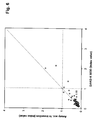
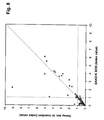
- Fig. 6 shows the index value (sample OD / cut-off OD) of 103 blood donor sera as obtained in the assay according to the invention relative to that obtained with the IDEIATM Borrelia burgdorferi IgM (DAKO cat. no. K 6030).
- the cut-off index value of 1 is shown by dashed lines.
- Fig. 7 shows the index value (sample OD / cut-off OD) of 27 sera from patients with a clinically observed erythema migrans obtained in the assay according to the invention relative to that obtained with the IDEIATM Borrelia burgdorferi IgM (DAKO cat. no. K 6030).
- the cut-off index value of 1 is shown by dashed lines.
- Fig. 8 shows the index value (sample OD / cut-off OD) of 96 sera from patients with a neuroborreliosis obtained in the assay according to the invention relative to that obtained with the IDEIATM Borrelia burgdorferi IgM (DAKO cat. no. K 6030).
- the cut-off index value of 1 is shown by dashed lines.
- the antigen complex of the invention provides an improvement in the diagnosis of Lyme borreliosis.
- the simultaneous detection of antibodies against the two important early immunodominent Borrelia antigens, OspC and the flagellum has provided a labour and cost saving method that is well suited for routine testing.
- antigen complex a chemical entity which at least is capable of reacting with antibodies specific for OspC of Borrelia burgdorferi sensu lato.
- the complex comprises
- the complex is preferably labelled but it may also be contacted with the antibodies to be detected in unlabelled form followed by detection of the specific immunological reaction by addition of a labelled detection reagent such as a labelled Fab fragment of anti-human IgM or a labelled Fab fragment reacting with the antigen of the antigen complex.
- a labelled detection reagent such as a labelled Fab fragment of anti-human IgM or a labelled Fab fragment reacting with the antigen of the antigen complex.
- Borrelia burgdorferi sensu lato covers B. burgdorferi sensu stricto, B. garinii, B. afzelii and B. valaisiana.
- Borrelia OspC peptides and "other Borrelia peptides” do in the present context mean a sequence of amino acid residues that can be identical to a sequence of a native Borrelia protein or be substantially similar to such a sequence, e.g. differing by one or a few amino acids, with the proviso that the peptides are able to react with antibodies specific to Borrelia.
- the "other Borrelia peptides” may be derived from other Borrelia proteins eliciting a response in the majority of Lyme borreliosis patients. For detecting an early response, other Borrelia peptides may be derived from Borrelia flagellin (p41), the outer surface proteins E or F.
- amino acid sequence of the peptides share at least 80% homology with the native sequence when the peptide is composed of 10 or less amino acids. When the peptide is composed of more than 10 amino acids, it is preferred that the sequence shares at least 60% homology with the native sequence.
- the length of the peptides is preferably at most 60 amino acids, more preferably at most 30 amino acids, such as from 2 to 30 amino acids, preferably from 4 to 30 amino acids, more preferably from 4 to 25 amino acids such as from 5 to 25. In a preferred embodiment, the length of the peptides is less than 10 amino acids, such as from 2 to 9 amino acids, suitably from 4 to 9 amino acids such as 7 or 8 amino acids.
- the 4 C-terminal amino acids of OspC have been shown to be very important for binding when testing for antibodies against B. burgdorferi sensu lato OspC.
- the 4 C-terminal amino acids should be included in the OspC peptides of the present antigen complex.
- Peptides having a length of from 4 to 30 amino acid residues counting from the C-terminal end of OspC are preferred, the most preferred having a length of from 4 to 25 amino acids, or from 5 to 25 amino acids, in particular less than 10 amino acids, preferably from 4 to 9 amino acids, or from 5 to 9 amino acids such as 7 or 8 amino acids.
- Suitable amino acid sequences of OspC are disclosed in ref. 3.
- the carrier is such to which one or more sets of peptides, each set comprising a plurality of peptides representing the same antibody binding epitope and binding to IgM molecules, are attached, thereby presenting multiple binding sites for the peptid-specific IgM antibodies within the same complex.
- the carrier may be a solid or semisolid carrier. Non-limiting examples are particles such as a latex particles, microspheres such as metal particles, and whole cells such as erythrocytes.
- the carrier may be an insoluble or soluble organic or inorganic polymer, the Borrelia flagellum or a fragment thereof.
- the carrier may be a combination of such carriers such as a combination of particles or microspheres and insoluble or soluble organic or inorganic polymers, the Borrelia flagellum or fragments thereof.
- a plurality is herein meant a number of peptides that is sufficiently large and arranged in such a way that multipoint attachment to one or more captured IgM antibodies is achieved thereby securing the antibody against being lost during the subsequent steps.
- the minimum number of peptides is likely to differ depending on several factors, i.a. on the nature of the carrier as well as on the assay format.
- the number of peptides available on a carrier may, depending on the size and type of carrier be very large, up to or more than 100.000 or even up to or more than 1.000.000. In other cases, as few as 2-10 or 2-1000 peptides may be sufficient.
- the term "the antigen complex is or will be labelled” relates to the two possibilities that the antigen complex carries a label or is unlabelled when brought in contact with the antibodies to be detected. In the latter case it is subsequently labelled by addition of a labelled secondary binding partner such as a labelled Fab fragment of anti-human IgM. In order to avoid interference from RF, a labelled IgG antibody should not be used.
- the term "the antigen complex is labelled” includes complexes between a per se unlabelled antigen complex and a labelled secondary binding partner if the complexes are formed prior to contact with the antibody to be detected. Examples of labelled secondary binding partners are streptavidin/HRP and anti-biotin/HRP. Others can of course be used and are well-known to the person skilled in the art.
- streptavidin can be replaced by avidin or derivatives of streptavidin or avidin having a biotin-binding capacity.
- the method according to the present invention is preferably performed in microwells coated with antibodies specific to IgM but may also be performed using another solid support.
- suitable solid supports are microspheres such as paramagnetic particles implying magnetic separation of bound and non-bound components.
- Yet another suitable solid supports are polystyrene beads and membranes.
- the method may be adapted to a flow cytometry test if e.g. the IgM catching antibody is immobilised onto suitable particles or whole cells.
- the antibodies specific to IgM may be immobilised to the solid support by adsorption or may in biotinylated form be added to a streptavidin coated solid support.
- the sample which is preferably serum or cerebrospinal fluid, is then contacted with the immobilised antibodies for binding of IgM antibodies of various specificity.
- a proportional fraction of any RF of the IgM class in the sample will also be immobilised.
- Non-bound components of the sample are removed by separating the solid support from the liquid phase, e.g. by washing the solid support. This separation step is essential to remove unbound antibodies against Borrelia and to avoid interference related to any RF bound to the solid support.
- the antibodies bound to the solid support are brought into contact with an antigen complex comprising one or more sets of Borrelia OspC peptides and optionally one or more sets of other Borrelia peptides, each set comprising a plurality of Borrelia peptides representing the same antibody binding epitope and binding to IgM molecules.
- an antigen complex comprising one or more sets of Borrelia OspC peptides and optionally one or more sets of other Borrelia peptides, each set comprising a plurality of Borrelia peptides representing the same antibody binding epitope and binding to IgM molecules.
- OspC peptides are described in WO 97/42221.
- the antigen complex is preferably labelled with a detectable moiety.
- the detectable moiety may be selected from the group consisting of chromophore, fluorochrome, spin label, radioisotope, enzyme, hapten and chemiluminescent compounds.
- suitable enzymes are horseradish peroxidase, alkaline phosphatase and soybean peroxidase.
- Non-limiting examples of haptens are fluorescein, biotin, 2,4-dinitrophenyl and digoxigenin.
- the labelling procedure can be carried out using conventional methods known to the person skilled in the art.
- Both the peptides and the detectable moiety may be attached covalently to the carrier using a homobifunctional coupling reagent such as glutaraldehyde or a heterobifunctional coupling reagent such as SPDP (3-(2-pyridyldithio)propionic acid N-hydroxysuccinimide ester) or SMCC (4-(N-maleimidomethyl)-cyclohexane-1-carboxylic acid 3-sulfo-N-hydroxysuccinimide ester).
- the peptides and the carrier may be biotinylated and attached to each other through streptavidin.
- the detectable moiety may be covalently attached to streptavidin which is subsequently attached to the carrier through biotin.
- a linker may be introduced between the carrier and the peptide, biotin or another detectable moiety.
- suitable linkers are one or more units of [2-aminoethoxy]ethoxy acetic acid (O-linker) or ethylene oxide.
- an amino acid can be used as a linker.
- the amino acid cystein may e.g. be used to provide a SH group to be used in the coupling reaction.
- step (iv) separation of the solid support from the liquid phase prior to step (iv) may or may not be necessary. If the solid support is particles for analysis in flow cytometry, such a separation step is not necessary, but in a format using microwells, non-bound antigen complexes should be removed.
- the carrier of the antigen complex is the Borrelia flagellum or fragments thereof.
- the Borrelia peptides may be attached to the Borrelia flagellum or a fragment thereof, or the Borrelia peptides may be attached to a carrier which again is attached to the Borrelia flagellum or a fragment thereof.
- the combined function of the flagellum as a carrier and as contributing relevant epitopes for detection of IgM antibodies against the flagellum allows for the simultaneous determination of antibodies against Borrelia OspC and the Borrelia flagellum.
- Another aspect of the invention is the antigen complex as defined in relation to the method described above. If the antigen complex is labelled with a detectable moiety, which can de detected directly such as a fluorescent or radioactive moiety, no further reagents are needed in step (iv). In other cases, means for detection/or measuring the immunological reaction may be needed.
- kits comprising a labelled antigen complex as defined above wherein the label is not directly detectable and a substrate for visualising the immunological reaction.
- kits comprising an unlabelled antigen complex as defined above, a labelled secondary binding partner and optionally a substrate for visualising the immunological reaction.
- a preferred kit comprises an antigen complex wherein the carrier is Borrelia flagellum or fragments thereof to which is attached a plurality of identical Borrelia OspC peptides, the flagellum or fragments thereof and the OspC peptides being biotinylated and attached to each other through streptavidin to which an enzyme is covalently attached.
- Another preferred kit comprises an antigen complex wherein the carrier is a combination of a particulate carrier and the Borrelia flagellum or fragments thereof, the carrier components being biotinylated and attached to each other through streptavidin to which an enzyme is covalently attached, to which particulate carrier is attached a plurality of identical peptides.
- the complexes described herein can be produced in a highly stable form maintaining high levels of antigenicity.
- the complexes produced can be freeze-dried and reconstituted in a suitable buffer retaining a high level of activity and is thus a very suitable reagent component for use in diagnosing Lyme borreliosis.
- the Borrelia peptides were synthesised by the solid phase 9-fluorenylmethoxy-carbonyl (Fmoc) method (ref. 4).
- the solid-phase peptide synthesis was performed using a multi-peptide synthesiser AMS422 (Abimed, Langenfeld, Germany) as described in Gausepohl et al (1990). All peptides were synthesised with Fmoc amino acids (Novabiochem) using PyBOP (benzotriazole-1-yloxytripyrrolidinophosphonium hexafluorophosphate, Novabiochem) as coupling reagent.
- the side-chain protection was as follows: Asn, Gln and His (trityl); Arg (2,2,5,7,8-pentamethylchroman-6-sulfonyl); Asp, Glu, Tyr, Ser and Thr ( tert -Butyl); Trp and Lys ( tert -butyloxycarbonyl).
- Biotinylated peptides were prepared after the assembly of the peptide chain.
- the alfa N Fmoc protecting group was removed and one or two of Fmoc protected O-linkers (N-(9-fluorenylmethoxycarbonyl) [2-aminoethoxy] ethoxy acetic acid, PerSeptive Biosystem) were coupled to the N-terminal of the peptide using HATU ( N -[(dimethylamino)-1H-1,2,4-triazol [4,5-b]pyridine-1-yl-methylene]- N -methylmethanaminium hexafluorophosphate N-oxide, PerSeptive Biosystem) and HOAT (1-hydroxy-7-azabenzotriazole, PerSeptive Biosystem) as coupling reagent. Biotinylation was done with biotin and HATU and HOAT.
- the peptides were cleaved from the resin with trifluoroacetic acid/triethylsilane/H 2 O 92.5:5:2.5 v/v/v at room temperature (21-23°C) for 2 h.
- the peptides were precipitated in methyl tertbutyl ether and washed with ether and dried in vacuum.
- the peptides were purified by HPLC (Vydac 218TP1022, flow rate 9 ml/min) using a gradient of water and acetonitril, both containing 0.1 % trifluoroacetic acid. All peptides were more than 90% pure. Identity of the peptide was confirmed by MALDI-TOF mass spectrometry using an HP G2025A instrument.
- flagella of in vitro -grown B. afzelii strain DK1 were isolated, purified and optional biotinylated as described in ref. 1 and 2.
- Biotinamidocaproate N-hydroxysuccinimide ester 20 mM in dimethylformamide, was used to covalently biotinylate the flagella in a ratio of 0.14 mg biotin reagent to 1 mg of flagellum protein.
- the reaction took place in 0.125 M NaHCO 3 buffer pH 9.0 for 8 h at room temperature, after which the reaction mixture was dialysed against PBS for at least 24 h.
- the dialysate was the final preparation of purified, biotinylated Borrelia flagella.
- CML carboxyl modified latex
- Pre-activation of CML and coupling of polyethylene glycol (PEG) linker to form NH 2 -PEG-CML To a suspension of 5.0 ml purified CML (10 % latex) was added 3.0 ml 0.10 M N-morpholinoethanesulfonic acid (MES) buffer (Sigma Chemical Co., pH 6.0), a solution of sulfo N-hydroxysuccinimide (1.0 ml, 158 mM, Pierce Chemical Company, in 0.10 M MES, pH 6.0), and a solution of 1-ethyl 3-(dimethylaminopropyl)carbodiimide hydrochloride (1.0 ml, 40 mM, Sigma Chemical Co., in 0.10 M MES, pH 6.0. The suspension was tip sonicated (75 ⁇ A, 60 seconds, 0°C) using a Labsonic 2000, ultrasound generator, B-Braun, and shaken for 20 minutes at room temperature.
- MES N-morpholinoethanes
- the sulfo N-hydroxy succinimide ester activated latex suspension was slowly added to a magnetically stirred O,O'-Bis(2-amino propyl) ethylene glycol 1900 solution (10.0 ml, 20%, Fluka AG, approx. M r 2000 g/mol, in 0.10 M MES, pH 6,0) while being continuously tip sonicated (75 ⁇ A) and cooled on a ice-bath. After stirring for 2 h at room temperature, 15 ml water was added to the suspension.
- the modified latex was isolated by centrifugation (20,000 x g, 3 h, 4°C), the pellet re-suspended in water (15 ml) and tip sonicated (75 ⁇ A, 3 times 45 seconds, 0°C).
- the amino propyl polyethylene glycol modified latex suspension was mixed with ion exchange resin (3.0 g, BioRad Laboratories) and shaken for 2 h.
- the mixed bed resin was removed by filtration (MiniSart, 5 ⁇ m).
- the amino-PEG modified latex was isolated by centrifugation (20,000 x g, 3 h, 4°C). The pellet was re-suspended in water (7.50 ml) and stored in the cold (4°C).
- Biotin-PEG-CML-PEG-OspC The amino propyl polyethylene glycol modified latex (1000 ⁇ l, approx. 0.66 % latex) was isolated by centrifugation (20,000 x g, 1.5 h, 4°C) re-suspended in MES buffer (875 ⁇ l 0.10 M, pH 6.0). To this suspension was added N-hydroxy succinimide biotin solution (125 ⁇ l 42.1 mM, Sigma Chemical Co., in dimethylsufoxide, Aldrich Chemical Company).
- the modified latex was isolated by centrifugation (20,000 x g, 1.5 h, 4°C). The pellet was re-suspended in MES buffer (900 ⁇ l, 0.10 M, pH 6.0) and to this suspension was added a solution of succinimidyl-4-(N-maleimidomethyl)-cyclohexan-1-carboxylate (100 ml, 112.2 mM, Pierce Chemical Comp., in dimethylsulfoxide). The suspension was incubated for 1 h at room temperature followed by 18 hours at 4°C.
- the biotin and maleinimide modified latex was isolated by centrifugation (20,000 x g, 1.5 h, 4°C). The pellet was washed by re-suspension in a potassium phosphate buffer (1000 ⁇ l, 40 mM potassium phosphate (E.Merck), 2 mM EDTA (Sigma Chemical Co.), 300 mM NaCl (E.Merck), pH 7.2), followed by latex isolation by centrifugation (20,000 x g, 1.5 h, 4 °C) and resuspension in potassium phosphate buffer (800 ⁇ l, 40 mM potassium phosphate, 2 mM EDTA, 300 mM NaCl, pH 7.2).
- the suspension was incubated for 3 h at room temperature before a cystein solution (100 ⁇ l, 0.825 M, Sigma Chemical Co., in 40 mM potassium phosphate, 2 mM EDTA, 300 mM NaCl, pH 7.2) was added.
- the modified latex was washed four times by first being isolated by centrifugation (20,000 x g, 1.5 h, 4°C), re-suspended in a potassium phosphate Tween 20 buffer (1000 ⁇ l, 0.10 M KP, 0.50% Tween 20 (E. Merck) pH 7.2) and tip sonicated (75 ⁇ A, 3 times 45 seconds, 0°C).
- biotin and peptide modified latex were isolated by centrifugation (20,000 x g, 1.5 h, 4 °C). The pellet was re-suspended in a potassium phosphate Tween 20 buffer (500 ⁇ l, 0.10 M potassium phosphate, 0.50% Tween 20, pH 7,2) and stored cold (4°C). As will appear, biotin and OspC peptides are covalently attached to different sites of the particles.
- biotinylated latex particles to which is attached OspC peptides are pre-incubated with streptavidin/HRP conjugate and subsequently with biotinylated flagellum.
- biotinylated flagella and streptavividin/HRP were taken from the Lyme borreliosis IgM ELISA kit produced by DAKO (Denmark, IDEIATM Borrelia burgdorferi, IgM, cat. no. K 6030) and used in exactly the form and manner specified in the product manual.
- the assay principle and procedure is outlined below in Example 3, section A.
- the two volumes were predetermined such as to involve all biotinylated flagella and all streptavidin/HRP molecules in complexing in the case of absence of biotinylated peptide. Those volumes were kept constant, irrespectively of the amount of biotinylated peptide added during the first step to the streptavidin/HRP. The reaction during the second complexing step was allowed to take place during an one hour incubation at room temperature.
- the chosen stoichiometric ratios of biotinylated peptide to streptavidin were 0, 1, 1.5, 2, 2.5, 3, 4, 8,16, 32, and 64, respectively. From a) knowing the stoichiometric ratio and b) the fact that streptavidin has four biotin-binding sites per molecule, the number of biotinylated peptide molecules bound per streptavidin molecule could be approximated, as could the relative amount of unbound, or surplus, biotinylated peptide. In this manner the biotinylated flagella's possibility of being part of the complex could be estimated.
- a panel of sera from 27 Swedish patients with a clinical diagnosis of erythema migrans and a panel of 96 sera taken from Danish patients and submitted for laboratory diagnosis of neuroborreliosis were used to compare the diagnostic performance of ELISAs.
- the sera were diluted 1+200 prior to use, such as described below.
- the enzyme immunoassay used throughout in the experiments was the Lyme borreliosis IgM ELISA kit produced by DAKO (Denmark, IDEIATM Borrelia burgdorferi, IgM, cat. no. K 6030).
- the kit contains microtiter plates with wells coated with rabbit anti-human IgM.
- the first step is pipetting 100 ⁇ l/well of diluted human serum samples. IgM present in the sample is captured during the first incubation, which is carried out at room temperature for 1 h on an orbital shaker at 500 rpm.
- the wells are washed four times with a buffer solution to remove unbound serum proteins, followed by addition of 100 ⁇ l/well of native biotinylated B. burgdorferi flagella complexed with streptavidin/HRP conjugate to each well.
- the complex has been pre-formed by the user by reconstitution of lyophilised, biotinylated flagella in buffer, followed by addition of a volume of streptavidin/HRP.
- the complex binds only to B. burgdorferi flagellum-specific IgM antibodies.
- the Lyme borreliosis IgM ELISA kit produced by DAKO (Denmark, IDEIATM Borrelia burgdorferi, IgM, cat. no. K 6030) implies the use of biotinylated flagella complexed with streptavidin/HRP, which is regarded as prior art antigen complexes in the present context. Results obtained by testing the sera in this assay are listed in Fig. 1, column C. It will be seen that among the patient sera, one was negative (7696), two were equivocal (311, 106/65), one was weakly positive (3311/48), and one strongly positive (3959/59) for anti-flagellum IgM. The three blood donor sera (440, 441, 442) were negative.
- the IDEIATM Borrelia burgdorferi, IgM, cat. no. K 6030 was used, the only change being that OspC peptide seq. no. 2 was substituted for the biotinylated flagellum (see Example 1, Section A).
- the OspC peptide/biotin and the streptavidin/HRP were allowed to complex, the peptide concentration being adjusted so as to yield a biotin to streptavidin ratio of 8:1.
- the results listed in Fig. 1, column B indicate that three patient samples were negative for anti-OspC IgM (311, 7696, 3959/59), one equivocal (106/65), and one positive (3311/48). The three blood donor sera were negative.
- a ratio of 1 or 2 allows for the anticipation that on average one or two peptide molecules are bound to each streptavidin, leaving three or two biotin-binding sites per streptavidin for reaction with biotins conjugated to flagella and resulting in an antigen complex according to the invention, i.e. an OspC peptide/biotin - flagellum/biotin - streptavidin/HRP complex.
- a ratio of 4 means that the molecular amount of OspC peptide/biotin is four times the molecular amount of streptavidin. Because OspC peptide/biotin and streptavidin/HRP are allowed to complex prior to the addition of biotinylated flagella, most complexes will consist of OspC peptide/biotin and streptavidin/HRP only, and very few will be formed that contain biotinylated flagella as well.
- a ratio of 8, 16, 32 or 64 means that OspC peptide/biotin is allowed to occupy all biotin-binding sites on the streptavidin, resulting in complexes practically devoid of flagella.
- the most obvious reason for this finding relates to the concerted effect of a) the number of biotin molecules per peptide and flagellum, b) the spacing between peptides held by complex, and c) the low avidity of the IgM antibody class.
- Each peptide has one biotin only, whereas biotinylation of purified preparations of flagella leaves numerous biotins per flagellum.
- OspC peptide/biotin to streptavidin ratio > 4 there is only a single streptavidin/HRP conjugate per complex, and hence the peptides bound in each complex are situated as close together as depicted by the spacing between the biotin-binding sites on the streptavidin.
- each complex is able to bind to only one of the anti-OspC IgM antibodies captured on the solid support. Due to the low avidity of the IgM, the complex is prone to be released during the subsequent washing of microtiter wells, thereby decreasing the sensitivity of the assay.
- the flagellum/biotin is incorporated with OspC peptide/biotin in each complex, which again contains several streptavidin/HRPs.
- Such complexes as herein defined may be pictured as several peptide/biotin - streptavidin/HRP subcomplexes held together by a flagellum/biotin backbone, making the binding of the whole complex to several anti-OspC IgM antibodies possible. In this way the complex is much less prone to be washed off from anti-OspC IgM captured on the solid support during the first incubation step.
- the following assay was carried out.
- the incubation with serum was followed by incubation with OspC/biotin, and then in a separate step with flagellum/biotin and streptavidin/HRP (Fig. 1, column E; conseq.).
- the signal obtained is similar to the signal obtained with anti-flagellum antibodies only (Fig 1., column C).
- a second finding is that detection of anti-flagellum IgM is retained even if OspC peptide/biotin is included besides flagellum/biotin in the complex (Fig. 2, curves for sera 3959/59 and 311; Fig. 1, column D). Obviously, the detection is completely hindered when the OspC peptide/biotin to streptavidin ratio > 4, i.e. when biotinylated peptide is allowed to occupy all biotin-binding sites on the streptavidin, resulting in complexes devoid of flagella.
- the diagnostic performance of the ELISA containing the above mentioned antigen complex of biotinylated flagellum, biotinylated OspC peptide, and streptavidin/HRP was further investigated.
- a stochiometric ratio of 3 of biotinylated OspC peptide (seq. no. 1) to streptavidin/HRP was applied because of its optimal (see Fig. 3) ability to bind anti-flagellum as well as anti-OspC IgM.
- Results from testing the panels of blood donor, erythema migrans and neuroborreliosis patient sera in this assay were compared to those obtained from testing the same panels in the IDEIATM Borrelia burgdorferi, IgM, DAKO cat. no. K 6030.
- the results are illustrated in Figs. 6, 7 and 8.
- For each test sample an average of the OD value of duplicate wells was compared to the OD value of the assay cut-off control. The test sample OD was divided by the cut-off control OD, yielding an index value. An index value > 1 means positive, and ⁇ negative.
- Fig. 6 shows that the assay according to the invention tests two out of 103 blood donor sera positive, while the K 6030 assay tests four out of 103 positive.
- Figs. 7 and 8 show that a few sera, negative or weakly positive in the K 6030 assay, are distinctly positive in the assay according to the invention, pointing to detection of anti-Ospc IgM in
- Another antigen complex according to the invention comprises OspC peptides coupled to biotinylated latex particles (see Example 2, Section A), the particles being complexed with either streptavidin/HRP alone, or with streptavidin/HRP and flagellum/biotin, prior to their application in the ⁇ -capture ELISA.
- the IDEIATM Borrelia burgdorferi, IgM, cat. no. K 6030 was used, the only change being that the flagellum/biotin was replaced by latex particles to which is attached OspC peptides and biotin or both flagellum/biotin and latex particles to which is attached OspC peptides and biotin were used.
- streptavidin/HRP final concentration was kept throughout the experiment such as applied in the original assay.
- Fig. 4 shows the results obtained with a complex containing latex particles to which is attached OspC peptide seq. no. 3 and streptavidin/HRP, the density of particles being varied through a 10-fold dilution row ranging from a 10 2 to a 10 6 dilution of the particle stock suspension. Included was also a control data point where no latex particles were applied, i.e. un-complexed streptavidin/HRP only was added to the wells. It will be seen that positive reactions (Fig. 4, curves for sera 106/65, 3311/48, 3959/59, 7696) clearly distinct from negative (Fig. 4, curves for sera 311, 440, 441, 442) were obtainable.
- Fig. 5 shows the results obtained with a complex containing latex particles to which is attached OspC peptide seq. no. 3 and biotin, flagellum/biotin and streptavidin/HRP, the density of particles again being varied through a 10-fold dilution row ranging from a 10 2 to a 10 6 dilution of the particle stock suspension. Included was also a control data point where no latex particles were applied, meaning that a complex consisting of flagellum/biotin and streptavidin/HRP only was added to the wells, resulting in an assay which in fact was the original ⁇ -capture ELISA. This is clearly illustrated in Fig.
- the serum sample 7696 gave in tests using antigen complexes comprising latex particles a higher signal as compare to what was found in the ELISA with an antigen complex containing biotinylated OspC and flagellum complexed with streptavidin/HRP (compare Figs. 4 and 5 with Figs. 2 and 3). This may indicate that a complex including latex particles with OspC is superior for detection of anti OspC.
Landscapes
- Health & Medical Sciences (AREA)
- Life Sciences & Earth Sciences (AREA)
- Immunology (AREA)
- Engineering & Computer Science (AREA)
- Hematology (AREA)
- Chemical & Material Sciences (AREA)
- Urology & Nephrology (AREA)
- Biomedical Technology (AREA)
- Molecular Biology (AREA)
- Microbiology (AREA)
- Physics & Mathematics (AREA)
- Biotechnology (AREA)
- Virology (AREA)
- Tropical Medicine & Parasitology (AREA)
- Food Science & Technology (AREA)
- Medicinal Chemistry (AREA)
- Cell Biology (AREA)
- Analytical Chemistry (AREA)
- Biochemistry (AREA)
- General Health & Medical Sciences (AREA)
- General Physics & Mathematics (AREA)
- Pathology (AREA)
- Peptides Or Proteins (AREA)
Applications Claiming Priority (2)
| Application Number | Priority Date | Filing Date | Title |
|---|---|---|---|
| DK51698 | 1998-04-08 | ||
| DK51698 | 1998-04-08 |
Publications (1)
| Publication Number | Publication Date |
|---|---|
| EP0949508A1 true EP0949508A1 (de) | 1999-10-13 |
Family
ID=8094440
Family Applications (1)
| Application Number | Title | Priority Date | Filing Date |
|---|---|---|---|
| EP99610026A Withdrawn EP0949508A1 (de) | 1998-04-08 | 1999-04-07 | Verfahren, Antigen-Komplex und Satz zur Diagnose Lyme-Borreliose |
Country Status (1)
| Country | Link |
|---|---|
| EP (1) | EP0949508A1 (de) |
Cited By (12)
| Publication number | Priority date | Publication date | Assignee | Title |
|---|---|---|---|---|
| WO2001042790A3 (de) * | 1999-12-08 | 2001-12-06 | Wita Gmbh | Mittel und verfahren zur diagnose von lyme borreliose sowie borreliose-impfstoff |
| WO2003046140A3 (en) * | 2001-11-27 | 2003-07-31 | Diagenics Internat Corp | Immunoassay and kit for an early and simulataneous detection of biochemical markers in a patient's sample |
| FR2864624A1 (fr) * | 2003-12-24 | 2005-07-01 | Inodiag | Methode de diagnostic serologique des maladies infectieuses par immunodetection d'antigene microbien comprenant le controle de reaction faussement positive ou negative |
| US8268964B2 (en) | 2007-03-26 | 2012-09-18 | Dako Denmark A/S | MHC peptide complexes and uses thereof in infectious diseases |
| US9404916B2 (en) | 2008-09-20 | 2016-08-02 | University College Cardiff Consultants Limited | Use of a protein kinase inhibitor to detect immune cells, such as T cells |
| US10030065B2 (en) | 2007-07-03 | 2018-07-24 | Dako Denmark A/S | MHC multimers, methods for their generation, labeling and use |
| US10369204B2 (en) | 2008-10-02 | 2019-08-06 | Dako Denmark A/S | Molecular vaccines for infectious disease |
| US10611818B2 (en) | 2007-09-27 | 2020-04-07 | Agilent Technologies, Inc. | MHC multimers in tuberculosis diagnostics, vaccine and therapeutics |
| US10722562B2 (en) | 2008-07-23 | 2020-07-28 | Immudex Aps | Combinatorial analysis and repair |
| US10968269B1 (en) | 2008-02-28 | 2021-04-06 | Agilent Technologies, Inc. | MHC multimers in borrelia diagnostics and disease |
| US11992518B2 (en) | 2008-10-02 | 2024-05-28 | Agilent Technologies, Inc. | Molecular vaccines for infectious disease |
| US12258373B2 (en) | 2018-12-17 | 2025-03-25 | Immudex Aps | Panel comprising Borrelia MHC multimers |
Citations (1)
| Publication number | Priority date | Publication date | Assignee | Title |
|---|---|---|---|---|
| WO1997042221A1 (en) * | 1996-05-02 | 1997-11-13 | Statens Seruminstitut | Novel osp-c derived peptide fragments |
-
1999
- 1999-04-07 EP EP99610026A patent/EP0949508A1/de not_active Withdrawn
Patent Citations (1)
| Publication number | Priority date | Publication date | Assignee | Title |
|---|---|---|---|---|
| WO1997042221A1 (en) * | 1996-05-02 | 1997-11-13 | Statens Seruminstitut | Novel osp-c derived peptide fragments |
Non-Patent Citations (2)
| Title |
|---|
| BIOLOGICAL ABSTRACTS, vol. 91, Philadelphia, PA, US; abstract no. 62724, XP002109632 * |
| K. HANSEN ET AL.: "Improved immunoglobulin M serodiagnosis in Lyme borreliosis by using a mu-capture ELISA with biotinylated Borrelia burgdorferi flagella.", JOURNAL OF CLINICAL MICROBIOLOGY, vol. 29, no. 1, 1991, Chicago IL USA, pages 166 - 173 * |
Cited By (14)
| Publication number | Priority date | Publication date | Assignee | Title |
|---|---|---|---|---|
| WO2001042790A3 (de) * | 1999-12-08 | 2001-12-06 | Wita Gmbh | Mittel und verfahren zur diagnose von lyme borreliose sowie borreliose-impfstoff |
| WO2003046140A3 (en) * | 2001-11-27 | 2003-07-31 | Diagenics Internat Corp | Immunoassay and kit for an early and simulataneous detection of biochemical markers in a patient's sample |
| CN100593721C (zh) * | 2001-11-27 | 2010-03-10 | 迪尔基因国际有限公司 | 用于病人的样本中生物化学标记物的早期和同步检测的免疫测定法和试剂盒 |
| FR2864624A1 (fr) * | 2003-12-24 | 2005-07-01 | Inodiag | Methode de diagnostic serologique des maladies infectieuses par immunodetection d'antigene microbien comprenant le controle de reaction faussement positive ou negative |
| US8268964B2 (en) | 2007-03-26 | 2012-09-18 | Dako Denmark A/S | MHC peptide complexes and uses thereof in infectious diseases |
| US10336808B2 (en) | 2007-03-26 | 2019-07-02 | Dako Denmark A/S | MHC peptide complexes and uses thereof in infectious diseases |
| US10030065B2 (en) | 2007-07-03 | 2018-07-24 | Dako Denmark A/S | MHC multimers, methods for their generation, labeling and use |
| US10611818B2 (en) | 2007-09-27 | 2020-04-07 | Agilent Technologies, Inc. | MHC multimers in tuberculosis diagnostics, vaccine and therapeutics |
| US10968269B1 (en) | 2008-02-28 | 2021-04-06 | Agilent Technologies, Inc. | MHC multimers in borrelia diagnostics and disease |
| US10722562B2 (en) | 2008-07-23 | 2020-07-28 | Immudex Aps | Combinatorial analysis and repair |
| US9404916B2 (en) | 2008-09-20 | 2016-08-02 | University College Cardiff Consultants Limited | Use of a protein kinase inhibitor to detect immune cells, such as T cells |
| US10369204B2 (en) | 2008-10-02 | 2019-08-06 | Dako Denmark A/S | Molecular vaccines for infectious disease |
| US11992518B2 (en) | 2008-10-02 | 2024-05-28 | Agilent Technologies, Inc. | Molecular vaccines for infectious disease |
| US12258373B2 (en) | 2018-12-17 | 2025-03-25 | Immudex Aps | Panel comprising Borrelia MHC multimers |
Similar Documents
| Publication | Publication Date | Title |
|---|---|---|
| US6503722B1 (en) | Diagnostic tests and kits for Clostridium difficile | |
| JP3197277B2 (ja) | 一種類以上の免疫学的配位子の分析方法,その分析試薬およびそのキット | |
| JP3958797B2 (ja) | 抗原特異的IgM検出 | |
| AU698513B2 (en) | Immunoassay for H. pylori in fecal specimens | |
| JP3958796B2 (ja) | 抗原特異的IgG検出 | |
| JPWO1994027150A1 (ja) | 一種類以上の免疫学的配位子の分析方法,その分析試薬およびそのキット | |
| CN101435825A (zh) | 夹心免疫检测法及用该法检测抗原的方法 | |
| US9535064B2 (en) | Assay for diagnosing Streptococcus pneumoniae | |
| AU618580B2 (en) | Immunoassay utilizing biotin bridge with universal solid phase | |
| WO1989012231A1 (en) | Anti-fc assay for detection of antibodies | |
| US20200148726A1 (en) | Multi-epitope fusion protein of an hcv antigen and uses thereof | |
| JP3374101B2 (ja) | Env/gagポリペプチドマーカーを使用するネコ免疫不全ウイルス感染の診断 | |
| EP0442231A1 (de) | Stabförmige Pobeeinrichtung zum Nachweis von Antikörpern | |
| US5736348A (en) | Method for the immunological diagnosis of Chagas' Disease using recombinant antigens | |
| EP0338045B1 (de) | Nichttrennender festphasen-enzymtest | |
| ES2220982T3 (es) | Peptidos destinados a la deteccion del vih-1. | |
| EP0451687A2 (de) | Partieller Sandwich-Immunoassay zum Nachweis von Chlamydia | |
| EP0439212A1 (de) | Vorrichtung, Testsatz und Sandwichtest zum Nachweis von Bacteroides intermedius, Bacteroides gingivalis oder Actinobacillus actinomycetemcomitans | |
| BR102023018883A2 (pt) | Kit e método para diagnóstico da brucelose canina, e usos | |
| Germani et al. | Competitive erythroimmunoassay for detecting Clostridium perfringens type A enterotoxin in stool specimens | |
| EP0439211A1 (de) | Antikörperkomposition für Actinobazillus Actinomycetemcomitans und ihre Verwendung in Diagnostika | |
| JPH11304801A (ja) | 間接抗原固定化による自己抗体検出方法 | |
| JP2716103B2 (ja) | イムノアッセイにおける誤結果除去方法 | |
| JP2001264334A (ja) | 梅毒トレポネーマ抗体測定試薬及びその製造方法 | |
| JP3936678B2 (ja) | 抗梅毒トレポネーマ抗体測定試薬及び抗梅毒トレポネーマ抗体の測定方法 |
Legal Events
| Date | Code | Title | Description |
|---|---|---|---|
| PUAI | Public reference made under article 153(3) epc to a published international application that has entered the european phase |
Free format text: ORIGINAL CODE: 0009012 |
|
| AK | Designated contracting states |
Kind code of ref document: A1 Designated state(s): AT BE CH CY DE DK ES FI FR GB GR IE IT LI LU MC NL PT SE |
|
| AX | Request for extension of the european patent |
Free format text: AL;LT;LV;MK;RO;SI |
|
| AKX | Designation fees paid | ||
| REG | Reference to a national code |
Ref country code: DE Ref legal event code: 8566 |
|
| STAA | Information on the status of an ep patent application or granted ep patent |
Free format text: STATUS: THE APPLICATION IS DEEMED TO BE WITHDRAWN |
|
| 18D | Application deemed to be withdrawn |
Effective date: 20000414 |