EP0949562B1 - Procédé et appareil pour comparer des données entrantes avec des données enregistrées - Google Patents
Procédé et appareil pour comparer des données entrantes avec des données enregistrées Download PDFInfo
- Publication number
- EP0949562B1 EP0949562B1 EP99104099A EP99104099A EP0949562B1 EP 0949562 B1 EP0949562 B1 EP 0949562B1 EP 99104099 A EP99104099 A EP 99104099A EP 99104099 A EP99104099 A EP 99104099A EP 0949562 B1 EP0949562 B1 EP 0949562B1
- Authority
- EP
- European Patent Office
- Prior art keywords
- data
- registered
- match
- compared
- registered data
- Prior art date
- Legal status (The legal status is an assumption and is not a legal conclusion. Google has not performed a legal analysis and makes no representation as to the accuracy of the status listed.)
- Expired - Lifetime
Links
Images


Classifications
-
- G—PHYSICS
- G06—COMPUTING OR CALCULATING; COUNTING
- G06F—ELECTRIC DIGITAL DATA PROCESSING
- G06F7/00—Methods or arrangements for processing data by operating upon the order or content of the data handled
- G06F7/02—Comparing digital values
-
- G—PHYSICS
- G06—COMPUTING OR CALCULATING; COUNTING
- G06V—IMAGE OR VIDEO RECOGNITION OR UNDERSTANDING
- G06V30/00—Character recognition; Recognising digital ink; Document-oriented image-based pattern recognition
- G06V30/10—Character recognition
- G06V30/24—Character recognition characterised by the processing or recognition method
- G06V30/248—Character recognition characterised by the processing or recognition method involving plural approaches, e.g. verification by template match; Resolving confusion among similar patterns, e.g. "O" versus "Q"
-
- G—PHYSICS
- G06—COMPUTING OR CALCULATING; COUNTING
- G06V—IMAGE OR VIDEO RECOGNITION OR UNDERSTANDING
- G06V40/00—Recognition of biometric, human-related or animal-related patterns in image or video data
- G06V40/10—Human or animal bodies, e.g. vehicle occupants or pedestrians; Body parts, e.g. hands
Definitions
- the present invention relates to a data comparison method and a data comparison apparatus for determining whether or not there is a match between an incoming data to be compared and any one of a plurality of registered data stored in a registered-data storing unit. More particularly, it relates to a method and an apparatus for comparing image data or feature data extracted from the image data with a plurality of registered image or feature data.
- reference numeral 1 denotes a registered-data storing unit for storing a plurality of registered data
- 2 denotes a registered-data reading unit for reading the plurality of registered data sequentially
- 3 denotes a additional information comparing unit for comparing an incoming data's addition information with one registered data's additional information
- 4 denotes a comparison processing unit for comparing the incoming data's feature data with the registered data's feature data when the incoming data's addition information matches the registered data's additional information
- 5 denotes a comparison process skipping unit for skipping the comparison process when the incoming data's addition information does not match the registered data's additional information.
- each time the registered-data storing unit 1 receives one data to be registered it stores the data therein.
- the registered-data reading unit 2 sequentially reads the plurality of registered data one by one from the registered-data storing unit 1.
- the additional information comparing unit 13 then compares the additional information of one registered data read by the registered-data reading unit 2 with the additional information of the incoming data to be compared.
- the comparison processing unit 4 compares the registered data's feature data with the incoming data's feature data so as to obtain the degree of match between the registered data's feature data and the incoming data's feature data.
- the comparison processing unit 4 then instructs the registered-data storing unit 2 to read the next registered data.
- the comparison processing skip unit 5 skips the comparison process that will be carried out for the registered data just read out of the registered-data storing unit 1, and then instructs the registered-data reading unit 2 to read the next registered data. In this manner, the incoming data to be compared is sequentially compared with all of the plurality of registered data stored in the registered-data storing unit 1.
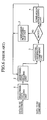
- Round-robin comparing an incoming data to be compared with the plurality of registered data and determining that the incoming data matches one registered data showing the highest degree of match are concepts behind the prior art data comparison apparatus mentioned above. Since much time is required to carry out round-robin comparisons, the time required for the comparison process can be reduced by skipping the comparison between the target data to be compared and one registered data whose additional information does not match the target data's additional information, as mentioned above.
- each of an incoming data and a plurality of registered data is constructed of feature data such as features of a corresponding fingerprint, and information about the pattern of the fingerprint is added (fingerprints are classified into some groups according to their patterns), as additional information, to the feature data.
- the prior art data comparison apparatus compares the target data with each of the plurality of registered data with respect to their additional information first, and then skips the comparison process for their feature data unless there is a match between the target data's additional information and each registered data's additional information.
- Japanese Patent Application Publication (KOKAI) No. 7-29003 discloses such a prior art data comparison apparatus, for example.
- a fingerprint comparison (or identification) apparatus in which additional information associated with the feature data of an incoming fingerprint and additional information associated with the feature data of each of a plurality of registered fingerprints are stored and a process of comparing the incoming fingerprint data with one registered fingerprint data whose additional information does not match the incoming fingerprint data's additional information is skipped.
- a problem with the prior art data comprises so constructed as mentioned above is thus that since the prior art data comparison apparatus carries out round-robin comparisons between an incoming data to be compared and all registered data, much time is needed for the comparison processing.
- Another problem is that if there is an error in the additional information added to any feature data, the process of comparing the feature data with the feature data of the incoming data to be compared is skipped after the comparison between the additional information added to the feature data and the incoming data's additional information even though the feature data is similar to the feature data of the incoming data to be compared.
- fingerprint data information about the pattern of the fingerprint is added, as additional information, to the fingerprint data in most cases. An error can occur in the classification of the pattern of the fingerprint.
- the process of comparing the feature data of the registered fingerprint with the feature data of an incoming fingerprint whose additional information differs from the registered data's additional information is skipped after the comparison between the registered data's additional information and the incoming data's additional information even though the registered fingerprint feature data is similar to the feature data of the incoming fingerprint to be compared, as mentioned above. Accordingly, there is a possibility that a registered data that actually matches the incoming data to be compared is not selected and it is then determined that another registered data matches the incoming data, and therefore a desired registered data, such as a desired fingerprint, cannot be extracted.
- the present invention is made to overcome the above problems. It is therefore an object of the present invention to provide a data comparison method and a data comparison apparatus capable of reducing the time required to compare an incoming data to be compared with a plurality of registered data without the above-mentioned problem caused by an error in the classification of additional information.
- the plurality of registered data stored in the registered-data storing unit are numbered, starting at 1, and one registered data that is to be read out of the registered-data storing unit for the first time is the one whose number is set to 1.
- one registered data that is to be read out of the registered-data storing unit for the first time is predetermined according to the cross-correlation table.
- one registered data that is to be read out of the registered-data storing unit for the first time is predetermined according to the incoming data to be compared.
- the method further comprises the steps of counting the number of comparison times that the step of comparing the registered data read out of the registered-data storing unit with the incoming data to be compared has been carried out, and forcedly finishing a further comparison process for remaining registered data when the counted number of comparison times exceeds a predetermined threshold value.
- FIG. 1 there is illustrated a block diagram showing the structure of a data comparison apparatus according to a first embodiment of the present invention.
- reference numeral 1 denotes a registered-data storing unit for storing a plurality of registered data that will be compared with an incoming data (or target data) to be compared
- 4a denotes a first comparison processing unit for reading each of all possible combinations of two registered data out of the plurality of registered data from the registered-data storing unit 1, and for comparing the two registered data of each combination so as to calculate a degree of match between them
- 4b denotes a second comparison processing unit for receiving a predetermined one of the plurality of registered data which is currently read out of the registered-data storing unit 1, and for comparing the received registered data with an incoming data to be compared so as to calculate a degree of match between them.
- Each of the first and second comparison processing units 4a and 4b is a section for calculating a degree of match between two data, and operates in the same manner basically.
- reference numeral 6 denotes a cross-correlation table storing unit for storing, as a cross-correlation table, the plurality of degrees of match which have been calculated for all possible combinations of two registered data out of the plurality of registered data stored in the registered-data storing unit 1 by the first comparison processing unit 4a
- 7 denotes a reading control unit for determining (or selecting) one registered data that is to be read next out of the registered-data storing unit 1, using the degree of match calculated by the second comparison processing unit 4b and the cross-correlation table stored in the cross-correlation table storing unit 6
- 8 denotes a comparison determination unit for comparing the degree of match calculated by the second comparison processing unit 4b with a predetermined threshold value so as to determine whether or not there is a match between the registered data currently read out of the storing unit 1 and the incoming data to be compared.
- the cross-correlation table is created by following procedures as mentioned below, and is stored in the cross-correlation table storing unit 6.
- the first comparison processing unit 4a receives each of all possible combinations of two registered data out of the plurality of registered data, which are read out of the registered-data storing unit 1 under control of the registered-data reading control unit 7, and then calculates a degree of match between the two registered data of each combination.
- the first comparison processing unit 4a thus calculates the plurality of degrees of match for all possible combinations of two registered data out of the plurality of registered data stored in the registered-data storing unit 1.
- the plurality of degrees of match calculated are then stored, as a cross-correlation table in the form of a matrix, in the cross-correlation table storing unit 6.
- M(E(i),E(j) the degree of match between E(i) and E(j)
- the degree of match between E(i) and E(j) can be in the range of 0 to 100.
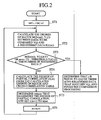
- the data comparison apparatus When the data comparison apparatus receives a target data V(j) to be compared, it starts the comparison process by following procedures as mentioned below. Referring next to Fig. 2 , there is illustrated a flow diagram showing the procedures of the comparison process.
- m is set to 1 and r(m) is set to 1, as initial settings, in step ST1, where r(m) indicates the number of one registered data that is to be compared with the target data for an m-th time. Therefore, the first registered data E(1) whose number is set to 1 will be compared with the target data for the first time.
- the second comparison processing unit 4b receives one registered data E(r(m)) whose number is r(m), which is read out of the registered-data storing unit 1 under control of the registered-data reading control unit 7. The second comparison processing unit 4b then, in step ST2, calculates the degree of match M(E(r(m)),V(j)) between the r(m)-th registered data E(r(m)) and the target data V(j) to be compared.
- the comparison determination unit 8 compares the degree of match M(E(r(m)),V(j)) calculated by the second comparison processing unit 4b with a predetermined threshold value T1.
- the comparison determination unit 8 determines that j is equal to r(m), that is, the incoming data V(j) matches the r(m)-th registered data E(r(m)), and finishes the comparison processing.
- the comparison determination unit 8 advances to step ST4. In performing step ST3, if m is equal to the total number n of the plurality of registered data stored in the registered-data storing unit 1, the comparison determination unit 8 determines that there is no registered data that matches the target data to be compared, and finishes the comparison processing.
- the comparison determination unit 8 calculates and selects imax that does not match any one of the numbers r(1) to r(m) of the registered data that have already been compared with the target data.
- the comparison determination unit 8 increments m by one and returns to step ST2. After that, the aforementioned steps ST2 to ST6 are repeated.
- the target data V(6) to be compared is compared with the first registered data E(1) for the first time.
- the target data V(6) to be compared is compared with the third registered data E(3).
- the target data V(6) to be compared is further compared with the sixth registered data E(6).
- the data comparison apparatus compares the target data V(6) with the sixth registered data E(6) for a third time since the comparison processing was started, it can determine that the target data V(6) matches the sixth registered data E(6).
- the data comparison apparatus can search for the registered data that matches the target data to be compared, only with three comparisons.
- Equation (7) or (8) can be used to calculate the degree of partial correlation z(i,m) instead of the equation (1).
- the registered-data reading control unit 7 determines one registered data that is to be read next out of the registered-data storing unit 1 using the degree of match between the currently-read registered data and an incoming data, which has been calculated by the second comparison processing unit 4b, and the cross-correlation table stored in the cross-correlation table storing unit 6, and the comparison determination unit 8 compares the degree of match calculated by the second comparison processing unit 4b with a predetermined threshold value so as to determine whether or not there is a match between the currently-read registered data and the target data to be compared, and finishes the process of comparing the target data with other registered data when the comparison determination unit 8 determines that there is match between the currently-read registered and the target data to be compared.
- the first embodiment of the present invention offers the advantage of being able to reduce the time required to compare the target data with a plurality of registered data, and to prevent an error in the comparison processing caused by a wrong classification of additional information because no additional information is used.
- the data comparison apparatus compares the target data applied thereto with the first registered data E(1) for the first time.
- one registered data that is to be compared with the target data for the first time does not necessarily need to be the first registered data E(1).
- a data comparison apparatus that can determine the number of one registered data that is to be read out of a registered-data storing unit 1 for the first time under control of a registered-data reading control unit 7, according to the contents of a cross-correlation table stored in a cross-correlation storing unit 6.
- the data comparison apparatus of the second embodiment can have the same structure as of the first embodiment as shown in Fig. 1 .
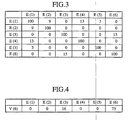
- all diagonal elements in the 6x6 matrix are equal to 100 and other elements are equal to 0 or a low value.
- elements having a value other than 0, which will be referred to as local peaks, except all the diagonal elements in the matrix play an important role.
- one registered data corresponding a row having a number of local peaks and a large variation in the values of those local peaks can be selected as the registered data that is to be read out of the registered-data storing unit 1 for the first time, thereby increasing the probability that the data comparison apparatus can search for the registered data that matches the target data more speedily.
- the first registered data E(1) has three local peaks: the one showing the degree of match between itself and E(2) equal to 9, the one showing the degree of match between itself and E(4) equal to 13, and the one showing the degree of match between itself and E(5) equal to 3. Accordingly, one registered data that is to be read out of the registered-data storing unit 1 for the first time under control of the registered-data reading control unit 7 is determined as the first registered data E(1), according to the contents of the cross-correlation table stored in the cross-correlation storing unit 6.
- the data comparison apparatus determines the number of one registered data that is to be read out of the registered-data storing unit for the first time under control of the registered-data reading control unit 7, according to the contents of the cross-correlation table. Therefore, the second embodiment offers the advantage of being able to increase the probability that the data comparison apparatus can search for the registered data that matches the target data more speedily, thereby further reducing the time required for the comparison processing.
- the data comparison apparatus determines the number of one registered data that is to be read out of the registered-data storing unit for the first time under control of the registered-data reading control unit 7, according to the contents of the cross-correlation table.
- a data comparison apparatus that can determine the number of one registered data that is to be read out of a registered-data storing unit for the first time according to an incoming data to be compared, instead of the cross-correlation table.
- the data comparison apparatus of the third embodiment can have the same structure as of the first embodiment as shown in Fig. 1 .
- a plurality of registered data and the target data to be compared are classified into some groups according to a classification criterion in advance of the comparison processing.
- the number of one registered data that is to be read out of the registered-data storing unit for the first time can be selected from among some registered data that belong to the same group as the target data to be compared.
- the selected registered data that is to be read for the first time must be similar to the target data. This results in increasing the probability that the data comparison apparatus can search for the registered data that matches the target data to be compared more speedily.
- the data comparison apparatus determines the number of one registered data that is to be read out of the registered-data storing unit for the first time under control of the registered-data reading control unit 7, according to the target data to be compared. Therefore, the third embodiment offers the advantage of being able to increase the probability that the data comparison apparatus can search for the registered data that matches the target data to be compared more speedily, thereby further reducing the time required for the comparison processing.
- the data comparison apparatus can search for the registered data that matches the target data after it performs comparisons a sufficiently small number of times compared with the total number n of the plurality of registered data. However, if there is no registered data that matches the incoming data to be compared, the data comparison apparatus according to the first embodiment repeats the comparison processing until m is equal to n. Consequently, the data comparison apparatus carries out the round-robin comparisons between the target data and all the registered data.
- a data comparison apparatus capable of aborting the comparison processing after it has carried out comparisons a sufficiently small number of times compared with the total number of the plurality of registered data.
- the data comparison apparatus of the third embodiment can have the same structure as of the first embodiment as shown in Fig. 1 .
- a comparison determination unit 8 counts the number of times m that it carries out comparisons for the target data to be compared, and then compares the number of comparisons m with a predetermined threshold value T2. When the number of comparisons m exceeds the predetermined threshold value T2, the comparison determination unit 8 aborts or forcedly finishes the comparison processing for the remaining registered data. For example, when T2 is preset to n/3, there arises no problem if there is a registered data that matches the target data to be compared, because in most cases the comparison determination unit 8 can search for the registered data that matches the target data after it has performed comparisons a small number of times equal to or less than T2.
- the comparison determination unit 8 of the fourth embodiment forcedly stops the comparison processing when the number of comparisons m exceeds the predetermined threshold value T2, that is, when the data comparison apparatus has finished performing comparisons on one-third or more of the total number of the plurality of registered data. Accordingly, the time required for the comparison processing can be reduced to about one-third what it used to be.
- the comparison determination unit 8 counts the number of times that the second comparison processing unit 4b carries out comparisons for the target data to be compared. When the number of comparisons exceeds a predetermined threshold value, the data comparison apparatus aborts the comparison processing for the remaining registered data. There arises no problem if there is a registered data that matches the target data to be compared, because the data comparison apparatus can search for the registered data that matches the target data after it has performed comparisons a small number of times equal to or less than the predetermined number of times. Accordingly, the fourth embodiment of the present invention offers the advantage of being able to reduce the time required for the comparison processing even if there is no registered data that matches the target data to be compared.
Landscapes
- Engineering & Computer Science (AREA)
- Theoretical Computer Science (AREA)
- Physics & Mathematics (AREA)
- General Physics & Mathematics (AREA)
- Multimedia (AREA)
- Mathematical Analysis (AREA)
- Computer Vision & Pattern Recognition (AREA)
- Computational Mathematics (AREA)
- Human Computer Interaction (AREA)
- Mathematical Optimization (AREA)
- Pure & Applied Mathematics (AREA)
- General Engineering & Computer Science (AREA)
- Information Retrieval, Db Structures And Fs Structures Therefor (AREA)
- Image Analysis (AREA)
- Mobile Radio Communication Systems (AREA)
- Telephonic Communication Services (AREA)
- Telephone Function (AREA)
- Management, Administration, Business Operations System, And Electronic Commerce (AREA)
Claims (8)
- Procédé pour déterminer lesquelles d'une pluralité de données enregistrées stockées dans un moyen de stockage de données enregistrées correspondent à des données entrantes à comparer, caractérisé en ce que ledit procédé comprend les étapes suivantes :la génération d'une table de corrélation croisée comprenant une pluralité de degrés de correspondance entre deux ensembles de données enregistrées à l'avance, chaque degré de la pluralité de degrés de correspondance étant calculé pour chacune de toutes les combinaisons possibles de deux ensembles de données enregistrées issues de ladite pluralité de données enregistrées stockées dans ledit moyen de stockage de données enregistrées ;la lecture d'un ensemble de données enregistrées issues dudit moyen de stockage de données enregistrées ;la comparaison desdites données enregistrées actuellement lues à partir dudit moyen de stockage de données enregistrées auxdites données entrantes à comparer de manière à calculer le degré de correspondance entre elles ;la comparaison dudit degré calculé de correspondance à une valeur de seuil prédéterminée afin de déterminer s'il y a ou non une correspondance entre lesdites données enregistrées actuellement lues à partir dudit moyen de stockage de données enregistrées et lesdites données entrantes, et ensuite l'achèvement forcé d'un autre procédé de comparaison pour les données enregistrées restantes s'il est déterminé qu'il existe une correspondance entre lesdites données enregistrées et lesdites données entrantes ; et,s'il n'est pas déterminé qu'il existe une correspondance entre lesdites données enregistrées et lesdites données entrantes, le calcul de degrés de corrélation entre le degré de correspondance entre lesdites données entrantes à comparer et un ou plusieurs ensembles de données enregistrées qui ont déjà été comparés auxdites données entrantes à comparer et les degrés de correspondance entre ledit un ou lesdits plusieurs ensembles de données enregistrées déjà comparés et la pluralité de données enregistrées dans ladite table de corrélation, respectivement, de manière à choisir un ensemble de données enregistrées dont le degré de corrélation est le plus élevé et qui est inclus dans ladite pluralité de données enregistrées, sauf pour ledit un ou lesdits plusieurs ensembles de données enregistrées déjà comparées, sous la forme de données enregistrées à lire la fois suivante.
- Procédé selon la revendication 1, caractérisé en ce qu'on numérote ladite pluralité de données enregistrées stockées dans ledit moyen de stockage de données enregistrées, en partant de 1, et qu'un ensemble de données enregistrées à lire dans ledit moyen de stockage de données enregistrées pour la première fois est celui auquel on a attribué le numéro 1.
- Procédé selon la revendication 1, caractérisé en ce qu'un ensemble de données enregistrées qui doit être lu dans ledit moyen de stockage de données enregistrées pour la première fois est prédéterminé selon ladite table de corrélation croisée.
- Procédé selon la revendication 1, caractérisé en ce qu'un ensemble de données enregistrées qui doit être lu dans ledit moyen de stockage de données enregistrées pour la première fois est prédéterminé selon lesdites données entrantes à comparer.
- Procédé selon la revendication 1, caractérisé en ce que ledit procédé comprend en outre les étapes de comptage du nombre de fois de comparaison où ladite étape de comparaison des données enregistrées lues dans ledit moyen de stockage de données enregistrées auxdites données entrantes à comparer a été effectuée, et l'achèvement forcé d'un autre procédé de comparaison pour les données enregistrées restantes lorsque le nombre compté de fois de comparaison dépasse une valeur de seuil prédéterminé.
- Procédé selon la revendication 1, caractérisé en ce que lesdits degrés de corrélation sont donnés par l'une des équation suivantes :

ou
ou
où Dxy est donné par l'équation suivante :
où Sxy, Sxx et Syy sont donnés par les équations suivantes :


- Appareil de comparaison de données comprenant :un moyen de stockage de données enregistrées pour stocker une pluralité de données enregistrées à comparer avec un ensemble de données entrantes ;un premier moyen de traitement de comparaison pour lire chacune des combinaisons possibles de deux ensembles de données enregistrées dans la pluralité de données enregistrées stockées dans ledit moyen de stockage de données enregistrées de manière à calculer une pluralité de degrés de correspondance, dont chacun est celui entre les deux ensembles de données enregistrées de chacune de la totalité des combinaisons ;un moyen de stockage de table de corrélation croisée pour stocker ladite pluralité de degrés de correspondance calculée par ledit premier moyen de traitement de comparaison sous la forme d'une table de corrélation croisée à l'avance ;un second moyen de traitement de comparaison adapté pour comparer un ensemble de données enregistrées actuellement lues à partir dudit moyen de stockage de données enregistrées avec lesdites données entrantes à comparer de manière à calculer le degré de correspondance entre elles ;un moyen de détermination de comparaison adapté pour comparer ledit degré de correspondance calculé par ledit second moyen de traitement de comparaison à une valeur de seuil prédéterminée afin de déterminer s'il existe ou non une correspondance entre lesdites données enregistrées actuellement lues à partir dudit moyen de stockage de données enregistrées et lesdites données entrantes, et pour achever de manière forcée un autre procédé de comparaison pour les données enregistrées restantes si ledit moyen de détermination de comparaison lui-même a déterminé qu'il existe une correspondance entre lesdites données enregistrées et lesdites données entrantes ; etun moyen de commande de lecture de données enregistrées adapté pour calculer les degrés de corrélation entre lesdites données entrantes à comparer et un ou plusieurs ensembles de données enregistrées qui ont déjà été comparées auxdites données entrantes à comparer et les degrés de correspondance entre ledit un ou lesdits plusieurs ensembles de données enregistrées déjà comparées et la pluralité d'ensembles de données enregistrées dans ladite table de corrélation, respectivement, en utilisant ledit degré de correspondance calculé par ledit second moyen de traitement de comparaison et ladite table de corrélation croisée stockée dans ledit moyen de stockage de table de corrélation croisée, afin de choisir un ensemble de données enregistrées dont le degré de corrélation est le plus élevé et qui est inclus dans ladite pluralité de données enregistrées, sauf pour ledit un ou lesdits plusieurs ensembles de données enregistrées déjà comparé, comme ensemble de données enregistrées à lire la prochaine fois.
- Appareil de comparaison de données selon la revendication 7, caractérisé en ce que lesdits degrés de corrélation sont donnés par l'une des équations suivantes :

ou
ou
où Dxy est donné par l'équation suivante :
où Sxy, Sxx et Syy sont donnés par les équations suivantes :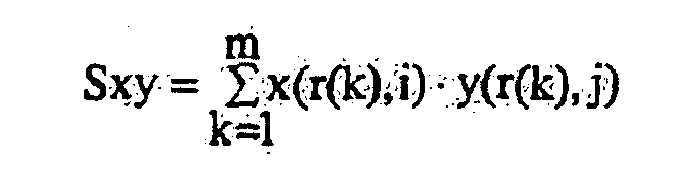


Applications Claiming Priority (2)
| Application Number | Priority Date | Filing Date | Title |
|---|---|---|---|
| JP10096268A JP3053607B2 (ja) | 1998-04-08 | 1998-04-08 | データ照合方法およびその装置 |
| JP9626898 | 1998-04-08 |
Publications (3)
| Publication Number | Publication Date |
|---|---|
| EP0949562A2 EP0949562A2 (fr) | 1999-10-13 |
| EP0949562A3 EP0949562A3 (fr) | 2005-01-19 |
| EP0949562B1 true EP0949562B1 (fr) | 2008-05-21 |
Family
ID=14160417
Family Applications (1)
| Application Number | Title | Priority Date | Filing Date |
|---|---|---|---|
| EP99104099A Expired - Lifetime EP0949562B1 (fr) | 1998-04-08 | 1999-03-18 | Procédé et appareil pour comparer des données entrantes avec des données enregistrées |
Country Status (5)
| Country | Link |
|---|---|
| US (1) | US6229922B1 (fr) |
| EP (1) | EP0949562B1 (fr) |
| JP (1) | JP3053607B2 (fr) |
| CN (1) | CN1167037C (fr) |
| DE (1) | DE69938755D1 (fr) |
Families Citing this family (30)
| Publication number | Priority date | Publication date | Assignee | Title |
|---|---|---|---|---|
| US6834308B1 (en) | 2000-02-17 | 2004-12-21 | Audible Magic Corporation | Method and apparatus for identifying media content presented on a media playing device |
| US8205237B2 (en) | 2000-09-14 | 2012-06-19 | Cox Ingemar J | Identifying works, using a sub-linear time search, such as an approximate nearest neighbor search, for initiating a work-based action, such as an action on the internet |
| JP3739274B2 (ja) * | 2000-10-31 | 2006-01-25 | Kddi株式会社 | 2系統映像の位置ずれ補正装置 |
| US7562012B1 (en) * | 2000-11-03 | 2009-07-14 | Audible Magic Corporation | Method and apparatus for creating a unique audio signature |
| US7363278B2 (en) * | 2001-04-05 | 2008-04-22 | Audible Magic Corporation | Copyright detection and protection system and method |
| US7529659B2 (en) | 2005-09-28 | 2009-05-05 | Audible Magic Corporation | Method and apparatus for identifying an unknown work |
| US8972481B2 (en) | 2001-07-20 | 2015-03-03 | Audible Magic, Inc. | Playlist generation method and apparatus |
| US7877438B2 (en) * | 2001-07-20 | 2011-01-25 | Audible Magic Corporation | Method and apparatus for identifying new media content |
| US7986820B2 (en) * | 2001-10-19 | 2011-07-26 | Mitsubishi Electric Research Laboratories, Inc. | Method for comparing features extracted from images of fingerprints |
| US20030135623A1 (en) * | 2001-10-23 | 2003-07-17 | Audible Magic, Inc. | Method and apparatus for cache promotion |
| JP2003150602A (ja) * | 2001-11-15 | 2003-05-23 | Hitachi Ltd | 文書情報管理方法および装置 |
| JP4923282B2 (ja) * | 2002-11-22 | 2012-04-25 | グローリー株式会社 | 薬剤認識装置 |
| US8332326B2 (en) * | 2003-02-01 | 2012-12-11 | Audible Magic Corporation | Method and apparatus to identify a work received by a processing system |
| US8130746B2 (en) * | 2004-07-28 | 2012-03-06 | Audible Magic Corporation | System for distributing decoy content in a peer to peer network |
| JP4631005B2 (ja) * | 2005-07-15 | 2011-02-16 | 公立大学法人大阪府立大学 | 付加情報を用いたパターン認識に係るプログラム、装置および方法 |
| JP4978154B2 (ja) * | 2006-10-27 | 2012-07-18 | ソニー株式会社 | 認証方法、登録装置、照合装置及びプログラム |
| JP5018071B2 (ja) * | 2006-12-20 | 2012-09-05 | ソニー株式会社 | 照合方法、登録装置、照合装置及びプログラム |
| JP4910821B2 (ja) * | 2007-03-27 | 2012-04-04 | セイコーエプソン株式会社 | 画像識別方法 |
| US8006314B2 (en) * | 2007-07-27 | 2011-08-23 | Audible Magic Corporation | System for identifying content of digital data |
| US8031981B2 (en) * | 2007-12-21 | 2011-10-04 | Daon Holdings Limited | Method and systems for generating a subset of biometric representations |
| US8199651B1 (en) | 2009-03-16 | 2012-06-12 | Audible Magic Corporation | Method and system for modifying communication flows at a port level |
| US20100250599A1 (en) * | 2009-03-30 | 2010-09-30 | Nokia Corporation | Method and apparatus for integration of community-provided place data |
| JP4560126B2 (ja) * | 2009-06-02 | 2010-10-13 | 高園産業株式会社 | 包装薬剤の調剤監査支援システム |
| JP5286297B2 (ja) | 2010-01-26 | 2013-09-11 | 株式会社日立製作所 | 生体認証システム |
| FR2960668A1 (fr) * | 2010-05-27 | 2011-12-02 | Airbus Operations Sas | Procede et dispositif de configuration incrementale de modules de type ima |
| JP5531933B2 (ja) * | 2010-12-02 | 2014-06-25 | パナソニック株式会社 | 電子部品実装システムおよび電子部品実装方法 |
| US8938101B2 (en) * | 2011-04-26 | 2015-01-20 | Sony Computer Entertainment America Llc | Apparatus, system, and method for real-time identification of finger impressions for multiple users |
| EP2620733B1 (fr) * | 2012-01-27 | 2014-03-19 | Ivoclar Vivadent AG | Appareil dentaire |
| US9081778B2 (en) | 2012-09-25 | 2015-07-14 | Audible Magic Corporation | Using digital fingerprints to associate data with a work |
| US9430363B1 (en) * | 2015-12-28 | 2016-08-30 | International Business Machines Corporation | Creating expected test results using previous test results |
Family Cites Families (4)
| Publication number | Priority date | Publication date | Assignee | Title |
|---|---|---|---|---|
| US4611347A (en) * | 1984-09-24 | 1986-09-09 | At&T Bell Laboratories | Video recognition system |
| US4864629A (en) * | 1985-12-31 | 1989-09-05 | Schlumberger Technologies, Inc. | Image correlation system |
| JPH0729003A (ja) | 1993-07-09 | 1995-01-31 | Nec Corp | 指紋照合装置 |
| US5530483A (en) * | 1994-10-11 | 1996-06-25 | Pixel Instruments Corp. | Delay detector apparatus and method for plural image sequences |
-
1998
- 1998-04-08 JP JP10096268A patent/JP3053607B2/ja not_active Expired - Lifetime
-
1999
- 1999-03-18 EP EP99104099A patent/EP0949562B1/fr not_active Expired - Lifetime
- 1999-03-18 DE DE69938755T patent/DE69938755D1/de not_active Expired - Lifetime
- 1999-03-22 US US09/273,537 patent/US6229922B1/en not_active Expired - Fee Related
- 1999-04-08 CN CNB991049659A patent/CN1167037C/zh not_active Expired - Fee Related
Also Published As
| Publication number | Publication date |
|---|---|
| CN1167037C (zh) | 2004-09-15 |
| EP0949562A2 (fr) | 1999-10-13 |
| DE69938755D1 (de) | 2008-07-03 |
| JP3053607B2 (ja) | 2000-06-19 |
| EP0949562A3 (fr) | 2005-01-19 |
| JPH11296531A (ja) | 1999-10-29 |
| CN1238503A (zh) | 1999-12-15 |
| US6229922B1 (en) | 2001-05-08 |
Similar Documents
| Publication | Publication Date | Title |
|---|---|---|
| US6229922B1 (en) | Method and apparatus for comparing incoming data with registered data | |
| EP0128820B2 (fr) | Méthode et dispositif pour la comparaison de formes | |
| JP2710062B2 (ja) | 出力候補数決定方式 | |
| US8472721B2 (en) | Pattern identification unit generation method, information processing apparatus, computer program, and storage medium | |
| US6639998B1 (en) | Method of detecting a specific object in an image signal | |
| EP0866424B1 (fr) | Système de mise en correspondance d'images | |
| EP0329166A2 (fr) | Méthode de vérification d'empreintes digitales avec plusieurs niveaux de décision de corrélation et stades de décision séquentiels | |
| US7783106B2 (en) | Video segmentation combining similarity analysis and classification | |
| US20070019863A1 (en) | Method, apparatus, and program for detecting faces | |
| EP3213257B1 (fr) | Système de traitement d'images | |
| JP5235691B2 (ja) | 情報処理装置及び情報処理方法 | |
| US20120288164A1 (en) | Comparing device | |
| US20030123702A1 (en) | Video monitoring and surveillance systems capable of handling asynchronously multiplexed video | |
| US4618983A (en) | Speech recognition with preliminary matching | |
| KR20170003348A (ko) | 사용자 인증을 위한 등록 데이터베이스의 갱신 방법 및 장치 | |
| US7515741B2 (en) | Adaptive fingerprint matching method and apparatus | |
| CN101553825B (zh) | 基于字典模式来识别输入模式的模式识别设备 | |
| JP2849256B2 (ja) | 画像認識装置 | |
| EP1840832A1 (fr) | Appareil d'enregistrement d'informations d'impression, procede et programme associes, systeme de filtrage | |
| EP0851379A2 (fr) | Méthode et appareil de préselection de cartes d'empreintes digitales | |
| US20040131235A1 (en) | Image processing method, apparatus and storage medium | |
| US7263208B1 (en) | Automated threshold selection for a tractable alarm rate | |
| CN105224957B (zh) | 一种基于单样本的图像识别的方法及系统 | |
| KR100472562B1 (ko) | 손가락 혈관패턴을 이용한 신원확인시스템과 방법 및 그방법에 대한 컴퓨터 프로그램 소스를 저장한 기록매체 | |
| US6973206B2 (en) | Method and system for quality based fingerprint matching |
Legal Events
| Date | Code | Title | Description |
|---|---|---|---|
| PUAI | Public reference made under article 153(3) epc to a published international application that has entered the european phase |
Free format text: ORIGINAL CODE: 0009012 |
|
| 17P | Request for examination filed |
Effective date: 19990416 |
|
| AK | Designated contracting states |
Kind code of ref document: A2 Designated state(s): AT BE CH CY DE DK ES FI FR GB GR IE IT LI LU MC NL PT SE |
|
| AX | Request for extension of the european patent |
Free format text: AL;LT;LV;MK;RO;SI |
|
| PUAL | Search report despatched |
Free format text: ORIGINAL CODE: 0009013 |
|
| AK | Designated contracting states |
Kind code of ref document: A3 Designated state(s): AT BE CH CY DE DK ES FI FR GB GR IE IT LI LU MC NL PT SE |
|
| AX | Request for extension of the european patent |
Extension state: AL LT LV MK RO SI |
|
| AKX | Designation fees paid |
Designated state(s): DE FR GB |
|
| RAP1 | Party data changed (applicant data changed or rights of an application transferred) |
Owner name: MITSUBISHI DENKI KABUSHIKI KAISHA |
|
| GRAP | Despatch of communication of intention to grant a patent |
Free format text: ORIGINAL CODE: EPIDOSNIGR1 |
|
| GRAS | Grant fee paid |
Free format text: ORIGINAL CODE: EPIDOSNIGR3 |
|
| RAP1 | Party data changed (applicant data changed or rights of an application transferred) |
Owner name: MITSUBISHI ELECTRIC CORPORATION |
|
| GRAA | (expected) grant |
Free format text: ORIGINAL CODE: 0009210 |
|
| AK | Designated contracting states |
Kind code of ref document: B1 Designated state(s): DE FR GB |
|
| REG | Reference to a national code |
Ref country code: GB Ref legal event code: FG4D |
|
| REF | Corresponds to: |
Ref document number: 69938755 Country of ref document: DE Date of ref document: 20080703 Kind code of ref document: P |
|
| PLBE | No opposition filed within time limit |
Free format text: ORIGINAL CODE: 0009261 |
|
| STAA | Information on the status of an ep patent application or granted ep patent |
Free format text: STATUS: NO OPPOSITION FILED WITHIN TIME LIMIT |
|
| 26N | No opposition filed |
Effective date: 20090224 |
|
| PGFP | Annual fee paid to national office [announced via postgrant information from national office to epo] |
Ref country code: FR Payment date: 20110317 Year of fee payment: 13 |
|
| REG | Reference to a national code |
Ref country code: GB Ref legal event code: 746 Effective date: 20110516 |
|
| PGFP | Annual fee paid to national office [announced via postgrant information from national office to epo] |
Ref country code: DE Payment date: 20110316 Year of fee payment: 13 Ref country code: GB Payment date: 20110316 Year of fee payment: 13 |
|
| REG | Reference to a national code |
Ref country code: DE Ref legal event code: R084 Ref document number: 69938755 Country of ref document: DE |
|
| REG | Reference to a national code |
Ref country code: DE Ref legal event code: R084 Ref document number: 69938755 Country of ref document: DE Effective date: 20110822 |
|
| GBPC | Gb: european patent ceased through non-payment of renewal fee |
Effective date: 20120318 |
|
| REG | Reference to a national code |
Ref country code: FR Ref legal event code: ST Effective date: 20121130 |
|
| PG25 | Lapsed in a contracting state [announced via postgrant information from national office to epo] |
Ref country code: FR Free format text: LAPSE BECAUSE OF NON-PAYMENT OF DUE FEES Effective date: 20120402 Ref country code: GB Free format text: LAPSE BECAUSE OF NON-PAYMENT OF DUE FEES Effective date: 20120318 |
|
| REG | Reference to a national code |
Ref country code: DE Ref legal event code: R119 Ref document number: 69938755 Country of ref document: DE Effective date: 20121002 |
|
| PG25 | Lapsed in a contracting state [announced via postgrant information from national office to epo] |
Ref country code: DE Free format text: LAPSE BECAUSE OF NON-PAYMENT OF DUE FEES Effective date: 20121002 |