EP0950712A1 - Hefevektoren und verfahren für ihre benutzung für die produktion von proteinen. - Google Patents
Hefevektoren und verfahren für ihre benutzung für die produktion von proteinen. Download PDFInfo
- Publication number
- EP0950712A1 EP0950712A1 EP97935860A EP97935860A EP0950712A1 EP 0950712 A1 EP0950712 A1 EP 0950712A1 EP 97935860 A EP97935860 A EP 97935860A EP 97935860 A EP97935860 A EP 97935860A EP 0950712 A1 EP0950712 A1 EP 0950712A1
- Authority
- EP
- European Patent Office
- Prior art keywords
- gene
- sequence
- vector
- utilis
- derived
- Prior art date
- Legal status (The legal status is an assumption and is not a legal conclusion. Google has not performed a legal analysis and makes no representation as to the accuracy of the status listed.)
- Granted
Links
- 108090000623 proteins and genes Proteins 0.000 title claims abstract description 322
- 239000013598 vector Substances 0.000 title claims abstract description 136
- 102000004169 proteins and genes Human genes 0.000 title claims description 73
- 238000000034 method Methods 0.000 title claims description 56
- 240000004808 Saccharomyces cerevisiae Species 0.000 title abstract description 48
- 230000008569 process Effects 0.000 title description 2
- 241000235646 Cyberlindnera jadinii Species 0.000 claims abstract description 166
- 108091028043 Nucleic acid sequence Proteins 0.000 claims abstract description 107
- 230000014509 gene expression Effects 0.000 claims abstract description 48
- 239000003550 marker Substances 0.000 claims abstract description 43
- 210000000349 chromosome Anatomy 0.000 claims abstract description 42
- 108091008146 restriction endonucleases Proteins 0.000 claims abstract description 39
- 239000013611 chromosomal DNA Substances 0.000 claims abstract description 22
- 238000002744 homologous recombination Methods 0.000 claims abstract description 16
- 230000006801 homologous recombination Effects 0.000 claims abstract description 16
- 239000013612 plasmid Substances 0.000 claims description 176
- 101001075740 Candida maltosa 60S ribosomal protein L44 P Proteins 0.000 claims description 78
- 101001075741 Candida maltosa 60S ribosomal protein L44 Q Proteins 0.000 claims description 78
- 101000674326 Homo sapiens 60S ribosomal protein L41 Proteins 0.000 claims description 77
- 108050004114 Monellin Proteins 0.000 claims description 76
- YPHMISFOHDHNIV-FSZOTQKASA-N cycloheximide Chemical compound C1[C@@H](C)C[C@H](C)C(=O)[C@@H]1[C@H](O)CC1CC(=O)NC(=O)C1 YPHMISFOHDHNIV-FSZOTQKASA-N 0.000 claims description 72
- 210000004027 cell Anatomy 0.000 claims description 48
- 108010065511 Amylases Proteins 0.000 claims description 41
- 101150050575 URA3 gene Proteins 0.000 claims description 35
- 239000004382 Amylase Substances 0.000 claims description 18
- 102000013142 Amylases Human genes 0.000 claims description 18
- 235000019418 amylase Nutrition 0.000 claims description 18
- 108700007698 Genetic Terminator Regions Proteins 0.000 claims description 16
- 238000010438 heat treatment Methods 0.000 claims description 14
- 239000002244 precipitate Substances 0.000 claims description 14
- 108010008429 immunoglobulin-binding factors Proteins 0.000 claims description 13
- 238000004519 manufacturing process Methods 0.000 claims description 13
- 230000036961 partial effect Effects 0.000 claims description 13
- 101150073818 gap gene Proteins 0.000 claims description 11
- 102100037791 Macrophage migration inhibitory factor Human genes 0.000 claims description 10
- 238000010306 acid treatment Methods 0.000 claims description 10
- 108090000765 processed proteins & peptides Proteins 0.000 claims description 9
- 206010059866 Drug resistance Diseases 0.000 claims description 8
- 241000588724 Escherichia coli Species 0.000 claims description 8
- 241000894006 Bacteria Species 0.000 claims description 7
- 230000000694 effects Effects 0.000 claims description 7
- 239000000047 product Substances 0.000 claims description 7
- 108700026220 vif Genes Proteins 0.000 claims description 7
- 238000012258 culturing Methods 0.000 claims description 6
- 229920001184 polypeptide Polymers 0.000 claims description 6
- 102000004196 processed proteins & peptides Human genes 0.000 claims description 6
- 101001091269 Escherichia coli Hygromycin-B 4-O-kinase Proteins 0.000 claims description 5
- 101001091268 Streptomyces hygroscopicus Hygromycin-B 7''-O-kinase Proteins 0.000 claims description 5
- 239000002253 acid Substances 0.000 claims description 5
- 101710154825 Aminoglycoside 3'-phosphotransferase Proteins 0.000 claims description 4
- 229940079593 drug Drugs 0.000 claims description 4
- 239000003814 drug Substances 0.000 claims description 4
- NOESYZHRGYRDHS-UHFFFAOYSA-N insulin Chemical compound N1C(=O)C(NC(=O)C(CCC(N)=O)NC(=O)C(CCC(O)=O)NC(=O)C(C(C)C)NC(=O)C(NC(=O)CN)C(C)CC)CSSCC(C(NC(CO)C(=O)NC(CC(C)C)C(=O)NC(CC=2C=CC(O)=CC=2)C(=O)NC(CCC(N)=O)C(=O)NC(CC(C)C)C(=O)NC(CCC(O)=O)C(=O)NC(CC(N)=O)C(=O)NC(CC=2C=CC(O)=CC=2)C(=O)NC(CSSCC(NC(=O)C(C(C)C)NC(=O)C(CC(C)C)NC(=O)C(CC=2C=CC(O)=CC=2)NC(=O)C(CC(C)C)NC(=O)C(C)NC(=O)C(CCC(O)=O)NC(=O)C(C(C)C)NC(=O)C(CC(C)C)NC(=O)C(CC=2NC=NC=2)NC(=O)C(CO)NC(=O)CNC2=O)C(=O)NCC(=O)NC(CCC(O)=O)C(=O)NC(CCCNC(N)=N)C(=O)NCC(=O)NC(CC=3C=CC=CC=3)C(=O)NC(CC=3C=CC=CC=3)C(=O)NC(CC=3C=CC(O)=CC=3)C(=O)NC(C(C)O)C(=O)N3C(CCC3)C(=O)NC(CCCCN)C(=O)NC(C)C(O)=O)C(=O)NC(CC(N)=O)C(O)=O)=O)NC(=O)C(C(C)CC)NC(=O)C(CO)NC(=O)C(C(C)O)NC(=O)C1CSSCC2NC(=O)C(CC(C)C)NC(=O)C(NC(=O)C(CCC(N)=O)NC(=O)C(CC(N)=O)NC(=O)C(NC(=O)C(N)CC=1C=CC=CC=1)C(C)C)CC1=CN=CN1 NOESYZHRGYRDHS-UHFFFAOYSA-N 0.000 claims description 4
- 101150047627 pgk gene Proteins 0.000 claims description 4
- BRZYSWJRSDMWLG-DJWUNRQOSA-N (2r,3r,4r,5r)-2-[(1s,2s,3r,4s,6r)-4,6-diamino-3-[(2s,3r,4r,5s,6r)-3-amino-4,5-dihydroxy-6-[(1r)-1-hydroxyethyl]oxan-2-yl]oxy-2-hydroxycyclohexyl]oxy-5-methyl-4-(methylamino)oxane-3,5-diol Chemical compound O1C[C@@](O)(C)[C@H](NC)[C@@H](O)[C@H]1O[C@@H]1[C@@H](O)[C@H](O[C@@H]2[C@@H]([C@@H](O)[C@H](O)[C@@H]([C@@H](C)O)O2)N)[C@@H](N)C[C@H]1N BRZYSWJRSDMWLG-DJWUNRQOSA-N 0.000 claims description 3
- 108091006112 ATPases Proteins 0.000 claims description 3
- GRRNUXAQVGOGFE-UHFFFAOYSA-N Hygromycin-B Natural products OC1C(NC)CC(N)C(O)C1OC1C2OC3(C(C(O)C(O)C(C(N)CO)O3)O)OC2C(O)C(CO)O1 GRRNUXAQVGOGFE-UHFFFAOYSA-N 0.000 claims description 3
- -1 PDGF Proteins 0.000 claims description 3
- 210000000170 cell membrane Anatomy 0.000 claims description 3
- GRRNUXAQVGOGFE-NZSRVPFOSA-N hygromycin B Chemical compound O[C@@H]1[C@@H](NC)C[C@@H](N)[C@H](O)[C@H]1O[C@H]1[C@H]2O[C@@]3([C@@H]([C@@H](O)[C@@H](O)[C@@H](C(N)CO)O3)O)O[C@H]2[C@@H](O)[C@@H](CO)O1 GRRNUXAQVGOGFE-NZSRVPFOSA-N 0.000 claims description 3
- 229940097277 hygromycin b Drugs 0.000 claims description 3
- 230000001131 transforming effect Effects 0.000 claims description 3
- 102000057290 Adenosine Triphosphatases Human genes 0.000 claims description 2
- 102000002572 Alpha-Globulins Human genes 0.000 claims description 2
- 108010068307 Alpha-Globulins Proteins 0.000 claims description 2
- 102000006734 Beta-Globulins Human genes 0.000 claims description 2
- 108010087504 Beta-Globulins Proteins 0.000 claims description 2
- 108010059892 Cellulase Proteins 0.000 claims description 2
- 108090000746 Chymosin Proteins 0.000 claims description 2
- 102100022641 Coagulation factor IX Human genes 0.000 claims description 2
- 102000003951 Erythropoietin Human genes 0.000 claims description 2
- 108090000394 Erythropoietin Proteins 0.000 claims description 2
- 101150021185 FGF gene Proteins 0.000 claims description 2
- 108010076282 Factor IX Proteins 0.000 claims description 2
- 108010054218 Factor VIII Proteins 0.000 claims description 2
- 102000001690 Factor VIII Human genes 0.000 claims description 2
- 102000016359 Fibronectins Human genes 0.000 claims description 2
- 108010067306 Fibronectins Proteins 0.000 claims description 2
- 108010017080 Granulocyte Colony-Stimulating Factor Proteins 0.000 claims description 2
- 102000004269 Granulocyte Colony-Stimulating Factor Human genes 0.000 claims description 2
- 108010017213 Granulocyte-Macrophage Colony-Stimulating Factor Proteins 0.000 claims description 2
- 102000004457 Granulocyte-Macrophage Colony-Stimulating Factor Human genes 0.000 claims description 2
- 108090001061 Insulin Proteins 0.000 claims description 2
- 102100023915 Insulin Human genes 0.000 claims description 2
- 102000014150 Interferons Human genes 0.000 claims description 2
- 108010050904 Interferons Proteins 0.000 claims description 2
- 102000015696 Interleukins Human genes 0.000 claims description 2
- 108010063738 Interleukins Proteins 0.000 claims description 2
- 102000004882 Lipase Human genes 0.000 claims description 2
- 108090001060 Lipase Proteins 0.000 claims description 2
- 239000004367 Lipase Substances 0.000 claims description 2
- 108091005804 Peptidases Proteins 0.000 claims description 2
- 108091000080 Phosphotransferase Proteins 0.000 claims description 2
- 108010059820 Polygalacturonase Proteins 0.000 claims description 2
- 101710098940 Pro-epidermal growth factor Proteins 0.000 claims description 2
- 239000004365 Protease Substances 0.000 claims description 2
- 102100037486 Reverse transcriptase/ribonuclease H Human genes 0.000 claims description 2
- 102000036693 Thrombopoietin Human genes 0.000 claims description 2
- 108010041111 Thrombopoietin Proteins 0.000 claims description 2
- 241000700605 Viruses Species 0.000 claims description 2
- 102000015395 alpha 1-Antitrypsin Human genes 0.000 claims description 2
- 108010050122 alpha 1-Antitrypsin Proteins 0.000 claims description 2
- 229940024142 alpha 1-antitrypsin Drugs 0.000 claims description 2
- 239000000427 antigen Substances 0.000 claims description 2
- 108091007433 antigens Proteins 0.000 claims description 2
- 102000036639 antigens Human genes 0.000 claims description 2
- 229940106157 cellulase Drugs 0.000 claims description 2
- 229940080701 chymosin Drugs 0.000 claims description 2
- 229940105423 erythropoietin Drugs 0.000 claims description 2
- 108010093305 exopolygalacturonase Proteins 0.000 claims description 2
- 229960004222 factor ix Drugs 0.000 claims description 2
- 229960000301 factor viii Drugs 0.000 claims description 2
- 230000008629 immune suppression Effects 0.000 claims description 2
- 229940125396 insulin Drugs 0.000 claims description 2
- 229940079322 interferon Drugs 0.000 claims description 2
- 235000019421 lipase Nutrition 0.000 claims description 2
- GNOLWGAJQVLBSM-UHFFFAOYSA-N n,n,5,7-tetramethyl-1,2,3,4-tetrahydronaphthalen-1-amine Chemical compound C1=C(C)C=C2C(N(C)C)CCCC2=C1C GNOLWGAJQVLBSM-UHFFFAOYSA-N 0.000 claims description 2
- 102000020233 phosphotransferase Human genes 0.000 claims description 2
- OXCMYAYHXIHQOA-UHFFFAOYSA-N potassium;[2-butyl-5-chloro-3-[[4-[2-(1,2,4-triaza-3-azanidacyclopenta-1,4-dien-5-yl)phenyl]phenyl]methyl]imidazol-4-yl]methanol Chemical compound [K+].CCCCC1=NC(Cl)=C(CO)N1CC1=CC=C(C=2C(=CC=CC=2)C2=N[N-]N=N2)C=C1 OXCMYAYHXIHQOA-UHFFFAOYSA-N 0.000 claims description 2
- 229960005486 vaccine Drugs 0.000 claims description 2
- 125000003275 alpha amino acid group Chemical group 0.000 claims 2
- 230000003115 biocidal effect Effects 0.000 claims 2
- TYBWABJIIOVYOR-UHFFFAOYSA-N OCC(C(O)=O)OP(=O)=O Chemical compound OCC(C(O)=O)OP(=O)=O TYBWABJIIOVYOR-UHFFFAOYSA-N 0.000 claims 1
- 102000007562 Serum Albumin Human genes 0.000 claims 1
- 108010071390 Serum Albumin Proteins 0.000 claims 1
- 239000012634 fragment Substances 0.000 description 149
- 108020004414 DNA Proteins 0.000 description 88
- 235000014680 Saccharomyces cerevisiae Nutrition 0.000 description 43
- 150000001413 amino acids Chemical group 0.000 description 38
- 230000009466 transformation Effects 0.000 description 33
- 108020004445 glyceraldehyde-3-phosphate dehydrogenase Proteins 0.000 description 21
- FAPWRFPIFSIZLT-UHFFFAOYSA-M Sodium chloride Chemical compound [Na+].[Cl-] FAPWRFPIFSIZLT-UHFFFAOYSA-M 0.000 description 20
- 102000006602 glyceraldehyde-3-phosphate dehydrogenase Human genes 0.000 description 20
- 239000000523 sample Substances 0.000 description 20
- 230000010354 integration Effects 0.000 description 18
- 238000010276 construction Methods 0.000 description 17
- 238000002415 sodium dodecyl sulfate polyacrylamide gel electrophoresis Methods 0.000 description 17
- 239000000243 solution Substances 0.000 description 17
- 108020004705 Codon Proteins 0.000 description 15
- LXJXRIRHZLFYRP-UHFFFAOYSA-N glyceraldehyde 3-phosphate Chemical compound O=CC(O)COP(O)(O)=O LXJXRIRHZLFYRP-UHFFFAOYSA-N 0.000 description 15
- 102000053602 DNA Human genes 0.000 description 14
- 238000003776 cleavage reaction Methods 0.000 description 14
- 230000007017 scission Effects 0.000 description 14
- 102100040623 60S ribosomal protein L41 Human genes 0.000 description 13
- 238000005119 centrifugation Methods 0.000 description 13
- 102000004190 Enzymes Human genes 0.000 description 12
- 108090000790 Enzymes Proteins 0.000 description 12
- 108091034117 Oligonucleotide Proteins 0.000 description 12
- 238000012217 deletion Methods 0.000 description 12
- 230000037430 deletion Effects 0.000 description 12
- 229940088598 enzyme Drugs 0.000 description 12
- JLCPHMBAVCMARE-UHFFFAOYSA-N [3-[[3-[[3-[[3-[[3-[[3-[[3-[[3-[[3-[[3-[[3-[[5-(2-amino-6-oxo-1H-purin-9-yl)-3-[[3-[[3-[[3-[[3-[[3-[[5-(2-amino-6-oxo-1H-purin-9-yl)-3-[[5-(2-amino-6-oxo-1H-purin-9-yl)-3-hydroxyoxolan-2-yl]methoxy-hydroxyphosphoryl]oxyoxolan-2-yl]methoxy-hydroxyphosphoryl]oxy-5-(5-methyl-2,4-dioxopyrimidin-1-yl)oxolan-2-yl]methoxy-hydroxyphosphoryl]oxy-5-(6-aminopurin-9-yl)oxolan-2-yl]methoxy-hydroxyphosphoryl]oxy-5-(6-aminopurin-9-yl)oxolan-2-yl]methoxy-hydroxyphosphoryl]oxy-5-(6-aminopurin-9-yl)oxolan-2-yl]methoxy-hydroxyphosphoryl]oxy-5-(6-aminopurin-9-yl)oxolan-2-yl]methoxy-hydroxyphosphoryl]oxyoxolan-2-yl]methoxy-hydroxyphosphoryl]oxy-5-(5-methyl-2,4-dioxopyrimidin-1-yl)oxolan-2-yl]methoxy-hydroxyphosphoryl]oxy-5-(4-amino-2-oxopyrimidin-1-yl)oxolan-2-yl]methoxy-hydroxyphosphoryl]oxy-5-(5-methyl-2,4-dioxopyrimidin-1-yl)oxolan-2-yl]methoxy-hydroxyphosphoryl]oxy-5-(5-methyl-2,4-dioxopyrimidin-1-yl)oxolan-2-yl]methoxy-hydroxyphosphoryl]oxy-5-(6-aminopurin-9-yl)oxolan-2-yl]methoxy-hydroxyphosphoryl]oxy-5-(6-aminopurin-9-yl)oxolan-2-yl]methoxy-hydroxyphosphoryl]oxy-5-(4-amino-2-oxopyrimidin-1-yl)oxolan-2-yl]methoxy-hydroxyphosphoryl]oxy-5-(4-amino-2-oxopyrimidin-1-yl)oxolan-2-yl]methoxy-hydroxyphosphoryl]oxy-5-(4-amino-2-oxopyrimidin-1-yl)oxolan-2-yl]methoxy-hydroxyphosphoryl]oxy-5-(6-aminopurin-9-yl)oxolan-2-yl]methoxy-hydroxyphosphoryl]oxy-5-(4-amino-2-oxopyrimidin-1-yl)oxolan-2-yl]methyl [5-(6-aminopurin-9-yl)-2-(hydroxymethyl)oxolan-3-yl] hydrogen phosphate Polymers Cc1cn(C2CC(OP(O)(=O)OCC3OC(CC3OP(O)(=O)OCC3OC(CC3O)n3cnc4c3nc(N)[nH]c4=O)n3cnc4c3nc(N)[nH]c4=O)C(COP(O)(=O)OC3CC(OC3COP(O)(=O)OC3CC(OC3COP(O)(=O)OC3CC(OC3COP(O)(=O)OC3CC(OC3COP(O)(=O)OC3CC(OC3COP(O)(=O)OC3CC(OC3COP(O)(=O)OC3CC(OC3COP(O)(=O)OC3CC(OC3COP(O)(=O)OC3CC(OC3COP(O)(=O)OC3CC(OC3COP(O)(=O)OC3CC(OC3COP(O)(=O)OC3CC(OC3COP(O)(=O)OC3CC(OC3COP(O)(=O)OC3CC(OC3COP(O)(=O)OC3CC(OC3COP(O)(=O)OC3CC(OC3COP(O)(=O)OC3CC(OC3CO)n3cnc4c(N)ncnc34)n3ccc(N)nc3=O)n3cnc4c(N)ncnc34)n3ccc(N)nc3=O)n3ccc(N)nc3=O)n3ccc(N)nc3=O)n3cnc4c(N)ncnc34)n3cnc4c(N)ncnc34)n3cc(C)c(=O)[nH]c3=O)n3cc(C)c(=O)[nH]c3=O)n3ccc(N)nc3=O)n3cc(C)c(=O)[nH]c3=O)n3cnc4c3nc(N)[nH]c4=O)n3cnc4c(N)ncnc34)n3cnc4c(N)ncnc34)n3cnc4c(N)ncnc34)n3cnc4c(N)ncnc34)O2)c(=O)[nH]c1=O JLCPHMBAVCMARE-UHFFFAOYSA-N 0.000 description 11
- 108091081024 Start codon Proteins 0.000 description 10
- 238000004458 analytical method Methods 0.000 description 10
- 239000002609 medium Substances 0.000 description 10
- 239000011780 sodium chloride Substances 0.000 description 10
- LFQSCWFLJHTTHZ-UHFFFAOYSA-N Ethanol Chemical compound CCO LFQSCWFLJHTTHZ-UHFFFAOYSA-N 0.000 description 9
- 238000006243 chemical reaction Methods 0.000 description 9
- 238000010367 cloning Methods 0.000 description 9
- 239000000203 mixture Substances 0.000 description 9
- 108700039691 Genetic Promoter Regions Proteins 0.000 description 8
- 230000015572 biosynthetic process Effects 0.000 description 8
- 230000035772 mutation Effects 0.000 description 8
- 238000002105 Southern blotting Methods 0.000 description 7
- 239000000872 buffer Substances 0.000 description 7
- 230000003247 decreasing effect Effects 0.000 description 7
- 230000029087 digestion Effects 0.000 description 7
- 108700022487 rRNA Genes Proteins 0.000 description 7
- 238000003786 synthesis reaction Methods 0.000 description 7
- KFZMGEQAYNKOFK-UHFFFAOYSA-N Isopropanol Chemical compound CC(C)O KFZMGEQAYNKOFK-UHFFFAOYSA-N 0.000 description 6
- 108020001027 Ribosomal DNA Proteins 0.000 description 6
- 238000007792 addition Methods 0.000 description 6
- 235000013305 food Nutrition 0.000 description 6
- 230000000813 microbial effect Effects 0.000 description 6
- YBYRMVIVWMBXKQ-UHFFFAOYSA-N phenylmethanesulfonyl fluoride Chemical compound FS(=O)(=O)CC1=CC=CC=C1 YBYRMVIVWMBXKQ-UHFFFAOYSA-N 0.000 description 6
- 235000021251 pulses Nutrition 0.000 description 6
- 239000012134 supernatant fraction Substances 0.000 description 6
- 238000011282 treatment Methods 0.000 description 6
- FBPFZTCFMRRESA-FSIIMWSLSA-N D-Glucitol Natural products OC[C@H](O)[C@H](O)[C@@H](O)[C@H](O)CO FBPFZTCFMRRESA-FSIIMWSLSA-N 0.000 description 5
- 241000205091 Sulfolobus solfataricus Species 0.000 description 5
- 239000011324 bead Substances 0.000 description 5
- 238000001962 electrophoresis Methods 0.000 description 5
- 239000011521 glass Substances 0.000 description 5
- 230000012010 growth Effects 0.000 description 5
- 238000009396 hybridization Methods 0.000 description 5
- 239000012064 sodium phosphate buffer Substances 0.000 description 5
- 239000000600 sorbitol Substances 0.000 description 5
- 239000007222 ypd medium Substances 0.000 description 5
- QKNYBSVHEMOAJP-UHFFFAOYSA-N 2-amino-2-(hydroxymethyl)propane-1,3-diol;hydron;chloride Chemical compound Cl.OCC(N)(CO)CO QKNYBSVHEMOAJP-UHFFFAOYSA-N 0.000 description 4
- KCXVZYZYPLLWCC-UHFFFAOYSA-N EDTA Chemical compound OC(=O)CN(CC(O)=O)CCN(CC(O)=O)CC(O)=O KCXVZYZYPLLWCC-UHFFFAOYSA-N 0.000 description 4
- WHXSMMKQMYFTQS-UHFFFAOYSA-N Lithium Chemical compound [Li] WHXSMMKQMYFTQS-UHFFFAOYSA-N 0.000 description 4
- ONIBWKKTOPOVIA-UHFFFAOYSA-N Proline Natural products OC(=O)C1CCCN1 ONIBWKKTOPOVIA-UHFFFAOYSA-N 0.000 description 4
- 229930006000 Sucrose Natural products 0.000 description 4
- CZMRCDWAGMRECN-UGDNZRGBSA-N Sucrose Chemical compound O[C@H]1[C@H](O)[C@@H](CO)O[C@@]1(CO)O[C@@H]1[C@H](O)[C@@H](O)[C@H](O)[C@@H](CO)O1 CZMRCDWAGMRECN-UGDNZRGBSA-N 0.000 description 4
- ISAKRJDGNUQOIC-UHFFFAOYSA-N Uracil Chemical compound O=C1C=CNC(=O)N1 ISAKRJDGNUQOIC-UHFFFAOYSA-N 0.000 description 4
- 108010052305 exodeoxyribonuclease III Proteins 0.000 description 4
- 235000003599 food sweetener Nutrition 0.000 description 4
- 239000007788 liquid Substances 0.000 description 4
- 229910052744 lithium Inorganic materials 0.000 description 4
- 210000001938 protoplast Anatomy 0.000 description 4
- 238000000746 purification Methods 0.000 description 4
- 239000005720 sucrose Substances 0.000 description 4
- 239000003765 sweetening agent Substances 0.000 description 4
- 239000000892 thaumatin Substances 0.000 description 4
- 235000010436 thaumatin Nutrition 0.000 description 4
- 230000005526 G1 to G0 transition Effects 0.000 description 3
- PEDCQBHIVMGVHV-UHFFFAOYSA-N Glycerine Chemical compound OCC(O)CO PEDCQBHIVMGVHV-UHFFFAOYSA-N 0.000 description 3
- 101100246753 Halobacterium salinarum (strain ATCC 700922 / JCM 11081 / NRC-1) pyrF gene Proteins 0.000 description 3
- ONIBWKKTOPOVIA-BYPYZUCNSA-N L-Proline Chemical compound OC(=O)[C@@H]1CCCN1 ONIBWKKTOPOVIA-BYPYZUCNSA-N 0.000 description 3
- ROHFNLRQFUQHCH-YFKPBYRVSA-N L-leucine Chemical compound CC(C)C[C@H](N)C(O)=O ROHFNLRQFUQHCH-YFKPBYRVSA-N 0.000 description 3
- QIVBCDIJIAJPQS-VIFPVBQESA-N L-tryptophane Chemical compound C1=CC=C2C(C[C@H](N)C(O)=O)=CNC2=C1 QIVBCDIJIAJPQS-VIFPVBQESA-N 0.000 description 3
- 241001465754 Metazoa Species 0.000 description 3
- 108010086093 Mung Bean Nuclease Proteins 0.000 description 3
- 101710163270 Nuclease Proteins 0.000 description 3
- 108700026244 Open Reading Frames Proteins 0.000 description 3
- 108020005038 Terminator Codon Proteins 0.000 description 3
- 239000007983 Tris buffer Substances 0.000 description 3
- QIVBCDIJIAJPQS-UHFFFAOYSA-N Tryptophan Natural products C1=CC=C2C(CC(N)C(O)=O)=CNC2=C1 QIVBCDIJIAJPQS-UHFFFAOYSA-N 0.000 description 3
- 239000006285 cell suspension Substances 0.000 description 3
- 235000013399 edible fruits Nutrition 0.000 description 3
- 238000000605 extraction Methods 0.000 description 3
- 235000013373 food additive Nutrition 0.000 description 3
- 239000002778 food additive Substances 0.000 description 3
- ZDXPYRJPNDTMRX-UHFFFAOYSA-N glutamine Natural products OC(=O)C(N)CCC(N)=O ZDXPYRJPNDTMRX-UHFFFAOYSA-N 0.000 description 3
- 238000011534 incubation Methods 0.000 description 3
- 238000003780 insertion Methods 0.000 description 3
- 230000037431 insertion Effects 0.000 description 3
- XIXADJRWDQXREU-UHFFFAOYSA-M lithium acetate Chemical compound [Li+].CC([O-])=O XIXADJRWDQXREU-UHFFFAOYSA-M 0.000 description 3
- 238000010369 molecular cloning Methods 0.000 description 3
- 239000002773 nucleotide Substances 0.000 description 3
- 125000003729 nucleotide group Chemical group 0.000 description 3
- 238000002360 preparation method Methods 0.000 description 3
- 230000003252 repetitive effect Effects 0.000 description 3
- 239000001488 sodium phosphate Substances 0.000 description 3
- 229910000162 sodium phosphate Inorganic materials 0.000 description 3
- 230000014616 translation Effects 0.000 description 3
- LENZDBCJOHFCAS-UHFFFAOYSA-N tris Chemical compound OCC(N)(CO)CO LENZDBCJOHFCAS-UHFFFAOYSA-N 0.000 description 3
- RYFMWSXOAZQYPI-UHFFFAOYSA-K trisodium phosphate Chemical compound [Na+].[Na+].[Na+].[O-]P([O-])([O-])=O RYFMWSXOAZQYPI-UHFFFAOYSA-K 0.000 description 3
- 229960004799 tryptophan Drugs 0.000 description 3
- 238000003260 vortexing Methods 0.000 description 3
- XLYOFNOQVPJJNP-UHFFFAOYSA-N water Substances O XLYOFNOQVPJJNP-UHFFFAOYSA-N 0.000 description 3
- 210000005253 yeast cell Anatomy 0.000 description 3
- 108010082737 zymolyase Proteins 0.000 description 3
- IJGRMHOSHXDMSA-UHFFFAOYSA-N Atomic nitrogen Chemical compound N#N IJGRMHOSHXDMSA-UHFFFAOYSA-N 0.000 description 2
- 101100327917 Caenorhabditis elegans chup-1 gene Proteins 0.000 description 2
- HEDRZPFGACZZDS-UHFFFAOYSA-N Chloroform Chemical compound ClC(Cl)Cl HEDRZPFGACZZDS-UHFFFAOYSA-N 0.000 description 2
- SRBFZHDQGSBBOR-IOVATXLUSA-N D-xylopyranose Chemical compound O[C@@H]1COC(O)[C@H](O)[C@H]1O SRBFZHDQGSBBOR-IOVATXLUSA-N 0.000 description 2
- 102000012410 DNA Ligases Human genes 0.000 description 2
- 108010061982 DNA Ligases Proteins 0.000 description 2
- 241000196324 Embryophyta Species 0.000 description 2
- 108010020056 Hydrogenase Proteins 0.000 description 2
- FFEARJCKVFRZRR-BYPYZUCNSA-N L-methionine Chemical compound CSCC[C@H](N)C(O)=O FFEARJCKVFRZRR-BYPYZUCNSA-N 0.000 description 2
- ROHFNLRQFUQHCH-UHFFFAOYSA-N Leucine Natural products CC(C)CC(N)C(O)=O ROHFNLRQFUQHCH-UHFFFAOYSA-N 0.000 description 2
- TWRXJAOTZQYOKJ-UHFFFAOYSA-L Magnesium chloride Chemical compound [Mg+2].[Cl-].[Cl-] TWRXJAOTZQYOKJ-UHFFFAOYSA-L 0.000 description 2
- 108020002230 Pancreatic Ribonuclease Proteins 0.000 description 2
- 102000005891 Pancreatic ribonuclease Human genes 0.000 description 2
- ISWSIDIOOBJBQZ-UHFFFAOYSA-N Phenol Chemical compound OC1=CC=CC=C1 ISWSIDIOOBJBQZ-UHFFFAOYSA-N 0.000 description 2
- 239000002202 Polyethylene glycol Substances 0.000 description 2
- 241000235070 Saccharomyces Species 0.000 description 2
- 244000253724 Saccharomyces cerevisiae S288c Species 0.000 description 2
- 101150006914 TRP1 gene Proteins 0.000 description 2
- 238000000246 agarose gel electrophoresis Methods 0.000 description 2
- 229910000147 aluminium phosphate Inorganic materials 0.000 description 2
- 125000000539 amino acid group Chemical group 0.000 description 2
- 230000001580 bacterial effect Effects 0.000 description 2
- 229930189065 blasticidin Natural products 0.000 description 2
- 210000004899 c-terminal region Anatomy 0.000 description 2
- 230000003833 cell viability Effects 0.000 description 2
- 230000001413 cellular effect Effects 0.000 description 2
- 230000002759 chromosomal effect Effects 0.000 description 2
- 238000001142 circular dichroism spectrum Methods 0.000 description 2
- 235000009508 confectionery Nutrition 0.000 description 2
- 238000001816 cooling Methods 0.000 description 2
- 230000007423 decrease Effects 0.000 description 2
- 238000000432 density-gradient centrifugation Methods 0.000 description 2
- 238000013461 design Methods 0.000 description 2
- 230000005684 electric field Effects 0.000 description 2
- 239000000499 gel Substances 0.000 description 2
- 125000000404 glutamine group Chemical group N[C@@H](CCC(N)=O)C(=O)* 0.000 description 2
- 238000003384 imaging method Methods 0.000 description 2
- 238000000338 in vitro Methods 0.000 description 2
- 238000002955 isolation Methods 0.000 description 2
- 229930182817 methionine Natural products 0.000 description 2
- NBIIXXVUZAFLBC-UHFFFAOYSA-N phosphoric acid Substances OP(O)(O)=O NBIIXXVUZAFLBC-UHFFFAOYSA-N 0.000 description 2
- 239000013600 plasmid vector Substances 0.000 description 2
- 229920001223 polyethylene glycol Polymers 0.000 description 2
- SCVFZCLFOSHCOH-UHFFFAOYSA-M potassium acetate Chemical compound [K+].CC([O-])=O SCVFZCLFOSHCOH-UHFFFAOYSA-M 0.000 description 2
- 230000001105 regulatory effect Effects 0.000 description 2
- 239000006152 selective media Substances 0.000 description 2
- 238000004904 shortening Methods 0.000 description 2
- 239000007974 sodium acetate buffer Substances 0.000 description 2
- 238000001228 spectrum Methods 0.000 description 2
- 238000003756 stirring Methods 0.000 description 2
- 238000006467 substitution reaction Methods 0.000 description 2
- 230000008685 targeting Effects 0.000 description 2
- 238000013518 transcription Methods 0.000 description 2
- 230000035897 transcription Effects 0.000 description 2
- 238000013519 translation Methods 0.000 description 2
- 230000014621 translational initiation Effects 0.000 description 2
- 238000011144 upstream manufacturing Methods 0.000 description 2
- 229940035893 uracil Drugs 0.000 description 2
- DGVVWUTYPXICAM-UHFFFAOYSA-N β‐Mercaptoethanol Chemical compound OCCS DGVVWUTYPXICAM-UHFFFAOYSA-N 0.000 description 2
- LXJXRIRHZLFYRP-VKHMYHEASA-L (R)-2-Hydroxy-3-(phosphonooxy)-propanal Natural products O=C[C@H](O)COP([O-])([O-])=O LXJXRIRHZLFYRP-VKHMYHEASA-L 0.000 description 1
- 108020004463 18S ribosomal RNA Proteins 0.000 description 1
- 108020004565 5.8S Ribosomal RNA Proteins 0.000 description 1
- 108010088751 Albumins Proteins 0.000 description 1
- 102000009027 Albumins Human genes 0.000 description 1
- 241000972773 Aulopiformes Species 0.000 description 1
- 241000222122 Candida albicans Species 0.000 description 1
- 241000222128 Candida maltosa Species 0.000 description 1
- 101100197558 Candida maltosa RIM-C gene Proteins 0.000 description 1
- 241000222178 Candida tropicalis Species 0.000 description 1
- 101100197561 Candida tropicalis RPL44 gene Proteins 0.000 description 1
- 108010035563 Chloramphenicol O-acetyltransferase Proteins 0.000 description 1
- RYGMFSIKBFXOCR-UHFFFAOYSA-N Copper Chemical compound [Cu] RYGMFSIKBFXOCR-UHFFFAOYSA-N 0.000 description 1
- LXJXRIRHZLFYRP-VKHMYHEASA-N D-glyceraldehyde 3-phosphate Chemical compound O=C[C@H](O)COP(O)(O)=O LXJXRIRHZLFYRP-VKHMYHEASA-N 0.000 description 1
- 102000016928 DNA-directed DNA polymerase Human genes 0.000 description 1
- 108010014303 DNA-directed DNA polymerase Proteins 0.000 description 1
- 101710088194 Dehydrogenase Proteins 0.000 description 1
- 240000004015 Dioscoreophyllum cumminsii Species 0.000 description 1
- 108700003861 Dominant Genes Proteins 0.000 description 1
- 241000701959 Escherichia virus Lambda Species 0.000 description 1
- 108010001496 Galectin 2 Proteins 0.000 description 1
- 102100021735 Galectin-2 Human genes 0.000 description 1
- WQZGKKKJIJFFOK-GASJEMHNSA-N Glucose Natural products OC[C@H]1OC(O)[C@H](O)[C@@H](O)[C@@H]1O WQZGKKKJIJFFOK-GASJEMHNSA-N 0.000 description 1
- 101150009006 HIS3 gene Proteins 0.000 description 1
- 101000950847 Homo sapiens Macrophage migration inhibitory factor Proteins 0.000 description 1
- 101000637726 Homo sapiens Toll/interleukin-1 receptor domain-containing adapter protein Proteins 0.000 description 1
- 241001138401 Kluyveromyces lactis Species 0.000 description 1
- HNDVDQJCIGZPNO-YFKPBYRVSA-N L-histidine Chemical compound OC(=O)[C@@H](N)CC1=CN=CN1 HNDVDQJCIGZPNO-YFKPBYRVSA-N 0.000 description 1
- FBOZXECLQNJBKD-ZDUSSCGKSA-N L-methotrexate Chemical compound C=1N=C2N=C(N)N=C(N)C2=NC=1CN(C)C1=CC=C(C(=O)N[C@@H](CCC(O)=O)C(O)=O)C=C1 FBOZXECLQNJBKD-ZDUSSCGKSA-N 0.000 description 1
- 108010055012 Orotidine-5'-phosphate decarboxylase Proteins 0.000 description 1
- 108090000854 Oxidoreductases Proteins 0.000 description 1
- 101150052131 Pgap2 gene Proteins 0.000 description 1
- 108020004511 Recombinant DNA Proteins 0.000 description 1
- 101100394989 Rhodopseudomonas palustris (strain ATCC BAA-98 / CGA009) hisI gene Proteins 0.000 description 1
- 101100250396 Saccharomyces cerevisiae (strain ATCC 204508 / S288c) RPL28 gene Proteins 0.000 description 1
- 235000004905 Saccharomyces cerevisiae S288c Nutrition 0.000 description 1
- 240000003114 Salix fragilis Species 0.000 description 1
- 229920002684 Sepharose Polymers 0.000 description 1
- 108020004682 Single-Stranded DNA Proteins 0.000 description 1
- VMHLLURERBWHNL-UHFFFAOYSA-M Sodium acetate Chemical compound [Na+].CC([O-])=O VMHLLURERBWHNL-UHFFFAOYSA-M 0.000 description 1
- 241000205074 Sulfolobales Species 0.000 description 1
- 210000001744 T-lymphocyte Anatomy 0.000 description 1
- 240000007326 Thaumatococcus daniellii Species 0.000 description 1
- 235000005266 Thaumatococcus daniellii Nutrition 0.000 description 1
- 101001099217 Thermotoga maritima (strain ATCC 43589 / DSM 3109 / JCM 10099 / NBRC 100826 / MSB8) Triosephosphate isomerase Proteins 0.000 description 1
- 239000007984 Tris EDTA buffer Substances 0.000 description 1
- 239000006035 Tryptophane Substances 0.000 description 1
- 101100527649 Wickerhamomyces ciferrii (strain ATCC 14091 / BCRC 22168 / CBS 111 / JCM 3599 / NBRC 0793 / NRRL Y-1031 F-60-10) RPL44 gene Proteins 0.000 description 1
- 230000002378 acidificating effect Effects 0.000 description 1
- 108010045649 agarase Proteins 0.000 description 1
- 239000011543 agarose gel Substances 0.000 description 1
- 230000003698 anagen phase Effects 0.000 description 1
- PYMYPHUHKUWMLA-UHFFFAOYSA-N arabinose Natural products OCC(O)C(O)C(O)C=O PYMYPHUHKUWMLA-UHFFFAOYSA-N 0.000 description 1
- 101150036080 at gene Proteins 0.000 description 1
- 238000000376 autoradiography Methods 0.000 description 1
- SRBFZHDQGSBBOR-UHFFFAOYSA-N beta-D-Pyranose-Lyxose Natural products OC1COC(O)C(O)C1O SRBFZHDQGSBBOR-UHFFFAOYSA-N 0.000 description 1
- 239000007853 buffer solution Substances 0.000 description 1
- 229940095731 candida albicans Drugs 0.000 description 1
- 238000005277 cation exchange chromatography Methods 0.000 description 1
- 238000011072 cell harvest Methods 0.000 description 1
- 230000008859 change Effects 0.000 description 1
- 238000012512 characterization method Methods 0.000 description 1
- 239000003795 chemical substances by application Substances 0.000 description 1
- WIIZWVCIJKGZOK-RKDXNWHRSA-N chloramphenicol Chemical compound ClC(Cl)C(=O)N[C@H](CO)[C@H](O)C1=CC=C([N+]([O-])=O)C=C1 WIIZWVCIJKGZOK-RKDXNWHRSA-N 0.000 description 1
- 229960005091 chloramphenicol Drugs 0.000 description 1
- 238000000975 co-precipitation Methods 0.000 description 1
- 238000004440 column chromatography Methods 0.000 description 1
- 230000000295 complement effect Effects 0.000 description 1
- 238000007796 conventional method Methods 0.000 description 1
- NKLPQNGYXWVELD-UHFFFAOYSA-M coomassie brilliant blue Chemical compound [Na+].C1=CC(OCC)=CC=C1NC1=CC=C(C(=C2C=CC(C=C2)=[N+](CC)CC=2C=C(C=CC=2)S([O-])(=O)=O)C=2C=CC(=CC=2)N(CC)CC=2C=C(C=CC=2)S([O-])(=O)=O)C=C1 NKLPQNGYXWVELD-UHFFFAOYSA-M 0.000 description 1
- 229910052802 copper Inorganic materials 0.000 description 1
- 239000010949 copper Substances 0.000 description 1
- RGWHQCVHVJXOKC-SHYZEUOFSA-J dCTP(4-) Chemical compound O=C1N=C(N)C=CN1[C@@H]1O[C@H](COP([O-])(=O)OP([O-])(=O)OP([O-])([O-])=O)[C@@H](O)C1 RGWHQCVHVJXOKC-SHYZEUOFSA-J 0.000 description 1
- 230000002950 deficient Effects 0.000 description 1
- 235000013325 dietary fiber Nutrition 0.000 description 1
- 238000012869 ethanol precipitation Methods 0.000 description 1
- 238000002474 experimental method Methods 0.000 description 1
- 239000013613 expression plasmid Substances 0.000 description 1
- 238000001914 filtration Methods 0.000 description 1
- 239000000796 flavoring agent Substances 0.000 description 1
- 235000019634 flavors Nutrition 0.000 description 1
- 239000008103 glucose Substances 0.000 description 1
- 230000013595 glycosylation Effects 0.000 description 1
- 238000006206 glycosylation reaction Methods 0.000 description 1
- 125000003630 glycyl group Chemical group [H]N([H])C([H])([H])C(*)=O 0.000 description 1
- HNDVDQJCIGZPNO-UHFFFAOYSA-N histidine Natural products OC(=O)C(N)CC1=CN=CN1 HNDVDQJCIGZPNO-UHFFFAOYSA-N 0.000 description 1
- 230000001506 immunosuppresive effect Effects 0.000 description 1
- 230000002401 inhibitory effect Effects 0.000 description 1
- 238000002372 labelling Methods 0.000 description 1
- 238000007169 ligase reaction Methods 0.000 description 1
- 150000002641 lithium Chemical class 0.000 description 1
- 101150109301 lys2 gene Proteins 0.000 description 1
- 239000012139 lysis buffer Substances 0.000 description 1
- 229910001629 magnesium chloride Inorganic materials 0.000 description 1
- 238000012423 maintenance Methods 0.000 description 1
- 230000014759 maintenance of location Effects 0.000 description 1
- 239000000463 material Substances 0.000 description 1
- 238000005259 measurement Methods 0.000 description 1
- 238000002844 melting Methods 0.000 description 1
- 230000008018 melting Effects 0.000 description 1
- 229960000485 methotrexate Drugs 0.000 description 1
- 230000004048 modification Effects 0.000 description 1
- 238000012986 modification Methods 0.000 description 1
- 238000002703 mutagenesis Methods 0.000 description 1
- 231100000350 mutagenesis Toxicity 0.000 description 1
- 229910052757 nitrogen Inorganic materials 0.000 description 1
- 235000013615 non-nutritive sweetener Nutrition 0.000 description 1
- 235000016709 nutrition Nutrition 0.000 description 1
- 230000035764 nutrition Effects 0.000 description 1
- 238000004806 packaging method and process Methods 0.000 description 1
- 235000019629 palatability Nutrition 0.000 description 1
- 150000002972 pentoses Chemical class 0.000 description 1
- KCRZDTROFIOPBP-UHFFFAOYSA-N phosphono 2,3-dihydroxypropanoate Chemical compound OCC(O)C(=O)OP(O)(O)=O KCRZDTROFIOPBP-UHFFFAOYSA-N 0.000 description 1
- 235000011056 potassium acetate Nutrition 0.000 description 1
- 125000001500 prolyl group Chemical group [H]N1C([H])(C(=O)[*])C([H])([H])C([H])([H])C1([H])[H] 0.000 description 1
- 238000002731 protein assay Methods 0.000 description 1
- 238000001742 protein purification Methods 0.000 description 1
- 230000006798 recombination Effects 0.000 description 1
- 238000005215 recombination Methods 0.000 description 1
- 230000002829 reductive effect Effects 0.000 description 1
- 238000012552 review Methods 0.000 description 1
- 235000019515 salmon Nutrition 0.000 description 1
- 230000035945 sensitivity Effects 0.000 description 1
- 239000013605 shuttle vector Substances 0.000 description 1
- 238000002741 site-directed mutagenesis Methods 0.000 description 1
- 239000001632 sodium acetate Substances 0.000 description 1
- 235000017281 sodium acetate Nutrition 0.000 description 1
- 230000006641 stabilisation Effects 0.000 description 1
- 238000011105 stabilization Methods 0.000 description 1
- 239000006228 supernatant Substances 0.000 description 1
- 239000000725 suspension Substances 0.000 description 1
- 230000002459 sustained effect Effects 0.000 description 1
- 230000002194 synthesizing effect Effects 0.000 description 1
- 238000012360 testing method Methods 0.000 description 1
- 230000002103 transcriptional effect Effects 0.000 description 1
- 101150035767 trp gene Proteins 0.000 description 1
- 238000000108 ultra-filtration Methods 0.000 description 1
- 239000011782 vitamin Substances 0.000 description 1
- 229940088594 vitamin Drugs 0.000 description 1
- 229930003231 vitamin Natural products 0.000 description 1
- 235000013343 vitamin Nutrition 0.000 description 1
- 239000011592 zinc chloride Substances 0.000 description 1
- JIAARYAFYJHUJI-UHFFFAOYSA-L zinc dichloride Chemical compound [Cl-].[Cl-].[Zn+2] JIAARYAFYJHUJI-UHFFFAOYSA-L 0.000 description 1
Images









Classifications
-
- C—CHEMISTRY; METALLURGY
- C12—BIOCHEMISTRY; BEER; SPIRITS; WINE; VINEGAR; MICROBIOLOGY; ENZYMOLOGY; MUTATION OR GENETIC ENGINEERING
- C12N—MICROORGANISMS OR ENZYMES; COMPOSITIONS THEREOF; PROPAGATING, PRESERVING, OR MAINTAINING MICROORGANISMS; MUTATION OR GENETIC ENGINEERING; CULTURE MEDIA
- C12N9/00—Enzymes; Proenzymes; Compositions thereof; Processes for preparing, activating, inhibiting, separating or purifying enzymes
- C12N9/14—Hydrolases (3)
- C12N9/24—Hydrolases (3) acting on glycosyl compounds (3.2)
- C12N9/2402—Hydrolases (3) acting on glycosyl compounds (3.2) hydrolysing O- and S- glycosyl compounds (3.2.1)
- C12N9/2405—Glucanases
- C12N9/2408—Glucanases acting on alpha -1,4-glucosidic bonds
- C12N9/2411—Amylases
-
- C—CHEMISTRY; METALLURGY
- C07—ORGANIC CHEMISTRY
- C07K—PEPTIDES
- C07K14/00—Peptides having more than 20 amino acids; Gastrins; Somatostatins; Melanotropins; Derivatives thereof
- C07K14/415—Peptides having more than 20 amino acids; Gastrins; Somatostatins; Melanotropins; Derivatives thereof from plants
- C07K14/43—Sweetening agents, e.g. thaumatin, monellin
-
- C—CHEMISTRY; METALLURGY
- C12—BIOCHEMISTRY; BEER; SPIRITS; WINE; VINEGAR; MICROBIOLOGY; ENZYMOLOGY; MUTATION OR GENETIC ENGINEERING
- C12N—MICROORGANISMS OR ENZYMES; COMPOSITIONS THEREOF; PROPAGATING, PRESERVING, OR MAINTAINING MICROORGANISMS; MUTATION OR GENETIC ENGINEERING; CULTURE MEDIA
- C12N15/00—Mutation or genetic engineering; DNA or RNA concerning genetic engineering, vectors, e.g. plasmids, or their isolation, preparation or purification; Use of hosts therefor
- C12N15/09—Recombinant DNA-technology
- C12N15/63—Introduction of foreign genetic material using vectors; Vectors; Use of hosts therefor; Regulation of expression
- C12N15/79—Vectors or expression systems specially adapted for eukaryotic hosts
- C12N15/80—Vectors or expression systems specially adapted for eukaryotic hosts for fungi
- C12N15/81—Vectors or expression systems specially adapted for eukaryotic hosts for fungi for yeasts
- C12N15/815—Vectors or expression systems specially adapted for eukaryotic hosts for fungi for yeasts for yeasts other than Saccharomyces
-
- C—CHEMISTRY; METALLURGY
- C12—BIOCHEMISTRY; BEER; SPIRITS; WINE; VINEGAR; MICROBIOLOGY; ENZYMOLOGY; MUTATION OR GENETIC ENGINEERING
- C12N—MICROORGANISMS OR ENZYMES; COMPOSITIONS THEREOF; PROPAGATING, PRESERVING, OR MAINTAINING MICROORGANISMS; MUTATION OR GENETIC ENGINEERING; CULTURE MEDIA
- C12N15/00—Mutation or genetic engineering; DNA or RNA concerning genetic engineering, vectors, e.g. plasmids, or their isolation, preparation or purification; Use of hosts therefor
- C12N15/09—Recombinant DNA-technology
- C12N15/87—Introduction of foreign genetic material using processes not otherwise provided for, e.g. co-transformation
- C12N15/90—Stable introduction of foreign DNA into chromosome
- C12N15/902—Stable introduction of foreign DNA into chromosome using homologous recombination
- C12N15/905—Stable introduction of foreign DNA into chromosome using homologous recombination in yeast
-
- C—CHEMISTRY; METALLURGY
- C12—BIOCHEMISTRY; BEER; SPIRITS; WINE; VINEGAR; MICROBIOLOGY; ENZYMOLOGY; MUTATION OR GENETIC ENGINEERING
- C12N—MICROORGANISMS OR ENZYMES; COMPOSITIONS THEREOF; PROPAGATING, PRESERVING, OR MAINTAINING MICROORGANISMS; MUTATION OR GENETIC ENGINEERING; CULTURE MEDIA
- C12N9/00—Enzymes; Proenzymes; Compositions thereof; Processes for preparing, activating, inhibiting, separating or purifying enzymes
- C12N9/14—Hydrolases (3)
- C12N9/24—Hydrolases (3) acting on glycosyl compounds (3.2)
- C12N9/2402—Hydrolases (3) acting on glycosyl compounds (3.2) hydrolysing O- and S- glycosyl compounds (3.2.1)
- C12N9/2405—Glucanases
- C12N9/2408—Glucanases acting on alpha -1,4-glucosidic bonds
-
- C—CHEMISTRY; METALLURGY
- C12—BIOCHEMISTRY; BEER; SPIRITS; WINE; VINEGAR; MICROBIOLOGY; ENZYMOLOGY; MUTATION OR GENETIC ENGINEERING
- C12Y—ENZYMES
- C12Y302/00—Hydrolases acting on glycosyl compounds, i.e. glycosylases (3.2)
- C12Y302/01—Glycosidases, i.e. enzymes hydrolysing O- and S-glycosyl compounds (3.2.1)
- C12Y302/01001—Alpha-amylase (3.2.1.1)
Definitions
- the present invention relates to a vector which is integrated into the chromosome of yeast, specifically Candida utilis , with a high number of copies and which can be stably maintained even under nonselective culture conditions.
- the present invention also relates to heterologous gene expression, specifically the high-level expression of a single chain monellin and amylase, using said vector, and further relates to a method for isolating and purifying a single-chain monellin from single-chain monellin-producing recombinant yeast cells.
- Candida utilis a yeast which efficiently assimilates pentoses such as xylose, has been approved to use as a food additive by the Food and Drug Administration (FDA) along with Saccharomyces cerevisiae and S. fragilis .
- FDA Food and Drug Administration
- a transformation system for Candida utilis using homologous recombination was developed recently, and heterologous protein production was reported (WO/95/32289).
- further improvements as to high-copy-number introduction of the vector into the chromosome and stabilization of the expression units are still to be achieved.
- Sweet proteins are expected to be extensively used as a highly safe, low calorie sweetener, food additive, or sweetening agent in foods, drugs and the like, and even animal feed.
- sweet proteins include monellin and thaumatin.
- Thaumatin is a protein which can increase the palatability of food (i.e., enhance flavor and aroma) and is extracted from seed coats of the fruit of plant, Thaumatococcus daniellii Benth.
- the industrial use of plant-derived thaumatin is extremely limited because of the scarce availability of fruit for extraction.
- the production of thaumatin in a number of microbial hosts has been tried to date, published reports would indicate that expression of the protein was extremely difficult, and the protein so obtained was of minimal sweetness (Zemanek E.C. and Wasserman B.P., Critical Reviews in Food Science and Nutrition, 35, 455-466, 1995).
- Monellin a protein found in the fruit of the tropical plant Dioscoreophyllum cumminsii , is more than 2,000 times sweeter than sucrose on a weight basis, and its amino acid sequence is known.
- This protein comprises two nonhomologous subunits, A and B, and its tertiary structure has been reported (Hudson G. et al., Biochem. Biophys. Res. Comm., 71, 212-220, 1976; Ogata C. et al., Nature, 328, 739-742, 1987; van der Wel H., FEBS Letters, 21, 88-90, 1972; Morris J.A. et al, Biochim. Biophys. Acta.
- Natural monellin rapidly loses its sweetness at high temperatures at acidic pHs. Attempts are under way to produce a more thermally stable protein which retains its sweetness by linking the two chains comprising monellin, namely, linking the N-terminal of the subunit A with the C-terminal of the subunit B to make a single polypeptide chain (Japanese Patent 1990/504028; Japanese Patent Laid-open 1993/70494; Kim S-H.
- the number of integrated vectors (copies) into the host by homologous recombination is generally about 3 to 10 (at most about 20).
- the present inventors have now found that the number of the copies increases to as much as 20 to 90 when the promoter which is operably linked to the marker gene is shortened.
- proteins in particular, single-chain monellin and amylase
- proteins can be expressed abundantly by using the vector and that when the extract obtained from single-chain monellin-producing cells is treated with heat and/or acid, monellin remains in solution while most undesirable proteins derived from the yeast will precipitate.
- the present inventors have further found that the frequency of usage of codons in the amylase gene (derived from the thermophilic bacteria Sulfolobales solfataricus ) for expression in C. utilis differs markedly from that in the structural gene of glyceraldehyde-3-phosphate dehydrogenase (GAP), which is one of the proteins best expressed in C. utilis . Moreover, modification of the amylase gene sequence markedly increases the level of amylase expression. The present invention is based on these findings.
- an object of the present invention is to provide a vector which can be integrated in a high number of copies into the yeast chromosome.
- Another object of the present invention is to provide a modified vector which can be integrated in a high number of copies into a yeast chromosome and of which expression units maintain stably on the chromosome.
- Another object of the present invention is to provide a method for transformation using said vector, a host transformed by said vector, a method of producing proteins by culturing said host, and a method of purifying the single-chain monellin.
- Another object of the present invention is to provide a shortened promoter to improve the number and stability of the vector to be integrated, and an amylase gene modified to be highly expressed in C. utilis .
- the vector according to the present invention is a vector which comprises a marker gene for selecting transformants, a shortened promoter sequence which is operably linked to the marker gene and a sequence homologous to the chromosomal DNA of C. utilis ("homologous DNA sequence"), and optionally a heterologous gene or a gene derived from C. utilis , wherein the vector is linearized by cleaving within said homologous DNA sequence or at both ends of the homologous DNA sequence with restriction enzymes, and wherein the heterologous gene or the gene derived from C. utilis can be integrated into the chromosomal DNA of C. utilis by homologous recombination.
- the vector according to the present invention is a vector which comprises a gene conferring cycloheximide-resistance, a heterologous gene or a gene derived from C. utilis , and optionally a promoter sequence and a terminator sequence which are operably linked to the heterologous gene or the gene derived from C. utilis , wherein the heterologous gene or the gene derived from C.
- the DNA sequence containing the promoter and the terminator are flanked at both ends by the gene conferring cycloheximide-resistance, and wherein the vector is linearized by cleaving within the gene sequence conferring cycloheximide resistance or at both ends of said gene sequence with restriction enzymes, and the heterologous gene or the gene derived from C. utilis can be integrated into the chromosomal DNA of C. utilis by homologous recombination.
- shortened promoter refers to a promoter trancated at its 5' side, which decreases the transformation frequency of the vector by decreasing the level of expression of the marker gene but increases the number of copies of the vector in the host cells.
- a vector having a marker gene to be expressed by a promoter shortened by trancating its 5'-end region is characterized in that its transformation frequency is reduced by decreasing the level of expression of the marker gene but is present in a higher copy number in the transformed host cells, as compared to a vector ligated with a marker gene to be expressed by a promoter of normal length.
- the shortened promoter in the present invention can be selected from those which can be operably linked to a marker gene usable in C. utilis .
- promoters examples include those derived from the L41 gene of C. utilis , the phosphoglycerate acid kinase (PGK) gene, the glyceraldehyde-3-phosphoric acid hydrogenase (GAP) gene, and the plasma membrane proton ATPase (PMA) gene.
- PGK phosphoglycerate acid kinase
- GAP glyceraldehyde-3-phosphoric acid hydrogenase
- PMA plasma membrane proton ATPase
- the shortened promoter sequence contains the DNA sequence X to 192 of SEQ ID NO. 1.
- X herein refers to an integer from 1 to 111.
- the DNA sequences of SEQ ID NO. 2 and NO. 3 are those obtained by trancating the 5' end sequence of the DNA sequence of SEQ ID NO. 1.
- the shortened promoter derived from the L41 gene is a novel DNA sequence. Accordingly, another aspect of the present invention provides the DNA sequence X to 192 (wherein X represents an integer from 1 to 111) of SEQ ID NO. 1 and the DNA sequences of SEQ ID NO.2 and NO. 3. These sequences are useful as the promoter sequence for a selective marker gene of vectors for chromosomal integration.
- the shortened promoter is operably linked to the marker gene.
- a terminator sequence may be added downstream of the marker gene.
- the vector according to the present invention has a homologous DNA sequence for homologous recombination into a host chromosome.
- homologous DNA sequences in the present invention include the rDNA (ribosomal DNA) sequence, the URA3 gene sequence, the L41 gene sequence, the PGK gene sequence, the GAP gene sequence, the PMA gene sequence, and partial DNA sequences thereof.
- a sequence derived from the chromosome of C. utilis is preferable. Genes from C. utilis other than the genes described above can similarly be used.
- a heterologous gene can be integrated at any site on the chromosome depending on a function of the sequence being used.
- the term "rDNA sequence” as used herein also refers to a series of rRNA genes.
- a gene sequence other than the rDNA sequence from C. utilis is preferably used as a homologous DNA sequence. It is advantageous to use a gene sequence other than the rDNA sequence because it not only increases the number of vector copies but also remarkably improves the stability of the vector on the chromosome. Examples of such a sequence include the URA3 gene sequence, the L41 gene sequence, the PGK gene sequence, the GAP gene sequence, and the PMA gene sequence derived from C. utilis , and partial DNA sequences thereof. Genes other than the rDNA sequence from C. utilis can also be used.
- This vector is linearized for use by digestion at an appropriate restriction enzyme cleavage site in a homologous DNA sequence in the vector (plasmid DNA). This enables a plasmid DNA fragment to be integrated into the C. utilis chromosome by homologous recombination.
- a DNA sequence comprising a marker gene and a heterologous gene is flanked at both ends by the homologous DNA sequence described above.
- the homologous DNA sequence of the vector DNA is cleaved at both ends by restriction enzymes to obtain a DNA fragment containing the marker gene and the heterologous gene having the homologous DNA sequence at both ends.
- the DNA fragment thus obtained can also be integrated into the C. utilis chromosomal DNA by homologous recombination.
- the marker gene can be a drug-resistance gene.
- drug resistance genes include those which can select C. utilis transformants, such as a gene conferring cycloheximide resistance (e.g., the modified cycloheximide-resistance L41 gene), a gene conferring antibiotic G418 resistance (e.g., the aminoglycoside-3'-phosphotransferase (APT) gene derived from bacterial transposon Tn903), a gene conferring hygromycin B resistance (e.g., the hygromycin B phosphotransferase (HPT) gene derived from an E. coli plasmid).
- a gene conferring cycloheximide resistance e.g., the modified cycloheximide-resistance L41 gene
- antibiotic G418 resistance e.g., the aminoglycoside-3'-phosphotransferase (APT) gene derived from bacterial transposon Tn903
- the L41 gene codes for the ribosomal protein L41 which is sensitive to cycloheximide.
- the modified cycloheximide-resistance L41 gene is a gene in which Pro at position 56 of the amino acid sequence of L41 is substituted with Gln. L41 cycloheximide resistance is conferred by this substitution (WO/95/32289).
- examples of drug resistance genes derived from bacteria which can be used as a selective marker for transformants include antibiotic-resistance genes, such as the chloramphenicol acetyl transferase gene (chloramphenicol resistance) (Hadfield, C. et al., Gene, 45, 149-158, 1986), the blasticidin deaminase gene (blasticidin resistance) (Izumi, M. et al., Exp. Cell Res., 197, 229-233, 1991), and the phleomycin-resistance gene (Wenzel, T.J.
- antibiotic-resistance genes such as the chloramphenicol acetyl transferase gene (chloramphenicol resistance) (Hadfield, C. et al., Gene, 45, 149-158, 1986), the blasticidin deaminase gene (blasticidin resistance) (Izumi, M. et al., Exp. Cell Res., 197, 2
- drugs-resistance genes are the dehydrofolate reductase gene (methotrexate resistance)(Miyajima, A. et al., Mol. Cell Biol., 4, 407-414, 1984), sulfometuronmethyl-resistance gene, a dominant gene derived from yeast (Casey, G.P. et al., J.Inst. Brew., 94, 93-97, 1988), the CUP1 gene (copper resistance) (Henderson, R.C.A. et al., Current Genet., 9, 133-138, 1985), and the CYH2 gene (cycloheximide resistance) (Delgado, M. et al., EBC Congress, 23, 281-288. 1991).
- a heterologous gene or a gene derived from C. utilis (“structural gene”) is ligated into the vector according to the present invention to construct a vector carrying the structural gene.
- These structural genes can be stably integrated into the C. utilis chromosome by transforming C. utilis using this vector.
- the protein encoded by a structural gene can be produced using C. utilis by culturing a transformant thus obtained in an appropriate medium, isolating the expressed product of the structural gene from the culture, and purifying it by a method appropriate for the expressed product.
- a method for expressing the structural gene in C. utilis is provided.
- the term "heterologous gene” as used herein refers to a gene which does not exist in the host C. utilis chromosome, or a partial DNA thereof.
- the structural gene is preferably combined with a regulatory region which independently controls the expression of the gene, or it can be expressed under a regulatory region of the gene itself which is disrupted during transformation.
- a regulatory region which independently controls the expression of the gene, or it can be expressed under a regulatory region of the gene itself which is disrupted during transformation.
- Such sequences are needed to function in C. utilis and preferable examples of such sequences include the promoter sequences and the terminator sequences of the PGK gene, GAP gene, and the PMA gene according to the present invention as mentioned after.
- heterologous genes such as the single-chain monellin gene, the GIF gene and the amylase gene were successfully expressed using the promoter sequence and the terminator sequence of the GAP gene, in accordance with the present invention.
- structural genes for example, genes coding for albumin, ⁇ - or ⁇ -globulin, factor VIII, factor IX, fibronectin, ⁇ -1-antitrypsin, interleukin, interferon, G-CSF, GM-CSF, PDGF, EGF, FGF, erythropoietin, thrombopoietin, insulin, antigen polypeptides derived from viruses for vaccine production, proteins having immune suppression activity (e.g., glycosylation inhibiting factor (GIF)), chymosin, amylase, lipase, cellulase, protease and pectinase) can be expressed using the promoter and terminator sequences of the phosphoglycerate kinase gene, the promoter and terminator sequences of the glyceraldehyde-3-phosphate dehydrogenase gene, or the promoter and terminator sequences of the plasma membrane proton
- Heterologous genes or genes derived from C. utilis can be modified to be highly expressed in C. utilis .
- the gene can be modified to enable high level expression in C. utilis by optimizing the gene sequence to correlate with those codons most frequently used in C. utilis .
- the gene sequence can be optimized according to the codons used with genes which are highly expressed in C. utilis .
- a modified gene is synthesized by altering bases in codons without changing the amino acid sequence which the gene encodes. Specifically, those codons coding for the 18 amino acids, other than methionine and tryptophan, which are most frequently found in highly expressed genes such as the glyceraldehyde-3-phosphate-dehydrogenase (GAP) gene derived from C. utilis are used. It is desirable to design the structural gene in such a manner that appropriate restriction enzyme cleavage sites are located at intervals of about 250 to 300 bp so that the gene can be synthesized as several partitioned segments.
- GAP glyceraldehyde-3-phosphate-dehydrogenase
- the synthesized gene can be constructed as follows:
- a DNA sequence is designed in such a manner that appropriate restriction enzyme cleavage sites are located in the structural gene at intervals of about 180 to 320 bp so that the structural gene synthesized as several partitioned segments can be ligated utilizing the restriction enzyme cleavage sites.
- a pair of single-stranded oligonucleotides having about 50 to 100 bases are synthesized by the conventional method and then a double-stranded segment is synthesized by PCR using these fragments as templates.
- a pair of 100 base oligonucleotides which are overlapped about 20 bp at their 3' ends, are synthesized.
- the targeted double-stranded DNA is then obtained by a PCR reaction using these oligonucleotides as templates under the standard conditions.
- a second PCR reaction is carried out using as templates the double-stranded DNA obtained as described above and a pair of oligonucleotides of 100 bases, which are synthesized to have overlapped sequences of about 20 bp with the double-stranded DNA at their 3' ends.
- This final synthesized double-stranded DNA is designed to have specific restriction enzyme cleavage sites at both ends and preferably to have additional sequences of some 2 nucleotides outside of the restriction enzyme cleavage sites of both ends to facilitate digestion by the restriction enzymes.
- a modified heterologous gene is the amylase gene of SEQ ID NO.13.
- the DNA sequence of SEQ ID NO.13 is a novel sequence. Accordingly, another aspect of the present invention provides the amylase gene consisting of the DNA sequence of SEQ ID NO. 13. This amylase gene can be highly expressed in yeast such as C. utilis (see Examples).
- the vector according to the present invention can be used for transformation of cells other than C. utilis . It is preferable to select an appropriate DNA fragment for transformation when cells other than C. utilis are used as host cells.
- DNA fragments for E. coli include bacterial plasmid DNAs such as pBluescript and pUC19.
- yeast- E. coli shuttle vectors such as YEp13 and YCp50 (Methods in Enzymology, 194, 195-230, Academic Press, 1991) can be used.
- a preferable embodiment of the vector according to the present invention is a vector which comprises a marker gene conferring cycloheximide resistance, a shortened promoter comprising the DNA sequence X-192 (wherein X represents an integer from 1 to 111) of SEQ ID NO. 1 operably linked to the marker gene, a sequence homologous to the chromosomal DNA of C. utilis other than the rDNA sequence ("homologous DNA sequence"), and a heterologous gene (e.g., the single-chain monellin gene, the amylase gene, or the glycosylation inhibiting protein gene, which may be modified to be highly expressed in C. utilis ) or a gene derived from C.
- a marker gene conferring cycloheximide resistance a shortened promoter comprising the DNA sequence X-192 (wherein X represents an integer from 1 to 111) of SEQ ID NO. 1 operably linked to the marker gene, a sequence homologous to the chromosomal DNA of C. utilis other than the r
- a promoter sequence and a terminator sequence derived from C. utilis which are operably linked to the heterologous gene or the gene derived from C. utilis , wherein the vector is linearized by cleaving within or at both ends of the homologous DNA sequence with restriction enzymes, and wherein the heterologous gene or the gene derived from C. utilis can be integrated into the chromosomal DNA of C. utilis by homologous recombination.
- the DNA sequence containing a marker gene, a shortened promoter, a heterologous gene or a gene derived from C. utilis , and optionally a promoter and a terminator, is flanked by the URA3 gene at both ends.
- the homologous DNA sequence can preferably be the URA3 gene sequence or a partial DNA sequence thereof.
- Another aspect of the present invention provides a vector which comprises a gene conferring cycloheximide resistance, a heterologous gene or a gene derived from C. utilis , and optionally a promoter sequence and a terminator sequence derived from C. utilis which are operably linked to the heterologous gene or the gene derived from C. utilis , and wherein the vector is linearized by cleaving within or at both ends of the gene sequence conferring cycloheximide resistance by restriction enzymes, and wherein the heterologous gene or the gene derived from C. utilis can be integrated into the chromosomal DNA of C. utilis by homologous recombination.
- the DNA sequence containing the heterologous gene or the gene derived from C. utilis , and optionally the promoter and the terminator, is flanked by the 5' end part and the 3' end part of the gene conferring cycloheximide resistance.
- the gene conferring cycloheximide resistance divided into the 5' end part and the 3' end part becomes united on the chromosome.
- transformants regain cycloheximide resistance and can be selected on a selective medium.
- the gene conferring cycloheximide resistance in the vector functions not only as a "homologous DNA sequence for integration into the chromosome but also as a marker gene to select the transformants.
- vector as used herein includes plasmids derived from bacteria.
- Transformants according to the present invention can be obtained by introducing a vector DNA (plasmid DNA) into a host such as C. utilis and selecting transformants which have become drug resistant.
- a vector DNA plasmid DNA
- Host cells are treated to enable them to incorporate foreign DNAs by methods conventionally used for transformation of C. utilis , such as the electric pulse method, the protoplast method, the lithium acetate method, and modified methods thereof.
- pulse method cells cultured up to the logarithmic growth phase are washed and then suspended in 1 M sorbitol. Pulsing can be performed under the conditions which would yield a time constant (time required to lower the voltage to about 37% of the maximum value) of about 10 to 20 milliseconds and cell viability of about 10 to 40% after pulsing. For example, the time constant and cell viability can be attained and about 500 to 1,400 transformants per 1 ⁇ g of DNA can be obtained at a capacitance of 25 ⁇ F, a resistance of 600 to 1,000 ohms, and a voltage of 3.75 to 5 KV/cm.
- a YPD medium containing 1 M sorbitol it is preferable to add to the cell suspension after pulsing, and then incubate the suspension at 30°C with shaking. There were occasions when no colony appeared on the selective medium plate containing cycloheximide when the cells were plated without this cultivation.
- An appropriate incubation time is about 4 to 6 hours; further extended incubation results in significant growth of transformants. It is also preferable to improve the transformation frequency of the transformation system according to the present invention; for example, by the addition of a carrier DNA such as salmon sperm DNA upon the contact of DNA with the cells, or by the addition of polyethylene glycol.
- C. utilis can also be transformed using these methods (WO/95/32289).
- C. utilis can be transformed by the modified lithium method in which ethanol is added (Soni et al., Current Genet., 24, 455-459, 1993). It is also possible to increase transformation frequency by using the optimum conditions for C. utilis transformation, which can be determined experimentally by altering various conditions for the transformation; for example, cell density at cell harvest, lithium concentration, kind and concentration of polyethylene glycol, or the kind, form and amount of carrier DNA.
- Examples of the host to be transformed with the vector according to the present invention include yeasts such as C. utilis .
- Examples of C. utilis strains include ATCC9256 (IFO 0626), ATCC9226 (IFO 1086), ATCC9950 (IFO 0988), IFO 0396, IFO 0619, IFO 0639, and KP-2059P.
- C. utilis cells transformed with the vector according to the present invention are cultured and the expression product of a structural gene is isolated from the culture and purified to obtain a protein.
- the target protein can be prepared by culturing C. utilis cells transformed with the vector according to the present invention which carries the single-chain monellin gene or the amylase gene as a heterologous gene and isolating and purifying single-chain monellin or amylase from the culture. These genes may be modified to be highly expressed in the host cells.
- the vector alone was stable. However, the expression level decreased after 50 generations of cultivation because of a high level expression of protein.
- host cells having vectors which use sequences other than rDNA, such as the URA3 gene or the L41 gene, as the integration target stably maintained the vectors and the expression level remained high even after about 50 generations of cultivation (see Examples).
- the single-chain monellin which is successfully expressed at a high level in the present invention, was proven to have a sweetness equivalent to natural monellin and a remarkably improved thermal stability in a low pH range (Japanese Patent Laid-open 1993/70494).
- chain A and chain B of natural monellin are connected by a glycine residue.
- the single-chain monellin primarily consists of a single chain in which subunit B of natural monellin is connected via its C terminal to the N terminal of subunit A of natural monellin by a covalent bond linker.
- the single-chain monellin contains the amino acid sequence of SEQ ID NO. 5.
- single-chain monellin includes monellin which has an amino acid sequence substantially substantially equivalent to that of the single-chain monellin molecule.
- substantially equivalent amino acid sequence refers to a peptide which has a sweetness equivalent to natural monellin even if substitution, deletion or addition of amino acids occurs. Therefore, for example, an amino acid sequence in which Glu at position 50 and Asn at position 51 of SEQ ID NO. 5 are substituted with Asn and Glu, respectively (the amino acid sequence of SEQ ID NO. 4) is called a “substantially equivalent amino acid sequence," and a protein containing this sequence is called a "single-chain monellin.” Further, the terms “peptide” and "protein” as used herein mean the same.
- single-chain monellin gene refers to those DNA sequences encoding the amino acid sequence of the single-chain monellin (including substantially equivalent amino acid sequences) which have degenerate codons in the sequence, in addition to the DNA sequence of SEQ ID NO. 4 and the DNA sequence coding for the amino acid sequence of SEQ ID NO. 5.
- the single-chain monellin which is expressed as a soluble protein in cells of yeast, including C. utilis can be easily purified by heat treatment or acid treatment.
- the heat treatment can be carried out at 50 to 70°C, preferably at about 60°C to efficiently precipitate other undesirable proteins.
- the acid treatment can be carried out below pH 5, preferably at pH 4 to 5 to efficiently precipitate other undesirable proteins. Either of these treatments can increase the purity of the monellin to more than 80%.
- the purity of the monellin can be increased to almost 100% by combining the heat treatment and acid treatment.
- the order of the treatments is not particularly restricted.
- the protein concentration of the extract less than 10 mg/ml (preferably less than 3 mg/ml) to prevent coprecipitation of the single-chain monellin.
- the soluble protein fraction is extracted and subjected to heat treatment or acid treatment or a combination of these treatments.
- the crude monellin thus obtained can be used as food or animal feed without further purification.
- monellin can be provided in combination with yeast, which is by itself an excellent food rich in various vitamins and dietary fibers, simply by an appropriate heat treatment of disrupted cells.
- the methods can save time and costs for the protein purification process, which is particularly advantageous when the protein is to be used for animal feed.
- restriction enzyme sites in the restriction enzyme maps of genes are represented by the following. Af;AflII, Ap; ApaI, Asp;Asp718, B; BamHI, Bg; BglII, C; ClaI, E; EcoRI, RV; EcoRV, H; HindIII, Hp; HpaI, K; KpnI, P; PstI, Pv; PvuII, S; SalI, Se; SpeI, Sm; SmaI, Sc; SacI, ScII; SacII, Sp; SphI, X; XbaI, and Xh; XhoI.
- Candida utilis chromosomal DNA was carried out by the following procedure.
- ATCC 9950 strain of Candida utilis was inoculated in 30 ml of YPD medium and cultured at 30°C early stationary phase. The cells were collected by centrifugation, washed with sterilized water, and collected again by centrifugation. After the cells were suspended in 3 ml of Zymolyase buffer (0.9 M sorbitol, 0.1 M EDTA, 50 mM DTT, pH 7.5), 200 ⁇ l of 0.9 M sorbitol containing 25 mg/ml Zymolyase 100T was added, and the mixture was incubated at 37°C under shaking.
- Zymolyase buffer 0.9 M sorbitol, 0.1 M EDTA, 50 mM DTT, pH 7.5
- the protoplasts were collected by centrifugation. After 3 ml of lysis buffer (50 mM Tris-HCl, 50 mM EDTA, pH 8.0) was added and the protoplasts were suspended gently and sufficiently in the buffer, 0.3 ml of 10% SDS was added, and the mixture was incubated at 65°C overnight. Then, 1 ml of a 5 M potassium acetate solution was added, and the mixture was left standing on ice for 1 hour. Precipitates were then removed by centrifugation, 4 ml of cold ethanol was added, and the mixture was centrifuged to precipitate DNA.
- lysis buffer 50 mM Tris-HCl, 50 mM EDTA, pH 8.0
- the precipitate was washed with 50% ethanol, dried, dissolved in 3 ml of an RNase A buffer (10 mM Tris-HCl, 1 mM EDTA, 50 ⁇ g/ml RNase A, pH 7.5), and incubated at 37°C for 30 minutes. Finally, 3 ml of 2-propanol was added and the mixture was centrifuged to remove the supernatant. Precipitates thus obtained were washed with 50% 2-propanol and dried. The precipitate was dissolved in 0.5 ml of a TE buffer and used as a Candida utilis chromosomal DNA sample.
- the digested mixture was layered on a 10 - 50% sucrose density gradient containing 0.8 M NaCl, 20 mM Tris-HCl, 10 mM EDTA (pH 8.0), and centrifuged under 120,000 x g for 14 hours to fractionate the DNA fragments.
- 10 - 20 kb chromosomal DNA fragment was ligated overnight with dephosphorylated ⁇ -phage vector DASHTMII (Stratagene Cloning Systems) which had been digested with BamHI, and then subjected to in vitro packaging to construct a Candida utilis genomic DNA library.
- Filters were prepared for about 10,000 colonies according to the method described in Molecular Cloning, 2nd edition, Sambrook et al., p12, 21-23, Cold Spring Harbor Laboratory (1989), and screened with the 1.8 kb 32 P-labelled HindIII - EcoRI fragment containing S . cerevisiae 18S rRNA gene as a probe.
- the rDNA fragment used as the probe was prepared from a plasmid obtained from a genomic DNA library of Saccharomyces cerevisiae S288C [ ⁇ , suc2, mal, gal2, CUP1] with a 32 P-labelled oligomer corresponding to the fragment of nucleotides 4-32 at 5'-terminal of the 5.8S rRNA gene as a probe (Sone et al., Japanese Patent Publication No. 14865/1994).
- E. coli DH5 was transformed with this DNA solution to construct a genomic DNA library.
- Saccharomyces cerevisiae YPH 500 ( ⁇ his3, trp1, leu2, ade2, lys2, ura3) (Stratagene Cloning Systems) which is a ura3-strain was transformed with the plasmid DNA mixture and the transformants which did not require uracil for growth were selected on a minimal medium. Transformation of S. cerevisiae was conducted according to the lithium method described in Methods in Yeast Genetics - A Laboratory Course Manual - Rose M.D. et al., p. 122 - 123, Cold Spring Harbor Laboratory Press, NY (1990).
- Ura + strains were obtained from 10 ⁇ g of DNA by this procedure. Plasmid DNA was prepared from each of these transformants according to the method described in Methods in Yeast Genetics - A Laboratory Course Manual - Rose M.D. et al., p. 130, Cold Spring Harbor Laboratory Press, NY (1990). E. coli was transformed with the DNA, and a plasmid DNA was prepared. Restriction enzyme maps were constructed on the plasmids pCURA3-3 containing a 6.1 kb insert and pCURA3-5 containing a 8.1 kb insert at the BamHI site of YEp13, respectively.
- the plasmid pURAE1 was then digested with XhoI or PstI and recyclized by the T4 ligase reaction to give plasmids pURAE1 ⁇ Xho and pURAE1 Pst.
- the YPH500 strain was transformed with five plasmids described above by the lithium method to examine the complementarity of ura3 - mutation and thus to examine whether these fragments contain the URA3 gene or not.
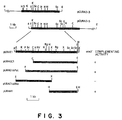
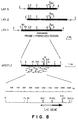
- the result is shown in Figure 3.
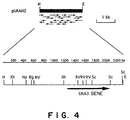
- the results showed that the URA3 gene is located in 2.3 kb region between the EcoRI and HindIII.
- the amino acid sequence of the polypeptide was compared with that of the URA3 protein of the other yeasts, showing high homologies, for example 73.4% to Saccharomyces cerevisiae , 76.3% to Kluyveromyces lactis , and 75.1% to Candida albicans .
- Example 5 Cloning of the L41 gene and determination of the DNA sequence of a DNA fragment containing the L41 gene
- Filters were prepared for about 30,000 colonies of the library prepared in Example 2 according to the method described in Molecular Cloning, 2nd edition, Sambrook et al., p. 12, 21 - 23, Cold Spring Harbor Laboratory (1989), and screened with a 1.1 kb 32 P-labelled XbaI - Sau3AI fragment containing Candida maltosa L41 gene, RIM-C, as a probe (Kawai et al., J. Bacteriol., 174, 254 - 262 (1992)).
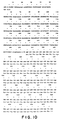
- the 4 kb EcoRI fragment was inserted into the EcoRI site of pBluescript SK - to prepare plasmids pCLE1 and pCLE2 in which the fragment is inserted to an opposite direction with each other. From these two plasmids, a variety of plasmids having deletion mutations were obtained by preparing deletion mutants with HindIII, XhoI or ClaI having a site within the EcoRI fragment or by preparing deletion mutants with ExoIII nuclease and mung bean nuclease in order to determine the 2086 bp DNA sequence from the BamHI site to the SacI site ( Figure 9).
- the deduced amino acid sequence of the Candida utilis L41 polypeptide was compared with those of the L41 proteins of some other yeasts, showing high homologies, for example 93.4% to Saccharomyces cerevisiae L41, 89.6% to Candida tropicalis L41, and 85.8% to Candida maltosa L41.
- the amino acid at 56 position of the L41 protein of a cycloheximide-resistant yeast is glutamine, while the amino acid at the corresponding position in the L41 protein of a cycloheximide-sensitive yeast is proline. It has been reported that the sensitivity to cycloheximide of the yeast is determined by this amino acid residue of the L41 protein (Kawai et al., J. Bacteriol., 174, 254-262 (1992)). In addition, the amino acid at 56 of the L41 protein of a cycloheximide-sensitive Candida utilis was proline like that of a cycloheximide-sensitive Saccharomyces cerevisiae .
- the codon encoding the proline at the 56 position of the L41 gene was changed into a glutamine codon by site-specific mutagenesis in order to convert the L41 protein encoded by the gene into a cycloheximide-resistant protein, which was used as a selectable marker of transformation.
- a 2.1kb BamHI-SacI fragment obtained from the plasmid pCLE1 was inserted between the BamHI and SacI sites of pUC18 to prepare a plasmid pCLBS1 ( Figure 11).
- 0.6 kb fragment obtained by digesting the plasmid pCLE1 with AflII, treating with Klenow enzyme to form blunt ends and further digesting with Xhol was inserted between the SmaI and XhoI sites of pBluescript SK - to prepare pCLAX1.
- the AflII site is regenerated by the ligation of the blunt AflII end of the 0.6 kb fragment and the SmaI end of a vector.
- a single stranded DNA was prepared from pCLXA1 with a helper phage, and a mutant plasmid was prepared with a synthetic oligonucleotide 5'-TG TGG AAA ACT TGC TTG GTT TGA-3' and a Sculptor In Vitro Mutagenesis Kit (Amersham).
- DNA sequence of the 0.6 kb insertion fragment on the candidate plasmid thus obtained was determined, and a plasmid pCLAX20 in which no mutation in the DNA sequence was found except that the 56th proline codon CCA had been mutated into a glutamine codon CAA was obtained.
- a 0.6 kb insertion fragment was cut out as a ClaI-AflII fragment from pCLAX20 and ligated with a 4.4 kb fragment obtained by digesting the plasmid pCLBS1 with ClaI and AflII to construct a plasmid pCLBS10 containing a mutated L41 gene.
- the plasmid pCLBS10 was digested with BamHI and SphI, treated with T4 DNA polymerase to form blunt ends, and NotI linkers (5'-AGCGGCCGCT-3') were inserted to prepare a plasmid pCLBS12 ( Figure 11).
- a 2.1kb BamHI-SacI fragment containing the wild type L41 gene obtained from pCLBS1 was cloned into the YEp13K to prepare a plasmid pYECL1 as a control.
- a Saccharomyces yeast strain YPH 500 was transformed with these plasmids according to the lithium acetate method described in Methods in Yeast Genetics - A Laboratory Course Manual - Rose M.D. et al., pp 122-123, Cold Spring Harbor Laboratory Press, NY (1990). Leucine non-requirement strains were selected as transformants. These transformants were grown on YPD plate containing cycloheximide. As a result, the strain retaining pYECL10 grew on the YPD plate containing cycloheximide. On the contrary, the strain retaining pYECL1 did not grow on the YDP plate containing cycloheximide. It was thus proved that the mutated L41 gene thus prepared conferred resistance to the cycloheximide-sensitive yeast.
- Example 7 High-copy-number integration of vectors by trancating the L41 gene promoter
- This plasmid (5 ⁇ g) was digested with PstI and BamHI, then extracted with phenol/chloroform to recover DNA by ethanol precipitation.
- the DNA was dissolved in 100 ⁇ l of ExoIII buffer (50 mM Tris-HCl (pH 8.0), 100 mM NaCl, 5 M MgCl 2 , 10 mM 2-mercaptoethanol), 180 units of ExoIII nuclease were added, then the solution was maintained at 37°C.
- ExoIII buffer 50 mM Tris-HCl (pH 8.0), 100 mM NaCl, 5 M MgCl 2 , 10 mM 2-mercaptoethanol
- a sample (10 ⁇ l) was taken every minute and transferred into 10 ⁇ l of MB buffer (40 mM sodium acetate, 100 mM NaCl, 2 mM ZnCl 2 and 10% glycerol (pH 4.5)) in an ice-cold tube.
- Ten tubes thus prepared were maintained at 65°C for 10 minutes to inactivate the enzymes, 5 units of mung bean nuclease was added, and the mixture was reacted at 37°C for 30 minutes. After the reaction, the level of deletion was confirmed by agarose gel electrophoresis, and DNA fragments were recovered from five reaction solutions. The recovered DNA fragments were treated with Klenow enzyme to create blunt ends, a ligation reaction was carried out at 16°C overnight, then transformation of E. coli was performed.
- MB buffer 40 mM sodium acetate, 100 mM NaCl, 2 mM ZnCl 2 and 10% glycerol (pH 4.5)
- Transformation was carried out using a plasmid carrying the modified L41 gene containing -411 XhoI to +976 SacI and a plasmid carrying the modified L41 gene containing -1110 BamHI to +976 SacI.
- the transformation frequencies with these plasmids were virtually the same.
- the region downstream from the -411 XhoI site (where A at the initiation codon ATG is +1) was satisfactory as a promoter region for the expression of the L41 gene.
- 10 plasmids, pCLRE11 to pCLRE20 with deletions ranging from near the XhoI site to near the 3' downstream translation initiation codon were selected.
- Plasmids pCLRE11 to pCLRE20 were constructed in the same manner as pCLRE2. The transformation was carried out by the electric field pulse method (see WO/95/32289). Pulsing was performed at a capacitance of 25 ⁇ F, a resistance of 1,000 ohms, and a voltage of 5 KV/cm. Results showed that the transformation frequency decreased as the extent of deletion in the promoter region of the cycloheximide-resistance L41 gene increased.
- the transformation frequencies were virtually the same with plasmids pCLRE11, pCRE12 and pCRE13, in which the extent of deletion was almost the same, but decreased with pCLRE14 to about 30%, with pCLRE15 and pCLRE16 to about 15%, and with pCLRE17 to about 0.3% of the frequency with pCLRE11 or 12.
- No transformants were obtained with pCLRE18, pCLRE19 and pCLRE20.
- the 5' ends of the L41 gene promoter region of the plasmids pCLRE11, pCLRE15, pCLRE16, pCLRE17, pCLRE18, pCLRE19 are indicated by arrows.
- DNAs were prepared from the four independent clones, the transformants obtained with pCLRE15, pCLRE16 and pCLRE17 as well as pCLRE11.
- the DNAs were subjected to Southern blot analysis.
- a chromosomal DNA was prepared according to the method described in Methods in Yeast Genetics - A Laboratory Course Manual - Rose M.D. et al., pp131-132, Cold Spring Harbor Laboratory Press NY.
- the DNA thus prepared was digested with HindIII, subjected to agarose gel electrophoresis and then transferred to Hibond N + Filter (Amersham) to prepare a filter for Southern hybridization.
- the filter on which the DNA was immobilized was prehybridized in a hybridization solution (6 x SSC, 5 x Denhardt solution, 0.2% SDS) at 65°C for 2 hours.
- Hybridization was next carried out using a 0.6 kb ClaI-HindIII fragment, which contained the L41 gene labeled with [ ⁇ - 32 P]dCTP (110 TBq/mmol) using Megaprime DNA labeling systems (Amersham), as a probe DNA at 65°C for 16 hours.
- the filter was washed in 1 x SSC and 0.1% SDS at 65°C for 2 hours and then subjected to autoradiography where signals were detected. A thick band derived from the integrated vectors was observed along with a band derived from the endogenous L41 gene.
- the number of copies of the integrated plasmids was estimated by comparing the intensity of the bands, assuming that the intensity of the band derived from the endogenous L41 gene corresponds to two copies since the number of copies for the C. utilis L41 gene has previously been proven to be 2 per cell.
- the intensity of the bands was measured using a BAS 2000 imaging analyzer (Fiji Film).
- Figure 14 shows the results of Southern blot analysis and a graph showing the number of copies.
- Example 8 Construction of the vectors for high-copy-number chromosome integration
- pCRA1 was digested with Asp718 and treated with Klenow enzyme to create blunt ends and then NotI linkers (5'-AGCGGCCGCT-3') were added to construct pCRA3.
- This plasmid was digested with NotI and BglII to obtain 0.5-kb and 0.7-kb NotI-BglII fragments.
- pUC19 (Takara Shuzo) was digested with HindIII and EcoRI and treated with Klenow enzyme to create blunt ends and then BglII linkers (5'-CAGATCTG-3') were added to construct plasmid pUCBgl.
- primers were designed to have an additional PstI site at the 5' end of the primer and a SalI site at the 3' end of the primer. Sequences of the primers used for the PCR were as follows:
- pCLRE2 was used as a template.
- Two amplified fragments were cloned into plasmid pT7Blue using the TA cloning kit (Invitrogen). These two kinds of fragments were excised as PstI-SalI fragments from the plasmids thus constructed and then ligated with pCRA10 to construct plasmid pCRAL10 containing the long L41 gene fragment and plasmid pCRAL11 containing the short L41 gene fragment.
- the integration target rDNA fragment is divided into two segments, and a sequence derived from plasmid pUC containing the Amp-resistance gene is integrated between the segments. Since this vector is used for transformation after digestion at the BglII site, the resulting transformant incorporates the target DNA sequence and the marker gene therein, but not the DNA sequence derived from the plasmid pUC.
- Primers were designed based on the URA3 gene sequence of C. utilis (see Example 4), and two kinds of fragments containing the 5' side and 3' side of the URA3 gene were obtained by PCR.
- a fragment from +4 to +354 (where A in the initiation codon ATG is +1) was obtained as the 5' side fragment of the URA3 gene.
- the primers were designed to have an additional SalI site at the 5' end of the primer and a BglII site at the 3' end of the primer. Sequences of the primers were as follows:
- a fragment from +356 to +685 was obtained as the 3'-side fragment of the URA3 gene.
- the primers were designed to have a BglII site at the 5' end of the primer and a Asp718 (KpnI) site at the 3' end of the primer. Sequences of the primers were as follows:
- the two amplified fragments thus obtained were cloned into plasmid pT7Blue using the TA cloning kit (Invitrogen).
- the 5'-side fragment and the 3'-side fragment of the URA3 gene were excised from the two kinds of constructed plasmids as a SalI-BglII fragment and a BglII-Asp718 fragment, respectively, and inserted between the SalI site and the Asp718 site of pUC19 (Takara Shuzo) to construct plasmid pURA1.
- the plasmid was modified to have a BglII site by changing the base A located at +355 in the open reading frame of the URA3 gene to C.
- the plasmid could be integrated into the URA3 gene on the chromosome by digesting the plasmid with BglII . Furthermore, the URA3 gene of pURA1 has a structure having partial deletions at the 5'-end region and 3'-end region of the open reading frame.
- pURA1 was digested with Asp718 and treated with Klenow enzyme to create blunt ends and then NotI linkers (5'-AGCGGCCGCT-3') were ligated to construct plasmid pURA2. Furthermore, pURA1 was digested with HindIII and treated with Klenow enzyme to create blunt ends and then NotI linkers (5'-AGCGGCCGCT-3') were ligated to construct plasmid pURA3. Furthermore, pURA2 and pURA3 were digested with NotI and BglII to obtain two kinds of approximately 0.35-kb NotI-BglII fragments. These fragments were then cloned into the BglII-digested pUCBgl to construct pURA10 ( Figure 17).
- plasmids pURAL10 and pURAL11 have the structure in which the integration target URA3 fragment is divided into two segments, and the sequence derived from plasmid pUC containing the Amp-resistance gene is integrated between the segments. Since this vector is used for transformation after digestion at the BglII site, the resulting transformant does not incorporate the DNA sequence derived from plasmid pUC.
- Vectors targeted at the (cycloheximide-resistance) L41 gene locus were constructed as follows. Two (cycloheximide-resistance) L41 gene fragments, approximately 380-bp (-85 to +292) and approximately 680-bp (+288 to +971), were obtained by PCR. The position of the 5' end of the 5'-side fragment is almost identical to that of the 5' end of the (cycloheximide-resistance) L41 gene promoter in pCLRE17. As such, for the fragment from -85 to +292, a PstI site was added to its 5' side and a BglII site was constructed at the 3' side by substituting T at +289 with G. Primers used for PCR were as follows:
- pCLRE2 was used as a template.
- Two amplified fragments were cloned into plasmid pT7Blue using the TA cloning kit (Invitrogen). These two kinds of fragments were excised as PstI-SalI fragments from the plasmids thus constructed and cloned into a BglII-digested pUCBgl to construct plasmid pCL12 ( Figure 18).
- the plasmid pCL12 has the structure in which the L41 gene fragment, the integration target sequence, is divided into two segments, and the sequence derived from plasmid pUC containing the Amp-resistance gene is integrated between the fragments. Since this vector is used for transformation after the digestion at the BglII site, it is characterized in that the resulting transformants incorporate the target DNA sequences and the heterologous gene therein but not the DNA sequence derived from the plasmid pUC. Furthermore, since the marker gene is divided by the sequence derived from the plasmid pUC on the vector, cycloheximide-resistant transformants can be obtained only when this plasmid is integrated into the chromosome in a tandem form.
- GAP glyceraldehyde-3-phosphate dehydrogenase
- the glyceraldehyde-3-phosphate dehydrogenase (GAP) gene from C. utilis was cloned by the hybridization method in which a known GAP gene from other organisms was used as a probe.
- the DNA library of the C. utilis chromosome constructed in Example 1 was used as the gene library.
- a filter was prepared by adsorbing about 20,000 plaques of phage DNA of the gene library according to the method described in Molecular Cloning 2nd Edition, p2, 95-121, Cold Spring Harbor Laboratory, 1989.
- An approximately 1-kb AsuII-AflII fragment was then excised from the pUC18 plasmid carrying a 2.1 kb HindIII fragment containing the GAP gene of S.
- the promoter and terminator fragments of the C. utilis glyceraldehyde-3-phosphate hydrogenase (GAP) gene were obtained by PCR using the plasmid pGAP1 as a template.
- GAP glyceraldehyde-3-phosphate hydrogenase
- a NotI site was added to the end of the 5'-side primer and a XbaI and BamHI sites were added immediately before the 3'-side initiation codon.
- a 723-bp fragment from +1006 to +1728 immediately after the termination codon was obtained as the terminator.
- the following primers were used, and a BamHI site was added immediately after the termination codon at the 5' side and a PstI site was added to the 3' side.
- the monellin gene was excised as a DraI-BglII fragment from the plasmid pMNY1 containing a synthetic DNA sequence corresponding to the amino acid sequence shown in SEQ ID NO. 4.
- pMNY1 can be obtained by inserting a chemically synthesized DNA fragment corresponding to the amino acid sequence of SEQ ID NO. 4 between the EcoRI site and the HindIII site of pUC18 (Pharmacia) (see Japanese Patent Laid-open 1993/70494).
- the plasmid pGAPPT10 was digested with XbaI, treated with Klenow enzyme to create blunt ends, then further digested with BamHI.
- the resulting fragment was ligated with the DraI-BglII fragment containing the monellin gene to construct plasmid pGAPM3 ( Figure 20). Furthermore, the NotI-PstI fragments excised from pGAPM3 were ligated into the PstI and NotI sites of plasmids pCLR215, pCLR216, pCLR217, pCRAL10, pCRAL11, pURAL10, and pURAL11 described in Example 2 to construct plasmids pCLRM215, pCLRM216, pCLRM217, pRM10, PRM11, pUM10, and pUM11 ( Figure 20).
- transformants with plasmid pCLRE4 containing the rDNA fragment and the cycloheximide-resistance L41 gene were similarly treated.
- the pCLRE4 was constructed by inserting a 3.5-kb EcoRI fragment obtained from pCRE2 ( Figure 2) described in Example 2 into the EcoRI site of the plasmid pCLBS12 ( Figure 11) described in Example 6.
- the gel was stained with Coomassie Brilliant Blue after electrophoresis, dried and then scanned by a densitometer to calculate the percentage of monellin in the total soluble proteins. It was found that monellin had accumulated to a level of about 50% of the cellular soluble proteins in C. utilis transformants with pCLRM216, pRM11 and pUM11, and that the expression level tended to increase in transformants with pUM11 and pRM11 in which sequences derived from bacteria were deleted.
- yeast TD4 a mutant strain ( a , his , ura , leu, tryp ) of S. cerevisiae S288c (ATCC 26108)
- yeast TD4 a mutant strain ( a , his , ura , leu, tryp ) of S. cerevisiae S288c (ATCC 26108)
- Japanese Patent Laid-open 1993/70494 which was transformed with the plasmid pCTMNY1 containing an expression cassette consisting of "GAP promoter + monellin gene + PGK terminator" and the TRP1 gene as a marker, and the full length of yeast 2 ⁇ m DNA.
- C. utilis is a suitable host for the expression of heterologous proteins.
- DNAs were prepared from the four clones, the transformants obtained with pCLRM216, pRM11, and pUM11 and subjected to Southern blot analysis.
- the DNAs for pCLRM216 and pRM11 were digested with PstI + EcoRI, the DNA for pUM11 was digested with HindIII, and a 0.6-kb ClaI-HindIII L41 gene fragment was used as a probe for the analysis.
- the number of copies of the integrated plasmids was estimated assuming that the intensity of the band derived from the endogenous L41 gene corresponds to 2 copies. The intensity of the bands was measured using a BAS 2000 imaging analyzer (Fiji Film).
- the calculated numbers of copies of the integrated plasmids were 10 to 19 copies for the pCLRM216 transformants, 12 to 18 copies for the pRM11 transformants, and 17 to 27 copies for the pUM11 transformants.
- each of the pCLRM216, pRM11, and pUM11 transformants were consecutively subcultured in YPD liquid medium to study the stability of the integrated genes.
- cells grown on YPD plate supplemented with cycloheximide were inoculated into 10 ml of YPD liquid medium and cultured to the stationary phase.
- 10 ⁇ l of the resulting culture was inoculated into 10 ml of fresh YPD liquid medium and then cultured to the stationary phase.
- Subcultures in this nonselective medium were repeated four times for about 50 generations of growth.
- the pUM11 transformants were incubated in YPD medium at 30°C overnight with shaking and then the resulting cells were collected by centrifugation.
- YPD medium corresponding to 2 g by dry weight
- 17 ml of 0.9 M sorbitol were added, and the resulting cell suspension was incubated at 37°C for 30 minutes with an addition of 6 ml of Zymolyase 100T (Seikagaku Corp.) with stirring.
- the cell suspension was treated with a french press (1,000 psi, 3 times) to disrupt the cells.
- a supernatant fraction was obtained by centrifugation (10,000 x g, 20 minutes).
- the precipitate fraction was washed three times with a sodium phosphate buffer solution (10 mM sodium phosphate (pH 7.0), 100 mM NaCl) to collect another supernatant fraction, which was combined with the previously obtained supernatant fraction.
- This fraction thus combined was called the french press-treated sample.
- 10 g (by wet weight) of the cells were destroyed with dynomill for 15 minutes while cooling with 40 ml of a sodium phosphate buffer solution (10 mM sodium phosphate (pH 7.0), 100 mM NaCl) and 60 ml of glass beads (425 to 600 microns, Sigma). A supernatant fraction of this crushed material was collected.
- the glass beads were thoroughly washed with the abovementioned buffer solution until no protein was extracted. This wash and the previously obtained supernatant fraction were combined, which was called the dynomill-treated sample.
- the french press-treated fraction and the dynomill-treated fraction were subjected to SDS-PAGE to compare the efficiency of monellin extraction. Results showed there was no significant difference between the two treatments.
- monellin was purified using the french press-treated sample.
- the french press-treated sample was diluted with a sodium phosphate buffer solution (10 mM sodium phosphate (pH 7.0), 100 mM NaCl) to adjust the protein concentration to about 2.0 mg/ml and then heated at 50C for 10 minute in a water bath. After removing the precipitates by centrifugation, the pH of the resulting solution was adjusted to 4.5 by adding 200 mM sodium acetate buffer (pH 3.0) with stirring, and acid treatment was carried out while cooling. After treatment for about 1 hour, the pH was adjusted to 6.0 by the addition of 200 mM sodium phosphate buffer (pH 7.0).
- the supernatant fraction was concentrated by ultrafiltration (molecular weight 3,000 cut), then dialyzed against 10 mM sodium phosphate buffer (pH 7.0) overnight; The insoluble fraction was removed by centrifugation followed by filtration through a 0.2 micron filter (Millipore), after which the resulting fraction was passed through a column (50 ml) of CM-Sepharose (Pharmacia) equilibrated with the buffer. The unadsorbed fraction was eluted with the same buffer and the target protein was obtained with a linear gradient of 0 to 0.4 M NaCl solution (150 ml). This target protein was subjected to SDS-PAGE, and with the presence of a single band on the gel, was confirmed to be purified (see Figure 23).
- the circular dichroism spectrum (wave length from 190 nm to 260 nm) of natural monellin shows a strong negative spectrum near 212 nm and a positive spectrum at near 236 nm.
- a circular dichroism spectrum of the purified recombinant monellin was very similar to that of natural monellin.
- Purified single-chain monellin and natural monellin samples were each dissolved in pure water to concentrations of 0.3 ⁇ g/ ⁇ l, 0.2 ⁇ g/ ⁇ l, 0.1 ⁇ g/ ⁇ l, 0.05 ⁇ g/ ⁇ l, and 0.02 ⁇ g/ ⁇ l and 10 ⁇ l of each solution were used to evaluate sweetness by a taste test on the tongue.
- the sweetness threshold concentrations for the natural and recombinant were the same, 0.05 to 0.1 ⁇ g/ ⁇ l (i.e., 0.5 to 1 ⁇ g protein), indicating that monellin produced in yeast had a specific activity equivalent to that of natural monellin.
- the amino acid sequence encoded by the amylase gene derived from Sulfolobus solfataricus KM1 was converted to the DNA sequence using those codons, except those for methionine and tryptophane, most frequently used in the glyceraldehyde-3-phosphoric acid dehydrogenase (GAP) gene of C. utilis .
- GAP glyceraldehyde-3-phosphoric acid dehydrogenase
- the DNA sequence was designed such that the variation in codons for each amino acid contained in the gene would be as close as possible to that for GAP, that specific restriction enzyme sites would be formed at intervals of about 180 to 320 bases, and that the gene would be constructed as a group of several segments. Some minor codons were also used to conveniently form the restriction enzyme cleavage sites.
- the sequence was designed to have an XbaI recognition site on the 5' upstream side one base distant from the translation initiation codon (ATG) of the structural gene and a BglII recognition site on the 3' downstream side one base distant from the translation termination codon. Taking these design parameters into consideration, the gene encoding the amylase from S .
- solfataricus KM1 was constructed to consist of seven segments, A-1 to A-7 (SEQ. ID. NO. 6 to 12). Each segment has specific restriction enzyme recognition sites at both ends and additional two nonsense nucleotides at both ends of the restriction enzyme recognition sites to enable each segment to be digested directly by the restriction enzymes. Primers used in the synthesis of each segment are shown in Figures 24, 25 and 26.
- the segments A-1 to A-7 were synthesized as follows. PCR was carried out using ExTaq polymerase (Takara Shuzo) with 1/10 of the dNTP amount indicated in the manual (20 ⁇ M each of dA, dG, dC, and dT) for 25 cycles of reaction at 94°C for 30 second and at 72°C for 90 seconds, or for 25 cycles of reaction at 94°C for 30 seconds, at 55-65°C for 60 seconds, and at 72°C for 60 seconds. The PCR reaction to produce double-stranded DNA in the following synthesis of the gene was carried out under the same conditions, except that the primers and template DNAs were different.
- Segment A-1 (SEQ ID NO. 6), a 288-bp fragment having XbaI and StyI sites at both ends was made from four oligonucleotides.
- PCR was carried out using primers A-1-2 and A-1C-2.
- Another PCR was carried out using the reaction solution obtained by this PCR as a template using primers A-1-1 and A-1C-1 to obtain a 282-bp double-stranded DNA.
- Segment A-2 (SEQ ID NO. 7), a 312-bp fragment having StyI and AccI sites at both ends, was also made from four oligonucleotides.
- PCR was carried out using primers A-2-2 and A-2C-2.
- Another PCR was carried out using the synthesized double-stranded DNA as a template using primers A-2-1 and A-2C-1 to obtain a 312-bp fragment.
- Segment A-3 (SEQ ID NO. 8), a 241-bp fragment having AccI and XhoI sites at both ends, was also made from four oligonucleotides.
- PCR was carried out using primers A-3-2 and A-3C-2.
- Another PCR was carried out using the synthesized double-stranded DNA as a template using primers A-3-1 and A-3C-1 to obtain a 214-bp fragment.
- Segment A-4 (SEQ ID NO. 9), a 214-bp fragment having XhoI and EcoRV sites at both ends, was also made from four oligonucleotides. First, PCR was carried out using primers A-4-2 and A-4C-2. Another PCR was carried out using the synthesized double-stranded DNA as a template using primers A-4-1 and A-4C-1 to obtain a 214-bp fragment.
- Segment A-5 (SEQ ID NO. 10), a 184-bp fragment having EcoRV and SalI sites at both ends, was made from two oligonucleotides. PCR was carried out using primers A-5-1 and A-5C-1 to obtain a 184-bp fragment.
- Segment A-6 (SEQ ID NO. 11), a 241-bp fragment having SalI and CClaI sites at both ends, was also made from four oligonucleotides. First, PCR was carried out using primers A-6-2 and A-6C-2. Another PCR was carried out using the synthesized double-stranded DNA as a template using primers A-6-1 and A-6C-1 to obtain a 241-bp fragment.
- Segment A-7 (SEQ ID NO. 12), a 284-bp fragment having ClaI and BglII sites at both ends, was also made from four oligonucleotides. First, PCR was carried out using primers A-7-2 and A-7C-2. Another PCR was carried out using the synthesized double-stranded DNA as a template using primers A-7-1 and A-7C-1 to obtain a 284-bp fragment.
- the seven fragments thus amplified were cloned into pT7Blue vector (Invitrogen), or the HincII site of pUC118 after treated with a Klenow enzyme and phosphorylated. DNA sequences of these seven fragments were determined and confirmed to be identical to the designed sequences. These fragments were digested with individual restriction enzymes which recognized respective ends, recovered using a low melting point agarose gel (FMC Bioproducts), and then purified using ⁇ -Agarase-I (Japan Gene).
- the XbaI-EcoRV fragment containing segments A-1 to A-4 was recovered from this plasmid and inserted between the XbaI and SalI sites of pBSIIKS+ along with an EcoRV-SalI fragment containing segment A-5.
- This plasmid was named pAmy12345.
- a vector (called pBSBgl) was prepared by inserting BglII linkers (CAGATCTG) at the SmaI site of pBSIIKS+. Segments A-6 and A-7 were inserted between the BglII and SalI sites of this vector. The resulting plasmid was named pAmy67.
- the HindIII and PstI sites of pUC12 were treated with Klenow enzyme and BglII linkers (CAGATCTG) were inserted; the resulting vector (called pUC12BglII) was digested with XbaI and BglII.
- the XbaI-SalI region containing segments A-1 to A-5 from the abovementioned pAmy12345 and the SalI-BglII region containing segments A-6 and A-7 from pAmy67 were simultaneously inserted into this plasmid and thus the synthesis of the gene encoding the amylase from S. solfataricus KM1 strain (SEQ ID NO. 13) was completed.
- the XbaI-BglII fragment of the gene encoding amylase derived from S. solfataricus KM1 strain was inserted between the XbaI and BamHI sites of pGAPPT10. This plasmid was named pGAPUA.
- An approximately 3.4-kb expression cassette containing the amylase gene flanked by the GAP promoter and the GAP terminator was recovered as a NotI-PstI fragment.
- the transformants with plasmids pURAL11UA, pCRAL11UA, and pCL12UA were cultured in YPD liquid medium for one day, after which soluble proteins were extracted from the collected cells according to the method described in Example 10 and were subjected to SDS-PAGE. In all cases, amylase had accumulated in an amount more than 50% of the soluble proteins. Soluble proteins extracted from three transformants with pURAL11UA and one transformant with a plasmid containing the cycloheximide-resistance gene (pCLRE2) were subjected to 4/20% SDS-PAGE.
- pCLRE2 cycloheximide-resistance gene
- transformants with pCRAL11UA, pURAL11UA, and pCL12UA were cultured for about 50 generations in a nonselective medium according to the method described in Example 10 to study the stability of the integrated genes.
- Results showed that production markedly decreased in 3 out of 5 clones transformed with pCRAL11UA which used rDNA as the target for integration, while the production did not markedly change in the clones transformed with pURAL11UA and pCL12UA which used the URA3 gene locus and the L41 gene locus respectively, as the target for integration.
- the plasmids integrated using the L41 gene locus as the target for integration were of equal excellence in high level expression of the gene by high-number-copy integration and in degree of stability as those integrated using the URA3 gene locus as the target.
- Human glycosylation inhibiting factor is a protein mainly produced in T cells. Comprised of 115 amino acids, it has a molecular weight of 12,500 and is known to have immuno suppressive activity (Mikayama et al., Proc. Natl. Acad. Sci., USA, 90, 10056-10060, 1993).
- a 348-bp DNA was synthesized based on this amino acid sequence using codons most frequently used in C. utilis .
- An NheI site was added to the 5' end and a BglII site was added to the 3' end.
- the resulting 350-bp fragment was ligated with plasmid pGAPPT10 (Example 3) digested with XbaI and BamHI to construct pGAPGIF1 ( Figure 29).
- the 1.2-kb PstI-SalI cycloheximide-resistance L41 gene fragment described in Example 2 was inserted between the XhoI and PstI sites of plasmid pCRA1 to construct plasmid pCRAL2.
- a GAP promoter + GIF gene + GAP terminator fragment which was excised from plasmid pGAPGIF1 as a NotI-PstI fragment was inserted between the NotI and PstI sites of this plasmid pCRAL2 to construct plasmid pRALGIF2 ( Figure 29).
- This plasmid was digested at the BglII site within the rDNA fragment, then cells of C. utilis ATCC 9950 were transformed by the electric pulse method as described in Example 7. Cells of eight clones of the resulting transformants were cultured in 10 ml of YPD medium for 24 hours with shaking. The cells were collected by centrifugation, suspended in 50 mM Tris (pH 7.5), 150 mM NaCl, 1 mM DTT, and 1 mM PMSF, and disrupted by vortexing with glass beads. Cell debris and insoluble precipitates were removed by centrifugation at 15,000 x g for 10 minutes to prepare soluble proteins. The resulting soluble proteins were subjected to electrophoresis on 15% to 25% SDS-PAGE to study GIF expression. Results showed the presence of a band at a position corresponding to a molecular weight of about 12,000 which corresponds to GIF.
Landscapes
- Life Sciences & Earth Sciences (AREA)
- Health & Medical Sciences (AREA)
- Genetics & Genomics (AREA)
- Chemical & Material Sciences (AREA)
- Organic Chemistry (AREA)
- Engineering & Computer Science (AREA)
- Bioinformatics & Cheminformatics (AREA)
- Wood Science & Technology (AREA)
- Zoology (AREA)
- General Engineering & Computer Science (AREA)
- General Health & Medical Sciences (AREA)
- Biochemistry (AREA)
- Molecular Biology (AREA)
- Biomedical Technology (AREA)
- Biotechnology (AREA)
- Mycology (AREA)
- Microbiology (AREA)
- Medicinal Chemistry (AREA)
- Biophysics (AREA)
- Physics & Mathematics (AREA)
- Plant Pathology (AREA)
- Botany (AREA)
- Gastroenterology & Hepatology (AREA)
- Proteomics, Peptides & Aminoacids (AREA)
- Micro-Organisms Or Cultivation Processes Thereof (AREA)
- Preparation Of Compounds By Using Micro-Organisms (AREA)
- Peptides Or Proteins (AREA)
Applications Claiming Priority (3)
| Application Number | Priority Date | Filing Date | Title |
|---|---|---|---|
| JP24106296 | 1996-08-23 | ||
| JP24106296 | 1996-08-23 | ||
| PCT/JP1997/002924 WO1998007873A1 (en) | 1996-08-23 | 1997-08-22 | Yeast vectors and process for producing proteins with the use of the same |
Publications (3)
| Publication Number | Publication Date |
|---|---|
| EP0950712A1 true EP0950712A1 (de) | 1999-10-20 |
| EP0950712A4 EP0950712A4 (de) | 2005-03-02 |
| EP0950712B1 EP0950712B1 (de) | 2008-11-12 |
Family
ID=17068740
Family Applications (1)
| Application Number | Title | Priority Date | Filing Date |
|---|---|---|---|
| EP97935860A Expired - Lifetime EP0950712B1 (de) | 1996-08-23 | 1997-08-22 | Hefevektoren und verfahren für ihre benutzung für die produktion von proteinen. |
Country Status (7)
| Country | Link |
|---|---|
| US (2) | US6284534B1 (de) |
| EP (1) | EP0950712B1 (de) |
| JP (1) | JP4158863B2 (de) |
| AT (1) | ATE414159T1 (de) |
| AU (1) | AU3868197A (de) |
| DE (1) | DE69739107D1 (de) |
| WO (1) | WO1998007873A1 (de) |
Cited By (2)
| Publication number | Priority date | Publication date | Assignee | Title |
|---|---|---|---|---|
| US6436643B1 (en) | 1997-12-22 | 2002-08-20 | Unilever Patent Holdings Bv | Process for site-directed integration of multiple copies of a gene in a mould |
| CN111712576A (zh) * | 2017-08-24 | 2020-09-25 | 阿伯里斯特维斯大学 | 微生物菌株及其用途 |
Families Citing this family (13)
| Publication number | Priority date | Publication date | Assignee | Title |
|---|---|---|---|---|
| WO1998007873A1 (en) * | 1996-08-23 | 1998-02-26 | Kirin Beer Kabushiki Kaisha | Yeast vectors and process for producing proteins with the use of the same |
| JP4798833B2 (ja) * | 2000-10-24 | 2011-10-19 | 一般財団法人化学及血清療法研究所 | 加熱処理工程を含むヒト血清アルブミンの製造方法 |
| JP2003047471A (ja) * | 2001-08-01 | 2003-02-18 | Kirin Brewery Co Ltd | 異種タンパク質の分泌生産に優れた改変酵母およびその酵母を用いた異種タンパク質の製造法 |
| JP4796787B2 (ja) | 2005-04-28 | 2011-10-19 | 富士フイルム株式会社 | ラビリンチュラ類への遺伝子導入法 |
| JP4796786B2 (ja) * | 2005-04-28 | 2011-10-19 | 富士フイルム株式会社 | ラビリンチュラ類を形質転換可能なベクター |
| JP2007075013A (ja) * | 2005-09-14 | 2007-03-29 | Osaka Univ | rDNAコピー数の増加した酵母及びその酵母の利用 |
| US8080862B2 (en) | 2008-09-09 | 2011-12-20 | Qualcomm Incorporate | Systems and methods for enabling ESD protection on 3-D stacked devices |
| CN101880681B (zh) * | 2010-04-30 | 2013-06-12 | 成都大学 | 麦芽寡糖基海藻糖水解酶基因序列及其重组蛋白制备方法 |
| WO2012046731A1 (ja) | 2010-10-05 | 2012-04-12 | 味の素株式会社 | γ-Glu-Abuを含有する酵母及び酵母エキス、並びにそれらの製造方法 |
| EP3020801A4 (de) | 2013-07-12 | 2017-01-18 | Ajinomoto Co., Inc. | HEFE MIT HOHEM GEHALT AN -ABU, upsilon-GLU-ABU UND/ODER upsilon-Glu-Abu-Gly |
| JP7138425B2 (ja) * | 2016-10-26 | 2022-09-16 | キッコーマン株式会社 | 糸状菌の形質転換方法 |
| CN111936110A (zh) | 2018-03-27 | 2020-11-13 | 科斯梅蒂克生物技术实验室有限公司 | 双组分头发处理套件,包含染发膏和包含特定表面活性化合物的显色剂组合物 |
| IL312156B2 (en) * | 2024-04-10 | 2025-10-01 | Amai Proteins Ltd | Sweet proteins and their uses |
Family Cites Families (6)
| Publication number | Priority date | Publication date | Assignee | Title |
|---|---|---|---|---|
| AU555146B2 (en) | 1982-03-15 | 1986-09-11 | Trustees Of Columbia University In The City Of New York, The | Method for intorducing cloned, amplifiable genes into eucaryotic cells and for producing proteinaceous products materials |
| JP2504028B2 (ja) | 1987-02-26 | 1996-06-05 | 日本電気株式会社 | 中継装置 |
| US5264558A (en) * | 1987-06-19 | 1993-11-23 | The Regents Of The University Of California | Single-chain monellin analog as a low calorie protein sweetner |
| JPH0570494A (ja) | 1990-07-25 | 1993-03-23 | Kirin Brewery Co Ltd | 一本鎖化モネリンの製造 |
| JPH08173170A (ja) * | 1994-05-25 | 1996-07-09 | Kirin Brewery Co Ltd | キャンディダ・ユティリス酵母の形質転換系、およびそれによる異種遺伝子の発現 |
| WO1998007873A1 (en) * | 1996-08-23 | 1998-02-26 | Kirin Beer Kabushiki Kaisha | Yeast vectors and process for producing proteins with the use of the same |
-
1997
- 1997-08-22 WO PCT/JP1997/002924 patent/WO1998007873A1/ja not_active Ceased
- 1997-08-22 JP JP51059298A patent/JP4158863B2/ja not_active Expired - Fee Related
- 1997-08-22 AT AT97935860T patent/ATE414159T1/de not_active IP Right Cessation
- 1997-08-22 DE DE69739107T patent/DE69739107D1/de not_active Expired - Lifetime
- 1997-08-22 AU AU38681/97A patent/AU3868197A/en not_active Abandoned
- 1997-08-22 EP EP97935860A patent/EP0950712B1/de not_active Expired - Lifetime
- 1997-08-22 US US09/242,690 patent/US6284534B1/en not_active Expired - Fee Related
-
2001
- 2001-07-20 US US09/908,855 patent/US6610514B2/en not_active Expired - Fee Related
Cited By (4)
| Publication number | Priority date | Publication date | Assignee | Title |
|---|---|---|---|---|
| US6436643B1 (en) | 1997-12-22 | 2002-08-20 | Unilever Patent Holdings Bv | Process for site-directed integration of multiple copies of a gene in a mould |
| CN111712576A (zh) * | 2017-08-24 | 2020-09-25 | 阿伯里斯特维斯大学 | 微生物菌株及其用途 |
| US11535872B2 (en) * | 2017-08-24 | 2022-12-27 | Aberystwyth University | Microbial strains and uses thereof |
| CN111712576B (zh) * | 2017-08-24 | 2023-11-21 | 阿伯里斯特维斯大学 | 微生物菌株及其用途 |
Also Published As
| Publication number | Publication date |
|---|---|
| DE69739107D1 (de) | 2008-12-24 |
| WO1998007873A1 (en) | 1998-02-26 |
| EP0950712A4 (de) | 2005-03-02 |
| US6610514B2 (en) | 2003-08-26 |
| JP4158863B2 (ja) | 2008-10-01 |
| AU3868197A (en) | 1998-03-06 |
| US6284534B1 (en) | 2001-09-04 |
| ATE414159T1 (de) | 2008-11-15 |
| US20020115220A1 (en) | 2002-08-22 |
| EP0950712B1 (de) | 2008-11-12 |
Similar Documents
| Publication | Publication Date | Title |
|---|---|---|
| EP0950712B1 (de) | Hefevektoren und verfahren für ihre benutzung für die produktion von proteinen. | |
| CA2168037C (en) | Transformation systems for the yeast candida utilis and the expression of heterologous genes therewith | |
| US6207881B1 (en) | Control of fruit ripening through genetic control of ACC synthase synthesis | |
| EP0096430B1 (de) | Klonierungssystem für kluyveromyce Spezies | |
| US4943529A (en) | Kluyveromyces as a host strain | |
| CA2140894C (en) | Modified fungal cells and method for producing recombinant products | |
| Kondo et al. | High-level expression of a sweet protein, monellin, in the food yeast Candida utilis | |
| EP1975237B1 (de) | Beta-Fructofuranosidase-Varianten und ihre Verwendung | |
| JPWO1995032289A1 (ja) | キャンディダ・ユティリス酵母の形質転換系およびそれによる異種遺伝子の発現 | |
| JPWO1998007873A1 (ja) | 酵母ベクターおよびそれを用いたタンパク質の製造法 | |
| US6379924B1 (en) | Protein expression strains | |
| EP0599971B1 (de) | Hefepromotor und seine verwendung | |
| EP0814165B1 (de) | Verfahren zur Herstellung von transformierten Hefezellen, die kein Selektionsmarker-Gen enthalten | |
| USRE37766E1 (en) | K. lactis pyruvate-decarboxylase promoter and use thereof | |
| Yang et al. | Characterisation of the specific p‐nitrophenylphosphatase gene and protein of Schizosaccharomyces pombe | |
| JP4049364B2 (ja) | 多コピー型・ゲノム挿入型の選択両用ベクター | |
| JPWO2001011946A1 (ja) | ゲルタンパク質低減オオムギの作出 | |
| EP0521767A1 (de) | Verfahren zur Herstellung von rekombinanten Proteinen und dafür verwendete Wirtzellen |
Legal Events
| Date | Code | Title | Description |
|---|---|---|---|
| PUAI | Public reference made under article 153(3) epc to a published international application that has entered the european phase |
Free format text: ORIGINAL CODE: 0009012 |
|
| 17P | Request for examination filed |
Effective date: 19990309 |
|
| AK | Designated contracting states |
Kind code of ref document: A1 Designated state(s): AT BE CH DE DK ES FI FR GB GR IE IT LI LU MC NL PT SE |
|
| A4 | Supplementary search report drawn up and despatched |
Effective date: 20050114 |
|
| 17Q | First examination report despatched |
Effective date: 20051104 |
|
| 17Q | First examination report despatched |
Effective date: 20051104 |
|
| GRAP | Despatch of communication of intention to grant a patent |
Free format text: ORIGINAL CODE: EPIDOSNIGR1 |
|
| GRAS | Grant fee paid |
Free format text: ORIGINAL CODE: EPIDOSNIGR3 |
|
| GRAA | (expected) grant |
Free format text: ORIGINAL CODE: 0009210 |
|
| AK | Designated contracting states |
Kind code of ref document: B1 Designated state(s): AT BE CH DE DK ES FI FR GB GR IE IT LI LU MC NL PT SE |
|
| REG | Reference to a national code |
Ref country code: GB Ref legal event code: FG4D |
|
| REG | Reference to a national code |
Ref country code: CH Ref legal event code: EP |
|
| REG | Reference to a national code |
Ref country code: IE Ref legal event code: FG4D |
|
| REF | Corresponds to: |
Ref document number: 69739107 Country of ref document: DE Date of ref document: 20081224 Kind code of ref document: P |
|
| PG25 | Lapsed in a contracting state [announced via postgrant information from national office to epo] |
Ref country code: ES Free format text: LAPSE BECAUSE OF FAILURE TO SUBMIT A TRANSLATION OF THE DESCRIPTION OR TO PAY THE FEE WITHIN THE PRESCRIBED TIME-LIMIT Effective date: 20090223 Ref country code: AT Free format text: LAPSE BECAUSE OF FAILURE TO SUBMIT A TRANSLATION OF THE DESCRIPTION OR TO PAY THE FEE WITHIN THE PRESCRIBED TIME-LIMIT Effective date: 20081112 |
|
| NLV1 | Nl: lapsed or annulled due to failure to fulfill the requirements of art. 29p and 29m of the patents act | ||
| PG25 | Lapsed in a contracting state [announced via postgrant information from national office to epo] |
Ref country code: NL Free format text: LAPSE BECAUSE OF FAILURE TO SUBMIT A TRANSLATION OF THE DESCRIPTION OR TO PAY THE FEE WITHIN THE PRESCRIBED TIME-LIMIT Effective date: 20081112 Ref country code: FI Free format text: LAPSE BECAUSE OF FAILURE TO SUBMIT A TRANSLATION OF THE DESCRIPTION OR TO PAY THE FEE WITHIN THE PRESCRIBED TIME-LIMIT Effective date: 20081112 |
|
| PG25 | Lapsed in a contracting state [announced via postgrant information from national office to epo] |
Ref country code: DK Free format text: LAPSE BECAUSE OF FAILURE TO SUBMIT A TRANSLATION OF THE DESCRIPTION OR TO PAY THE FEE WITHIN THE PRESCRIBED TIME-LIMIT Effective date: 20081112 Ref country code: BE Free format text: LAPSE BECAUSE OF FAILURE TO SUBMIT A TRANSLATION OF THE DESCRIPTION OR TO PAY THE FEE WITHIN THE PRESCRIBED TIME-LIMIT Effective date: 20081112 |
|
| PG25 | Lapsed in a contracting state [announced via postgrant information from national office to epo] |
Ref country code: SE Free format text: LAPSE BECAUSE OF FAILURE TO SUBMIT A TRANSLATION OF THE DESCRIPTION OR TO PAY THE FEE WITHIN THE PRESCRIBED TIME-LIMIT Effective date: 20090212 Ref country code: PT Free format text: LAPSE BECAUSE OF FAILURE TO SUBMIT A TRANSLATION OF THE DESCRIPTION OR TO PAY THE FEE WITHIN THE PRESCRIBED TIME-LIMIT Effective date: 20090413 |
|
| PLBE | No opposition filed within time limit |
Free format text: ORIGINAL CODE: 0009261 |
|
| STAA | Information on the status of an ep patent application or granted ep patent |
Free format text: STATUS: NO OPPOSITION FILED WITHIN TIME LIMIT |
|
| 26N | No opposition filed |
Effective date: 20090813 |
|
| PG25 | Lapsed in a contracting state [announced via postgrant information from national office to epo] |
Ref country code: MC Free format text: LAPSE BECAUSE OF NON-PAYMENT OF DUE FEES Effective date: 20090831 |
|
| REG | Reference to a national code |
Ref country code: CH Ref legal event code: PL |
|
| PG25 | Lapsed in a contracting state [announced via postgrant information from national office to epo] |
Ref country code: LI Free format text: LAPSE BECAUSE OF NON-PAYMENT OF DUE FEES Effective date: 20090831 Ref country code: CH Free format text: LAPSE BECAUSE OF NON-PAYMENT OF DUE FEES Effective date: 20090831 |
|
| REG | Reference to a national code |
Ref country code: IE Ref legal event code: MM4A |
|
| PG25 | Lapsed in a contracting state [announced via postgrant information from national office to epo] |
Ref country code: IE Free format text: LAPSE BECAUSE OF NON-PAYMENT OF DUE FEES Effective date: 20090822 |
|
| PG25 | Lapsed in a contracting state [announced via postgrant information from national office to epo] |
Ref country code: GR Free format text: LAPSE BECAUSE OF FAILURE TO SUBMIT A TRANSLATION OF THE DESCRIPTION OR TO PAY THE FEE WITHIN THE PRESCRIBED TIME-LIMIT Effective date: 20090213 |
|
| PGFP | Annual fee paid to national office [announced via postgrant information from national office to epo] |
Ref country code: FR Payment date: 20100903 Year of fee payment: 14 Ref country code: DE Payment date: 20100826 Year of fee payment: 14 |
|
| PGFP | Annual fee paid to national office [announced via postgrant information from national office to epo] |
Ref country code: GB Payment date: 20100818 Year of fee payment: 14 |
|
| PG25 | Lapsed in a contracting state [announced via postgrant information from national office to epo] |
Ref country code: IT Free format text: LAPSE BECAUSE OF FAILURE TO SUBMIT A TRANSLATION OF THE DESCRIPTION OR TO PAY THE FEE WITHIN THE PRESCRIBED TIME-LIMIT Effective date: 20081112 |
|
| PG25 | Lapsed in a contracting state [announced via postgrant information from national office to epo] |
Ref country code: LU Free format text: LAPSE BECAUSE OF NON-PAYMENT OF DUE FEES Effective date: 20090822 |
|
| GBPC | Gb: european patent ceased through non-payment of renewal fee |
Effective date: 20110822 |
|
| REG | Reference to a national code |
Ref country code: FR Ref legal event code: ST Effective date: 20120430 |
|
| REG | Reference to a national code |
Ref country code: DE Ref legal event code: R119 Ref document number: 69739107 Country of ref document: DE Effective date: 20120301 |
|
| PG25 | Lapsed in a contracting state [announced via postgrant information from national office to epo] |
Ref country code: FR Free format text: LAPSE BECAUSE OF NON-PAYMENT OF DUE FEES Effective date: 20110831 Ref country code: GB Free format text: LAPSE BECAUSE OF NON-PAYMENT OF DUE FEES Effective date: 20110822 |
|
| PG25 | Lapsed in a contracting state [announced via postgrant information from national office to epo] |
Ref country code: DE Free format text: LAPSE BECAUSE OF NON-PAYMENT OF DUE FEES Effective date: 20120301 |