EP0957774B1 - Vorrichtung und verfahren geeignet zum schliessen eines körpereinschnitts während einer autopsie - Google Patents
Vorrichtung und verfahren geeignet zum schliessen eines körpereinschnitts während einer autopsie Download PDFInfo
- Publication number
- EP0957774B1 EP0957774B1 EP96905758A EP96905758A EP0957774B1 EP 0957774 B1 EP0957774 B1 EP 0957774B1 EP 96905758 A EP96905758 A EP 96905758A EP 96905758 A EP96905758 A EP 96905758A EP 0957774 B1 EP0957774 B1 EP 0957774B1
- Authority
- EP
- European Patent Office
- Prior art keywords
- incision
- closing
- sheet
- strap
- trace
- Prior art date
- Legal status (The legal status is an assumption and is not a legal conclusion. Google has not performed a legal analysis and makes no representation as to the accuracy of the status listed.)
- Expired - Lifetime
Links
- 238000011888 autopsy Methods 0.000 title claims abstract description 25
- 238000000034 method Methods 0.000 title claims description 9
- 239000000463 material Substances 0.000 claims abstract description 92
- 239000000853 adhesive Substances 0.000 claims abstract description 45
- 230000001070 adhesive effect Effects 0.000 claims abstract description 45
- 239000011888 foil Substances 0.000 claims description 15
- 238000007373 indentation Methods 0.000 claims description 14
- 239000000416 hydrocolloid Substances 0.000 claims description 7
- 239000010410 layer Substances 0.000 claims description 7
- 239000012790 adhesive layer Substances 0.000 claims description 6
- 229920002635 polyurethane Polymers 0.000 claims description 5
- 239000004814 polyurethane Substances 0.000 claims description 5
- DQXBYHZEEUGOBF-UHFFFAOYSA-N but-3-enoic acid;ethene Chemical compound C=C.OC(=O)CC=C DQXBYHZEEUGOBF-UHFFFAOYSA-N 0.000 claims description 4
- 239000005038 ethylene vinyl acetate Substances 0.000 claims description 4
- 229920001200 poly(ethylene-vinyl acetate) Polymers 0.000 claims description 4
- 239000004709 Chlorinated polyethylene Substances 0.000 claims description 2
- 229920012485 Plasticized Polyvinyl chloride Polymers 0.000 claims description 2
- XTXRWKRVRITETP-UHFFFAOYSA-N Vinyl acetate Chemical compound CC(=O)OC=C XTXRWKRVRITETP-UHFFFAOYSA-N 0.000 claims description 2
- 239000002390 adhesive tape Substances 0.000 claims description 2
- -1 polypropylene Polymers 0.000 description 5
- PPBRXRYQALVLMV-UHFFFAOYSA-N Styrene Chemical compound C=CC1=CC=CC=C1 PPBRXRYQALVLMV-UHFFFAOYSA-N 0.000 description 4
- 241000826860 Trapezium Species 0.000 description 4
- 238000004519 manufacturing process Methods 0.000 description 4
- 238000007789 sealing Methods 0.000 description 4
- 239000004698 Polyethylene Substances 0.000 description 3
- 230000006978 adaptation Effects 0.000 description 3
- 229920001971 elastomer Polymers 0.000 description 3
- 239000000806 elastomer Substances 0.000 description 3
- 230000007246 mechanism Effects 0.000 description 3
- 229920000573 polyethylene Polymers 0.000 description 3
- GRWFGVWFFZKLTI-IUCAKERBSA-N (-)-α-pinene Chemical compound CC1=CC[C@@H]2C(C)(C)[C@H]1C2 GRWFGVWFFZKLTI-IUCAKERBSA-N 0.000 description 2
- 239000004677 Nylon Substances 0.000 description 2
- 239000004743 Polypropylene Substances 0.000 description 2
- 238000010521 absorption reaction Methods 0.000 description 2
- 210000001124 body fluid Anatomy 0.000 description 2
- ZSWFCLXCOIISFI-UHFFFAOYSA-N cyclopentadiene Chemical compound C1C=CC=C1 ZSWFCLXCOIISFI-UHFFFAOYSA-N 0.000 description 2
- 208000015181 infectious disease Diseases 0.000 description 2
- 238000001746 injection moulding Methods 0.000 description 2
- 238000005304 joining Methods 0.000 description 2
- 229920001778 nylon Polymers 0.000 description 2
- 229920001155 polypropylene Polymers 0.000 description 2
- 238000001356 surgical procedure Methods 0.000 description 2
- WTARULDDTDQWMU-RKDXNWHRSA-N (+)-β-pinene Chemical compound C1[C@H]2C(C)(C)[C@@H]1CCC2=C WTARULDDTDQWMU-RKDXNWHRSA-N 0.000 description 1
- WTARULDDTDQWMU-IUCAKERBSA-N (-)-Nopinene Natural products C1[C@@H]2C(C)(C)[C@H]1CCC2=C WTARULDDTDQWMU-IUCAKERBSA-N 0.000 description 1
- HECLRDQVFMWTQS-RGOKHQFPSA-N 1755-01-7 Chemical compound C1[C@H]2[C@@H]3CC=C[C@@H]3[C@@H]1C=C2 HECLRDQVFMWTQS-RGOKHQFPSA-N 0.000 description 1
- NIXOWILDQLNWCW-UHFFFAOYSA-M Acrylate Chemical compound [O-]C(=O)C=C NIXOWILDQLNWCW-UHFFFAOYSA-M 0.000 description 1
- 239000004215 Carbon black (E152) Substances 0.000 description 1
- 206010013786 Dry skin Diseases 0.000 description 1
- IAYPIBMASNFSPL-UHFFFAOYSA-N Ethylene oxide Chemical compound C1CO1 IAYPIBMASNFSPL-UHFFFAOYSA-N 0.000 description 1
- 239000004606 Fillers/Extenders Substances 0.000 description 1
- WTARULDDTDQWMU-UHFFFAOYSA-N Pseudopinene Natural products C1C2C(C)(C)C1CCC2=C WTARULDDTDQWMU-UHFFFAOYSA-N 0.000 description 1
- 238000004026 adhesive bonding Methods 0.000 description 1
- XCPQUQHBVVXMRQ-UHFFFAOYSA-N alpha-Fenchene Natural products C1CC2C(=C)CC1C2(C)C XCPQUQHBVVXMRQ-UHFFFAOYSA-N 0.000 description 1
- MVNCAPSFBDBCGF-UHFFFAOYSA-N alpha-pinene Natural products CC1=CCC23C1CC2C3(C)C MVNCAPSFBDBCGF-UHFFFAOYSA-N 0.000 description 1
- 239000003963 antioxidant agent Substances 0.000 description 1
- 230000003078 antioxidant effect Effects 0.000 description 1
- 238000005452 bending Methods 0.000 description 1
- 229930006722 beta-pinene Natural products 0.000 description 1
- 238000009833 condensation Methods 0.000 description 1
- 230000005494 condensation Effects 0.000 description 1
- 238000010276 construction Methods 0.000 description 1
- 229920001577 copolymer Polymers 0.000 description 1
- 238000005520 cutting process Methods 0.000 description 1
- 230000032798 delamination Effects 0.000 description 1
- 230000037336 dry skin Effects 0.000 description 1
- 230000000694 effects Effects 0.000 description 1
- 239000012530 fluid Substances 0.000 description 1
- LCWMKIHBLJLORW-UHFFFAOYSA-N gamma-carene Natural products C1CC(=C)CC2C(C)(C)C21 LCWMKIHBLJLORW-UHFFFAOYSA-N 0.000 description 1
- 230000009477 glass transition Effects 0.000 description 1
- 229930195733 hydrocarbon Natural products 0.000 description 1
- 150000002430 hydrocarbons Chemical class 0.000 description 1
- 239000002480 mineral oil Substances 0.000 description 1
- 238000012986 modification Methods 0.000 description 1
- 230000004048 modification Effects 0.000 description 1
- 239000003921 oil Substances 0.000 description 1
- 230000000149 penetrating effect Effects 0.000 description 1
- 239000004014 plasticizer Substances 0.000 description 1
- 229920000642 polymer Polymers 0.000 description 1
- 239000000843 powder Substances 0.000 description 1
- 238000003825 pressing Methods 0.000 description 1
- 238000004080 punching Methods 0.000 description 1
- GRWFGVWFFZKLTI-UHFFFAOYSA-N rac-alpha-Pinene Natural products CC1=CCC2C(C)(C)C1C2 GRWFGVWFFZKLTI-UHFFFAOYSA-N 0.000 description 1
- 230000005855 radiation Effects 0.000 description 1
- 229920005989 resin Polymers 0.000 description 1
- 239000011347 resin Substances 0.000 description 1
- 238000000926 separation method Methods 0.000 description 1
- 230000001954 sterilising effect Effects 0.000 description 1
- 238000004659 sterilization and disinfection Methods 0.000 description 1
- 229920006132 styrene block copolymer Polymers 0.000 description 1
- 238000007920 subcutaneous administration Methods 0.000 description 1
- 239000012815 thermoplastic material Substances 0.000 description 1
- 230000007704 transition Effects 0.000 description 1
- XLYOFNOQVPJJNP-UHFFFAOYSA-N water Substances O XLYOFNOQVPJJNP-UHFFFAOYSA-N 0.000 description 1
- 230000003313 weakening effect Effects 0.000 description 1
- 238000003466 welding Methods 0.000 description 1
Images



Classifications
-
- A—HUMAN NECESSITIES
- A61—MEDICAL OR VETERINARY SCIENCE; HYGIENE
- A61B—DIAGNOSIS; SURGERY; IDENTIFICATION
- A61B16/00—Devices specially adapted for vivisection or autopsy
-
- A—HUMAN NECESSITIES
- A61—MEDICAL OR VETERINARY SCIENCE; HYGIENE
- A61B—DIAGNOSIS; SURGERY; IDENTIFICATION
- A61B17/00—Surgical instruments, devices or methods
- A61B17/08—Wound clamps or clips, i.e. not or only partly penetrating the tissue ; Devices for bringing together the edges of a wound
-
- A—HUMAN NECESSITIES
- A61—MEDICAL OR VETERINARY SCIENCE; HYGIENE
- A61B—DIAGNOSIS; SURGERY; IDENTIFICATION
- A61B17/00—Surgical instruments, devices or methods
- A61B17/12—Surgical instruments, devices or methods for ligaturing or otherwise compressing tubular parts of the body, e.g. blood vessels or umbilical cord
- A61B17/132—Tourniquets
- A61B17/1322—Tourniquets comprising a flexible encircling member
- A61B17/1327—Tensioning clamps
Definitions
- the present invention relates to a device suitable for use in closing an incision in a body in connection with autopsy, in particular a longitudinal incision along the centre line of the body, which device comprises at least one flexible sheet of material with a surface intended for facing the body and an opposite surface intended for facing away from the body, the body facing surface being provided with an adhesive, by means of which the device may be adhesively attached to the body in such a way that the device is present on both sides of the incision trace, and which device comprises two rows of mutually cooperating means for use in closing the incision, said rows of closing means being present on each side of the incision trace and allowing the incision to be made after adhesive attachment of the device, and a method for closing an incision in a body in connection with autopsy by use of such a device.
- Both staples and suture needles suffer from the drawback that they cause an additional damage of the tissue surrounding the incision and entail the risk of the needle or the staple penetrating the operation glove and damaging the operator's own tissue with resultant risk of infection, for instance by HIV. This is particularly a potential risk in connection with autopsy.
- the device may be used in connection with autopsy
- the patent is, however, directed to a device for closing superficial incisions (skin separations), and it is specifically mentioned in the patent that subcutaneous suturing may be required in case of deep incisions.
- the problem is not only due to the fact that the body generally is curved in this area, but also that there are big differences from person to person as to the shape of the neck and clavicular area.
- the invention thus relates to a device suited for use in closing an incision in a body in connection with autopsy, in particular a longitudinal incision along the centre line of the body, which device comprises at least one flexible sheet of material with a surface intended for facing the body and an opposite surface facing away from the body, the body facing surface being provided with an adhesive, by means of which the device may be adhesively attached to the body in such a way that the device is present on both sides of the incision trace, and which device comprises two rows of mutually cooperating means for use in closing the incision, said rows of closing means being present on each side of the incision trace and allowing the incision to be made after adhesive attachment of the device, which device is characterized in that said at least one sheet of material comprises a portion intended for being adhesively attached to the neck area of the body, which neck portion comprises an outwardly extending flap portion on each side of a line corresponding to the centre line of the body, and in that said at least one sheet of material at the end facing the neck portion comprises a portion, the side lines of which
- the outwardly directed flaps give in combination with the constricted part a configuration which enables the adaptation of the device to the contour of neck and clavicular areas of varying shape. At the same time the outwardly directed flaps give an increased surface which contributes to a better fixing of the device in the area in question, which is of vital importance, as the skin in this area is very movable, and as in particular this area is subjected to considerable forces during an autopsy.
- the flap portions extend obliquely outwardly and upwardly seen relative to a line corresponding to the centre line of the body and relative to the orientation of the body in upright position, respectively.
- the outwardly extending flap portions have such a length that together with the intermediate part of the neck portion they span a distance of at least 25 cm, preferably at least 35 cm and particularly a distance of 40 - 55 cm.
- the flaps may be able to reach each other in the back of the neck and even overlap somewhat, which gives a further safe securing of the device.
- the ratio between the distance, which the outwardly extending flap portions and the intermediate part of the neck portion span, and the width of the portion with the substantially converging side lines, at the place, where the distance between them is smallest, will in most cases be about 1.5 or more.
- the neck portion is designed as a separate unit. This makes a better utilization of the material possible, just as an additional possibility of adjustment is provided, the neck portion being thereby displaceable relative to the portion with the converging side lines.
- the neck portion is substantially trapezoidal, for instance designed as a trapezium where the distance between the parallel sides is of the magnitude 2 - 4 cm, and the corners at the base line of the trapezium are cut off, such that the neck portion in each side ends in a flap with a width of the magnitude 1 - 2 cm.
- the edges do not have to be completely straight.
- one of the parallel sides may be slightly convex and the other slightly concave, just as only one of these sides may be slightly convex or slightly concave.
- Such a substantially trapezoidal, separately formed neck portion may depending on the shape of the neck and clavicular area be adhesively attached either with the short side upwards or with the short side downwards. Normally, it will, however, be designed with a view to being adhesively attached with the short side upwards.
- the neck portion c is therefore provided with two rows of mutually cooperating closing means 7, 8, which extend into the outwardly directed flap portions 19, 20 for use in closing such an incision.
- the device according to the invention It is preferred to completely or partially design the device according to the invention with rounded corners to reduce the risk of detachment during handling of the body. This especially applies to the corners of the neck portion.
- the portion with converging side lines is provided with notches or indentations in the edges running along these side lines in order to further improve the adjustment possibilities.
- These notches or indentations are preferably formed by removal of a part of the sheet of material, as there would otherwise be a risk of rejoining by cold flowing of the adhesive and of overlapping, when the release paper or foil is removed for adhesive attachment of the device.
- the neck portion may be provided with a recess for receiving the curvature of a neck.
- said sheet of material comprises in general a substantially rectangular oblong portion, in which a part of the two rows of mutually cooperating means for use in closing the incision is present, said the means being positioned such that the two rows of means are present on either side of the intended incision trace and allow the incision to be made after adhesive attachment of the device.
- the closing means cooperate in pairs, one means positioned on one side of the incision trace cooperating with a means positioned oppositely on the other side of the incision trace, and the two means of a pair, independently of the remaining pairs of cooperating means, may be connected operatively for closing the incision. This makes a stepwise closing of the incision possible.
- the closing means of a pair are provided with means for releasable locking of the closing means relative to each other during the closing operation. This makes it possible to carry out a gradual, controlled closing of the incision by alternating manipulation of the pairwise cooperating closing means, until the incision has been closed all over its length.
- the ratio between the width of the rectangular portion and the width of the portion with the substantially converging side lines at the place, where the distance between them is smallest, will in most cases be about 1.2 or more, preferably about 1.5 or more and in particular 1.5 to 2.5.
- one closing means of a pair comprises a strap-like element
- the other closing means of a pair comprises a guiding device around or through which the strap-like element may be taken, such that a pull in the strap-like element will be able to produce an incision closing force substantially without producing any other impact on the area around the incision in the direction of the incision trace than what might be necessary for positioning the two closing means of a pair in line with each other.
- the guiding device is preferably formed by an eye or a loop or a slot, through which the strap-like element may be passed.
- the guiding device does not have to be a closed member, but may also be a partially open member, provided it is able to carry out its guiding function both during the closing operation and during the influences, to which the device is subjected in the period, where the incision is to be kept closed by means of the device.
- the device according to the invention When in use the device according to the invention is attached adhesively to the body in such a way that the device is positioned on both sides of the incision trace.
- the device may, according to desire, be adhesively attached before the making of the incision or after the making thereof. It is, however, preferred to adhesively attach the device before making of the incision, such that the adhesive attachment is carried out on substantially dry skin.
- it an advantage to perform the adhesive attachment of the device before the making of the incision, as a better adhesion to skin is obtained and the least possible contact with bodily fluids is ensured, the risk of infection during the closing operation thereby being reduced.
- the closing means with the strap-like element may be provided with means for keeping the strap-like element away from the incision trace during the making of the incision.
- These means may be in form of a tap-taphole arrangement, whereby the strap-like element is kept backwardly bent, away from the incision trace.
- the hole is preferably formed in the strap-like element, whereas the tap is fastened to the sheet of material, preferably as a part of the closing means with the strap-like element.
- the strap-like element may for instance be kept away from the incision trace by means of a button-buttonhole arrangement, a resilient clamping device, a snap fastener, a strap, an adhesive, an adhesive tape, "Velcro" or any other arrangement which is able to keep the strap-like element away from the incision trace during the making of the incision without substantially impairing the functioning of the strap-like element and without entailing any unacceptable risk that the device according to the invention will detach itself from the skin during the release of the strap-like element.
- the closing means with the strap-like-element is provided with means for keeping the incision tool, such as a scalpel, away from the strap-like element during the making of the incision.
- These meams may f.inst. have the shape of one or preferably more protrusions on the closing means with the strap-like. element, which protrusions are preferably made integrally with the closing means, for instance by injection moulding.
- the width of the closing means base is at least 15 mm, preferably at least 20 mm and in particular at least 25 mm, and the length of the closing means base is at least 15 mm, preferably at least 20 mm and in particular at least 25 mm.
- the corners of the closing means base are rounded.
- the mutually cooperating closing means are arranged with a mutual spacing of at least 15 mm, preferably at least 20 mm, in a direction transversely to the incision trace.
- one of the closing means comprises a strap-like element, which is provided with at least two ribs or cams, one of which corresponding to a fully closed position and another corresponding to an intermediate position, and the other one of the closing means comprises a catch buckle.
- the strap-like element and the catch buckle are advantageously fastened at least 2 mm away from the edge of the base of the closing means facing the incision trace, in particular if the edge area of the base of the closing means facing the incision trace is flexible.
- the mutually co-operating closing means comprise guiding devices which are positioned on either side of the incision trace, and separate, strap-like elements, by means of which the mutually cooperating closing means pairwise may be brought into operative connection with each other for closing of the incision, said strap-like elements being provided with a stopping member adapted to prevent the strap-like element from passing transversely through the guiding device on one side of the incision trace and means for bringing it into locking engagement with the guiding device on the other side of the incision trace in at least one position.
- the guiding device may f.inst. be a catch buckle, and the strap-like element be provided with one or more ribs or cams which may be brought into engagement with the catch of the catch buckle.
- the means are designed in such a way that when the two closing means of a pair have been brought into operative connection, it is possible by a one hand pull in one of the means of the pair to apply to both of the means of the pair in a direction towards each other simultaneously acting incision closing forces substantially without any other impact on the area around the incision in the direction of the incision trace than what might be necessary for bringing the two means of a pair in line with each other.
- the cooperating closing means of a pair may as mentioned be provided with means for releasable locking of the closing means relative to each other during the closing operation.
- These means may for instance be of the type a catch buckle, a belt buckle, a hook buckle, a button-buttonhole, a tap-taphole, a snap fastener or "Velcro".
- the means for releasable locking of the closing means of a pair are provided on the closing means with the strap-like element.
- the strap-like element is passed around or through the guiding device on the other means of the pair and back towards the means with the strap-like element, where it is brought into operative connection with the means for releasable locking of the closing means of a pair being located on the closing means with the strap-like element.
- These means may optionally be the same as the means used for keeping the strap-like element away from the incision trace during the making of the incision.
- the strap-like element may for instance be provided with a row of holes, by means of which the strap-like element may be fastened to a tap of suitable design.
- This tap may for instance be directed backwardly relative to the incision trace, such that a continued pull in the strap-like element will release a hole from the tap and optionally bring one of the succeeding holes in engagement with the tap for locking in this position.
- other means for releasable locking of the closing means of a pair such as means of the above-mentioned types, may be utilized.
- the strap-like element is not fastened to the closing means comprising it, but is instead fastened to the closing means with the guiding device after having been passed around or through it, the means for releasable locking of the closing means in a pair partially being provided on the strap-like element and partially on the closing means with the guiding device.
- the guiding device may form part of a buckle construction.
- the locking of the closing means in a pair relative to each other is releasable substantially without exerting any pulling forces in a direction perpendicular to the plane of the sheet of material, and in particular that the locking is releasable by a continued pull in one of the means of the pair.
- Examples of locking mechanisms are mechanisms of catch buckle, belt buckle, hook buckle and certain kinds of tap-taphole types.
- one closing means of the pair of cooperating means comprises a strap-like element which is hinged in a fixed part and which is on one side provided with a row of transverse ribs, and a locking mechanism in form of a tap-taphole arrangement, by means of which the strap-like element may be kept in a backwardly bent position, until the incision has been made, and the fixed part is provided with a pair of protrusions extending in direction towards the incision trace for protection of the strap-like element during the making of the incision, and the other means of the pair is a catch buckle.
- the sheet of material is continuous in the area, where the incision is to be made.
- the device may, however, also be divided in two parts intended for being adhesively attached on each side of the incision trace, one part being provided with one row of the mutually cooperating closing means and the other part with the other row of the mutually cooperating means, the two parts being adhesively attached in such a way that the means will be positioned pairwise opposite one another on each side of the incision trace.
- the neck portion may be formed as a separate unit.
- the sheet of material is continuous in the area, where the incision is to be made, the most exact positioning of pairwise cooperating closing means relative to each other thereby being ensured. The incision may then be made through the sheet of material.
- the sheet of material will typically be made from one of those materials which are commonly used for plasters.
- the sheet of material may for instance be made from a foil of polyurethane, EVA (ethylene vinyl acetate) with a high vinyl acetate content, chlorinated polyethylene or plasticized PVC, polyurethane being the preferred material for the time being.
- EVA ethylene vinyl acetate
- chlorinated polyethylene or plasticized PVC polyurethane being the preferred material for the time being.
- a particular requirement regarding the sheet of material is that it should be of adequate flexibility and elasticity to be able to abut the skin in the incision area to a sufficient degree. For use in closing an incision in connection with autopsy it should also have sufficient water tightness to be able to exert the desired sealing function.
- a presently preferred sheet of material is a polyurethane foil with a weight of 10 to 100 g/m 2 and preferably with a weight of 20 to 50 g/m 2 .
- a polyurethane foil with a weight of about 35 g/m 2 and a breaking strength of more than 7.5 N/25 mm and an elongation at break of more than 300% has turned out to be suitable.
- the adhesive used is preferably an elastic adhesive which is able to absorb a certain amount of moisture like for instance a hydrocolloid-containing adhesive.
- a preferred adhesive of this type is the adhesive described in DK patent publication No. 147,035 B (corresponding to GB patent publication No.
- 2,089,351 B which adhesive comprises one or more water-swellable hydrocolloids dispersed in a continuous phase containing a physically cross-linked elastomer in the form of one or more styrene-olefin-styrene block copolymers, a polar plasticizer for the elastomer, which is compatible with at least its styrene blocks and which lowers the glass transition temperature of the styrene blocks in the elastomer, a hydrocarbon tackifier resin in the form of a polymer or copolymer of cyclopentadiene, dicyclopentadiene, ⁇ -pinene and/or ⁇ -pinene, an antioxidant and possibly an oil extender consisting of one or more mineral oils.
- a hydrocolloid-containing adhesive which would be suitable is the adhesive described in WO 96/00094. Also other corresponding adhesives may be used.
- the adhesive will usually be covered by a sheet of release paper or foil on the body facing surface. These materials are well known within the present field and will not be described in detail here.
- the invention thus relates to a set comprising a device according to the invention, as well as a flexible, preferably skin-coloured and preferably nontransparent further sheet of material of such dimensions that after closing of an incision by means of said device it may cover the incision area and preferably also the closing means, a layer of adhesive having been applied to one surface of said further sheet of material, said adhesive layer being covered by a sheet of release paper or foil.
- the set comprises two further sheets of material, the first one of which having such dimensions that after closing of an incision by means of said device it may cover the incision area, and the other one having such dimensions that after closing of an incision by means of said device and after the first further sheet of material having been adhered in the incision area, the closing means can be covered.
- the set comprises a further sheet of material of such dimensions that after closing of an incision by means of the device it is capable of substantially covering the incision area and the closing means, which further sheet of material has rounded corners at the end intended to face the neck and at this end is provided with notches or indentations in the side edge.
- the notches or the indentations are preferably formed under removal of material from the sheet of material.
- a hydrocolloid-containing adhesive as described above is preferably used as adhesive for the further sheet(s) of material.
- An adhesive of this type has the advantage of being able to absorb moisture and bodily fluids through a period of time without losing its adhesiveness. This ability to absorb moisture is of particular importance in connection with autopsy, where the body often has a lower temperature than the surroundings, which may give rise to condensation on the body of moisture from the air.
- a particularly good absorption of moisture may be obtained when the further sheet of material or at least one of the further sheets of-material immediately above the incision area has been provided with an adhesive layer which is thicker, preferably at least twice as thick and in particular 3 - 5 times as thick as the layer of adhesive on the device itself.
- Bodies on which an autopsy has been performed, and which have been closed by means of a set as described above, in which both sheets of material have been provided with a hydrocolloid-containing adhesive, have thus turned out to be manageable still after one week, which must be considered a sufficiently long time.
- the same types of material may be used as those used for the manufacture of the first sheet of material.
- the further sheet of material or at least one of the further sheets of material will often be coloured as mentioned above, such that the connection itself becomes invisible after the adhesive attachment of the further sheet of material.
- the closing means may typically be made by injection moulding, powder pressing, punching or the like and may for instance be made from a thermoplastic material like nylon, polypropylene, polyethylene or a similar material with adequate mechanical properties for tolerating the mechanical forces to which the closing means are exposed.
- the closing means are made from polyethylene.
- the closing means will typically be fastened to the sheet of material by welding, gluing or adhering, for instance by means of an acrylate adhesive, but any other method of joining, which gives a sufficient fastening of the closing means to the sheet of material without weakening the function of any of these parts to an unacceptable degree, will be usable in principle. Thus, in principle, there is nothing impeding the making of the closing means integrally with the sheet of material.
- the device may if desired be sterilized and packed in a conventional manner, the sterilization being for instance made by radiation or by treatment with ethylene oxide.
- the invention relates to a method for closing an incision in a body in connection with autopsy, in particular a longitudinal incision along the centre line of the body, which method is characterized in that before making the incision a device according to the invention is adhesively attached to the body in such a way that the device is positioned on either side of the intended incision trace, with the two rows of mutually cooperating closing means being positioned on either side of the incision trace and the neck portion being adhesively attached in the neck area of the body with the outwardly directed flaps placed around the neck, possibly in such a way that they overlap, that after the making of the incision the mutually cooperating closing means are brought into operative connection with each other for closing the incision, the pairwise cooperating closing means being, if desired, operated alternately for a controlled gradual closing of the incision under releasable locking in at least one intermediate position, and the closing operation being, if desired, continued beyond the starting position such that the incision edges with the adhesively attached sheet of material and the subjacent skin bend downward
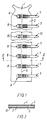
- Fig. 1 shows schematically a device 1 according to the invention which is particularly suited for use in closing an incision in a body in connection with autopsy.
- the width of the device will typically be 12 to 20 cm and the length 60 to 80 cm, but the device might also have been made with a length up to 90 cm or up to 100 cm. If the device is too long for fitting a given body, the surplus length may simply be cut off.
- Fig. 2 which is a sectional view along the line II-II in Fig. 1, the device comprises a flexible sheet of material 2 with a surface 3 which is intended to face the body, and an opposite surface 4 which is intended to turn away from the body.
- An adhesive 5 has been applied to the body facing surface, said adhesive being covered by a sheet of release paper or foil 16, for instance in form of waxed or siliconized paper or foil.
- the device 1 is adhesively attached to the body in such a way that it is positioned on both sides of the incision trace 6, illustrated by a broken line in Fig. 1.
- a row of closing means 7 On one side of the incision trace a row of closing means 7 has been provided which cooperates with a row of closing means 8 arranged on the other side of the incision trace 6, one means 7i positioned on one side of the incision trace cooperating with a means 8i positioned oppositely on the other side of the incision trace.
- the closing means 7, 8 are designed in such a way that the two means 7i, 8i in a pair independently of the other pairs of mutually cooperating means may be brought into operative connection with each other for closing of the incision.
- FIG. 3 Further details of the closing means 7,8 shown in Fig. 1 appear from Figs. 3 and 4.
- the closing means 7 is equipped with a strap-like element 11, the full length of which is not shown in Fig. 3.
- the closing means 8 is equipped with an eye- or loop-shaped guiding device 12, through which the strap-like element may be passed, following which it is then taken back in direction towards the closing means 7, such that a pull in the strap-like element 11 in this direction will subject the closing means 7, 8 to in a direction towards each other simultaneously acting incision closing forces substantially without any other impact on the area around the incision in the direction of the incision trace than what might be necessary for bringing the two means of a pair in line with each other.
- This pull may be exerted by one hand, which leaves the other hand of the surgeon free to bear against the body, which is not least of considerable importance when closing a longitudinal incision in a body in connection with autopsy.
- the strap-like element 11 is on the side not shown equipped with locking means 9 in form of a row of transverse ribs 18 (indicated by broken lines), which when the strap-like element 11 is passed through the slot formed by the eye or loop 12 is brought into engagement with a catch protrusion 10, whereby the means 7, 8 are locked relative to each other.
- the ribs 18 do not have to be spaced with the same distance, but may for instance be placed with a shorter distance on the interior part, where the final tightening takes place. It may also just be a question of separate ribs arranged in predetermined locking positions. The locking may be released by a continued pull in the strap-like element 11.
- the strap-like element 11 is provided with a hole 13 which when the strap-like element is bent backwards, away from the incision trace, may be brought into engagement with a tap 14 on the means 7. In this way the strap-like element 11 is safely kept away from the incision trace while the incision is being made.
- the means 7 is made from a material which is sufficiently resilient to make the transition between the fixed part 17 of the means 7 and the strap-like element act like a hinge. Nylon, polyethylene, and polypropylene are examples of such materials.
- the fixed part 17 of the means 7 is provided with a pair of protrusions 15 serving as guides for the scalpel, while the incision is being made, the backwards bent strap-like element 11 being protected at the same time.
- Fig. 5 is a lateral view of the closing means according to Fig. 3 in closed condition. If desired, the strap-like element may be shortened after the closing has taken place.
- Fig. 6 and 7 illustrate an alternative embodiment of the closing means according to the invention, elements having the same function as elements shown in Figs. 1-5 being indicated by the same reference numerals for the sake of simplicity.
- the means for releasable closing of the closing means of a pair are a row of holes 9 arranged in the strap-like element 11, which, as shown in Fig. 7, is brought into engagement with a tap 10 on the means 7 with the strap-like element, the strap-like element having been passed through an eye or loop 12 on the means 8.
- the locking may be released by a continued pull in the strap-like element 11 in the direction of the arrow shown in Fig. 7.
- the holes 9 and the tap 10 may optionally be designed in such manner that they may both be used for keeping the strap-like element 11 free of the incision trace, while the incision is being made, and for locking of the means 7, 8 relative to each other after the passing of the strap-like element 11 around the eye or loop 12.
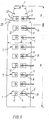
- Fig. 8 shows the device according to Fig. 1 but after it has been used for closing an incision tracewise of a body in connection with autopsy. It will be seen how the incision line and the closing means which have been used for closing the incision are covered by a further sheet of material 22 adhesively attached to the device 1. It is moreover seen how the device 1 comprises a substantially rectangular elongate portion A which at one end merges into a portion B having side lines converging towards the centre line, which portion ends in a neck portion C with an obliquely outwards directed flap portion 19, 20 on each side of the centre line. Furthermore, a indentation 21 is provided in the neck portion C for receiving the curvature of a neck.
- Figs. 9 and 10 show in combination another embodiment of the device according to the invention, in which the neck portion C is formed as a separate unit.
- the neck portion C is substantially trapezoidal, as it has the shape of a trapezium, the corners of which at the base line of the trapezium being cut off and replaced by flap portions 19, 20 having a width of 1 - 2 cm.
- the device 1 comprises a substantially rectangular elongate portion A which at one end merges into a portion B with side lines converging towards the centre line.
- the ratio between the distance c, spanned by the flap portions 19, 20 and the intermediate part of the neck portion, and the width b of the portion B in Fig. 9, where the distance between the substantially converging side lines is smallest, is in the embodiment shown about 5.5, and the ratio between the width a of the portion A and the above-mentioned width b is about 2.
- the device 1 shown in Fig. 9 is in principle constructed in the same way as the device shown in Fig. 1, but the closing means are of another type.
- both the closing means 7 and the closing means 8 comprise a guiding device 12 of the type shown in Figs. 3 and 5, whereas the strap-like element 11 is formed as a separate unit intended to be passed through both the guiding device 12 on the closing means 8 and the guiding device 12 on the closing means 7.
- the strap-like element 11 is at one end provided with a stop member 24.
- the strap-like element 11 is provided with one or more ribs, by means of which it may be brought into locking engagement with the guiding device 12 on the opposite side of the incision trace 6.
- the closing means 7, 8 are designed with a comparatively large base to prevent delamination of the subjacent skin during the considerable impact of force occurring during the closing operation.
- the closing means are moreover arranged with a certain mutual spacing in a direction transversal to the incision trace, which does not only make it possible to tighten the tissue to the position, in which it was prior to the making of the incision, but to perform a further tightening, whereby the incision edges with the adhesively attached, flexible sheet of material and the subjacent skin are bent down into the incision area, and the upper surface of the edge areas of the sheet of material on each side of the incision trace abut each other, thereby contributing to an improved sealing.
- the edge area of the closing means 7, 8 facing the incision trace has been bevelled to facilitate the bending down in the incision area.
- edges running along the side lines of the portion B are provided with notches or indentations 23 for facilitating the adaptation to the contour of the body in the area in question.
- the notches or the indentations have been made by removal of a part of the sheet of material to reduce the risk of unintentional sticking together of the edges.
- Figs. 11 and 12 show additional flexible sheets of material 22, which are on one surface provided with a layer of a hydrocolloid-containing adhesive, which layer of adhesive is covered by a sheet of release paper or foil.
- the sheet of material shown in Fig. 11 is intended to be adhesively attached immediately over the incision area after closing of an incision by means of the device 1.
- the sheet of material shown in Fig. 12 is intended to be adhesively attached after the sheet of material shown in Fig. 11 and such that it covers said sheet of material and the closing means 7, 8.
- the device shown in Fig. 12 is in a similar way as the device 1 provided with notches or indentations 23 in the side edge at the end intended to face the neck.
Landscapes
- Health & Medical Sciences (AREA)
- Life Sciences & Earth Sciences (AREA)
- Surgery (AREA)
- Public Health (AREA)
- Heart & Thoracic Surgery (AREA)
- Medical Informatics (AREA)
- Molecular Biology (AREA)
- Biomedical Technology (AREA)
- Animal Behavior & Ethology (AREA)
- General Health & Medical Sciences (AREA)
- Engineering & Computer Science (AREA)
- Veterinary Medicine (AREA)
- Nuclear Medicine, Radiotherapy & Molecular Imaging (AREA)
- Materials For Medical Uses (AREA)
- Surgical Instruments (AREA)
- Slot Machines And Peripheral Devices (AREA)
- Manufacture, Treatment Of Glass Fibers (AREA)
- Molding Of Porous Articles (AREA)
- Harvester Elements (AREA)
- Portable Nailing Machines And Staplers (AREA)
- Cable Accessories (AREA)
Claims (41)
- Vorrichtung (1), die zur Verwendung beim Schließen eines Schnittes in einem Körper in Verbindung mit Autopsie und insbesondere eines Längsschnittes entlang der Zentrallinie des Körpers geeignet ist, wobei die Vorrichtung zumindest einen flexiblen Materialbogen (2) mit einer Oberfläche (3), die dazu bestimmt ist, zu dem Körper zu weisen, und einer gegenüberliegenden Oberfläche (4) umfasst, die dazu bestimmt ist, von dem Körper wegzuweisen, wobei die zu dem Körper weisende Oberfläche mit einem Klebstoff (5) versehen ist, mit dem die Vorrichtung an dem Körper derart angeklebt werden kann, dass die Vorrichtung auf beiden Seiten der Schnittspur (6) vorhanden ist, und wobei die Vorrichtung zwei Reihen miteinander zusammenwirkender Mittel (7, 8) zum Gebrauch zum Schließen des Schnittes umfasst, wobei die Reihen an Verschlussmitteln auf jeder Seite der Schnittspur (6) vorhanden sind und ermöglichen, dass der Schnitt nach einer Klebebefestigung der Vorrichtung ausgeführt werden kann, dadurch gekennzeichnet, dass der zumindest eine Materialbogen (2) einen Abschnitt (C) umfasst, der dazu bestimmt ist, an dem Halsbereich des Körpers angeklebt zu werden, wobei der Halsabschnitt (C) einen sich auswärts erstreckenden Klappenabschnitt (19, 20) auf jeder Seite einer Linie entsprechend der Zentrallinie des Körpers umfasst, und dass der zumindest eine Materialbogen (2) an dem Ende, das zu dem Halsabschnitt (C) weist, einen Abschnitt (B) umfasst, dessen Seitenlinien in einer Richtung zu dem Halsabschnitt (C) im wesentlichen in Richtung der Linie entsprechend der Zentrallinie des Körpers konvergieren.
- Vorrichtung nach Anspruch 1,
dadurch gekennzeichnet, dass
die sich auswärts erstreckenden Klappenabschnitte (19, 20) eine solche Länge aufweisen, dass sie zusammen mit dem Zwischenteil des Halsabschnittes eine Distanz (c) von zumindest 25 cm, vorzugsweise zumindest 35 cm und insbesondere eine Distanz von 40 - 55 cm überspannen. - Vorrichtung nach einem der Ansprüche 1 oder 2,
dadurch gekennzeichnet, dass
das Verhältnis zwischen der Distanz (c), die von den sich auswärts erstreckenden Klappenabschnitten (19, 20) und dem Zwischenteil des Halsabschnittes überspannt wird, und der Breite (b) des Abschnittes (B), wo die Distanz zwischen den im wesentlichen konvergierenden Seitenlinien am kleinsten ist, etwa 1,5 oder mehr beträgt. - Vorrichtung nach einem der vorhergehenden Ansprüche,
dadurch gekennzeichnet, dass
sich die Klappenabschnitte (19, 20) schräg auswärts und aufwärts relativ zu einer Linie entsprechend der Zentrallinie des Körpers bzw. relativ zu der Orientierung des Körpers in aufrechter Stellung gesehen erstrecken. - Vorrichtung nach einem der vorhergehenden Ansprüche,
dadurch gekennzeichnet, dass
der Halsabschnitt (C) als eine separate Einheit ausgebildet ist. - Vorrichtung nach einem der vorhergehenden Ansprüche,
dadurch gekennzeichnet, dass
der Halsabschnitt (C) im Wesentlichen trapezförmig ist. - Vorrichtung nach einem der vorhergehenden Ansprüche,
dadurch gekennzeichnet, dass der Halsabschnitt (C) mit einer Vertiefung (21) zur Aufnahme der Krümmung eines Halses versehen ist. - Vorrichtung nach Anspruch 6,
dadurch gekennzeichnet, dass die Ränder, die entlang der Seitenlinien des Abschnittes (B) verlaufen, mit Kerben oder Vertiefungen (23) versehen sind. - Vorrichtung nach Anspruch 8,
dadurch gekennzeichnet, dass
die Kerben oder die Vertiefungen (23) durch Entfernen eines Teils des Materialbogens (2) gebildet werden. - Vorrichtung nach einem der vorhergehenden Ansprüche,
dadurch gekennzeichnet, dass
der zumindest eine Materialbogen (2) an dem Ende, das von dem Halsabschnitt (C) wegweist, einen im Wesentlichen rechteckigen länglichen Abschnitt (A) umfasst. - Vorrichtung nach Anspruch 10,
dadurch gekennzeichnet, dass
das Verhältnis zwischen der Breite (a) des Abschnittes (A) und der Breite (b) des Abschnittes (B), wo die Distanz zwischen den im wesentlichen konvergierenden Seitenlinien am kleinsten ist, etwa 1,2 oder mehr, vorzugsweise etwa 1,5 oder mehr und insbesondere 1,5 bis 2,5 beträgt. - Vorrichtung nach einem der vorhergehenden Ansprüche,
dadurch gekennzeichnet, dass
die Verschlussmittel (7, 8) in Paaren zusammenwirken, wobei ein Mittel (7i), das auf einer Seite der Schnittspur positioniert ist, mit einem Mittel (8i) zusammenwirkt, das gegenüberliegend auf der anderen Seite der Schnittspur positioniert ist, und die beiden Mittel eines Paares unabhängig von den verbleibenden Paaren an zusammenwirkenden Mitteln wirksam zum Schließen des Schnittes verbunden werden können. - Vorrichtung nach Anspruch 12,
dadurch gekennzeichnet, dass
das Verschlussmittel eines Paares mit Mitteln (9, 10) versehen ist, um die Verschlussmittel relativ zueinander während des Verschlussvorganges freigebbar zu verriegeln. - Vorrichtung nach Anspruch 12 oder 13,
dadurch gekennzeichnet, dass
ein Mittel eines Paares ein riemenartiges Element (11) umfasst, und das andere Mittel eines Paares eine Führungsvorrichtung (12) umfasst, um oder durch die das riemenartige Element geführt werden kann, so dass ein Ziehen an dem riemenartigen Element zur Folge hat, dass eine Kraft zum Schließen eines Schnittes erzeugt wird, im Wesentlichen ohne dass eine andere Einwirkung auf den Bereich um den Schnitt in der Richtung der Schnittspur erzeugt wird, als es erforderlich wäre, um die beiden Mittel eines Paares in Linie zueinander zu bringen. - Vorrichtung nach Anspruch 14,
dadurch gekennzeichnet, dass
das Verschlussmittel mit dem riemenartigen Element mit Mitteln (13, 14) versehen ist, um das riemenartige Element während der Ausbildung des Schnittes weg von der Schnittspur zu halten. - Vorrichtung nach Anspruch 15,
dadurch gekennzeichnet, dass
die Mittel (13, 14), um das riemenartige Element weg von der Schnittspur während der Ausbildung des Schnittes zu halten, die Form einer Anordnung aus Dorn und Stichloch, einer Anordnung aus Knopf und Knopfloch, einer Klemmvorrichtung, einer Schnappbefestigungseinrichtung, eines Riemens, eines Klebebandes, eines Klebstoffes und/oder "Velcro" (Klettverschluss) aufweist. - Vorrichtung nach Anspruch 14,
dadurch gekennzeichnet, dass
das Verschlussmittel mit dem riemenartigen Element (11) mit Mitteln 15 versehen ist, um das Schnittwerkzeug weg von dem riemenartigen Element während der Ausbildung des Schnittes zu halten. - Vorrichtung nach einem der vorhergehenden Ansprüche,
dadurch gekennzeichnet, dass
die Verschlussmittel (7, 8) mit einem gegenseitigen Abstand von zumindest 15 mm und vorzugsweise zumindest 20 mm in einer Richtung quer zu der Schnittspur angeordnet sind. - Vorrichtung nach einem der vorhergehenden Ansprüche,
dadurch gekennzeichnet, dass
die Breite der Basis des Verschlussmittels (7, 8) zumindest 15 mm, vorzugsweise zumindest 20 mm und insbesondere zumindest 25 mm beträgt, und dass die Länge der Basis des Verschlussmittels (7, 8) zumindest 15 mm, vorzugsweise zumindest 20 mm und insbesondere zumindest 25 mm beträgt. - Vorrichtung nach einem der vorhergehenden Ansprüche,
dadurch gekennzeichnet, dass
der Randbereich der Basis des Verschlussmittels (7, 8), der zu der Schnittspur weist, flexibel ist. - Vorrichtung nach einem der vorhergehenden Ansprüche,
dadurch gekennzeichnet, dass
eines der Verschlussmittel (7, 8) ein riemenartiges Element (11) umfasst, das mit zumindest zwei Rippen oder Nocken (18) versehen ist, von denen eine einer vollständig geschlossenen Position und die andere einer Zwischenposition entspricht, und dass das andere der Verschlussmittel (7, 8) eine Rastschnalle umfasst. - Vorrichtung nach Anspruch 21,
dadurch gekennzeichnet, dass
das riemenartige Element und die Rastschnalle zumindest 2 mm entfernt von dem Rand der Basis des Verschlussmittels, der zu der Schnittspur weist, befestigt sind. - Vorrichtung nach einem der vorhergehenden Ansprüche,
dadurch gekennzeichnet, dass
die miteinander zusammenwirkenden Mittel (7, 8) Führungsvorrichtungen (12), die auf jeder Seite der Schnittspur positioniert sind, und separate riemenartige Elemente (11) umfassen, mit denen die miteinander zusammenwirkenden Mittel (7, 8) paarweise in wirksame Verbindung miteinander gebracht werden können, um den Schnitt zu schließen, wobei die riemenartigen Elemente (11) mit einem Stoppelement (24), das dazu ausgebildet ist, um zu verhindern, dass das riemenartige Element quer durch die Führungsvorrichtung (12) auf einer Seite der Schnittspur läuft, und mit Mitteln versehen sind, um diese in Verriegelungseingriff mit der Führungsvorrichtung (12) auf der anderen Seite der Schnittspur in zumindest einer Position zu bringen. - Vorrichtung nach einem der Ansprüche 12 - 23,
dadurch gekennzeichnet, dass
die Verschlussmittel (7, 8) so ausgebildet sind, dass es, wenn die beiden Mittel (7i, 8i) eines Paares in wirksame Verbindung miteinander gebracht worden sind, möglich ist, durch Ziehen mit einer Hand an einem der Mittel des Paares an beide Mittel des Paares in einer Richtung zueinander simultan wirkende Kräfte zum Schließen eines Schnittes anzulegen, im Wesentlichen ohne dass eine andere Einwirkung auf den Bereich um den Schnitt herum in der Richtung der Schnittspur erfolgt, als es erforderlich wäre, um die beiden Mittel des Paares in Linie zueinander zu bringen. - Vorrichtung nach einem der Ansprüche 13 - 24,
dadurch gekennzeichnet, dass
die Mittel (9, 10) zur freigebbaren Verriegelung der Mittel eines Paares vom Typ mit Rastschnalle, Gurtschnalle, Hakenschnalle, Knopf und Knopfloch, Dorn und Stichloch, Schnappbefestigung oder "Velcro" (Klettverschluss) sind. - Vorrichtung nach einem der Ansprüche 13 - 25,
dadurch gekennzeichnet, dass
die Mittel (9, 10) zur freigebbaren Verriegelung der Verschlussmittel eines Paares an dem Verschlussmittel mit dem riemenartigen Element (11) positioniert sind. - Vorrichtung nach einem der Ansprüche 13 - 26,
dadurch gekennzeichnet, dass
die Mittel (9, 10) zur freigebbaren Verriegelung der Mittel eines Paares teilweise auf einem Mittel des Paares und teilweise auf dem anderen vorgesehen sind. - Vorrichtung nach einem der Ansprüche 12 - 27,
dadurch gekennzeichnet, dass
die Verriegelung der Mittel eines Paares relativ zueinander im Wesentlichen ohne irgendeine Zugkraft in einer Richtung rechtwinklig zu der Ebene des Materialbogens freigegeben werden kann. - Vorrichtung nach Anspruch 28,
dadurch gekennzeichnet, dass
die Verriegelung durch ein kontinuierliches Ziehen an einem der Mittel des Paares freigegeben werden kann. - Vorrichtung nach einem der vorhergehenden Ansprüche,
dadurch gekennzeichnet, dass
der Materialbogen (2) in dem Bereich kontinuierlich ist, in dem der Schnitt ausgeführt wird. - Vorrichtung nach einem der vorhergehenden Ansprüche,
dadurch gekennzeichnet, dass
der Materialbogen (2) aus einer Folie aus Polyurethan, EVA (Ethylenvinylacetat) mit einem hohen Gehalt an Vinylacetat, chloriertem Polyethylen oder Weich-PVC besteht. - Vorrichtung nach einem der vorhergehenden Ansprüche,
dadurch gekennzeichnet, dass
der Klebstoff (5) ein hydrokolloidhaltiger Klebstoff ist. - Vorrichtung nach einem der vorhergehenden Ansprüche,
dadurch gekennzeichnet, dass
der Klebstoff an der zu dem Körper weisenden Oberfläche mit einem Bogen an Schutz- / Abziehpapier oder -folie (16) bedeckt ist. - Vorrichtung nach einem der vorhergehenden Ansprüche,
dadurch gekennzeichnet, dass
der Halsabschnitt (C) mit zwei Reihen miteinander zusammenwirkender Mittel (7, 8) versehen ist, die sich in die auswärtsgerichteten Klappen (19, 20) zum Gebrauch beim Schließen eines Schnittes erstrecken, der quer zu der Zentrallinie eines Körpers verläuft. - Satz mit einer Vorrichtung gemäß einem der vorhergehenden Ansprüche, wie auch einem flexiblen, vorzugsweise hautfarbenen und vorzugsweise nicht transparenten weiteren Materialbogen (22) mit solchen Abmessungen, dass nach dem Schließen eines Schnittes mittels der Vorrichtung dieser den Schnittbereich und vorzugsweise auch die Verschlussmittel (7, 8) bedecken kann, wobei eine Klebstofflage auf eine Oberfläche des weiteren Materialbogens aufgetragen worden ist, wobei die Klebstofflage mit einem Bogen an Schutz- / Abziehpapier oder -folie bedeckt ist.
- Satz nach Anspruch 35,
dadurch gekennzeichnet, dass
ferner zwei weitere Materialbögen (22) vorgesehen sind, wobei der erste derartige Abmessungen aufweist, dass er nach einem Schließen eines Schnittes mittels der Vorrichtung den Schnittbereich bedecken kann, und der andere derartige Abmessungen aufweist, dass er nach einem Schließen eines Schnittes mittels der Vorrichtung und nachdem der erste weitere Materialbogen über den Schnittbereich angeklebt worden ist, die Verschlussmittel (7, 8) bedecken kann. - Satz nach Anspruch 35 oder 36,
dadurch gekennzeichnet, dass
der zumindest eine der weiteren Materialbögen (22) mit einem Klebstoff versehen worden ist, wie in Anspruch 32 angegeben ist. - Satz nach einem der vorhergehenden Ansprüche 35 - 37, dadurch gekennzeichnet, dass
der weitere Materialbogen (22) oder zumindest einer der weiteren Materialbögen (22) unmittelbar über dem Schnittbereich mit einer Klebstofflage versehen worden ist, die dicker, vorzugsweise zumindest doppelt so dick und insbesondere zumindest 3 - 5 mal so dick wie die Klebstofflage an der Vorrichtung selbst ist. - Satz nach einem der vorhergehenden Ansprüche 35 - 38,
dadurch gekennzeichnet, dass
dieser einen weiteren Materialbogen (22) mit solchen Abmessungen umfasst, dass er nach einem Schließen eines Schnittes mittels der Vorrichtung (1) den Schnittbereich und die Verschlussmittel im Wesentlichen bedecken kann, wobei der weitere Materialbogen abgerundete Ecken an dem Ende aufweist, das dazu bestimmt ist, zu dem Hals zu weisen, und an diesem Ende mit Kerben oder Vertiefungen (23) in dem Seitenrand versehen ist. - Satz nach Anspruch 39,
dadurch gekennzeichnet, dass
die Kerben oder die Vertiefungen (23) durch Entfernung eines Teiles des Materialbogens (2) ausgebildet sind. - Verfahren zum Schließen eines Schnittes in einem Körper in Verbindung mit Autopsie, insbesondere eines Längsschnittes entlang der Zentrallinie des Körpers,
dadurch gekennzeichnet, dass
vor der Ausbildung des Schnittes eine Vorrichtung (1) gemäß einem der Ansprüche 1 - 34 an den Körper so geklebt wird, dass die Vorrichtung auf beiden Seiten der beabsichtigten Schnittspur (6) positioniert ist, wobei die beiden Reihen miteinander zusammenwirkender Mittel (7, 8) auf jeder Seite der Schnittspur positioniert sind, und der Halsabschnitt (C) in dem Halsbereich des Körpers angeklebt ist, wobei die sich auswärts erstreckenden Klappen (19, 20) um den Hals möglicherweise in einer solchen Art und Weise angeordnet sind, dass sie sich überlappen, dass nach der Ausbildung des Schnittes die miteinander zusammenwirkenden Mittel in wirksame Verbindung miteinander gebracht werden, um den Schnitt zu schließen, wobei die Mittel, die in Paaren zusammenwirken, gegebenenfalls abwechselnd für ein gesteuertes allmähliches Schließen des Schnittes unter freigebbarem Verriegeln in zumindest eine Zwischenposition betätigt werden, und sich der Verriegelungsvorgang gegebenenfalls über die Startposition hinaus fortsetzt, so dass die Schnittränder mit dem angeklebten Materialbogen und die darunterliegende Haut abwärts in den Schnittbereich gebogen werden, so dass die Randbereiche des Materialbogens auf jeder Seite der Schnittspur aneinander anstoßen, und dass gegebenenfalls nach einem möglichen Überstreifen der oberen Seite der Vorrichtung eine oder mehrere weitere Materialbögen (22), wie in den Ansprüchen 35 - 40 angegeben ist, zur Bedeckung des Schnittbereiches und vorzugsweise auch der Verschlussmittel (7, 8) angeklebt werden.
Applications Claiming Priority (3)
| Application Number | Priority Date | Filing Date | Title |
|---|---|---|---|
| DK28195 | 1995-03-20 | ||
| DK28195 | 1995-03-20 | ||
| PCT/DK1996/000098 WO1996029013A1 (en) | 1995-03-20 | 1996-03-08 | A device suitable for use in closing an incision in a body in connection with autopsy and a method for closing such incision |
Publications (2)
| Publication Number | Publication Date |
|---|---|
| EP0957774A1 EP0957774A1 (de) | 1999-11-24 |
| EP0957774B1 true EP0957774B1 (de) | 2002-06-12 |
Family
ID=8091796
Family Applications (1)
| Application Number | Title | Priority Date | Filing Date |
|---|---|---|---|
| EP96905758A Expired - Lifetime EP0957774B1 (de) | 1995-03-20 | 1996-03-08 | Vorrichtung und verfahren geeignet zum schliessen eines körpereinschnitts während einer autopsie |
Country Status (7)
| Country | Link |
|---|---|
| EP (1) | EP0957774B1 (de) |
| AT (1) | ATE218837T1 (de) |
| AU (1) | AU4939096A (de) |
| DE (1) | DE69621846T2 (de) |
| DK (1) | DK0957774T3 (de) |
| NO (1) | NO974329L (de) |
| WO (1) | WO1996029013A1 (de) |
Cited By (1)
| Publication number | Priority date | Publication date | Assignee | Title |
|---|---|---|---|---|
| CN104490434A (zh) * | 2014-12-03 | 2015-04-08 | 江门市富美尔环保电子科技有限公司 | 医用缝合拉扣 |
Families Citing this family (26)
| Publication number | Priority date | Publication date | Assignee | Title |
|---|---|---|---|---|
| US8157839B2 (en) | 2004-08-31 | 2012-04-17 | Wadsworth Medical Technologies, Inc. | Systems and methods for closing a tissue opening |
| EP2502569A3 (de) | 2006-03-31 | 2013-04-17 | Nanyang Technological University | Gewebeentnahmekit |
| US20090264709A1 (en) | 2008-04-21 | 2009-10-22 | Plexus Biomedical, Inc. | Method and Apparatus for Retention of Adipose Tissue |
| EP2477559A4 (de) | 2009-09-17 | 2015-05-27 | Zipline Medical Inc | Schnellschliessende chirurgische verschlussvorrichtung |
| US10159825B2 (en) | 2009-09-17 | 2018-12-25 | Zipline Medical, Inc. | Rapid closing surgical closure device |
| AU2011267977B2 (en) | 2010-06-14 | 2015-02-05 | Zipline Medical, Inc. | Methods and apparatus for inhibiting scar formation |
| US20120167360A1 (en) * | 2011-01-04 | 2012-07-05 | Phyliss Dralle | Post mortem sheet and method |
| CA2834930C (en) * | 2011-05-03 | 2019-04-30 | Wadsworth Medical Technologies, Inc. | Devices for securely closing tissue openings with minimized scarring |
| US10123801B2 (en) | 2011-11-01 | 2018-11-13 | Zipline Medical, Inc. | Means to prevent wound dressings from adhering to closure device |
| US12171432B2 (en) | 2011-11-01 | 2024-12-24 | Zipline Medical, Inc. | Closure apparatuses and methods for ulcers and irregular skin defects |
| US9050086B2 (en) | 2011-11-01 | 2015-06-09 | Zipline Medical, Inc. | Surgical incision and closure apparatus |
| US8323313B1 (en) * | 2011-11-01 | 2012-12-04 | Zipline Medical, Inc. | Surgical incision and closure apparatus with integrated force distribution |
| US10123800B2 (en) | 2011-11-01 | 2018-11-13 | Zipline Medical, Inc. | Surgical incision and closure apparatus with integrated force distribution |
| US9561034B2 (en) | 2011-11-01 | 2017-02-07 | Zipline Medical, Inc. | Surgical incision and closure apparatus |
| JP6240205B2 (ja) * | 2012-10-31 | 2017-11-29 | ジップライン メディカル, インコーポレイテッドZipline Medical, Inc. | 外科手術用切開および閉鎖装置 |
| US8684954B1 (en) | 2013-03-14 | 2014-04-01 | Plexus Biomedical, Inc. | Labor management devices for decreasing the incidence of Cesarean childbirth |
| CN105873525A (zh) | 2014-01-05 | 2016-08-17 | 奇普林医药公司 | 仪表化伤口闭合装置 |
| US9662112B2 (en) * | 2014-02-10 | 2017-05-30 | Alan E. Nash | System for closing a wound |
| CN103948407B (zh) * | 2014-05-20 | 2016-03-02 | 李绪国 | 一种创口闭合器 |
| US10080520B2 (en) | 2015-02-27 | 2018-09-25 | Stetrix, Inc. | Labor monitoring of pelvic floor |
| CN106214199A (zh) * | 2016-10-11 | 2016-12-14 | 常州纳森医疗器械有限公司 | 一种无针皮肤吻合器 |
| WO2018081795A1 (en) | 2016-10-31 | 2018-05-03 | Zipline Medical, Inc. | Systems and methods for monitoring physical therapy of the knee and other joints |
| US9993382B1 (en) | 2017-07-10 | 2018-06-12 | Stetrix, Inc. | Tissue retention systems and methods |
| GB2574074B (en) | 2018-07-27 | 2020-05-20 | Mclaren Applied Tech Ltd | Time synchronisation |
| US12096937B2 (en) | 2019-04-25 | 2024-09-24 | Dq Holdings, Llc | Skin closure devices |
| GB2588236B (en) | 2019-10-18 | 2024-03-20 | Mclaren Applied Ltd | Gyroscope bias estimation |
Family Cites Families (5)
| Publication number | Priority date | Publication date | Assignee | Title |
|---|---|---|---|---|
| US3698395A (en) * | 1971-03-12 | 1972-10-17 | Harrith M Hasson | Surgical closure |
| US3971384A (en) * | 1971-03-12 | 1976-07-27 | Hasson Harrith M | Surgical closure |
| US3926193A (en) * | 1971-12-17 | 1975-12-16 | Harrith M Hasson | Surgical closure having ease of assembly |
| US4531521A (en) * | 1983-03-03 | 1985-07-30 | Haverstock Charles B | Skin closure means |
| US4976726A (en) * | 1989-04-27 | 1990-12-11 | Haverstock Charles B | Skin closure devices |
-
1996
- 1996-03-08 DK DK96905758T patent/DK0957774T3/da active
- 1996-03-08 WO PCT/DK1996/000098 patent/WO1996029013A1/en not_active Ceased
- 1996-03-08 AU AU49390/96A patent/AU4939096A/en not_active Abandoned
- 1996-03-08 AT AT96905758T patent/ATE218837T1/de not_active IP Right Cessation
- 1996-03-08 DE DE69621846T patent/DE69621846T2/de not_active Expired - Fee Related
- 1996-03-08 EP EP96905758A patent/EP0957774B1/de not_active Expired - Lifetime
-
1997
- 1997-09-19 NO NO974329A patent/NO974329L/no not_active Application Discontinuation
Cited By (1)
| Publication number | Priority date | Publication date | Assignee | Title |
|---|---|---|---|---|
| CN104490434A (zh) * | 2014-12-03 | 2015-04-08 | 江门市富美尔环保电子科技有限公司 | 医用缝合拉扣 |
Also Published As
| Publication number | Publication date |
|---|---|
| EP0957774A1 (de) | 1999-11-24 |
| AU4939096A (en) | 1996-10-08 |
| DE69621846T2 (de) | 2002-12-19 |
| DK0957774T3 (da) | 2002-07-15 |
| DE69621846D1 (de) | 2002-07-18 |
| ATE218837T1 (de) | 2002-06-15 |
| NO974329D0 (no) | 1997-09-19 |
| WO1996029013A1 (en) | 1996-09-26 |
| NO974329L (no) | 1997-11-20 |
Similar Documents
| Publication | Publication Date | Title |
|---|---|---|
| EP0957774A1 (de) | Vorrichtung und verfahren geeignet zum schliessen eines körpereinschnitts während einer autorsie | |
| US6187126B1 (en) | Method for making a refastenable tube and cable restraint | |
| US5891077A (en) | Thin film wound dressing with removable foraminous backing layer | |
| JP7296028B2 (ja) | 力変調組織ブリッジ、関連するツール、キット、および方法 | |
| US4038989A (en) | Surgical skin closure | |
| CA1230027A (en) | Retractors | |
| US11805972B2 (en) | Wound closure system | |
| JP2007505664A (ja) | オストミー装置の連結 | |
| US5968024A (en) | Ostomy appliance and wound drainage device with self adhering drain system | |
| US20030153882A1 (en) | Ostomy pouch with bias members and closure means | |
| WO2006124671A2 (en) | Dynamic tensioning system and method | |
| EP0835085A1 (de) | Elastische kniehülle | |
| CA2244017A1 (en) | Moisture-curable adhesive suture strip | |
| KR101564648B1 (ko) | 봉합장치 | |
| KR20140123101A (ko) | 수술용 스테이플 라인 보강부를 공급하는 장치 | |
| KR20190084257A (ko) | 상처 봉합 조성물 및 상처 봉합 조성물로 제조된 상처 봉합 장치 | |
| WO2014126843A2 (en) | System for closing a wound | |
| EP2863854B1 (de) | Wundverschlussvorrichtung | |
| EP0353904A1 (de) | Anus Praeter-System | |
| JPS59501446A (ja) | 包帯を患者に適用するための装置 | |
| US20160184553A1 (en) | A plaster device | |
| KR20230106482A (ko) | 배액관 고정용 피부 봉합 유지기 | |
| CN215839067U (zh) | 一种采血辅助装置 | |
| JP3621138B2 (ja) | 傷口封鎖装置 | |
| JP2006158715A (ja) | 装具用ストラップ |
Legal Events
| Date | Code | Title | Description |
|---|---|---|---|
| PUAI | Public reference made under article 153(3) epc to a published international application that has entered the european phase |
Free format text: ORIGINAL CODE: 0009012 |
|
| 17P | Request for examination filed |
Effective date: 19970909 |
|
| AK | Designated contracting states |
Kind code of ref document: A1 Designated state(s): AT BE CH DE DK ES FI FR GB GR IE IT LI LU NL PT SE |
|
| GRAG | Despatch of communication of intention to grant |
Free format text: ORIGINAL CODE: EPIDOS AGRA |
|
| 17Q | First examination report despatched |
Effective date: 20010517 |
|
| GRAG | Despatch of communication of intention to grant |
Free format text: ORIGINAL CODE: EPIDOS AGRA |
|
| GRAG | Despatch of communication of intention to grant |
Free format text: ORIGINAL CODE: EPIDOS AGRA |
|
| GRAH | Despatch of communication of intention to grant a patent |
Free format text: ORIGINAL CODE: EPIDOS IGRA |
|
| GRAH | Despatch of communication of intention to grant a patent |
Free format text: ORIGINAL CODE: EPIDOS IGRA |
|
| GRAA | (expected) grant |
Free format text: ORIGINAL CODE: 0009210 |
|
| AK | Designated contracting states |
Kind code of ref document: B1 Designated state(s): AT BE CH DE DK ES FI FR GB GR IE IT LI LU NL PT SE |
|
| PG25 | Lapsed in a contracting state [announced via postgrant information from national office to epo] |
Ref country code: NL Free format text: LAPSE BECAUSE OF FAILURE TO SUBMIT A TRANSLATION OF THE DESCRIPTION OR TO PAY THE FEE WITHIN THE PRESCRIBED TIME-LIMIT Effective date: 20020612 Ref country code: LI Free format text: LAPSE BECAUSE OF FAILURE TO SUBMIT A TRANSLATION OF THE DESCRIPTION OR TO PAY THE FEE WITHIN THE PRESCRIBED TIME-LIMIT Effective date: 20020612 Ref country code: IT Free format text: LAPSE BECAUSE OF FAILURE TO SUBMIT A TRANSLATION OF THE DESCRIPTION OR TO PAY THE FEE WITHIN THE PRESCRIBED TIME-LIMIT;WARNING: LAPSES OF ITALIAN PATENTS WITH EFFECTIVE DATE BEFORE 2007 MAY HAVE OCCURRED AT ANY TIME BEFORE 2007. THE CORRECT EFFECTIVE DATE MAY BE DIFFERENT FROM THE ONE RECORDED. Effective date: 20020612 Ref country code: GR Free format text: LAPSE BECAUSE OF FAILURE TO SUBMIT A TRANSLATION OF THE DESCRIPTION OR TO PAY THE FEE WITHIN THE PRESCRIBED TIME-LIMIT Effective date: 20020612 Ref country code: FI Free format text: LAPSE BECAUSE OF FAILURE TO SUBMIT A TRANSLATION OF THE DESCRIPTION OR TO PAY THE FEE WITHIN THE PRESCRIBED TIME-LIMIT Effective date: 20020612 Ref country code: CH Free format text: LAPSE BECAUSE OF FAILURE TO SUBMIT A TRANSLATION OF THE DESCRIPTION OR TO PAY THE FEE WITHIN THE PRESCRIBED TIME-LIMIT Effective date: 20020612 Ref country code: BE Free format text: LAPSE BECAUSE OF FAILURE TO SUBMIT A TRANSLATION OF THE DESCRIPTION OR TO PAY THE FEE WITHIN THE PRESCRIBED TIME-LIMIT Effective date: 20020612 Ref country code: AT Free format text: LAPSE BECAUSE OF FAILURE TO SUBMIT A TRANSLATION OF THE DESCRIPTION OR TO PAY THE FEE WITHIN THE PRESCRIBED TIME-LIMIT Effective date: 20020612 |
|
| REF | Corresponds to: |
Ref document number: 218837 Country of ref document: AT Date of ref document: 20020615 Kind code of ref document: T |
|
| REG | Reference to a national code |
Ref country code: GB Ref legal event code: FG4D |
|
| REG | Reference to a national code |
Ref country code: CH Ref legal event code: EP |
|
| REG | Reference to a national code |
Ref country code: DK Ref legal event code: T3 |
|
| REF | Corresponds to: |
Ref document number: 69621846 Country of ref document: DE Date of ref document: 20020718 |
|
| REG | Reference to a national code |
Ref country code: IE Ref legal event code: FG4D |
|
| PG25 | Lapsed in a contracting state [announced via postgrant information from national office to epo] |
Ref country code: SE Free format text: LAPSE BECAUSE OF FAILURE TO SUBMIT A TRANSLATION OF THE DESCRIPTION OR TO PAY THE FEE WITHIN THE PRESCRIBED TIME-LIMIT Effective date: 20020912 |
|
| PG25 | Lapsed in a contracting state [announced via postgrant information from national office to epo] |
Ref country code: PT Free format text: LAPSE BECAUSE OF FAILURE TO SUBMIT A TRANSLATION OF THE DESCRIPTION OR TO PAY THE FEE WITHIN THE PRESCRIBED TIME-LIMIT Effective date: 20020916 |
|
| NLV1 | Nl: lapsed or annulled due to failure to fulfill the requirements of art. 29p and 29m of the patents act | ||
| ET | Fr: translation filed | ||
| PG25 | Lapsed in a contracting state [announced via postgrant information from national office to epo] |
Ref country code: ES Free format text: LAPSE BECAUSE OF FAILURE TO SUBMIT A TRANSLATION OF THE DESCRIPTION OR TO PAY THE FEE WITHIN THE PRESCRIBED TIME-LIMIT Effective date: 20021220 |
|
| REG | Reference to a national code |
Ref country code: CH Ref legal event code: PL |
|
| PG25 | Lapsed in a contracting state [announced via postgrant information from national office to epo] |
Ref country code: LU Free format text: LAPSE BECAUSE OF NON-PAYMENT OF DUE FEES Effective date: 20030308 |
|
| PLBE | No opposition filed within time limit |
Free format text: ORIGINAL CODE: 0009261 |
|
| STAA | Information on the status of an ep patent application or granted ep patent |
Free format text: STATUS: NO OPPOSITION FILED WITHIN TIME LIMIT |
|
| 26N | No opposition filed |
Effective date: 20030313 |
|
| PGFP | Annual fee paid to national office [announced via postgrant information from national office to epo] |
Ref country code: DK Payment date: 20081209 Year of fee payment: 14 |
|
| PGFP | Annual fee paid to national office [announced via postgrant information from national office to epo] |
Ref country code: IE Payment date: 20090318 Year of fee payment: 14 |
|
| PGFP | Annual fee paid to national office [announced via postgrant information from national office to epo] |
Ref country code: GB Payment date: 20090304 Year of fee payment: 14 |
|
| PGFP | Annual fee paid to national office [announced via postgrant information from national office to epo] |
Ref country code: DE Payment date: 20090306 Year of fee payment: 14 |
|
| PGFP | Annual fee paid to national office [announced via postgrant information from national office to epo] |
Ref country code: FR Payment date: 20090316 Year of fee payment: 14 |
|
| REG | Reference to a national code |
Ref country code: DK Ref legal event code: EBP |
|
| GBPC | Gb: european patent ceased through non-payment of renewal fee |
Effective date: 20100308 |
|
| REG | Reference to a national code |
Ref country code: IE Ref legal event code: MM4A |
|
| REG | Reference to a national code |
Ref country code: FR Ref legal event code: ST Effective date: 20101130 |
|
| PG25 | Lapsed in a contracting state [announced via postgrant information from national office to epo] |
Ref country code: IE Free format text: LAPSE BECAUSE OF NON-PAYMENT OF DUE FEES Effective date: 20100308 Ref country code: FR Free format text: LAPSE BECAUSE OF NON-PAYMENT OF DUE FEES Effective date: 20100331 |
|
| PG25 | Lapsed in a contracting state [announced via postgrant information from national office to epo] |
Ref country code: DE Free format text: LAPSE BECAUSE OF NON-PAYMENT OF DUE FEES Effective date: 20101001 |
|
| PG25 | Lapsed in a contracting state [announced via postgrant information from national office to epo] |
Ref country code: GB Free format text: LAPSE BECAUSE OF NON-PAYMENT OF DUE FEES Effective date: 20100308 |
|
| PG25 | Lapsed in a contracting state [announced via postgrant information from national office to epo] |
Ref country code: DK Free format text: LAPSE BECAUSE OF NON-PAYMENT OF DUE FEES Effective date: 20100331 |