EP0961480A1 - System zur Entscheidung des Inhalts eines Bildrahmens - Google Patents
System zur Entscheidung des Inhalts eines Bildrahmens Download PDFInfo
- Publication number
- EP0961480A1 EP0961480A1 EP99109331A EP99109331A EP0961480A1 EP 0961480 A1 EP0961480 A1 EP 0961480A1 EP 99109331 A EP99109331 A EP 99109331A EP 99109331 A EP99109331 A EP 99109331A EP 0961480 A1 EP0961480 A1 EP 0961480A1
- Authority
- EP
- European Patent Office
- Prior art keywords
- density
- picture frame
- naturally
- areas
- picture
- Prior art date
- Legal status (The legal status is an assumption and is not a legal conclusion. Google has not performed a legal analysis and makes no representation as to the accuracy of the status listed.)
- Granted
Links
Images


Classifications
-
- H—ELECTRICITY
- H04—ELECTRIC COMMUNICATION TECHNIQUE
- H04N—PICTORIAL COMMUNICATION, e.g. TELEVISION
- H04N1/00—Scanning, transmission or reproduction of documents or the like, e.g. facsimile transmission; Details thereof
- H04N1/38—Circuits or arrangements for blanking or otherwise eliminating unwanted parts of pictures
Definitions
- the present invention relates to a picture frame decision apparatus and a method for determining the density of each picture frame on a film. More specifically, the present invention is particularly designed for deciding whether a panoramic image is photographed in a particular picture frame.
- a panoramic image is formed thereon, the image is photographed only in a panoramic area 102 indicated with oblique cross hatched lines but it is not photographed in other areas.
- an image part 101a (indicated with a solid line) is initially determined or cut out from the picture frame 101. From this image area 101a, a panoramic area 102 is then determined or cut out and then the average image density C of this panoramic area 102 is determined. Also, from the image part 101a, two panoramic naturally through areas 103 and 104 on both sides of the panoramic area 102 are determined or cut out. Then the average density U and D of these panoramic naturally through areas 103 and 104 is determined. Further, a base density A of a part of the film outside of the picture frame 101 is also determined.
- each density A, U, C and D is a transmission density.
- these densities indicate how much light transmits through the film. This procedure is also similar in the following description below.
- An object of the present invention is to solve the prior problem above and to provide a picture frame decision apparatus and method that allows an accurate decision to be made about whether a panoramic image is formed in the picture frame of a film.
- a picture frame decision apparatus of one aspect of the present invention comprises identification means for identifying whether a plurality of picture frames of a film have a region with a predetermined density in a common location relative to each picture frame of the plurality of picture frames; and computation means for determining a density of each of the plurality of picture frames while excluding the region with the predetermined density in the common location relative to each picture frame of the plurality of picture frames.
- a further aspect of the present invention comprises sectioning means for sectioning at least one picture frame into two naturally through areas and a panoramic area located therebetween; and decision means for deciding whether a panoramic image is formed in the at least one picture frame; wherein the computation means determines an average density of each of the naturally through areas while excluding the region with the predetermined density from each of the naturally through areas when the plurality of picture frames of the film have the region with the predetermined density at the common location relative to each picture frame of the plurality of picture frames, and wherein the decision means decides based on a comparison of the average density of the naturally through areas.
- the computation means determines a difference between a maximum density and a minimum density in each of the naturally through areas of the at least one picture frame, and wherein the decision means decides whether the panoramic image is formed based on a comparison of the average density of the naturally through areas and a comparison between a difference of each of the naturally through areas and a predetermined value.
- a further aspect of the present invention comprises sectioning means for sectioning at least one picture frame into two naturally through areas and a panoramic area located therebetween; and decision means for deciding whether a panoramic image is formed in the at least one picture frame; wherein the computation means determines an average density of the panoramic image and an average density of each of the naturally through areas while excluding the region with the predetermined density from each of the naturally through areas when the plurality of picture frames of the film have the region with the predetermined density at the common location relative to each picture frame of the plurality of picture frames; and wherein the decision means decides based on a comparison of the average density of the naturally through areas and the average density of the panoramic area.
- a further aspect of the present invention comprises sectioning means for sectioning at least one picture frame into two naturally through areas and a panoramic area located therebetween; and decision means for deciding whether a panoramic image is formed in the at least one picture frame; wherein the computation means determines a base density of the film, determines a standard density less than the base density with a predetermined ratio and determines an average density of each of the naturally through areas while excluding the region with a predetermined density from each of the naturally through areas when the plurality of picture frames of the film have the region with the predetermined density at the common location relative to each picture frame of the plurality of picture frames, and wherein the decision means decides based on a comparison between the standard density and the average density of the naturally through areas.
- a further aspect of the present invention comprises sectioning means for sectioning at least one picture frame into two naturally through areas and a panoramic area located therebetween; and decision means for deciding whether a panoramic image is formed in the at least one picture frame; wherein the computation means determines a base density of the film, determines a standard density less than the base density with a predetermined ratio, determines an average density of the panoramic area and determines an average density of each of the naturally through areas while excluding the region with a predetermined density from each of the naturally through areas when the plurality of picture frames of the film have the region with the predetermined density at the common location relative to each picture frame of the plurality of picture frames, and wherein the decision means decides based on a comparison between the standard density and the average density of each of the naturally through areas and on a comparison between the average density of the panoramic area and the average density of each naturally through area.
- the identification means integrates a density of pixels located in the common location of the picture frames to obtain an integrated value and based on the integrated value, the identification means identifies whether a picture frame has the region with the predetermined density in the common location relative to each picture frame of the plurality of picture frames.
- a picture frame decision method of one aspect of the present invention comprises identifying whether a plurality of picture frames of a film have a region with a predetermined, density in a common location relative to each picture frame of the plurality of picture frames; and determining a density of each of the picture frames while excluding the region with the predetermined density in the common location relative to each picture frame of the plurality of picture frames.
- a further aspect of the present invention comprises sectioning at least one picture frame into two naturally through areas and a panoramic area located therebetween; and deciding whether a panoramic image is formed in the at least one picture frame; wherein the step of determining the density includes determining an average density of each of the naturally through areas while excluding the region with the predetermined density from each of the naturally through areas when the plurality of picture frames of the film have the region with the predetermined density at the common location relative to each picture frame of the plurality of picture frames, and wherein the step of deciding whether a panoramic image includes comparing the average density of each of the naturally through areas.
- the step of determining the density includes determining a difference between a maximum density and a minimum density at each of the naturally through areas of the at least one picture frame, and wherein the step of deciding whether the panoramic image is formed includes comparing the average density of naturally through areas and comparing the difference of each of the naturally through areas and a predetermined value.
- a further aspect of the present invention comprises sectioning at least one picture frame into two naturally through areas and a panoramic area located therebetween; and deciding whether a panoramic image is formed in the at least one picture frame; wherein the step of determining the density includes determining an average density of the panoramic image and an average density of each of the naturally through areas while excluding the region with the predetermined density from each of the naturally through areas when the plurality of picture frames of the film have the region with the predetermined density at the common location relative to each picture frame of the plurality of picture frames; and wherein the step of deciding whether a panoramic image is formed includes comparing the average density of the naturally through areas and the average density of the panoramic area.
- a further aspect of the present invention comprises sectioning at least one picture frame into two naturally through areas and a panoramic area located therebetween; and deciding whether a panoramic image is formed in the at least one picture frame; wherein the step of determining the density includes determining a base density of the film, determining a standard density less than the base density with a predetermined ratio and determining an average density of each of the naturally through areas while excluding the region with a predetermined density from each of the naturally through areas when the plurality of picture frames of the film have the region with the predetermined density at the common location relative to each picture frame of the plurality of picture frames, and wherein the step of deciding whether a panoramic image is formed includes comparing the standard density and the average density of the naturally through areas.
- a further aspect of the present invention comprises sectioning at least one picture frame into two naturally through areas and a panoramic area located therebetween; and deciding whether a panoramic image is formed in the at least one picture frame; wherein the step of determining the density includes determining a base density of the film, determining a standard density less than the base density with a predetermined ratio, determining an average density of the panoramic area and determining an average density of each of the naturally through areas while excluding the region with a predetermined density from each of the naturally through areas when the plurality of picture frames of the film have the region with the predetermined density at the common location relative to each picture frame of the plurality of picture frames, and wherein the step of deciding whether a panoramic image is formed includes comparing the standard density and the average density of the naturally through areas and comparing the average density of the panoramic area and the average density of each of the naturally through areas.
- the step of identifying includes integrating a density of pixels located in the common location of the picture frames to obtain an integrated value and identifying whether a picture frame has the region with the predetermined density in the common location relative to each picture frame of the plurality of picture frames.
- identifying whether a plurality of picture frames of the film has the spot or region with a predetermined density at a common location of the picture frames is done by determining the density of each picture frame while excluding the spot or region with the predetermined density in the common location of the picture frames.
- the density of image can be determined while excluding the date or other marks photographed in the particular spot or region of the picture frame and then the density of picture frame can be accurately determined.
- the invention concerns a picture frame decision apparatus comprising: identification means (2) for identifying whether every picture frame (11) of a film (10) has a spot (18) with predetermined density at a common location of the picture frames; and computation means (2) for determining density of each picture frame (11) while excluding the spot (18) with the predetermined density at the common location of the picture frames from each picture frame, as well as, preferably, comprising sectioning means for sectioning one picture frame (11) into a panoramic area (12) and two naturally through areas (13, 14) between which said panoramic area lies; and decision means for deciding whether panoramic image is formed in the one picture frame (11); wherein if every picture frame of the film has a spot (18) with predetermined density at the common location of the picture frames, said computation means determining average density (U, D) of each naturally through area (13, 14) while excluding the spot (18) from each naturally through area(13, 14).
- the invention concerns a picture frame decision method comprising an identification step of identifying whether every picture frame (11) of a film (10) has a spot (18) with predetermined density at a common location of the picture frames; and a computation step of determining the density of each picture frame while excluding the spot (18) with the predetermined density at the common location of the picture frames from each picture frame, as well as, preferably further comprising: a sectioning step of sectioning one picture frame (11) into a panoramic area (12) and two naturally through areas (13, 14) between which said panoramic area lies; and a decision step of deciding whether panoramic image is formed in the one picture frame (11); wherein if every picture frame of the film has the spot (18) with the predetermined density at the common location of the picture frames, said computation step determining average density (U, D) of each naturally through area (13, 14) while excluding the spot (18) from each naturally through area (13, 14).
- the inventive picture frame decision apparatus or method is decided whether the panoramic image is formed in the one picture frame based on a comparison of the average density (U, D) of naturally through areas (13, 14) and/or, preferably, average density (C) of each panoramic area (12) is determined, and it is decided whether the panoramic image is formed in the one picture frame based on a comparison between the average density (C) of panoramic area (12) and the average density (U, D) of naturally through areas (13, 14) and/or, advantageously, base density (P) of the film is determined and standard density (B) less than the base density with a predetermined ratio ( ⁇ ) is determined, and is decided whether the panoramic image is formed in the one picture frame based on a comparison between the standard density ((h) and the average density (U, D) of the naturally through areas (13, 14) , and/or, preferably, average density (C) of the panoramic area (12) is determined, base density (P) of the film is determined and standard density (B) less than the base density with a
- a difference between maximum density (U max , D max )and minimum (U min , D min ) density at each naturally through area (13, 14) of the one picture frame is determined, and based on a comparison of average density (U, D) of naturally through areas (13, 14) and a comparison between the difference of each naturally through area and a predetermined value, it is decided whether the panoramic image is formed and/or density of pixels located in the common location of each picture frame is integrated and, based on the integrated value, it is identified whether the every picture frame has the spot with the predetermined density at the common location of the picture frames.
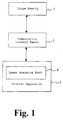
- FIG. 1 is a block diagram showing an embodiment of a picture frame decision apparatus of the present invention.
- the picture frame decision apparatus of this embodiment comprises a printer apparatus 1, a computation control part 2 and an image memory 3.
- the printer apparatus 1 sequentially transfers each picture frame of a film into a printing sheet, develops it and discharges the printing sheet with the projected images thereon.
- An image scanning part 4 is built in this printer apparatus. This image scanning part 4 scans, for example, a film with a CCD (charge-coupled device), forms image data indicative of an image on the film from the output of the CCD, and outputs this image data to the computation control part 2.
- CCD charge-coupled device
- the computation control part 2 inputs the image data from the image scanning part 4, temporarily memorizes this image data in the image memory 3, and then based on the image data, decides whether a panoramic image is photographed or not on each picture frame. The computational control part 2 then informs the results of these decisions to the printer apparatus 1.
- the printer apparatus 1 prints each picture frame of the film, that has been decided to be a panoramic image by the computation control part 2, to the printing sheet, extending it to the proper panoramic size.
- the printer apparatus 1 can print each picture frame of the film, that has not been decided to be a panoramic image by the computation control part 2, to the printing sheet, extending it to a normal size.
- the printer apparatus 1 then discharges the printing sheet with each image projected thereon.
- the computation control part 2 decides whether a panoramic image is photographed in each picture frame of the film based on the image data stored in the image memory 3 according to the following process.
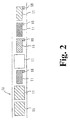
- the computation control part 2 determines or cuts out an image part 11a from a picture frame 11 as shown in Figure 3. This is done for each picture frame 11 of a film 10 as shown in Figure 2.
- the computational control part 2 further sections the image part 11a into a panoramic area 12, panoramic naturally through areas 13, 14 and dead zones 15, 16 as shown in Figure 4.
- the computation control part 2 extracts the panoramic area 12, adds the density of each pixel in this panoramic area 12, divides the sum with the number of pixels and determines the quotient as an average image density of the panoramic area 12.
- the computation control part 2 extracts the two panoramic naturally through areas 13 and 14 on both sides of the panoramic area 12, adds the density of each pixel in the panoramic naturally through area at every one of these panoramic naturally through areas 13 and 14, divides the sum with the number of pixels and determines the quotient. These quotients are determined as an average density U and D of each of the panoramic naturally through areas 13 and 14.
- the computation control part 2 scans each pixel of the entire film 10 based on the image data in the image memory 3, searches for a pixel P with the minimum density (i.e. lightest density), substitutes the minimum density P of this pixel for the following equation (1) and determines a standard density of the film 10.
- B P x ⁇
- This ⁇ is usually set to a value less than 1.
- each of dead zones 15 and 16 is arranged between the panoramic area 12 and each of the panoramic naturally through areas 13 and 14, each of dead zones 15 and 16 is arranged.
- These dead zones 15 and 16 are areas not subjected to the density determinations. Therefore, longitudinal breadth of the panoramic image should be within a range defined by the dead zones 15 and 16. Thereby it can be accurately decided whether various sizes of panoramic images are photographed.
- the above equations (5) and (6) are for confirming that the difference between the maximum density Umax and the minimum density Umin at the panoramic naturally through area 13 is sufficiently small and the maximum density Dmax and the minimum density Dmin at the panoramic naturally through area 14 is also sufficiently small. If these equations (5) and (6) are satisfied, then it can be decided that the small image "s" is not properly photographed in the panoramic naturally through areas 13 and 14 and a panoramic image is formed in the picture frame 11.
- the mark 18 is excluded from each one of the picture frames 11 which satisfy the above conditions A, B and C and to which the panoramic image has been temporarily considered to be photographed thereon.
- the computation control part 2 initially identifies whether a plurality of picture frames 11 to which the panoramic image has been temporarily considered to be photographed thereon has a spot or region with a predetermined density at a common location.
- the computation control part 2 selects each pixel in the common location of the picture frames 11 to which the panoramic image has been temporarily considered to be photographed, integrates the density of these pixels and determines a total density of their sum. It repeats this computation for every pixel in each one of the locations and determines a total density of pixels in each one of the locations. Because the mark 18 of each of the picture frames 11 has a different density from that around the mark 18, comparisons of the total density of pixels at these locations with a predetermined threshold result in that the total density of pixels at each location included by the mark 18 exceeds the predetermined threshold and allows identification of pixels at each location included by the mark 18.
- the computation control part 2 excludes each pixel of the mark 18 from each picture frame 11 to which the panoramic image has been temporarily considered to be photographed and then forms each picture frame 11, as not including the mark 18.
- the computation control part 2 determines whether the equations (5) and (6) of the above condition D are satisfied at every picture frame 11 to which the panoramic image has been temporarily considered to be photographed and where the mark 18 has been excluded. If the equations (5) and (6) are satisfied, it is decided that the panoramic image is formed in the picture frame 11 because the small image "s" is not photographed on any of the panoramic naturally through areas 13 and 14.
- condition D i.e. the condition for deciding whether the small image "s" is not photographed in any of the panoramic naturally through areas 13 and 14.
- the decision related to the condition D is not a false determination because the date or any other mark photographed in a particular spot or region of the panoramic naturally through areas 13 and 14 can be excluded from the picture frame.
- each numerical value at the above conditions A, B, C and D can be altered appropriately.
- identity whether every one of the picture frames 11 has the spot or region with a predetermined density at a common location on the picture frames a different method from the above described, method can be used. For example, detecting a pixel with a density exceeding a threshold from pixels in the panoramic naturally thorough areas 13, 14, may be done by deciding that this pixel is the spot of a predetermined density at a common location on the picture frames, if this pixel always appears in the same location in a plurality of the picture frames 11.
Landscapes
- Engineering & Computer Science (AREA)
- Multimedia (AREA)
- Signal Processing (AREA)
- Control Of Exposure In Printing And Copying (AREA)
- Image Input (AREA)
- Image Processing (AREA)
- Facsimiles In General (AREA)
Applications Claiming Priority (2)
| Application Number | Priority Date | Filing Date | Title |
|---|---|---|---|
| JP15032598 | 1998-05-29 | ||
| JP15032598A JP3763335B2 (ja) | 1998-05-29 | 1998-05-29 | 画面判定装置及び方法 |
Publications (2)
| Publication Number | Publication Date |
|---|---|
| EP0961480A1 true EP0961480A1 (de) | 1999-12-01 |
| EP0961480B1 EP0961480B1 (de) | 2005-02-16 |
Family
ID=15494560
Family Applications (1)
| Application Number | Title | Priority Date | Filing Date |
|---|---|---|---|
| EP99109331A Expired - Lifetime EP0961480B1 (de) | 1998-05-29 | 1999-05-31 | System und Verfahren zur Entscheidung des Inhalts eines Bildrahmens |
Country Status (4)
| Country | Link |
|---|---|
| US (1) | US6542637B1 (de) |
| EP (1) | EP0961480B1 (de) |
| JP (1) | JP3763335B2 (de) |
| DE (1) | DE69923729T2 (de) |
Families Citing this family (3)
| Publication number | Priority date | Publication date | Assignee | Title |
|---|---|---|---|---|
| US7848567B2 (en) * | 2004-09-23 | 2010-12-07 | Fuji Xerox Co., Ltd. | Determining regions of interest in synthetic images |
| US7724959B2 (en) * | 2004-09-23 | 2010-05-25 | Fuji Xerox Co., Ltd. | Determining regions of interest in photographs and images |
| US7904455B2 (en) * | 2005-11-03 | 2011-03-08 | Fuji Xerox Co., Ltd. | Cascading cluster collages: visualization of image search results on small displays |
Citations (6)
| Publication number | Priority date | Publication date | Assignee | Title |
|---|---|---|---|---|
| JPH05323464A (ja) * | 1992-05-22 | 1993-12-07 | Konica Corp | フィルム画面サイズ検出方法及び装置 |
| EP0601364A1 (de) * | 1992-11-30 | 1994-06-15 | Konica Corporation | Filmbildbearbeitungsgerät |
| US5337164A (en) * | 1992-01-30 | 1994-08-09 | Konica Corporation | Negative film image reading device |
| US5502541A (en) * | 1994-05-10 | 1996-03-26 | Eastman Kodak Company | Photographic printer and method for automatically detecting panoramic format image frames |
| JPH08304933A (ja) * | 1995-04-28 | 1996-11-22 | Fuji Photo Film Co Ltd | 画像サイズ識別装置及び方法 |
| US5841518A (en) * | 1995-04-28 | 1998-11-24 | Fuji Photo Film Co., Ltd. | Image identification apparatus and image identification method |
Family Cites Families (4)
| Publication number | Priority date | Publication date | Assignee | Title |
|---|---|---|---|---|
| DE69307416T2 (de) * | 1992-07-20 | 1997-05-15 | Fuji Photo Film Co Ltd | Analysegerät für photographischen Film mit Simulationsvorrichtung und Filmkontrollverfahren |
| US5289229A (en) * | 1992-09-28 | 1994-02-22 | Eastman Kodak Company | Full frame/panoramic photographic printing apparatus and method |
| US6049371A (en) * | 1994-03-25 | 2000-04-11 | Eastman Kodak Company | Image print having one or more positive images and method for making same |
| US5729329A (en) * | 1995-06-30 | 1998-03-17 | Fuji Photo Film Co., Ltd. | Image printing method |
-
1998
- 1998-05-29 JP JP15032598A patent/JP3763335B2/ja not_active Expired - Lifetime
-
1999
- 1999-05-28 US US09/321,571 patent/US6542637B1/en not_active Expired - Fee Related
- 1999-05-31 EP EP99109331A patent/EP0961480B1/de not_active Expired - Lifetime
- 1999-05-31 DE DE69923729T patent/DE69923729T2/de not_active Expired - Lifetime
Patent Citations (6)
| Publication number | Priority date | Publication date | Assignee | Title |
|---|---|---|---|---|
| US5337164A (en) * | 1992-01-30 | 1994-08-09 | Konica Corporation | Negative film image reading device |
| JPH05323464A (ja) * | 1992-05-22 | 1993-12-07 | Konica Corp | フィルム画面サイズ検出方法及び装置 |
| EP0601364A1 (de) * | 1992-11-30 | 1994-06-15 | Konica Corporation | Filmbildbearbeitungsgerät |
| US5502541A (en) * | 1994-05-10 | 1996-03-26 | Eastman Kodak Company | Photographic printer and method for automatically detecting panoramic format image frames |
| JPH08304933A (ja) * | 1995-04-28 | 1996-11-22 | Fuji Photo Film Co Ltd | 画像サイズ識別装置及び方法 |
| US5841518A (en) * | 1995-04-28 | 1998-11-24 | Fuji Photo Film Co., Ltd. | Image identification apparatus and image identification method |
Non-Patent Citations (2)
| Title |
|---|
| PATENT ABSTRACTS OF JAPAN vol. 018, no. 146 (P - 1707) 10 March 1994 (1994-03-10) * |
| PATENT ABSTRACTS OF JAPAN vol. 097, no. 003 31 March 1997 (1997-03-31) * |
Also Published As
| Publication number | Publication date |
|---|---|
| EP0961480B1 (de) | 2005-02-16 |
| JP3763335B2 (ja) | 2006-04-05 |
| DE69923729D1 (de) | 2005-03-24 |
| DE69923729T2 (de) | 2006-01-05 |
| JPH11338071A (ja) | 1999-12-10 |
| US6542637B1 (en) | 2003-04-01 |
Similar Documents
| Publication | Publication Date | Title |
|---|---|---|
| US6747757B1 (en) | Image processing method and apparatus | |
| EP0634704B1 (de) | Bildprozessor | |
| US5889578A (en) | Method and apparatus for using film scanning information to determine the type and category of an image | |
| US7257270B2 (en) | Image processing device and method, and recording medium | |
| US20030048958A1 (en) | Image processing apparatus, image processing method, and computer program product therefor | |
| US6542637B1 (en) | System for deciding the contents of a picture frame | |
| US6944353B2 (en) | Image processing system | |
| US6185335B1 (en) | Method and apparatus for image classification and halftone detection | |
| JP4345648B2 (ja) | 写真画像処理方法及びその装置 | |
| JPH0818764A (ja) | 枠内領域矩形化装置 | |
| JP3671682B2 (ja) | 画像認識装置 | |
| US7039558B2 (en) | Charge process upon effecting predetermined process by using plural data processing apparatus, and data processing apparatus used therefor | |
| EP0959616A2 (de) | System zur Verarbeitung fotografischer Bilder | |
| JP3804590B2 (ja) | 画像処理装置 | |
| JPH06225167A (ja) | ディジタルカラー複写機 | |
| JP4065995B2 (ja) | 異色構造物写真画像の判定方法及び写真画像処理装置 | |
| EP0689166B1 (de) | Vorrichtung zur Bildqualitätskontrolle in einem elektronischen Kopiergerät | |
| JP4894142B2 (ja) | フィルムのベース濃度検出方法 | |
| JPH09102873A (ja) | 写真の露光状態の判定方法 | |
| JP3994907B2 (ja) | 異種光源写真画像の判定方法及び写真画像処理装置 | |
| JPH05323464A (ja) | フィルム画面サイズ検出方法及び装置 | |
| JP4078969B2 (ja) | 画像形成装置、プログラム | |
| US20040012677A1 (en) | Apparatus and method for processing images | |
| JP3392577B2 (ja) | 画像読取装置 | |
| JP2004056182A (ja) | 画像処理装置 |
Legal Events
| Date | Code | Title | Description |
|---|---|---|---|
| PUAI | Public reference made under article 153(3) epc to a published international application that has entered the european phase |
Free format text: ORIGINAL CODE: 0009012 |
|
| 17P | Request for examination filed |
Effective date: 19990624 |
|
| AK | Designated contracting states |
Kind code of ref document: A1 Designated state(s): DE FR GB |
|
| AX | Request for extension of the european patent |
Free format text: AL;LT;LV;MK;RO;SI |
|
| AKX | Designation fees paid |
Free format text: DE FR GB |
|
| 17Q | First examination report despatched |
Effective date: 20030822 |
|
| GRAP | Despatch of communication of intention to grant a patent |
Free format text: ORIGINAL CODE: EPIDOSNIGR1 |
|
| RTI1 | Title (correction) |
Free format text: SYSTEM AND METHOD FOR DECIDING THE CONTENTS OF A PICTURE FRAME |
|
| GRAS | Grant fee paid |
Free format text: ORIGINAL CODE: EPIDOSNIGR3 |
|
| GRAA | (expected) grant |
Free format text: ORIGINAL CODE: 0009210 |
|
| AK | Designated contracting states |
Kind code of ref document: B1 Designated state(s): DE FR GB |
|
| REG | Reference to a national code |
Ref country code: GB Ref legal event code: FG4D |
|
| REF | Corresponds to: |
Ref document number: 69923729 Country of ref document: DE Date of ref document: 20050324 Kind code of ref document: P |
|
| PGFP | Annual fee paid to national office [announced via postgrant information from national office to epo] |
Ref country code: FR Payment date: 20050412 Year of fee payment: 7 |
|
| PGFP | Annual fee paid to national office [announced via postgrant information from national office to epo] |
Ref country code: GB Payment date: 20050525 Year of fee payment: 7 |
|
| ET | Fr: translation filed | ||
| PLBE | No opposition filed within time limit |
Free format text: ORIGINAL CODE: 0009261 |
|
| STAA | Information on the status of an ep patent application or granted ep patent |
Free format text: STATUS: NO OPPOSITION FILED WITHIN TIME LIMIT |
|
| 26N | No opposition filed |
Effective date: 20051117 |
|
| PG25 | Lapsed in a contracting state [announced via postgrant information from national office to epo] |
Ref country code: GB Free format text: LAPSE BECAUSE OF NON-PAYMENT OF DUE FEES Effective date: 20060531 |
|
| GBPC | Gb: european patent ceased through non-payment of renewal fee |
Effective date: 20060531 |
|
| REG | Reference to a national code |
Ref country code: FR Ref legal event code: ST Effective date: 20070131 |
|
| PG25 | Lapsed in a contracting state [announced via postgrant information from national office to epo] |
Ref country code: FR Free format text: LAPSE BECAUSE OF NON-PAYMENT OF DUE FEES Effective date: 20060531 |
|
| PGFP | Annual fee paid to national office [announced via postgrant information from national office to epo] |
Ref country code: DE Payment date: 20100526 Year of fee payment: 12 |
|
| REG | Reference to a national code |
Ref country code: DE Ref legal event code: R119 Ref document number: 69923729 Country of ref document: DE |
|
| REG | Reference to a national code |
Ref country code: DE Ref legal event code: R119 Ref document number: 69923729 Country of ref document: DE |
|
| PG25 | Lapsed in a contracting state [announced via postgrant information from national office to epo] |
Ref country code: DE Free format text: LAPSE BECAUSE OF NON-PAYMENT OF DUE FEES Effective date: 20111130 |