EP0963371B1 - Substituierte benzimidazole als nicht-nucleoside reverse transcriptase inhibitore - Google Patents
Substituierte benzimidazole als nicht-nucleoside reverse transcriptase inhibitore Download PDFInfo
- Publication number
- EP0963371B1 EP0963371B1 EP98907608A EP98907608A EP0963371B1 EP 0963371 B1 EP0963371 B1 EP 0963371B1 EP 98907608 A EP98907608 A EP 98907608A EP 98907608 A EP98907608 A EP 98907608A EP 0963371 B1 EP0963371 B1 EP 0963371B1
- Authority
- EP
- European Patent Office
- Prior art keywords
- mmol
- difluorobenzyl
- difluorophenyl
- nmr
- hiv
- Prior art date
- Legal status (The legal status is an assumption and is not a legal conclusion. Google has not performed a legal analysis and makes no representation as to the accuracy of the status listed.)
- Expired - Lifetime
Links
Images











Classifications
-
- C—CHEMISTRY; METALLURGY
- C07—ORGANIC CHEMISTRY
- C07D—HETEROCYCLIC COMPOUNDS
- C07D235/00—Heterocyclic compounds containing 1,3-diazole or hydrogenated 1,3-diazole rings, condensed with other rings
- C07D235/02—Heterocyclic compounds containing 1,3-diazole or hydrogenated 1,3-diazole rings, condensed with other rings condensed with carbocyclic rings or ring systems
- C07D235/04—Benzimidazoles; Hydrogenated benzimidazoles
- C07D235/06—Benzimidazoles; Hydrogenated benzimidazoles with only hydrogen atoms, hydrocarbon or substituted hydrocarbon radicals, directly attached in position 2
-
- A—HUMAN NECESSITIES
- A61—MEDICAL OR VETERINARY SCIENCE; HYGIENE
- A61P—SPECIFIC THERAPEUTIC ACTIVITY OF CHEMICAL COMPOUNDS OR MEDICINAL PREPARATIONS
- A61P31/00—Antiinfectives, i.e. antibiotics, antiseptics, chemotherapeutics
- A61P31/12—Antivirals
- A61P31/14—Antivirals for RNA viruses
- A61P31/18—Antivirals for RNA viruses for HIV
-
- A—HUMAN NECESSITIES
- A61—MEDICAL OR VETERINARY SCIENCE; HYGIENE
- A61P—SPECIFIC THERAPEUTIC ACTIVITY OF CHEMICAL COMPOUNDS OR MEDICINAL PREPARATIONS
- A61P37/00—Drugs for immunological or allergic disorders
- A61P37/02—Immunomodulators
- A61P37/04—Immunostimulants
-
- A—HUMAN NECESSITIES
- A61—MEDICAL OR VETERINARY SCIENCE; HYGIENE
- A61P—SPECIFIC THERAPEUTIC ACTIVITY OF CHEMICAL COMPOUNDS OR MEDICINAL PREPARATIONS
- A61P43/00—Drugs for specific purposes, not provided for in groups A61P1/00-A61P41/00
-
- C—CHEMISTRY; METALLURGY
- C07—ORGANIC CHEMISTRY
- C07D—HETEROCYCLIC COMPOUNDS
- C07D235/00—Heterocyclic compounds containing 1,3-diazole or hydrogenated 1,3-diazole rings, condensed with other rings
- C07D235/02—Heterocyclic compounds containing 1,3-diazole or hydrogenated 1,3-diazole rings, condensed with other rings condensed with carbocyclic rings or ring systems
- C07D235/04—Benzimidazoles; Hydrogenated benzimidazoles
- C07D235/06—Benzimidazoles; Hydrogenated benzimidazoles with only hydrogen atoms, hydrocarbon or substituted hydrocarbon radicals, directly attached in position 2
- C07D235/08—Radicals containing only hydrogen and carbon atoms
-
- C—CHEMISTRY; METALLURGY
- C07—ORGANIC CHEMISTRY
- C07D—HETEROCYCLIC COMPOUNDS
- C07D235/00—Heterocyclic compounds containing 1,3-diazole or hydrogenated 1,3-diazole rings, condensed with other rings
- C07D235/02—Heterocyclic compounds containing 1,3-diazole or hydrogenated 1,3-diazole rings, condensed with other rings condensed with carbocyclic rings or ring systems
- C07D235/04—Benzimidazoles; Hydrogenated benzimidazoles
- C07D235/06—Benzimidazoles; Hydrogenated benzimidazoles with only hydrogen atoms, hydrocarbon or substituted hydrocarbon radicals, directly attached in position 2
- C07D235/12—Radicals substituted by oxygen atoms
-
- C—CHEMISTRY; METALLURGY
- C07—ORGANIC CHEMISTRY
- C07D—HETEROCYCLIC COMPOUNDS
- C07D235/00—Heterocyclic compounds containing 1,3-diazole or hydrogenated 1,3-diazole rings, condensed with other rings
- C07D235/02—Heterocyclic compounds containing 1,3-diazole or hydrogenated 1,3-diazole rings, condensed with other rings condensed with carbocyclic rings or ring systems
- C07D235/04—Benzimidazoles; Hydrogenated benzimidazoles
- C07D235/18—Benzimidazoles; Hydrogenated benzimidazoles with aryl radicals directly attached in position 2
-
- C—CHEMISTRY; METALLURGY
- C07—ORGANIC CHEMISTRY
- C07D—HETEROCYCLIC COMPOUNDS
- C07D401/00—Heterocyclic compounds containing two or more hetero rings, having nitrogen atoms as the only ring hetero atoms, at least one ring being a six-membered ring with only one nitrogen atom
- C07D401/02—Heterocyclic compounds containing two or more hetero rings, having nitrogen atoms as the only ring hetero atoms, at least one ring being a six-membered ring with only one nitrogen atom containing two hetero rings
- C07D401/04—Heterocyclic compounds containing two or more hetero rings, having nitrogen atoms as the only ring hetero atoms, at least one ring being a six-membered ring with only one nitrogen atom containing two hetero rings directly linked by a ring-member-to-ring-member bond
-
- C—CHEMISTRY; METALLURGY
- C07—ORGANIC CHEMISTRY
- C07D—HETEROCYCLIC COMPOUNDS
- C07D401/00—Heterocyclic compounds containing two or more hetero rings, having nitrogen atoms as the only ring hetero atoms, at least one ring being a six-membered ring with only one nitrogen atom
- C07D401/02—Heterocyclic compounds containing two or more hetero rings, having nitrogen atoms as the only ring hetero atoms, at least one ring being a six-membered ring with only one nitrogen atom containing two hetero rings
- C07D401/06—Heterocyclic compounds containing two or more hetero rings, having nitrogen atoms as the only ring hetero atoms, at least one ring being a six-membered ring with only one nitrogen atom containing two hetero rings linked by a carbon chain containing only aliphatic carbon atoms
Definitions
- the present invention is related to non-nucleoside inhibitors of reverse transcriptase (RT).
- RT reverse transcriptase
- the present invention relates to a novel class of substituted benzimidazoles effective in the inhibition of human immunodeficiency virus (HIV) RT.
- AIDS acquired immunodeficiency syndrome
- HIV human immunodeficiency virus
- RT reverse transcriptase
- RNA-dependent DNA polymerase activity RNA-dependent DNA polymerase activity
- DNA-dependent DNA polymerase and ribonuclease H activities are essential for the conversion of genomic retroviral RNA into doublestranded DNA that can then be integrated into an infected host cell genome.
- HIV is a D-type virus within the lentivirus family, with two major antigenic types (HIV-1 and HIV-2), HIV-1 and HIV-2 share approximately 40% genetic identity, although they can be readily distinguished based on differences in antibody reactivity to the envelope glycoprotein (M. Cloyd, "Human Retroviruses.” in S. Baron (ed.). Medical Microbiology , University of Texas Medical Branch at Galveston, [1996], pp. 761-775). Both HIV-1 and HIV-2 have been associated with AIDS.
- the search for effective drugs against HIV has focused on targeting various critical components of the replication cycle of HIV-1.
- One important component in this cycle is the reverse transcriptase enzyme. Indeed, perhaps because of its pivotal role in the life cycle of HIV, it was the target of the first clinically approved anti-retroviral agents (see , Patel et al ., "Insights into DNA Polymerization Mechanisms from Structure and Function Analysis of HIV-1 Reverse Transcriptase," Biochem ., 34:5351-5363 [1995]), although other compounds such as protease inhibitors have recently been introduced.
- targeting RT has a potential benefit in reducing the toxicity to the patient associated with many drugs, as human cells do not normally contain this RT activity. Therefore, the potential for targeted inhibition of only viral replication, and not host cell multiplication is present. However, this potential has yet to be realized.
- RT inhibitors There are two major classes of RT inhibitors.
- the first comprises nucleoside analogues, such as 3'-azido-3'-deoxythymidine (AZT), 2',3'-didehydro-2',3'-dideoxythymidine (d4T), and 2',3'-dideoxycytidine (ddC).
- AZT 3'-azido-3'-deoxythymidine
- d4T 2',3'-didehydro-2',3'-dideoxythymidine
- ddC 2',3'-dideoxycytidine
- dNTPs normal deoxynucleoside triphosphates
- these analogs have resulted in the emergence of drug-resistant viral strains that contain mutations in their RT.
- these RT inhibitors have dangers that must be considered in developing treatment regimens for HIV-infected patients.
- the second major class of RT inhibitors comprises the non-nucleoside RT inhibitors (NNRTI), such as tetrahydroimidazo(4,5,1-1- jk )(1,4)-benzodiazepin-2-(1 H )-one, and -thione (TIBO) derivatives, dipyridodiazepinones, pyridinones.
- NRTI non-nucleoside RT inhibitors
- TIBO tetrahydroimidazo(4,5,1-1- jk )(1,4)-benzodiazepin-2-(1 H )-one
- TIBO -thione
- BHAPs bis(heteroaryl)piperazines
- TSAO bis(heteroaryl)piperazines
- ⁇ -APA 2-anilinophenylacetamide
- the NNRTIs do not act as chain terminators and do not bind at the dNTP-binding site.
- the majority of these compounds have been shown to share a common binding site unique to HTV-1 RT that is located in proximity to the RT polymerase active site.
- NNRTIs are highly specific for HIV-1 RT, and do not inhibit either HTV-2 RT or normal cellular polymerases, resulting in lower cytotoxicity and fewer side effects than the nucleoside analogs.
- Ding et al . "Structure of HTV-1 Reverse Transcriptase in a Complex with the Non-Nucleoside Inhibitor ⁇ -APA R 95845 at 2.8 ⁇ Resolution," Structure 3:365-379 [1995].
- resistance to some of these compounds has been reported.
- NNRTIs for HIV-1RT are an important goal of AIDS research.
- Such new inhibitors like 2-aryl-substituted benzimidazoles, which have been described as able to inhibit in vitro polymerization by HIV-1WT RT (see Roth et al. "Synthesis and biological activity of novel nonnucleoside inhibitors of HIV-1 reverse transcriptase 2-aryl-substituted benzimidazoles", J. Med. Chem., 40:4199-4207[1997].
- the present invention is related to substituted benzimidazole compounds.
- the present invention provides non-nucleoside inhibitors of reverse transcriptase (RT) comprising a novel class of substituted benzimidazoles effective in the inhibition of human immunodeficiency virus (HIV) RT.
- RT reverse transcriptase
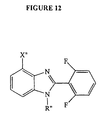
- the present invention provides a composition comprising a 1-aryl-2-(2,6-difluorophenyl)benzimidazole compound of the general structure of Figure 12, in which X" is selected from the group consisting of H and methyl; and R" is selected from the group consisting of 2,6-difluorobenzyl (2,6-F 2 Bn), benzyl (Bn), 2,6-dichlorobenzyl (2,6-Cl 2 Bn), 2,3,4,5,6-pentafluorobenzyl (2,3,4,5,6-F 5 Bn), pyridylmethyl (CH 2 (3-Py), benzenesulfonyl (PhSO 2 ) and 2,6-difluorobenzoyl (2,6-F 2 Bz).
- X is selected from the group consisting of H and methyl
- R" is selected from the group consisting of 2,6-difluorobenzyl (2,6-F 2 Bn), benzyl (Bn
- X" is H and methyl; and R" is 2,6-difluorobenzyl. In other preferred embodiments, X" is H; and R" is 2,6-difluorobenzyl. In yet other preferred embodiments, X" is methyl and R" is 2,6-difluorobenzyl.
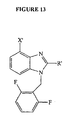
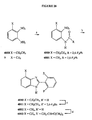
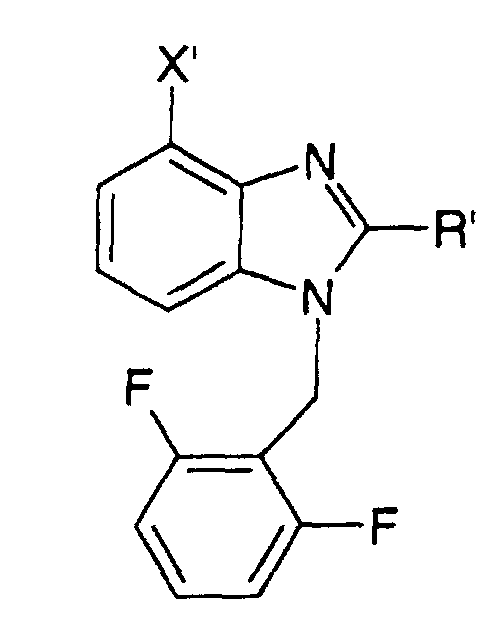
- the present invention provides a composition comprising 1-(2,6-difluorophenyl)benzimidazole compound of the general structure of Figure 13, in which X' is selected from the group consisting of H and methyl; and R' is selected from the group consisting of phenyl (Ph), formyl (CHO), isopropyl (iPr), H, methyl (CH 3 ), hydroxymethyl (CH 2 OH), 2,6-difluorobenzyloxymethyl (CH 2 O(2,6-F 2 Bn), methylphenyl (2-CH 3 Ph), pyridyl ( e.g ., 4-Py, 3-Py), and naphthyl ( e.g ., 1-Nap, 2-Nap).
- X' is selected from the group consisting of H and methyl
- R' is selected from the group consisting of phenyl (Ph), formyl (CHO), isopropyl (iPr), H, methyl (CH 3 ), hydroxy
- the present invention provides a composition
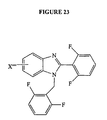
- a composition comprising a 4-, 5-, 6-, or 7-substituted-1-(2,6-difluorobenzyl)-2-(2,6-difluorophenyl)benzimidazole compound of the general structure of Figure 23, wherein X"" is selected from the group consisting of 6-methyl (6-CH 3 ), 7-methyl (7-CH 3 ), 4,5-dimethyl (4,5-CH 3 ), 4-chloro (4-Cl), 6 chloro (6-Cl), and 4-bromo (4-Br)
- X"" is attached to the 4-position and is selected from the group consisting of chlorine and bromine.
- the present invention provides a composition
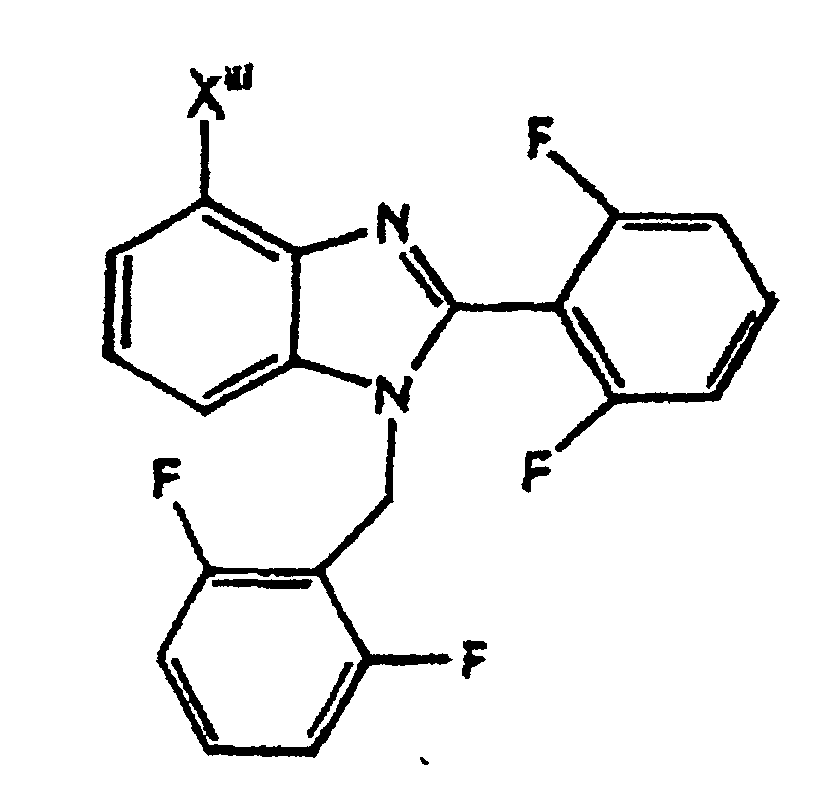
- a composition comprising a 4-substituted-1-(2,6-difluorobenzyl)-2-(2,6-difluorophenyl)benzimidazole compound of the general structure of Figure 24, wherein X"' is selected from the group consisting of amine, acetamide, and dimethylamine.
- substituted benzimidazoles of the present invention will find use for the manufacture of a medicament for treatment of HTV infection/disease.
- the present invention provides compositions of substituted benzimidazoles for the manufacture of a medicament with activity against HIV-1.
- the present invention provides substituted benzimidazole compounds, which act as non-nucleoside inhibitors of reverse transcriptase (RT).
- RT reverse transcriptase
- the present invention relates to a novel class of substituted benzimidazoles, effective in the inhibition of human immunodeficiency virus (HIV) RT.
- HAV human immunodeficiency virus
- Retrovirus refers to the group of viruses with RNA genomes. Retroviruses are characterized as having reverse transcriptase, the enzyme that allows the RNA genome to be transcribed into DNA.
- reverse transcriptase refers to an enzyme with RNA-dependent DNA polymerase activity, with or without the usually associated DNA-dependent DNA polymerase and ribonuclease activity observed with wild-type reverse transcriptases.
- anti-viral is used in reference to any compound, substance, or molecule capable of inhibiting or preventing viral replication and/or dissemination. It is intended that the term encompasses compounds capable of inhibiting viral replication by interfering with such activities as the reverse transcriptase activity of retroviruses. It is also intended to encompass "non-nucleoside reverse transcriptase inhibitors" (NNRTI). In preferred embodiments, the term is used in reference to substituted benzimidazole compounds.
- chemotherapeutic refers to any compound, element, or substance useful against disease.
- the term encompasses compounds such as the substituted benzimidazoles of the present invention.
- the term "purified” refers to the removal of contaminants from a sample.
- Methods such as carbon, hydrogen and nitrogen analyses (CHN analysis, or “elemental analysis”) may be used to determine the purity of compounds.
- CHN analysis carbon, hydrogen and nitrogen analyses
- the CHN values of compounds of the present invention are very close to the predicted values.
- Correspondence of experimental with the predicted values to within 0.3% indicates high levels of purity.
- the compounds of the present invention have CHN values within 0.3% of the predicted values.
- the level of purity may be lower ( i.e ., greater than 0.3% difference between the predicted and actual CHN values).
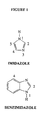
- benzimidazole is used in reference to molecules with the core structure as indicated in Figure 1.
- the term encompasses, but is not limited to substitution reactions, wherein there is replacement of one or more atom or group in a molecule by another atom or group.
- the term "TZB” refers to 1-(2,6-difluorophenyl)-1H,3-thiazolo[3,4- ⁇ ]benzimidazole.
- the present invention encompasses 1,2-substituted benzimidazoles, including but not limited to 1-(2,6-difluorobenzyl)-2-(2,6-difluorophenyl)-4-methylbenzimidazole.
- cyclic compounds refers to compounds having one ( i.e ., a monocyclic compounds) or more than one ( i.e ., polycyclic compounds) ring of atoms.
- the term is not limited to compounds with rings containing a particular number of atoms. While most cyclic compounds contain rings with five or six atoms, rings with other numbers of atoms ( e.g ., three or four atoms) are also contemplated by the present invention.
- the identity of the atoms in the rings is not limited, though the atoms are usually predominantly carbon atoms.
- the rings of polycyclic compounds are adjacent to one another; however, the term "polycyclic" compound includes those compounds containing multiple rings that are not adjacent to each other.
- heterocyclic compounds refers broadly to cyclic compounds wherein one or more of the rings contains more than one type of atom.
- carbon represents the predominant atom, while the other atoms include, for example, nitrogen, sulfur, and oxygen.
- heterocyclic compounds include benzimidazole, furan, pyrrole, thiophene, and pyridine.
- aromatic refers broadly to compounds with rings of atoms having delocalized electrons.
- the monocyclic compound benzene (C 6 H 6 ) is a common aromatic compound. However, electron delocalization can occur over more than one adjacent ring ( e.g ., naphthalene [two rings] and anthracene [three rings]).
- aromatic compounds include, but are not limited to, aromatic halides (aryl halides). aromatic heterocyclic compounds, aromatic hydrocarbons (arenes), and aromatic nitro compounds (aryl nitro compounds).
- aliphatic and aliphatic compounds refer to compounds which comprise carbon atoms in chains, rather than the ring structure of aromatic compounds. It is intended that these aliphatic moieties will be bound to additional elements in some embodiments.
- resistant and “refractory” used in reference to “resistant mutants” of HIV and/or HIV RT refer to the ability of some HIV RTs to function in the presence of compounds that are inhibitory to the RT of wild-type HIV. This resistance may result from any number of mutations, including but not limited to conformational changes in the RT structure, as well as the configuration of the RT bound to its substrate.
- mixture refers to a mingling together of two or more substances without the occurrence of a reaction by which they would lose their individual properties.
- solution refers to a liquid mixture.
- aqueous solution refers to a solution that contains some water. In many instances, water serves as the diluent for solid substances to create a solution containing those substances. In other instances, solid substances are merely carried in the aqueous solution ( i.e. , they are not dissolved therein).
- aqueous solution also refers to the combination of one or more other liquid substances with water to form a multi-component solution.
- sample and “specimen” in the present specification and claims are used in their broadest sense. On the one hand, they are meant to include a specimen or culture. On the other hand, they are meant to include both biological and environmental samples. These terms encompass all types of samples obtained from humans and other animals, including but not limited to, body fluids such as urine, blood, fecal matter, cerebrospinal fluid (CSF), semen, and saliva, as well as solid tissue. These terms also refer to swabs and other sampling devices which are commonly used to obtain samples for culture of microorganisms.
- body fluids such as urine, blood, fecal matter, cerebrospinal fluid (CSF), semen, and saliva, as well as solid tissue.
- CSF cerebrospinal fluid
- saliva as well as solid tissue.
- Biological samples may be animal, including human, fluid or tissue, food products and ingredients such as dairy items, vegetables, meat and meat by-products, and waste.
- Environmental samples include environmental material such as surface matter, soil, water, and industrial samples, as well as samples obtained from food and dairy processing instruments, apparatus, equipment, disposable, and non-disposable items. These examples are not to be construed as limiting the sample types applicable to the present invention.
- culture refers to any sample or specimen which is suspected of containing one or more microorganisms.
- Purure cultures are cultures in which the organisms present are only of one strain of a particular genus and species. This is in contrast to “mixed cultures.” which are cultures in which more than one genus, species, and/or strain of microorganism are present.
- the term "organism” is used to refer to any species or type of microorganism, including but not limited to viruses.
- the term is used in reference to RNA viruses, such as the retroviruses.
- the organism of interest is HIV.
- the organism of interest is HIV-1.
- parenterally refers to administration to a subject through some means other than through the gastrointestinal tract or the lungs.
- the most common mode of parenteral administration is intravenous.
- other modes of parenteral administration include, but are not limited to, intramuscular, and subcutaneous administration.
- pharmaceutical preparation suitable for parenteral administration refers to a solution containing compound in a pharmaceutically acceptable form for parenteral administration.
- the characteristics of the form will depend on a number of factors, including the mode of administration.
- a preparation for intravenous administration will often comprise compound dissolved in normal saline or sterile water for injection.
- the pharmaceutical preparations of the present invention are not limited to those diluents; indeed, other components or diluents known in the field of pharmaceuticals and pharmacy are within the scope of the present invention.
- the pharmaceutical preparation may contain diluents, adjuvants and excipients, among other components, provided that those additional components neither adversely effect the preparation (e.g., they do not cause degradation of the compound) nor the recipient ( e.g ., they do not cause a hypersensitivity reaction).
- imidazoles i.e ., glyoxaline. 1,2-diazole, iminazole, miazole, pyrro[ b ]monazole, and 1,3-diaza-2,4-cyclopentadiene
- imidazoles are five-membered heterocycles with the formula C 3 H 4 N 2 .
- the properties of these compounds permit the existence of cyclic aromatic structures (i.e ., derivatives) with more than two nitrogens or other heteroatoms bonded together. Many derivatives of these heterocyclic structures are important biochemical intermediates.
- Figure 1 also shows the structure of benzimidazole (i.e ., benziminazole, 1,3-benzodiazole, azindole, benzoglyoxaline, N,N '-methenyl- o -phenylenediamine, with the formula C 7 H 6 N 2 ).
- benzimidazole i.e ., benziminazole, 1,3-benzodiazole, azindole, benzoglyoxaline, N,N '-methenyl- o -phenylenediamine, with the formula C 7 H 6 N 2 ).
- the numbering conventions for the ring positions are indicated in these structures.
- Imidazoles e.g. , clotrimazole, miconazole, econazole, and isoconazole
- these drugs have undesirable side effects when administered systemically, such as pruritis, anemia, hyponatremia, leukopenia, thrombocytopenia, and elevated liver enzymes.
- Ketoconazole another imidazole
- Benzimidazoles e.g ., thiabendazole, mebendazole, and albendazole
- thiabendazole mebendazole
- albendazole a group consisting of thiabendazoles, mebendazole, and albendazole
- benzimidazoles have found clinical use as anti-helmintics, as they are effective against both the larval and adult stages of nematodes that cause ascariasis, intestinal capillariasis, enterobiasis, trichuriasis, as well as single and mixed hookworm infection.
- the toxicity of these compounds, and/or their limited bioavailability has limited their clinical utility.
- Benzimidazole derivatives have been investigated as anti-viral agents. and some have been recognized as being capable of inhibiting RNA viruses. ( See. e.g., Gilbert et al. , Antiviral Res. , 9:355 [1988]). In addition, it has been recognized that thiazolobenzimidazole analogs may enhance the immune response. ( See, e.g ., Warren et al ., Immunopharmacol ., 1:269 ([1979]; Fenichel et al., Immunopharmacol ., 2:491 [1981]; and U.S. Patent No. 4,214,089 to Fenichel et al ., herein incorporated by reference).
- thiazolobenzimidazole such as 1-phenyl substituted 1H,3H-thiazole[3,4- ⁇ ] benzimidazoles have also been reported as having anti-HIV-1 RT activity. (See, e.g ., EP 0471991, to Monforte et al .).
- TZB thiazolobenzimidazole compound
- FIG. 2 shows a schematic for one embodiment of the present invention, in which N -benzyl-2-alkylbenzimidazoles are synthesized by alkylation of 2-substituted benzimidazoles, as was attempted during the development of the present invention. These substituted N -benzyl-benzimidazoles were of interest as potentially providing enhanced inhibition of wild type RT, and the various clinically observed variant forms of HIV RT.
- Figure 3 provides one embodiment of a general outline of the approach for the synthesis of 2-aryl-benzimidazoles.
- a variety of 2-aryl-benzimidazoles were made available by use of the appropriate choice of acylating reagent. In most cases, it was found that high yields of the desired N -acyl-nitroaniline could be obtained from either 2-nitroaniline ( 8 ), or 2-methyl-6-nitroaniline ( 9 ).
- "a" comprised aroyl chloride.
- pyridine/THF tetrahydrofuran
- "b” comprised Fe ( 17 )/AcOH (iron/acetic acid)
- "c” comprised 2,6-F 2 -BnBr ( 25 ) (2,6-difluorobenzylbromide)/NaH (sodium hydride)/THF
- "d” comprised BnBr ( 27 ) (benzyl bromide) or PhSO 2 Cl ( 44 ) (benzenesulfonyl chloride) or 2,6-F 2 BzCl ( 7 ) (2,6-difluorobenzoylchloride)/THF.
- the first 2-substituted derivatives of N -2(2,6-difluorobenzyl)benzimidazole studied during the development of the present invention were the methyl, hydroxymethyl, isopropyl, carboxyl, formyl, and phenyl derivatives.
- methyl and phenyl compounds commercially available benzimidazoles were reacted with 2,6-difluorophenyl- ⁇ -bromotoluene (25) to give compounds ( 35 and 39 ).
- a comprised K 2 CO 3 (potassium carbonate)/methyl iodide/acetone
- b comprised difluorobenzoyl chloride/pyridine/THF
- c comprised hydrazine/pyridine
- d comprised iron powder
- e comprised 2,6-difluoro- ⁇ -bromo-toluene
- f comprised benzyl bromide
- g comprised (1-bromoethyl)benzene
- h comprised 3,3-dimethylallyl bromide.
- Figure 28 shows the preparation of 2-(2,6-difluorophenyl)-4-ethylbenzimidazole and 2-(2,6-difluorophenyl)-4-methylbenzimidazole with general structure of Figure 12.
- "a” comprised difluorobenzoyl chloride
- "b” comprised iron powder
- "c” comprised 2,6-difluoro- ⁇ -bromo-toluene
- "d” comprised 3,3-dimethylallyl bromide.
- Figure 31 shows the preparation of a variety of 1-(2,6-difluorobenzyl)-2-(2,6-difluorophenyl)benzimidazole compounds with general structure of Figure 12.
- "a” comprised 3,3-dimethylallyl bromide
- "b” comprised iron powder
- "c” comprised concentrated H 2 SO 4 (sulfuric acid).
- Figure 29 shows the preparation of 1-(2,6-difluorobenzyl)-2-(2,6-difluorophenyl)-4-( N -substituted)benzimidazole with general structure of Figure 13.
- "a” comprised SnCl 2 x2H 2 O (tin(II) chloride);
- b comprised methyl iodide/THF/NaH; and
- "c” comprised HCl.
- Figure 30 shows the preparation of 1-(2,6-difluorobenzyl)-2-(cyclopropyl)-4-methoxylbenzimidazole ( 5016 ).
- "a” comprised cyclopropanecarbonyl chloride
- "b” comprised iron powder
- "c” comprised 3,3-dimethylallyl bromide
- "d” comprised 2,6-difluoro- ⁇ -bromo-toluene.
- NNRTI contains sulfonyl links (e.g ., 2-nitrophenyl phenyl sulfone. and 5-chloro-3-(phenylsufonyl)-indole-2-carboxamide), it was also determined whether a sulfonyl group could replace the methylene linker in compound ( 33 ).
- sulfonyl groups e.g ., 2-nitrophenyl phenyl sulfone. and 5-chloro-3-(phenylsufonyl)-indole-2-carboxamide
- Variation of the benzimidazole ring portion of 33 was accomplished mostly through determining and then using the appropriate choice of starting material.
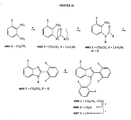
- the general approach utilized in the synthesis of the desired substituted 1-(2,6-difluorobenzyl)-2-(2,6-difluorophenyl)benzimidazoles is outlined in Figure 14.
- the N -acyl-nitroanilines were alkylated before reductive cyclization.
- a comprises 2,6-difluorobenzoyl chloride/pyridine/THF (1:1);
- b comprises NaOH (sodium hydroxide)/MeOH (methanol)/dioxane;
- c comprises Br 2 (bromine)/pyridine/THF;
- d comprises 2,6-F 2 BnBr/NaH/THF; and
- e comprises Fe/AcOH.
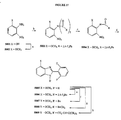
- tin (II) chloride As shown in Figure 15, reduction of the 4-nitro group of 3100 was accomplished with tin (II) chloride.
- a comprises 2,6-difluorobenzoyl chloride/pyridine/THF (1:1);
- b comprises AcOH/reflux;
- c comprises 2,6-F 2 -BnBr/NaH/THF;
- d comprises SnCl 2 /AcOH/HCl;
- e comprises Ac 2 O (acetic anhydride)/THF;
- f' comprises H 2 CO (formaldehyde)/NaBH 4 (sodium borohydride)/H 2 SO 4 ; and
- g comprises NaNO 2 (sodium nitrite)/HBr (hydrogen bromide) or HCI.
- Compound 3300 was used to prepare the 4-bromo, 3400 , and 4-chloro, 3500 , benzimidazoles via Sandmeyer reactions (i.e ., methods known in the art).
- the 4- N -acetamido, 3600 was prepared by mono-acylation of 3300 with acetic anhydride. Treatment of 3300 with formaldehyde and sodium borohydride yielded the dimethylamino compound, 3700 .
- the % inhibition is dramatically decreased from the 4- and 6-methyl derivatives.
- the observed decrease determined for the 7-methyl might be due to the adoption of a different conformation from the 4-methyl owing to steric interactions between the 7-methyl and the N-1 benzyl group.
- the 5-methyl derivative, 2400 can assume similar conformations as the 4-methyl derivative, 100
- the 6-methyl derivative, 2500 the decrease in % inhibition determined for the 5-methyl compound presumably must be due to differences in inductive effects.
- the significant inhibition found with 100 possessing a single methyl at C-4 was dramatically decreased by the presence of the C-5 methyl.
- the IC 50 for the 4-methoxyl is 100-fold more potent than the IC 50 for TZB and TIBO and is comparable to those determined for 8-Cl TIBO and nevirapine.
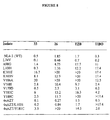
- the various HIV isolates tested in the Figures are those corresponding to wild-type virus (NL4-3) and the other strains listed by their RT mutations.
- the three 4xAZT isolates included in the Figures represent AZT drug-resistant variants.
- the 4xAZT/L100I isolate has five mutations: four mutations confer increased resistance to AZT, and the other mutation is located within the NNRTI binding pocket.
- TZB and nevir, (nevirapine) are two well-known NNRTIs, included in this experiment for comparison purposes.
- the 4-methyl derivative 33 was consistently 3- to 4-fold better in the inhibition of the various viral isolates examined than the des-methyl analog 26 .
- the increased inhibition observed for 33 suggested that substituents on the benzimidazole ring can significantly improve binding of this class of compounds to the NNRTI binding pocket residues.
- Figure 19 shows the cross-resistance profile with NNRTI-resistant HIV isolates from the cytopathic cell killing assay for a number of 4-substituted compounds (the methoxyl, N -methylacetamido, ethyl, chloro, amino, N -acetamido, and N -methylamino derivatives), as well as, TZB and nevirapine.
- the methoxyl, N -methyl acetamido, ethyl, chloro, amino, N -acetamido, and N -methyl amino derivatives were all found to inhibit HIV-1 better than TZB in the cytopathic cell killing assay.
- the cross-resistance profile was equal or better against the various variants than nevirapine, the only nonnucleoside inhibitor currently approved by the FDA for the treatment of AIDS.
- the only variant that showed no inhibition for the different compounds tested was the K103N isolate which also renders TZB and nevirapine ineffective.
- Figure 32 shows the effect of substitution of the N-1 position on the ability to inhibit some NNRTI-resistant HIV isolates. Substitution of the 2,6-difluorobenzyl group by the prenyl side chain found in TIBO was seen to decrease the inhibitory activity for the V108I and Y181C variants.
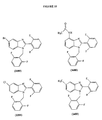
- Figures 20, 21, and 22 indicate the therapeutic index for three embodiments of the present invention.
- the therapeutic index is the difference between efficacy of the drug and cellular toxicity.
- the therapeutic index at 50% (TC 50 ) was greater than one log in concentration.
- the methoxyl and N-methylacetamido compounds were found to possess the best overall biological profile of this series. These two embodiments were determined to inhibit many of the known clinically relevant non-nucleoside amino acid variants of HIV-1. It is contemplated that other substitutions or different attachment sites may result in further optimization of the compounds of the present invention.
- the present invention provides significant advantages over drugs such as TZB and nevirapine, as it retains activity against HIV mutants that have lost sensitivity to these drugs (e.g., the V106A, Y181C, and Y188C isolates).
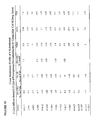
- the active benzimidazole compounds of the present invention were produced at a very high purity level. As shown in Figures 25, the carbon, hydrogen and nitrogen analyses (CHN values) of these compounds were very close to the predicted values. CHN analysis (i.e.. elemental analysis) as known to those in the art, determines the amount of the elements in accurately weighed samples of the compound, and matches them against the amounts predicted from the elemental formulae. Correspondence of experimental with the predicted values to within 0.3% indicates high levels of purity.
- PBS phosphate buffered saline
- MTT (3-(4,5-dimethylthiazol-2-yl)-2,5-diphenyl-tetrazolium bromide): EDTA (ethylenedinitrotetraacetic acid disodium salt); HCl (hydrogen chloride); Tris (triphenylphosphine); AlMe 2 NH 2 (dimethylaluminum amine); NaH (sodium hydride); NaNO 2 (sodium nitrite); NaOH (sodium hydroxide); KOH (potassium hydroxide); KMnO 4 (potassium permanganate); NaCl (sodium chloride); CuCl (copper chloride); SDS (sodium dodecyl sulfate); NaHSO 4 (sodium bisulfate); Na 2 S 2 O 3 (sodium thiosulfate); Na 2 SO 4 (sodium sul
- 2-hydroxymethylbenzimidazole (2) was prepared by stirring o -phenylenediamine ( 1 )(1.3 g, 12 mmol), and 85% glycolic acid (2.74 g, 36 mmol, 300 M%). in 4 N HCl (40 mL), under reflux for 4 hours. After cooling to room temperature, the pH was adjusted to 7, with NaOH. The resulting crystals were filtered, washed with water and dried in vacuo (0.71 g, 4.8 mmol, 40% yield).
- 2-hydroxymethyl-4-methylbenzimidazole ( 4 ) was prepared by stirring 2.3-diaminotoluene ( 3 ) (2.65 g 21.7 mmol), and 85% glycolic acid (8.20 g, 107.8 mmol, 500 M%) in 4 N HCl (80 mL), under reflux for 2 hours. After cooling to room temperature, the pH was adjusted to 7 with NaOH. The resulting brown precipitate was filtered, washed with water, and dried in vacuo (2.97 g, 18.3 mmol, 84% yield).
- 1 H-NMR 200 MHz, DMSO- d 6 ): ⁇ 7.28 (br d.
- 2-isopropyl-4-methylbenzimidazole ( 6 ) was prepared by dissolving 2,3-diaminotoluene ( 3 ) (1.00 g, 8.19 mmol), and isobutyric acid (4.0 mL, 43.1 mmol, 525 M%), in 4 N HCl (90 mL). After 2 hours at reflux, the reaction was cooled in an ice bath, and the pH adjusted to 7 with NaOH. The resulting precipitate was filtered and washed with water.
- N -(2,6-diflurobenzoyl)-2-nitroanilide ( 10 ) was prepared using "Method A.”
- 2-nitroaniline ( 8 ) (1.1 g, 8.0 mmol) was dissolved in THF (10 mL) and pyridine (2 mL).
- 2,6-difluorobenzoyl chloride (7) (1.11 mL. 8.8 mmol, 110 M%) dissolved in THF (15 mL) was added to the first mixture. After stirring for 5 hours at room temperature, the reaction was concentrated to dryness. The residue was re-dissolved in ethylacetate, and washed with NaHSO 4 (5% solution), NaHCO 3 (sat.
- N -(2,6-difluorobenzoyl)-2-methyl-6-nitroanilide ( 11 ) was prepared using Method A. 2-methyl-6-nitroaniline ( 9 ) (2.25 g, 14.8 mmol) and 2,6-difluorobenzoyl chloride ( 7 ) (1.9 mL, 15 mmol, 100 M%) were mixed and stirred overnight. The solution was purified by gravity chromatography, and eluted with CH 2 Cl 2 /hexane/diethylether (380-120-10). The product was 2.36 g (8.1 mmol, 55% yield) of slightly yellow crystals.
- N -isonicotinoyl-2-methyl-6-nitroanilide ( 12 ) was prepared using Method A. 2-methyl-6-nitroaniline ( 9 ) (1.52 g, 10.0 mmol), and isonicotinoyl chloride hydrochloride (2.95 g, 19.7 mmol, 200 M%) were stirred together for 4 hours. A second addition of isonicotinoyl chloride hydrochloride (1.05 g, 5.90 mmol, 60 M%) was added, and the solution was stirred overnight. The preparation was re-crystallized from diethylether/hexane (3:1) to produce 1.61 g (6.26 mmol, 53% yield) of white powder.
- N -(2-methylbenzoyl)-2-nitroanilide ( 13 ) was prepared by Method A, by mixing 2-nitroaniline ( 8 ) (1.28 g, 9.3 mmol) and o-toluoyl chloride (1.52 mL. 11.6 mmol, 125 M%), and then recrystallized with ether/hexane (1:1) to produce 2.2 g (8.6 mmol, 92% yield) of yellow crystals of N -(2-methylbenzoyl)-2-nitroanilide.
- N- (1-naphthoyl)-2-methyl-6-nitroanilide ( 14 ) was prepared by Method A, by mixing 2-methyl-6-nitroaniline ( 9 ) (1.52 g, 10.0 mmol) and 1-naphthoyl chloride (2.00 mL, 13.3 mmol, 130 M%). After one hour of stirring at room temp, a second volume of 1-naphthoyl chloride (1.0 mL, 6.65 mmol, 66 M%) was added. The mixture was stirred for 6 hours and recrystallized with ethyl acetate to produce 2.79 g (9.11 mmol, 91% yield) of white powder.
- N -(2-naphthoyl)-2-methyl-6-nitroanilide ( 15 ) was prepared according to Method A, by mixing 2-methyl-6-nitroaniline ( 9 )(1.52 g, 10.0 mmol) and 2-naphthoyl chloride (2.00 mL, 13.3 mmol, 130 M%). After 1 hour of stirring, a second volume of 2-naphthoyl chloride (1.0 mL, 6.65 mmol, 66 M%) was added. The mixture was stirred for 6 hours and recrystallized with ethyl acetate to produce 2.29 g (7.48 mmol, 75% yield) of white powder.
- N -Nicotinoyl-2-methyl-6-nitroanilide (16) was prepared by Method A, by mixing 2-methyl-6-nitroaniline ( 9 )(1.52 g, 10.0 mmol) and nicotinoyl chloride hydrochloride (2.67 g, 15.0 mmol, 150 M%). After stirring overnight and recrystallization from diethylether/hexane (3:1) 1.41 g (5.49 mmol, 55% yield) of white powder were produced.
- 2-(2-methylphenyl)benzimidazole ( 20 ) was produced using Method B. N -(2-methylbenzoyl)-2-nitroanilide ( 13 ) (1.9 g, 7.4 mmol) and iron powder ( 17 ) (1.2 g) were mixed. After recrystallization from diethylether/hexane (3/1) 1.2 g (5.76 mmol, 78%) of colorless crystals were produced. with a melting point of 215°C.
- 2-(1-napthyl)-4-methylbenzimidazole ( 21 ) was produced using Method B.
- 1-(2,6-difluorobenzyl)-2-(2,6-difluorophenyl)benzimidazole ( 26 ) was prepared using Method C.
- the benzimidazole compound 18 (2.00 g, 8.70 mmol) and 2,6-difluoro- ⁇ -bromo-toluene (25) (2.85 g, 160 M%), were dissolved in THF (20 mL). To this mixture. NaH (0.75 g, 215 M%) was added. After mixing for 2 hours, the reaction was quenched with MeOH and concentrated. The residue was redissolved in ethylacetate. washed with NaHCO 3 (sat. aq.) and NaCl (sat.
- 1-benzyl-2-(2,6-difluorophenyl)benzimidazole (28) was produced using Method C.
- the benzimidazole compound 18 (100 mg, 0.43 mmol) and benzylbromide ( 27 ) (66.4 ml, 0.56 mmol) were mixed as indicated for Method C.
- 1-benzyl-2-(2,6-difluorophenyl)-4-methylbenzimidazole (29) was produced according to Method C, using 2-(2,6-difluorophenyl)-4-methylbenzimidazole (19) (88mg, 0.33 mmol) and benzylbromide (27) (51 mL, 0.43 mmol) to produce, after recrystallization from diethylether/hexane (3:1), 67 mg (0.20 mmol, 61%) of colorless crystals, with a melting point of 112-117°C.
- 1-(2,6-difluorobenzyl)-2-isopropyl-4-methylbenzimidazole (34) was prepared according to Method C, using 2-isopropyl-4-methylbenzimidazole (6) (0.20 g 1.15 mmol) and 2,6-difluoro- ⁇ -bromo-toluene (25) (0.36 g, 1.74 mmol, 150 M%) stirred for 5 h, as described, purified by flash chromatography eluted with 4% MeOH/CH 2 Cl 2 and recrystallized from diethylether/hexane (3:1) to yield 0.20 g (0.67 mmol, 58% yield) of white powder, with a melting point of 151-153°C.
- 1-(2,6-difluorobenzyl)-2-methylbenzimidazole ( 35 ) was prepared according to Method C, using 2-methylbenzimidazole (204 mg, 1.54 mmol) and 2,6-difluoro- ⁇ -bromo-toluene ( 25 ) (351 mg, 1.70 mmol). Following recrystallization, from diethylether/hexane (3:1), 290 mg (1.12 mmol, 73%) of colorless crystals were produced, with a melting point of 99°C.
- 1-(2,6-difluorobenzyl)-2-(2-methylphenyl)benzimidazole (36) was produced according to Method C, using 2-(2-methylphenyl)benzimidazole (20) (0.10 g, 0.48 mmol) and 2,6-difluoro-a-bromo-toluene (25) (0.15 g, 0.73 mmol, 150 M%). Purification by flash chromatography, eluted with 2% MeOH/CH 2 Cl 2 , and recrystallization with diethyl ether/hexane (3:1) produced 109 mg (0.33 mmol, 68%) of colorless crystals, with a melting point of 139°C.
- 1-(2,6-difluorobenzyl)-2-(1-napthyl)-4-methylbenzimidazole ( 37 ) was produced according to Method C, using 2-(1-napthyl)-4-methylbenzimidazole ( 21 ) (0.30 g, 1.16 mmol) and 2,6-difluoro-a-bromo-toluene ( 25 ) (0.54 g, 2.60 mmol, 225 M%). After stirring overnight and purification by flash chromatography eluting with ethylacetate/hexane (1:4) and recrystallization from diethylether/hexane (3:1).
- 1-(2,6-difluorobenzyl)-2-(2-napthyl)-4-methylbenzimidazole ( 38 ) was produced according to Method C, using 2-(2-napthyl)-4-methylbenzimidazole ( 22 ) (0.30 g, 1.16 mmol) and 2,6-difluoro- ⁇ -bromo-toluene ( 25 ) (0.36 g, 1.74 mmol, 150 M%), and a second addition of 2,6-difluoro- ⁇ -bromo-toluene (0.18 g, 0.87 mmol. 75 M%) after 2 hours of stirring.
- 1-(2,6-difluorobenzyl)-2-phenylbenzimidazole ( 39 ) was produced according to Method C, using 2-phenylbenzimidazole (300 mg, 1.54 mmol) and 2,6-difluoro- ⁇ -bromo-toluene ( 25 ) (1.70 mmol, 110 M%). Recrystallization from diethylether:hexane (3:1) yielded 300 mg (0.94 mmol, 63% yield) of colorless crystals, with a melting point of 163°C.
- 1-(2,6-difluorobenzyl)-2-(3-pyridyl)-4-methylbenzimidazole ( 40 ) was produced according to Method C, using 2-(3-pyridyl)-4-methylbenzimidazole ( 23 ) (0:30 g, 1.43 mmol) and 2,6-difluoro- ⁇ -bromo-toluene ( 25 ) (0.49 g, 2.37 mmol, 165 M%). After stirring overnight, purification by flash chromatography eluting with 4% MeOH/CH 2 Cl 2 , and recrystallization from diethylether/hexane (3:1) 0.34 g (1.02 mmol.
- 1-(2,6-difluorobenzyl)-2-(4-pyridyl)-4-methylbenzimidazole (41) was produced according to Method C, using 2-(4-pyridyl)-4-methylbenzimidazole (24) (0.30 g, 1.43 mmol) and 2,6-difluoro- ⁇ -bromo-toluene (25) (0.45 g, 2.17 mmol, 150 M%).
- 1-benzenesulfonyl-2-(2,6-difluorophenyl)benzimidazole (45) was produced according to Method D.
- the benzimidazole compound 18 (0.31 g, 1.34 mmol) dissolved in THF (5 mL) was added to NaH (0.10 g, 190 M%).
- benzenesulfonyl chloride ( 44 ) (0.25 mL, 0.35 g, 2.00 mmol, 150 M%) was added.
- the reaction was dissolved in ethylacetate, washed with NaHCO 3 (sat. aq.) and NaCl (sat.
- 1-(2,6-difluorobenzyl)-2-hydroxymethyl-4-methylbenzimidazole ( 48 ) was prepared according to Method D, using 1-(2,6-difluorobenzyl)-2- t -butyldimethylsilyloxymethyl-4-methylbenzimidazole ( 31 ) (1.82 g, 4.52 mmol) dissolved in THF (20mL). Tetrabutylammonium fluoride (1.45 g, 4.60 mmol, 100 M%) was then added. After 30 min at room temperature, the reaction was concentrated to dryness. The residue was suspended in water, filtered, and washed with water to produce 1.28 g, (4.44 mmol, 98% yield) of white powder.
- 1-(2,6-difluorobenzyl)-4-methylbenzimidazole ( 49 ) was prepared according to Method D, using 1-(2,6-difluorobenzyl)-2-hydroxymethyl-4-methylbenzimidazole ( 48 ) (1.82 g, 4.52 mmol) dissolved in 1.5 M H 2 SO 4 (40 mL). KMnO 4 (1.50 g, 9.49 mmol. 160 M%) was then added. After 1 h at room temperature, the reaction mixture was filtered and washed with water. The brown solid was collected, suspended in acetone/methanol and filtered.
- 1-(2,6-difluorobenzyl)-2-formyl-4-methylbenzimidazole (50) was prepared according to Method D. Pyridine (3.4 mL) dissolved in CH 2 Cl 2 (50 mL) was added to CrO 3 (2.20 g). After 15 min., 1-(2,6-difluorobenzyl)-2-hydroxymethyl-4-methylbenzimidazole ( 48 ) dissolved in DMF was added to the mixture and stirred. After 20 m, the organic solution was decanted from a tarry black deposit. The organic solution was washed with 5% NaOH, 5% HCl, NaHCO 3 and NaCl, dried (Na 2 SO 4 ), filtered, and concentrated.
- Examples 43-48 provide 1-(2,6-difluorobenzyl)-2-(2,6-difluorophenyl)benzimidazole compositions with general structure of Figure 24.
- 1-(2,6-difluorobenzyl)-2-(2,6-difluorophenyl)-4-cyanobenzimidazole ( 4007 ) was prepared in five steps from methyl N,N -bis(2,6-difluorobenzoyl)-6-nitro-2-anilidecarboxylate (4002).
- methyl 2-amino-6-nitrobenzoate ( 4001 ) (12.75 g, 65.0 mmol) dissolved in THF:pyridine (1:1) was added 2,6-difluorobenzoyl chloride (18.0 mL, 142.7 mmol, 220 M%).
- N -bis(2,6-difluorobenzoyl)-6-nitro-2-anilidecarboxylate ( 4002 ) (28.20 g, 59.2 mmol) suspended in pyridine (300 mL) was added hydrazine (3.0 mL, 61.7 mmol, 105 M%). After 6 h at room temperature, the reaction was concentrated and the residue was redissolved in CH 2 Cl 2 , washed with NaHCO 3 (sat. aq.), and NaCI (sat.
- 1-(2,6-difluorobenzyl)-2-(2,6-difluorophenyl)-4-methoxylbenzimidazole ( 5006 ) was prepared in four steps from 2-methoxyl-6-nitroaniline ( 5002 ).
- 2-amino-3-nitrophenol ( 5001 ) (2.00g, 12.98 mmol) dissolved in acetone (20 mL) was added K 2 CO 3 (2.15 g), and methyl iodide (1.00 mL). After stirring overnight the reaction was concentrated, redissolved in ethylacetate, washed with water, NaHSO 4 (10% solution), NaCl (sat. aq.), dried (Na 2 SO 4 ), filtered, and concentrated.
- N,N -bis-(2,6-difluorobenzoyl)-2-methoxyl-6-nitroanilide (5003) (33.7 g, 75.2 mmol) dissolved in pyridine (500 mL) was added hydrazine (4.50 mL, 92.6 mmol. 120 M%). After stirring overnight at room temperature, the reaction was concentrated and the residue was redissolved in CH 2 Cl 2 , washed with NaHCO 3 (sat. aq.) and NaCl (sat.
- 1-(2,6-difluorobenzyl)-2-(2,6-difluorophenyl)-4-ethylbenzimidazole ( 4011 ) was prepared in two steps from N -(2,6-difluorobenzoyl)-2-ethyl-6-nitroamlide ( 4009 ).
- 2-Ethyl-6-nitroaniline ( 4008 ) (3.10 g, 18.65 mmol)
- 2,6-difluorobenzoyl chloride (3.50 mL, 27.83 mmol, 150 M%) gave.
- 1-(2,6-difluorobenzyl)-2-(2,6-difluorophenyl)-4-( N -methylacetamido)benzimidazole 4005) was prepared. To 1-(2,6-difluorobenzyl)-2-(2,6-difluorophenyl)-4-( N -acetamido)benzimidazole (2.44 g, 5.90 mmol) and methyl iodide (0.60 mL, 9.69 mmol) dissolved in THF (30 mL) was added excess NaH.
- Examples 49-50 provide 1-(2,6-difluorobenzyl)-benzimidazole compositions with general structure of Figure 13.
- 1-(2,6-difluorobenzyl)-2-(cyclopropyl)-4-methoxylbenzimidazole (5016) was prepared in two steps from cyclopropanecarboxylic acid (2-methoxy-6-nitrophenyl)-amide (5013).
- 2-methoxyl-6-nitroaniline (5002) (4.15 g, 24.7 mmol) dissolved in THF:pyridine (1:1) (100 mL) was added cyclopropanecarbonyl chloride (2.7 mL, 29.8 mmol, 120 M%.
- Examples 52-57 provide 2-(2,6-difluorobenzyl)benzimidazole compositions with general structure of Figure 12.
- Examples 58-89 describe the synthesis of 4-substituted benzimidazoles.
- N N -bis-(2,6-difluorobenzoyl)-4-chloro-2-nitroanilide (400) was prepared.
- 4-chloro-2-nitroaniline (1.05 g, 6.08 mmol) was dissolved in THF:pyridine (1:1) (20 mL), and 2,6-difluorobenzoyl chloride ( 7 ) was added (1.9 mL, 15.1 mmol. 250 M%). After 6 hours of mixing, a second aliquot of ( 7 ) (0.6 mL, 4.77 mmol, 78 M%). After stirring overnight at room temperature, the reaction was concentrated to dryness. The residue was redissolved in CH 2 Cl 2 , washed with NaHCO 3 (sat.
- N -(2,6-difluorobenzoyl)-4-chloro-2-nitroanilide ( 500 ) was prepared.
- N , N -bis-(2,6-difluorobenzoyl)-4-chloro-2-nitroanilide ( 400 ) (1.00 g, 4.42 mmol) was dissolved in methanol/dioxane (1:1) (40 mL), and sodium hydroxide (0.27 g, 6.75 mmol, 150 M%) was then added to the mixture.
- N,N -bis-(2,6-difluorobenzoyl)-5-chloro-2-nitroanilide 600 was prepared.
- 5-chloro-2-nitroaniline (1.02 g, 5.91 mmol) was dissolved in pyridine/THF (1:1) (20 mL), and 2,6-difluorobenzoyl chloride ( 7 ) (1.50 mL, 11.9 mmol, 200 M%) was then added. After stirring overnight at room temperature, the reaction was concentrated to dryness. The residue was redissolved in CH 2 Cl 2 , washed with NaHCO 3 (sat. aq.) and NaCI (sat.
- N -(2,6-difluorobenzoyl)-5-chloro-2-nitroanilide ( 700 ) was prepared.
- N , N -bis-(2,6-difluorobenzoyl)-5-chloro-2-nitroanilide ( 600 ) (1.00 g, 2.20 mmol) was dissolved in methanol/dioxane (1:1) (20 mL), and then sodium hydroxide (92 mg, 2.30 mmol, 105 M%) was added. After stirring for 30 minutes at room temperature, additional sodium hydroxide (92 mg, 2.30 mmol, 105 M%) was added.
- N -(2,6-difluorobenzoyl)-2-amino-3-nitroanilide ( 800 ) was prepared according to Method A, described above, with the changes to the starting materials, notable variations, and/or additions to the method indicated as needed. Method A was also used to produce the compounds described in subsequent Examples, as indicated.
- N -(2,6-difluorobenzoyl)-2,3-dimethyl-6-nitroanilide ( 900 ) was prepared according to Method A, using 2,3-dimethyl-6-nitroaniline (2.00 g, 12.04 mmol) and 2,6-difluorobenzoyl chloride ( 7 ) (1.50 mL, 13.93 mmol, 115 M%). After 3 hours of mixing, an additional ( 7 ) (0.50 mL, 4.64 mmol, 40 M%) was added to the mixture. After an additional 5 hours of mixing, the compound was recrystallized from ethylacetate/hexane (1:4) to produce 2.71 g (8.85 mmol, 74% yield) of yellow crystals.
- N -(2,6-difluorobenzoyl)-3-methyl-6-nitroanilide (1000) was prepared according to Method A. First, 5-Methyl-2-nitroaniline (4.95 g, 32.5 mmol) was mixed with 2,6-difluorobenzoyl chloride ( 7 ) (4.50 mL, 41.8 mmol, 130 M%), as described. After recrystallization from ethylacetate, 8.71 g (29.8 mmol, 92 % yield) of yellow crystals were produced.
- N -(2,6-difluorobenzoyl)-4-methyl-2-nitroanilide (1100) was prepared according to Method A. First, 4-methyl-2-nitroaniline (4.95 g, 32.5 mmol) was mixed with 2,6-difluorobenzoyl chloride ( 7 ) (4.50 mL, 41.8 mmol, 130 M%), as described. After recrystallization from ethylacetate, 6.69 g (22.9 mmol, 70 % yield) of yellow crystals were produced.
- N -(2,6-difluorobenzoyl)-4-bromo-2-nitroanilide (1200) was prepared according to Method A.
- N -(2,6-difluorobenzoyl)-2-nitroanilide (1.20 g, 8.69 mmol) was suspended in 10 mL pyridine/THF (1:1). Bromine (0.5 mL) dissolved in acetic acid (0.5 mL) was then added to the mixture. After stirring for 1 hour at room temperature, the reaction was quenched with NaHCO 3 (sat. aq.). The solution was extracted with CH 2 Cl 2 and the organic extract was washed with NaCl (sat.
- N -(2,6-difluorobenzoyl)- N -(2,6-difluorobenzyl)-4-bromo-2-nitroanilide ( 1400 ) was prepared according to Method E.
- Method E was also used to produce the compounds described in subsequent Examples, with the changes to the starting materials, notable variations, and/or additions to the method indicated as needed.
- N -(2,6-difluorobenzoyl)-4-bromo-2-nitroanilide ( 1200 ) (0.26 g, 0.73 mmol) and 2,6-difluoro- ⁇ -bromo-toluene (0.27 g, 1.30 mmol, 180 M%) were dissolved in THF (2 mL), to which NaH (0.15 g, 500 M%) was added. After 6 hours, the reaction was quenched with methanol and concentrated. The residue was redissolved in CH 2 Cl 2 , washed with NaHCO 3 (sat. aq.) and NaCI (sat. aq.), dried (Na 2 SO 4 ), filtered and concentrated.
- N -(2,6-difluorobenzoyl)- N -(2,6-difluorobenzyl)-4-chloro-2-nitroanilide 1500 was prepared according to Method E, using N -(2,6-difluorobenzoyl)-4-chloro-2-nitroanilide (500) (600 mg, 1.92 mmol) mixed with 2,6-difluoro- ⁇ -bromo-toluene (478 mg, 2.3 mmol). After recrystallization from diethyl ether/hexane (3:1), 620 mg (1.41 mmol, 74%) of white crystals was produced.
- N -(2,6-difluorobenzoyl)- N -(2,6-difluorobenzyl)-5-chloro-2-nitroanilide ( 1600 ) was prepared according to Method E. First, N-(2,6-difluorobenzoyl)-5-chloro-2-nitroanilide ( 700 ) (1.95 g, 6.24 mmol) and 2,6-difluoro- ⁇ -bromo-toluene (1.40 g, 6.76 mmol, 110 M%) were mixed for 2 hours. Then, an additional volume of 2,6-difluoro- ⁇ -bromo-toluene (1.30 g, 100 M% ) was added.
- N -(2,6-difluorobenzoyl)- N -(2,6-difluorobenzyl)-4-methyl-2-nitroanilide ( 1700 ) was prepared according to Method E.
- N -(2,6-difluorobenzoyl)-4-methyl-2-nitroanilide ( 1100 ) (2.00 g, 6.84 mmol) and 2,6-difluoro- ⁇ -bromo-toluene (2.12 g, 10.2 mmol, 50 M%) were mixed for 3 hours, and recrystallized from diethyl ether/hexane (3:1) to produce 2.80 g (6.69 mmol, 98% yield) of white crystals.
- N -(2,6-difluorobenzoyl)- N -(2,6-difluorobenzyl)-5-methyl-2-nitroanilide ( 1800 ) was prepared according to Method E.
- N -(2,6-difluorobenzoyl)-3-methyl-6-nitroanilide ( 1000 ) (2.00 g, 6.84 mmol) and 2,6-difluoro- ⁇ -bromo-toluene (2.12 g, 10.2 mmol. 150 M%) were mixed for 3 hours. After recrystallization from diethyl ether/hexane (3:1), 1.92 g (4.59 mmol, 67% yield) of white crystals were produced.
- N -(2,6-difluorobenzoyl)- N -(2,6-difluorobenzyl)-2-methyl-6-nitroanilide ( 1900 ) was prepared according to Method E. First, 2,6-difluorobenzoyl-2-methyl-6-nitroanilide ( 11 ) (450 mg, 1.54 mmol) and 2,6-difluoro- ⁇ -bromo-toluene (351 mg, 1.69 mmol) were mixed. After recrystallization from diethylether/methanol 490 mg (1.17 mmol, 76% yield) of colorless crystals was produced.
- 2-(2,6-difluorophenyl)-4-nitrobenzimidazole ( 2800 ) was prepared according to Method F.
- N -(2,6-difluorobenzoyl)-2-amino-3-nitroanilide ( 800 ) (12 g, 41 mmol) was dissolved in 130 mL of acetic acid, heated to reflux, and stirred for 12 hours.
- the reaction mixture was cooled to room temperature, neutralized with NaOH (4N), basified with NaHCO 3 (1%), and extracted with ethylacetate (3 x 300 mL).
- the combined organic layers were dried (Na 2 SO 4 ), filtered, and evaporated.
- 2-(2,6-difluorophenyl)-5-nitrobenzimidazole (2900) was prepared according to Method F.
- 2-(2,6-difluorophenyl)-benzimidazole ( 11 ) (2.00 g, 8.70 mmol) was dissolved in H 2 SO 4 (5.0 mL), and HNO 3 (5.0 mL) was added. After 2 hours at room temperature, the reaction was quenched with ice (50 mL), filtered and washed with water yielding a white solid (1.92 g, 80% yield).
- 1-(2,6-difluorobenzyl)-2-(2,6-difluorophenyl)-4,5-dimethylbenzimidazole ( 3000 ) was prepared according to Method E. 2-(2,6-difluorophenyl)-4,5-dimethylbenzimidazole ( 2700 ) (0.25 g, 0.97 mmol) and 2,6-difluoro-a-bromo-toluene (0.44 g, 2.12 mmol, 220 M%) were mixed.
- 1-(2,6-difluorobenzyl)-2-(2,6-difluorophenyl)-5-nitrobenzimidazole ( 3200 ) was prepared according to Method E.
- 2-(2,6-difluorophenyl)-5-nitrobenzimidazole ( 2900 ) (0.91 g, 3.31 mmol) and 2,6-difluoro- ⁇ -bromo-toluene (1.08 g, 5.22 mmol. 160 M%) were mixed, and a second addition of 2,6-difluoro-a-bromo-toluene (0.47 g, 2.27 mmol, 70 M%) was added to the mixture after 1 hour of mixing.
- 4-bromo-1-(2,6-difluorobenzyl)-2-(2,6-difluorophenyl)benzimidazole (3400) was produced according to Method E.
- 4-amino-1-(2,6-difluorobenzyl)-2-(2,6-difluorophenyl)benzimidazole ( 3300 ) (800 mg, 2.15 mmol) was suspended in HBr (48%, 7 mL) at 0°C, then NaNO 2 (193 mg, 2.8 mmol) in water (1.5 mL) was slowly added.
- 1-(2,6-difluorobenzyl)-2-(2,6-difluorophenyl)-4-acetamidobenzimidazole (3600) was prepared according to Method E. 4-amino-1-(2,6-difluorobenzyl)-2-(2,6-difluorophenyl)benzimidazole (3300) (0.30 g, 0.81 mmol) was dissolved in THF (3 mL), and acetic anhydride (100 mL, 1.06 mmol) was then added. After 3 hours, additional acetic anhydride (20 mL, 0.21 mmol) was added.
- 1-(2,6-difluorobenzyl)-2-(2,6-difluorophenyl)-4- N,N -dimethylaminobenzimidazole (3700) was prepared according to Method E.
- RNA-dependent DNA polymerase i.e ., RT
- purified RT protein 0.015 mg/mL was incubated in a 100 ⁇ L reaction mixture containing 25 mM Tris (pH 8.0), 75 mM KCl, 8 mM MgCl 2 , 2 mM dithiothreitol, 0.1 units poly (rC)-oligo(dG), 0.01 mM dGTP, 1x BSA, 10 mM CHAPS, 0.025 mCi ( ⁇ 35 S)dGTP (specific activity, 1000 Ci/mmol), for 1 hour at 37°C.
- test assays various concentrations of anti-RT compounds were included in the reaction mixture.
- the assays were stopped by adding 1 mL of 10% trichloroacetic acid and 30 ⁇ L of denatured and sheared salmon sperm DNA (10 mg/mL) as a carrier.
- the labeled polymer was collected on Whatman glass GF/C filters by suction filtration, washed with 10% trichloroacetic acid and 95% ethanol, and the radioactivity was counted.
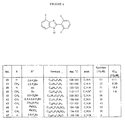
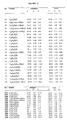
- Figure 7 shows the structures, formulae, weight, and the percentage of various compounds produced using the methods of the present invention, as well as remaining HIV RT activity as reported as a percent of the control in HIV RT inhibition assays.
- the cells were then infected with HIV virus (either mutant or WT), at a multiplicity of infection (MOI) previously determined to provide complete cell killing by 6 days of culture post-infection (e.g., MOI of 0.01-0.05).
- MOI multiplicity of infection
- Each of the HIV isolates was pre-titered to induce equivalent levels of infection based on cell killing or virus production, prior to their use in these assays.
- a range of test compound concentrations was added to the wells in triplicate (e.g ., serial half-log dilutions) to evaluated inhibition of HIV infection.
- Controls for each assay included drug controls (drug colorimetric control wells), drug cytotoxicity control wells (cells with drug), virus control wells (cells with virus), and cell viability controls (cells only).
- Positive control drugs e.g ., AZT and ddC were run in parallel as positive control drugs.
- the present invention provide compositions and methods for the treatment of HIV infection.
- the present invention provides non-nucleoside inhibitors of reverse transcriptase (RT).
- RT reverse transcriptase
- the present invention relates to stable analogues of 1-(2,6-difluorophenyl)-1H,3H-thiazolo[3,4-a]benzimidazole. effective in the inhibition of human immunodeficiency virus (HIV) RT, with particular activity against HIV-1 RT.
- HIV human immunodeficiency virus
- the present invention provides highly purified compositions, with high activity against HIV-1 RT mutants that are refractory to inhibition with other non-nucleoside HIV-1 RT compounds.
Landscapes
- Organic Chemistry (AREA)
- Chemical & Material Sciences (AREA)
- Health & Medical Sciences (AREA)
- Life Sciences & Earth Sciences (AREA)
- General Health & Medical Sciences (AREA)
- Public Health (AREA)
- General Chemical & Material Sciences (AREA)
- Medicinal Chemistry (AREA)
- Nuclear Medicine, Radiotherapy & Molecular Imaging (AREA)
- Pharmacology & Pharmacy (AREA)
- Immunology (AREA)
- Animal Behavior & Ethology (AREA)
- Veterinary Medicine (AREA)
- Chemical Kinetics & Catalysis (AREA)
- Engineering & Computer Science (AREA)
- Bioinformatics & Cheminformatics (AREA)
- Virology (AREA)
- AIDS & HIV (AREA)
- Tropical Medicine & Parasitology (AREA)
- Molecular Biology (AREA)
- Communicable Diseases (AREA)
- Oncology (AREA)
- Pharmaceuticals Containing Other Organic And Inorganic Compounds (AREA)
- Plural Heterocyclic Compounds (AREA)
Claims (10)
- Zusammensetzung, umfassend 1-Aryl-2-(2,6-difluorphenyl)benzimidazolverbindungen mit der allgemeinen Struktur:wobei X" ausgewählt ist aus der Gruppe bestehend aus H und Methyl; und wobei R" ausgewählt ist aus der Gruppe bestehend aus 2,6-Difluorbenzyl, Benzyl, 2,6-Dichlorbenzyl, 2,3,4,5,6-Pentafluorbenzyl, Pyridylmethyl, Benzolsulfonyl und 2,.6-Difluorbenzoyl,

- Zusammensetzung nach Anspruch 1, wobei R" für 2,6-Difluorbenzyl steht.
- Zusammensetzung nach Anspruch 2, wobei X" für H steht.
- Zusammensetzung nach Anspruch 2, wobei X" für Methyl steht.
- Zusammensetzung, umfassend 1-(2,6-Difluorbenzyl)-2-benzimidazolverbindungen mit der allgemeinen Struktur:wobei X' ausgewählt ist aus der Gruppe bestehend aus H und Methyl; und wobei R' ausgewählt ist aus der Gruppe bestehend aus Phenyl, Formyl, Isopropyl, H, Methyl, Hydroxymethyl, 2,6-Difluorbenzyloxymethyl, Methylphenyl, Pyridyl und Naphthyl.
- Zusammensetzung, umfassend 4-, 5-, 6- oder 7-substituierte 1-(2,6-Difluorbenzyl)-2-(2,6-difluorphenyl)benzimidazolverbindungen mit der allgemeinen Struktur:wobei X"" ausgewählt ist aus der Gruppe bestehend aus 6-Methyl, 7-Methyl, 4,5-Dimethyl, 4-Chlor, 6-Chlor und 4-Brom.
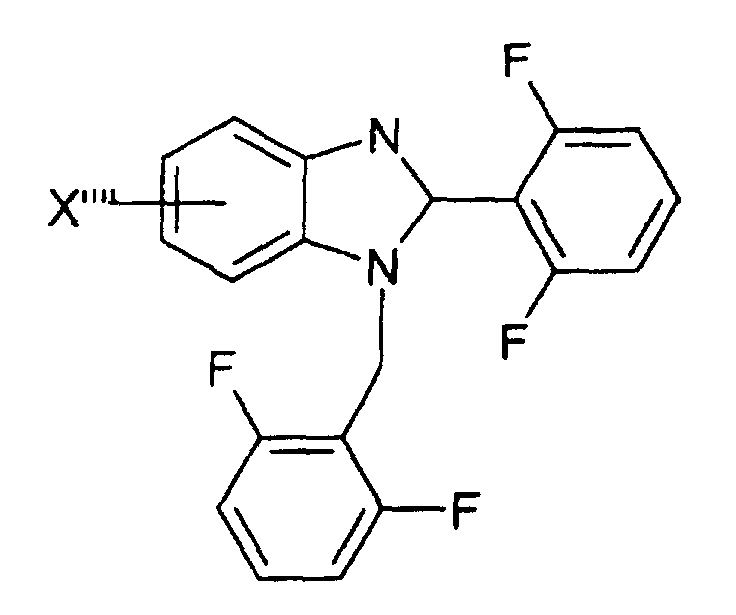
- Zusammensetzung nach Anspruch 6, wobei X"" in 4-Stellung gebunden ist und ausgewählt ist aus der Gruppe bestehend aus Chlor und Brom.
- Zusammensetzung, umfassend 4-substituierte 1-(2,6-Difluorbenzyl)-2-(2,6-difluorphenyl)benzimidazolverbindungen mit der allgemeinen Struktur:wobei X"' ausgewählt ist aus der Gruppe bestehend aus Amin, Acetamid und Dimethylamin.
- Verwendung einer Zusammensetzung nach einem der Ansprüche 1 bis 8 bei der Herstellung eines Arzneimittels zur Behandlung einer menschlichen Immunschwächevirusinfektion.
- Verwendung nach Anspruch 9, wobei es sich bei dem menschlichen Immunschwächevirus um HIV-1 handelt.
Applications Claiming Priority (3)
| Application Number | Priority Date | Filing Date | Title |
|---|---|---|---|
| US3850997P | 1997-02-25 | 1997-02-25 | |
| US38509P | 1997-02-25 | ||
| PCT/US1998/003588 WO1998037072A1 (en) | 1997-02-25 | 1998-02-24 | Substituted benzimidazoles as non-nucleoside inhibitors of reverse transcriptase |
Publications (2)
| Publication Number | Publication Date |
|---|---|
| EP0963371A1 EP0963371A1 (de) | 1999-12-15 |
| EP0963371B1 true EP0963371B1 (de) | 2003-05-02 |
Family
ID=21900368
Family Applications (1)
| Application Number | Title | Priority Date | Filing Date |
|---|---|---|---|
| EP98907608A Expired - Lifetime EP0963371B1 (de) | 1997-02-25 | 1998-02-24 | Substituierte benzimidazole als nicht-nucleoside reverse transcriptase inhibitore |
Country Status (8)
| Country | Link |
|---|---|
| US (2) | US6369235B1 (de) |
| EP (1) | EP0963371B1 (de) |
| JP (1) | JP2001513084A (de) |
| AT (1) | ATE238998T1 (de) |
| AU (1) | AU741772B2 (de) |
| CA (1) | CA2281927C (de) |
| DE (1) | DE69814049T2 (de) |
| WO (1) | WO1998037072A1 (de) |
Families Citing this family (27)
| Publication number | Priority date | Publication date | Assignee | Title |
|---|---|---|---|---|
| AU7076600A (en) * | 1999-08-26 | 2001-03-19 | Government Of The United States Of America, As Represented By The Secretary Of The Department Of Health And Human Services, The | Substituted benzimidazoles as non-nucleoside inhibitors of reverse transcriptase |
| US6770666B2 (en) | 1999-12-27 | 2004-08-03 | Japan Tobacco Inc. | Fused-ring compounds and use thereof as drugs |
| EP1162196A4 (de) | 1999-12-27 | 2003-04-16 | Japan Tobacco Inc | Verbindungen mit kondensierten ringen und ihre verwendung als medikamente |
| US6242461B1 (en) * | 2000-01-25 | 2001-06-05 | Pfizer Inc. | Use of aryl substituted azabenzimidazoles in the treatment of HIV and AIDS related diseases |
| GB0005366D0 (en) * | 2000-03-06 | 2000-04-26 | Xenova Ltd | Pharmaceutical compounds |
| WO2002030423A1 (en) * | 2000-10-12 | 2002-04-18 | Smithkline Beecham Corporation | NF-λB INHIBITORS |
| US7030150B2 (en) | 2001-05-11 | 2006-04-18 | Trimeris, Inc. | Benzimidazole compounds and antiviral uses thereof |
| JP4730574B2 (ja) * | 2001-05-18 | 2011-07-20 | 山田化学工業株式会社 | ベンズイミダゾール化合物、アゾベンズイミダゾール化合物とそのキレート化合物 |
| EP1516873A1 (de) * | 2003-09-22 | 2005-03-23 | Facultés Universitaires Notre-Dame de la Paix | 2-Pyridinon-Derivate als HIV Inhibitoren |
| CN101248060B (zh) * | 2005-06-23 | 2014-09-10 | 阵列生物制药公司 | 用于制备苯并咪唑化合物的方法 |
| PE20080888A1 (es) | 2006-10-18 | 2008-08-26 | Novartis Ag | COMPUESTOS HETEROCICLICOS COMO INHIBIDORES DE LA ACIL-TRANSFERASA DE ACIL-CoA-DIACIL-GLICEROL 1 (DGAT1) |
| TW200831085A (en) * | 2006-12-13 | 2008-08-01 | Merck & Co Inc | Non-nucleoside reverse transcriptase inhibitors |
| US20080173808A1 (en) * | 2007-01-18 | 2008-07-24 | Schering Corporation | Process and device for response normalized liquid chromatography nanospray ionization mass spectrometry (rnlc-nsi-ms) |
| DE102007008420A1 (de) * | 2007-02-21 | 2008-08-28 | Merck Patent Gmbh | Benzimidazolderivate |
| US20080249305A1 (en) * | 2007-03-27 | 2008-10-09 | Calderwood David J | Novel imidazole based heterocycles |
| JP2010522753A (ja) * | 2007-03-27 | 2010-07-08 | アボット・ラボラトリーズ | 新規イミダゾ系複素環 |
| WO2008153701A1 (en) * | 2007-05-24 | 2008-12-18 | Schering Corporation | Compounds for inhibiting ksp kinesin activity |
| US9101628B2 (en) * | 2007-09-18 | 2015-08-11 | The Board Of Trustees Of The Leland Stanford Junior University | Methods and composition of treating a flaviviridae family viral infection |
| TW200927102A (en) * | 2007-09-18 | 2009-07-01 | Univ Stanford | Methods of treating a flaviviridae family viral infection, compositions for treating a flaviviridae family viral infection, and screening assays for identifying compositions for treating a flaviviridae family viral infection |
| US8940730B2 (en) | 2007-09-18 | 2015-01-27 | The Board Of Trustees Of The Leland Stanford Junior University | Methods and compositions of treating a Flaviviridae family viral infection |
| US9149463B2 (en) * | 2007-09-18 | 2015-10-06 | The Board Of Trustees Of The Leland Standford Junior University | Methods and compositions of treating a Flaviviridae family viral infection |
| US8975247B2 (en) | 2009-03-18 | 2015-03-10 | The Board Of Trustees Of The Leland Stanford Junion University | Methods and compositions of treating a flaviviridae family viral infection |
| CA2874303C (en) * | 2012-06-11 | 2020-10-13 | Ucb Biopharma Sprl | Tnf -alpha modulating benz imidazoles |
| ES2803650T3 (es) | 2015-03-18 | 2021-01-28 | Bristol Myers Squibb Co | Compuestos heterocíclicos útiles como inhibidores de TNF |
| BR112017019731A2 (pt) | 2015-03-18 | 2018-05-22 | Bristol-Myers Squibb Company | compostos heterocíclicos tricíclicos úteis como inibidores de tnf |
| ES2797805T3 (es) | 2015-03-18 | 2020-12-03 | Bristol Myers Squibb Co | Compuestos heterocíclicos tricíclicos sustituidos |
| EP3331889B1 (de) | 2015-08-03 | 2020-09-23 | Bristol-Myers Squibb Company | Cyclische verbindungen als modulatoren von tnf-alpha |
Family Cites Families (17)
| Publication number | Priority date | Publication date | Assignee | Title |
|---|---|---|---|---|
| FR2096648B1 (de) * | 1970-04-17 | 1973-08-10 | Gen Electric | |
| FR2092648A1 (en) | 1970-06-04 | 1972-01-28 | Fuveau Sa | 2-(fluorophenyl) benzimidazoles - as antiinflammatory and analgesic agents |
| US3825537A (en) | 1972-02-28 | 1974-07-23 | Squibb & Sons Inc | 1-thiazolin-2-yl(or thiazin-2-yl)-2-aminobenzimidazoles and derivatives thereof |
| US4214089A (en) | 1978-07-18 | 1980-07-22 | American Home Products Corporation | Thiazolo[3,2-a]benzimidazoles, imidazo [2,1-b]thiazoles, and related compounds as antineoplastic agents, and enhancers of the immune response |
| US4434288A (en) | 1982-04-08 | 1984-02-28 | Eli Lilly And Company | Preparation of substituted 1-thiazinyl or 1-thiazolyl-2-aminobenzimidazoles |
| US5356917A (en) | 1985-08-09 | 1994-10-18 | Eli Lilly And Company | Aryl-substituted rhodanine derivatives |
| FR2587029B1 (fr) | 1985-09-11 | 1987-10-30 | Synthelabo | Derives de benzimidazole, leur preparation et leur application en therapeutique |
| IT1243362B (it) | 1990-07-25 | 1994-06-10 | Pietro Monforte | Sintesi di attivita' anti-hiv di 1h, 3h-tiazolo 3,4-a benzimidazoli 1-sostituiti |
| US5248672A (en) | 1990-11-01 | 1993-09-28 | The Regents Of The University Of Michigan | Polysubstituted benzimidazole nucleosides as antiviral agents |
| GB9205368D0 (en) | 1992-03-12 | 1992-04-22 | Pfizer Ltd | Benzimidozole anthelmintic agents |
| US5622960A (en) | 1992-04-14 | 1997-04-22 | The United States Of America As Represented By The Department Of Health And Human Services | Topoisomerase II inhibitors and therapeutic uses therefor |
| JPH09506335A (ja) | 1993-09-22 | 1997-06-24 | ザ、ウェルカム、ファンデーション、リミテッド | 抗ウイルス剤としてのビス(アミノベンズイミダゾリル)アルカン |
| US6815461B1 (en) | 1994-01-20 | 2004-11-09 | The University Of North Carolina At Chapel Hill | Method of inhibiting retroviral integrase |
| US5545653A (en) | 1995-06-07 | 1996-08-13 | Eli Lilly And Company | Anti-viral compounds |
| GB9600143D0 (en) | 1996-01-05 | 1996-03-06 | Wellcome Found | Therapeutic compounds |
| US5821242A (en) | 1996-06-06 | 1998-10-13 | Eli Lilly And Company | Anti-viral compounds |
| AU7715198A (en) | 1997-06-04 | 1998-12-21 | Eli Lilly And Company | Anti-viral compounds |
-
1998
- 1998-02-24 AT AT98907608T patent/ATE238998T1/de not_active IP Right Cessation
- 1998-02-24 US US09/380,171 patent/US6369235B1/en not_active Expired - Fee Related
- 1998-02-24 AU AU63371/98A patent/AU741772B2/en not_active Ceased
- 1998-02-24 EP EP98907608A patent/EP0963371B1/de not_active Expired - Lifetime
- 1998-02-24 CA CA002281927A patent/CA2281927C/en not_active Expired - Fee Related
- 1998-02-24 DE DE69814049T patent/DE69814049T2/de not_active Expired - Fee Related
- 1998-02-24 WO PCT/US1998/003588 patent/WO1998037072A1/en not_active Ceased
- 1998-02-24 JP JP53698398A patent/JP2001513084A/ja not_active Ceased
-
2002
- 2002-04-09 US US10/119,634 patent/US6894068B2/en not_active Expired - Fee Related
Also Published As
| Publication number | Publication date |
|---|---|
| US6369235B1 (en) | 2002-04-09 |
| AU741772B2 (en) | 2001-12-06 |
| EP0963371A1 (de) | 1999-12-15 |
| CA2281927C (en) | 2004-01-27 |
| DE69814049T2 (de) | 2004-02-19 |
| AU6337198A (en) | 1998-09-09 |
| DE69814049D1 (de) | 2003-06-05 |
| WO1998037072A1 (en) | 1998-08-27 |
| ATE238998T1 (de) | 2003-05-15 |
| US6894068B2 (en) | 2005-05-17 |
| CA2281927A1 (en) | 1998-08-27 |
| JP2001513084A (ja) | 2001-08-28 |
| US20030191160A1 (en) | 2003-10-09 |
Similar Documents
| Publication | Publication Date | Title |
|---|---|---|
| CA2281927C (en) | Substituted benzimidazoles as non-nucleoside inhibitors of reverse transcriptase | |
| Roth et al. | Synthesis and biological activity of novel nonnucleoside inhibitors of HIV-1 reverse transcriptase. 2-Aryl-substituted benzimidazoles | |
| Monforte et al. | Design and synthesis of N1-aryl-benzimidazoles 2-substituted as novel HIV-1 non-nucleoside reverse transcriptase inhibitors | |
| Livermore et al. | Synthesis and anti-HIV-1 activity of a series of imidazo [1, 5-b] pyridazines | |
| Guare et al. | A series of 5-aminosubstituted 4-fluorobenzyl-8-hydroxy-[1, 6] naphthyridine-7-carboxamide HIV-1 integrase inhibitors | |
| Ferro et al. | Searching for novel N1-substituted benzimidazol-2-ones as non-nucleoside HIV-1 RT inhibitors | |
| PL112910B1 (en) | Process for preparing novel derivatives of 1-sulfonylobenzimidazole | |
| Barot et al. | Design, synthesis and docking studies of some novel (R)-2-(4′-chlorophenyl)-3-(4′-nitrophenyl)-1, 2, 3, 5-tetrahydrobenzo [4, 5] imidazo [1, 2-c] pyrimidin-4-ol derivatives as antitubercular agents | |
| Monforte et al. | Novel N1-substituted 1, 3-dihydro-2H-benzimidazol-2-ones as potent non-nucleoside reverse transcriptase inhibitors | |
| CA3163103A1 (en) | Compounds for treating tuberculosis | |
| Rai et al. | Synthesis and Anti‐HIV Activity of 4‐(Naphthalen‐1‐yl)‐1, 2, 5‐thiadiazol‐3‐hydroxyl Derivatives | |
| CN105175414B (zh) | 咪唑[4,5‑b]吡啶巯乙酰胺类衍生物及其制备方法与应用 | |
| Wang et al. | Discovery of nitropyridine derivatives as potent HIV-1 non-nucleoside reverse transcriptase inhibitors via a structure-based core refining approach | |
| Sang et al. | Chemical space exploration of novel naphthyl-carboxamide-diarylpyrimidine derivatives with potent anti-HIV-1 activity | |
| Zaręba et al. | New cyclic arylguanidine scaffolds as a platform for development of antimicrobial and antiviral agents | |
| Farhan et al. | Heterocyclization of isoniazid: synthesis and antimicrobial activity of some new pyrimidine, 1, 3-thiazole, 1, 2, 4-thiadiazole, and 1, 2, 4-triazole derivatives derived from isoniazid | |
| Masuda et al. | Studies of nonnucleoside HIV-1 reverse transcriptase inhibitors. Part 1: Design and synthesis of thiazolidenebenzenesulfonamides | |
| Corona et al. | Antiviral activity of benzotriazole based derivatives | |
| US4118573A (en) | Substituted 1-sulfonylbenzimidazoles | |
| Li et al. | Arylazolyl (azinyl) thioacetanilides: part 19: discovery of novel substituted Imidazo [4, 5‐b] pyridin‐2‐ylthioacetanilides as potent HIV NNRTIs via a structure‐based bioisosterism approach | |
| Balzarini et al. | Oxathiin carboxanilide derivatives: a class of non-nucleoside HIV-1-specific reverse transcriptase inhibitors (NNRTIs) that are active against mutant HIV-1 strains resistant to other NNRTIs | |
| EP1210336B1 (de) | Substituierte benzimidazole als nicht-nucleosid-inhibitoren von reverser transcriptase | |
| Li et al. | Arylazolyl (azinyl) thioacetanilides. Part 16: Structure-based bioisosterism design, synthesis and biological evaluation of novel pyrimidinylthioacetanilides as potent HIV-1 inhibitors | |
| Tian et al. | Design, Synthesis, and Biological Evaluation of Novel 3, 5‐Disubstituted‐1, 2, 6‐Thiadiazine‐1, 1‐Dione Derivatives as HIV‐1 NNRTI s | |
| Moustafa et al. | Design, synthesis, biological and molecular docking studies of some o-hydroxycyanopyridine derivatives |
Legal Events
| Date | Code | Title | Description |
|---|---|---|---|
| PUAI | Public reference made under article 153(3) epc to a published international application that has entered the european phase |
Free format text: ORIGINAL CODE: 0009012 |
|
| 17P | Request for examination filed |
Effective date: 19990830 |
|
| AK | Designated contracting states |
Kind code of ref document: A1 Designated state(s): AT BE CH DE DK ES FI FR GB GR IE IT LI LU MC NL PT SE |
|
| AX | Request for extension of the european patent |
Free format text: AL PAYMENT 19990830;LT PAYMENT 19990830;LV PAYMENT 19990830;MK PAYMENT 19990830;RO PAYMENT 19990830;SI PAYMENT 19990830 |
|
| 17Q | First examination report despatched |
Effective date: 20000706 |
|
| GRAH | Despatch of communication of intention to grant a patent |
Free format text: ORIGINAL CODE: EPIDOS IGRA |
|
| GRAH | Despatch of communication of intention to grant a patent |
Free format text: ORIGINAL CODE: EPIDOS IGRA |
|
| GRAA | (expected) grant |
Free format text: ORIGINAL CODE: 0009210 |
|
| AK | Designated contracting states |
Designated state(s): AT BE CH DE DK ES FI FR GB GR IE IT LI LU MC NL PT SE |
|
| AX | Request for extension of the european patent |
Extension state: AL LT LV MK RO SI |
|
| PG25 | Lapsed in a contracting state [announced via postgrant information from national office to epo] |
Ref country code: NL Free format text: LAPSE BECAUSE OF FAILURE TO SUBMIT A TRANSLATION OF THE DESCRIPTION OR TO PAY THE FEE WITHIN THE PRESCRIBED TIME-LIMIT Effective date: 20030502 Ref country code: FI Free format text: LAPSE BECAUSE OF FAILURE TO SUBMIT A TRANSLATION OF THE DESCRIPTION OR TO PAY THE FEE WITHIN THE PRESCRIBED TIME-LIMIT Effective date: 20030502 Ref country code: AT Free format text: LAPSE BECAUSE OF FAILURE TO SUBMIT A TRANSLATION OF THE DESCRIPTION OR TO PAY THE FEE WITHIN THE PRESCRIBED TIME-LIMIT Effective date: 20030502 |
|
| REG | Reference to a national code |
Ref country code: GB Ref legal event code: FG4D |
|
| REG | Reference to a national code |
Ref country code: CH Ref legal event code: EP |
|
| REF | Corresponds to: |
Ref document number: 69814049 Country of ref document: DE Date of ref document: 20030605 Kind code of ref document: P |
|
| REG | Reference to a national code |
Ref country code: IE Ref legal event code: FG4D |
|
| PG25 | Lapsed in a contracting state [announced via postgrant information from national office to epo] |
Ref country code: SE Free format text: LAPSE BECAUSE OF FAILURE TO SUBMIT A TRANSLATION OF THE DESCRIPTION OR TO PAY THE FEE WITHIN THE PRESCRIBED TIME-LIMIT Effective date: 20030802 Ref country code: GR Free format text: LAPSE BECAUSE OF FAILURE TO SUBMIT A TRANSLATION OF THE DESCRIPTION OR TO PAY THE FEE WITHIN THE PRESCRIBED TIME-LIMIT Effective date: 20030802 Ref country code: DK Free format text: LAPSE BECAUSE OF FAILURE TO SUBMIT A TRANSLATION OF THE DESCRIPTION OR TO PAY THE FEE WITHIN THE PRESCRIBED TIME-LIMIT Effective date: 20030802 |
|
| PG25 | Lapsed in a contracting state [announced via postgrant information from national office to epo] |
Ref country code: PT Free format text: LAPSE BECAUSE OF FAILURE TO SUBMIT A TRANSLATION OF THE DESCRIPTION OR TO PAY THE FEE WITHIN THE PRESCRIBED TIME-LIMIT Effective date: 20030804 |
|
| PG25 | Lapsed in a contracting state [announced via postgrant information from national office to epo] |
Ref country code: ES Free format text: LAPSE BECAUSE OF FAILURE TO SUBMIT A TRANSLATION OF THE DESCRIPTION OR TO PAY THE FEE WITHIN THE PRESCRIBED TIME-LIMIT Effective date: 20030813 |
|
| REG | Reference to a national code |
Ref country code: CH Ref legal event code: NV Representative=s name: TROESCH SCHEIDEGGER WERNER AG |
|
| NLV1 | Nl: lapsed or annulled due to failure to fulfill the requirements of art. 29p and 29m of the patents act | ||
| LTIE | Lt: invalidation of european patent or patent extension |
Effective date: 20030502 |
|
| PGFP | Annual fee paid to national office [announced via postgrant information from national office to epo] |
Ref country code: MC Payment date: 20040206 Year of fee payment: 7 |
|
| PGFP | Annual fee paid to national office [announced via postgrant information from national office to epo] |
Ref country code: SE Payment date: 20040219 Year of fee payment: 7 |
|
| PGFP | Annual fee paid to national office [announced via postgrant information from national office to epo] |
Ref country code: IE Payment date: 20040224 Year of fee payment: 7 |
|
| PGFP | Annual fee paid to national office [announced via postgrant information from national office to epo] |
Ref country code: LU Payment date: 20040226 Year of fee payment: 7 |
|
| PLBE | No opposition filed within time limit |
Free format text: ORIGINAL CODE: 0009261 |
|
| STAA | Information on the status of an ep patent application or granted ep patent |
Free format text: STATUS: NO OPPOSITION FILED WITHIN TIME LIMIT |
|
| ET | Fr: translation filed | ||
| 26N | No opposition filed |
Effective date: 20040203 |
|
| PG25 | Lapsed in a contracting state [announced via postgrant information from national office to epo] |
Ref country code: LU Free format text: LAPSE BECAUSE OF NON-PAYMENT OF DUE FEES Effective date: 20050224 Ref country code: IE Free format text: LAPSE BECAUSE OF NON-PAYMENT OF DUE FEES Effective date: 20050224 |
|
| PG25 | Lapsed in a contracting state [announced via postgrant information from national office to epo] |
Ref country code: MC Free format text: LAPSE BECAUSE OF NON-PAYMENT OF DUE FEES Effective date: 20050228 |
|
| REG | Reference to a national code |
Ref country code: IE Ref legal event code: MM4A |
|
| PGFP | Annual fee paid to national office [announced via postgrant information from national office to epo] |
Ref country code: GB Payment date: 20090227 Year of fee payment: 12 Ref country code: CH Payment date: 20090225 Year of fee payment: 12 |
|
| PGFP | Annual fee paid to national office [announced via postgrant information from national office to epo] |
Ref country code: IT Payment date: 20090225 Year of fee payment: 12 Ref country code: DE Payment date: 20090331 Year of fee payment: 12 |
|
| PGFP | Annual fee paid to national office [announced via postgrant information from national office to epo] |
Ref country code: BE Payment date: 20090408 Year of fee payment: 12 |
|
| PGFP | Annual fee paid to national office [announced via postgrant information from national office to epo] |
Ref country code: FR Payment date: 20090217 Year of fee payment: 12 |
|
| BERE | Be: lapsed |
Owner name: THE *GOVERNMENT OF THE UNITED STATES OF AMERICA AS Effective date: 20100228 |
|
| REG | Reference to a national code |
Ref country code: CH Ref legal event code: PL |
|
| GBPC | Gb: european patent ceased through non-payment of renewal fee |
Effective date: 20100224 |
|
| PG25 | Lapsed in a contracting state [announced via postgrant information from national office to epo] |
Ref country code: LI Free format text: LAPSE BECAUSE OF NON-PAYMENT OF DUE FEES Effective date: 20100228 Ref country code: CH Free format text: LAPSE BECAUSE OF NON-PAYMENT OF DUE FEES Effective date: 20100228 |
|
| REG | Reference to a national code |
Ref country code: FR Ref legal event code: ST Effective date: 20101029 |
|
| PG25 | Lapsed in a contracting state [announced via postgrant information from national office to epo] |
Ref country code: FR Free format text: LAPSE BECAUSE OF NON-PAYMENT OF DUE FEES Effective date: 20100301 |
|
| PG25 | Lapsed in a contracting state [announced via postgrant information from national office to epo] |
Ref country code: DE Free format text: LAPSE BECAUSE OF NON-PAYMENT OF DUE FEES Effective date: 20100901 Ref country code: BE Free format text: LAPSE BECAUSE OF NON-PAYMENT OF DUE FEES Effective date: 20100228 |
|
| PG25 | Lapsed in a contracting state [announced via postgrant information from national office to epo] |
Ref country code: IT Free format text: LAPSE BECAUSE OF NON-PAYMENT OF DUE FEES Effective date: 20100224 Ref country code: GB Free format text: LAPSE BECAUSE OF NON-PAYMENT OF DUE FEES Effective date: 20100224 |