EP0965553A2 - Fadentraversiervorrichtung mit rotierenden Flügeln - Google Patents
Fadentraversiervorrichtung mit rotierenden Flügeln Download PDFInfo
- Publication number
- EP0965553A2 EP0965553A2 EP99108090A EP99108090A EP0965553A2 EP 0965553 A2 EP0965553 A2 EP 0965553A2 EP 99108090 A EP99108090 A EP 99108090A EP 99108090 A EP99108090 A EP 99108090A EP 0965553 A2 EP0965553 A2 EP 0965553A2
- Authority
- EP
- European Patent Office
- Prior art keywords
- yarn
- package
- traverse
- rotating wings
- section
- Prior art date
- Legal status (The legal status is an assumption and is not a legal conclusion. Google has not performed a legal analysis and makes no representation as to the accuracy of the status listed.)
- Withdrawn
Links
Images





Classifications
-
- B—PERFORMING OPERATIONS; TRANSPORTING
- B65—CONVEYING; PACKING; STORING; HANDLING THIN OR FILAMENTARY MATERIAL
- B65H—HANDLING THIN OR FILAMENTARY MATERIAL, e.g. SHEETS, WEBS, CABLES
- B65H54/00—Winding, coiling, or depositing filamentary material
- B65H54/02—Winding and traversing material on to reels, bobbins, tubes, or like package cores or formers
- B65H54/28—Traversing devices; Package-shaping arrangements
- B65H54/2836—Traversing devices; Package-shaping arrangements with a rotating guide for traversing the yarn
- B65H54/2839—Traversing devices; Package-shaping arrangements with a rotating guide for traversing the yarn counter rotating guides, e.g. wings
-
- B—PERFORMING OPERATIONS; TRANSPORTING
- B65—CONVEYING; PACKING; STORING; HANDLING THIN OR FILAMENTARY MATERIAL
- B65H—HANDLING THIN OR FILAMENTARY MATERIAL, e.g. SHEETS, WEBS, CABLES
- B65H49/00—Unwinding or paying-out filamentary material; Supporting, storing or transporting packages from which filamentary material is to be withdrawn or paid-out
-
- B—PERFORMING OPERATIONS; TRANSPORTING
- B65—CONVEYING; PACKING; STORING; HANDLING THIN OR FILAMENTARY MATERIAL
- B65H—HANDLING THIN OR FILAMENTARY MATERIAL, e.g. SHEETS, WEBS, CABLES
- B65H2701/00—Handled material; Storage means
- B65H2701/30—Handled filamentary material
- B65H2701/31—Textiles threads or artificial strands of filaments
Definitions
- the present invention relates to a traverse apparatus having rotating wings for rotating two yarn guide rotating wings in opposite directions. More particularly, the present invention relates to a traverse apparatus having rotating wings employed when a yarn is wound as a cone-shaped package.
- a traverse apparatus having rotating wings rotates two yarn guide rotating wings disposed one over the other in opposite directions at a constant speed, and transfers a yarn wound around a package to the yarn guide rotating wings alternately, and guides the yarn to a yarn guide plate disposed along the locus of movement of the yarn guide rotating wings, thereby reciprocally traversing the yarn wound around the package in the axial direction.
- a traverse apparatus having rotating wings comprises two yarn guide rotating wings that rotate in opposite directions, an elliptical driven gear provided at the input section of the yarn guide rotating wing, and an elliptical drive gear engaged with the driven gear and provided at the output section of a drive motor, wherein the yarn guide rotating wing is pulsated and rotated by means of the gears to change the traverse speed in the axial direction of a cone-shaped package, and an engagement of the gears is set so that the traverse speed is faster on the shorter diameter side of the package and slower on the longer diameter side thereof.
- the yarn guide rotating wing is pulsated and rotated by employing the elliptical drive gear and the driven gear to change the traverse speed in the axial direction of the cone-shaped package.
- the engagement of the above drive and driven gears are set so that the traverse speed is fast on the shorter diameter side of the package and is slower on the longer diameter side thereof.
- the amount of yarn wound there is small on the shorter diameter side of the package and is large on the longer diameter side thereof, so that a well-shaped cone-shaped package can be obtained.
- the gears may engage in such a way as to be positioned on a path in which a minimum traverse speed using the yarn guide rotating wing is changed from the longer diameter side to the shorter diameter side of the cone-shaped package and so as to be positioned on the path in which a maximum traverse speed is changed from the shorter diameter side to the longer diameter side.
- the average traverse speed on the path from the longer diameter side to the shorter diameter side of the package is slower than that on the path from the shorter diameter side to the longer diameter side.
- the length of a yarn wound on the path from the longer diameter side to the shorter diameter side becomes longer than that of a yarn wound on the path from the shorter diameter side to the longer diameter side.
- the wind number on the path from the longer diameter side to the shorter diameter side becomes larger than that on the path from the shorter diameter side to the longer diameter side. As a result, the yarn release action is improved.
- Figures 7A and 7B describe the wind number from the viewpoint of ease of release.
- Figure 7A shows a package with a small wind number, and the curvature R of the yarn is small at the release point at which the yarn is released from the package surface.
- Figure 7B shows a package with a large wind number, wherein the curvature R is large at the release point.
- the angle ⁇ of the package with a small wind number becomes larger than that of the package with a large wind number.
- the angle ⁇ of the package with a large wind number becomes larger. Therefore, during winding, the apparatus offers a superior release action when the wind number on the path from the longer diameter side to the shorter diameter side is larger than that on the path from the shorter diameter side to the longer diameter side.
- the present invention has been made in consideration of the above circumstance. According to the present invention, the wind number ratio between the forward path and the backward path is changed without changing the total wind numbers of forward and backward, thereby making it possible to perform winding with improved yarn release action and ensure that the package shape is properly maintained.
- the above traverse apparatus having rotating wings comprises a sensor for detecting the rotation speed of the package and a control section for adjusting the rotation speed of the drive motor according to the output of the sensor, wherein the control section may maintain a relationship between package rotation and yarn guide rotating wing rotation irrespective of the package rotation speed.
- Figure 1 is a schematic view showing a traverse apparatus having rotating wings according to this embodiment which is used as a traverse mechanism of an automatic winder.
- An automatic winder winds around a cone-shaped package 2 a yarn 1 released from a yarn supply bobbin (not shown in the drawing) while cutting and removing defective portions of the yarn 1.
- the cone-shaped package 2 is contacted, rotated, and driven by a friction drum 5 while the left and right ends of that bobbin 3 are supported able to be rotated by a bobbin holder 4.
- the friction drum 5 is supported by a bearing 6 at both the right and left ends thereof, and is rotated and driven by a winding motor 7, a belt 8, or the like.
- a traverse apparatus having rotating wings 9 for traversing the yarn 1 to be wound around the package 2.
- the traverse apparatus having rotating wings 9 comprises two yarn guide rotating wings 10a and 10b rotated in opposite directions by means of a gear mechanism (not shown in the drawing) and a yarn guide plate 12 having a guide section 11 formed in the shape of a mound along the locus of movement of these yarn guide rotating wings 10a and 10b.
- the yarn 1 moving from the yarn supply bobbin (not shown in the drawing) to the package 2 is transferred to the above yarn guide rotating wings 10a and 10b alternately, and is guided to the guide section 11 of the yarn guide plate 12 and is traversed.
- their rotary shafts 13a and 13b are slightly displaced so as to be rotated at identical speeds in opposite directions by a publicly known gear mechanism (not shown in the drawing).
- an elliptical driven gear 14 is provided with its rotary shaft 15 being eccentrically set.
- an elliptical drive gear 16 is engaged with its rotary shaft 17 being eccentrically set. Elliptical shapes of these driven and drive gears 14 and 16 are formed, respectively, so as to be constantly engaged with each other.
- the drive gear 16 is rotated and driven by means of a drive motor 21 via a transmission mechanism 20 comprising a pulley 18, a belt 19, or the like.
- the transmission mechanism 20 may be a sprocket, a chain, or a gear train or similar device.
- pulsating rotation means that while the driven gear 14 is rotated 360 degrees, its angular velocity is changed. More specifically, the angular velocity of the driven gear 14 reaches a maximum when the longer diameter section 16a of the drive gear 16 is engaged with the shorter diameter section 14b of the driven gear 14, as shown in Figure 1. Conversely, the angular velocity of the driven gear 14 reaches a minimum when the shorter diameter section 16b of the drive gear 16 is engaged with the longer diameter section 14a of the driven gear 14.
- the yarn guide rotating wings 10a and 10b are pulsated and rotated at identical speeds in opposite directions.
- the traverse speed of the yarn 1 changes along the axial direction of the package 2. More specifically, the gear ratio is set so that the single-reciprocating traverse movement in which the yarn 1 moves from the shorter diameter end 2a of the package 2 to the longer diameter end 2b, and is returned to the shorter diameter end 2a again is equivalent to one rotation of the driven gear 14.
- the maximum traverse speed and the minimum traverse speed each are produced once between single reciprocating traverse movement of the yarn 1.
- the elliptical drive gear 16 and the driven gear 14 are employed, thereby to pulsate and rotate the yarn guide rotating wings 10a and 10b and change the traverse speed in the axial direction of the cone-shaped package 2.
- the engagement of the drive gear 16 and the driven gear 14 is set so that the traverse speed is fast at the shorter diameter end 2a of the package 2 and slow at the longer diameter end 2b.
- the amount of yarn 1 wound becomes small on the shorter diameter side and large on the longer diameter side, and a well-formed cone-shaped package 2 can be obtained.
- the winding angle pattern of the yarn released from the shorter diameter end 2a to the longer diameter end 2b becomes identical to that of the yarn 1 released from the longer diameter end 2b to the shorter diameter end 2a, thereby impairing the release performance.
- the winding angle of the yarn 1 when released from the shorter diameter end 2a to the longer diameter end 2b should preferably be much smaller than that of the yarn 1 when released from the longer diameter end 2b to the shorter diameter end 2a. In the above embodiment, however, since the winding angle from the shorter diameter end 2a to the longer diameter end 2b is identical to that from the longer diameter end 2b to the shorter diameter end 2a, there is room for improvement regarding the release performance.
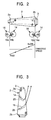
- the traverse speed is actually changed along the axial direction of the package 2, as indicated by the winding angle ⁇ of Figure 2.
- the average traverse speed from the shorter diameter end 2a to the longer diameter end 2b becomes identical to that from the longer diameter end 2b to the shorter diameter end 2a.
- the winding angle of the yarn 1b when the yarn 1b wound from the longer diameter end 2b to the shorter diameter end 2a is released from the shorter diameter end 2a to the longer diameter end 2b (in hardly released direction) becomes identical to that of the yarn 1a when the yarn 1a wound from the shorter diameter end 2a to the longer diameter end 2b is released from the longer diameter end 2b to the shorter diameter end 2a (in easily released direction), thus impairing the release performance of the former yarn 1b.
- the winding angle of the former yarn 1b may be decreased as indicated by the dashed line 26.
- the present invention is configured such that the engagement position between the above driven gear 14 and the drive gear 16 is set so that the maximum traverse speed is shifted to the path from the shorter diameter end 2a to the longer diameter end 2b, and the minimum traverse speed is shifted to the path from the longer diameter end 2b to the shorter diameter end 2a.
- the immediately preceding part of the longer diameter section 16a of the drive gear 16 are engaged with the immediately preceding part of a shorter diameter section 14b of the driven gear 14.
- the immediately preceding part of the shorter diameter section 16b of the drive gear 16 is engaged with the immediately preceding part of the longer diameter section 14a of the driven gear 14.
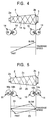
- the average traverse speed from the shorter diameter end 2a to the longer diameter end 2b is faster than that from the longer diameter end 2b to the shorter diameter end 2a (indicated by the dashed line 24 in Figure 5).
- the yarn 1 is wound at these average traverse speeds 23 and 24, when the winding angles of the yarns 1a and 1b are virtually represented, the winding angle of the yarn 1a wound from the shorter diameter end 2a to the longer diameter end 2b is increased, the yarn 1a has a shorter yarn length and has fewer windings, as indicated by the broken line 25 in Figure 5.
- the winding angle of the yarn 1b wound from the longer diameter end 2b to the shorter diameter end 2a is decreased, the yarn 1b has a longer yarn length and has more windings, as indicated by the dashed line 26 in Figure 5.
- the yarn 1a (indicated by the broken line 25 in Figure 5) wound from the shorter diameter end 2a to the longer diameter end 2b is released from the longer diameter end 2b to the shorter diameter end 2a.
- the yarn 1b (indicated by the dashed line 26 in Figure 5) wound from the longer diameter end 2b to the shorter diameter end 2a is released from the shorter diameter end 2a to the longer diameter end 2b.
- the winding angle of the yarn 1a when it is released from the easily released longer diameter end 2b to the shorter diameter end 2a is increased as indicated by the broken line 25 (corresponding to broken line 25 in Figure 5), thereby improving the release performance.
- the winding angle of the yarn 1b when it is released from the hardly released shorter diameter end 2a to the longer diameter end 2b is decreased as indicated by the dashed line 26 (corresponding to dashed line 26 in Figure 5), thereby improving the release performance.
- the maximum traverse speed is set between the shorter diameter end 2a and the center section 2c of the package 2
- the minimum traverse speed is set between the longer diameter end 2b and the center section 2c of the package 2.
- the winding angle ⁇ of the shorter diameter end 2a is greater than that of the longer diameter end 2b, and a winding quantity of the yarn 1 on the shorter diameter side is smaller than that of the yarn 1 on the longer diameter side, so that a well-formed cone-shaped package 2 can be obtained.
- the advantage of this embodiment is that a well-shaped cone-shaped package 2 can be obtained in a similar manner to that in the aforementioned embodiment, and a package 2 with good release action can be obtained.
- a sensor 27 for detecting the rotation speed of the package 2 is disposed in the vicinity of the bobbin holder 4 of the above package 2.
- a control section 28 for adjusting the rotation speed of the above drive motor 21 according to the output of that sensor 27 is provided. Thereby, the relationship between the rotation of the package 2 and the rotation of the yarn guide rotating wings 10a and 10b may be maintained by means of the control section 28 irrespective of the rotation speed of the package 2.
- a traverse drum with an engraved traverse groove (not shown in the drawings) is rotated and driven in contact with the package 2.
- a predetermined relationship between the rotation of the package 2 and the rotation of the yarn guide rotating wings 10a and 10b is always maintained by means of the above sensor 27 and the control section 28, thereby making it possible to form a proper package 2 free from traverse disturbance even if there a slip is produced between the friction drum 5 and the package 2 at the time of yarn splicing.
- the traverse apparatus having rotating wings shown in Figure 12 rotates two yarn guide rotating wings b1 and b2 with rotary shafts a1 and a2 being slightly displaced in opposite directions at the same speed, pushes a yarn d wound around a package c at the side section of the yarn guide rotating wing b, and moves the yarn d along a yarn guide plate e.
- the traverse apparatus transfers the yarn d at both ends of the package c from the side section of one yarn guide rotating wing b1 to the side section another yarn guide rotating wing b2, thereby making it possible to reciprocate it in the axial direction of the package c (Refer to the Japanese Patent laid open (Tokkai-Hei) No. 9-86793).
- the package c of the yarn d at which periodic alternating twists are thus produced is low in commodity value.
- the package c around which the yarn d is wound is to serve as a weft such as air jet room, when the width of a woven fabric matches the false twisting period, an undesireable striped pattern is produced on the woven fabric i, as shown in Figure 15.
- the traverse apparatus having rotating wings of the automatic winder shown in Figures 8 to 11 is designed so as not to produce a twist in the yarn. This traverse apparatus having rotating wings will be described below.
- An automatic winder winds a yarn 1 released from a yarn supply bobbin (not shown in the drawings) around a cone-shaped winding package 2 while cutting and removing defective sections of the yarn 1.
- the winding package 2 is supported able to be rotated by means of a holder (not shown in the drawings) at the right and left ends thereof, and is contacted, rotated, and driven by means of a friction drum 5, as shown in Figure 10.
- a traverse apparatus having rotating wings 9 for traversing the yarn 1 around the package 2 is disposed in the vicinity of the friction drum 5.
- the traverse apparatus having rotating wings 9 has two yarn guide rotating wings 36a and 36b with rotary shafts 35a and 35b being slightly displaced, as shown in Figure 8.
- Each of the yarn guide rotating wings 36a and 36b is rotated in the opposite direction at the same speed by means of a publicly known gear mechanism housed in a gear case 37, as shown in Figure 11.
- the gear ratio of the above gear mechanism is set so that these yarn guide rotating wings 36a and 36b overlap at both ends (both traverse ends) of the winding package 2.
- Yarn holding sections 38a and 38b respectively, for holding the yarn 1 moving from the yarn supply bobbin to the winding package 2, are provided at the tips of the yarn guide rotating wings 36a and 36b.
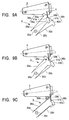
- Each of the yarn holding sections 38a and 38b is formed stepwise, i.e., at a lower section in the forward rotation direction and at an upper section in the backward rotation direction of the yarn guide rotating wings 36a and 36b so as to transfer the held yarn 1 from the yarn holding section 38a of one yarn guide rotating wing 36a to the yarn holding section 38b of the other yarn guide rotating wing 36b, as shown in Figures 9A, 9B and 9C.
- the yarn holding sections 38a and 38b have lower step sections 39a and 39b in the forward rotation direction of the respective yarn guide rotating wings 36a and 36b, upper step sections 40a and 40b in the backward rotation direction, and U-shaped cavity sections 41a and 41b provided at connection sections thereof for substantially holding the yarn 1.
- the lower step sections 39a and 39b, and the upper step sections 40a and 40b are formed centrosymmetrically at both ends of the yarn guide rotating wings 36a and 36b around the rotary shafts 35a and 35b of the yarn guide rotating wings 36a and 36b provided therewith.
- U-shaped grooved ceramic parts may be engaged in the cavity sections 41a and 41b to prevent wear.
- the upper step sections 40a and 40b are arc-shaped around the rotary shafts 35a and 35b of the yarn guide rotating wings 36a and 36b provided therewith.
- the lower step section 39b (also 39a) are tapered so as to push up the yarn 1 held on the yarn holding section 38a of the yarn guide rotating wing 36a together with the relative rotation of the yarn guide rotating wings 36a and 36b, remove the yarn 1, and transfer it to the yarn holding section 38b, and these sections 39a and 39b serve as the yarn removing section (hereinafter, designated by reference numeral 39).
- the yarn removing section 39b (also 39a) is formed so that the front parts thereof are depressed beneath the yarn 1 held at the cavity section 41a of the other yarn holding section 38a, as shown in Figure 9A, and an intermediate part is formed so as to push up the depressed yarn 1 in the cavity section 41a, as shown in Figure 9B, and a rear part is formed so as to be overlapped with or higher than the upper step section 40a of another yarn holding section 38a, as shown in Figure 9C and Figure 1, and entirely, these sections are tapered and lower than the above upper step section 40a.
- each of the yarn removing sections 39a and 39b is formed centrosymmetrically at both ends of the yarn guide rotating wings 36a and 36b with respect to the rotary shafts 35a and 35b of the yarn guide rotating wings 36a and 36b provided therewith.
- the deviation quantity of the rotary shafts 35a and 35b of the two yarn guide rotating wings 36a and 36b is set so that the yarn removing section 39b of one yarn guide rotating wing 36b is overlaid on the upper step section 40a of the other yarn guide rotating wing 36a.
- the length between the rotary shaft 35a of the yarn guide rotating wing 36a and the upper step section 40a essentially matches that between the rotary shaft 35b of the yarn guide rotating wing 36b and the rear part of the yarn removing section 39b.
- these two yarn guide rotating wings 36a and 36b are rotated in opposite directions, and every time these yarn guide rotating wings 36a and 36b overlap each other at both ends (both traverse ends) of the winding package 2, as shown in Figures 9A, 9B and 9C, the yarn 1 in the cavity section 41a of the holding section 38a of one yarn guide rotating wing 36a (the upper side in Figure 9) is pushed up and removed by the yarn removing section 39b of the other yarn guide rotating wing 36b (the lower side in Figure 9), and is securely transferred to the cavity section 41b of the holding section 38b of the other yarn guide rotating wing 36b (the lower side in Figure 9).
- the rear part of the yarn removing section 39b of the lower yarn holding section 38b so as to be slightly higher than the upper step section 40a of the upper yarn holding section 38a, as shown in Figure 2C and Figure 1. If it is formed too high, however, the yarn removing section 39b causes the yarn 1 to jump up and slip off the holding section 38b.
- the rear part should therefore be formed at a suitable height. Actually, as shown in Figure 2C and Figure 1, it is sufficient that the upper step section 40a of the upper yarn holding section 38a overlaps the rear part of the yarn removing section 39b of the lower yarn holding section 38b.
- the yarn 1 moving from the yarn supply bobbin to the winding package 2 is transferred alternately in air and traversed at the yarn holding sections 38a and 38b provided at the tip end of each of the yarn guide rotating wings 36a and 36b.
- the yarn guide plate e required for guiding the yarn d in a conventional apparatus of the type shown in Figure 5 is eliminated, and the problem that alternate twists of the yarn d shown in Figure 14 are produced by the yarn d being rolled in contact with the yarn guide plate e is avoided.
- a high quality winding package 2 with less twisted yarn 1 can be manufactured.
- the yarn 1 is held by the yarn holding sections 38a and 38b at the tip ends of the yarn guide rotating wings 36a and 36b, and is traversed in an arc-shape.
- the yarn path length from the yarn guide 42 shown in Figure 11 to the winding point 43 of the package 2 via the yarn holding sections 38a and 38b is essentially constant during the traversing operation, and variations in the tension of the yarn 1 to be wound are greatly reduced. Thereby, a properly shaped and less crumbling package can be obtained.
- the yarn d is pushed to the side of the yarn guide rotating wing b, and is traversed along the yarn guide plate e, thus making the above yarn path length (see Figure 11) different at both ends and the center section of the package c. Therefore, variations in the tension of the yarn d to be wound cannot be avoided.
- the yarn 1 is held at the tip end of each of the yarn guide rotating wings 38a and 38b, and is traversed in an arc-shaped path. Thereby, the above yarn path length becomes constant, thus making it possible to minimize variations in the tension of the yarn 1.
- An automatic winder to which the above traverse apparatus having rotating wings 9 is mounted winds the yarn 1 of the yarn supply bobbin around the winding package 2 while cutting and removing defective sections.
- the yarn 1 may be cut to remove such defective sections.
- an upper yarn 1a thereof is positioned on the side of the winding package 2
- a lower yarn 1b is positioned on the side of the yarn supply bobbin.
- the spliced yarn 1 slips off from the yarn holding section 38b (38a) of the yarn guide rotating wing 36b (36a) because its position is uncertain.
- the yarn 1 is thought to slip off from the yarn holding sections 38a and 38b for any number of reasons.
- the yarn 1 must engage the yarn holding sections 38a and 38b again.
- a holding plate 45 shown in Figures 10 and 11 has been invented to ensure such engagement.
- the holding plate 45 is disposed in the lower vicinity of the yarn guide rotating wings 36a and 36b along the axial direction of the winding package 2, and has a yarn contact section 46 with which the yarn 1 slipping off from the yarn holding section 38a and 38b comes into contact at the time of yarn splicing.
- the yarn 1 slipping off from the yarn holding sections 38a and 38b is tensioned at a predetermined tension between the winding package 2 and the yarn supply bobbin, thus coming into contact with the yarn contact section 46 of the holding plate 45.
- the yarn contact section 46 is formed in the shape of a mound crossing the arc locus of the yarn removing section 39b (39a) in sync with rotation of the yarn guide rotating wing 36b (36a).
- the contact section 46 is molded at a height lower than the arc locus of the cavity section 41b (41a) in accompany with the rotation of the yarn guide rotating wing 36b (36a).
- the yarn 1 slipping off from the yarn holding section 38b is held at the yarn contact section 46 of the holding plate 45 at the time of yarn splicing, and is formed in the shape of a mound.
- the yarn 1 is scooped up by the yarn removing section 39b of the yarn holding section 38b of that yarn guide rotating wing 36b by restarting the rotation of the yarn guide rotating wing 36b, and automatically engages the cavity section 41b of that yarn holding section 38b again. Since the yarn contact section 46 is formed at a height lower than the arc locus of the cavity section 41b, the yarn 1 engaged the cavity section 41b neither comes into contact with nor interferes with the yarn contact section 46 during traversing. The alternate twisting usually caused by contact is avoided.
- the holding plate 45 in this embodiment is similar in shape to the conventional yarn guide plate e shown in Figure 12. However, the function of the holding plate 45 is completely different from the conventional plate e. Unlike the conventional yarn guide plate e, the plate 45 does not have a function for guiding the yarn d to be traversed. At the time of yarn splicing, the yarn 1 slipping off from the yarn holding sections 38a and 38b is temporarily held so as to engage the yarn holding sections 38a and 38b again. After the yarn 1 engages the yarn holding sections 38a and 38b, there is no contact with the yarn 1.
- both ends of the yarn contact section 46 may be formed so that yarn removal is assisted when the yarn 1 in the cavity section 41b (41a) is pushed into contact with the yarn contact section 46 of the holding plate 45.
- the yarn 1 in the cavity section 41a (41b) is removed by the yarn removing section 39b (39a) of another yarn guide rotating wing 36b (36a).
- the yarn is pushed into contact with the yarn contact section 46 of the holding plate 45 and is removed.
- the yarn 1 is removed with certainty and transferred in a timely manner because the position at which the yarn 1 is removed becomes stable.
- the above holding plate 45 is provided so as to cover the lower section of the yarn guide rotating wings 36a and 36b, which rotates at a high speed, thus serving as a safety cover.
- an auxiliary guide (not shown in the drawings) for pressing the yarn 1 to be transferred from one yarn guide rotating wing 36a (36b) to the other yarn guide rotating wing 36b (36a), respectively.
- the traverse apparatus having rotating wings according to the present invention has the following advantages over the prior art.
- a well-formed cone-shaped package can be produced.
- a cone-shaped package with superior release performance can be provided.
- a cone-shaped package free from traverse disturbance at the time of yarn splicing can be provided.
Landscapes
- Engineering & Computer Science (AREA)
- Textile Engineering (AREA)
- Winding Filamentary Materials (AREA)
- Toys (AREA)
- Filamentary Materials, Packages, And Safety Devices Therefor (AREA)
Applications Claiming Priority (4)
| Application Number | Priority Date | Filing Date | Title |
|---|---|---|---|
| JP17143498A JP3817906B2 (ja) | 1998-06-18 | 1998-06-18 | 羽根トラバース装置 |
| JP17143498 | 1998-06-18 | ||
| JP22173498 | 1998-08-05 | ||
| JP10221734A JP2000053321A (ja) | 1998-08-05 | 1998-08-05 | 羽根トラバース装置 |
Publications (2)
| Publication Number | Publication Date |
|---|---|
| EP0965553A2 true EP0965553A2 (de) | 1999-12-22 |
| EP0965553A3 EP0965553A3 (de) | 2000-08-23 |
Family
ID=26494164
Family Applications (1)
| Application Number | Title | Priority Date | Filing Date |
|---|---|---|---|
| EP99108090A Withdrawn EP0965553A3 (de) | 1998-06-18 | 1999-04-23 | Fadentraversiervorrichtung mit rotierenden Flügeln |
Country Status (4)
| Country | Link |
|---|---|
| EP (1) | EP0965553A3 (de) |
| KR (1) | KR20000006191A (de) |
| CN (1) | CN1243799A (de) |
| TW (1) | TW387854B (de) |
Cited By (2)
| Publication number | Priority date | Publication date | Assignee | Title |
|---|---|---|---|---|
| CN101544322A (zh) * | 2008-03-27 | 2009-09-30 | 欧瑞康纺织有限及两合公司 | 控制横动装置的方法及制造交叉卷绕筒的纺织机 |
| CN112895185A (zh) * | 2021-02-09 | 2021-06-04 | 西安奕斯伟硅片技术有限公司 | 绕线装置及绕线方法 |
Families Citing this family (4)
| Publication number | Priority date | Publication date | Assignee | Title |
|---|---|---|---|---|
| CN1995506B (zh) * | 2006-09-21 | 2010-05-12 | 屠建文 | 并纱机的卷绕成形装置 |
| JP2012017205A (ja) * | 2010-07-09 | 2012-01-26 | Murata Machinery Ltd | 糸巻取装置 |
| JP2015178403A (ja) * | 2014-03-19 | 2015-10-08 | 村田機械株式会社 | 糸巻取機及び巻取方法 |
| CN116062545B (zh) * | 2023-03-02 | 2024-07-26 | 中国科学院新疆理化技术研究所 | 一种自动排线的无机纤维收卷装置及方法 |
Family Cites Families (4)
| Publication number | Priority date | Publication date | Assignee | Title |
|---|---|---|---|---|
| GB191129054A (en) * | 1911-12-23 | 1912-08-22 | John Hetherington & Sons Ltd | Improvements in Winding Frames. |
| GB9024396D0 (en) * | 1990-11-09 | 1991-01-02 | Jeftex Limited | Thread package building |
| JP2560918B2 (ja) * | 1990-12-28 | 1996-12-04 | 村田機械株式会社 | トラバース装置 |
| DE4315912C2 (de) * | 1992-05-15 | 2003-01-23 | Barmag Barmer Maschf | Aufspulmaschine |
-
1999
- 1999-02-04 TW TW088101712A patent/TW387854B/zh not_active IP Right Cessation
- 1999-04-23 EP EP99108090A patent/EP0965553A3/de not_active Withdrawn
- 1999-06-15 KR KR1019990022266A patent/KR20000006191A/ko not_active Withdrawn
- 1999-06-18 CN CN99109169A patent/CN1243799A/zh active Pending
Cited By (2)
| Publication number | Priority date | Publication date | Assignee | Title |
|---|---|---|---|---|
| CN101544322A (zh) * | 2008-03-27 | 2009-09-30 | 欧瑞康纺织有限及两合公司 | 控制横动装置的方法及制造交叉卷绕筒的纺织机 |
| CN112895185A (zh) * | 2021-02-09 | 2021-06-04 | 西安奕斯伟硅片技术有限公司 | 绕线装置及绕线方法 |
Also Published As
| Publication number | Publication date |
|---|---|
| TW387854B (en) | 2000-04-21 |
| EP0965553A3 (de) | 2000-08-23 |
| KR20000006191A (ko) | 2000-01-25 |
| CN1243799A (zh) | 2000-02-09 |
Similar Documents
| Publication | Publication Date | Title |
|---|---|---|
| EP2407406B1 (de) | Flusenbindungsvorrichtung, Spannungsanwendungseinheit und automatische Wickelvorrichtung | |
| EP2345612A2 (de) | Abziehvorrichtung | |
| US4101086A (en) | Yarn tie-up and transfer tail method, and yarn package tube and apparatus for the method | |
| EP0965553A2 (de) | Fadentraversiervorrichtung mit rotierenden Flügeln | |
| EP0847952B1 (de) | Wickelmaschine für einen elastischen Faden | |
| EP1052210A1 (de) | Verfahren und vorrichtung zum aufwickeln von synthetischen fasern und verfahren zur verwendung der faserspule | |
| KR100669835B1 (ko) | 패키지를 도핑하는 동안에 전진하는 사를 안내하고절단하기 위한 장치 및 방법 | |
| US4099679A (en) | Dual yarn tie-up and transfer tail apparatus | |
| US4787566A (en) | Method and means for guiding spliced yarn in a textile winder | |
| JP2003049333A (ja) | 自動玉揚げ機 | |
| JP2013154991A (ja) | 糸巻取機及び糸巻取方法 | |
| JP3817906B2 (ja) | 羽根トラバース装置 | |
| CN106460245A (zh) | 用于生产粗纱的纺织机和用于操作这种纺织机的方法 | |
| CN112093587B (zh) | 用于无结连接两个纱线头的纱线连接装置 | |
| EP0834462B1 (de) | Aufwickelvorrichtung | |
| US6886770B2 (en) | Cylindrical cheese and method for forming the wound package of a cylindrical cheese | |
| EP1506933B1 (de) | Verfahren und Vorrichtung zur Vermeidung von Bildwicklungen | |
| JP3275189B2 (ja) | 高伸度糸条の巻取方法ならびに装置 | |
| JP2003192230A (ja) | 支持ローラ | |
| EP0323098A2 (de) | Axiale Störvorrichtung, benutzt in einem Garnwickler | |
| JPH10181999A (ja) | 弾性糸の巻取機および糸切替方法 | |
| JP3651415B2 (ja) | 自動ワインダ | |
| JP3888320B2 (ja) | 紡績機 | |
| JP3743311B2 (ja) | 自動ワインダ | |
| JP2004277947A (ja) | 糸継ぎ装置を備えた紡績機 |
Legal Events
| Date | Code | Title | Description |
|---|---|---|---|
| PUAI | Public reference made under article 153(3) epc to a published international application that has entered the european phase |
Free format text: ORIGINAL CODE: 0009012 |
|
| AK | Designated contracting states |
Kind code of ref document: A2 Designated state(s): DE FR IT |
|
| AX | Request for extension of the european patent |
Free format text: AL;LT;LV;MK;RO;SI |
|
| PUAL | Search report despatched |
Free format text: ORIGINAL CODE: 0009013 |
|
| AK | Designated contracting states |
Kind code of ref document: A3 Designated state(s): AT BE CH CY DE DK ES FI FR GB GR IE IT LI LU MC NL PT SE |
|
| AX | Request for extension of the european patent |
Free format text: AL;LT;LV;MK;RO;SI |
|
| AKX | Designation fees paid |
Free format text: DE FR IT |
|
| STAA | Information on the status of an ep patent application or granted ep patent |
Free format text: STATUS: THE APPLICATION IS DEEMED TO BE WITHDRAWN |
|
| 18D | Application deemed to be withdrawn |
Effective date: 20010224 |