EP0967823A2 - Verfahren zur Steuerung einer Telekommunikationsanlage durch einen Computer und zugehörige Schnittstellen - Google Patents
Verfahren zur Steuerung einer Telekommunikationsanlage durch einen Computer und zugehörige Schnittstellen Download PDFInfo
- Publication number
- EP0967823A2 EP0967823A2 EP99112100A EP99112100A EP0967823A2 EP 0967823 A2 EP0967823 A2 EP 0967823A2 EP 99112100 A EP99112100 A EP 99112100A EP 99112100 A EP99112100 A EP 99112100A EP 0967823 A2 EP0967823 A2 EP 0967823A2
- Authority
- EP
- European Patent Office
- Prior art keywords
- tka
- interface
- communication protocol
- computer
- data channel
- Prior art date
- Legal status (The legal status is an assumption and is not a legal conclusion. Google has not performed a legal analysis and makes no representation as to the accuracy of the status listed.)
- Withdrawn
Links
- 238000000034 method Methods 0.000 title claims abstract description 18
- 230000006854 communication Effects 0.000 claims abstract description 53
- 238000004891 communication Methods 0.000 claims abstract description 52
- 238000012545 processing Methods 0.000 claims abstract description 16
- 102100031237 Cystatin-A Human genes 0.000 claims description 15
- 101000921786 Homo sapiens Cystatin-A Proteins 0.000 claims description 15
- 230000010354 integration Effects 0.000 claims description 6
- 230000008569 process Effects 0.000 claims description 3
- RDOXAQMJPJCGHT-KWTDDKNMSA-N (1r,3r)-5-[(2e)-2-[(1r,3as,7ar)-1-[(2r,6s)-6-(1-adamantyl)-6-hydroxyhex-4-yn-2-yl]-7a-methyl-2,3,3a,5,6,7-hexahydro-1h-inden-4-ylidene]ethylidene]-2-methylidenecyclohexane-1,3-diol Chemical compound C1(/[C@@H]2CC[C@@H]([C@]2(CCC1)C)[C@@H](CC#C[C@@H](O)C12CC3CC(CC(C3)C1)C2)C)=C\C=C1C[C@@H](O)C(=C)[C@H](O)C1 RDOXAQMJPJCGHT-KWTDDKNMSA-N 0.000 claims 9
- 230000002457 bidirectional effect Effects 0.000 description 7
- 230000008901 benefit Effects 0.000 description 5
- 230000004044 response Effects 0.000 description 4
- RWSOTUBLDIXVET-UHFFFAOYSA-N Dihydrogen sulfide Chemical compound S RWSOTUBLDIXVET-UHFFFAOYSA-N 0.000 description 1
- 230000009118 appropriate response Effects 0.000 description 1
- 230000007175 bidirectional communication Effects 0.000 description 1
- 238000006243 chemical reaction Methods 0.000 description 1
- 230000001419 dependent effect Effects 0.000 description 1
- 238000011161 development Methods 0.000 description 1
- 238000005516 engineering process Methods 0.000 description 1
- 238000011156 evaluation Methods 0.000 description 1
- 230000007246 mechanism Effects 0.000 description 1
- 230000002093 peripheral effect Effects 0.000 description 1
- 238000012546 transfer Methods 0.000 description 1
Images


Classifications
-
- H—ELECTRICITY
- H04—ELECTRIC COMMUNICATION TECHNIQUE
- H04Q—SELECTING
- H04Q11/00—Selecting arrangements for multiplex systems
- H04Q11/04—Selecting arrangements for multiplex systems for time-division multiplexing
- H04Q11/0428—Integrated services digital network, i.e. systems for transmission of different types of digitised signals, e.g. speech, data, telecentral, television signals
- H04Q11/0435—Details
- H04Q11/0457—Connection protocols
-
- H—ELECTRICITY
- H04—ELECTRIC COMMUNICATION TECHNIQUE
- H04Q—SELECTING
- H04Q2213/00—Indexing scheme relating to selecting arrangements in general and for multiplex systems
- H04Q2213/13003—Constructional details of switching devices
-
- H—ELECTRICITY
- H04—ELECTRIC COMMUNICATION TECHNIQUE
- H04Q—SELECTING
- H04Q2213/00—Indexing scheme relating to selecting arrangements in general and for multiplex systems
- H04Q2213/1305—Software aspects
-
- H—ELECTRICITY
- H04—ELECTRIC COMMUNICATION TECHNIQUE
- H04Q—SELECTING
- H04Q2213/00—Indexing scheme relating to selecting arrangements in general and for multiplex systems
- H04Q2213/13093—Personal computer, PC
-
- H—ELECTRICITY
- H04—ELECTRIC COMMUNICATION TECHNIQUE
- H04Q—SELECTING
- H04Q2213/00—Indexing scheme relating to selecting arrangements in general and for multiplex systems
- H04Q2213/13103—Memory
-
- H—ELECTRICITY
- H04—ELECTRIC COMMUNICATION TECHNIQUE
- H04Q—SELECTING
- H04Q2213/00—Indexing scheme relating to selecting arrangements in general and for multiplex systems
- H04Q2213/13106—Microprocessor, CPU
-
- H—ELECTRICITY
- H04—ELECTRIC COMMUNICATION TECHNIQUE
- H04Q—SELECTING
- H04Q2213/00—Indexing scheme relating to selecting arrangements in general and for multiplex systems
- H04Q2213/13109—Initializing, personal profile
-
- H—ELECTRICITY
- H04—ELECTRIC COMMUNICATION TECHNIQUE
- H04Q—SELECTING
- H04Q2213/00—Indexing scheme relating to selecting arrangements in general and for multiplex systems
- H04Q2213/13196—Connection circuit/link/trunk/junction, bridge, router, gateway
-
- H—ELECTRICITY
- H04—ELECTRIC COMMUNICATION TECHNIQUE
- H04Q—SELECTING
- H04Q2213/00—Indexing scheme relating to selecting arrangements in general and for multiplex systems
- H04Q2213/13204—Protocols
-
- H—ELECTRICITY
- H04—ELECTRIC COMMUNICATION TECHNIQUE
- H04Q—SELECTING
- H04Q2213/00—Indexing scheme relating to selecting arrangements in general and for multiplex systems
- H04Q2213/13209—ISDN
-
- H—ELECTRICITY
- H04—ELECTRIC COMMUNICATION TECHNIQUE
- H04Q—SELECTING
- H04Q2213/00—Indexing scheme relating to selecting arrangements in general and for multiplex systems
- H04Q2213/1322—PBX
-
- H—ELECTRICITY
- H04—ELECTRIC COMMUNICATION TECHNIQUE
- H04Q—SELECTING
- H04Q2213/00—Indexing scheme relating to selecting arrangements in general and for multiplex systems
- H04Q2213/13299—Bus
-
- H—ELECTRICITY
- H04—ELECTRIC COMMUNICATION TECHNIQUE
- H04Q—SELECTING
- H04Q2213/00—Indexing scheme relating to selecting arrangements in general and for multiplex systems
- H04Q2213/13389—LAN, internet
Definitions
- the invention relates to a method for control a telecommunications system TKA by a computer and to associated interfaces between a computer network and a data channel and between the data channel and the TKA according to the preambles of claims 1, 7 and 13.
- TKAs are usually via one Data channel connected to a computer.
- the control of the TKAs are carried out by processing a large number of software programs, so-called computer telephone integration CTI applications, which all run on the computer and in the form of individual Communication protocols communicate with the TKA.
- Such a communication process is exemplary in the following explains:
- a private branch exchange PBX driver included in the computer builds over the data channel that z. B.
- an ISDN B channel can be a connection to an instance within the TKA on. This connection will then be between the computer and the TKA panicen in the form of communication protocols, which z. B. be the standardized CSTA protocol can, exchanged.
- the PBX driver sends Service requests generated by the CTI applications are, via the data channel to the TKA, where they are implemented and will be answered with a response. The response is then returned to the TKA via the data channel sent the computer.
- a TKA over a data channel connect to a computer network, then a Interface computer as an interface between the network and serves the data channel.
- the mentioned CTI applications can then either on the interface computer yourself, or on one of the others connected to the network, Computer running.
- the Interface computer the PBX driver, which immediately the Manages connections between the network and the data channel.
- TKA Regardless of whether a TKA is only connected to a single computer or connected to a computer network, has been done so far only control of switching functions via the computer the TKA, d. H. their switching functionality.
- the switching functions the TKA controlled to which in particular the connecting and disconnecting participants as well as controlling the data transfer count between end devices.
- the object of the present invention is to provide a method for Control of a TKA by a computer, as well as the associated one Interfaces between a computer network and a data channel as well as between the data channel and the TKA, which in addition to controlling mediation functions also the control of other TKA functions by the computer enable.
- the method claimed in claim 1 offers the Advantage that the possibilities for controlling a telecommunications system TKA significantly expanded by a computer become.
- the TKA by handling the second communication protocol configured, which is preferably the proprietary APKONF protocol.
- the TKA also handles the so-called escape mechanisms provides for a private definition of performance features allow.
- the data channel consists of at least an ISDN B channel is formed.
- a channel offers on the one hand the advantage that ISDN-compatible TKAs relatively easy to connect to a computer can be.
- a single ISDN B channel offers the possibility of simultaneous multiple B-channel connections (Left) to operate. You can also bypass one 64kbaud restriction of one B channel in the data channel several B channels can be combined to form a B channel pool.
- the interface computer on which CTI applications also run can, among other things a control of pure telephone functions enable, then serves as a gateway that the TKA to the computer network ties up.
- the interface between a computer network according to the invention and a data channel is designed so that it in As part of the processing of a second communication protocol Requests over a second logical link in the data channel to the TKA.
- the settlement a second communication protocol enables which gives the ability to control additional functions the TKA can be expanded significantly.
- the TKA can be controlled, but it can e.g. B. the database of TKA can be manipulated.
- the interface is the first communication protocol a CSTA protocol. This not only offers the possibility the control of pure switching functions of the TKA, but also the possibility of control other functions of the TKA and in particular permits one private definition of special features.
- TKA by settlement of the second communication protocol is configured, in particular then if this protocol is that APKONF protocol acts.
- the interface preferably has an extension driver (PBX driver) on which the requests to a predetermined Instance within the TKA sends and as to one identifies a specific communication protocol.
- PBX driver extension driver
- the interface between the data channel and TKA draws are characterized by the fact that they have a second logical Link received requests in the data channel into a second TKA internal data format converted.
- About the second logical Link regularly becomes a second communication protocol settled that compared to a first communication protocol control of additional TKA functions.
- With the conversion of the requests from the second Communication protocol in a separate, second, internal TKA Data format is a confusion of requests from the first Communication protocol with requests from the second Communication protocol avoided within the TKA.
- the Interface between the data channel and the TKA a CTI handler CTIH based on the requests from the various communication protocols from the data channel.
- this CTIH is a router which has the requests in a suitable internal TKA Implements data format.
- a computer 100 communicates with a telecommunications system TKA 200 over an ISDN B channel 300.
- two computer telephone integration CTI applications are running A1 and A2, each with different communication protocols transact.
- the applications cause one in FIG. 1 Interface, not shown, between the computer 100 and the ISDN B channel 300, an X.224 compliant one in the B channel Define protocol that allows the computer 100 via one or more logical links with the TKA 200 connect. Via a logical link only one is Communication protocol processed.
- Each link receives 100 in the computer and 200 in the TKA a reference well Ref_PCx or Ref_A6x. Designate it the abbreviations PC and A6 a computer and a TKA.
- the x gives a common one, both for the computer side as well valid, unique link number Lx for the TKA side.
- the interface X.224 knows the by the reference numbers are symbolized, also transport service Access point identifier TSAP-ID_y to a layer 4 link to mark.
- the y symbolizes each corresponding application and either the computer 100 or the TKA 200 on which the respective application running.
- the standardized interface X.224 knows source references and Destination references. From the computer's point of view 100 all reference numbers Ref_A6x Destination-References and all Ref_PCx represents source references when the computer 100 sends a request to the TKA 200. Conversely the interpretation of the reference numbers from the perspective of the TKA, if this z. B. sends responses to the computer.
- Fig. 2 shows the interface between the invention a computer network LAN and an ISDN B channel 300.
- Computer network which is a local area network LAN deals are a variety of computers 110 ... 140 over physical LAN connections connected.
- Telephone desktop programs run on the computers 110, via a Novell programming interface for telephones Services TSAPI and an associated logical LAN connection LANt are connected to the LAN. It symbolizes the LANt connection is a LAN connection that is used for TSAPI / CSTA services is used.
- CSTA denotes a special one Communication protocol, which in particular for control is used by switching functions of a TKA.
- An inbound hunting group call is running on computer 120 Processing IHC desktop program, which via an IHCAPI programming interface for communication between one IHC server and the IHC desktop program and an associated logical LANi connection is connected to the LAN.
- the LANi connection symbolizes a LAN connection that for communication between the IHC desktop program and an IHC server program is used.
- the IHC server program runs on the computer 130 as a CTI application, via the own programming interfaces TSAPI, IHCAPI and APKAPI as well as the corresponding logical ones LAN connections LANt, LANi and LANk to the computer network LAN is connected.
- APKAPI refers to a programming interface for CTI applications that have a configuration the TKA.
- the CTI applications also offer e.g. the Possibility to manipulate the database of TKA or yourself synchronize dynamically at runtime with the TKA database.
- the computer 140 serves as an interface between the LAN and the ISDN B channel 300.
- CTI server it links the LAN the ISDN B channel 300 to the TKA 200 and thus enables one wide control of the TKA functions by the computer.
- the CTI server 140 is connected to the LAN via a LAN connection.
- the CTI server 140 acts as the central function module a private branch exchange PBX driver 142, which over a Novell interface, referred to here as a T / C server the LAN connection and via a common application programming interface CAPI interface connected to ISDN B channel 300 is.
- PBX driver 142 has one via the LAN connection special interface for their use and control an application program interface API is provided becomes.
- the CTI server 142 receives through its LAN connection requests made by the IHC server under the processing of different applications with different standardized communication protocols, e.g. the already mentioned CSTA protocol for controlling switching functions to be generated.
- different standardized communication protocols e.g. the already mentioned CSTA protocol for controlling switching functions to be generated.
- the standardized Protocols find the proprietary in particular APKONF protocol for configuring the TKA application.
- these are via the LAN connection received protocol-specific requests via the referred to the internal interfaces referred to the PBX driver 142.
- the PBX driver initially identifies the requests according to their protocol z. B. as CSTA requests or APKONF REquests. Then he builds protocol-specific logical links in the connected via the CAPI interface ISDN B channel 300 and sends the requests over the logical links to the TKA 200.
- the TKA can process up to 5 B-channel links at the same time and operate.
- the existing 64 kbit / s limitation of a B channel can be bypassed by the PBX driver by he combines several B channels into a B channel pool.
- Various CSTA requests and APKONF requests can be dynamic distributed by the PBX driver to the B channels of the pool become.
- All connections shown between the computers 110 ... 130 in the computer network LAN via the CTI server 140 for ISDN B channel 300 are designed for bidirectional data traffic. In the context of protocol processing, you can also Responses from the TKA via the ISDN B channel 300 and the CTI server 140 are sent to the computer network.
- the IHC server can either be on the CTI server 140 or on any computer connected to the LAN; however, it must not be on two computers at the same time run (see (*) in Fig. 2).
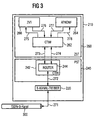
- FIG. 3 shows an interface 210 according to the invention between the ISDN B channel 300 and the telecommunications system TKA 200. It is divided into three areas, a B-channel driver 220, a peripheral control area PST area 240 and a central control area ZST area 260.
- the B-channel driver 220 is a bidirectional interface immediately between the ISDN B channel 300 and the PST area 240 switched. It is on via bidirectional channel 271 the ISDN B channel and over the bidirectional channel 272 connected to the PST area 240.
- the PST area 240 points a computer telephone integration handler CTIH 242, that over the bidirectional channel 272 to the B-channel driver 240 is connected.
- the CTIH 242 has a router 244, on the one hand via the CTIH 242 bidirectionally with the B-channel driver 220 communicates, but on the other hand via two separate bidirectional channels 273, 274 with the ZST area 260 communicates, more precisely, with a CTI manager CTIM 262 within the ZST area.
- the ZST area has a central switching technology ZVT instance 266 and an APKONF instance 264 on.
- the CTIM 262 communicates with the router 244 in the PST area 240 within the ZST area 260 in each case bidirectional with the instances ZVT 260 and APKONF 264. Die bidirectional communication takes place to every instance via two separate unidirectional data channels 275 ... 278.
- the CTIH receives 242 messages from the ISDN B-channel 300 via the B-channel driver 220.
- the messages can come from different Communication protocols originate, e.g. B. from the CSTA protocol or the APKONF protocol.
- the messages received are sent from the CTIH 242 to the internal router 244 forwarded to protocol-specific internal TKA Converted data formats.
- protocol-specific internal TKA Converted data formats In this way, are received CSTA messages in an internal PID_CS format and received APKONF messages converted to an internal PID_APS format.
- the messages received are inside the router separated by protocol and from there in shape the TKA internal data formats via channels 273 and 274 CTIM 262 supplied within the ZST area 260.
- the CTIM 262 is the central target application within the TKA 200 for everyone over the ISDN B channel 300 from the computer 100 or alternatively sent from the computer network LAN Requests. Incoming requests in CSTA format or in the corresponding internal data format converted data mainly processed by the CTIM 262 itself and by it by outputting appropriate responses to the computer 100 answered. A remaining part of the CSTA regiments, which is not processed by the CTIM 262 itself, from this via the unidirectional channel 275 to the ZVT instance 266 forwarded and processed by this.
- the CTIM 262 does not process any configuration requests, which is usually in the form of the APKONF format can be carried to him via the ISDN B channel 300. Such Requests are processed directly by the CTIM 262 via the unidirectional data channel 278 to the downstream APKONF instance 264 forwarded for editing.
- the APKONF instance 264 is the only instance within the Interface 210 that handle configuration requests can.
- All data connections between the individual instances and Components within the interface as well as the connection 271 from B channel driver 220 to ISDN B channel 300 are for the Communication of the TKA 200 with the computer 100 in the context of various Communication protocols designed bidirectionally. It is therefore not only possible to receive service requests from the computer 100 in interface 210 of TKA 200 are received, but the individual instances within the interface, in particular the ZVT instance 266, the APKONF instance 264 and the CTIM 262, in turn, can respond or request in the frame individual communication protocols via the ISDN B channel 300 send to computer 100.
Landscapes
- Engineering & Computer Science (AREA)
- Computer Networks & Wireless Communication (AREA)
- Data Exchanges In Wide-Area Networks (AREA)
- Communication Control (AREA)
- Exchange Systems With Centralized Control (AREA)
Abstract
Description
Claims (20)
- Verfahren zur Steuerung einer Telekommunikationsanlage TKA (200) durch einen Computer (100), welcher über wenigstens eine Schnittstelle und über einen ersten logischen Link in einem Datenkanal (300) eine erste Verbindung zu der TKA (200) aufbaut, um Vermittlungsfunktionen der TKA durch Abwicklung eines ersten Kommunikationsprotokolls zu steuern,
dadurch gekennzeichnet, daß
der Computer (100) über die Schnittstelle und über einen zweiten logischen Link in dem Datenkanal (300) eine zweite Verbindung zu der TKA (200) aufbaut, um neben den Vermittlungsfunktionen auch andere Funktionen der TKA durch Abwicklung eines zweiten Kommunikationsprotokolls zu steuern. - Verfahren nach Anspruch 1, dadurch gekennzeichnet, daß die TKA (200) durch die Abwicklung des zweiten Kommunikationsprotokolls konfiguriert wird.
- Verfahren nach Anspruch 2, dadurch gekennzeichnet, daß das zweite Kommunikationsprotokoll das proprietäre APKONF-Protokoll ist.
- Verfahren nach einem der Ansprüche 1 bis 3, dadurch gekennzeichnet, daß das erste Kommunikationsprotokoll das standardisierte CSTA-Protokoll ist.
- Verfahren nach einem der Ansprüche 1 bis 4, dadurch gekennzeichnet, daß der Datenkanal (300) aus wenigstens einem ISDN-B-Kanal gebildet ist.
- Verfahren nach einem der Ansprüche 1 bis 5, dadurch gekennzeichnet, daß der Computer (100) an ein Computernetzwerk (LAN) angeschlossen ist und die Schnittstelle (140) das Computernetzwerk mit dem Datenkanal (300) verbindet.
- Schnittstelle (140) zwischen einem wenigstens einen Computer (110, 120, 130) umfassendes Computernetzwerk (LAN) und einem Datenkanal (300), die im Rahmen der Abwicklung eines ersten Kommunikationsprotokolls Requests von dem Computer (100) über einen ersten logischen Link in dem Datenkanal (300) an eine Telekommunikationsanalge TKA sendet, wobei das erste Kommunikationsprotokoll Vermittlungsfunktionen der TKA steuert,
dadurch gekennzeichnet, daß
die Schnittstelle (140) so ausgebildet ist, daß sie im Rahmen der Abwicklung eines zweiten Kommunikationsprotokolls, welches zur Steuerung zusätzlicher Funktionen der TKA dient, Requests über einen zweiten logischen Link in dem Datenkanal (300) an die TKA (200) sendet. - Schnittstelle (140) nach Anspruch 7, dadurch gekennzeichnet, daß das erste Kommunikationsprotokoll das standardisierte CSTA-Protokoll ist.
- Schnittstelle (140) nach Anspruch 7 oder 8, dadurch gekennzeichnet, daß die TKA (200) durch Abwicklung des zweiten Kommunikationsprotokolls konfiguriert wird.
- Schnittstelle (140) nach Anspruch 9, dadurch gekennzeichnet, daß das zweite Kommunikationsprotokoll das proprietäre APKONF-Protokoll ist.
- Schnittstelle (140) nach einem der Ansprüche 7 bis 10, dadurch gekennzeichnet, daß der Datenkanal (300) aus wenigstens einem ISDN-B-Kanal gebildet ist.
- Schnittstelle (140) nach einem der Ansprüche 7 bis 11, gekennzeichnet durch einen Nebenstellentreiber (142), der die Requests jeweils zu einer vorbestimmten Instanz innerhalb der TKA (200) sendet und als zu einem bestimmten Kommunikationsprotokoll gehörig kennzeichnet.
- Schnittstelle (210) zwischen einem Datenkanal (300) und einer Telekommunikationsanlage TKA (200) zum Umwandeln von Requests, die über einen ersten logischen Link in dem Datenkanal (300) im Rahmen der Abwicklung eines ersten Kommunikationsprotokolls empfangen werden, in ein erstes TKA-internes Datenformat, wobei das erste Kommunikationsprotokoll Vermittlungsfunktionen der TKA steuert,
dadurch gekennzeichnet, daß
die Schnittstelle (210) Requests, die über einen zweiten logischen Link in dem Datenkanal (300) im Rahmen der Abwicklung eines zweiten Kommunikationsprotokolls empfangen werden, in ein zweites TKA-internes Datenformat umwandelt, wobei das zweite Kommunikationsprotokoll zusätzliche Funktionen der TKA (200) steuert. - Schnittstelle (210) nach Anspruch 13, dadurch gekennzeichnet, daß das erste Kommunikationsprotokoll das standardisierte CSTA-Protokoll ist.
- Schnittstelle (210) nach Anspruch 13 oder 14, dadurch gekennzeichnet, daß die TKA (200) durch Abwicklung des zweiten Kommunikationsprotokolls konfiguriert wird.
- Schnittstelle (210) nach Anspruch 15, dadurch gekennzeichnet, daß das zweite Kommunikationsprotokoll das proprietäre APKONF-Protokoll ist.
- Schnittstelle (210) nach einem der Ansprüche 13 bis 16, dadurch gekennzeichnet, daß der Datenkanal (300) aus wenigstens einem ISDN-B-Kanal gebildet ist.
- Schnittstelle (210) nach einem der Ansprüche 13 bis 17, gekennzeichnet durch einen computer telephone integration handler CTIH (242), der die requests aus den verschiedenen Kommunikationsprotokollen aus dem Datenkanal (300) entgegen nimmt.
- Schnittstelle (210) nach Anspruch 18, dadurch gekennzeichnet, daß der CTIH einen Router (244) aufweist, welcher Requests aus den Kommunikationsprotokollen jeweils in ein TKA-internes Datenformat umsetzt.
- Schnittstelle (210) nach Anspruch 19, gekennzeichnet durch einen computer telephone integration manager CTIM (262), welcher die umgesetzten Requests von dem Router (244) empfängt und diese entweder selber verarbeitet oder an geeignete schnittstelleninterne Instanzen (264, 266) weiterleitet.
Applications Claiming Priority (2)
| Application Number | Priority Date | Filing Date | Title |
|---|---|---|---|
| DE1998128485 DE19828485A1 (de) | 1998-06-25 | 1998-06-25 | Verfahren zur Steuerung einer Telekommunikationsanlage durch einen Computer und zugehörige Schnittstellen zwischen einem Computernetzwerk und einem Datenkanal sowie zwischen dem Datenkanal und der Telekommunikationsanlage |
| DE19828485 | 1998-06-25 |
Publications (2)
| Publication Number | Publication Date |
|---|---|
| EP0967823A2 true EP0967823A2 (de) | 1999-12-29 |
| EP0967823A3 EP0967823A3 (de) | 2006-02-08 |
Family
ID=7872086
Family Applications (1)
| Application Number | Title | Priority Date | Filing Date |
|---|---|---|---|
| EP99112100A Withdrawn EP0967823A3 (de) | 1998-06-25 | 1999-06-22 | Verfahren zur Steuerung einer Telekommunikationsanlage durch einen Computer und zugehörige Schnittstellen |
Country Status (2)
| Country | Link |
|---|---|
| EP (1) | EP0967823A3 (de) |
| DE (1) | DE19828485A1 (de) |
Cited By (1)
| Publication number | Priority date | Publication date | Assignee | Title |
|---|---|---|---|---|
| EP1128633A3 (de) * | 2000-02-23 | 2004-02-25 | Robert Bosch Gmbh | Wandler für unterschiedliche Telekommunikationsschnittstellen einer Telekommunikationsanlage |
Families Citing this family (1)
| Publication number | Priority date | Publication date | Assignee | Title |
|---|---|---|---|---|
| DE10143937B4 (de) * | 2001-09-07 | 2007-08-09 | Siemens Ag | Vorrichtung und Verfahren zum Datenaustausch |
Family Cites Families (5)
| Publication number | Priority date | Publication date | Assignee | Title |
|---|---|---|---|---|
| GB9107884D0 (en) * | 1991-04-12 | 1991-05-29 | Plessey Telecomm | Computer supported telephony application system |
| DE9303214U1 (de) * | 1993-03-05 | 1993-04-22 | CSB-System Software-Entwicklung & Unternehmensberatung GmbH, 5130 Geilenkirchen | Schaltungsanordnung zur Integration von EDV-Systemen bei der Benutzung von Telefonanlagen |
| EP0717570A3 (de) * | 1994-12-12 | 2000-01-05 | Siemens Aktiengesellschaft | Verfahren zur Nutzung von nicht-anrufbezogenen Diensten durch Netzteilnehmer eines Kommunikationsnetzes |
| JP3773261B2 (ja) * | 1994-12-19 | 2006-05-10 | コーニンクレッカ フィリップス エレクトロニクス エヌ ヴィ | 電気通信交換機 |
| SE516325C2 (sv) * | 1995-08-04 | 2001-12-17 | Telia Ab | Arrangemang för datorstyrd telefoni samt tillhörande publik server |
-
1998
- 1998-06-25 DE DE1998128485 patent/DE19828485A1/de not_active Withdrawn
-
1999
- 1999-06-22 EP EP99112100A patent/EP0967823A3/de not_active Withdrawn
Cited By (1)
| Publication number | Priority date | Publication date | Assignee | Title |
|---|---|---|---|---|
| EP1128633A3 (de) * | 2000-02-23 | 2004-02-25 | Robert Bosch Gmbh | Wandler für unterschiedliche Telekommunikationsschnittstellen einer Telekommunikationsanlage |
Also Published As
| Publication number | Publication date |
|---|---|
| EP0967823A3 (de) | 2006-02-08 |
| DE19828485A1 (de) | 1999-12-30 |
Similar Documents
| Publication | Publication Date | Title |
|---|---|---|
| DE69431939T2 (de) | Verteiltes System für Anrufverarbeitung | |
| EP1250818B1 (de) | Verfahren zur anbindung von einheiten mit genormten schnittstellen an einrichtungen eines vermittlungssystems | |
| DE69325203T2 (de) | Verfahren und Vorrichtung für das gemeinsame Nutzen eines Telekommunikationskanals | |
| DE69827798T2 (de) | Multimedia-Anrufhandhabung | |
| DE3786184T2 (de) | Steueranordnungen für eine Vermittlungssystem. | |
| DE69621128T2 (de) | Leitweglenkung von ankommenden rufen zu einer nebenstellenanlage in reaktion auf weglenkungsanfragen von einem hauptrechner | |
| EP0687402B1 (de) | Schaltungsanordnung zur integration von edv-systemen bei der benutzung von telefonanlagen | |
| EP0766443B1 (de) | Verfahren zur Ermittlung von freien Agenten-Kommunikationsendgeräten in Kommunikationsnetzen mit einer automatischen Anrufverteilung | |
| EP0731618A2 (de) | Verfahren zum Steuern eines Zugangsnetzes sowie Vermittlungsstelle und Zugangsnetz damit | |
| DE69838975T2 (de) | Verfahren und gerät um eine konferenzschaltung in einem telekommunikationssystem zu gebrauchen | |
| EP0630142A1 (de) | Verfahren zur Abspeicherung von Nachrichten in vernetzten Nachrichtenspeichereinheiten | |
| DE69801237T2 (de) | Datenkommunikationssystem mit hierarchischem netzwerkmodel zur definition von logischen und physikalischen objekten | |
| EP0813330A2 (de) | Verbindungsaufbauverfahren sowie Vermittlungsstelle, Dienstrechner und Kommunikationsnetz | |
| EP0967823A2 (de) | Verfahren zur Steuerung einer Telekommunikationsanlage durch einen Computer und zugehörige Schnittstellen | |
| EP0553753B1 (de) | Fernsprechnebenstellenanlage mit Sammelanschluss | |
| EP0961508A2 (de) | Verfahren und Telekommunikationssystem zum Übermitteln von Daten von einer ersten zu einer zweiten Nebenstellenanlage | |
| EP1123614B1 (de) | Netzarchitektur für kommunikations- und/oder datennetze | |
| EP1395024B1 (de) | Verfahren zur Bereitstellung von CTI-Diensten und/oder -Leistungsmerkmalen über einen eine Mehrzahl von Kommunikationsverbindungen umfassenden Kommunikationskanal | |
| EP1215869A2 (de) | Verfahren und Anordnung zum Betrieb einer aus mehreren Teilnehmern bestehenden Teamkonfiguration | |
| EP1163805B1 (de) | Verfahren zum übertragen von daten an mitglieder eines operatorservices | |
| EP1225753B1 (de) | Verteiltes automatisches Anrufverteilsystem mit Notfall-Betriebsart | |
| EP0735785B1 (de) | Kommunikationssystem mit vermittlungstechnischen Servern | |
| DE69927588T2 (de) | Mehrfachvermittlungszentrale-datennetz | |
| DE19854831A1 (de) | Verfahren zum Bereitstellen von Diensten, Infrastrukturverwalter und Dienststeuerplattform | |
| DE60122758T2 (de) | Verteilte vermittlungsplattform und betriebsverfahren dafür |
Legal Events
| Date | Code | Title | Description |
|---|---|---|---|
| PUAI | Public reference made under article 153(3) epc to a published international application that has entered the european phase |
Free format text: ORIGINAL CODE: 0009012 |
|
| AK | Designated contracting states |
Kind code of ref document: A2 Designated state(s): AT BE CH CY DE DK ES FI FR GB GR IE IT LI LU MC NL PT SE |
|
| AX | Request for extension of the european patent |
Free format text: AL;LT;LV;MK;RO;SI |
|
| PUAL | Search report despatched |
Free format text: ORIGINAL CODE: 0009013 |
|
| AK | Designated contracting states |
Kind code of ref document: A3 Designated state(s): AT BE CH CY DE DK ES FI FR GB GR IE IT LI LU MC NL PT SE |
|
| AX | Request for extension of the european patent |
Extension state: AL LT LV MK RO SI |
|
| AKX | Designation fees paid | ||
| STAA | Information on the status of an ep patent application or granted ep patent |
Free format text: STATUS: THE APPLICATION IS DEEMED TO BE WITHDRAWN |
|
| 18D | Application deemed to be withdrawn |
Effective date: 20061025 |
|
| REG | Reference to a national code |
Ref country code: DE Ref legal event code: 8566 |