EP0968818A2 - Feuille laminée thermoformable - Google Patents
Feuille laminée thermoformable Download PDFInfo
- Publication number
- EP0968818A2 EP0968818A2 EP99111881A EP99111881A EP0968818A2 EP 0968818 A2 EP0968818 A2 EP 0968818A2 EP 99111881 A EP99111881 A EP 99111881A EP 99111881 A EP99111881 A EP 99111881A EP 0968818 A2 EP0968818 A2 EP 0968818A2
- Authority
- EP
- European Patent Office
- Prior art keywords
- film
- cyclopentadienyl
- zirkondichlorid
- zirconium dichloride
- indenyl
- Prior art date
- Legal status (The legal status is an assumption and is not a legal conclusion. Google has not performed a legal analysis and makes no representation as to the accuracy of the status listed.)
- Granted
Links
- 239000011888 foil Substances 0.000 title claims description 17
- 238000004519 manufacturing process Methods 0.000 claims abstract description 10
- 239000000853 adhesive Substances 0.000 claims abstract description 8
- 230000001070 adhesive effect Effects 0.000 claims abstract description 8
- 229920001169 thermoplastic Polymers 0.000 claims abstract description 8
- 239000004416 thermosoftening plastic Substances 0.000 claims abstract description 8
- 229920001577 copolymer Polymers 0.000 claims description 27
- 239000002131 composite material Substances 0.000 claims description 19
- 238000000034 method Methods 0.000 claims description 5
- 229920001870 copolymer plastic Polymers 0.000 abstract 1
- -1 polypropylene Polymers 0.000 description 70
- 239000010408 film Substances 0.000 description 60
- VPGLGRNSAYHXPY-UHFFFAOYSA-L zirconium(2+);dichloride Chemical compound Cl[Zr]Cl VPGLGRNSAYHXPY-UHFFFAOYSA-L 0.000 description 24
- 229920000089 Cyclic olefin copolymer Polymers 0.000 description 22
- 238000004806 packaging method and process Methods 0.000 description 17
- 230000004888 barrier function Effects 0.000 description 11
- XLYOFNOQVPJJNP-UHFFFAOYSA-N water Chemical compound O XLYOFNOQVPJJNP-UHFFFAOYSA-N 0.000 description 10
- ZSWFCLXCOIISFI-UHFFFAOYSA-N endo-cyclopentadiene Natural products C1C=CC=C1 ZSWFCLXCOIISFI-UHFFFAOYSA-N 0.000 description 9
- 239000003054 catalyst Substances 0.000 description 7
- 125000000058 cyclopentadienyl group Chemical group C1(=CC=CC1)* 0.000 description 7
- 239000004800 polyvinyl chloride Substances 0.000 description 7
- VGGSQFUCUMXWEO-UHFFFAOYSA-N Ethene Chemical compound C=C VGGSQFUCUMXWEO-UHFFFAOYSA-N 0.000 description 6
- 239000005977 Ethylene Substances 0.000 description 6
- 239000003814 drug Substances 0.000 description 6
- 239000000203 mixture Substances 0.000 description 6
- 239000005026 oriented polypropylene Substances 0.000 description 6
- 229920000915 polyvinyl chloride Polymers 0.000 description 6
- INYHZQLKOKTDAI-UHFFFAOYSA-N 5-ethenylbicyclo[2.2.1]hept-2-ene Chemical compound C1C2C(C=C)CC1C=C2 INYHZQLKOKTDAI-UHFFFAOYSA-N 0.000 description 5
- 239000004743 Polypropylene Substances 0.000 description 5
- 239000011248 coating agent Substances 0.000 description 5
- 238000000576 coating method Methods 0.000 description 5
- 125000004122 cyclic group Chemical group 0.000 description 5
- 238000001035 drying Methods 0.000 description 5
- 230000000694 effects Effects 0.000 description 5
- 239000000463 material Substances 0.000 description 5
- JFNLZVQOOSMTJK-KNVOCYPGSA-N norbornene Chemical compound C1[C@@H]2CC[C@H]1C=C2 JFNLZVQOOSMTJK-KNVOCYPGSA-N 0.000 description 5
- 238000011049 filling Methods 0.000 description 4
- SJYNFBVQFBRSIB-UHFFFAOYSA-N norbornadiene Chemical compound C1=CC2C=CC1C2 SJYNFBVQFBRSIB-UHFFFAOYSA-N 0.000 description 4
- JRZJOMJEPLMPRA-UHFFFAOYSA-N olefin Natural products CCCCCCCC=C JRZJOMJEPLMPRA-UHFFFAOYSA-N 0.000 description 4
- 229920000642 polymer Polymers 0.000 description 4
- 229920001155 polypropylene Polymers 0.000 description 4
- 229920001897 terpolymer Polymers 0.000 description 4
- XBFJAVXCNXDMBH-UHFFFAOYSA-N tetracyclo[6.2.1.1(3,6).0(2,7)]dodec-4-ene Chemical compound C1C(C23)C=CC1C3C1CC2CC1 XBFJAVXCNXDMBH-UHFFFAOYSA-N 0.000 description 4
- 229910052782 aluminium Inorganic materials 0.000 description 3
- 229940079593 drug Drugs 0.000 description 3
- 239000003925 fat Substances 0.000 description 3
- 238000003475 lamination Methods 0.000 description 3
- 229920000098 polyolefin Polymers 0.000 description 3
- 238000012545 processing Methods 0.000 description 3
- 125000004805 propylene group Chemical group [H]C([H])([H])C([H])([*:1])C([H])([H])[*:2] 0.000 description 3
- 150000003623 transition metal compounds Chemical class 0.000 description 3
- CTBFXDVGDCMIQR-UHFFFAOYSA-L C[SiH](C)[Zr](Cl)(Cl)(C1C=CC=C1)C1C=Cc2ccccc12 Chemical compound C[SiH](C)[Zr](Cl)(Cl)(C1C=CC=C1)C1C=Cc2ccccc12 CTBFXDVGDCMIQR-UHFFFAOYSA-L 0.000 description 2
- MPJLHVOQWLKMRN-UHFFFAOYSA-L C[SiH](C)[Zr](Cl)(Cl)(C1C=CC=C1)C1c2ccccc2-c2ccccc12 Chemical compound C[SiH](C)[Zr](Cl)(Cl)(C1C=CC=C1)C1c2ccccc2-c2ccccc12 MPJLHVOQWLKMRN-UHFFFAOYSA-L 0.000 description 2
- VTYYLEPIZMXCLO-UHFFFAOYSA-L Calcium carbonate Chemical compound [Ca+2].[O-]C([O-])=O VTYYLEPIZMXCLO-UHFFFAOYSA-L 0.000 description 2
- 239000004215 Carbon black (E152) Substances 0.000 description 2
- SVHPGKHHBXQFLQ-UHFFFAOYSA-L Cl[Zr](Cl)(C1C=CC=C1)(C1c2ccccc2-c2ccccc12)=C(c1ccccc1)c1ccccc1 Chemical compound Cl[Zr](Cl)(C1C=CC=C1)(C1c2ccccc2-c2ccccc12)=C(c1ccccc1)c1ccccc1 SVHPGKHHBXQFLQ-UHFFFAOYSA-L 0.000 description 2
- HCYNNFRJVSZIHW-UHFFFAOYSA-N O=C(C1=CC=CC=C1)[Zr](C1C=CC=C1)(C1C2=CC=CC=C2C=C1)C(C1=CC=CC=C1)=O.Cl.Cl Chemical compound O=C(C1=CC=CC=C1)[Zr](C1C=CC=C1)(C1C2=CC=CC=C2C=C1)C(C1=CC=CC=C1)=O.Cl.Cl HCYNNFRJVSZIHW-UHFFFAOYSA-N 0.000 description 2
- 239000004698 Polyethylene Substances 0.000 description 2
- GWEVSGVZZGPLCZ-UHFFFAOYSA-N Titan oxide Chemical compound O=[Ti]=O GWEVSGVZZGPLCZ-UHFFFAOYSA-N 0.000 description 2
- LBKBUQUIRJQWLH-UHFFFAOYSA-L [Cl-].[Cl-].C1(=CC=CC=C1)CC=[Zr+2](C1C=CC=C1)C1C2=CC=CC=C2C=2C=CC=CC1=2 Chemical compound [Cl-].[Cl-].C1(=CC=CC=C1)CC=[Zr+2](C1C=CC=C1)C1C2=CC=CC=C2C=2C=CC=CC1=2 LBKBUQUIRJQWLH-UHFFFAOYSA-L 0.000 description 2
- YCIQPHTUFUTPAN-UHFFFAOYSA-L [Cl-].[Cl-].C1=CC2=CC=CC=C2C1[Hf+2](C1C2=CC=CC=C2C=C1)[SiH2]CC1=CC=CC=C1 Chemical compound [Cl-].[Cl-].C1=CC2=CC=CC=C2C1[Hf+2](C1C2=CC=CC=C2C=C1)[SiH2]CC1=CC=CC=C1 YCIQPHTUFUTPAN-UHFFFAOYSA-L 0.000 description 2
- BWUKAWLFMALYIV-UHFFFAOYSA-L [Cl-].[Cl-].C1=CC2=CC=CC=C2C1[Hf+2](C1C2=CC=CC=C2C=C1)[SiH](C=1C=CC=CC=1)C1=CC=CC=C1 Chemical compound [Cl-].[Cl-].C1=CC2=CC=CC=C2C1[Hf+2](C1C2=CC=CC=C2C=C1)[SiH](C=1C=CC=CC=1)C1=CC=CC=C1 BWUKAWLFMALYIV-UHFFFAOYSA-L 0.000 description 2
- NWBSMOHZFZYBLB-UHFFFAOYSA-L [Cl-].[Cl-].C1=CC2=CC=CC=C2C1[Zr+2](=C(C)C)C1C2=CC=CC=C2C=C1 Chemical compound [Cl-].[Cl-].C1=CC2=CC=CC=C2C1[Zr+2](=C(C)C)C1C2=CC=CC=C2C=C1 NWBSMOHZFZYBLB-UHFFFAOYSA-L 0.000 description 2
- XVMVAJPMNDQYLF-UHFFFAOYSA-L [Cl-].[Cl-].C1=CC2=CC=CC=C2C1[Zr+2](C1C2=CC=CC=C2C=C1)[SiH2]C=CC1=CC=CC=C1 Chemical compound [Cl-].[Cl-].C1=CC2=CC=CC=C2C1[Zr+2](C1C2=CC=CC=C2C=C1)[SiH2]C=CC1=CC=CC=C1 XVMVAJPMNDQYLF-UHFFFAOYSA-L 0.000 description 2
- DHOIFLAXQKMNNF-UHFFFAOYSA-L [Cl-].[Cl-].C1=CC2=CC=CC=C2C1[Zr+2](C1C2=CC=CC=C2C=C1)[SiH](C=1C=CC=CC=1)C1=CC=CC=C1 Chemical compound [Cl-].[Cl-].C1=CC2=CC=CC=C2C1[Zr+2](C1C2=CC=CC=C2C=C1)[SiH](C=1C=CC=CC=1)C1=CC=CC=C1 DHOIFLAXQKMNNF-UHFFFAOYSA-L 0.000 description 2
- DPXFROCZZRXAGW-UHFFFAOYSA-L [Cl-].[Cl-].C1=CC2=CC=CC=C2C1[Zr+2]([GeH](C)C)C1C2=CC=CC=C2C=C1 Chemical compound [Cl-].[Cl-].C1=CC2=CC=CC=C2C1[Zr+2]([GeH](C)C)C1C2=CC=CC=C2C=C1 DPXFROCZZRXAGW-UHFFFAOYSA-L 0.000 description 2
- FJMJPZLXUXRLLD-UHFFFAOYSA-L [Cl-].[Cl-].C1=CC2=CC=CC=C2C1[Zr+2]([SiH](C)C)C1C2=CC=CC=C2C=C1 Chemical compound [Cl-].[Cl-].C1=CC2=CC=CC=C2C1[Zr+2]([SiH](C)C)C1C2=CC=CC=C2C=C1 FJMJPZLXUXRLLD-UHFFFAOYSA-L 0.000 description 2
- UCIKZESDXASJNG-UHFFFAOYSA-L [Cl-].[Cl-].C1=CC=C2C([Zr+2])C=CC2=C1 Chemical compound [Cl-].[Cl-].C1=CC=C2C([Zr+2])C=CC2=C1 UCIKZESDXASJNG-UHFFFAOYSA-L 0.000 description 2
- WDVXVGHXKSQSJA-UHFFFAOYSA-L [Cl-].[Cl-].C1C=CC=2CC(CCC12)[Zr+2] Chemical compound [Cl-].[Cl-].C1C=CC=2CC(CCC12)[Zr+2] WDVXVGHXKSQSJA-UHFFFAOYSA-L 0.000 description 2
- DIDTVPPGXZOJGG-UHFFFAOYSA-L [Cl-].[Cl-].C1C[SiH](C1)[Zr++](C1C=Cc2ccccc12)C1C=Cc2ccccc12 Chemical compound [Cl-].[Cl-].C1C[SiH](C1)[Zr++](C1C=Cc2ccccc12)C1C=Cc2ccccc12 DIDTVPPGXZOJGG-UHFFFAOYSA-L 0.000 description 2
- OKPFRHMGNFRBIW-UHFFFAOYSA-L [SiH](c1ccccc1)c1ccccc1.Cl[Zr](Cl)(C1C=CC=C1)C1c2ccccc2-c2ccccc12 Chemical compound [SiH](c1ccccc1)c1ccccc1.Cl[Zr](Cl)(C1C=CC=C1)C1c2ccccc2-c2ccccc12 OKPFRHMGNFRBIW-UHFFFAOYSA-L 0.000 description 2
- 150000005674 acyclic monoalkenes Chemical class 0.000 description 2
- 239000000654 additive Substances 0.000 description 2
- XAGFODPZIPBFFR-UHFFFAOYSA-N aluminium Chemical compound [Al] XAGFODPZIPBFFR-UHFFFAOYSA-N 0.000 description 2
- AYJRCSIUFZENHW-UHFFFAOYSA-L barium carbonate Chemical compound [Ba+2].[O-]C([O-])=O AYJRCSIUFZENHW-UHFFFAOYSA-L 0.000 description 2
- TZCXTZWJZNENPQ-UHFFFAOYSA-L barium sulfate Chemical compound [Ba+2].[O-]S([O-])(=O)=O TZCXTZWJZNENPQ-UHFFFAOYSA-L 0.000 description 2
- OSGAYBCDTDRGGQ-UHFFFAOYSA-L calcium sulfate Chemical compound [Ca+2].[O-]S([O-])(=O)=O OSGAYBCDTDRGGQ-UHFFFAOYSA-L 0.000 description 2
- 239000002775 capsule Substances 0.000 description 2
- 125000004432 carbon atom Chemical group C* 0.000 description 2
- 238000001816 cooling Methods 0.000 description 2
- 238000003851 corona treatment Methods 0.000 description 2
- IVTQDRJBWSBJQM-UHFFFAOYSA-L dichlorozirconium;indene Chemical compound C1=CC2=CC=CC=C2C1[Zr](Cl)(Cl)C1C2=CC=CC=C2C=C1 IVTQDRJBWSBJQM-UHFFFAOYSA-L 0.000 description 2
- 229920001971 elastomer Polymers 0.000 description 2
- 239000007789 gas Substances 0.000 description 2
- 229930195733 hydrocarbon Natural products 0.000 description 2
- 125000004435 hydrogen atom Chemical group [H]* 0.000 description 2
- 125000001449 isopropyl group Chemical group [H]C([H])([H])C([H])(*)C([H])([H])[H] 0.000 description 2
- 238000010030 laminating Methods 0.000 description 2
- 150000004291 polyenes Chemical class 0.000 description 2
- 229920000573 polyethylene Polymers 0.000 description 2
- 238000002360 preparation method Methods 0.000 description 2
- 238000003847 radiation curing Methods 0.000 description 2
- 229920006395 saturated elastomer Polymers 0.000 description 2
- 239000004711 α-olefin Substances 0.000 description 2
- NIXOWILDQLNWCW-UHFFFAOYSA-M Acrylate Chemical compound [O-]C(=O)C=C NIXOWILDQLNWCW-UHFFFAOYSA-M 0.000 description 1
- CERQOIWHTDAKMF-UHFFFAOYSA-M Methacrylate Chemical compound CC(=C)C([O-])=O CERQOIWHTDAKMF-UHFFFAOYSA-M 0.000 description 1
- 240000007594 Oryza sativa Species 0.000 description 1
- 235000007164 Oryza sativa Nutrition 0.000 description 1
- 239000004952 Polyamide Substances 0.000 description 1
- 229920001328 Polyvinylidene chloride Polymers 0.000 description 1
- 229910000831 Steel Inorganic materials 0.000 description 1
- 150000001336 alkenes Chemical class 0.000 description 1
- 125000003118 aryl group Chemical group 0.000 description 1
- 150000005840 aryl radicals Chemical class 0.000 description 1
- QVGXLLKOCUKJST-UHFFFAOYSA-N atomic oxygen Chemical compound [O] QVGXLLKOCUKJST-UHFFFAOYSA-N 0.000 description 1
- 230000005540 biological transmission Effects 0.000 description 1
- 230000015572 biosynthetic process Effects 0.000 description 1
- 235000015895 biscuits Nutrition 0.000 description 1
- 229910000019 calcium carbonate Inorganic materials 0.000 description 1
- 239000012876 carrier material Substances 0.000 description 1
- 235000019504 cigarettes Nutrition 0.000 description 1
- 230000000052 comparative effect Effects 0.000 description 1
- 238000010276 construction Methods 0.000 description 1
- 230000007797 corrosion Effects 0.000 description 1
- 238000005260 corrosion Methods 0.000 description 1
- 239000013039 cover film Substances 0.000 description 1
- 238000005336 cracking Methods 0.000 description 1
- 238000013461 design Methods 0.000 description 1
- 238000011161 development Methods 0.000 description 1
- 230000018109 developmental process Effects 0.000 description 1
- 238000009820 dry lamination Methods 0.000 description 1
- 239000000806 elastomer Substances 0.000 description 1
- 238000010894 electron beam technology Methods 0.000 description 1
- 230000007613 environmental effect Effects 0.000 description 1
- 229920001038 ethylene copolymer Polymers 0.000 description 1
- 238000007667 floating Methods 0.000 description 1
- 235000013305 food Nutrition 0.000 description 1
- 238000010438 heat treatment Methods 0.000 description 1
- 238000007210 heterogeneous catalysis Methods 0.000 description 1
- 238000007172 homogeneous catalysis Methods 0.000 description 1
- 238000005984 hydrogenation reaction Methods 0.000 description 1
- 239000011256 inorganic filler Substances 0.000 description 1
- 229910003475 inorganic filler Inorganic materials 0.000 description 1
- 239000001023 inorganic pigment Substances 0.000 description 1
- 239000000178 monomer Substances 0.000 description 1
- 210000003205 muscle Anatomy 0.000 description 1
- 239000012766 organic filler Substances 0.000 description 1
- 229920000620 organic polymer Polymers 0.000 description 1
- 150000002902 organometallic compounds Chemical class 0.000 description 1
- 239000001301 oxygen Substances 0.000 description 1
- 229910052760 oxygen Inorganic materials 0.000 description 1
- 238000012858 packaging process Methods 0.000 description 1
- 238000012856 packing Methods 0.000 description 1
- 239000002985 plastic film Substances 0.000 description 1
- 229920006255 plastic film Polymers 0.000 description 1
- 229920002647 polyamide Polymers 0.000 description 1
- 239000004417 polycarbonate Substances 0.000 description 1
- 229920000515 polycarbonate Polymers 0.000 description 1
- 229920000728 polyester Polymers 0.000 description 1
- 229920006324 polyoxymethylene Polymers 0.000 description 1
- 239000005033 polyvinylidene chloride Substances 0.000 description 1
- QQONPFPTGQHPMA-UHFFFAOYSA-N propylene Natural products CC=C QQONPFPTGQHPMA-UHFFFAOYSA-N 0.000 description 1
- 150000003254 radicals Chemical class 0.000 description 1
- 235000009566 rice Nutrition 0.000 description 1
- 238000007151 ring opening polymerisation reaction Methods 0.000 description 1
- 239000005060 rubber Substances 0.000 description 1
- 238000007789 sealing Methods 0.000 description 1
- 230000035939 shock Effects 0.000 description 1
- 235000011888 snacks Nutrition 0.000 description 1
- 239000007858 starting material Substances 0.000 description 1
- 239000010959 steel Substances 0.000 description 1
- 238000003860 storage Methods 0.000 description 1
- 239000000829 suppository Substances 0.000 description 1
- 239000003826 tablet Substances 0.000 description 1
- 150000003608 titanium Chemical class 0.000 description 1
- 239000004408 titanium dioxide Substances 0.000 description 1
- 235000021122 unsaturated fatty acids Nutrition 0.000 description 1
- 150000004670 unsaturated fatty acids Chemical class 0.000 description 1
- 229910052720 vanadium Inorganic materials 0.000 description 1
- LEONUFNNVUYDNQ-UHFFFAOYSA-N vanadium atom Chemical compound [V] LEONUFNNVUYDNQ-UHFFFAOYSA-N 0.000 description 1
- 229920002554 vinyl polymer Polymers 0.000 description 1
- 238000004804 winding Methods 0.000 description 1
Images




Classifications
-
- C—CHEMISTRY; METALLURGY
- C08—ORGANIC MACROMOLECULAR COMPOUNDS; THEIR PREPARATION OR CHEMICAL WORKING-UP; COMPOSITIONS BASED THEREON
- C08J—WORKING-UP; GENERAL PROCESSES OF COMPOUNDING; AFTER-TREATMENT NOT COVERED BY SUBCLASSES C08B, C08C, C08F, C08G or C08H
- C08J5/00—Manufacture of articles or shaped materials containing macromolecular substances
- C08J5/12—Bonding of a preformed macromolecular material to the same or other solid material such as metal, glass, leather, e.g. using adhesives
- C08J5/124—Bonding of a preformed macromolecular material to the same or other solid material such as metal, glass, leather, e.g. using adhesives using adhesives based on a macromolecular component
- C08J5/128—Adhesives without diluent
Definitions
- the present invention relates to a thermoformable composite film, a method for Production of a thermoformable composite film and its use as Packing material.
- Flexible films are used to manufacture packaging with high requirements under the influence of heat and pressure with mechanical stamp in case of over and / or Vacuum shaped like a bowl or bowl.
- the film first serves as protection of the filling material.
- the film must protect the contents from environmental influences.
- the foil must therefore have a high water vapor, gas and UV barrier.
- the film must have mechanical stability to protect the contents from physical influences protect and so as not to be damaged by the product itself. The contents may do not interfere with the release of the film's own components.
- the starting material for blister packaging is thermal deformable film. These are plastic films that are heated by heating be brought into a state in which they are relatively easy to use be deformed by pneumatic overpressure or vacuum or by stamp. With a suitable choice of molds, recesses (blisters) can be made in the Insert the foil (bottom foil) that corresponds to the shape of the object to be packaged can be adjusted. After this deformation step, the one to be packed Inserted the object into the blister. After filling the blister a cover film is applied to the bottom film, which the to be packed Includes item in its blister.
- PVC polyvinyl chloride
- uPP Disoriented polypropylene films
- the blister packaging offers automated packaging and presentation of the product protected in the blister, such as medicines in the form of tablets, capsules or similar the possibility of exposure to air humidity and oxygen significantly reduce and thus increase the storage times.
- the object of the present invention is. a composite film with high Barrier properties, very good deep-drawing behavior and good fat resistance and an economical and environmentally friendly process for their manufacture and to provide their use for the production of blister packs.
- thermoformable Composite film containing at least one film containing cycloolefin copolymer and a thermoplastic PP film laminated on at least one side.
- the film has a water vapor permeation of 0,0 0.05 g / m 2 d, a puncture resistance of 20 20 N and a thickness of 100 100 ⁇ m.
- the films suitable for the purposes of the invention contain at least one cycloolefin polymer selected from polymers containing 0.1-100% by weight, preferably 10-90% by weight, based on the total mass of the cycloolefin polymer, of polymerized units of at least one cyclic olefin of the formula I , II, II ', III, IV, V or VI wherein R 1 , R 2 , R 3 , R 4 , R 5 , R 6 , R 7 and R 8 are the same or different and a hydrogen atom or a C 1 -C 20 hydrocarbon radical, such as a linear or branched C 1 -C 8- alkyl radical, C 6 -C 18 -aryl radical, C 7 -C 20 -alkylenearyl radical, mean a cyclic or acyclic C 2 -C 20 alkenyl radical, or form a saturated, unsaturated or aromatic ring, where the same radicals R 1 to R 8 in the different formulas I to
- the cycloolefin copolymers can also be at least by ring-opening polymerization one of the monomers with the formulas I to VI and subsequent hydrogenation of the obtained products can be obtained.
- the elastomeric cycloolefin copolymer according to the invention can contain 0 to 45 mol%, based on the total composition of the cycloolefin copolymer, of polymerized units which are derived from one or more monocyclic olefins of the formula VIII where m is a number from 2 to 10.
- the proportion of polymerized units derived from cyclic, in particular polycyclic olefins is preferably 3 to 75 mol% based on the overall composition of the cycloolefin copolymer.
- the share of polymerized units derived from acyclic olefins is preferred 5 to 80 mol% based on the total composition of the cycloolefin copolymer.
- the cycloolefin copolymers preferably consist of polymerized units which are derived from one or more polycyclic olefins, in particular polycyclic olefins of the formulas I or III, and polymerized units which are derived from one or more acyclic olefins of the formula VII, in particular ⁇ -olefins with 2 up to 20 carbon atoms.
- cycloolefin copolymers which consist of polymerized units which are derived from a polycyclic olefin of the formula I or III and an acyclic olefin of the formula VII are preferred.
- Terpolymers which consist of polymerized units which are derived from a polycyclic monoolefin of the Formula I or III, an acyclic monoolefin of the formula VII and a cyclic or acyclic olefin which contains at least two double bonds (polyene), in particular cyclic, preferably polycyclic dienes such as norbornadiene or cyclic, particularly preferably polycyclic alkenes which have a C 2 -C 20 -Alkenyl radical wear like vinyl norbornene.
- the elastomeric cycloolefin copolymers according to the invention preferably contain Olefins with a norbornene basic structure, particularly preferably norbornene, Tetracyclododecene and optionally vinyl norbornene or norbornadiene.
- Prefers are also cycloolefin copolymers containing polymerized units that are deriving acyclic olefins with terminal double bonds such as ⁇ -olefins with 2 to 20 carbon atoms, particularly preferably ethylene or propylene.
- norbornene / ethylene and tetracyclododecene / ethylene copolymers are preferred.
- the terpolymers are particularly preferably norbornene / vinyl norbornene / ethylene, Norbornene / norbornadiene / ethylene, tetracyclododecene / vinyl norbornene / ethylene, Tetracyclododecene / vinyl tetracyclododecene / ethylene terpolymers.
- the share of polymerized units derived from a polyene are preferred Vinyl norbornene or norbornadiene is 0.1 to 50 mol%, preferably 0.1 to 20 mol%, the proportion of the acyclic monoolefin of the formula VII is 0 to 99.9 mol%, preferably 5 to 80 mol%, based on the total composition of the Cycloolefin copolymers. In the terpolymers described, the proportion of polycyclic monoolefins at 0.1 to 99.9 mol%, preferably 3 to 75 mol%, based on the overall composition of the cycloolefin copolymer.
- the cycloolefin copolymer according to the invention preferably contains at least one Cycloolefin copolymer containing polymerized units that are derived let polycyclic olefins of formula I, and polymerized units, which can be derived from acyclic olefins of the formula VII.
- the cycloolefin copolymers according to the invention can be produced by Temperatures from -78 to 200 ° C and a pressure of 0.01 to 200 bar, in the presence one or more catalyst systems, which at least one Transition metal compound and optionally a cocatalyst and optionally contain a carrier material.
- catalyst systems which at least one Transition metal compound and optionally a cocatalyst and optionally contain a carrier material.
- transition metal compounds metallocenes are suitable, in particular stereorigid metallocenes.
- Examples for Catalyst systems used for the production of the elastomer according to the invention Cycloolefin copolymers are suitable are described in EP-A-407 870, EP-A-485 893 and EP-A-503 422. These references are expressly referred to here taken.
- the COC films used according to the invention are distinguished by special ones mechanical properties.
- the foils can be used on the machines are processed and have a low puncture resistance and a high barrier, especially against water vapor. These COC films are more suitable Way disoriented. This can be mono or multilayer films.
- the Films can contain organic or inorganic fillers in order to To reduce light transmission so that the contents are not visible (childproof packaging) or the printability or the sealing properties improve.
- the cycloolefin copolymers are produced by a heterogeneous or homogeneous catalysis with organometallic compounds and is in a variety of Patents. Catalyst systems based on mixed catalysts Titanium salts and aluminum organyls are described in DD-A-109 224 and DD-A-237 070 describe. EP-A-156 464 describes the preparation with catalysts Vanadium base. EP-A-283 164, EP-A-407 870, EP-A-485 893 and EP-A-503 422 describe the preparation of cycloolefin polymers with catalysts based on soluble metallocene complexes. To those in these patents for the manufacture of COC described manufacturing process and catalyst systems used hereby expressly pointed out.
- Extruded non-oriented COC films are brittle and can be difficult to make Processing conditions very poorly, cf. DE-A-4304309. So they tend to easily tear or tear when winding or unwinding under tension. For this reason, the mechanical strength must be increased. This can be done by Orientation (mono or biaxial stretching) of the foils is done. The so oriented Foils can be handled much better without the described Have disadvantages as described in DE-A-4304309.
- the puncture resistance of oriented films was examined according to DIN 53373. As a measure of that Puncture resistance can be used among other things. It has now been found that with the orientation the puncture resistance of the films increases. The measured values were, without exception, larger than that of the not oriented foils of comparable thickness.
- DE-A-4414669 describes a value of 450 N / mm as too high for a sensible use of the film as cover films for Blister packaging specified. On blister machines for sensitive drugs much lower values should be aimed for. As a first orientation the values of puncture resistance for aluminum foils can be used become. The puncture resistance of an aluminum foil (16 ⁇ m) is 90 N / mm. A easy removal of the medication from the blister packaging is in use therefore no longer guaranteed by oriented COC foils.
- the blister film In addition to an optimal but not too low puncture resistance, the blister film must have increased toughness. Only the targeted coordination of mechanical Strength (hardness), flexibility and the force required to compress the It enables the filling material, such as tablets, capsules, suppositories or coated tablets without removing the packaging from damage and unnecessary effort. The low effort is especially for use in the elderly as well as in the clinic area, where medical staff continuously take tablets must push through and there is fatigue and sore muscles in the fingers can come.
- the water vapor barrier effect of the films is comparable to the values as for undrawn COC films are observed. I.e. the orientation has none significant influence on the barrier effect of the foils.
- the thicknesses of the cover films the base of COC foils should therefore in the range of the thicknesses of the foils in molded blister. This results in film thicknesses for the cover films in the Range from 20 to 150 microns, preferably in the range from 40 to 100 microns.
- the water vapor barrier effect is not significantly influenced by the addition of organic or inorganic additives. It is in the range of 0.2 to 0.4 g / m 2 * d for a film thickness of 100 ⁇ m.
- the polarity of the surface can be increased by corona treatment of the film.
- the additives can be organic polymers such as polypropylene or Polyethylene as homo- or copolymers, polyester, polyamides, polycarbonate, Trade polyacetals, acrylate and methacrylate polymers.
- organic polymers such as polypropylene or Polyethylene as homo- or copolymers, polyester, polyamides, polycarbonate, Trade polyacetals, acrylate and methacrylate polymers.
- inorganic pigments can be titanium dioxide, barium sulfate, calcium sulfate, calcium carbonate or barium carbonate be used.
- the COC film can be laminated on one or both sides with film, the polymers like disoriented or oriented polyethylene, polypropylene, or polyvinyl chloride contains.
- the thickness of the film laminated on the COC film is from 1 ⁇ m to 150 ⁇ m, preferably from 1 ⁇ m to 100 ⁇ m, particularly preferably from 5 ⁇ m to 50 ⁇ m.
- a solvent-free adhesive is preferably used for the lamination. Especially a solvent-free one-component adhesive is preferably used.
- COC is preferred with PVC and particularly preferred with oriented polypropylene (oPP) laminated on one or both sides.
- Oriented polypropylene can be considered essential thinner films are produced compared to COC.
- COC and oPP result in Laminate is a good-looking, flexible, puncture-resistant multilayer film.
- the thickness of the overall film is from 50 ⁇ m to 550 ⁇ m, preferably from 150 ⁇ m to 400 ⁇ m and particularly preferably from 200 ⁇ m to 350 ⁇ m.
- the thickness of the oPP film is from 1 ⁇ m to 150 ⁇ m, preferably from 2 ⁇ m to 50 ⁇ m and particularly preferred from 4 ⁇ m to 10 ⁇ m.
- the thickness of the COC film is from 50 ⁇ m to 400 ⁇ m, preferably from 150 ⁇ m to 350 ⁇ m, particularly preferably from 175 ⁇ m to 300 ⁇ m.
- thermoformable composite film according to the invention is used for the production of Blister packaging used. Due to the very good water vapor barrier increased the blister packaging or PTP (push through packaging) made from it Value of the item packed in it. It can be used for filling, such as pharmaceuticals and Foodstuffs, in particular pelletized and encapsulated, pharmaceuticals, rice-containing Food, biscuits, snacks and water-absorbing articles such as cigarettes and Pack the teabag.
- the at least one side laminated PVC film protects the COC base film against fats, which increases the durability and value of the laminate increase.
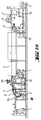
- 1 contains a roll (1), applicator (2), Infrared heater short-wave (3), infrared heater medium-wave (4), floating dryer (5), Dry laminating station (6), corona system (7), web edge control (8), Moistening device (9), cooling station (10), reel (11), electron beam unit (12), wet laminating station (13) and UV lamp (14).
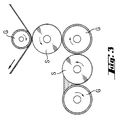
- the application work of the coating system according to FIG. 3 shows the smooth roller application with 4 rollers (wet).
- the rollers are heated and cooled.
- the smooth roller application is preferred for for the lamination of COC with PVC or oPP.
- COC film with a thickness of 190 microns (194 g / m 2 ) from both sides with an oriented polypropylene film with a thickness of 5 microns (4.6 g / m 2 ) with a solvent-free one-component adhesive 1K-LF 190X3 from Herberts GmbH laminated.
- the application was 1.50 g / m 2 .
- the corona treatment 48 KW.
- the lamination was carried out at a width of 810 mm, a speed of 50 m / min, a smooth roller application system with four rollers and one pass per laminated side.
- the thermoformable composite film had a thickness of 210 ⁇ m. When measuring the bond strength of the composite film, the high bond strength caused the composite film to tear.
- thermoformable composite film had a thickness of 210 ⁇ m.
Landscapes
- Chemical & Material Sciences (AREA)
- Engineering & Computer Science (AREA)
- Manufacturing & Machinery (AREA)
- Materials Engineering (AREA)
- Health & Medical Sciences (AREA)
- Chemical Kinetics & Catalysis (AREA)
- Medicinal Chemistry (AREA)
- Polymers & Plastics (AREA)
- Organic Chemistry (AREA)
- Laminated Bodies (AREA)
- Manufacture Of Macromolecular Shaped Articles (AREA)
- Compositions Of Macromolecular Compounds (AREA)
- Packages (AREA)
Applications Claiming Priority (2)
| Application Number | Priority Date | Filing Date | Title |
|---|---|---|---|
| DE19828858 | 1998-06-29 | ||
| DE1998128858 DE19828858A1 (de) | 1998-06-29 | 1998-06-29 | Thermoformbare Verbundfolie |
Publications (3)
| Publication Number | Publication Date |
|---|---|
| EP0968818A2 true EP0968818A2 (fr) | 2000-01-05 |
| EP0968818A3 EP0968818A3 (fr) | 2000-04-05 |
| EP0968818B1 EP0968818B1 (fr) | 2006-08-30 |
Family
ID=7872316
Family Applications (1)
| Application Number | Title | Priority Date | Filing Date |
|---|---|---|---|
| EP19990111881 Expired - Lifetime EP0968818B1 (fr) | 1998-06-29 | 1999-06-21 | Feuille laminée thermoformable |
Country Status (4)
| Country | Link |
|---|---|
| EP (1) | EP0968818B1 (fr) |
| JP (1) | JP2000037817A (fr) |
| CA (1) | CA2276540A1 (fr) |
| DE (2) | DE19828858A1 (fr) |
Cited By (3)
| Publication number | Priority date | Publication date | Assignee | Title |
|---|---|---|---|---|
| EP1213138A1 (fr) * | 2000-12-06 | 2002-06-12 | Huhtamaki Deutschland GmbH & Co. KG | Procédé de fabrication d'une feuille stratifiée |
| US6762265B1 (en) | 1999-04-08 | 2004-07-13 | Ticona Gmbh | Microstructured components |
| EP1123869A4 (fr) * | 1998-06-30 | 2009-07-01 | Nippon Zeon Co | Recipient et produit moule par soufflage |
Families Citing this family (4)
| Publication number | Priority date | Publication date | Assignee | Title |
|---|---|---|---|---|
| DE19832500A1 (de) * | 1998-07-20 | 2000-01-27 | Ticona Gmbh | Thermoformbare Verbundfolie |
| GB0225621D0 (en) | 2002-11-02 | 2002-12-11 | Glaxo Group Ltd | Medicament carrier |
| BRPI0606180A2 (pt) * | 2005-02-23 | 2009-06-02 | Topas Advanced Polymers Inc | pelìculas de multicamadas incluindo copolìmero de cicloolefina e copolìmero de estireno-butadieno |
| EP4563491A3 (fr) | 2021-06-03 | 2025-09-17 | Tekni-Plex, Inc. | Emballage-coque recyclable |
Family Cites Families (11)
| Publication number | Priority date | Publication date | Assignee | Title |
|---|---|---|---|---|
| JPH04249149A (ja) * | 1991-02-06 | 1992-09-04 | Nippon Zeon Co Ltd | 複合成形体およびその製造方法 |
| JP3227709B2 (ja) * | 1991-03-04 | 2001-11-12 | 日本ゼオン株式会社 | 医療用または食品包装用容器 |
| JP3055353B2 (ja) * | 1992-05-14 | 2000-06-26 | 三井化学株式会社 | Ptpまたはブリスターパック包装用シートまたはフィルム、包装体、およびその形成方法 |
| KR100235089B1 (en) * | 1992-05-14 | 1999-12-15 | Mitsui Chemicals Inc | Ptp or blister packaging articles and packaging material therefor |
| JPH0740520A (ja) * | 1993-05-21 | 1995-02-10 | Taisei Kako Kk | 非晶性樹脂製積層シート状物から形成された区分包装体用構成材、その製造方法、その製造装置、該構成材とライナー層とからなる区分包装体用積層体、その製造方法並びにその製造装置 |
| JPH0872210A (ja) * | 1993-10-26 | 1996-03-19 | Mitsui Petrochem Ind Ltd | ポリオレフィン系多層積層体および用途 |
| CA2134320C (fr) * | 1993-10-26 | 2001-01-09 | Toshiyuki Hirose | Materiau lamine multicouche polyolefinique et son utilisation |
| WO1996001184A1 (fr) * | 1994-07-05 | 1996-01-18 | Mitsui Petrochemical Industries, Ltd. | Stratifie multicouche et utilisation |
| EP0800914B1 (fr) * | 1996-04-11 | 2002-07-03 | Mitsui Chemicals, Inc. | Film multicouche et matériau d'emballage |
| JPH1034845A (ja) * | 1996-04-11 | 1998-02-10 | Tousero Kk | 積層フィルムおよび包装材 |
| JPH11165387A (ja) * | 1997-12-03 | 1999-06-22 | Mitsui Chem Inc | ポリオレフィン系多層積層体およびその用途 |
-
1998
- 1998-06-29 DE DE1998128858 patent/DE19828858A1/de not_active Withdrawn
-
1999
- 1999-06-21 DE DE59913810T patent/DE59913810D1/de not_active Expired - Fee Related
- 1999-06-21 EP EP19990111881 patent/EP0968818B1/fr not_active Expired - Lifetime
- 1999-06-28 CA CA 2276540 patent/CA2276540A1/fr not_active Abandoned
- 1999-06-29 JP JP11182941A patent/JP2000037817A/ja active Pending
Cited By (3)
| Publication number | Priority date | Publication date | Assignee | Title |
|---|---|---|---|---|
| EP1123869A4 (fr) * | 1998-06-30 | 2009-07-01 | Nippon Zeon Co | Recipient et produit moule par soufflage |
| US6762265B1 (en) | 1999-04-08 | 2004-07-13 | Ticona Gmbh | Microstructured components |
| EP1213138A1 (fr) * | 2000-12-06 | 2002-06-12 | Huhtamaki Deutschland GmbH & Co. KG | Procédé de fabrication d'une feuille stratifiée |
Also Published As
| Publication number | Publication date |
|---|---|
| JP2000037817A (ja) | 2000-02-08 |
| DE59913810D1 (de) | 2006-10-12 |
| EP0968818A3 (fr) | 2000-04-05 |
| DE19828858A1 (de) | 1999-12-30 |
| CA2276540A1 (fr) | 1999-12-29 |
| EP0968818B1 (fr) | 2006-08-30 |
Similar Documents
| Publication | Publication Date | Title |
|---|---|---|
| EP0974453A2 (fr) | Laminé thermoformable | |
| EP0838293B1 (fr) | Feuille mono- ou multicouche | |
| EP1539867B1 (fr) | Procede de realisation a partir d'un film thermoformable d'un emballage presentant une resistance elevee a la deformation thermique et une grande impermeabilite a la vapeur d'eau | |
| DE3888791T2 (de) | Thermoplastische Folien zur Verwendung bei Dehnungs- und Haftungsanwendungsgebieten. | |
| DE69632814T2 (de) | Leichtzerbrechbare folie | |
| DE60103333T2 (de) | Als wärmeschrumpfbares Schrumpfetikett geeignete Harzzusammensetzung und Folie, die diese enthält | |
| EP0968816B1 (fr) | Feuille revêtue par extrusion | |
| EP0668157B1 (fr) | Films stratifiés thermosoudables en polyoléfines, procédé pour leur fabrication et leur utilisation | |
| JP6740592B2 (ja) | 積層体およびそれを用いた包装体 | |
| EP0968818B1 (fr) | Feuille laminée thermoformable | |
| EP0968817A2 (fr) | Feuille composite thermoformable | |
| EP0968819A2 (fr) | Procédé pour la fabrication d'un laminé thermoformable | |
| US6641925B1 (en) | Thermoformable composite film and process to make | |
| DE102008051399A1 (de) | Folien und deren Verwendung | |
| DE19725975A1 (de) | Blisterverpackung | |
| DE19644675A1 (de) | Blisterverpackung | |
| EP0849074A2 (fr) | Feuilles orientées et scellables comprenant au moins un copolymère cyclooléfinique | |
| DE19916141A1 (de) | Mehrschichtbehälter mit verbesserter Haftung zwischen den Polymerschichten und hervorragenden Barriereeigenschaften | |
| EP0281893B1 (fr) | Feuille laminée pour la fabrication d'emballages quadratiques, sous vide | |
| DE4406931A1 (de) | Siegelbare polyolefinische Mehrschichtfolie, Verfahren zu ihrer Herstellung und ihre Verwendung | |
| DE19652774A1 (de) | Folien |
Legal Events
| Date | Code | Title | Description |
|---|---|---|---|
| PUAI | Public reference made under article 153(3) epc to a published international application that has entered the european phase |
Free format text: ORIGINAL CODE: 0009012 |
|
| AK | Designated contracting states |
Kind code of ref document: A2 Designated state(s): DE FR GB IT |
|
| AX | Request for extension of the european patent |
Free format text: AL;LT;LV;MK;RO;SI |
|
| PUAL | Search report despatched |
Free format text: ORIGINAL CODE: 0009013 |
|
| AK | Designated contracting states |
Kind code of ref document: A3 Designated state(s): AT BE CH CY DE DK ES FI FR GB GR IE IT LI LU MC NL PT SE |
|
| AX | Request for extension of the european patent |
Free format text: AL;LT;LV;MK;RO;SI |
|
| RIC1 | Information provided on ipc code assigned before grant |
Free format text: 7B 32B 27/32 A, 7B 32B 7/12 B, 7C 08J 5/12 B |
|
| 17P | Request for examination filed |
Effective date: 20001005 |
|
| AKX | Designation fees paid |
Free format text: DE FR GB IT |
|
| RAP1 | Party data changed (applicant data changed or rights of an application transferred) |
Owner name: TICONA GMBH |
|
| 17Q | First examination report despatched |
Effective date: 20030903 |
|
| GRAP | Despatch of communication of intention to grant a patent |
Free format text: ORIGINAL CODE: EPIDOSNIGR1 |
|
| GRAC | Information related to communication of intention to grant a patent modified |
Free format text: ORIGINAL CODE: EPIDOSCIGR1 |
|
| GRAC | Information related to communication of intention to grant a patent modified |
Free format text: ORIGINAL CODE: EPIDOSCIGR1 |
|
| RAP1 | Party data changed (applicant data changed or rights of an application transferred) |
Owner name: TOPAS ADVANCED POLYMERS GMBH |
|
| GRAS | Grant fee paid |
Free format text: ORIGINAL CODE: EPIDOSNIGR3 |
|
| GRAA | (expected) grant |
Free format text: ORIGINAL CODE: 0009210 |
|
| AK | Designated contracting states |
Kind code of ref document: B1 Designated state(s): DE FR GB IT |
|
| PG25 | Lapsed in a contracting state [announced via postgrant information from national office to epo] |
Ref country code: IT Free format text: LAPSE BECAUSE OF FAILURE TO SUBMIT A TRANSLATION OF THE DESCRIPTION OR TO PAY THE FEE WITHIN THE PRESCRIBED TIME-LIMIT;WARNING: LAPSES OF ITALIAN PATENTS WITH EFFECTIVE DATE BEFORE 2007 MAY HAVE OCCURRED AT ANY TIME BEFORE 2007. THE CORRECT EFFECTIVE DATE MAY BE DIFFERENT FROM THE ONE RECORDED. Effective date: 20060830 |
|
| REG | Reference to a national code |
Ref country code: GB Ref legal event code: FG4D Free format text: NOT ENGLISH |
|
| REF | Corresponds to: |
Ref document number: 59913810 Country of ref document: DE Date of ref document: 20061012 Kind code of ref document: P |
|
| ET | Fr: translation filed | ||
| PLBE | No opposition filed within time limit |
Free format text: ORIGINAL CODE: 0009261 |
|
| STAA | Information on the status of an ep patent application or granted ep patent |
Free format text: STATUS: NO OPPOSITION FILED WITHIN TIME LIMIT |
|
| 26N | No opposition filed |
Effective date: 20070531 |
|
| GBPC | Gb: european patent ceased through non-payment of renewal fee |
Effective date: 20070621 |
|
| REG | Reference to a national code |
Ref country code: FR Ref legal event code: ST Effective date: 20080229 |
|
| PG25 | Lapsed in a contracting state [announced via postgrant information from national office to epo] |
Ref country code: DE Free format text: LAPSE BECAUSE OF NON-PAYMENT OF DUE FEES Effective date: 20080101 |
|
| PG25 | Lapsed in a contracting state [announced via postgrant information from national office to epo] |
Ref country code: GB Free format text: LAPSE BECAUSE OF NON-PAYMENT OF DUE FEES Effective date: 20070621 |
|
| PG25 | Lapsed in a contracting state [announced via postgrant information from national office to epo] |
Ref country code: FR Free format text: LAPSE BECAUSE OF NON-PAYMENT OF DUE FEES Effective date: 20070702 |