EP0971486B1 - Terminal mobile de radiocommunication comprenant au moins deux antennes présentant une diversité de polarisations pour la réception de signaux - Google Patents
Terminal mobile de radiocommunication comprenant au moins deux antennes présentant une diversité de polarisations pour la réception de signaux Download PDFInfo
- Publication number
- EP0971486B1 EP0971486B1 EP99460043A EP99460043A EP0971486B1 EP 0971486 B1 EP0971486 B1 EP 0971486B1 EP 99460043 A EP99460043 A EP 99460043A EP 99460043 A EP99460043 A EP 99460043A EP 0971486 B1 EP0971486 B1 EP 0971486B1
- Authority
- EP
- European Patent Office
- Prior art keywords
- polarization
- signals
- antenna
- radio communication
- mobile radio
- Prior art date
- Legal status (The legal status is an assumption and is not a legal conclusion. Google has not performed a legal analysis and makes no representation as to the accuracy of the status listed.)
- Expired - Lifetime
Links
- 230000010287 polarization Effects 0.000 title claims abstract description 61
- 238000004891 communication Methods 0.000 claims abstract description 15
- 230000005540 biological transmission Effects 0.000 claims description 11
- 238000005562 fading Methods 0.000 description 8
- 238000010586 diagram Methods 0.000 description 5
- 238000002592 echocardiography Methods 0.000 description 5
- 230000005855 radiation Effects 0.000 description 4
- 230000003321 amplification Effects 0.000 description 2
- 238000006243 chemical reaction Methods 0.000 description 2
- 238000001914 filtration Methods 0.000 description 2
- 238000000034 method Methods 0.000 description 2
- 238000003199 nucleic acid amplification method Methods 0.000 description 2
- 238000011084 recovery Methods 0.000 description 2
- 230000035945 sensitivity Effects 0.000 description 2
- 230000011664 signaling Effects 0.000 description 2
- 241000861223 Issus Species 0.000 description 1
- 240000007594 Oryza sativa Species 0.000 description 1
- 235000007164 Oryza sativa Nutrition 0.000 description 1
- 241001080024 Telles Species 0.000 description 1
- 240000008042 Zea mays Species 0.000 description 1
- 238000010521 absorption reaction Methods 0.000 description 1
- 230000015556 catabolic process Effects 0.000 description 1
- 230000001413 cellular effect Effects 0.000 description 1
- 210000005069 ears Anatomy 0.000 description 1
- 230000010363 phase shift Effects 0.000 description 1
- 235000009566 rice Nutrition 0.000 description 1
Images

Classifications
-
- H—ELECTRICITY
- H04—ELECTRIC COMMUNICATION TECHNIQUE
- H04B—TRANSMISSION
- H04B7/00—Radio transmission systems, i.e. using radiation field
- H04B7/02—Diversity systems; Multi-antenna system, i.e. transmission or reception using multiple antennas
- H04B7/10—Polarisation diversity; Directional diversity
Definitions
- the field of the invention is that of radiocommunication with mobiles.
- the invention relates to mobile terminals of radiocommunication included in such systems.
- the invention applies to any mobile radio terminal intended to receive, and possibly transmit signals, and in particular, but not exclusively, in radiocommunication systems of the type GSM 900 (for "Global System for Mobile” in English or “Special Group Public mobile radio systems operating in the band of 900 Mhz "), or DCS 1800 (for" Digital Cellular System 1800 Mhz “in English), or PCS 1900 (for” Personal Communication System 1900Mhz “in English), or UMTS (for” Universal Mobile Telecommunication System 2 GHz “in English), or CDMA (for "Coded Division Multiple Access” in English, or “Multiple Access to Code Breakdown "in French).
- GSM 900 for "Global System for Mobile” in English or "Special Group Public mobile radio systems operating in the band of 900 Mhz "
- DCS 1800 for" Digital Cellular System 1800 Mhz "in English
- PCS 1900 for" Personal Communication System 1900Mhz "in English
- UMTS for" Universal Mobile Telecommunication System 2 GHz “in English
- CDMA for "Coded Division Multiple Access” in
- a mobile radio terminal is a physical equipment used by a user of a network of radiocommunication to access, via a base station, the services of telecommunication offered.
- a base station covers an area given geographical area (or cell) in which a plurality of mobile radio communication terminals with which the base station can exchange signals.
- the mobile radio terminal is sometimes called a mobile station, a mobile phone, a mobile radiotelephone or still a radiocommunication terminal.
- the expression "terminal mobile" employs, in the remainder of this patent document, the expression "terminal mobile”.
- a mobile terminal comprises at least one antenna for receiving and / or transmitting signals from and / or to base station.
- a "whip" type antenna having a rectilinear polarization.
- the signals exchanged between the mobile terminal and the base station may fade (or "fading") and / or echoes and / or interferences that can generate a partial or total loss of the information conveyed.
- the signals exchanged are subject to disturbances in particular due to the propagation conditions - sometimes difficult - of transmission medium. It will therefore be understood that such disturbances can cause crucial problems with regard to the quality of recovery of signals transmitted by a base station and intended for a mobile terminal.
- the signals received by the mobile terminal are sometimes difficult to exploit.
- the location of the antenna on the mobile terminal is such that its radiation is partly absorbed by the head of a user who keeps the mobile terminal close to one of his ears. Such proximity between the mobile terminal and the head of the user therefore causes a partial decrease of the energies received and transmitted by the mobile terminal.
- the reception quality of the mobile terminal generally depends on the position of the mobile terminal and / or its orientation with respect to the base station.
- the present invention is intended in particular to mitigate these various disadvantages of the state of the art.
- one of the objectives of the present invention is to provide a mobile terminal with a good reception quality, even in difficult conditions (and especially in the presence of fading phenomena and / or interference and / or echoes).
- Another object of the invention is to provide such a mobile terminal to obtain a reception substantially independent of the position and / or orientation of the mobile terminal with respect to the based.
- An additional goal is to provide such a mobile terminal that allow not to modify the signals exchanged while obtaining a good reception quality.
- the general principle of the present invention is therefore based on the association of several different polarizations implemented in mode reception.
- the diversity of polarizations makes it possible to offer several distinct channels of reception, namely at least some relative to the first polarization (s) and at least some relative to the second polarization (s).
- the combination of various polarizations makes it possible to increase the probability of correct reception of the signals transmitted by the base station. This results in particular in a gain of about a few dB in sensitivity reception. Increasing the probability of receiving signals therefore allows the mobile terminal to be much less sensitive fading phenomena and / or interference and / or echoes.
- the mobile terminal according to the invention can work in difficult conditions of signal propagation in the medium of transmission.
- reception channels with polarization distinct are preferentially independent and decorrelated between them, to optimize the processing of the signals received by the mobile terminal. he is clear that the skilled person will know how to implement the different antennas, so that the different reception channels generated are independent and decorrelated between them.
- having at least one circular polarization in association with at least one rectilinear polarization allows the terminal mobile to receive signals intended for him, so independent of its position and / or orientation with respect to the station basic.
- said at least one second antenna belongs to the group comprising the panel antennas.
- said at least one second antenna is works according to a double polarization, right and left.
- Viterbi decoding means make it possible to determine, the most likely way, the information conveyed by the signals received by the mobile terminal according to each of the reception channels.
- the means of decoding Viterbi which implement the algorithm of the same name, are well known to those skilled in the art. They will not be described here.
- the received signals can be efficiently processed in baseband according to the different reception channels, since the signals coming from first and second antennas are summed taking into account coefficients which are their respective coefficients of likelihood.
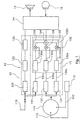
- a mobile terminal 10 implemented in a radiocommunication system includes an antenna 110, a transmission channel 12 and a microcontroller 14.
- the system of radiocommunication is for example of the type GSM 900, DCS 1800, PCS 1900, UMTS FDD, UMTS TDD, CDMA, etc ...
- the transmission channel 12 is not described in detail, since it is known in itself, and can be performed in many ways.
- the transmission channel 12 comprises means 121 necessary for the emission of signals by the antenna 110 (conventionally conversion digital / analog, transfer in the radio frequency band, filtering, amplification, modulation, etc.), coding means 122 in particular speech, channel and processing means 123 (interlacing, ).
- the microcontroller 14 controls in a manner known per se all the operations of the mobile terminal 10, and ensures in particular the playback of speech signals via at least one loudspeaker 15, and the recovery of speech signals from at least one micro-phone 16.
- the speech signals as well as the signaling signals generated by the mobile terminal 10 are to be transmitted via the transmission channel 12 to a base station (not shown). Conversely, speech signals and signaling signals transmitted by the base station are received by the mobile terminal 10 via a reception chain 13.
- Such an arrangement of means 110, 111, 132 thus offers a diversity receiving polarizations with several different reception channels, independent and decorrelated. This is very interesting because the means 132 in combination optimally exploit the received signals. It This results in a gain of a few dB in reception sensitivity. We thereby multiplies the chances of receiving signals sent to of the mobile terminal 10. The reception of the signals by the mobile terminal 10 is consequently improved, and allows better freedom from phenomena of fading and / or interference and / or echoes.
- the user of the mobile terminal 10 generates less than disturbances (energy absorption, obstacles, etc.), particularly for reception of the signals which are intended for its mobile terminal 10.
- the first antenna 110 presents in reception a first polarization and provides at least a first receive channel. This first antenna is also used in transmission. We therefore use optimally, the resources available to emit signals in direction of a base station.
- the second antenna 111 has a second polarization distinct from the first polarization. It can be a polarization circular or elliptical polarization. This antenna 111 can by example to provide at least two additional reception channels according to a double polarization. These two additional reception channels are different, independent and decorrelated from the first way mentioned above.
- the second antenna 111 is for example implemented according to a double polarization, right and left. To do this, we feed the second panel antenna 111 by two power points 112 connected to means 113 of phase shift (or phase shifter).
- each of the three reception channels provision is made known per se means 131 necessary for radio signal processing received by the antennas 110 and 111 (conventionally amplification, filtering, baseband transfer, analog / digital conversion ). For each distinct polarization, these means 131 deliver 131s signals processed, Viterbi decoding means 132a.
- These means 132a Viterbi decoding deliver the most likely sequences of data conveyed in the signals received as well as the likelihood coefficient associated with a processor 132b of digital signals (or "DSP").
- This processor 132b includes weighting means 133 and summing means 134. For each distinct polarization, the weighting means 133 weight the signals the most likely of each distinct polarization by the coefficient of associated likelihood also issued by decoding means 132a from Viterbi.
- the different weighting means 133 deliver the signals the more likely, weighted by their likelihood coefficient respective, to the means 134 of summation.
- provision may be made to include in the 132 means of combining an ASIC (for "Application Specific Integrated Circuit "in English) instead of the DSP that can eventually ensure at least some functions of the microcontroller 14.
- ASIC Application Specific Integrated Circuit
- the invention makes it possible to act effectively against fading phenomena in particular. As a result, performance of power control algorithms is found improved. Such a power control is particularly advantageous for CDMA, UMTS FDD and UMTS TDD type systems.
- the combination means 132 delivers combined signals to the microcontroller 14.
- This microcontroller 14 processes in a manner known in the combined signals using modulation adapted to the system of radiocommunication.
- the means 132 for combining received signals include means 233 for selecting a polarization and Viterbi decoding means 234.
- the means 233 for selecting a polarization are fed by the 131s signals from the means 131 for the radio processing of the signals described previously (cf. FIG. 1) with a reception power measured by and for each reception channel. These means 233 select a path of reception, among the different signal reception channels, according to the the highest reception power of the signals received by the different reception channels.
- the selection means 233 deliver the received signals by the reception channel best captured means 234 decoding of Viterbi. According to this second embodiment, therefore, a selection of a single reception channel among the different channels of reception and not a combination of the different reception channels (cf. Figure 1), in this case we speak of switching diversity.
- the means 234 for decoding Viterbi deliver on the one hand the most likely sequences of data 235 conveyed in the signals received according to the selected reception channel, and on the other hand the 236 likelihood associated with the microcontroller 14 (see Figure 1).
- the mobile terminal 10 comprises a first and a second antennas 310 and 311.
- the first antenna 310 is of the "whip" type and is used in transmission and in reception.
- This antenna 310 has a first polarization rectilinear in reception mode. According to an alternative embodiment, it is possible consider a "panel" antenna as the first antenna 310 in reception mode.
- the second antenna 311 is of the "panel" type. This type of antenna is known per se and will not be described in more detail in the present description. This is used only in reception. It presents a double circular polarization, right and left, by means of a power supply out of phase by two feed points 311a and 311b connected to a network phase shifter.
- this mobile terminal 10 offers, in reception, three polarizations distinct and decorrelated between them.
- dB for example 30 dB
- the radiation generated by these two antennas 310 and 311 are different and do not interact or little.
- At least one electric screen between the two antennas 310 and 311 it is possible to use at least one electric screen between the two antennas 310 and 311 to limit the influence of the radiation of one of the antennas on the radiation of the other antenna.
- a rectilinear polarization makes it possible to pick up the signals, in a wider way, than with a circular polarization.
Landscapes
- Engineering & Computer Science (AREA)
- Computer Networks & Wireless Communication (AREA)
- Signal Processing (AREA)
- Radio Transmission System (AREA)
- Mobile Radio Communication Systems (AREA)
- Variable-Direction Aerials And Aerial Arrays (AREA)
- Input Circuits Of Receivers And Coupling Of Receivers And Audio Equipment (AREA)
Description
- les phénomènes d'évanouissement se produisent notamment lorsque deux signaux parviennent simultanément à une même antenne de réception avec des puissances similaires mais des phases opposées, le signal résultant étant donc quasiment nul ;
- les phénomènes d'échos sont notamment générés par des signaux émis qui "se réfléchissent" sur des obstacles rencontrés sur le chemin séparant un terminal mobile de la station de base correspondante ;
- les phénomènes d'interférences sont provoqués notamment lorsque des signaux de caractéristiques similaires (telles que la fréquence) sont mis en jeu dans un même milieu de propagation.
- les antennes fouets ;
- les antennes panneaux.
- pour chaque polarisation distincte, des moyens de décodage de Viterbi délivrant d'une part des signaux les plus vraisemblables, et d'autre part un coefficient de vraisemblance associé auxdits signaux les plus vraisemblables ;
- des moyens de traitement du signal numérique (ou "DSP" pour
"Digital Signal Processor" en anglais) comprenant :
- pour chaque polarisation distincte, des moyens de pondération pondérant les signaux les plus vraisemblables de chaque polarisation distincte par le coefficient de vraisemblance associé ;
- des moyens de sommation des signaux issus des différents moyens de pondération.
- des moyens de sélection d'une polarisation, sélectionnant la polarisation dont les signaux reçus présentent la puissance maximale,
- des moyens de décodage de Viterbi recevant les signaux reçus selon la polarisation sélectionnée et délivrant d'une part les signaux reçus les plus vraisemblables, et d'autre part un coefficient de vraisemblance associé auxdits signaux reçus les plus vraisemblables.
- les systèmes du type GSM 900 ;
- les systèmes du type DCS 1800 ;
- les systèmes du type PCS 1900 ;
- les systèmes du type UMTS FDD ;
- les systèmes du type UMTS TDD ;
- les systèmes du type CDMA.
- la figure 1 présente un schéma synoptique simplifié d'un mode de réalisation particulier d'un terminal mobile selon l'invention :
- la figure 2 présente un schéma synoptique simplifié d'une variante de réalisation, par rapport à la figure 1, des moyens de combinaison des signaux reçus ; et
- la figure 3 présente un schéma simplifié d'un mode de réalisation particulier du terminal mobile de la figure 1.
- au moins une première antenne 110 présentant au moins une première polarisation;
- au moins une seconde antenne 111 présentant au moins une seconde polarisation, distincte de la première polarisation; et
- des moyens 132 de combinaison des signaux reçus, en diversité de polarisation, par les première et seconde antennes.
Claims (8)
- Terminal mobile (10) de radiocommunication du type mis en oeuvre dans un système de radiocommunication,
caractérisé en ce qu'il comprend :au moins une première antenne (110), utilisée en réception et présentant au moins une première polarisation ;au moins une seconde antenne (111), utilisée en réception et présentant au moins une seconde polarisation, distincte de ladite première polarisation ; etdes moyens (132) de combinaison des signaux reçus, en diversité de polarisation, par lesdites première et seconde antennes (110) et (111), lesdits moyens (132) de combinaison des signaux reçus comprenant :pour chaque polarisation distincte, des moyens (132a) de décodage de Viterbi délivrant d'une part des signaux les plus vraisemblables, et d'autre part un coefficient de vraisemblance associé auxdits signaux les plus vraisemblables ;des moyens (132b) de traitement du signal numérique comprenant :pour chaque polarisation distincte, des moyens (133) de pondération pondérant les signaux les plus vraisemblables de chaque polarisation distincte par le coefficient de vraisemblance associé ;des moyens (134) de sommation des signaux issus des différents moyens de pondération. - Terminal mobile (10) de radiocommunication selon la revendication 1, caractérisé en ce que ladite première polarisation appartient au groupe comprenant les polarisations rectilignes.
- Terminal mobile (10) de radiocommunication selon l'une quelconque des revendications 1 et 2, caractérisé en ce que ladite seconde polarisation appartient au groupe comprenant :les polarisations circulaires ;les polarisations elliptiques.
- Terminal mobile (10) de radiocommunication selon l'une quelconque des revendications 1 à 3, caractérisé en ce que ladite au moins une première antenne (110) appartient au groupe comprenant :les antennes (310) fouets ;les antennes (311) panneaux.
- Terminal mobile (10) de radiocommunication selon l'une quelconque des revendications 1 à 4, caractérisé en ce que ladite au moins une seconde antenne (111) appartient au groupe comprenant les antennes (311) panneaux.
- Terminal mobile (10) de radiocommunication selon la revendication 5, caractérisé en ce que ladite au moins une seconde antenne (111) est mise en oeuvre selon une double polarisation circulaire, droite et gauche.
- Terminal mobile (10) de radiocommunication selon l'une quelconque des revendications 1 à 6, caractérisé en ce que ladite au moins une première antenne (110) est également utilisée en émission.
- Terminal mobile (10) de radiocommunication selon l'une quelconque des revendications 1 à 7, caractérisé en ce que ledit système de radiocommunication appartient au groupe comprenant :les systèmes du type GSM 900 ;les systèmes du type DCS 1800 ;les systèmes du type PCS 1900 ;les systèmes du type UMTS FDD ;les systèmes du type UMTS TDD ;les systèmes du type CDMA.
Applications Claiming Priority (4)
| Application Number | Priority Date | Filing Date | Title |
|---|---|---|---|
| FR9808783 | 1998-07-06 | ||
| FR9808783A FR2780844B1 (fr) | 1998-07-06 | 1998-07-06 | Terminal mobile de radiocommunication comprenant au moins deux antennes presentant une diversite de polarisations pour la reception de signaux |
| US09/362,245 US6449468B1 (en) | 1998-07-06 | 1999-07-28 | Mobile radiocommunication terminal comprising at least two antennas with a diversity of polarizations for signal reception |
| JP24242999A JP2001094492A (ja) | 1998-07-06 | 1999-08-30 | 多様な偏波で信号を受信するための少なくとも2つのアンテナを備えた移動無線通信端末装置 |
Publications (2)
| Publication Number | Publication Date |
|---|---|
| EP0971486A1 EP0971486A1 (fr) | 2000-01-12 |
| EP0971486B1 true EP0971486B1 (fr) | 2005-10-19 |
Family
ID=27253446
Family Applications (1)
| Application Number | Title | Priority Date | Filing Date |
|---|---|---|---|
| EP99460043A Expired - Lifetime EP0971486B1 (fr) | 1998-07-06 | 1999-06-18 | Terminal mobile de radiocommunication comprenant au moins deux antennes présentant une diversité de polarisations pour la réception de signaux |
Country Status (7)
| Country | Link |
|---|---|
| US (1) | US6449468B1 (fr) |
| EP (1) | EP0971486B1 (fr) |
| JP (1) | JP2001094492A (fr) |
| AT (1) | ATE307430T1 (fr) |
| DE (1) | DE69927752T2 (fr) |
| ES (1) | ES2251170T3 (fr) |
| FR (1) | FR2780844B1 (fr) |
Families Citing this family (3)
| Publication number | Priority date | Publication date | Assignee | Title |
|---|---|---|---|---|
| US6545990B1 (en) * | 1999-12-20 | 2003-04-08 | Tantivy Communications, Inc. | Method and apparatus for a spectrally compliant cellular communication system |
| US8463255B2 (en) | 1999-12-20 | 2013-06-11 | Ipr Licensing, Inc. | Method and apparatus for a spectrally compliant cellular communication system |
| DE602006017115D1 (de) * | 2006-02-10 | 2010-11-04 | Ericsson Telefon Ab L M | Drahtlose kommunikationseinrichtung mit verbesserter antennenadaptivität |
Citations (3)
| Publication number | Priority date | Publication date | Assignee | Title |
|---|---|---|---|---|
| GB1222518A (en) * | 1968-02-08 | 1971-02-17 | L T V Electrosystems Inc | Improvements in directionally selective energy receiving systems |
| EP0600547A1 (fr) * | 1992-12-01 | 1994-06-08 | Koninklijke Philips Electronics N.V. | Système de transmission en diversité par sous-bandes |
| WO1997028615A1 (fr) * | 1996-01-29 | 1997-08-07 | Ericsson Inc. | Procede relatif a des stations de base de radiotelephone cellulaire utilisant une reception selectionnee en diversite et appareil correspondant |
Family Cites Families (15)
| Publication number | Priority date | Publication date | Assignee | Title |
|---|---|---|---|---|
| DE4018044A1 (de) * | 1990-06-06 | 1991-12-12 | Philips Patentverwaltung | Empfaenger mit mindestens zwei empfangszweigen |
| US5513176A (en) * | 1990-12-07 | 1996-04-30 | Qualcomm Incorporated | Dual distributed antenna system |
| US5841816A (en) * | 1992-10-22 | 1998-11-24 | Ericsson Inc. | Diversity Pi/4-DQPSK demodulation |
| JPH06338816A (ja) * | 1993-05-28 | 1994-12-06 | Sony Corp | 携帯無線機 |
| DE4332476A1 (de) * | 1993-09-24 | 1995-03-30 | Bosch Gmbh Robert | Verfahren und Einrichtung zur Übertragung von Datensignalen |
| US5564082A (en) * | 1994-05-06 | 1996-10-08 | At&T Corp. | Diversity antenna for a wrist telephone |
| US6081566A (en) * | 1994-08-02 | 2000-06-27 | Ericsson, Inc. | Method and apparatus for interference rejection with different beams, polarizations, and phase references |
| IL112233A (en) * | 1995-01-03 | 1998-02-22 | State Rafaelel Ministry Of Def | Adaptive polarization diversity system |
| ES2149412T3 (es) * | 1996-09-20 | 2000-11-01 | Siemens Ag | Sistema de diversidad de polarizacion para comunicaciones moviles con configuracion adaptable de las caracteristicas de radiacion. |
| US6021317A (en) * | 1997-04-30 | 2000-02-01 | Ericsson Inc. | Dual antenna radiotelephone systems including an antenna-management matrix switch and associated methods of operation |
| US5926503A (en) * | 1997-08-27 | 1999-07-20 | Motorola, Inc. | DS-CDMA receiver and forward link diversity method |
| US6181920B1 (en) * | 1997-10-20 | 2001-01-30 | Ericsson Inc. | Transmitter that selectively polarizes a radio wave |
| US6049705A (en) * | 1998-02-03 | 2000-04-11 | Ericsson Inc. | Diversity for mobile terminals |
| US6167243A (en) * | 1998-07-01 | 2000-12-26 | Nortel Networks Limited | Diversity combining in a communications system |
| US6229824B1 (en) * | 1999-05-26 | 2001-05-08 | Xm Satellite Radio Inc. | Method and apparatus for concatenated convolutional endcoding and interleaving |
-
1998
- 1998-07-06 FR FR9808783A patent/FR2780844B1/fr not_active Expired - Fee Related
-
1999
- 1999-06-18 DE DE69927752T patent/DE69927752T2/de not_active Expired - Lifetime
- 1999-06-18 ES ES99460043T patent/ES2251170T3/es not_active Expired - Lifetime
- 1999-06-18 EP EP99460043A patent/EP0971486B1/fr not_active Expired - Lifetime
- 1999-06-18 AT AT99460043T patent/ATE307430T1/de not_active IP Right Cessation
- 1999-07-28 US US09/362,245 patent/US6449468B1/en not_active Expired - Lifetime
- 1999-08-30 JP JP24242999A patent/JP2001094492A/ja active Pending
Patent Citations (3)
| Publication number | Priority date | Publication date | Assignee | Title |
|---|---|---|---|---|
| GB1222518A (en) * | 1968-02-08 | 1971-02-17 | L T V Electrosystems Inc | Improvements in directionally selective energy receiving systems |
| EP0600547A1 (fr) * | 1992-12-01 | 1994-06-08 | Koninklijke Philips Electronics N.V. | Système de transmission en diversité par sous-bandes |
| WO1997028615A1 (fr) * | 1996-01-29 | 1997-08-07 | Ericsson Inc. | Procede relatif a des stations de base de radiotelephone cellulaire utilisant une reception selectionnee en diversite et appareil correspondant |
Also Published As
| Publication number | Publication date |
|---|---|
| US6449468B1 (en) | 2002-09-10 |
| FR2780844A1 (fr) | 2000-01-07 |
| EP0971486A1 (fr) | 2000-01-12 |
| DE69927752T2 (de) | 2006-07-20 |
| DE69927752D1 (de) | 2005-11-24 |
| ES2251170T3 (es) | 2006-04-16 |
| FR2780844B1 (fr) | 2000-09-29 |
| JP2001094492A (ja) | 2001-04-06 |
| ATE307430T1 (de) | 2005-11-15 |
Similar Documents
| Publication | Publication Date | Title |
|---|---|---|
| US6771689B2 (en) | Transmit diversity and reception equalization for radio links | |
| KR100354994B1 (ko) | 데이터확장파일럿심벌지원형무선전화통신용시스템및방법 | |
| FR2724773A1 (fr) | Structure d'antenne et dispositif de radiocommunications incorporant celle-ci | |
| FR2699743A1 (fr) | Structure d'antenne en diversité possédant des antennes rapprochées. | |
| WO2004045104A1 (fr) | Appareil et procede permettant d'utiliser des satellites de puissance faible, tels que des satellites en bande c, pour une radiodiffusion vers des recepteurs mobiles et non directionnels, conception de signaux a cet effet | |
| WO1999053644A1 (fr) | Signal de radiotelephonie cellulaire a canal supplementaire affecte au sens descendant, procede, systeme, mobile et station de base correspondants | |
| FR2682838A1 (fr) | Recepteur et emetteur radio produisant une diversite. | |
| EP2456085B1 (fr) | Terminal et procédé pour l'émission de signaux radio en diversité de polarisation | |
| Porte et al. | Design, implementation, and test of an SDR for NVIS communications | |
| WO2020127363A1 (fr) | Système de communication par rétrodiffusion ambiante, appareil et procédé associés | |
| EP0971486B1 (fr) | Terminal mobile de radiocommunication comprenant au moins deux antennes présentant une diversité de polarisations pour la réception de signaux | |
| FR2833784A1 (fr) | Procede d'antibrouillage pour recepteur de signaux radioelectriques a spectre etale | |
| EP0887950A1 (fr) | Station de base à diversité d'antennes pour l'emission de canaux unidirectionnels, et procédé correspondant | |
| EP0971438A1 (fr) | Procédé d'orientation de faisceau(x) rayonnant(s) radioélectrique(s) pour la communication entre une station de base et un radiotéléphone mobile, et station de base correspondante | |
| EP0689301A1 (fr) | Système d'antennes d'émission-réception omnidirectionnel à diversité angulaire et de polarisation | |
| EP1000445B1 (fr) | Reseau d'antennes pour station de base de radiocommunication avec des mobiles | |
| EP0982960B1 (fr) | Procédé de test d'un réseau de radiocommunication, dispositif et station de base correspondants | |
| EP0951152B1 (fr) | Recepteur à diversité | |
| FR2859314A1 (fr) | Emetteur-recepteur a diversite d'antennes | |
| FR2777402A1 (fr) | Procede et systeme pour la reduction des interferences | |
| JP2001518736A (ja) | 複数のアンテナを用いて鏡面反射を軽減する方法 | |
| EP0779674A1 (fr) | Antenne d'émission et/ou de réception pour véhicule directive en azimut, et dispositif à diversité d'antennes correspondant | |
| KR20010011614A (ko) | 신호수신용 편파다이버시티를 보유하는 적어도 2개의 안테나로구성된 이동전파통신단말장치 | |
| FR2878082A1 (fr) | Appareil d'emission et/ou de reception de donnees muni d'au moins deux antennes mutuellement peu interferentes | |
| FR2795258A1 (fr) | Systeme de radiocommunication numerique vers des terminaux passifs |
Legal Events
| Date | Code | Title | Description |
|---|---|---|---|
| PUAI | Public reference made under article 153(3) epc to a published international application that has entered the european phase |
Free format text: ORIGINAL CODE: 0009012 |
|
| AK | Designated contracting states |
Kind code of ref document: A1 Designated state(s): AT BE CH CY DE DK ES FI FR GB GR IE IT LI LU MC NL PT SE |
|
| AX | Request for extension of the european patent |
Free format text: AL;LT;LV;MK;RO;SI |
|
| 17P | Request for examination filed |
Effective date: 20000215 |
|
| AKX | Designation fees paid |
Free format text: AT BE CH CY DE DK ES FI FR GB GR IE IT LI LU MC NL PT SE |
|
| RAP1 | Party data changed (applicant data changed or rights of an application transferred) |
Owner name: COMPAGNIE FINANCIERE POUR LE RADIOTELEPHONE SA |
|
| RAP1 | Party data changed (applicant data changed or rights of an application transferred) |
Owner name: CEGETEL GROUPE |
|
| RAP1 | Party data changed (applicant data changed or rights of an application transferred) |
Owner name: SOCIETE FRANEAISE DU RADIOTELEPHONE-SFR |
|
| 17Q | First examination report despatched |
Effective date: 20040511 |
|
| GRAP | Despatch of communication of intention to grant a patent |
Free format text: ORIGINAL CODE: EPIDOSNIGR1 |
|
| GRAS | Grant fee paid |
Free format text: ORIGINAL CODE: EPIDOSNIGR3 |
|
| GRAA | (expected) grant |
Free format text: ORIGINAL CODE: 0009210 |
|
| AK | Designated contracting states |
Kind code of ref document: B1 Designated state(s): AT BE CH CY DE DK ES FI FR GB GR IE IT LI LU MC NL PT SE |
|
| PG25 | Lapsed in a contracting state [announced via postgrant information from national office to epo] |
Ref country code: NL Free format text: LAPSE BECAUSE OF FAILURE TO SUBMIT A TRANSLATION OF THE DESCRIPTION OR TO PAY THE FEE WITHIN THE PRESCRIBED TIME-LIMIT Effective date: 20051019 Ref country code: IE Free format text: LAPSE BECAUSE OF FAILURE TO SUBMIT A TRANSLATION OF THE DESCRIPTION OR TO PAY THE FEE WITHIN THE PRESCRIBED TIME-LIMIT Effective date: 20051019 Ref country code: FI Free format text: LAPSE BECAUSE OF FAILURE TO SUBMIT A TRANSLATION OF THE DESCRIPTION OR TO PAY THE FEE WITHIN THE PRESCRIBED TIME-LIMIT Effective date: 20051019 Ref country code: AT Free format text: LAPSE BECAUSE OF FAILURE TO SUBMIT A TRANSLATION OF THE DESCRIPTION OR TO PAY THE FEE WITHIN THE PRESCRIBED TIME-LIMIT Effective date: 20051019 |
|
| REG | Reference to a national code |
Ref country code: GB Ref legal event code: FG4D Free format text: NOT ENGLISH |
|
| REG | Reference to a national code |
Ref country code: CH Ref legal event code: EP |
|
| REG | Reference to a national code |
Ref country code: IE Ref legal event code: FG4D Free format text: LANGUAGE OF EP DOCUMENT: FRENCH |
|
| REF | Corresponds to: |
Ref document number: 69927752 Country of ref document: DE Date of ref document: 20051124 Kind code of ref document: P |
|
| REG | Reference to a national code |
Ref country code: CH Ref legal event code: NV Representative=s name: E. BLUM & CO. PATENTANWAELTE |
|
| PG25 | Lapsed in a contracting state [announced via postgrant information from national office to epo] |
Ref country code: SE Free format text: LAPSE BECAUSE OF FAILURE TO SUBMIT A TRANSLATION OF THE DESCRIPTION OR TO PAY THE FEE WITHIN THE PRESCRIBED TIME-LIMIT Effective date: 20060119 Ref country code: GR Free format text: LAPSE BECAUSE OF FAILURE TO SUBMIT A TRANSLATION OF THE DESCRIPTION OR TO PAY THE FEE WITHIN THE PRESCRIBED TIME-LIMIT Effective date: 20060119 Ref country code: DK Free format text: LAPSE BECAUSE OF FAILURE TO SUBMIT A TRANSLATION OF THE DESCRIPTION OR TO PAY THE FEE WITHIN THE PRESCRIBED TIME-LIMIT Effective date: 20060119 |
|
| GBT | Gb: translation of ep patent filed (gb section 77(6)(a)/1977) |
Effective date: 20060112 |
|
| PG25 | Lapsed in a contracting state [announced via postgrant information from national office to epo] |
Ref country code: PT Free format text: LAPSE BECAUSE OF FAILURE TO SUBMIT A TRANSLATION OF THE DESCRIPTION OR TO PAY THE FEE WITHIN THE PRESCRIBED TIME-LIMIT Effective date: 20060320 |
|
| NLV1 | Nl: lapsed or annulled due to failure to fulfill the requirements of art. 29p and 29m of the patents act | ||
| REG | Reference to a national code |
Ref country code: ES Ref legal event code: FG2A Ref document number: 2251170 Country of ref document: ES Kind code of ref document: T3 |
|
| REG | Reference to a national code |
Ref country code: IE Ref legal event code: FD4D |
|
| PLBE | No opposition filed within time limit |
Free format text: ORIGINAL CODE: 0009261 |
|
| STAA | Information on the status of an ep patent application or granted ep patent |
Free format text: STATUS: NO OPPOSITION FILED WITHIN TIME LIMIT |
|
| 26N | No opposition filed |
Effective date: 20060720 |
|
| REG | Reference to a national code |
Ref country code: HK Ref legal event code: WD Ref document number: 1025197 Country of ref document: HK |
|
| REG | Reference to a national code |
Ref country code: CH Ref legal event code: PFA Owner name: SOCIETE FRANCAISE DU RADIOTELEPHONE-SFR Free format text: SOCIETE FRANCAISE DU RADIOTELEPHONE-SFR#42, AVENUE DE FRIEDLAND#75008 PARIS (FR) -TRANSFER TO- SOCIETE FRANCAISE DU RADIOTELEPHONE-SFR#42, AVENUE DE FRIEDLAND#75008 PARIS (FR) |
|
| PG25 | Lapsed in a contracting state [announced via postgrant information from national office to epo] |
Ref country code: CY Free format text: LAPSE BECAUSE OF FAILURE TO SUBMIT A TRANSLATION OF THE DESCRIPTION OR TO PAY THE FEE WITHIN THE PRESCRIBED TIME-LIMIT Effective date: 20051019 |
|
| PGFP | Annual fee paid to national office [announced via postgrant information from national office to epo] |
Ref country code: ES Payment date: 20110609 Year of fee payment: 13 Ref country code: CH Payment date: 20110526 Year of fee payment: 13 Ref country code: MC Payment date: 20110524 Year of fee payment: 13 Ref country code: LU Payment date: 20110527 Year of fee payment: 13 |
|
| PGFP | Annual fee paid to national office [announced via postgrant information from national office to epo] |
Ref country code: GB Payment date: 20110606 Year of fee payment: 13 Ref country code: BE Payment date: 20110531 Year of fee payment: 13 |
|
| PGFP | Annual fee paid to national office [announced via postgrant information from national office to epo] |
Ref country code: IT Payment date: 20110528 Year of fee payment: 13 |
|
| PGFP | Annual fee paid to national office [announced via postgrant information from national office to epo] |
Ref country code: FR Payment date: 20110727 Year of fee payment: 13 |
|
| PGFP | Annual fee paid to national office [announced via postgrant information from national office to epo] |
Ref country code: DE Payment date: 20110606 Year of fee payment: 13 |
|
| BERE | Be: lapsed |
Owner name: SOC. FRANCAISE DU RADIOTELEPHONE-*SFR Effective date: 20120630 |
|
| PG25 | Lapsed in a contracting state [announced via postgrant information from national office to epo] |
Ref country code: MC Free format text: LAPSE BECAUSE OF NON-PAYMENT OF DUE FEES Effective date: 20120630 |
|
| REG | Reference to a national code |
Ref country code: CH Ref legal event code: PL |
|
| REG | Reference to a national code |
Ref country code: CH Ref legal event code: PL |
|
| GBPC | Gb: european patent ceased through non-payment of renewal fee |
Effective date: 20120618 |
|
| PG25 | Lapsed in a contracting state [announced via postgrant information from national office to epo] |
Ref country code: IT Free format text: LAPSE BECAUSE OF NON-PAYMENT OF DUE FEES Effective date: 20120618 |
|
| REG | Reference to a national code |
Ref country code: FR Ref legal event code: ST Effective date: 20130228 |
|
| REG | Reference to a national code |
Ref country code: DE Ref legal event code: R119 Ref document number: 69927752 Country of ref document: DE Effective date: 20130101 |
|
| PG25 | Lapsed in a contracting state [announced via postgrant information from national office to epo] |
Ref country code: GB Free format text: LAPSE BECAUSE OF NON-PAYMENT OF DUE FEES Effective date: 20120618 Ref country code: LI Free format text: LAPSE BECAUSE OF NON-PAYMENT OF DUE FEES Effective date: 20120630 Ref country code: CH Free format text: LAPSE BECAUSE OF NON-PAYMENT OF DUE FEES Effective date: 20120630 Ref country code: FR Free format text: LAPSE BECAUSE OF NON-PAYMENT OF DUE FEES Effective date: 20120702 Ref country code: BE Free format text: LAPSE BECAUSE OF NON-PAYMENT OF DUE FEES Effective date: 20120630 Ref country code: DE Free format text: LAPSE BECAUSE OF NON-PAYMENT OF DUE FEES Effective date: 20130101 |
|
| REG | Reference to a national code |
Ref country code: ES Ref legal event code: FD2A Effective date: 20131022 |
|
| PG25 | Lapsed in a contracting state [announced via postgrant information from national office to epo] |
Ref country code: ES Free format text: LAPSE BECAUSE OF NON-PAYMENT OF DUE FEES Effective date: 20120619 Ref country code: LU Free format text: LAPSE BECAUSE OF NON-PAYMENT OF DUE FEES Effective date: 20120618 |