EP0975748B1 - Verfahren zur erkennung von nucleinsäuremolekülen codierend für (poly)peptide, welche mit zielmolekülen interagieren - Google Patents
Verfahren zur erkennung von nucleinsäuremolekülen codierend für (poly)peptide, welche mit zielmolekülen interagieren Download PDFInfo
- Publication number
- EP0975748B1 EP0975748B1 EP98924190A EP98924190A EP0975748B1 EP 0975748 B1 EP0975748 B1 EP 0975748B1 EP 98924190 A EP98924190 A EP 98924190A EP 98924190 A EP98924190 A EP 98924190A EP 0975748 B1 EP0975748 B1 EP 0975748B1
- Authority
- EP
- European Patent Office
- Prior art keywords
- poly
- mrna
- polysomes
- peptides
- peptide
- Prior art date
- Legal status (The legal status is an assumption and is not a legal conclusion. Google has not performed a legal analysis and makes no representation as to the accuracy of the status listed.)
- Expired - Lifetime
Links
Images


Classifications
-
- C—CHEMISTRY; METALLURGY
- C12—BIOCHEMISTRY; BEER; SPIRITS; WINE; VINEGAR; MICROBIOLOGY; ENZYMOLOGY; MUTATION OR GENETIC ENGINEERING
- C12N—MICROORGANISMS OR ENZYMES; COMPOSITIONS THEREOF; PROPAGATING, PRESERVING, OR MAINTAINING MICROORGANISMS; MUTATION OR GENETIC ENGINEERING; CULTURE MEDIA
- C12N15/00—Mutation or genetic engineering; DNA or RNA concerning genetic engineering, vectors, e.g. plasmids, or their isolation, preparation or purification; Use of hosts therefor
- C12N15/09—Recombinant DNA-technology
- C12N15/10—Processes for the isolation, preparation or purification of DNA or RNA
- C12N15/1034—Isolating an individual clone by screening libraries
- C12N15/1041—Ribosome/Polysome display, e.g. SPERT, ARM
-
- C—CHEMISTRY; METALLURGY
- C07—ORGANIC CHEMISTRY
- C07K—PEPTIDES
- C07K16/00—Immunoglobulins [IG], e.g. monoclonal or polyclonal antibodies
Definitions
- the present invention relates to methods for identifying nucleic acid molecules encoding (poly)peptides that interact with target molecules.
- the method of the present invention is particularly characterized by an in vitro translation step under conditions that allow formation of polysomes in the presence of antisense oligonucleotides complementary to the tag-coding sequence of ssrA-RNA.
- the present invention further relates to kits that are useful for carrying out the method of the invention.
- Evolutionary methods may bring the refinement to protein engineering which is beyond the powers and accuracy of rational design today.
- Evolution can be defined as a succession of "generations", cycles of genetic diversification, followed by Darwinian selection for a desired phenotypic property.
- nucleic acids have been evolved for physical properties (Saffhill, R., Schneider-Bernloehr, H., Orgel, L. E. & Spiegelman, S. (1970) J . Mol. Biol. 51 , 531-539) in vitro, and in this case, the substance conferring the phenotype was identical to the genetic material.
- Oligonucleotide ligands usually single stranded RNA, have been identified for many targets by SELEX (Gold, L., Polisky, B., Uhlenbeck, O. & Yarus, M. (1995) Annu. Rev. Biochem. 64, 763-797; Irvine, D., Tuerk, C. & Gold, L. (1991) J . Mol. Biol. 222, 739-761), in which a synthetic DNA library is transcribed, the RNA selected for binding, reverse transcribed and amplified over several rounds.
- SELEX Gold, L., Polisky, B., Uhlenbeck, O. & Yarus, M. (1995) Annu. Rev. Biochem. 64, 763-797; Irvine, D., Tuerk, C. & Gold, L. (1991) J . Mol. Biol. 222, 739-761
- This system employs an in vitro translation system that is preferentially coupled to an in vitro transcription system.
- the translation system allows the simultaneous isolation of mRNA and (poly)peptide in a polysome complex after a suitable screening step for the (poly)peptide.
- the (poly)peptides in Mattheakis' system are comprised of two components, one of which is the peptide to be screened and the second is a tether segment that binds to the mRNA.
- Co-isolation of mRNA and (poly)peptide in the polysome complex can possibly be improved with the help of a translation stalling sequence even though the existence of such sequences is still unclear for E . coli. This sequence possibly enhances the overall stability of the polysome complex by decreasing the translation rate and thus allows for suitable conditions for the concomitant screening and isolation of (poly)peptide and corresponding mRNA.
- the present invention relates to a method for identifying a nucleic acid molecule encoding a (poly)peptide that interacts with a target molecule comprising the following steps:
- (poly)peptide as used in the present invention relates both to peptides as well as to polypeptides.
- Said (poly)peptides may either comprise a natural or a recombinantly engineered amino acid sequence. The latter alternative also includes fusion proteins.
- polysome refers to a complex formed by at least one, preferably several ribosomes and mRNA during translation.
- the population of mRNA molecules may be of varying origin. For example, it may be derived from a cDNA library. In an alternative embodiment, it may be directly derived from cells or tissue. Particularly advantageous is also the use of the present invention in mutagenized (poly)peptides to find improved variants. Alternatively, synthetic protein or peptide libraries or antibody libraries can be used.
- tag-coding sequence of ssrA-RNA relates to a nucleic acid sequence encoding the amino acid sequence AANDENYALAA. This sequence has been described in Keiler et al., Science 221 (1996), 1990-1993.
- the antisense oligonucleotides comprised in the translation system employed in the method of the invention are of a suitable length to hybridize to the tag-coding sequence of ssrA-RNA and block translation thereof under conditions that allow the formation of polysomes.
- a translation system being free of ssrA-RNA can, for example, be derived from E. coli strains lacking a functional ssrA gene such as X90 ssrA1::cat (Keiler et al., Science 221 (1996), 1990-1993), N2211 or NM101 (Tu et al., J. Biol. Chem. 270 (1995), 9322-9326), W3110 ⁇ ssrA ( Komine et al., Proc. Natl. Acad. Sci. U. S.A. 91 (1994), 9223-9227), K7823 or K6676 (Retallack and Friedman, Cell 83 (1995), 227-235).
- Conditions that allow the interaction of the (poly)peptides encoded by the translated mRNA molecules and displayed by said polysomes with corresponding target molecules can, without undue burden, be established by the person skilled in the art. Such conditions are, for example, derivable from the teachings of WO 95/11922, WO 93103172 and WO 91/05058 or from the appended examples. As is well known in the art, said conditions also rely on the screening procedure that is employed for detecting said interactions.
- the separation of the polysomes that display (poly)peptides which interact with the target molecules from polysomes displaying no such (poly)peptides can be effected according to known procedures. Again, the separation technique employed may well depend on the screening system that is used. A convenient method of separating the aforementioned polysomes is, for example, based on affinity chromatography wherein the target molecules are bound to the column material.
- the identification of the nucleic acid molecule encoding the selected (poly)peptide can be achieved by any suitable means and is most conveniently achieved by sequencing the nucleic acid molecule, for example, by sequencing the mRNA or the DNA, after cloning into a vector.
- sequencing the nucleic acid molecule for example, by sequencing the mRNA or the DNA, after cloning into a vector.
- it may be removed from the ribosome by treatment with EDTA or by acid elution followed by standard RNA purification using a kit (see Example 3) or by competitive elution using a soluble target molecule, followed by standard RNA purification using a kit.
- steps (a) to (c) are carried out two or more times prior to the identification step (d).
- This measure results in the less ambiguous identification of the desired nucleic acid with the concomitant minimization of false positive polysomes and thus nucleic acids.
- This embodiment for identifying the desired nucleic acid is particularly preferred, if several rounds of selection are necessary to isolate the specifically interacting (poly)peptide-target molecule pair.
- the present invention therefore provides a system for the phenotypic selection of target molecules such a ligands with (poly)peptides that are preferably complete, native protein molecules.
- the mRNA molecules comprise a stem loop at their 3' end.
- degradation of the mRNA by exonucleases is precluded to a significant extent.
- a spacer is fused to the reading frame of the (poly)peptide to tether the emerging, folded (poly)peptide to the putative (poly)peptide channel of the ribosome.
- Said spacer preferentially encodes 57 to 116 amino acids.
- Tethering of emerging (poly)peptide to the (poly)peptide channel of the ribosome is an additional advantageous means to enable co-selection of (poly)peptide and corresponding mRNA since it might significantly slow down the dissociation of the polysome.
- said stem loop region at the 3' end of the mRNA molecules encodes said spacer.
- the length of the total 3' region can be kept to a minimum, if both spacer (required at the protein level) and stem loop (required at the RNA level) can be encoded by the same DNA.
- a further preferred embodiment of the present invention relates to the above-recited method wherein said mRNA molecules comprise a stem loop structure at their 5' end.
- the stem loop at the 5' end of the mRNA serves the purpose of avoiding a successful exonuclease attack towards the mRNA.
- the mRNA comprises both a 5' and a 3' stem loop structure.
- the mRNA molecule would structurally resemble natural mRNAs.
- said in vitro translation system is supplemented with inhibitors of ribonuclease.
- said ribonuclease inhibitors are transition state analogs and most preferably they are vanadyl ribonuclease complexes.
- vanadyl ribonuclease complexes may advantageously be used to further increase the efficiency of ribosome display. This result is particularly surprising since said complexes at the same time partially inhibit protein synthesis.
- a further preferred embodiment of the invention relates to a method wherein the polysomes in steps (a) to (c) are stabilized by
- low temperature in the above context is intended to mean a temperature that allows a successful screening to take place.
- said low temperature is in the range of 0 to 5°C.
- the translation is carried out in a prokaryotic translation system.
- a prokaryotic translation system particularly preferred is an E. coli based translation system such as the S-30 E. coli translation system.
- step (d) comprises
- This embodiment for identifying the nucleic acid of interest is preferred, if the population of mRNA molecules is too large to identify the desired species in a single round. Furthermore, it allows repeated and detailed testing of identified molecules, since the population of mRNA molecules becomes "immortalized” by cloning.
- Reverse transcription allows sequencing using the most convenient DNA sequencing technology developed by Maxam and Gilbert as well as by Sanger and colleagues (see, e.g., Sambrook et al., "Molecular Cloning, A Laboratory Manual", second edition 1989, CSH Press, Cold Spring Harbor).
- the amplification of.cDNA preferably by PCR, with or without subsequent cloning into a suitable vector, further significantly facilitates the identification of the desired nucleic acid molecule. In various cases, amplification of the nucleic acid molecule will be a prerequisite for allowing the investigator to subsequently identify said nucleic acid molecule.
- DNA is transcribed into mRNA in the presence of a reducing agent, such as ⁇ -mercaptoethanol and/or DTT, prior to step (a).
- a reducing agent such as ⁇ -mercaptoethanol and/or DTT
- the inclusion of a reducing agent such as ⁇ -mercaptoethanol and/or DTT into the reaction buffer is known to increase the stability of DNA-polymerase. Accordingly, a reducing agent in the buffer contributes to an increase in the yield of mRNA which, in turn, results in an overall improvement of the ribosome display.
- step (a) It is particularly preferred to remove said reducing agent after transcription and prior to step (a).
- This method of the invention is most preferred in cases where the (poly)peptide to be screened may comprise species that assume their native conformation by forming disulfide bridges.
- An example of such (poly)peptides are members of the immunoglobulin superfamily.
- the present invention also describes a method for identifying a nucleic acid molecule encoding a (poly)peptide that interacts with- a target molecule comprising the following steps:
- the reducing agent described in step (a) is ⁇ -mercaptoethanol and/or DTT.
- the (poly)peptides comprise domains of the immunoglobulin superfamily, and preferably of the immunoglobulin family.
- said (poly)peptides may comprise complete T cell receptor or antibody chains or parts thereof such as domains of antibodies, for example the V H or V L regions.
- the (poly)peptides are single chain antibodies or fusion proteins comprising such single chain antibodies.
- the fusion partner of said antibody chains preferably is a tag that is employed for tethering the nascent (poly)peptide to the corresponding mRNA.
- the present invention also preferably relates to a method wherein the translation system is supplemented with at least one comound selected from the group consisting of protein disulfide isomerase, oxidized or reduced glutathione, E. coli protein DsbA and molecular chaperones such as DnaK, DnaJ, GrpE, GroEL or GroES.
- the above compounds alone or in combination, may enhance the stability, solubility and/or native folding capacities of the nascent (poly)peptide.
- the protein disulfide isomerase may be of bacterial or eukaryotic origin.
- the compound/enzyme that is included into the system would be selected by the person skilled in the art according to the type of protein that is screened. For example, if he screens a library comprising antibody domains he would, in accordance with the teachings of the present invention, include a eukaryotic protein disulfide isomerase. As could be shown by the present invention (see the appended examples) the polysome display system is significantly improved by incorporating said enzyme into the translation reaction system.
- non-specific interactions between the polysomes and/or the polysomes and the target molecules and/or, optionally, the polysomes and the matrix on which the target molecules are immobilized, formed during the step of bringing the polysomes into contact with said target molecules are inhibited or reduced by the addition of a blocking compound.
- said blocking compound is a polyanionic compound like heparin.
- Heparin has been suggested to be included as RNase inhibitor (WO 91/05058), but it has surprisingly been found in accordance with the present invention that it additionally decreases non-specific binding. It can be assumed that heparin as polyanionic compound competes with the polyanionic mRNA as part of the polysome complexes for non-specific binding sites, rendering the addition of polyanionic compounds such as heparin in polysome display a generally applicable method for decreasing non-specific binding.
- said blocking compound is sterilized milk.
- nonfat milk has already been suggested for polysome display (WO 95/11922).
- RNA isolation was again possible, and the amount of non-specific binding was substantially decreased.
- the present invention relates to a kit comprising
- the present invention relates to a kit comprising
- the kit of the present invention can conveniently be used to carry out the method of the present invention.
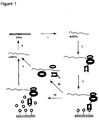
- Fig. 1 Principle of in vitro ribosome display for screening native protein (scFv) libraries for ligand (antigen) binding.
- a DNA scFv library is first amplified by PCR, whereby a T7 promoter, ribosome binding site and stem loops are introduced, and then transcribed to RNA.
- mRNA is translated in vitro in an E. coli S-30 system in the presence of different factors enhancing the stability of ribosomal complexes and improving the folding of the scFv antibodies on the ribosomes. Translation is stopped by cooling on ice, and the ribosome complexes are stabilized by increasing the magnesium concentration.
- the desired ribosome complexes are affinity selected from the translation mixture by binding of the native scFv to the immobilized antigen. Unspecific ribosome complexes are removed by intensive washing. 4, the bound ribosome complexes can then be dissociated by EDTA (4b), or whole complexes can be specifically eluted with antigen (4a). 5, RNA is isolated from the complexes. 6, Isolated mRNA is reverse transcribed to cDNA, and cDNA is then amplified by PCR. This DNA is then used for the next cycle of enrichment, and a portion can be analyzed by cloning and sequencing and/or by ELISA or RIA.
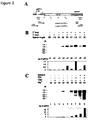
- Fig. 2 (A) Schematic drawing of the scFv construct used for ribosome display.
- T7 denotes the T7 promoter, SD the ribosome binding site, F the 3 amino acid long FLAG (Knappik, A. & Plückthun, A. (1994) BioTechniques 17, 754-761) with N-terminal methionine, V L and V H the variable domains of the scFv fragment, L the linker, spacer the part of protein construct connecting the folded scFv to the ribosome, 5'sl and 3'sl the stem loops on the 5'- and 3'-ends of the mRNA.
- the arrow indicates the transcriptional start. The strategy for the PCR amplification is shown.
- the amount of the scFvhag mRNA bound to the polysome complexes is influenced by the secondary structure of its ends and the length of the spacer connecting the folded scFv to the ribosome.
- Different constructs of scFvhag mRNA were used for one cycle of ribosome display (constructs c1 - c9). None of them contained a stop codon. Each species was tested separately. After affinity selection of the ribosome complexes from 100 ⁇ l of translation mixtures, mRNAs were isolated and analyzed by Northern hybridization.
- the presence of the 5' stem loop is labeled (+) or (-), that of the 3' stem loop is labeled as (-) when absent, (I) when derived from the Ipp terminator or (t) when derived from the T3Te terminator.
- the spacer length indicates the number of amino acids following the scFv and connecting it to the ribosome, including the translated stem loop.
- the lengths of RNA in kb is derived from RNA molecular weight marker III (Boehringer Mannheim).
- the bar graph shows the quantified amounts of mRNA from fluoroimager analysis.
- C Effect of additives on the amount of mRNA bound to the ribosome complexes.
- the mRNA of the scFvhag construct c7 was used for one cycle of ribosome display.
- Samples in Fig. 2B lane c7 and Fig. 2C lane 6 are identical.
- 3.5 mM anti-ssrA oligonucleotide ON10 (5'-TTAAGCTGCTAAAGCGTAGTTTTCGTCGTTTGCGACTA-3')
- PDI protein disulfide isomerase
- VRC vanadyl ribonucleoside complexes
- Fig. 3 Anti-ssr A antisense oligonucleotide ON10 (Fig. 2C) decreases the molecular mass of the longest protein species (arrows).
- In vitro translation was performed using 35 S-methionine and scFvhag c7 mRNA. Reactions were carried out in the absence (-) or presence (+) of 3.5 mM oligonucleotide ON10. An SDS-PAGE of translation products is shown.
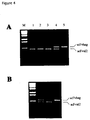
- Fig. 4 (A) Enrichment of the scFvhag ribosome complexes from mixtures with scFvAL2 by ribosome display mRNA of scFvhag c5 was diluted 10 8 times with mRNA of scFvAL2, and the mixture was used for ribosome display. After affinity selection of scFvhag ribosome complexes, mRNA was isolated, reverse transcribed to cDNA using oligonucleotide ON5, cDNA was amplified by PCR using oligonucleotides ON3 and ON7 and analyzed by agarose electrophoresis.
- Lanes 1 - 5 are PCR products amplified after the 1 st to 5th cycles of the ribosome display, respectively.
- M is the 1 kb DNA ladder (Gibco BRL) used as MW marker. PCR products corresponding to scFvhag and scFvAL2 are labeled.
- Fig. 5 (A) Analysis of RNA pool after the 3 rd round of polysome display: in vitro translation of RNA pool and RIA assay of labelled polysome complexes in the presence of 2% milk: (a) binding to BSA; (b) binding to BSA-GCN4(7P14P); (c) binding to BSA-GCN4(7P14P) on inhibition with 1 ⁇ M GCN4(7P14P); (d) binding to BSA-GCN4(7P14P) on inhibition with 1 ⁇ M hag peptide; (e) binding to BSA-GCN4(7P14P) on inhibition with 1 ⁇ M fluorescein.
- RNA pool after the 3 rd round of polysome display in vitro translation of RNA pool and RIA assay of labelled polysome complexes in the absence of 2% milk: (a) binding to BSA; (b) binding to BSA-GCN4(7P14P); (c) binding to BSA-GCN4(7P14P) on inhibition with 1 ⁇ M GCN4(7P14P); (d) binding to BSA-GCN4(7P14P) on inhibition with 1 ⁇ M hag peptide; (e) binding to BSA-GCN4(7P14P) on inhibition with 1 ⁇ M fluorescein.
- RNA pool after the 3 rd round of polysome display by RIA RNA pool after 3 rounds of affinity selection performed in the absence of milk (A), or in the presence of milk(B):
- an scFv fragment of an antibody which requires its correctly assembled three-dimensional structure to bind the antigen (a hydrophilic peptide), can be enriched 10 8 -fold by ribosome display and its sequence "evolves" during the process.
- the scFvhag construct c7 was amplified by PCR in two steps from an fd phage displaying the scFv 17/9 (Schulze-Gahmen, U., Rini, J. M. & Wilson, I. A. (1993) J. Mol. Biol. 234, 1098-1118; Krebber, C., Spada, S., Desplancq, D. & Plückthun. A. (1995) FEBS Lett.
- oligonucleotides ON1 (5'-TTTCCCGAATTGTGAGCGGATAACAATAGAAATAATTTTGTTTAACTTTAAGAA GGAGATATATCCATGGACT ACAAAGA-3'), which introduces a ribosome binding site (RBS), and ON2 (5'-TTTAAGCAG CTCGATAGCAGCAC-3').
- ON3 (5'-ATATATGTCGACGAAATTAATACGACTCACTATAG GGAGACCACAACGGTTTC CCGAATTGTG-3'), which introduces the T7 promoter and the 5'-loop
- ON4 (5'-AGACCCGTTTAGAGGCCCC AAGGGGTTATGGAATTCACCTTTAAGCAGCT C-3'), which introduces a modified lpp terminator loop with stop codon removed, were used.
- the spacer, fused C-terminally to the scFv, is derived from amino acids 211 to 299 of gene III of filamentous phage M13mp19 (Krebber, C., Spada, S., Desplancq, D. & Plückthun, A.
- the other constructs were prepared by PCR from c7 using the following primer pairs: c1, ON5 (5'-TCAGTAGCGACAGAATCAAG-3') and ON6 (5'-GAAATTAA TACGACTCACTATAGGGTTAACTTTAGAAGGAGGTATATCCATGGACTACAAA GA-3'), which introduces the T7 promoter and RBS without the 5'-stemloop, the spacer is derived from amino acids 211 - 294 of gene III; c2, ON4 and ON6, the same spacer as c7; c3, ON6 and ON7 (5'-GGCCCACCCGTGAA GGTGAGCCTCAGTAGCGACAG-3'), the spacer is derived from amino acids 211 - 294 of gene III following 7 amino acids of the translated T3Te terminator; c4, ON3 and ON5, the same spacer as c1; c5, ON3 and ON7
- the spacer is derived from amino acids 211 - 299 of gene III following the first 4 amino acids of the lpp terminator; c8, ON3 and ON8 (5'-TT-TAAGCAGCTCATCAAA ATCACC-3'), the spacer is derived from amino acids 211 - 264 of gene III following the first 4 amino acids of the Ipp terminator; c9, ON3 and ON4, the spacer is derived from amino acids 211 to 264 of gene III following 24 amino acids of the Ipp terminator, using construct c8 as a template.
- the scFvAL2 construct (V L -(Gly4Ser) 4 - V H ) was amplified by PCR in two steps from plasmid pAK202 (Krebber, A., Bornhauser, S., Burmester, J., Honegger, A., Willuda, J., Bosshard, H. R. & Plückthun, A. (1997) J. Immunol. Meth. 201 , 35-55), using first oligonucleotides ON1 and ON7 and in the second step ON3 and ON7.
- the spacer is derived from amino acids 240 to 294 of gene III of filamentous phage M13mp19 (Krebber, A., Bornhauser, S., Burmester, J., Honegger, A., Willuda, J., Bosshard, H. R. & Plückthun, A. (1997) J. Immunol. Meth. 201 , 35-55), and the translated T3Te terminator adds another 7 amino acids.
- Reverse transcription was performed using Superscript reverse transcriptase (Gibco BRL) according to the manufacturer's recommendation.
- PCR was performed using Taq polymerase (Gibco BRL) in the presence of 5% DMSO (4 min at 94°C, followed by 3 cycles of 30 sec at 94°C, 30 sec at 37°C, 2 min at 72°C, followed by 10 similar cycles at 60°C instead of 37°C, 20 similar cycles at 60°C instead of 37°C with elongation at 72°C prolonged by 15 sec per cycle and finished by 10 min at 72°C).
- PCR products were analyzed by agarose gel electrophoresis and purified from the gel and reamplified, if the amount and quality was not sufficient, or directly used for transcription without additional purification.
- In vitro transcription was performed as described (Pokrovskaya, I. D. & Gurevich, V. V. (1994) Anal. Biochem. 220 , 420-423).
- release factor binding is normally the hydrolysis of the peptidyl tRNA between the ribose and the last amino acid by the peptidyl transferase center of the ribosome (Tate, W. P. & Brown, C. M. (1992) Biochemistry 31 , 2443-2450).
- Our system is devoid of stop codons, and thus a fraction of the polypeptide may not be hydrolyzed off the tRNA and remain attached to the ribosome and thus be available for affinity selection.
- Microtiter plates coated with hag-transferrin conjugate were prewashed with ice-cold washing buffer, and the supernatant from the centrifuged translation mixture was applied (200 ⁇ l per microtiter well) and the plate was gently shaken for 1 hour in the cold room. After 5 washes with ice-cold washing buffer, the retained ribosome complexes were dissociated with ice-cold elution buffer (100 ⁇ l per well; 50 mM Tris-Ac, pH 7.5. 150 mM NaCl, 10 mM EDTA, 50 ⁇ g/ml of E.
- ribosome display was found to be two orders of magnitude lower when using a coupled in vitro transcription-translation (data not shown).
- the input mRNA was subjected to a single round of affinity selection: translation in vitro, capture of ribosome complexes on immobilized target ligand and release of mRNA.
- the released mRNA was then quantified by Northern analysis.
- RNA electrophoresis and transfer to a Nytran membrane were carried out as described (Goda, S. K. & Minton, N. P. (1995) Nucleic Acids Res. 23 , 3357-3358) with a Turboblotter (Schleicher & Schuell). Hybridization was performed for 12 hours at 60°C (Church, G. M. & Gilbert, W. (1984) Proc. Natl. Acad. Sci.
- Hybridization was carried out with the oligonucleotide ON9 (5'-ACATGGTAACTTTTTCACCAGCGGTAACGG-3'), which anneals to the V L region of scFvhag mRNA.
- This oligonucleotide was labeled by 3' tailing with digoxigenin-11-dUTP/dATP using the DIG Oligonucleotide Tailing Kit (Boehringer Mannheim). Washing conditions were as follows: 2 x SSC. 0.5% SDS for 5 min at room temperature; 2 x SSC, 0.5% SDS for 2 x 30 min at 60°C; 0.1 x SSC for 10 min at room temperature.
- the hybridized oligonucleotide probe was detected using the DIG DNA Labeling and Detection Kit with the chemiluminescent substrate CSPD (Boehringer Mannheim) and exposure to X-ray film, or with the fluorimetric substrate Attophos (Boehringer Mannheim) and analysis using a fluoroimager (Molecular Dynamics).
- scFv gene In designing the ribosome display system, we first engineered the flanking regions of the scFv gene (Fig. 2A). The gene should be transcribed very efficiently from the PCR product, and its mRNA should be stable against nucleases. For the 5' end, we used the T7 promoter and the natural T7-gene10 upstream region, which encodes a stemloop structure directly at the beginning of the mRNA (Studier, F. W., Rosenberg, A. H., Dunn, J. J. & Dubendorff, J. W. (1990) Methods Enzymol, 185, 60-89).
- a spacer region of 57 - 116 amino acids to the reading frame of the scFv to tether the emerging, folded polypeptide to the putative polypeptide channel of the ribosome and to give it enough distance to not interfere with folding.
- This spacer encodes at the RNA level a 3' stemloop, either the terminator of the E. coli lipoprotein (Studier, F. W., Rosenberg, A. H., Dunn, J. J. & Dubendorff, J. W. (1990) Methods Enzymol. 185, 60-89) ( Ipp term) or the early terminator of phage T3 (Reynolds, R.. Bermudez-Cruz, R.
- VRC vanadyl ribonucleoside complexes
- a four-fold higher efficiency of ribosome display is visible in the presence of anti- ssrA oligonucleotide (Fig. 2C), and the MW of the longest protein product is decreased, presumably by preventing the attachment of the degradation tag (Fig. 3).
- Combining PDI and the anti- ssrA oligonucleotide led to a twelve-fold increased efficiency of the ribosome display system (Fig. 2C).
- Fig. 2C By the combination of proper mRNA secondary structure and various compounds present during translation we could increase the yield of mRNA after one round of affinity selection 200 times - from less than 0.001 % to 0.2% of input mRNA. This number expresses the combined efficiency of covalent attachment to the ribosome, protein folding, ligand binding, ribosome capture and RNA release and amplification.
- Example 6 Specific enrichment of target mRNA through multiple rounds of selection
- scFvhag the other the anti-beta-lactam antibody AL2 (Krebber, A., Bornhauser, S., Burmester, J., Honegger, A., Willuda, J., Bosshard, H. R. & Pluckthun, A. (1996) J. Immunol. Meth., in press) (scFvAL2), were mixed at a ratio of 1:10 8 .
- Their PCR products differ slightly in length, because of differences mainly in the spacer length, and can thus easily be distinguished (Fig. 4A). After 5 cycles according to Fig.
- PCR products were ligated into a vector, transformed into E. coli and single clones were analyzed.
- the experimental protocoll was as follows: After the 5th round of ribosome display PCR products were cloned into the vector pTFT74 (Ge, L., Knappik, A., Pack, P., Freund; C. & Plückthun, A. (1995) in Antibody Engineering, eds. Borrebaeck, C. A. K. (Oxford University Press, New York), In vitro coupled transcription-translation in the S-30 E. coli system was performed using 50 ⁇ g/ml of plasmid DNA under similar conditions as described above with the following modifications.
- a coupled transcription-translation was carried out for 30 min at 37°C, and the reaction mixture was supplemented with 2000 U/ml of T7 RNA polymerase and 0.5 mM UTP and TTP.
- the mixture contained 50 ⁇ Ci/ml of 35S-methionine and 0.35 mM of each amino acid except methionine.
- the reaction mixture was diluted four-fold with PBS and bound to immobilized hag-peptide in a microtiter well. After 60 min incubation with gentle shaking, microtiter wells were washed 5 times with PBST and bound radioactive protein was eluted with 0.1 M triethylamine. Eluted protein was quantified in a scintillation counter.
- the final library construct contained a T7 promoter, 5'-stem loop and Shine-Dalgarno sequence upstream of the scFv coding sequence and a spacer consisting of 129 bases of gene III filamentous phage M13mp19 (amino acids 250-293) following by 21 bases of translated early terminator of phage T3 (T3Te), introducing as well a 3'-stemloop, downstream of scFv.
- Ligation of library to pAK200 vector was very efficient: by agarose gel electrophoresis and restriction analysis we found that 100% library scFv DNA was ligated at least to one side of the vector and more than 50% was connected to spacer part of the plasmid.
- oligonucleotides SDA 5'-AGACCACAACGGTTTCC-CTCTAGAAATAATTTTGTTTAACTTTAAGAAGGAGATATATCCATGGACTACAA AGA-3'
- RBS ribosome binding site
- ON7 see Example 1
- T7B 5'-ATAC-GAAATTAATACGACTCACTATAGGGAGACCACAACGG-3'
- RNA samples were directly used for in vitro transcription without additional purification, and RNA was purified by LiCl precipitation (Pokrovskaya, I. D. & Gurevich, V. V. (1994) Anal. Biochem. 220, 420-423). RNAs from both mini-libraries were pooled in equal ratio and used for polysome display.
- Example 9 In vitro translation of a library of scFv antibody fragments
- coli tRNA 20 ⁇ g/ml folinic acid, 100 mM KAc, 30 mM acetylphosphate, 1.5% PEG 8000, 33 ⁇ g/ml rifampicin, 1 mg/ml vanadyl ribonucleoside complexes (VRC), 3.5 mM anti-ssrA oligonucleotide, 0.3 ⁇ M PDI, 51.4 ⁇ l of E. coli MRE600 extract and 90 ⁇ g/ml of mRNA.
- VRC vanadyl ribonucleoside complexes
- affinity selection was performed as described in Example 6 with the improvement of using heparin during selection.
- heparin decreases unspecific binding of polysome complexes to specific (GCN4(7P14P)-BSA) as well as to unspecific surface (milk or BSA).
- the translation was stopped by adding Mg(Ac) 2 to a final concentration of 50 mM, and the translation mixture was cooled on ice.
- the samples were diluted four-fold with ice-cold washing buffer (50 mM Tris-Ac pH 7.5, 150 mM NaCl, 50 mM Mg(Ac) 2 , 2.5 mg/ml heparin and 0.1% Tween-20) and centrifuged for 5 min at 4°C at 10.000 x g to remove insoluble components.
- Microtiter plates coated with GCN4(7P14P)-BSA conjugate were prewashed with ice-cold washing buffer, and the supernatant from the centrifuged translation mixture was applied (200 ⁇ l per microtiter well) and the plate was gently shaken for 1 h in the cold room.
- RNA of the whole recovered pool was in vitro translated in the S-30 E . coli system using similar conditions as described for the library above with the following modifications: translation was carried out for 30 min at 37°C, the reaction mixture contained 50 ⁇ Ci/ml of 35S-methionine and 0.35 mM of each amino acid except methionine, and anti-ssrA oligonucleotide as well as PDI were absent. After translation, the reaction mixture was diluted four fold with PBST/milk to a final concentration of 2% milk and bound to immobilized GCN4(7P14P) peptide in a microtiter well.
- Inhibition RIA was carried out by preincubation of the translation mixture diluted to PBST/2% milk with the GCN4(7P14P) peptide at different concentrations at least 1 hour at room temperature prior to binding to immobilized antigen.
- Binding to immobilized GCN4(7P14P) peptide in a microtiter well was carried out for 30 min with gentle shaking, and bound scFv protein was detected using the monoclonal anti myc-tag antibody 9E10 and a polyclonal anti-mouse/peroxidase conjugate (Pierce).
Landscapes
- Chemical & Material Sciences (AREA)
- Health & Medical Sciences (AREA)
- Life Sciences & Earth Sciences (AREA)
- Genetics & Genomics (AREA)
- Organic Chemistry (AREA)
- Engineering & Computer Science (AREA)
- General Engineering & Computer Science (AREA)
- Biochemistry (AREA)
- Zoology (AREA)
- Molecular Biology (AREA)
- Wood Science & Technology (AREA)
- Biophysics (AREA)
- Bioinformatics & Cheminformatics (AREA)
- Biotechnology (AREA)
- Biomedical Technology (AREA)
- General Health & Medical Sciences (AREA)
- Physics & Mathematics (AREA)
- Crystallography & Structural Chemistry (AREA)
- Immunology (AREA)
- Plant Pathology (AREA)
- Bioinformatics & Computational Biology (AREA)
- Microbiology (AREA)
- Proteomics, Peptides & Aminoacids (AREA)
- Medicinal Chemistry (AREA)
- Measuring Or Testing Involving Enzymes Or Micro-Organisms (AREA)
- Peptides Or Proteins (AREA)
Claims (21)
- Verfahren zur Identifizierung eines Nucleinsäuremoleküls, das ein (Poly)Peptid codiert, das mit einem Zielmolekül wechselwirkt, umfassend die folgenden Schritte:(a) Translation einer Population von mRNA-Molekülen ohne Stop-Codons im korrekten Leserahmen in einem prokaryontischen in vitro-Translationssystem, wobei das Translationssystem entweder Antisense-Oligonucleotide umfasst, die komplementär zu der Tag-codierenden Sequenz aus ssrA-RNA sind, oder frei von ssrA-RNA ist, unter Bedingungen, die eine Bildung von Polysomen zulassen;(b) Inkontaktbringen der so gebildeten Polysomen mit den Zielmolekülen unter Bedingungen, die die Wechselwirkung der (Poly)Peptide, die von den mRNA Molekülen codiert und durch die Polysomen dargestellt werden, mit den Zielmolekülen zulassen;(c) Abtrennen der Polysomen, die (Poly)Peptide darstellen, die mit den Zielmolekülen wechselwirken, von Polysomen, die keine solchen (Poly)Peptide darstellen; und(d) Identifizieren des Nucleinsäuremoleküls, das ein (Poly)Peptid codiert, das in einem Polysom, das mit den Zielmolekülen wechselwirkt, dargestellt wird.
- Verfahren nach Anspruch 1, wobei die mRNA-Moleküle eine Stammschleife an ihrem 3'-Ende umfassen.
- Verfahren nach Anspruch 2, wobei ein Spacer, der bevorzugt 57 bis 116 Aminosäuren codiert, an den Leserahmen des (Poly)Peptids fusioniert ist, um das entstehende, gefaltete (Poly)Peptid an den putativen (Poly)Peptidkanal des Ribosoms anzubinden.
- Verfahren nach Anspruch 2 oder 3, wobei die Stammschleife am 3'-Ende des mRNA-Moleküls den Spacer codiert.
- Verfahren nach einem der Ansprüche 1 bis 4, wobei die mRNA-Moleküle eine Stammschleifen-Struktur an ihrem 5'-Ende umfassen.
- Verfahren nach einem der Ansprüche 1 bis 4, wobei das in vitro-Translationssystem durch Ribonuclease-Inhibitoren ergänzt wird.
- Verfahren nach Anspruch 6, wobei die Ribonuclease-Inhibitoren Übergangszustand-Analoga sind.
- Verfahren nach Anspruch 7, wobei die Übergangszustand-Analoga Vanadyl-Ribonucleosid-Komplexe sind.
- Verfahren nach einem der Ansprüche 1 bis 7, wobei die Polysomen in den Schritten (a) bis (c) stabilisiert werden durch(a) Hinzufügen von Magnesiumsalz, bevorzugt Magnesiumacetat, nach der Bildung der Polysomen; und/oder(b) ein Mittel, das eine Brücke zwischen der mRNA und dem korrespondierenden (Poly)Peptid bildet; und/oder(c) eine niedrige Temperatur nach der Translation und/oder während des Screening-Prozesses.
- Verfahren nach einem der Ansprüche 1 bis 9, wobei Schritt (d) umfasst(da) reverse Transkription der mRNA;(db) fakultative Amplifikation der entstehenden cDNA;(dc) fakultatives Clonieren der fakultativ amplifizierten cDNA; und(dd) Bestimmen der Sequenz der cDNA.
- Verfahren nach einem der Ansprüche 1 bis 10, wobei, vor dem Schritt (a) DNA in mRNA in Gegenwart eines Reduktionsmittels transkribiert wird.
- Verfahren nach Anspruch 11, wobei das Reduktionsmittel vor dem Schritt (a) entfernt wird.
- Verfahren nach einem der Ansprüche 1 bis 12, wobei die (Poly)Peptide Domänen der Immunglobulin-Superfamilie und bevorzugt der Immunglobulin-Familie umfassen.
- Verfahren nach Anspruch 13, wobei die (Poly)Peptide Einzelketten-Antikörper sind.
- Verfahren nach einem der Ansprüche 1 bis 13, wobei das Translationssystem mit wenigstens einer Verbindung ausgewählt aus der Gruppe bestehend aus Proteindisulfidisomerase, oxidiertem oder reduziertem Glutathion , E. coli-Dsb A und molekularen Chaperonen ergänzt wird.
- Verfahren nach einem der Ansprüche 1 bis 15, wobei unspezifische Wechselwirkungen zwischen den Polysomen und/oder den Polysomen und den Zielmolekülen und/oder, gegebenenfalls, den Polysomen und der Matrix, an welcher die Zielmoleküle immobilisiert sind, die während des Schrittes des Inkontaktbringens der Polysomen mit den Zielmolekülen ausgebildet wurden, durch Zugabe einer blockierenden Verbindung inhibiert oder reduziert werden.
- Verfahren nach Anspruch 16, wobei die blockierende Verbindung Heparin oder sterilisierte Milch ist.
- Kit, umfassend(a) Antisense-Oligonucleotide, die komplementär zu der Tag-codierenden Sequenz der ssrA-RNA sind; und mindestens eine Verbindung ausgewählt aus der Liste(b) Vektor, der geeignet ist für die Clonierung von Nucleinsäuren, die zu screenende (Poly)Peptide codieren;(c) Ribonuclease-Inhibitoren, bevorzugt Übergangszustand-Analoga und am meisten bevorzugt Vanadyl-Ribonucleosid-Komplexe;(d) mindestens eine Verbindung ausgewählt aus der Gruppe bestehend aus Proteindisulfidisomerase, oxidiertem oder reduziertem Glutathion , E. coli-Dsb A und molekularen Chaperonen; und(e) Oligonucleotiden, die 5'- oder 3'- Stammschleifen, Ribosomenbindestellen, Spacer und/oder Terminatoren ohne Stop-Codons codieren.
- Kit nach Anspruch 18 weiterhin umfassend(f) S-30 Translations-Extrakt;(g) PCR-Bestandteile;(h) Reverse Transkriptase;(i) RNA-Sequenzierungs-Kit;(j) DNA-Sequenzierungs-Kit entweder allein oder in Kombination.
- Kit, umfassend(a) einen prokaryontischen, in vitro zellfreien Translations-Extrakt, der frei ist von ssrA-RNA; und mindestens eine Verbindung ausgewählt aus der Liste(b) Vektor, der geeignet ist zur Clonierung von Nucleinsäuren, die zu screenende (Poly)Peptide codieren;(c) Ribonuclease-Inhibitoren, bevorzugt Übergangszustand-Analoga und am meisten bevorzugt Vanadyl-Ribonucleosid-Komplexe;(d) mit mindestens einer Verbindung, ausgewählt aus der Gruppe bestehend aus Proteindisulfidisomerase, oxidiertem oder reduziertem Glutathion , E. coli-Dsb A und molekularen Chaperonen; und(e) Oligonucleotiden, die 5'- oder 3'- Stammschleifen, Ribosomenbindestellen, Spacer und/oder Terminatoren ohne Stop-Codons codieren.
- Kit nach Anspruch 20, weiterhin umfassend(f) PCR-Bestandteile;(g) Reverse Transkriptase;(h) RNA-Sequenzierungs-Kit;(i) DNA-Sequenzierungs-Kit entweder allein oder in Kombination.
Priority Applications (1)
| Application Number | Priority Date | Filing Date | Title |
|---|---|---|---|
| EP98924190A EP0975748B1 (de) | 1997-04-23 | 1998-04-23 | Verfahren zur erkennung von nucleinsäuremolekülen codierend für (poly)peptide, welche mit zielmolekülen interagieren |
Applications Claiming Priority (4)
| Application Number | Priority Date | Filing Date | Title |
|---|---|---|---|
| EP97106753 | 1997-04-23 | ||
| EP97106753 | 1997-04-23 | ||
| PCT/EP1998/002420 WO1998048008A1 (en) | 1997-04-23 | 1998-04-23 | Methods for identifying nucleic acid molecules encoding (poly)peptides that interact with target molecules |
| EP98924190A EP0975748B1 (de) | 1997-04-23 | 1998-04-23 | Verfahren zur erkennung von nucleinsäuremolekülen codierend für (poly)peptide, welche mit zielmolekülen interagieren |
Publications (2)
| Publication Number | Publication Date |
|---|---|
| EP0975748A1 EP0975748A1 (de) | 2000-02-02 |
| EP0975748B1 true EP0975748B1 (de) | 2006-03-29 |
Family
ID=8226724
Family Applications (1)
| Application Number | Title | Priority Date | Filing Date |
|---|---|---|---|
| EP98924190A Expired - Lifetime EP0975748B1 (de) | 1997-04-23 | 1998-04-23 | Verfahren zur erkennung von nucleinsäuremolekülen codierend für (poly)peptide, welche mit zielmolekülen interagieren |
Country Status (7)
| Country | Link |
|---|---|
| US (2) | US6348315B1 (de) |
| EP (1) | EP0975748B1 (de) |
| JP (1) | JP4086325B2 (de) |
| AT (1) | ATE321849T1 (de) |
| CA (1) | CA2289691C (de) |
| DE (1) | DE69834032T2 (de) |
| WO (1) | WO1998048008A1 (de) |
Cited By (1)
| Publication number | Priority date | Publication date | Assignee | Title |
|---|---|---|---|---|
| CN103255206A (zh) * | 1999-05-14 | 2013-08-21 | 爱尔兰公司(爱尔兰生物研究) | 应用于原核生物和真核生物的基于核酸探针的诊断检验 |
Families Citing this family (56)
| Publication number | Priority date | Publication date | Assignee | Title |
|---|---|---|---|---|
| EP0975748B1 (de) * | 1997-04-23 | 2006-03-29 | Universität Zürich | Verfahren zur erkennung von nucleinsäuremolekülen codierend für (poly)peptide, welche mit zielmolekülen interagieren |
| CA2302147C (en) * | 1997-09-03 | 2008-05-13 | Biovation Limited | Methods for protein screening |
| US6927025B1 (en) | 1997-09-03 | 2005-08-09 | Biovation Limited | Methods for protein screening |
| US20070166741A1 (en) | 1998-12-14 | 2007-07-19 | Somalogic, Incorporated | Multiplexed analyses of test samples |
| CA2402452A1 (en) * | 2000-03-31 | 2001-10-11 | Cambridge Antibody Technology Limited | Improvements to ribosome display |
| EP1332209B1 (de) | 2000-09-08 | 2009-11-11 | Universität Zürich | Sammlung von proteinen mit sich wiederholenden sequenzen (repeat proteins), die repetitive sequenzmodule enthalten |
| JP4516273B2 (ja) * | 2000-11-15 | 2010-08-04 | ミナーヴァ・バイオテクノロジーズ・コーポレーション | オリゴヌクレオチド識別子 |
| DE10060959A1 (de) * | 2000-12-06 | 2002-06-20 | Aventis Res & Tech Gmbh & Co | Verfahren zur Isolierung und Identifizierung von Effektoren |
| WO2003064604A2 (en) * | 2002-01-25 | 2003-08-07 | The Board Of Trustees Of The Leland Stanford Junior University | Translation profiling |
| US20050123973A1 (en) * | 2002-02-08 | 2005-06-09 | Shaobing Hua | Methods for generating monoclonal antibody against fusion protein containing peptide fragment derived from membrane protein |
| US20040067532A1 (en) | 2002-08-12 | 2004-04-08 | Genetastix Corporation | High throughput generation and affinity maturation of humanized antibody |
| PT1558643E (pt) * | 2002-11-09 | 2009-08-24 | Immunocore Ltd | Apresentação de um receptor das células t |
| GB0316314D0 (en) * | 2003-07-12 | 2003-08-13 | Univ Belfast | Method |
| GB0411771D0 (en) * | 2004-05-26 | 2004-06-30 | Avidex Ltd | Nucleoproteins displaying native T cell receptor libraries |
| BRPI0608281B8 (pt) | 2005-04-18 | 2021-05-25 | Amgen Res Munich Gmbh | anticorpo monoclonal humano ou seu fragmento, seu uso no tratamento de doenças inflamatórias, bem como composição farmacêutica que o compreende |
| US20070111237A1 (en) * | 2005-09-14 | 2007-05-17 | Maurizio Zanetti | Process for identifying antigenized antibodies using ribosome cell free expression system |
| DK2339014T3 (en) | 2005-11-16 | 2015-07-20 | Ambrx Inc | Methods and compositions comprising non-natural amino acids |
| CA2634987C (en) * | 2006-01-17 | 2017-01-03 | Somalogic, Inc. | Multiplexed analyses of test samples |
| AR059448A1 (es) | 2006-02-13 | 2008-04-09 | Divergence Inc | Polipeptidos quimericos vegetales de union para el reconocimiento molecular universal |
| EP1894939A1 (de) * | 2006-09-01 | 2008-03-05 | GSF-Forschungszentrum für Umwelt und Gesundheit GmbH | Neues Supertag und seine Verwendung |
| EP2084528B1 (de) * | 2006-10-20 | 2012-08-29 | Alere Scarborough, Inc. | Tests und vorrichtungen zur identifizierung von krankheitserregern |
| WO2009023184A2 (en) * | 2007-08-10 | 2009-02-19 | Protelix, Inc. | Universal fibronectin type iii binding-domain libraries |
| US8680019B2 (en) * | 2007-08-10 | 2014-03-25 | Protelica, Inc. | Universal fibronectin Type III binding-domain libraries |
| US8470966B2 (en) | 2007-08-10 | 2013-06-25 | Protelica, Inc. | Universal fibronectin type III binding-domain libraries |
| US12529164B2 (en) | 2007-09-14 | 2026-01-20 | Adimab, Llc | Rationally designed, synthetic antibody libraries and uses therefor |
| US8877688B2 (en) | 2007-09-14 | 2014-11-04 | Adimab, Llc | Rationally designed, synthetic antibody libraries and uses therefor |
| EP3124497B1 (de) | 2007-09-14 | 2020-04-15 | Adimab, LLC | Synthetische antikörperbibliotheken mit rationalem design und verwendungen davon |
| RU2396336C2 (ru) * | 2007-09-27 | 2010-08-10 | Закрытое акционерное общество "Научно-исследовательский институт Аджиномото-Генетика" (ЗАО АГРИ) | СПОСОБ ПОЛУЧЕНИЯ АМИНОКИСЛОТ С ИСПОЛЬЗОВАНИЕМ БАКТЕРИИ, ПРИНАДЛЕЖАЩЕЙ К РОДУ Escherichia |
| US8420081B2 (en) | 2007-11-30 | 2013-04-16 | Abbvie, Inc. | Antibody formulations and methods of making same |
| US8883146B2 (en) | 2007-11-30 | 2014-11-11 | Abbvie Inc. | Protein formulations and methods of making same |
| US8865179B2 (en) * | 2008-01-26 | 2014-10-21 | Swey-Shen Alexchen | Aptameric IgE peptides in a protein scaffold as an allergy vaccine |
| EP2088432A1 (de) * | 2008-02-11 | 2009-08-12 | MorphoSys AG | Verfahren zur Identifikation eines Antikörpers oder eines Targets |
| EP2316030B1 (de) | 2008-07-25 | 2019-08-21 | Wagner, Richard W. | Proteinscreeningverfahren |
| BRPI0921469B1 (pt) | 2008-11-03 | 2022-01-18 | Molecular Partners Ag | Proteínas de ligação que inibem a interação com o receptor de vegf-a, composição farmacêutica |
| ES2691717T3 (es) | 2009-10-30 | 2018-11-28 | Novartis Ag | Bibliotecas universales del dominio de unión del lado inferior de tipo iii de la fibronectina de tipo III |
| WO2011111832A1 (ja) | 2010-03-11 | 2011-09-15 | 独立行政法人理化学研究所 | ポリペプチド配列の選択方法、並びに金属酸化物または含珪素化合物結合ペプチドおよびその利用 |
| AR081361A1 (es) | 2010-04-30 | 2012-08-29 | Molecular Partners Ag | Proteinas de union modificadas que inhiben la interaccion de receptor del factor de crecimiento endotelial vascular de glicoproteina a vegf-a |
| KR102318383B1 (ko) | 2010-07-16 | 2021-10-27 | 아디맵 엘엘씨 | 항체 라이브러리 |
| CN107903321A (zh) | 2010-07-30 | 2018-04-13 | 诺华有限公司 | 纤连蛋白摇篮分子和其库 |
| PL2643349T3 (pl) | 2010-11-26 | 2020-03-31 | Molecular Partners Ag | Zaprojektowane białka z powtórzeniami wiążące się z albuminą surowicy |
| JP5948673B2 (ja) | 2011-03-10 | 2016-07-06 | ジーンフロンティア株式会社 | リポ多糖混入量を低減した蛋白質合成用組成物、該組成物を用いた蛋白質製造方法 |
| ES2926988T3 (es) | 2011-03-15 | 2022-10-31 | X Body Inc | Métodos de cribado de anticuerpos |
| CN103732738A (zh) | 2011-04-28 | 2014-04-16 | 小利兰斯坦福大学托管委员会 | 与样品相关的多核苷酸的鉴定 |
| EA201391607A1 (ru) | 2011-04-29 | 2014-04-30 | Янссен Байотек, Инк. | Связывающие il4/il13 белки с повторами и их применение |
| JP6057297B2 (ja) | 2011-05-23 | 2017-01-11 | 国立研究開発法人理化学研究所 | 核酸構築物、核酸−蛋白質複合体、及びその利用 |
| AU2012347972B2 (en) | 2011-12-05 | 2018-05-10 | X-Body, Inc. | PDGF receptor beta binding polypeptides |
| IN2014DN08778A (de) | 2012-03-27 | 2015-05-22 | Green Cross Corp | |
| WO2014001442A1 (en) | 2012-06-28 | 2014-01-03 | Molecular Partners Ag | Designed ankyrin repeat proteins binding to platelet-derived growth factor |
| EP2738180A1 (de) | 2012-11-30 | 2014-06-04 | Molecular Partners AG | Bindeproteine mit mindestens zwei Bindedomänen gegen HER2 |
| EP2989202B1 (de) | 2013-04-25 | 2019-04-10 | Sutro Biopharma, Inc. | Die verwendung des lambda-gam proteins in der ribosomen-display-technologie |
| US20160069897A1 (en) | 2013-04-25 | 2016-03-10 | Suthro Biopharma, Inc. | Selection of fab fragments using ribosomal display technology |
| MY191368A (en) | 2013-06-28 | 2022-06-20 | X Body Inc | Target antigen discovery, phenotypic screens and use thereof for identification of target cell specific target epitopes |
| EP3779440A1 (de) | 2013-09-23 | 2021-02-17 | X-Body, Inc. | Verfahren und zusammensetzungen zur erzeugung von bindemitteln gegen zelloberflächenantigene |
| EP3080158A4 (de) | 2013-12-09 | 2018-03-21 | Adimab, LLC | Polyklonale antikörpermischungen sowie verfahren zur herstellung und verwendung davon |
| JP6962819B2 (ja) | 2015-04-10 | 2021-11-05 | アディマブ, エルエルシー | 親ホモ二量体抗体種からのヘテロ二量体多重特異性抗体の精製方法 |
| WO2026060324A1 (en) | 2024-09-13 | 2026-03-19 | Ormoni Biosciences, Inc. | Peptide libraries having improved functional pharmacokinetic parameters and methods of synthesis and use thereof |
Family Cites Families (6)
| Publication number | Priority date | Publication date | Assignee | Title |
|---|---|---|---|---|
| AU638762B2 (en) * | 1989-10-05 | 1993-07-08 | Optein Inc | Cell-free synthesis and isolation of novel genes and polypeptides |
| WO1993003172A1 (en) * | 1991-08-01 | 1993-02-18 | University Research Corporation | Systematic polypeptide evolution by reverse translation |
| US5466580A (en) * | 1993-09-22 | 1995-11-14 | Xoma Corporation | Method for quantifying BPI in body fluids |
| US5922545A (en) * | 1993-10-29 | 1999-07-13 | Affymax Technologies N.V. | In vitro peptide and antibody display libraries |
| WO1995011922A1 (en) * | 1993-10-29 | 1995-05-04 | Affymax Technologies N.V. | In vitro peptide and antibody display libraries |
| EP0975748B1 (de) * | 1997-04-23 | 2006-03-29 | Universität Zürich | Verfahren zur erkennung von nucleinsäuremolekülen codierend für (poly)peptide, welche mit zielmolekülen interagieren |
-
1998
- 1998-04-23 EP EP98924190A patent/EP0975748B1/de not_active Expired - Lifetime
- 1998-04-23 AT AT98924190T patent/ATE321849T1/de active
- 1998-04-23 JP JP54503898A patent/JP4086325B2/ja not_active Expired - Fee Related
- 1998-04-23 WO PCT/EP1998/002420 patent/WO1998048008A1/en not_active Ceased
- 1998-04-23 DE DE69834032T patent/DE69834032T2/de not_active Expired - Lifetime
- 1998-04-23 CA CA002289691A patent/CA2289691C/en not_active Expired - Fee Related
-
1999
- 1999-10-22 US US09/425,585 patent/US6348315B1/en not_active Expired - Lifetime
-
2001
- 2001-09-14 US US09/953,321 patent/US6589741B2/en not_active Expired - Lifetime
Cited By (1)
| Publication number | Priority date | Publication date | Assignee | Title |
|---|---|---|---|---|
| CN103255206A (zh) * | 1999-05-14 | 2013-08-21 | 爱尔兰公司(爱尔兰生物研究) | 应用于原核生物和真核生物的基于核酸探针的诊断检验 |
Also Published As
| Publication number | Publication date |
|---|---|
| CA2289691A1 (en) | 1998-10-29 |
| EP0975748A1 (de) | 2000-02-02 |
| US6348315B1 (en) | 2002-02-19 |
| WO1998048008A1 (en) | 1998-10-29 |
| ATE321849T1 (de) | 2006-04-15 |
| US20020115083A1 (en) | 2002-08-22 |
| DE69834032D1 (de) | 2006-05-18 |
| JP4086325B2 (ja) | 2008-05-14 |
| US6589741B2 (en) | 2003-07-08 |
| DE69834032T2 (de) | 2006-12-07 |
| CA2289691C (en) | 2008-01-15 |
| JP2001521395A (ja) | 2001-11-06 |
Similar Documents
| Publication | Publication Date | Title |
|---|---|---|
| EP0975748B1 (de) | Verfahren zur erkennung von nucleinsäuremolekülen codierend für (poly)peptide, welche mit zielmolekülen interagieren | |
| Schaffitzel et al. | Ribosome display: an in vitro method for selection and evolution of antibodies from libraries | |
| JP4870870B2 (ja) | Rna−タンパク質融合体を用いたタンパク質の選別 | |
| US5922545A (en) | In vitro peptide and antibody display libraries | |
| US8207093B2 (en) | Selection of proteins using RNA-protein fusions | |
| US6194550B1 (en) | Systematic polypeptide evolution by reverse translation | |
| ES2373110T3 (es) | Selección de proteínas usando fusiones de arn-proteína. | |
| WO1995011922A1 (en) | In vitro peptide and antibody display libraries | |
| WO1993003172A1 (en) | Systematic polypeptide evolution by reverse translation | |
| Hanes et al. | In vitro selection methods for screening of peptide and protein libraries | |
| Hogrefe et al. | Cloning in a bacteriophage lambda vector for the display of binding proteins on filamentous phage | |
| JP2004097213A (ja) | 核酸および/またはタンパク質の選択方法 | |
| US20060210982A1 (en) | Cleavable assigned molecules and screening method using the same | |
| US20020038000A1 (en) | Systematic polypeptide evolution by reverse translation | |
| US11001833B2 (en) | Method and kit for generating high affinity binding agents | |
| US20180245070A1 (en) | Dna display and methods thereof | |
| JP2001128690A (ja) | タンパク質−dna連結分子及びその利用 | |
| HANES et al. | In Vitro Selection Methods for Screening | |
| Luginbuhl et al. | Christiane Schaffitzel, Christian Zahnd, Patrick Amstutz |
Legal Events
| Date | Code | Title | Description |
|---|---|---|---|
| PUAI | Public reference made under article 153(3) epc to a published international application that has entered the european phase |
Free format text: ORIGINAL CODE: 0009012 |
|
| 17P | Request for examination filed |
Effective date: 19991123 |
|
| AK | Designated contracting states |
Kind code of ref document: A1 Designated state(s): AT BE CH CY DE DK ES FI FR GB GR IE IT LI LU MC NL PT SE |
|
| 17Q | First examination report despatched |
Effective date: 20031110 |
|
| GRAP | Despatch of communication of intention to grant a patent |
Free format text: ORIGINAL CODE: EPIDOSNIGR1 |
|
| GRAS | Grant fee paid |
Free format text: ORIGINAL CODE: EPIDOSNIGR3 |
|
| GRAA | (expected) grant |
Free format text: ORIGINAL CODE: 0009210 |
|
| RAP1 | Party data changed (applicant data changed or rights of an application transferred) |
Owner name: UNIVERSITAET ZUERICH |
|
| RTI1 | Title (correction) |
Free format text: METHODS FOR IDENTIFYING NUCLEIC ACID MOLECULES ENCODING (POLY)PEPTIDES THAT INTERACT WITH TARGET MOLECULES |
|
| AK | Designated contracting states |
Kind code of ref document: B1 Designated state(s): AT BE CH CY DE DK ES FI FR GB GR IE IT LI LU MC NL PT SE |
|
| PG25 | Lapsed in a contracting state [announced via postgrant information from national office to epo] |
Ref country code: NL Free format text: LAPSE BECAUSE OF FAILURE TO SUBMIT A TRANSLATION OF THE DESCRIPTION OR TO PAY THE FEE WITHIN THE PRESCRIBED TIME-LIMIT Effective date: 20060329 Ref country code: IT Free format text: LAPSE BECAUSE OF FAILURE TO SUBMIT A TRANSLATION OF THE DESCRIPTION OR TO PAY THE FEE WITHIN THE PRESCRIBED TIME-LIMIT;WARNING: LAPSES OF ITALIAN PATENTS WITH EFFECTIVE DATE BEFORE 2007 MAY HAVE OCCURRED AT ANY TIME BEFORE 2007. THE CORRECT EFFECTIVE DATE MAY BE DIFFERENT FROM THE ONE RECORDED. Effective date: 20060329 Ref country code: BE Free format text: LAPSE BECAUSE OF FAILURE TO SUBMIT A TRANSLATION OF THE DESCRIPTION OR TO PAY THE FEE WITHIN THE PRESCRIBED TIME-LIMIT Effective date: 20060329 |
|
| REG | Reference to a national code |
Ref country code: GB Ref legal event code: FG4D |
|
| REG | Reference to a national code |
Ref country code: CH Ref legal event code: EP |
|
| PG25 | Lapsed in a contracting state [announced via postgrant information from national office to epo] |
Ref country code: IE Free format text: LAPSE BECAUSE OF NON-PAYMENT OF DUE FEES Effective date: 20060424 |
|
| PG25 | Lapsed in a contracting state [announced via postgrant information from national office to epo] |
Ref country code: MC Free format text: LAPSE BECAUSE OF NON-PAYMENT OF DUE FEES Effective date: 20060430 |
|
| REG | Reference to a national code |
Ref country code: IE Ref legal event code: FG4D |
|
| REF | Corresponds to: |
Ref document number: 69834032 Country of ref document: DE Date of ref document: 20060518 Kind code of ref document: P |
|
| PG25 | Lapsed in a contracting state [announced via postgrant information from national office to epo] |
Ref country code: SE Free format text: LAPSE BECAUSE OF FAILURE TO SUBMIT A TRANSLATION OF THE DESCRIPTION OR TO PAY THE FEE WITHIN THE PRESCRIBED TIME-LIMIT Effective date: 20060629 Ref country code: DK Free format text: LAPSE BECAUSE OF FAILURE TO SUBMIT A TRANSLATION OF THE DESCRIPTION OR TO PAY THE FEE WITHIN THE PRESCRIBED TIME-LIMIT Effective date: 20060629 |
|
| PG25 | Lapsed in a contracting state [announced via postgrant information from national office to epo] |
Ref country code: ES Free format text: LAPSE BECAUSE OF FAILURE TO SUBMIT A TRANSLATION OF THE DESCRIPTION OR TO PAY THE FEE WITHIN THE PRESCRIBED TIME-LIMIT Effective date: 20060710 |
|
| REG | Reference to a national code |
Ref country code: CH Ref legal event code: NV Representative=s name: E. BLUM & CO. PATENTANWAELTE |
|
| PG25 | Lapsed in a contracting state [announced via postgrant information from national office to epo] |
Ref country code: PT Free format text: LAPSE BECAUSE OF FAILURE TO SUBMIT A TRANSLATION OF THE DESCRIPTION OR TO PAY THE FEE WITHIN THE PRESCRIBED TIME-LIMIT Effective date: 20060829 |
|
| NLV1 | Nl: lapsed or annulled due to failure to fulfill the requirements of art. 29p and 29m of the patents act | ||
| ET | Fr: translation filed | ||
| PLBE | No opposition filed within time limit |
Free format text: ORIGINAL CODE: 0009261 |
|
| STAA | Information on the status of an ep patent application or granted ep patent |
Free format text: STATUS: NO OPPOSITION FILED WITHIN TIME LIMIT |
|
| 26N | No opposition filed |
Effective date: 20070102 |
|
| REG | Reference to a national code |
Ref country code: CH Ref legal event code: PFA Owner name: UNIVERSITAET ZUERICH Free format text: UNIVERSITAET ZUERICH#RAEMISTRASSE 71#8006 ZUERICH (CH) -TRANSFER TO- UNIVERSITAET ZUERICH#RAEMISTRASSE 71#8006 ZUERICH (CH) |
|
| PG25 | Lapsed in a contracting state [announced via postgrant information from national office to epo] |
Ref country code: GR Free format text: LAPSE BECAUSE OF FAILURE TO SUBMIT A TRANSLATION OF THE DESCRIPTION OR TO PAY THE FEE WITHIN THE PRESCRIBED TIME-LIMIT Effective date: 20060630 |
|
| PG25 | Lapsed in a contracting state [announced via postgrant information from national office to epo] |
Ref country code: FI Free format text: LAPSE BECAUSE OF FAILURE TO SUBMIT A TRANSLATION OF THE DESCRIPTION OR TO PAY THE FEE WITHIN THE PRESCRIBED TIME-LIMIT Effective date: 20060329 |
|
| PG25 | Lapsed in a contracting state [announced via postgrant information from national office to epo] |
Ref country code: LU Free format text: LAPSE BECAUSE OF NON-PAYMENT OF DUE FEES Effective date: 20060423 |
|
| PG25 | Lapsed in a contracting state [announced via postgrant information from national office to epo] |
Ref country code: CY Free format text: LAPSE BECAUSE OF FAILURE TO SUBMIT A TRANSLATION OF THE DESCRIPTION OR TO PAY THE FEE WITHIN THE PRESCRIBED TIME-LIMIT Effective date: 20060329 |
|
| PGFP | Annual fee paid to national office [announced via postgrant information from national office to epo] |
Ref country code: AT Payment date: 20150427 Year of fee payment: 18 |
|
| REG | Reference to a national code |
Ref country code: FR Ref legal event code: PLFP Year of fee payment: 19 |
|
| PGFP | Annual fee paid to national office [announced via postgrant information from national office to epo] |
Ref country code: DE Payment date: 20160530 Year of fee payment: 19 |
|
| REG | Reference to a national code |
Ref country code: AT Ref legal event code: MM01 Ref document number: 321849 Country of ref document: AT Kind code of ref document: T Effective date: 20160423 |
|
| PG25 | Lapsed in a contracting state [announced via postgrant information from national office to epo] |
Ref country code: AT Free format text: LAPSE BECAUSE OF NON-PAYMENT OF DUE FEES Effective date: 20160423 |
|
| REG | Reference to a national code |
Ref country code: FR Ref legal event code: PLFP Year of fee payment: 20 |
|
| PGFP | Annual fee paid to national office [announced via postgrant information from national office to epo] |
Ref country code: GB Payment date: 20170427 Year of fee payment: 20 Ref country code: FR Payment date: 20170417 Year of fee payment: 20 Ref country code: CH Payment date: 20170427 Year of fee payment: 20 |
|
| REG | Reference to a national code |
Ref country code: DE Ref legal event code: R119 Ref document number: 69834032 Country of ref document: DE |
|
| PG25 | Lapsed in a contracting state [announced via postgrant information from national office to epo] |
Ref country code: DE Free format text: LAPSE BECAUSE OF NON-PAYMENT OF DUE FEES Effective date: 20171103 |
|
| REG | Reference to a national code |
Ref country code: CH Ref legal event code: PL |
|
| REG | Reference to a national code |
Ref country code: GB Ref legal event code: PE20 Expiry date: 20180422 |
|
| PG25 | Lapsed in a contracting state [announced via postgrant information from national office to epo] |
Ref country code: GB Free format text: LAPSE BECAUSE OF EXPIRATION OF PROTECTION Effective date: 20180422 |