EP0981963A1 - Enveloppes pour aliments en matière plastique et résistantes aux perforations - Google Patents
Enveloppes pour aliments en matière plastique et résistantes aux perforations Download PDFInfo
- Publication number
- EP0981963A1 EP0981963A1 EP98310520A EP98310520A EP0981963A1 EP 0981963 A1 EP0981963 A1 EP 0981963A1 EP 98310520 A EP98310520 A EP 98310520A EP 98310520 A EP98310520 A EP 98310520A EP 0981963 A1 EP0981963 A1 EP 0981963A1
- Authority
- EP
- European Patent Office
- Prior art keywords
- layer
- metallocene
- film
- tubular
- average molecular
- Prior art date
- Legal status (The legal status is an assumption and is not a legal conclusion. Google has not performed a legal analysis and makes no representation as to the accuracy of the status listed.)
- Withdrawn
Links
- 235000013305 food Nutrition 0.000 title claims abstract description 45
- 229920003023 plastic Polymers 0.000 title description 2
- 239000004033 plastic Substances 0.000 title description 2
- 239000000203 mixture Substances 0.000 claims abstract description 24
- 239000004677 Nylon Substances 0.000 claims abstract description 22
- 229920001778 nylon Polymers 0.000 claims abstract description 22
- 229920001684 low density polyethylene Polymers 0.000 claims abstract description 19
- 239000004702 low-density polyethylene Substances 0.000 claims abstract description 18
- 229920005672 polyolefin resin Polymers 0.000 claims abstract description 10
- 239000004712 Metallocene polyethylene (PE-MC) Substances 0.000 claims abstract description 8
- 238000000034 method Methods 0.000 claims abstract description 3
- 229920000642 polymer Polymers 0.000 claims description 24
- 229920000092 linear low density polyethylene Polymers 0.000 claims description 11
- 239000004707 linear low-density polyethylene Substances 0.000 claims description 10
- -1 polyethylenes Polymers 0.000 claims description 9
- 239000004698 Polyethylene Substances 0.000 claims description 8
- 239000000463 material Substances 0.000 claims description 8
- 229920000573 polyethylene Polymers 0.000 claims description 8
- 230000001070 adhesive effect Effects 0.000 claims description 6
- 239000004372 Polyvinyl alcohol Substances 0.000 claims description 5
- 239000000853 adhesive Substances 0.000 claims description 5
- 229920002451 polyvinyl alcohol Polymers 0.000 claims description 5
- 150000008064 anhydrides Chemical class 0.000 claims description 3
- 229920000098 polyolefin Polymers 0.000 claims description 2
- 238000005096 rolling process Methods 0.000 claims description 2
- 238000007789 sealing Methods 0.000 claims description 2
- LFQSCWFLJHTTHZ-UHFFFAOYSA-N Ethanol Chemical compound CCO LFQSCWFLJHTTHZ-UHFFFAOYSA-N 0.000 abstract description 3
- 239000010410 layer Substances 0.000 description 56
- 239000010408 film Substances 0.000 description 37
- 229920005989 resin Polymers 0.000 description 11
- 239000011347 resin Substances 0.000 description 11
- 230000004888 barrier function Effects 0.000 description 7
- 229920000219 Ethylene vinyl alcohol Polymers 0.000 description 6
- UFRKOOWSQGXVKV-UHFFFAOYSA-N ethene;ethenol Chemical compound C=C.OC=C UFRKOOWSQGXVKV-UHFFFAOYSA-N 0.000 description 6
- 239000004715 ethylene vinyl alcohol Substances 0.000 description 6
- QVGXLLKOCUKJST-UHFFFAOYSA-N atomic oxygen Chemical compound [O] QVGXLLKOCUKJST-UHFFFAOYSA-N 0.000 description 5
- 230000000968 intestinal effect Effects 0.000 description 5
- 239000001301 oxygen Substances 0.000 description 5
- 229910052760 oxygen Inorganic materials 0.000 description 5
- 239000004627 regenerated cellulose Substances 0.000 description 5
- 238000012360 testing method Methods 0.000 description 5
- 235000019422 polyvinyl alcohol Nutrition 0.000 description 4
- 102000008186 Collagen Human genes 0.000 description 3
- 108010035532 Collagen Proteins 0.000 description 3
- 229920002292 Nylon 6 Polymers 0.000 description 3
- 229920002302 Nylon 6,6 Polymers 0.000 description 3
- 229920000297 Rayon Polymers 0.000 description 3
- 229920001436 collagen Polymers 0.000 description 3
- 235000013372 meat Nutrition 0.000 description 3
- 239000000155 melt Substances 0.000 description 3
- 235000013580 sausages Nutrition 0.000 description 3
- 239000002356 single layer Substances 0.000 description 3
- 229920000034 Plastomer Polymers 0.000 description 2
- 239000004952 Polyamide Substances 0.000 description 2
- 241000269319 Squalius cephalus Species 0.000 description 2
- 239000000654 additive Substances 0.000 description 2
- 238000001125 extrusion Methods 0.000 description 2
- 239000000835 fiber Substances 0.000 description 2
- 239000012530 fluid Substances 0.000 description 2
- 238000004519 manufacturing process Methods 0.000 description 2
- 238000004806 packaging method and process Methods 0.000 description 2
- 239000002985 plastic film Substances 0.000 description 2
- 229920006255 plastic film Polymers 0.000 description 2
- 229920002647 polyamide Polymers 0.000 description 2
- 239000000565 sealant Substances 0.000 description 2
- XLYOFNOQVPJJNP-UHFFFAOYSA-N water Substances O XLYOFNOQVPJJNP-UHFFFAOYSA-N 0.000 description 2
- 239000004925 Acrylic resin Substances 0.000 description 1
- 229920003313 Bynel® Polymers 0.000 description 1
- 239000004743 Polypropylene Substances 0.000 description 1
- 239000002998 adhesive polymer Substances 0.000 description 1
- 150000001336 alkenes Chemical class 0.000 description 1
- 230000009286 beneficial effect Effects 0.000 description 1
- IKZZIQXKLWDPCD-UHFFFAOYSA-N but-1-en-2-ol Chemical compound CCC(O)=C IKZZIQXKLWDPCD-UHFFFAOYSA-N 0.000 description 1
- 239000003054 catalyst Substances 0.000 description 1
- 229920002678 cellulose Polymers 0.000 description 1
- 239000001913 cellulose Substances 0.000 description 1
- 238000004140 cleaning Methods 0.000 description 1
- 239000003086 colorant Substances 0.000 description 1
- 230000002860 competitive effect Effects 0.000 description 1
- 230000001010 compromised effect Effects 0.000 description 1
- 230000007812 deficiency Effects 0.000 description 1
- 238000011161 development Methods 0.000 description 1
- 230000018109 developmental process Effects 0.000 description 1
- 238000009826 distribution Methods 0.000 description 1
- 239000000839 emulsion Substances 0.000 description 1
- 239000007789 gas Substances 0.000 description 1
- 235000020993 ground meat Nutrition 0.000 description 1
- 239000004615 ingredient Substances 0.000 description 1
- 239000002650 laminated plastic Substances 0.000 description 1
- 239000002651 laminated plastic film Substances 0.000 description 1
- 239000002184 metal Substances 0.000 description 1
- 239000012968 metallocene catalyst Substances 0.000 description 1
- 238000002156 mixing Methods 0.000 description 1
- JRZJOMJEPLMPRA-UHFFFAOYSA-N olefin Natural products CCCCCCCC=C JRZJOMJEPLMPRA-UHFFFAOYSA-N 0.000 description 1
- 230000035699 permeability Effects 0.000 description 1
- 229920000058 polyacrylate Polymers 0.000 description 1
- 229920001155 polypropylene Polymers 0.000 description 1
- 238000012545 processing Methods 0.000 description 1
- 230000001172 regenerating effect Effects 0.000 description 1
- 230000008929 regeneration Effects 0.000 description 1
- 238000011069 regeneration method Methods 0.000 description 1
- 239000000779 smoke Substances 0.000 description 1
- 230000000391 smoking effect Effects 0.000 description 1
- 230000004083 survival effect Effects 0.000 description 1
- 239000010409 thin film Substances 0.000 description 1
- 238000012546 transfer Methods 0.000 description 1
- 125000000391 vinyl group Chemical group [H]C([*])=C([H])[H] 0.000 description 1
- 229920002554 vinyl polymer Polymers 0.000 description 1
Images

Classifications
-
- A—HUMAN NECESSITIES
- A22—BUTCHERING; MEAT TREATMENT; PROCESSING POULTRY OR FISH
- A22C—PROCESSING MEAT, POULTRY, OR FISH
- A22C13/00—Sausage casings
- A22C13/0013—Chemical composition of synthetic sausage casings
-
- A—HUMAN NECESSITIES
- A22—BUTCHERING; MEAT TREATMENT; PROCESSING POULTRY OR FISH
- A22C—PROCESSING MEAT, POULTRY, OR FISH
- A22C13/00—Sausage casings
- A22C2013/002—Sausage casings made by extrusion
-
- A—HUMAN NECESSITIES
- A22—BUTCHERING; MEAT TREATMENT; PROCESSING POULTRY OR FISH
- A22C—PROCESSING MEAT, POULTRY, OR FISH
- A22C13/00—Sausage casings
- A22C2013/0053—Sausage casings multilayer casings
-
- A—HUMAN NECESSITIES
- A22—BUTCHERING; MEAT TREATMENT; PROCESSING POULTRY OR FISH
- A22C—PROCESSING MEAT, POULTRY, OR FISH
- A22C13/00—Sausage casings
- A22C2013/0066—Sausage casings casings according to the presence or absence of seams
- A22C2013/0069—Sausage casings casings according to the presence or absence of seams seamed casings, casings with at least one longitudinal seam
Definitions
- This invention relates to food casings, and more particularly relates to food casings made of plastic film materials.
- food casings are generally tubular in shape and food is stuffed into the tubular film.
- the first tubular food casings were intestinal materials which were cleaned and then stuffed with food product, e.g. meats to form sausages.
- food product e.g. meats to form sausages.
- the use of intestinal materials was not, however, suitable for modern streamlined and rapid manufacturing methods since cleaning of intestinal product was labor intensive, time consuming and expensive. Furthermore, such products did not have a uniform diameter and the source of supply of such materials could not meet the current demand for sausage and other food products stuffed into tubular casings.
- the first commercially successful artificial tubular food casings were made from regenerated cellulose.
- Such casings were made either by extruding viscose into the shape of a tube and then regenerating cellulose from the viscose or by folding a fiber mat, e.g. paper into a tube and then impregnating the paper with the viscose followed by regeneration to form a tube comprising a fiber reinforced regenerated cellulose.
- Regenerated cellulose tubes are still used today due to desirable properties for most food stuffing operations. Such tubes are generally permeable to water, gases and smoke vapors making the casing ideal for subsequent treatment, e.g. smoking, of contained food product.
- Such casings were not, however, edible which led to the development of edible casings made from collagen which simulated the edible nature of the original intestinal material.
- tubular food casing which has properties not met by either regenerated cellulose or collagen.
- permeability is not desired and where higher strength, flexibility and puncture resistance are desired than are normally available with regenerated cellulose or collagen casings.
- Such films have commonly been made from low density polyethylenes (either linear or branch chained or mixtures thereof) alone or in layer form, i.e., laminated or coextruded form with polyamide film, e.g. nylon (usually nylon 6 or nylon 66).
- polyamide film e.g. nylon (usually nylon 6 or nylon 66).
- Such tubular films have also been made which incorporate a layer of a polyvinylalcohol (such as ethylvinyl alcohol, EVOH) as an oxygen barrier layer.
- a polyvinylalcohol such as ethylvinyl alcohol, EVOH
- Thin plastic film casings (usually less than .003" thick) must be rigid enough to mold the contained meat emulsion into a uniform tubular form (called a "chub" in the industry); yet, this film must be thin and pliable enough to be gathered and crimped under a metal end-clip closure without becoming cut or torn by the clip or allowing air and moisture leakage though the crimped ends of the package.
- the chub usually contains a semi-fluid mixture of ground meat, ingredients and water and the casing must maintain the tubular form, withstanding drops, blunt blows and impacts throughout the processing operation, cartoning, shipping and the rigors of retail handling.
- a variety of other film characteristics are necessary for machinability, sealability, oxygen barrier, hot, warm and cold filling operations, fresh, frozen and crust freeze applications, and so forth.
- the film must be functional yet have good clarity, gloss and printability for consumer appeal.
- nylon may be used in these applications in combination with other film layers to provide structural strength to a thin film.
- Films such as EVOH may be used to provide the necessary oxygen barrier.
- the properties of both nylon and EVOH are altered with any exposure to moisture. Also, both films have poor puncture resistance and fluid impact strength in these applications, as tests have shown. Therefore, these films are kept to the minimum layer values in the structure to obtain their respective beneficial properties.
- Polyethylene is generally more pliable, provides structural strength, and moisture barrier properties.
- conventional blends of polyethylene such as LDPE (branched low density polyethylene) and LLDPE (linear low density polyethylene) (and derivatives) influence the pliability of the total structure at higher percentages of the structure. This increases the total thickness of the structure contributing to the problems previously discussed, and reduces yield and clarity.
- Metallocene catalyzed polymers or metallocene plastomers, were introduced by the plastics industry approximately seven or eight years ago. These plastomer products offer significant performance benefits, in this case to low density polyethylene. The primary disadvantage of metallocene has been and continues to be expense, and the processability of the resin in extrusion operations.
- the invention is a tubular food casing which includes a laminated film structure in the form of a tube having a plurality of laminated layers. At least one of the layers contains a metallocene polyolefin resin.
- the invention also includes the unique laminated film from which the tubular food casing is made and the method for making the film and the tubular film.
- the layer containing metallocene polyolefin resin may include a blend which contains from about 60 to about 90 weight percent low density polyethylene and from about 10 to about 40 weight percent metallocene polyethylene.
- the tubular food casing may further include at least one nylon layer and at least one polyalkylvinyl alcohol layer.
- the food casing may also include at least one tie layer between the metallocene containing layer and the nylon layer to laminate the metallocene containing layer and the nylon layer together.
- the tubular food casing of the invention may include numerous layers so long as at least one of the layers contains a metallocene resin.
- the film has at least seven layers which may be described as follows:
- the low density polyethylene e.g. molecular weight 5,000 to 50,000, may be a blend of linear polyethylene (LLDPE) and branch chain polyethylene (LDPE) made using traditional Ziegler-Natta type catalysts.
- LLDPE linear polyethylene
- LDPE branch chain polyethylene
- the preferred metallocene polymer has narrow molecular weight distribution which may be indicated by the ratio of weight average molecular weight to number average molecular weight.
- Such resins preferably have a ratio of weight average molecular weight to number average molecular weight of between about 2 and about 2.25.
- the metallocene polymer has a weight average molecular weight of between about 5,000 and 50,000.
- Metallocene polymers are olefin and vinyl type polymers prepared using metallocene catalysts. Examples of such polymers suitable for use in accordance with the present invention are metallocene polyethylenes and metallocene polypropylenes.
- the metallocene polyolefin is preferably a polyethylene metallocene polymer.
- An especially preferred metallocene polymer is sold under the trademark EXACT 3132 by Exxon Corporation.
- Exact 3132 has a melt index of 1.2 g/10 min, a density of 0.9, a peak melt temperature of 96°C, a tensile break strength of 65.2 MPa (9520 psi) in the machine direction and 62.3 MPa (9100 psi) in the transverse direction and a puncture resistance force of 8 lbs/mil.
- the metallocene polymer is mixed with standard low density polyethylene polymers at a temperature above the softening temperature of the polymers to form the preferred blend. The blend is then extruded into the desired metallocene containing film layer.
- the tie layer between the metallocene layer and nylon layer contains an adhesive polymer which is food approved.
- preferred resins for inclusion in the tie layer are acrylate polymers having adhesive properties and anhydride modified linear low density polyethylenes.
- An especially preferred resin for use in the tie layer is BYNEL CXA 4125 coextrudable rubber-anhydride modified linear low density polyethylene available from The DuPont Corporation. Such resin has a melt index of 2.5 dg/min, a density of 0.926, a melt point of 126°C and a freeze point of 110°C.
- the nylon layer may be made from any suitable polyamide type polymer but is preferably either nylon 6 or nylon 6-6 or mixtures thereof.
- a vapor barrier layer usually comprising a polyvinyl alcohol is also preferably present.
- the preferred polyvinyl alcohol is polyethylvinyl alcohol (EVOH).
- the tubular food casing of the invention may be extruded as a tube in multilayer form or may be a sealed seam tubular food casing made from a flat laminated film structure having a plurality of laminated layers, at least one of said layers containing a metallocene polyolefin resin.
- the tubular film of the invention preferably has a total thickness, i.e., the total laminated structure, of from about 0.001 to about 0.002 inch.
- a seamed tubular food casing of the invention may be made by rolling a flat film having opposing edges into the shape of a cylinder so that said edges are proximate each other and sealing surfaces of the film together near the edges, where the flat film is a laminated film structure having a plurality of laminated layers and at least one of the layers contains a metallocene polyolefin resin.
- a preferred form of the invention comprises:
- casing is stuffed with sausage meat and dropped on end from a standard height.
- this 7-layer structure laminated to a monolayer sealant web, approximately .001" thick, of the same metallocene blend further enhances puncture and impact resistance of the total film casing.
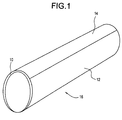
- Figure 1 shows an embodiment of the invention wherein a coextruded film 10, is curved into the shape of a tube 12 and seamed at seam 14 to form food casing 16.
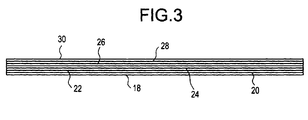
- Figure 2 shows interior metallocene layer 18 followed by tie layer 20, nylon layer 22, EVOH layer 24, nylon layer 26, tie layer 28 and outside metallocene layer 30.
- Figure 3 shows a cross-section of coextruded film 32 used to make a food casing as shown in Figure 1, showing layers 18, 20, 22, 24, 26, 28 and 30, as shown in Figure 2.
Landscapes
- Life Sciences & Earth Sciences (AREA)
- Engineering & Computer Science (AREA)
- Wood Science & Technology (AREA)
- Zoology (AREA)
- Food Science & Technology (AREA)
- Laminated Bodies (AREA)
Applications Claiming Priority (2)
| Application Number | Priority Date | Filing Date | Title |
|---|---|---|---|
| US13905998A | 1998-08-24 | 1998-08-24 | |
| US139059 | 1998-08-24 |
Publications (1)
| Publication Number | Publication Date |
|---|---|
| EP0981963A1 true EP0981963A1 (fr) | 2000-03-01 |
Family
ID=22484929
Family Applications (1)
| Application Number | Title | Priority Date | Filing Date |
|---|---|---|---|
| EP98310520A Withdrawn EP0981963A1 (fr) | 1998-08-24 | 1998-12-21 | Enveloppes pour aliments en matière plastique et résistantes aux perforations |
Country Status (2)
| Country | Link |
|---|---|
| EP (1) | EP0981963A1 (fr) |
| CA (1) | CA2256299A1 (fr) |
Cited By (4)
| Publication number | Priority date | Publication date | Assignee | Title |
|---|---|---|---|---|
| WO2002060267A1 (fr) * | 2001-02-01 | 2002-08-08 | Naturin Gmbh & Co. | Film tubulaire a cinq couches, etire biaxialement, soudable, utilise pour emballer et envelopper des aliments pateux, de la viande et de la viande avec os et son utilisation |
| WO2004000026A3 (fr) * | 2002-06-20 | 2004-06-03 | Kuhne Anlagenbau Gmbh | Enveloppe ou feuille multicouche, planiforme ou tubulaire, pour denrees alimentaires |
| EP1810992A1 (fr) * | 2000-06-22 | 2007-07-25 | Univation Technologies, LLC | Mélanges de polyéthylènes |
| WO2008040468A1 (fr) * | 2006-10-06 | 2008-04-10 | Casetech Gmbh | Boyau tubulaire sans soudure multicouche à base de polyamide pour la cuisson en moule |
Citations (8)
| Publication number | Priority date | Publication date | Assignee | Title |
|---|---|---|---|---|
| EP0589436A1 (fr) * | 1992-09-23 | 1994-03-30 | Viskase Corporation | Enveloppe alimentaire thermorétractable à base de polyamide contenant une couche d'âme à base de polyoléfine |
| EP0600425A1 (fr) * | 1993-09-20 | 1994-06-08 | W.R. Grace & Co.-Conn. | Films thermorétractables comprenant des copolymères ayant des ramifications longues, catalysé par un catalyseur de type "site unique" |
| WO1995000333A1 (fr) * | 1993-06-24 | 1995-01-05 | American National Can Company | Structures ameliorees de polymeres produits a l'aide de catalyseurs a site unique |
| EP0634443A2 (fr) * | 1993-07-12 | 1995-01-18 | Viskase Corporation | Film rétrécissable à chaud, résistant à la perforation, contenant des copolymères éthylène/alpha-oléfines ayant une portée de poids moléculaire limitée |
| DE19529603A1 (de) * | 1995-08-11 | 1997-02-13 | Wolff Walsrode Ag | Polyamid-Wursthülle mit verbesserter Schälcharakteristik |
| EP0764679A1 (fr) * | 1995-09-25 | 1997-03-26 | Wolff Walsrode Ag | Feuille thermosoudable contenant des copolymères préparés avec des catalyseurs à base de métallocènes |
| US5741563A (en) * | 1995-09-18 | 1998-04-21 | Exxon Chemical Patents Inc. | Shrink films from propylene polymers |
| US5795946A (en) * | 1995-09-18 | 1998-08-18 | Exxon Chemical Patents Inc. | High barrier propylene compositions and their use in packaging applications |
-
1998
- 1998-12-18 CA CA 2256299 patent/CA2256299A1/fr not_active Abandoned
- 1998-12-21 EP EP98310520A patent/EP0981963A1/fr not_active Withdrawn
Patent Citations (8)
| Publication number | Priority date | Publication date | Assignee | Title |
|---|---|---|---|---|
| EP0589436A1 (fr) * | 1992-09-23 | 1994-03-30 | Viskase Corporation | Enveloppe alimentaire thermorétractable à base de polyamide contenant une couche d'âme à base de polyoléfine |
| WO1995000333A1 (fr) * | 1993-06-24 | 1995-01-05 | American National Can Company | Structures ameliorees de polymeres produits a l'aide de catalyseurs a site unique |
| EP0634443A2 (fr) * | 1993-07-12 | 1995-01-18 | Viskase Corporation | Film rétrécissable à chaud, résistant à la perforation, contenant des copolymères éthylène/alpha-oléfines ayant une portée de poids moléculaire limitée |
| EP0600425A1 (fr) * | 1993-09-20 | 1994-06-08 | W.R. Grace & Co.-Conn. | Films thermorétractables comprenant des copolymères ayant des ramifications longues, catalysé par un catalyseur de type "site unique" |
| DE19529603A1 (de) * | 1995-08-11 | 1997-02-13 | Wolff Walsrode Ag | Polyamid-Wursthülle mit verbesserter Schälcharakteristik |
| US5741563A (en) * | 1995-09-18 | 1998-04-21 | Exxon Chemical Patents Inc. | Shrink films from propylene polymers |
| US5795946A (en) * | 1995-09-18 | 1998-08-18 | Exxon Chemical Patents Inc. | High barrier propylene compositions and their use in packaging applications |
| EP0764679A1 (fr) * | 1995-09-25 | 1997-03-26 | Wolff Walsrode Ag | Feuille thermosoudable contenant des copolymères préparés avec des catalyseurs à base de métallocènes |
Non-Patent Citations (1)
| Title |
|---|
| "APPLICATIONS FOR ORIENTED METALLOCENE LINEAR LOW DENSITY POLYETHYLENE FILM.", RESEARCH DISCLOSURE, October 1997 (1997-10-01), pages 745 - 748, XP000726882 * |
Cited By (7)
| Publication number | Priority date | Publication date | Assignee | Title |
|---|---|---|---|---|
| EP1810992A1 (fr) * | 2000-06-22 | 2007-07-25 | Univation Technologies, LLC | Mélanges de polyéthylènes |
| WO2002060267A1 (fr) * | 2001-02-01 | 2002-08-08 | Naturin Gmbh & Co. | Film tubulaire a cinq couches, etire biaxialement, soudable, utilise pour emballer et envelopper des aliments pateux, de la viande et de la viande avec os et son utilisation |
| US6998160B2 (en) | 2001-02-01 | 2006-02-14 | Naturin Gmbh & Co. | Five-layered, biaxially-oriented, sealable tubular film for the packaging and wrapping of paste-like foodstuffs meat and meat with bones and use thereof |
| WO2004000026A3 (fr) * | 2002-06-20 | 2004-06-03 | Kuhne Anlagenbau Gmbh | Enveloppe ou feuille multicouche, planiforme ou tubulaire, pour denrees alimentaires |
| EP1857271A1 (fr) * | 2002-06-20 | 2007-11-21 | KUHNE ANLAGENBAU GmbH | Enveloppe ou feuille multicouche, planiforme ou tubulaire, pour denrées alimentaires |
| WO2008040468A1 (fr) * | 2006-10-06 | 2008-04-10 | Casetech Gmbh | Boyau tubulaire sans soudure multicouche à base de polyamide pour la cuisson en moule |
| US8349424B2 (en) | 2006-10-06 | 2013-01-08 | Casetech Gmbh | Multilayer seamless tubular casing based on polyamide for mold cooking |
Also Published As
| Publication number | Publication date |
|---|---|
| CA2256299A1 (fr) | 2000-02-24 |
Similar Documents
| Publication | Publication Date | Title |
|---|---|---|
| AU2008211213B2 (en) | Shrink film containing semi-crystalline polyamide, articles made therefrom, and process for making and using same | |
| DE69717634T2 (de) | Artikel mit einem film,der eine siegelschicht aus polyamid, eine kernschicht aus polyamid und eine sauerstoffsperrschicht enthält, und verpackte produkte unter verwendung dieses filmes | |
| US6274228B1 (en) | Heat-shrinkable film with improved inter-ply adhesion | |
| EP0871572B1 (fr) | Film, boyaux a soudure sur l'envers realises a partir de ce film et conditionnement a l'aide de ce boyau | |
| DE69513885T2 (de) | Folien mit Schweisseigenschaften und diese enthaltende Verpackungen | |
| JPH1134261A (ja) | 二層の酸素遮断層を含む多層二軸延伸食品ケーシング | |
| US20090029079A1 (en) | Nylon Food Casing | |
| US20090123613A1 (en) | High modulus ionomers for packaging | |
| JPH0716943A (ja) | 多層管状包装ケーシング | |
| JPH08505781A (ja) | ペースト状食品をパッケージしおよび包装するための5層の二軸延伸チューブ状フィルム | |
| CA2386857A1 (fr) | Film multicouche servant a emballer un article | |
| EP2095715A1 (fr) | Emballage d'aliment avec un effet de barrière pour l'oxygène et/ou la vapeur d'eau et approprié à la réception, au stockage d'un additif, et à la transmission de celui-ci à l'aliment | |
| EP1269852B1 (fr) | Enveloppe pour aliments en polyamide ayant une couche impermeable centrale | |
| US6517920B1 (en) | Multilayer, coextruded, biaxially stretched high-barrier plastic casing | |
| EP3393788B1 (fr) | Film d'emballage alimentaire et son procédé de fabrication | |
| EP0967073B1 (fr) | Feuille multicouche étirée biaxialement | |
| JPWO2000059724A1 (ja) | 多層ケーシングフィルム | |
| JPH08224837A (ja) | フィルム/支持体の複合材料 | |
| EP0981963A1 (fr) | Enveloppes pour aliments en matière plastique et résistantes aux perforations | |
| EP0797918A1 (fr) | Enveloppes pour fumage et stockage de produits alimentaires | |
| WO2011149386A2 (fr) | Conditionnement synthétique de saucisses à base de polyamide capable d'être rempli sans s'étirer et son procédé de production | |
| SK74299A3 (en) | Bi-axially oriented manually fillable foil for packaging and encasing food stuffs | |
| DE69924122T2 (de) | Wärmeschrumpfbare folie | |
| MXPA99003088A (en) | Plastic food wrapper resistant to perforce | |
| JP2001525743A (ja) | 多層バリヤー包装フィルム |
Legal Events
| Date | Code | Title | Description |
|---|---|---|---|
| PUAI | Public reference made under article 153(3) epc to a published international application that has entered the european phase |
Free format text: ORIGINAL CODE: 0009012 |
|
| AK | Designated contracting states |
Kind code of ref document: A1 Designated state(s): BE DE DK ES FI FR GB IT NL SE |
|
| AX | Request for extension of the european patent |
Free format text: AL;LT;LV;MK;RO;SI |
|
| 17P | Request for examination filed |
Effective date: 20000728 |
|
| AKX | Designation fees paid |
Free format text: BE DE DK ES FI FR GB IT NL SE |
|
| 17Q | First examination report despatched |
Effective date: 20020723 |
|
| STAA | Information on the status of an ep patent application or granted ep patent |
Free format text: STATUS: THE APPLICATION IS DEEMED TO BE WITHDRAWN |
|
| 18D | Application deemed to be withdrawn |
Effective date: 20020702 |