EP0984016A1 - Compose d'aluminium et procede de preparation, servant comme catalyseur de production de polymere d'olefine, et procede de production de polymere d'olefine - Google Patents
Compose d'aluminium et procede de preparation, servant comme catalyseur de production de polymere d'olefine, et procede de production de polymere d'olefine Download PDFInfo
- Publication number
- EP0984016A1 EP0984016A1 EP99906485A EP99906485A EP0984016A1 EP 0984016 A1 EP0984016 A1 EP 0984016A1 EP 99906485 A EP99906485 A EP 99906485A EP 99906485 A EP99906485 A EP 99906485A EP 0984016 A1 EP0984016 A1 EP 0984016A1
- Authority
- EP
- European Patent Office
- Prior art keywords
- group
- compound
- catalyst
- aluminium
- titanium dichloride
- Prior art date
- Legal status (The legal status is an assumption and is not a legal conclusion. Google has not performed a legal analysis and makes no representation as to the accuracy of the status listed.)
- Withdrawn
Links
Images

Classifications
-
- C—CHEMISTRY; METALLURGY
- C07—ORGANIC CHEMISTRY
- C07F—ACYCLIC, CARBOCYCLIC OR HETEROCYCLIC COMPOUNDS CONTAINING ELEMENTS OTHER THAN CARBON, HYDROGEN, HALOGEN, OXYGEN, NITROGEN, SULFUR, SELENIUM OR TELLURIUM
- C07F5/00—Compounds containing elements of Groups 3 or 13 of the Periodic Table
- C07F5/06—Aluminium compounds
-
- C—CHEMISTRY; METALLURGY
- C08—ORGANIC MACROMOLECULAR COMPOUNDS; THEIR PREPARATION OR CHEMICAL WORKING-UP; COMPOSITIONS BASED THEREON
- C08F—MACROMOLECULAR COMPOUNDS OBTAINED BY REACTIONS ONLY INVOLVING CARBON-TO-CARBON UNSATURATED BONDS
- C08F10/00—Homopolymers and copolymers of unsaturated aliphatic hydrocarbons having only one carbon-to-carbon double bond
- C08F10/04—Monomers containing three or four carbon atoms
- C08F10/06—Propene
-
- C—CHEMISTRY; METALLURGY
- C07—ORGANIC CHEMISTRY
- C07F—ACYCLIC, CARBOCYCLIC OR HETEROCYCLIC COMPOUNDS CONTAINING ELEMENTS OTHER THAN CARBON, HYDROGEN, HALOGEN, OXYGEN, NITROGEN, SULFUR, SELENIUM OR TELLURIUM
- C07F5/00—Compounds containing elements of Groups 3 or 13 of the Periodic Table
- C07F5/06—Aluminium compounds
- C07F5/061—Aluminium compounds with C-aluminium linkage
- C07F5/066—Aluminium compounds with C-aluminium linkage compounds with Al linked to an element other than Al, C, H or halogen (this includes Al-cyanide linkage)
- C07F5/068—Aluminium compounds with C-aluminium linkage compounds with Al linked to an element other than Al, C, H or halogen (this includes Al-cyanide linkage) preparation of alum(in)oxanes
-
- C—CHEMISTRY; METALLURGY
- C08—ORGANIC MACROMOLECULAR COMPOUNDS; THEIR PREPARATION OR CHEMICAL WORKING-UP; COMPOSITIONS BASED THEREON
- C08F—MACROMOLECULAR COMPOUNDS OBTAINED BY REACTIONS ONLY INVOLVING CARBON-TO-CARBON UNSATURATED BONDS
- C08F12/00—Homopolymers and copolymers of compounds having one or more unsaturated aliphatic radicals, each having only one carbon-to-carbon double bond, and at least one being terminated by an aromatic carbocyclic ring
- C08F12/02—Monomers containing only one unsaturated aliphatic radical
- C08F12/04—Monomers containing only one unsaturated aliphatic radical containing one ring
- C08F12/06—Hydrocarbons
- C08F12/08—Styrene
-
- C—CHEMISTRY; METALLURGY
- C08—ORGANIC MACROMOLECULAR COMPOUNDS; THEIR PREPARATION OR CHEMICAL WORKING-UP; COMPOSITIONS BASED THEREON
- C08F—MACROMOLECULAR COMPOUNDS OBTAINED BY REACTIONS ONLY INVOLVING CARBON-TO-CARBON UNSATURATED BONDS
- C08F110/00—Homopolymers of unsaturated aliphatic hydrocarbons having only one carbon-to-carbon double bond
- C08F110/04—Monomers containing three or four carbon atoms
- C08F110/06—Propene
-
- C—CHEMISTRY; METALLURGY
- C08—ORGANIC MACROMOLECULAR COMPOUNDS; THEIR PREPARATION OR CHEMICAL WORKING-UP; COMPOSITIONS BASED THEREON
- C08F—MACROMOLECULAR COMPOUNDS OBTAINED BY REACTIONS ONLY INVOLVING CARBON-TO-CARBON UNSATURATED BONDS
- C08F4/00—Polymerisation catalysts
- C08F4/42—Metals; Metal hydrides; Metallo-organic compounds; Use thereof as catalyst precursors
- C08F4/44—Metals; Metal hydrides; Metallo-organic compounds; Use thereof as catalyst precursors selected from light metals, zinc, cadmium, mercury, copper, silver, gold, boron, gallium, indium, thallium, rare earths or actinides
- C08F4/60—Metals; Metal hydrides; Metallo-organic compounds; Use thereof as catalyst precursors selected from light metals, zinc, cadmium, mercury, copper, silver, gold, boron, gallium, indium, thallium, rare earths or actinides together with refractory metals, iron group metals, platinum group metals, manganese, rhenium technetium or compounds thereof
- C08F4/62—Refractory metals or compounds thereof
- C08F4/64—Titanium, zirconium, hafnium or compounds thereof
- C08F4/659—Component covered by group C08F4/64 containing a transition metal-carbon bond
- C08F4/6592—Component covered by group C08F4/64 containing a transition metal-carbon bond containing at least one cyclopentadienyl ring, condensed or not, e.g. an indenyl or a fluorenyl ring
-
- C—CHEMISTRY; METALLURGY
- C08—ORGANIC MACROMOLECULAR COMPOUNDS; THEIR PREPARATION OR CHEMICAL WORKING-UP; COMPOSITIONS BASED THEREON
- C08F—MACROMOLECULAR COMPOUNDS OBTAINED BY REACTIONS ONLY INVOLVING CARBON-TO-CARBON UNSATURATED BONDS
- C08F4/00—Polymerisation catalysts
- C08F4/42—Metals; Metal hydrides; Metallo-organic compounds; Use thereof as catalyst precursors
- C08F4/44—Metals; Metal hydrides; Metallo-organic compounds; Use thereof as catalyst precursors selected from light metals, zinc, cadmium, mercury, copper, silver, gold, boron, gallium, indium, thallium, rare earths or actinides
- C08F4/60—Metals; Metal hydrides; Metallo-organic compounds; Use thereof as catalyst precursors selected from light metals, zinc, cadmium, mercury, copper, silver, gold, boron, gallium, indium, thallium, rare earths or actinides together with refractory metals, iron group metals, platinum group metals, manganese, rhenium technetium or compounds thereof
- C08F4/62—Refractory metals or compounds thereof
- C08F4/64—Titanium, zirconium, hafnium or compounds thereof
- C08F4/659—Component covered by group C08F4/64 containing a transition metal-carbon bond
- C08F4/6592—Component covered by group C08F4/64 containing a transition metal-carbon bond containing at least one cyclopentadienyl ring, condensed or not, e.g. an indenyl or a fluorenyl ring
- C08F4/65922—Component covered by group C08F4/64 containing a transition metal-carbon bond containing at least one cyclopentadienyl ring, condensed or not, e.g. an indenyl or a fluorenyl ring containing at least two cyclopentadienyl rings, fused or not
- C08F4/65927—Component covered by group C08F4/64 containing a transition metal-carbon bond containing at least one cyclopentadienyl ring, condensed or not, e.g. an indenyl or a fluorenyl ring containing at least two cyclopentadienyl rings, fused or not two cyclopentadienyl rings being mutually bridged
Definitions
- the present invention relates to a novel aluminium compound and a method for producing it, a catalyst for producing olefinic polymers, and a method for producing olefinic polymers. More precisely, the invention relates to a novel aluminium compound usable in catalysts for producing olefinic polymers, in place of aluminoxane.
- Aluminoxane is disadvantageous in that it is expensive and that, when it is used in polymerization of olefins, the quality of the polymers produced greatly vary.
- the catalysts exhibit high activity to stably produce the intended polyolefins, and the yield of the polyolefins is high.
- the invention also provides a method for producing the novel aluminium compound, as well as a catalyst comprising the aluminium compound for producing olefinic polymers, and a method for producing olefinic polymers in which is used the catalyst.
- JP-A-61-211307, 63-130601, 64-16803, 2-167307 JP-A-61-211307, 63-130601, 64-16803, 2-167307.
- a catalyst component for olefin polymerization which comprises two or more alkyl group-having aluminoxane compounds (JP-A-2-247201, 2-250886, 4-46906, 4-26410, 4-266910, US Patent 5,157,008).
- aluminoxane compounds as prepared by partly hydrogenating those aluminoxane compounds has also been proposed (JP-A-3-139503).
- the aluminoxane compounds proposed are problematic in that their composition is not uniform and, in addition, they contain non-reacted starting compounds. This is because they are produced in a conventional method of reacting an organic aluminium with water or with the crystal water in organic salts. Moreover, in order to ensure high activity in polymer production, a large amount of the compounds must be used. Since the aluminoxane compounds are soluble only in aromatic solvents, there are many limitations on their use in polymer production.
- the object of the invention is to provide a novel aluminium compound which is useful as a catalyst component for olefinic polymer production and which is advantageous in that its activity per the aluminium atom is high, that it has good solubility not only in aromatic hydrocarbon solvents but also in aliphatic hydrocarbon solvents and others and that its quality is not degraded in long-term, storage, to provide a high-activity catalyst for olefinic polymer production, and to provide an inexpensive, economical and efficient method for producing high-quality olefinic polymers in which is used the catalyst.
- an aluminium compound having a specific structure has good solubility not only in aromatic hydrocarbon solvents but also in aliphatic hydrocarbon solvents, that the quality of the compound is not degraded in long-term storage, that the compound can be produced by processing an organic aluminium oxide compound or a mixture of an organic aluminium oxide compound and an organic aluminium compound under reduced pressure and under heat, that a catalyst comprising the compound as combined with a compound of a transition metal compound of Group IV, V, VI or VIII of the Periodic Table has high activity, that the activity of the catalyst per the aluminium atom is high, that the catalyst is favorable for production of olefinic polymers, and that using the catalyst in olefin polymerization is advantageous as being economical and efficient to give high-quality olefinic polymers with good productivity.
- a catalyst comprising the compound as combined with a compound of a transition metal compound of Group IV, V, VI or VIII of the Periodic Table has high activity, that the activity of the catalyst per the aluminium atom is high, that the catalyst is favorable
- the invention is to provide an aluminium compound and a method for producing it, a catalyst for olefinic polymer production, and a method for producing olefinic polymers, which are mentioned below.
- the organic aluminium oxide compound of the invention has aluminium therein in a penta-coordination state, wherein at least one atom of the ligands each bonding to aluminium via a coordination bond, which atom bonds to aluminium via a coordination bond, is an oxygen atom.
- penta-coordinating, organic aluminium oxide compounds of the invention of which are preferred those to be represented by a compositional formula of RAlO (where R indicates a hydrocarbon group).
- the compounds may have various configurations of [i] planar structures, [ii] two-layered structures, [iii] sleeve-like structures or the like, such as those to be represented by the following general formulae (V) to (VIII):
- R 4 represents a hydrogen atom, a halogen atom, a siloxy group, an alkoxy group, an aryloxy group, or a hydrocarbon group having from 1 to 10 carbon atoms, and plural R 4 's may be the same or different.
- R 4 include a hydride group, a fluoro group, a chloro group, a bromo group, an iodo group, a trimethylsiloxy group, a chlorodimethylsiloxy group, a dichloromethylsiloxy group, a trichlorosiloxy group, a triphenylsiloxy group, a diphenylmethylsiloxy group, a phenyldimethylsiloxy group, a methoxy group, an ethoxy group, an n-propoxy group, an i-propoxy group, a phenoxy group, a p-methylphenoxy group, a methyl group, an ethyl group, an n-propyl group, an i-propyl group, an n-butyl group, an i-butyl group, a t-butyl group, etc.
- a hydride group a methyl group, an ethyl group, an n-propyl group, an i-propyl group, an n-butyl group, an i-butyl group, and a t-butyl group.
- a methyl group and an i-butyl group in view of the polymerization activity of the compounds.
- each aluminium atom faces each oxygen atom, and all aluminium atoms are thereby in a penta-coordination state.
- the following units indicate cyclic skeletons, in which n, o and p each represent an integer of at least 2.
- each aluminium atom bonds to the group R 4 , while being crosslinked by oxygen atoms to have a bonding manner of Al-O-Al, and is in a penta-coordination state.
- the coordination number of aluminium could be seen through 27 Al-NMR spectrometry.
- the peaks appearing in the spectrum are assigned according to the proposal by Reinhard Benn et al. in "Journal of Organometallic Chemistry, 333 , 155 (1987)". Specifically, the peaks for the penta-coordinating aluminium, in the organic aluminium oxide compounds appear within the range between 20 and 80 ppm.
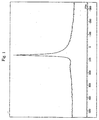
- Fig. 1 shows the chart of 27 Al-NMR of the compound as obtained in Example 1, in which is seen no peak for aluminium having a coordination number of smaller than 5. From this, it is understood that the proportion of the terminal structure in the compounds is extremely low.
- the 27 Al-NMR pattern of the aluminium compound of the invention gives a pattern of such that the proportion of the integrated value of the peaks appearing therein to fall within the range between 20 and 80 ppm is at least 80 % by area relative to the integrated value of all aluminium peaks therein. If the proportion is smaller than 80 % by area, the activity of the compounds will be low.
- the penta-coordinating, organic aluminium oxide compound can be prepared by mixing an organic aluminium oxide compound (for example, R 5 R 6 AlOAlR 7 R 8 ) and an organic aluminium compound (for example, R 9 R 10 R 11 Al) in any desired molar ratio, followed by processing the resulting mixture under reduced pressure and under heat.
- an organic aluminium oxide compound for example, R 5 R 6 AlOAlR 7 R 8
- an organic aluminium compound for example, R 9 R 10 R 11 Al
- R 5 , R 6 , R 7 , R 8 , R 9 , R 10 and R 11 each independently represent a hydrogen atom, a halogen atom, a siloxy group, an alkoxy group, an aryloxy group, or a hydrocarbon group having from 1 to 10 carbon atoms, and these may be the same or different.
- the ratio of the organic aluminium oxide compound to the organic aluminium compound may fall generally between 1:0 and 1:1 in terms of the molar ratio for the aluminium atom in the two, but preferably between 1:0.5 and 1:1 in view of the production yield.
- the heating temperature preferably falls between 20 and 100°C, more preferably between 50 and 100°C.
- the reduced pressure is preferably at most 1.0 x 10 -3 mmHg. Within the defined range, the production yield will be high.
- Solvents may be used for the processing.
- the solvents usable are inert organic solvents or their mixtures.
- the solvents include aliphatic hydrocarbons such as pentane, isopentane, hexane, cyclohexane, heptane, octane, decane, dodecane, hexadecane, octadecane, etc. (aliphatic hydrocarbons having from 5 to 10 carbon atoms are preferred); and aromatic hydrocarbons such as benzene, chlorobenzene, toluene, xylene, cumene, etc. (aromatic hydrocarbons having from 6 to 20 carbon atoms are preferred).
- the catalyst for olefinic polymer production of the invention comprises (a) the organic aluminium oxide compound mentioned above, (c) a compound of a transition metal of Group IV, V, VI or VIII of the Periodic Table, and optionally (b) an alkylating agent.
- the optional component (b) to be in the catalyst of the invention includes various types of alkylating agents.
- Preferred are those of the following general formula (IX): R 12 R 13 R 14 Al wherein R 12 , R 13 and R 14 each independently represent a hydrogen atom, a halogen atom, a siloxy group, an alkoxy group, an aryloxy group, or a hydrocarbon group having from 1 to 10 carbon atoms, and these may be the same or different.
- the compounds include trialkylaluminiums such as trimethylaluminium, triethylaluminium, triisobutylaluminium, tri-t-butylaluminium, trihexylaluminium, trioctylaluminium, tridodecylaluminium, etc.; alkylaluminium halides such as diethylaluminium chloride, diisobutylaluminium chloride, ethylaluminium sesquichloride, ethylaluminium dichloride, etc.; alkylaluminium hydrides such as dimethylaluminium hydride, diethylaluminium hydride, diisobutylaluminium hydride, etc.; alkylaluminium alkoxides such as diethylaluminium ethoxide, dimethylaluminium trimethylsiloxide, diethylaluminium phenoxide, methylaluminium di(4-
- the component (c) of being a compound of a transition metal of Group IV, V, VI or VIII of the Periodic Table to be in the catalyst of the invention is not specifically defined.
- compounds of a transition metal of Group VIII of the Periodic Table of the following general formula (IV) are also preferred.
- Q 1 a (C 5 H 5 - a-b R 1 b )(C 5 H 5-a-c R 2 c )M 1 X 1 Y 1 Q 2 a (C 5 H 5 - a - d R 3 d )Z 1 M 1 X 1 Y 1 M 1 X 1 4 L 1 L 2 M 2 X 1 Y 1
- Q 1 represents a bonding group that crosslinks the two conjugated, five-membered cyclic ligands (C 5 H 5 - a - b R 1 b ) and (C 5 H 5 - a - c R 2 c );
- Q 2 represents a bonding group that crosslinks the conjugated, five-membered cyclic ligand (C 5 H 5 - a - d R 3 d ) and the group Z 1 ;
- R 1 , R 2 and R 3 each independently represent a hydrocarbon group, a halogen atom, an alkoxy group,
- Q 1 and Q 2 include (1) an alkylene group having from 1 to 4 carbon atoms, a cycloalkylene group, or their groups substituted by a lower alkyl or phenyl group at the side chain, such as a methylene group, an ethylene group, an isopropylene group, a methylphenylmethylene group, a diphenylmethylene group, a cyclohexylene group, etc.; (2) a silylene group, an oligosilylene group, or their groups substituted by a lower alkyl or phenyl group at the side chain, such as a silylene group, a dimethylsilylene group, a methylphenylene group, a diphenylsilylene group, a disilylene group, a tetramethyldisilylene group, etc.; (3) a germanium, phosphorus, nitrogen, boron or aluminium-containing hydrocarbon group (in which the hydrocarbon group includes, for example, an alkyl,
- R 1 , R 2 and R 3 are conjugated, five-membered cyclic ligands, in which R 1 , R 2 and R 3 each independently represent a hydrocarbon group, a halogen atom, an alkoxy group, a silicon-containing hydrocarbon group, a phosphorus-containing hydrocarbon group, a nitrogen-containing hydrocarbon groups, or a boron-containing hydrocarbon group, and a plurality of these, if any, may be the same or different.
- a represents 0, 1 or 2.
- the hydrocarbon group preferably has from 1 to 20 carbon atoms, more preferably from 1 to 12 carbon atoms.
- the hydrocarbon group may be a monovalent group that bonds to the cyclopentadienyl group of the conjugated, five-membered cyclic group. Two of plural hydrocarbon groups, if any, may bond to each other to form a cyclic structure.
- the cyclic structure includes substituted or unsubstituted cyclopentadienyl, indenyl and fluorenyl groups.
- the halogen atom includes chlorine, bromine, iodine and fluorine atoms.
- the alkoxy group preferably has from 1 to 12 carbon atoms.
- the silicon-containing hydrocarbon group includes, for example, -SiR 15 R 16 R 17 (where R 15 , R 16 and R 17 each represent a hydrocarbon group having from 1 to 24 carbon atoms), etc.
- the phosphorus-containing hydrocarbon group, nitrogen-containing hydrocarbon group and boron-containing hydrocarbon groups include -PR 18 R 19 , -NR 18 R 19 and -B R 18 R 19 (where R 18 and R 19 each represent a hydrocarbon group having from 1 to 18 carbon atoms), respectively, etc.
- R 1 's, R 2 's and R 3 's, if any, may be the same or different.
- the five-membered cyclic ligands (C 5 H 5 - a - b R 1 b ) and (C 5 H 5 - a - c R 2 c ) may be the same or different.
- M 1 represents a transition metal of Group IV to VI of the Periodic Table, including, for example, titanium, zirconium, hafnium, niobium, molybdenum, tungsten, etc. Of those, preferred are titanium, zirconium and hafnium. Especially preferred is zirconium.
- Z 1 represents a covalent-bonding ligand, concretely indicating oxygen (-O-), sulfur (-S-), an alkoxy group having from 1 to 20, preferably from 1 to 10 carbon atoms, a thioalkoxy group having from 1 to 20, preferably from 1 to 12 carbon atoms, a nitrogen-containing hydrocarbon group having from 1 to 40, preferably from 1 to 18 carbon atoms, or a phosphorus-containing hydrocarbon group having from 1 to 40, preferably from 1 to 18 carbon atoms.
- X 1 and Y 1 each represent a covalent-bonding ligand, concretely indicating a hydrogen atom, a halogen atom, a hydrocarbon group having from 1 to 20, preferably from 1 to 10 carbon atoms, an alkoxy group having from 1 to 20, preferably from 1 to 10 carbon atoms, an amino group, a phosphorus-containing hydrocarbon group having from 1 to 20, preferably from 1 to 12 carbon atoms (e.g., a diphenylphosphine group, etc.), a silicon-containing hydrocarbon group having from 1 to 20, preferably from 1 to 12 carbon atoms (e.g., a trimethylsilyl group, etc.), or a residue of a C 1-20 , preferably C 1-12 hydrocarbon or a halogen-containing boron compound (e.g., BF 4 , B(C 6 F 5 ) 4 ). Of those, preferred are a halogen atom and a hydrocarbon group.
- X 1 and Y 1 may be
- M 1 represents a transition metal of Group IV to VI of the Periodic Table, like the above.
- X 1 represents a covalent-bonding ligand, concretely indicating a halogen atom, an alkoxy group, etc.
- transition metal compounds of formulae (I) and (II) are mentioned below.
- transition metal compounds of formula (III) are tetra-n-butoxytitanium, tetra-i-propoxytitanium, tetraphenoxytitanium, tetracresoxytitanium, tetrachlorotitanium, tetrabromotitanium, tetra-n-butoxyzirconium, tetra-i-propoxyzirconium, tetraphenoxyzirconium, tetracresoxyzirconium, tetrachlorozirconium, tetrabromozirconium, etc.
- transition metal compounds preferred are titanium compounds, zirconium compounds and hafnium compounds.
- M 2 represents a transition metal of Group VIII of the Periodic Table, concretely indicating iron, cobalt, nickel, palladium, platinum, etc. Of those, preferred are nickel and palladium.
- L 1 and L 2 each represent a coordinating ligand; and X 1 and Y 1 each represent a covalent-bonding or ionic-bonding ligand.
- X 1 and Y 1 each concretely indicate a hydrogen atom, a halogen atom, a hydrocarbon group having from 1 to 20, preferably from 1 to 10 carbon atoms, an alkoxy group having from 1 to 20, preferably from 1 to 10 carbon atoms, an amino group, a phosphorus-containing hydrocarbon group having from 1 to 20, preferably from 1 to 12 carbon atoms (e.g., a diphenylphosphine group, etc.), a silicon-containing hydrocarbon group having from 1 to 20, preferably from 1 to 12 carbon atoms, or a residue of a halogen-containing boron compound (e.g., B(C 6 F 5 ) 4 , BF 4 ).
- a halogen-containing boron compound e.g., B(C 6 F 5 ) 4 , BF 4 .
- X 1 and Y 1 may be the same or different.
- L 1 and L 2 include residues of triphenylphosphine, acetonitrile, benzonitrile, 1,2-bisdiphenylphosphinopropane, 1,1'-bisdiphenylphosphinoferrocene, cyclooctadiene, pyridine, bistrimethylsilylaminobistrimethylsilyliminophosphorane, etc.
- Those L 1 , L 2 , X 1 and Y 1 may bond to each other to form a cyclic structure.
- transition metal compounds of formula (IV) include dibromobistriphenylphosphine-nickel, dichlorobistriphenylphosphine-nickel, dibromoacetonitrile-nickel, dibromodibenzonitrile-nickel, dibromo(1,2-bisdiphenylphosphinoethane)nickel, dibromo(1,3-bisdiphenylphosphinopropane)nickel, dibromo(1,1'-diphenylbisphosphinoferrocene)nickel, dimethylbisdiphenylphosphine-nickel, dimethyl(1,2-bisdiphenylphosphinoethane)nickel, methyl(1,2-bisdiphenylphosphinoethane)nickel tetrafluoroborate, (2-diphenylphosphino-1-phenylethyleneoxy)phenylpyridine-nickel, dichlorobistriphenylphosphine-palladium, dichlor
- cationic complexes such as methyl(1,2-bisdiphenylphosphinoethane)nickel tetrafluoroborate, bistriphenylphosphine-palladium bistetrafluoroborate, bis(2,2'-bipyridine)methyliron tetrafluoroborate etherate.
- one or more of the transition metal compounds may be used as the component (c).
- the catalyst for olefinic polymer production of the invention comprises the components (a) and (c) and optionally the component (b), as so mentioned hereinabove.
- the predetermined components are kept in contact with each other in or outside the polymerization system where it is used, in the presence or absence of the monomers to be polymerized.
- the proportion of each component is not specifically defined. However, it is desirable that the molar ratio of the component (a) to the component (c) falls between 1:1 and 1:1000000, more preferably between 1:10 and 1:10000. If the ratio oversteps the defined range, the catalyst cost per the unit weight of the polymer to be produced will increase, and is impracticable.
- the molar ratio of the component (b) to the component (c) preferably falls between 1:1 and 1:10000, more preferably between 1:5 and 1:2000, even more preferably between 1:10 and 1:1000.
- Adding the component (b) to the catalyst increases the polymerization activity of the catalyst per the transition metal existing in the catalyst.
- the excess amount thereof will be useless and, in addition, the component (b) will remain much in the polymer produced.
- the amount of the component added is too small, the catalyst could not exhibit satisfactory catalytic activity and will be often unfavorable.
- the method for contacting the components with each other is not specifically defined.
- the components could be separately added to the polymerization system (for example, in a polymerization reactor) in any desired order to thereby make them contacted with each other, or alternatively, any desired components may be previously contacted with each other and led into a polymerization reactor, in which they may be further contacted with the other component. While or after the components are contacted with each other, a polymer such as polyethylene, polypropylene or the like, or a carrier of an inorganic oxide such as silica, alumina or the like may be present along with them or may be contacted with them.
- a polymer such as polyethylene, polypropylene or the like, or a carrier of an inorganic oxide such as silica, alumina or the like may be present along with them or may be contacted with them.
- the catalyst of the invention may further contain, in addition to the components mentioned above, any optional additives not interfering with the capabilities of the catalyst.
- olefins are homopolymerized by themselves or are copolymerized with other olefins and/or other polymerizing unsaturated compounds into olefinic polymers.
- the olefins may be, for example, ⁇ -olefins having from 2 to 20 carbon atoms, concretely, ethylene, propylene, 1-butene, 4-methyl-1-pentene, 1-hexene, 1-octene, 1-decene, 1-dodecene, 1-tetradecene, 1-hexadecene, 1-octadecene, 1-eicosene, styrene, p-methylstyrene, p-ethylstyrene, p-isopropylstyrene, p-vinylstyrene, etc.
- ⁇ -olefins having from 2 to 20 carbon atoms, concretely, ethylene, propylene, 1-butene, 4-methyl-1-pentene, 1-hexene, 1-octene, 1-decene, 1-dodecene, 1-tetradecene, 1-hexade
- ⁇ -olefins having from 2 to 10 carbon atoms, concretely, ethylene, propylene, 1-butene, 4-methyl-1-pentene, styrene, etc.
- thbse olefins maybe employed either singly or as combined.
- copolymerization of two or more olefins those mentioned above may be combined in any desired manner.
- olefins such as those mentioned above may be copolymerized with other polymerizing unsaturated compounds.
- the polymerizing unsaturated compounds usable herein include, for example, conjugated or non-conjugated dienes such as butadiene, 1,4-hexadiene, 1,8-nonadiene, 7-methyl-1,6-octadiene, 1,9-decadiene, etc., cyclic olefins such as cyclopropene, cyclobutene, cyclopentene, norbornene, dicyclopentadiene, etc.; aromatic olefins such as styrene, p-methylstyrene, p-ethylstyrene, p-isopropylstyrene, p-vinylstyrene, etc.
- the polymerization mode for the method of producing olefinic polymers of the invention employable is any of solution polymerization using a solvent, liquid-phase non-solvent polymerization substantially not using a solvent, vapor phase polymerization, solvent polymerization or the like, for which any of continuous polymerization or batchwise polymerization will go well.
- the solvent includes, for example, saturated aliphatic hydrocarbons and aromatic hydrocarbons such as hexane, heptane, pentane, cyclohexane, benzene, toluene, etc.
- the amount of the catalyst to be used in the polymerization may be so determined that the component (c) is in an amount of generally from 0.5 to 100 micromols, but preferably from 2 to 25 micromols, per liter of the solvent, in view of the polymerization activity of the catalyst and of the reactor efficiency.
- the polymerization temperature may fall between -78 and 200°C, but preferably between -20 and 100°C.
- the olefin pressure in the reaction system is not specifically defined, but preferably falls between normal pressure and 50 kg/cm 2 G.
- the molecular weight of the polymer being produced could be controlled by any ordinary means, for example, by controlling the polymerization temperature and pressure or by introducing hydrogen into the polymerization system.
- the resulting slurry was taken out into 1 liter of methanol. This was filtered to separate the polymer, which was then dried. As a result, obtained was 54.7 g of polypropylene.
- the catalyst activity in the process was 1200 kg-polymer/g-Zr.
- Example 3 The same process as in Example 3 was repeated, except that 1.0 mmol of triisobutylaluminium was used. Herein obtained was 50.2 g of polypropylene. The catalyst activity in the process was 1100 kg-polymer/g-Zr.
- Propylene was polymerized in the same manner as in Example 3, except that the toluene solution of isobutyl-, methyl-aluminium- ⁇ -oxo compound (1 mol/liter) was kept at room temperature for 2 months and then used in an amount of 1.0 mmol in terms of the aluminium atom. As a result, obtained was 54.0 g of polypropylene.
- the catalyst activity in the process was 1180 kg-polymer/g-Zr.
- the toluene solution of isobutyl-, methyl-aluminium- ⁇ -oxo compound used herein was homogeneous with no insolubles such as gel and the like therein. The data herein obtained support good stability of the compound.
- Example 3 The same process as in Example 3 was repeated, except that a commercial product (from Albemarle) of methylaluminoxane was used in an amount of 1.0 mmol in terms of the aluminium atom, in place of the isobutyl-, methyl-aluminium- ⁇ -oxo compound. As a result, obtained was 36.5 g of polypropylene.
- the catalyst activity in the process was 800 kg-polymer/g-Zr.
- Example 4 The same process as in Example 4 was repeated, except that a commercial product (from Albemarle) of methylaluminoxane was used in an amount of 1.0 mmol in terms of the aluminium atom, in place of the isobutyl-, methyl-aluminium- ⁇ -oxo compound. As a result, obtained was 31.9 g of polypropylene.
- the catalyst activity in the process was 700 kg-polymer/g-Zr.
- a 50-ml Schlenk tube was well purged with nitrogen. 11.8 ml of toluene, 0.375 ml of triisobutylaluminium/toluene solution (2 mols/liter, 0.75 mmols), 2.25 ml of isobutyl-, methyl-aluminium- ⁇ -oxo compound (product of Example 2)/toluene solution (1 mol/liter, 2.25 mmols), and 0.6 ml of pentamethylcyclopentadienyltitanium trimethoxide/toluene solution (50 mmol/liter, 0.03 mmols) were put into the tube, with stirring in a nitrogen stream. These were stirred at room temperature for 3 hours to prepare a pre-mixed catalyst.
- the yield of the polymer was 0.60 g.
- the polymerization activity of the catalyst in the process was 45 kg-polymer/g-Ti.
- the limiting viscosity [ ⁇ ] of the polymer as measured in trichlorobenzene at 135°C was 2.70 dl/g; and the melting point, Tm, of the polymer as obtained through differential scanning calorimetry (DSC) was 268°C. From its melting point, Tm, the polymer obtained herein was identified as syndiotactic polystyrene.
- the catalyst for olefinic polymer production of the invention exhibits high activity, and its activity per the aluminium atom therein is especially high. Using the catalyst realizes high-yield, stable production of intended olefinic (co)polymers. According to the production method of the invention, obtained are high-quality olefinic homopolymers, olefinic copolymers and styrenic polymers with high stereospecificity. The residual metal content of those (co)polymers is reduced, and the method is economical and efficient.
Landscapes
- Chemical & Material Sciences (AREA)
- Organic Chemistry (AREA)
- Health & Medical Sciences (AREA)
- Chemical Kinetics & Catalysis (AREA)
- Medicinal Chemistry (AREA)
- Polymers & Plastics (AREA)
- Toxicology (AREA)
- Transition And Organic Metals Composition Catalysts For Addition Polymerization (AREA)
- Polymers With Sulfur, Phosphorus Or Metals In The Main Chain (AREA)
- Addition Polymer Or Copolymer, Post-Treatments, Or Chemical Modifications (AREA)
- Catalysts (AREA)
- Organic Low-Molecular-Weight Compounds And Preparation Thereof (AREA)
Applications Claiming Priority (3)
| Application Number | Priority Date | Filing Date | Title |
|---|---|---|---|
| JP4647698 | 1998-02-27 | ||
| JP04647698A JP4090100B2 (ja) | 1998-02-27 | 1998-02-27 | アルミニウム化合物およびその製造方法、オレフィン重合体製造用触媒並びにオレフィン重合体の製造方法 |
| PCT/JP1999/000878 WO1999043686A1 (fr) | 1998-02-27 | 1999-02-25 | Compose d'aluminium et procede de preparation, servant comme catalyseur de production de polymere d'olefine, et procede de production de polymere d'olefine |
Publications (2)
| Publication Number | Publication Date |
|---|---|
| EP0984016A1 true EP0984016A1 (fr) | 2000-03-08 |
| EP0984016A4 EP0984016A4 (fr) | 2003-02-19 |
Family
ID=12748257
Family Applications (1)
| Application Number | Title | Priority Date | Filing Date |
|---|---|---|---|
| EP99906485A Withdrawn EP0984016A4 (fr) | 1998-02-27 | 1999-02-25 | Compose d'aluminium et procede de preparation, servant comme catalyseur de production de polymere d'olefine, et procede de production de polymere d'olefine |
Country Status (6)
| Country | Link |
|---|---|
| EP (1) | EP0984016A4 (fr) |
| JP (1) | JP4090100B2 (fr) |
| KR (1) | KR20010012115A (fr) |
| CN (1) | CN1256694A (fr) |
| CA (1) | CA2285576A1 (fr) |
| WO (1) | WO1999043686A1 (fr) |
Cited By (1)
| Publication number | Priority date | Publication date | Assignee | Title |
|---|---|---|---|---|
| EP1115727B1 (fr) * | 1998-09-24 | 2002-12-18 | Akzo Nobel N.V. | Synthese d'aluminoxane mettant en oeuvre une quantite reduite de compose trialkylaluminium |
Families Citing this family (2)
| Publication number | Priority date | Publication date | Assignee | Title |
|---|---|---|---|---|
| CN1160381C (zh) * | 2001-09-27 | 2004-08-04 | 中国石油化工股份有限公司 | 含双席夫碱配体的烯烃聚合催化剂及制备方法与应用 |
| JP2007182495A (ja) | 2006-01-06 | 2007-07-19 | Idemitsu Kosan Co Ltd | ポリオレフィンの製造方法およびその製造に用いる触媒成分 |
Family Cites Families (6)
| Publication number | Priority date | Publication date | Assignee | Title |
|---|---|---|---|---|
| JP2566889B2 (ja) * | 1987-07-13 | 1996-12-25 | 出光興産株式会社 | オレフィン系重合体またはスチレン系重合体の製造方法 |
| JP2693538B2 (ja) * | 1988-12-26 | 1997-12-24 | 三井石油化学工業株式会社 | ベンゼン不溶性の有機アルミニウムオキシ化合物 |
| DE4004477A1 (de) * | 1990-02-14 | 1991-08-22 | Schering Ag | Verfahren zur herstellung von loesungen oligomerer methylaluminoxane |
| JP3091241B2 (ja) * | 1991-02-21 | 2000-09-25 | 三菱化学株式会社 | 新規なメチルイソブチルアルモキサン |
| DE69305262T2 (de) * | 1992-07-13 | 1997-04-30 | Eastman Kodak Co | Einen inneren Übergang aufweisende organisch elektrolumineszierende Vorrichtung mit einer neuen Zusammensetzung |
| US6312835B1 (en) * | 1997-02-13 | 2001-11-06 | Queen's University At Kingston | Luminescent compounds and methods of making and using same |
-
1998
- 1998-02-27 JP JP04647698A patent/JP4090100B2/ja not_active Expired - Fee Related
-
1999
- 1999-02-25 EP EP99906485A patent/EP0984016A4/fr not_active Withdrawn
- 1999-02-25 CA CA002285576A patent/CA2285576A1/fr not_active Abandoned
- 1999-02-25 WO PCT/JP1999/000878 patent/WO1999043686A1/fr not_active Ceased
- 1999-02-25 KR KR1019997009871A patent/KR20010012115A/ko not_active Withdrawn
- 1999-02-25 CN CN99800183A patent/CN1256694A/zh active Pending
Cited By (1)
| Publication number | Priority date | Publication date | Assignee | Title |
|---|---|---|---|---|
| EP1115727B1 (fr) * | 1998-09-24 | 2002-12-18 | Akzo Nobel N.V. | Synthese d'aluminoxane mettant en oeuvre une quantite reduite de compose trialkylaluminium |
Also Published As
| Publication number | Publication date |
|---|---|
| EP0984016A4 (fr) | 2003-02-19 |
| JPH11246615A (ja) | 1999-09-14 |
| WO1999043686A1 (fr) | 1999-09-02 |
| CN1256694A (zh) | 2000-06-14 |
| KR20010012115A (ko) | 2001-02-15 |
| CA2285576A1 (fr) | 1999-08-27 |
| JP4090100B2 (ja) | 2008-05-28 |
Similar Documents
| Publication | Publication Date | Title |
|---|---|---|
| EP0500944B1 (fr) | Catalyseur pour polymerisation alpha-olefinique et production d'une poly-alpha-olefine a l'aide de ce catalyseur | |
| US6245706B1 (en) | Ionic metallocene catalyst compositions | |
| US5859158A (en) | Olefin polymerization catalyst and process for olefin polymerization | |
| EP0573403B1 (fr) | Catalyseurs métallocènes cationiques à base d'aluminium triphénylcarbénium | |
| US5767208A (en) | High temperature olefin polymerization process | |
| US6787616B2 (en) | Catalyst for olefin polymerization and process for polymerizing olefin by means thereof | |
| JPH0517519A (ja) | α‐オレフイン重合体の製造 | |
| US7345119B2 (en) | Olefin polymerization catalyst and olefin polymerization method using the same | |
| AU669684B2 (en) | Catalyst and process for the polymerization and copolymerization of olefins | |
| US20030211933A1 (en) | Aluminum compound, method for producing the same, catalyst for producing olefinic polymers and method for producing olefinic polymers | |
| JP4090100B2 (ja) | アルミニウム化合物およびその製造方法、オレフィン重合体製造用触媒並びにオレフィン重合体の製造方法 | |
| KR100583822B1 (ko) | 비대칭성 비가교형 메탈로센 화합물 및 이를 포함하는촉매 조성물 | |
| JP3207456B2 (ja) | ポリプロピレン微粒子の製造法 | |
| JPH08208733A (ja) | オレフィン重合用触媒 | |
| JP3202358B2 (ja) | α‐オレフィン重合用触媒および該触媒を用いたα‐オレフィン重合体の製造法 | |
| JP3392205B2 (ja) | 新規遷移金属化合物およびこれを用いたオレフィンの重合方法 | |
| JP3308359B2 (ja) | 重合用触媒及び重合体の製造方法 | |
| JP2008088444A (ja) | オレフィン重合体製造用触媒及びオレフィン重合体の製造方法 | |
| JP3202356B2 (ja) | α‐オレフィン重合用触媒および該触媒を用いたα‐オレフィン重合体の製造法 | |
| JPH08134123A (ja) | 硼素化合物,その製造方法,オレフィン重合用触媒及びそれを用いたオレフィン系重合体の製造方法 | |
| JPH111510A (ja) | オレフィン重合用触媒およびそれを用いたオレフィン系重合体の製造方法 | |
| KR20010089625A (ko) | 올레핀류의 중합용 촉매 및 올레핀계 중합체의 제조 방법 | |
| JP3786316B2 (ja) | プロピレンの重合方法 | |
| JPH06345816A (ja) | 固体触媒成分およびこれを用いたオレフィンの重合方法 | |
| JPH1025312A (ja) | オレフィン重合用触媒、及び同触媒を用いるオレフィン重合体の製造方法 |
Legal Events
| Date | Code | Title | Description |
|---|---|---|---|
| PUAI | Public reference made under article 153(3) epc to a published international application that has entered the european phase |
Free format text: ORIGINAL CODE: 0009012 |
|
| AK | Designated contracting states |
Kind code of ref document: A1 Designated state(s): BE DE FR GB IT NL |
|
| 17P | Request for examination filed |
Effective date: 20000202 |
|
| A4 | Supplementary search report drawn up and despatched |
Effective date: 20030109 |
|
| 17Q | First examination report despatched |
Effective date: 20040615 |
|
| STAA | Information on the status of an ep patent application or granted ep patent |
Free format text: STATUS: THE APPLICATION IS DEEMED TO BE WITHDRAWN |
|
| 18D | Application deemed to be withdrawn |
Effective date: 20041026 |