EP0989136A1 - Peptide mit zyklischen strukturen, die die aktivität von mutierten p53 proteinen wiederherstellen können. - Google Patents
Peptide mit zyklischen strukturen, die die aktivität von mutierten p53 proteinen wiederherstellen können. Download PDFInfo
- Publication number
- EP0989136A1 EP0989136A1 EP98919612A EP98919612A EP0989136A1 EP 0989136 A1 EP0989136 A1 EP 0989136A1 EP 98919612 A EP98919612 A EP 98919612A EP 98919612 A EP98919612 A EP 98919612A EP 0989136 A1 EP0989136 A1 EP 0989136A1
- Authority
- EP
- European Patent Office
- Prior art keywords
- acid
- peptide
- fmoc
- residue
- lys
- Prior art date
- Legal status (The legal status is an assumption and is not a legal conclusion. Google has not performed a legal analysis and makes no representation as to the accuracy of the status listed.)
- Withdrawn
Links
Images


Classifications
-
- C—CHEMISTRY; METALLURGY
- C07—ORGANIC CHEMISTRY
- C07K—PEPTIDES
- C07K7/00—Peptides having 5 to 20 amino acids in a fully defined sequence; Derivatives thereof
- C07K7/04—Linear peptides containing only normal peptide links
- C07K7/08—Linear peptides containing only normal peptide links having 12 to 20 amino acids
-
- C—CHEMISTRY; METALLURGY
- C07—ORGANIC CHEMISTRY
- C07K—PEPTIDES
- C07K14/00—Peptides having more than 20 amino acids; Gastrins; Somatostatins; Melanotropins; Derivatives thereof
- C07K14/435—Peptides having more than 20 amino acids; Gastrins; Somatostatins; Melanotropins; Derivatives thereof from animals; from humans
- C07K14/46—Peptides having more than 20 amino acids; Gastrins; Somatostatins; Melanotropins; Derivatives thereof from animals; from humans from vertebrates
- C07K14/47—Peptides having more than 20 amino acids; Gastrins; Somatostatins; Melanotropins; Derivatives thereof from animals; from humans from vertebrates from mammals
- C07K14/4701—Peptides having more than 20 amino acids; Gastrins; Somatostatins; Melanotropins; Derivatives thereof from animals; from humans from vertebrates from mammals not used
- C07K14/4746—Peptides having more than 20 amino acids; Gastrins; Somatostatins; Melanotropins; Derivatives thereof from animals; from humans from vertebrates from mammals not used p53
-
- C—CHEMISTRY; METALLURGY
- C07—ORGANIC CHEMISTRY
- C07K—PEPTIDES
- C07K7/00—Peptides having 5 to 20 amino acids in a fully defined sequence; Derivatives thereof
- C07K7/50—Cyclic peptides containing at least one abnormal peptide link
- C07K7/52—Cyclic peptides containing at least one abnormal peptide link with only normal peptide links in the ring
-
- C—CHEMISTRY; METALLURGY
- C07—ORGANIC CHEMISTRY
- C07K—PEPTIDES
- C07K7/00—Peptides having 5 to 20 amino acids in a fully defined sequence; Derivatives thereof
- C07K7/64—Cyclic peptides containing only normal peptide links
-
- A—HUMAN NECESSITIES
- A61—MEDICAL OR VETERINARY SCIENCE; HYGIENE
- A61K—PREPARATIONS FOR MEDICAL, DENTAL OR TOILETRY PURPOSES
- A61K38/00—Medicinal preparations containing peptides
Definitions
- the present invention relates to peptides having a cyclic structure and having the activity to restore the activities of P53 protein to mutant P53 protein, and pharmaceutically acceptable salts thereof.
- the peptides comprise, as a main structure, a sequence in the C-terminal domain of human P53 protein, or a sequence obtained by introducing a mutation into a part thereof.
- the peptides bind to mutant P53 protein which lost specific DNA-binding activity by point mutation, and restore the specific DNA-binding activity thereto.
- the peptides are capable of restoring the P53 protein-dependent transcription activity, they are expected to be useful as therapeutic agents for cancer.
- the p53 gene is the most commonly mutated tumor suppressor gene identified in human cancers.
- the gene has been found to be mutated in most kinds of cancers, e.g. breast cancer, colon cancer and lung cancer, and it is considered that the gene is mutated in more than 50% of all cancer patients [Science, 253 , 49 (1991)].
- P53 refers to the protein which is the product of expression of the p53 gene
- P53 activates transcription of genes such as p21waf1 (CDK inhibitor), GADD45 and bax, which are considered to play an important role in leading the cell to cell cycle arrest at the G1 phase or to apoptosis [Cell, 75 , 817 (1993); ibid., 71 , 587-597 (1992); ibid., 80 , 293 (1995)].
- genes such as p21waf1 (CDK inhibitor), GADD45 and bax
- the mutations in p53 gene are mostly missense (point) mutation, and deletion or insertion mutation is not common. It is considered that substitution of one amino acid residue causes a change in the higher-order structure of P53 to lead to loss of the above activities of binding to specific DNA sequences and activating transcription, whereby cell cycle arrest at the G1 phase or apoptosis of a cell having DNA damage is not induced [Science, 256 , 827 (1992)].
- mutant P53 has also been reported that the introduction of Pab421 or Arg284 mutation induces restoration of the transcription-activating ability to some mutants of p53 protein [Cancer Research, 55 , 3490 (1995); Nature Medicine, 2 , 1143 (1996)]. These results suggest that direct treatment of mutant P53 is capable of restoring the DNA-binding, thereby restoring the transcription-activating activity, and as a result, may enable the mutant to have antitumor activity.
- geldanamycin is reported to alter the conformation of mutant p53 in cells and partially restores its ability to bind to specific DNA, but the compound is considered to act indirectly, probably via HSP90 protein [Oncogene, 11 , 933 (1995); Proceedings of the National Academy of Science USA, 93 , 8379 (1996)].
- HSP90 protein Oncogene, 11 , 933 (1995); Proceedings of the National Academy of Science USA, 93 , 8379 (1996)].
- ellipticine is reported to have inhibitory activity on an enzyme contributing to phosphorylation of P53 and inhibit phosphorylation of mutant P53 expressed in large amounts in cancer cells, thereby selectively inducing apoptosis of cancer cells (Japanese Published Unexamined Patent Application No. 279441/94).
- the highly basic C-terminal sequence has the negative allosteric regulation effect on the DNA-binding activity, because the DNA-binding activity of wild-type P53 is enhanced by deletion of the C-terminal 30 amino acids [Nucleic Acids Research, 21 , 3167 (1993); Nature Medicine, 2 , 1143 (1996)]. Also from the fact that this C-terminal sequence is the epitope for the above-mentioned monoclonal antibody Pab421 restoring the DNA-binding activity to mutant P53, it is supposed that the C-terminal sequence supresses the DNA-binding activity of P53 by interaction with the DNA-binding region of P53 intra- or intermolecularly.
- the peptide is used at a very high concentration of 0.4 mM to give such result, and neither the capability of this peptide to restore the activity to mutant P53 in cells nor its effect on mutant P53 other than His273 is demonstrated. It is also not clear whether this peptide is capable of restoring the transcription activity and growth inhibitory activity to mutant P53 in cells, either.
- the present invention provides a peptide having a cyclic structure and having the activity to restore the DNA-binding activity or the P53 protein-dependent transcription activity to mutant P53 protein, and a pharmaceutically acceptable salt thereof, said peptide being represented by general formula (I): R 1 (X 1 ) n1 (X 2 ) n2 (X 3 ) n3 (X 4 ) n4 (X 5 ) n5 (X 6 ) n6 (X 7 ) n7 (X 8 ) n8 (X 9 ) n9 (X 10 ) n10 (X 11 ) n11 (X 12 ) n12 (X 13 ) n13 (X 14 ) n14 (X 15 ) n15 (X 16 ) n16 (X 17 ) n17 R 2 ⁇ wherein any of X 1 to X 17 and n1 to n17 may be denoted by X i and ni, respectively (i stands for an integer of 1 to 17);
- the alkyl moiety of the alkanoyl, the alkoxy, the alkoxycarbonyl, the alkylamino and the dialkylamino includes straight-chain or branched alkyl having 1 to 20 carbon atoms and alicyclic alkyl having 3 to 8 carbon atoms.
- Examples of the straight-chain or branched alkyl having 1 to 20 carbon atoms are methyl, ethyl, propyl, isopropyl, butyl, isobutyl, sec-butyl, tert-butyl, pentyl, isopentyl, neopentyl, hexyl, heptyl, octyl, nonyl, decyl, undecyl, dodecyl, hexadecyl and octadecyl.
- Examples of the alicyclic alkyl having 3 to 8 carbon atoms are cyclopropyl, cyclobutyl, cyclopentyl, cyclohexyl, cycloheptyl and cyclooctyl.
- the aryl moiety of the aryloxycarbonyl, the aroyl and the arylamino includes phenyl and naphthyl.
- the aralkyl moiety of the aralkyloxycarbonyl, the aralkyloxy and the aralkylamino includes benzyl, phenethyl, benzhydryl and trityl having 7 to 20 carbon atoms.
- the substituted alkanoyl, the substituted alkoxy, the substituted alkoxycarbonyl, the substituted alkylamino, the substituted dialkylamino, the substituted aryloxycarbonyl, the substituted aroyl, the substituted arylamino, the substituted aralkyloxycarbonyl, the substituted aralkyloxy and the substituted aralkylamino each have 1 to 3 substituents which are the same or different.
- substituents are halogen, nitro, alkyl, aryl, hydroxy, alkoxy, amino, alkylamino, dialkylamino, aryloxy, carboxy, alkoxycarbonyl, aryloxycarbonyl and a heterocyclic group.
- the halogen means fluorine, chlorine, bromine or iodine.
- the alkyl moiety of the alkyl, the alkoxy, the alkylamino, the dialkylamino and the alkoxycarbonyl and the aryl moiety of the aryl, the aryloxy and the aryloxycarbonyl have the same meanings as defined above.
- the heterocyclic group includes 3 to 8-membered alicyclic or aromatic heterocyclic groups having at least one hetero atom such as oxygen, sulfur or nitrogen, polycyclic groups formed by condensation of such a heterocyclic group, and polycyclic groups formed by condensation of such a heterocyclic group and aryl.
- heterocyclic groups are imidazolyl, pyridyl, indolyl, quinolyl, isoquinolyl, pyrrolidinyl, piperidinyl, piperazinyl, morpholino, thiomorpholino and homopiperazinyl.
- the expression "one to several residues may be deleted, substituted or added in the sequence” herein means that the sequence may contain deletion, substitution or addition of a single or plural amino acid residues or organic acid residues mentioned above or substitution or addition of a 12-aminododecanoic acid residue at a single or plural arbitrarily selected positions therein, and the total number of such residues deleted, substituted or added is one to several, which deletion, substitution and addition may be simultaneously contained in the sequence.
- the expression “one to several residues may be added in the sequence” means that only addition may be contained in the sequence in the same manner as above.
- the number of residues deleted, substituted or added is preferably 1 to 10, more preferably 1 to 4.
- the pharmaceutically acceptable salts of Compounds (I) include acid addition salts, metal salts, organic base addition salts, etc.
- the pharmaceutically acceptable acid addition salts are inorganic acid addition salts such as hydrochloride, sulfate and phosphate, and organic acid addition salts such as acetate, maleate, fumarate, tartrate and citrate.
- the pharmaceutically acceptable metal salts are alkali metal salts such as sodium salt and potassium salt, alkaline earth metal salts such as magnesium salt and calcium salt, aluminum salt and zinc salt.
- Examples of the pharmaceutically acceptable organic base addition salts are salts with primary amines, e.g. methylamine, ethylamine or aniline, secondary amines, e.g.
- Preferred examples of the peptides having a cyclic structure according to the present invention are shown below. Preferred examples of the peptides having a cyclic structure according to the present invention:
- Compounds (I) are shown in Tables 1-1 and 1-2 together with straight-chain peptides analogous thereto as reference examples. Particularly preferred are Compounds 4-8, 11 and 17-24.
- the amino acid residues are represented by the following letters: G, Gly; T, Thr; D, Asp; Q, Gln; L, Leu; S, Ser; K, Lys; R, Arg; H, His; C, Cys.
- the amino acid residues are represented by the following letters: G, Gly; D, Asp; Q, Gln; L, Leu; T, Thr; S, Ser; K, Lys; R, Arg; C, Cys; H, His.
- Compound Nos. 1 to 24 respectively correspond to SEQ ID NOS as follows: Compound 1, SEQ ID NO: 1; Compound 2, SEQ ID NO: 2; Compound 3, SEQ ID NO: 3; Compound 4, SEQ ID NO: 4; Compound 5, SEQ ID NO: 5; Compound 6, SEQ ID NO: 6; Compound 7, SEQ ID NO: 7; Compound 8, SEQ ID NO: 16; Compound 9, SEQ ID NO: 17; Compound 10, SEQ ID NO: 18; Compound 11, SEQ ID NO: 19; Compound 12, SEQ ID NO: 20; Compound 13, SEQ ID NO: 21; Compound 14, SEQ ID NO: 22; Compound 15, SEQ ID NO: 23; Compound 16, SEQ ID NO: 24; Compound 17, SEQ ID NO: 25; Compound 18, SEQ ID NO: 26; Compound 19, SEQ ID NO: 27; Compound 20, SEQ ID NO: 28; Compound 21, SEQ ID NO: 29; Compound 22, SEQ ID NO: 30; Compound 23, SEQ ID NO: 31; compound 24, SEQ ID
- Compounds (I) can be synthesized by general liquid phase or solid phase peptide synthetic methods, appropriate combinations thereof, or methods similar thereto [The Peptides, Analysis, Synthesis, Biology, vol. 1, edited by Erhard Gross and Johannes Meinhofer, Academic PreS-S (1979); ibid., vol. 2 (1980); ibid., vol. 3 (1981); Fundamentals and Experiments of Peptide Synthesis, Nobuo Izumiya, et al., Maruzen (1985); Development of Medicines, second series, vol. 14, Peptide Synthesis, compiled under the supervision of Haruaki Yajima, Hirokawa Shoten (1991); International Journal of Peptide and Protein Research, 35 , 161 (1990)].
- Compounds (I) can also be synthesized by using an automatic peptide synthesizer. That is, the peptide synthesis can be carried out by the use of commercially available peptide synthesizers from Shimadzu Corporation, Applied Biosystems, Inc., USA (hereinafter referred to as ABI), Advanced ChemTech Inc., USA (hereinafter referred to as ACT), etc. using an appropriately side-chain-protected N ⁇ -Fmoc-amino acid, N ⁇ -Boc-amino acid, or the like according to respective synthesis programs.
- ABI Applied Biosystems, Inc., USA
- ACT Advanced ChemTech Inc., USA
- the protected amino acids which are starting materials for the synthesis of Compounds (I) and carrier resins are available from ABI, Shimadzu Corporation, Kokusan Chemical Works Co., Ltd., Nova Biochem Co., Watanabe Chemical Co., Ltd., ACT, Peptide Institute Co., Ltd., etc.
- the protected amino acids, protected organic acids and protected organic amines which are starting materials for the synthesis of Compounds (I) can be synthesized according to known synthetic methods or methods similar thereto [The Peptides, Analysis, Synthesis, Biology, vol. 1, edited by Erhard Gross and Johannes Meinhofer, Academic Press (1979); ibid., vol. 2 (1980); ibid., vol.
- Cyclization may be carried out after the condensation of all the constituent amino acids and organic acids by a liquid phase or solid phase method, or in the course of condensation process. In the latter case, the obtained cyclization product is subjected to further condensation with amino acids or organic acids to prepare Compound (I).
- the cyclic structure may be formed by:
- the general purification steps in organic chemical reactions as used hereinafter refer to neutralization, filtration, extraction, washing, drying, concentration, precipitation, recrystallization, various kinds of chromatography, etc.
- a peptide having two thiol groups which are protected with appropriate protecting groups is prepared by a solid phase method, a liquid phase method, or a combination thereof. Then, protective groups other than the thiol-protecting groups are removed, followed by removal of the thiol-protecting groups.
- the thus obtained precursor peptide is subjected to oxidation reaction and the product is purified by general purification steps in organic chemical reactions to give the desired peptide having a cyclic structure with a S-S bond.
- the peptide having a cyclic structure with a S-S bond can be prepared by subjecting the above precursor peptide to air oxidation or reaction with an oxidizing agent in an inert solvent. The reaction is carried out in a solvent at a peptide concentration of 0.5-5000 ⁇ mol/l, preferably 50-500 ⁇ mol/l.
- buffers such as a 50 mM - 1 M tris (hydroxymethyl ) aminomethane-hydrochloric acid (Tris-HCl) buffer adjusted to pH 4-9, preferably pH 6-8, 5-50% aqueous acetic acid, water, or organic solvents such as DMF, DMSO, acetonitrile, tetrahydrofuran, methanol and ethanol can be used alone or in combination.
- the oxidizing agent are potassium ferricyanide and iodine, which are used respectively in the amounts of 0.1-1 time and 0.5-5 times (preferably one time) that of the precursor peptide (weight:weight).
- DMSO can also be used as the oxidizing agent at a concentration of 10-50%.
- the reaction is usually completed at 0-40°C for one hour to one week.
- the yield of oxidation product can be increased by addition of glutathione, and the reaction may be carried out in the presence of oxidized glutathione in an amount of 0.5-5 times that of the precursor peptide (weight:weight) and reduced glutathione in an amount of one-half the weight of oxidized glutathione [Journal of American Chemical Society, 103 , 5867 (1981); Development of Medicines, second series, vol. 14, Peptide Synthesis, p. 239, compiled under the supervision of Haruaki Yajima, Hirokawa Shoten (1991)].
- iodine When iodine is used as the oxidizing agent, zinc powder is added after the completion of reaction until the color of iodine disappears from the reaction mixture, and the mixture is purified as such, or after concentration under reduced pressure, by means of various kinds of chromatography.
- potassium ferricyanide When potassium ferricyanide is used as the oxidizing agent, the reaction mixture is made weakly acidic by addition of acetic acid and then is purified as such, or after concentration under reduced pressure, by means of various kinds of chromatography.
- an anion exchange resin such as Dowex 1X2(AcO-) (Dow Chemical Co.) may be added to the reaction mixture to remove excess potassium ferricyanide (ferricyan ion and ferrocyan ion) by adsorption, and then the mixture is purified as such, or after concentration under reduced pressure, by means of various kinds of chromatography.
- Pyridylsulfenylation can also be carried out by adding 1-3 equivalents of a reagent such as 2,2'-dithiodipyridine to a solvent containing the peptide, followed by stirring.
- 2-Nitropyridylsulfenylation can be carried out in a similar manner.
- the solvent for the reaction, reaction temperature, reaction time, etc. are substantially the same as described above [Peptide Chemistry, 1991 , 125 (1992)].
- a peptide having two thiol groups which are protected with appropriate protecting groups is elongated by a solid phase method.
- the thiol-protecting groups are selectively removed and the peptide is subjected to oxidation reaction to prepare a peptide having a cyclic structure.
- the peptide is cleaved from the resin and the remaining protecting groups are removed, whereby the desired peptide having a cyclic structure is obtained.
- thiol-protecting groups include an acetamidomethyl (Acm) group and a trityl (Trt) group.
- an Acm group and a Trt group are removed and an intramolecular disulfide bond is stimulaneously aformed.
- the reaction is carried out using 0.5-2 ml of a solvent for 50 mg of the resin, and iodine in an amount of 0.5-5 times, preferably one time the calculated weight of the peptide on the resin.
- the reaction is usually carried out at 0-40°C for one hour to one week.
- the resin is subjected to a usual treatment in a solid phase method, that is, washing with a small amount of a solvent such as DMF or DCM, and then subjected to the subsequent reaction.
- the pyridylsulfenylation or 2-nitropyridylsulfenylation of one of the SH groups as described in 1-A above can be applied to a solid phase method.
- the solvent for the cyclization reaction, reaction temperature, reaction time, etc. are substantially the same as described above.
- an equivalent amount of a reagent for pyridylsulfenylation or 2-nitropyridylsulfenylation may be introduced after the protecting groups of the two SH groups are removed.
- Pyridylsulfenylation can be carried out by adding 1-3 equivalents of a reagent such as 2,2'-dithiodipyridine to the resin swollen with a solvent, followed by stirring.
- 2-Nitropyridylsulfenylation can also be carried out in a similar manner.
- the solvent for the reaction, reaction temperature, reaction time, etc. are substantially the same as in the above cyclization reaction in the solid phase method.
- a peptide having two thiol groups with S-dimethylphosphinothionyl groups introduced thereto is prepared by a solid phase method, a liquid phase method, or a combination thereof. Then, the peptide is subjected to reaction in the presence of tetrabutylammonium fluoride and methylene chloride, and the product is purified by general purification steps in organic chemical reactions to give the desired peptide having a cyclic structure [Peptide Chemistry 1995, edited by Norio Nishi, Protein Research Foundation, Osaka, p. 41 (1996)].
- any solvent which is inert to the reaction can be used.
- Preferred solvents are methylene chloride and solvent mixtures of methylene chloride and acetonitrile, tetrahydrofuran, chloroform, DMF, etc.
- the peptide concentration in the reaction mixture is 0.5-5000 ⁇ mol/l, preferably 50-500 ⁇ mol/l.
- Tetrabutylammonium fluoride is used in an amount of 2-10 equivalents, preferably 2-3 equivalents.
- the reaction is usually completed at 0-40°C for one hour to one week. After the completion of reaction, the peptide is precipitated by addition of diethyl ether, etc., followed by removal of the solvent.
- the product is purified by various kinds of chromatography, if necessary, and then can be subjected to the subsequent reaction. General purification steps in organic chemical reactions as described above are applicable as may be required.
- a peptide having two thiol groups with S-dimethylphosphinothionyl groups introduced thereto is synthesized by a solid phase method. Before cleavage of the peptide from the resin, the peptide is subjected to reaction in the presence of tetrabutylammonium fluoride and methylene chloride to prepare a peptide having a cyclic structure. Then, the peptide is cleaved from the resin and the remaining protecting groups are removed, whereby the desired peptide having a cyclic structure is obtained.
- the desired cyclic structure is formed.
- This reaction is carried out using 0.5-2 ml of a solvent for 50 mg of the resin, and tetrabutylammonium fluoride in an amount of 2-20 equivalents based on the calculated molar quantity of the peptide on the resin.
- the reaction is usually carried out at 0-40°C for one hour to one week.
- the resin is subjected to a usual treatment in a solid phase method, that is, washing with a small amount of a solvent such as DMF or DCM, and then can be subjected to the subsequent reaction.
- a peptide having two thiol groups with S-benzyl groups introduced thereto is prepared by a solid phase method, a liquid phase method, or a combination thereof. Then, the peptide is subjected to reaction with metallic sodium in liquid ammonia in the presence of dibromoxylene, and the product is purified by general purification steps in organic chemical reactions to give the desired peptide having a cyclic structure [International Journal of Peptide and Protein Research, 40 , 233 (1992)].
- the desired peptide having a cyclic structure can also be prepared by first preparing a peptide which has, at two positions in the sequence, amino acid residue(s) and/or organic group(s) having a free thiol groups by a solid phase method, a liquid phase method, or a combination thereof, and then subjecting the peptide to reaction with dibromoxylene.
- -C 6 H 4 - (phenylene) in the cross-linkage structure includes o-phenylene, m-phenylene and p-phenylene.
- Cyclization by -S-(CH 2 )n-S- bond formation can be effected by using dibromoalkane instead of dibromoxylene in this process.
- a peptide having two thiol groups with S-benzyl groups introduced thereto is used, the peptide is dissolved in dry liquid ammonia and metallic sodium is added thereto until the blue coloration is maintained for several minutes, followed by addition of dibromoxylene to cause reaction.
- the peptide concentration in the reaction mixture is 0.5-5000 ⁇ mol/l, preferably 50-500 ⁇ mol/l.
- Dibromoxylene is used in an amount of 1-3 equivalents, preferably 1-1.5 equivalents.
- the reaction is usually completed in 1-24 hours under reflux of liquid ammonia. After the completion of reaction, ammonia is removed and water is added to the residue, followed by purification by various kinds of chromatography as may be required. General purification steps in organic chemical reactions including such a step are applicable as may be required.
- the peptide When a peptide having two free thiol groups is used, the peptide is dissolved in water containing 5-50%, preferably 10-20% methanol and 0.1% TFA or 1% acetic acid, and dibromoxylene is added thereto. The mixture is adjusted to pH 5-8, preferably pH 6.5-7.5 with dilute aqueous ammonia and the reaction is carried out. Dibromoxylene is used in an amount of 1-3 equivalents, preferably 1-1.5 equivalents. The reaction is usually completed at 0-40°C for one hour to one week. After the completion of reaction, the reaction mixture is purified as such, or after concentration under reduced pressure, by means of various kinds of chromatography. General purification steps in organic chemical reactions as described above are applicable as may be required.
- a peptide having two thiol groups which are protected with appropriate protecting groups is elongated by a solid phase method.
- the thiol-protecting groups are selectively removed and the peptide is subjected to reaction with dibromoxylene in a solvent such as DMF or NMP to prepare a peptide having a cyclic structure.
- the peptide is cleaved from the resin and the remaining protecting groups are removed, whereby the desired peptide having a cyclic structure is obtained.
- the cyclic structure moiety is formed.
- This reaction is completed using 0.5-2 ml of a solvent for 50 mg of the resin, and dibromoxylene in an amount of 1-3 equivalents based on the calculated molar quantity of the peptide on the resin.
- a base such as NMM may be added to the reaction mixture in an amount of 1-10 equivalents, preferably 2-5 equivalents.
- the reaction is usually carried out at 0-40°C for one hour to one week.
- the resin is subjected to a usual treatment in a solid phase method, that is, washing with a small amount of a solvent such as DMF or DCM, and then can be subjected to the subsequent reaction.
- a peptide having an unprotected thiol group and a bromoacetyl group is prepared by a solid phase method, a liquid phase method, or a combination thereof. Bromoacetylation can be completed out according to an ordinary method of acetylating an amino group in a peptide chain. Then, the peptide is dissolved in water and the pH of the solution is adjusted to weakly basic to cause cyclization reaction. The reaction product is purified by general purification steps in organic chemical reactions to give the desired peptide having a cyclic structure [Journal of Medicinal Chemistry, 35 , 2040 (1992)].
- a peptide having an unprotected thiol group and a bromoacetyl group is dissolved in water.
- the solution is adjusted to pH 6-8, preferably pH 6.5-7.5 with dilute aqueous ammonia and the cyclization reaction is carried out.
- the peptide concentration in the reaction mixture is 0.5-5000 ⁇ mol/l, preferably 50-500 ⁇ mol/l.
- the reaction is usually carried out at 0-40°C for one hour to one week.
- the reaction mixture is made weakly acidic by addition of acetic acid or the like, and then is purified as such, or after concentration under reduced pressure, by means of various kinds of chromatography. General purification steps in organic chemical reactions as described above are applicable as may be required.
- a peptide having an appropriately protected thiol group and a bromoacetyl group is elongated by a solid phase method.
- the thiol-protecting group is selectively removed and the peptide is subjected to cyclization reaction by addition of an appropriate amount of an organic base such as NMM in a solvent such as DMF or NMP to prepare a peptide having a cyclic structure.
- the peptide is cleaved from the resin and the remaining protecting groups are removed, whereby the desired peptide having a cyclic structure is obtained.
- the desired cyclic structure is formed.
- This reaction is carried out using 0.5-2 ml of a solvent for 50 mg of the resin, and NMM is added in an amount of 1-10 equivalents, preferably 2-5 equivalents based on the calculated molar quantity of the peptide on the resin, followed by stirring.
- the reaction is usually carried out at 0-40°C for one hour to one week.
- the resin is subjected to a usual treatment in a solid phase method, that is, washing with a small amount of a solvent such as DMF or DCM, and then can be subjected to the subsequent reaction.
- a peptide having an amino group and a carboxyl group each protected with an appropriate protecting group is prepared by a solid phase method, a liquid phase method, or a combination thereof. After the amino- and carboxyl-protecting groups are selectively removed, the peptide is subjected to intramolecular condensation, followed by general purification steps in organic chemical reactions to give a peptide having a cyclic structure. Then, the remaining protecting groups are removed, whereby the desired peptide is obtained.
- the desired peptide can also be prepared by first preparing a peptide moiety having a cyclic structure and then elongating it.
- the cyclic structure may be formed by:
- a 4-methyltrityl group When a 4-methyltrityl group is used as the amino-protecting group, it can be removed by using acetic acid/trifluoroethanol/DCM (1/2/7). The reaction is usually carried out at 0-40°C for 0.5-6 hours. After the completion of reaction, the peptide is precipitated by addition of diethyl ether, etc., followed by removal of the solvent, on the solvent is removed under reduced pressure. General purification steps in organic chemical reactions including the above-described step are applicable as may be required.
- a palladium catalyst Any zerovalent palladium catalysts for homogenous system can be used in the reaction. Suitable catalysts include tetrakis(triphenylphosphine)palladium(0) and palladium( II) acetate-triphenylphosphine. The catalyst is used in an amount of 0.01-1 equivalent, preferably 0.1-0.5 equivalent, based on the above protecting groups.
- additives such as formic acid, formic acid-triethylammonium, tributyltin hydride, triphenyltin hydride, trimethylhydrosilane, sodium borohydride, acetic acid, and acetic acid-NMM are added in an amount of one equivalent to excess based on the above protecting groups.
- ether, tetrahydrofuran, acetonitrile, DMF, chloroform, etc. can be used alone or in combination.
- the above reducing agent a palladium catalyst and an additive
- 3-10 ml of the solvent for 1 mM of an allyloxycarbonyl group or allyl ester group are added the above reducing agent (a palladium catalyst and an additive) and 3-10 ml of the solvent.
- the reaction is carried out at -20 to 80°C, preferably 0 to 30°C for 10 minutes to 6 hours. After the completion of reaction, general purification steps in organic chemical reactions can be applied.
- the above reaction is also applicable to a peptide in which only the carboxyl group is protected with an allyl ester group.
- the obtained peptide is then subjected to reaction for forming an intermolecular amide bond between the amino group and the carboxyl group.
- Typical amidation reactions for cyclization are described below. Common reaction conditions are as follows. As a solvent, DMF, NMP, methylene chloride, chloroform, acetonitrile, tetrahydrofuran, etc. are used alone or in combination.
- the peptide is used at a concentration of 0.5-5000 ⁇ mol/l, preferably 50-500 ⁇ mol/l.
- the reaction is carried out usually at 0-40°C, preferably 4-25°C, with stirring for 3 hours to one week. After the completion of reaction, general purification steps in organic chemical reactions can be applied.
- Amidation reaction can be carried out by using carbodiimide such as dicyclohexylcarbodiimide (DCC) or water-soluble carbodiimide (WSC) in an amount of 1-10 equivalents based on the carboxyl group.
- carbodiimide such as dicyclohexylcarbodiimide (DCC) or water-soluble carbodiimide (WSC)
- NMM, DIEA or sodium hydrogen carbonate is added in an amount of 1.5-2 equivalents based on carbodiimide.
- HOBt or HONSu may be added as an additive in an equimolecular amount based on carbodiimide.
- Amidation reaction can also be carried out by using a condensing agent such as diphenylphosphoryl azide (DPPA) or diethyl phosphorocyanidate (DEPC) in an amount of 1-10 equivalents based on the carboxyl group.
- DPPA diphenylphosphoryl azide
- DEPC diethyl phosphorocyanidate
- NMM, DIEA or sodium hydrogen carbonate is added as an additive in an amount of 1.5-2 equivalents based on the condensing agent.
- amidation reaction can be carried out by using a condensing agent such as PyBOP, HBTU or HATU in an amount of 1-10 equivalents, preferably 2-5 equivalents based on the carboxyl group, and HOBt in an equimolecular amount based on the condensing agent.
- a condensing agent such as PyBOP, HBTU or HATU in an amount of 1-10 equivalents, preferably 2-5 equivalents based on the carboxyl group
- HOBt in an equimolecular amount based on the condensing agent.
- HATU may be used alone without addition of HOBt.
- NMM, DIEA or sodium hydrogen carbonate is added in an amount of 1.5-2 equivalents based on the condensing agent.
- the carboxyl group into an active ester, selectively remove the amino-protecting group, and then form an amide bond.
- the active esters are p-nitrophenyl ester, pentafluorophenyl ester, and N-oxysuccinimido ester.
- the active esters can be formed by ordinary methods. For example, DCC is added in an amount of 1-10 equivalents based on the carboxyl group, together with an equimolecular amount of p-nitrophenol, pentafluorophenol or HONSu, and the mixture is stirred at 0-5°C for one hour to one day.
- the solvent for the formation of active esters, reaction temperature, reaction time, etc. are substantially the same as in the above amidation reactions.
- a peptide is synthesized which has an amino acid residue having an amino group protected with an appropriate protecting group and a carboxyl group protected with an appropriate protecting group.
- the amino- and carboxyl-protecting groups are selectively removed, and the resulting amino group and carboxyl group are subjected to condensation reaction to give a peptide moiety having a cyclic structure.
- the peptide is cleaved from the resin and the remaining side-chain-protecting groups are removed, whereby the desired peptide having a cyclic structure is obtained.
- a 4-methyltrityl group When a 4-methyltrityl group is used as the amino-protecting group, it can be removed by reaction using 0.5-2 ml of acetic acid/trifluoroethanol/DCM (1/2/7) for 50 mg of the resin. The reaction is usually carried out at 0-40°C for 0.5-6 hours. After the completion of reaction, the resin is subjected to a usual treatment in a solid phase method, that is, washing with a small amount of a solvent such as DMF, and then can be subjected to the subsequent reaction.
- a solvent such as DMF
- an allyloxycarbonyl group is used as the amino-protecting group and an allyl ester group is used as the carboxyl-protecting group
- these protecting groups can be removed by reaction using, for example, a chloroform solution containing 0.1-0.2 M tetrakis(triphenylphosphine)palladium(0), 5% acetic acid and 2.5% NMM.
- a chloroform solution containing 0.1-0.2 M tetrakis(triphenylphosphine)palladium(0), 5% acetic acid and 2.5% NMM.
- 1 mM of an allyloxycarbonyl group and an allyl ester group is added 3-10 ml of the above chloroform solution.
- the reaction is usually carried out at 0-40°C for 0.5-6 hours.
- the resin is subjected to a usual treatment in a solid phase method, that is, washing with a small amount of a solvent such as DMF, and then can be subjected to the subsequent reaction
- the subsequent reaction is carried out by using an organic solvent such as DMF, DCM or NMP containing a condensing agent such as PyBOP or HBTU in an amount of 1-10 equivalents, preferably 2-5 equivalents based on the calculated quantity of the carboxyl group on the resin, HOBt in an equimolecular amount based on the condensing agent if necessary, and NMM or DIEA in an amount of 1.5-2 equivalents based on the condensing agent.
- a condensing agent such as PyBOP or HBTU
- HOBt in an equimolecular amount based on the condensing agent if necessary
- NMM or DIEA in an amount of 1.5-2 equivalents based on the condensing agent.
- the reaction is carried out usually at 0-40°C, preferably 4-25°C, with stirring for 3 hours to one week.
- the resin is subjected to a usual treatment in a solid phase method, that is, washing with a small amount of a solvent
- a peptide having a hydroxy group and a carboxyl group each protected with an appropriate protecting group is prepared by a solid phase method, a liquid phase method, or a combination thereof. After the hydroxy- and carboxyl-protecting groups are selectively removed, the peptide is subjected to condensation, followed by general purification steps in organic chemical reactions to give a peptide having a cyclic structure. Then, the remaining protecting groups are removed, whereby the desired peptide is obtained.
- the desired peptide can also be prepared by first preparing a peptide moiety having a cyclic structure and then elongating it.
- a trityl group When a trityl group is used as the hydroxy-protecting group, it can be removed by reaction using TFA/TFE/DCM (5/5/90 - 1/5/94). The reaction is usually carried out at 0-40°C for 0.5-12 hours. After the completion of reaction, the product can be purified by general purification steps in organic chemical reactions.
- a p-methoxybenzyl group and a 2,4-dimethoxybenzyl group can also be used as the selective hydroxy-protecting group, and they can be removed by reaction using 2,3-dichloro-5,6-dicyano-1,4-benzoquinone or ceric ammonium nitrate in an amount of 1-10 equivalents based on the protected hydroxy group.
- reaction As a solvent, DMF, NMP, methylene chloride, chloroform, acetonitrile, tetrahydrofuran, etc. which contain water can be used alone or in combination.
- the reaction is usually carried out at 0-40°C for 0.5-12 hours. After the completion of reaction, the product can be purified by general purification steps in organic chemical reactions.
- the obtained peptide is then subjected to reaction for forming an intramolecular ester bond between the hydroxy group and the carboxyl group.
- Typical esterification reactions for cyclization are described below. Common reaction conditions are as follows. As a solvent, DMF, NMP, methylene chloride, chloroform, acetonitrile, tetrahydrofuran, etc. are used alone or in combination.
- the peptide is used at a concentration of 0.5-5000 ⁇ mol/l, preferably 50-500 ⁇ mol/l.
- the reaction is carried out usually at -20 to 40°C, preferably -20 to 30°C, with stirring for 3 hours to one week. After the completion of reaction, general purification steps in organic chemical reactions can be applied.
- a peptide having a hydroxy group and a carboxyl group each protected with an appropriate protecting group is synthesized by a solid phase method. Before cleavage of the peptide from the resin, the hydroxy- and carboxyl-protecting groups are selectively removed, and the resulting hydroxy group and carboxyl group are subjected to condensation reaction to form the desired cyclic ester moiety. Then, the peptide is cleaved from the resin and the remaining protecting groups are removed, whereby the desired peptide having a cyclic structure is obtained.
- a trityl group When a trityl group is used as the hydroxy-protecting group, it can be removed by reaction using 0.5-2 ml of TFA/TFE/DCM (5/5/90 - 1/5/94) for 50 mg of the resin. The reaction is usually carried out at 0-40°C for 0.5-12 hours.
- a p-methoxybenzyl group and a 2,4-dimethoxybenzyl group can also be used as the hydroxy-protecting group, and they can be removed by reaction using 2,3-dichloro-5,6-dicyano-1,4-benzoquinone or ceric ammonium nitrate in an amount of 1-10 equivalents based on the hydroxy-protecting group.
- an organic solvent e.g.
- DMF dimethyl methacrylate
- DCM dimethyl methacrylate
- NMP N-methyl methacrylate
- the reaction is carried out usually at 0-40°C, preferably 0-25°C, for 0.5-12 hours.
- the resin is subjected to a usual treatment in a solid phase method, that is, washing with a small amount of a solvent such as DMF, and then can be subjected to the subsequent reaction.
- the subsequent reaction is carried out by using, for 50 mg of the resin, 0.5-2 ml of DMF or NMP containing a condensing agent such as MSNT or DEPC in an amount of 1-10 equivalents, preferably 2-5 equivalents based on the calculated quantity of the carboxyl group on the resin.
- the reaction is carried out usually at -20 to 40°C, preferably -20 to 20°C, with stirring for 3 hours to one week.
- the resin is subjected to a usual treatment in a solid phase method, that is, washing with a small amount of a solvent such as DMF, and then can be subjected to the subsequent reaction.
- HPLC high performance liquid chromatography
- reversed-phase silica gel columns such as C-4, C-8 or C-18
- partition column chromatography various kinds of column chromatography or thin layer chromatography using adsorption resins
- silica gel chemically-modified silica gel
- reversed-phase silica gel alumina
- diatomaceous earth diatomaceous earth
- magnesium silicate or ion-exchange resins or gel filtration using various kinds of Sepharose or Sephadex.
- the pharmaceutically acceptable salts of Compound (I) are obtained according to an ordinary method. That is, the acid addition salts and organic base addition salts of Compound (I) are obtained by dissolving Compound (I) in an aqueous solution of the corresponding acid or organic base, followed by lyophilization or purification in the same manner as above.
- the metal salts of Compound (I) are obtained by dissolving Compound (I) in an aqueous solution containing the corresponding metal ion, followed by purification in the same manner as above.
- Test Example 1 Measurement of the Activity of Restoring the DNA-Binding to Mutant P53 Using Purified P53 Protein
- human wild-type P53 and two kinds of human P53 mutants were expressed in insect cells using a baculovirus in the following manner.
- the construction process comprises the step of constructing a transfer vector by inserting cDNA coding for the desired protein into a specific plasmid and the step of obtaining a recombinant virus through homologous recombination caused by cotransfection of a wild-type virus and the transfer vector in an insect cell. These steps were carried out using BaculoGold Starter Kit (Pharmingen, product No. PM-21001K) according to its manual as described below.
- NcoI-XbaI fragments (1.6 kb) containing the complete p53 translational region were isolated from plasmids WT393, 273His and 248Trp which respectively carry human wild-type p53 cDNA and two kinds of its mutants (Arg273 ⁇ His and Arg248 ⁇ Trp) [Proceedings of the National Academy of Science USA, 89 , 5403 (1992)].
- the obtained fragments were respectively inserted into a XbaI site of baculovirus expression vector pVL1393 (Pharmingen) via the sequences having XbaI and NcoI cleavage sites at ends shown below (SEQ ID NOS: 8 and 9) to construct transfer vectors pBP53WT, pBP53M7 and pBP53M6.
- the above mutations (Arg273 ⁇ His and Arg248 ⁇ Trp) are both mutations of P53 commonly found in human cancers.
- the mutant proteins are hereinafter referred to as P53His273 and P53Trp248, respectively.
- TMN-FH insect medium TMN-FH insect medium
- Each of the transfer vectors pBP53WT, pBP53M7 and pBP53M6 (1 ⁇ g) and 20 ng of the filamentous baculovirus DNA were dissolved in 12 ⁇ l of distilled water, followed by addition of a mixture of 6 ⁇ l of lipofectin and 6 ⁇ l of distilled water. The resulting mixture was allowed to stand at room temperature for 15 minutes.
- Sf9 cells (2 x 10 6 cells) were suspended in 2 ml of Sf900-II insect medium (Gibco, hereinafter referred to as Sf900-II medium) and the suspension was put into a plastic Dish for culturing (diameter: 35 mm).
- the obtained recombinant virus was proliferated in the following manner to be used for the expression of a protein.
- Sf9 cells (2 x 10 7 cells) were suspended in 10 ml of Sf900-II medium and the suspension was allowed to stand at room temperature for one hour in a flask (175 cm 2 , Gliner) to attach the cells thereto. After the culture supernatant was removed, 15 ml of TMN-FH medium and 1 ml of the above supernatant containing the recombinant virus were added to the flask, followed by culturing at 27°C for 3 days. The culture supernatant was centrifuged at 1500 x g for 10 minutes to remove the cells, whereby a solution of the recombinant virus to be used for the expression of a protein was obtained.
- the obtained recombinant virus solution was examined for virus titer in the following manner (Pharmingen, BaculoGold Starter Kit Manual).
- Sf9 cells (6 x 10 6 cells) were suspended in 4 ml of Sf900-II medium and the suspension was allowed to stand at room temperature for one hour in a plastic Dish for culturing cells (diameter: 60mm) to attach the cells thereto. After the supernatant was removed, 400 ⁇ l of Sf900-II medium and the above recombinant virus solution diluted 10000-fold with Sf900-II medium were added to the dish.
- the mixture was allowed to stand at room temperature for one hour, and then the medium was removed, followed by addition of 5 ml of a medium containing 1% low-gelling-temperature agarose (Agarplaque Agarose, Pharmingen) (a mixture of 1 ml of sterilized 5% aqueous solution of Agarplaque Agarose and 4 ml of TMN-FH medium which had been kept at 42°C). After the mixture was allowed to stand at room temperature for 15 minutes, the dish was wound with a plastic tape to avoid drying and then sealed into a plastic vessel.
- a medium containing 1% low-gelling-temperature agarose Agarplaque Agarose, Pharmingen
- Wild-type and mutant P53 proteins were obtained in the following manner. Sf9 cells (4 x 10 7 cells) which had been cultured in advance at 27°C were suspended in 30 ml of Sf900-II medium in a flask (175 cm 2 , Gliner) and the suspension was allowed to stand at 27°C for 30 minutes, followed by removal of the culture supernatant.
- the obtained cells in which wild-type or mutant P53 was expressed (3.6 x 10 8 cells) were suspended in 10 ml of a buffer [10 mM Tris-HCl (pH 7.5), 10 mM KCl, 2 mM MgCl 2 , 1 mM dithiothreitol (hereinafter referred to as DTT), 0.5 mg/ml ethylenediaminetetraacetic acid (hereinafter referred to as EDTA), 1 mg/ml benzamidine, 10 ⁇ g/ml leupeptin and 10 ⁇ g/ml antipain; hereinafter referred to as G buffer] and the suspension was layered over 10 ml of G buffer containing 0.5 M sucrose in a 50-ml centrifuge tube (Falcon, 2070).
- a buffer 10 mM Tris-HCl (pH 7.5), 10 mM KCl, 2 mM MgCl 2 , 1 mM dithiothreitol
- Centrifugation was carried out at 1500 x g at 4°C for 10 minutes and the obtained precipitate was suspended in 5 ml of G buffer.
- the suspension was put into a Teflon homogenizer (Iwaki Glass Co., Ltd.) and the pestle was moved up and down 30 times to disrupt the cells. Then, 5 ml of the disrupted cell suspension was layered over 5 ml of G buffer containing 0.5 M sucrose in a 50-ml centrifuge tube, followed by centrifugation at 1500 x g at 4°C for 10 minutes.
- the precipitated nuclear fraction was collected and suspended in 5 ml of a dissolution buffer [150 mM NaCl, 50 mM Tris-HCl (pH 8.0), 5 mM EDTA, 1% Nonidet P-40 (hereinafter referred to as NP-40) and 1 mM benzamidine; hereinafter referred to as dissolution buffer 1]. After being allowed to stand at 0°C for 40 minutes, the suspension was centrifuged at 12000 x g at 4°C for 30 minutes.
- a dissolution buffer 150 mM NaCl, 50 mM Tris-HCl (pH 8.0), 5 mM EDTA, 1% Nonidet P-40 (hereinafter referred to as NP-40) and 1 mM benzamidine; hereinafter referred to as dissolution buffer 1]. After being allowed to stand at 0°C for 40 minutes, the suspension was centrifuged at 12000 x g at 4°C for 30 minutes.
- the obtained supernatant was diluted four-fold with a buffer [20 mM 4-(2-hydroxyethyl)-1-piperazineethanesulfonic acid (hereinafter referred to as HEPES)-KOH (pH 8.0), 0.1 mM EDTA, 0.1% Triton X 100, 5mM DTT, 1 mM benzamidine and 15% glycerol; hereinafter referred to as A buffer] and then apllied to a column of Hi-TrapTM Heparin-Sepharose (5 ml, Pharmacia Biotech) pre-equilibrated with A buffer.
- HEPES 4-(2-hydroxyethyl)-1-piperazineethanesulfonic acid
- oligonucleotides comprising complementary sequences which have fluorescence-labelled 5'-end and have P53-binding sequence [Nature Genetics, 1 , 45 (1992)] in the center part were synthesized using FluorePrimeTM (Pharmacia Biotech) and a DNA synthesizer (ABI, Model 392).
- TE buffer 10 mM Tris-HCl (pH 7.5) and 1 mM EDTA; hereinafter referred to as TE buffer
- the annealing product was used as fluorescence-labelled P53 probe.
- the reaction mixture was subjected to 4% polyacrylamide gel electrophoresis using 0.5xTBE [2.5 mM Tris-Borate (pH 8.3) and 0.1 mM EDTA] as the electrophoresis buffer.
- 0.5xTBE 2.5 mM Tris-Borate (pH 8.3) and 0.1 mM EDTA
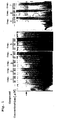
- the wild-type P53 protein binds to the fluorescence-labelled P53 probe, its electrophoretic mobility is decreased and the protein is detected as a band in the upper part.
- both of two mutant P53 proteins per se are not capable of binding to the probe; however, the addition of a test compound restores the DNA-binding activity to them and enables detection of shifting bands.
- detection of fluorescent bands was carried, out using FluorImagerTM SI fluorescence image analyzer (Molecular Dynamics). The results on the mutant P53His273 and the mutant P53Trp248 are shown in Figs. 1 and 2, respectively.
- Test Example 2 Measurement of the Activity of Restoring the DNA-Binding to Mutant P53 Using Cultured Cell Extract
- Human A431 cells were suspended in 10 ml of Dulbecco's Modified Eagle medium Nissui (Nissui Pharmaceutical Co., Ltd.) containing 10% fetal bovine serum (FBS)(hereinafter referred to as DMEM-FBS medium) to a concentration of 1-2 x 10 5 cells/ml, and 10 ml of the suspension was poured into a dish for culturing cells (diameter: 10 cm, Iwaki Glass Co., Ltd.) Culturing was carried out at 37°C for 2 days in the presence of 5% CO 2 , and the medium was removed with suction, followed by washing with 5 ml of PBS buffer.
- Dulbecco's Modified Eagle medium Nissui (Nissui Pharmaceutical Co., Ltd.) containing 10% fetal bovine serum (FBS)(hereinafter referred to as DMEM-FBS medium) to a concentration of 1-2 x 10 5 cells/ml
- FBS feta
- the suspension was allowed to stand at 0°C for 10 minutes and then centrifuged at 1000 x g at 4°C for 10 minutes to obtain the nuclear fraction as a precipitate.
- the precipitate was suspended in 0.4 ml of a dissolution buffer [20 mM HEPES (pH 7.9), 50 mM NaCl, 10 mM EDTA, 2 mM ethylenebis(oxyethylenenitrilo)tetraacetic acid (hereinafter referred to as EGTA), 0.1% NP-40, 1 mM PMSF, 1 mM Na 3 VO 4 and 1 mg/ml leupeptin; hereinafter referred to as dissolution buffer 2], followed by vigorous shaking at 4°C for 10-20 minutes.
- a dissolution buffer [20 mM HEPES (pH 7.9), 50 mM NaCl, 10 mM EDTA, 2 mM ethylenebis(oxyethylenenitrilo)tetraacetic acid (hereinafter referred to as EG
- the suspension was centrifuged at 10000 x g at 4°C for 10 minutes to obtain a crude nuclear extract as a supernatant.
- the protein concentration in the extract was determined by using a protein assay kit (BIO-RAD). By the above procedure, 0.4 ml of a protein solution (3.5 mg/ml) was obtained.
- Gel shift assay was carried out using the obtained A431 cell nuclear extract and the same fluorescent P53-binding sequence DNA probe as used above. To the following substances was added distilled water to make a total volume of 20 ⁇ l, and the mixture was subjected to reaction at 4°C for 30 minutes.
- reaction mixture was subjected to 4% polyacrylamide gel electrophoresis using 0.5xTBE [2.5 mM Tris-Borate (pH 8.3) and 0.1 mM EDTA] as the electrophoresis buffer.
- P53 protein in A431 cells is a mutant protein (273Arg ⁇ His)
- it is not capable of binding to the probe; however, the addition of a test compound restores the DNA-binding activity to it and enables detection of a shifting band.
- detection of fluorescent bands was carried out using FluorImagerTM SI fluorescence image analyzer (Molecular Dynamics). The results are shown in Fig. 3.
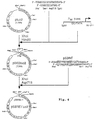
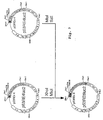
- Plasmid p53RE8luc2 comprising 8 copies of the P53 responsive element in the transcription regulatory region and the firefly luciferase gene downstream therefrom as a reporter gene was constructed according to the following procedure. An outline of the construction steps is illustrated in Fig. 4.
- a luciferase reporter vector pSE01uc2 for the insertion of the transcription regulatory region was constructed by inserting at the XhoI and HindIII cleavage sites of luciferase reporter vector pluc2 containing the neomycin-resistance gene [European Journal of Haematology, 52 , 73 (1994)] (1) an SphI-HindIII fragment consisting of 200 base pairs derived from the core promoter region of SV40 early gene [128-0/5243-5171; the base numbers are indicated in accordance with Molecular Biology of Tumor Viruses, 2nd Ed., Part 2 Revised, DNA Tumor Viruses, edited by J.
- reporter plasmid p53RE1luc2 comprising one copy of the P53 responsive element in the transcription regulatory region was constructed by annealing the two complementary oligonucleotides shown below (SEQ ID NOS: 14 and 15) which contain the P53 responsive element and inserting the annealing product at the XhoI and Asp718 sites of the luciferase vector pSE0luc2 obtained above.
- P53RE11uc2 thus obtained was cleaved with restriction enzymes XhoI and MluI simultaneously, followed by agarose gel electrophoresis to separate a 5.3 kb XhoI-MluI DNA fragment.
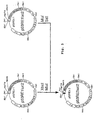
- p53RE1luc2 was cleaved with SalI and MluI simultaneously to obtain a 2.6 kb MluI-SalI DNA fragment. Ligation of both fragments gave reporter plasmid p53RE2luc2 comprising 2 copies of the P53 responsive element (see Fig. 5).
- p53RE2luc2 was cleaved with restriction enzymes XhoI and MluI simultaneously, followed by agarose gel electrophoresis to separate a 5.3 kb XhoI-MluI DNA fragment.
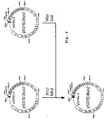
- p53RE2luc2 was cleaved with SalI and MluI simultaneously to obtain a 2.6 kb MluI-SalI DNA fragment. Ligation of both fragments gave reporter plasmid p53RE4luc2 comprising 4 copies of the P53 responsive element (see Fig. 6).
- test compounds were introduced into cells using the liposome reagent for DNA transfection DOSPERTM (Boehringer Mannheim GmbH).
- Human epidermoid carcinoma A431 cells (American Type Culture Collection, ATCC CRL-1555) were put into wells of a 6-well dish for culturing cells (diameter: 35 mm, Iwaki Glass Co., Ltd.) at a cell density of 4 x 10 5 cells/well and cultured in DMEM-FBS medium at 37°C for 24 hours in the presence of 5% CO 2 .
- a test compound (50 nmol) and 2 ⁇ g of reporter plasmid p53RE8luc2 were dissolved in a buffer (20 mM HEPES and 150 mM NaCl, pH 7.4; hereinafter referred to as HBS buffer) to make 100 ⁇ l of a solution (Solution A).
- the above cells were scraped off using a scraper and collected by centrifugation.
- the collected cells were suspended in 0.5 ml of a dissolution buffer [1% Triton X 100, 100 mM KH 2 PO 4 (pH 7.8) and 1 mM DTT] and the suspension was centrifuged to obtain a supernatant. Then, 200 ⁇ l of the supernatant was subjected to measurement of luciferase activity, and 10 ⁇ l of the supernatant was subjected to measurement of protein concentration.
- the luciferase activity was determined by the use of Luminometer LB953 (Beltold), as the amount of luminescence measured for 10 seconds after automatic addition of 300 ⁇ l of a substrate solution [25 mM glycylglycine (pH 7.8), 15 mM MgSO 4 , 5 mM ATP and 0.33 mM luciferin].
- the protein concentration was determined by using BIO-RAD Protein Assay Kit (BIO-RAD), and the obtained value was used for normalization of the luciferase activity.
- the rate of activation was calculated according to the following equation using the luciferase activity (normalized with the protein concentration) of the sample which contains no test compound in the reaction system as a control. The results are shown in Table 4.
- Compound Rate of Activation (%) Compound 1 1.4 Compound 4 6.3 Compound 8 3.9
- Compound 23 5.0 Rate of Activation B/A
- K-PBS buffer Human epidermoid carcinoma A431 cells (1 x 10 6 cells) cultured in DMEM-FBS medium at 37°C in the presence of 5% CO 2 were suspended in 50 ⁇ l of a buffer (137 mM KCl, 2.7 mM NaCl, 8.1 mM Na 2 HPO 4 , 1.5 mM KH 2 PO 4 and 4 mM MgCl 2 ; hereinafter referred to as K-PBS buffer). To this suspension was added a test compound appropriately diluted with K-PBS buffer to give a final concentration of 100 ⁇ M.
- the resulting suspension was transferred into a cuvette (width: 0.2 cm, BIO-RAD) and electrical pulses were applied thereto using Shimadzu Cell Fusion Apparatus S-SH-1 (Shimadzu Corporation) under the following conditions: voltage, 3 kV/cm; pulse length, 100 ⁇ s; pulse intervals, 1s; number of pulses, 2.
- S-SH-1 Shimadzu Cell Fusion Apparatus S-SH-1 (Shimadzu Corporation) under the following conditions: voltage, 3 kV/cm; pulse length, 100 ⁇ s; pulse intervals, 1s; number of pulses, 2.
- the cell suspension was poured into wells of a 96-well microtiter plate (Nunc, #167008) in an amount of 1 x 10 3 cells/well, and the same test compound as used above was added to the wells to give a final concentration of 100 ⁇ M.
- the cells were cultured in the plate at 37°C for 6 days in the presence of 5% CO 2 . Three hours before the completion of culturing, the medium was removed and the wells were washed once with PBS buffer in an amount of 100 ⁇ l/well, followed by addition of 50 ⁇ l of DMEM-FBS medium to each well.
- XTT labelling reagent (Boehringer Mannheim GmbH) prepared by dissolving 1 mg/ml XTT (sodium 3-[1-(phenylaminocarbonyl)-3,4-tetrazolium]-bis(4-methoxy-6-nitro)benzene sulfonic acid hydrate) and 25 ⁇ M PMS (N-methyl dibenzopyrazine methylsulfate) in RPMI1640 was added to the wells in an amount of 25 ⁇ l/well. After the completion of culturing, the absorbance at 490 nm was measured by using microplate reader Model550 (BIO-RAD) (control wavelength: 655 nm).
- the peptides of the present invention are capable of restoring the DNA-binding activity to mutant P53 protein and restoring the P53 protein-dependent transcription activity and have growth inhibiting activity against cancer cells and thus the peptides are useful as therapeutic agents for cancer.
- Mass spectrometric analysis was carried out by the FAB-MS method using JEOL JMS-SX102A.
- Amino acid analysis was carried out by the method of Bidlingmeyer, B.A., et al. [Journal of Chromatography, Vol. 336, p. 93 (1984)].
- Hydrolysis was carried out in hydrochloric acid vapor at 110°C for 22 hours.
- the amino acid compositions of the obtained hydrolyzates were analyzed using Waters Pico Tag amino acid analyzer (Waters Associates).
- a carrier resin Wang resin, 30 mg
- Fmoc-Leu was put in a reactor of an automatic synthesizer (Shimadzu Corporation, PSSM-8) and the following treatments were carried out according to the synthesis program developed by Shimadzu Corporation.
- steps (a)-(c) were carried out, and condensation reaction was carried out using Fmoc-Lys(Boc)-OH in step (d), followed by washing step (e) to synthesize Fmoc-Lys(Boc)-Lys(Boc)-Leu on the carrier resin. Then, steps (a)-(e) were repeated to obtain the carrier resin to which a protected peptide was bound.
- step (d) in the repeated procedures Fmoc-His(Trt)-OH, Fmoc-Arg(Pmc)-OH, Fmoc-Ser(t-Bu)-OH, Fmoc-Thr(t-Bu)-OH, Fmoc-Ser(t-Bu)-OH, Fmoc-Gln(Trt)-OH, Fmoc-Gly-OH, Fmoc-Lys(Boc)-OH, Fmoc-Lys(Boc)-OH, Fmoc-Ser(t-Bu)-OH, Fmoc-Lys(Boc)-OH and Fmoc-Leu-OH were used in turn.
- the carrier resin was washed with DMF for one minute. The same treatment was repeated 5 times, and the carrier resin was washed successively with methanol and butyl ether, followed by drying under reduced pressure for 12 hours to obtain the carrier resin to which a side-chain-protected peptide was bound.
- the condensation product was washed and dried to obtain the carrier resin to which a side-chain-protected peptide was bound. Removal of the side-chain-protecting groups and cleavage of the peptide from the resin were carried out in the same manner as in Reference Example 1 to obtain 42.7 mg of the crude peptide.
- the obtained crude peptide was purified by HPLC using a reversed-phase column in the same manner as in Reference Example 1 to give 14.1 mg of Compound 2.
- the condensation product was washed and dried to obtain the carrier resin to which a side-chain-protected peptide was bound. Removal of the side-chain-protecting groups and cleavage of the peptide from the resin were carried out in the same manner as in Reference Example 1 to obtain 54.4 mg of the crude peptide.
- the obtained crude peptide was purified by HPLC using a reversed-phase column in the same manner as in Reference Example 1 to give 41.4 mg of Compound 3.
- washing and deprotection steps (a)-(c) were carried out, and condensation reaction was carried out using a solution containing Fmoc-Lys(Boc)-OH in place of Fmoc-Leu-OH in step (d), followed by washing step (e) to synthesize Fmoc-Lys(Boc)-Leu-Cys(Trt) on the carrier resin.
- step (d) condensation was carried out using, in step (d), Fmoc-Lys(Boc)-OH, Fmoc-His(Trt)-OH, Fmoc-Arg(Pmc)-OH, Fmoc-Ser(t-Bu)-OH, Fmoc-Thr(t-Bu)-OH, Fmoc-Ser(t-Bu)-OH, Fmoc-Gln(Trt)-OH, Fmoc-Gly-OH, Fmoc-Lys(Boc)-OH, Fmoc-Lys(Boc)-OH, Fmoc-Ser(t-Bu)-OH, Fmoc-Lys (Boc)-OH, Fmoc-Leu-OH and Fmoc-Cys(Trt)-OH in turn.
- the condensation product was washed and dried to give 145.1 mg of the carrier resin to which a side-chain-protected peptide was bound. Removal of the side-chain-protecting groups and cleavage of the peptide from the resin were carried out in the same manner as in Reference Example 1 to obtain 68.5 mg of the crude peptide.
- This crude peptide was dissolved in 3 ml of DMF, and 1 ml of dilute aqueous ammonia (pH 9.5) was added thereto. The resulting mixture was allowed to stand at room temperature for 30 minutes and then purified by HPLC using a reversed-phase column (YMC, YMC-Pack ODS-AM 30 mm I.D. x 250 mm) in the same manner as in Reference Example 1 to give 12.7 mg of Compound 4.
- the resin was washed with DCM, DMF, isopropanol, methanol and butyl ether in turn, and then dried under reduced pressure to obtain Fmoc-Leu-2-chlorotritylchloride resin.
- a DMF/DCM (1/1) solution containing 5% piperidine was added to 40 mg of the obtained resin (theoretically combined with 32 ⁇ mol of Fmoc-Leu) was added a DMF/DCM (1/1) solution containing 5% piperidine, and the mixture was allowed to stand for 10 minutes, followed by discharge of the solution.
- the condensation product was washed and dried to give the carrier resin to which a side-chain-protected peptide was bound.
- the reaction time for condensation with each amino acid was 40 minutes.
- Cleavage of the peptide from the resin was carried out in the same manner as in Reference Example 1, except that 0.8 ml of a mixture of acetic acid (20%), TFE (20%) and DCM (60%) was used and the standing time was 2 hours, to give 63.8 mg of the crude peptide with side-chain-protecting groups.
- the condensation product was washed and dried to obtain the carrier resin to which a side-chain-protected peptide was bound. Removal of the side-chain-protecting groups and cleavage of the peptide from the resin were carried out in the same manner as in Reference Example 1 to give 35.8 mg of the crude peptide.
- the obtained crude peptide was dissolved in 40 ml of water, and dilute aqueous ammonia was added to adjust the solution to pH 7.7, followed by stirring at room temperature for 20 hours.
- the reaction mixture was purified by HPLC using a reversed-phase column (Shiseido Co., Ltd., CAPCELL PAK C18 30 mm I.D. x 250 mm) in the same manner as in Reference Example 1 to give 3.5 mg of Compound 6.
- step (d) DMF (773 ⁇ l) containing 148.5 ⁇ mol of each amino acid, 148.5 ⁇ mol of HBTU, 148.5 ⁇ mol of HOBt monohydrate and 297 ⁇ mol of DIEA was stirred for 5 minutes, and the resulting solution was added to the carrier resin, and after stirring for 60 minutes, the solution was discharged. After the completion of condensation reactions, the condensation product was washed and dried to obtain the carrier resin to which a side-chain-protected peptide was bound. Removal of the side-chain-protecting groups and cleavage of the peptide from the resin were carried out in the same manner as in Reference Example 1 to obtain 44.6 mg of the crude peptide.
- the obtained crude peptide was dissolved in 50 ml of water, and dilute aqueous ammonia was added to adjust the solution to pH 7.5, followed by stirring at room temperature for 18 hours.
- the reaction mixture was purified by HPLC using a reversed-phase column in the same manner as in Reference Example 1 to give 11.2 mg of Compound 8.
- step (d) DMF (1430 ⁇ l) containing 275 ⁇ mol of each amino acid, 275 ⁇ mol of HBTU, 275 ⁇ mol of HOBt monohydrate and 550 ⁇ mol of DIEA was stirred for 5 minutes, and the resulting solution was added to the carrier resin, and after stirring for 60 minutes, the solution was discharged.
- a deprotection step after the condensation with Boc-Cys(Trt)-OH was not carried out. After the completion of condensation reactions, the resin was washed with DCM, and 2 ml of a mixture of acetic acid/TFE/DCM (2/2/6) was added thereto. The resulting mixture was allowed to stand at room temperature for 2 hours, followed by discharge of the solution.
- the obtained crude peptide was dissolved in 2 M acetic acid and diluted to 35 ml with water, and then dilute aqueous ammonia was added to adjust the solution to pH 7.5, followed by stirring at room temperature for 3 days.
- the reaction mixture was purified by HPLC using a reversed-phase column in the same manner as in Reference Example 1 to give 2.3 mg of Compound 11.
- the condensation product was washed and dried to obtain the carrier resin to which a side-chain protected peptide was bound. Removal of the side-chain-protecting groups and cleavage of the peptide from the resin were carried out in the same manner as in Reference Example 1 to give 64.5 mg of the crude peptide.
- the obtained crude peptide was dissolved in 50 ml of water, and dilute aqueous ammonia was added to adjust the solution to pH 7.6, followed by stirring at room temperature for 2 days.
- the reaction mixture was purified by HPLC using a reversed-phase column in the same manner as in Reference Example 1 to give 14.1 mg of Compound 17.
- step (d) DMF (1430 ⁇ l) containing 330 ⁇ mol of each amino acid, 330 ⁇ mol of DIC, 275 ⁇ mol of HOBt monohydrate and 275 ⁇ mol of DIEA was stirred for 5 minutes, and the resulting solution was added to the carrier resin, and after stirring for 60 minutes, the solution was discharged. A deprotection step after the condensation with bromoacetic acid was not carried out. After the completion of condensation reactions, the resin was washed with methanol and butyl ether and then dried to obtain the resin to which a protected peptide was bound.
- a peptide having the same sequence as Compound 6 was synthesized in the same manner as in Example 3. Condensation with Fmoc-amino acids was carried out using HBTU in place of PyBOP and DIEA in place of NMM. A carrier resin (Rink Amide MBHA resin) (150 mg) combined with 82.5 ⁇ mol of Fmoc-NH was used as a starting material, and 197.2 mg of the crude peptide was obtained. The obtained crude peptide wherein the side-chains of 2 Cys residues have free thiol groups was purified by HPLC using a reversed-phase column to give 23.4 mg of the purified peptide.
- step (d) DMF (624 ⁇ l) containing 220 ⁇ mol of each amino acid, 220 ⁇ mol of HBTU, 220 ⁇ mol of HOBt monohydrate and 440 ⁇ mol of DIEA was stirred for 5 minutes, and the resulting solution was added to the carrier resin, and after stirring for 60 minutes, the solution was discharged. After the completion of condensation reactions, the condensation product was washed and dried to obtain the carrier resin to which a side-chain-protected peptide was bound. Removal of the side-chain-protecting groups and cleavage of the peptide from the resin were carried out in the same manner as in Reference Example 1 to give 55.7 mg of the crude peptide.
- the obtained crude peptide was dissolved in 55.7 ml of water, and dilute aqueous ammonia was added to adjust the solution to pH 7.58, followed by stirring at room temperature for 2 days.
- the reaction mixture was purified by HPLC using a reversed-phase column in the same manner as in Reference Example 1 to give 10.1 mg of Compound 20.
- step (d) DMF (624 ⁇ l) containing 220 ⁇ mol of each amino acid, 220 ⁇ mol of HBTU, 220 ⁇ mol of HOBt monohydrate and 440 ⁇ mol of DIEA was stirred for 5 minutes, and the resulting solution was added to the carrier resin, and after stirring for 60 minutes, the solution was discharged. After the completion of condensation reactions, the condensation product was washed and dried to obtain the carrier resin to which a side-chain-protected peptide was bound. Removal of the side-chain-protecting groups and cleavage of the peptide from the resin were carried out in the same manner as in Reference Example 1 to give 57.8 mg of the crude peptide.
- the obtained crude peptide was dissolved in 57.8 ml of water, and dilute aqueous ammonia was added to adjust the solution to pH 7.78, followed by stirring at room temperature for 4 days.
- the reaction mixture was purified by HPLC using a reversed-phase column in the same manner as in Reference Example 1 to give 2.3 mg of Compound 21.
- step (d) DMF (624 ⁇ l) containing 220 ⁇ mol of each amino acid, 220 ⁇ mol of HBTU, 220 ⁇ mol of HOBt monohydrate and 440 ⁇ mol of DIEA was stirred for 5 minutes, and the resulting solution was added to the carrier resin, and after stirring for 60 minutes, the solution was discharged. After the completion of condensation reactions, the condensation product was washed and dried to obtain the carrier resin to which a side-chain-protected peptide was bound. Removal of the side-chain-protecting groups and cleavage of the peptide from the resin were carried out in the same manner as in Reference Example 1 to give 54.6 mg of the crude peptide.
- the obtained crude peptide was dissolved in 54.6 ml of water, and dilute aqueous ammonia was added to adjust the solution to pH 7.82, followed by stirring at room temperature for 4 days.
- the reaction mixture was purified by HPLC using a reversed-phase column in the same manner as in Reference Example 1 to give 7.0 mg of Compound 22.
- the resin was washed successively with DCM, DMF, isopropanol, methanol and butyl ether, and then dried under reduced pressure to obtain a Fmoc-Gly-2-chlorotrityl resin.
- a DMF/DCM (1/1) mixture containing 5% piperidine was added to the obtained resin.
- the condensation product was washed and dried to obtain the carrier resin to which a side-chain-protected peptide was bound.
- the reaction time for condensation with each amino acid was 60 minutes.
- Cleavage of the peptide from the resin was carried out in the same manner as in Reference Example 1, except that 1.0 ml of a mixture of acetic acid (20%), TFE (20%) and DCM (60%) was used and the standing time was 2 hours, to give 82.9 mg of the crude peptide having the side-chain- and N-terminal-protecting groups.
- the obtained crude peptide (41.5 mg) was added to 1.5 ml of DMF containing 13 mg of PyBOP, 3.2 mg of HOBt monohydrate, 2.6 ⁇ l of NMM and 2.5 ⁇ l of n-butylamine, and the resulting mixture was allowed to stand at room temperature for 60 hours, followed by evaporation of DMF under reduced pressure to obtain the crude peptide-n-butylamide.
- the obtained crude peptide was purified by HPLC using a reversed-phase column in the same manner as in Reference Example 1 to give 7.5 mg of the purified peptide wherein the side-chains of two Cys residues have free thiol groups.
- the obtained purified peptide was dissolved in 0.75 ml of 2 M acetic acid and diluted with 6.75 ml of water, and then dilute aqueous ammonia was added to adjust the solution to pH 7.5, followed by stirring at room temperature for 48 hours.
- the reaction mixture was purified by HPLC using a reversed-phase column in the same manner as in Reference Example 1 to give 5.0 mg of Compound 23.
- the condensation product was washed and dried to obtain the carrier resin to which a side-chain-protected peptide was bound.
- the resin was washed with a DMF solution containing 0.5% DIEA, a DMF solution containing 0.5% sodium diethyl dithiocarbamate, methanol and butyl ether 3 times each to selectively remove the side-chain-protecting allyl groups (Aloc, Al).
- the resin was then suspended in 1 ml of DMF, and 32 mg of HATU and 24 ⁇ l of DIEA were added thereto, followed by stirring at room temperature for 24 hours. After discharge of the solution, the resin was washed and dried in the same manner as in Reference Example 1 and the peptide was cleaved. To the obtained mixture was added ether and the deposited precipitate was collected to obtain 60.4 mg of the crude peptide. The obtained crude peptide was purified by HPLC using a reversed-phase column in the same manner as in Reference Example 1 to give 1.8 mg of Compound 24.
- the present invention provides peptides having a cyclic structure and pharmaceutically acceptable salts thereof. Said peptides directly act on mutant P53 protein to enhance the DNA-binding activity and to restore and enhance the transcription activity, and thereby exhibit antitumor activity.
Landscapes
- Chemical & Material Sciences (AREA)
- Organic Chemistry (AREA)
- Health & Medical Sciences (AREA)
- Life Sciences & Earth Sciences (AREA)
- Molecular Biology (AREA)
- General Health & Medical Sciences (AREA)
- Genetics & Genomics (AREA)
- Medicinal Chemistry (AREA)
- Biophysics (AREA)
- Proteomics, Peptides & Aminoacids (AREA)
- Biochemistry (AREA)
- Toxicology (AREA)
- Zoology (AREA)
- Gastroenterology & Hepatology (AREA)
- Peptides Or Proteins (AREA)
- Medicines That Contain Protein Lipid Enzymes And Other Medicines (AREA)
Applications Claiming Priority (3)
| Application Number | Priority Date | Filing Date | Title |
|---|---|---|---|
| JP12611397 | 1997-05-15 | ||
| JP12611397 | 1997-05-15 | ||
| PCT/JP1998/002148 WO1998051707A1 (fr) | 1997-05-15 | 1998-05-15 | Peptides a structures cycliques et a effet restaurateur d'activite de la proteine p53 sur les mutants de ladite proteine |
Publications (2)
| Publication Number | Publication Date |
|---|---|
| EP0989136A1 true EP0989136A1 (de) | 2000-03-29 |
| EP0989136A4 EP0989136A4 (de) | 2002-10-09 |
Family
ID=14926964
Family Applications (1)
| Application Number | Title | Priority Date | Filing Date |
|---|---|---|---|
| EP98919612A Withdrawn EP0989136A4 (de) | 1997-05-15 | 1998-05-15 | Peptide mit zyklischen strukturen, die die aktivität von mutierten p53 proteinen wiederherstellen können. |
Country Status (4)
| Country | Link |
|---|---|
| EP (1) | EP0989136A4 (de) |
| AU (1) | AU7238098A (de) |
| CA (1) | CA2289960A1 (de) |
| WO (1) | WO1998051707A1 (de) |
Cited By (4)
| Publication number | Priority date | Publication date | Assignee | Title |
|---|---|---|---|---|
| WO2003072600A3 (en) * | 2002-01-23 | 2005-01-27 | Gardner Rebecca Katherine | Methods of screening molecular libraries for active molecules that restore the function of target proteins and peptides that restore the function of mutant p53 |
| WO2013036208A1 (en) * | 2011-09-09 | 2013-03-14 | Agency For Science, Technology And Research | P53 activating peptides |
| CN105579464A (zh) * | 2013-08-07 | 2016-05-11 | 耶达研究及发展有限公司 | 能够再活化p53突变体的肽 |
| US11230578B2 (en) | 2016-02-04 | 2022-01-25 | Yeda Research And Development Co. Ltd. | Peptides and use of same in the treatment of diseases, disorders or conditions associated with a mutant P53 |
Families Citing this family (8)
| Publication number | Priority date | Publication date | Assignee | Title |
|---|---|---|---|---|
| US7192713B1 (en) | 1999-05-18 | 2007-03-20 | President And Fellows Of Harvard College | Stabilized compounds having secondary structure motifs |
| CA2686827C (en) | 2006-12-14 | 2014-09-16 | Aileron Therapeutics, Inc. | Bis-sulfhydryl macrocyclization systems |
| EP2508531B1 (de) | 2007-03-28 | 2016-10-19 | President and Fellows of Harvard College | Geheftete Polypeptide |
| TW201806968A (zh) | 2011-10-18 | 2018-03-01 | 艾利倫治療公司 | 擬肽巨環化合物 |
| WO2014071241A1 (en) | 2012-11-01 | 2014-05-08 | Aileron Therapeutics, Inc. | Disubstituted amino acids and methods of preparation and use thereof |
| JP2018503595A (ja) | 2014-09-24 | 2018-02-08 | エルロン・セラピューティクス・インコーポレイテッドAileron Therapeutics,Inc. | ペプチド模倣大環状分子およびその製剤 |
| BR112017005598A2 (pt) | 2014-09-24 | 2017-12-12 | Aileron Therapeutics Inc | macrociclos peptidomiméticos e usos dos mesmos |
| US11091522B2 (en) | 2018-07-23 | 2021-08-17 | Aileron Therapeutics, Inc. | Peptidomimetic macrocycles and uses thereof |
Family Cites Families (4)
| Publication number | Priority date | Publication date | Assignee | Title |
|---|---|---|---|---|
| FR2698367B1 (fr) * | 1992-11-02 | 1995-02-17 | Eurobio Lab | Fragments de la protéine p53 et leurs utilisations dans la détection et le suivi d'états pathologiques. |
| US6169073B1 (en) * | 1995-02-16 | 2001-01-02 | Bayer Corporation | Peptides and peptidomimetics with structural similarity to human p53 that activate p53 function |
| GB9521544D0 (en) * | 1995-10-20 | 1995-12-20 | Univ Dundee | Activation of P53 protein and therapeutic applications thereof |
| EP0958305B1 (de) * | 1996-07-05 | 2008-06-04 | Cancer Research Technology Limited | Hemmer der interaktion zwischen p53 und mdm2 |
-
1998
- 1998-05-15 AU AU72380/98A patent/AU7238098A/en not_active Abandoned
- 1998-05-15 CA CA002289960A patent/CA2289960A1/en not_active Abandoned
- 1998-05-15 EP EP98919612A patent/EP0989136A4/de not_active Withdrawn
- 1998-05-15 WO PCT/JP1998/002148 patent/WO1998051707A1/ja not_active Ceased
Cited By (13)
| Publication number | Priority date | Publication date | Assignee | Title |
|---|---|---|---|---|
| US8304211B2 (en) | 2002-01-23 | 2012-11-06 | Mohamed Raafat El-Gewely | Methods of screening molecular libraries and active molecules identified thereby |
| WO2003072600A3 (en) * | 2002-01-23 | 2005-01-27 | Gardner Rebecca Katherine | Methods of screening molecular libraries for active molecules that restore the function of target proteins and peptides that restore the function of mutant p53 |
| US9517252B2 (en) | 2011-09-09 | 2016-12-13 | Agency For Science, Technology And Research | p53 activating peptides |
| WO2013036208A1 (en) * | 2011-09-09 | 2013-03-14 | Agency For Science, Technology And Research | P53 activating peptides |
| US9856289B2 (en) | 2013-08-07 | 2018-01-02 | Yeda Research And Development Co. Ltd. | Peptides capable of reactivating p53 mutants |
| EP3030571A4 (de) * | 2013-08-07 | 2017-05-10 | Yeda Research and Development Co. Ltd | Peptide zur reaktivierung von p53-mutanten |
| CN105579464A (zh) * | 2013-08-07 | 2016-05-11 | 耶达研究及发展有限公司 | 能够再活化p53突变体的肽 |
| US10336789B2 (en) | 2013-08-07 | 2019-07-02 | Yeda Research And Development Co. Ltd. | Peptides capable of reactivating p53 mutants |
| US10550152B2 (en) | 2013-08-07 | 2020-02-04 | Yeda Research And Development Co. Ltd. | Peptides capable of reactivating p53 mutants |
| RU2721423C2 (ru) * | 2013-08-07 | 2020-05-19 | Йеда Ресеарч Энд Девелопмент Ко. Лтд. | Пептиды, способные реактивировать мутанты р53 |
| CN105579464B (zh) * | 2013-08-07 | 2021-01-26 | 耶达研究及发展有限公司 | 能够再活化p53突变体的肽 |
| US11028127B2 (en) | 2013-08-07 | 2021-06-08 | Yeda Research And Development Co. Ltd. | Peptides capable of reactivating p53 mutants |
| US11230578B2 (en) | 2016-02-04 | 2022-01-25 | Yeda Research And Development Co. Ltd. | Peptides and use of same in the treatment of diseases, disorders or conditions associated with a mutant P53 |
Also Published As
| Publication number | Publication date |
|---|---|
| EP0989136A4 (de) | 2002-10-09 |
| AU7238098A (en) | 1998-12-08 |
| CA2289960A1 (en) | 1998-11-19 |
| WO1998051707A1 (fr) | 1998-11-19 |
Similar Documents
| Publication | Publication Date | Title |
|---|---|---|
| US12097237B2 (en) | Small molecule Ras inhibitors | |
| AU2017263038B2 (en) | Agonist agents of CD47 inducing programmed cell death and their use in the treatments of diseases associated with defects in programmed cell death | |
| JP5490343B2 (ja) | Jnkシグナル導入経路の細胞透過性ペプチドインヒビター | |
| EP0958305B1 (de) | Hemmer der interaktion zwischen p53 und mdm2 | |
| US7083983B2 (en) | Inhibitors of the interaction between P53 and MDM2 | |
| US6660830B1 (en) | Peptides with antiproliferative properties | |
| WO2019118893A1 (en) | Stabilized peptide-mediated targeted protein degradation | |
| CN102197048A (zh) | 拟肽大环化合物 | |
| KR20140128971A (ko) | 세포-투과성 펩티드 | |
| EP2268658B1 (de) | Peptide und davon abgeleitete aptamere als spezifische modulatoren einer mutierten p53-funktion | |
| US20110118172A1 (en) | Metastin derivative and use thereof | |
| CA2289960A1 (en) | Peptides having a cyclic structure and restoring the activities of p53 protein to mutant p53 protein | |
| AU745504B2 (en) | Disruption of the mammalian Rad51 protein and disruption of proteins that associate with mammalian Rad51 for hindering cell proliferation | |
| CA2343924A1 (en) | Peptide derivative | |
| US20170015718A1 (en) | Pro-apoptotic ras and raf peptides | |
| JP2001103993A (ja) | 環状ペプチド及びセリンプロテアーゼ阻害剤 | |
| WO2010120931A2 (en) | E2f as a target for treatment of hormone refractory prostate cancer | |
| US6245742B1 (en) | Peptide antagonists of cellular mitogenesis and motogenesis and their therapeutic use | |
| US20110212890A1 (en) | Metastin derivative and use thereof | |
| AU2018302855B2 (en) | Peptide derivative and pharmaceutical composition containing same | |
| JPWO1998051707A1 (ja) | 変異p53蛋白質に対してp53蛋白質が有する活性を回復させる環状構造を持つペプチド | |
| US20030148954A1 (en) | Agents and methods for modulating activator protein-1-mediated cellular processes | |
| US10167326B2 (en) | Alpha-fetoprotein “ring and tail” peptides | |
| US6713449B1 (en) | E2F activity inhibitory compounds | |
| WO2026096732A1 (en) | Stapled bad bh3 helices targeting bcl-2 mutants that cause venetoclax resistance |
Legal Events
| Date | Code | Title | Description |
|---|---|---|---|
| PUAI | Public reference made under article 153(3) epc to a published international application that has entered the european phase |
Free format text: ORIGINAL CODE: 0009012 |
|
| 17P | Request for examination filed |
Effective date: 19991210 |
|
| AK | Designated contracting states |
Kind code of ref document: A1 Designated state(s): AT BE CH CY DE DK ES FI FR GB GR IE IT LI LU MC NL PT SE |
|
| A4 | Supplementary search report drawn up and despatched |
Effective date: 20020823 |
|
| AK | Designated contracting states |
Kind code of ref document: A4 Designated state(s): AT BE CH CY DE DK ES FI FR GB GR IE IT LI LU MC NL PT SE |
|
| STAA | Information on the status of an ep patent application or granted ep patent |
Free format text: STATUS: THE APPLICATION HAS BEEN WITHDRAWN |
|
| 18W | Application withdrawn |
Effective date: 20041202 |