EP0992868A2 - Verfahren und vorrichtung zur berechnung einer erforderlichen werkstoffmenge - Google Patents
Verfahren und vorrichtung zur berechnung einer erforderlichen werkstoffmenge Download PDFInfo
- Publication number
- EP0992868A2 EP0992868A2 EP98914075A EP98914075A EP0992868A2 EP 0992868 A2 EP0992868 A2 EP 0992868A2 EP 98914075 A EP98914075 A EP 98914075A EP 98914075 A EP98914075 A EP 98914075A EP 0992868 A2 EP0992868 A2 EP 0992868A2
- Authority
- EP
- European Patent Office
- Prior art keywords
- arithmetic
- mrp
- item
- items
- child
- Prior art date
- Legal status (The legal status is an assumption and is not a legal conclusion. Google has not performed a legal analysis and makes no representation as to the accuracy of the status listed.)
- Granted
Links
Images




Classifications
-
- G—PHYSICS
- G05—CONTROLLING; REGULATING
- G05B—CONTROL OR REGULATING SYSTEMS IN GENERAL; FUNCTIONAL ELEMENTS OF SUCH SYSTEMS; MONITORING OR TESTING ARRANGEMENTS FOR SUCH SYSTEMS OR ELEMENTS
- G05B19/00—Program-control systems
- G05B19/02—Program-control systems electric
- G05B19/418—Total factory control, i.e. centrally controlling a plurality of machines, e.g. direct or distributed numerical control [DNC], flexible manufacturing systems [FMS], integrated manufacturing systems [IMS] or computer integrated manufacturing [CIM]
- G05B19/41865—Total factory control, i.e. centrally controlling a plurality of machines, e.g. direct or distributed numerical control [DNC], flexible manufacturing systems [FMS], integrated manufacturing systems [IMS] or computer integrated manufacturing [CIM] characterised by job scheduling, process planning, material flow
-
- G—PHYSICS
- G05—CONTROLLING; REGULATING
- G05B—CONTROL OR REGULATING SYSTEMS IN GENERAL; FUNCTIONAL ELEMENTS OF SUCH SYSTEMS; MONITORING OR TESTING ARRANGEMENTS FOR SUCH SYSTEMS OR ELEMENTS
- G05B2219/00—Program-control systems
- G05B2219/30—Nc systems
- G05B2219/32—Operator till task planning
- G05B2219/32082—Planing, material requiring planning MRP, request
-
- G—PHYSICS
- G05—CONTROLLING; REGULATING
- G05B—CONTROL OR REGULATING SYSTEMS IN GENERAL; FUNCTIONAL ELEMENTS OF SUCH SYSTEMS; MONITORING OR TESTING ARRANGEMENTS FOR SUCH SYSTEMS OR ELEMENTS
- G05B2219/00—Program-control systems
- G05B2219/30—Nc systems
- G05B2219/33—Director till display
- G05B2219/33081—Parallel computing, pipeline
-
- Y—GENERAL TAGGING OF NEW TECHNOLOGICAL DEVELOPMENTS; GENERAL TAGGING OF CROSS-SECTIONAL TECHNOLOGIES SPANNING OVER SEVERAL SECTIONS OF THE IPC; TECHNICAL SUBJECTS COVERED BY FORMER USPC CROSS-REFERENCE ART COLLECTIONS [XRACs] AND DIGESTS
- Y02—TECHNOLOGIES OR APPLICATIONS FOR MITIGATION OR ADAPTATION AGAINST CLIMATE CHANGE
- Y02P—CLIMATE CHANGE MITIGATION TECHNOLOGIES IN THE PRODUCTION OR PROCESSING OF GOODS
- Y02P80/00—Climate change mitigation technologies for sector-wide applications
- Y02P80/40—Minimising material used in manufacturing processes
-
- Y—GENERAL TAGGING OF NEW TECHNOLOGICAL DEVELOPMENTS; GENERAL TAGGING OF CROSS-SECTIONAL TECHNOLOGIES SPANNING OVER SEVERAL SECTIONS OF THE IPC; TECHNICAL SUBJECTS COVERED BY FORMER USPC CROSS-REFERENCE ART COLLECTIONS [XRACs] AND DIGESTS
- Y02—TECHNOLOGIES OR APPLICATIONS FOR MITIGATION OR ADAPTATION AGAINST CLIMATE CHANGE
- Y02P—CLIMATE CHANGE MITIGATION TECHNOLOGIES IN THE PRODUCTION OR PROCESSING OF GOODS
- Y02P90/00—Enabling technologies with a potential contribution to greenhouse gas [GHG] emissions mitigation
- Y02P90/02—Total factory control, e.g. smart factories, flexible manufacturing systems [FMS] or integrated manufacturing systems [IMS]
Definitions
- the present invention relates to a material/quantity requirements arithmetic determination system for determining arithmetically a material/quantity requirements schedule in order to determine various types of parts and raw materials required for manufacturing an article in accordance with a given production schedule.
- a required material/quantity planning also known as the material requirements planning, hereinafter referred to also as "MRP" in short
- MRP material requirements planning
- the MRP and the conventional MRP arithmetic scheme is disclosed, for example, in "ZUSETU MRP YOUGO 500 SEN (Selected 500 MRP terms with illustrations in English)" (published by Nikkan Kogyo Shinbun Co. in 1983) and others. In the following, the conventional MRP arithmetic scheme will be reviewed in brief.
- an arrangement/preparation schedule is established on the basis of a planned production schedule of an article level (also known as the master production schedule, hereinafter referred to also as MPS in short) for purchasing or manufacturing required things (items) at required times (within delivery-appointed terms) by required amounts (required quantities) concerning parts, raw materials or the like.
- MPS master production schedule
- master production schedule or MPS means a production schedule and a standard production schedule of an item (article to be manufactured) which occupies a top level in a parts-exploded diagram.
- part table means a list table based on two types of master data, i.e., data unique to items, being referred to as “items table”, and data indicating interrelations among items, e.g. between an article to be manufactured and component parts, between component parts and component parts, between component parts and raw materials, and so forth, being referred to as “parts arrangement table”.
- inventory/order balance means inventory and number of items being in process at a current time point or an expected delivery-appointed term and an expected number of items already ordered and expected to be delivered or received in the future (order balance information).
- the MRP arithmetic procedure is so designed as to execute five arithmetic operations mentioned below for each of the items.
- Required quantity data concerning a relevant item is fetched to thereby determine arithmetically a total required quantity thereof for a time period by taking into account the quantities required on a period-by-period basis.
- the following description will be made on the presumption that the period mentioned above is set to one day and thus the schedule is planned on a day-by-day basis.
- the net required quantity demanded on a day-by-day basis is determined arithmetically by taking into account the inventory and the order balance.
- the number/quantity most appropriate for the arrangement or preparation is determined by taking into consideration a lot size preset for the relevant item.
- a lead time is subtracted to determine the relevant order date or outset date to thereby prepare the order.
- the order as prepared is expanded down to the items of the lowest rank by making reference to the parts table. More specifically, the demanded quantity is arithmetically determined for each of child-items on the basis of the child-items and the numbers thereof contained in the data concerning the structure of an article to be manufactured with the date immediately preceding to the order outset date being set as the demand-issued date, whereon the required quantities of the individual child-items are written in the required quantity data of each items.
- part-based expansion arithmetic is executed for all the items required for manufacturing the articles all preset in the MPS. It is however noted that the arithmetics for the individual items can not be executed until the part-based expansion arithmetic for the relevant parent-item of the above-mentioned items has been completed for determining the total required quantity as demanded. For controlling such arithmetic execution sequence, low level codes are introduced in the conventional MRP arithmetic procedure.
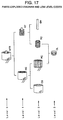
- the low level codes As is illustrated in Fig. 17, on the basis of a parts-exploded diagram of a given article to be manufactured, it is possible to impart level codes to the parts, respectively, in dependence on which of the hierarchical levels or ranks each of the items belongs to in view of the hierarchical parts disposition. Because some of the items may have a plurality of level codes allocated, the level code of the hierarchically lowest level or rank is defined as the low level code. In this conjunction, with the low level or rank, it is contemplated to mean the level as viewed in the direction toward more basic item on the parts-exploded diagram, i.e., when the hierarchical level becomes lower, the corresponding part represents more basic item.
- the low level codes of the individual items can be established by retrieving all the items contained in the parts table in precedence to the start of execution of the MRP arithmetic procedure.
- the low level codes are contained in the items data as the information specific or unique to the items.
- the sequence of the part-based expansion arithmetics for the individual items is determined on a level-by-level basis by making use of the low level codes. More specifically, processings are executed progressively through the procedure described below.
- a required quantity read out from the MPS is allocated to an item of the article level appearing in the MPS. Further, at that time, the relevant item name or identifier is entered in a queue of level 0.
- one item identifier is extracted from the queue of level 0, whereon the part-based expansion arithmetic is performed for that item, upon completion of which the succeeding item identifier is extracted from the queue.
- the child-item identifiers are entered in the queues of low level codes for the relevant child-items except for the case where the child-item identifiers have already been entered in the queue.
- one item identifier is taken out from the queue of the immediately succeeding lower level, whereon the part-based expansion arithmetic is performed for the item as taken out.
- the item identifiers are taken out from the queue of that level until the queue has become vacant, to thereby execute repetitively the part-based expansion arithmetic.
- the child-item identifier is placed in the low level code queue of that child-item. However, nothing is done when it has already been placed in the queue.
- the arithmetic procedure comes to an end when the queues of all levels become vacant.
- the part-based expansion arithmetic for a given item has been completed with the required quantity of the relevant child-item having been arithmetically determined and when the child-item is to be allocated to the data processing unit differing from that for the parent-item relevant to that child-item, the required quantity of that child-item is transferred to the different data processing unit mentioned just above. While performing such data transfer as mentioned above, the part-based expansion arithmetics are executed for the individual items in parallel as a whole, whereby high-speed execution of the MRP arithmetic procedure can be realized.
- Fig. 18 shows schematically in a block diagram the configuration of the system disclosed in the above-mentioned publication.
- child-items of an item A are represented by items B to G, respectively, and when the items A, B and C are allocated to an MRP arithmetic apparatus 1 while the items D and E are allocated to an MRP arithmetic apparatus 2 with the items F and G being allocated to an MRP arithmetic apparatus 3, there arise problems described below when the parallel processing method of the conventional MRP arithmetic procedure is adopted.
- the part-based expansion arithmetic for the item A is executed by the MRP arithmetic apparatus 1, as shown in Fig. 18.
- the required quantities of the items B to G, respectively have to be arithmetically determined on the basis of net required quantity data after the lot arrangement for the item A has been done. Consequently, the part-based expansion arithmetic for the item A executed by the MRP arithmetic apparatus 1 involves large load in the processing.
- processings to be executed by the MRP arithmetic apparatuses 2 and 3, respectively, are absent during execution of the arithmetic by the MRP arithmetic apparatus 1. Such unbalance of the load involved among the MRP arithmetic apparatus upon execution of the arithmetic processings will lead to lowering of the processing speed of the whole system.
- a number of required quantity data has to be transferred to each of the MRP arithmetic apparatuses 2 and 3 from the MRP arithmetic apparatus 1, which number corresponding to the number of items allocated to each of the MRP arithmetic apparatuses 2 and 3.
- the processing time involved in the data transfer means overhead making appearance in the parallel executions of the MRP arithmetics, and thus the processing time of the whole system increases as the quantity of data to be transferred increases.
- the present invention it is contemplated as an object thereof to provide a material/quantity requirements arithmetic determination system which can ensure enhanced processing speed with the load occurring in execution of the arithmetic processings being uniformized while occurrence of overhead is suppressed to a possible minimum.
- the object of the present invention can be achieved by providing a material/quantity requirements arithmetic determination system which includes a plurality of material/quantity requirements planning (MRP) arithmetic means disposed in parallel for determining arithmetically types of items, quantities thereof and delivery-appointed terms thereof which are required for manufacturing a predetermined article on the basis of a production schedule of the article, characterized in that a first MRP arithmetic means of the aforementioned plural MRP arithmetic means is so arranged as to arithmetically determine a net required quantity of a given item to thereby supply the net required quantity to other MRP arithmetic means, and that the first MRP arithmetic means and the other MRP arithmetic means are so arranged as to execute part-based expansion arithmetics in parallel, respectively, for allocated ones of plural child-items which constitute the item on the basis of the net required quantity of the item.
- MRP material/quantity requirements planning
- a material/quantity requirements arithmetic determination system comprising a plurality of MRP arithmetic means for arithmetically determining at least items constituting an article to be manufactured and required quantities of the items, respectively, on the basis of a production schedule of the article, wherein arithmetic determinations of the items constituting the article are allocated to the plurality of MRP arithmetic means which then perform part-based expansion arithmetics for the item(s) allocated thereto, respectively.
- the part-based expansion arithmetic mentioned above includes a total required quantity arithmetic, a net required quantity arithmetic, a lot arrangement, a lead time arithmetic and a child-item-based expansion, and that the MRP arithmetic means mentioned above sends the net required quantity determined arithmetically to the other MRP arithmetic means.
- the present invention it is possible to uniformize load among the MRP arithmetic means because the part-based expansion arithmetics are executed in parallel by the individual MRP arithmetic means for the allocated items, respectively. Furthermore, since the first MRP arithmetic means is required only to transfer the net required quantity of the item to the other MRP arithmetic means, the time required for the transfer can be reduced.
- the first MRP arithmetic means includes an operation command means for issuing commands for required operations to the first MRP arithmetic means itself and the other MRP arithmetic means
- each of the first MRP arithmetic means and the other MRP arithmetic means includes a data holding means for storing data concerning the items, an arithmetic-susceptible item extracting means for extracting child-items which are susceptible to the MRP arithmetic, a child-item expanding means for determining arithmetically required quantities of the allocated child-items on the basis of the net required quantity as given, an arithmetic-susceptible item managing means for managing data concerning the extracted child-items to thereby supply to the part-based expansion arithmetic means the data concerning the child-item capable of undergoing the MRP arithmetic, a part-based expansion arithmetic means for receiving the data concerning the child-item to
- the MRP arithmetic means mentioned above are, respectively, so arranged as to execute in parallel the MRP arithmetics concerning the items for which low level codes representative of level codes of hierarchically lowest rank among those indicating hierarchical levels to which the items constituting the article to be manufactured belong are same.
- the object of the present invention can be achieved by providing a material/quantity requirements determination method which includes a plurality of material/quantity requirements planning (MRP) arithmetic means disposed in parallel for determining arithmetically on the basis of a production schedule of a predetermined article types, quantities of items required for manufacturing the article, which method is characterized by a step in which a first MRP arithmetic means of said plural MRP arithmetic means arithmetically determines a net required quantity of a given item to thereby supply the net required quantity to other MRP arithmetic means, and a step in which the first MRP arithmetic means and the other MRP arithmetic means execute part-based expansion arithmetics in parallel, respectively, for allocated those of plural child-items which constitute the above-mentioned item on the basis of the net required quantity of that item or alternatively by providing a storage medium storing a program for realizing the method described above, which program can be read by a computer
- FIG. 1 is a block diagram showing a configuration of an MRP arithmetic system according to an embodiment of the present invention.
- the MRP arithmetic system includes a plurality of MRP arithmetic apparatuses 10-1, 10-2, ..., and an operation command apparatus 12 for issuing commands for required operations to all the MRP arithmetic apparatuses while monitoring or managing the states of the individual MRP arithmetic apparatuses.
- the plural MRP arithmetic apparatuses 10-1, 10-2, ..., are connected to the operation command apparatus 12 and additionally they are interconnected through the medium of respective message managing units 36 which will be described later on.
- Each of the MRP arithmetic apparatuses 10 is comprised of a data managing unit 20 which in turn is comprised of a data holding module 21 for realizing input/output of data concerning individual items, an arithmetic-susceptible item extracting module 22 for managing data transfers among parent and child-items to thereby extract arithmetic-susceptible items, i.e., items capable of undergoing arithmetic processing, and a child-item-based expansion module 23 for arithmetically determining required quantities of the child-items on the basis of the net required quantity of the parent-item, an initialize processing unit 31 for executing an initialize processing for the MRP arithmetic procedure, an arithmetic-susceptible item managing unit 33 for managing the items extracted by the arithmetic-susceptible item extracting module 22 to thereby load the relevant items sequentially into a part-based expansion arithmetic unit 34 while taking into account priority levels of the items, the part-based
- the part-based expansion arithmetic unit 34 is designed to arithmetically determine inventory allotment, lot arrangement and lead time as parts of the MRP arithmetic procedure, while the child-item-based expansion module 23 of the data managing unit 20 is designed to arithmetically determine or calculate the required quantities of the child-items, respectively, on the basis of the net required quantity of the parent-item.
- the net required quantity of a given item is admitted or accepted, whereon a corresponding child-item-based expansion processing is executed by each of the MRP arithmetic apparatuses 10-1 to 10-3 on the basis of the net required quantity, as can be seen in Fig. 2.
- the MRP arithmetic apparatus 10-1 it is sufficient for the MRP arithmetic apparatus 10-1 to transfer only the net required quantity to the other MRP arithmetic apparatuses, which means that the time taken for the data transfer can be reduced. Additionally, it is possible to ensure improved balance of the operation load among the MRP arithmetic apparatuses 10-1 to 10-3.
- the MRP arithmetic system implemented in the configuration described above can be realized by a distributed memory type parallel computer shown in Fig. 3.
- the distributed memory type parallel computer is comprised of a plurality of processing or processor elements (also referred to as the PE) 201, 202, ..., 20(n+1) which are mutually interconnected by way of a network.
- Each of the processor elements includes a CPU 211 and a memory 221. Additionally, a hard disk drive 231 is connected to each of the processor elements.
- a program for controlling comprehensively the MRP arithmetic operations according to the instant embodiment of the invention
- each of the processor elements PE0 to PEn are programs for executing actually the MRP arithmetics.
- these programs need not be stored in the hard disk drive.
- these programs may be stored in a portable storage medium such as a floppy disk, a CD-ROM or the like. In that case, the program as required may be read from the portable storage medium by meas of a portable storage medium reading unit connected to the processor element.
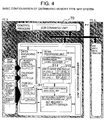
- an MRP arithmetic process 60 and a control process 70 are executed by the CPU 221 of the processor element PE0 of the distributed memory type parallel computer, as shown in Fig. 4.
- the functions of the data managing unit 20, the arithmetic-susceptible item managing unit 33, the part-based expansion arithmetic unit 34, the net required-quantity sending/receiving unit 25 and the message managing unit 36 of the MRP arithmetic apparatus 10 shown in Fig. 1 can be realized, while by executing the control process 70, the function of the operation command apparatus 12 can be realized.
- the other processor elements PE1 to PEn (202 to 20(n+1)) are each so arranged that the MRP arithmetic process is executed by the CPU.
- the control process 70 executed by the processor element PE0 is in charge of managing the states of the MRP arithmetic processes being processed by the processor elements PE0 to PEn and commanding start/end of the MRP arithmetics performed through the individual MRP arithmetic processes.
- the data managing module (see reference symbol 20 in Fig. 1) for the MRP arithmetic process carried out internally of each processor element is designed to control or manage inputting of data into the memory and outputting of data from the memory.
- This memory corresponds to the data holding module 21 shown in Fig. 1.
- Stored in this memory is an item cell 811 in which the parts-table data, the inventory/order balance data are listed on an item-by-item basis.
- the arithmetic-susceptible item managing unit (refer to reference numeral 33 in Fig. 1) which constitutes a part of the MRP arithmetic process 60 includes a job queue 314 for storing starting addresses of the item cells of the arithmetic-susceptible items on a low-level basis and a job counter 315 indicating the number of jobs placed in the low-level-based job queue. Additionally, a level counter 316 indicating the low level being processed is provided in the arithmetic-susceptible item managing unit.
- the net required-quantity sending/receiving unit (refer to reference symbol 35 in Fig. 1) included in the MRP arithmetic process 60 is provided with a number of net required quantity carriers 317 each constituted by a send buffer for sending the net required quantity of the parent-item to the MRP arithmetic processes of the other processor elements, respectively, wherein the aforementioned number corresponds to that of the MRP arithmetic processes in the other processor elements.
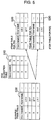
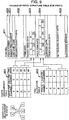
- items are first read out from the items table stored previously in the hard disk of the apparatus, whereon the items to be arithmetically processed by the individual processor elements are allocated to the latter, respectively, which is then followed by generation or creation of a table indicating the ID numbers of the processor elements to which the items are allocated with the item ID numbers being used as the keys.
- the table mentioned above will be referred to as the items allocation table.
- the table for each processor element can be generated or prepared by copying individual records of the items table to the table for the processor element PE by referencing the allocated PE number of the items contained in the records.
- the arithmetics concerning the items of the ID numbers 1 to 3 contained in the items table 500 is to be executed by the processor element PE0 which the arithmetics concerning the items of the ID numbers 2 and 3 are to be executed by the processor element PE1
- the information concerning the item ID numbers 1 and 3 is written in the items table 520 for the processor element PE0, while the information concerning the item ID numbers 2 and 4 are entered in the items table 530 for the processor element PE1.
- the parts arrangement table for the processor element PE1 is so prepared that not only the record indicating the parent-child relationship between the item A and the child-item(s) thereof but also the record indicating the parent-child relationship between the item A and the parent-item thereof is contained in the table.
- the given item A for example, is allocated to the processor element PE1 upon creation of the items allocation tables for the individual processor elements, respectively, not only the record concerning the item A but also the record(s) concerning the child-item(s) and the parent-item of the item A are contained in the items allocation table for the item A.
- the records number can be decreased when compared with the original table, whereby the table read processing to be executed by the MRP arithmetic process, i.e., by the MRP arithmetic apparatus, can be carried out at a high speed, to an advantage.
- the original table i.e., the items table itself may be distributively disposed, as it is, at the individual processor elements, respectively.
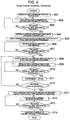
- FIG. 6 is a flow chart for illustrating processings executed through the control process.
- the control process 70 creates the MRP arithmetic process in each of the processor elements (step 601) and receives processor element ID numbers and the process ID numbers for the MRP arithmetic processes sent from the MRP arithmetic processes as generated (step 602). Subsequently, decision is made whether or not the information have been received from all the MRP arithmetic processes (step 603). If there exists the MRP arithmetic process from which the aforementioned information has not yet received, the step 602 is resumed.
- the control process 70 Upon reception of the processor element ID numbers and the process ID numbers from all the MRP arithmetic processes (i.e., when the step 602 results in affirmation (Yes)), the control process 70 creates or generates a list of the names or IDs of the processor elements in which the MRP arithmetic processes exists, respectively, and the ID numbers of the MRP arithmetic processes, whereon the list table is supplied to all the processor elements to be available for the MRP arithmetic processes thereof (step 604).
- the MRP arithmetic process in each of the processor elements generates a demanded quantity carrier and an item cell carrier on the basis of the distributed list table.
- the control process 70 issues a command to all the MRP arithmetic processes for reading in batch or en bloc the data of the parts table required for executing the MRP arithmetic (step 605) and waits for an end report indicating the completion of the en-bloc reading by the MRP arithmetic process (step 606).
- control process 70 Upon reception of the end report of the en-block reading from all the MRP arithmetic processes (i.e., when the step 607 results in affirmation (Yes)), the control process 70 commands the MRP arithmetic operation for all the MRP arithmetic processes (step 608) and then waits for level end reports from the MRP arithmetic processes (step 609).
- the level is then incremented, whereon the command for execution of the MRP arithmetic for the next level is issued to all the MRP arithmetic processes (step 611).
- control process 70 Upon reception of the en-bloc write operation end reports from all the MRP arithmetic processes (i.e., when the step 615 results in affirmation (Yes)), the control process 70 issues a command for ending the MRP arithmetic to all the MRP arithmetic processes (step 616), whereupon the processings to be performed by the control process 70 comes an end.
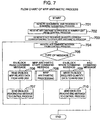
- FIG. 7 is a flow chart for illustrating processings performed by the MRP arithmetic process.
- the MRP arithmetic process After having been generated through the control process (see step 601 shown in Fig. 6), the MRP arithmetic process sends to the control process the ID number of the processor element at which the MRP arithmetic process is disposed (i.e., resident) as well as the process ID number of that MRP arithmetic process (step 701) and receives the MRP arithmetic process ID number list table from the control process (step 702).
- the MRP arithmetic process references the list table as received to thereby generate or create the demanded quantity carrier for sending the demanded quantity of the child-item(s) allocated to the other MRP arithmetic processes and the item cell carrier for migrating the load for every one of the other MRP arithmetic processes (step 703).
- the MRP arithmetic process assumes the state for awaiting reception of a job command message from the control process.
- the MRP arithmetic process decides the type of the job command message as received (step 705) to thereby execute one of four processings described below in accordance with the message received from the control process.
- the en-bloc read processing is executed in response to the en-bloc read command.
- data required for the MRP arithmetic such as the master production schedule or MPS concerning the items as allocated, the parts table and the like are read from the hard disk connected to the processor element, whereon these data are developed on the memory en bloc.
- the item cell is generated for each of the allocated items, and the data such as the parts table, inventory/order balance and the like concerning the items are stored in a predetermined data area so as to be contained in the item cell.
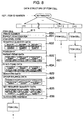
- Figure 8 is a diagram for illustrating a structure of the item cell.
- the item cell 811 is provided with data areas each for storing an item ID number 830, a parent-item counter 831, the low level codes 820, required quantity data 832, items data 821, inventory data 822, order balance data 823, net required quantity data 835 and a succeeding address 836 at which a succeeding item cell is stored.
- Each of the item cells is stored in a relevant table of Hash tables [0] to [n] obtained by performing the key translation with the Hash function well known in the art by using as the key the item ID number of the item stored in the relevant item cell.
- the items data 821 includes parent-item data 833 concerning the parent-items of the concerned item and child-item(s) data 834 concerning the child-item(s) of the concerned item.
- the parent-item data includes a set of data composed of the parent-item ID numbers, the ID numbers of the corresponding processor elements and the numbers of the parent items as required, while the child-item data includes the ID numbers of the child-items, corresponding processor element ID numbers and the numbers of the child-items as required.
- the MRP arithmetic process references a parts arrangement table 901 stored in the hard disk connected to the processor element to thereby read the record indicating the parent-child relationship between the item of concern and the child-item thereof, whereon the data concerning the child-item ID number and the number of the child-items are stored in the child-item data column, while the record indicating the parent-child relationship between the item of concern and the parent-item thereof are fetched to thereby store the data indicating the parent-items and the number thereof in the parent-item data column.
- the MRP arithmetic process references the item allocation table 902 stored in the hard disk connected to the processor element to thereby store the ID numbers of the processor elements allocated to the child-items and the parent-items thereof, i.e., the allocated PE numbers, in relevant columns, respectively.
- the ID number of the processor elements to which the parent-items are allocated and the numbers of the child-items need not be stored in the relevant columns of the item cell.
- the MRP arithmetic apparatus is so arranged as to initialize the level counter and the other various counters to "0" (zero). Subsequently, the MRP arithmetic apparatus fetches the MPS data indicating the production schedule at the article level while enters numerical values as required in the column for the required quantity data (see reference character 832). At that time point, the item address of the item for which the required quantity data has been entered is registered in the job queue of low level code (see reference numeral 315 shown in Fig. 4) incorporated in the part-based expansion arithmetic unit (see reference numeral 34 in Fig. 1 and Fig. 4), whereon the job counter (see reference numeral 314 in Fig. 4) indicating the number of items registered in the queue provided on a low-level basis is incremented.
- the MRP arithmetic process informs the control process of the end of the en-bloc reading operation (step 707), whereupon the step 704 is resumed for waiting the reception of the job command message.
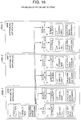
- FIG. 10 is a flow chart for illustrating the MRP arithmetic processing. In the following, this processing will be elucidated by reference to Figs. 8 and 10 together with Fig. 11 showing data structures of a job counter and a job queue, respectively.
- a job counter 314 is provided for each level for storing the number of the items susceptible to the arithmetic processing at a given level.
- the number of the items susceptible to the arithmetic operation at the level "0" (zero) is "55" in the case of the example illustrated in Fig. 11.
- the job queue 315 there are stored addresses of the item cells held in the data managing unit (see reference numeral 20 in Fig. 1 and Fig. 4). More specifically, the job queue 315 is implemented in a list table structure, as can be seen in Fig.
- a message send counter is initialized to "0" (zero) (step 1001). Subsequently, after referencing the job counter of the level indicated by the level counter (step 1002), it is checked what sort of message has been received (step 1003). This message is supplied from the other MRP arithmetic process, as will be described later on.
- step 1006 decision is made as to whether value of the job counter referenced in the step 1006 is "0" (zero) or not (step 1007).
- value of the job counter is "0" i.e., when decision in the step 1007 results in affirmation (Yes)
- destination MRP arithmetic process names are affixed to all the demanded quantity carrier except for the vacant demanded quantity carrier, to thereby generate the Carry_MSGs which are then sent to the other MRP arithmetic processes, whereon the value of the message send counter is incremented by a number of the carriers as sent (step 1008).
- the demanded quantity carriers as sent are initialized (step 1009). Incidentally, in the case where all the demanded quantity carriers are vacant or empty, no processings are executed at all in the steps 1008 and 1009.
- step 1010 decision is made as to whether the value of the message send counter is "0" (zero) or not (step 1010).
- the value of the message send counter is "0" i.e., when the step 1010 results in affirmation (Yes), the level end message is issued to the control process and the level counter is incremented (step 1011), whereupon the processing procedure comes to an end.
- the step 1010 results in negation (No)
- the step 1003 is resumed.
- step 1007 When it is decided in the step 1007 that the value of the job counter is not "0", i.e., when this step results in negation (No), the item cell address of the arithmetic-susceptible item is taken out from the job queue (step 1012), which is then followed by execution of the part-based expansion arithmetic processing (step 1013). Subsequently, the value of the job counter is decremented (step 1014), whereupon return is made to the step 1003.
- the part-based expansion arithmetic processing executed in the aforementioned step 1013 will be elucidated by reference to Fig. 12.
- the part-based expansion arithmetic processing can be realized by executing sequentially the total required quantity arithmetic, the net required quantity arithmetic, the lot arrangement and the lead time arithmetic (all in step 1201) and the required quantity expansion, as in the case of the conventional system.
- the part-based expansion processing according to the instant embodiment of the invention differs from the hitherto known part-based expansion processing in the respect that processings concerning child-items allocated to a plurality of processor elements are executed by these processor elements. More specifically, as illustrated in Fig. 12, child-items data 834 held in the item cell (see Fig.
- the allocated PE number for the child-item is same as the ID number of the processor element which is currently executing the processing (i.e., when step 1203 results in affirmation (Yes), the child-item-based expansion processing is executed on the basis of the item ID number 830 held in the item cell (i.e., the processor element's own item ID number), the child-item number contained in the child-item(s) data 834 and the net required quantity data 835 (step 1204).
- step 1205 a net required quantity carrier write processing is executed (step 1205).
- the pointer is set to the succeeding child-item.
- the succeeding child-item is set as the processing-destined object, whereupon return is made to the step 1202.
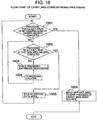
- Figure 13 is a flow chart for illustrating the child-item-based expansion processing.
- the processing can proceed with while receiving as input data the parent-item ID number, the child-item ID numbers and the net required quantity data of the parent-item.
- this child-item-based expansion processing is not only executed in response to the step 1204 shown in Fig. 12 but also may be executed in a processing step 1603 shown in Fig. 16, as described later on.
- the net required quantity data contained in the item cell shown in Fig. 8 is used, whereas in the second mentioned processing, the net required quantity data contained in the net required quantity carrier shown in Fig. 15 is employed.
- the MRP arithmetic process responds to the inputted child-item ID number to thereby find out the item cell of the relevant child-item (step 1301). Subsequently, the MRP arithmetic process makes reference to the number of the child-items for the parent-item in the parent-item data contained in the item cell as found out (step 1302).
- the pointer is set to the first lot contained in the net required quantity data (step 1303), whereon the delivery-appointed date and the required quantity of the child-items are arithmetically determined on the basis of the net required quantity data of the relevant lot and the number of the child-items (step 1304), whereon data acquired is stored as the required quantity data of the relevant item cell (step 1305).
- Parenthetically, with the lot of the net required quantity data it is contemplated to mean data of a set or combination of the outset date and the net required quantity.
- the delivery-appointed date and the required quantity may be arithmetically determined through the conventional procedure known heretofore.
- the parent-item counter (see reference numeral 831 in Fig. 8) contained in the item cell is incremented (step 1308).
- the address of the item cell is entered or registered in the job queue of the level code of the relevant item (see reference numeral 315 in Fig. 4 and Fig. 11) (step 1310), and the job counter of that level code (see reference numeral 314 in Fig. 4 and Fig. 11) is incremented (step 1311), whereupon the processing comes to an end.
- a net required quantity carrier write processing by reference to the flow chart shown in Fig. 14.
- the processing can proceed with by using as input data the parent-item ID number, the child-item ID numbers, the child-item allocated PE ID number and the net required quantity data of the parent-item(s).
- the net required quantity data of the item cell shown in Fig. 8 are made use of.
- the net required quantity sending/receiving module of the MRP arithmetic process (denoted by reference numeral 60 in Fig. 4) is provided with the net required quantity carrier 317 which serves as a sending buffer for sending the net required quantity of the parent-item to the MRP arithmetic process(es) of the other processor element(s).
- Figure 15 is a diagram showing a data structure of this net required quantity carrier. As can be seen in Fig.
- the net required quantity carrier 317 includes a column or row 1540 for storing a destination PE ID number, i.e., the ID number of the destination processor element, a column or row 1541 holding a destination process ID number, a parent-item data column or row 1543 containing the parent-item ID number, a child-item data column or row 1544 containing the child-item ID numbers and a column or row 1545 storing the net required quantity data.
- a destination PE ID number i.e., the ID number of the destination processor element
- a column or row 1541 holding a destination process ID number a parent-item data column or row 1543 containing the parent-item ID number
- a child-item data column or row 1544 containing the child-item ID numbers
- a column or row 1545 storing the net required quantity data.
- the MRP arithmetic process selects the net required quantity carrier 317 having a same destination PE ID number (see reference numeral 1540 in Fig. 15) as the allocated PE ID number for the child-item inputted (step 1401). Subsequently, decision is made as to whether or not the data area 1542 of the same parent-item ID number as the inputted parent-item ID number exists in the selected net required quantity carrier (step 1402). At this juncture, with the data area 1542, it is intended to mean a block of the carrier which contains the parent-item data, the child-item data and the net required quantity data. As shown in Fig. 15, the net required quantity carrier 317 has more than one data area 1542.
- a fresh data area 1542 is secured, whereon the parent-item ID number, the child-item ID number, and the net required quantity data as inputted are all written in that data area 1542 (step 1405).
- the net required quantity carrier is fully occupied and no fresh data area 1542 is available (i.e., when the step 1404 results in negation (No))
- the net required quantity carrier 317 mentioned above is sent to the MRP arithmetic process of the relevant processor element by way of the message managing unit 6 and at the same time, the message send counter is incremented (step 1406). After sending of the net required quantity carrier 317, it is initialized (step 1407). Thereafter, a fresh data area is secured for writing therein the parent-item ID number, the child-item number and the net required quantity data as inputted (step 1405).
- the data area 1542 of the net required quantity carriers 317 received from the MRP arithmetic processes of the other processor elements are sequentially selected one by one, while the child-item ID numbers stored in the child-items data columns or rows 1544 of the selected data area 1542 are sequentially selected one by one, whereon the child-items-based expansion processing is executed on the basis of the input data concerning the parent-item ID number contained in the data area 1542, the selected child-item ID number and the net required quantity data (steps 1601 to 1603).
- This child-items-based expansion processing is same as that described hereinbefore by reference to Fig. 12.
- step 1602 and step 1604 After completion of the child-items-based expansion processings for all the child-items affixed with the child-item ID numbers and contained in the child-items data column or row 1543 (see step 1602 and step 1604), similar processing is executed repetitively for the succeeding data area (refer to step 1601 and step 1605).
- the Arrived_MSG is sent to the MRP arithmetic process of the net required quantity carrier send source (step 1606), whereupon the processing procedure comes to an end.
- the required quantity data of the individual items resulting from the MRP arithmetic as developed on the memory are written in the hard disk en bloc (step 709).
- the MRP arithmetic process informs the control process of completion of the en-bloc write operation (step 710), and the MRP arithmetic process is set to the state waiting for reception of a further job command message.
- the child-item-based expansion modules implemented in the individual MRP arithmetic apparatuses 10, respectively, the child-item-based expansion as required is executed on the basis of the net required quantity data and the like.
- the load imposed on the MRP arithmetic apparatus designed to execute the processing concerning the parent-item(s) can be mitigated, while overhead involved in the data transfer can be reduced.
- the present invention is applied to the distributed memory type parallel computer.
- the invention is never restricted to the distributed memory type parallel computer.
- the present invention can find application not only to the shared memory type parallel computer but also the single-CPU computer.
- the term "means" used in the instant specification does not always mean physical means but encompasses the arrangements in which the functions of the individual means can be realized softwarewise. Besides, it is contemplated that realization of a function of a single means or element may be realized by two or more physical means or members within the purview of the present invention. Similarly, the function implemented by two or more means or members can be realized by a single means or member without departing from the scope of the invention.
- the part-based expansion arithmetics for individual items can be performed concurrently by a plurality of MRP arithmetic apparatuses, whereby load balance among the MRP arithmetic apparatuses can be improved. Besides, the amount of data transferred among the MRP arithmetic apparatuses can be reduced. Thus, the results of arithmetic determination equivalent to the conventional serial algorithm can be obtained within a shortened time period.
- the load occurring in execution of the arithmetic operations or calculations can be uniformized with overhead being suppressed to a possible minimum, whereby there can be provided the material/quantity requirements arithmetic determination system which can enjoy an enhanced processing speed.
Landscapes
- Engineering & Computer Science (AREA)
- General Engineering & Computer Science (AREA)
- Manufacturing & Machinery (AREA)
- Quality & Reliability (AREA)
- Physics & Mathematics (AREA)
- General Physics & Mathematics (AREA)
- Automation & Control Theory (AREA)
- Management, Administration, Business Operations System, And Electronic Commerce (AREA)
- General Factory Administration (AREA)
- Multi-Process Working Machines And Systems (AREA)
- Control By Computers (AREA)
Applications Claiming Priority (3)
| Application Number | Priority Date | Filing Date | Title |
|---|---|---|---|
| JP10574397A JPH10301604A (ja) | 1997-04-23 | 1997-04-23 | 資材所要量計算装置および資材所要量計算方法 |
| JP10574397 | 1997-04-23 | ||
| PCT/JP1998/001774 WO1998048331A1 (en) | 1997-04-23 | 1998-04-17 | Device and method for calculating required quantity of material |
Publications (3)
| Publication Number | Publication Date |
|---|---|
| EP0992868A2 true EP0992868A2 (de) | 2000-04-12 |
| EP0992868A4 EP0992868A4 (de) | 2001-11-14 |
| EP0992868B1 EP0992868B1 (de) | 2004-09-08 |
Family
ID=14415752
Family Applications (1)
| Application Number | Title | Priority Date | Filing Date |
|---|---|---|---|
| EP98914075A Expired - Lifetime EP0992868B1 (de) | 1997-04-23 | 1998-04-17 | Verfahren und vorrichtung zur berechnung einer erforderlichen werkstoffmenge |
Country Status (5)
| Country | Link |
|---|---|
| US (1) | US6535773B1 (de) |
| EP (1) | EP0992868B1 (de) |
| JP (1) | JPH10301604A (de) |
| DE (1) | DE69826126T2 (de) |
| WO (1) | WO1998048331A1 (de) |
Cited By (4)
| Publication number | Priority date | Publication date | Assignee | Title |
|---|---|---|---|---|
| EP1515252A1 (de) * | 2003-09-09 | 2005-03-16 | Sap Ag | Verfahren und Rechnersystem für die Verminderung der Ausführungszeit eines Rechnerprogramms zur Berechnung einer erforderlichen Werkstoffmenge |
| EP1319464A4 (de) * | 2000-09-12 | 2007-09-19 | Honda Motor Co Ltd | Montagevorrichtung für gestapelte ringe |
| EP1332832A4 (de) * | 2000-09-12 | 2007-09-19 | Honda Motor Co Ltd | Montagevorrichtung für gestapelten ring |
| USRE41476E1 (en) | 1998-08-21 | 2010-08-03 | Sap Aktiengesellschaft | Multi-tiered structure for storing and displaying product and process variants |
Families Citing this family (12)
| Publication number | Priority date | Publication date | Assignee | Title |
|---|---|---|---|---|
| JPH10105205A (ja) * | 1996-09-27 | 1998-04-24 | Hitachi Ltd | 資材所要量計算方法およびシステム |
| US20020143669A1 (en) * | 2001-01-22 | 2002-10-03 | Scheer Robert H. | Method for managing inventory within an integrated supply chain |
| US7117164B2 (en) * | 2001-01-26 | 2006-10-03 | I2 Technologies Us, Inc. | System and method of demand planning for intermediate and by-products |
| US7036123B2 (en) * | 2001-04-25 | 2006-04-25 | Sun Microsystems, Inc. | System using fair-share scheduling technique to schedule processes within each processor set based on the number of shares assigned to each process group |
| US7640180B1 (en) * | 2002-03-19 | 2009-12-29 | I2 Technologies Us, Inc. | Demand planning using exchange balances |
| US7529686B2 (en) * | 2002-10-16 | 2009-05-05 | International Business Machines Corporation | Supply planning system and method utilizing constrained and unconstrained explosion and implosion of flagged demand statements |
| JP2005135280A (ja) * | 2003-10-31 | 2005-05-26 | Fujitsu Ltd | 生産計画立案方法及び装置 |
| US20090307026A1 (en) * | 2008-06-10 | 2009-12-10 | International Business Machines Corporation | Priority-based system for netting available coverage |
| CN110458327B (zh) * | 2019-07-09 | 2023-04-18 | 浙江墨煌信息科技有限公司 | 应急物资调度方法及其系统 |
| CN111080148A (zh) * | 2019-12-20 | 2020-04-28 | Oppo(重庆)智能科技有限公司 | Erp系统的净值计算方法、装置、电子设备以及存储介质 |
| CN111768048A (zh) * | 2020-07-04 | 2020-10-13 | 浙江锐制软件技术有限公司 | 预测物料数量的精准计算方法及其系统 |
| JP7392070B1 (ja) * | 2022-09-26 | 2023-12-05 | 三菱電機Itソリューションズ株式会社 | 計画立案支援装置、計画立案支援方法、および計画立案支援プログラム |
Family Cites Families (13)
| Publication number | Priority date | Publication date | Assignee | Title |
|---|---|---|---|---|
| US4646238A (en) * | 1984-10-26 | 1987-02-24 | Analog Devices, Inc. | Material requirements planning system and procedures for use in process industries |
| AU4543993A (en) | 1992-07-01 | 1994-01-31 | Maspar Computer Corporation | Systems and methods for planning and simulation |
| JP2526399B2 (ja) * | 1993-08-03 | 1996-08-21 | 工業技術院長 | 並列計算機における負荷分散方法 |
| JP3230628B2 (ja) * | 1993-08-06 | 2001-11-19 | トヨタ自動車株式会社 | 発注量算出方法とそのための装置 |
| US5630070A (en) * | 1993-08-16 | 1997-05-13 | International Business Machines Corporation | Optimization of manufacturing resource planning |
| US5796614A (en) * | 1994-04-21 | 1998-08-18 | Nec Corporation | Level-by-level explosion method for material requirements planning |
| US5787000A (en) * | 1994-05-27 | 1998-07-28 | Lilly Software Associates, Inc. | Method and apparatus for scheduling work orders in a manufacturing process |
| US5764519A (en) * | 1995-03-08 | 1998-06-09 | Hitachi, Inc. | Method and device for computing material requirements |
| JP3408012B2 (ja) * | 1995-03-08 | 2003-05-19 | 株式会社日立製作所 | 資材所要量計算方法および装置 |
| JP3621467B2 (ja) * | 1995-05-26 | 2005-02-16 | 株式会社日立製作所 | 資材所要量計算の負荷分散方法及び装置 |
| WO1996029666A1 (en) * | 1995-03-17 | 1996-09-26 | Hitachi, Ltd. | Method and apparatus for parallel processing a calculation of a required amount of material |
| JP3610681B2 (ja) * | 1996-06-28 | 2005-01-19 | 株式会社日立製作所 | 生産計画方法及び生産計画システム |
| US5943484A (en) * | 1997-09-26 | 1999-08-24 | International Business Machines Corporation | Advanced material requirements planning in microelectronics manufacturing |
-
1997
- 1997-04-23 JP JP10574397A patent/JPH10301604A/ja active Pending
-
1998
- 1998-04-17 US US09/381,099 patent/US6535773B1/en not_active Expired - Fee Related
- 1998-04-17 DE DE69826126T patent/DE69826126T2/de not_active Expired - Fee Related
- 1998-04-17 EP EP98914075A patent/EP0992868B1/de not_active Expired - Lifetime
- 1998-04-17 WO PCT/JP1998/001774 patent/WO1998048331A1/ja not_active Ceased
Cited By (4)
| Publication number | Priority date | Publication date | Assignee | Title |
|---|---|---|---|---|
| USRE41476E1 (en) | 1998-08-21 | 2010-08-03 | Sap Aktiengesellschaft | Multi-tiered structure for storing and displaying product and process variants |
| EP1319464A4 (de) * | 2000-09-12 | 2007-09-19 | Honda Motor Co Ltd | Montagevorrichtung für gestapelte ringe |
| EP1332832A4 (de) * | 2000-09-12 | 2007-09-19 | Honda Motor Co Ltd | Montagevorrichtung für gestapelten ring |
| EP1515252A1 (de) * | 2003-09-09 | 2005-03-16 | Sap Ag | Verfahren und Rechnersystem für die Verminderung der Ausführungszeit eines Rechnerprogramms zur Berechnung einer erforderlichen Werkstoffmenge |
Also Published As
| Publication number | Publication date |
|---|---|
| JPH10301604A (ja) | 1998-11-13 |
| DE69826126D1 (de) | 2004-10-14 |
| EP0992868A4 (de) | 2001-11-14 |
| EP0992868B1 (de) | 2004-09-08 |
| US6535773B1 (en) | 2003-03-18 |
| DE69826126T2 (de) | 2005-01-20 |
| WO1998048331A1 (en) | 1998-10-29 |
Similar Documents
| Publication | Publication Date | Title |
|---|---|---|
| EP0992868B1 (de) | Verfahren und vorrichtung zur berechnung einer erforderlichen werkstoffmenge | |
| Yu et al. | Scheduling of unrelated parallel machines: an application to PWB manufacturing | |
| Leachman et al. | On capacity modeling for production planning with alternative machine types | |
| Van Laarhoven et al. | Production preparation and numerical control in PCB assembly | |
| Jawahar et al. | A genetic algorithm for scheduling flexible manufacturing systems | |
| Sawik | A scheduling algorithm for flexible flow lines with limited intermediate buffers | |
| JPH09153090A (ja) | 加工工程生産計画立案方法及び装置 | |
| JPH02297634A (ja) | 製造又は他のリソースを処理する装置及び方法 | |
| US11023281B2 (en) | Parallel processing apparatus to allocate job using execution scale, job management method to allocate job using execution scale, and recording medium recording job management program to allocate job using execution scale | |
| CN102456188A (zh) | 一种数据管理系统及其设计方法 | |
| Amoako-Gyampah et al. | A simulation study of FMS tool allocation procedures | |
| US6941183B1 (en) | Method and apparatus for selecting tools in manufacturing scheduling | |
| US20050250226A1 (en) | Method for generating work-in-process schedules | |
| Chincholkar et al. | Stochastic coloured Petri nets for modelling and evaluation, and heuristic rule base for scheduling of FMS | |
| Johnsson et al. | Observations on PCB assembly optimization | |
| De Souza et al. | A tool cluster based strategy for the management of cutting tools in flexible manufacturing systems | |
| Ammons et al. | Computer-aided process planning in printed circuit card assembly | |
| JP3727832B2 (ja) | 生産スケジュール作成装置及び生産スケジュール作成装置における生産スケジュール作成プログラムを記録した記録媒体 | |
| JPH10105205A (ja) | 資材所要量計算方法およびシステム | |
| Lee et al. | A framework for capacity planning and machine configuration in flexible assembly systems | |
| Montazeri et al. | A modular simulator for design, planning, and control of flexible manufacturing systems | |
| CN101794417A (zh) | 基于序号的工作流调度和业务流程建模方法 | |
| JP3610681B2 (ja) | 生産計画方法及び生産計画システム | |
| Halevi | The magic matrix as a smart scheduler | |
| JP4477649B2 (ja) | 資材所要量計算システム |
Legal Events
| Date | Code | Title | Description |
|---|---|---|---|
| PUAI | Public reference made under article 153(3) epc to a published international application that has entered the european phase |
Free format text: ORIGINAL CODE: 0009012 |
|
| 17P | Request for examination filed |
Effective date: 19991118 |
|
| AK | Designated contracting states |
Kind code of ref document: A2 Designated state(s): DE FR GB |
|
| A4 | Supplementary search report drawn up and despatched |
Effective date: 20010927 |
|
| AK | Designated contracting states |
Kind code of ref document: A4 Designated state(s): DE FR GB |
|
| RIC1 | Information provided on ipc code assigned before grant |
Free format text: 7G 06F 17/60 A |
|
| 17Q | First examination report despatched |
Effective date: 20020221 |
|
| GRAP | Despatch of communication of intention to grant a patent |
Free format text: ORIGINAL CODE: EPIDOSNIGR1 |
|
| RIN1 | Information on inventor provided before grant (corrected) |
Inventor name: YOKOYAMA, FUMIO,INFO. SYS. DIV. HITACHI, LTD Inventor name: YOSHIDA, SACHIKO,PROD. ENG. RES. LAB. Inventor name: TAKATA, MASAHITO,PROD. ENG. RES. LAB. Inventor name: SATO, MASAHIRO,PROD. ENG. RES. LAB. Inventor name: TSUKISHIMA, TAKAHIRO,PROD. ENG. RES. LAB |
|
| GRAS | Grant fee paid |
Free format text: ORIGINAL CODE: EPIDOSNIGR3 |
|
| GRAA | (expected) grant |
Free format text: ORIGINAL CODE: 0009210 |
|
| AK | Designated contracting states |
Kind code of ref document: B1 Designated state(s): DE FR GB |
|
| REG | Reference to a national code |
Ref country code: GB Ref legal event code: FG4D |
|
| REF | Corresponds to: |
Ref document number: 69826126 Country of ref document: DE Date of ref document: 20041014 Kind code of ref document: P |
|
| ET | Fr: translation filed | ||
| PLBE | No opposition filed within time limit |
Free format text: ORIGINAL CODE: 0009261 |
|
| STAA | Information on the status of an ep patent application or granted ep patent |
Free format text: STATUS: NO OPPOSITION FILED WITHIN TIME LIMIT |
|
| 26N | No opposition filed |
Effective date: 20050609 |
|
| PGFP | Annual fee paid to national office [announced via postgrant information from national office to epo] |
Ref country code: GB Payment date: 20080328 Year of fee payment: 11 |
|
| PGFP | Annual fee paid to national office [announced via postgrant information from national office to epo] |
Ref country code: DE Payment date: 20080606 Year of fee payment: 11 |
|
| PGFP | Annual fee paid to national office [announced via postgrant information from national office to epo] |
Ref country code: FR Payment date: 20080319 Year of fee payment: 11 |
|
| GBPC | Gb: european patent ceased through non-payment of renewal fee |
Effective date: 20090417 |
|
| REG | Reference to a national code |
Ref country code: FR Ref legal event code: ST Effective date: 20091231 |
|
| PG25 | Lapsed in a contracting state [announced via postgrant information from national office to epo] |
Ref country code: DE Free format text: LAPSE BECAUSE OF NON-PAYMENT OF DUE FEES Effective date: 20091103 |
|
| PG25 | Lapsed in a contracting state [announced via postgrant information from national office to epo] |
Ref country code: GB Free format text: LAPSE BECAUSE OF NON-PAYMENT OF DUE FEES Effective date: 20090417 Ref country code: FR Free format text: LAPSE BECAUSE OF NON-PAYMENT OF DUE FEES Effective date: 20091222 |