EP0998567B1 - Klonierte genome von infektiösen hepatitis c viren und deren verwendungen - Google Patents
Klonierte genome von infektiösen hepatitis c viren und deren verwendungen Download PDFInfo
- Publication number
- EP0998567B1 EP0998567B1 EP98935702A EP98935702A EP0998567B1 EP 0998567 B1 EP0998567 B1 EP 0998567B1 EP 98935702 A EP98935702 A EP 98935702A EP 98935702 A EP98935702 A EP 98935702A EP 0998567 B1 EP0998567 B1 EP 0998567B1
- Authority
- EP
- European Patent Office
- Prior art keywords
- nucleic acid
- virus
- hepatitis
- hcv
- infectious
- Prior art date
- Legal status (The legal status is an assumption and is not a legal conclusion. Google has not performed a legal analysis and makes no representation as to the accuracy of the status listed.)
- Expired - Lifetime
Links
- 241000711557 Hepacivirus Species 0.000 title abstract description 13
- 208000037319 Hepatitis infectious Diseases 0.000 title abstract description 4
- 208000005252 hepatitis A Diseases 0.000 title abstract description 4
- 150000007523 nucleic acids Chemical group 0.000 claims abstract description 98
- 239000003443 antiviral agent Substances 0.000 claims abstract description 15
- 241000711549 Hepacivirus C Species 0.000 claims description 157
- 208000015181 infectious disease Diseases 0.000 claims description 110
- 230000002458 infectious effect Effects 0.000 claims description 89
- 210000004027 cell Anatomy 0.000 claims description 59
- 238000000034 method Methods 0.000 claims description 46
- 239000002773 nucleotide Substances 0.000 claims description 46
- 125000003729 nucleotide group Chemical group 0.000 claims description 46
- 108020005345 3' Untranslated Regions Proteins 0.000 claims description 44
- 238000003757 reverse transcription PCR Methods 0.000 claims description 44
- 108091032973 (ribonucleotides)n+m Proteins 0.000 claims description 42
- 241000700605 Viruses Species 0.000 claims description 42
- 239000013598 vector Substances 0.000 claims description 37
- 108091028043 Nucleic acid sequence Proteins 0.000 claims description 36
- 239000000203 mixture Substances 0.000 claims description 32
- 125000003275 alpha amino acid group Chemical group 0.000 claims description 29
- 239000012634 fragment Substances 0.000 claims description 28
- 108020004707 nucleic acids Proteins 0.000 claims description 27
- 102000039446 nucleic acids Human genes 0.000 claims description 27
- 238000010367 cloning Methods 0.000 claims description 23
- 239000013612 plasmid Substances 0.000 claims description 20
- 238000001727 in vivo Methods 0.000 claims description 19
- 108020004414 DNA Proteins 0.000 claims description 18
- 238000000338 in vitro Methods 0.000 claims description 18
- 108090000623 proteins and genes Proteins 0.000 claims description 16
- 230000003612 virological effect Effects 0.000 claims description 16
- 230000029812 viral genome replication Effects 0.000 claims description 15
- 241001465754 Metazoa Species 0.000 claims description 13
- 238000004519 manufacturing process Methods 0.000 claims description 11
- 230000010076 replication Effects 0.000 claims description 11
- 238000002360 preparation method Methods 0.000 claims description 10
- 239000008194 pharmaceutical composition Substances 0.000 claims description 7
- 239000003085 diluting agent Substances 0.000 claims description 6
- 208000005176 Hepatitis C Diseases 0.000 claims description 5
- 230000000694 effects Effects 0.000 claims description 5
- 208000036142 Viral infection Diseases 0.000 claims description 4
- 210000004102 animal cell Anatomy 0.000 claims description 4
- 239000003550 marker Substances 0.000 claims description 4
- 230000009385 viral infection Effects 0.000 claims description 4
- 238000001262 western blot Methods 0.000 claims description 4
- 230000001580 bacterial effect Effects 0.000 claims description 3
- 208000010710 hepatitis C virus infection Diseases 0.000 claims description 3
- 210000005260 human cell Anatomy 0.000 claims description 3
- 238000011144 upstream manufacturing Methods 0.000 claims description 3
- 239000000546 pharmaceutical excipient Substances 0.000 claims description 2
- 238000010166 immunofluorescence Methods 0.000 claims 1
- 108090000765 processed proteins & peptides Proteins 0.000 abstract description 44
- 102000004196 processed proteins & peptides Human genes 0.000 abstract description 43
- 229920001184 polypeptide Polymers 0.000 abstract description 42
- 229960005486 vaccine Drugs 0.000 abstract description 25
- 238000011161 development Methods 0.000 abstract description 8
- 238000007423 screening assay Methods 0.000 abstract description 2
- 239000002299 complementary DNA Substances 0.000 description 55
- 108091035707 Consensus sequence Proteins 0.000 description 53
- 241000282577 Pan troglodytes Species 0.000 description 40
- 239000000047 product Substances 0.000 description 40
- 235000001014 amino acid Nutrition 0.000 description 37
- 108700026244 Open Reading Frames Proteins 0.000 description 32
- 150000001413 amino acids Chemical class 0.000 description 29
- 210000002966 serum Anatomy 0.000 description 22
- 238000001890 transfection Methods 0.000 description 21
- 238000012217 deletion Methods 0.000 description 20
- 230000037430 deletion Effects 0.000 description 20
- 241000282579 Pan Species 0.000 description 18
- 238000003556 assay Methods 0.000 description 18
- 230000035772 mutation Effects 0.000 description 17
- 241000894007 species Species 0.000 description 17
- 238000013518 transcription Methods 0.000 description 17
- 230000035897 transcription Effects 0.000 description 17
- 210000002381 plasma Anatomy 0.000 description 16
- 108020003589 5' Untranslated Regions Proteins 0.000 description 14
- 241000124008 Mammalia Species 0.000 description 13
- 210000004185 liver Anatomy 0.000 description 13
- 238000012163 sequencing technique Methods 0.000 description 13
- 238000006243 chemical reaction Methods 0.000 description 12
- 230000029087 digestion Effects 0.000 description 12
- 238000012300 Sequence Analysis Methods 0.000 description 11
- 238000003776 cleavage reaction Methods 0.000 description 11
- 238000010276 construction Methods 0.000 description 11
- 230000007017 scission Effects 0.000 description 11
- 239000000523 sample Substances 0.000 description 10
- 238000004458 analytical method Methods 0.000 description 9
- 238000001514 detection method Methods 0.000 description 9
- 230000001154 acute effect Effects 0.000 description 8
- 102000004190 Enzymes Human genes 0.000 description 7
- 108090000790 Enzymes Proteins 0.000 description 7
- 241000531123 GB virus C Species 0.000 description 7
- 241000282414 Homo sapiens Species 0.000 description 7
- 108091005804 Peptidases Proteins 0.000 description 7
- 230000000692 anti-sense effect Effects 0.000 description 7
- 238000013459 approach Methods 0.000 description 7
- 239000002131 composite material Substances 0.000 description 7
- 230000002163 immunogen Effects 0.000 description 7
- 238000002347 injection Methods 0.000 description 7
- 239000007924 injection Substances 0.000 description 7
- 238000007857 nested PCR Methods 0.000 description 7
- 239000011541 reaction mixture Substances 0.000 description 7
- 238000012360 testing method Methods 0.000 description 7
- 238000002560 therapeutic procedure Methods 0.000 description 7
- 108091093088 Amplicon Proteins 0.000 description 6
- HEDRZPFGACZZDS-UHFFFAOYSA-N Chloroform Chemical compound ClC(Cl)Cl HEDRZPFGACZZDS-UHFFFAOYSA-N 0.000 description 6
- 102100038132 Endogenous retrovirus group K member 6 Pro protein Human genes 0.000 description 6
- 241000282412 Homo Species 0.000 description 6
- 102100034349 Integrase Human genes 0.000 description 6
- 239000004365 Protease Substances 0.000 description 6
- 108091023045 Untranslated Region Proteins 0.000 description 6
- 230000018109 developmental process Effects 0.000 description 6
- 239000003814 drug Substances 0.000 description 6
- 208000006454 hepatitis Diseases 0.000 description 6
- 238000003780 insertion Methods 0.000 description 6
- 230000037431 insertion Effects 0.000 description 6
- 235000019419 proteases Nutrition 0.000 description 6
- 229940124597 therapeutic agent Drugs 0.000 description 6
- 238000011282 treatment Methods 0.000 description 6
- 108060003951 Immunoglobulin Proteins 0.000 description 5
- 108010076039 Polyproteins Proteins 0.000 description 5
- 230000003321 amplification Effects 0.000 description 5
- 239000000427 antigen Substances 0.000 description 5
- 108091007433 antigens Proteins 0.000 description 5
- 102000036639 antigens Human genes 0.000 description 5
- 230000008901 benefit Effects 0.000 description 5
- 239000003795 chemical substances by application Substances 0.000 description 5
- VHJLVAABSRFDPM-QWWZWVQMSA-N dithiothreitol Chemical compound SC[C@@H](O)[C@H](O)CS VHJLVAABSRFDPM-QWWZWVQMSA-N 0.000 description 5
- 239000013604 expression vector Substances 0.000 description 5
- 231100000283 hepatitis Toxicity 0.000 description 5
- 210000003494 hepatocyte Anatomy 0.000 description 5
- 102000018358 immunoglobulin Human genes 0.000 description 5
- 239000002054 inoculum Substances 0.000 description 5
- 239000000463 material Substances 0.000 description 5
- 238000003199 nucleic acid amplification method Methods 0.000 description 5
- 238000000746 purification Methods 0.000 description 5
- 230000004044 response Effects 0.000 description 5
- 230000003442 weekly effect Effects 0.000 description 5
- 101710144111 Non-structural protein 3 Proteins 0.000 description 4
- 101800001554 RNA-directed RNA polymerase Proteins 0.000 description 4
- 101710137500 T7 RNA polymerase Proteins 0.000 description 4
- 108020000999 Viral RNA Proteins 0.000 description 4
- 238000010171 animal model Methods 0.000 description 4
- 238000000137 annealing Methods 0.000 description 4
- 230000000840 anti-viral effect Effects 0.000 description 4
- 238000004113 cell culture Methods 0.000 description 4
- 238000004925 denaturation Methods 0.000 description 4
- 230000036425 denaturation Effects 0.000 description 4
- LOKCTEFSRHRXRJ-UHFFFAOYSA-I dipotassium trisodium dihydrogen phosphate hydrogen phosphate dichloride Chemical compound P(=O)(O)(O)[O-].[K+].P(=O)(O)([O-])[O-].[Na+].[Na+].[Cl-].[K+].[Cl-].[Na+] LOKCTEFSRHRXRJ-UHFFFAOYSA-I 0.000 description 4
- 239000002245 particle Substances 0.000 description 4
- 239000000137 peptide hydrolase inhibitor Substances 0.000 description 4
- 239000002953 phosphate buffered saline Substances 0.000 description 4
- 230000000069 prophylactic effect Effects 0.000 description 4
- 238000006467 substitution reaction Methods 0.000 description 4
- 230000001018 virulence Effects 0.000 description 4
- 102000014150 Interferons Human genes 0.000 description 3
- 108010050904 Interferons Proteins 0.000 description 3
- 241000209094 Oryza Species 0.000 description 3
- 235000007164 Oryza sativa Nutrition 0.000 description 3
- 238000012408 PCR amplification Methods 0.000 description 3
- ISWSIDIOOBJBQZ-UHFFFAOYSA-N Phenol Chemical compound OC1=CC=CC=C1 ISWSIDIOOBJBQZ-UHFFFAOYSA-N 0.000 description 3
- 108010092799 RNA-directed DNA polymerase Proteins 0.000 description 3
- FAPWRFPIFSIZLT-UHFFFAOYSA-M Sodium chloride Chemical compound [Na+].[Cl-] FAPWRFPIFSIZLT-UHFFFAOYSA-M 0.000 description 3
- AVKUERGKIZMTKX-NJBDSQKTSA-N ampicillin Chemical compound C1([C@@H](N)C(=O)N[C@H]2[C@H]3SC([C@@H](N3C2=O)C(O)=O)(C)C)=CC=CC=C1 AVKUERGKIZMTKX-NJBDSQKTSA-N 0.000 description 3
- 229960000723 ampicillin Drugs 0.000 description 3
- 239000012472 biological sample Substances 0.000 description 3
- 230000015572 biosynthetic process Effects 0.000 description 3
- 239000000872 buffer Substances 0.000 description 3
- 238000010804 cDNA synthesis Methods 0.000 description 3
- 230000008859 change Effects 0.000 description 3
- 230000002950 deficient Effects 0.000 description 3
- 238000002474 experimental method Methods 0.000 description 3
- 238000000605 extraction Methods 0.000 description 3
- ASKSDLRLUXEOOR-SUFRFZPQSA-N gbv-c Chemical compound C1=CC=C2C(C[C@@H](C(=O)N[C@@H](CCC(O)=O)C(=O)N[C@@H](CC=3C4=CC=CC=C4NC=3)C(=O)N[C@@H]([C@@H](C)CC)C(=O)N[C@@H](CCSC)C(=O)N[C@@H](CCCNC(N)=N)C(=O)N[C@@H](CCC(N)=O)C(=O)N[C@@H](C(C)C)C(=O)N[C@@H](CCCNC(N)=N)C(=O)N[C@@H](CCSC)C(=O)N[C@@H](C(C)C)C(=O)N[C@@H](CCSC)C(=O)N[C@@H](CO)C(=O)N[C@@H](CCCNC(N)=N)C(=O)N[C@@H](CC(C)C)C(=O)N[C@@H](CCCNC(N)=N)C(=O)N[C@@H](C)C(O)=O)NC(=O)[C@@H](N)CC(C)C)=CNC2=C1 ASKSDLRLUXEOOR-SUFRFZPQSA-N 0.000 description 3
- 238000001502 gel electrophoresis Methods 0.000 description 3
- 229940079322 interferon Drugs 0.000 description 3
- 238000002350 laparotomy Methods 0.000 description 3
- 239000007788 liquid Substances 0.000 description 3
- 235000009566 rice Nutrition 0.000 description 3
- 230000037432 silent mutation Effects 0.000 description 3
- 239000011780 sodium chloride Substances 0.000 description 3
- 239000000725 suspension Substances 0.000 description 3
- 238000003786 synthesis reaction Methods 0.000 description 3
- 230000001225 therapeutic effect Effects 0.000 description 3
- OYPRJOBELJOOCE-UHFFFAOYSA-N Calcium Chemical compound [Ca] OYPRJOBELJOOCE-UHFFFAOYSA-N 0.000 description 2
- CURLTUGMZLYLDI-UHFFFAOYSA-N Carbon dioxide Chemical compound O=C=O CURLTUGMZLYLDI-UHFFFAOYSA-N 0.000 description 2
- 108020004635 Complementary DNA Proteins 0.000 description 2
- 108010014303 DNA-directed DNA polymerase Proteins 0.000 description 2
- 102000016928 DNA-directed DNA polymerase Human genes 0.000 description 2
- 102000004163 DNA-directed RNA polymerases Human genes 0.000 description 2
- WSFSSNUMVMOOMR-UHFFFAOYSA-N Formaldehyde Chemical compound O=C WSFSSNUMVMOOMR-UHFFFAOYSA-N 0.000 description 2
- 101000666856 Homo sapiens Vasoactive intestinal polypeptide receptor 1 Proteins 0.000 description 2
- 101710203526 Integrase Proteins 0.000 description 2
- 102000012011 Isocitrate Dehydrogenase Human genes 0.000 description 2
- 108010075869 Isocitrate Dehydrogenase Proteins 0.000 description 2
- 239000006142 Luria-Bertani Agar Substances 0.000 description 2
- FYYHWMGAXLPEAU-UHFFFAOYSA-N Magnesium Chemical compound [Mg] FYYHWMGAXLPEAU-UHFFFAOYSA-N 0.000 description 2
- 230000004988 N-glycosylation Effects 0.000 description 2
- 101800001019 Non-structural protein 4B Proteins 0.000 description 2
- 238000010222 PCR analysis Methods 0.000 description 2
- 229940124158 Protease/peptidase inhibitor Drugs 0.000 description 2
- 108010046983 Ribonuclease T1 Proteins 0.000 description 2
- 108010006785 Taq Polymerase Proteins 0.000 description 2
- 108020005038 Terminator Codon Proteins 0.000 description 2
- 108091036066 Three prime untranslated region Proteins 0.000 description 2
- 102100038388 Vasoactive intestinal polypeptide receptor 1 Human genes 0.000 description 2
- 239000002671 adjuvant Substances 0.000 description 2
- 238000000246 agarose gel electrophoresis Methods 0.000 description 2
- 230000000890 antigenic effect Effects 0.000 description 2
- 230000002238 attenuated effect Effects 0.000 description 2
- 230000037396 body weight Effects 0.000 description 2
- 229910052791 calcium Inorganic materials 0.000 description 2
- 239000011575 calcium Substances 0.000 description 2
- 239000002775 capsule Substances 0.000 description 2
- 235000011089 carbon dioxide Nutrition 0.000 description 2
- 239000006143 cell culture medium Substances 0.000 description 2
- 239000013592 cell lysate Substances 0.000 description 2
- 239000003153 chemical reaction reagent Substances 0.000 description 2
- 230000001684 chronic effect Effects 0.000 description 2
- 238000005520 cutting process Methods 0.000 description 2
- 125000000151 cysteine group Chemical group N[C@@H](CS)C(=O)* 0.000 description 2
- 229940042399 direct acting antivirals protease inhibitors Drugs 0.000 description 2
- 201000010099 disease Diseases 0.000 description 2
- 208000037265 diseases, disorders, signs and symptoms Diseases 0.000 description 2
- 241001493065 dsRNA viruses Species 0.000 description 2
- ZMMJGEGLRURXTF-UHFFFAOYSA-N ethidium bromide Chemical compound [Br-].C12=CC(N)=CC=C2C2=CC=C(N)C=C2[N+](CC)=C1C1=CC=CC=C1 ZMMJGEGLRURXTF-UHFFFAOYSA-N 0.000 description 2
- 229960005542 ethidium bromide Drugs 0.000 description 2
- 230000002068 genetic effect Effects 0.000 description 2
- PCHJSUWPFVWCPO-UHFFFAOYSA-N gold Chemical compound [Au] PCHJSUWPFVWCPO-UHFFFAOYSA-N 0.000 description 2
- 239000010931 gold Substances 0.000 description 2
- 229910052737 gold Inorganic materials 0.000 description 2
- 206010073071 hepatocellular carcinoma Diseases 0.000 description 2
- 238000007918 intramuscular administration Methods 0.000 description 2
- 239000006193 liquid solution Substances 0.000 description 2
- 239000006194 liquid suspension Substances 0.000 description 2
- 208000019423 liver disease Diseases 0.000 description 2
- 229910052749 magnesium Inorganic materials 0.000 description 2
- 239000011777 magnesium Substances 0.000 description 2
- 239000002609 medium Substances 0.000 description 2
- 230000008520 organization Effects 0.000 description 2
- 239000008188 pellet Substances 0.000 description 2
- 238000012545 processing Methods 0.000 description 2
- 235000018102 proteins Nutrition 0.000 description 2
- 102000004169 proteins and genes Human genes 0.000 description 2
- 238000003259 recombinant expression Methods 0.000 description 2
- 238000013207 serial dilution Methods 0.000 description 2
- 239000000243 solution Substances 0.000 description 2
- 238000010186 staining Methods 0.000 description 2
- 238000010561 standard procedure Methods 0.000 description 2
- 239000000758 substrate Substances 0.000 description 2
- 208000024891 symptom Diseases 0.000 description 2
- 238000012546 transfer Methods 0.000 description 2
- 238000002604 ultrasonography Methods 0.000 description 2
- 238000002255 vaccination Methods 0.000 description 2
- 230000035899 viability Effects 0.000 description 2
- 102000040650 (ribonucleotides)n+m Human genes 0.000 description 1
- BFSVOASYOCHEOV-UHFFFAOYSA-N 2-diethylaminoethanol Chemical compound CCN(CC)CCO BFSVOASYOCHEOV-UHFFFAOYSA-N 0.000 description 1
- NKDFYOWSKOHCCO-YPVLXUMRSA-N 20-hydroxyecdysone Chemical compound C1[C@@H](O)[C@@H](O)C[C@]2(C)[C@@H](CC[C@@]3([C@@H]([C@@](C)(O)[C@H](O)CCC(C)(O)C)CC[C@]33O)C)C3=CC(=O)[C@@H]21 NKDFYOWSKOHCCO-YPVLXUMRSA-N 0.000 description 1
- 102100036475 Alanine aminotransferase 1 Human genes 0.000 description 1
- 108010082126 Alanine transaminase Proteins 0.000 description 1
- 108020004513 Bacterial RNA Proteins 0.000 description 1
- 101000583086 Bunodosoma granuliferum Delta-actitoxin-Bgr2b Proteins 0.000 description 1
- 206010008909 Chronic Hepatitis Diseases 0.000 description 1
- 208000006154 Chronic hepatitis C Diseases 0.000 description 1
- 108020004705 Codon Proteins 0.000 description 1
- 102000012410 DNA Ligases Human genes 0.000 description 1
- 108010061982 DNA Ligases Proteins 0.000 description 1
- 241000702421 Dependoparvovirus Species 0.000 description 1
- 229920002307 Dextran Polymers 0.000 description 1
- 238000002965 ELISA Methods 0.000 description 1
- 101710091045 Envelope protein Proteins 0.000 description 1
- 241000710781 Flaviviridae Species 0.000 description 1
- 206010018852 Haematoma Diseases 0.000 description 1
- 206010019663 Hepatic failure Diseases 0.000 description 1
- 101710125507 Integrase/recombinase Proteins 0.000 description 1
- 108091026898 Leader sequence (mRNA) Proteins 0.000 description 1
- 108060004795 Methyltransferase Proteins 0.000 description 1
- 101710159910 Movement protein Proteins 0.000 description 1
- 101710144117 Non-structural protein 4 Proteins 0.000 description 1
- 101800001020 Non-structural protein 4A Proteins 0.000 description 1
- 101800001014 Non-structural protein 5A Proteins 0.000 description 1
- 101150038760 Ns3 gene Proteins 0.000 description 1
- 108091034117 Oligonucleotide Proteins 0.000 description 1
- 102000035195 Peptidases Human genes 0.000 description 1
- 235000014676 Phragmites communis Nutrition 0.000 description 1
- 241000288906 Primates Species 0.000 description 1
- 101710188315 Protein X Proteins 0.000 description 1
- 108090000944 RNA Helicases Proteins 0.000 description 1
- 102000004409 RNA Helicases Human genes 0.000 description 1
- 229920005654 Sephadex Polymers 0.000 description 1
- 239000012507 Sephadex™ Substances 0.000 description 1
- 102000012479 Serine Proteases Human genes 0.000 description 1
- 108010022999 Serine Proteases Proteins 0.000 description 1
- 101800001838 Serine protease/helicase NS3 Proteins 0.000 description 1
- 241000700618 Vaccinia virus Species 0.000 description 1
- 108700005077 Viral Genes Proteins 0.000 description 1
- 108010067390 Viral Proteins Proteins 0.000 description 1
- JLCPHMBAVCMARE-UHFFFAOYSA-N [3-[[3-[[3-[[3-[[3-[[3-[[3-[[3-[[3-[[3-[[3-[[5-(2-amino-6-oxo-1H-purin-9-yl)-3-[[3-[[3-[[3-[[3-[[3-[[5-(2-amino-6-oxo-1H-purin-9-yl)-3-[[5-(2-amino-6-oxo-1H-purin-9-yl)-3-hydroxyoxolan-2-yl]methoxy-hydroxyphosphoryl]oxyoxolan-2-yl]methoxy-hydroxyphosphoryl]oxy-5-(5-methyl-2,4-dioxopyrimidin-1-yl)oxolan-2-yl]methoxy-hydroxyphosphoryl]oxy-5-(6-aminopurin-9-yl)oxolan-2-yl]methoxy-hydroxyphosphoryl]oxy-5-(6-aminopurin-9-yl)oxolan-2-yl]methoxy-hydroxyphosphoryl]oxy-5-(6-aminopurin-9-yl)oxolan-2-yl]methoxy-hydroxyphosphoryl]oxy-5-(6-aminopurin-9-yl)oxolan-2-yl]methoxy-hydroxyphosphoryl]oxyoxolan-2-yl]methoxy-hydroxyphosphoryl]oxy-5-(5-methyl-2,4-dioxopyrimidin-1-yl)oxolan-2-yl]methoxy-hydroxyphosphoryl]oxy-5-(4-amino-2-oxopyrimidin-1-yl)oxolan-2-yl]methoxy-hydroxyphosphoryl]oxy-5-(5-methyl-2,4-dioxopyrimidin-1-yl)oxolan-2-yl]methoxy-hydroxyphosphoryl]oxy-5-(5-methyl-2,4-dioxopyrimidin-1-yl)oxolan-2-yl]methoxy-hydroxyphosphoryl]oxy-5-(6-aminopurin-9-yl)oxolan-2-yl]methoxy-hydroxyphosphoryl]oxy-5-(6-aminopurin-9-yl)oxolan-2-yl]methoxy-hydroxyphosphoryl]oxy-5-(4-amino-2-oxopyrimidin-1-yl)oxolan-2-yl]methoxy-hydroxyphosphoryl]oxy-5-(4-amino-2-oxopyrimidin-1-yl)oxolan-2-yl]methoxy-hydroxyphosphoryl]oxy-5-(4-amino-2-oxopyrimidin-1-yl)oxolan-2-yl]methoxy-hydroxyphosphoryl]oxy-5-(6-aminopurin-9-yl)oxolan-2-yl]methoxy-hydroxyphosphoryl]oxy-5-(4-amino-2-oxopyrimidin-1-yl)oxolan-2-yl]methyl [5-(6-aminopurin-9-yl)-2-(hydroxymethyl)oxolan-3-yl] hydrogen phosphate Polymers Cc1cn(C2CC(OP(O)(=O)OCC3OC(CC3OP(O)(=O)OCC3OC(CC3O)n3cnc4c3nc(N)[nH]c4=O)n3cnc4c3nc(N)[nH]c4=O)C(COP(O)(=O)OC3CC(OC3COP(O)(=O)OC3CC(OC3COP(O)(=O)OC3CC(OC3COP(O)(=O)OC3CC(OC3COP(O)(=O)OC3CC(OC3COP(O)(=O)OC3CC(OC3COP(O)(=O)OC3CC(OC3COP(O)(=O)OC3CC(OC3COP(O)(=O)OC3CC(OC3COP(O)(=O)OC3CC(OC3COP(O)(=O)OC3CC(OC3COP(O)(=O)OC3CC(OC3COP(O)(=O)OC3CC(OC3COP(O)(=O)OC3CC(OC3COP(O)(=O)OC3CC(OC3COP(O)(=O)OC3CC(OC3COP(O)(=O)OC3CC(OC3CO)n3cnc4c(N)ncnc34)n3ccc(N)nc3=O)n3cnc4c(N)ncnc34)n3ccc(N)nc3=O)n3ccc(N)nc3=O)n3ccc(N)nc3=O)n3cnc4c(N)ncnc34)n3cnc4c(N)ncnc34)n3cc(C)c(=O)[nH]c3=O)n3cc(C)c(=O)[nH]c3=O)n3ccc(N)nc3=O)n3cc(C)c(=O)[nH]c3=O)n3cnc4c3nc(N)[nH]c4=O)n3cnc4c(N)ncnc34)n3cnc4c(N)ncnc34)n3cnc4c(N)ncnc34)n3cnc4c(N)ncnc34)O2)c(=O)[nH]c1=O JLCPHMBAVCMARE-UHFFFAOYSA-N 0.000 description 1
- 239000011149 active material Substances 0.000 description 1
- 230000006978 adaptation Effects 0.000 description 1
- 239000011543 agarose gel Substances 0.000 description 1
- 229940037003 alum Drugs 0.000 description 1
- WNROFYMDJYEPJX-UHFFFAOYSA-K aluminium hydroxide Chemical compound [OH-].[OH-].[OH-].[Al+3] WNROFYMDJYEPJX-UHFFFAOYSA-K 0.000 description 1
- 230000027455 binding Effects 0.000 description 1
- 230000005540 biological transmission Effects 0.000 description 1
- 210000004369 blood Anatomy 0.000 description 1
- 239000008280 blood Substances 0.000 description 1
- -1 but not limited to Substances 0.000 description 1
- 239000001506 calcium phosphate Substances 0.000 description 1
- 229910000389 calcium phosphate Inorganic materials 0.000 description 1
- 235000011010 calcium phosphates Nutrition 0.000 description 1
- 210000000234 capsid Anatomy 0.000 description 1
- 108091092328 cellular RNA Proteins 0.000 description 1
- 208000019425 cirrhosis of liver Diseases 0.000 description 1
- 239000012568 clinical material Substances 0.000 description 1
- 238000004737 colorimetric analysis Methods 0.000 description 1
- 230000002860 competitive effect Effects 0.000 description 1
- 150000001875 compounds Chemical class 0.000 description 1
- 238000012258 culturing Methods 0.000 description 1
- 230000001351 cycling effect Effects 0.000 description 1
- 230000002939 deleterious effect Effects 0.000 description 1
- 230000001419 dependent effect Effects 0.000 description 1
- 238000009795 derivation Methods 0.000 description 1
- 239000000032 diagnostic agent Substances 0.000 description 1
- 229940039227 diagnostic agent Drugs 0.000 description 1
- 238000002405 diagnostic procedure Methods 0.000 description 1
- 238000010586 diagram Methods 0.000 description 1
- 238000010790 dilution Methods 0.000 description 1
- 239000012895 dilution Substances 0.000 description 1
- 230000000531 effect on virus Effects 0.000 description 1
- 238000004520 electroporation Methods 0.000 description 1
- 239000000839 emulsion Substances 0.000 description 1
- 238000001976 enzyme digestion Methods 0.000 description 1
- 238000012869 ethanol precipitation Methods 0.000 description 1
- 210000003527 eukaryotic cell Anatomy 0.000 description 1
- 230000008014 freezing Effects 0.000 description 1
- 238000007710 freezing Methods 0.000 description 1
- 230000004927 fusion Effects 0.000 description 1
- 230000012010 growth Effects 0.000 description 1
- 231100000844 hepatocellular carcinoma Toxicity 0.000 description 1
- 210000004408 hybridoma Anatomy 0.000 description 1
- 210000002865 immune cell Anatomy 0.000 description 1
- 230000003053 immunization Effects 0.000 description 1
- 238000003018 immunoassay Methods 0.000 description 1
- 239000003112 inhibitor Substances 0.000 description 1
- 230000005764 inhibitory process Effects 0.000 description 1
- 238000011081 inoculation Methods 0.000 description 1
- 238000001990 intravenous administration Methods 0.000 description 1
- 239000002502 liposome Substances 0.000 description 1
- 238000009630 liquid culture Methods 0.000 description 1
- 238000012317 liver biopsy Methods 0.000 description 1
- 231100000835 liver failure Toxicity 0.000 description 1
- 208000007903 liver failure Diseases 0.000 description 1
- 210000005228 liver tissue Anatomy 0.000 description 1
- 210000004698 lymphocyte Anatomy 0.000 description 1
- 238000012768 mass vaccination Methods 0.000 description 1
- 238000005259 measurement Methods 0.000 description 1
- 108020004999 messenger RNA Proteins 0.000 description 1
- 230000003278 mimic effect Effects 0.000 description 1
- 238000007479 molecular analysis Methods 0.000 description 1
- 238000002887 multiple sequence alignment Methods 0.000 description 1
- 238000002703 mutagenesis Methods 0.000 description 1
- 231100000350 mutagenesis Toxicity 0.000 description 1
- 239000006225 natural substrate Substances 0.000 description 1
- 239000013642 negative control Substances 0.000 description 1
- 108091027963 non-coding RNA Proteins 0.000 description 1
- 102000042567 non-coding RNA Human genes 0.000 description 1
- 230000008506 pathogenesis Effects 0.000 description 1
- 238000002616 plasmapheresis Methods 0.000 description 1
- 239000013641 positive control Substances 0.000 description 1
- 238000012809 post-inoculation Methods 0.000 description 1
- 238000001556 precipitation Methods 0.000 description 1
- 239000002243 precursor Substances 0.000 description 1
- 230000002265 prevention Effects 0.000 description 1
- 230000008569 process Effects 0.000 description 1
- 235000019833 protease Nutrition 0.000 description 1
- 230000002797 proteolythic effect Effects 0.000 description 1
- 230000005180 public health Effects 0.000 description 1
- 239000013014 purified material Substances 0.000 description 1
- 238000003127 radioimmunoassay Methods 0.000 description 1
- 230000006798 recombination Effects 0.000 description 1
- 238000005215 recombination Methods 0.000 description 1
- 230000022532 regulation of transcription, DNA-dependent Effects 0.000 description 1
- 230000003252 repetitive effect Effects 0.000 description 1
- 108091008146 restriction endonucleases Proteins 0.000 description 1
- 210000003705 ribosome Anatomy 0.000 description 1
- 238000012216 screening Methods 0.000 description 1
- 230000000405 serological effect Effects 0.000 description 1
- 108091069025 single-strand RNA Proteins 0.000 description 1
- 238000002741 site-directed mutagenesis Methods 0.000 description 1
- 230000009870 specific binding Effects 0.000 description 1
- 238000007920 subcutaneous administration Methods 0.000 description 1
- 239000000126 substance Substances 0.000 description 1
- 239000006228 supernatant Substances 0.000 description 1
- 230000002459 sustained effect Effects 0.000 description 1
- 210000001519 tissue Anatomy 0.000 description 1
- 231100000419 toxicity Toxicity 0.000 description 1
- 230000001988 toxicity Effects 0.000 description 1
- QORWJWZARLRLPR-UHFFFAOYSA-H tricalcium bis(phosphate) Chemical compound [Ca+2].[Ca+2].[Ca+2].[O-]P([O-])([O-])=O.[O-]P([O-])([O-])=O QORWJWZARLRLPR-UHFFFAOYSA-H 0.000 description 1
- 239000001226 triphosphate Substances 0.000 description 1
- 235000011178 triphosphate Nutrition 0.000 description 1
- UNXRWKVEANCORM-UHFFFAOYSA-N triphosphoric acid Chemical compound OP(O)(=O)OP(O)(=O)OP(O)(O)=O UNXRWKVEANCORM-UHFFFAOYSA-N 0.000 description 1
- 241000701161 unidentified adenovirus Species 0.000 description 1
- 241001430294 unidentified retrovirus Species 0.000 description 1
- 230000009447 viral pathogenesis Effects 0.000 description 1
- 230000007919 viral pathogenicity Effects 0.000 description 1
- 230000008957 viral persistence Effects 0.000 description 1
- 210000002845 virion Anatomy 0.000 description 1
- XLYOFNOQVPJJNP-UHFFFAOYSA-N water Substances O XLYOFNOQVPJJNP-UHFFFAOYSA-N 0.000 description 1
Images


















Classifications
-
- C—CHEMISTRY; METALLURGY
- C07—ORGANIC CHEMISTRY
- C07K—PEPTIDES
- C07K14/00—Peptides having more than 20 amino acids; Gastrins; Somatostatins; Melanotropins; Derivatives thereof
- C07K14/005—Peptides having more than 20 amino acids; Gastrins; Somatostatins; Melanotropins; Derivatives thereof from viruses
-
- C—CHEMISTRY; METALLURGY
- C12—BIOCHEMISTRY; BEER; SPIRITS; WINE; VINEGAR; MICROBIOLOGY; ENZYMOLOGY; MUTATION OR GENETIC ENGINEERING
- C12N—MICROORGANISMS OR ENZYMES; COMPOSITIONS THEREOF; PROPAGATING, PRESERVING, OR MAINTAINING MICROORGANISMS; MUTATION OR GENETIC ENGINEERING; CULTURE MEDIA
- C12N7/00—Viruses; Bacteriophages; Compositions thereof; Preparation or purification thereof
-
- A—HUMAN NECESSITIES
- A61—MEDICAL OR VETERINARY SCIENCE; HYGIENE
- A61K—PREPARATIONS FOR MEDICAL, DENTAL OR TOILETRY PURPOSES
- A61K39/00—Medicinal preparations containing antigens or antibodies
- A61K2039/51—Medicinal preparations containing antigens or antibodies comprising whole cells, viruses or DNA/RNA
- A61K2039/525—Virus
-
- A—HUMAN NECESSITIES
- A61—MEDICAL OR VETERINARY SCIENCE; HYGIENE
- A61K—PREPARATIONS FOR MEDICAL, DENTAL OR TOILETRY PURPOSES
- A61K39/00—Medicinal preparations containing antigens or antibodies
-
- C—CHEMISTRY; METALLURGY
- C07—ORGANIC CHEMISTRY
- C07K—PEPTIDES
- C07K2319/00—Fusion polypeptide
-
- C—CHEMISTRY; METALLURGY
- C12—BIOCHEMISTRY; BEER; SPIRITS; WINE; VINEGAR; MICROBIOLOGY; ENZYMOLOGY; MUTATION OR GENETIC ENGINEERING
- C12N—MICROORGANISMS OR ENZYMES; COMPOSITIONS THEREOF; PROPAGATING, PRESERVING, OR MAINTAINING MICROORGANISMS; MUTATION OR GENETIC ENGINEERING; CULTURE MEDIA
- C12N2770/00—MICROORGANISMS OR ENZYMES; COMPOSITIONS THEREOF; PROPAGATING, PRESERVING, OR MAINTAINING MICROORGANISMS; MUTATION OR GENETIC ENGINEERING; CULTURE MEDIA ssRNA viruses positive-sense
- C12N2770/00011—Details
- C12N2770/24011—Flaviviridae
- C12N2770/24211—Hepacivirus, e.g. hepatitis C virus, hepatitis G virus
- C12N2770/24221—Viruses as such, e.g. new isolates, mutants or their genomic sequences
-
- C—CHEMISTRY; METALLURGY
- C12—BIOCHEMISTRY; BEER; SPIRITS; WINE; VINEGAR; MICROBIOLOGY; ENZYMOLOGY; MUTATION OR GENETIC ENGINEERING
- C12N—MICROORGANISMS OR ENZYMES; COMPOSITIONS THEREOF; PROPAGATING, PRESERVING, OR MAINTAINING MICROORGANISMS; MUTATION OR GENETIC ENGINEERING; CULTURE MEDIA
- C12N2770/00—MICROORGANISMS OR ENZYMES; COMPOSITIONS THEREOF; PROPAGATING, PRESERVING, OR MAINTAINING MICROORGANISMS; MUTATION OR GENETIC ENGINEERING; CULTURE MEDIA ssRNA viruses positive-sense
- C12N2770/00011—Details
- C12N2770/24011—Flaviviridae
- C12N2770/24211—Hepacivirus, e.g. hepatitis C virus, hepatitis G virus
- C12N2770/24222—New viral proteins or individual genes, new structural or functional aspects of known viral proteins or genes
Definitions
- the present invention relates to molecular approaches to the production of nucleic acid sequences which comprise the genome of infectious hepatitis C viruses.
- the invention provides nucleic acid sequences which comprise the genomes of infectious hepatitis C viruses of genotype 1a and 1b strains.
- the invention therefore relates to the use of these sequences in the production of a hepatitis C virus, in the development of vaccines and diagnostic assays for HCV and in the development of screening assays for the identification of antiviral agents for HCV.
- Hepatitis C virus has a positive-sense single-strand RNA genome and is a member of the virus family Flaviviridae (Choo et al., 1991; Rice, 1996).
- the genome of HCV functions as mRNA from which all viral proteins necessary for propagation are translated.
- the viral genome of HCV is approximately 9600 nucleotides (nts) and consists of a highly conserved 5' untranslated region (UTR), a single long open reading frame (ORF) of approximately 9,000 nts and a complex 3' UTR.
- the 5' UTR contains an internal ribosomal entry site (Tsukiyama-Kohara et al., 1992; Honda et al., 1996).
- the 3' UTR consists of a short variable region, a polypyrimidine tract of variable length and, at the 3' end, a highly conserved region of approximately 100 nts (Kolykhalov et al., 1996; Tanaka et al., 1995; Tanaka et al., 1996; Yamada et al., 1996).
- the last 46 nucleotides of this conserved region were predicted to form a stable stem-loop structure thought to be critical for viral replication (Blight and Rice, 1997; Ito and Lai, 1997; Tsuchihara et al., 1997).
- the ORF encodes a large polypeptide precursor that is cleaved into at least 10 proteins by host and viral proteinases (Rice, 1996).
- the predicted envelope proteins contain several conserved N-linked glycosylation sites and cysteine residues (Okamoto et al., 1992a).
- the NS3 gene encodes a serine protease and an RNA helicase and the NS5B gene encodes an RNA-dependent RNA polymerase.
- HCV genotypes genes 1-6
- subtypes a, b, c, etc.
- HCV isolates differ from each other by more than 30% over the entire genome (Okamoto et al., 1992a) and HCV circulates in an infected individual as a quasispecies of closely related genomes (Bukh et al., 1995; Farci et al., 1997).
- HCV genotypes 1a and 1b constitute the majority of infections while in many other areas, especially in Europe and Japan, genotype 1b predominates.
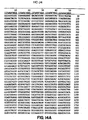
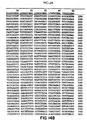
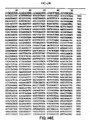
- the present invention relates to a purified and isolated nucleic acid molecule which encodes an infectious human hepatitis C virus having a complete 3' UTR defined by a variable region (SEQ ID NO:51), a poly U-UC stretch (SEQ ID NO:57) and a conserved region (SEQ ID NO:58) and which is capable of producing infectious virus when transfected into cells in vivo , wherein said molecule encodes the amino acid sequence shown in Figures 14G-14H (SEQ ID NO:3).
- the invention relates to a purified and isolated nucleic acid molecule which encodes an infectious human hepatitis C virus having a complete 3' UTR defined by a variable region (SEQ ID NO:56), a poly U-UC stretch (SEQ ID NO:57) and a conserved region (SEQ ID NO:58) and which is capable of producing infectious virus when transfected into cells in vivo, wherein said molecule encodes the amino acid sequence shown in Figures 4G-4H (SEQ ID NO:1).
- Such nucleic acid sequences are referred to throughout the application as "infectious nucleic acid sequences”.
- nucleic acid sequence refers to RNA, DNA, cDNA or any variant thereof capable of directing host organism synthesis of a hepatitis C virus polypeptide. It is understood that nucleic acid sequence encompasses nucleic acid sequences, which due to degeneracy, encode the same polypeptide sequence as the nucleic acid sequences described herein.
- the invention also relates to a purified and isolated nucleic acid molecule which encodes an infectious human hepatitis C virus having a complete 3' UTR defined by a variable region (SEQ ID NO:56), a poly U-UC stretch (SEQ ID NO:57) and a conserved region (SEQ ID NO:58), and which is capable of producing infectious virus when transfected into cells in vivo , wherein a fragment of said molecule which encodes the structural region of hepatitis C virus has been replaced by the structural region from the genome of another hepatitis C virus strain, and wherein said molecule encodes the amino acid sequence shown in Figures 16G-16H (SEQ ID NO:5).
- Nucleic acid sequences which comprise sequence from the open-reading frames of 2 or more HCV genotypes or subtypes are designated "chimeric nucleic acid sequences”.
- the invention further relates to a DNA construct comprising an nucleic acid molecule of the present invention, an RNA transcript of said DNA construct, and cells transfected with said DNA construct or RNA transcript.
- the invention also relates to a cassette vector for cloning viral genomes comprising, inserted therein, the nucleic acid sequence of the present invention, said vector reading in the correct phase for the expression of said inserted sequence and having an active promoter sequence upstream thereof.
- the invention further relates to a method for producing a hepatitis C viruse comprising transfecting a host cell with the RNA transcript of the invention.
- the invention also relates to hepatitis C viruses produced by cells transfected with the DNA construct or DNA transcript of the present invention, and hepatitis C viruses whose genome comprise a nucleic acid molecule of the present invention.
- compositions comprising the nucleic acid molecule of the invention suspended in a suitable amount of a pharmaceutically acceptable diluent or excipient.
- a clinically effective amount of the compositions of the invention may be used for the preparation of a pharmaceutical composition for treating hepatitis C viral infection.
- the invention also relates to a method for determining the susceptibility of cells in vitro to support hepatitis C virus infection, comprising the steps of (a) growing animal cell in vitro ; (b) transfecting into said cells the nucleic acid of the invention, and (c) determining if said cells show indicia of replication of HCV.
- the invention further relates to a method for assaying candidate antiviral agents for activity against HCV, comprising (a) exposing a cell containing the hepatitis C virus whose genome comprises a nucleic acid molecule of the present invention to the candidate antiviral agent; and measuring the presence or absence of HCV replication in the cell of step (a).
- Figure 1 shows a strategy for constructing full-length cDNA clones of HCV strain H77.
- the long PCR products amplified with H1 and H9417R primers were cloned directly into pGEM-9zf(-) after digestion with Not I and Xba I (pH21 I and pH50 I ).
- the 3' UTR was cloned into both pH21 I and pH50 I after digestion with Afl II and Xba I (pH21 and pH50). pH21 was tested for infectivity in a chimpanzee.
- To improve the efficiency of cloning we constructed a cassette vector with consensus 5' and 3' termini of H77.
- This cassette vector (pCV) was obtained by cutting out the BamHI fragment (nts 1358- 7530 of the H77 genome) from pH50, followed by religation. Finally, the long PCR products of H77 amplified with primers H1 and H9417R (H product) or primers A1 and H9417R (A product) were cloned into pCV after digestion with Age I and Afl II or with Pin AI and Bfr I. The latter procedure yielded multiple complete cDNA clones of strain H77 of HCV.
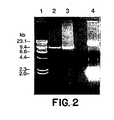
- Figure 2 shows the results of gel electrophoresis of long RT-PCR amplicons of the entire ORF of H77 and the transcription mixture of the infectious clone of H77.
- the complete ORF was amplified by long RT-PCR with the primers H1 or A1 and H9417R from 10 5 GE of H77.
- a total of 10 ⁇ g of the consensus chimeric clone (pCV-H77C) linearized with Xba I was transcribed in a 100 ⁇ l reaction with T7 RNA polymerase.
- Five ⁇ l of the transcription mixture was analyzed by gel electrophoresis and the remainder of the mixture was injected into a chimpanzee.
- Lane 1 molecular weight marker : lane 2, products amplified with primers H1 and H9417R; lane 3, products amplified with primers A1 and H9417R; lane 4, transcription mixture containing the RNA transcripts and linearized clone pCV-H77C (12.5 kb).
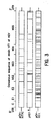
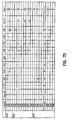
- Figure 3 is a diagram of the genome organization of HCV strain H77 and the genetic heterogeneity of individual full-length clones compared with the consensus sequence of H77. Solid lines represent aa changes. Dashed lines represent silent mutations. A * in pH21 represents a point mutation at nt 58 in the 5' UTR.
- the consensus chimeric clone pCV-H77C had 11 nt differences [at positions 1625 (C ⁇ T), 2709 (T ⁇ C), 3380 (A ⁇ G), 3710 (C ⁇ T), 3914 (G ⁇ A), 4463 (T ⁇ C), 5058 (C ⁇ T), 5834 (C ⁇ T), 6734 (T ⁇ C), 7154 (C ⁇ T), and 7202 (T ⁇ C)] and one aa change (F ⁇ L at aa 790) compared with the consensus sequence of H77.
- This clone was infectious.
- Clone pH21 and pCV-H11 had 19 nts (7 aa) and 64 nts (21 aa) differences respectively, compared with the consensus sequence of H77. These two clones were not infectious. A single point mutation in the 3' UTR at nucleotide 9406 (G ⁇ A) introduced to create an Afl II cleavage site is not shown.
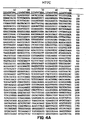
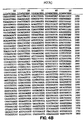
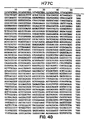
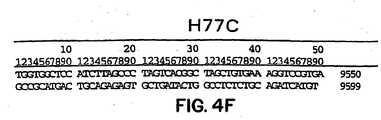
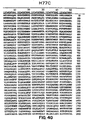
- Figures 4A-4F show the complete nucleotide sequence of a H77C clone produced according to the present invention and Figures 4G-4H show the amino acid sequence encoded by the H77C clone.
- Figure 5 shows an agarose gel of long RT-PCR amplicons and transcription mixtures.
- Lanes 1 and 4 molecular weight marker (Lambda/ Hind III digest).
- Lanes 2 and 3 RT-PCR amplicons of the entire ORF of HC-J4.
- Lane 5 pCV-H77C transcription control (Yanagi et al., 1997).
- Lanes 6, 7, and 8 1/40 of each transcription mixture of pCV-J4L2S, pCV-J4L4S and pCV-J4L6S, respectively, which was injected into the chimpanzee.
- Figure 6 shows the strategy utilized for the construction of full-length cDNA clones of HCV strain HC-J4.
- the long PCR products were cloned as two separate fragments (L and S) into a cassette vector (pCV) with fixed 5' and 3' termini of HCV (Yanagi et al., 1997).
- Full-length cDNA clones of HC-J4 were obtained by inserting the L fragment from three pCV-J4L clones into three identical pCV-J4S9 clones after digestion with PinAI (isoschizomer of Age I) and Bfr I (isoschizomer of Afl II).
- Figure 7 shows amino acid positions with a quasispecies of HC-J4 in the acute phase plasma pool obtained from an experimentally infected chimpanzee.
- Cons-p9 consensus amino acid sequence deduced from analysis of nine L fragments and nine S fragments (see Fig. 6 ).
- Cons-D consensus sequence derived from direct sequencing of the PCR product.
- A, B, C groups of similar viral species. Dot: amino acid identical to that in Cons-p9.
- Capital letter amino acid different from that in Cons-p9.
- Cons-F composite consensus amino acid sequence combining Cons-p9 and Cons-D. Boxed amino acid: different from that in Cons-F. Shaded amino acid: different from that in all species A sequences.
- An * defective ORF due to a nucleotide deletion (clone L1, aa 1097) or insertion (clone L7, aa 2770).
- Diagonal lines fragments used to construct the infectious clone.
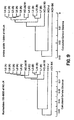
- Figure 8 shows comparisons (percent difference) of nucleotide (nts. 156 - 8935) and predicted amino acid sequences (aa 1 - 2864) of L clones (species A, B, and C, this study), HC-J4/91 (Okamoto et al., 1992b) and HC-J4/83 (Okamoto et al., 1992b). Differences among species A sequences and among species B sequences are shaded.
- Figure 9 shows UPGMA ("unweighted pair group method with arithmetic mean") trees of HC-J4/91 (Okamoto et al., 1992b), HC-J4/83 (Okamoto et al., 1992b), two prototype strains of genotype 1b (HCV-J, Kato et al., 1990; HCV-BK, Takamizawa et al., 1991), and L clones (this study).
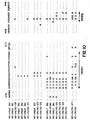
- Figure 10 shows the alignment of the HVR1 and HVR2 amino acid sequences of the E2 sequences of nine L clones of HC-J4 (species A, B, and C) obtained from an early acute phase plasma pool of an experimentally infected chimpanzee compared with the sequences of eight clones (HC-J4/91-20 through HC-J4/91-27, Okamoto et al., 1992b) derived from the inoculum.
- Dot an amino acid identical to that in the top line.
- Capital letters amino acid different from that in the top line.
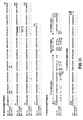
- Figure 11 shows the alignment of the 5' UTR and the 3' UTR sequences of infectious clones of genotype 1a (pCV-H77C) and 1b (pCV-J4L6S).
- Top line consensus sequence of the indicated strain. Dot: identity with consensus sequence. Capital letter: different from the consensus sequence. Dash: deletion. Underlined: PinAI and Bfr I cleavage site. Numbering corresponds to the HCV sequence of pCV-J4L6S.
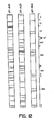
- Figure 12 shows a comparison of individual full-length cDNA clones of the ORF of HCV strain HC-J4 with the consensus sequence (see Fig. 7 ) - Solid lines: amino acid changes. Dashed lines: silent mutations. Clone pCV-J4L6S was infectious in vivo whereas clones pCV-J4L2S and pCV-J4L4S were not.
- Figure 13 shows biochemical (ALT levels) and PCR analyses of a chimpanzee following percutaneous intrahepatic transfection with RNA transcripts of the infectious clone of pCV-J4L2S, pCV-J4L4S and pCV-J4L6S.
- the ALT serum enzyme levels were measured in units per liter (u/1).
- HCV RNA represented by an open rectangle indicates a serum sample that was negative for HCV after nested PCR
- HCV RNA represented by a closed rectangle indicates that the serum sample was positive for HCV and HCV GE titer on the right-hand y-axis represents genome equivalents.
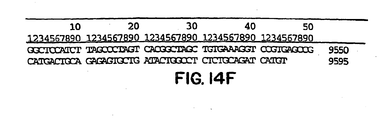
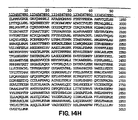
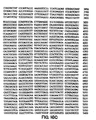
- Figures 14A-14F show the nucleotide sequence of the infectious clone of genotype 1b strain HC-J4 and Figures 14G-14H show the amino acid sequence encoded by the HC-J4 clone.
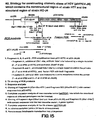
- Figure 15 shows the strategy for constructing a chimeric HCV clone designated pH77CV-J4 which contains the nonstructural region of the infectious clone of genotype 1a strain H77 and the structural region of the infectious clone of genotype 1b strain HC-J4.
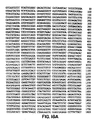
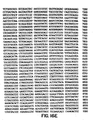
- Figures 16A-16F show the nucleotide sequence of the chimeric 1a/1b clone pH77CV-J4 of Figure 15 and Figures 16G-16H show the amino acid sequence encoded by the chimeric 1a/1b clone.
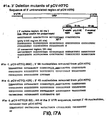
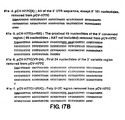
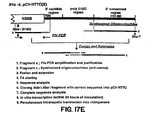
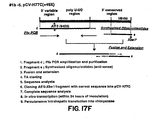
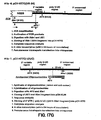
- Figures 17A and 17B show the sequence of the 3' untranslated region remaining in various 3' deletion mutants of the 1a infectious clone pCV-H77C and the strategy utilized in constructing each 3' deletion mutant ( Figures 17C-17G ).
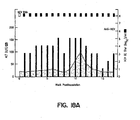
- Figures 18A and 18B show biochemical (ALT levels), PCR (HCV RNA and HCV GE titer), serological (anti-HCV) and histopathological ( Fig. 18B only) analyses of chimpanzees 1494 ( Fig. 18A ) and 1530 ( Fig. 18B ) following transfection with the infectious cDNA clone pCV-H77C.
- ALT serum enzyme levels were measured in units per ml (u/l).
- HCV RNA represented by an open rectangle indicates a serum sample that was negative for HCV after nested PCR
- HCV RNA represented by a closed rectangle indicates that the serum sample was positive for HCV
- HCV GE titer on the right-hand y-axis represents genome equivalents.
- anti-HCV indicates samples that were positive for anti-HCV antibodies as determined by commercial assays.
- the histopathology scores in Figure 18B correspond to no histopathology (O), mild hepatitis and moderate to severe hepatitis ( ⁇ ).
- the present invention relates to nucleic acid sequences which encodes an infectious human hepatitis C virus having a complete 3' UTR defined by a variable region, a poly U-UC stretch and a conserved region and which is capable of producing infectious virus when transfected into cells in vivo, wherein said nucleic acid sequence encodes the amino acid sequence of SEQ ID NO: 1 or 3.
- the infectious nucleic acid sequence of the invention has the sequence shown in Figures 4A-4F of this application.
- the infectious nucleic acid sequence has the sequence shown in Figures 14A-14F and is contained in a plasmid construct deposited with the American Type Culture Collection (ATCC) on January 26, 1998 and having ATCC accession number 209596.
- the invention also relates to a "chimeric nucleic acid sequence" which encodes an infectious human hepatitis C virus having a complete 3' UTR defined by a variable region, a poly U-UC stretch and a conserved region and which is capable of producing infectious virus when transfected into cells in vivo, wherein said nucleic acid sequence encodes the amino acid sequence of SEQ ID NO: 5.
- This chimeric nucleic acid sequence consists of sequence from the genome of an HCV strain belonging to one genotype or subtype which encodes structural polypeptides and sequence of an HCV strain belonging to another genotype strain or subtype which encodes nonstructural polypeptides.
- Such chimeras can be produced by standard techniques of restriction digestion, PCR amplification and subcloning known to those of ordinary skill in the art.
- the sequence encoding nonstructural polypeptides is from an infectious nucleic acid sequence encoding a genotype la strain where the construction of a chimeric 1a/1b nucleic acid sequence is described in Example 9 and the chimeric 1a/1b nucleic acid sequence is shown in Figures 16A-16F . It is believed that the construction of such chimeric nucleic acid sequences will be of importance in studying the growth and virulence properties of hepatitis C virus and in the production of hepatitis C viruses suitable to confer protection against multiple genotypes of HCV. For example, one might produce a "multivalent" vaccine by putting epitopes from several genotypes or subtypes into one clone.
- genes which could be replaced or which could be made chimeric include; but are not limited to, the E1, E2 and NS4 genes.
- Mutations of the infectious nucleic acid sequences may be made where "mutations" includes, but is not limited to, point mutations, deletions and insertions.
- mutations includes, but is not limited to, point mutations, deletions and insertions.
- the size of the insertions would be limited by the ability of the resultant nucleic acid sequence to be properly packaged within the virion.
- Such mutation could be produced by techniques known to those of skill in the art such as site-directed mutagenesis, fusion PCR, and restriction digestion followed by religation.
- mutagenesis might be undertaken to determine sequences that are important for viral properties such as replication or virulence. For example, one may introduce a mutation into the infectious nucleic acid sequence which eliminates the cleavage site between the NS4A and NS4B polypeptides to examine the effects on viral replication and processing of the polypeptide. Alternatively, one or more of the 3 amino acids encoded by the infectious 1b nucleic acid sequence shown in Figures 14A-14F which differ from the HC-J4 consensus sequence may be back mutated to the corresponding amino acid in the HC-J4 consensus sequence to determine the importance of these three amino acid changes to infectivity or virulence.
- one or more of the amino acids from the noninfectious 1b clones pCV-J4L2S and pCV-J4L4S which differ from the consensus sequence may be introduced into the infectious 1b sequence shown in Figures 14A-14F .
- Preferred genes include, but are not limited to, the P7, NS4B and NS5A genes.
- deletion of part of a gene preferably the central portion of the gene, may be preferable to deletion of the entire gene in order to conserve the cleavage site boundaries which exist between proteins in the HCV polyprotein and which are necessary for proper processing of the polyprotein.
- the transfection is into a host animal such as a chimpanzee
- a host animal such as a chimpanzee
- ALT alanine aminotransferase
- ICD isocitrate dehydrogenase
- infectious nucleic acid sequences of the present invention may also be used to produce attenuated viral strains via passage in vitro or in vivo of the virus produced by transfection with the infectious nucleic acid sequences.
- nucleic acid sequences of the invention may be used to identify cell lines capable of supporting the replication of HCV.
- the mutations of the infectious nucleic acid sequences of the invention and the production of chimeric sequences as discussed above may be useful in identifying sequences critical for cell culture adaptation of HCV and hence, may be useful in identifying cell lines capable of supporting HCV replication.
- Transfection of tissue culture cells with the nucleic acid sequences of the invention may be done by methods of transfection known in the art such as electroporation, precipitation with DEAE-Dextran or calcium phosphate or liposomes.
- the method comprises the growing of animal cells, especially human cells, in vitro and transfecting the cells with the nucleic acid of the invention, then determining if the cells show indicia of HCV infection.
- indicia include the detection of viral antigens in the cell, for example, by immunofluorescent procedures well known in the art; the detection of viral polypeptides by Western blotting using antibodies specific therefor; and the detection of newly transcribed viral RNA within the cells via methods such as RT-PCR.
- the presence of live, infectious virus particles following such tests may also be shown by injection of cell culture medium or cell lysates into healthy, susceptible animals, with subsequent exhibition of the symptoms of HCV infection.
- Suitable cells or cell lines for culturing HCV include, but are not limited to, lymphocyte and hepatocyte cell lines known in the art.
- primary hepatocytes can be cultured, and then infected with HCV; or, the hepatocyte cultures could be derived from the livers of infected chimpanzees.
- various immortalization methods known to those of ordinary skill in the art can be used to obtain cell-lines derived from hepatocyte cultures.
- primary hepatocyte cultures may be fused to a variety of cells to maintain stability.
- the present invention further relates to the in vitro and in vivo production of hepatitis C viruses from the nucleic acid sequences of the invention.
- the sequences of the invention can be inserted into an expression vector that functions in eukaryotic cells.
- Eukaryotic expression vectors suitable for producing high efficiency gene transfer in vivo are well known to those of ordinary skill in the art and include, but are not limited to, plasmids, vaccinia viruses, retroviruses, adenoviruses and adeno-associated viruses.
- sequences contained in the recombinant expression vector can be transcribed in vitro by methods known to those of ordinary skill in the art in order to produce RNA transcripts which encode the hepatitis C viruses of the invention.
- the hepatitis C viruses of the invention may then be produced by transfecting cells by methods known to those of ordinary skill in the art with either the in vitro transcription mixture containing the RNA transcripts (see Example 4) or with the recombinant expression vectors containing the nucleic acid sequences described herein.
- the present invention also relates to the construction of cassette vectors useful in the cloning of viral genomes wherein said vectors comprise, inserted therein, the nucleic acid sequence of the invention, and said vector reading in the correct phase for the expression of the inserted nucleic acid sequence.
- cassette vector will, of course, also possess a promoter sequence, advantageously placed upstream of the sequence to be expressed.
- Cassette vectors according to the present invention are constructed according to the procedure described in Figure 1 , for example, starting with plasmid pCV.
- the cassette vectors of the present invention may also contain, optionally, one or more expressible marker genes for expression as an indication of successful transfection and expression of the nucleic acid sequences of the vector.
- the cassette vectors of the present invention will contain a promoter sequence for binding of the appropriate cellular RNA polymerase, which will depend on the cell into which the vector has been introduced. For example, if the host cell is a bacterial cell, then said promoter will be a bacterial promoter sequence to which the bacterial RNA polymerases will bind.
- the hepatitis C viruses produced from the sequences of the invention may be purified or partially purified from the transfected cells by methods known to those of ordinary skill in the art.
- the viruses are partially purified prior to their use as immunogens in the pharmaceutical compositions and vaccines described herein.
- the hepatitis C viruses produced from the nucleic acid sequences of the invention may be used as immunogens in live or killed (e.g., formalin inactivated) vaccines to prevent hepatitis C in a mammal.
- the immunogen described herein may be an infectious nucleic acid sequence, a chimeric nucleic acid sequence, or a mutated infectious nucleic acid sequence which encodes a hepatitis C virus.
- the sequence is a cDNA sequence
- the cDNAs and their RNA transcripts may be used to transfect a mammal by direct injection into the liver tissue of the mammal as described in the Examples.
- direct gene transfer may be accomplished via administration of a eukaryotic expression vector containing a nucleic acid sequence of the invention.
- the immunogen may be a polypeptide encoded by the nucleic acid sequences of the invention. Therefore, also polypeptides can be produced from the nucleic acid sequences of the invention or fragments thereof. In one embodiment, such polypeptides can be recombinantly produced by synthesis from the nucleic acid sequences of the invention or isolated fragments thereof, and purified, or partially purified, from transfected cells using methods already known in the art. In an alternative embodiment, the polypeptides may be purified or partially purified from viral particles produced via transfection of a host cell with the nucleic acid sequences of the invention. Such polypeptides might, for example, include either capsid or envelope polypeptides prepared from the sequences of the present invention.
- the nucleic acid sequences of the invention, or the polypeptides or viruses produced therefrom are preferably partially purified prior to use as immunogens in pharmaceutical compositions and vaccines described herein.
- the sequences and the polypeptide and virus products thereof can be administered alone or in a suitable diluent, including, but not limited to, water, saline, or some type of buffered medium.
- the vaccine described herein may be administered to an animal, especially a mammal, and most especially a human, by a variety of routes, including, but not limited to, intradermally, intramuscularly, subcutaneously, or in any combination thereof.
- Suitable amounts of material to administer for prophylactic and therapeutic purposes will vary depending on the route selected and the immunogen (nucleic acid, virus, polypeptide) administered.
- the vaccines described herein may be administered once or periodically until a suitable titer of anti-HCV antibodies appear in the blood.
- a suitable amount of nucleic acid sequence to be used for prophylactic purposes might be expected to fall in the range of from about 100 ⁇ g to about 5 mg and most preferably in the range of from about 500 ⁇ g to about 2mg.
- a suitable amount to use for prophylactic purposes is preferably 100 ng to 100 ⁇ g and for a virus 10 2 to 10 6 infectious doses. Such administration will, of course, occur prior to any sign of HCV infection.
- a vaccine described herein may be employed in such forms as capsules, liquid solutions, suspensions or elixirs for oral administration, or sterile liquid forms such as solutions or suspensions.
- Any inert carrier is preferably used, such as saline or phosphate-buffered saline, or any such carrier in which the HCV of the present invention can be suitably suspended.
- the vaccines may be in the form of single dose preparations or in multi-dose flasks which can be utilized for mass-vaccination programs of both animals and humans.
- the polypeptides described herein when used as vaccines, can include, as part of the composition or emulsion, a suitable adjuvant, such as alum (or aluminum hydroxide) when humans are to be vaccinated, to further stimulate production of antibodies by immune cells.
- a suitable adjuvant such as alum (or aluminum hydroxide) when humans are to be vaccinated, to further stimulate production of antibodies by immune cells.
- other specific adjuvants such as CpG motifs (Krieg, A.K. et al.(1995) and (1996)), may prove useful.
- nucleic acids, viruses and polypeptides described herein When used as vaccines or inocula, they will normally exist as physically discrete units suitable as a unitary dosage for animals, especially mammals, and most especially humans, wherein each unit will contain a predetermined quantity of active material calculated to produce the desired immunogenic effect in association with the required diluent.
- the dose of said vaccine or inoculum described herein is administered at least once.
- a second or booster dose may be administered at some time after the initial dose.
- the need for, and timing of, such booster dose will, of course, be determined within the sound judgment of the administrator of such vaccine or inoculum and according to sound principles well known in the art. For example, such booster dose could reasonably be expected to be advantageous at some time between about 2 weeks to about 6 months following the initial vaccination. Subsequent doses may be administered as indicated.
- nucleic acid sequences, viruses and polypeptides described herein can also be administered for purposes of therapy, where a mammal, especially a primate, and most especially a human, is already infected, as shown by well known diagnostic measures.
- a mammal especially a primate, and most especially a human
- diagnostic measures such as well known diagnostic measures.
- nucleic acid sequences, viruses or polypeptides described herein are used for such therapeutic purposes, much of the same criteria will apply as when it is used as a vaccine, except that inoculation will occur post-infection.
- the therapeutic agent comprises a pharmaceutical composition containing a sufficient amount of said nucleic acid sequences, viruses or polypeptides so as to elicit a therapeutically effective response in the organism to be treated.
- the amount of pharmaceutical composition to be administered will, as for vaccines, vary depending on the immunogen contained therein (nucleic acid, polypeptide, virus) and on the route of administration.
- the therapeutic agent described herein can thus be administered by, subcutaneous, intramuscular or intradermal routes.
- amounts to be administered for any particular treatment protocol can be readily determined without undue experimentation.
- the actual amounts will vary depending on the route of administration as well as the sex, age, and clinical status of the subject which, in the case of human patients, is to be determined with the sound judgment of the clinician.
- the therapeutic agent described herein can be employed in such forms as capsules, liquid solutions, suspensions or elixirs, or sterile liquid forms such as solutions or suspensions.
- Any inert carrier is preferably used, such as saline, phosphate-buffered saline, or any such carrier in which the HCV of the present invention can be suitably suspended.
- the therapeutic agents may be in the form of single dose preparations or in the multi-dose flasks which can be utilized for mass-treatment programs of both animals and humans.
- the nucleic acid sequences, viruses or polypeptides described herein are used as therapeutic agents they may be administered as a single dose or as a series of doses, depending on the situation as determined by the person conducting the treatment.
- antibody is herein used to refer to immunoglobulin molecules and immunologically active portions of immunoglobulin molecules.
- antibody molecules are intact immunoglobulin molecules, substantially intact immunoglobulin molecules and portions of an immunoglobulin molecule, including those portions known in the art as Fab, F(ab') 2 and F(v) as well as chimeric antibody molecules.
- polypeptides, viruses and nucleic acid sequences described herein can be used in the generation of antibodies that immunoreact (i.e., specific binding between an antigenic determinant-containing molecule and a molecule containing an antibody combining site such as a whole antibody molecule or an active portion thereof) with antigenic determinants on the surface of hepatitis C virus particles.
- antibodies are typically produced by immunizing a mammal with an immunogen or vaccine to induce antibody molecules having immunospecificity for polypeptides or viruses produced in response to infection with the nucleic acid sequences of the present invention.
- the nucleic acid sequences, viruses, or polypeptides described herein may be linked to some type of carrier molecule.
- the resulting antibody molecules are then collected from said mammal.
- Antibodies produced as described herein have the unique advantage of being generated in response to authentic, functional polypeptides produced according to the actual cloned HCV genome.
- the antibody molecules described herein may be polyclonal or monoclonal. Monoclonal antibodies are readily produced by methods well known in the art. Portions of immunoglobin molecules, such as Fabs, as well as chimeric antibodies, may also be produced by methods well known to those of ordinary skill in the art of generating such antibodies.
- the antibodies described herein may also be contained in blood plasma, serum, hybridoma supernatants, and the like. Alternatively, the antibody described herein is isolated to the extent desired by well known techniques such as, for example, using DEAE Sephadex. The antibodies so produced may be further purified so as to obtain specific classes or subclasses of antibody such as IgM, IgG, IgA, and the like. Antibodies of the IgG class are preferred for purposes of passive protection.
- the antibodies described herein are useful in the prevention and treatment of diseases caused by hepatitis C virus in animals, especially mammals, and most especially humans.
- the dosage of administered antibodies will vary depending on such factors as the mammal's age, weight, height, sex, general medical condition, previous medical history, and the like.
- antibodies in the range of from about 1 mg/kg body weight to about 10 mg/kg body weight of the mammal, although a lower or higher dose may be administered if found desirable.
- Such antibodies will normally be administered by intravenous or intramuscular route as an inoculum.
- the antibodies described herein are intended to be provided to the recipient subject in an amount sufficient to prevent, lessen or attenuate the severity, extent or duration of any existing infection.
- the antibodies prepared by use of the nucleic acid sequences, viruses or polypeptides described herein are also highly useful for diagnostic purposes.
- the antibodies can be used as in vitro diagnostic agents to test for the presence of HCV in biological samples taken from animals, especially humans.
- assays include, but are not limited to, radioimmunoassays, EIA, fluorescence, Western blot analysis and ELISAs.
- the biological sample is contacted with antibodies as described herein and a labeled second antibody is used to detect the presence of HCV to which the antibodies are bound.
- Such assays may be, for example, a direct protocol (where the labeled first antibody is immunoreactive with the antigen, such as, for example, a polypeptide on the surface of the virus), an indirect protocol (where a labeled second antibody is reactive with the first antibody), a competitive protocol (such as would involve the addition of a labeled antigen), or a sandwich protocol (where both labeled and unlabeled antibody are used), as well as other protocols well known and described in the art.
- a direct protocol where the labeled first antibody is immunoreactive with the antigen, such as, for example, a polypeptide on the surface of the virus
- an indirect protocol where a labeled second antibody is reactive with the first antibody
- a competitive protocol such as would involve the addition of a labeled antigen
- a sandwich protocol where both labeled and unlabeled antibody are used
- an immunoassay method would utilize an antibody specific for HCV envelope determinants and would further comprise the steps of contacting a biological sample with the HCV-specific antibody and then detecting the presence of HCV material in the test sample using one of the types of assay protocols as described above.
- Polypeptides and antibodies produced as described herein may also be supplied in the form of a kit, either present in vials as purified material, or present in compositions and suspended in suitable diluents as previously described.
- such a diagnostic test kit for detection of HCV antigens in a test sample comprises in combination a series of containers, each container a reagent needed for such assay.
- each container would contain a specific amount of HCV-specific antibody as already described
- a second container would contain a diluent for suspension of the sample to be tested
- a third container would contain a positive control
- an additional container would contain a negative control.
- An additional container could contain a blank.
- the antibodies described herein and other reagents, plus appropriate devices and accessories may be provided in the form of a kit so as to facilitate ready availability and ease of use.
- the present invention also relates to the use of nucleic acid sequences of the present invention to screen potential antiviral agents for antiviral activity against HCV. Such screening methods are known by those of skill in the art. Generally, the antiviral agents are tested at a variety of concentrations, for their effect on preventing viral replication in cell culture systems which support viral replication, and then for an inhibition of infectivity or of viral pathogenicity (and a low level of toxicity) in an animal model system.
- animal cells transfected with the nucleic acid sequences of the invention are cultured in vitro and the cells are treated with a candidate antiviral agent (a chemical, peptide etc.) for antiviral activity by adding the candidate agent to the medium.
- a candidate antiviral agent a chemical, peptide etc.
- the treated cells are then exposed, possibly under transfecting or fusing conditions known in the art, to the nucleic acid sequences of the present invention. A sufficient period of time would then be allowed to pass for infection to occur, following which the presence or absence of viral replication would be determined versus untreated control cells by methods known to those of ordinary skill in the art.
- Such methods include, but are not limited to, the detection of viral antigens in the cell, for example, by immunofluorescent procedures well known in the art; the detection of viral polypeptides by Western blotting using antibodies specific therefor; the detection of newly transcribed viral RNA within the cells by RT-PCR; and the detection of the presence of live, infectious virus particles by injection of cell culture medium or cell lysates into healthy, susceptible animals, with subsequent exhibition of the symptoms of HCV infection.
- a comparison of results obtained for control cells (treated only with nucleic acid sequence) with those obtained for treated cells (nucleic acid sequence and antiviral agent) would indicate, the degree, if any, of antiviral activity of the candidate antiviral agent.
- the candidate antiviral agent can be treated with the candidate antiviral agent either before or after exposure to the nucleic acid sequence of the present invention so as to determine what stage, or stages, of viral infection and replication said agent is effective against.
- a protease such as NS3 protease produced from a nucleic acid sequence of the invention may be used to screen for protease inhibitors which may act as antiviral agents.
- the structural and nonstructural regions of the HCV genome, including nucleotide and amino acid locations, have been determined, for example, as depicted in Houghton, M. (1996), Fig. 1 ; and Major, M.E. et al. (1997), Table 1.
- protease inhibitors may take the form of chemical compounds or peptides which mimic the known cleavage sites of the protease and may be screened using methods known to those of skill in the art (Houghton, M. (1996) and Major, M.E. et al. (1997)).
- a substrate may be employed which mimics the protease's natural substrate, but which provides a detectable signal (e.g. by fluorimetric or colorimetric methods) when cleaved.
- This substrate is then incubated with the protease and the candidate protease inhibitor under conditions of suitable pH, temperature etc. to detect protease activity.
- the proteolytic activities of the protease in the presence or absence of the candidate inhibitor are then determined.
- a candidate antiviral agent such as a protease inhibitor
- a candidate antiviral agent may be directly assayed in vivo for antiviral activity by administering the candidate antiviral agent to a chimpanzee transfected with a nucleic acid sequence of the invention and then measuring viral replication in vivo via methods such as RT-PCR.
- the chimpanzee may be treated with the candidate agent either before or after transfection with the infectious nucleic acid sequence so as to determine what stage, or stages, of viral infection and replication the agent is effective against.
- nucleic acid sequences, viruses and polypeptides described herein may be supplied in the form of a kit, alone or in the form of a pharmaceutical composition.
- Hepatitis C virus was collected and used as a source for the RNA used in generating the cDNA clones according to the present invention.
- Plasma containing strain H77 of HCV was obtained from a patient in the acute phase of transfusion-associated non-A, non-B hepatitis (Feinstone et al. (1981)).
- Strain H77 belongs to genotype la of HCV (Ogata et al.(1991), Inchauspe et al.(1991)). The consensus sequence for most of its genome has been determined (Kolykhalov et al. (1996), Ogata et al. (1991), Inchauspe et al.(1991) and Farci et al.(1996)).
- DTT dithiothreitol
- RNasin 20 - 40 units/ ⁇ l
- RNA was denatured at 65°C for 2 min, and cDNA synthesis was performed in a 20 ⁇ l reaction volume with Superscript II reverse transcriptase (from GIBCO/BRL) at 42 °C for 1 hour using specific antisense primers as described previously (Tellier et al. (1996)).
- the cDNA mixture was treated with RNase H and RNase T1 (GIBCO/BRL) for 20 min at 37 °C.
- the 3' UTR of strain H77 was amplified by PCR in two different assays.
- the first round of PCR was performed in a total volume of 50 ⁇ l in 1 x buffer, 250 ⁇ mol of each deoxynucleoside triphosphate (dNTP; Pharmacia), 20 pmol each of external sense and antisense primers, 1 ⁇ l of the Advantage KlenTaq polymerase mix (from Clontech) and 2 ⁇ l of the final cDNA reaction mixture.
- dNTP deoxynucleoside triphosphate
- Advantage KlenTaq polymerase mix from Clontech
- a segment of the variable region to the very end of the 3' UTR was amplified with the external primers H9375F and H3'X-35R, and the internal primers H9386F and H3'X-38R (Table 1, Fig. 1 ).
- Amplified products were purified with QIAquick PCR purification kit (from QIAGEN), digested with Hind III and Xba I (from Promega), purified by either gel electrophoresis or phenol/chloroform extraction, and then cloned into the multiple cloning site of plasmid pGEM-9zf(-) (Promega) or pUC19 (Pharmacia). Cloning of cDNA into the vector was performed with T4 DNA ligase (Promega) by standard procedures.
- the reactions were performed in a total volume of 50 ⁇ l in 1 x buffer, 250 ⁇ mol of each dNTP, 10 pmol each of sense and antisense primers, 1 ⁇ l of the Advantage KlenTaq polymerase mix and 2 ⁇ l of the cDNA reaction mixture (Tellier et al.(1996)).
- a single PCR round of 35 cycles was performed in a Robocycler thermal cycler (from Stratagene), and consisted of denaturation at 99 °C for 35 sec, annealing at 67 °C for 30 sec and elongation at 68 °C for 10 min during the first 5 cycles, 11 min during the next 10 cycles, 12 min during the following 10 cycles and 13 min during the last 10 cycles.
- a vector with consensus 5' and 3' termini of HCV strain H77 was constructed ( FIG. 1 ).
- This cassette vector (pCV) was obtained by cutting out the BamHI fragment (nts 1358 - 7530 of the H77 genome) from pH50, followed by religation.
- the long PCR products of H77 amplified with H1 and H9417R or A1 and H9417R primers were purified (Geneclean spin kit; BIO 101) and cloned into pCV after digestion with Age I and Afl II(New England Biolabs) or with Pin AI (isoschizomer of Age I) and Bfr I (isoschizomer of Afl II) (Boehringer Mannheim).
- Large scale preparations of the plasmids containing full-length cDNA of H77 were performed as described above.
- a full-length cDNA clone of H77 with an ORF encoding the consensus amino acid sequence was constructed by making a chimera from four of the cDNA clones obtained above.
- This consensus chimera, pCV-H77C was constructed in two ligation steps by using standard molecular procedures and convenient cleavage sites and involved first a two piece ligation and then a three piece ligation. Large scale preparation of pCV-H77C was performed as already described.
- Plasmids containing the full-length HCV cDNA were linearized with Xba I (from Promega), and purified by phenol/chloroform extraction and ethanol precipitation.
- a 100 ⁇ l reaction mixture containing 10 ⁇ g of linearized plasmid DNA, 1 x transcription buffer, 1 mM ATP, CTP, GTP and UTP, 10mM DTT , 4% (v/v) RNasin (20-40 units/ ⁇ l) and 2 ⁇ l of T7 RNA polymerase (Promega) was incubated at 37 °C for 2 hrs. Five ⁇ l of the reaction mixture was analyzed by agarose gel electrophoresis followed by ethidium bromide staining.
- the transcription reaction mixture was diluted with 400 ⁇ l of ice-cold phosphate-buffered saline without calcium or magnesium, immediately frozen on dry ice and stored at -80 °C.
- the final nucleic acid mixture was injected into chimpanzees within 24 hrs.
- the consensus sequence of the complete ORF from HCV genomes recovered at week 2 post inoculation (p.i) was determined by direct sequencing of PCR products obtained in long RT-PCR with primers A1 and H9417R followed by nested PCR of 10 overlapping fragments.
- the consensus sequence of the variable region of the 3' UTR was determined by direct sequencing of an amplicon obtained in nested RT-PCR as described above. Finally, we amplified selected regions independently by nested RT-PCR with AmpliTaq Gold.
- the consensus sequence of HCV strain H77 was determined in two different ways. In one approach, overlapping PCR products were directly sequenced, and amplified in nested RT-PCR from the H77 plasma sample. The sequence analyzed (nucleotides (nts) 35-9417) included the entire genome except the very 5' and 3' termini. In the second approach, the consensus sequence of nts 157-9384 was deduced from the sequences of 18 full-length cDNA clones.
- the heterogeneity of the 3' UTR was analyzed by cloning and sequencing of DNA amplicons obtained in nested RT-PCR. 19 clones containing sequences of the entire variable region, the poly U-UC region and the adjacent 19 nts of the conserved region, and 65 clones containing sequences of the entire poly U-UC region and the first 63 nts of the conserved region were analyzed. This analysis confirmed that the variable region consisted of 43 nts, including two conserved termination codons (Han et al. (1992)). The sequence of the variable region was highly conserved within H77 since only 3 point mutations were found among the 19 clones analyzed. A poly U-UC region was present in all 84 clones analyzed.
- the 3' UTR was reamplified directly from a full-length cDNA clone of HCV (see below) by the nested-PCR procedure with the primers in the variable region and at the very 3' end of the HCV genome and cloned the PCR product.
- One of the 3' UTR clones was selected for engineering of full-length cDNA clones of H77.
- This clone had the consensus variable sequence except for a single point mutation introduced to create an Af1 II cleavage site, a poly U-UC stretch of 81 nts with the most commonly observed UC pattern and the consensus sequence of the complete conserved region of 101 nts, including the distal 38 nts which originated from the antisense primer used in the amplification. After linearization with Xba I, the DNA template of this clone had the authentic 3' end.
- 9.4 kb of the H77 genome could be amplified from 10 5 GE or 9.3 kb (A product: from within the 5' UTR to the variable region of the 3'. UTR) from 10 4 GE or 10 5 GE, in a single round of long RT-PCR ( Fig. 2 ).
- the PCR products amplified from 10 5 GE of H77 were used for engineering full-length cDNA clones (see below).
- cDNA clones (pH21 and pH50) were constructed by inserting the chosen 3' UTR into pH21 I and pH50 I , respectively. Sequence analysis revealed that clone pH21 had a complete full-length sequence of H77; this clone was tested for infectivity. The second clone, pH50, had one nt deletion in the ORF at position 6365; this clone was used to make a cassette vector.
- the complete ORF was amplified by constructing a cassette vector with fixed 5' and 3' termini as an intermediate of the full-length cDNA clones.
- This vector (pCV) was constructed by digestion of clone pH50 with BamHI, followed by religation, to give a shortened plasmid readily distinguished from plasmids containing the full-length insert.
- Attempts to clone long RT-PCR products (H) into pCV by Age I and Afl II yielded only 1 of 23 clones with an insert of the expected size.
- Pin A I and Bfr I instead of the respective isoschizomers Age I and Afl II.
- a consensus chimera was constructed from 4 of the full-length cDNA clones with just 2 ligation steps.
- the final construct, pCV-H77C had 11 nt differences from the consensus sequence of H77 in the ORF ( Fig. 3 ). However, 10 of these nucleotide differences represented silent mutations.
- the chimeric clone differed from the consensus sequence at only one amino acid [L instead of F at position 790].
- the F residue was found in 11 clones and the L residue in 7 clones.
- the L residue was dominant in other isolates of genotype la, including a first passage of H77 in a chimpanzee (Inchauspe et al.(1991)).
- the sequence of the HCV genomes from the serum sample collected at week 2 p.i. was analyzed.
- the consensus sequence of nts 298-9375 of the recovered genomes was determined by direct sequencing of PCR products obtained in long RT-PCR followed by nested PCR of 10 overlapping fragments.
- the identity to clone pCV-H77C sequence was 100%.
- the consensus sequence of nts 96-291,1328-1848, 3585-4106, 4763-5113 and 9322-9445 was determined from PCR products obtained in different nested RT-PCR assays.
- the identity of these sequences with pCV-H77C was also 100%. These latter regions contained 4 mutations unique to the consensus chimera, including the artificial Afl II cleavage site in the 3' UTR. Therefore, RNA transcripts of this clone of HCV were infectious.
- the infectious nature of the consensus chimera indicates that the regions of the 5' and 3' UTRs incorporated into the cassette vector do not destroy viability. This makes it highly advantageous to use the cassette vector to construct infectious cDNA clones of other HCV strains when the consensus sequence for each ORF is inserted.
- chimpanzee remained negative for antibodies to HCV throughout the follow-up.
- sequence analysis revealed that 7 of 16 additional clones were defective for polyprotein synthesis and all clones had multiple amino acid mutations compared with the consensus sequence of the parent strain.
- clone pH21 which was not infectious, had 7 amino acid substitutions in the entire predicted polyprotein compared with the consensus sequence of H77 ( Fig. 3 ).
- the most notable mutation was at position 1026, which changed L to Q, altering the cleavage site between NS2 and NS3 (Reed (1995)).
- Clone pCV-H11 also non-infectious, had 21 amino acid substitutions in the predicted polyprotein compared with the consensus sequence of H77 ( Fig. 3 ).
- the amino acid mutation at position 564 eliminated a highly conserved C residue in the E2 protein (Okamoto (1992a)).
- Example 4 The chimpanzee of Example 4, designated 1530, was monitored out to 32 weeks p.i. for serum enzyme levels (ALT) and the presence of anti-HCV antibodies, HCV RNA, and liver histopathology. The results are shown in Figure 18B .
- the HC-J4/91 sample was obtained from a first chimpanzee passage during the chronic phase of hepatitis C about 8 years after experimental infection.
- Viral RNA was extracted from 100 ⁇ l aliquots of the HC-J4 plasma pool with the TRIzol system (GIBCO BRL). The RNA pellets were each resuspended in 10 ⁇ l of 10 mM dithiothreitol (DTT) with 5% (vol/vol) RNasin (20-40 units/ ⁇ l) (Promega) and stored at -80°C or immediately used for cDNA synthesis.
- DTT dithiothreitol
- RNasin 20-40 units/ ⁇ l
- RNA was denatured at 65°C for 2 minutes, and cDNA was synthesized at 42°C for 1 hour with Superscript II reverse transcriptase (GIBCO BRL) and primer H3'X58R (Table 1) in a 20 ⁇ l reaction volume.
- the cDNA mixture was treated with RNase H and RNase T1 (GIBCO BRL) at 37°C for 20 minutes.
- the first round of PCR was performed on 2 ⁇ l of the final cDNA mixture in a total volume of 50 ⁇ l with the Advantage cDNA polymerase mix (Clontech) and external primers H9261F (Table 1) and H3'X58R (Table 1).
- a region from within the 5' UTR to the variable region of the 3' UTR of strain HC-J4 was amplified by long RT-PCR ( Fig. 1 ) (Yanagi et al., 1997).
- the cDNA was synthesized at 42°C for 1 hour in a 20 ⁇ l reaction volume with Superscript II reverse transcriptase and primer J4-9405R (5'-GCCTATTGGCCTGGAGTGGTTAGCTC-3'), and treated with RNases as above.
- the cDNA mixture (2 ⁇ l) was amplified by long PCR with the Advantage cDNA polymerase mix and primers A1 (Table 1) (Bukh et al., 1992; Yanagi et al., 1997) and J4-9398R (5'-AGGATGGC CTTAAG GCCTGGAGTGGTTAGCTCCCCGTTCA-3').
- Primer J4-9398R contained extra bases (bold) and an artificial Afl II cleavage site (underlined).
- a single PCR round was performed in a Robocycler thermal cycler (Stratagene), and consisted of denaturation at 99°C for 35 seconds, annealing at 67°C for 30 seconds and elongation at 68°C for 10 minutes during the first 5 cycles, 11 minutes during the next 10 cycles, 12 minutes during the following 10 cycles and 13 minutes during the last 10 cycles.
- the PCR product was further digested with BgIII (Boehringer Mannheim) and the two resultant genome fragments [L fragment: Pin AI/ Bgl II, nts 156 - 8935; S fragment: Bgl II/ Brf I, nts 8936 - 9398] were separately cloned into pCV ( Figure 6 ).
- DH5 ⁇ competent cells (GIBCO BRL) were transformed and selected on LB agar plates containing 100 ⁇ g/ml ampicillin (SIGMA) and amplified in LB liquid cultures at 30°C for 18-20 hours.
- SIGMA 100 ⁇ g/ml ampicillin
- strain HC-J4 The consensus sequence of strain HC-J4 was determined by direct sequencing of PCR products (nts 11 - 9412) and by sequence analysis of multiple cloned L and S fragments (nts.156 - 9371).
- the consensus sequence of the 3' UTR (3' variable region, polypyrimidine tract and the first 16 nucleotides of the conserved region) was determined by analysis of 24 cDNA clones.
- Each transcription mixture was diluted with 400 ⁇ l of ice-cold phosphate-buffered saline without calcium or magnesium and then the two aliquots from the same cDNA clone were combined, immediately frozen on dry ice and stored at -80°C.
- the transcription mixtures were injected into the chimpanzee by percutaneous intrahepatic injection that was guided by ultrasound.
- Each inoculum was individually injected (5-6 sites) into a separate area of the liver to prevent complementation or recombination.
- the chimpanzee was maintained under conditions that met all requirements for its use in an approved facility.
- Serum samples were collected weekly from the chimpanzee and monitored for liver enzyme levels and anti-HCV antibodies. Weekly samples of 100 ⁇ l of serum were tested for HCV RNA in a sensitive nested RT-PCR assay (Bukh et al., 1992; Yanagi et al., 1996) with AmpliTaq Gold DNA polymerase.
- the genome equivalent (GE) titer of HCV was determined by testing 10-fold serial dilutions of the extracted RNA in the RT-PCR assay (Yanagi et al., 1996) with 1 GE defined as the number of HCV genomes present in the highest dilution which was positive in the RT-nested PCR assay.
- the NS3 region (nts 3659 - 4110) from the chimpanzee serum was amplified in a highly sensitive and specific nested RT-PCR assay with AmpliTaq Gold DNA polymerase and the PCR products were cloned with a TA cloning kit (Invitrogen).
- the consensus sequence of the nearly complete genome (nts 11 - 9441) was determined by direct sequencing of overlapping PCR products.
- a plasma pool of strain HC-J4 was prepared from acute phase plasmapheresis units collected from a chimpanzee experimentally infected with HC-J4/91 (Okamoto et al., 1992b).
- This HCV pool had a PCR titer of 10 4 - 10 5 GE/ml and an infectivity titer of approximately 10 3 chimpanzee infectious doses per ml.
- the heterogeneity of the 3' UTR of strain HC-J4 was determined by analyzing 24 clones of nested RT-PCR product.
- the consensus sequence was identical to that previously published for HC-J4/91 (Okamoto et al., 1992b), except at position 9407 (see below).
- the variable region consisted of 41 nucleotides (nts. 9372 - 9412), including two in-frame termination codons. Furthermore, its sequence was highly conserved except at positions 9399 (19 A and 5 T clones) and 9407 (17 T and 7 A clones).
- the poly U-UC region varied slightly in composition and greatly in length (31-162 nucleotides).
- Each of the nine L clones represented the near complete ORF of an individual genome.
- the differences among the L clones were 0.30 - 1.53% at the nucleotide and 0.31 - 1.47% at the amino acid level ( Figure 8 ).
- Two clones, L1 and L7 had a defective ORF due to a single nucleotide deletion and a single nucleotide insertion, respectively.
- the HC-J4 plasma pool was obtained in the early acute phase, it appeared to contain at least three viral species ( Figure 9 ).
- Species A contained the L1, L2, L6, L8 and L9 clones, species B the L3, L7 and L10 clones and species C the L4 clone. Although each species A clone was unique all A clones differed from all B clones at the same 20 amino acid sites and at these positions, species C had the species A sequence at 14 positions and the species B sequence at 6 positions ( Figure 7 ).
- the data presented herein demonstrate the occurrence of the simultaneous transmission of multiple species to a single chimpanzee and clearly illustrates the difficulties in accurately determining the evolution of HCV over time since multiple species with significant changes throughout the HCV genome can be present from the onset of the infection. Accordingly, infection of chimpanzees with monoclonal viruses derived from the infectious clones described herein will make it possible to perform more detailed studies of the evolution of HCV in vivo and its importance for viral persistence and pathogenesis.
- the consensus sequence of nucleotides 156-9371 of HC-J4 was determined by two approaches. In one approach, the consensus sequence was deduced from 9 clones of the long RT-PCR product. In the other approach the long RT-PCR product was reamplified by PCR as overlapping fragments which were sequenced directly. The two "consensus" sequences differed at 31 (0.34%) of 9216 nucleotide positions and at 11 (0.37%) of 3010 deduced amino acid positions ( Figure 7 ). At all of these positions a major quasispecies of strain HC-J4 was found in the plasma pool. At 9 additional amino acid positions the cloned sequences displayed heterogeneity and the direct sequence was ambiguous ( Figure 7 ). Finally, it should be noted that there were multiple amino acid positions at which the consensus sequence obtained by direct sequencing was identical to that obtained by cloning and sequencing even though a major quasispecies was detected ( Figure 7 ).
- the cassette vector used to clone strain H77 was used to construct an infectious cDNA clone containing the ORF of a second subtype.
- the first 155 nucleotides of the 5' UTR were from strain H77 (genotype la), and differed from the authentic sequence of HC-J4 (genotype 1b) at nucleotides 11, 12, 13, 34 and 35.
- HC-J4L2S the rest of the 5' UTR had the consensus sequence of HC-J4
- the third clone pCV-J4L4S
- the first 27 nucleotides of the 3' variable region of the 3' UTR were identical with the consensus sequence of HC-J4.
- the remaining 15 nucleotides of the variable region, the poly U-UC region and the 3' conserved region of the 3' UTR had the same sequence as an infectious clone of strain H77 ( Figure 11 ).
- the pCV-J4L6S clone had only three amino acid changes: Q for R at position 231 (E1), V for A at position 937 (NS2) and T for S at position 1215 (NS3).
- the pCV-J4L4S clone had 7 amino acid changes, including a change at position 450 (E2) that eliminated a highly conserved N-linked glycosylation site (Okamoto et al., 1992a).
- the pCV-J4L2S clone had 9 amino acid changes compared with the consensus sequence of HC-J4.
- a change at position 304 (E1) mutated a highly conserved cysteine residue (Bukh et al., 1993; Okamoto et al., 1992a).
- the infectivity of the three chimeric HCV clones was determined by ultra-sound-guided percutaneous intrahepatic injection into the liver of a chimpanzee of the same amount of cDNA and transcription mixture for each of the clones ( Figure 5 ).
- This procedure is a less invasive procedure than the laparotomy procedure utilized by Kolykhalov et al. (1997) and Yanagi et al. (1997) and should facilitate in vivo studies of cDNA clones of HCV in chimpanzees since percutaneous procedures, unlike laparotomy, can be performed repeatedly.
- the chimpanzee became infected with HCV as measured by increasing titers of 10 2 GE/ml at week 1 p.i., 10 3 GE/ml at week 2 p.i. and 10 4 - 10 5 GE/ml during weeks 3 to 10 p.i.
- the viremic pattern found in the early phase of the infection was similar to that observed for the recombinant H77 virus in chimpanzees (Bukh et al., unpublished data; Kolykhalov et al., 1997; Yanagi et al., 1997).
- the chimpanzee transfected in the present study was chronically infected with hepatitis G virus (HGV/GBV-C) (Bukh et al., 1998) and had a titer of 10 6 GE/ml at the time of HCV transfection.
- HGV/GBV-C was originally believed to be a hepatitis virus, it does not cause hepatitis in chimpanzees (Bukh et al., 1998) and may not replicate in the liver (Laskus et al., 1997). The present study demonstrated that an ongoing infection of HGV/GBV-C did not prevent acute HCV infection in the chimpanzee model.
- RNA transcripts of pCV-J4L6S but not of pCV-J4L2S or pCV-J4L4S, were infectious in vivo .
- the data in Figure 13 is therefore the product of the transfection of RNA transcripts of pCV-J4L6S.
- the chimeric sequences of genotypes 1a and 1b in the UTRs were maintained in the infected chimpanzee.
- three of four clones of the 3' UTR obtained at week 2 p.i. had the chimeric sequence of the variable region, whereas a single substitution was noted in the fourth clone.
- the poly U region was longer (2-12 nts) than expected.
- a chimeric 1a/1b infectious clone in which the structural region of the genotype 1b infectious clone is inserted into the 1a clone of Yanagi et al. (1997) is constructed by following the protocol shown in Figure 15 .
- the resultant chimera contains nucleotides 156-2763 of the 1b clone described herein inserted into the la clone of Figures 4A-4F .
- the sequences of the primers shown in Figure 15 which are used in constructing this chimeric clone, designated pH77CV-J4, are presented below.
- Transcripts of the chimeric 1a/1b clone (whose sequence is shown in Figures 16A-16F ) are then produced and transfected into chimpanzees by the methods described in the Materials and Methods section herein and the transfected animals are then be subjected to biochemical (ALT levels), histopathological and PCR analyses to determine the infectivity of the chimeric clone.
- RNA transcripts from cDNA clones of HCV-1 and HCV-N lacking the terminal 98 conserved nucleotides at the very 3' end of the 3'-UTR resulted in viral replication after transfection into human hematoma cell lines.
- Transcripts of the (-42X) mutant ( Figure 17C ) were also produced and transfected into a chimpanzee and transcripts of the other five deletion mutants shown in Figures 17D-17G are to be produced and transfected into chimpanzees by the methods described herein. All transfected animals are to then be assayed for viral replication via RT-PCR.
- the infectious clone differed at two positions from the composite amino acid consensus sequence, from the sequence of the 8 additional HC-J4 clones analyzed in this study and from published sequences of earlier passage samples.
- An additional amino acid differed from the composite consensus sequence but was found in two other HC-J4 clones analyzed in this study.
- the two non-infectious full-length clones of HC-J4 differed from the composite consensus sequence by only 7 and 9 amino acid differences.
- these clones had the same termini as the infectious clone (except for a single nucleotide insertion in the 5' UTR of pCV-J4L4S), one or more of these amino acid changes in each clone was apparently deleterious for the virus.
- HC-J4 like other strains of genotype 1b (Kolykhalov et al., 1996; Tanaka et al., 1996; Yamada et al., 1996), had a poly U-UC region followed by a terminal conserved element. The poly U-UC region appears to vary considerably so it was not clear whether changes in this region would have a significant effect on virus replication.
- the 3' 98 nucleotides of the HCV genome were previously shown to be identical among other strains of genotypes 1a and 1b (Kolykhalov et al., 1996; Tanaka et al., 1996).
- use of the cassette vector would not alter this region except for addition of 3 nucleotides found in strain H77 between the poly UC region and the 3' 98 conserved nucleotides.
Landscapes
- Chemical & Material Sciences (AREA)
- Life Sciences & Earth Sciences (AREA)
- Health & Medical Sciences (AREA)
- Organic Chemistry (AREA)
- Genetics & Genomics (AREA)
- Wood Science & Technology (AREA)
- Zoology (AREA)
- Bioinformatics & Cheminformatics (AREA)
- General Health & Medical Sciences (AREA)
- Biochemistry (AREA)
- Virology (AREA)
- Engineering & Computer Science (AREA)
- Medicinal Chemistry (AREA)
- Microbiology (AREA)
- Biotechnology (AREA)
- General Engineering & Computer Science (AREA)
- Biomedical Technology (AREA)
- Immunology (AREA)
- Gastroenterology & Hepatology (AREA)
- Biophysics (AREA)
- Molecular Biology (AREA)
- Proteomics, Peptides & Aminoacids (AREA)
- Medicines Containing Antibodies Or Antigens For Use As Internal Diagnostic Agents (AREA)
- Micro-Organisms Or Cultivation Processes Thereof (AREA)
- Peptides Or Proteins (AREA)
- Medicines That Contain Protein Lipid Enzymes And Other Medicines (AREA)
Claims (24)
- Aufgereinigtes und isoliertes Nukleinsäuremolekül, das für ein infektiöses humanes Hepatitis C-Virus mit einem vollständigen 3'-UTR, definiert durch einen variablen Bereich, der aus den Nukleotiden 9372 - 9413, wie in Figur 14E gezeigt, besteht, ein Poly-U-UC-Stück, das aus 81 Nukleotiden, wie in Figur 17A gezeigt, besteht, und einen konservierten Bereich, der aus 101 Nukleotiden, wie in Figur 17A gezeigt, besteht, kodiert und das, wenn in Zellen in vivo transfiziert, zum Produzieren von infektiösem Virus fähig ist, wobei das Molekül für die Aminosäuresequenz kodiert, die in den Figuren 14G - 14H gezeigt ist.
- Nukleinsäuremolekül nach Anspruch 1, wobei das Molekül die Nukleinsäuresequenz umfasst, die in den Figuren 14A - 14F gezeigt ist.
- Aufgereinigtes und isoliertes Nukleinsäuremolekül, das für ein infektiöses humanes Hepatitis C-Virus mit einem vollständigen 3'-UTR, definiert durch einen variablen Bereich, der aus 40 Nukleotiden, wie in der Figur 17A gezeigt, besteht, ein Poly-U-UC-Stück, das aus 81 Nukleotiden, wie in Figur 17A gezeigt, besteht, und einen konservierten Bereich, der aus 101 Nukleotiden, wie in Figur 17A gezeigt, besteht, kodiert und das, wenn in Zellen in vivo transfiziert, zum Produzieren von infektiösem Virus fähig ist, wobei das Molekül für die Aminosäuresequenz kodiert, die in den Figuren 4G - 4H gezeigt ist.
- Nukleinsäuremolekül nach Anspruch 3, wobei das Molekül die Nukleinsäuresequenz umfasst, die in den Figuren 4A - 4F gezeigt ist.
- Aufgereinigtes und isoliertes Nukleinsäuremolekül, das für ein infektiöses humanes Hepatitis C-Virus mit einem vollständigen 3'-UTR, definiert durch einen variablen Bereich, der aus 40 Nukleotiden, wie in Figur 17A gezeigt, besteht, ein Poly-U-UC-Stück, das aus 81 Nukleotiden, wie in Figur 17A gezeigt, besteht, und einen konservierten Bereich, der aus 101 Nukleotiden, wie in Figur 17A gezeigt, besteht, kodiert und das, wenn in Zellen in vivo transfiziert, zum Produzieren von infektiösem Virus fähig ist, wobei ein für den strukturellen Bereich von Hepatitis C-Virus kodierendes Fragment des Moleküls durch den strukturellen Bereich aus dem Genom eines anderen Hepatitis C-Virusstamms ersetzt worden ist, und wobei das Molekül für die Aminosäuresequenz kodiert, die in den Figuren 16G - 16H gezeigt ist.
- Nukleinsäuremolekül nach Anspruch 5, wobei das Molekül die Nukleinsäuresequenz umfasst, die in den Figuren 16A - 16F gezeigt ist.
- DNA-Konstrukt, das ein Nukleinsäuremolekül gemäß einem der Ansprüche 1 bis 6 umfasst.
- RNA-Transkript des DNA-Konstrukts nach Anspruch 7.
- Zelle, die mit dem DNA-Konstrukt nach Anspruch 7 transfiziert ist.
- Zelle, die mit dem RNA-Transkript nach Anspruch 8 transfiziert ist.
- Hepatitis C-Virus, das durch die Zelle nach Anspruch 9 produziert wird.
- Hepatitis C-Virus, das durch die Zelle nach Anspruch 10 produziert wird.
- Hepatitis C-Virus, dessen Genom ein Nukleinsäuremolekül gemäß einem der Ansprüche 1 bis 6 umfasst.
- Verfahren zum Produzieren eines Hepatitis C-Virus, das ein Transfizieren einer Wirtszelle mit dem RNA-Transkript nach Anspruch 8 umfasst.
- Verfahren zum Testen von antiviralen Kandidatenmitteln auf Aktivität gegen Hepatitis C-Virus, umfassend:a) Aussetzen einer Zelle, die das Hepatitis C-Virus nach Anspruch 13 enthält, gegenüber einem antiviralen Kandidatenmittel undb) Messen des Vorhandenseins oder Fehlens einer Replikation von Hepatitis C-Virus in der Zelle von Schritt (a).
- Verfahren nach Anspruch 15, wobei die Replikation in Schritt (b) mittels mindestens eines der Nachstehenden gemessen wird: Negativstrang-RT-PCR, quantitative RT-PCR, Western Blot, Immunfluoreszenz oder Infektiosität in einem empfänglichen Tier.
- Verfahren zum Bestimmen der Empfänglichkeit von Zellen, in vitro eine Hepatitis C-Virusinfektion zu unterstützen, umfassend die Schritte:a) Wachsenlassen von Tierzellen in vitro,b) Transfizieren der Nukleinsäure nach einem der Ansprüche 1 bis 6 in die Zellen undc) Bestimmen, ob die Zellen Anzeichen einer Replikation von Hepatitis C-Virus zeigen.
- Verfahren gemäß Anspruch 17, wobei die Zellen menschliche Zellen sind.
- Kassettenvektor zum Klonieren von viralen Genomen, umfassend, inseriert darin, die Nukleinsäuresequenz gemäß einem der Ansprüche 1 bis 6, wobei der Vektor in der richtigen Phase für die Expression der inserierten Sequenz liest und eine aktive Promotorsequenz stromaufwärts davon aufweist.
- Kassettenvektor nach Anspruch 19, wobei der Kassettenvektor aus dem Plasmid pCV erzeugt wird.
- Kassettenvektor nach Anspruch 19, wobei der Vektor auch eine oder mehrere exprimierbare Markergene enthält.
- Kassettenvektor nach Anspruch 19, wobei der Promotor ein Bakterienpromotor ist.
- Zusammensetzung, die ein Nukleinsäuremolekül nach einem der Ansprüche 1 bis 6, suspendiert in einer geeigneten Menge eines pharmazeutisch verträglichen Verdünnungsmittels oder Exzipienz, umfasst.
- Verwendung einer klinisch wirksamen Menge der Zusammensetzung nach Anspruch 23 zur Herstellung einer pharmazeutischen Zusammensetzung zum Behandeln einer Hepatitis C-Virusinfektion.
Applications Claiming Priority (5)
| Application Number | Priority Date | Filing Date | Title |
|---|---|---|---|
| US5306297P | 1997-07-18 | 1997-07-18 | |
| US53062P | 1997-07-18 | ||
| US14416 | 1998-01-27 | ||
| US09/014,416 US6153421A (en) | 1997-07-18 | 1998-01-27 | Cloned genomes of infectious hepatitis C viruses and uses thereof |
| PCT/US1998/014688 WO1999004008A2 (en) | 1997-07-18 | 1998-07-16 | Cloned genomes of infectious hepatitis c viruses and uses thereof |
Publications (2)
| Publication Number | Publication Date |
|---|---|
| EP0998567A2 EP0998567A2 (de) | 2000-05-10 |
| EP0998567B1 true EP0998567B1 (de) | 2008-05-28 |
Family
ID=26686065
Family Applications (1)
| Application Number | Title | Priority Date | Filing Date |
|---|---|---|---|
| EP98935702A Expired - Lifetime EP0998567B1 (de) | 1997-07-18 | 1998-07-16 | Klonierte genome von infektiösen hepatitis c viren und deren verwendungen |
Country Status (7)
| Country | Link |
|---|---|
| US (3) | US6153421A (de) |
| EP (1) | EP0998567B1 (de) |
| AT (1) | ATE397070T1 (de) |
| AU (1) | AU746965B2 (de) |
| CA (1) | CA2295552C (de) |
| DE (1) | DE69839557D1 (de) |
| WO (1) | WO1999004008A2 (de) |
Families Citing this family (49)
| Publication number | Priority date | Publication date | Assignee | Title |
|---|---|---|---|---|
| US7235394B1 (en) * | 1995-08-29 | 2007-06-26 | Washington University | Functional DNA clone for hepatitis C virus (HCV) and uses thereof |
| US6127116A (en) * | 1995-08-29 | 2000-10-03 | Washington University | Functional DNA clone for hepatitis C virus (HCV) and uses thereof |
| US7338759B1 (en) | 1997-03-04 | 2008-03-04 | Washington University | HCV variants |
| US7049428B1 (en) * | 1998-03-04 | 2006-05-23 | Washington University | HCV variants |
| US6153421A (en) * | 1997-07-18 | 2000-11-28 | The United States Of America As Represented By The Secretary Of The Department Of Health And Human Services | Cloned genomes of infectious hepatitis C viruses and uses thereof |
| ES2230027T3 (es) * | 1999-02-03 | 2005-05-01 | Ortho-Clinical Diagnostics, Inc. | Cebadores iligonucleotidos para la transcripcion inversa eficaz de arn del virus de la hepatitis c(vhc) y procedimientos para su uso. |
| DE19915178A1 (de) * | 1999-04-03 | 2000-10-05 | Univ Mainz Johannes Gutenberg | Hepatitis C Virus Zellkultursystem |
| AU7602800A (en) * | 1999-09-23 | 2001-04-24 | Government Of The United States Of America, As Represented By The Secretary Of The Department Of Health And Human Services, The | Hepatitis c virus envelope two protein (e2) which lacks all or part of the hypervariable region one (hvr1), corresponding nucleic acids, chimeric viruses and uses thereof |
| US6995299B2 (en) * | 1999-11-02 | 2006-02-07 | University Of Connecticut | Propagation of human hepatocytes in non-human animals |
| US7590493B2 (en) * | 2000-07-31 | 2009-09-15 | Ocimum Biosolutions, Inc. | Methods for determining hepatotoxins |
| EP1364049A2 (de) * | 2000-07-31 | 2003-11-26 | Gene Logic, Inc. | Molekulare modulation von toxizitäten |
| US6680059B2 (en) * | 2000-08-29 | 2004-01-20 | Tripep Ab | Vaccines containing ribavirin and methods of use thereof |
| RU2286172C2 (ru) * | 2000-08-17 | 2006-10-27 | Трипеп Аб | Вакцины, содержащие рибавирин, и способы их использования |
| JP5175417B2 (ja) * | 2000-08-17 | 2013-04-03 | トリペップ アクチ ボラゲット | リバビリンを含むワクチンおよびその使用方法 |
| US7022830B2 (en) | 2000-08-17 | 2006-04-04 | Tripep Ab | Hepatitis C virus codon optimized non-structural NS3/4A fusion gene |
| GB0021859D0 (en) * | 2000-09-06 | 2000-10-18 | Imp College Innovations Ltd | Methods |
| CN1592794A (zh) | 2001-03-09 | 2005-03-09 | 加利福尼亚大学董事会 | 用于合成感染性丙型肝炎病毒的细胞培养系统 |
| FR2824072B1 (fr) * | 2001-04-27 | 2004-03-12 | Centre Nat Rech Scient | Procede de replication et de production du virus de l'hepatite c |
| WO2002090572A2 (en) * | 2001-05-09 | 2002-11-14 | Third Wave Technologies, Inc. | Nucleic acid detection in pooled samples |
| US20070015146A1 (en) * | 2001-05-22 | 2007-01-18 | Gene Logic, Inc. | Molecular nephrotoxicology modeling |
| EP1392871A4 (de) * | 2001-05-22 | 2006-04-19 | Gene Logic Inc | Modellierung molekularer toxizität |
| US20070054269A1 (en) * | 2001-07-10 | 2007-03-08 | Mendrick Donna L | Molecular cardiotoxicology modeling |
| AU2002365904A1 (en) * | 2001-07-10 | 2003-09-04 | Gene Logic, Inc. | Cardiotoxin molecular toxicology modeling |
| US7447594B2 (en) * | 2001-07-10 | 2008-11-04 | Ocimum Biosolutions, Inc. | Molecular cardiotoxicology modeling |
| CU23244A1 (es) * | 2001-07-16 | 2007-10-17 | Ct Ingenieria Genetica Biotech | Formulacion vacunal potenciada por la combinacion de un adn con un antigeno |
| US7745418B2 (en) * | 2001-10-12 | 2010-06-29 | Alnylam Pharmaceuticals, Inc. | Compositions and methods for inhibiting viral replication |
| US6689559B2 (en) | 2001-11-29 | 2004-02-10 | The Research Foundation Of The State University Of New York | Efficient hepatitis C virus replicon and its use in identifying antiviral compounds |
| EP1476747A4 (de) * | 2002-01-31 | 2008-06-11 | Ocimum Biosolutions Inc | Molekulare hepatotoxikologiemodellierung |
| ES2346717T3 (es) * | 2002-03-11 | 2010-10-19 | Lab 21 Limited | Metodo y composiciones para identificar y caracterizar la hepatitis c. |
| FR2848572B1 (fr) * | 2002-12-12 | 2005-12-09 | Univ Joseph Fourier | Molecules inhibitrices de la synthese proteique du virus de l'hepatite c et procede de criblage desdites molecules inhibitrices |
| JP2007501617A (ja) * | 2003-08-07 | 2007-02-01 | ジーン ロジック インコーポレイテッド | 初代ラット肝細胞毒性モデリング |
| US20080281526A1 (en) * | 2004-03-22 | 2008-11-13 | Diggans James C | Methods For Molecular Toxicology Modeling |
| JP2007533005A (ja) * | 2004-04-07 | 2007-11-15 | ジーン ロジック インコーポレイテッド | 肝毒性分子モデル |
| JP2008514202A (ja) * | 2004-09-24 | 2008-05-08 | ニュークレオニクス・インコーポレイテッド | Rnaiによる一本鎖ウイルスの逆鎖複製中間体のターゲティング |
| ATE474587T1 (de) * | 2004-09-29 | 2010-08-15 | Univ Tulane | Inhibitoren des hepatitis-c-virus |
| CA2618429A1 (en) * | 2005-05-25 | 2007-03-22 | Tripep Ab | A hepatitis c virus non-structural ns3/4a fusion gene |
| US8454974B2 (en) | 2007-04-13 | 2013-06-04 | Hvidovre Hospital | Adaptive mutations allow establishment of JFH1-based cell culture systems for hepatitis C virus genotype 4A |
| WO2008125117A1 (en) | 2007-04-13 | 2008-10-23 | Hvidovre Hospital | Cell culture system of a hepatitis c genotype 3a and 2a chimera |
| WO2008141651A1 (en) | 2007-05-18 | 2008-11-27 | Hvidovre Hospital | Efficient cell culture system for hepatitis c virus genotype 5a |
| US20090214593A1 (en) * | 2007-08-16 | 2009-08-27 | Tripep Ab | Immunogen platform |
| EP2185195A2 (de) | 2007-08-16 | 2010-05-19 | Tripep Ab | Immunogen-plattform |
| WO2009080053A1 (en) | 2007-12-20 | 2009-07-02 | Hvidovre Hospital | Efficient cell culture system for hepatitis c virus genotype 1a and 1b |
| WO2009080052A1 (en) * | 2007-12-20 | 2009-07-02 | Hvidovre Hospital | Efficient cell culture system for hepatitis c virus genotype 6a |
| US8323891B2 (en) * | 2008-08-01 | 2012-12-04 | Claflin University | miRNA triplex formations for the downregulation of viral replication |
| WO2010017819A1 (en) | 2008-08-15 | 2010-02-18 | Hvidovre Hospital | EFFICIENT CELL CULTURE SYSTEM FOR HEPATITIS C VIRUS GENOTYPE 7a |
| WO2010017818A1 (en) | 2008-08-15 | 2010-02-18 | Hvidovre Hospital | Efficient cell culture system for hepatitis c virus genotype 2b |
| EP2344647A1 (de) | 2008-10-03 | 2011-07-20 | Hvidovre Hospital | Ns5a-protein mit reporter-tag exprimierendes hepatitis-c-virus |
| JP2012513757A (ja) * | 2008-12-31 | 2012-06-21 | アボット・ラボラトリーズ | C型肝炎ウイルスの検出用プライマー及びプローブ |
| EP2389452A2 (de) * | 2009-01-21 | 2011-11-30 | Vertex Pharmaceuticals Incorporated | Verfahren zur amplifikation von hepatitis-c-virus-nukleinsäuren |
Family Cites Families (6)
| Publication number | Priority date | Publication date | Assignee | Title |
|---|---|---|---|---|
| US5679342A (en) * | 1987-11-18 | 1997-10-21 | Chiron Corporation | Hepatitis C virus infected cell systems |
| EP0516270A3 (en) * | 1991-04-10 | 1993-06-23 | Immuno Japan Inc. | Non-a, non-b hepatitis virus related antigen, antibody, detection systems, polynucleotides and polypeptides |
| US6127116A (en) | 1995-08-29 | 2000-10-03 | Washington University | Functional DNA clone for hepatitis C virus (HCV) and uses thereof |
| US5874565A (en) * | 1995-08-29 | 1999-02-23 | Washington University | Nucleic acids comprising a highly conserved novel 3 terminal sequence element of the hepatitis C virus |
| US6153421A (en) * | 1997-07-18 | 2000-11-28 | The United States Of America As Represented By The Secretary Of The Department Of Health And Human Services | Cloned genomes of infectious hepatitis C viruses and uses thereof |
| US7084266B1 (en) * | 1999-06-04 | 2006-08-01 | The United States Of America As Represented By The Department Of Health And Human Services | Cloned genome of infectious hepatitus C virus of genotype 2A and uses thereof |
-
1998
- 1998-01-27 US US09/014,416 patent/US6153421A/en not_active Expired - Lifetime
- 1998-07-16 AU AU84889/98A patent/AU746965B2/en not_active Expired
- 1998-07-16 DE DE69839557T patent/DE69839557D1/de not_active Expired - Lifetime
- 1998-07-16 WO PCT/US1998/014688 patent/WO1999004008A2/en not_active Ceased
- 1998-07-16 CA CA2295552A patent/CA2295552C/en not_active Expired - Lifetime
- 1998-07-16 AT AT98935702T patent/ATE397070T1/de not_active IP Right Cessation
- 1998-07-16 EP EP98935702A patent/EP0998567B1/de not_active Expired - Lifetime
-
2000
- 2000-09-14 US US09/662,454 patent/US7201911B1/en not_active Expired - Fee Related
-
2007
- 2007-04-09 US US11/784,809 patent/US7846454B2/en not_active Expired - Fee Related
Also Published As
| Publication number | Publication date |
|---|---|
| CA2295552C (en) | 2013-03-12 |
| AU8488998A (en) | 1999-02-10 |
| WO1999004008A2 (en) | 1999-01-28 |
| EP0998567A2 (de) | 2000-05-10 |
| CA2295552A1 (en) | 1999-01-28 |
| US7201911B1 (en) | 2007-04-10 |
| US6153421A (en) | 2000-11-28 |
| US20080014212A1 (en) | 2008-01-17 |
| AU746965B2 (en) | 2002-05-09 |
| US7846454B2 (en) | 2010-12-07 |
| ATE397070T1 (de) | 2008-06-15 |
| DE69839557D1 (de) | 2008-07-10 |
| WO1999004008A3 (en) | 1999-04-01 |
Similar Documents
| Publication | Publication Date | Title |
|---|---|---|
| EP0998567B1 (de) | Klonierte genome von infektiösen hepatitis c viren und deren verwendungen | |
| Yanagi et al. | Transcripts of a chimeric cDNA clone of hepatitis C virus genotype 1b are infectiousin vivo | |
| US6943246B2 (en) | 3′terminal sequence of hepatitis C virus genome and diagnostic and therapeutic uses thereof | |
| US10100346B2 (en) | Infectious hepatitis C viruses of genotype 3A and 4A and uses thereof | |
| Aizaki et al. | Full‐length complementary DNA of hepatitis C virus genome from an infectious blood sample | |
| US7678569B2 (en) | Cloned genome of infectious hepatitis C virus strain HC-TN and uses thereof | |
| EP0763114B1 (de) | Hepatitis g virus und seine molekulare klonierung | |
| JPWO2005080575A1 (ja) | ヒトc型肝炎ウイルスの全長ゲノムを含む核酸構築物及び該核酸構築物を導入した組換え全長ウイルスゲノム複製細胞、並びにc型肝炎ウイルス粒子の作製方法 | |
| EP1185664B1 (de) | Klonierte genome von infektiösen hepatitis c viren genotyp 2a und deren verwendungen | |
| US7084266B1 (en) | Cloned genome of infectious hepatitus C virus of genotype 2A and uses thereof | |
| US7129342B1 (en) | Infectious cDNA clone of GB virus B and uses thereof | |
| Class et al. | Patent application title: Infectious Hepatitis C Viruses of Genotype 3A and 4A and Uses Thereof Inventors: Judith M. Gottwein (Frederiksberg C, DK) Troels Kasper Hoyer Scheel (Copenhagen, Nv, DK) Robert Purcell (Bethesda, MD, US) Jens Bukh (Praesto, DK) Jens Bukh (Praesto, DK) | |
| Chang | 10 Toward Designer Diagnostic Antigens | |
| HK1012412B (en) | Hepatitis g virus and molecular cloning thereof |
Legal Events
| Date | Code | Title | Description |
|---|---|---|---|
| PUAI | Public reference made under article 153(3) epc to a published international application that has entered the european phase |
Free format text: ORIGINAL CODE: 0009012 |
|
| 17P | Request for examination filed |
Effective date: 19991228 |
|
| AK | Designated contracting states |
Kind code of ref document: A2 Designated state(s): AT BE CH CY DE DK ES FI FR GB GR IE IT LI LU MC NL PT SE |
|
| 17Q | First examination report despatched |
Effective date: 20040212 |
|
| 17Q | First examination report despatched |
Effective date: 20040212 |
|
| 17Q | First examination report despatched |
Effective date: 20040212 |
|
| GRAP | Despatch of communication of intention to grant a patent |
Free format text: ORIGINAL CODE: EPIDOSNIGR1 |
|
| GRAS | Grant fee paid |
Free format text: ORIGINAL CODE: EPIDOSNIGR3 |
|
| GRAA | (expected) grant |
Free format text: ORIGINAL CODE: 0009210 |
|
| AK | Designated contracting states |
Kind code of ref document: B1 Designated state(s): AT BE CH CY DE DK ES FI FR GB GR IE IT LI LU MC NL PT SE |
|
| REG | Reference to a national code |
Ref country code: GB Ref legal event code: FG4D |
|
| REG | Reference to a national code |
Ref country code: CH Ref legal event code: EP |
|
| REF | Corresponds to: |
Ref document number: 69839557 Country of ref document: DE Date of ref document: 20080710 Kind code of ref document: P |
|
| REG | Reference to a national code |
Ref country code: CH Ref legal event code: NV Representative=s name: SERVOPATENT GMBH |
|
| REG | Reference to a national code |
Ref country code: IE Ref legal event code: FG4D |
|
| PG25 | Lapsed in a contracting state [announced via postgrant information from national office to epo] |
Ref country code: FI Free format text: LAPSE BECAUSE OF FAILURE TO SUBMIT A TRANSLATION OF THE DESCRIPTION OR TO PAY THE FEE WITHIN THE PRESCRIBED TIME-LIMIT Effective date: 20080528 Ref country code: ES Free format text: LAPSE BECAUSE OF FAILURE TO SUBMIT A TRANSLATION OF THE DESCRIPTION OR TO PAY THE FEE WITHIN THE PRESCRIBED TIME-LIMIT Effective date: 20080908 |
|
| PG25 | Lapsed in a contracting state [announced via postgrant information from national office to epo] |
Ref country code: NL Free format text: LAPSE BECAUSE OF FAILURE TO SUBMIT A TRANSLATION OF THE DESCRIPTION OR TO PAY THE FEE WITHIN THE PRESCRIBED TIME-LIMIT Effective date: 20080528 Ref country code: AT Free format text: LAPSE BECAUSE OF FAILURE TO SUBMIT A TRANSLATION OF THE DESCRIPTION OR TO PAY THE FEE WITHIN THE PRESCRIBED TIME-LIMIT Effective date: 20080528 |
|
| NLV1 | Nl: lapsed or annulled due to failure to fulfill the requirements of art. 29p and 29m of the patents act | ||
| PG25 | Lapsed in a contracting state [announced via postgrant information from national office to epo] |
Ref country code: SE Free format text: LAPSE BECAUSE OF FAILURE TO SUBMIT A TRANSLATION OF THE DESCRIPTION OR TO PAY THE FEE WITHIN THE PRESCRIBED TIME-LIMIT Effective date: 20080828 Ref country code: PT Free format text: LAPSE BECAUSE OF FAILURE TO SUBMIT A TRANSLATION OF THE DESCRIPTION OR TO PAY THE FEE WITHIN THE PRESCRIBED TIME-LIMIT Effective date: 20081028 Ref country code: DK Free format text: LAPSE BECAUSE OF FAILURE TO SUBMIT A TRANSLATION OF THE DESCRIPTION OR TO PAY THE FEE WITHIN THE PRESCRIBED TIME-LIMIT Effective date: 20080528 |
|
| PG25 | Lapsed in a contracting state [announced via postgrant information from national office to epo] |
Ref country code: MC Free format text: LAPSE BECAUSE OF NON-PAYMENT OF DUE FEES Effective date: 20080731 |
|
| PLBE | No opposition filed within time limit |
Free format text: ORIGINAL CODE: 0009261 |
|
| STAA | Information on the status of an ep patent application or granted ep patent |
Free format text: STATUS: NO OPPOSITION FILED WITHIN TIME LIMIT |
|
| 26N | No opposition filed |
Effective date: 20090303 |
|
| PG25 | Lapsed in a contracting state [announced via postgrant information from national office to epo] |
Ref country code: LU Free format text: LAPSE BECAUSE OF NON-PAYMENT OF DUE FEES Effective date: 20080716 |
|
| PG25 | Lapsed in a contracting state [announced via postgrant information from national office to epo] |
Ref country code: CY Free format text: LAPSE BECAUSE OF FAILURE TO SUBMIT A TRANSLATION OF THE DESCRIPTION OR TO PAY THE FEE WITHIN THE PRESCRIBED TIME-LIMIT Effective date: 20080528 |
|
| PG25 | Lapsed in a contracting state [announced via postgrant information from national office to epo] |
Ref country code: GR Free format text: LAPSE BECAUSE OF FAILURE TO SUBMIT A TRANSLATION OF THE DESCRIPTION OR TO PAY THE FEE WITHIN THE PRESCRIBED TIME-LIMIT Effective date: 20080829 |
|
| REG | Reference to a national code |
Ref country code: FR Ref legal event code: PLFP Year of fee payment: 19 |
|
| REG | Reference to a national code |
Ref country code: FR Ref legal event code: PLFP Year of fee payment: 20 |
|
| PGFP | Annual fee paid to national office [announced via postgrant information from national office to epo] |
Ref country code: GB Payment date: 20170727 Year of fee payment: 20 Ref country code: FR Payment date: 20170726 Year of fee payment: 20 Ref country code: DE Payment date: 20170727 Year of fee payment: 20 Ref country code: IT Payment date: 20170725 Year of fee payment: 20 Ref country code: CH Payment date: 20170727 Year of fee payment: 20 |
|
| PGFP | Annual fee paid to national office [announced via postgrant information from national office to epo] |
Ref country code: BE Payment date: 20170727 Year of fee payment: 20 Ref country code: IE Payment date: 20170728 Year of fee payment: 20 |
|
| REG | Reference to a national code |
Ref country code: DE Ref legal event code: R071 Ref document number: 69839557 Country of ref document: DE |
|
| REG | Reference to a national code |
Ref country code: CH Ref legal event code: PL |
|
| REG | Reference to a national code |
Ref country code: GB Ref legal event code: PE20 Expiry date: 20180715 |
|
| REG | Reference to a national code |
Ref country code: IE Ref legal event code: MK9A |
|
| REG | Reference to a national code |
Ref country code: BE Ref legal event code: MK Effective date: 20180716 |
|
| PG25 | Lapsed in a contracting state [announced via postgrant information from national office to epo] |
Ref country code: IE Free format text: LAPSE BECAUSE OF EXPIRATION OF PROTECTION Effective date: 20180716 |
|
| PG25 | Lapsed in a contracting state [announced via postgrant information from national office to epo] |
Ref country code: GB Free format text: LAPSE BECAUSE OF EXPIRATION OF PROTECTION Effective date: 20180715 |