EP1000826A2 - Kraftfahrzeug-Fernsteuerungssystem - Google Patents
Kraftfahrzeug-Fernsteuerungssystem Download PDFInfo
- Publication number
- EP1000826A2 EP1000826A2 EP99122416A EP99122416A EP1000826A2 EP 1000826 A2 EP1000826 A2 EP 1000826A2 EP 99122416 A EP99122416 A EP 99122416A EP 99122416 A EP99122416 A EP 99122416A EP 1000826 A2 EP1000826 A2 EP 1000826A2
- Authority
- EP
- European Patent Office
- Prior art keywords
- vehicle
- radio frequency
- transceiver
- command
- cordless telephone
- Prior art date
- Legal status (The legal status is an assumption and is not a legal conclusion. Google has not performed a legal analysis and makes no representation as to the accuracy of the status listed.)
- Granted
Links
- 230000006854 communication Effects 0.000 claims abstract description 26
- 238000004891 communication Methods 0.000 claims abstract description 26
- 230000001413 cellular effect Effects 0.000 claims abstract description 23
- 230000004044 response Effects 0.000 claims abstract description 5
- 238000000034 method Methods 0.000 claims description 22
- 230000003213 activating effect Effects 0.000 claims description 6
- 230000008569 process Effects 0.000 claims description 2
- 230000006870 function Effects 0.000 description 20
- 230000005540 biological transmission Effects 0.000 description 4
- 238000010586 diagram Methods 0.000 description 3
- 230000007246 mechanism Effects 0.000 description 3
- 239000000969 carrier Substances 0.000 description 2
- 238000005516 engineering process Methods 0.000 description 2
- 238000013459 approach Methods 0.000 description 1
- 238000013475 authorization Methods 0.000 description 1
- 230000007175 bidirectional communication Effects 0.000 description 1
- 230000009849 deactivation Effects 0.000 description 1
- 230000007257 malfunction Effects 0.000 description 1
- 238000012545 processing Methods 0.000 description 1
- 230000008672 reprogramming Effects 0.000 description 1
- 238000012552 review Methods 0.000 description 1
- 238000005096 rolling process Methods 0.000 description 1
Images
Classifications
-
- B—PERFORMING OPERATIONS; TRANSPORTING
- B60—VEHICLES IN GENERAL
- B60R—VEHICLES, VEHICLE FITTINGS, OR VEHICLE PARTS, NOT OTHERWISE PROVIDED FOR
- B60R25/00—Fittings or systems for preventing or indicating unauthorised use or theft of vehicles
- B60R25/20—Means to switch the anti-theft system on or off
-
- B—PERFORMING OPERATIONS; TRANSPORTING
- B60—VEHICLES IN GENERAL
- B60R—VEHICLES, VEHICLE FITTINGS, OR VEHICLE PARTS, NOT OTHERWISE PROVIDED FOR
- B60R25/00—Fittings or systems for preventing or indicating unauthorised use or theft of vehicles
- B60R25/01—Fittings or systems for preventing or indicating unauthorised use or theft of vehicles operating on vehicle systems or fittings, e.g. on doors, seats or windscreens
- B60R25/04—Fittings or systems for preventing or indicating unauthorised use or theft of vehicles operating on vehicle systems or fittings, e.g. on doors, seats or windscreens operating on the propulsion system, e.g. engine or drive motor
-
- B—PERFORMING OPERATIONS; TRANSPORTING
- B60—VEHICLES IN GENERAL
- B60R—VEHICLES, VEHICLE FITTINGS, OR VEHICLE PARTS, NOT OTHERWISE PROVIDED FOR
- B60R25/00—Fittings or systems for preventing or indicating unauthorised use or theft of vehicles
- B60R25/20—Means to switch the anti-theft system on or off
- B60R25/2018—Central base unlocks or authorises unlocking
-
- G—PHYSICS
- G07—CHECKING-DEVICES
- G07C—TIME OR ATTENDANCE REGISTERS; REGISTERING OR INDICATING THE WORKING OF MACHINES; GENERATING RANDOM NUMBERS; VOTING OR LOTTERY APPARATUS; ARRANGEMENTS, SYSTEMS OR APPARATUS FOR CHECKING NOT PROVIDED FOR ELSEWHERE
- G07C9/00—Individual registration on entry or exit
- G07C9/00174—Electronically operated locks; Circuits therefor; Nonmechanical keys therefor, e.g. passive or active electrical keys or other data carriers without mechanical keys
- G07C9/00309—Electronically operated locks; Circuits therefor; Nonmechanical keys therefor, e.g. passive or active electrical keys or other data carriers without mechanical keys operated with bidirectional data transmission between data carrier and locks
-
- G—PHYSICS
- G07—CHECKING-DEVICES
- G07C—TIME OR ATTENDANCE REGISTERS; REGISTERING OR INDICATING THE WORKING OF MACHINES; GENERATING RANDOM NUMBERS; VOTING OR LOTTERY APPARATUS; ARRANGEMENTS, SYSTEMS OR APPARATUS FOR CHECKING NOT PROVIDED FOR ELSEWHERE
- G07C9/00—Individual registration on entry or exit
- G07C9/00174—Electronically operated locks; Circuits therefor; Nonmechanical keys therefor, e.g. passive or active electrical keys or other data carriers without mechanical keys
- G07C9/00309—Electronically operated locks; Circuits therefor; Nonmechanical keys therefor, e.g. passive or active electrical keys or other data carriers without mechanical keys operated with bidirectional data transmission between data carrier and locks
- G07C2009/00412—Electronically operated locks; Circuits therefor; Nonmechanical keys therefor, e.g. passive or active electrical keys or other data carriers without mechanical keys operated with bidirectional data transmission between data carrier and locks the transmitted data signal being encrypted
-
- G—PHYSICS
- G07—CHECKING-DEVICES
- G07C—TIME OR ATTENDANCE REGISTERS; REGISTERING OR INDICATING THE WORKING OF MACHINES; GENERATING RANDOM NUMBERS; VOTING OR LOTTERY APPARATUS; ARRANGEMENTS, SYSTEMS OR APPARATUS FOR CHECKING NOT PROVIDED FOR ELSEWHERE
- G07C9/00—Individual registration on entry or exit
- G07C9/00174—Electronically operated locks; Circuits therefor; Nonmechanical keys therefor, e.g. passive or active electrical keys or other data carriers without mechanical keys
- G07C9/00309—Electronically operated locks; Circuits therefor; Nonmechanical keys therefor, e.g. passive or active electrical keys or other data carriers without mechanical keys operated with bidirectional data transmission between data carrier and locks
- G07C2009/00507—Electronically operated locks; Circuits therefor; Nonmechanical keys therefor, e.g. passive or active electrical keys or other data carriers without mechanical keys operated with bidirectional data transmission between data carrier and locks keyless data carrier having more than one function
Definitions
- the present invention relates to remote system for controlling access to motor vehicles, and more particularly to wireless remote control systems that can be used to unlock vehicle doors and operate other functions on the vehicle.
- Radio frequency (RF) transmitter often having the shape of a key ring fob, to access the vehicle.
- RF transmitter has a number of push button switches allowing the driver to control different functions of the vehicle, such as lock and unlock the doors, arm a security system or open the trunk.
- These transmitters also have been proposed to control starting of the vehicle engine.
- the transmitter sends an RF signal which carries a digital numerical code and a designation of the function to be performed.
- a receiver in the vehicle receives the transmitter signal, verifies that the numerical code designates an authorized transmitter for that particular vehicle and if so, signals the vehicle control circuits to perform the prescribed function.
- a general object of the present invention is to provide a backup system for enabling access to a vehicle in the event that standard access device are unavailable.
- Another object is to enable virtual access by which the vehicle can be serviced from a remote location.
- a further object of the present invention is to provide such as backup access system which is relatively secure from misappropriation by thieves.
- Yet another object is to enable the backup access system to be controlled from a site that is remote from the vehicle so that a service technician does not have to go to the vehicle being accessed.
- a still further object of the present invention is to provide a backup access system that is controlled from a central location which can be utilized by authorized personnel and which is safeguarded from misappropriation.
- Another object is preferably to provide such remote access utilizing common carrier communication systems.
- a further object is preferably to provide such remote access utilizing common carrier communication systems.
- a control system which has a control circuit installed in the vehicle to produce output signals that operate devices on the vehicle.
- the control circuit includes a first radio frequency (RF) transceiver.
- a second RF transceiver is connected to a common carrier telephone system to communicate with the first RF transceiver via a radio frequency communication link, which employs a digital cordless telephone protocol.
- a encoded command is send over the common carrier telephone system from a remote location to the second RF transceiver. That command is relayed from the second RF transceiver to the first RF transceiver.
- the control circuit responds by activating a component of the motor vehicle to perform a function indicated by the command.
- the second RF transceiver can comprise a cordless telephone or can be incorporated into a cellular or a satellite telephone system.
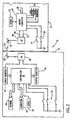
- a keyless motor vehicle control system 10 comprises a driver's remote control 12, which preferably has the form of a key ring fob carried by a driver, and a control circuit 14 located in the motor vehicle 15.
- control circuit 14 in the vehicle includes a microcomputer 16 with an internal microprocessor and memory in which the control program and data are stored.
- a conventional clock circuit 22 supplies timing pulses to the microcomputer 16. The service technician is able to place the microcomputer 16 into different functional modes by operating a plurality of manual input switches 24 and 25, as will be described.
- the control circuit 14 operates several functions on the motor vehicle, such as locking and unlocking the doors, unlatching the trunk lid and starting the engine, for example.
- the microcomputer 16 is interfaced to the corresponding actuating devices on the motor vehicle.
- the various functions are controlled by an another computer in the motor vehicle to which the microcomputer 16 sends operating commands via a parallel communication bus 18.
- the microcomputer 16 has individual output lines 20 connected directly to the control devices for the respective functions being operated. Specifically, separate wires may be coupled to actuators which lock and unlock the doors, unlatch the trunk lid and start the engine.
- a serial output line 26 and a serial input line 28 of the microcomputer 16 are connected to a first radio frequency transceiver 30 which utilizes a digital cordless telephone protocol, such as the Digital Enhanced Cordless Telecommunications (DECT) standard.
- DECT Digital Enhanced Cordless Telecommunications
- This protocol was developed in the mid-1980's as a pan-European standard for cordless telephones and has been adopted to use outside the European Union.
- the DECT standard protocol has been used for simultaneous bidirectional communication between a base station and a hand held receiver unit of cordless telephones.
- the term DECT Digital Enhanced Cordless Telecommunications
- cordless telephone as used in the industry, means a telephone comprising a base station and a hand held receiver unit.
- the owner of the cordless telephone utilizes a wire cord to connect the base station to a terrestrial telephone line serving the owner's premises.
- the owner's a hand held receiver unit communicates with the single base station by radio frequency signals.
- the first radio frequency transceiver 30 modulates a standard RF frequency carrier with the serial digital data received on line 26 and transmits that modulated radio frequency signal via an antenna 32.
- the first transceiver 30 also receives and demodulates signals on a second radio frequency that are received by the antenna 32 to recover serial digital data. That data is sent via line 28 to the microcomputer 16.
- the first transceiver 30 of the control circuit 14 is designed to communicate with a second radio frequency transceiver 40 and antenna 42 both located within the remote control 12 that may be carried by a driver of the vehicle 15.
- the second transceiver 40 has a receiver section which demodulates the received radio frequency signal to recover digital data carried by that signal and the recovered data is sent in a serial format to an input register 44.
- the input register 44 converts the serial data stream from the second transceiver 40 into a parallel format which is read by a controller 46.
- the controller 46 may be either a hardwired device for sequentially performing the remote control operations to be described, or a programmable device which executes a software program to perform those operations. Controllers of this general type are well-known in different types of transponders and their conventional technology can be utilized to implement the functions of the present controller 46.
- the controller 46 of the remote control 12 is connected to an electrically erasable programmable read only memory (EEPROM) 48 which stores data to be transmitted to the motor vehicle control circuit 14 when the remote control is interrogated.
- EEPROM electrically erasable programmable read only memory
- a clock circuit 52 also provides timing signals for the remote control 12.
- a plurality of user operable switches 54 are connected to different input lines to the controller 46 in order for the driver to select the specific functions to be performed on the motor vehicle. For example, a separate switch can be provided for the functions of unlocking and locking the doors, unlatching the trunk lid, and starting the engine.
- the remote control 12 also includes an encryptor 50 connected to the controller 46 to encrypt a remote control security number for transmission to the control circuit 14.
- the encryptor 50 utilizes a secret-key cryptography algorithm to encrypt data for sending to the control circuit.
- the algorithm specifies a sequence of a plurality of logical operations which are performed on a known seed number and a challenge number received from the control circuit to produce a resultant number for transmission by the remote control.
- Several cryptography algorithms of this type are described by Mehrdad Foroozesh in an article entitled "Protecting Your Data With Cryptography," UNIX Review , November 1996, volume 14, number 12, page 55(6), which description is incorporated herein by reference.
- Such encryption techniques and algorithms are commonly used to encrypt computer data being transmitted over common carriers. It should be understood that other encryption techniques may be used.
- Digital output data is sent by the controller 46 in parallel form to a parallel-in/serial-out output register 56.
- the serial data from the output register 56 is applied to the input of a transmitter section in the second transceiver 40 which modulates a radio frequency signal which that data.
- the resultant RF signal is sent via the antenna 42 to the control circuit 14 in motor vehicle.
- the components of the remote control preferably are powered by a battery (not shown), but as an alternative, power could be derived from received RF signal energy as was done in some prior remote controls.
- the driver desires the vehicle perform a given function the corresponding switch 54 is pressed. This sends a signal to the controller 46 which responds by obtaining an initial numerical code from storage in the EEPROM 48.
- the initial numerical code preferably is a unique identification number assigned to that remote control and stored in the EEPROM 48.
- the initial numerical code is sent via output register 56 to the second transceiver 40 from which it is transmitted to the control circuit 14 in the adjacent motor vehicle.
- Receipt of the initial numerical code causes the motor vehicle control circuit 14, which had been in a "sleep state," to wake-up and its microcomputer 16 begins executing a software routine for interrogating the remote control 12. This initiates an exchange of messages according to a rolling security code encryption algorithm which enables the control circuit 14 to verify the authenticity of this particular remote control 12.
- the first step of this authentication process determines whether the initial numerical code matches one stored in the memory of the microcomputer 16 which list those codes of authorized remote controls. If the initial numerical code is recognized, the microcomputer responds by sending a randomly generates challenge number to the remote control 12. Upon receipt the challenge number is processed by the remote control's encryptor 50 which produces a resultant number that is transmitted back to the control circuit 14.
- control circuit 14 uses the same encryption algorithm to produce its own resultant number.
- Microcomputer 16 in the control circuit 14 compares the two resultant numbers which should match. If the numbers match the remote control is determined to be that is authentic, that is authorized to operate the particular vehicle 15. It should be noted that other types of authentication procedures may be used with the present remote access control system.
- the microcomputer 16 checks an input to determine whether a remote control DELETE MODE switch 24 is closed. If that is not the case, the execution branches to checks another input to determine whether a remote control ADD MODE switch 25 is closed. The function of these switches 24 and 25 will be described subsequently. These switches are used to program the microcomputer with the identification numbers of the authenticate remote controls 12.
- the microcomputer 16 uses the switch indication number received from the remote control 12 to determine the indicated function to be performed by the motor vehicle. For example when the door unlock function is indicated, an unlock command signal is sent out over either communication bus 18 to the main computer for the motor vehicle, or over one of the dedicated output lines 20 to the lock control circuit of the motor vehicle. Alternatively these command signal may unlatch the trunk of the vehicle or start the engine.
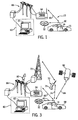
- the an internal modem in the personal computer 62 dials a cordless telephone base station 64 that is in the vicinity of the motor vehicle 15.
- a common carrier telephone network 66 establishes the connection between the personal computer 62 and the cordless telephone base station 64.
- the cordless telephone base station established an RF communication link, using the DECT standard protocol, between its antenna and the motor vehicle remote control 12.
- the personal computer 62 and the cordless telephone base station 64 act as another remote control device similar to device 12. Specifically the cordless telephone base station 64 serves as the second radio transceiver 40 in Figure 2, whereas the personal computer 62 functions as the remaining components of the remote control.
- the personal computer 62 contains a listing of the remote control identification codes that the control circuit 14 in the motor vehicle 15 will recognize as being authorized to activate its vehicle's functions.
- the personal computer 62 may store a master identification code that is recognized by all of the vehicles produced by that manufacturer or all of the same make and model of vehicle as vehicle 15 for which service needs to be provided.
- the personal computer 62 receives the challenge number from the vehicle via the cordless telephone base station 64 and telephone network 66 and utilizes the encryption algorithm to compute the resultant number that is sent back to the motor vehicle 15 along with the appropriate function code to be performed on the vehicle.
- the personnel at the manufacturer's office 60 can instruct the control circuitry within vehicle 15 to unlock the doors and start the engine in much the same way as though the same type of commands were coming from the FOB type remote control device 12.
- a stranded motorist who is without any mechanism to access the vehicle can be given access and the ability to start the vehicle without such access devices.
- the personnel at the manufacturer's office are also able to program other features of the motor vehicle via the computer telephone link. For example in the case of a computer malfunction within the vehicle 15 the manufacturer's personnel at the remote office 60 are able to download program upgrades and reconfigure the computer system. In doing so the appropriate commands and software are sent from the personal computer 62 through the telephone communication network 66 and cordless telephone base station 64 to the control circuit 14 within the vehicle 15. The microcomputer 16 upon receipt of this information sends the appropriate commands and data over the internal vehicle computer network 14 to the appropriate computer within the vehicle 15. In this manner personnel at a central office of the motor vehicle manufacturer, such as one office for an entire country, can communicate with the vehicles located throughout the country.
- cordless telephone base station's 64 One of the drawbacks of utilizing cordless telephone base station's 64 to communicate with the vehicle is the relatively short range of the DECT communication link 65. This requires that the vehicle 15 be within relatively close proximity (e.g. within 300 meters) to the cordless telephone base station 64 which typically would be located at a dealership for that make of vehicle. As a consequence, this type of remote access might require that the stranded vehicle 15 be towed to a dealership, in order for the remotely located personal computer to communication with the vehicle. Nevertheless, the system shown in Figure 1 has significant use in restricting access to vehicles as individual dealers and their service technicians do not have access to the master vehicle identification codes or the remote control identification codes which may operate specific vehicles. That information is stored only in the personal computer 62 at the vehicle manufacturer's central office 60.
- Alternative communication carriers may be utilized to connect the vehicle manufacturer's central office 60 to motor vehicles throughout the country.
- the telephone network 64 in addition to the personal computer 62 in the central office of the vehicle manufacturer accessing the cordless telephone base station 64, the telephone network 64 also is connected to a cellular telephone system 70 and a satellite telephone system 80. This enables the user of the personal computer 62 at the manufacturer's office to determine which common carrier and which type of communication link to employ in accessing the motor vehicle 68.
- the operator of personal computer 62 may utilize the modem within the computer to dial the number of a cellular telephone 72 owned by the motor vehicle driver. That cellular telephone 72 may be carried on the driver's person or built into the motor vehicle 68. Communication with cellular telephone 72 is accomplished in the same manner as any other telephone call with the exception that once the call is established, the personal computer 62 transmits a code which identifies the nature of the call as being a control call for the motor vehicle 68.
- the cellular telephone 72 is unlike standard cellular telephones in that it also has a transceiver for the DECT standard protocol to communicate with the first radio frequency transceiver 30 within the motor vehicle 68.
- the cellular telephone Upon receiving the command that designates this type of call, the cellular telephone activates the DECT radio frequency transceiver 75 to establish a DECT communication link 74 with the motor vehicle 68.
- the DECT radio frequency transceiver 75 may be eliminated and the cellular telephone merely possesses the necessary circuitry to communicate via the DECT standard protocol over a hardwired connection to the control circuit 14 within the vehicle.
- personnel at the office 60 are able to selectively control functions on motor vehicle 68, such as unlocking the doors and starting the engine, as well as reprogramming or reconfiguring computers within the vehicle.
- the present invention provides a very robust and secure method in which the driver or authorized service personnel can access the motor vehicle without possessing a mechanical key or a remote control 12.
- This type of remote access control can be utilized regardless of the location of the vehicle relative to the central office 60 of the motor vehicle manufacturer. Furthermore, by utilizing the central office 60 to control access to the vehicle, it is unlikely that thieves and unauthorized personnel will be able to accomplish such remote control without possessing a mechanical key or the remote control device 12.
- the present remote access technique also can be employed to disable a lost or stolen remote control 12 from being able to access the vehicle 15.
- the owner of the vehicle 68 contacts the motor vehicle manufacturer's office 60 and requests deactivation of the specific remote control 12.
- the personnel at the office query the records to obtain the unique identification number assigned to the missing remote control.
- a command then is transmitted to the control circuit 14 of the motor vehicle 68 via the telephone network 66 and one of the cordless telephone 64, cellular telephone system 70 or a satellite telephone system 80.
- the command designates that the remote control 12 with that identification number shall not have access to the vehicle.
- Control circuit 14 responds not only by removing the identification number from its list of authorized remote controls, the designated remote control 12 is disabled upon any attempt to gain access to the vehicle. Specifically, the next time that the vehicle's control circuit 14 receives a signal from a remote control with that identification number, the control circuit 14 responds by transmitting a disable command back to the control circuit 14. The remote control responds by disabling its operation, for example by erasing the seed number which the encryptor 50 utilizes in the cryptography algorithm. Thus the finder or thief of the missing remote control can not gain access to the vehicle,
- the cellular telephone 72 may be located in a police car and used to disable the vehicle during a pursuit. For example, if the police are pursuing the vehicle which will not stop, the police officer radios the police station with the license plate number of the vehicle. The dispatcher obtains the manufacturer's vehicle identification number for that vehicle from the government motor vehicle registration records and transmits that number to the police officer.
- the police officer utilizes a cellular telephone 72 in the police car to contact the motor vehicle manufacturer's office 60.
- the officer provides proper authorization code to office personnel along with the vehicle identification number.
- the personnel employ the personal computer 62 to communicate with vehicle 68 via the police car's cellular telephone 72. Once communication has been established, the personal computer 62 transmits a vehicle disable command to the police car's cellular telephone which relays that disable command to the vehicle 68 being pursued.
- the control circuit 14 in that vehicle receives the disable command, a signal is sent to the engine control system which causes the vehicle engine to decelerate gradually to a stop. Thereafter, the engine will not operate until reactivated by another command from the motor vehicle manufacturer's office 60.
Landscapes
- Engineering & Computer Science (AREA)
- Mechanical Engineering (AREA)
- Computer Networks & Wireless Communication (AREA)
- Physics & Mathematics (AREA)
- General Physics & Mathematics (AREA)
- Lock And Its Accessories (AREA)
- Mobile Radio Communication Systems (AREA)
Applications Claiming Priority (2)
| Application Number | Priority Date | Filing Date | Title |
|---|---|---|---|
| US18926598A | 1998-11-10 | 1998-11-10 | |
| US189265 | 1998-11-10 |
Publications (3)
| Publication Number | Publication Date |
|---|---|
| EP1000826A2 true EP1000826A2 (de) | 2000-05-17 |
| EP1000826A3 EP1000826A3 (de) | 2004-08-18 |
| EP1000826B1 EP1000826B1 (de) | 2009-09-30 |
Family
ID=22696628
Family Applications (1)
| Application Number | Title | Priority Date | Filing Date |
|---|---|---|---|
| EP19990122416 Expired - Lifetime EP1000826B1 (de) | 1998-11-10 | 1999-11-10 | Kraftfahrzeug-Fernsteuerungssystem |
Country Status (2)
| Country | Link |
|---|---|
| EP (1) | EP1000826B1 (de) |
| DE (1) | DE69941473D1 (de) |
Cited By (14)
| Publication number | Priority date | Publication date | Assignee | Title |
|---|---|---|---|---|
| EP1216899A1 (de) * | 2000-12-22 | 2002-06-26 | Ford Global Technologies, Inc. | Ferngesteuertes, mit Kraftfahrzeugen anwendbares Kommunikationssystem |
| EP1216900A1 (de) * | 2000-12-22 | 2002-06-26 | Ford Global Technologies, Inc. | Ferngesteuertes, mit Kraftfahrzeugen anwenbares Kommunikationssystem |
| GB2387875A (en) * | 2002-04-25 | 2003-10-29 | David Martin Keene | Vehicle immobiliser system |
| EP1484850A3 (de) * | 2000-11-29 | 2005-04-06 | Visteon Global Technologies, Inc. | Telematikanwendung zur Implementierung in Verbindung mit einem Satellitenrundfunk- Ablieferungssystem |
| US7444982B2 (en) | 2006-02-09 | 2008-11-04 | Darren Rivet | Engine air intake shut off valve |
| DE10056532B4 (de) * | 2000-11-15 | 2012-05-16 | Hella Kgaa Hueck & Co. | Verfahren zur manipulationsgeschützten Datenkommunikation |
| CN102811121A (zh) * | 2011-05-31 | 2012-12-05 | 德尔福技术有限公司 | 遥控无钥匙进入中继模块和系统 |
| EP2573738A1 (de) * | 2011-09-21 | 2013-03-27 | Delphi Technologies, Inc. | System und Verfahren für den Betrieb eines schlüssellosen Zutrittssystems mit größerer Reichweite zur Erkennung des schlüssellosen Zutrittssenders |
| EP2113886A3 (de) * | 2008-05-01 | 2013-06-12 | Delphi Technologies, Inc. | Fernüberwachungs-, Fernabfrage- und Fernsteuerungsvorrichtung für stationäre und mobile Systeme |
| US8884740B2 (en) | 2011-04-27 | 2014-11-11 | Audi Ag | Method for actuating a function of a vehicle from a large distance |
| US8947222B2 (en) | 2011-02-24 | 2015-02-03 | Blackberry Limited | Methods and apparatus to detect mobile devices |
| US9205807B2 (en) | 2010-03-08 | 2015-12-08 | Ford Global Technologies, Llc | Method and system for enabling an authorized vehicle driveaway |
| USRE47225E1 (en) | 2000-05-17 | 2019-02-05 | Omega Patents, L.L.C. | Vehicle tracking unit for controlling operable vehicle devices using a vehicle data bus and related methods |
| USRE47354E1 (en) | 2000-05-17 | 2019-04-16 | Omega Patents, L.L.C. | Vehicle tracking unit for controlling operable vehicle devices using a vehicle data bus and related methods |
Families Citing this family (1)
| Publication number | Priority date | Publication date | Assignee | Title |
|---|---|---|---|---|
| DE102010037271A1 (de) * | 2010-08-16 | 2012-02-16 | Huf Hülsbeck & Fürst Gmbh & Co. Kg | Verfahren zum Bereitstellen eines drahtlosen Fahrzeugzugangs |
Family Cites Families (6)
| Publication number | Priority date | Publication date | Assignee | Title |
|---|---|---|---|---|
| GB8705892D0 (en) * | 1987-03-12 | 1987-04-15 | Security Services Plc | Keys |
| WO1988007796A1 (fr) * | 1987-03-31 | 1988-10-06 | Honda Giken Kogyo Kabushiki Kaisha | Appareil reagissant aux signaux radio pour la commande d'un equipement mobile |
| US5223844B1 (en) * | 1992-04-17 | 2000-01-25 | Auto Trac Inc | Vehicle tracking and security system |
| DE19603747C1 (de) * | 1996-02-02 | 1997-01-23 | Bosch Gmbh Robert | Diebstahlsicherungseinrichtung |
| DE19643020C1 (de) * | 1996-10-18 | 1998-03-12 | Telefunken Microelectron | Wegfahrsicherungseinrichtung für Kraftfahrzeuge |
| US5937065A (en) * | 1997-04-07 | 1999-08-10 | Eaton Corporation | Keyless motor vehicle entry and ignition system |
-
1999
- 1999-11-10 EP EP19990122416 patent/EP1000826B1/de not_active Expired - Lifetime
- 1999-11-10 DE DE69941473T patent/DE69941473D1/de not_active Expired - Lifetime
Non-Patent Citations (1)
| Title |
|---|
| None |
Cited By (19)
| Publication number | Priority date | Publication date | Assignee | Title |
|---|---|---|---|---|
| USRE47225E1 (en) | 2000-05-17 | 2019-02-05 | Omega Patents, L.L.C. | Vehicle tracking unit for controlling operable vehicle devices using a vehicle data bus and related methods |
| USRE47354E1 (en) | 2000-05-17 | 2019-04-16 | Omega Patents, L.L.C. | Vehicle tracking unit for controlling operable vehicle devices using a vehicle data bus and related methods |
| DE10056532B4 (de) * | 2000-11-15 | 2012-05-16 | Hella Kgaa Hueck & Co. | Verfahren zur manipulationsgeschützten Datenkommunikation |
| EP1484850A3 (de) * | 2000-11-29 | 2005-04-06 | Visteon Global Technologies, Inc. | Telematikanwendung zur Implementierung in Verbindung mit einem Satellitenrundfunk- Ablieferungssystem |
| US7224935B2 (en) | 2000-11-29 | 2007-05-29 | Visteon Global Technologies, Inc. | Telematics application for implementation in conjunction with a satellite broadcast delivery system |
| EP1216900A1 (de) * | 2000-12-22 | 2002-06-26 | Ford Global Technologies, Inc. | Ferngesteuertes, mit Kraftfahrzeugen anwenbares Kommunikationssystem |
| EP1216899A1 (de) * | 2000-12-22 | 2002-06-26 | Ford Global Technologies, Inc. | Ferngesteuertes, mit Kraftfahrzeugen anwendbares Kommunikationssystem |
| GB2387875B (en) * | 2002-04-25 | 2005-09-28 | David Martin Keene | Vehicle immobiliser system |
| GB2387875A (en) * | 2002-04-25 | 2003-10-29 | David Martin Keene | Vehicle immobiliser system |
| US7444982B2 (en) | 2006-02-09 | 2008-11-04 | Darren Rivet | Engine air intake shut off valve |
| EP2113886A3 (de) * | 2008-05-01 | 2013-06-12 | Delphi Technologies, Inc. | Fernüberwachungs-, Fernabfrage- und Fernsteuerungsvorrichtung für stationäre und mobile Systeme |
| US9580044B2 (en) | 2010-03-08 | 2017-02-28 | Ford Global Technologies, Llc | Method and system for enabling an authorized vehicle driveaway |
| DE102011004959B4 (de) * | 2010-03-08 | 2017-09-28 | Ford Global Technologies, Llc | Verfahren und System zum Ermöglichen eines autorisierten Fahrzeugwegfahrens |
| US9205807B2 (en) | 2010-03-08 | 2015-12-08 | Ford Global Technologies, Llc | Method and system for enabling an authorized vehicle driveaway |
| US8947222B2 (en) | 2011-02-24 | 2015-02-03 | Blackberry Limited | Methods and apparatus to detect mobile devices |
| US8884740B2 (en) | 2011-04-27 | 2014-11-11 | Audi Ag | Method for actuating a function of a vehicle from a large distance |
| EP2529984A1 (de) * | 2011-05-31 | 2012-12-05 | Delphi Technologies, Inc. | Fernrelaismodul mit schlüssellosem Zugang und System |
| CN102811121A (zh) * | 2011-05-31 | 2012-12-05 | 德尔福技术有限公司 | 遥控无钥匙进入中继模块和系统 |
| EP2573738A1 (de) * | 2011-09-21 | 2013-03-27 | Delphi Technologies, Inc. | System und Verfahren für den Betrieb eines schlüssellosen Zutrittssystems mit größerer Reichweite zur Erkennung des schlüssellosen Zutrittssenders |
Also Published As
| Publication number | Publication date |
|---|---|
| EP1000826B1 (de) | 2009-09-30 |
| EP1000826A3 (de) | 2004-08-18 |
| DE69941473D1 (de) | 2009-11-12 |
Similar Documents
| Publication | Publication Date | Title |
|---|---|---|
| US6169943B1 (en) | Motor vehicle diagnostic system using hand-held remote control | |
| US6570486B1 (en) | Passive remote access control system | |
| US5937065A (en) | Keyless motor vehicle entry and ignition system | |
| US7365633B2 (en) | Vehicle remote control apparatus and vehicle remote control system using the same | |
| JP4186440B2 (ja) | 車両搭載機器の制御システム、携帯電話機、及び車両搭載機器の制御方法 | |
| US8053922B2 (en) | Closing system for motor vehicles | |
| EP1602539B1 (de) | Fahrzeugsicherheitsvorrichtung und id-code-managementvorrichtung | |
| EP1000826B1 (de) | Kraftfahrzeug-Fernsteuerungssystem | |
| EP1376481B1 (de) | Elektronisches Schlüsselsystem | |
| EP1564691B1 (de) | Sicherheitskontrollgerät zur Verwendung mit einer tragbaren Vorrichtung und einer Verwaltungsvorrichtung, sowie entsprechendes Verfahren zur Sicherheitskontrolle | |
| US6127922A (en) | Vehicle security system with remote systems control | |
| US6161005A (en) | Door locking/unlocking system utilizing direct and network communications | |
| US20060143463A1 (en) | Keyless entry system and keyless entry method | |
| EP0767286A2 (de) | Fernbedienbares schlüsselloses Eingangs- und Wegfahrsperresystem für Kraftfahrzeuge | |
| JPS63574A (ja) | 解錠制御装置 | |
| US7443281B2 (en) | Method and system for unlocking of objects | |
| JP4534455B2 (ja) | 車両遠隔操作システム | |
| JP2825388B2 (ja) | 基地局の機能を制御する遠隔制御装置 | |
| US6850154B2 (en) | Method and device for protecting motor vehicles against theft | |
| JP2005320708A (ja) | 電子キーシステム、電子キー及び発信機 | |
| JP4406189B2 (ja) | エンジン始動制御システム | |
| JP2003120097A (ja) | 車両盗難防止システム | |
| JP3930385B2 (ja) | 電子キーシステム | |
| EP1043465A2 (de) | Fernbedienungssystem mit Zugang zu einem Kraftfahrzeug und einem Gebäude | |
| JP2002339612A (ja) | 車両用電子キー装置 |
Legal Events
| Date | Code | Title | Description |
|---|---|---|---|
| PUAI | Public reference made under article 153(3) epc to a published international application that has entered the european phase |
Free format text: ORIGINAL CODE: 0009012 |
|
| AK | Designated contracting states |
Kind code of ref document: A2 Designated state(s): AT BE CH CY DE DK ES FI FR GB GR IE IT LI LU MC NL PT SE |
|
| AX | Request for extension of the european patent |
Free format text: AL;LT;LV;MK;RO;SI |
|
| RAP1 | Party data changed (applicant data changed or rights of an application transferred) |
Owner name: DELPHI TECHNOLOGIES, INC. |
|
| PUAL | Search report despatched |
Free format text: ORIGINAL CODE: 0009013 |
|
| AK | Designated contracting states |
Kind code of ref document: A3 Designated state(s): AT BE CH CY DE DK ES FI FR GB GR IE IT LI LU MC NL PT SE |
|
| AX | Request for extension of the european patent |
Extension state: AL LT LV MK RO SI |
|
| RIC1 | Information provided on ipc code assigned before grant |
Ipc: 7G 07C 9/00 B Ipc: 7B 60R 25/00 A |
|
| 17P | Request for examination filed |
Effective date: 20050218 |
|
| AKX | Designation fees paid |
Designated state(s): DE FR |
|
| RBV | Designated contracting states (corrected) |
Designated state(s): DE FR |
|
| GRAP | Despatch of communication of intention to grant a patent |
Free format text: ORIGINAL CODE: EPIDOSNIGR1 |
|
| GRAS | Grant fee paid |
Free format text: ORIGINAL CODE: EPIDOSNIGR3 |
|
| GRAA | (expected) grant |
Free format text: ORIGINAL CODE: 0009210 |
|
| AK | Designated contracting states |
Kind code of ref document: B1 Designated state(s): DE FR |
|
| REF | Corresponds to: |
Ref document number: 69941473 Country of ref document: DE Date of ref document: 20091112 Kind code of ref document: P |
|
| PLBE | No opposition filed within time limit |
Free format text: ORIGINAL CODE: 0009261 |
|
| STAA | Information on the status of an ep patent application or granted ep patent |
Free format text: STATUS: NO OPPOSITION FILED WITHIN TIME LIMIT |
|
| 26N | No opposition filed |
Effective date: 20100701 |
|
| REG | Reference to a national code |
Ref country code: FR Ref legal event code: PLFP Year of fee payment: 17 |
|
| REG | Reference to a national code |
Ref country code: FR Ref legal event code: PLFP Year of fee payment: 18 |
|
| REG | Reference to a national code |
Ref country code: FR Ref legal event code: PLFP Year of fee payment: 19 |
|
| REG | Reference to a national code |
Ref country code: DE Ref legal event code: R082 Ref document number: 69941473 Country of ref document: DE Representative=s name: MANITZ FINSTERWALD PATENT- UND RECHTSANWALTSPA, DE Ref country code: DE Ref legal event code: R082 Ref document number: 69941473 Country of ref document: DE Representative=s name: MANITZ FINSTERWALD PATENTANWAELTE PARTMBB, DE Ref country code: DE Ref legal event code: R081 Ref document number: 69941473 Country of ref document: DE Owner name: APTIV TECHNOLOGIES LIMITED, BB Free format text: FORMER OWNER: DELPHI TECHNOLOGIES, INC., TROY, MICH., US |
|
| PGFP | Annual fee paid to national office [announced via postgrant information from national office to epo] |
Ref country code: DE Payment date: 20181128 Year of fee payment: 20 |
|
| PGFP | Annual fee paid to national office [announced via postgrant information from national office to epo] |
Ref country code: FR Payment date: 20181127 Year of fee payment: 20 |
|
| REG | Reference to a national code |
Ref country code: DE Ref legal event code: R071 Ref document number: 69941473 Country of ref document: DE |