EP1003719B1 - Mikrobiozide n-sulfonylglycin-alkynyloxyphenethylamid-derivate - Google Patents
Mikrobiozide n-sulfonylglycin-alkynyloxyphenethylamid-derivate Download PDFInfo
- Publication number
- EP1003719B1 EP1003719B1 EP98946275A EP98946275A EP1003719B1 EP 1003719 B1 EP1003719 B1 EP 1003719B1 EP 98946275 A EP98946275 A EP 98946275A EP 98946275 A EP98946275 A EP 98946275A EP 1003719 B1 EP1003719 B1 EP 1003719B1
- Authority
- EP
- European Patent Office
- Prior art keywords
- alkyl
- formula
- compound
- acid
- cycloalkyl
- Prior art date
- Legal status (The legal status is an assumption and is not a legal conclusion. Google has not performed a legal analysis and makes no representation as to the accuracy of the status listed.)
- Expired - Lifetime
Links
- 0 C*=S(*)(NC(*)(*)C(NC(*)(*)C(*)(*)c(cc1)cc(O*)c1O*C#CS)=O)=O Chemical compound C*=S(*)(NC(*)(*)C(NC(*)(*)C(*)(*)c(cc1)cc(O*)c1O*C#CS)=O)=O 0.000 description 3
Classifications
-
- C—CHEMISTRY; METALLURGY
- C07—ORGANIC CHEMISTRY
- C07C—ACYCLIC OR CARBOCYCLIC COMPOUNDS
- C07C311/00—Amides of sulfonic acids, i.e. compounds having singly-bound oxygen atoms of sulfo groups replaced by nitrogen atoms, not being part of nitro or nitroso groups
-
- C—CHEMISTRY; METALLURGY
- C07—ORGANIC CHEMISTRY
- C07C—ACYCLIC OR CARBOCYCLIC COMPOUNDS
- C07C311/00—Amides of sulfonic acids, i.e. compounds having singly-bound oxygen atoms of sulfo groups replaced by nitrogen atoms, not being part of nitro or nitroso groups
- C07C311/01—Sulfonamides having sulfur atoms of sulfonamide groups bound to acyclic carbon atoms
- C07C311/02—Sulfonamides having sulfur atoms of sulfonamide groups bound to acyclic carbon atoms of an acyclic saturated carbon skeleton
- C07C311/03—Sulfonamides having sulfur atoms of sulfonamide groups bound to acyclic carbon atoms of an acyclic saturated carbon skeleton having the nitrogen atoms of the sulfonamide groups bound to hydrogen atoms or to acyclic carbon atoms
- C07C311/06—Sulfonamides having sulfur atoms of sulfonamide groups bound to acyclic carbon atoms of an acyclic saturated carbon skeleton having the nitrogen atoms of the sulfonamide groups bound to hydrogen atoms or to acyclic carbon atoms to acyclic carbon atoms of hydrocarbon radicals substituted by carboxyl groups
-
- A—HUMAN NECESSITIES
- A01—AGRICULTURE; FORESTRY; ANIMAL HUSBANDRY; HUNTING; TRAPPING; FISHING
- A01N—PRESERVATION OF BODIES OF HUMANS OR ANIMALS OR PLANTS OR PARTS THEREOF; BIOCIDES, e.g. AS DISINFECTANTS, AS PESTICIDES OR AS HERBICIDES; PEST REPELLANTS OR ATTRACTANTS; PLANT GROWTH REGULATORS
- A01N41/00—Biocides, pest repellants or attractants, or plant growth regulators containing organic compounds containing a sulfur atom bound to a hetero atom
- A01N41/02—Biocides, pest repellants or attractants, or plant growth regulators containing organic compounds containing a sulfur atom bound to a hetero atom containing a sulfur-to-oxygen double bond
- A01N41/04—Sulfonic acids; Derivatives thereof
- A01N41/06—Sulfonic acid amides
-
- A—HUMAN NECESSITIES
- A01—AGRICULTURE; FORESTRY; ANIMAL HUSBANDRY; HUNTING; TRAPPING; FISHING
- A01N—PRESERVATION OF BODIES OF HUMANS OR ANIMALS OR PLANTS OR PARTS THEREOF; BIOCIDES, e.g. AS DISINFECTANTS, AS PESTICIDES OR AS HERBICIDES; PEST REPELLANTS OR ATTRACTANTS; PLANT GROWTH REGULATORS
- A01N43/00—Biocides, pest repellants or attractants, or plant growth regulators containing heterocyclic compounds
- A01N43/02—Biocides, pest repellants or attractants, or plant growth regulators containing heterocyclic compounds having rings with one or more oxygen or sulfur atoms as the only ring hetero atoms
- A01N43/04—Biocides, pest repellants or attractants, or plant growth regulators containing heterocyclic compounds having rings with one or more oxygen or sulfur atoms as the only ring hetero atoms with one hetero atom
- A01N43/06—Biocides, pest repellants or attractants, or plant growth regulators containing heterocyclic compounds having rings with one or more oxygen or sulfur atoms as the only ring hetero atoms with one hetero atom five-membered rings
- A01N43/10—Biocides, pest repellants or attractants, or plant growth regulators containing heterocyclic compounds having rings with one or more oxygen or sulfur atoms as the only ring hetero atoms with one hetero atom five-membered rings with sulfur as the ring hetero atom
-
- C—CHEMISTRY; METALLURGY
- C07—ORGANIC CHEMISTRY
- C07C—ACYCLIC OR CARBOCYCLIC COMPOUNDS
- C07C217/00—Compounds containing amino and etherified hydroxy groups bound to the same carbon skeleton
- C07C217/54—Compounds containing amino and etherified hydroxy groups bound to the same carbon skeleton having etherified hydroxy groups bound to carbon atoms of at least one six-membered aromatic ring and amino groups bound to acyclic carbon atoms or to carbon atoms of rings other than six-membered aromatic rings of the same carbon skeleton
- C07C217/56—Compounds containing amino and etherified hydroxy groups bound to the same carbon skeleton having etherified hydroxy groups bound to carbon atoms of at least one six-membered aromatic ring and amino groups bound to acyclic carbon atoms or to carbon atoms of rings other than six-membered aromatic rings of the same carbon skeleton with amino groups linked to the six-membered aromatic ring, or to the condensed ring system containing that ring, by carbon chains not further substituted by singly-bound oxygen atoms
- C07C217/60—Compounds containing amino and etherified hydroxy groups bound to the same carbon skeleton having etherified hydroxy groups bound to carbon atoms of at least one six-membered aromatic ring and amino groups bound to acyclic carbon atoms or to carbon atoms of rings other than six-membered aromatic rings of the same carbon skeleton with amino groups linked to the six-membered aromatic ring, or to the condensed ring system containing that ring, by carbon chains not further substituted by singly-bound oxygen atoms linked by carbon chains having two carbon atoms between the amino groups and the six-membered aromatic ring or the condensed ring system containing that ring
-
- C—CHEMISTRY; METALLURGY
- C07—ORGANIC CHEMISTRY
- C07C—ACYCLIC OR CARBOCYCLIC COMPOUNDS
- C07C237/00—Carboxylic acid amides, the carbon skeleton of the acid part being further substituted by amino groups
- C07C237/02—Carboxylic acid amides, the carbon skeleton of the acid part being further substituted by amino groups having the carbon atoms of the carboxamide groups bound to acyclic carbon atoms of the carbon skeleton
- C07C237/04—Carboxylic acid amides, the carbon skeleton of the acid part being further substituted by amino groups having the carbon atoms of the carboxamide groups bound to acyclic carbon atoms of the carbon skeleton the carbon skeleton being acyclic and saturated
- C07C237/08—Carboxylic acid amides, the carbon skeleton of the acid part being further substituted by amino groups having the carbon atoms of the carboxamide groups bound to acyclic carbon atoms of the carbon skeleton the carbon skeleton being acyclic and saturated having the nitrogen atom of at least one of the carboxamide groups bound to an acyclic carbon atom of a hydrocarbon radical substituted by singly-bound oxygen atoms
-
- C—CHEMISTRY; METALLURGY
- C07—ORGANIC CHEMISTRY
- C07C—ACYCLIC OR CARBOCYCLIC COMPOUNDS
- C07C307/00—Amides of sulfuric acids, i.e. compounds having singly-bound oxygen atoms of sulfate groups replaced by nitrogen atoms, not being part of nitro or nitroso groups
- C07C307/04—Diamides of sulfuric acids
- C07C307/06—Diamides of sulfuric acids having nitrogen atoms of the sulfamide groups bound to acyclic carbon atoms
-
- C—CHEMISTRY; METALLURGY
- C07—ORGANIC CHEMISTRY
- C07C—ACYCLIC OR CARBOCYCLIC COMPOUNDS
- C07C311/00—Amides of sulfonic acids, i.e. compounds having singly-bound oxygen atoms of sulfo groups replaced by nitrogen atoms, not being part of nitro or nitroso groups
- C07C311/01—Sulfonamides having sulfur atoms of sulfonamide groups bound to acyclic carbon atoms
- C07C311/11—Sulfonamides having sulfur atoms of sulfonamide groups bound to acyclic carbon atoms of an acyclic unsaturated carbon skeleton
-
- C—CHEMISTRY; METALLURGY
- C07—ORGANIC CHEMISTRY
- C07C—ACYCLIC OR CARBOCYCLIC COMPOUNDS
- C07C313/00—Sulfinic acids; Sulfenic acids; Halides, esters or anhydrides thereof; Amides of sulfinic or sulfenic acids, i.e. compounds having singly-bound oxygen atoms of sulfinic or sulfenic groups replaced by nitrogen atoms, not being part of nitro or nitroso groups
- C07C313/02—Sulfinic acids; Derivatives thereof
- C07C313/06—Sulfinamides
-
- C—CHEMISTRY; METALLURGY
- C07—ORGANIC CHEMISTRY
- C07D—HETEROCYCLIC COMPOUNDS
- C07D333/00—Heterocyclic compounds containing five-membered rings having one sulfur atom as the only ring hetero atom
- C07D333/02—Heterocyclic compounds containing five-membered rings having one sulfur atom as the only ring hetero atom not condensed with other rings
- C07D333/04—Heterocyclic compounds containing five-membered rings having one sulfur atom as the only ring hetero atom not condensed with other rings not substituted on the ring sulphur atom
- C07D333/06—Heterocyclic compounds containing five-membered rings having one sulfur atom as the only ring hetero atom not condensed with other rings not substituted on the ring sulphur atom with only hydrogen atoms, hydrocarbon or substituted hydrocarbon radicals, directly attached to the ring carbon atoms
- C07D333/14—Radicals substituted by singly bound hetero atoms other than halogen
- C07D333/16—Radicals substituted by singly bound hetero atoms other than halogen by oxygen atoms
-
- C—CHEMISTRY; METALLURGY
- C07—ORGANIC CHEMISTRY
- C07C—ACYCLIC OR CARBOCYCLIC COMPOUNDS
- C07C2601/00—Systems containing only non-condensed rings
- C07C2601/12—Systems containing only non-condensed rings with a six-membered ring
- C07C2601/14—The ring being saturated
Definitions
- the present invention relates to novel ⁇ -amino acid derivatives of formula I below. It relates to the preparation of those substances and to agrochemical compositions comprising at least one of those compounds as active ingredient. The invention relates also to the preparation of the said compositions and to the use of the compounds or of the compositions in controlling or preventing the infestation of plants by phytopathogenic microorganisms, especially fungi.
- the invention relates to compounds of the general formula I as well as possible isomers and mixtures of isomers thereof, wherein n is a number zero or one; and R 1 is C 1 -C 12 alkyl that is unsubstituted or may be substituted by C 1 -C 4 alkoxy, C 1 -C 4 alkylthio, C 1 -C 4 alkylsulfonyl, C 3 -C 8 cycloalkyl, cyano, C 1 -C 6 alkoxycarbonyl, C 3 -C 6 alkenyloxycarbonyl or by C 3 -C 6 alkynyloxycarbonyl; C 3 -C 8 cycloalkyl; C 2 -C 12 alkenyl; C 2 -C 12 alkynyl; C 1 -C 12 haloalkyl; or a group NR 11 R 12 wherein R 11 and R 12 are each independently of the other hydrogen or C 1 -C 6 alkyl, or together are t
- heteroaryl examples include:
- halogen includes fluorine, chlorine, bromine and iodine.
- alkyl, alkenyl and alkynyl radicals may be straight-chain or branched, and this applies also to the alkyl, alkenyl or alkynyl moiety of other alkyl-, aikenyl- or alkynyl-containing groups.
- alkyl on its own or as part of another substituent is to be understood as being, for example, methyl, ethyl, propyl, butyl, pentyl, hexyl, heptyl, octyl, nonyl, decyl, undecyl, dodecyl and the isomers thereof, for example isopropyl, isobutyl, tert-butyl or sec-butyl, isopentyl or tert-pentyl.
- Cycloalkyl is, depending upon the number of carbon atoms mentioned, cyclopropyl, cyclobutyl, cyclopentyl, cyclohexyl, cycloheptyl or cyclooctyl.
- alkenyl as a group or as a structural element of other groups is to be understood as being, for example, ethenyl, allyl, buten-2-yl, buten-3-yl, penten-1-yl, penten-3-yl, hexen-1-yl, 4-methyl-3-pentenyl or 4-methyl-3-hexenyl.
- Alkynyl as a group or as a structural element of other groups is, for example, ethynyl, propyn-1-yl, propyn-2-yl, butyn-1-yl, butyn-2-yl, 1-methyl-2-butynyl, hexyn-1-yl, 1-ethyl-2-butynyl, octyn-1-yl.
- a haloalkyl group may have one or more (identical or different) halogen atoms, for example CHCl 2 , CH 2 F, CCl 3 , CH 2 Cl, CHF 2 , CF 3 , CH 2 CH 2 Br, C 2 Cl 5 , CH 2 Br, CHClBr, CF 3 CH 2 , etc..
- Formula I is intended to include all those possible isomeric forms and mixtures thereof.
- R 1 is C 1 -C 12 alkyl; C 3 -C 8 cycloalkyl; C 2 -C 12 alkenyl; C 2 -C 12 alkynyl; C 1 -C 12 haloalkyl; or a group NR 11 R 12 wherein R 11 and R 12 are each independently of the other hydrogen or C 1 -C 6 alkyl, or together are tetra- or penta-methylene; R 2 is hydrogen; R 3 is C 1 -C 8 alkyl; C 1 -C 8 alkyl substituted by hydroxy, C 1 -C 4 alkoxy, mercapto or by C 1 -C 4 alkylthio; C 3 -C 8 alkenyl; C 3 -C 8 alkynyl; C 3 -C 8 cycloalkyl; or C 3 -C 8 cycloalkyl-C 1 -C 4 alkyl; B is phenyl; naphthy
- R 1 is C 1 -C 6 alkyl; C 5 -C 6 cycloalkyl; C 2 -C 6 alkenyl; C 1 -C 6 haloalkyl; or a group NR 11 R 12 wherein R 11 and R 12 are each independently of the other hydrogen or C 1 -C 6 alkyl; R 3 is C 1 -C 8 alkyl; or C 3 -C 6 cycloalkyl; R 4 is hydrogen or C 1 -C 4 alkyl; R 5 , R 6 and R 7 are hydrogen; R 8 is C 1 -C 6 alkyl; A is C 1 -C 2 alkylene; and B is phenyl, naphthyl, furyl, thienyl, pyrrolyl, imidazolyl, pyrazolyl, thiazolyl, oxazolyl, pyridyl, pyridazinyl,
- n is the number one;
- R 1 is C 1 -C 6 alkyl; C 1 -C 6 haloalkyl; or a group NR 11 R 12 wherein R 11 and R 12 are each independently of the other C 1 -C 4 alkyl;
- R 3 is C 3 -C 4 alkyl; or cyclopropyl;
- R 4 is hydrogen or methyl;
- R 8 is C 1 -C 2 alkyl;
- A is methylene; and
- B is phenyl, naphthyl, furyl, thienyl, pyridyl, pyrimidinyl, triazinyl, benzothiophenyl, each unsubstituted or substituted by from 1 to 3 substituents selected from: C 1 -C 8 alkyl, phenyl, those groups being unsubstituted or mono- to per-halogenated and the halogen atoms being identical or different;
- a special group within the scope of sub-group Ca comprises compounds of formula I wherein R 1 is C 1 -C 4 alkyl; or dimethylamino; R 3 is 2-propyl; R 8 is methyl; B is phenyl, naphthyl, each unsubstituted or substituted by from 1 to 3 substituents selected from: C 1 -C 8 alkyl, C 1 -C 8 haloalkyl, C 1 -C 8 alkoxy, C 1 -C 8 haloalkoxy, C 1 -C 8 alkylthio, C 1 -C 8 haloalkylthio, halogen, cyano, nitro and C 1 -C 8 alkoxycarbonyl (sub-group Cb).
- R 1 is C 1 -C 4 alkyl; or dimethylamino; R 3 is 2-propyl; R 8 is methyl; B is thienyl, pyridyl, each unsubstituted or substituted by from 1 to 3 substituents selected from: C 1 -C 8 alkyl, C 1 -C 8 haloalkyl, C 1 -C 8 alkoxy, C 1 -C 8 haloalkoxy, C 1 -C 8 alkylthio, C 1 -C 8 haloalkylthio, halogen, cyano, nitro and C 1 -C 8 alkoxycarbonyl (sub-group Cc).
- Certain ⁇ -amino acid derivatives having a different kind of structure have already been proposed for controlling plant-destructive fungi (for example in EP-398 072, EP-425 925, DE-4 026 966, EP-477 639, EP-493 683, DE-4 035 851, EP-487 154, EP-496 239, EP-550 788 and EP-554 729).
- the action of those preparations is not, however, satisfactory.
- new kinds of microbicides having a high level of activity have been found.
- Alkynes of formula I" are known, for example, from WO 95/30651.
- reaction of the alkyne of formula I" with an aryl or heteroaryl halide is carved out in an inert diluent, such as an aromatic, non-aromatic or halogenated hydrocarbon, for example a chlorinated hydrocarbon, e.g. methylene chloride, chloroform or toluene; an amide, e.g. dimethylformamide: an ether, e.g. dioxane or tetrahydrofuran; or a sulfoxide, e.g.
- an aromatic, non-aromatic or halogenated hydrocarbon for example a chlorinated hydrocarbon, e.g. methylene chloride, chloroform or toluene; an amide, e.g. dimethylformamide: an ether, e.g. dioxane or tetrahydrofuran; or a sulfoxide, e.g.
- dimethyl sulfoxide or in a mixture of those inert diluents, if desired in the presence of an acid-binding agent, such as an inorganic or organic base, for example a tertiary amine, e.g. triethylamine, N-methylpiperidine or pyridine, if desired in the presence of one or more transition metal salts, for example a copper halide or palladium halide, e.g. copper iodide or palladium dichloride, and if desired in the presence of one or more transition metal complexes or transition metal complex salts, such as a bis(triaryl- or trialkyl-)palladium dihalide, e.g. bis(tri-phenylphosphine)palladium dichloride, at temperatures of from -80 to +200°C, preferably from 0 to +60°C.
- an acid-binding agent such as an inorganic or organic base
- an amino acid derivative of the general formula XIII, or a carboxy-activated derivative thereof is reacted, if desired in the presence of a catalyst, if desired in the presence of an acid-binding agent and if desired in the presence of a diluent, with an amine of the general formula XII.
- Suitable carboxy-activated derivatives of the amino acid of formula XIII include any carboxy-activated derivatives, such as acid halides, for example acid chlorides; also symmetrical or mixed anhydrides, for example the mixed O-alkylcarboxylic acid anhydrides; and also activated esters, for example p-nitrophenyl esters or N-hydroxysuccinimide esters, and activated forms of the amino acid produced in situ using condensing agents, e.g.
- the mixed anhydrides corresponding to the amino acid of formula XIII can be prepared by reacting the amino acid of formula XIII with a chloroformic acid ester, for example a chloroformic acid alkyl ester, preferably isobutyl chloroformate, if desired in the presence of an acid-binding agent, such as an inorganic or organic base, for example a tertiary amine, e.g. triethylamine, pyridine, N-methylpiperidine or N-methylmorpholine.
- a chloroformic acid ester for example a chloroformic acid alkyl ester, preferably isobutyl chloroformate
- an acid-binding agent such as an inorganic or organic base, for example a tertiary amine, e.g. triethylamine, pyridine, N-methylpiperidine or N-methylmorpholine.
- reaction of the amino acid of formula XIII, or of a carboxy-activated derivative of the amino acid of formula XIII, with an amine of formula XII is carried out in an inert diluent, such as an aromatic, non-aromatic or haiogenated hydrocarbon, for example a chlorinated hydrocarbon, e.g. methylene chloride or toluene; a ketone, e.g. acetone; an ester, e.g. ethyl acetate; an amide, e.g. dimethylformamide; a nitrile, e.g. acetonitrile; or an ether, e.g.
- an aromatic, non-aromatic or haiogenated hydrocarbon for example a chlorinated hydrocarbon, e.g. methylene chloride or toluene; a ketone, e.g. acetone; an ester, e.g. ethyl acetate; an
- an acid-binding agent e.g. an inorganic or organic base, for example a tertiary amine, e.g. triethylamine, pyridine, N-methylpiperidine or N-methylmorpholine, at temperatures of from -80 to +150°C, preferably from -40 to +40°C.
- the reaction of a compound of formula XIV with a compound of formula V is carried out in an inert diluent.
- aromatic, non-aromatic or halogenated hydrocarbons for example toluene or methylene chloride
- ketones for example acetone
- esters for example ethyl acetate
- amides for example dimethylformamide
- nitriles for example acetonitrile
- ethers for example tetrahydrofuran, dioxane, diethyl ether or tert-butyl methyl ether
- alcohols for example methanol, ethanol, n-butanol, isopropanol or tert-butanol
- dimethyl sulfoxide or water
- mixtures of those inert diluents for example methanol, ethanol, n-butanol, isopropanol or tert-butanol
- dimethyl sulfoxide
- the reaction of a compound of formula XIV with a compound of formula V is carried out if desired in the presence of an acid-binding agent.
- Suitable acid-binding agents include inorganic or organic bases, for example alkali metal or alkaline earth metal hydroxides, alcoholates or carbonates, e.g. sodium hydroxide, potassium hydroxide, sodium methanolate, potassium methanolate, sodium ethanolate, potassium ethanolate, sodium tert-butanolate, potassium tert-butanolate, sodium carbonate or potassium carbonate.
- the temperatures are from -80 to +200°C, preferably from 0 to +120°C; or the reaction is carried out as described under Process c).
- compounds of formula XV are subjected to acid hydrolysis.
- the reaction of a compound of formula XV with an inorganic or organic acid for example a mineral acid, e.g. hydrochloric acid or sulfuric acid, or a carboxylic acid, e.g. acetic acid or trifluoroacetic acid, or a sulfonic acid, e.g. methanesulfonic acid or p-toluenesulfonic acid, is carried out if desired in an inert diluent, such as an aromatic, non-aromatic or halogenated hydrocarbon, for example a chlorinated hydrocarbon, e.g.
- methylene chloride or toluene a ketone, e.g. acetone; an ester, e.g. ethyl acetate; an ether, e.g. tetrahydrofuran or dioxane; or water, at temperatures of from -40 to +150°C.
- a ketone e.g. acetone
- an ester e.g. ethyl acetate
- an ether e.g. tetrahydrofuran or dioxane
- water at temperatures of from -40 to +150°C.
- the compounds of formula I are oils or solids at room temperature and are distinguished by valuable microbicidal properties. They can be used in the agricultural sector or related fields preventively and curatively in the control of plant-destructive microorganisms.
- the compounds of formula I according to the invention are distinguished at low rates of concentration not only by outstanding microbicidal, especially fungicidal, activity but also by being especially well tolerated by plants.
- the compounds of formula I have for practical purposes a very advantageous biocidal spectrum in the control of phytopathogenic microorganisms, especially fungi. They possess very advantageous curative and preventive properties and are used in the protection of numerous crop plants. With the compounds of formula I it is possible to inhibit or destroy phytopathogenic microorganisms that occur on various crops of useful plants or on parts of such plants (fruit, blossom, leaves, stems, tubers, roots), while parts of the plants which grow later also remain protected, for example, against phytopathogenic fungi.
- novel compounds of formula I prove to be effective against specific genera of the fungus class Fungi imperfecti (e.g. Cercospora), Basidiomycetes (e.g. Puccinia) and Ascomycetes (e.g. Erysiphe and Venturia) and especially against Oomycetes (e.g. Plasmopara, Peronospora, Pythium and Phytophthora). They therefore represent in plant protection a valuable addition to the compositions for controlling phytopathogenic fungi.
- the compounds of formula I can also be used as dressings for protecting seed (fruit, tubers, grains) and plant cuttings from fungal infections and against phytopathogenic fungi that occur in the soil.
- the invention relates also to compositions comprising compounds of formula I as active ingredient, especially plant-protecting compositions, and to the use thereof in the agricultural sector or related fields.
- the present invention includes the preparation of those compositions, wherein the active ingredient is homogeneously mixed with one or more of the substances or groups of substances described herein. Also included is a method of treating plants which is distinguished by the application of the novel compounds of formula I or of the novel compositions.
- the compounds of formula I are normally used in the form of compositions and can be applied to the area or plant to be treated simultaneously or in succession with other active ingredients.
- Those other active ingredients may be fertilisers, micronutrient donors or other preparations that influence plant growth. It is also possible to use selective herbicides or insecticides, fungicides, bactericides, nematicides, molluscicides or mixtures of several of those preparations, if desired together with further carriers, surfactants or other application-promoting adjuvants customarily employed in formulation technology.
- the compounds of formula I can be mixed with other active ingredients, for example fertilisers, micronutrient donors or other crop protection products, especially other fungicides, with the result that unexpected synergistic effects may occur.
- Preferred mixing partners are:
- Suitable carriers and surfactants may be solid or liquid and correspond to the substances ordinarily employed in formulation technology, such as e.g. natural or regenerated mineral substances, solvents, dispersants, wetting agents, tackifiers, thickeners, binders or fertilisers. Such carriers and additives are described, for example, in WO 95/30651.
- a preferred method of applying a compound of formula I, or an agrochemical composition comprising at least one of those compounds, is application to the foliage (foliar application), the frequency and the rate of application depending upon the risk of infestation by the pathogen in question.
- the compounds of formula I may also be applied to seed grains (coating) either by impregnating the grains with a liquid formulation of the active ingredient or by coating them with a solid formulation.
- the compounds of formula I are used in unmodified form or, preferably, together with the adjuvants conventionally employed in formulation technology, and are for that purpose advantageously formulated in known manner e.g. into emulsifiable concentrates, coatable pastes, directly sprayable or dilutable solutions, dilute emulsions, wettable powders, soluble powders, dusts, granules, and by encapsulation in e.g. polymer substances.
- the methods of application such as spraying, atomising, dusting, scattering, coating or pouring, are chosen in accordance with the intended objectives and the prevailing circumstances.
- Advantageous rates of application are normally from 1 g to 2 kg of active ingredient (a.i.) per hectare (ha), preferably from 10 g to 1 kg a.i./ha, especially from 25 g to 750 g a.i./ha.
- rates of from 0.001 g to 1.0 g of active ingredient per kg of seed are advantageously used.
- compositions, preparations or mixtures comprising the compound(s) (active ingredient(s)) of formula I and, where appropriate, a solid or liquid adjuvant are prepared in known manner, e.g. by homogeneously mixing and/or grinding the active ingredient with extenders, e.g. solvents, solid carriers and, where appropriate, surface-active compounds (surfactants).
- extenders e.g. solvents, solid carriers and, where appropriate, surface-active compounds (surfactants).
- the agrochemical compositions usually comprise 0.01 to 99 % by weight, preferably 0.1 to 95 % by weight, of a compound of formula I, 99.99 to 1 % by weight, preferably 99.9 to 5 % by weight, of a solid or liquid adjuvant, and 0 to 25 % by weight, preferably 0.1 to 25 % by weight, of a surfactant.
- compositions may also comprise further ingredients, such as stabilisers, antifoams, viscosity regulators, binders and tackifiers, as well as fertilisers or other active ingredients for obtaining special effects.
- further ingredients such as stabilisers, antifoams, viscosity regulators, binders and tackifiers, as well as fertilisers or other active ingredients for obtaining special effects.
- n-hexane phases are concentrated and the residue is subjected to flash chromatography on silica gel with ethyl acetate/n-hexane (1:4), yielding 3-(4-chloro-phenyl)-2-propyn-1-ol, which can be recrystallised from n-hexane, m.p. 78-80°C.
- Formulations may be prepared analogously to those described in, for example, WO 95/30651.
- Vine seedlings are sprayed at the 4- to 5-leaf stage with a spray mixture (0.02 % active ingredient) prepared from a wettable powder formulation of the test compound. After 24 hours, the treated plants are infected with a sporangia suspension of the fungus. Fungus infestation is evaluated after incubation for 6 days at 95-100 % relative humidity and 20°C.
- Vine seedlings are infected at the 4- to 5-leaf stage with a sporangia suspension of the fungus. After incubation for 24 hours in a humidity chamber at 95-100 % relative humidity and 20°C, the infected plants are dried and sprayed with a spray mixture (0.02 % active ingredient) prepared from a wettable powder formulation of the test compound. After the spray coating has dried, the treated plants are placed in the humidity chamber again. Fungus infestation is evaluated 6 days after infection. Compounds of Table 1 exhibit a very good fungicidal action against Plasmopara viticola on vines. Compounds nos.
- tomato plants are sprayed with a spray mixture (0.02 % active ingredient) prepared from a wettable powder formulation of the test compound. After 48 hours, the treated plants are infected with a sporangia suspension of the fungus. Fungus infestation is evaluated after incubation of the infected plants for 5 days at 90-100 % relative humidity and 20°C.
- tomato plants are watered with a spray mixture (0.02 % active ingredient based on the volume of the soil) prepared from a wettable powder formulation of the test compound. Care is taken that the spray mixture does not come into contact with the parts of the plants that are above the ground.
- the treated plants are infected with a sporangia suspension of the fungus. Fungus infestation is evaluated after incubation of the infected plants for 4 days at 90-100 % relative humidity and 20°C. Compounds of Table 1 exhibit a lasting effect (less than 20 % fungus infestation). Infestation is prevented virtually completely (0 to 5 % infestation) with compounds nos.
Landscapes
- Chemical & Material Sciences (AREA)
- Organic Chemistry (AREA)
- Life Sciences & Earth Sciences (AREA)
- Wood Science & Technology (AREA)
- Environmental Sciences (AREA)
- Plant Pathology (AREA)
- Health & Medical Sciences (AREA)
- Engineering & Computer Science (AREA)
- Dentistry (AREA)
- General Health & Medical Sciences (AREA)
- Agronomy & Crop Science (AREA)
- Zoology (AREA)
- Pest Control & Pesticides (AREA)
- Agricultural Chemicals And Associated Chemicals (AREA)
- Organic Low-Molecular-Weight Compounds And Preparation Thereof (AREA)
- Plural Heterocyclic Compounds (AREA)
- Heterocyclic Compounds Containing Sulfur Atoms (AREA)
- Quinoline Compounds (AREA)
- Pyridine Compounds (AREA)
- Heterocyclic Carbon Compounds Containing A Hetero Ring Having Nitrogen And Oxygen As The Only Ring Hetero Atoms (AREA)
Claims (20)
- Verbindung der Formel Iworin
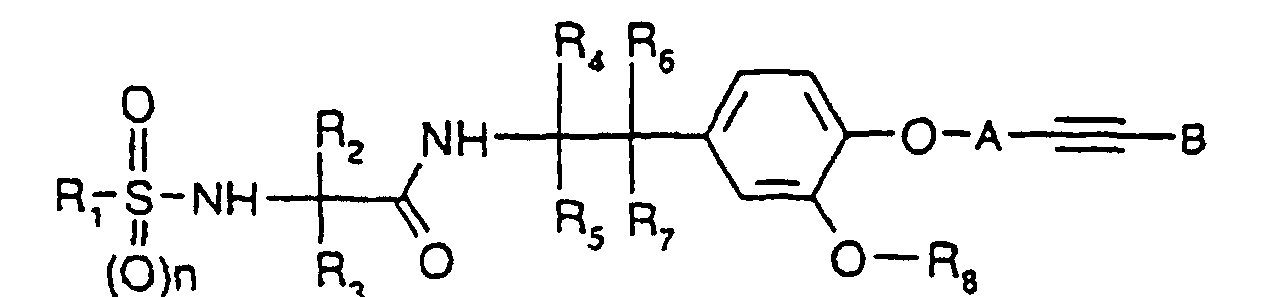
n eine Zahl 0 oder 1 ist;
R1 C1-C12-Alkyl, das unsubstituiert oder mit C1-C4-Alkoxy, C1-C4-Alkylthio, C1-C4-Alkylsulfonyl, C3-C8-Cycloalkyl, Cyano, C1-C6-Alkoxycarbonyl, C3-C6-Alkenyloxycarbonyl oder mit C3-C6-Alkinyloxycarbonyl substituiert sein kann; C3-C8-Cycloalkyl; C2-C12-Alkenyl; C2-C12-Alkinyl; C1-C12-Halogenalkyl; oder eine Gruppe NR11R12, worin R11 und R12 jeweils unabhängig voneinander Wasserstoff oder C1-C6-Alkyl darstellen, oder zusammen Tetra- oder Pentamethylen darstellen, darstellt;
R2 und R3 jeweils unabhängig voneinander Wasserstoff; C1-C8-Alkyl; C1-C8-Alkyl, substituiert mit Hydroxy, C1-C4-Alkoxy, Mercapto oder mit C1-C4-Alkylthio; C3-C8-Alkenyl; C3-C8-Alkinyl; C3-C8-Cycloalkyl; C3-C8-Cycloalkyl-C1-C4-alkyl, darstellen; oder die zwei Gruppen R2 und R3 zusammengenommen mit dem Kohlenstoffatom, an das sie gebunden sind, einen drei- bis achtgliedrigen Ring bilden;
R4, R5, R6 und R7 gleich oder verschieden voneinander sind und jeweils unabhängig voneinander Wasserstoff oder C1-C4-Alkyl darstellen;
R8 C1-C6-Alkyl, C3-C6-Alkenyl oder C3-C6-Alkinyl darstellt,
A C1-C6-Alkylen darstellt und
B ein- oder mehrkerniges unsubstituiertes oder substituiertes Aryl; ein- oder mehrkerniges unsubstituiertes oder substituiertes Heteroaryl; C4-C12-Alkyl; oder C3-C8-Cycloalkyl darstellt. - Verbindung nach Anspruch 1, worin
R1 C1-C12-Alkyl; C3-C8-Cycloalkyl; C2-C12-Alkenyl; C2-C12-Alkinyl; C1-C12-Halogenalkyl; oder eine Gruppe NR11R12, worin R11 und R12 jeweils unabhängig voneinander Wasserstoff oder C1-C6-Alkyl darstellen, oder zusammen Tetra- oder Pentamethylen bedeuten, darstellt;
R2 Wasserstoff darstellt;
R3 C1-C8-Alkyl; C1-C8-Alkyl substituiert mit Hydroxy, C1-C4-Alkoxy, Mercapto oder mit C1-C4-Alkylthio; C3-C8-Alkenyl; C3-C8-Alkinyl; C3-C8-Cycloalkyl; oder C3-C8-Cycloalkyl-C1-C4-alkyl darstellt;
B Phenyl; Naphthyl; oder Heteroaryl, das aus ein oder zwei fünf- oder sechsgliedrigen Ringen gebildet ist, darstellt und das ein bis vier gleiche oder verschiedene Heteroatome, ausgewählt aus Stickstoff, Sauerstoff und Schwefel, enthalten kann; wobei das Phenyl, Naphthyl oder Heteroaryl gegebenenfalls ein bis fünf gleiche oder verschiedene Substituenten tragen kann, ausgewählt aus: C1-C8-Alkyl, C2-C8-Alkenyl, C2-C8-Alkinyl, C3-C8-Cycloalkyl, C3-C8-Cycloalkyl-C1-C4-alkyl, Phenyl, Phenyl-C1-C4-alkyl, wobei jene Gruppen unsubstituiert oder mono- bis perhalogeniert sind und die Halogenatome gleich oder verschieden sind; C1-C8-Alkoxy; C3-C8-Alkenyloxy; C3-C8-Alkinyloxy; C1-C4-Alkoxy-C1-C4-alkyl; C1-C8-Halogenalkoxy; C1-C8-Alkylthio; C1-C8-Halogenalkylthio; C1-C8-Alkylsulfonyl; Formyl; C2-C8-Alkanoyl; Hydroxy; Halogen; Cyano; Nitro; Amino; C1-C8-Alkylamino; C1-C8-Dialkylamino; Carboxy; C1-C8-Alkoxycarbonyl; C3-C8-Alkenyloxycarbonyl; und C3-C8-Alkinyloxycarbonyl. - Verbindung der Formel I nach Anspruch 2, worin
R1 C1-C6-Alkyl; C5-C6-Cycloalkyl; C2-C6-Alkenyl; C1-C6-Halogenalkyl; oder eine Gruppe NR11R12, worin R11 und R12 jeweils unabhängig voneinander Wasserstoff oder C1-C6-Alkyl darstellen, bedeutet,
R3 C1-C8-Alkyl oder C3-C6-Cycloalkyl darstellt;
R4 Wasserstoff oder C1-C4-Alkyl darstellt;
R5, R6 und R7 Wasserstoff darstellen;
R8 C1-C6-Alkyl darstellt;
A C1-C2-Alkylen darstellt und
B Phenyl, Naphthyl, Furyl, Thienyl, Pyrrolyl, Imidazolyl, Pyrazolyl, Thiazolyl, Oxazolyl, Pyridyl, Pyridazinyl, Pyrimidinyl, Pyrazinyl, Triazinyl, Indolyl, Benzothiophenyl, Benzofuranyl, Benzimidazolyl, Benzothiazolyl oder Benzoxazolyl darstellt, jeweils unsubstituiert oder mit ein bis fünf Substituenten substituiert, ausgewählt aus: C1-C8-Alkyl, C2-C8-Alkenyl, C2-C8-Alkinyl, C3-C8-Cycloalkyl, C3-C8-Cycloalkyl-C1-C4alkyl, Phenyl, Phenyl-C1-C4-alkyl, wobei jene Gruppen unsubstituiert oder mono- bis perhalogeniert sind und die Halogenatome gleich oder verschieden sind; C1-C8-Alkoxy, C3-C8-Alkenyloxy; C3-C8-Alkinyloxy; C1-C4-Alkoxy-C1-C4-alkyl; C1-C8-Halogenalkoxy; C1-C8-Alkylthio; C1-C8-Halogenalkylthio; C1-C8-Alkylsulfonyl; Formyl; C2-C8-Alkanoyl; Hydroxy; Halogen; Cyano; Nitro; Amino; C1-C8-Alkylamino; C1-C8-Dialkylamino; Carboxy; C1-C8-Alkoxycarbonyl; C3-C8-Alkenyloxycarbonyl und C3-C8-Alkinyloxycarbonyl. - Verbindung der Formel I nach Anspruch 3, worin
n die Zahl 1 ist;
R1 C1-C6-Alkyl; C1-C6-Halogenalkyl oder eine Gruppe NR11R12, worin R11 und R12 jeweils unabhängig voneinander C1-C4-Alkyl darstellen, bedeutet;
R3 C3-C4-Alkyl oder Cyclopropyl darstellt;
R4 Wasserstoff oder Methyl darstellt;
R8 C1-C2-Alkyl darstellt;
A Methylen darstellt und
B Phenyl, Naphthyl, Furyl, Thienyl, Pyridyl, Pyrimidinyl, Triazinyl, Benzothiophenyl darstellt, jeweils unsubstituiert oder mit ein bis drei Substituenten substituiert, ausgewählt aus: C1-C8-Alkyl, Phenyl, wobei jene Gruppen unsubstituiert oder mono- bis perhalogeniert sind und die Halogenatome gleich oder verschieden voneinander sind; C1-C8-Alkoxy; C3-C8-Alkenyloxy; C3-C8-Alkinyloxy; C1-C8-Halogenalkoxy; C1-C6-Alkylthio; C1-C8-Halogenalkylthio; C1-C8-Alkylsulfonyl; Formyl; C1-C8-Alkanoyl; Hydroxy; Halogen; Cyano; Nitro und C1-C8-Alkoxycarbonyl. - Verbindung der Formel I nach Anspruch 4, worin
R1 C1-C4-Alkyl oder Dimethylamino darstellt;
R3 2-Propyl darstellt;
R8 Methyl darstellt;
B Phenyl, Naphthyl darstellt, jeweils unsubstituiert oder mit ein bis drei Substituenten substituiert, ausgewählt aus: C1-C8-Alkyl, C1-C8-Halogenalkyl, C1-C8-Alkoxy, C1-C8-Halogenalkoxy, C1-C8-Alkylthio, C1-C8-Halogenalkylthio, Halogen, Cyano, Nitro und C1-C8-Alkoxycarbonyl. - Verbindung der Formel I nach Anspruch 4, worin
R1 C1-C4-Alkyl oder Dimethylamino darstellt;
R3 2-Propyl darstellt;
R8 Methyl darstellt;
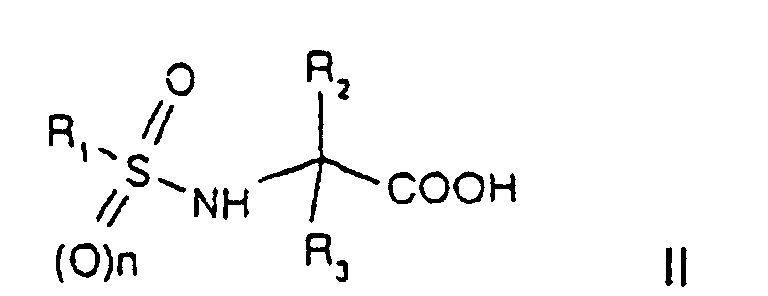
B Thienyl, Pyridyl darstellt, jeweils unsubstituiert oder mit ein bis drei Substituenten substituiert, ausgewählt aus: C1-C8-Alkyl, C1-C8-Halogenalkyl, C1-C8-Alkoxy, C1-C8-Halogenalkoxy, C1-C8-Alkylthio, C1-C8-Halogenalkylthio, Halogen, Cyano, Nitro und C1-C8-Alkoxycarbonyl. - Verfahren zur Herstellung einer Verbindung der Formel I nach Anspruch 1, das umfasstworin R1, R2, R3, R4, R5, R6, R7, R8, A und n wie vorstehend definiert sind, mit einem Aryl- oder Heteroarylhalogenid in einem inerten Verdünnungsmittel, falls erwünscht, in Gegenwart eines säurebindenden Mittels, falls erwünscht, in Gegenwart von einem oder mehreren Übergangsmetallsalzen und, falls erwünscht, in Gegenwart von einem oder mehreren Übergangsmetallkomplexen oder Übergangsmetallkomplexsalzen, bei Temperaturen von -80 bis +200°C.a) Umsetzen einer substituierten Aminosäure der Formel IIworin die Reste R1, R2 und R3 und n wie vorstehend definiert sind, oder eines Carboxy-aktivierten Derivats davon, falls erwünscht, in Gegenwart eines Katalysators, falls erwünscht, in Gegenwart eines säurebindenden Mittels und, falls erwünscht, in Gegenwart eines Verdünnungsmittels, bei Temperaturen von -80 bis +150°C mit einem Amin der Formel III
 worin R4, R5, R6, R7, R8, A und B wie vorstehend definiert sind; oder
 b) Oxidieren einer Verbindung der Formel I'worin R1, R2, R3, R4, R5, R6, R7, R8, A und B wie vorstehend definiert sind, mit der Maßgabe, dass keiner der Substituenten R1, R2, R3 und B eine Thiol- oder Alkylthiolgruppe enthält, mit einem Oxidationsmittel, in einem inerten Verdünnungsmittel, falls erwünscht, in Gegenwart einer Säure oder, falls erwünscht, in Gegenwart einer Base, bei Temperaturen von -80 bis +150°C; oder
 c) Umsetzen einer Verbindung der Formel IVworin R1, R2, R3, R4, R5, R6, R7 und R8 und n wie vorstehend definiert sind, mit einer Verbindung der Formel V
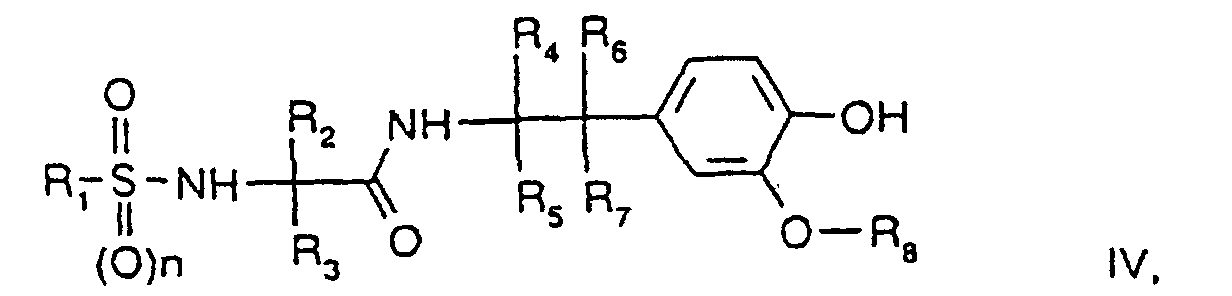 worin A und B wie vorstehend definiert sind und worin Y eine Abgangsgruppe darstellt, in einem inerten Verdünnungsmittel, falls erwünscht, in Gegenwart eines säurebindenden Mittels, bei Temperaturen von -80 bis +200°C; oder
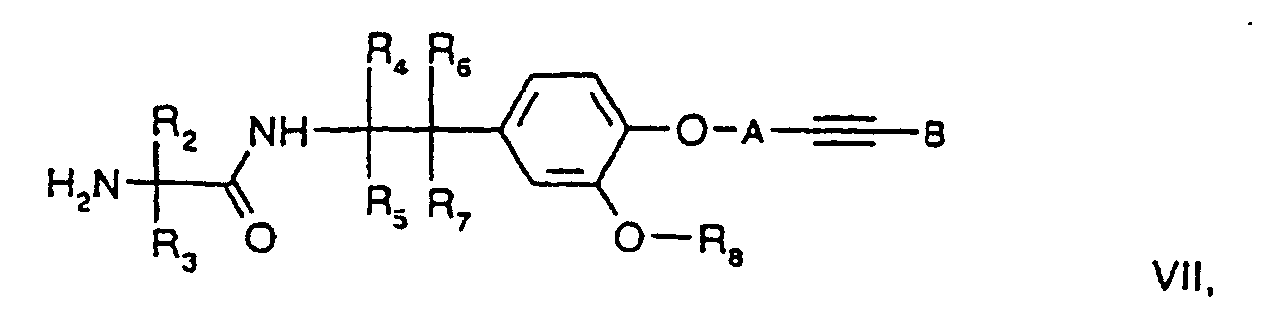
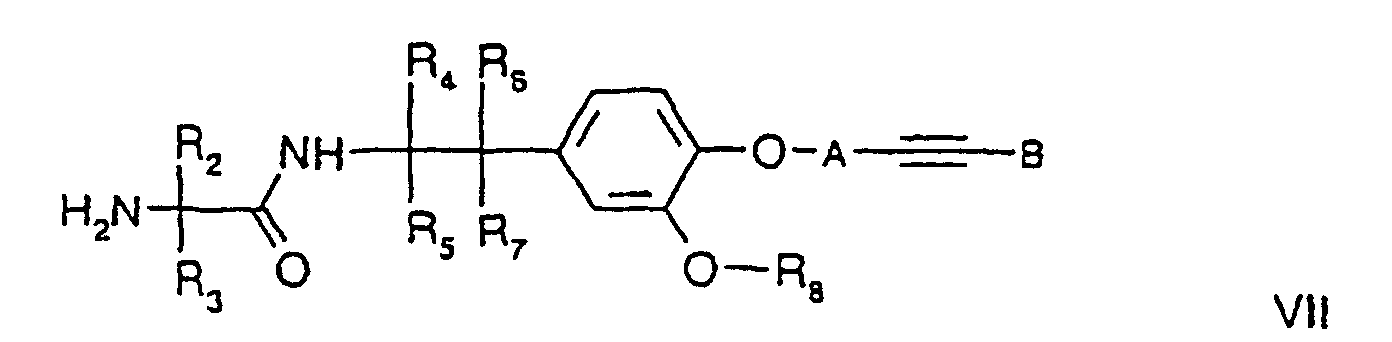
 d) Umsetzen einer Sulfonsäure oder Sulfinsäure oder eines Sulfonsäure- oder Sulfinsäurederivats der Formel VIworin R1 und n wie vorstehend definiert sind und worin X eine OH-Gruppe bzw. eine Abgangsgruppe darstellt, mit einem Amin der Formel VII
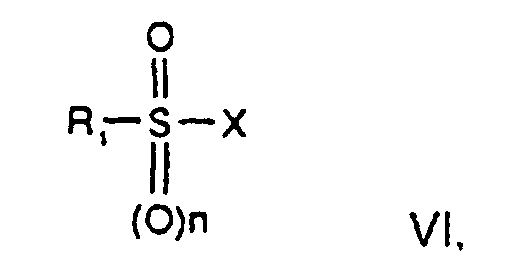 worin R2, R3, R4, R5, R6, R7, R8, A und B wie vorstehend definiert sind, in einem inerten Verdünnungsmittel, falls erwünscht, in Gegenwart eines säurebindenden Mittels, bei Temperaturen von -80 bis +150°C; oder
 e) Umsetzen eines Alkins der Formel I''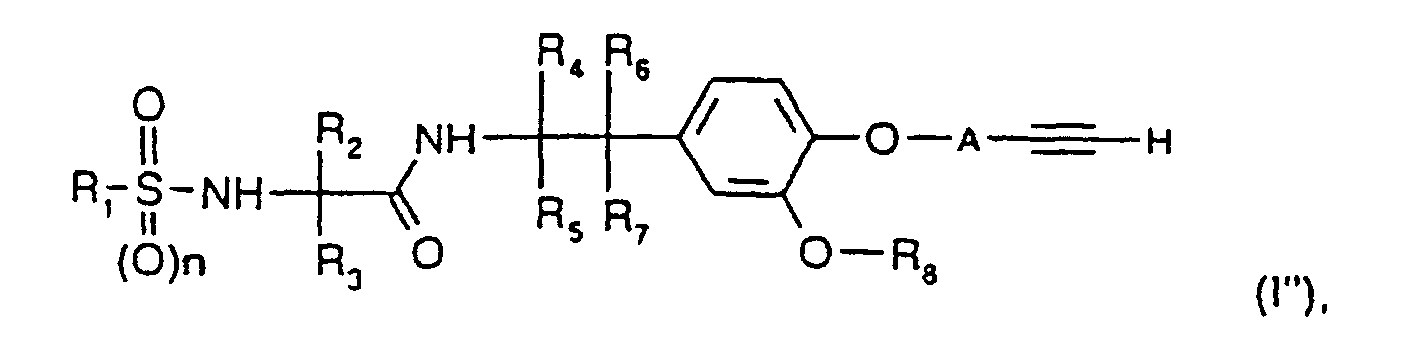
- Zusammensetzung zur Bekämpfung von und Prävention vor phytopathogenen Mikroorganismen, umfassend eine Verbindung nach Anspruch 1 als Wirkstoff zusammen mit einem geeigneten Träger.
- Zusammensetzung nach Anspruch 8, umfassend eine Verbindung der Formel I nach einem der Ansprüche 2 bis 6 als Wirkstoff.
- Verwendung einer Verbindung der Formel I nach Anspruch 1 beim Schutz von Pflanzen gegen Befall durch phytopathogene Mikroorganismen.
- Verwendung nach Anspruch 10, wobei eine Verbindung der Formel I nach einem der Ansprüche 2 bis 6 als Wirkstoff verwendet wird.
- Verfahren zur Bekämpfung von und Prävention vor einem Befall von Kulturpflanzen durch phytopathogene Mikroorganismen, das die Applikation einer Verbindung der Formel I nach Anspruch 1 als Wirkstoff auf die Pflanze, auf Pflanzenteile oder den Standort umfasst.
- Verfahren nach Anspruch 12, wobei eine Verbindung der Formel I nach einem der Ansprüche 2 bis 6 als Wirkstoff appliziert wird.
- Verfahren nach Anspruch 12, wobei die phytopathogenen Mikroorganismen Pilzorganismen sind.
- Verbindung der Formel IIIworin R4, R5, R6, R7, R8, A und B wie vorstehend definiert sind.

- Verfahren zur Herstellung einer Verbindung der Formel III nach Anspruch 15, das umfasst Anwenden vonoder
 oder
oder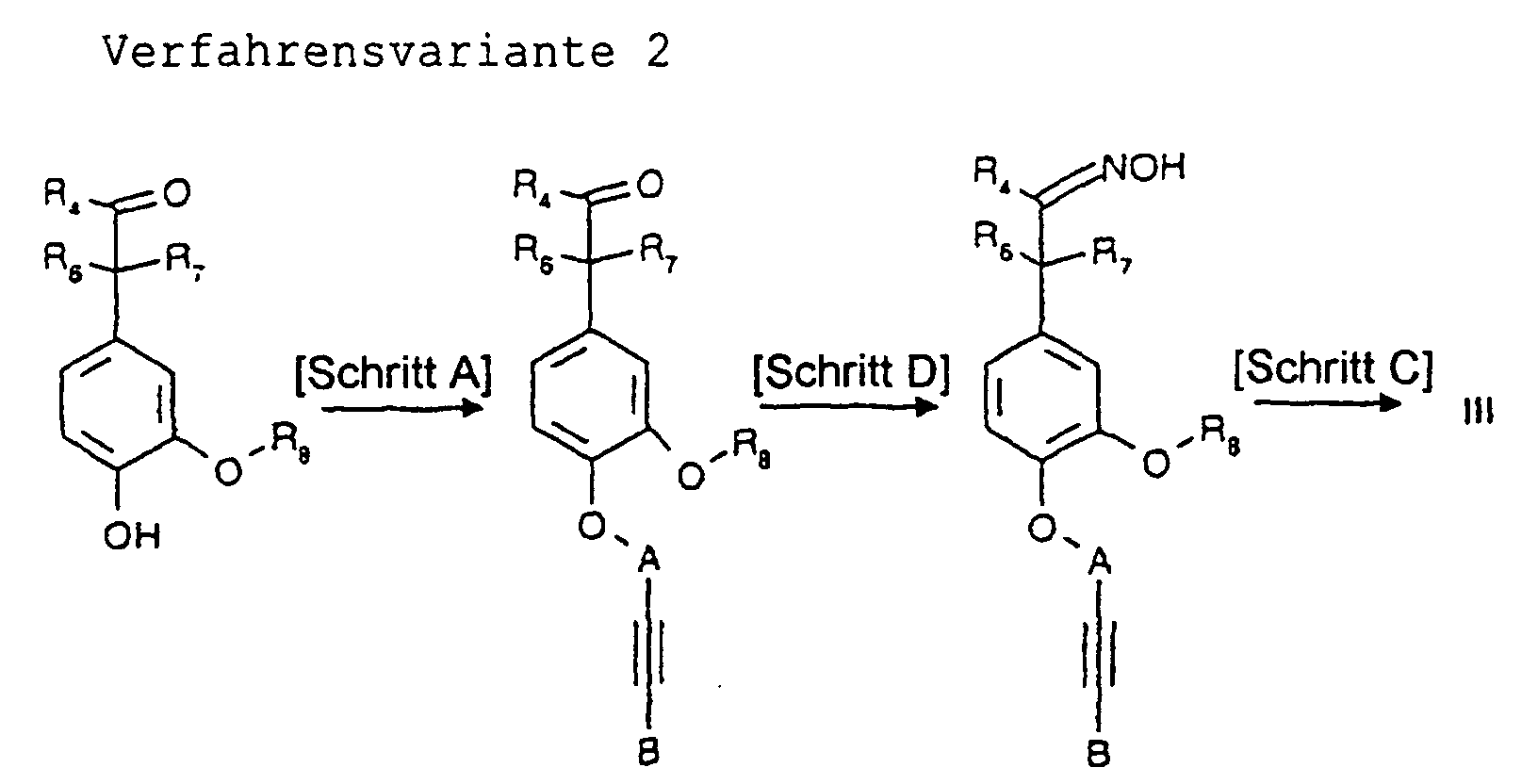 oder
oder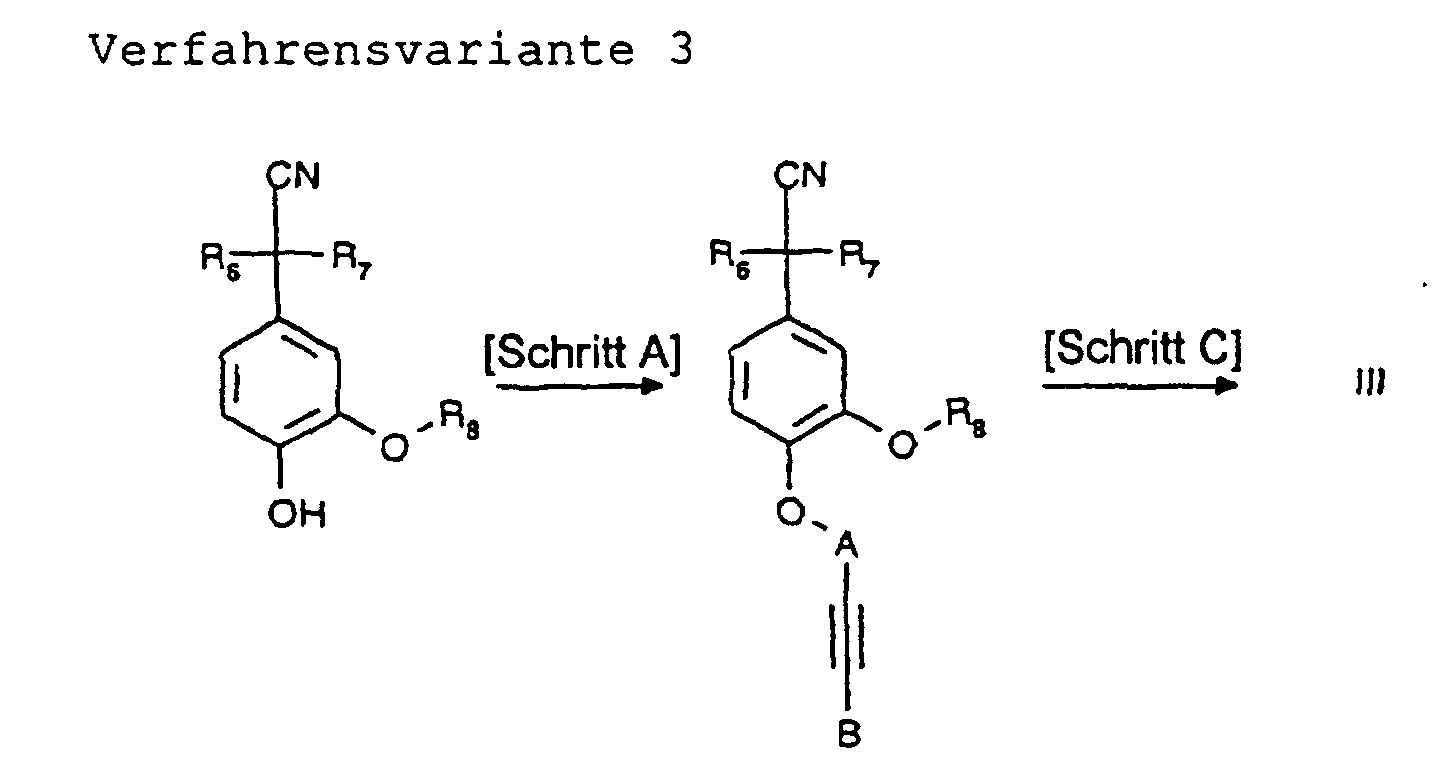 worin
worin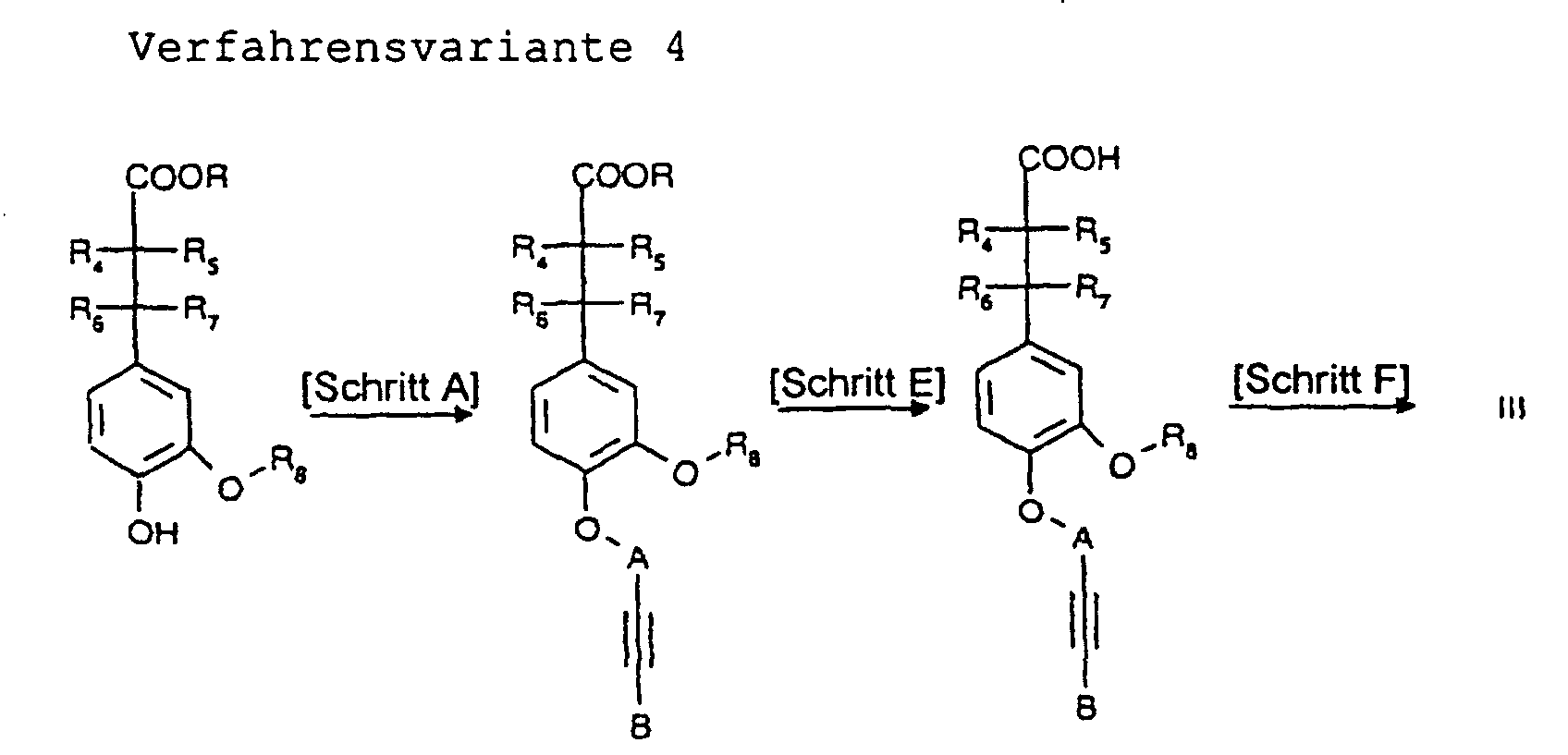
Schritt A die Alkylierung eines Phenols mit einer Verbindung der Formel Vist, worin A und B wie in Anspruch 1 definiert sind und Y eine Abgangsgruppe darstellt;
Schritt B die Reaktion eines aromatischen Aldehyds mit Nitromethan ist;
Schritt C die Reduktion einer ungesättigten Stickstoffverbindung ist;
Schritt D die Reaktion eines Aldehyds oder eines Ketons mit Hydroxylamin oder einem Hydroxylaminsalz ist;
Schritt E die Hydrolyse eines Niederalkylesters ist und Schritt F die Reaktion einer Carbonsäure oder eines aktivierten Carbonsäurederivats mit Stickstoffwasserstoffsäure oder mit einem Salz der Säure ist. - Verbindung der Formel VIIworin R2, R3, R4, R5, R6, R7, R8, A und B wie vorstehend definiert sind.
- Verfahren zur Herstellung einer Verbindung der Formel VII nach Anspruch 17, das Ausführen der nachstehenden Reaktionsfolgeumfasst, wobei

die Reaktion des Aminosäurederivats der Formel XIII oder eines Carboxy-aktivierten Derivats davon mit einem Amin der Formel XII ausgeführt wird, falls erwünscht, in Gegenwart eines Katalysators, falls erwünscht, in Gegenwart eines säurebindenden Mittels und, falls erwünscht, in Gegenwart eines Verdünnungsmittels;
und
die Reaktion einer Verbindung der Formel XIV mit einer Verbindung der Formel V ausgeführt wird, falls erwünscht, in Gegenwart eines säurebindenden Mittels und, falls erwünscht, in Gegenwart eines inerten Verdünnungsmittels, bei Temperaturen von -80 bis +200°C; und anschließend
Säurehydrolyse einer Verbindung der Formel XV mit einer anorganischen oder organischen Säure ausgeführt wird, falls erwünscht, in Gegenwart eines inerten Verdünnungsmittels, bei Temperaturen von -40 bis +150°C. - (S)-Isomer der Formel I nach Anspruch 1, worin
n die Zahl 1 ist;
R1 und R8 Methyl darstellen;
R3 (S)-2-Propyl darstellt;
R2, R4, R5, R6 und R7 Wasserstoff darstellen;
A Methylen darstellt und
B 4-Chlorphenyl darstellt. - (S)-Isomer der Formel I nach Anspruch 1, worin
n die Zahl 1 ist;
R1 Ethyl darstellt;
R3 (S)-2-Propyl darstellt;
R2, R4, R5, R6 und R7 Wasserstoff darstellen;
R8 Methyl darstellt;
A Methylen darstellt und
B 4-Chlorphenyl darstellt.
Applications Claiming Priority (3)
| Application Number | Priority Date | Filing Date | Title |
|---|---|---|---|
| CH186497 | 1997-08-06 | ||
| CH186497 | 1997-08-06 | ||
| PCT/EP1998/004849 WO1999007674A2 (en) | 1997-08-06 | 1998-08-04 | Microbicidal n-sulfonylglycin alkynyloxyphenemethyl amide derivatives |
Publications (2)
| Publication Number | Publication Date |
|---|---|
| EP1003719A2 EP1003719A2 (de) | 2000-05-31 |
| EP1003719B1 true EP1003719B1 (de) | 2002-06-05 |
Family
ID=4220395
Family Applications (1)
| Application Number | Title | Priority Date | Filing Date |
|---|---|---|---|
| EP98946275A Expired - Lifetime EP1003719B1 (de) | 1997-08-06 | 1998-08-04 | Mikrobiozide n-sulfonylglycin-alkynyloxyphenethylamid-derivate |
Country Status (24)
| Country | Link |
|---|---|
| US (1) | US6482859B1 (de) |
| EP (1) | EP1003719B1 (de) |
| JP (1) | JP4163379B2 (de) |
| KR (1) | KR100609625B1 (de) |
| CN (1) | CN1215054C (de) |
| AR (1) | AR013391A1 (de) |
| AT (1) | ATE218540T1 (de) |
| AU (1) | AU738007B2 (de) |
| BR (1) | BR9811846B1 (de) |
| CA (1) | CA2293451A1 (de) |
| DE (1) | DE69805807T2 (de) |
| DK (1) | DK1003719T3 (de) |
| ES (1) | ES2178259T3 (de) |
| GT (1) | GT199800109A (de) |
| HU (1) | HUP0004819A3 (de) |
| IL (1) | IL134266A (de) |
| NZ (1) | NZ502508A (de) |
| PL (1) | PL195781B1 (de) |
| PT (1) | PT1003719E (de) |
| RU (1) | RU2221778C2 (de) |
| TR (1) | TR200000213T2 (de) |
| TW (1) | TW491832B (de) |
| WO (1) | WO1999007674A2 (de) |
| ZA (1) | ZA987017B (de) |
Families Citing this family (21)
| Publication number | Priority date | Publication date | Assignee | Title |
|---|---|---|---|---|
| GB9826650D0 (en) | 1998-12-03 | 1999-01-27 | Novartis Ag | Organic compounds |
| TW564244B (en) * | 1999-01-11 | 2003-12-01 | Novartis Ag | Novel propargylether derivatives |
| BR0107770A (pt) * | 2000-01-25 | 2003-04-29 | Syngenta Participations Ag | Derivados de 3-fenóxi-1-fenil acetileno e seu uso como herbicidas |
| GB0011944D0 (en) | 2000-05-17 | 2000-07-05 | Novartis Ag | Organic compounds |
| GB0022338D0 (en) * | 2000-09-12 | 2000-10-25 | Novartis Ag | Organic Compounds |
| US20030189958A1 (en) * | 2000-09-12 | 2003-10-09 | Cosima Nuninger | Fungicidal compositions |
| GB0127554D0 (en) * | 2001-11-16 | 2002-01-09 | Syngenta Participations Ag | Organic compounds |
| GB0227966D0 (en) * | 2002-11-29 | 2003-01-08 | Syngenta Participations Ag | Organic Compounds |
| EP1605011B1 (de) | 2003-02-28 | 2013-01-23 | Daikin Industries, Ltd. | Granuliertes pulver aus niedermolekularem polytetrafluorethylen und pulver aus niedermolekularem polytetrafluorethylen sowie deren herstellungsverfahren |
| GB0403864D0 (en) * | 2004-02-20 | 2004-03-24 | Ucl Ventures | Modulator |
| CA2567615C (en) * | 2004-08-17 | 2008-07-29 | Syngenta Participations Ag | Aqueous neonicotinoid compositions for seed treatment |
| PE20060796A1 (es) | 2004-11-25 | 2006-09-29 | Basf Ag | Procedimiento para intensificar la eficiencia de etaboxam |
| GB0516705D0 (en) * | 2005-08-15 | 2005-09-21 | Syngenta Participations Ag | Process |
| WO2010038800A1 (ja) | 2008-09-30 | 2010-04-08 | 株式会社レイテック | 成形加工が可能なポリテトラフルオロエチレン樹脂と応用製品およびその製造方法 |
| CN101503381B (zh) * | 2009-03-05 | 2012-09-05 | 中国农业大学 | 1-氧代四氢萘基-2-磺酰胺,其制备方法和作为杀菌剂的用途 |
| GB0906515D0 (en) | 2009-04-15 | 2009-05-20 | Syngenta Participations Ag | Fungical compositions |
| ES2689956T3 (es) * | 2010-11-05 | 2018-11-16 | Oat Agrio Co., Ltd. | Compuesto de etinilfenilamidina o sal del mismo, procedimiento para producir el mismo y fungicida para una utilización agrícola y hortícola |
| CN108503508B (zh) * | 2018-05-14 | 2021-02-02 | 广州润霖医药科技有限公司 | 一种抗凝血药物替卡格雷原料中间体的合成方法 |
| CN108503528B (zh) * | 2018-05-14 | 2021-02-09 | 韦丽 | 一种抗凝血药物替卡格雷中间体原料的合成方法 |
| BR112022021228A2 (pt) * | 2020-04-26 | 2022-12-06 | Jiangsu Nhwa Pharmaceutical Co Ltd | Derivado da 1,5-di-hidro-2,4-benzodiazepin-3-ona e aplicação do mesmo |
| CN112110800B (zh) * | 2020-09-25 | 2022-06-24 | 哈尔滨工业大学(深圳) | 一种3-芳基-2-丙炔-1-醇类衍生物及其制备方法 |
Family Cites Families (5)
| Publication number | Priority date | Publication date | Assignee | Title |
|---|---|---|---|---|
| KR100358813B1 (ko) * | 1994-05-04 | 2003-02-11 | 노바티스 아게 | 살균제인n-술포닐및n-술포닐아미노산아미드 |
| HUP9901137A3 (en) * | 1995-10-18 | 2001-01-29 | Novartis Ag | N-sulphonyl and n-sulphinyl amino acid derivatives, preparation thereof, microbicide compositions containing these compounds as active ingredients and use thereof |
| WO1997014676A1 (en) * | 1995-10-20 | 1997-04-24 | Stepan Company | Improved process for preparing linear alkylbenzene sulfonates |
| US6277849B1 (en) * | 1997-02-25 | 2001-08-21 | Syngenta Crop Protection, Inc. | N-sulphonyl and N-sulphinyl amino acid amides as microbiocides |
| EP0968178B1 (de) * | 1997-02-25 | 2002-06-05 | Syngenta Participations AG | N-sulphonyl- und n-sulphinylaminosaüreamide als microbiozide |
-
1998
- 1998-07-22 GT GT199800109A patent/GT199800109A/es unknown
- 1998-08-04 WO PCT/EP1998/004849 patent/WO1999007674A2/en not_active Ceased
- 1998-08-04 DK DK98946275T patent/DK1003719T3/da active
- 1998-08-04 CN CNB988079941A patent/CN1215054C/zh not_active Expired - Fee Related
- 1998-08-04 JP JP2000507210A patent/JP4163379B2/ja not_active Expired - Fee Related
- 1998-08-04 AT AT98946275T patent/ATE218540T1/de active
- 1998-08-04 AR ARP980103858A patent/AR013391A1/es active IP Right Grant
- 1998-08-04 EP EP98946275A patent/EP1003719B1/de not_active Expired - Lifetime
- 1998-08-04 PT PT98946275T patent/PT1003719E/pt unknown
- 1998-08-04 NZ NZ502508A patent/NZ502508A/en unknown
- 1998-08-04 KR KR1020007001229A patent/KR100609625B1/ko not_active Expired - Fee Related
- 1998-08-04 CA CA002293451A patent/CA2293451A1/en not_active Abandoned
- 1998-08-04 HU HU0004819A patent/HUP0004819A3/hu not_active Application Discontinuation
- 1998-08-04 RU RU2000104513/04A patent/RU2221778C2/ru not_active IP Right Cessation
- 1998-08-04 BR BRPI9811846-3A patent/BR9811846B1/pt not_active IP Right Cessation
- 1998-08-04 DE DE69805807T patent/DE69805807T2/de not_active Expired - Lifetime
- 1998-08-04 PL PL98337827A patent/PL195781B1/pl not_active IP Right Cessation
- 1998-08-04 AU AU93388/98A patent/AU738007B2/en not_active Ceased
- 1998-08-04 ES ES98946275T patent/ES2178259T3/es not_active Expired - Lifetime
- 1998-08-04 TW TW087112794A patent/TW491832B/zh not_active IP Right Cessation
- 1998-08-04 TR TR2000/00213T patent/TR200000213T2/xx unknown
- 1998-08-04 IL IL13426698A patent/IL134266A/xx not_active IP Right Cessation
- 1998-08-05 US US09/485,280 patent/US6482859B1/en not_active Expired - Lifetime
- 1998-08-05 ZA ZA987017A patent/ZA987017B/xx unknown
Also Published As
| Publication number | Publication date |
|---|---|
| AR013391A1 (es) | 2000-12-27 |
| JP2001513529A (ja) | 2001-09-04 |
| HUP0004819A2 (hu) | 2001-05-28 |
| TW491832B (en) | 2002-06-21 |
| DK1003719T3 (da) | 2002-10-14 |
| ATE218540T1 (de) | 2002-06-15 |
| AU9338898A (en) | 1999-03-01 |
| JP4163379B2 (ja) | 2008-10-08 |
| DE69805807T2 (de) | 2003-02-06 |
| US6482859B1 (en) | 2002-11-19 |
| WO1999007674A2 (en) | 1999-02-18 |
| BR9811846A (pt) | 2000-08-08 |
| CN1215054C (zh) | 2005-08-17 |
| WO1999007674A3 (en) | 1999-04-15 |
| AU738007B2 (en) | 2001-09-06 |
| RU2221778C2 (ru) | 2004-01-20 |
| CA2293451A1 (en) | 1999-02-18 |
| KR100609625B1 (ko) | 2006-08-09 |
| ES2178259T3 (es) | 2002-12-16 |
| CN1266426A (zh) | 2000-09-13 |
| IL134266A0 (en) | 2001-04-30 |
| GT199800109A (es) | 2000-01-13 |
| HUP0004819A3 (en) | 2002-01-28 |
| KR20010022635A (ko) | 2001-03-26 |
| NZ502508A (en) | 2002-05-31 |
| BR9811846B1 (pt) | 2010-03-09 |
| PT1003719E (pt) | 2002-10-31 |
| TR200000213T2 (tr) | 2000-08-21 |
| DE69805807D1 (de) | 2002-07-11 |
| PL195781B1 (pl) | 2007-10-31 |
| ZA987017B (en) | 1999-02-08 |
| IL134266A (en) | 2005-11-20 |
| EP1003719A2 (de) | 2000-05-31 |
| PL337827A1 (en) | 2000-09-11 |
Similar Documents
| Publication | Publication Date | Title |
|---|---|---|
| US6482859B1 (en) | Microbicidal N-sulfonylglycin alkynyloxyphenethyl amide derivatives | |
| ZA200209266B (en) | Novel phenyl-propargylether derivatives. | |
| EP0968179B1 (de) | Als mikrobizide mittel verwendbare n-sulfonyl- und n-sulfinyl-aminosäureamide | |
| US20040092401A1 (en) | Novel alpha-sulfin and alpha-sulfonamino amide derivatives | |
| EP1135369B1 (de) | Alpha-sulfin- und alpha-sulfonaminosäureamide | |
| EP1140819B1 (de) | Alfa-sulfenimino-säure-derivate | |
| US20040214721A1 (en) | Novel n-bisaryl- and n-aryl-cycloalkylidenyl-alpha-sulfin- and alpha-sulfonamino acid amides | |
| EP1135368B1 (de) | Alpha-sulfin- und alpha-sulfon-aminosäureamide | |
| US20030229228A1 (en) | Novel alpha-sulfin-and alpha-sulfonamino acid amides | |
| US20030224940A1 (en) | Alpha-sulfin-and alpha-sulfonamino acid amide derivatives | |
| MXPA00001297A (es) | Derivados de n-sulfonilglicinalquiniloxifenetilamida microbicidas |
Legal Events
| Date | Code | Title | Description |
|---|---|---|---|
| PUAI | Public reference made under article 153(3) epc to a published international application that has entered the european phase |
Free format text: ORIGINAL CODE: 0009012 |
|
| 17P | Request for examination filed |
Effective date: 19991120 |
|
| AK | Designated contracting states |
Kind code of ref document: A2 Designated state(s): AT BE CH CY DE DK ES FI FR GB GR IE IT LI LU MC NL PT SE |
|
| AX | Request for extension of the european patent |
Free format text: RO PAYMENT 19991120 |
|
| RAP1 | Party data changed (applicant data changed or rights of an application transferred) |
Owner name: SYNGENTA PARTICIPATIONS AG |
|
| GRAG | Despatch of communication of intention to grant |
Free format text: ORIGINAL CODE: EPIDOS AGRA |
|
| 17Q | First examination report despatched |
Effective date: 20010725 |
|
| GRAG | Despatch of communication of intention to grant |
Free format text: ORIGINAL CODE: EPIDOS AGRA |
|
| GRAG | Despatch of communication of intention to grant |
Free format text: ORIGINAL CODE: EPIDOS AGRA |
|
| GRAH | Despatch of communication of intention to grant a patent |
Free format text: ORIGINAL CODE: EPIDOS IGRA |
|
| GRAH | Despatch of communication of intention to grant a patent |
Free format text: ORIGINAL CODE: EPIDOS IGRA |
|
| GRAA | (expected) grant |
Free format text: ORIGINAL CODE: 0009210 |
|
| AK | Designated contracting states |
Kind code of ref document: B1 Designated state(s): AT BE CH CY DE DK ES FI FR GB GR IE IT LI LU MC NL PT SE |
|
| AX | Request for extension of the european patent |
Free format text: RO PAYMENT 19991120 |
|
| REF | Corresponds to: |
Ref document number: 218540 Country of ref document: AT Date of ref document: 20020615 Kind code of ref document: T |
|
| REG | Reference to a national code |
Ref country code: GB Ref legal event code: FG4D |
|
| REG | Reference to a national code |
Ref country code: CH Ref legal event code: EP |
|
| REG | Reference to a national code |
Ref country code: IE Ref legal event code: FG4D |
|
| REF | Corresponds to: |
Ref document number: 69805807 Country of ref document: DE Date of ref document: 20020711 |
|
| ET | Fr: translation filed | ||
| REG | Reference to a national code |
Ref country code: DK Ref legal event code: T3 |
|
| REG | Reference to a national code |
Ref country code: PT Ref legal event code: SC4A Free format text: AVAILABILITY OF NATIONAL TRANSLATION Effective date: 20020819 |
|
| REG | Reference to a national code |
Ref country code: GR Ref legal event code: EP Ref document number: 20020402916 Country of ref document: GR |
|
| REG | Reference to a national code |
Ref country code: ES Ref legal event code: FG2A Ref document number: 2178259 Country of ref document: ES Kind code of ref document: T3 |
|
| PG25 | Lapsed in a contracting state [announced via postgrant information from national office to epo] |
Ref country code: MC Free format text: LAPSE BECAUSE OF NON-PAYMENT OF DUE FEES Effective date: 20030301 |
|
| PLBE | No opposition filed within time limit |
Free format text: ORIGINAL CODE: 0009261 |
|
| STAA | Information on the status of an ep patent application or granted ep patent |
Free format text: STATUS: NO OPPOSITION FILED WITHIN TIME LIMIT |
|
| 26N | No opposition filed |
Effective date: 20030306 |
|
| PGFP | Annual fee paid to national office [announced via postgrant information from national office to epo] |
Ref country code: GR Payment date: 20050713 Year of fee payment: 8 |
|
| PGFP | Annual fee paid to national office [announced via postgrant information from national office to epo] |
Ref country code: CY Payment date: 20050715 Year of fee payment: 8 |
|
| PGFP | Annual fee paid to national office [announced via postgrant information from national office to epo] |
Ref country code: PT Payment date: 20050803 Year of fee payment: 8 |
|
| PGFP | Annual fee paid to national office [announced via postgrant information from national office to epo] |
Ref country code: SE Payment date: 20050804 Year of fee payment: 8 |
|
| PGFP | Annual fee paid to national office [announced via postgrant information from national office to epo] |
Ref country code: IE Payment date: 20050811 Year of fee payment: 8 |
|
| PGFP | Annual fee paid to national office [announced via postgrant information from national office to epo] |
Ref country code: FI Payment date: 20050812 Year of fee payment: 8 |
|
| PGFP | Annual fee paid to national office [announced via postgrant information from national office to epo] |
Ref country code: DK Payment date: 20050815 Year of fee payment: 8 |
|
| PGFP | Annual fee paid to national office [announced via postgrant information from national office to epo] |
Ref country code: LU Payment date: 20050921 Year of fee payment: 8 |
|
| PG25 | Lapsed in a contracting state [announced via postgrant information from national office to epo] |
Ref country code: IE Free format text: LAPSE BECAUSE OF NON-PAYMENT OF DUE FEES Effective date: 20060804 Ref country code: FI Free format text: LAPSE BECAUSE OF NON-PAYMENT OF DUE FEES Effective date: 20060804 Ref country code: CY Free format text: LAPSE BECAUSE OF NON-PAYMENT OF DUE FEES Effective date: 20060804 |
|
| PG25 | Lapsed in a contracting state [announced via postgrant information from national office to epo] |
Ref country code: SE Free format text: LAPSE BECAUSE OF NON-PAYMENT OF DUE FEES Effective date: 20060805 |
|
| PG25 | Lapsed in a contracting state [announced via postgrant information from national office to epo] |
Ref country code: DK Free format text: LAPSE BECAUSE OF NON-PAYMENT OF DUE FEES Effective date: 20060831 |
|
| PG25 | Lapsed in a contracting state [announced via postgrant information from national office to epo] |
Ref country code: PT Free format text: LAPSE BECAUSE OF NON-PAYMENT OF DUE FEES Effective date: 20070205 |
|
| REG | Reference to a national code |
Ref country code: PT Ref legal event code: MM4A Free format text: LAPSE DUE TO NON-PAYMENT OF FEES Effective date: 20070205 |
|
| REG | Reference to a national code |
Ref country code: DK Ref legal event code: EBP |
|
| EUG | Se: european patent has lapsed | ||
| REG | Reference to a national code |
Ref country code: IE Ref legal event code: MM4A |
|
| PG25 | Lapsed in a contracting state [announced via postgrant information from national office to epo] |
Ref country code: LU Free format text: LAPSE BECAUSE OF NON-PAYMENT OF DUE FEES Effective date: 20060804 |
|
| PG25 | Lapsed in a contracting state [announced via postgrant information from national office to epo] |
Ref country code: GR Free format text: LAPSE BECAUSE OF NON-PAYMENT OF DUE FEES Effective date: 20070302 |
|
| PGFP | Annual fee paid to national office [announced via postgrant information from national office to epo] |
Ref country code: AT Payment date: 20130726 Year of fee payment: 16 |
|
| PGFP | Annual fee paid to national office [announced via postgrant information from national office to epo] |
Ref country code: IT Payment date: 20130819 Year of fee payment: 16 |
|
| PGFP | Annual fee paid to national office [announced via postgrant information from national office to epo] |
Ref country code: BE Payment date: 20130912 Year of fee payment: 16 |
|
| REG | Reference to a national code |
Ref country code: AT Ref legal event code: MM01 Ref document number: 218540 Country of ref document: AT Kind code of ref document: T Effective date: 20140804 |
|
| PG25 | Lapsed in a contracting state [announced via postgrant information from national office to epo] |
Ref country code: BE Free format text: LAPSE BECAUSE OF NON-PAYMENT OF DUE FEES Effective date: 20140831 Ref country code: IT Free format text: LAPSE BECAUSE OF NON-PAYMENT OF DUE FEES Effective date: 20140804 |
|
| PG25 | Lapsed in a contracting state [announced via postgrant information from national office to epo] |
Ref country code: AT Free format text: LAPSE BECAUSE OF NON-PAYMENT OF DUE FEES Effective date: 20140804 |
|
| REG | Reference to a national code |
Ref country code: FR Ref legal event code: PLFP Year of fee payment: 18 |
|
| PGFP | Annual fee paid to national office [announced via postgrant information from national office to epo] |
Ref country code: NL Payment date: 20150807 Year of fee payment: 18 |
|
| PGFP | Annual fee paid to national office [announced via postgrant information from national office to epo] |
Ref country code: CH Payment date: 20150714 Year of fee payment: 18 Ref country code: DE Payment date: 20150831 Year of fee payment: 18 Ref country code: GB Payment date: 20150728 Year of fee payment: 18 Ref country code: ES Payment date: 20150731 Year of fee payment: 18 |
|
| PGFP | Annual fee paid to national office [announced via postgrant information from national office to epo] |
Ref country code: FR Payment date: 20150727 Year of fee payment: 18 |
|
| REG | Reference to a national code |
Ref country code: DE Ref legal event code: R119 Ref document number: 69805807 Country of ref document: DE |
|
| REG | Reference to a national code |
Ref country code: CH Ref legal event code: PL |
|
| REG | Reference to a national code |
Ref country code: NL Ref legal event code: MM Effective date: 20160901 |
|
| GBPC | Gb: european patent ceased through non-payment of renewal fee |
Effective date: 20160804 |
|
| PG25 | Lapsed in a contracting state [announced via postgrant information from national office to epo] |
Ref country code: CH Free format text: LAPSE BECAUSE OF NON-PAYMENT OF DUE FEES Effective date: 20160831 Ref country code: LI Free format text: LAPSE BECAUSE OF NON-PAYMENT OF DUE FEES Effective date: 20160831 |
|
| REG | Reference to a national code |
Ref country code: FR Ref legal event code: ST Effective date: 20170428 |
|
| PG25 | Lapsed in a contracting state [announced via postgrant information from national office to epo] |
Ref country code: NL Free format text: LAPSE BECAUSE OF NON-PAYMENT OF DUE FEES Effective date: 20160901 |
|
| PG25 | Lapsed in a contracting state [announced via postgrant information from national office to epo] |
Ref country code: FR Free format text: LAPSE BECAUSE OF NON-PAYMENT OF DUE FEES Effective date: 20160831 Ref country code: GB Free format text: LAPSE BECAUSE OF NON-PAYMENT OF DUE FEES Effective date: 20160804 Ref country code: DE Free format text: LAPSE BECAUSE OF NON-PAYMENT OF DUE FEES Effective date: 20170301 |
|
| PG25 | Lapsed in a contracting state [announced via postgrant information from national office to epo] |
Ref country code: ES Free format text: LAPSE BECAUSE OF NON-PAYMENT OF DUE FEES Effective date: 20160805 |
|
| REG | Reference to a national code |
Ref country code: ES Ref legal event code: FD2A Effective date: 20181116 |