EP1004498B1 - Structure et procédé pour joindre les panneaux de carroserie d'automobiles - Google Patents
Structure et procédé pour joindre les panneaux de carroserie d'automobiles Download PDFInfo
- Publication number
- EP1004498B1 EP1004498B1 EP99123503A EP99123503A EP1004498B1 EP 1004498 B1 EP1004498 B1 EP 1004498B1 EP 99123503 A EP99123503 A EP 99123503A EP 99123503 A EP99123503 A EP 99123503A EP 1004498 B1 EP1004498 B1 EP 1004498B1
- Authority
- EP
- European Patent Office
- Prior art keywords
- plating
- plated steel
- panel sheet
- steel panel
- chemical conversion
- Prior art date
- Legal status (The legal status is an assumption and is not a legal conclusion. Google has not performed a legal analysis and makes no representation as to the accuracy of the status listed.)
- Expired - Lifetime
Links
- 238000000034 method Methods 0.000 title claims description 7
- 229910000831 Steel Inorganic materials 0.000 claims description 137
- 239000010959 steel Substances 0.000 claims description 137
- 238000007747 plating Methods 0.000 claims description 86
- 239000002184 metal Substances 0.000 claims description 28
- 229910052751 metal Inorganic materials 0.000 claims description 28
- 239000000956 alloy Substances 0.000 claims description 10
- 229910045601 alloy Inorganic materials 0.000 claims description 10
- 239000000126 substance Substances 0.000 description 50
- 238000006243 chemical reaction Methods 0.000 description 37
- 238000007739 conversion coating Methods 0.000 description 25
- 239000011248 coating agent Substances 0.000 description 16
- 238000000576 coating method Methods 0.000 description 16
- 229910019142 PO4 Inorganic materials 0.000 description 12
- 239000007788 liquid Substances 0.000 description 12
- NBIIXXVUZAFLBC-UHFFFAOYSA-N Phosphoric acid Chemical compound OP(O)(O)=O NBIIXXVUZAFLBC-UHFFFAOYSA-N 0.000 description 10
- SPDJAIKMJHJYAV-UHFFFAOYSA-H trizinc;diphosphate;tetrahydrate Chemical compound O.O.O.O.[Zn+2].[Zn+2].[Zn+2].[O-]P([O-])([O-])=O.[O-]P([O-])([O-])=O SPDJAIKMJHJYAV-UHFFFAOYSA-H 0.000 description 9
- 239000013078 crystal Substances 0.000 description 8
- 229910052827 phosphophyllite Inorganic materials 0.000 description 8
- NBIIXXVUZAFLBC-UHFFFAOYSA-K phosphate Chemical compound [O-]P([O-])([O-])=O NBIIXXVUZAFLBC-UHFFFAOYSA-K 0.000 description 7
- 239000010452 phosphate Substances 0.000 description 7
- 229910000147 aluminium phosphate Inorganic materials 0.000 description 5
- 230000007797 corrosion Effects 0.000 description 5
- 238000005260 corrosion Methods 0.000 description 5
- 230000006355 external stress Effects 0.000 description 5
- 238000004070 electrodeposition Methods 0.000 description 4
- 238000005530 etching Methods 0.000 description 4
- 238000004299 exfoliation Methods 0.000 description 4
- 229910052759 nickel Inorganic materials 0.000 description 4
- 239000002244 precipitate Substances 0.000 description 4
- 229910001297 Zn alloy Inorganic materials 0.000 description 2
- 239000000463 material Substances 0.000 description 2
- 238000010422 painting Methods 0.000 description 2
- 238000006557 surface reaction Methods 0.000 description 2
- -1 Co Inorganic materials 0.000 description 1
- 229910000531 Co alloy Inorganic materials 0.000 description 1
- 229910000640 Fe alloy Inorganic materials 0.000 description 1
- 229910000990 Ni alloy Inorganic materials 0.000 description 1
- 229910001096 P alloy Inorganic materials 0.000 description 1
- 239000010953 base metal Substances 0.000 description 1
- 239000000969 carrier Substances 0.000 description 1
- 238000005097 cold rolling Methods 0.000 description 1
- 230000003247 decreasing effect Effects 0.000 description 1
- 238000007598 dipping method Methods 0.000 description 1
- 238000009713 electroplating Methods 0.000 description 1
- 238000011156 evaluation Methods 0.000 description 1
- 239000005002 finish coating Substances 0.000 description 1
- 238000005098 hot rolling Methods 0.000 description 1
- 150000002739 metals Chemical class 0.000 description 1
- 239000003973 paint Substances 0.000 description 1
- XLYOFNOQVPJJNP-UHFFFAOYSA-N water Substances O XLYOFNOQVPJJNP-UHFFFAOYSA-N 0.000 description 1
- 229910052725 zinc Inorganic materials 0.000 description 1
- 229910000165 zinc phosphate Inorganic materials 0.000 description 1
Images





Classifications
-
- C—CHEMISTRY; METALLURGY
- C23—COATING METALLIC MATERIAL; COATING MATERIAL WITH METALLIC MATERIAL; CHEMICAL SURFACE TREATMENT; DIFFUSION TREATMENT OF METALLIC MATERIAL; COATING BY VACUUM EVAPORATION, BY SPUTTERING, BY ION IMPLANTATION OR BY CHEMICAL VAPOUR DEPOSITION, IN GENERAL; INHIBITING CORROSION OF METALLIC MATERIAL OR INCRUSTATION IN GENERAL
- C23C—COATING METALLIC MATERIAL; COATING MATERIAL WITH METALLIC MATERIAL; SURFACE TREATMENT OF METALLIC MATERIAL BY DIFFUSION INTO THE SURFACE, BY CHEMICAL CONVERSION OR SUBSTITUTION; COATING BY VACUUM EVAPORATION, BY SPUTTERING, BY ION IMPLANTATION OR BY CHEMICAL VAPOUR DEPOSITION, IN GENERAL
- C23C28/00—Coating for obtaining at least two superposed coatings either by methods not provided for in a single one of groups C23C2/00 - C23C26/00 or by combinations of methods provided for in subclasses C23C and C25C or C25D
- C23C28/02—Coating for obtaining at least two superposed coatings either by methods not provided for in a single one of groups C23C2/00 - C23C26/00 or by combinations of methods provided for in subclasses C23C and C25C or C25D only coatings only including layers of metallic material
- C23C28/023—Coating for obtaining at least two superposed coatings either by methods not provided for in a single one of groups C23C2/00 - C23C26/00 or by combinations of methods provided for in subclasses C23C and C25C or C25D only coatings only including layers of metallic material only coatings of metal elements only
- C23C28/025—Coating for obtaining at least two superposed coatings either by methods not provided for in a single one of groups C23C2/00 - C23C26/00 or by combinations of methods provided for in subclasses C23C and C25C or C25D only coatings only including layers of metallic material only coatings of metal elements only with at least one zinc-based layer
-
- B—PERFORMING OPERATIONS; TRANSPORTING
- B62—LAND VEHICLES FOR TRAVELLING OTHERWISE THAN ON RAILS
- B62D—MOTOR VEHICLES; TRAILERS
- B62D29/00—Superstructures, understructures, or sub-units thereof, characterised by the material thereof
-
- C—CHEMISTRY; METALLURGY
- C23—COATING METALLIC MATERIAL; COATING MATERIAL WITH METALLIC MATERIAL; CHEMICAL SURFACE TREATMENT; DIFFUSION TREATMENT OF METALLIC MATERIAL; COATING BY VACUUM EVAPORATION, BY SPUTTERING, BY ION IMPLANTATION OR BY CHEMICAL VAPOUR DEPOSITION, IN GENERAL; INHIBITING CORROSION OF METALLIC MATERIAL OR INCRUSTATION IN GENERAL
- C23C—COATING METALLIC MATERIAL; COATING MATERIAL WITH METALLIC MATERIAL; SURFACE TREATMENT OF METALLIC MATERIAL BY DIFFUSION INTO THE SURFACE, BY CHEMICAL CONVERSION OR SUBSTITUTION; COATING BY VACUUM EVAPORATION, BY SPUTTERING, BY ION IMPLANTATION OR BY CHEMICAL VAPOUR DEPOSITION, IN GENERAL
- C23C28/00—Coating for obtaining at least two superposed coatings either by methods not provided for in a single one of groups C23C2/00 - C23C26/00 or by combinations of methods provided for in subclasses C23C and C25C or C25D
- C23C28/02—Coating for obtaining at least two superposed coatings either by methods not provided for in a single one of groups C23C2/00 - C23C26/00 or by combinations of methods provided for in subclasses C23C and C25C or C25D only coatings only including layers of metallic material
- C23C28/021—Coating for obtaining at least two superposed coatings either by methods not provided for in a single one of groups C23C2/00 - C23C26/00 or by combinations of methods provided for in subclasses C23C and C25C or C25D only coatings only including layers of metallic material including at least one metal alloy layer
-
- C—CHEMISTRY; METALLURGY
- C25—ELECTROLYTIC OR ELECTROPHORETIC PROCESSES; APPARATUS THEREFOR
- C25D—PROCESSES FOR THE ELECTROLYTIC OR ELECTROPHORETIC PRODUCTION OF COATINGS; ELECTROFORMING; APPARATUS THEREFOR
- C25D5/00—Electroplating characterised by the process; Pretreatment or after-treatment of workpieces
- C25D5/10—Electroplating with more than one layer of the same or of different metals
-
- C—CHEMISTRY; METALLURGY
- C25—ELECTROLYTIC OR ELECTROPHORETIC PROCESSES; APPARATUS THEREFOR
- C25D—PROCESSES FOR THE ELECTROLYTIC OR ELECTROPHORETIC PRODUCTION OF COATINGS; ELECTROFORMING; APPARATUS THEREFOR
- C25D5/00—Electroplating characterised by the process; Pretreatment or after-treatment of workpieces
- C25D5/10—Electroplating with more than one layer of the same or of different metals
- C25D5/12—Electroplating with more than one layer of the same or of different metals at least one layer being of nickel or chromium
-
- Y—GENERAL TAGGING OF NEW TECHNOLOGICAL DEVELOPMENTS; GENERAL TAGGING OF CROSS-SECTIONAL TECHNOLOGIES SPANNING OVER SEVERAL SECTIONS OF THE IPC; TECHNICAL SUBJECTS COVERED BY FORMER USPC CROSS-REFERENCE ART COLLECTIONS [XRACs] AND DIGESTS
- Y10—TECHNICAL SUBJECTS COVERED BY FORMER USPC
- Y10T—TECHNICAL SUBJECTS COVERED BY FORMER US CLASSIFICATION
- Y10T29/00—Metal working
- Y10T29/49—Method of mechanical manufacture
- Y10T29/49826—Assembling or joining
- Y10T29/49885—Assembling or joining with coating before or during assembling
-
- Y—GENERAL TAGGING OF NEW TECHNOLOGICAL DEVELOPMENTS; GENERAL TAGGING OF CROSS-SECTIONAL TECHNOLOGIES SPANNING OVER SEVERAL SECTIONS OF THE IPC; TECHNICAL SUBJECTS COVERED BY FORMER USPC CROSS-REFERENCE ART COLLECTIONS [XRACs] AND DIGESTS
- Y10—TECHNICAL SUBJECTS COVERED BY FORMER USPC
- Y10T—TECHNICAL SUBJECTS COVERED BY FORMER US CLASSIFICATION
- Y10T29/00—Metal working
- Y10T29/49—Method of mechanical manufacture
- Y10T29/4998—Combined manufacture including applying or shaping of fluent material
- Y10T29/49982—Coating
-
- Y—GENERAL TAGGING OF NEW TECHNOLOGICAL DEVELOPMENTS; GENERAL TAGGING OF CROSS-SECTIONAL TECHNOLOGIES SPANNING OVER SEVERAL SECTIONS OF THE IPC; TECHNICAL SUBJECTS COVERED BY FORMER USPC CROSS-REFERENCE ART COLLECTIONS [XRACs] AND DIGESTS
- Y10—TECHNICAL SUBJECTS COVERED BY FORMER USPC
- Y10T—TECHNICAL SUBJECTS COVERED BY FORMER US CLASSIFICATION
- Y10T428/00—Stock material or miscellaneous articles
- Y10T428/12—All metal or with adjacent metals
- Y10T428/12493—Composite; i.e., plural, adjacent, spatially distinct metal components [e.g., layers, joint, etc.]
- Y10T428/12535—Composite; i.e., plural, adjacent, spatially distinct metal components [e.g., layers, joint, etc.] with additional, spatially distinct nonmetal component
- Y10T428/12583—Component contains compound of adjacent metal
-
- Y—GENERAL TAGGING OF NEW TECHNOLOGICAL DEVELOPMENTS; GENERAL TAGGING OF CROSS-SECTIONAL TECHNOLOGIES SPANNING OVER SEVERAL SECTIONS OF THE IPC; TECHNICAL SUBJECTS COVERED BY FORMER USPC CROSS-REFERENCE ART COLLECTIONS [XRACs] AND DIGESTS
- Y10—TECHNICAL SUBJECTS COVERED BY FORMER USPC
- Y10T—TECHNICAL SUBJECTS COVERED BY FORMER US CLASSIFICATION
- Y10T428/00—Stock material or miscellaneous articles
- Y10T428/12—All metal or with adjacent metals
- Y10T428/12493—Composite; i.e., plural, adjacent, spatially distinct metal components [e.g., layers, joint, etc.]
- Y10T428/12771—Transition metal-base component
- Y10T428/12785—Group IIB metal-base component
- Y10T428/12792—Zn-base component
- Y10T428/12799—Next to Fe-base component [e.g., galvanized]
-
- Y—GENERAL TAGGING OF NEW TECHNOLOGICAL DEVELOPMENTS; GENERAL TAGGING OF CROSS-SECTIONAL TECHNOLOGIES SPANNING OVER SEVERAL SECTIONS OF THE IPC; TECHNICAL SUBJECTS COVERED BY FORMER USPC CROSS-REFERENCE ART COLLECTIONS [XRACs] AND DIGESTS
- Y10—TECHNICAL SUBJECTS COVERED BY FORMER USPC
- Y10T—TECHNICAL SUBJECTS COVERED BY FORMER US CLASSIFICATION
- Y10T428/00—Stock material or miscellaneous articles
- Y10T428/12—All metal or with adjacent metals
- Y10T428/12493—Composite; i.e., plural, adjacent, spatially distinct metal components [e.g., layers, joint, etc.]
- Y10T428/12771—Transition metal-base component
- Y10T428/12861—Group VIII or IB metal-base component
- Y10T428/12931—Co-, Fe-, or Ni-base components, alternative to each other
-
- Y—GENERAL TAGGING OF NEW TECHNOLOGICAL DEVELOPMENTS; GENERAL TAGGING OF CROSS-SECTIONAL TECHNOLOGIES SPANNING OVER SEVERAL SECTIONS OF THE IPC; TECHNICAL SUBJECTS COVERED BY FORMER USPC CROSS-REFERENCE ART COLLECTIONS [XRACs] AND DIGESTS
- Y10—TECHNICAL SUBJECTS COVERED BY FORMER USPC
- Y10T—TECHNICAL SUBJECTS COVERED BY FORMER US CLASSIFICATION
- Y10T428/00—Stock material or miscellaneous articles
- Y10T428/12—All metal or with adjacent metals
- Y10T428/12493—Composite; i.e., plural, adjacent, spatially distinct metal components [e.g., layers, joint, etc.]
- Y10T428/12771—Transition metal-base component
- Y10T428/12861—Group VIII or IB metal-base component
- Y10T428/12937—Co- or Ni-base component next to Fe-base component
-
- Y—GENERAL TAGGING OF NEW TECHNOLOGICAL DEVELOPMENTS; GENERAL TAGGING OF CROSS-SECTIONAL TECHNOLOGIES SPANNING OVER SEVERAL SECTIONS OF THE IPC; TECHNICAL SUBJECTS COVERED BY FORMER USPC CROSS-REFERENCE ART COLLECTIONS [XRACs] AND DIGESTS
- Y10—TECHNICAL SUBJECTS COVERED BY FORMER USPC
- Y10T—TECHNICAL SUBJECTS COVERED BY FORMER US CLASSIFICATION
- Y10T428/00—Stock material or miscellaneous articles
- Y10T428/12—All metal or with adjacent metals
- Y10T428/12493—Composite; i.e., plural, adjacent, spatially distinct metal components [e.g., layers, joint, etc.]
- Y10T428/12771—Transition metal-base component
- Y10T428/12861—Group VIII or IB metal-base component
- Y10T428/12944—Ni-base component
-
- Y—GENERAL TAGGING OF NEW TECHNOLOGICAL DEVELOPMENTS; GENERAL TAGGING OF CROSS-SECTIONAL TECHNOLOGIES SPANNING OVER SEVERAL SECTIONS OF THE IPC; TECHNICAL SUBJECTS COVERED BY FORMER USPC CROSS-REFERENCE ART COLLECTIONS [XRACs] AND DIGESTS
- Y10—TECHNICAL SUBJECTS COVERED BY FORMER USPC
- Y10T—TECHNICAL SUBJECTS COVERED BY FORMER US CLASSIFICATION
- Y10T428/00—Stock material or miscellaneous articles
- Y10T428/12—All metal or with adjacent metals
- Y10T428/12493—Composite; i.e., plural, adjacent, spatially distinct metal components [e.g., layers, joint, etc.]
- Y10T428/12771—Transition metal-base component
- Y10T428/12861—Group VIII or IB metal-base component
- Y10T428/12951—Fe-base component
- Y10T428/12958—Next to Fe-base component
Definitions
- the present invention generally relates to a structure and method for joining panel sheets, and more particularly to such structure and method for joining Zn-plated steel panel sheets with non-plated steel panel sheets.
- At least one surface (outer surface) of a steel plate is plated with Zn or its alloy in order to prevent corrosion and maintain decent appearance when the steel plate is used as a panel sheet for an automobile body.
- a common Zn-plated steel panel sheet for an automobile is manufactured by hot or cold rolling a steel plate, and electroplating or hot dipping the steel plate to form a Zn or Zn-alloy plating (collectively referred to as "Zn plating') over a surface of the steel plate.
- FIG. 9A of the accompanying drawings illustrated is one example of automobile panel sheet 91a that incorporates a steel plate coated with Zn plating.
- the base member (steel plate) is first plated with Zn or its alloy 95 to provide a Zn-plated steel panel sheet (corrosion-proof steel plate) 94.
- the steel plate 94 is then subjected to chemical conversion coating treatment with phosphate liquid to create a chemical conversion coating (Hopeite) 96 over the Zn coating.
- a first coating or undercoating 97 is formed by electrodeposition to provide an inner plate 92a.
- An intermediate coat 98 is further formed over the undercoat 97, and a finish coat 99 is then formed over the intermediate coat 98 to provide an outer plate 93a.
- This outer plate 93a is the panel sheet 91a.
- the steel plate 94 has the Zn coating 95 on both surfaces, but only one surface is illustrated.
- FIG. 9B of the accompanying drawings illustrated is another example of automobile panel sheet 91b that contains a steel plate without Zn plating.
- Anon-plated steel panel sheet 102 is first coated with a chemical conversion coat (Phosphophyllite) 103 by phosphate liquid. Then, an undercoat 97 is applied over the phosphate crystal coat 103 by electrodeposition to provide an inner plate 92b.
- An outer plate 93b is obtained by further coating the inner plate 92b with an intermediate coat 98 and finish coat 99.
- the outer plate 93b is the panel member 91b.
- intermediate coat 98 is selected according to, for example, the type of the automobile. Therefore, it should also be noted that the intermediate coat 98 may be dispensed with if unnecessary.
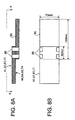
- an automobile panel member is made from a plurality of panel sheets. If an entire panel member of an automobile body is made from a plurality of Zn-plated steel panel sheets 94 only, a cost is raised considerably. Therefore, as illustrated in Figure 8A of the accompanying drawings, the expensive Zn-plated steel panel sheet is connected to the inexpensive non-plated steel panel sheet in a partly overlapping manner such that the Zn-plated steel panel sheet is located at an area of the body which requires high resistance to corrosion.
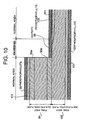
- Figure 10 of the accompanying drawings illustrates an overlapping portion of the two sheets in an enlarged scale.
- a chemical conversion coating (Hopeite) 96 is formed over the surface of a Zn plating 95a by phosphoric acid etching, and another chemical conversion coating (Phosphophyllite) 103 is formed over the surface of the non-plated steel panel sheet 102 ("Normal Area" in Figure 10) by phosphoric acid etching.
- Anode and cathode exist microscopically (they are present very closely), and therefore an anode reaction (phosphoric acid etching) and a cathode reaction (generation of chemical conversion crystal around the etched area) take place on the same steel plate.
- the crystal precipitates and grows to extend over the anode-etched surface which is fresh and reactive (zones designated at 101 in Figure 10).
- the Zn plating 95a and chemical conversion coating (Hopeite) 96 are firmly joined with each other, and the non-plated steel panel sheet 102 and chemical conversion coating (Phosphophyllite) 103 are also firmly joined with each other.
- the panel member always has at least one connection of the Zn-plated steel panel sheet 94 and non-plated steel panel sheet 102. In the vicinity of the connection, a voltage difference is produced due to contact of different metals when dipped in the chemical conversion treatment liquid.
- Zn base metal
- Zn base metal
- Weak Adhesion Area in Figure 10
- Zn is only dissolved by the anode reaction, and crystal precipitates and grows on the non-etched steel surface.
- a chemical conversion crystal is formed on the Fe-based steel plate in the range of about 20 mm from the two-sheet connection, it is not the chemical conversion coating (Phophphyllite) 103 but the chemical conversion coating (Hopeite) 96 having no Fe.
- the chemical conversion coating (Hopeite) 96 is difficult to adhere onto the non-plated steel panel sheet 102 and easy to exfoliate. Therefore, connection of the Zn-plated steel panel sheet 94 and non-plated steel panel sheet 102 (different metal connection) is not applicable to those areas of a vehicle body panel which are subjected to an external stress. Such areas of the vehicle body are, for example:
- the non-plated steel panel sheet 102 itself possesses a corrosion resistance required by the vehicle body, it cannot be used for those areas such as mentioned above. Instead, the expensive Zn-plated steel panel sheets 94 should be used.
- the Zn-plated steel panel sheets are joined with each other to provide a panel member for such areas because the same metal connection does not produce a voltage difference in the chemical conversion treatment. Accordingly, a Zn-plated steel panel sheet utilization ratio is high in the conventional body panel.
- An object of the present invention is to eliminate the above-described problems of the conventional auto body panel.
- a panel member including a steel plate, two layers of Zn plating formed over two opposite surfaces of the steel plate respectively, another layer of plating formed over at least one of the two layers of Zn plating, so as to form a plated steel panel sheet, and a non-plated steel panel sheet joined with the plated steel panel sheet such that the another layer of plating contacts the non-plated steel panel sheet.
- the another layer of plating is made from a metal or alloy having a standard electrode potential equal to or more than Fe.
- connection between the plated steel panel sheet and non-plated steel panel sheet is connection of the metal (or alloy) plating and Fe
- the connection of the plated and non-plated steel panel sheets is less influenced by the voltage difference caused in the chemical conversion treatment bath due to different metal connection.
- a chemical conversion coating Phosphophyllite
- a chemical conversion coating Hopeite
- the another layer of plating is made from Ni, Ni alloy, Fe-P alloy, Co, or Co alloy.
- a method of joining panel sheets including the step of providing a steel plate, the step of forming two layers of Zn plating over two opposite surfaces of the steel plate respectively, the step of forming another layer of plating over at least one of the two layers of Zn plating, thereby providing a plated steel panel sheet, and the step of joining a non-plated steel panel sheet with the plated steel panel sheet such that the another layer of plating is in contact with the non-plated steel panel sheet.
- the another layer of plating is made from a metal or alloy having a standard electrode potential equal to or more than Fe.
- the plated steel panel sheet and the non-plated steel panel sheet may be joined in a partly overlapping manner.
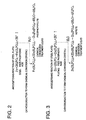
- This panel includes a Zn-plated steel panel sheet 4 and a non-plated steel panel sheet 5 connected to the panel sheet 4 in a partly overlapping manner as shown in Figure 8A.
- the Zn-plated steel panel sheet 4 includes a base steel plate 1, Zn-plating layers 2a, 2b formed on both surfaces of the steel plate 1, and another plating layers 3, 3 formed over the Zn-plating layers 2a, 2b.
- the latter layers of plating 3 are coating of metal or alloy having a standard electrode potential equal to or more than Fe, and simply referred to as metal plating below.
- the metal plating 3 is made from Ni, Fe-P or Co if cost reduction and general use are expected.
- a chemical conversion coating (Hopeite) is formed by applying a chemical conversion treatment to the surface of the metal plating 3 containing Ni or Co.
- another chemical conversion coating (Phosphophyllite) 8 is formed if the surface of the metal plating 3 containing Fe-P is subjected to the chemical conversion treatment.
- the metal plating 3 contains Fe-P.
- the Zn-plated steel panel sheet 4 and non-plated steel panel sheet 5 are connected and subjected to the chemical conversion treatment.
- the chemical conversion coating 8 is created on that surface 6 of the metal plating 3 which is etched by chemical conversion treatment liquid.
- two or three painting layers undercoating, intermediate coating and finish coating as those shown in Figures 9A, 9B may also be applied over the chemical coating 8.
- An amount of plating in the layer 3 is equal to or more than 0.25 g/m 2 if the layer 3 is used at a position less influenced by external stress. However, if the steel plate 1 is utilized at a position exposed to the external stress, then its amount is preferably raised to or more than 0.70 g/m 2 .
- the upper limit of the amount of coating is preferably 1.5 g/m 2 in the case of Ni or Co metal plating 3 because too much plating will prevent the chemical conversion treatment liquid from contacting the Zn-plated layers 2a, 2b, which would disable the etching.
- the amount of plating may not be limited in the case of Fe-P metal plating 3.
- the metal plating layers 3 are not necessarily formed over both of the Zn plating layers 2a, 2b.
- the metal plating 3 may be provided on the Zn plating 2b only, and the metal plating 3 associated with the Zn plating 2b may be connected to the non-plated steel panel sheet 5.
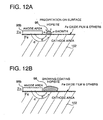
- a chemical conversion reaction that takes place at the non-plated steel panel sheet 5 is an anode reaction in which ionized Fe reacts with free phosphoric acid of the chemical conversion treatment liquid, thereby generating Fe(H 2 PO 4 ) 2 . Then, Fe(H 2 PO 4 ) 2 reacts with the chemical conversion treatment liquid. This is a cathode reaction and precipitates phosphate crystal: Zn 2 Fe(PO 4 ) 2 • 4H 2 O (Phosphophyllite) which grows over the non-plated steel panel sheet 5.
- a chemical conversion reaction at the Zn-plated steel panel sheet 4 is an anode reaction; ionized Zn reacts with the free phosphoric acid of the chemical conversion treatment liquid. This results in generation of Zn(H 2 PO 4 ) 2 . Subsequently, a cathode reaction takes place; Zn(H 2 PO 4 ) 2 reacts with the chemical conversion treatment liquid. This reaction causes a phosphate crystal, namely Zn 3 (PO 4 ) 2 • 4H 2 O (Hopeite), to precipitate and grow over the Zn-plated steel panel sheet 4.
- a phosphate crystal namely Zn 3 (PO 4 ) 2 • 4H 2 O (Hopeite
- connection between the Zn-plated steel panel sheet 4 and non-plated steel panel sheet 5 is contact of the metal plating 3 and Fe because that surface of the Zn-plated steel panel sheet 4 which is connected to the non-plated steel panel sheet 5 is formed by the metal plating 3 that is made from metal or alloy which has a standard electrode potential not less than Fe and which has little potential difference from the Fe standard electrode potential.
- crystal of another chemical conversion coating (Phosphophyllite) 8 precipitates and grows on the whole surface of the Zn-plated steel panel sheet 4 and non-plated steel panel sheet 5 except for the two-sheet overlapping portion.
- this chemical conversion coating 8 extends over a fresh and reactive surface that is etched with the anode. Since the chemical conversion coating 8 is firmly secured on the non-plated steel panel sheet 5, it does not exfoliate from the non-plated steel panel sheet 5.
- non-plated steel panel sheet 5 Since the chemical conversion coating (Phosphophyllite) 8 and non-plated steel panel sheet 5 are firmly joined to each other, it is now possible to use the inexpensive non-plated steel panel sheet 5 for a panel member at a position subjected to an external stress such as the positions (1) to (5) described earlier. It should be remembered that the non-plated steel panel sheet 5 cannot be utilized at such areas in a conventional structure.
- each of the steel panel sheets 41 included a base steel plate 42 having a length of 150 mm, a width of 70 mm, and a thickness of 0.9 mm. It also had Zn-plated coating (85 to 92 wt% Zn-Fe plating) 43a, 43b with the plating rate or density of 45 g/m 2 and layer thickness of 5.7 ⁇ m, and Ni plating 44a, 44b with the plating rate of 0.12 to 1.10 g/m 2 and layer thickness of 132 to 1210 angstrom.
- the Zn plating 43a, 43b covered the base steel plate 42, and the Ni plating 44a, 44b covered the Zn plating as illustrated.
- the Zn-plated steel panel sheet 41 was connected to a non-plated steel panel sheet (available from Nippon Steel Corporation of Tokyo Japan) 85 having a length of 150 mm, a width of 70 mm and a thickness of 0.9 mm in a partly overlapping manner.
- a non-plated steel panel sheet available from Nippon Steel Corporation of Tokyo Japan
- the two panel sheets 41 and 85 overlapped 50 mm.
- a metallic clip 86 damped the overlapping portion when each specimen was prepared.
- Zn-plated steel panel sheet available from Kawasaki Steel Corporation of Tokyo, Japan
- 51 which included a base steel plate 52 having a length of 150 mm, a width of 70 mm and a thickness of 0.9 mm. It also had Zn-plating (85 to 92 wt% Zn-Fe plating) 53a, 53b with the plating rate of 45 g/m 2 and a coating thickness of 5.7 ⁇ m, and Fe-P plating (P: 0.5 to 15 wt%) 54a, 54b with the plating rate of 2.60 g/m 2 and a coating thickness of 2600 angstrom.
- a specimen was prepared as in Example 1 except for the above- described Zn-plated steel panel sheet 51.
- a specimen was prepared as in Example 1 except for the above- described Zn-plated steel panel sheet 61.
- Zn-plated steel panel sheet available from NKK Corporation 71 which included a base steel plate 72 having a length of 150 mm, a width of 70 mm and a thickness of 0.9 mm, Zn-plating (85 to 92 wt% Zn-Fe plating) 73a, 73b with the plating rate of 45 g/m 2 and a coating thickness of 5.7 ⁇ m, and Fe plating (85 to 90 wt% Fe-Zn plating) 74a, 74b with the plating rate of 4.00 g/m 2 and a coating thickness of 4000 angstrom.
- Zn-plating 85 to 92 wt% Zn-Fe plating
- Fe plating 85 to 90 wt% Fe-Zn plating
- a specimen was prepared as in Example 1 except for the above- described Zn-plated steel panel sheet 71.
- the specimens covered with the chemical conversion coating were then immersed into a painting bath ("IT-11" available from Kansai Paint, Co., Ltd. of Osaka, Japan) with a temperature of 32 °C for 150 seconds to cause electrodeposition until an electrodeposition coating of 16 to 20 ⁇ m was obtained.
- a painting bath ("IT-11" available from Kansai Paint, Co., Ltd. of Osaka, Japan) with a temperature of 32 °C for 150 seconds to cause electrodeposition until an electrodeposition coating of 16 to 20 ⁇ m was obtained.
- Table II shows evaluation results. In this table, O indicates very good adhesion, ⁇ indicates good adhesion, and X indicates bad adhesion.
- Example 1 As understood from Table II, the specimens of Example 1 had an exfoliation width which decreased as the amount of Ni adhesion in the plating 44a, 44b ( Figure 4) increased. No exfoliation was observed in the cross-cut adhesion test when the amount of Ni adhesion was equal to or more than 0.25 g/m 2 . No exfoliation was observed in the metallic scale scratch test when the amount of Ni adhesion was equal to or more than 0.77 g/m 2 . In Example 2, likewise, since the amount of Fe-P adhesion in the Fe-P plating 54a, 54b ( Figure 5) was 2.60 g/m 2 , there was no exfoliation in the cross-cut adhesion test and metallic scale scratch test.
- the non-plated steel panel sheet 85 and chemical conversion coating are firmly joined with each other if the amount of adhesion of the metal plating in the metal plating 44a, 44b (or 54a, 54b) formed on the surface of the Zn plating 43a, 43b (or 53a, 53b) is not less than 0.70 g/m 2 .
- the specimen of Comparison 1 had a large maximum-exfoliation-width in the cross-cut adhesion test and metallic scale scratch test, i.e., 3.0 mm and 7.5 mm, respectively.
- the specimen of Comparison 2 demonstrated a smaller maximum-exfoliation-width in the cross-cut adhesion test and metallic scale scratch test, i.e., 1.0 mm and 3.5 mm respectively, as compared with Comparison 1.
- the non-plated steel panel sheet 85 is less influenced by Zn.
- the influence of Zn is not eliminated completely so that the adhesion between the non-plated steel panel sheet 85 and chemical conversion coating is weak in some areas.
Landscapes
- Chemical & Material Sciences (AREA)
- Engineering & Computer Science (AREA)
- Organic Chemistry (AREA)
- Metallurgy (AREA)
- Materials Engineering (AREA)
- Chemical Kinetics & Catalysis (AREA)
- Mechanical Engineering (AREA)
- Electrochemistry (AREA)
- Combustion & Propulsion (AREA)
- Transportation (AREA)
- Structural Engineering (AREA)
- Architecture (AREA)
- Electroplating Methods And Accessories (AREA)
- Body Structure For Vehicles (AREA)
- Other Surface Treatments For Metallic Materials (AREA)
- Laminated Bodies (AREA)
- Coating With Molten Metal (AREA)
- Physical Vapour Deposition (AREA)
Claims (4)
- Structure d'assemblage de tôles comprenant :caractérisée en ce que la structure d'assemblage comprend en outre :une plaque d'acier (1) ayant deux surfaces opposées ; deux couches de placage de Zn (2a, 2b) formées sur les deux surfaces opposées de la plaque d'acier (1), respectivement ;une autre couche de placage (3) formée sur au moins l'une des deux couches de placage de Zn, l'autre couche de placage étant constituée d'un métal ou d'un alliage ayant un potentiel d'électrode standard égal ou supérieur à celui du Fe, ce qui forme ainsi une tôle en acier plaqué (4) ;une tôle en acier non plaqué (5) jointe à la tôle en acier plaqué (4), l'autre couche de placage (3) étant en contact avec la tôle en acier non plaqué.
- Structure d'assemblage de tôles selon la revendication 1, caractérisée en ce que la quantité d'adhésion de l'autre couche de placage est supérieure ou égale à 0,70 g/m2.
- Procédé d'assemblage de tôles, comprenant les étapes suivantes :caractérisé en ce que le procédé comprend en outre :la fourniture d'une plaque d'acier (1) ;la formation de deux couches de placage de Zn (2a, 2b) sur deux surfaces opposées de la plaque d'acier (1), respectivement ;la formation d'une autre couche de placage (3) sur au moins l'une des deux couches de placage de Zn, l'autre couche de placage étant constituée d'un métal ou d'un alliage ayant un potentiel d'électrode standard égal ou supérieur à celui du Fe, ce qui fournit ainsi une tôle en acier plaqué (4) ;l'assemblage d'une tôle en acier non plaqué (5) avec la tôle en acier plaqué (4), l'autre couche de placage (3) étant en contact avec la tôle en acier non plaqué.
- Procédé d'assemblage de tôles selon la revendication 3, caractérisé en ce que la quantité d'adhésion de l'autre couche de placage d'alliage est supérieure ou égale à 0,70 g/m2.
Applications Claiming Priority (2)
| Application Number | Priority Date | Filing Date | Title |
|---|---|---|---|
| JP33748298 | 1998-11-27 | ||
| JP10337482A JP2000160316A (ja) | 1998-11-27 | 1998-11-27 | 自動車外内板用パネル材料の接合構造 |
Publications (3)
| Publication Number | Publication Date |
|---|---|
| EP1004498A2 EP1004498A2 (fr) | 2000-05-31 |
| EP1004498A3 EP1004498A3 (fr) | 2001-03-14 |
| EP1004498B1 true EP1004498B1 (fr) | 2003-04-23 |
Family
ID=18309074
Family Applications (1)
| Application Number | Title | Priority Date | Filing Date |
|---|---|---|---|
| EP99123503A Expired - Lifetime EP1004498B1 (fr) | 1998-11-27 | 1999-11-25 | Structure et procédé pour joindre les panneaux de carroserie d'automobiles |
Country Status (4)
| Country | Link |
|---|---|
| US (1) | US6265087B1 (fr) |
| EP (1) | EP1004498B1 (fr) |
| JP (1) | JP2000160316A (fr) |
| DE (1) | DE69907118T2 (fr) |
Family Cites Families (6)
| Publication number | Priority date | Publication date | Assignee | Title |
|---|---|---|---|---|
| JPS6056436B2 (ja) | 1981-10-15 | 1985-12-10 | 新日本製鐵株式会社 | 耐食性及び燐酸塩処理性に優れた表面処理鋼板 |
| JPS60177187A (ja) | 1984-02-23 | 1985-09-11 | Kawasaki Steel Corp | リン酸塩化成処理性にすぐれたFe−Pめっき鋼板 |
| CA1255246A (fr) | 1983-05-14 | 1989-06-06 | Toshio Irie | Feuillard d'acier a traitement de surface resistant a la corrosion, et sa fabrication |
| US4663245A (en) * | 1985-05-16 | 1987-05-05 | Nippon Steel Corporation | Hot-dipped galvanized steel sheet having excellent black tarnish resistance and process for producing the same |
| JPH0723543B2 (ja) | 1988-08-10 | 1995-03-15 | 日本パーカライジング株式会社 | 亜鉛系めっき用表面処理液及び表面処理方法 |
| JPH02146156A (ja) | 1988-11-28 | 1990-06-05 | Hitachi Ltd | 磁気ヘッドのディジタル位置決め制御装置 |
-
1998
- 1998-11-27 JP JP10337482A patent/JP2000160316A/ja active Pending
-
1999
- 1999-11-23 US US09/447,388 patent/US6265087B1/en not_active Expired - Lifetime
- 1999-11-25 DE DE69907118T patent/DE69907118T2/de not_active Expired - Lifetime
- 1999-11-25 EP EP99123503A patent/EP1004498B1/fr not_active Expired - Lifetime
Also Published As
| Publication number | Publication date |
|---|---|
| US6265087B1 (en) | 2001-07-24 |
| DE69907118T2 (de) | 2004-02-26 |
| EP1004498A2 (fr) | 2000-05-31 |
| DE69907118D1 (de) | 2003-05-28 |
| EP1004498A3 (fr) | 2001-03-14 |
| JP2000160316A (ja) | 2000-06-13 |
Similar Documents
| Publication | Publication Date | Title |
|---|---|---|
| US4252866A (en) | Dual layer-coated electro-galvanized steel sheet for coating with excellent bare corrosion resistance, corrosion resistance after coating and formability | |
| CA2376377C (fr) | Tole mince en acier etame | |
| Miyoshi | State of the art in precoated steel sheet for automotive body materials in Japan | |
| EP1004498B1 (fr) | Structure et procédé pour joindre les panneaux de carroserie d'automobiles | |
| US4713301A (en) | Sn-based multilayer coated steel strip having improved corrosion resistance, weldability and lacquerability | |
| JPS589965A (ja) | 高耐食性表面処理鋼板 | |
| US5240783A (en) | Steel plate for the outside of automobile bodies electroplated with a zinc alloy and a manufacturing method therefor | |
| JPS6242039B2 (fr) | ||
| JPS6314071B2 (fr) | ||
| EP0086600B1 (fr) | Feuille d'acier à revêtement multicouche électrodéposé et son procédé de fabrication | |
| KR950000909B1 (ko) | 복수의 도금층을 가진 가공성, 내식성 및 내수도료 밀착성이 우수한 전기 도금 강판 | |
| JP2712924B2 (ja) | 耐食性、めっき密着性、化成処理性および塗膜密着性に優れた亜鉛−ニッケル−クロム系合金電気めっき鋼板 | |
| JPS61257494A (ja) | 高耐食性表面処理鋼板 | |
| JP2608494B2 (ja) | スポット溶接性および電着塗装性に優れたアルミニウム表面処理板 | |
| JP3191660B2 (ja) | 亜鉛系メッキ鋼板およびその製造方法 | |
| JP3270318B2 (ja) | 溶接性、耐食性、外観性および密着性に優れた溶接缶用鋼板 | |
| JP2569993B2 (ja) | 耐食性、耐指紋性および塗装性に優れた、クロメート処理亜鉛系めっき鋼板の製造方法 | |
| JP2808649B2 (ja) | 耐食性、耐指紋性および塗装性に優れた亜鉛または亜鉛合金めつき鋼板の後処理方法 | |
| JPH0472077A (ja) | めっき鋼板の耐低温チッピング性改善方法 | |
| JPH0543799B2 (fr) | ||
| JPS619596A (ja) | 多層電気メッキ鋼板 | |
| JP3112431B2 (ja) | 表面処理鋼板 | |
| JPH05287555A (ja) | 塗装性にすぐれる表面処理鋼板及びその製造方法 | |
| Nagel Soepenberg et al. | Overview of Galvatech'92 | |
| JPS62133098A (ja) | 総合耐食性に優れた表面処理鋼板 |
Legal Events
| Date | Code | Title | Description |
|---|---|---|---|
| PUAI | Public reference made under article 153(3) epc to a published international application that has entered the european phase |
Free format text: ORIGINAL CODE: 0009012 |
|
| AK | Designated contracting states |
Kind code of ref document: A2 Designated state(s): DE FR GB |
|
| AX | Request for extension of the european patent |
Free format text: AL;LT;LV;MK;RO;SI |
|
| PUAL | Search report despatched |
Free format text: ORIGINAL CODE: 0009013 |
|
| AK | Designated contracting states |
Kind code of ref document: A3 Designated state(s): AT BE CH CY DE DK ES FI FR GB GR IE IT LI LU MC NL PT SE |
|
| AX | Request for extension of the european patent |
Free format text: AL;LT;LV;MK;RO;SI |
|
| RIC1 | Information provided on ipc code assigned before grant |
Free format text: 7B 62D 29/00 A, 7C 23F 13/00 B, 7C 23C 2/04 B, 7C 25D 3/00 B, 7C 23F 17/00 B, 7C 25D 5/10 B, 7C 25D 5/12 B |
|
| 17P | Request for examination filed |
Effective date: 20010418 |
|
| AKX | Designation fees paid |
Free format text: DE FR GB |
|
| GRAH | Despatch of communication of intention to grant a patent |
Free format text: ORIGINAL CODE: EPIDOS IGRA |
|
| GRAH | Despatch of communication of intention to grant a patent |
Free format text: ORIGINAL CODE: EPIDOS IGRA |
|
| GRAA | (expected) grant |
Free format text: ORIGINAL CODE: 0009210 |
|
| AK | Designated contracting states |
Designated state(s): DE FR GB |
|
| REG | Reference to a national code |
Ref country code: GB Ref legal event code: FG4D |
|
| REF | Corresponds to: |
Ref document number: 69907118 Country of ref document: DE Date of ref document: 20030528 Kind code of ref document: P |
|
| ET | Fr: translation filed | ||
| PLBE | No opposition filed within time limit |
Free format text: ORIGINAL CODE: 0009261 |
|
| STAA | Information on the status of an ep patent application or granted ep patent |
Free format text: STATUS: NO OPPOSITION FILED WITHIN TIME LIMIT |
|
| 26N | No opposition filed |
Effective date: 20040126 |
|
| PGFP | Annual fee paid to national office [announced via postgrant information from national office to epo] |
Ref country code: FR Payment date: 20101123 Year of fee payment: 12 |
|
| PGFP | Annual fee paid to national office [announced via postgrant information from national office to epo] |
Ref country code: DE Payment date: 20101117 Year of fee payment: 12 |
|
| PGFP | Annual fee paid to national office [announced via postgrant information from national office to epo] |
Ref country code: GB Payment date: 20101124 Year of fee payment: 12 |
|
| GBPC | Gb: european patent ceased through non-payment of renewal fee |
Effective date: 20111125 |
|
| REG | Reference to a national code |
Ref country code: FR Ref legal event code: ST Effective date: 20120731 |
|
| REG | Reference to a national code |
Ref country code: DE Ref legal event code: R119 Ref document number: 69907118 Country of ref document: DE Effective date: 20120601 |
|
| PG25 | Lapsed in a contracting state [announced via postgrant information from national office to epo] |
Ref country code: GB Free format text: LAPSE BECAUSE OF NON-PAYMENT OF DUE FEES Effective date: 20111125 |
|
| PG25 | Lapsed in a contracting state [announced via postgrant information from national office to epo] |
Ref country code: FR Free format text: LAPSE BECAUSE OF NON-PAYMENT OF DUE FEES Effective date: 20111130 |
|
| PG25 | Lapsed in a contracting state [announced via postgrant information from national office to epo] |
Ref country code: DE Free format text: LAPSE BECAUSE OF NON-PAYMENT OF DUE FEES Effective date: 20120601 |