EP1004965A2 - Verfahren und Vorrichtung zur dynamischen Bestimmung einer einzigen Adresse zur Indentifizierung einer Komponente in einem gemeinsamen Bus - Google Patents
Verfahren und Vorrichtung zur dynamischen Bestimmung einer einzigen Adresse zur Indentifizierung einer Komponente in einem gemeinsamen Bus Download PDFInfo
- Publication number
- EP1004965A2 EP1004965A2 EP99309078A EP99309078A EP1004965A2 EP 1004965 A2 EP1004965 A2 EP 1004965A2 EP 99309078 A EP99309078 A EP 99309078A EP 99309078 A EP99309078 A EP 99309078A EP 1004965 A2 EP1004965 A2 EP 1004965A2
- Authority
- EP
- European Patent Office
- Prior art keywords
- address
- hardware component
- hardware
- common access
- addresses
- Prior art date
- Legal status (The legal status is an assumption and is not a legal conclusion. Google has not performed a legal analysis and makes no representation as to the accuracy of the status listed.)
- Ceased
Links
Images


Classifications
-
- G—PHYSICS
- G06—COMPUTING OR CALCULATING; COUNTING
- G06F—ELECTRIC DIGITAL DATA PROCESSING
- G06F12/00—Accessing, addressing or allocating within memory systems or architectures
- G06F12/02—Addressing or allocation; Relocation
- G06F12/06—Addressing a physical block of locations, e.g. base addressing, module addressing, memory dedication
- G06F12/0646—Configuration or reconfiguration
- G06F12/0653—Configuration or reconfiguration with centralised address assignment
- G06F12/0661—Configuration or reconfiguration with centralised address assignment and decentralised selection
Definitions
- the present invention is related to United States Patent Application entitled “A Method And Apparatus For Determining An Address Uniquely Identifying A Hardware Component On A Common Bus,” (Attorney Docket Number Eby 1-22-3-5), filed contemporaneously herewith, assigned to the assignee of the present invention and incorporated by reference herein.
- the present invention relates to a method and apparatus for assigning bus addresses, and more particularly, to a method and apparatus for dynamically assigning bus addresses to hardware components installed on equipment, such as a cell station.
- Conventional cellular telephone systems include a central control station that interconnects the cellular telephone system with any suitable telephone switching system, such as the Public Switched Telephone Network (PSTN), and one or more cell stations.
- PSTN Public Switched Telephone Network
- the cell stations are generally remote from the central control station and are typically placed throughout a cellular telephone service area.
- Telephone calls may be selectively placed by the central control station between standard land line telephone subscribers of the PSTN and a cellular telephone unit or directly between two cellular telephone units, in a known manner.
- PSTN Public Switched Telephone Network
- the cell station In order for a cell station to perform required functions, the cell station typically incorporates hardware components, often referred to as "circuit packs."
- the same cell station might include a set of transceivers and other hardware equipment, such as control and timing boards, for communicating with cellular telephone units in a known manner.
- a cell station can include one or more interface boards for communicating, for example, on a T1 line with a switch of the PSTN.
- the cell station also includes a hardware controller.
- the hardware controller and each of the hardware components are typically stored by the DCi station on a frame or rack.
- a given hardware component on a cell station might be replaced by a compatible piece of hardware, having a different manufacturer, model number or version.
- additional hardware components may be added to the cell station to increase the capacity of the cell station, or the cell station configuration may otherwise be modified. As each new hardware component is added to a cell station, the hardware component must typically be associated with a particular sector (antenna) and carrier frequency on the cell station.
- Each hardware component typically communicates with the hardware controller and with one another on a common bus. In order to differentiate each hardware component on the common bus, each hardware component is assigned a unique address.
- the hardware controller maintains a directory that maps the sector and carrier frequency associated with each hardware component, as well as the corresponding bus address.
- the system configuration information stored by the hardware controller must match the physical hardware components that are actually installed on the cell station.
- each cell station includes a hardware controller that communicates on a common bus with a plurality of hardware components.
- each hardware component dynamically obtains a bus address that uniquely identifies the hardware component on the common bus.
- the address space is logically divided into two ranges, namely, a first range of addresses referred to as the common access addresses, and a second range of addresses referred to as the assigned addresses.
- One address is reserved for the primary node that is responsible for assigning addresses, such as the hardware controller.
- each hardware component communicates with the hardware controller on one of the common access addresses to request a channel, and thereafter communicates on an assigned address, once assigned by the hardware controller.
- Collisions between multiple hardware components on the common access channels are minimized by allocating one address in the common access address space for each device type.
- hardware components of a different type can execute the access procedure in parallel since they access on a different common access channel.
- collisions are minimized by allocating a plurality of common access addresses and having each hardware component randomly select a common access address. Assigning multiple channels for common access reduces the bus initialization time, since hardware components are less likely to have to wait for the appropriate access channel.
- a hardware component may access the bus to obtain an assigned address by first listening to hear if any other hardware component is transmitting using the same common access channel. If the common access channel is clear, the hardware component sends an identification message to the hardware controller using the address reserved for the hardware controller. The common access address is associated with the identification message so the hardware controller may respond to the hardware component with an address assignment message on the hardware component's common access address. The address assignment message carries a new address assignment chosen by the hardware controller from the assigned address space. All further communication by the accessing hardware component takes place using the assigned address. Thereafter, the common access address is available for another hardware component to use.
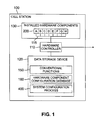
- FIG. 1 is a block diagram showing the architecture of an illustrative cell station 100 in accordance with the present invention.
- the cell station 100 preferably includes a hardware controller 110 that communicates on a common bus 115 with a plurality of hardware components 200A-200H.
- the hardware components 200A-200H may be installed, for example, on one or more frames or racks 130 on the cell station 100.
- the hardware components 200A-200H, such as an illustrative hardware component 200, are discussed further below in conjunction with FIG. 2.
- each hardware component 200A-200H dynamically obtains a bus address that uniquely identifies the hardware component 200A-200H on the common bus 115.
- the present invention logically divides the address space into two ranges, namely, a first range of addresses referred to herein as the common access addresses, and a second range of addresses referred to herein as the assigned addresses.
- the size of each address space can change to meet the needs of a given system, as apparent to a person of ordinary skill in the art.
- the present invention supports up to N-2 hardware components, where N is the size of the address space (with the two exceptions being the hardware controller 110 and at least one common access address).
- each hardware component communicates with the hardware controller 110 on one of the common access addresses to request a channel, and thereafter communicates on one of the assigned addresses, once assigned by the hardware controller 110.
- collisions between multiple hardware components on the common access channels are minimized.
- collisions are minimized by allocating one address in the common access address space for each device type.
- all of the hardware components of a particular device type would request an address using address 253.
- hardware components of a different type can execute the access procedure in parallel since they access on a different common access channel. If two hardware components of the same type both try to access the common bus 115 at the same moment, "backoff and retry" mechanisms can be implemented. This situation is handled, as in typical random access schemes, by including a unique value from the accessing hardware component in the address assignment message exchange.
- the unique value could be some hardware-derived number, such as a serial number, or simply a random number. In this manner, the accessing hardware component can ensure that the address assignment message is intended for it by checking the address assignment message for the appropriate unique value.
- collisions are minimized by allocating a plurality of common access addresses and having each hardware component randomly select a common access address. Assigning multiple channels for common access also serves to reduce the bus initialization time, since hardware components are less likely to have to wait for the appropriate access channel.
- bus initialization begins when the hardware controller 110 begins transmitting on the common bus 115.
- the hardware components 200A-200H do not transmit on the common bus 115 until the hardware controller 110 first transmits something.
- a hardware component 200A-200H may access the bus 115 by first listening to hear if any other hardware component 200A-200H is transmitting using the same common access channel. If the common access channel is clear, the hardware component sends an identification message to the hardware controller 110 using the address assigned to the hardware controller 110. The common access address is associated with the identification message so the hardware controller 110 may respond to the hardware component.
- the hardware controller 110 then sends an address assignment message back to the hardware component 200A-200H on the hardware component's common access address.
- the address assignment message carries a new address assignment chosen by the hardware controller 110 from the assigned address space. For example, the address assignments may be assigned sequentially from the assigned address space. All further communication by the accessing hardware component takes place using the assigned address. Thereafter, the common access address is available for another hardware component to use.
- the cell station 100 operates normally, forwarding the messages that are received from the central control station (not shown) to the hardware components 200A-200H and vice versa, as required.
- the cell station 100 preferably includes a hardware controller 110 and related memory, such as a data storage device 120, which may be distributed or local.
- the hardware controller 110 may be embodied as a single processor, or a number of local or distributed processors operating in parallel.
- the data storage device 120 and/or a read only memory (ROM) are operable to store one or more instructions, which the hardware controller 110 is operable to retrieve, interpret and execute.
- the data storage device 120 preferably includes the code 150 to perform supervisory, control functions and other conventional functions for communicating with cellular telephones and a central control station (not shown).
- a hardware component configuration database 160 for storing the carrier frequency, frame, sector number (such as ⁇ , ⁇ , ⁇ ), unit type and unit number associates with each hardware component on the cell station 100.
- the data storage device 120 includes a system configuration process 400, discussed below in conjunction with FIG. 4, that communicates with the hardware components 200A-200H to compile the configuration information and generate the hardware component configuration database 160.
- the cell station 100 can provide the local configuration information to a central cell controller (not shown), as would be apparent to a person of ordinary skill in the art. In this manner, the central cell controller can remotely determine the configuration of each cell station, such as the cell station 100.
- FIG. 2 is a block diagram showing the architecture of an illustrative hardware component 200 in accordance with the present invention.
- each hardware component 200 includes a processor 210 and related memory, such as a data storage device 220, which may be distributed or local.
- the processor 210 may be embodied as a single processor, or a number of local or distributed processors operating in parallel.
- the data storage device 220 and/or a read only memory (ROM) are operable to store one or more instructions, which the processor 210 is operable to retrieve, interpret and execute.
- the data storage device 220 preferably includes the code 250 to perform conventional functions for communicating with the hardware controller 110 of FIG 1.
- the data storage device 120 includes a system configuration process 400, discussed below in conjunction with FIG. 4, that cooperates with the hardware controller 110 to dynamically obtain a bus address for the hardware component and to provide information identifying the hardware component to the hardware controller 110.
- the hardware controller 110 and each hardware component 200 cooperatively implement a system configuration process 400, such as the illustrative process shown in FIG. 4, to dynamically assign bus addresses for each hardware component and to provide information identifying the hardware component to the hardware controller 110.
- a system configuration process 400 such as the illustrative process shown in FIG. 4, to dynamically assign bus addresses for each hardware component and to provide information identifying the hardware component to the hardware controller 110.
- the system configuration process 400 is initiated during step 410 upon the powering up of the hardware component 200. Thereafter, the hardware component listens for other hardware components during step 420 on a common access channel. In the illustrative embodiment, the hardware component listens for other hardware components on a common access channel assigned for its device type.
- a test is performed during step 430 to determine if the common access channel is being used. If it is determined during step 430 that the common access channel is being used, then program control waits for a predefined period during step 435 before returning to step 420 and continuing in the manner described above. If, however, it is determined during step 430 that the common access channel is not being used, then the hardware component sends a message to the hardware controller 110 on the appropriate common access channel during step 440, and listens for a response on the appropriate common access channel.
- the initial message sent to the hardware controller 110 may include, for example, an indication of the configuration information for the hardware component, such as the carrier frequency, sector, unit type and unit number.
- the hardware controller 110 then sends an address assignment to the hardware component during step 450 using the common access channel upon which the request was received.
- the address assignment may include a unique identifier of the hardware component.
- a test is performed by the hardware component during step 460 to determine if the address assignment is for this hardware component. If it is determined during step 460 that the address assignment is not for this hardware component, then the hardware component waits for the next address assignment message (or may retransmit its request) during step 470 before program control returns to step 460.
- step 460 If, however, it is determined during step 460 that the address assignment is for this hardware component, then the hardware component begins using the assigned address for further communications during step 480.
Landscapes
- Engineering & Computer Science (AREA)
- Theoretical Computer Science (AREA)
- Physics & Mathematics (AREA)
- General Engineering & Computer Science (AREA)
- General Physics & Mathematics (AREA)
- Small-Scale Networks (AREA)
- Mobile Radio Communication Systems (AREA)
Applications Claiming Priority (2)
| Application Number | Priority Date | Filing Date | Title |
|---|---|---|---|
| US09/198,098 US6615285B1 (en) | 1998-11-23 | 1998-11-23 | Method and apparatus for dynamically determining an address uniquely identifying a hardware component on a common bus |
| US198098 | 1998-11-23 |
Publications (2)
| Publication Number | Publication Date |
|---|---|
| EP1004965A2 true EP1004965A2 (de) | 2000-05-31 |
| EP1004965A3 EP1004965A3 (de) | 2002-08-07 |
Family
ID=22731974
Family Applications (1)
| Application Number | Title | Priority Date | Filing Date |
|---|---|---|---|
| EP99309078A Ceased EP1004965A3 (de) | 1998-11-23 | 1999-11-15 | Verfahren und Vorrichtung zur dynamischen Bestimmung einer einzigen Adresse zur Indentifizierung einer Komponente in einem gemeinsamen Bus |
Country Status (7)
| Country | Link |
|---|---|
| US (1) | US6615285B1 (de) |
| EP (1) | EP1004965A3 (de) |
| JP (1) | JP2000209209A (de) |
| KR (1) | KR100719302B1 (de) |
| CN (1) | CN1255007A (de) |
| BR (1) | BR9905168A (de) |
| CA (1) | CA2285802A1 (de) |
Families Citing this family (11)
| Publication number | Priority date | Publication date | Assignee | Title |
|---|---|---|---|---|
| US7213061B1 (en) | 1999-04-29 | 2007-05-01 | Amx Llc | Internet control system and method |
| US6804232B1 (en) | 2000-03-27 | 2004-10-12 | Bbnt Solutions Llc | Personal area network with automatic attachment and detachment |
| TW469404B (en) * | 2000-05-05 | 2001-12-21 | Umax Data Systems Inc | Method for generating serial numbers by random numbers |
| US7755787B2 (en) * | 2005-04-29 | 2010-07-13 | Hewlett-Packard Development Company, L.P. | Method and system for managing shared printers |
| WO2007030421A2 (en) * | 2005-09-07 | 2007-03-15 | Amx Llc | Method and computer program for device configuration |
| US8108708B2 (en) * | 2007-05-03 | 2012-01-31 | Microchip Technology Incorporated | Power optimization when using external clock sources |
| US7827333B1 (en) * | 2008-02-04 | 2010-11-02 | Nvidia Corporation | System and method for determining a bus address on an add-in card |
| US7962661B2 (en) * | 2008-06-30 | 2011-06-14 | Lg Chem, Ltd. | System and method for determining a bus address for a controller within a network |
| US8700747B2 (en) * | 2011-04-19 | 2014-04-15 | Schneider Electric It Corporation | System and method for automatically addressing devices in a multi-drop network |
| US8904049B2 (en) | 2012-08-23 | 2014-12-02 | Lg Chem, Ltd. | Battery pack monitoring system and method for assigning a binary ID to a microprocessor in the battery pack monitoring system |
| WO2022041232A1 (zh) * | 2020-08-31 | 2022-03-03 | 华为技术有限公司 | 芯片测试电路及电路测试方法 |
Family Cites Families (19)
| Publication number | Priority date | Publication date | Assignee | Title |
|---|---|---|---|---|
| US4413318A (en) * | 1980-11-20 | 1983-11-01 | International Business Machines Corporation | Use of nodes to uniquely identify processes |
| JPS60112336A (ja) * | 1983-11-22 | 1985-06-18 | Nec Corp | 端末のアドレス方式 |
| US4773005A (en) * | 1984-09-07 | 1988-09-20 | Tektronix, Inc. | Dynamic address assignment system |
| US4638313A (en) | 1984-11-08 | 1987-01-20 | Spacelabs, Inc. | Addressing for a multipoint communication system for patient monitoring |
| GB2167274A (en) * | 1984-11-14 | 1986-05-21 | Philips Electronic Associated | Local area network |
| JPH0486818A (ja) * | 1990-07-31 | 1992-03-19 | Brother Ind Ltd | 画像記録装置 |
| DE4037143A1 (de) | 1990-11-22 | 1992-05-27 | Bosch Gmbh Robert | Steuerungssystem |
| US5317693A (en) * | 1991-04-04 | 1994-05-31 | Digital Equipment Corporation | Computer peripheral device network with peripheral address resetting capabilities |
| DE4308568A1 (de) * | 1993-03-18 | 1994-09-22 | Telefunken Microelectron | Verfahren zum Betreiben einer Datenverarbeitungsanlage |
| US5745699A (en) * | 1993-09-24 | 1998-04-28 | Apple Computer, Inc. | Dynamic address assignment in an arbitrarily connected network |
| GB2291722A (en) * | 1994-07-15 | 1996-01-31 | Ibm | Cordless coupling for peripheral devices. |
| US5636342A (en) * | 1995-02-17 | 1997-06-03 | Dell Usa, L.P. | Systems and method for assigning unique addresses to agents on a system management bus |
| US5680113A (en) * | 1995-02-24 | 1997-10-21 | International Business Machines Corporation | Dynamic address assignments to serially connected devices |
| US6094053A (en) * | 1995-11-06 | 2000-07-25 | Ford Global Technologies, Inc. | Method and apparatus for identifying electronic circuits in a distributed electronic system |
| US5835725A (en) * | 1996-10-21 | 1998-11-10 | Cisco Technology, Inc. | Dynamic address assignment and resolution technique |
| US5898845A (en) * | 1996-10-29 | 1999-04-27 | Intervoice Limited Partnership | Assigning and utilizing overlapping address space for multiple cards on a common computer bus |
| US6195712B1 (en) * | 1997-06-13 | 2001-02-27 | Intel Corporation | Dynamic discovery of wireless peripherals |
| US5982596A (en) * | 1998-05-05 | 1999-11-09 | George Authur Spencer | Load center monitor and digitally enhanced circuit breaker system for monitoring electrical power lines |
| US6185638B1 (en) * | 1998-10-07 | 2001-02-06 | International Business Machines Corporation | Method and system for dynamically assigning addresses to an input/output device |
-
1998
- 1998-11-23 US US09/198,098 patent/US6615285B1/en not_active Expired - Fee Related
-
1999
- 1999-10-08 CA CA002285802A patent/CA2285802A1/en not_active Abandoned
- 1999-11-15 EP EP99309078A patent/EP1004965A3/de not_active Ceased
- 1999-11-16 BR BR9905168-0A patent/BR9905168A/pt not_active Application Discontinuation
- 1999-11-22 CN CN99124480.XA patent/CN1255007A/zh active Pending
- 1999-11-22 JP JP11331308A patent/JP2000209209A/ja active Pending
- 1999-11-23 KR KR1019990052235A patent/KR100719302B1/ko not_active Expired - Fee Related
Also Published As
| Publication number | Publication date |
|---|---|
| EP1004965A3 (de) | 2002-08-07 |
| KR20000047702A (ko) | 2000-07-25 |
| CN1255007A (zh) | 2000-05-31 |
| KR100719302B1 (ko) | 2007-05-17 |
| CA2285802A1 (en) | 2000-05-23 |
| US6615285B1 (en) | 2003-09-02 |
| BR9905168A (pt) | 2000-09-12 |
| JP2000209209A (ja) | 2000-07-28 |
Similar Documents
| Publication | Publication Date | Title |
|---|---|---|
| US5420909A (en) | Method for allocating telephone and communication resources | |
| US5276442A (en) | Dynamic address allocation within RF trunking multisite switch | |
| US6615285B1 (en) | Method and apparatus for dynamically determining an address uniquely identifying a hardware component on a common bus | |
| JPS6365177B2 (de) | ||
| JP2001352573A (ja) | 通信装置及び通信方法 | |
| JPH06232940A (ja) | 通信システムとその動作方法 | |
| CN117544596B (zh) | 遥测系统的地址自动分配方法及遥测系统、存储介质 | |
| CN111371659B (zh) | 一种rs485从设备地址自动分配的方法 | |
| US6442640B1 (en) | Method and apparatus for determining an address uniquely identifying a hardware component on a common bus | |
| KR100257413B1 (ko) | 어드레스 할당 방법 및 장치 | |
| CN111294269B (zh) | 一种家庭宽带业务内外层vlan分配方法及装置 | |
| CN101167307A (zh) | 一种可动态自适应的分布式资源管理系统和方法 | |
| AU5945099A (en) | A method and apparatus for dynamically determining an address uniquely identifying a hardware component on common bus | |
| KR100402981B1 (ko) | 교환기에서의 아이피 주소 관리 장치 및 방법 | |
| US6721558B1 (en) | Method and apparatus for determining the configuration of hardware installed on remote equipment | |
| JP3496471B2 (ja) | プロトコル制御用メモリの共有化方法 | |
| US5515034A (en) | Simple communication system capable of message broadcasting | |
| CN102118454B (zh) | 基站逻辑地址分配方法及装置 | |
| KR100459558B1 (ko) | 두 개의 에스에스7 신호 점 사이에서의 선택코드 자동 할당방법 | |
| JP3227625B2 (ja) | 伝送方式 | |
| JPH08314844A (ja) | ネットワークにおけるアドレス管理方式 | |
| KR100250671B1 (ko) | 디지털 라인 집속기에서의 채널 지정 방법 | |
| CN119211371A (zh) | 一种基于mctp的通信方法及设备 | |
| JPH06276203A (ja) | ポーリング式データ収集方式 | |
| CN113660354A (zh) | 网络设备的链路层地址分配方法、网络设备及网络系统 |
Legal Events
| Date | Code | Title | Description |
|---|---|---|---|
| PUAI | Public reference made under article 153(3) epc to a published international application that has entered the european phase |
Free format text: ORIGINAL CODE: 0009012 |
|
| AK | Designated contracting states |
Kind code of ref document: A2 Designated state(s): AT BE CH CY DE DK ES FI FR GB GR IE IT LI LU MC NL PT SE |
|
| AX | Request for extension of the european patent |
Free format text: AL;LT;LV;MK;RO;SI |
|
| PUAL | Search report despatched |
Free format text: ORIGINAL CODE: 0009013 |
|
| AK | Designated contracting states |
Kind code of ref document: A3 Designated state(s): AT BE CH CY DE DK ES FI FR GB GR IE IT LI LU MC NL PT SE |
|
| AX | Request for extension of the european patent |
Free format text: AL;LT;LV;MK;RO;SI |
|
| RIC1 | Information provided on ipc code assigned before grant |
Free format text: 7G 06F 13/40 A, 7G 06F 12/02 B, 7G 06F 12/06 B |
|
| 17P | Request for examination filed |
Effective date: 20030125 |
|
| AKX | Designation fees paid |
Designated state(s): DE FI FR GB SE |
|
| 17Q | First examination report despatched |
Effective date: 20060731 |
|
| RAP3 | Party data changed (applicant data changed or rights of an application transferred) |
Owner name: LUCENT TECHNOLOGIES INC. |
|
| APBK | Appeal reference recorded |
Free format text: ORIGINAL CODE: EPIDOSNREFNE |
|
| APBN | Date of receipt of notice of appeal recorded |
Free format text: ORIGINAL CODE: EPIDOSNNOA2E |
|
| APBR | Date of receipt of statement of grounds of appeal recorded |
Free format text: ORIGINAL CODE: EPIDOSNNOA3E |
|
| APAV | Appeal reference deleted |
Free format text: ORIGINAL CODE: EPIDOSDREFNE |
|
| RAP1 | Party data changed (applicant data changed or rights of an application transferred) |
Owner name: ALCATEL-LUCENT USA INC. |
|
| 111Z | Information provided on other rights and legal means of execution |
Free format text: DE FI FR GB SE Effective date: 20130410 |
|
| APAF | Appeal reference modified |
Free format text: ORIGINAL CODE: EPIDOSCREFNE |
|
| D11X | Information provided on other rights and legal means of execution (deleted) | ||
| APBT | Appeal procedure closed |
Free format text: ORIGINAL CODE: EPIDOSNNOA9E |
|
| STAA | Information on the status of an ep patent application or granted ep patent |
Free format text: STATUS: THE APPLICATION HAS BEEN REFUSED |
|
| 18R | Application refused |
Effective date: 20150422 |