EP1006438A1 - Paketscachespeicher - Google Patents
Paketscachespeicher Download PDFInfo
- Publication number
- EP1006438A1 EP1006438A1 EP99309655A EP99309655A EP1006438A1 EP 1006438 A1 EP1006438 A1 EP 1006438A1 EP 99309655 A EP99309655 A EP 99309655A EP 99309655 A EP99309655 A EP 99309655A EP 1006438 A1 EP1006438 A1 EP 1006438A1
- Authority
- EP
- European Patent Office
- Prior art keywords
- parcel
- instruction
- cache
- microprocessor
- decoded
- Prior art date
- Legal status (The legal status is an assumption and is not a legal conclusion. Google has not performed a legal analysis and makes no representation as to the accuracy of the status listed.)
- Withdrawn
Links
Images
Classifications
-
- G—PHYSICS
- G06—COMPUTING OR CALCULATING; COUNTING
- G06F—ELECTRIC DIGITAL DATA PROCESSING
- G06F9/00—Arrangements for program control, e.g. control units
- G06F9/06—Arrangements for program control, e.g. control units using stored programs, i.e. using an internal store of processing equipment to receive or retain programs
- G06F9/30—Arrangements for executing machine instructions, e.g. instruction decode
- G06F9/38—Concurrent instruction execution, e.g. pipeline or look ahead
- G06F9/3802—Instruction prefetching
- G06F9/3814—Implementation provisions of instruction buffers, e.g. prefetch buffer; banks
-
- G—PHYSICS
- G06—COMPUTING OR CALCULATING; COUNTING
- G06F—ELECTRIC DIGITAL DATA PROCESSING
- G06F9/00—Arrangements for program control, e.g. control units
- G06F9/06—Arrangements for program control, e.g. control units using stored programs, i.e. using an internal store of processing equipment to receive or retain programs
- G06F9/30—Arrangements for executing machine instructions, e.g. instruction decode
- G06F9/3017—Runtime instruction translation, e.g. macros
- G06F9/30174—Runtime instruction translation, e.g. macros for non-native instruction set, e.g. Javabyte, legacy code
-
- G—PHYSICS
- G06—COMPUTING OR CALCULATING; COUNTING
- G06F—ELECTRIC DIGITAL DATA PROCESSING
- G06F9/00—Arrangements for program control, e.g. control units
- G06F9/06—Arrangements for program control, e.g. control units using stored programs, i.e. using an internal store of processing equipment to receive or retain programs
- G06F9/30—Arrangements for executing machine instructions, e.g. instruction decode
- G06F9/38—Concurrent instruction execution, e.g. pipeline or look ahead
- G06F9/3802—Instruction prefetching
- G06F9/3808—Instruction prefetching for instruction reuse, e.g. trace cache, branch target cache
Definitions
- the present invention relates to increasing the speed and efficiency of a microprocessor while maintaining its compatibility with the instruction set architecture. More particularly, the present invention is a technique for decreasing the utilization of processing resources needed to execute particular microprocessor instructions.
- a parcel cache is provided which stores decoded instructions, i.e. parcels or micro-ops. This allows the decode mechanism in the microprocessor to retrieve a micro-op from the parcel cache and eliminates the necessity of repeatedly decoding often used instructions, such as those which are associated with loop and repeat operations.
- a challenge to microprocessor developers has been to improve the efficiency of the microprocessor without changing the manner in which the ISA is implemented on the processor. For example, many instructions in the Intel architecture require sub-operations to be performed before the instruction can be completed. If the number of sub-operations, i.e. micro-ops, can be minimized or their performance optimized, without changing the ISA or programmer visible registers, then performance of the microprocessor can be enhanced.
- Pentium II processor (Pentium is a trademark of Intel Corporation) uses five (5) pipeline stages to fetch and decode the CISC x86 instructions. These 5 stages are a significant number of the total pipeline stages for the microprocessor operation.
- Some of the complex instructions in the Intel ISA which perform a substantial amount of work and correspondingly require a lot of fetching and decoding overhead include LOOP, LOOP cc , REP, REPZ, REPNZ and REP MOVS instructions. These instructions will decrement a value in a register, such as a general purpose register (GPR) or the like and then make a comparison to determine if the resulting value is equal to zero. For example, each time the LOOP instruction is executed a count register is decremented and checked for zero. If the count equals zero, then the loop is terminated and program execution continues with the instruction following the LOOP.
- GPR general purpose register
- a jump is performed to a destination operand or instruction at a target address, usually the first instruction in the loop.
- the LOOP instruction does not modify the programmer visible condition code(s) in the flags register.
- the LOOP instruction will decrement a count register (ECX or CX) and then perform a comparison to see if the value is equal to zero. Whether the ECX or CX register is used depends on the size of the address. For 32 bit applications ECX is used and for 16 bit applications CX is used. Thus, the comparison operation will need to check at least 16 and possibly 32 locations which requires significant processing resources, such as hardware logic needed to perform the actual compare function.
- the LOOPS instruction also decrements the (E)CX register and compares the decremented value to zero, but allows the loop to be exited early by checking a condition code in the flags register. In either case, the compare logic is required to check the decremented value in the (E)CX register with zero. Similarly, the REP instruction(s) will decrement the count register (E)CX and repeat a string operation, e.g. load string, while the value is not equal to zero.
- each of these complex instructions must be fetched and may be decoded into multiple micro-ops, or parcels each time the instructions in the loop are iteratively processed or the string instructions are repeated. Each iteration will require the five (5) stage fetch/decode pipeline to be entered causing a significant amount of processing resources to be expended.
- a microprocessor In particular it would be advantageous for a microprocessor to be able to fetch a complex instruction and decode that instruction into associated RISC micro-operations and store the micro-ops in an easily accessible memory for later use.
- the overhead of continually re-fetching and decoding various complex instructions can be saved and overall microprocessor efficiency increased.
- the present invention utilizes a cache which stores various decoded instructions, or parcels, so that these parcels can be made available to the execution units without having to decode a microprocessor instructions, such as a CISC instruction.
- the present invention increases performance by bypassing the fetch/decode pipeline stages on the front end of the microprocessor by using a parcel cache to store previously decoded instructions.
- the parcel cache is coupled to the microprocessor fetch/decode unit and can be searched during an instruction fetch cycle. This search of the parcel cache will occur in parallel with the search of the microprocessor instruction cache. When a parcel(s) corresponding to the complex microprocessor instruction being fetched is found in the parcel cache a hit occurs and the corresponding micro-ops are then provided to the execution units, bypassing the previous pipeline stages.
- the parcel cache is dynamic and will use a replacement algorithm, such as least recently used (LRU), to determine how long the parcels will remain in the cache.
- LRU least recently used
- the microprocessor fetch/decode unit(s) will be modified to provide for storing the decoded parcels in the cache and to allow the parcel cache to be searched in parallel with the L1 instruction cache.
- the present invention improves performance by minimizing the amount of hardware resources (i.e. fetch/decode logic) utilized while maintaining compatibility with the Intel architecture since the programmer visible elements, e.g. flags, registers, or the like are not altered. By leaving the programmer visible elements unchanged, the software is not forced to save and restore the register contents during each operation.
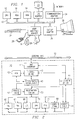
- a typical data processing system is shown which may be used in conjunction with the present invention.
- a central processing unit (CPU) 10 such as the Pentium II microprocessor, commercially available from Intel Corp. is provided and interconnected to the various other components by system bus 12.
- CPU 10 such as the Pentium II microprocessor, commercially available from Intel Corp.
- ROM Read only memory
- BIOS basic input/output system
- RAM random access memory
- I/O adapter 18 and communications adapter 34 are also interconnected to system bus 12.
- I/O adapter 18 may be a small computer system interface (SCSI) adapter that communicates with a disk storage device 20.
- SCSI small computer system interface
- Communications adapter 34 interconnects bus 12 with an outside network enabling the data processing system to communicate with other such systems, via the internet, local area network (LAN), or the like.
- Input/output devices are also connected to system bus 12 via user interface adapter 22 and display adapter 36.
- Keyboard 24, track ball 32, mouse 26 and speaker 28 are all interconnected to bus 12 via user interface adapter 22.
- Display monitor 38 is connected to system bus 12 by display adapter 36. In this manner, a user is capable of inputting to the system through the keyboards 24, trackball 32, or mouse 26 and receiving output from the system via speaker 28 and display 38.
- an operating system such as one of the versions of Windows, commercially available from Microsoft Corporation is used to coordinate the functions of the various components shown in Figure 1.
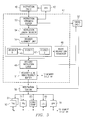
- bus 12 is shown and interconnects microprocessor 10 to the various computer components in Figure 1. It should be noted that for the sake of simplicity, microprocessor 10 will also be interchangeably referred to herein as CPU 10.
- Bus interface unit (BIU) 11 interfaces the microprocessor components with system bus 12. Main memory 14 and the various input/output devices 26, 28, 32, via adapter 22, are also connected to bus 12. Control, address and data information is transmitted from microprocessor 10 onto bus 12 via BIU 11. Further, control, address and data signals from memory 14 and I/O adapter 22 are received by BIU 11 for use by microprocessor 10. It should be noted that the control, address and data information will include microprocessor instructions, as well as operand data which will be manipulated by the instructions.
- Microprocessor 10 like most modern microprocessors, includes a hierarchical memory subsystem.
- the memory subsystem usually includes a level one (L1) instruction cache 40 and L1 data cache 41 which provide the instructions and data to the execution units (FPU 71, Integer Unit 60, 61, Jump Execution Unit 90 and Load/Store Unit 80).
- L1 instruction cache 40 L1 data cache 41 which provide the instructions and data to the execution units (FPU 71, Integer Unit 60, 61, Jump Execution Unit 90 and Load/Store Unit 80).
- L2 cache level two
- main memory 14 is the last level of storage in the memory system. Memory 14 is typically the largest storage area, but also requires the greatest number of cycles to be accessed by the microprocessor.
- L1 instruction cache 40 is included in microprocessor 10, as shown in Figure 2. After retrieving the instructions from main memory 14, cache 40 stores these microprocessor instructions that will be decoded and provided to the microprocessor execution units.
- An L1 data cache 41 is also provided, as shown in Figure 2, and may be configured to run in write-through mode, write-back mode, or the like.
- Write-through cache architectures require that all writes to the cache also update external memory simultaneously.
- a write-back architecture allows data to be written to the cache without updating external memory. With a write-back cache external write cycles are only required when a cache miss occurs, a modified line is replaced in the cache, or when an external bus master requires access to data.
- a typical L1 data cache uses a four-way set associative architecture and a least recently used (LRU) algorithm.
- the line size of cache 16 may be 8 bytes, 16 bytes, 32 bytes, or the like, and new lines are only allocated during memory read cycles.
- Valid status is then maintained on a 16 byte cache line basis, but modified or "dirty" status for write-back mode is maintained on a 4-byte (double word) status. Therefore, only the double words that have been modified are written back to main memory when a line is replaced in the cache.
- the CPU can access the cache in a single internal clock cycle for both reads and writes. As noted above, instructions and data are stored separately in the L1 cache in order to increase performance.
- Memory shelf 44 is essentially a memory queue that stores information after it has been received from the memory subsystem and prior to it being written from the execution units to the memory subsystem. Memory shelf 44 also includes a snooping mechanism that ensures coherency of data throughout the memory subsystem.
- a branch target buffer 42 is used to predict the target address of control transfer instructions such as a "branch” or "jump” instruction. That is, the target address is precalculated (predicted) and stored in buffer 42. Thus, when an unconditional branch is taken, or a conditional branch instruction is encountered, the address for the next (non-sequential) instruction is already known and available for use by the corresponding execution unit (e.g. floating point or integer).
- a Pentium type microprocessor uses dynamic branch prediction. As each prefetched instruction is passed into the dual instruction pipelines, the memory address it was fetched from is used to perform a lookup in the BTB 42, which is a high-speed lookaside cache. If there is a branch and it misses BTB 42, it is predicted as not taken and the prefetch path is not altered. If a hit occurs in the BTB 42, then the state of history bits in BTB 42 are used to determine whether the branch should be predicted as taken or not taken. When the branch is executed, its results (whether it was taken or not and, if taken, the branch target address) are used to update BTB 42.
- the branch target buffer makes its predictions on the basis of basic blocks, i.e. block size, block type, target address and whether the branch will be taken or not taken. If the branch is incorrectly predicted, the instructions in the pipeline(s) and those which are currently-active and have been prefetched must be flushed.
- Instruction cache 40 is connected to an instruction fetch/parse/decode/issue unit 43 and provides the decoded microprocessor instructions to reservation station 50 and ultimately to execution units 60, 61, 71, 80 and 90.
- fetch/parse/decode/issue unit 43 performs several functions. First, it retrieves the microprocessor instructions and loads them into an internal buffer by "prefetching" them from the instruction stream prior to the actual fetch stage. As the fetched instructions are dispatched through the pipeline, new instructions are loaded into the buffer. This ensures that the execution units will always have a continuous supply of instructions and prevents any "bubbles" from occurring in the pipeline. Unit 43 also parses the complex instruction set computer (CISC) instructions into segments and identifies boundaries between the individual instructions.
- CISC complex instruction set computer
- RISC reduced instruction set computer
- the microprocessor instructions are also decoded and issued, or dispatched. From the fetch/parse/decode/issue unit 43, the decoded instructions are then provided to reservation station 50 which provides instructions to the execution units. Reservation station 50 may be, for example, approximately 20-24 entries deep and will store instructions which are awaiting execution on one of the execution units.
- the microprocessor of Figure 2 shows, as an example, five (5) execution units and includes two (2) fixed point units (FXU) having reference numerals 60, 61 respectively, which may also be referred to herein as integer units (IU).
- Integer instructions such as add (ADD), multiply (IMUL), move (MOV) or the like are also issued by unit 43 to integer units 60, 61.
- Integer units 60, 61 may perform address calculations for the load and store instructions.
- Floating point unit 71 performs the floating point operations and calculations that are often required for scientific and technical applications. Additionally, the floating point units execute the multimedia extensions (MMX) to the Intel architecture. Floating point unit 71 receives the issued floating point instructions from unit 43, via reservation station 50, for execution. Floating point unit 71 includes eight 80 bit registers with a 64 bit interface. The exemplary Intel architecture floating point unit 71 uses the x87 instruction set and is compatible with IEEE standard 754.
- Load/store unit 80 is also included which is responsible for executing the load instructions which provide information (data and/or instructions) from the memory system to the microprocessor pipeline. Store instructions are also executed by unit 80 which write information from the microprocessor to the memory system. For example, load/store instructions are issued to load/store unit 80 for execution and memory address calculation, and to memory shelf 44, which may include a memory control unit, or the like, for scheduling. Load/store functions are implemented by load/store unit 80 which executes load and store instructions on one or more arithmetic logic units (ALU). Load/store unit 80 may include separate ALUs for load and store instructions. Load and store instructions include load string (LODS), load task register (LTR), move data (MOV), and the like.
- LODS load string
- LTR load task register
- MOV move data
- Store instructions include store task register (STR), store string (STOS), and the like. Generally, load instructions retrieve data and/or instructions from cache/memory and place the information in one of the microprocessor registers, while store instructions place data and/or instructions into a cache/memory location from the microprocessor registers. In some cases integer units 60, 61 may be used to perform memory address calculations.
- Jump execution unit 90 is also shown in Figure 2, which is also often referred to as a branch execution unit.
- Jump execution unit 90 will process control transfer instructions such as branches, jumps and moves.
- JEU 90 will evaluate a condition code and jump to an out of sequence instruction based upon the state of the condition. In some cases the jump will occur if the condition is true, other times a branch will be taken when the condition is false. If the condition is such that the branch is not taken, then execution of instructions will continue sequentially.
- a typical jump, or branch instruction will include an opcode that describes the type of instruction, e.g.
- the instruction also includes a field that specifies which bit in a condition register, or flag register (in the case of Intel architecture) is to be used for the condition of the jump, or branch.
- the target address is also included in the instruction such that if the condition is met, then the instruction stream jumps to the specified address for the next instruction to be executed.
- the condition codes are bits in the condition register or flag register that are set during execution of other instructions. Generally, the condition codes include greater than, less than, equal to or overflow.
- CMP compare instruction
- JE next jump on equal
- the "equal to" bit is a one, indicating that the contents of the compared registers were equal to one another, then the jump is taken and the next instruction is fetched from the target address in the jump instruction. If the equal bit is a logical zero, then the jump is not taken and the next instruction sequentially after the jump instruction is executed.
- Parcel cache 52 is coupled to the fetch/parse/decode/issue unit 43 (decode unit 43). As described above, decode unit 43 receives the IA instructions from instruction cache 40. These complex instructions are then decoded into RISC micro-ops (parcels) and stored in parcel cache 52, using a least recently used (LRU) algorithm, or the like. During an instruction fetch cycle, parcel cache 52 is "looked up" in parallel with the instruction cache 40. If a parcel cache hit occurs, then the fetch from the instruction cache can be canceled and the parcel fetched from the parcel cache and provided to reservation station 50. In a preferred embodiment, the parcel cache 52 is kept relatively small and uncomplicated to minimize the time and logic required to retrieve the parcels.
- LRU least recently used
- the general purpose register file 70 is also shown in Figure 2 and includes the general purpose registers (GPR) which are used by the application programmer to manipulate data structures and to hold the results of logical and arithmetic operations.
- the GPRs are all visible to the programmer (architected). That is, the operating system and/or application software written for the Intel ISA is capable of identifying and using the contents of the general purpose registers.
- Intel ISA compatible microprocessors there are eight (8) GPRs: four (4) data registers (EAX, EBX, ECX, EDX); two (2) index registers (ESI, EDI) and two (2) pointer registers (ESP, EBP).
- a memory management unit may include a translation lookaside buffer, which is a cache for the paging mechanism.
- the translation lookaside buffer (TLB) is a page table cache that automatically keeps the most commonly used page table entries in the processor.
- An address calculation unit is also provided for memory management operations and is used to calculate the physical address by computing an offset address (effective address). Generally, the effective address is calculated by adding together up to three values: a base, an index and a displacement.
- the base if present, is the value in one of the 32 bit general registers at the time of the execution of the instruction.
- the index is also a value contained in one of the 32 bit general purpose registers.
- the index differs from the base in that the index is first multiplied by a scale factor of 1, 2, 4 or 8 before the summation is made.
- the third component added to the memory address calculation is the displacement, which is a value of up to 32 bits supplied as part of the instruction.
- microprocessor architectures include some type of branch instruction that ends a basic block of instructions. This basic block may be a set of iterative operations, e.g. a loop. It is often the case where the same set of instructions may be executed numerous times using different data, e.g. multiplying using multiple add and shift instructions. Microprocessor architectures have developed various instructions to address this issue.
- the PowerPC architecture uses a branch conditional to count register (BCCTR) instruction which decrements a counter and then branches based on the decremented value.
- BCCTR branch conditional to count register
- the Intel ISA includes a LOOP instruction that uses one of the general purpose registers (ECX) as a counter and exits the loop when the value in the ECX register is equal to zero.
- Other repetitive type instructions, such as the repetitive load string (REP LODS) in the Intel ISA operate in a similar manner.
- the decode pipeline of microprocessor 10 includes five (5) stages.
- the microprocessor instruction is fetched from instruction cache 40 and placed in instruction streaming buffer 53. More particularly, a 32 byte line is loaded from cache 40 into prefetch streaming buffer 53.
- the instruction length decoder unit 54 marks the boundaries for the fetched instruction. Normally, two operations are performed: (1) the boundaries between instructions within a 16-byte block are identified; and (2) if any of the instructions within the 16-byte block are branches, the memory addresses that they were fetched from are presented to BTB 42 for branch prediction.
- decoder alignment unit 55 the fetched and marked instructions are aligned by decoder alignment unit 55 for presentation to the appropriate decoders.
- Three (3) decode units (decoder 0, decoder 1, decoder 2) 45, 46, 47 are shown along with micro instruction sequencer unit 48.
- decoder 0 is a complex decoder that can decode any instruction not greater than seven bytes and that translates into no more than four micro-ops.
- Decoders 1 and 2 are simple decoders that can decode instructions not greater than seven bytes in length and translate into a single micro-op. It can be seen that depending on the type of instruction, up to three instructions can be decoded at the same time.
- MIS 48 is a microcode ROM that contains the series of micro-ops (five or more) associated with each very complex instruction. Some instructions may translate into extremely large repetitive micro-op sequences.
- the micro-ops are placed in the decoded instruction queue 49.
- the decoded instruction queue can hold up to six (6) micro-ops to handle the scenario where an instruction that translates into four micro-ops is input to complex decoder 0 and instructions that translate into single micro-ops are input to simple decoders 1 and 2. This situation will yield six parallel micro-ops.
- Register alias table/reorder buffer 51 includes a table that allows 40 hidden registers to be accessed and used by the micro-ops.
- the register alias table (RAT) will adjust the source fields of the micro-ops to select which of the 40 registers in the reorder buffer (ROB) are to be used. This mechanism essentially allows the eight (8) general purpose registers to be increased which will increase microprocessor performance.
- RAT/ROB unit 51 After RAT/ROB unit 51 the micro-ops are provided to reservation station 50 and sent to the execution units for processing. Results generated by the execution of the micro-ops are then provided to GPR file 70, ROB 51 or memory (data cache 41).
- the present invention provides a mechanism for bypassing the five fetch and decode stages on the front end of the microprocessor pipeline.
- parcel cache 52 is provided and coupled to decode unit 43.
- Decoded instruction queue 49 is interconnected to parcel cache 52 such that decoded instructions (parcels) can be loaded from queue 49 into parcel cache 52.
- the parcel cache will be maintained using an LRU algorithm, or the like. That is, upon system startup, the first decoded instructions through the pipeline will be loaded into parcel cache 52. Once the cache is full, those decoded instructions which are used the most infrequently will be the ones that are first to be replaced.
- Instruction streaming buffer 53 is also interconnected to parcel cache 52 such that the instruction cache 40 and parcel cache 52 can be looked up in parallel. When a "hit" occurs on parcel cache 52, the parcel is then provided to reservation station 50, bypassing the decode pipeline stages.
- parcel cache 52 is relatively small in size to reduce complexity, as well as minimize look up time.
- the parcel cache 52 may be sixteen (16) entries, which is approximately two kilobyte of memory space.
- the parcel cache can be addressed using linear addressing techniques to maintain consistency with the addressing mode used by decode unit 43 and BTB 42. In this manner, the need for additional logic and processing time to perform address translations from linear to virtual to physical is eliminated.
- the parcel cache can also be coupled to the branch prediction logic in BTB 42, since the target branch address prediction logic also uses linear addressing. Further, in a manner similar to the instruction cache, a single port cache is contemplated for use as a preferred embodiment in order to further reduce complexity and implementation costs, along with a corresponding reduction in look up time.
- One microprocessor instruction that can take advantage of the parcel cache of the present invention is the LOOP instruction of the Intel ISA. However, it should be understood that the use of the parcel cache by other microprocessor instructions is contemplated by the scope of the present invention.
- a LOOP instruction will decrement a count register and then jump to a target address based on the value in the count register. That is, the target address will be accessed for non-zero values and the loop will be exited when the count register is zero.
- the JECXZ micro-op will be required to check every bit of the 32 bit ECX register in order to determine if the value in the register is zeros It is possible that the most significant bit (MSB) could be a "1" with the remaining bits all equal to zero. In this case JECXZ would check the first 31 bits and find that all zeros are present, however, the presence of a "1" in the MSB location will cause the branch not to be taken, i.e. the jump instruction will cause the loop to be continued.
- MSB most significant bit
- DEC decrement
- CMP computed to Physical Component
- the parcel cache 52 of the present invention will store the DEC, CMP, JECXZ micro-ops such that for each iteration of the LOOP, these parcels can be forwarded from the parcel cache to reservation station 50, thus bypassing the five decode pipeline stages and avoiding the necessity to decode the LOOP instruction during each iteration. This will free up the decode pipeline to translate other CISC instructions in the instruction stream into their associated micro-ops.
- the present invention contemplates providing parcels to decoded instruction queue 49, RAT/ROB 51 or other pipeline stage.
- the preferred embodiment sends parcels to the reservation station 50 which results in a saving of approximately six (6) machine cycles when compared to parcels provided to decoded instruction queue 49.
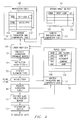
- Instruction cache 40 is shown with a number of cache lines that include an address portion 100 and instruction store portion 101. Also, shown is address translation and comparison logic 102.
- Prefetch unit 53 includes a linear address generator 108 that is used to index into, or "look up" instruction cache 40. That is, when a specific instruction is desired by one of the execution units, prefetch 53 generates a linear address which indexes into cache 40 to determine if the desired microprocessor instruction is located in the cache.
- Address translation and comparison logic 102 includes a translation lookaside buffer (TLB) that translates the 32 bit linear address into a 36-bit physical memory address.
- TLB translation lookaside buffer
- the comparison logic is used to determine whether the translated address is the same as an address stored in cache 40, i.e. it determines whether the generated address hits or misses the cache.
- the 32 bit memory address generated by adding the segment base address and the 32 bit segment offset to each other produces a 32 bit address (linear address).
- a page directory and page table are used to translate a linear address to a physical address.
- each entry in the page directory contains the base address of a page table and each entry in that page table contains the base physical address of a target base in memory.
- each page directory and page table entry is 32 bits wide with a 20 bit field to identify the aligned base physical memory address of a page table or actual page in memory.
- the lower 12 bits of the linear address is concatenated to the lower end of this 20 bit field to create the exact address of one of the locations within the target physical 4KB page.
- linear address will be the same as the physical address where the information is actually stored.
- the parcel cache of the present invention is essentially a small buffer. This cache is addressed using a linear address.
- the TLB is used to translate the linear address into a corresponding physical address. Since the address generator 108 in the prefetch unit 53 is already using a linear address, a preferred embodiment of the parcel cache will use linear addressing as well. By using linear addressing one or more cycles will be saved and avoid creating a critical path. This allows higher frequencies to be realized. Further, by keeping the parcel cache small, the access time is minimized and the chance of parcel cache look up becoming a critical path is reduced.
- linear address generator 108 of prefetch unit 53 is also used to index into branch target buffer 42.
- This buffer includes entries having an addressing portion 105, target address portion 103 and history portion 106.
- BTB 42 is used by the processor to predict whether a branch (jump) will be taken.
- prefetch 53 retrieve a jump microprocessor instruction such as JNZ, cc, XXXX (jump not zero, condition code, target address) from instruction cache 40, a look up is performed into BTB 42 at the address from which the jump was retrieved.
- the address in cache 40 from which the jump was fetched is BBBB. This address is used to index into BTB 42.
- BTB 42 also includes address translation and compare logic 107 to map the linear address provided by prefetch unit 53 into a physical address in the branch target buffer and determine whether a hit or miss occurs based on that address.
- parcel cache 52 includes address translation and compare logic 112 similar to logic 102 and 107 in the instruction cache and BTB, respectively. This will allow the parcel cache to be looked up (searched) in parallel with the instruction cache 40.
- the independent execution units of the microprocessor of the present invention provide for instruction fetching to be carried out speculatively. The execution units correct any mispredicted branches. Hence, the fetching mechanism (e.g. prefetch unit 53) will automatically look in both instruction cache 40 and parcel cache 52 for the desired instructions and/or parcels.
- the parcel cache could utilize the address and comparison logic 107 of BTB 42 in order avoid redundant logic. That is, the linear address could be provided from address generator 108 to logic 102 in cache 40 and logic 107 in BTB 42, which in turn could provide the physical address back to,parcel cache 52 for indexing (look up).
- Parcel cache 52 includes entries having at least an address portion 109 and micro-op portion 110.
- the micro-op is provided to the reservation station 50, bypassing the fetch/decode pipeline stages.
- the present invention will now be described using a specific example of the "repeat" type of instruction that can take advantage of the present invention.
- These instructions include those Intel ISA instructions that begin with the REP prefix.
- the repeat load string instruction (REP LODS AL) will be used to illustrate one advantage of the present invention.
- the REP LODS AL microprocessor instruction (CISC) is shown in instruction cache 40 at address AAAA. This repeat instruction is then fetched by unit 53 and parsed by instruction length decoder unit 54, aligned by alignment stage 55 and translated into its associated RISC parcels by one of decode units 45, 46, 47 or micro-instruction sequencer 48. Once the REP LODS AL instruction is decoded, the parcels are issued to decoded instruction queue 49 to be provided to the reorder buffer, reservation station and ultimately to the execution units.
- CISC REP LODS AL microprocessor instruction
- the parcels when the parcels are provided to the decoded instruction queue, they are also sent to parcel cache 52.
- Logic 112 maps these parcels into addressable locations in the parcel cache.
- the parcel cache will be relatively small having, in a first preferred embodiment, approximately 16 entries and being 2KB in size. At initialization the first 16 parcels will all be stored in cache 52. Subsequently, an LRU algorithm or the like will replace those parcels which have remained unused in the cache for the longest time.
- REP LODS AL microprocessor instruction will translate into LOAD POINTER, LOAD BYTE, DECREMENT, COMPARE, JUMP parcels.
- LOAD POINTER LOAD BYTE
- DECREMENT DECREMENT
- COMPARE COMPARE
- JUMP parcels.
- the REP LODS AL instruction is microcoded to operate in the following manner.
- the present invention provides the decoded parcels to the appropriate execution units and also provides them to parcel cache 52. In this manner, the decoded parcels are available while the repeat load string operation is occurring.
- the target address of the jump instruction will be the location of the REP LODS AL microprocessor instruction in instruction cache 40. This CISC instruction will then need to be fetched, decoded, issued, and the like. The target address of the jump instruction is always linear and remains linear while it is stored in the parcel cache.
- the association of the REP LODS AL instruction is mapped to the related parcels, hence, the jump micro-op in parcel cache 52 at address AAAF will point to the load pointer parcel in cache 52 at address AAAB.
- the jump micro-op in parcel cache 52 at address AAAF will point to the load pointer parcel in cache 52 at address AAAB.
- the target address will normally be the address of the REP LODS AL instruction.
- the present invention provides a pointer from the REP LODS AL instruction to the parcel cache address containing the load pointer parcel such that the repetitive parcels will be those predecoded micro-ops included in the parcel cache.
- the parcels associated with the REP LODS AL instruction can be scheduled speculatively (out of order) and if the last jump does not point to the linear address corresponding to the load pointer parcel associated with the REP LODS AL instruction, the previous instructions are flushed naturally by the branch prediction logic. That is, when the count register does equal zero the jump target address will not point to REP LODS AL (mapped to the load pointer parcel in parcel cache 52) indicating that the repeat operations are completed. Thus, the branch misprediction logic will flush the parcels since the jump is not taken.
- the following example shows an example of an inner loop of a program trying to find a null value:
- the inner loop starts by setting up an initial value in the ECX register.
- the corresponding data byte is moved to the DL register using EAX as a pointer.
- a compute operation is performed after loading the data in the DL register.
- the pointer is incremented to get the next data byte and the process is repeated until a zero value is found.
- the jump not equal instruction includes a target address that branches to the MOVE_DATA instruction which is associated with the mov dl [eax + 01H] instruction.
- the above program is translated by the decode pipeline of the processor as follows: The above loop is executed several times.
- the translated program parcels shown above are stored in the parcel cache 52.
- the decoded instructions from the parcel cache are issued to the reservation station. This avoids any fetch and decode cycles.
- the jump not zero parcel has as its target address the MOVE_DATA instruction which is now associated with (points to) the load dl [eax + 01H] parcel. In this manner the program inner loop is processed solely by those parcels which are present in the parcel cache.
- a pointer such as a bit or group of bits is set. This will cause the target address of the jump instruction to effectively be mapped back to the first parcel in the group of repeated instructions, i.e. load dl.
- the target address of the jump will be the address of the MOVE_DATA, however, this microprocessor instruction will then point to the address in the parcel cache 52 where the load dl instruction is stored.
- the jump instruction (jnz) is mapped to the parcel cache address for the target parcel (ld dl).
Landscapes
- Engineering & Computer Science (AREA)
- Software Systems (AREA)
- Theoretical Computer Science (AREA)
- Physics & Mathematics (AREA)
- General Engineering & Computer Science (AREA)
- General Physics & Mathematics (AREA)
- Advance Control (AREA)
- Memory System Of A Hierarchy Structure (AREA)
Applications Claiming Priority (2)
| Application Number | Priority Date | Filing Date | Title |
|---|---|---|---|
| US09/205,998 US6223254B1 (en) | 1998-12-04 | 1998-12-04 | Parcel cache |
| US205998 | 1998-12-04 |
Publications (1)
| Publication Number | Publication Date |
|---|---|
| EP1006438A1 true EP1006438A1 (de) | 2000-06-07 |
Family
ID=22764561
Family Applications (1)
| Application Number | Title | Priority Date | Filing Date |
|---|---|---|---|
| EP99309655A Withdrawn EP1006438A1 (de) | 1998-12-04 | 1999-12-01 | Paketscachespeicher |
Country Status (2)
| Country | Link |
|---|---|
| US (1) | US6223254B1 (de) |
| EP (1) | EP1006438A1 (de) |
Cited By (5)
| Publication number | Priority date | Publication date | Assignee | Title |
|---|---|---|---|---|
| EP1313008A1 (de) * | 2001-11-15 | 2003-05-21 | Hewlett-Packard Company | System und Verfahren für Dekodierung von Programmbefehlen |
| GB2393274A (en) * | 2002-09-20 | 2004-03-24 | Advanced Risc Mach Ltd | Efficient translation in a data processing system having an external and an internal instruction set |
| US20060129728A1 (en) * | 2004-12-09 | 2006-06-15 | Hampel Craig E | Memory interface with workload adaptive encode/decode |
| US9354885B1 (en) * | 2016-01-08 | 2016-05-31 | International Business Machines Corporation | Selective suppression of instruction cache-related directory access |
| US9898296B2 (en) * | 2016-01-08 | 2018-02-20 | International Business Machines Corporation | Selective suppression of instruction translation lookaside buffer (ITLB) access |
Families Citing this family (19)
| Publication number | Priority date | Publication date | Assignee | Title |
|---|---|---|---|---|
| US20080184017A1 (en) * | 1999-04-09 | 2008-07-31 | Dave Stuttard | Parallel data processing apparatus |
| US6516405B1 (en) * | 1999-12-30 | 2003-02-04 | Intel Corporation | Method and system for safe data dependency collapsing based on control-flow speculation |
| JP2001195250A (ja) * | 2000-01-13 | 2001-07-19 | Mitsubishi Electric Corp | 命令トランスレータ、トランスレータ付命令メモリおよびそれらを用いたデータ処理装置 |
| US7356673B2 (en) * | 2001-04-30 | 2008-04-08 | International Business Machines Corporation | System and method including distributed instruction buffers for storing frequently executed instructions in predecoded form |
| US20040193851A1 (en) * | 2003-03-26 | 2004-09-30 | Institute For Information Industry | System and method for increasing program execution speed |
| JP2007272336A (ja) * | 2006-03-30 | 2007-10-18 | Toshiba Corp | 命令処理装置及び命令処理方法 |
| US8001361B2 (en) * | 2006-12-13 | 2011-08-16 | International Business Machines Corporation | Structure for a single shared instruction predecoder for supporting multiple processors |
| US7945763B2 (en) * | 2006-12-13 | 2011-05-17 | International Business Machines Corporation | Single shared instruction predecoder for supporting multiple processors |
| US8307360B2 (en) * | 2008-01-22 | 2012-11-06 | Advanced Micro Devices, Inc. | Caching binary translations for virtual machine guest |
| US20110029761A1 (en) * | 2009-08-03 | 2011-02-03 | Chih-Ta Star Sung | Method and apparatus of reducing CPU chip size |
| US8464030B2 (en) * | 2010-04-09 | 2013-06-11 | International Business Machines Corporation | Instruction cracking and issue shortening based on instruction base fields, index fields, operand fields, and various other instruction text bits |
| US20110296096A1 (en) * | 2010-05-28 | 2011-12-01 | Xiang Zou | Method And Apparatus For Virtualized Microcode Sequencing |
| US20120311308A1 (en) * | 2011-06-01 | 2012-12-06 | Polychronis Xekalakis | Branch Predictor with Jump Ahead Logic to Jump Over Portions of Program Code Lacking Branches |
| US9710276B2 (en) * | 2012-11-09 | 2017-07-18 | Advanced Micro Devices, Inc. | Execution of instruction loops using an instruction buffer |
| CN105988774A (zh) * | 2015-02-20 | 2016-10-05 | 上海芯豪微电子有限公司 | 一种多发射处理器系统和方法 |
| US20170315812A1 (en) | 2016-04-28 | 2017-11-02 | Microsoft Technology Licensing, Llc | Parallel instruction scheduler for block isa processor |
| US11422815B2 (en) * | 2018-03-01 | 2022-08-23 | Dell Products L.P. | System and method for field programmable gate array-assisted binary translation |
| KR20220067961A (ko) * | 2020-11-18 | 2022-05-25 | 삼성전자주식회사 | 프로세싱-인-메모리 및 프로세싱-인-메모리를 이용한 인스트럭션 출력 방법 |
| US20240118896A1 (en) * | 2022-10-05 | 2024-04-11 | Nokia Solutions And Networks Oy | Dynamic branch capable micro-operations cache |
Citations (3)
| Publication number | Priority date | Publication date | Assignee | Title |
|---|---|---|---|---|
| EP0459232A2 (de) * | 1990-05-29 | 1991-12-04 | National Semiconductor Corporation | Cache-Speicher von partiell decodierten Befehlen |
| GB2293670A (en) * | 1994-08-31 | 1996-04-03 | Hewlett Packard Co | Instruction cache |
| EP0737914A1 (de) * | 1995-04-13 | 1996-10-16 | International Business Machines Corporation | Verfahren und Anordnung zur transparente Emulation eines Befehlssatzarchitektur |
Family Cites Families (2)
| Publication number | Priority date | Publication date | Assignee | Title |
|---|---|---|---|---|
| US5689672A (en) * | 1993-10-29 | 1997-11-18 | Advanced Micro Devices, Inc. | Pre-decoded instruction cache and method therefor particularly suitable for variable byte-length instructions |
| DE69429061T2 (de) * | 1993-10-29 | 2002-07-18 | Advanced Micro Devices, Inc. | Superskalarmikroprozessoren |
-
1998
- 1998-12-04 US US09/205,998 patent/US6223254B1/en not_active Expired - Lifetime
-
1999
- 1999-12-01 EP EP99309655A patent/EP1006438A1/de not_active Withdrawn
Patent Citations (3)
| Publication number | Priority date | Publication date | Assignee | Title |
|---|---|---|---|---|
| EP0459232A2 (de) * | 1990-05-29 | 1991-12-04 | National Semiconductor Corporation | Cache-Speicher von partiell decodierten Befehlen |
| GB2293670A (en) * | 1994-08-31 | 1996-04-03 | Hewlett Packard Co | Instruction cache |
| EP0737914A1 (de) * | 1995-04-13 | 1996-10-16 | International Business Machines Corporation | Verfahren und Anordnung zur transparente Emulation eines Befehlssatzarchitektur |
Non-Patent Citations (3)
| Title |
|---|
| "SELECTING PREDECODED INSTRUCTIONS WITH A SURROGATE", IBM TECHNICAL DISCLOSURE BULLETIN,US,IBM CORP. NEW YORK, vol. 36, no. 6A, 1 June 1993 (1993-06-01), pages 35 - 38, XP000370750, ISSN: 0018-8689 * |
| HALFHILL T R: "EMULATION: RISC'S SECRET WEAPON", BYTE,US,MCGRAW-HILL INC. ST PETERBOROUGH, vol. 19, no. 4, 1 April 1994 (1994-04-01), pages 119 - 120,122,124, XP000435283, ISSN: 0360-5280 * |
| M. FRANKLIN M. SMOTHERMAN: "A Fill Unit Approach to Multiple Instruction Issue", PROC. 27TH INTL. SYMP. ON MICROARCHITECTURE, November 1994 (1994-11-01), pages 162 - 171, XP002130611 * |
Cited By (10)
| Publication number | Priority date | Publication date | Assignee | Title |
|---|---|---|---|---|
| EP1313008A1 (de) * | 2001-11-15 | 2003-05-21 | Hewlett-Packard Company | System und Verfahren für Dekodierung von Programmbefehlen |
| GB2393274A (en) * | 2002-09-20 | 2004-03-24 | Advanced Risc Mach Ltd | Efficient translation in a data processing system having an external and an internal instruction set |
| GB2393274B (en) * | 2002-09-20 | 2006-03-15 | Advanced Risc Mach Ltd | Data processing system having an external instruction set and an internal instruction set |
| US7406585B2 (en) | 2002-09-20 | 2008-07-29 | Arm Limited | Data processing system having an external instruction set and an internal instruction set |
| US20060129728A1 (en) * | 2004-12-09 | 2006-06-15 | Hampel Craig E | Memory interface with workload adaptive encode/decode |
| US8356127B2 (en) * | 2004-12-09 | 2013-01-15 | Rambus Inc. | Memory interface with workload adaptive encode/decode |
| US9354885B1 (en) * | 2016-01-08 | 2016-05-31 | International Business Machines Corporation | Selective suppression of instruction cache-related directory access |
| US9898296B2 (en) * | 2016-01-08 | 2018-02-20 | International Business Machines Corporation | Selective suppression of instruction translation lookaside buffer (ITLB) access |
| US10346169B2 (en) | 2016-01-08 | 2019-07-09 | International Business Machines Corporation | Selective suppression of instruction cache-related directory access |
| US11144320B2 (en) * | 2016-01-08 | 2021-10-12 | International Business Machines Corporation | Selective suppression of instruction cache-related directory access |
Also Published As
| Publication number | Publication date |
|---|---|
| US6223254B1 (en) | 2001-04-24 |
Similar Documents
| Publication | Publication Date | Title |
|---|---|---|
| US6223254B1 (en) | Parcel cache | |
| US6684323B2 (en) | Virtual condition codes | |
| US6742111B2 (en) | Reservation stations to increase instruction level parallelism | |
| US5751981A (en) | High performance superscalar microprocessor including a speculative instruction queue for byte-aligning CISC instructions stored in a variable byte-length format | |
| EP0952517B1 (de) | Lade-/Speicherfunktionseinheiten und Datencachespeicher für Mikroprozessoren | |
| EP0459232B1 (de) | Cache-Speicher von partiell decodierten Befehlen und Verfahren hierfür | |
| EP0465321B1 (de) | Sicherung der Datenintegrität in einem Multipipelineprozessorsystem | |
| JP3662296B2 (ja) | スーパースカラマイクロプロセッサおよびropを処理する方法 | |
| US6519682B2 (en) | Pipelined non-blocking level two cache system with inherent transaction collision-avoidance | |
| US5689672A (en) | Pre-decoded instruction cache and method therefor particularly suitable for variable byte-length instructions | |
| JP3751049B2 (ja) | パイプラインプロセッサおよびその動作方法 | |
| EP1116102B1 (de) | Verfahren und gerät zur rechnung von indirekten verzweigungszieladressen | |
| US5826053A (en) | Speculative instruction queue and method therefor particularly suitable for variable byte-length instructions | |
| US6157994A (en) | Microprocessor employing and method of using a control bit vector storage for instruction execution | |
| EP0463978A2 (de) | Granularitätshinweis in Übersetzungspuffer eines Prozessors | |
| EP0463975A2 (de) | Bytevergleich-Operation für einen hochleistungsfähigen Prozessor | |
| EP0465322A2 (de) | Registerhaltige Datenbearbeitung in einem Prozessor mit reduziertem Befehlssatz | |
| EP0463976A2 (de) | Datenvorausladebefehl in einem Prozessor mit reduziertem Befehlssatz | |
| JPH07334361A (ja) | 命令を処理するためのパイプラインを有するマイクロプロセッサ装置およびそれにおいて用いるためのプログラムカウンタ値を発生する装置 | |
| US8171240B1 (en) | Misalignment predictor | |
| EP0465328A2 (de) | Entfernung von Sprüngen in einem Prozessor mit reduziertem Befehlssatz | |
| KR100322149B1 (ko) | 고성능 추론적 스트링/다중 연산 방법 | |
| JP2001522082A (ja) | より小さな数の分岐予測および代替ターゲットを用いて近似的により大きな数の分岐予測をすること | |
| McMahan et al. | 6/spl times/86: the Cyrix solution to executing/spl times/86 binaries on a high performance microprocessor |
Legal Events
| Date | Code | Title | Description |
|---|---|---|---|
| PUAI | Public reference made under article 153(3) epc to a published international application that has entered the european phase |
Free format text: ORIGINAL CODE: 0009012 |
|
| AK | Designated contracting states |
Kind code of ref document: A1 Designated state(s): DE FR GB IT |
|
| AX | Request for extension of the european patent |
Free format text: AL;LT;LV;MK;RO;SI |
|
| 17P | Request for examination filed |
Effective date: 20001123 |
|
| AKX | Designation fees paid |
Free format text: DE FR GB IT |
|
| STAA | Information on the status of an ep patent application or granted ep patent |
Free format text: STATUS: THE APPLICATION HAS BEEN WITHDRAWN |
|
| 18W | Application withdrawn |
Effective date: 20060112 |