EP1013667A2 - Procédé de production de cytokines grâce à un système d'expression de virus sendai - Google Patents
Procédé de production de cytokines grâce à un système d'expression de virus sendai Download PDFInfo
- Publication number
- EP1013667A2 EP1013667A2 EP99402786A EP99402786A EP1013667A2 EP 1013667 A2 EP1013667 A2 EP 1013667A2 EP 99402786 A EP99402786 A EP 99402786A EP 99402786 A EP99402786 A EP 99402786A EP 1013667 A2 EP1013667 A2 EP 1013667A2
- Authority
- EP
- European Patent Office
- Prior art keywords
- cytokine
- sendai virus
- virus
- cell
- gene
- Prior art date
- Legal status (The legal status is an assumption and is not a legal conclusion. Google has not performed a legal analysis and makes no representation as to the accuracy of the status listed.)
- Granted
Links
Images

Classifications
-
- C—CHEMISTRY; METALLURGY
- C12—BIOCHEMISTRY; BEER; SPIRITS; WINE; VINEGAR; MICROBIOLOGY; ENZYMOLOGY; MUTATION OR GENETIC ENGINEERING
- C12N—MICROORGANISMS OR ENZYMES; COMPOSITIONS THEREOF; PROPAGATING, PRESERVING, OR MAINTAINING MICROORGANISMS; MUTATION OR GENETIC ENGINEERING; CULTURE MEDIA
- C12N15/00—Mutation or genetic engineering; DNA or RNA concerning genetic engineering, vectors, e.g. plasmids, or their isolation, preparation or purification; Use of hosts therefor
- C12N15/09—Recombinant DNA-technology
- C12N15/63—Introduction of foreign genetic material using vectors; Vectors; Use of hosts therefor; Regulation of expression
- C12N15/79—Vectors or expression systems specially adapted for eukaryotic hosts
- C12N15/85—Vectors or expression systems specially adapted for eukaryotic hosts for animal cells
- C12N15/86—Viral vectors
-
- C—CHEMISTRY; METALLURGY
- C07—ORGANIC CHEMISTRY
- C07K—PEPTIDES
- C07K14/00—Peptides having more than 20 amino acids; Gastrins; Somatostatins; Melanotropins; Derivatives thereof
- C07K14/435—Peptides having more than 20 amino acids; Gastrins; Somatostatins; Melanotropins; Derivatives thereof from animals; from humans
- C07K14/52—Cytokines; Lymphokines; Interferons
- C07K14/555—Interferons [IFN]
- C07K14/57—IFN-gamma
-
- C—CHEMISTRY; METALLURGY
- C12—BIOCHEMISTRY; BEER; SPIRITS; WINE; VINEGAR; MICROBIOLOGY; ENZYMOLOGY; MUTATION OR GENETIC ENGINEERING
- C12N—MICROORGANISMS OR ENZYMES; COMPOSITIONS THEREOF; PROPAGATING, PRESERVING, OR MAINTAINING MICROORGANISMS; MUTATION OR GENETIC ENGINEERING; CULTURE MEDIA
- C12N2760/00—MICROORGANISMS OR ENZYMES; COMPOSITIONS THEREOF; PROPAGATING, PRESERVING, OR MAINTAINING MICROORGANISMS; MUTATION OR GENETIC ENGINEERING; CULTURE MEDIA ssRNA viruses negative-sense
- C12N2760/00011—Details
- C12N2760/18011—Paramyxoviridae
- C12N2760/18811—Sendai virus
- C12N2760/18841—Use of virus, viral particle or viral elements as a vector
- C12N2760/18843—Use of virus, viral particle or viral elements as a vector viral genome or elements thereof as genetic vector
Definitions
- the present invention relates to a process for the preparation of a cytokine by genetic recombination technology. More particularly, the present invention relates to a process for preparing a cytokine useful as a medicine inexpensively in large amounts by expressing the cytokine in eggs using Sendai virus vector.
- Cytokines such as interferons (IFN), interleukins, colony-stimulating factors (CSF) and tumor necrosis factors (TNF) are proteinous physiologically active biogenic substances which control cellular responses such as cell replication, differentiation, maintenance of existence, cell death, or expressions of functions, regulate immune system and inflammation reaction, and maintain homeostasis in cells or tissues.
- IFN interferons
- CSF colony-stimulating factors
- TNF tumor necrosis factors
- a cytokine network is formed because a single cytokine has many activities (pleiotropy), some cytokines have redundant activities (redundancy), and many cytokines have interactions in a single cell.
- interferon ⁇ interferon ⁇
- ⁇ interferon ⁇
- ⁇ interferon ⁇
- ⁇ interferon ⁇
- ⁇ interferon ⁇
- ⁇ anti-viral activity
- Interleukins are a group of biologically active substances which are produced by immunocompetent cells such as lymphocytes, monocytes, or macrophages. At present interleukins 1 - 18 have been elucidated.
- Colony-stimulating factors include a granulocyte colony-stimulating factor (G-CSF) having an activity for forming neutrophil colonies, a macrophage colony-stimulating factor (M-CSF) having an activity for forming a macrophage colony, and a granulocyte macrophage colony-stimulating factor (GM-CSF) having an activity for forming a granulocyte/macrophage mixed colony.
- G-CSF granulocyte colony-stimulating factor
- M-CSF macrophage colony-stimulating factor
- GM-CSF granulocyte macrophage colony-stimulating factor
- cytokines include a tumor necrosis factor (TNF), a transforming growth factor (TGF- ⁇ ) super family including TGF- ⁇ as a representative, growth factors such as an epidermal growth factor (EGF) or a platelet-derived growth factor (PDGF), and hematopoietic factors such as erythropoietin or thrombopoietin.
- TGF tumor necrosis factor
- TGF- ⁇ transforming growth factor
- growth factors such as an epidermal growth factor (EGF) or a platelet-derived growth factor (PDGF)
- hematopoietic factors such as erythropoietin or thrombopoietin.
- cytokines described above have been commercially manufactured by genetic recombination technology or are in the course of development since they are useful as agents for treatment of various infectious diseases, tumors, thrombocytopenia, neuropenia, aplastic anemia, etc.
- transgenic animals which are animal individuals integrated by foreign genes
- methods for preparing useful proteins by using these animals have been developed.
- a method in which a characteristic is expressed specifically in mammary gland cells such as those of a cow, a sheep, or a goat, a useful protein is secreted into milk, and the protein of interest is recovered is anticipated as a mass expression system for preparing useful proteins.
- such a method is being developed as an inexpensive method for preparing blood preparations such as human serum albumin, and it has been attempted to secrete the thrombolytic drug, t-PA, into goat milk.
- interferon- ⁇ , interferon- ⁇ , interferon- ⁇ , interleukin-2, etc. have been produced or proposed to be produced in E. coli systems
- G-CSF and interleukin-11 have been produced or proposed to be produced in CHO cell systems
- GM-CSF has been produced or proposed to be produced in yeast systems.
- proteins having sugar chains close to those of mammals can be produced in large amounts and inexpensively by using Sendai virus vector and expressing the proteins in hen's eggs, and also found that in the present system the proteins are released into the chorioallantoic fluid of hen's eggs in large amounts, so isolation and purification can be easily conducted, thereby establishing a mass production system for cytokines.
- the present invention provides a process for preparing a cytokine, comprising infecting an egg with recombinant Sendai virus containing a gene coding the cytokine and recovering the expressed cytokine.
- the recombinant Sendai virus can be produced in a cell by insertion of a gene coding the cytokine into a Sendai virus genome to produce a recombinant Sendai virus genome containing said cytokine gene and introduction of the resulting construct into the cell.
- the cell to be used for production of the recombinant Sendai virus may be a cell that expresses NP, P/C and L proteins of the Sendai virus.
- the expressed cytokine may be recovered from the chorioallantoic fluid of the infected egg.
- the cytokine obtained in accordance with the present process has sugar chains, or the expressed cytokine is glycosylated.
- the present process can be preferably applied to the process for preparation of interleukins.
- a cytokine may be expressed by inserting a gene coding a cytokine such as interferons or interleukins into a Sendai virus vector, introducing the resulting construct into a suitable cultured cell which is capable of expressing early transcription and replication enzymes by a suitable technique such as transfection to reconstruct Sendai virus, thereby producing recombinant Sendai virus, and infecting hen's eggs with this virus to express the cytokine in the eggs as a host.
- the produced cytokine may be recovered after being released into chorioallantoic fluid of the eggs.
- Sendai virus used as an expression vector in the present invention is classified as parainfluenza 1 virus of the Paramyxovirus genus of the Paramyxoviridae family, and is named HVJ (Hemagglutinating virus of Japan), but is often called SeV.
- HVJ Hemagglutinating virus of Japan
- Sendai virus belongs to a group of minus single-stranded RNA virus of minus strand RNA virus of RNA virus.
- RNA viruses having RNA as a genome a genome of plus strand RNA virus has infectivity by itself, but a genome of minus strand RNA virus has no infectivity. That is to say, when plus strand RNA genome is introduced into a cell, this also functions as mRNA, and therefore the proteins necessary for replication and particle formation can be produced depending on the translational function of a host cell to form progeny viruses.
- Minus strand RNA virus has RNA-dependent RNA polymerase in the virus particle, and soon after infection genomic RNA of minus strand RNA virus is transcripted to plus strand RNA, i.e., mRNA.
- Sendai virus transcripted artificially in vitro does not produce virus particles, whether it is plus strand or minus strand, when it is introduced alone into a cell.
- the following methods are exemplified as methods for reconstructing Sendai virus.
- Examples of hosts which are able to express NP protein, P/C protein, and L protein of Sendai virus concurrently include cells which are able to express all early transcription and replication enzymes, such as 293 cell-derived cells containing NP, P/C, and L genes among Sendai virus genes in the chromosome, which cells are expressing NP protein, P/C protein and L protein.
- cells which are able to express all early transcription and replication enzymes such as 293 cell-derived cells containing NP, P/C, and L genes among Sendai virus genes in the chromosome, which cells are expressing NP protein, P/C protein and L protein.
- plasmids capable of expressing NP, P/C, and L protein may be cotransfected.
- Sendai virus used in the present invention to be inserted by a cytokine gene may be a strain belonging to parainfluenza 1 virus, such as Sendai virus Z strain or Sendai virus Fushimi strain. Also, incomplete particles such as DI particles, synthesized oligonucleotides, etc. may be used as a part of starting materials.
- interferons interferon ⁇ , ⁇ and ⁇
- various interleukins interle
- the preparation and cloning of these genes may be conducted by any conventional method, such as by selecting the gene using binding with a gene fragment or specific antibody or protein as an index from a cDNA library prepared from RNA in tissues or cells capable of expressing the gene. Preferably, this may be conducted by PCR (polymerase chain reaction) technique using primers designed from the reported sequence of the gene.
- Insertion of a cytokine gene into a Sendai virus vector may be carried out in a conventional manner, and it is known that when the site of the insertion is nearer to the NP gene, the inserted gene is expressed more.
- Sendai virus vector having a cytokine gene inserted is reconstructed into Sendai virus in a suitable cultured cell as explained above to obtain a recombinant Sendai virus.
- hen's eggs are used as a host for expressing a protein.
- Eggs are infected with the recombinant Sendai virus containing a cytokine gene as obtained above, and the expressed cytokine is recovered from chorioallantoic fluid of the eggs.
- Cytokine may be recovered, for example, by concentration using ultrafiltration dependent on molecular weight after the removal of Sendai virus by centrifugation, and may be purified most conveniently by the affinity column technique using an antibody against the cytokine.
- the affinity column technique cannot be used, the purification may be carried out by various types of chromatography such as ion exchange, gel filtration, or reverse phase chromatography.
- the cytokine produced in eggs has high biological activity and stability and is supposed to have little side effects, since it has sugar chains which are bound in a similar form to those of mammals, unlike the prior art cytokines produced in an E. coli host or in a host of insect cells using baculovirus as a vector. Furthermore, Sendai virus itself has no pathogeny to human beings and animals except mice and therefore is safe, while Sendai virus can be removed in a purification process of an expressed cytokine.
- a cytokine can be produced effectively in large amounts, since Sendai viruses containing a cytokine gene grow well in eggs, and an expressed cytokine is released in large amounts into chorioallantoic fluid. Additionally, eggs are inexpensive and easily available stock food, and the recovery and purification of a cytokine from chicken eggs is relatively simple and easy. Therefore, the method of the present invention is very useful for practical mass production of a cytokine.
- This example illustrates the production of canine interferon- ⁇ (IFN- ⁇ ) using a Sendai virus vector.
- IFN- ⁇ has antivirus and antitumor activities, and plays an important role as a mediator of the cytokine network.
- IFN- ⁇ promotes TH1 type immune response, and predominantly induction of class I and class II of major histocompatibility complex (MHC), induction of intercellular adhesion molecule-1(ICAM-1), activation of 2',5'-oligoadenylate synthetase-RNase L pathway, and induction of apoptosis by induction of Fas and Fas ligand are raised. Therefore, it is applied to treatment of various infectious diseases and tumors. Also, it is expected to be useful as a cytokine adjuvant in vaccination.
- MHC major histocompatibility complex
- IAM-1 intercellular adhesion molecule-1
- Canine IFN- ⁇ gene was cloned by amplifying open reading frame coding canine IFN-- ⁇ by PCR technique using the following primers 1-4.
- the nucleotide sequence of canine IFN- ⁇ gene is described in K.Devos et al., Journal of Interferon Research Vol.12, p.95 - 102 (1992) and K.Zucker et al., Journal of Interferon Research Vol.12, p.191 - 194 (1992).
- the primer having Not1 site at 5'terminus (primer 1) and the primer having Not1 site at 5'terminus and having the transcription initiation signal and the transcription termination signal which are necessary for transcription in Sendai virus (primer 4) were designed. Since there is a nucleotide sequence in canine IFN- ⁇ which is similar to the transcription termination signal of Sendai virus, and since if this sequence is integrated into Sendai virus, there will be a risk of terminating transcription at the site of the signal so as not to express canine IFN- ⁇ of interest, the sequence was modified without the change of the amino acids.
- PCR was carried out in the combination of primer 1 and primer 2 and in the combination of primer 3 and primer 4, and each of the amplified fragments was extracted from the gel used for electrophoresis. Then, PCR was carried out using a mixture of the amplified fragments as a template and using primer 1 and primer 4, and TA cloning was conducted. The sequence was confirmed by the dideoxy method.
- canine IFN- ⁇ gene was excised with restriction enzyme Not1, the primer having the Not1 restriction site, and inserted at the Not1 restriction site of Sendai virus vector (see Fig.1).
- This plasmid was purified by cesium chloride density-gradient ultracentrifugation and was used for transfection as explained below.
- the plasmid containing canine IFN- ⁇ gene fragment obtained above was cotransfected along with the following plasmids capable of expressing three constitutive proteins of Sendai virus into LLCMK2 cells infected with vaccinia virus, and recombinant Sendai virus particles were produced.
- Vaccinia virus (vTF7-3) has T7 RNA polymerase gene for expressing the above three plasmids within the cell by genetic recombination.
- Vaccinia viruses (vTF7-3) were absorbed into 2.0 ⁇ 10 6 cells of LLCMK2 cell prepared in petri dish at a moi of 2 plaque forming unit (PFU) for 1 hour, and the cells were washed twice with PBS.
- DOTAP Boelinger Manhaim Corp.
- 10 ⁇ g of the plasmid containing canine IFN- ⁇ gene fragment PIFN- ⁇ -SeV
- 4 ⁇ g of pGEM-4, 2 ⁇ g of pGEM-P 4 ⁇ g of pGEM-L was added dropwise to the cells.
- the cells were cultured for 40 hours in the presence of 40 ⁇ g /ml of citocine arabinoside and 100 ⁇ g/ml of rifampicin and then the cells were recovered, and after three freezings and thawings supernatant was recovered.
- Recombinant Sendai viruses were supposed to be produced and contained in the supernatant, and therefore about 1000 fold-diluted supernatant was inoculated into chorioallantoic cavity of 10-day old chicken embryonic eggs, and chorioallantoic fluid was recovered after three days.
- the presence of 1024-2048 HAV (hemaglutinin unit) of the viruses was confirmed by HA assay (hemaglutinin assay).
- HA assay hemaglutinin assay
- subculture was conducted in chicken embryonic eggs where vaccinia viruses cannot grow in order to remove contaminate vaccinia viruses, even if little.
- the obtained recombinant Sendai viruses were diluted to 0.1-1 HAU, and the diluted viruses were inoculated again into chorioallantoic cavity of 10-day old chicken embryonic eggs and the recovery was conducted in the same manner.
- the recovered Sendai virus was confirmed by the RT-RCR method to be recombinant Sendai virus containing a canine IFN- ⁇ gene as follows.
- Total RNA was extracted from the chorioallantoic fluid of infected chicken embryonic eggs with a commercially available RNA extraction kit, RT-PCR was carried our using the following primers, and the presence of the recombinant Sendai virus was confirmed.
- the sample described below is the sample wherein Sendai viruses were removed by ultracentrifugation and ultrafiltration from the chorioallantoic fluid obtained above.
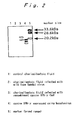
- canine IFN- ⁇ protein in the chorioallantoic fluid was confirmed by western blotting assay using antiserum obtained by immunizing a rabbit with canine IFN- ⁇ expressed in E.coli as follows.
- the chorioallantoic fluid infected with recombinant canine IFN- ⁇ -Sendai virus, the chorioallantoic fluid infected with wild Sendai virus, and the chorioallantoic fluid of noninfected chicken embryonic eggs as a complete negative control were each subjected to ethanol precipitation and each precipitate was dissolved into a sample buffer. Also, recombinant canine IFN- ⁇ expressed using baculovirus expression system was dissolved in a sample buffer as a positive control of canine IFN- ⁇ .
- Bioassay was carried out as follows.
- A72 cells were placed at a concentration of 3 ⁇ 10 4 cells/well on a 96 well plate, and on the next day each 100 ⁇ l/ml of serial 2-fold dilutions of the sample were added dropwise to the cells after the supernatant was removed.
- VSV Vesicluar Somatitis virus
- results are as follows: measurement of titer by inhibition of growth of VSV on A72 cells chorioallantoic fluid infected with recombinant canine IFN- ⁇ -SeV 160 LU/ml chorioallantoic fluid infected with wild SeV ⁇ 10 LU/ml control chorioallantoic fluid ⁇ 10 LU/ml
- This bioassay utilizes the fact that an interferon has antiviral activity to enable determination of the activity of the interferon.
- a method for measuring it as a degree of cytopathic effect (CPE) which occurs when a virus infects a cell.
- An interferon has an inhibitory effect on virus growth.
- CPE cytopathic effect
- One LV is defined as IFN titer of the dilution which inhibits CPE by 50% when the cells pretreated with the sample dilution are infected with the viruses in an amount having 100% CPE.
- the chorioallantoic fluid containing canine IFN- ⁇ obtained in (2) was subjected to centrifugation and then ultrafiltration to remove Sendai viruses from the fluid.
- the supernatant is dialyzed with Buffer 1 (20mM Tris.C1, 1mM DTT, 5% ethylene glycol, 15% glycerol) and added to ion exchange chromatography equilibrated with the solution.
- the elution is carried out using Buffer 2 (0.5M NaCl is added to Buffer 1) with a linear concentration gradient.
- Buffer 1 0.5M NaCl is added to Buffer 1 with a linear concentration gradient.
- the obtained purified canine IFN- ⁇ is further purified by gel filtration chromatography using Hiload 16/60 Superdex 75 and dissolved in a suitable solution. The presence of canine IFN- ⁇ in each step is confirmed by western blotting or bioassay.
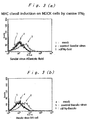
- the recombinant IFN- ⁇ expressed in chorioallantoic fluid by Sendai virus was added to a culture medium of MCCK cells of a canine kidney-derived cell strain, and incubation was carried out for 17 hours. Then, the cells were washed with sorter buffer, incubated along with anti-canine MHC class II monochronal antibody for 30 minutes, washed again with sorter buffer, and incubated along with FITC-labeled anti-mouse IgG antibody for 30 minutes. The cells were again washed with sorter buffer and were analyzed by FAC Scan (See Fig. 3(a) and 3(b)). As a result, it is apparent that IFN- ⁇ expressed using Sendai virus can induce MHC class II molecule expression on the cells, like IFN- ⁇ expressed using baculovirus.
- cytokines can be expressed effectively in large amounts in chicken eggs by using Sendai virus vector expression system which is confirmed to be safe, and the purification of the expressed cytokines is easy.
- the cytokines obtained are expected to be useful for medications because they have sugar chains very similar to those of mammals, unlike the prior art expression system. Therefore, the present invention contributes greatly to putting the system for producing cytokines as useful medications in large amounts inexpensively into practical use.
Landscapes
- Health & Medical Sciences (AREA)
- Life Sciences & Earth Sciences (AREA)
- Genetics & Genomics (AREA)
- Chemical & Material Sciences (AREA)
- Organic Chemistry (AREA)
- Zoology (AREA)
- Engineering & Computer Science (AREA)
- Bioinformatics & Cheminformatics (AREA)
- Biotechnology (AREA)
- Biophysics (AREA)
- Wood Science & Technology (AREA)
- Molecular Biology (AREA)
- General Engineering & Computer Science (AREA)
- Biochemistry (AREA)
- General Health & Medical Sciences (AREA)
- Biomedical Technology (AREA)
- Microbiology (AREA)
- Physics & Mathematics (AREA)
- Virology (AREA)
- Proteomics, Peptides & Aminoacids (AREA)
- Plant Pathology (AREA)
- Toxicology (AREA)
- Gastroenterology & Hepatology (AREA)
- Medicinal Chemistry (AREA)
- Preparation Of Compounds By Using Micro-Organisms (AREA)
- Micro-Organisms Or Cultivation Processes Thereof (AREA)
- Medicines That Contain Protein Lipid Enzymes And Other Medicines (AREA)
- Peptides Or Proteins (AREA)
- Medicines Containing Material From Animals Or Micro-Organisms (AREA)
Applications Claiming Priority (2)
| Application Number | Priority Date | Filing Date | Title |
|---|---|---|---|
| JP31732198 | 1998-11-09 | ||
| JP31732198 | 1998-11-09 |
Publications (3)
| Publication Number | Publication Date |
|---|---|
| EP1013667A2 true EP1013667A2 (fr) | 2000-06-28 |
| EP1013667A3 EP1013667A3 (fr) | 2000-07-05 |
| EP1013667B1 EP1013667B1 (fr) | 2006-10-11 |
Family
ID=18086915
Family Applications (1)
| Application Number | Title | Priority Date | Filing Date |
|---|---|---|---|
| EP99402786A Expired - Lifetime EP1013667B1 (fr) | 1998-11-09 | 1999-11-09 | Procédé de production de cytokines grâce à un système d'expression de virus sendai |
Country Status (3)
| Country | Link |
|---|---|
| US (1) | US6514728B1 (fr) |
| EP (1) | EP1013667B1 (fr) |
| DE (1) | DE69933528T2 (fr) |
Cited By (1)
| Publication number | Priority date | Publication date | Assignee | Title |
|---|---|---|---|---|
| WO2002038726A3 (fr) * | 2000-11-08 | 2003-03-20 | Dnavec Research Inc | Vecteur de paramyxovirus destine au transfert de genes dans le systeme cardiovasculaire |
Families Citing this family (13)
| Publication number | Priority date | Publication date | Assignee | Title |
|---|---|---|---|---|
| DK0863202T3 (da) * | 1995-11-01 | 2010-09-27 | Dnavec Research Inc | Rekombinant Sendai-virus |
| US7241617B2 (en) * | 1998-07-03 | 2007-07-10 | Dnavec Research, Inc. | Sendai viral vectors comprising foreign genes inserted between the R1 and R2 Loci |
| KR20030042003A (ko) * | 2000-10-06 | 2003-05-27 | 가부시키가이샤 디나벡크 겐큐쇼 | 골격근에 외래유전자를 도입하기 위한 파라믹소바이러스 벡터 |
| US20040235011A1 (en) * | 2002-06-26 | 2004-11-25 | Cooper Richard K. | Production of multimeric proteins |
| US20040172667A1 (en) * | 2002-06-26 | 2004-09-02 | Cooper Richard K. | Administration of transposon-based vectors to reproductive organs |
| US7527966B2 (en) * | 2002-06-26 | 2009-05-05 | Transgenrx, Inc. | Gene regulation in transgenic animals using a transposon-based vector |
| WO2005062881A2 (fr) * | 2003-12-24 | 2005-07-14 | Transgenrx, Inc. | Therapie genique faisant intervenir des vecteurs de transposon |
| AU2005205441A1 (en) * | 2004-01-13 | 2005-07-28 | Dnavec Research Inc. | Gene therapy for tumor using minus-strand RNA virus vector encoding immunostimulating cytokine |
| US20100203027A1 (en) * | 2007-04-27 | 2010-08-12 | Kyushu Univeristy National University | Viral vector for gene therapy |
| WO2010036979A2 (fr) * | 2008-09-25 | 2010-04-01 | Transgenrx, Inc. | Nouveaux vecteurs pour la production d'interféron |
| WO2010036976A2 (fr) * | 2008-09-25 | 2010-04-01 | Transgenrx, Inc. | Nouveaux vecteurs pour la production d'anticorps |
| US9157097B2 (en) * | 2008-09-25 | 2015-10-13 | Proteovec Holding, L.L.C. | Vectors for production of growth hormone |
| EP2417263B1 (fr) * | 2009-04-09 | 2015-09-23 | ProteoVec Holding L.L.C. | Production de protéines au moyen de vecteurs à base de transposon |
Family Cites Families (9)
| Publication number | Priority date | Publication date | Assignee | Title |
|---|---|---|---|---|
| DE1617401A1 (de) * | 1966-05-02 | 1972-02-17 | Centre Nat Rech Scient | Verfahren zur Herstellung von Interferon-Praeparaten |
| GB2016015B (en) * | 1978-01-22 | 1982-05-06 | Hayashibara Co | Method of preparing interferon and preparations containing interferon |
| JPS5598118A (en) * | 1979-01-18 | 1980-07-25 | Hayashibara Takeshi | Preparation of type-2 interferon and drug containing the same |
| US5362490A (en) * | 1986-07-25 | 1994-11-08 | Kabushiki Kaisha Hayashibara Seibutsu Kagaku Kenkyujo | Human myelomonocyte interferon-gamma, and process for preparation and use thereof |
| US5162215A (en) * | 1988-09-22 | 1992-11-10 | Amgen Inc. | Method of gene transfer into chickens and other avian species |
| US5641656A (en) * | 1993-10-22 | 1997-06-24 | University Of Connecticut | Nucleic acids encoding avian interferon (IFN) proteins and recombinant methods using them |
| DK0864645T3 (da) * | 1995-10-31 | 2005-10-24 | Dnavec Research Inc | Negativstrenget RNA-virusvektor med autonom replikeringsaktivitet |
| DK0863202T3 (da) | 1995-11-01 | 2010-09-27 | Dnavec Research Inc | Rekombinant Sendai-virus |
| JPH09234085A (ja) * | 1995-12-28 | 1997-09-09 | Toray Ind Inc | イヌインターフェロンγの製造法 |
-
1999
- 1999-11-09 DE DE69933528T patent/DE69933528T2/de not_active Expired - Lifetime
- 1999-11-09 EP EP99402786A patent/EP1013667B1/fr not_active Expired - Lifetime
- 1999-11-09 US US09/436,504 patent/US6514728B1/en not_active Expired - Fee Related
Cited By (4)
| Publication number | Priority date | Publication date | Assignee | Title |
|---|---|---|---|---|
| WO2002038726A3 (fr) * | 2000-11-08 | 2003-03-20 | Dnavec Research Inc | Vecteur de paramyxovirus destine au transfert de genes dans le systeme cardiovasculaire |
| EP1662003A3 (fr) * | 2000-11-08 | 2006-06-14 | DNAVEC Research, Inc. | Vecteur de paramyxovirus pour le transfert de gènes au système cardiovasculaire |
| KR100852078B1 (ko) * | 2000-11-08 | 2008-08-13 | 가부시키가이샤 디나벡크 겐큐쇼 | 심혈관계로의 유전자 전달을 위한 파라믹소바이러스 벡터 |
| CN1555417B (zh) * | 2000-11-08 | 2010-04-28 | 株式会社载体研究所 | 用于向心血管系统转移基因的副粘病毒载体 |
Also Published As
| Publication number | Publication date |
|---|---|
| US6514728B1 (en) | 2003-02-04 |
| DE69933528D1 (de) | 2006-11-23 |
| EP1013667A3 (fr) | 2000-07-05 |
| DE69933528T2 (de) | 2007-08-09 |
| EP1013667B1 (fr) | 2006-10-11 |
Similar Documents
| Publication | Publication Date | Title |
|---|---|---|
| Strauss Jr et al. | Identification of the membrane protein and" core" protein of Sindbis virus. | |
| US6514728B1 (en) | Process for preparation of cytokines using Sendai virus expression system | |
| CN102741405B (zh) | 提高基因表达的系统和保持有该系统的载体 | |
| KR100525687B1 (ko) | 재조합체 센다이바이러스 | |
| US8236527B2 (en) | Recombinant production of authentic human proteins using human cell expression systems | |
| KR100196204B1 (ko) | 폭스비루스 성분의 조합에 기초한 파라뮤니티 유발인자, 그의 제조방법 및 그의 약제에의 이용 | |
| EP0658627A2 (fr) | ADN récombiné avec le promoteur d'interféron alpha | |
| JPS63500003A (ja) | 哺乳動物細胞中でγ−インタ−フエロンを発現させるためのベクタ−、それを実施する方法、得られた製品及び該γ−インタ−フエロンを含有する医薬組成物 | |
| CN111848814B (zh) | 一种重组猪il-29融合蛋白及其制备方法与应用 | |
| US20240417751A1 (en) | Rna replicon for improving gene expression and use thereof | |
| JPS63500005A (ja) | 組換えポックスウイルスによる哺乳動物細胞中でのヒトil−2の発現 | |
| EA009525B1 (ru) | Рекомбинантный модифицированный вирус осповакцины ankara, содержащий ati-промотор вируса коровьей оспы, и способы применения вируса и промотора | |
| CN118165125B (zh) | 一种重组猪干扰素λ1、猪干扰素γ和猪SA的融合蛋白及其应用 | |
| AU2009201629A1 (en) | Production of ALVAC on avian embryonic stem cells | |
| CN118165126B (zh) | 一种重组猪干扰素λ1、猪干扰素γ和猪Fc(KiH)的融合蛋白及其应用 | |
| CN116970631B (zh) | 一种重组蛋白的编码基因、载体、细胞及制备方法 | |
| CN118165124A (zh) | 一种重组猪干扰素λ1、猪干扰素γ和猪Fc的融合蛋白及其应用 | |
| EP4544065A1 (fr) | Procédés et kits pour la production fermentative améliorée d'un virus recombiné | |
| JP2000201689A (ja) | センダイウイルス発現系を用いたサイトカインの製造方法 | |
| JP2003325188A (ja) | サイトカイン遺伝子組換えカイコおよびそのタンパク質の製造方法 | |
| RU2812356C1 (ru) | Интегративный плазмидный вектор PVEAL3-GP-MARV-Trim, обеспечивающий синтез и секрецию рекомбинантного поверхностного гликопротеина GP вируса Марбург в клетках млекопитающих, рекомбинантный штамм клеточной линии CHO-K1-GP-MARV и рекомбинантный белок GP-MARV, продуцируемый указанным штаммом клеточной линии CHO-K1-GP-MARV и используемый для получения иммунобиологических препаратов | |
| Corral et al. | High level expression of soluble glycoproteins in the allantoic fluid of embryonated chicken eggs using a Sendai virus minigenome system | |
| US20080089890A1 (en) | Methods of polypeptide production | |
| JP3638019B2 (ja) | 組換え体センダイウイルス | |
| CN118956782A (zh) | 表达pd-1人源抗体的重组流感病毒及其制备和应用 |
Legal Events
| Date | Code | Title | Description |
|---|---|---|---|
| PUAI | Public reference made under article 153(3) epc to a published international application that has entered the european phase |
Free format text: ORIGINAL CODE: 0009012 |
|
| PUAL | Search report despatched |
Free format text: ORIGINAL CODE: 0009013 |
|
| AK | Designated contracting states |
Kind code of ref document: A2 Designated state(s): CH DE FR GB LI |
|
| AX | Request for extension of the european patent |
Free format text: AL;LT;LV;MK;RO;SI |
|
| AK | Designated contracting states |
Kind code of ref document: A3 Designated state(s): AT BE CH CY DE DK ES FI FR GB GR IE IT LI LU MC NL PT SE |
|
| AX | Request for extension of the european patent |
Free format text: AL;LT;LV;MK;RO;SI |
|
| 17P | Request for examination filed |
Effective date: 20001229 |
|
| AKX | Designation fees paid |
Free format text: CH DE FR GB LI |
|
| RAP1 | Party data changed (applicant data changed or rights of an application transferred) |
Owner name: THE UNIVERSITY OF TOKYO Owner name: NOPPON BIOLOGICALS, INC. |
|
| RAP3 | Party data changed (applicant data changed or rights of an application transferred) |
Owner name: THE UNIVERSITY OF TOKYO Owner name: NIPPON BIOLOGICALS, INC. |
|
| 17Q | First examination report despatched |
Effective date: 20030915 |
|
| GRAP | Despatch of communication of intention to grant a patent |
Free format text: ORIGINAL CODE: EPIDOSNIGR1 |
|
| GRAS | Grant fee paid |
Free format text: ORIGINAL CODE: EPIDOSNIGR3 |
|
| GRAA | (expected) grant |
Free format text: ORIGINAL CODE: 0009210 |
|
| AK | Designated contracting states |
Kind code of ref document: B1 Designated state(s): CH DE FR GB LI |
|
| REG | Reference to a national code |
Ref country code: GB Ref legal event code: FG4D |
|
| REG | Reference to a national code |
Ref country code: CH Ref legal event code: EP |
|
| REG | Reference to a national code |
Ref country code: CH Ref legal event code: NV Representative=s name: MICHELI & CIE INGENIEURS-CONSEILS |
|
| REF | Corresponds to: |
Ref document number: 69933528 Country of ref document: DE Date of ref document: 20061123 Kind code of ref document: P |
|
| ET | Fr: translation filed | ||
| PLBE | No opposition filed within time limit |
Free format text: ORIGINAL CODE: 0009261 |
|
| STAA | Information on the status of an ep patent application or granted ep patent |
Free format text: STATUS: NO OPPOSITION FILED WITHIN TIME LIMIT |
|
| 26N | No opposition filed |
Effective date: 20070712 |
|
| PGFP | Annual fee paid to national office [announced via postgrant information from national office to epo] |
Ref country code: DE Payment date: 20141113 Year of fee payment: 16 Ref country code: CH Payment date: 20141114 Year of fee payment: 16 Ref country code: FR Payment date: 20141117 Year of fee payment: 16 Ref country code: GB Payment date: 20141118 Year of fee payment: 16 |
|
| REG | Reference to a national code |
Ref country code: DE Ref legal event code: R119 Ref document number: 69933528 Country of ref document: DE |
|
| REG | Reference to a national code |
Ref country code: CH Ref legal event code: PL |
|
| GBPC | Gb: european patent ceased through non-payment of renewal fee |
Effective date: 20151109 |
|
| PG25 | Lapsed in a contracting state [announced via postgrant information from national office to epo] |
Ref country code: CH Free format text: LAPSE BECAUSE OF NON-PAYMENT OF DUE FEES Effective date: 20151130 Ref country code: LI Free format text: LAPSE BECAUSE OF NON-PAYMENT OF DUE FEES Effective date: 20151130 |
|
| REG | Reference to a national code |
Ref country code: FR Ref legal event code: ST Effective date: 20160729 |
|
| PG25 | Lapsed in a contracting state [announced via postgrant information from national office to epo] |
Ref country code: DE Free format text: LAPSE BECAUSE OF NON-PAYMENT OF DUE FEES Effective date: 20160601 Ref country code: GB Free format text: LAPSE BECAUSE OF NON-PAYMENT OF DUE FEES Effective date: 20151109 |
|
| PG25 | Lapsed in a contracting state [announced via postgrant information from national office to epo] |
Ref country code: FR Free format text: LAPSE BECAUSE OF NON-PAYMENT OF DUE FEES Effective date: 20151130 |