EP1014753A2 - Procédé pour réetablir une connexion virtuelle sans perte de la session d'appel - Google Patents
Procédé pour réetablir une connexion virtuelle sans perte de la session d'appel Download PDFInfo
- Publication number
- EP1014753A2 EP1014753A2 EP99310374A EP99310374A EP1014753A2 EP 1014753 A2 EP1014753 A2 EP 1014753A2 EP 99310374 A EP99310374 A EP 99310374A EP 99310374 A EP99310374 A EP 99310374A EP 1014753 A2 EP1014753 A2 EP 1014753A2
- Authority
- EP
- European Patent Office
- Prior art keywords
- virtual circuit
- interface port
- cpe
- source terminal
- network
- Prior art date
- Legal status (The legal status is an assumption and is not a legal conclusion. Google has not performed a legal analysis and makes no representation as to the accuracy of the status listed.)
- Granted
Links
- 238000000034 method Methods 0.000 title claims description 18
- 229920006235 chlorinated polyethylene elastomer Polymers 0.000 claims description 9
- 238000000136 cloud-point extraction Methods 0.000 claims description 9
- 230000015572 biosynthetic process Effects 0.000 claims description 5
- 230000003466 anti-cipated effect Effects 0.000 claims description 3
- 230000011664 signaling Effects 0.000 description 6
- 150000001875 compounds Chemical class 0.000 description 3
- 230000003190 augmentative effect Effects 0.000 description 1
- 230000005540 biological transmission Effects 0.000 description 1
- 238000010276 construction Methods 0.000 description 1
- 230000006870 function Effects 0.000 description 1
Images



Classifications
-
- H—ELECTRICITY
- H04—ELECTRIC COMMUNICATION TECHNIQUE
- H04Q—SELECTING
- H04Q11/00—Selecting arrangements for multiplex systems
- H04Q11/04—Selecting arrangements for multiplex systems for time-division multiplexing
- H04Q11/0428—Integrated services digital network, i.e. systems for transmission of different types of digitised signals, e.g. speech, data, telecentral, television signals
- H04Q11/0478—Provisions for broadband connections
-
- H—ELECTRICITY
- H04—ELECTRIC COMMUNICATION TECHNIQUE
- H04L—TRANSMISSION OF DIGITAL INFORMATION, e.g. TELEGRAPHIC COMMUNICATION
- H04L12/00—Data switching networks
- H04L12/54—Store-and-forward switching systems
- H04L12/56—Packet switching systems
- H04L12/5601—Transfer mode dependent, e.g. ATM
- H04L2012/5625—Operations, administration and maintenance [OAM]
- H04L2012/5627—Fault tolerance and recovery
Definitions
- This invention pertains to connections on communication networks, and, more particularly, to the transparent reconnection of interrupted connections on communication networks.
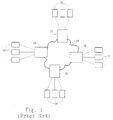
- a network 10 interconnects a plurality of network interfaces 20 which may be at different geographical locations.
- a plurality of customer premises equipment (CPE) 30 are connected, and located proximate to each network interface 20.
- CPE 30 may include such end-user devices as data terminals or voice telephone handsets.
- a CPE 30 at a particular location (the "source") may initiate communication with a CPE 30 at another location (the "destination") through the source network interface 20, the network 10, and the destination network interface 20.
- the communication links are not based on POTS-style hard connections.
- the communication links are often referred to as "virtual circuits".
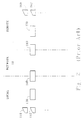
- Fig. 2 depicts a portion of a communication network environment that will be taken as exemplary in discussing the present invention. Only two of a possible plurality of subscriber locations or sites are shown. Designated as LOCAL and REMOTE, the subscriber locations or sites may be interconnected by network 10. Each subscriber site, LOCAL and REMOTE, has a network interface (140 and 180 respectively) associated therewith. The LOCAL and REMOTE sites each have at least one CPE 130 and 170 respectively. The LOCAL and REMOTE sites also each have at least one type of end-user equipment, such as data terminals 110, 112 etc. and data terminals 160, 162 etc. Those skilled in the art appreciate that CPEs 130 and 170 typically include computer chips or similar intelligence for interfacing end-user equipment to network interfaces 140 and 180 and the methodology for such interfacing is known in the art.
- FIG. 3 depicts a scenario known to those skilled in the art in which it is assumed, by way of example, that terminal 112 at the LOCAL site requests to communicate with terminal 162 at the REMOTE site.
- CPE 130 receives the request (including address information for terminal 162) from terminal 112, and issues a Q.933 (or other conventional signalling specification) SETUP message to network interface 140.
- network 10 routes the SETUP message to network interface 180, since that is the network interface associated with terminal 162.
- Network interface 180 passes the SETUP message to CPE 170, which establishes data connection (over a preexisting physical connection) with terminal 162.
- CPE 170 originates a Q.933 CONNECT message, which is returned via network interface 180, network 10, and network interface 140 to CPE 130. A "call" is then in session between the two terminals.
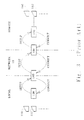
- Fig. 4 depicts another scenario known to those skilled in the art and relevant to the present invention, in which terminal 162 at the REMOTE location requests communication with terminal 112 at the LOCAL location. Message flow is the reverse of that shown in Fig. 3, but likewise results in a call being in session between the two terminals.
- calls are sometimes interrupted because of equipment failure, interruption of the transmission paths comprising network 10, tampering (whether inadvertent or deliberate), and so forth.
- Means are known in the art for re-establishing dropped connections.
- many types of communication channels monitor the primary link of a call and, upon detecting that the primary link has gone down, can perform a switchover to a backup link. Such communication channels can further detect when the primary link recovers, and can switch back to the primary link, taking the backup link down again.
- existing call sessions are dropped and must be reinitiated by the end user.
- the present invention provides for a method of reestablishing virtual circuits after the interruption thereof.
- a communication system comprising a network with a plurality of interconnectable interface ports; a plurality of customer premises equipment (CPE), each selectively connectable to at least one of said interface ports; a plurality of terminals connected to each of said CPEs and being selectively operable as a source terminal to issue a setup request through its associated CPE for requesting connection to a terminal connected to a different CPE and operable as a destination terminal; wherein each of the interface ports are responsive to a setup request from a source terminal to connect itself via the network to a second interface port and to direct the second interface port to connect to a CPE associated with a requested destination terminal thus forming a virtual circuit between the source terminal and the requested destination terminal; and wherein each CPE is able to determine whether a virtual circuit is interrupted, the invention provides for the following steps to reestablish the virtual circuit after interruption thereof: (i) upon formation of a virtual circuit between
- the second interface port when the virtual circuit is interrupted, places the virtual circuit in a wait-for-backup mode. Upon expiration of a predetermined time, preferably a time longer than the time anticipated to reestablish the virtual circuit, if the virtual circuit is still in wait-for-backup mode, the second interface port drops the virtual circuit. Likewise, if the virtual circuit is reestablished, the second interface port removes the virtual circuit from the wait for backup mode.
- the invention provides a method for establishing a "tunnel" virtual circuit and storing information about the tunnel virtual circuit at the CPE associated with the source terminal, and then establishing "encapsulated” virtual circuits within the tunnel virtual circuit, also storing information about the encapsulated virtual circuits at the CPE associated with the source terminal.
- the present invention provides for reestablishing the tunnel virtual circuit and all its encapsulated virtual circuits.
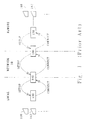
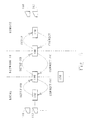
- Fig. 5 depicts a network 10 with a LOCAL site which embodies the present invention.
- a network interface 140 and a backup network interface 150 are provided.
- a CPE 132 is also provided at the LOCAL site.
- CPE 132 augments CPE 130 of the prior art in that CPE 132 has the ability to store and use virtual circuit description information as discussed below. It should be noted that, in this example, the REMOTE site is not provided with a backup network interface, or an augmented CPE.
- LOCAL terminal 112 requests to communicate with REMOTE terminal 162.
- LOCAL terminal 112's request to communicate is passed to CPE 132 along with a request for backup of the virtual circuit that is to be established.
- CPE 132 forwards to network interface 140 a standard SETUP message (a conventional setup message such as Q933, Q.2931 or other signalling protocol, which will be referred to as Q.933 in this application) except that the message has a request for backup (RB).
- the RB can be added to the SETUP message by CPE 132 or by LOCAL terminal 112.
- Network interface 140 forwards the SETUP+RB message across network 10 to network interface 180, which forwards a Q.933 SETUP message to CPE 170 which invokes communication with terminal 162 thus completing the virtual circuit.
- CPE 170 also returns a standard CONNECT message (a conventional connect message such as Q.933, Q.2931, or other signalling protocol which will be referred to as Q.933 in this application) to network interface 180.
- CPE 180 passes a Q.933 CONNECT message with a virtual circuit (VC) message appended across network 10 to network interface 140.
- the CONNECT+VC message is then passed back to CPE 132, which stores the VC information.
- Network interface 180 continues to hold the call for a time longer than the expected reestablishment time, such as for sixty seconds. At the expiration of that time, network interface 180 drops the call.
- CPE 132 upon detecting interruption of the virtual circuit, requests reestablishment of the virtual circuit.
- CPE 132 if network interface 140 is the cause of the interruption, CPE 132 will now work with backup network interface 150.
- CPE 132 forwards to network interface 150 a Q.933 SETUP message, appended to which are a RC (reconnect request) and the aforementioned VC (virtual circuit) description, which was stored by CPE 132 upon initial establishment of the virtual circuit. This compound message is forwarded across the network 10 to network interface 180.
- the virtual circuit can be reestablished on the new links from network interface 150 through network 10 to network interface 180, in accordance with the description contained in the VC description appended to the message. Because the SETUP message is accompanied by the RC and VC messages, the nodes (e.g. the CPEs, terminals, etc.) would not attempt to set up a new virtual circuit. It is only in response to a SETUP message which is not accompanied by other messages wherein the nodes would attempt to establish a new virtual circuit.
- REMOTE terminal 162 requests communication with LOCAL terminal 112.
- the REMOTE location is not equipped with a backup network interface.
- CPE 170 forwards to network interface 180 the Q.933 SETUP message (Q.933 referring again to conventional signalling protocols such as Q.933 and Q.2931), with a RB (Request Backup) message appended to it.
- the RB message could be added by REMOTE terminal 162, CPE 170 or network interface 180.
- the SETUP+RB message is forwarded across network 10 to network interface 140.
- Network interface 140 adds the VC description message and forwards SETUP+RB+VC to CPE 132, which stores the VC message and initiates data communication with terminal 112.
- Network interface 180 continues to hold the call for a specified time, such as for up to sixty seconds, in anticipation of reestablishing the virtual circuit.
- REMOTE CPE 170 will drop the call if reestablishment has not occurred within the specified time period.
- CPE 132 detects the interruption and requests reestablishment of the virtual circuit.
- CPE 132 again forwards to network interface 150 a Q.933 SETUP message, appended to which are a RC (reconnect request) and the aforementioned VC description, which was stored by CPE 132 upon initial establishment of the virtual circuit.
- This compound message is forwarded across the network 10 to network interface 180. Since CPE 170 has been holding the call, the virtual circuit can be reestablished over new communication links through network 10 from network interface 150 to network interface 180, according to the description contained in the VC description portion of the message.
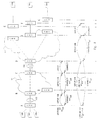
- Fig. 8 depicts a network 10 in which the present invention may be used to recover "tunnel” virtual circuits which, in turn, may "encapsulate” a plurality of individual virtual circuits.
- Fig. 8 includes a LOCAL site with terminals 110, 112, 120, 122, etc. connected to CPE 132.
- CPE 132 augments CPE 130 of the prior art in that CPE 132 has the capability to store and use virtual circuit description information.
- CPE 132 connects to network interface 140 for interfacing with network 10.
- CPE 132 can also connect to network interface 150, which is also present at the LOCAL site.
- Network interface 180 is present at a remote point on network 10.
- Fig. 8 also depicts a second network 12, which may be any public network. As depicted, there are connections from network 10 via network interface 180 to network 12 via network interface 190.
- CPEs 170, 172, 174 etc. are connected at a remote point of network 12, through network interfaces 200, 202, 204, etc. as required by network 12.
- Each of CPE's 170, 172, 174, etc. may have one or more terminals connected to it, such as 160, 162, 164, etc.
- CPEs 170, 172, 174, etc. and their respective terminals are not necessarily collocated.
- CPE 132 is identified as point A, network interface 140 as point B, network interface 180 as point C, etc. and so on.
- a tunnel virtual circuit may be established from CPE 132 (point A) to network interface 190 (point D), and is designated VC AD .
- CPE 132 may forward a Q.933 SETUP message (Q.933 referring again to conventional signalling protocols such as Q.933 and Q.2931), specifying that a plurality of lines be included in the virtual circuit, to network interface 140, with a request for backup (RB) message appended.
- Network interface 140 causes allocation of the plurality of lines within network 10, and forwards the SETUP+RB message to network interface 180, which acts upon it and in turn forwards a Q.933 SETUP message to network interface 190.
- This establishes a conceptual "tunnel" from point A to point D, denoted as elements 133 and 182 respectively on the two sides of network 10.
- These elements 133 and 182 each contain a plurality of individual virtual circuits.
- a Q.933 CONNECT message is returned from network interface 190 to network interface 180. Then, network interface 180 appends a VC AD message describing the virtual circuit AD. A CONNECT+VC AD message is then forwarded to network interface 140, and thence to CPE 132 where it is stored for possible future use.
- local terminal 112 wishes to communicate with remote terminal 162. This requires setting up a virtual circuit from CPE 132 (designated point A of the network) to CPE 172 (designated point F of the network).
- the virtual circuit to be established will therefore be called VC AF .
- communicating with remote terminals 160 or 164, which would require establishing virtual circuits VC AE or VC AG , respectively, is similar to the description below.
- a Q.933 SETUP message with a request for backup (RB) message attached is sent from CPE 132 to network interface 190. This is accomplished via the virtual circuit VC AD .
- Network interface 190 then forwards a SETUP+RB message to network interface 202, which forwards a Q.933 SETUP message to CPE 172.
- CPE 172 returns a Q.933 CONNECT message to network interface 202, which appends a VC AF message (descriptive of virtual circuit AF) and forwards CONNECT+VC AF message to network interface 190 which, in turn, forwards the message to CPE 132 (again, via virtual circuit AD (VC AD )).
- the description is stored by CPE 132.
- tunnel VC AD is interrupted along with any virtual circuits encapsulated therein, such as VC AF in the above example.
- the remote CPEs (such as 172 in the present example) continue to hold their calls for a predetermined time, such as up to 60 seconds.
- CPE 132 detects interruption and requests reestablishment of the virtual circuits.
- Fig. 9 depicts an example wherein network interface 140 is the cause of the interruption.
- CPE 132 will now communicate with backup network interface 150, forwarding a Q.933 SETUP message, appended to which are a RC (reconnect request) and the aforementioned VC AD description, which was stored by CPE 132 upon initial establishment of VC AD .
- This compound message is forwarded across the network 10 to network interface 180, which forwards a Q.933 SETUP message to network interface 190.
- VC AD is now reestablished through tunnels 133 and 182 on either side of network 10, and provides communication links as assigned by network 10 between network interface 150 and network interface 180.
- the invention provides virtual circuit reconnection without loss of a call session.
- Figs. 5 and 7 establish virtual circuits in a manner amenable to reconnection as depicted in Fig. 6, while the configuration depicted in Fig. 8 establishes virtual circuits encapsulated within a tunnel virtual circuit in a manner amenable to reconnection as depicted in Fig. 9.
Landscapes
- Engineering & Computer Science (AREA)
- Computer Networks & Wireless Communication (AREA)
- Data Exchanges In Wide-Area Networks (AREA)
- Communication Control (AREA)
Applications Claiming Priority (2)
| Application Number | Priority Date | Filing Date | Title |
|---|---|---|---|
| US216992 | 1998-12-21 | ||
| US09/216,992 US6456626B1 (en) | 1998-12-21 | 1998-12-21 | Method of virtual circuit reconnection without loss of call session |
Publications (3)
| Publication Number | Publication Date |
|---|---|
| EP1014753A2 true EP1014753A2 (fr) | 2000-06-28 |
| EP1014753A3 EP1014753A3 (fr) | 2003-11-12 |
| EP1014753B1 EP1014753B1 (fr) | 2008-04-02 |
Family
ID=22809240
Family Applications (1)
| Application Number | Title | Priority Date | Filing Date |
|---|---|---|---|
| EP99310374A Expired - Lifetime EP1014753B1 (fr) | 1998-12-21 | 1999-12-21 | Procédé et système de communication pour réetablir une connexion virtuelle sans perte de la session d'appel |
Country Status (4)
| Country | Link |
|---|---|
| US (1) | US6456626B1 (fr) |
| EP (1) | EP1014753B1 (fr) |
| CA (1) | CA2292260C (fr) |
| DE (1) | DE69938448T2 (fr) |
Families Citing this family (7)
| Publication number | Priority date | Publication date | Assignee | Title |
|---|---|---|---|---|
| US6535481B1 (en) * | 1999-08-20 | 2003-03-18 | Nortel Networks Limited | Network data routing protection cycles for automatic protection switching |
| US20020075860A1 (en) * | 2000-12-19 | 2002-06-20 | Young Gene F. | High density serverlets utilizing high speed data bus |
| US7023794B2 (en) * | 2002-02-11 | 2006-04-04 | Net2Phone, Inc. | Method and architecture for redundant SS7 deployment in a voice over IP environment |
| US20030217149A1 (en) * | 2002-05-20 | 2003-11-20 | International Business Machines Corporation | Method and apparatus for tunneling TCP/IP over HTTP and HTTPS |
| US20050198022A1 (en) * | 2004-02-05 | 2005-09-08 | Samsung Electronics Co., Ltd. | Apparatus and method using proxy objects for application resource management in a communication network |
| CN101163171B (zh) * | 2006-10-13 | 2010-08-18 | 中兴通讯股份有限公司 | 一种基于接入网实现上行业务接口保护的方法 |
| CN111416874B (zh) * | 2020-04-02 | 2025-07-04 | 腾讯科技(深圳)有限公司 | 用于会话重建或共享的方法、装置及系统 |
Family Cites Families (4)
| Publication number | Priority date | Publication date | Assignee | Title |
|---|---|---|---|---|
| DE3788577T2 (de) * | 1986-01-09 | 1994-07-07 | Nippon Electric Co | Paketvermitteltes Fernmeldenetz mit parallelen virtuellen Verbindungen zur Umweglenkung von Nachrichtenpaketen. |
| AU601328B2 (en) * | 1988-05-26 | 1990-09-06 | Digital Equipment Corporation | Temporary state preservation for a distributed file service |
| US6031817A (en) * | 1996-12-23 | 2000-02-29 | Cascade Communications Corporation | System and method for providing notification of malfunctions in a digital data network |
| US6363051B1 (en) * | 1998-06-30 | 2002-03-26 | At&T Corp. | Method and apparatus for achieving fast reconnection of permanent virtal channels in a frame relay network |
-
1998
- 1998-12-21 US US09/216,992 patent/US6456626B1/en not_active Expired - Lifetime
-
1999
- 1999-12-14 CA CA002292260A patent/CA2292260C/fr not_active Expired - Fee Related
- 1999-12-21 EP EP99310374A patent/EP1014753B1/fr not_active Expired - Lifetime
- 1999-12-21 DE DE69938448T patent/DE69938448T2/de not_active Expired - Lifetime
Non-Patent Citations (2)
| Title |
|---|
| COHEN R ET AL: "CONNECTION MANAGEMENT AND REROUTING IN ATM NETWORKS" PROCEEDINGS OF THE IEEE INFOCOM'94 CONFERENCE ON COMPUTER COMMUNICATIONS, TORONTO, ONT, CANADA, vol. 1, 12 - 16 June 1994, pages 184-191, XP000496467 ISBN: 0-8186-5572-0 * |
| DESOUZA O S: "REROUTE STRATEGIES FOR FAULT TOLERANT PACKET SWITCHING NETWORKS" PROCEEDINGS OF THE IEEE GLOBECOM'89 GLOBAL TELECOMMUNICATIONS CONFERENCE AND EXHIBITION, DALLAS, TX, USA, 27 - 30 November 1989, pages 1428-1433, XP010083687 * |
Also Published As
| Publication number | Publication date |
|---|---|
| US6456626B1 (en) | 2002-09-24 |
| DE69938448T2 (de) | 2009-05-07 |
| CA2292260A1 (fr) | 2000-06-21 |
| DE69938448D1 (de) | 2008-05-15 |
| CA2292260C (fr) | 2007-09-11 |
| EP1014753B1 (fr) | 2008-04-02 |
| EP1014753A3 (fr) | 2003-11-12 |
Similar Documents
| Publication | Publication Date | Title |
|---|---|---|
| US7286467B1 (en) | Failure protection for packet telephony | |
| US6311288B1 (en) | System and method for virtual circuit backup in a communication network | |
| US7313087B2 (en) | Distributed protection switching | |
| JP4647835B2 (ja) | 伝送装置及び障害回避方法 | |
| US7995564B1 (en) | Geographic redundancy for call servers in a cellular system based on a bearer-independent core network | |
| CN100527716C (zh) | 主备网关设备状态切换后业务恢复的方法及网关设备 | |
| CN101365169B (zh) | 路由控制的实现方法、系统、媒体网关及媒体网关控制器 | |
| EP1562390A1 (fr) | Connexion à large bande à haute disponibilité par commutation d'un réseau filaire à des réseaux sans fil | |
| EP1735950B1 (fr) | Protection de chemin au niveau ligne dans la couche optique | |
| US6839344B1 (en) | Transport mechanism for ISDN backhaul over IP | |
| CN106605387A (zh) | 用于vHGW的WAN控制失效备援代理 | |
| KR100602652B1 (ko) | 브이오아이피 시스템의 라우팅 관리 방법 및 그 시스템 | |
| US20030099192A1 (en) | Method and system for a switched virtual circuit with virtual termination | |
| CN101176303A (zh) | 一种业务倒换的方法和网络节点 | |
| CA2292260C (fr) | Methode de reconnexion de circuits virtuels sans perte de session d'appel | |
| CN101453744B (zh) | 业务控制方法及装置 | |
| US20030043427A1 (en) | Method of fast circuit recovery using local restoration | |
| KR100666953B1 (ko) | 링크 오류 복구를 위한 네트워크 시스템 및 방법 | |
| EP1069786B1 (fr) | Serveur de transport virtuel dans un réseau de télécommunications | |
| US7447150B1 (en) | Automated path restoration for packet telephony | |
| US5553060A (en) | Method for maintaining virtual connections given an at least partial outage of connecting paths | |
| KR100438071B1 (ko) | VoIP게이트웨이의 인터넷망 장애시 발신호 경로재설정방법 | |
| US7668079B2 (en) | Multiple endpoint paths for point-to-multipoint (P2MP) SPVC | |
| JP2976421B2 (ja) | 通信網における障害回復システム | |
| KR100349655B1 (ko) | 엠피엘에스 망에서 연결 보호 및 복구를 위한 연결 설정 방법 및 그를 이용한 연결 장애 복구 방법 |
Legal Events
| Date | Code | Title | Description |
|---|---|---|---|
| PUAI | Public reference made under article 153(3) epc to a published international application that has entered the european phase |
Free format text: ORIGINAL CODE: 0009012 |
|
| AK | Designated contracting states |
Kind code of ref document: A2 Designated state(s): AT BE CH CY DE DK ES FI FR GB GR IE IT LI LU MC NL PT SE |
|
| AX | Request for extension of the european patent |
Free format text: AL;LT;LV;MK;RO;SI |
|
| RAP1 | Party data changed (applicant data changed or rights of an application transferred) |
Owner name: NORTEL NETWORKS LIMITED |
|
| PUAL | Search report despatched |
Free format text: ORIGINAL CODE: 0009013 |
|
| RAP1 | Party data changed (applicant data changed or rights of an application transferred) |
Owner name: NORTEL NETWORKS LIMITED |
|
| AK | Designated contracting states |
Kind code of ref document: A3 Designated state(s): AT BE CH CY DE DK ES FI FR GB GR IE IT LI LU MC NL PT SE |
|
| AX | Request for extension of the european patent |
Extension state: AL LT LV MK RO SI |
|
| 17P | Request for examination filed |
Effective date: 20040510 |
|
| AKX | Designation fees paid |
Designated state(s): DE FR GB |
|
| 17Q | First examination report despatched |
Effective date: 20060907 |
|
| GRAP | Despatch of communication of intention to grant a patent |
Free format text: ORIGINAL CODE: EPIDOSNIGR1 |
|
| RTI1 | Title (correction) |
Free format text: METHOD AND COMMUNICATION SYSTEM FOR REESTABLISHING A VIRTUAL CIRCUIT WITHOUT LOSS OF CALL SESSION |
|
| GRAS | Grant fee paid |
Free format text: ORIGINAL CODE: EPIDOSNIGR3 |
|
| GRAA | (expected) grant |
Free format text: ORIGINAL CODE: 0009210 |
|
| AK | Designated contracting states |
Kind code of ref document: B1 Designated state(s): DE FR GB |
|
| REG | Reference to a national code |
Ref country code: GB Ref legal event code: FG4D |
|
| REF | Corresponds to: |
Ref document number: 69938448 Country of ref document: DE Date of ref document: 20080515 Kind code of ref document: P |
|
| ET | Fr: translation filed | ||
| PLBE | No opposition filed within time limit |
Free format text: ORIGINAL CODE: 0009261 |
|
| STAA | Information on the status of an ep patent application or granted ep patent |
Free format text: STATUS: NO OPPOSITION FILED WITHIN TIME LIMIT |
|
| 26N | No opposition filed |
Effective date: 20090106 |
|
| PGFP | Annual fee paid to national office [announced via postgrant information from national office to epo] |
Ref country code: GB Payment date: 20141124 Year of fee payment: 16 |
|
| PGFP | Annual fee paid to national office [announced via postgrant information from national office to epo] |
Ref country code: FR Payment date: 20141124 Year of fee payment: 16 |
|
| PGFP | Annual fee paid to national office [announced via postgrant information from national office to epo] |
Ref country code: DE Payment date: 20141222 Year of fee payment: 16 |
|
| REG | Reference to a national code |
Ref country code: DE Ref legal event code: R119 Ref document number: 69938448 Country of ref document: DE |
|
| GBPC | Gb: european patent ceased through non-payment of renewal fee |
Effective date: 20151221 |
|
| REG | Reference to a national code |
Ref country code: FR Ref legal event code: ST Effective date: 20160831 |
|
| PG25 | Lapsed in a contracting state [announced via postgrant information from national office to epo] |
Ref country code: DE Free format text: LAPSE BECAUSE OF NON-PAYMENT OF DUE FEES Effective date: 20160701 Ref country code: GB Free format text: LAPSE BECAUSE OF NON-PAYMENT OF DUE FEES Effective date: 20151221 |
|
| PG25 | Lapsed in a contracting state [announced via postgrant information from national office to epo] |
Ref country code: FR Free format text: LAPSE BECAUSE OF NON-PAYMENT OF DUE FEES Effective date: 20151231 |