EP1015134B1 - Oberflächenbehandlung eines 312 ternären keramikmaterials und daraus hergestelltes produkt - Google Patents
Oberflächenbehandlung eines 312 ternären keramikmaterials und daraus hergestelltes produkt Download PDFInfo
- Publication number
- EP1015134B1 EP1015134B1 EP98901728A EP98901728A EP1015134B1 EP 1015134 B1 EP1015134 B1 EP 1015134B1 EP 98901728 A EP98901728 A EP 98901728A EP 98901728 A EP98901728 A EP 98901728A EP 1015134 B1 EP1015134 B1 EP 1015134B1
- Authority
- EP
- European Patent Office
- Prior art keywords
- ceramic material
- compound
- ternary ceramic
- sic
- treated
- Prior art date
- Legal status (The legal status is an assumption and is not a legal conclusion. Google has not performed a legal analysis and makes no representation as to the accuracy of the status listed.)
- Expired - Lifetime
Links
- 229910010293 ceramic material Inorganic materials 0.000 title claims abstract description 69
- 238000004381 surface treatment Methods 0.000 title description 31
- 150000001875 compounds Chemical class 0.000 claims abstract description 66
- 238000000034 method Methods 0.000 claims abstract description 52
- 239000000463 material Substances 0.000 claims abstract description 24
- 238000006557 surface reaction Methods 0.000 claims abstract description 9
- 229910009817 Ti3SiC2 Inorganic materials 0.000 claims description 56
- 239000003795 chemical substances by application Substances 0.000 claims description 37
- OKTJSMMVPCPJKN-UHFFFAOYSA-N Carbon Chemical compound [C] OKTJSMMVPCPJKN-UHFFFAOYSA-N 0.000 claims description 26
- 239000000919 ceramic Substances 0.000 claims description 20
- 229910010271 silicon carbide Inorganic materials 0.000 claims description 18
- HBMJWWWQQXIZIP-UHFFFAOYSA-N silicon carbide Chemical compound [Si+]#[C-] HBMJWWWQQXIZIP-UHFFFAOYSA-N 0.000 claims description 17
- IJGRMHOSHXDMSA-UHFFFAOYSA-N Atomic nitrogen Chemical compound N#N IJGRMHOSHXDMSA-UHFFFAOYSA-N 0.000 claims description 16
- 229910052710 silicon Inorganic materials 0.000 claims description 16
- 239000010703 silicon Substances 0.000 claims description 15
- XUIMIQQOPSSXEZ-UHFFFAOYSA-N Silicon Chemical compound [Si] XUIMIQQOPSSXEZ-UHFFFAOYSA-N 0.000 claims description 13
- DFJQEGUNXWZVAH-UHFFFAOYSA-N bis($l^{2}-silanylidene)titanium Chemical compound [Si]=[Ti]=[Si] DFJQEGUNXWZVAH-UHFFFAOYSA-N 0.000 claims description 13
- 229910052757 nitrogen Inorganic materials 0.000 claims description 13
- 229910052723 transition metal Inorganic materials 0.000 claims description 13
- 150000003624 transition metals Chemical class 0.000 claims description 13
- 229910008479 TiSi2 Inorganic materials 0.000 claims description 12
- 239000002131 composite material Substances 0.000 claims description 11
- 229910052799 carbon Inorganic materials 0.000 claims description 9
- 229910052720 vanadium Inorganic materials 0.000 claims description 8
- 229910052796 boron Inorganic materials 0.000 claims description 7
- 229910052732 germanium Inorganic materials 0.000 claims description 7
- 229910052735 hafnium Inorganic materials 0.000 claims description 7
- MWUXSHHQAYIFBG-UHFFFAOYSA-N nitrogen oxide Inorganic materials O=[N] MWUXSHHQAYIFBG-UHFFFAOYSA-N 0.000 claims description 6
- -1 silicon halides Chemical class 0.000 claims description 6
- 239000006104 solid solution Substances 0.000 claims description 6
- ZOXJGFHDIHLPTG-UHFFFAOYSA-N Boron Chemical compound [B] ZOXJGFHDIHLPTG-UHFFFAOYSA-N 0.000 claims description 5
- QGZKDVFQNNGYKY-UHFFFAOYSA-N Ammonia Chemical compound N QGZKDVFQNNGYKY-UHFFFAOYSA-N 0.000 claims description 4
- CURLTUGMZLYLDI-UHFFFAOYSA-N Carbon dioxide Chemical compound O=C=O CURLTUGMZLYLDI-UHFFFAOYSA-N 0.000 claims description 4
- VYPSYNLAJGMNEJ-UHFFFAOYSA-N Silicium dioxide Chemical compound O=[Si]=O VYPSYNLAJGMNEJ-UHFFFAOYSA-N 0.000 claims description 4
- 238000001816 cooling Methods 0.000 claims description 4
- 229910052719 titanium Inorganic materials 0.000 claims description 4
- 229910052726 zirconium Inorganic materials 0.000 claims description 4
- 229910052782 aluminium Inorganic materials 0.000 claims description 3
- 229910052758 niobium Inorganic materials 0.000 claims description 3
- 229910052582 BN Inorganic materials 0.000 claims description 2
- PZNSFCLAULLKQX-UHFFFAOYSA-N Boron nitride Chemical compound N#B PZNSFCLAULLKQX-UHFFFAOYSA-N 0.000 claims description 2
- UGFAIRIUMAVXCW-UHFFFAOYSA-N Carbon monoxide Chemical compound [O+]#[C-] UGFAIRIUMAVXCW-UHFFFAOYSA-N 0.000 claims description 2
- 229910052581 Si3N4 Inorganic materials 0.000 claims description 2
- 229910009871 Ti5Si3 Inorganic materials 0.000 claims description 2
- 229910021529 ammonia Inorganic materials 0.000 claims description 2
- UORVGPXVDQYIDP-UHFFFAOYSA-N borane Chemical compound B UORVGPXVDQYIDP-UHFFFAOYSA-N 0.000 claims description 2
- KGBXLFKZBHKPEV-UHFFFAOYSA-N boric acid Chemical compound OB(O)O KGBXLFKZBHKPEV-UHFFFAOYSA-N 0.000 claims description 2
- 239000004327 boric acid Substances 0.000 claims description 2
- 229910010277 boron hydride Inorganic materials 0.000 claims description 2
- YZYDPPZYDIRSJT-UHFFFAOYSA-K boron phosphate Chemical class [B+3].[O-]P([O-])([O-])=O YZYDPPZYDIRSJT-UHFFFAOYSA-K 0.000 claims description 2
- 150000001642 boronic acid derivatives Chemical class 0.000 claims description 2
- 229910002092 carbon dioxide Inorganic materials 0.000 claims description 2
- 239000001569 carbon dioxide Substances 0.000 claims description 2
- 229910002091 carbon monoxide Inorganic materials 0.000 claims description 2
- 150000005323 carbonate salts Chemical class 0.000 claims description 2
- 229930195733 hydrocarbon Natural products 0.000 claims description 2
- 150000002430 hydrocarbons Chemical class 0.000 claims description 2
- 150000001247 metal acetylides Chemical class 0.000 claims description 2
- 150000004767 nitrides Chemical class 0.000 claims description 2
- 229920001296 polysiloxane Polymers 0.000 claims description 2
- 229910021332 silicide Inorganic materials 0.000 claims description 2
- 239000000377 silicon dioxide Substances 0.000 claims description 2
- HQVNEWCFYHHQES-UHFFFAOYSA-N silicon nitride Chemical compound N12[Si]34N5[Si]62N3[Si]51N64 HQVNEWCFYHHQES-UHFFFAOYSA-N 0.000 claims description 2
- 230000000737 periodic effect Effects 0.000 claims 1
- 239000002210 silicon-based material Substances 0.000 claims 1
- 239000012071 phase Substances 0.000 description 30
- 239000010410 layer Substances 0.000 description 20
- 238000002791 soaking Methods 0.000 description 20
- 238000010438 heat treatment Methods 0.000 description 18
- 239000010936 titanium Substances 0.000 description 15
- 229910002804 graphite Inorganic materials 0.000 description 14
- 239000010439 graphite Substances 0.000 description 14
- 239000002344 surface layer Substances 0.000 description 14
- 239000011888 foil Substances 0.000 description 13
- 238000005255 carburizing Methods 0.000 description 12
- 230000003647 oxidation Effects 0.000 description 10
- 238000007254 oxidation reaction Methods 0.000 description 10
- 238000002441 X-ray diffraction Methods 0.000 description 9
- 230000000694 effects Effects 0.000 description 9
- 239000012298 atmosphere Substances 0.000 description 8
- 238000011156 evaluation Methods 0.000 description 7
- 239000000203 mixture Substances 0.000 description 7
- 230000015572 biosynthetic process Effects 0.000 description 6
- 238000004626 scanning electron microscopy Methods 0.000 description 5
- 235000012431 wafers Nutrition 0.000 description 5
- ATJFFYVFTNAWJD-UHFFFAOYSA-N Tin Chemical compound [Sn] ATJFFYVFTNAWJD-UHFFFAOYSA-N 0.000 description 4
- 230000006872 improvement Effects 0.000 description 4
- 239000000843 powder Substances 0.000 description 4
- 230000008569 process Effects 0.000 description 4
- 239000007787 solid Substances 0.000 description 4
- 238000003786 synthesis reaction Methods 0.000 description 4
- 238000006243 chemical reaction Methods 0.000 description 3
- 238000011068 loading method Methods 0.000 description 3
- 238000005259 measurement Methods 0.000 description 3
- 229910052751 metal Inorganic materials 0.000 description 3
- 239000002184 metal Substances 0.000 description 3
- 229910003465 moissanite Inorganic materials 0.000 description 3
- 239000010955 niobium Substances 0.000 description 3
- 229910052755 nonmetal Inorganic materials 0.000 description 3
- 230000001590 oxidative effect Effects 0.000 description 3
- XKRFYHLGVUSROY-UHFFFAOYSA-N Argon Chemical compound [Ar] XKRFYHLGVUSROY-UHFFFAOYSA-N 0.000 description 2
- 229910009818 Ti3AlC2 Inorganic materials 0.000 description 2
- RTAQQCXQSZGOHL-UHFFFAOYSA-N Titanium Chemical compound [Ti] RTAQQCXQSZGOHL-UHFFFAOYSA-N 0.000 description 2
- 230000002411 adverse Effects 0.000 description 2
- 238000000576 coating method Methods 0.000 description 2
- 238000000280 densification Methods 0.000 description 2
- 229910001873 dinitrogen Inorganic materials 0.000 description 2
- 239000007789 gas Substances 0.000 description 2
- 229910052742 iron Inorganic materials 0.000 description 2
- 239000007791 liquid phase Substances 0.000 description 2
- 150000002843 nonmetals Chemical class 0.000 description 2
- 238000012545 processing Methods 0.000 description 2
- 238000011160 research Methods 0.000 description 2
- 229910017754 (Ti,Zr)3SiC2 Inorganic materials 0.000 description 1
- 229910009821 Ti3GeC2 Inorganic materials 0.000 description 1
- 229910010038 TiAl Inorganic materials 0.000 description 1
- QCWXUUIWCKQGHC-UHFFFAOYSA-N Zirconium Chemical compound [Zr] QCWXUUIWCKQGHC-UHFFFAOYSA-N 0.000 description 1
- UGACIEPFGXRWCH-UHFFFAOYSA-N [Si].[Ti] Chemical compound [Si].[Ti] UGACIEPFGXRWCH-UHFFFAOYSA-N 0.000 description 1
- 229910052767 actinium Inorganic materials 0.000 description 1
- XAGFODPZIPBFFR-UHFFFAOYSA-N aluminium Chemical compound [Al] XAGFODPZIPBFFR-UHFFFAOYSA-N 0.000 description 1
- 229910052786 argon Inorganic materials 0.000 description 1
- 239000012300 argon atmosphere Substances 0.000 description 1
- 230000008901 benefit Effects 0.000 description 1
- 239000007767 bonding agent Substances 0.000 description 1
- 239000006229 carbon black Substances 0.000 description 1
- 150000004649 carbonic acid derivatives Chemical class 0.000 description 1
- 238000012512 characterization method Methods 0.000 description 1
- 229910052804 chromium Inorganic materials 0.000 description 1
- 238000007796 conventional method Methods 0.000 description 1
- 230000007797 corrosion Effects 0.000 description 1
- 238000005260 corrosion Methods 0.000 description 1
- 230000003247 decreasing effect Effects 0.000 description 1
- 238000011161 development Methods 0.000 description 1
- 238000007865 diluting Methods 0.000 description 1
- 230000005284 excitation Effects 0.000 description 1
- 230000001747 exhibiting effect Effects 0.000 description 1
- 238000010304 firing Methods 0.000 description 1
- 239000007792 gaseous phase Substances 0.000 description 1
- GNPVGFCGXDBREM-UHFFFAOYSA-N germanium atom Chemical compound [Ge] GNPVGFCGXDBREM-UHFFFAOYSA-N 0.000 description 1
- VBJZVLUMGGDVMO-UHFFFAOYSA-N hafnium atom Chemical compound [Hf] VBJZVLUMGGDVMO-UHFFFAOYSA-N 0.000 description 1
- 238000007542 hardness measurement Methods 0.000 description 1
- 239000001307 helium Substances 0.000 description 1
- 229910052734 helium Inorganic materials 0.000 description 1
- SWQJXJOGLNCZEY-UHFFFAOYSA-N helium atom Chemical compound [He] SWQJXJOGLNCZEY-UHFFFAOYSA-N 0.000 description 1
- 238000011835 investigation Methods 0.000 description 1
- 229910052746 lanthanum Inorganic materials 0.000 description 1
- 239000007788 liquid Substances 0.000 description 1
- 229910052748 manganese Inorganic materials 0.000 description 1
- 239000011159 matrix material Substances 0.000 description 1
- 238000012986 modification Methods 0.000 description 1
- 230000004048 modification Effects 0.000 description 1
- 229910052750 molybdenum Inorganic materials 0.000 description 1
- 229910052759 nickel Inorganic materials 0.000 description 1
- GUCVJGMIXFAOAE-UHFFFAOYSA-N niobium atom Chemical compound [Nb] GUCVJGMIXFAOAE-UHFFFAOYSA-N 0.000 description 1
- 125000001477 organic nitrogen group Chemical group 0.000 description 1
- 238000010587 phase diagram Methods 0.000 description 1
- 230000000704 physical effect Effects 0.000 description 1
- 238000005498 polishing Methods 0.000 description 1
- 230000035484 reaction time Effects 0.000 description 1
- 229910052706 scandium Inorganic materials 0.000 description 1
- 235000012239 silicon dioxide Nutrition 0.000 description 1
- 238000005245 sintering Methods 0.000 description 1
- 239000007790 solid phase Substances 0.000 description 1
- 238000001308 synthesis method Methods 0.000 description 1
- 229910052715 tantalum Inorganic materials 0.000 description 1
- 230000008646 thermal stress Effects 0.000 description 1
- 229910021352 titanium disilicide Inorganic materials 0.000 description 1
- 229910052721 tungsten Inorganic materials 0.000 description 1
- GPPXJZIENCGNKB-UHFFFAOYSA-N vanadium Chemical compound [V]#[V] GPPXJZIENCGNKB-UHFFFAOYSA-N 0.000 description 1
- 230000000007 visual effect Effects 0.000 description 1
- 229910052727 yttrium Inorganic materials 0.000 description 1
- 229910052725 zinc Inorganic materials 0.000 description 1
Images


Classifications
-
- C—CHEMISTRY; METALLURGY
- C04—CEMENTS; CONCRETE; ARTIFICIAL STONE; CERAMICS; REFRACTORIES
- C04B—LIME, MAGNESIA; SLAG; CEMENTS; COMPOSITIONS THEREOF, e.g. MORTARS, CONCRETE OR LIKE BUILDING MATERIALS; ARTIFICIAL STONE; CERAMICS; REFRACTORIES; TREATMENT OF NATURAL STONE
- C04B41/00—After-treatment of mortars, concrete, artificial stone or ceramics; Treatment of natural stone
- C04B41/009—After-treatment of mortars, concrete, artificial stone or ceramics; Treatment of natural stone characterised by the material treated
-
- C—CHEMISTRY; METALLURGY
- C04—CEMENTS; CONCRETE; ARTIFICIAL STONE; CERAMICS; REFRACTORIES
- C04B—LIME, MAGNESIA; SLAG; CEMENTS; COMPOSITIONS THEREOF, e.g. MORTARS, CONCRETE OR LIKE BUILDING MATERIALS; ARTIFICIAL STONE; CERAMICS; REFRACTORIES; TREATMENT OF NATURAL STONE
- C04B41/00—After-treatment of mortars, concrete, artificial stone or ceramics; Treatment of natural stone
- C04B41/45—Coating or impregnating, e.g. injection in masonry, partial coating of green or fired ceramics, organic coating compositions for adhering together two concrete elements
- C04B41/4505—Coating or impregnating, e.g. injection in masonry, partial coating of green or fired ceramics, organic coating compositions for adhering together two concrete elements characterised by the method of application
- C04B41/455—Coating or impregnating, e.g. injection in masonry, partial coating of green or fired ceramics, organic coating compositions for adhering together two concrete elements characterised by the method of application the coating or impregnating process including a chemical conversion or reaction
- C04B41/4556—Coating or impregnating, e.g. injection in masonry, partial coating of green or fired ceramics, organic coating compositions for adhering together two concrete elements characterised by the method of application the coating or impregnating process including a chemical conversion or reaction coating or impregnating with a product reacting with the substrate, e.g. generating a metal coating by surface reduction of a ceramic substrate
-
- C—CHEMISTRY; METALLURGY
- C04—CEMENTS; CONCRETE; ARTIFICIAL STONE; CERAMICS; REFRACTORIES
- C04B—LIME, MAGNESIA; SLAG; CEMENTS; COMPOSITIONS THEREOF, e.g. MORTARS, CONCRETE OR LIKE BUILDING MATERIALS; ARTIFICIAL STONE; CERAMICS; REFRACTORIES; TREATMENT OF NATURAL STONE
- C04B41/00—After-treatment of mortars, concrete, artificial stone or ceramics; Treatment of natural stone
- C04B41/80—After-treatment of mortars, concrete, artificial stone or ceramics; Treatment of natural stone of only ceramics
- C04B41/81—Coating or impregnation
Definitions
- the invention was made with support in part from the U.S. Government (National Science Foundation Grants MSS-9302216, CTS-9414035 and CMS-9512362). The U.S. Government may therefore have certain rights in the invention.
- This invention relates to the surface treatment of so-called 312 ternary ceramic materials to provide increased surface hardness and to the surface-treated products so made.
- a ternary titanium silicon carbide compound having the formula Ti 3 SiC 2 and referred to as a 312 compound because of its 3-1-2 stoichiometry (and sometimes called titanium carbosilicide), has been the subject of recent research investigations reported in the literature. Most of these reports have been directed to Ti 3 SiC 2 synthesis methods and to characterization of its properties; see, e.g ., Barsoum et al., J. Am. Ceram. Soc. 79 : 1953-1956 (1996); Radhakrishnan et al., Scripta Materialia 34: 1809-1814 (1996); Arunajatesan et al., J. Am. Ceram. Soc .
- Ti 3 SiC 2 may be a ceramic material with unusual properties superior to those of conventional brittle ceramic materials.
- Ti 3 SiC 2 is a high strength, high temperature-stable material that has been characterized as having good workability, i.e., being ductile and exhibiting plastic behavior at elevated temperatures.
- the present invention provides a method for surface treating 312 ternary ceramic materials to provide improved physical properties for these materials.
- One aspect of this invention is a method for surface treating a ceramic material by contacting the surface of a 312 ternary ceramic material with a surface-modifying compound selected from the group consisting of carburization agents, silicidation agents, nitridation agents and boronization agents, at an elevated temperature of at least about 600 °C for a period of time sufficient to provide a surface reaction layer of at least about 1 ⁇ m in thickness in the surface-treated material, and cooling the surface-treated material.
- a surface-modifying compound selected from the group consisting of carburization agents, silicidation agents, nitridation agents and boronization agents
- Another aspect of the invention is a product made by this method having a surface hardness of at least about 10 GPa.
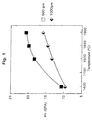
- Fig. 1 is a graph showing the effect of carburizing temperature on the surface hardness of Ti 3 SiC 2 contacted with graphite foil for four hours.
- Fig. 2 is a graph showing the effect of carburizing time on the surface hardness of Ti 3 SiC 2 contacted with graphite foil at 1600°C.
- Fig. 3 is a graph showing the effect of carburizing time on thickness of the surface layer formed on Ti 3 SiC 2 contacted with graphite foil at 1600°C.
- Fig. 4 is a graph showing the effect of siliciding time on thickness of the surface layer formed on Ti 3 SiC 2 contacted with a silicon wafer at 1350°C.
- the present invention is directed to increasing the surface hardness, wear resistance and oxidation resistance of 312 ternary ceramic materials.
- the surface of a 312 ternary ceramic material is treated at elevated temperature with a carburization agent, silicidation agent, nitridation agent and/or boronization agent for a period of time sufficient to provide a surface reaction layer of at least about 1 ⁇ m in thickness, and more preferably 10 ⁇ m in thickness.
- the surface treatment method of this invention is particularly useful for providing increased surface hardness, wear resistance and/or oxidation resistance in the treated material.
- Surface hardness is improved for the 312 ternary ceramic materials in the method of this invention to a surface hardness in excess of about 6 GPa, preferably at least about 10 GPa.
- the invention is useful in the treatment of ceramic workpieces, coatings and the like made from or containing a 312 ternary ceramic material on the exposed surfaces.
- the 312 ternary ceramic materials treated according to this invention are a ternary compound consisting essentially of three elements in a regular repeating array.
- the 312 ternary ceramic compound may be present as a 312 phase in relatively pure form or may be present as a major component in a solid solution.
- the 312 ternary ceramic materials of this invention comprise a compound having the formula M 3 X 1 Z 2 , where M is one or more transition metals, X is one or more co-metals (which are not transition metals), such as Al (aluminum), Ge (germanium) and Si (silicon) and Z is one or more non-metals such as B (boron), C (carbon) and N (nitrogen).
- 312 is taken from the molar ratio of M:X:Z in the phase, and the stoichiometry of the 312 ternary ceramic compounds treated according to this invention is such that the M:X:Z atomic ratio is substantially centered around 3:1:2.
- the transition metal (M) in the 312 ternary ceramic material comprising a compound having the general formula M 3 X 1 Z 2 may include one or more transition metals.
- Exemplary transition metals are those of Group III (Sc, Y, La and Ac), Group IV (Ti, Zr and Hf), Group V (V, Nb, Ta) and Group VI (Cr, Mo and W) of the Elements (current IUPAC designations).
- Other exemplary transition metals are first row transition metals, e.g. , Mn, Fe, Co, Ni and Zn. Transition metals that are preferred included Ti (titanium), Zr (zirconium), Hf (hafnium), V (vanadium) and Nb (niobium).
- Preferred 312 ternary ceramic compounds include those having the general formula M 3 X 1 Z 2 , i.e., where Z in the general formula shown above is C (carbon).
- Specific 312 ternary ceramic compounds that are preferred for use in this invention include Ti 3 SiC 2 , Ti 3 GeC 2 and Ti 3 AlC 2 .
- the 312 ternary ceramic material may comprise a solid solution comprising the 312 ternary ceramic compound.
- Such solid solutions may be 312 phases wherein some of the transition metal (M in the general formula discussed above) is replaced with one or more different transition metals and/or some of the co-metal (X in the general formula discussed above) is replaced with one or more different co-metals and/or some of the non-metal (Z in the general formula discussed above) is replaced with one or more different non-metals.
- Exemplary solid solutions include (Ti,Zr) 3 SiC 2 , (Ti,Hf) 3 SiC 2 , (Ti,Fe) 3 SiC 2 , (Ti,Hf) 3 (Si,Ge)C 2 , (Ti,Zr) 3 (Si,Ge)(C,N) 2 , (Ti,V) 3 SiC 2 , (Ti,V) 3 Si(C,N) 2 , (Ti,V) 3 (Si,Ge)(C,N) 2 , (Ti,V,Hf) 3 (Si,Ge)(C,N) 2 , (Ti,V,Hf) 3 (Si,Ge,Al)(C,N) 2 .
- the 312 ternary ceramic material treated according to this invention may also comprise composites of 312 phases.
- Such composite 312 compositions may include a 312 phase which is in contact with at least one non-312 phase, the non-312 phase simply being any phase which is not a 312 phase as defined herein.
- Such non-312 phases are solids at room temperature and at atmospheric pressure and are preferably in thermal equilibrium with the 312 phase. Reference to a phase diagram will allow one of ordinary skill in the art to determine non-312 phases that are in thermal equilibrium with a 312 phase.
- Such 312 composites preferably have the 312 phase present as the predominant component and present as a matrix in which the non-312 phase is dispersed.
- Preferred non-312 phase materials that may be present with the 312 phase include TiSi 2 (titanium disilicide), Ti 5 Si 3 C X , SiC and TiC X (where 0.5 ⁇ x ⁇ 1); particularly where the 312 compound is Ti 3 SiC 2 ; and TiAl 2 , Ti 5 Al 11 and TiAl, particularly where Ti 3 AlC 2 is the 312 compound.
- the 312 ternary ceramic material is treated in the present invention with a surface-modifying compound selected from the group consisting of carburization agents, silicidation agents, nitridation agents and/or boronization agents.
- a surface-modifying compound selected from the group consisting of carburization agents, silicidation agents, nitridation agents and/or boronization agents.
- Such agents are selected for their ability to react with the 312 ternary ceramic compound at the surface of the material being treated, to provide increased surface hardness and/or oxidation resistance, when the surface treatment is carried out at elevated temperature.
- the surface treatment is carried out at an elevated temperature of at least 600°C, so suitable carburization agents, silicidation agents, nitridation agents and boronization agents are typically those which are highly reactive at the elevated treatment temperature.
- Surface-modifying compounds that are carburization agents include elemental carbon, including graphite and carbon black, carbon monoxide, carbon dioxide, carbides, hydrocarbons, carbonates, particularly carbonate salts, and the like, and mixtures of these.
- Other carbon sources may be used as the carburization agent provided that such materials or compounds are capable of providing carbon in a reactive form at the elevated treatment temperature.
- Silicon-modifying compounds that are silicidation agents include elemental silicon, silicon dioxide, silicon halides, silicon carbide, silicon nitride, silicides, silicones and the like, and mixtures of these.
- Other silicon sources may be used as the silicidation agent provided that such materials or compounds are capable of providing reactive silicon at the elevated treatment temperature.
- Surface-modifying compounds that are nitridation agents include nitrogen, ammonia, nitrogen oxides, nitride and the like, and mixtures of these.
- Other nitrogen sources, including both inorganic and organic nitrogen-containing compounds, may be used as the nitridation agent provided such materials or compounds are capable of providing reactive nitrogen at the elevated treatment temperature.
- boronization agents include elemental boron, borides, borates, boric acid, boric oxides, boron nitride, boron hydride, boron halides and boron phosphates and the like, and mixtures of these.
- Other boron-containing sources may be used as the boronization agent provided such materials or compounds yield reactive boron at the elevated treatment temperature.
- the surface-modifying compound that is contacted with the 312 surface of the 312 ternary ceramic material being treated may be a solid phase, liquid phase or gaseous phase.
- a surface-modifying compound that is in the gaseous state at the treatment temperature is preferred for ensuring good contact with all portions of the exposed surface being treated.
- the surface-modifying compound may be in solid form, e.g. , a foil or powder, or a gaseous form.
- the state (solid, liquid and/or gaseous) of the surface-modifying compound during treatment of the surface of the 312 ternary ceramic material is not critical for effecting an improvement in surface hardness and other properties.
- the surface treatment of the 312 ternary ceramic material according to this invention is carried out at an elevated temperature, at least about 600°C.
- the 312 ternary ceramic material is contacted with the surface-modifying agent at a temperature of at least about 800°C, and more preferably at about 800°C to about 2000°C, and most preferably at a temperature of about 1000°C to about 1800°C.
- the 312 ternary ceramic material being treated is generally at ambient temperature, about 15°C to about 30°C, prior to the surface treatment according to this invention.
- the 312 ternary ceramic material is preferably heated at a controlled heating rate to avoid unnecessary thermal stress on the material and/or workpiece being treated. Heating rates that are typically used in firing ceramics are satisfactory, e.g. , within the range of about 50°C/hour to about 2000°C/hour, preferably about 200°C/hour to about 1200°C/hour.
- the temperature reached and maintained during this heating step in the surface treatment procedure is generally termed the "soaking" temperature.
- the soaking temperature is the temperature described above for contacting the surface of the 312 ternary ceramic material being surface treated with the surface-modifying compound. This soaking temperature is at least about 600°C and is preferably within the temperature range of about 800°C to about 2000°C, more preferably about 1000°C to about 1800°C.
- the heating step may be accomplished in conventional heating equipment used for heat processing ceramic materials, coatings and/or workpieces.
- Conventional furnaces may be used, e.g. , vacuum, resistance-heated, induction-heated or microwave furnaces.
- Alternative heating means besides conventional furnaces may also be used; e.g., surface heating of the ceramic material surface being treated with the surface modifying agent, using a heating source such as laser excitation heating or the like.
- the atmosphere during the surface treatment procedure at elevated temperature is preferably a non-oxidizing atmosphere.
- the atmosphere during the heating step may be a vacuum and/or a non-oxidizing atmosphere, including inert or reducing atmospheres.
- An inert atmosphere may be provided using a gas such as argon or helium.
- the atmosphere during the heating step contains the surface-modifying compound.
- Other gases may also be present in the atmosphere containing the surface-modifying compound. In some situations, however, the presence of such other components may adversely affect the rate at which the surface-modifying compound reacts with the surface of the 312 ternary ceramic material being treated, e.g ., by diluting the concentration of surface modifying agent.
- Surface treatment of 312 ternary ceramic materials with a surface-modifying compound in the gaseous state may be carried out at subatmospheric, atmospheric or elevated pressures, with atmospheric or elevated pressures being preferred to provide more rapid reaction rates between the surface-modifying compound and the surface of the ceramic material being treated.
- Positive pressures during the heat treatment of the 312 ternary ceramic material being treated may range from slightly above atmospheric pressure to about 1000 MPa, with about 0.1 MPa to 100 MPa being preferred.
- the surface of the 312 ternary ceramic material is maintained in contact with the surface-modifying compound for a period of time sufficient to provide the desired increase in surface hardness and/or oxidation resistance being sought.
- the period of time at which the 312 ternary ceramic material is contacted with the surface-modifying agent at elevated temperature is preferably about 1 minute to about 20 hours, more preferably about 10 minutes to about 10 hours. Reaction times in the range of a few minutes to a few hours, e.g. , about 5 minutes to about 5 hours, and more preferably less than about one hour, are possible by use of high treatment temperatures and/or high treatment pressures. Such high temperatures and/or pressures must be selected so as not to result in adverse changes in the 312 ternary ceramic material being treated.
- the contact between the surface of the 312 ternary ceramic material and the surface-modifying compound is a physical contact, sufficient to facilitate reaction of the surface of the 312 ternary ceramic material with the modifying compound to effect formation of a surface reaction layer of at least 1 micron in thickness.
- the surface reaction layer that is formed is different in composition from the 312 ternary ceramic material being treated and provides the desired physical characteristics for the surface treated 312 ternary ceramic material, e.g. , increased surface hardness, wear resistance and/or oxidation resistance.
- the ceramic material is cooled, e.g ., by conventional furnace cooling or the like.
- the ceramic material is preferably cooled below about 100°C
- the surface treatment temperature and period of time at which the surface of the 312 ternary ceramic material is contacted with the surface-modifying compound are preferably selected to provide a surface reaction layer of at least about 1 micron in thickness in the surface treated material.
- the thickness of the surface reaction layer is more preferably at least about 10 ⁇ m in thickness.
- the thickness of the reaction layer may be readily determined by conventional methods, e.g ., by visual measurement of the layer in a cross-section of the treated material.
- the surface treatment temperature and period of time at which the surface of the 312 ternary ceramic material is contacted with the surface-modifying compound are more preferably selected to provide a surface hardness in excess of about 6 GPa in the surface treated material, and most preferably, a surface hardness of at least about 10 GPa in the surface treated material.
- the surface hardness may be measured as microhardness using conventional procedures, e.g ., using a Leco M-400 hardness tester.
- Leco M-400 hardness tester e.g ., a Leco M-400 hardness tester.
- surface hardness measurements were made using a Leco M-400 hardness tester at a loading of 100 grams; in Example 10, measurements were made using the same tester but at loadings of 500 and 1000 grams.
- references to specific values of surface hardness are intended to mean measurement of such values using a Leco M-400 tester at 1000 grams loading.
- surface microhardness in the range of about 3-6 GPa is a representative hardness for this 312 ternary ceramic material.
- the surface treatment method of the present invention results in a significant improvement in the surface hardness of a 312 ternary ceramic material being treated. Such improved surface hardness also provides increased wear resistance, a desirable property for applications of 312 ternary ceramic materials that are subject to mechanical wear.
- the surface treatment method of the present invention also provides the surfaces of the treated 312 ternary ceramic material with improved resistance to oxidation.
- the oxidation resistance of Ti 3 SiC 2 that has not been surface treated has been measured and the parabolic rate constants were determined to be 1 x 10 -8 kg 2 m -4 s -1 at 1000°C and 1.4 x 10 -5 kg 2 m -4 s -1 at 1400°C.
- these oxidation resistance values are good, the surface treatment method of the present invention provides further improvement in these values of oxidation resistance, e.g. , an improvement of at least about three orders of magnitude at 1400°C.
- This Example 1 illustrates the surface treatment of a Ti 3 SiC 2 coupon by carburization, using graphite foil as the carbon source.
- a Ti 3 SiC 2 ceramic bar was sliced to provide a coupon having dimensions of 4 mm x 4 mm x 1 mm.
- the surfaces of the coupon were polished up to 1200 SiC grit paper.
- the polished coupons were sandwiched between two graphite foil sheets, and a dead load of 1 kg mass was placed on the upper foil to ensure good contact between the surfaces of the graphite foil in contact with the polished surfaces of the Ti 3 SiC 2 coupon.
- the Ti 3 SiC 2 coupons in this configuration were placed in a vacuum furnace and subjected to a heating rate of 10°C per minute and then maintained at a soaking temperature of 1600 °C for four hours. After this heat treatment at elevated temperature, the coupons were cooled to ambient temperature, about 20-25°C. After cooling, the graphite foil sheets were removed from the surface-treated Ti 3 SiC 2 coupons, and the surface-treated coupons were evaluated as
- the thickness of the TiC-containing layer on the surfaces of the surface-treated coupons was measured and determined to be 50 microns in thickness.
- the surface hardness of the treated coupons was measured and determined to have a microhardness of 20-30 GPa.
- This Example 2 describes the surface treatment of Ti 3 SiC 2 coupons by carburization following a procedure identical that used in Example 1 but at a different soaking temperature.
- the soaking temperature used in this Example 2 was 1400°C (for four hours), in comparison to Example 1 which used a soaking temperature of 1600°C (for four hours).
- Example 3 describes the surface treatment of Ti 3 SiC 2 coupons by carburization following a procedure identical to that of Example 1, except that the coupons being treated were subjected to a soaking temperature of 1600°C for 16 hours instead of the four-hour period used in Example 1.
- Example 1 Evaluation of the surface-treated coupons by X-ray diffraction and SEM demonstrated that the treated surfaces contained a microporous layer of TiC phase, as was the case in Examples 1 and 2.
- the thickness of TiC-containing layer on the treated surfaces of the coupons was measured and determined to be 70 ⁇ m somewhat thicker than the 50-micron thickness obtained in Example 1.
- the surface hardness was also measured and found to have a microhardness of 20-30 GPa, the same as that obtained in Example 1 using an identical soaking temperature of 1600°C but for a shorter soak time.
- Example 4 describes the surface treatment of Ti 3 SiC 2 coupons via nitridation, using nitrogen gas as the nitrogen source.
- the Ti 3 SiC 2 coupons were prepared and polished as described in Example 1.
- the Ti 3 SiC 2 coupons were then placed in a hot isostatic press which was provided with a nitrogen gas atmosphere.
- the coupons were subjected to a heating rate of 10°C per minute and were maintained at a soaking temperature of 1550°C for four hours, with the final pressure of nitrogen being about 40 MPa.
- the surface treated coupons were evaluated by X-ray diffraction and were determined to contain porous TiN (on the surface) and TiC and SiC phases (both underlying the TiN) on the treated surfaces.
- the total thickness of the surface layers on the treated Ti 3 SiC 2 coupons was measured and determined to be 200 ⁇ m in thickness.
- the hardness of the TiN on the treated surfaces was not measured.
- the TiN on the surface was removed by light polishing and the hardness of the underlying TiC/SiC layer was measured and found to have a microhardness of 20-30 GPa.
- This Example 5 describes surface treatment of Ti 3 SiC 2 coupons via silicidation using silicon wafers as the silicon source.
- the Ti 3 SiC 2 coupons were prepared and polished as described in Example 1.
- the polished Ti 3 SiC 2 coupons were next sandwiched between two silicon wafers under a dead load of 1 kg mass on the upper silicon wafer to provide good contact between the silicon surfaces in direct contact with the polished surfaces of the Ti 3 SiC 2 coupons.
- the Ti 3 SiC 2 coupons in this configuration were placed in a vacuum furnace and subjected to a heating rate of 10°C per minute and then maintained at a soaking temperature of 1350°C for four hours. After this treatment, the treated coupons were cooled and evaluated.
- Evaluation of the treated surfaces by X-ray diffraction showed the presence of TiSi 2 and SiC phases on the surfaces of the treated coupons.
- the thickness of the TiSi 2 /SiC layer on the treated coupons was measured and determined to be about 100-120 ⁇ m in thickness.
- the hardness of the treated surface was measured and found to be 8-12 GPa.
- the oxidation resistance was also measured at 1400°C: the parabolic rate constant for oxidative resistance was determined to have decreased at least three orders of magnitude from the value obtained for the ceramic material prior to surface treatment.
- Example 6 describes the surface treatment of Ti 3 SiC 2 coupons by silicidation following the procedure described for Example 5, except that the soaking temperature was 1200°C for two hours instead of 1350°C for four hours as in Example 5.
- Example 5 After the treated coupons were cooled, evaluation of the surfaces by X-ray diffraction showed the presence of TiSi 2 and SiC phases on the treated surfaces, the same as found in Example 5. The thickness of the TiSi 2 /SiC layer on the treated coupons was measured and determined to be 20 ⁇ m in thickness.
- This Example 7 describes the surface treatment of Ti 3 SiC 2 coupons by silicidation following the same procedure as used in Example 5, except that the soaking temperature was 1250°C for two hours instead of 1350°C for four hours as in Example 5. As compared with Example 6, the soaking temperature in this Example 7 was slightly higher at 1250°C instead of 1200°C for Example 6 (with soak time being two hours for both).
- the thickness of the TiSi 2 /SiC layer on the treated coupons was measured and determined to be 70 ⁇ m in thickness.
- This Example 8 describes the surface treatment of a densified Ti 3 SiC 2 coupon by carburization using graphite powder as the carbon source.
- a dense Ti 3 SiC 2 -containing ceramic material was first prepared for use in this Example by liquid phase sintering at elevated temperature of a Ti 3 SiC 2 powder which also contained 15 volume percent TiSi 2 powder. The powdered mixture was sintered at a temperature of 1500°C for two hours to form a dense ceramic material containing Ti 3 SiC 2 and TiSi 2 .
- This resulting Ti 3 SiC 2 -containing ceramic material was a two phase composite material that contained Ti 3 SiC 2 and TiSi 2 . The presence of the TiSi 2 provided an increased net silicon concentration for the composite ceramic material, as compared with a single phase of Ti 3 SiC 2 .
- Coupons having dimensions of 5 mm x 5 mm x 2 mm were cut from this dense ceramic material.
- the coupons were next placed in a graphite crucible which was then packed with graphite powder so as to have the graphite in contact with the surfaces of the coupons.
- the coupons in this configuration were placed in a tube furnace having an argon atmosphere and subjected to heating at 10°C per minute and then maintained at a soaking temperature of 1350°C for two hours. After this treatment, the coupons were cooled and the excess graphite powder was removed from the surfaces of the treated coupons.
- Example 8 Evaluation of the surfaces of the treated coupons by X-ray diffraction and SEM determined that the surface layer contained TiC and SiC phases. In contrast to Examples 1-3 in which surface treated Ti 3 SiC 2 material was microporous, the surface treated composite Ti 3 SiC 2 material in this Example 8 was dense. The thickness of the surface layer on the treated coupons was measured and determined to be 15-20 ⁇ m in thickness. The hardness of the surfaces of the treated coupons was measured and determined to be about 15 GPa. The surface hardness of the untreated Ti 3 SiC 2 coupons, prior to the surface treatment described above, was about 4 GPa.
- Example 9 describes the surface treatment of dense Ti 3 SiC 2 coupons by carburization using graphite powder as was described for Example 8.
- This Example 9 differed from Example 8 in that the soaking temperature of 1350°C was maintained for a period of eight hours, instead of the two-hour period used in Example 8.
- the procedures used in Example 9 were identical to those described for Example 8.
- Example 8 After the treated coupons were cooled, they were evaluated by X-ray diffraction and SEM and the surface layer determined to contain TiC and SiC, as in Example 8.
- the thickness of the surface layer of the treated coupons was measured and determined to be about 40-50 ⁇ m in thickness, substantially thicker than the surface layer obtained for Example 8, which used a shorter soak time at an identical soaking temperature.
- the hardness of the surface layer of the treated coupons was measured and determined to be about 15 GPa, the same hardness as obtained in Example 8.
- This Example 10 describes the results of experimental studies carried out for the carburization of a Ti 3 SiC 2 material using the carburization procedure described for Examples 1-3 and the silicidation procedure described for Examples 5-7.
- the first study in this Example determined the effect of carburizing temperature on the surface hardness of Ti 3 SiC 2 coupons contacted with graphite foil for four hours.
- the results of this study are shown in Figure 1 which is a graph plotting surface microhardness (H v in units of GPa) as a function of temperature (°C) used during the carburizing surface treatment.
- carburizing temperatures ranged from 1400°C to 1600°C.
- Two curves are shown in Figure 1, one being surface microhardness measured using a Leco M-400 tester at 500 grams and the second at 1000 grams.
- Surface hardness was shown to increase as a function of temperature, from a value of about 10 GPa at a carburizing temperature of 1400°C to higher surface microhardness values as shown in Fig. 1 as the carburizing temperature was
- FIG. 2 is a graph of surface microhardness (again measured as described for the study summarized in Figure 1) as a function of carburizing treatment time, with the carburization temperature maintained constant at 1600°C.
- surface microhardness increased from a value of about 11-13 GPa at about one hour carburizing time to higher surface microhardness values as shown in Fig. 2 as the treatment time increased to 16 hours.
- a third study was carried out concurrently with that described for the second study shown in Figure 2.
- the effect of carburizing time on the thickness of the surface layer formed on the Ti 3 SiC 2 coupons was studied as a function of treatment time, using the same Ti 3 SiC 2 coupons contacted with graphite foil at 1600°C in the second study.
- the thickness of the formed layer on the surface treated coupons increased from about 20 ⁇ m thickness at about one hour treatment time to about 65 microns thickness for 16 hours treatment time.
- FIG. 4 is a graph showing thickness of the surface layer formed on the Ti 3 SiC 2 coupons as a function of surface treatment time, with the temperature being kept constant at 1350°C.
- surface layer thickness increased from about 80 ⁇ m at one hour siliciding treatment time to about 250 microns thickness for 16 hours treatment time.
Landscapes
- Chemical & Material Sciences (AREA)
- Ceramic Engineering (AREA)
- Engineering & Computer Science (AREA)
- Organic Chemistry (AREA)
- Materials Engineering (AREA)
- Structural Engineering (AREA)
- Chemical Kinetics & Catalysis (AREA)
- Solid-Phase Diffusion Into Metallic Material Surfaces (AREA)
- Ceramic Products (AREA)
- Compositions Of Oxide Ceramics (AREA)
- Coating By Spraying Or Casting (AREA)
- Chemical Treatment Of Metals (AREA)
- Hard Magnetic Materials (AREA)
Claims (25)
- Verfahren zur Oberflächenbehandlung eines keramischen Materials, welches das Inkontaktbringen der Oberfläche eines 312-ternären keramischen Materials mit einer oberflächenmodifizierenden Verbindung, ausgewählt aus der Gruppe bestehend aus Carburierungsmitteln, Silizierungsmitteln, Nitrierungsmitteln und Borierungsmitteln, bei einer erhöhten Temperatur von mindestens etwa 600 °C während eines Zeitraums, der ausreichend ist, um auf dem oberflächenbehandelten Material eine Oberflächenreaktionsschicht von mindestens etwa 1 µm Dicke zu schaffen, und Kühlen des oberflächenbehandelten Materials umfaßt.
- Verfahren nach Anspruch 1, wobei die Kontaktzeit ausreichend ist, um eine Oberflächenreaktionsschicht von mindestens etwa 10 µm Dicke zu schaffen.
- Verfahren nach Anspruch 1, wobei die Kontaktzeit ausreichend ist, um eine um etwa 6 GPa übersteigende Oberflächenhärte zu schaffen.
- Verfahren nach Anspruch 1, wobei die Temperatur, bei der das 312-ternäre keramische Material mit der oberflächenmodifizierenden Verbindung in Kontakt gebracht wird, mindestens etwa 1.000 °C beträgt.
- Verfahren nach Anspruch 4, wobei die Kontaktzeit ausreichend ist, um eine Oberflächenhärte von mindestens etwa 10 GPa zu schaffen.
- Verfahren nach Anspruch 1, wobei die Temperatur, bei der das 312-ternäre keramische Material mit der oberflächenmodifizierenden Verbindung in Kontakt gebracht wird, etwa 800 °C bis etwa 2.000 °C beträgt.
- Verfahren nach Anspruch 1, wobei der Zeitraum, in dem das 312-ternäre keramische Material bei erhöhter Temperatur mit der oberflächenmodifizierenden Verbindung in Kontakt gebracht wird, etwa 1 Minute bis etwa 20 Stunden beträgt.
- Verfahren nach Anspruch 1, wobei das 312-ternäre keramische Material eine Verbindung umfaßt, die die Formel M3X1Z2 aufweist, wobei M mindestens ein Übergangsmetall ist, X mindestens eines von Al, Ge und Si ist, und Z mindestens eines von B, C und N ist.
- Verfahren nach Anspruch 8, wobei das Übergangsmetall ein Element ist, ausgewählt aus der Gruppe bestehend aus der Gruppe III, IV, V und VI der Periodentafel der Elemente.
- Verfahren nach Anspruch 8, wobei das Übergangsmetall ausgewählt ist aus der Gruppe bestehend aus Ti, Zr, Hf, V und Nb.
- Verfahren nach Anspruch 8, wobei das 312-ternäre keramische Material eine Verbindung umfaßt, die die Formel M3X1C2 aufweist.
- Verfahren nach Anspruch 8, wobei das 312-ternäre keramische Material eine Verbindung umfaßt, die die Formel Ti3X1C2 aufweist.
- Verfahren nach Anspruch 10, wobei die 312-ternäre keramische Verbindung Ti3SiC2 umfaßt.
- Verfahren nach Anspruch 1, wobei das 312-ternäre keramische Material eine feste Lösung ist, die eine 312-ternäre keramische Verbindung enthält.
- Verfahren nach Anspruch 1, wobei das 312-ternäre keramische Material ein Verbundstoff ist, der eine 312-ternäre keramische Verbindung enthält.
- Verfahren nach Anspruch 15, wobei der Verbundstoff der 312-ternären keramischen Verbindung eine Silizium enthaltende Verbindung enthält.
- Verfahren nach Anspruch 16, wobei der Verbundstoff der 312-ternären keramischen Verbindung eine Verbindung enthält, die ausgewählt ist aus der Gruppe bestehend aus TiSi2, Ti5Si3Cx, SiC und TiCx, wobei 0,5 ≤ x ≤ 1 ist.
- Verfahren nach Anspruch 1, wobei die oberflächenmodifizierende Verbindung ein Carburierungsmittel ist, ausgewählt aus der Gruppe bestehend aus elementarem Kohlenstoff, Kohlenmonoxid, Kohlendioxid, Carbiden, Kohlenwasserstoffen und Carbonatsalzen.
- Verfahren nach Anspruch 1, wobei die oberflächenmodifizierende Verbindung ein Silizierungsmittel ist, ausgewählt aus der Gruppe bestehend aus elementarem Silizium, Silika, Siliziumhalogeniden, Siliziumcarbid, Siliziumnitrid, Siliziden und Silikonen.
- Verfahren nach Anspruch 1, wobei die oberflächenmodifizierende Verbindung ein Nitrierungsmittel ist, ausgewählt aus Stickstoff, Ammoniak, Stickstoffoxiden und Nitriden.
- Verfahren nach Anspruch 1, wobei die oberflächenmodifizierende Verbindung ein Borierungsmittel ist, ausgewählt aus der Gruppe bestehend aus elementarem Bor, Boriden, Boraten, Borsäure, Bor(III)-oxiden, Bornitrid, Borwasserstoff, Borhalogeniden und Borphosphaten.
- Verfahren nach Anspruch 1, wobei das oberflächenbehandelte 312-ternäre keramische Material auf eine Temperatur unter etwa 100 °C gekühlt wird.
- Produkt, das durch das Verfahren nach Anspruch 1 gewinnbar ist, das eine Oberflächenhärte von mindestens 10 GPa aufweist.
- Produkt nach Anspruch 23, wobei das 312-ternäre keramische Material Ti3SiC2 umfaßt.
- Produkt, das durch das Verfahren nach Anspruch 1 gewinnbar ist.
Applications Claiming Priority (3)
| Application Number | Priority Date | Filing Date | Title |
|---|---|---|---|
| US3536797P | 1997-01-10 | 1997-01-10 | |
| US35367P | 1997-01-10 | ||
| PCT/US1998/000297 WO1998030340A1 (en) | 1997-01-10 | 1998-01-09 | Surface treatment of 312 ternary ceramic materials and products thereof |
Publications (3)
| Publication Number | Publication Date |
|---|---|
| EP1015134A1 EP1015134A1 (de) | 2000-07-05 |
| EP1015134A4 EP1015134A4 (de) | 2000-11-22 |
| EP1015134B1 true EP1015134B1 (de) | 2002-09-18 |
Family
ID=21882240
Family Applications (1)
| Application Number | Title | Priority Date | Filing Date |
|---|---|---|---|
| EP98901728A Expired - Lifetime EP1015134B1 (de) | 1997-01-10 | 1998-01-09 | Oberflächenbehandlung eines 312 ternären keramikmaterials und daraus hergestelltes produkt |
Country Status (9)
| Country | Link |
|---|---|
| US (1) | US6013322A (de) |
| EP (1) | EP1015134B1 (de) |
| JP (1) | JP2001511106A (de) |
| AT (1) | ATE224344T1 (de) |
| AU (1) | AU5818198A (de) |
| DE (1) | DE69808114T2 (de) |
| DK (1) | DK1015134T3 (de) |
| ES (1) | ES2184225T3 (de) |
| WO (1) | WO1998030340A1 (de) |
Families Citing this family (19)
| Publication number | Priority date | Publication date | Assignee | Title |
|---|---|---|---|---|
| US6913821B2 (en) * | 1999-03-04 | 2005-07-05 | Honeywell International Inc. | Fluidizing oxidation protection systems |
| US6461989B1 (en) * | 1999-12-22 | 2002-10-08 | Drexel University | Process for forming 312 phase materials and process for sintering the same |
| US20060062930A1 (en) * | 2002-05-08 | 2006-03-23 | Devendra Kumar | Plasma-assisted carburizing |
| EP1540720A4 (de) * | 2002-06-26 | 2007-09-26 | Semequip Inc | Halbleiterbauelement und verfahren zur herstellung eines halbleiterbauelements |
| SE526336C2 (sv) * | 2002-07-01 | 2005-08-23 | Seco Tools Ab | Skär med slitstark refraktär beläggning av MAX-fas |
| US20040250334A1 (en) * | 2003-06-13 | 2004-12-16 | Tamer El-Raghy | Max phase glove and condom formers |
| US20050197713A1 (en) * | 2004-03-01 | 2005-09-08 | Catlin Mark G. | Ternary single-phase ceramic medical devices |
| SE0402904L (sv) * | 2004-11-26 | 2006-05-27 | Sandvik Intellectual Property | Belagd produkt och produktionsmetod för denna |
| SE530443C2 (sv) * | 2006-10-19 | 2008-06-10 | Totalfoersvarets Forskningsins | Mikrovågsabsorbent, speciellt för högtemperaturtillämpning |
| SE531749C2 (sv) * | 2007-09-17 | 2009-07-28 | Seco Tools Ab | Metod att utfälla slitstarka skikt på hårdmetall med bågförångning och katod med Ti3SiC2 som huvudbeståndsdel |
| US8187393B2 (en) * | 2008-05-28 | 2012-05-29 | Universal Global Products, LLC | Boronization process and composition with improved surface characteristics of metals |
| JP5220549B2 (ja) * | 2008-10-20 | 2013-06-26 | 本田技研工業株式会社 | アウタロータ型多極発電機のステータ構造体 |
| JP6182082B2 (ja) * | 2013-03-15 | 2017-08-16 | 日本碍子株式会社 | 緻密質複合材料、その製法及び半導体製造装置用部材 |
| JP6182084B2 (ja) * | 2013-03-25 | 2017-08-16 | 日本碍子株式会社 | 緻密質複合材料、その製法、接合体及び半導体製造装置用部材 |
| CN110670171B (zh) * | 2019-10-14 | 2022-03-29 | 齐齐哈尔大学 | 一种致密硅酸钇陶瓷纤维的制备方法 |
| KR102878323B1 (ko) * | 2019-11-05 | 2025-10-28 | 주식회사 엘지화학 | 적층 세라믹 콘덴서 |
| KR102852772B1 (ko) * | 2019-11-20 | 2025-08-28 | 주식회사 엘지화학 | 적층 세라믹 콘덴서 |
| CN118164767B (zh) * | 2024-03-20 | 2025-12-12 | 湖南泽睿新材料有限公司 | 一种在碳化硅纤维表面原位合成Ti-Si-C复合界面相的方法 |
| CN118109782B (zh) * | 2024-04-23 | 2024-09-20 | 深圳市奥美特纳米科技有限公司 | 一种耐冲击高强度复合陶瓷涂层及其制备方法 |
Family Cites Families (6)
| Publication number | Priority date | Publication date | Assignee | Title |
|---|---|---|---|---|
| US4465777A (en) * | 1981-04-08 | 1984-08-14 | Vought Corporation | Composition and method for forming a protective coating on carbon-carbon substrates |
| US4471023A (en) * | 1983-03-29 | 1984-09-11 | Ltv Aerospace And Defense Company | Enhancement coating and process for carbonaceous substrates |
| JPS63236782A (ja) * | 1987-03-25 | 1988-10-03 | 住友金属工業株式会社 | 炭化珪素セラミツクスの表面改質法 |
| US4961529A (en) * | 1987-12-24 | 1990-10-09 | Kernforschungsanlage Julich Gmbh | Method and components for bonding a silicon carbide molded part to another such part or to a metallic part |
| US5130279A (en) * | 1990-02-07 | 1992-07-14 | Mitsubishi Materials Corporation | Silicon nitride based sintered material and process of manufacturing same |
| US5451365A (en) * | 1993-05-24 | 1995-09-19 | Drexel University | Methods for densifying and strengthening ceramic-ceramic composites by transient plastic phase processing |
-
1998
- 1998-01-09 AT AT98901728T patent/ATE224344T1/de not_active IP Right Cessation
- 1998-01-09 AU AU58181/98A patent/AU5818198A/en not_active Abandoned
- 1998-01-09 EP EP98901728A patent/EP1015134B1/de not_active Expired - Lifetime
- 1998-01-09 DK DK98901728T patent/DK1015134T3/da active
- 1998-01-09 JP JP53107598A patent/JP2001511106A/ja not_active Ceased
- 1998-01-09 WO PCT/US1998/000297 patent/WO1998030340A1/en not_active Ceased
- 1998-01-09 ES ES98901728T patent/ES2184225T3/es not_active Expired - Lifetime
- 1998-01-09 DE DE69808114T patent/DE69808114T2/de not_active Expired - Fee Related
-
1999
- 1999-07-09 US US09/351,079 patent/US6013322A/en not_active Expired - Lifetime
Also Published As
| Publication number | Publication date |
|---|---|
| AU5818198A (en) | 1998-08-03 |
| EP1015134A4 (de) | 2000-11-22 |
| DE69808114D1 (de) | 2002-10-24 |
| EP1015134A1 (de) | 2000-07-05 |
| US6013322A (en) | 2000-01-11 |
| DE69808114T2 (de) | 2003-08-07 |
| ATE224344T1 (de) | 2002-10-15 |
| JP2001511106A (ja) | 2001-08-07 |
| DK1015134T3 (da) | 2003-01-13 |
| WO1998030340A1 (en) | 1998-07-16 |
| ES2184225T3 (es) | 2003-04-01 |
Similar Documents
| Publication | Publication Date | Title |
|---|---|---|
| US6013322A (en) | Surface treatment of 312 ternary ceramic materials and products thereof | |
| Zhang et al. | Improving the oxidation resistance of Ti3SiC2 by forming a Ti3Si0. 9Al0. 1C2 solid solution | |
| El-Raghy et al. | Synthesis and characterization of Hf2PbC, Zr2PbC and M2SnC (M= Ti, Hf, Nb or Zr) | |
| Schneider et al. | A theoretical and experimental approach to the active-to-passive transition in the oxidation of silicon carbide: Experiments at high temperatures and low total pressures | |
| EP2165990B1 (de) | Dichte borcarbidkeramik und verfahren zu deren herstellung | |
| Li et al. | Preparation and mechanical properties of SiC-AlN ceramic alloy | |
| Taguchi et al. | Silicon nitride oxidation behaviour at 1000 and 1200 C | |
| Lu et al. | Pressureless sintering and properties of Ti3AlC2 | |
| US4578234A (en) | Process of pressureless sintering to produce dense high thermal conductivity ceramic body of deoxidized aluminum nitride | |
| Andrievskii | Silicon nitride: synthesis and properties | |
| Tampieri et al. | Oxidation resistance of alumina–titanium nitride and alumina–titanium carbide composites | |
| Zhou et al. | On the synthesis and properties of bulk ternary Cr2AlC ceramics | |
| Lee | Fabrication of Si3N4/SiC composite by reaction‐bonding and gas‐pressure sintering | |
| Chen et al. | Oxidation of Ti3SiC2 composites in air | |
| Yoon et al. | Formation of MoSi2–Si3N4 composite coating by reactive diffusion of Si on Mo substrate pretreated by ammonia nitridation | |
| Li et al. | Joining of Ti–Al–C ceramics by oxidation at low oxygen partial pressure | |
| EKSTRÖM et al. | α‐β sialon ceramics made from different silicon nitride powders | |
| EP2760807B1 (de) | Siliziumnitridverbundkörper | |
| Zhao et al. | Isothermal oxidation behavior of YAl3C3 at 900–1300° C in air | |
| EP1452488B1 (de) | Verfahren zur herstellung von siliciumcarbidkeramiken aus pflanzlichen vorläufern | |
| Bermudo et al. | Study of AlN and Si3N4 powders synthesized by SHS reactions | |
| Davies et al. | Sinterability of β-SiAlON powder prepared by carbothermal reduction and simultaneous nitridation of ultrafine powder in the Al2O3-SiO2 system | |
| Sugiyama et al. | Thermal Stability of Phases in Si3N4 (-SiO2)-AlN-Y2O3 System | |
| Lim et al. | Interface structure and reaction kinetics between SiC and thick cobalt foils | |
| Talmy et al. | Properties of ceramics in the NbB2–CrB2 system |
Legal Events
| Date | Code | Title | Description |
|---|---|---|---|
| PUAI | Public reference made under article 153(3) epc to a published international application that has entered the european phase |
Free format text: ORIGINAL CODE: 0009012 |
|
| 17P | Request for examination filed |
Effective date: 19990626 |
|
| AK | Designated contracting states |
Kind code of ref document: A1 Designated state(s): AT BE CH DE DK ES FI FR GB GR IE IT LI LU MC NL PT SE |
|
| A4 | Supplementary search report drawn up and despatched |
Effective date: 20001006 |
|
| AK | Designated contracting states |
Kind code of ref document: A4 Designated state(s): AT BE CH DE DK ES FI FR GB GR IE IT LI LU MC NL PT SE |
|
| RIC1 | Information provided on ipc code assigned before grant |
Free format text: 7C 04B 41/87 A |
|
| GRAG | Despatch of communication of intention to grant |
Free format text: ORIGINAL CODE: EPIDOS AGRA |
|
| 17Q | First examination report despatched |
Effective date: 20011122 |
|
| GRAG | Despatch of communication of intention to grant |
Free format text: ORIGINAL CODE: EPIDOS AGRA |
|
| GRAH | Despatch of communication of intention to grant a patent |
Free format text: ORIGINAL CODE: EPIDOS IGRA |
|
| GRAH | Despatch of communication of intention to grant a patent |
Free format text: ORIGINAL CODE: EPIDOS IGRA |
|
| GRAA | (expected) grant |
Free format text: ORIGINAL CODE: 0009210 |
|
| AK | Designated contracting states |
Kind code of ref document: B1 Designated state(s): AT BE CH DE DK ES FI FR GB GR IE IT LI LU MC NL PT SE |
|
| PG25 | Lapsed in a contracting state [announced via postgrant information from national office to epo] |
Ref country code: NL Free format text: LAPSE BECAUSE OF FAILURE TO SUBMIT A TRANSLATION OF THE DESCRIPTION OR TO PAY THE FEE WITHIN THE PRESCRIBED TIME-LIMIT Effective date: 20020918 Ref country code: LI Free format text: LAPSE BECAUSE OF FAILURE TO SUBMIT A TRANSLATION OF THE DESCRIPTION OR TO PAY THE FEE WITHIN THE PRESCRIBED TIME-LIMIT Effective date: 20020918 Ref country code: GR Free format text: LAPSE BECAUSE OF FAILURE TO SUBMIT A TRANSLATION OF THE DESCRIPTION OR TO PAY THE FEE WITHIN THE PRESCRIBED TIME-LIMIT Effective date: 20020918 Ref country code: CH Free format text: LAPSE BECAUSE OF FAILURE TO SUBMIT A TRANSLATION OF THE DESCRIPTION OR TO PAY THE FEE WITHIN THE PRESCRIBED TIME-LIMIT Effective date: 20020918 Ref country code: BE Free format text: LAPSE BECAUSE OF FAILURE TO SUBMIT A TRANSLATION OF THE DESCRIPTION OR TO PAY THE FEE WITHIN THE PRESCRIBED TIME-LIMIT Effective date: 20020918 Ref country code: AT Free format text: LAPSE BECAUSE OF FAILURE TO SUBMIT A TRANSLATION OF THE DESCRIPTION OR TO PAY THE FEE WITHIN THE PRESCRIBED TIME-LIMIT Effective date: 20020918 |
|
| REF | Corresponds to: |
Ref document number: 224344 Country of ref document: AT Date of ref document: 20021015 Kind code of ref document: T |
|
| REG | Reference to a national code |
Ref country code: GB Ref legal event code: FG4D |
|
| REG | Reference to a national code |
Ref country code: CH Ref legal event code: EP |
|
| REG | Reference to a national code |
Ref country code: IE Ref legal event code: FG4D |
|
| REF | Corresponds to: |
Ref document number: 69808114 Country of ref document: DE Date of ref document: 20021024 |
|
| PGFP | Annual fee paid to national office [announced via postgrant information from national office to epo] |
Ref country code: DE Payment date: 20021125 Year of fee payment: 6 |
|
| PGFP | Annual fee paid to national office [announced via postgrant information from national office to epo] |
Ref country code: ES Payment date: 20021217 Year of fee payment: 6 Ref country code: IE Payment date: 20021217 Year of fee payment: 6 |
|
| PG25 | Lapsed in a contracting state [announced via postgrant information from national office to epo] |
Ref country code: PT Free format text: LAPSE BECAUSE OF FAILURE TO SUBMIT A TRANSLATION OF THE DESCRIPTION OR TO PAY THE FEE WITHIN THE PRESCRIBED TIME-LIMIT Effective date: 20021219 |
|
| PGFP | Annual fee paid to national office [announced via postgrant information from national office to epo] |
Ref country code: SE Payment date: 20021223 Year of fee payment: 6 |
|
| PG25 | Lapsed in a contracting state [announced via postgrant information from national office to epo] |
Ref country code: LU Free format text: LAPSE BECAUSE OF NON-PAYMENT OF DUE FEES Effective date: 20030109 |
|
| PGFP | Annual fee paid to national office [announced via postgrant information from national office to epo] |
Ref country code: GB Payment date: 20030110 Year of fee payment: 6 |
|
| REG | Reference to a national code |
Ref country code: DK Ref legal event code: T3 |
|
| PGFP | Annual fee paid to national office [announced via postgrant information from national office to epo] |
Ref country code: FR Payment date: 20030120 Year of fee payment: 6 |
|
| PG25 | Lapsed in a contracting state [announced via postgrant information from national office to epo] |
Ref country code: MC Free format text: LAPSE BECAUSE OF NON-PAYMENT OF DUE FEES Effective date: 20030131 |
|
| PGFP | Annual fee paid to national office [announced via postgrant information from national office to epo] |
Ref country code: DK Payment date: 20030131 Year of fee payment: 6 |
|
| NLV1 | Nl: lapsed or annulled due to failure to fulfill the requirements of art. 29p and 29m of the patents act | ||
| REG | Reference to a national code |
Ref country code: ES Ref legal event code: FG2A Ref document number: 2184225 Country of ref document: ES Kind code of ref document: T3 |
|
| ET | Fr: translation filed | ||
| REG | Reference to a national code |
Ref country code: CH Ref legal event code: PL |
|
| PGFP | Annual fee paid to national office [announced via postgrant information from national office to epo] |
Ref country code: FI Payment date: 20030704 Year of fee payment: 6 |
|
| PLBE | No opposition filed within time limit |
Free format text: ORIGINAL CODE: 0009261 |
|
| STAA | Information on the status of an ep patent application or granted ep patent |
Free format text: STATUS: NO OPPOSITION FILED WITHIN TIME LIMIT |
|
| 26N | No opposition filed |
Effective date: 20030619 |
|
| PG25 | Lapsed in a contracting state [announced via postgrant information from national office to epo] |
Ref country code: IE Free format text: LAPSE BECAUSE OF NON-PAYMENT OF DUE FEES Effective date: 20040109 Ref country code: GB Free format text: LAPSE BECAUSE OF NON-PAYMENT OF DUE FEES Effective date: 20040109 Ref country code: FI Free format text: LAPSE BECAUSE OF NON-PAYMENT OF DUE FEES Effective date: 20040109 |
|
| PG25 | Lapsed in a contracting state [announced via postgrant information from national office to epo] |
Ref country code: SE Free format text: LAPSE BECAUSE OF NON-PAYMENT OF DUE FEES Effective date: 20040110 Ref country code: ES Free format text: LAPSE BECAUSE OF NON-PAYMENT OF DUE FEES Effective date: 20040110 |
|
| PG25 | Lapsed in a contracting state [announced via postgrant information from national office to epo] |
Ref country code: DK Free format text: LAPSE BECAUSE OF NON-PAYMENT OF DUE FEES Effective date: 20040202 |
|
| PG25 | Lapsed in a contracting state [announced via postgrant information from national office to epo] |
Ref country code: DE Free format text: LAPSE BECAUSE OF NON-PAYMENT OF DUE FEES Effective date: 20040803 |
|
| EUG | Se: european patent has lapsed | ||
| GBPC | Gb: european patent ceased through non-payment of renewal fee |
Effective date: 20040109 |
|
| REG | Reference to a national code |
Ref country code: DK Ref legal event code: EBP |
|
| PG25 | Lapsed in a contracting state [announced via postgrant information from national office to epo] |
Ref country code: FR Free format text: LAPSE BECAUSE OF NON-PAYMENT OF DUE FEES Effective date: 20040930 |
|
| REG | Reference to a national code |
Ref country code: IE Ref legal event code: MM4A |
|
| REG | Reference to a national code |
Ref country code: FR Ref legal event code: ST |
|
| PG25 | Lapsed in a contracting state [announced via postgrant information from national office to epo] |
Ref country code: IT Free format text: LAPSE BECAUSE OF NON-PAYMENT OF DUE FEES Effective date: 20050109 |
|
| REG | Reference to a national code |
Ref country code: ES Ref legal event code: FD2A Effective date: 20040110 |
|
| REG | Reference to a national code |
Ref country code: DE Ref legal event code: R082 Ref document number: 69808114 Country of ref document: DE Representative=s name: MEHLER ACHLER PATENTANWAELTE, DE |