EP1016076B1 - Natürliche sprache verstehendes verfahren und verstehende vorrichung zur sprachsteuerung einer anwendung - Google Patents
Natürliche sprache verstehendes verfahren und verstehende vorrichung zur sprachsteuerung einer anwendung Download PDFInfo
- Publication number
- EP1016076B1 EP1016076B1 EP98947098A EP98947098A EP1016076B1 EP 1016076 B1 EP1016076 B1 EP 1016076B1 EP 98947098 A EP98947098 A EP 98947098A EP 98947098 A EP98947098 A EP 98947098A EP 1016076 B1 EP1016076 B1 EP 1016076B1
- Authority
- EP
- European Patent Office
- Prior art keywords
- asr
- valid
- utterance
- annotated
- runtime interpreter
- Prior art date
- Legal status (The legal status is an assumption and is not a legal conclusion. Google has not performed a legal analysis and makes no representation as to the accuracy of the status listed.)
- Expired - Lifetime
Links
- 238000000034 method Methods 0.000 title claims abstract description 28
- 238000012545 processing Methods 0.000 claims abstract description 19
- 230000002452 interceptive effect Effects 0.000 claims abstract description 15
- 230000004044 response Effects 0.000 claims abstract description 15
- 230000036961 partial effect Effects 0.000 claims description 6
- 241000282414 Homo sapiens Species 0.000 claims description 2
- 230000000977 initiatory effect Effects 0.000 claims 1
- 230000006870 function Effects 0.000 description 38
- 239000013256 coordination polymer Substances 0.000 description 17
- 230000008569 process Effects 0.000 description 13
- 239000000872 buffer Substances 0.000 description 10
- 238000012546 transfer Methods 0.000 description 7
- 235000013305 food Nutrition 0.000 description 6
- 238000013459 approach Methods 0.000 description 4
- 230000008901 benefit Effects 0.000 description 3
- 238000011161 development Methods 0.000 description 3
- 239000012634 fragment Substances 0.000 description 3
- 238000007781 pre-processing Methods 0.000 description 3
- 230000000694 effects Effects 0.000 description 2
- 235000015220 hamburgers Nutrition 0.000 description 2
- 235000019692 hotdogs Nutrition 0.000 description 2
- 238000005457 optimization Methods 0.000 description 2
- 230000002829 reductive effect Effects 0.000 description 2
- 230000000007 visual effect Effects 0.000 description 2
- 238000013473 artificial intelligence Methods 0.000 description 1
- 238000004891 communication Methods 0.000 description 1
- 238000010586 diagram Methods 0.000 description 1
- 238000007688 edging Methods 0.000 description 1
- 238000005516 engineering process Methods 0.000 description 1
- 230000003203 everyday effect Effects 0.000 description 1
- 238000000605 extraction Methods 0.000 description 1
- 235000012907 honey Nutrition 0.000 description 1
- 230000000670 limiting effect Effects 0.000 description 1
- 238000002360 preparation method Methods 0.000 description 1
- 238000000638 solvent extraction Methods 0.000 description 1
- 230000005236 sound signal Effects 0.000 description 1
- 230000003068 static effect Effects 0.000 description 1
Images



Classifications
-
- G—PHYSICS
- G10—MUSICAL INSTRUMENTS; ACOUSTICS
- G10L—SPEECH ANALYSIS TECHNIQUES OR SPEECH SYNTHESIS; SPEECH RECOGNITION; SPEECH OR VOICE PROCESSING TECHNIQUES; SPEECH OR AUDIO CODING OR DECODING
- G10L15/00—Speech recognition
- G10L15/26—Speech to text systems
-
- G—PHYSICS
- G10—MUSICAL INSTRUMENTS; ACOUSTICS
- G10L—SPEECH ANALYSIS TECHNIQUES OR SPEECH SYNTHESIS; SPEECH RECOGNITION; SPEECH OR VOICE PROCESSING TECHNIQUES; SPEECH OR AUDIO CODING OR DECODING
- G10L15/00—Speech recognition
- G10L15/08—Speech classification or search
- G10L15/18—Speech classification or search using natural language modelling
- G10L15/1815—Semantic context, e.g. disambiguation of the recognition hypotheses based on word meaning
Definitions
- This invention relates generally to computerized natural language systems. More particularly, it relates to a computer system and method for providing speech understanding capabilities to an interactive voice response system. It further relates to a computer system and method for interpreting spoken utterances in a constrained speech recognition application.
- the computer needs an automatic speech recognition to detect the spoken words and convert them into some form of computer-readable data, such as simple text.
- the computer needs some way to analyze the computer-readable data and determine what those words, as they were used, meant.
- This second step typically employs some form of artificial intelligence, and there are several basic approaches researchers have taken to develop a system that can extract meaning from words.
- Statistical computational linguistics begins with a corpus, which is a list of sample utterances contained in the grammar. This corpus is analyzed and statistical properties of the grammar are extracted. These statistical properties are implemented in rules, which are then applied to new, spoken utterances in an attempt to statistically "guess" the meaning of what was said.
- US-A-5 390 279 relates to partitioning speech rules by context for speech recognition.
- US-A-5 390 279 detects spoken words.
- digitized sound signals on line 201 are processed by a first computer 108 in a process called features extraction to separate background noise from speech.
- the features on lines 211 are not words or characters yet.
- a second process 220 attempts to recognize the words in the sound features by searching "language models" supplied via line 222.
- the language models are in effect the vocabulary to be searched.
- the language model Generator/Interpreter calls up vocabulary and rules from application programs 1 to N under the control of the second processor 102 and its operating system is shown as block 244.
- US-A-5 390 279 there are two methods for generating a language model.
- the first method simply uses all of the speech rules to construct a one-time static language model.
- the problem with this approach is that the language model is so large that the recognizer 220 is slowed down by computational problems and is "more error prone”.
- US-A-5 390 279 suggests that the language model be constructed on the fly or dynamically.
- the recognizer 220 transmits recognized words 221 to an interpreter process 230 for actions.
- processes 210, 220 and 230 produce words similar to commercially available ASR systems.
- JP-A-08-194600 describes a voice terminal equipment which includes a block 204 called a voice recognizer.
- Block 201 receives the voice output and converts it to a retrievable command stored in buffer 208. Had the command been a request, block 203 converts the request to an answer output using answer table 207 and a synthesizer block.
- WO-A-97/10589 teaches an automatic call routing system and method including a block 15 called a "Speech Recognizer” and a block 20 called an "Interpretation Module.”
- This system and method employ an unconstrained vocabulary and grammar which is acquired on the fly. The system selects a meaningful response if it can identify a meaningful phrase in its unconstrained vocabulary.
- a general purpose of the present invention is to provide system and method for providing constrained speech understanding capabilities to an interactive voice recognition system.
- Another object of the present invention is to provide system and method for simplifying the task of interpreting the meaning behind a spoken utterance.
- a further object of the present invention is to provide system and method for creating a corpus-based speech recognition system that is highly accurate in its interpretation of the meaning behind a spoken utterance.
- a still further object of the present invention is to provide a system and method for employing a plurality of runtime interpreters that are connected to the interactive voice response system by a computer network.
- a runtime interpreter receives, as input, an annotated corpus which is a list of valid utterances, context identifiers for each valia utterance, and token data for each valid utterance representing the meaning behind the utterance.
- the runtime interpreter also receives, as input, an utterance in text form which is to be found in the corpus.
- the runtime interpreter When the runtime interpreter is given an utterance to interpret, the runtime interpreter searches through the corpus, locates the valid utterance being searched for, and returns the token which represents the meaning of the valid utterance.
- the runtime interpreter also supports the use of variables to reduce the size of the corpus.
- Some utterances may include numbers, dates, times or other elements that have too many combinations to enumerate in the corpus. For example, the utterance "My birthday is xxx", where 'xxx' is the day of the year, could result in 366 corpus entries, one for each possible day of the year (including leap day). In the present invention, however, a variable would be used to represent the date. Thus, a reduced corpus would include just one entry for this utterance: "My birthday is [DATE]".
- the runtime interpreter is able to identify these variables in the corpus, and performs additional processing during runtime to interpret the variables.
- the variable values, once interpreted, are then stored in a predefined data structure associated with the token whose utterance included the variable. This variable value can then be retrieved by the interactive voice response system.
- the present invention also provides a custom processor interface which allows the developer of the interactive voice response system the ability to customize the operation of the runtime interpreter without actually modifying the interpreter itself.
- the present invention provides for a system for using a plurality of interpreters that are connected to a computer network.
- Distributed interpreters are provided which include the same custom processor interface and runtime interpreter mentioned above.
- the distributed interpreters include an additional manager for controlling messaging between the distributed interpreter and the computer network.
- a resource manager is also provided, which keeps track of the distributed interpreters that are connected to the network and manages their use by an interactive voice response system.
- the following overview discusses the embedded architecture, which employs a single runtime interpreter (124). There is a second, distributed, architecture which employs a plurality of runtime interpreters. The distributed architecture will be discussed further below.
- the first step in implementing a natural language system is creating the set of rules that govern the valid utterances in the grammar.
- a grammar for the reply to the question: "what do you want for lunch?" might be represented as: ⁇ reply>:(("I want"
- all valid replies consists of two parts: 1) either "I want” or “I'd like", followed by 2) either "hot dogs” or "hamburgers”.
- This notation is referred to as Backus-Naur-Form (BNF), a form of grammar that uses logical ANDS and ORs.
- BNF Backus-Naur-Form
- the grammar is generated by a developer using the grammar development toolkit (104).
- the toolkit (104) is developed using a computer that has an Intel-based central processing unit (CPU 102) such as the Intel Pentium®) with Microsoft Visual Basic® as the software development program.
- the computer also contains random access memory (RAM 106), memory files (108) stored in system memory, and keyboard (110).
- the toolkit (104) is a novel spreadsheet-oriented software package that provides the developer of a natural language application with a simplified way of generating a grammar.
- the toolkit (104) When the developer has completed the grammar using the toolkit (104), two outputs are generated by the toolkit (104) for use in the natural language system.
- the first such output is a vendor-specific ASR grammar file (112), which is saved in a format that will be recognizable by the automatic speech recognition system, or ASR (118).
- the ASR system (118) includes two parts, a compiler (114) and the actual speech recognizer (116).
- speech recognizer (116) is a continuous speech, speaker independent speech recognizer.
- Commercially available speech recognizers (116) include the ASR-1500, manufactured by Lernout & Hauspie; Watson 2.0, manufactured by AT&T; and Nuance 5.0, by Nuance.
- the preferred embodiment of the toolkit (104) is able to generate grammar files for any of these recognizers.
- the vendor-specific ASR grammar file (112) contains information regarding the words and phrases that the speech recognizer (116) will be required to recognize, written in a form that is compatible with the recognizer.
- the file is also optimized to take advantage of peculiarities relating to the chosen speech recognizer (116). For example, experience with the L&H recognizers has shown that L&H grammars perform well if the grammar avoids having multiple rules with the same beginning (three rules starting with "I want"). Optimization of a grammar for an L&H recognizer would rewrite a set of rules from ⁇ rule1>:(ab)
- the speech recognizer will need to compile the vendor-specific ASR grammar file (112) using a compiler tool (114) supplied by the ASR system (118) vendor.
- the preferred embodiment of the toolkit (104) knows, when the grammar is first generated, which speech recognizer (116) will be used and is able to format the vendor-specific ASR grammar file (112) accordingly.
- the second output from the toolkit (104) is an annotated ASP. corpus (122), which is actually a pair of flat files.
- a sample format for the files is shown in figure 3.
- the first of the pair is a corpus file, and contains a listing of all possible logical sentences or phrases in the grammar (with the exception of variables, discussed below), the compartments (groups of tables) in which they appear, and a value representing the class of the utterance (sentence) heard.
- the second is an answers file that maps each utterance class with a token, or data value that represents the meaning of the utterance.
- a speaker speaks into the microphone (or telephone) (120) attached to the speech recognizer (116).
- the recognizer (116) identifies the words and phrases it hears and notifies the IVR (130) when a valid utterance has been heard.
- the IVR (130) is the system which needs the speech understanding capabilities, and includes the necessary external connections and hardware to function (for example, a banking IVR - 130 might include a connection to the bank database, a keypad for entering data, a visual display for displaying information, a dispenser for dispensing money, and a speaker for speaking back to the user).
- This valid utterance is passed, in a computer-readable form such as text, to the IVR (130) which then notifies the runtime interpreter (124) of the utterance that was heard.
- the runtime interpreter (124) consults the annotated ASR corpus (122) and returns an appropriate token to the IVR (130) for the valid sentence heard by the recognizer (116). This token represents the meaning of the utterance that was heard by the recognizer (116), and the IVR (130) is then able to properly respond to the utterance.
- the CP (126) and RIAPI (128) serve as software interfaces through which the IVR (130) may access the runtime interpreter (124). It is the IVR (130) that ultimately uses the speech capabilities to interact with the speaker during runtime.
- the runtime interpreter (124) is a software component that receives, in text form, a valid spoken utterance chat was heard and context information identifying the compartment(s) to be searched. The runtime interpreter (124) then performs a search through the corpus file (122) (which has been loaded into RAM for faster searching) to find the valid utterance. Once a valid utterance is found in the corpus, the associated token is stored in memory to be retrieved by the IVR (130). In an embedded application, calls made to the runtime interpreter (124) are made by functions within the Custom Processor (126), or CP. The CP (126). is another software component that is originally a transparent "middleman" between the runtime interpreter (124) and the RIAPI (128). The IVR (130), created by the developer, only accesses the functions within the RIAPI (128). The RIAPI (128) will make the necessary CP (126) calls which, in turn, make the necessary runtime interpreter (124) calls.
- the purpose for having the CP (126) lies in customizability.
- the CP (126) can be customized by the developer to enhance the processing of utterances. For example, the developer may wish to perform some type of processing on the utterance before it is actually processed by the runtime interpreter (124). This pre-processing can be added, by the developer, to the CP (126) without actually modifying the runtime interpreter (124).
- Use of the CP (126) is particularly convenient when the underlying IVR (130) is done in a low level scripting language, such as Vos (by Parity) or BlaBla (by MediaSoft), that does not directly support the pre-processing of the utterance text. If the IVR (130) is written in a higher level language, such as C++, then pre-processing of the utterance text can be done in the IVR (130) code itself, without need for the CP (126).
- the runtime interpreter (124) also provides functionality to extract variables from utterances.
- corpus files that contain variables are flagged. If an initial binary search through the corpus fails to find the exact utterance, a second search is performed to find a partial match of the utterance. This time, only flagged corpus items are searched, and a partial match is found if the utterance contains at least the non-variable portions of a corpus item.
- the preferred embodiment corpus file (122) format uses square brackets ('[' and ']') to set off variables from normal words in the valid utterances.
- the utterance "I want to transfer [CURRENCY1, money] to savings” might be found in the corpus file. If the spoken utterance heard by the recognizer (116) is "I want to transfer ten dollars to savings", an initial binary search would probably fail to match the spoken utterance with any of the corpus items. If this initial search fails, the interpreter (124) then performs a second search of all flagged corpus items. The spoken utterance that was heard at least contained "I want to transfer ... to savings", and a partial match would be made.
- variable data is then stored in a predefined data structure that is associated with the location in memory where the token was stored.
- variable data The algorithm for converting variables in utterances to variable data depends on the type of data contained within the variable.
- Figure 2 shows variable types that are supported by the preferred embodiment.
- the following pseudocode illustrates the steps used in the preferred embodiment to convert the variable portion of the utterance (in text form) to variable data (in number form).
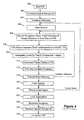
- the IVR (130) must be started in step 400.
- the IVR (130) is a software system for performing other duties, such as controlling a bank's automated teller machine, that takes advantage of the speech understanding capabilities of the present invention. For example, a bank may develop an IVR (130) to provide for a talking automated teller machine.
- the IVR (130) is responsible for managing the speech recognizer (116) during runtime.
- One of the first things the IVR (130) will want to do is initialize the speech recognizer in step 402.
- the exact steps necessary for initializing a speech recognizer will vary depending on which commercial speech recognizer is used, but the general steps will involve compiling the vendor-specific ASR grammar (112) that was generated using the toolkit (104), and loading the compiled version into some form of local memory accessible to the speech recognizer (116).
- step 404 the runtime interpreter (124) will need to be initialized. This is done when the IVR (130) calls the NL_Init function. This function essentially receives, as input, a file path and name for the annotated ASR corpus (122) that will be used for the current application and stores this file path and name in memory.
- step 406 the IVR (130) finishes setting up the runtime interpreter (124) by calling the NL_OpenApp function.
- This function access the corpus file whose name and file path were stored by the NL_Init function in step 404, and loads the corpus into system memory (RAM) in preparation of being searched.
- the contents of the corpus file (the various valid utterances) are alphabetized when loaded into RAM. Alphabetizing the valid utterances will enhance the search performance because, in the.preferred embodiment, a binary search is used to match an utterance with a token.
- Binary searches are a common method of searching through sorted lists to find a target element, and basically involves progressively halving the range of list items being searched until the target item is found.
- the corpus data is also optimized by 1) flagging corpus items that contain variables and 2) generating the list (from large to small) that specifies the order in which corpus items are processed for the second search. This last bit of optimization is important because, as the second search looks for fragments, smaller fragments (fewer words) may inadvertently match when a larger fragment is more appropriate. For example, the item:
- the runtime interpreter (124) Once both the speech recognizer (116) and runtime interpreter (124) have been initialized, and after the runtime interpreter (124) has loaded the corpus, the runtime interpreter is ready to do its job. At this point, the IVR (130) may have other processing to do, and the runtime interpreter (124) waits.
- the IVR (130) will detect that a conversation with a speaker is about to begin. When this happens, the IVR (130) will need to open a session within the runtime interpreter (124) (a session is a dialog exchange with the speaker). The IVP (130) does this by calling the NL_OpenSession function in step 406. This function creates a session handle and associates the session handle with the session that was opened. Future function calls relating to this session will use the session handle to reference the session.
- the speech recognizer (116) informs the IVR (130) that a complete utterance may have been heard.
- speech recognizers (116) are of the type that return data-in NBest form.
- NBest form is simply an output data format that includes a list of possible valid utterances (in text form) heard by the speech recognizer (116) along with a confidence number indicating the likelihood that each valid utterance was heard.
- the NBest format is helpful when there are multiple valid utterances that sound alike. For example, if the valid grammar includes "I want honey” and “I want money”, and the speaker mumbles "I want mfhoney", the speech recognizer will return both valid utterances as possibilities, rather than simply returning the single valid utterance that it believed sounded most correct. A confidence number is also included for each valid utterance, indicating the speech recognizer's confidence that that particular valid utterance was indeed the one it heard. This plurality of possibilies is helpful when the runtime interpreter (124) also knows the context of the current discussion and can use the context information to more accurately determine which valid utterance was meant. As will be described below, the preferred embodiment of the runtime interpreter (124) will use such context information in its determination of what was meant.
- the IVR (130) After the IVR (130) receives the output from the speech recognizer (116), the output is then passed, in step 410, to the runtime interpreter (124) for interpretation. To do so, the IVR (130) will call, in the preferred embodiment, the NL_AnalyzeNBest function. This function accepts as input the NBest data received by the IVR (130), a session handle, and a context pointer indicating the compartment that is to be searched.
- the runtime interpreter (124) searches through the corpus (122) that has been loaded into memory to find the valid utterance. If a match is found, the return token is stored in memory. If no match is found, the variables search discussed above will be performed and the variable data will be stored in a predefined data structure. This search is shown in step 412.
- the IVR (130) After calling NL_AnalyzeNBest, the IVR (130) will need to call NL_GetResult, in step 416, to retrieve from memory the token stored by the NL_AnalyzeNBest function. If the token indicates that a variable was included in the utterance, then the IVR (130), in step 416, will call NL_GetVariable to retrieve the variable values from the predefined data structure in memory used by NL_AnalyzeNBest to store the variable data.
- the runtime interpreter (124) is finished for the session (for now). In step 418, the runtime interpreter (124) waits for either another utterance or an end to the session.
- the speech recognizer (116) will again notify the IVR (130) in step 408, the IVR (130) will call NL_AnalyzeNBest in step 410, and the process continues as it did before.
- the IVR (130) will call NL_CloseSession in step 420. Closing the session deassociates the session handle.
- step 422 the runtime interpreter (124) waits for either a new session to begin or for the command to shut down the current application. If a new session is to begin, the IVR (130) will call NL_OpenSession again in step 404 and processing continues from step 404 as before. If the current application is to be shut down, then IVR (130) will call NL_CloseApp in step 424 to release the memory that had been allocated when the application was opened.
- step 426 the IVR (130) calls NL_Shutdown to undo the effects of NL_Init.
- the IVR (130) is responsible for shutting down the speech recognizer (116) as well as the IVR (130) itself. The actual steps necessary will vary depending on the selected speech recognizer (116) as well as the IVR developer.
- the runtime interpreter (124) also provides functionality for the developer who wishes to manage the Nbest data passed by the CP (126). Functions are available to create Nbest buffers (NB_CreateBuffer); create an Nbest buffer with only one utterance (NB_CreateOneBest); set an utterance in an Nbest buffer (NB_SetUtterance); set a score for an utterance in an Nbest buffer (NB_SetScore) ; set an utterance/score pair in an Nbest buffer (NB_SetUtteranceScore); determine the number of utterances that can be stored in the Nbest buffer (NB_GetNumResponses); get an utterance from an Nbest buffer (NB_GetUtterance); get a score from an Nbest buffer (NB_GetScore) and release the memory allocated for a specified Nbest buffer (NB_DestroyBuffer).
- N_CreateBuffer create an Nbest buffer with only one utterance
- NB_SetUtterance set an utterance
- the runtime interpreter application program interface (128) is the set of software functions actually used by the developer of the IVR (130) to interact with the runtime interpreter (124).
- the functions which are included in the preferred embodiment of the RIAPI (128) include: NL_Init(), NL_OpenApp(), NL_OpenSession(), NL_AnalyzeNbest(), NL_GetResult(), NL_GetVariable(), NL_CloseSession(), NL_CloseApp() and NL_Shutdown().
- NL_Init is an initialization function that is called one time during startup to process initialization information and allocate memory for sessions. Initialization information can include a name for a local log file, the maximum number of sessions and the routing mode (embedded or distributed - distributed architecture will be discussed further below).
- a call to NL_Init results in a call to CP_Init (the CP equivalent), which then calls SAI_Init (the runtime interpreter 124 equivalent).
- SAI_Init the runtime interpreter 124 equivalent
- Most of the following RIAPI (128) functions will also result in function calls to the CP (126), which then calls the corresponding runtime interpreter (124) function.
- Two exceptions in the preferred embodiment are the NL_GetVariable and NL_GetResult function, which directly access memory to retrieve the variable or result.
- NL_OpenApp is called to establish an application in the interpreter (124).
- an application is an instance, or Implementation, of a project. Opening an application causes the interpreter (124) to load the corpus files (122) associated with the application.
- NL_OpenSession is called when a session is desired under an open application.
- a session is essentially a conversation with a speaker, and it is possible for several sessions to exist for the same application (if the IVR 130 manages several speech recognizers, for example).
- NL_AnalyzeNbest is called by the IVR (130) when the speech recognizer has indicated that it has Nbest output ready.
- the IVR (130) calls this function to send this Nbest output, as well as contextual information, to the runtime interpreter (124) for analysis.
- NL_GetResult is called by the IVR (130) to read the token which was stored in memory by the runtime interpreter (124).
- NL_GetVariable is called when the token stored by the interpreter (124) is of a type that has variable data associated with it.
- the call to NL_GetVariable retrieves this variable data from a memory data structure used by the interpreter (124) to store the data.
- NL_CloseSession is called to close the specified session and return any allocated resources that were associated with the session. Calling this function may result in the calling of other functions that are also necessary for closing the session. For example, in the embedded architecture, NL_CloseSession calls CP_CloseSession to allow the CP (126) and runtime interpreter (124) an opportunity to properly close their respective sessions and return allocated resources that they no longer need.
- NL_CloseApp is called to close the specified application. This function checks to ensure that all sessions have been closed, and may also call other functions such as CP_CloseApp to allow the CP (126) and interpreter (124) the opportunity to "clean up after themselves” as well.
- NL_Shutdown is called to essentially return the system to the state that existed before NL_Init was called.
- CP_Shutdown may also be called to have the CP (126) and interpreter (124) deallocate their resources.
- the RIAPI (128) is also provided with inter/intranet capabilities. If the natural language system is connected via TCP/IP to a network, the TcpCallback function can be used to process asynchronous TCP/IP socket events.
- the following RIAPI calls designed to support connections through Server Interface Process (SIP) to the internet are also available (although not necessary for non-SIP systems):
- the specific calls made to the RIAPI (128) will be dictated by the needs of the IVR (130 for the functionality of the runtime interpreter (124).
- both the runtime interpreter (124) and RIAPI (128) are software elements that reside on the same computer.
- a plurality of distributed runtime interpreters (508) is located among a plurality of locations within a computer network (in the preferred embodiment, both Unix and Windows NT networks are supported).
- the IVR (130) is able to have a number of utterances processed simultaneously. The clearest advantage to this is the ability to operate multiple sessions at the same time.
- Figure 5 shows the elements of a distributed system architecture. Most of the elements are the same as the ones found in the embedded architecture. Both the grammar (112) and corpus (122) are the same as those used in the embedded architecture. The differences are the plurality of distributed interpreters (508), the resource manager (510 - RM), logger (512), operator display (514) and log viewer (516). The distributed interpreters (508) and RM (506) are discussed further below.
- the logger (512) is simply a software device that records the various messages that are sent between the resource manager (510) and various interpreters (508).
- Operator display (514) and log viewer (516) are means by which the developer may monitor the operation of the IVR (130) and the various interpreters connected to the system.
- the logger (512), operator display (514) and log viewer (516) do not allow the user or operator any control over the IVR (130) application. These devices merely provide information on the operation of the application.
- a distributed system operates on a networked computer system.
- a networked computer system simply means a plurality of computers, or nodes, which are interconnected to one another via a communications network.
- each node that performs interpreting duties has a DI manager (504), a DICP (506; and a DI runtime interpreter (508).
- the DICP (506) and DI runtime interpreter (508) have the same functionality as the CP (126) and runtime interpreter (124) found in the embedded architecture discussed above.
- the DI manager (504) is another piece of software that is responsible for message processing and coordination of the interpreting duties of the node. Message processing depends on the type of network used to connect the node to the resource manager (510). However, the same general message types are used. The message types and purposes are discussed below.
- the manager (504) itself is a software component, and before it can process any messages it must first be executing on the interpreting node.
- the manager (504) When the manager (504) is started, it will look in an initialization file for information regarding the application supported by the manager (504). This information includes the name of the application supported, and the file path to the location of the annotated corpus (122) to be used for the application supported.
- the ⁇ initialize> message causes the DI manager (504) to initialize the DICP (506) by calling CP_Init, and the DICP (506) initializes the DI runtime interpreter (508) by calling SAI_Init.
- This message also causes the DI manager (504) to initialize the application to be supported, by calling CP_OpenApp and SAI_OpenApp to open the application.
- opening an application requires loading the corpus (122).
- the location of the corpus (122) to be loaded is passed on to the DI runtime interpreter (508).
- the DI runtime interpreter (508) completes its initialization (and the corpus 122 is loaded), it generates an application handle which is a data object that references the current application.
- This handle is returned to the DICP (506), which in turn passes it back to the DI manager (504).
- the DI manager (504) composes a ⁇ tell error> message describing the error and returns it to the RM (510).
- a session will be opened when the DI manager (504) receives a ⁇ start session> message.
- This message includes a resource address which identifies the sending IVR (130) and a session identifier.
- the DI manager (504) checks to make sure there is not already a session opened with the same resource address, and if there is not, creates a session object which will represent the session.
- a session object is essentially a handle, similar to the application handle discussed above, that references this session.
- the DI manager (504) then opens the session in the DICP (506) and DI runtime interpreter (508) by calling the CP_OpenSession function, which calls the SAI_OpenSession function.
- the return value of SAI_OpenSession is passed back to CP_OpenSession, which returns it to the DI manager (504). Again, errors are reported by the DI manager (504) with a ⁇ tell error>. message.
- the DI (502) is ready to interpret. There are two messages which can start the process of interpretation.
- the DI manager (504) could receive an ⁇ analyze> message.
- An ⁇ analyze> message contains all the context and nbest information normally needed for CP_AnalyzeNbest.
- the DI manager (504) then calls the DI runtime interpreter (508) convenience functions NB_CreateBuffer and NB_SetUtteranceScore to prepare a structure with the context and nbest data.
- the DI manager (504) then provides this data structure as input to the CP_AnalyzeNbest function, which calls the SAI_AnalyzeNbest function which performs the search described above for the embedded architecture.
- these functions have completed, their return values propagate back to the DI manager (504), which composes and sends a ⁇ reply> message back to the RM (510).
- Receiving the ⁇ analyze> message was just one way the interpretation could be started. The other way occurs when the context and nbest data are sent in separate messages.
- the RM (10) sends a first message, or ⁇ state> message, containing the context and a resource address identifying the session in which the utterance was heard.
- the DI manager (504) first confirms that the resource address is indeed that of an existing session. If it is, the DI manager (504) retrieves the session handle associated with the resource address, and stores the context information from the message in a temporary memory area to await further processing.
- the second message contains a resource address and some nbest data.
- the DI manager (504) again checks to make sure the resource address included in the ⁇ nbest> message is that of an existing session. If so, the DI manager (504) then looks to the temporary memory area associated with the session, and finds the previously stored context information. Taking the nbest data and context data, the DI manager (504) then makes a call to CP_AnalyzeNbest, which then calls SAI_AnalyzeNbest, where the corpus (122) is searched to find the token associated with the utterance in the nbest data.
- a session is ended when the DI manager (504) receives the ⁇ lost call> message.
- This message includes a resource address, and the DI manager (504) checks to make sure that the resource address does indeed reference an open session. If so, the DI manager (504) calls CP_CloseSession, which then calls SAI_CloseSession, and the session is closed much in the same way a session is closed in the embedded architecture.
- the DI manager (504) will receive a ⁇ terminate> message. Since each manager (504) can only support one application at a rime, shutting down an application is the same as shutting down the manager (504). When the DI manager (504) receives this message, it makes the necessary calls to CP_CloseSession to close any remaining sessions that are open, and finally calls CP_Shutdown, which calls SAI_ShutDown, and all resources allocated to the manager (504), DICP (506) and DI runtime interpreter (508) are released.
- the resource manager (510) monitors the operation of the various distributed interpreters (508) connected to the network, and distributes RIAPI (128) requests among the interpreters (508).
- the RM (510) receives a message whenever a distributed interpreter (508) is initiated and records the application that is supported by the distributed interpreter (508). Then, as the resource manager receives requests from the IVR(s) (130) through the RIAPI (128), it checks to see which distributed interpreter (508) can handle the request (supports the application) and formulates a message containing the IVR (130) request and sends it to the appropriate manager (504) for processing.
- the resource manager (510) communicates with managers (504) using the messages described above.
Landscapes
- Engineering & Computer Science (AREA)
- Computational Linguistics (AREA)
- Health & Medical Sciences (AREA)
- Audiology, Speech & Language Pathology (AREA)
- Human Computer Interaction (AREA)
- Physics & Mathematics (AREA)
- Acoustics & Sound (AREA)
- Multimedia (AREA)
- Machine Translation (AREA)
- Input Circuits Of Receivers And Coupling Of Receivers And Audio Equipment (AREA)
Claims (10)
- Ein Computersystem zur Identifizierung der Bedeutung einer gültigen gesprochenen Äußerung in einer bekannten Grammatik, wobei das System folgendes umfasst:eine Zentraleinheit (CPU) (102);einen Systemspeicher, der mit der CPU (102) verbunden ist, um Speicherdateien (108) zu empfangen und zu speichern;einen Direktzugriffspeicher-(RAM)-Abschnitt (106) des Systemspeichers, um temporär Daten zu empfangen und zu speichern, während des Betriebs der CPU (102);eine vorherbestimmte feste kommentierte automatische Spracherkennung-(ASR)-Corpusdatei (122), die im Systemspeicher gespeichert ist, die eine Aufzählung aller erwarteten gültigen Äußerungen in der bekannten Grammatik enthält und damit gespeichert Zeichendaten, die die Bedeutung einer jeden der aufgelisteten erwarteten gültigen Äußerungen darstellen;ein automatisches Spracherkennung-(ASR)-System (114, 116, 118), das mit der CPU (102) verbunden ist, um gesprochene Äußerungen zu detektieren, und um digitale Ausgabesignale zu erzeugen, die die detektieren gültigen Äußerungen anzeigen;eine vorherbestimmte feste verkäuferspezifische ASR-Grammatikdatei (112), die im Systemspeicher gespeichert ist, die mit dem ASR-System (114, 116, 118) verbunden ist und die Daten enthält, die alle gültigen Äußerungen darstellen, die durch das ASR-System (114, 116, 118) detektiert werden sollen, und zwar in einer Form, die mit dem ASR-System (114, 116, 118) kompatibel ist; undein Laufzeit-Interpreter-Mittel (124), das mit der CPU (102) und mit der kommentierten ASR-Corpusdatei (122) verbunden ist, zur Identifizierung - wenn die CPU (102) die digitalen Ausgabesignale des ASR-Systems empfängt, die eine detektierte gültige Äußerung anzeigen - der Bedeutung der detektierten gültigen Äußerung, indem durch die Inhalte der kommentierten ASR-Corpusdatei (122) gesucht wird, und um die identifizierte Bedeutung als die Zeichendaten zurückzuführen.
- Das System gemäß Anspruch 1, worin das Laufzeit-Interpreter-Mittel (124) weiterhin ein Mittel einschließt, um eine Vergleichsuche durch die kommentierte ASR-Corpusdatei (122) in Systemspeicher durchzuführen, um die Zeichendaten zu finden, die das Mittel in der detektierten gültigen Äußerung identifiziert.
- Das System gemäß Anspruch 2, worin das Laufzeit-Interpreter-Mittel (124) weiterhin ein Mittel einschließt, um eine partielle Übereinstimmungssuche durch die Inhalte der kommentierten ASR-Corpusdatei (122) durchzuführen beim Versagen der Vergleichsuche, worin die partielle Suche eine partielle Übereinstimmung der detektierten gültigen Äußerung in der kommentierten ASR-Corpusdatei (122) sucht.
- Das System gemäß Anspruch 3, worin das Laufzeit-Interpreter-Mittel (124) weiterhin ein variables Verarbeitungsmittel einschließt, um den nicht übereinstimmenden Abschnitt der detektierten gültigen Äußerung als eine Variable zu verarbeiten, um die Bedeutung des nicht übereinstimmenden Abschnitts zu identifizieren.
- Das System gemäß Anspruch 4, worin das variable Verarbeitungsmittel variable Daten erzeugt, die die Bedeutung des nicht übereinstimmenden Abschnitts der detektierten gültigen Äußerung darstellen.
- Das System nach einem oder mehreren der Ansprüche 1-5, das weiterhin ein Laufzeit-Interpreter-Anwendungsprogramm-Schnittstellen-(RIAPI)-Mittel (128) umfasst, das mit dem Laufzeit-Interpreter-Mittel (124) verbunden ist, um auf das Laufzeit-Interpreter-Mittel (124) zuzugreifen.
- Das System gemäß Anspruch 6, worin das RIAPI-Mittel (128) weiterhin eine kundenspezifische Prozessor-(CP)-Schnittstelle (126) umfasst, die mit dem RIAPI-Mittel (128) und dem Laufzeit-Interpreter-Mittel (124) verbunden ist, und ein interaktives auf Sprache reagierendes (IVR)-System (130) umfasst, das durch das RIAPI-Mittel (128) verwendet wird, um auf das Laufzeit-Interpreter-Mittel (124) zuzugreifen.
- Das System gemäß Anspruch 7, worin das IVR-System (130) mit dem ASR-System (114, 116, 118) und dem Laufzeit-Interpreter-Mittel (124) verbunden ist, um die kommentierte ASR-Corpusdatei (122) zu durchsuchen, um die Zeichendaten zu finden, die die Bedeutung der detektierten gesprochenen Äußerung darstellen.
- Das System nach einem oder mehreren der Ansprüche 1-8, worin das Computersystem ein Netzwerksystem mit einer Vielzahl von Laufzeit-Interpreter-Mittel (508a ... 508n) umfasst, die auf eine Vielzahl von Computern im Computersystemnetzwerk verteilt sind.
- Ein Verfahren zur Identifizierung der Bedeutung in einer gültigen gesprochenen Äußerung in einer bekannten Grammatik, das die folgenden Schritte umfasst:das Laden einer vorherbestimmten festen kommentierten automatischen Spracherkennung-(ASR)-Corpusdatei (122) in einen Systemspeicher eines Computers, worin die feste kommentierte ASR-Corpusdatei (122) eine Auflistung aller erwarteten gültigen Äußerungen in der festen Grammatik und Zeichendaten enthält, die die Bedeutung einer jeden der aufgelisteten erwarteten gültigen Äußerungen darstellen;das Laden einer vorherbestimmten festen verkäuferspezifischen (ASR)-Grammatikdatei (112) in den Systemspeicher, die Daten enthält, die alle gültige Äußerungen darstellen, die durch ein (ASR)-System (114, 116, 118) in einer Form zu detektieren sind, die mit dem ASR-System (114-116, 118) kompatibel ist;das Detektieren einer gültigen Äußerung durch das automatische Spracherkennung-(ASR)-System (114, 116, 118);das Initialisieren einer Anforderung zur Suche in der festen kommentierten ASR-Corpusdatei (122) nach dem Auftreten der detektierten gültigen Äußerung;das Durchführen einer Suche mittels eines Laufzeit-Interpreter-Mittels (124) durch die Inhalte der festen kommentierten ASR-Corpusdatei (122), die im Systemspeicher geladen sind, um eine gültige Äußerung unter den aufgelisteten erwarteten gültigen Äußerungen zu finden, die der detektierten gültigen Äußerung entsprechen, und das Identifizieren der Bedeutung in der detektierten gültigen Äußerung als die Zeichendaten, die mit der gefundenen gültigen Äußerung verknüpft sind; unddas Zurückgeben der Zeichendaten, die der Bedeutung in der detektierten gültigen Äußerung in der festen kommentierten ASR-Corpusdatei (122) entsprechen, an den Anforderer.
Applications Claiming Priority (3)
| Application Number | Priority Date | Filing Date | Title |
|---|---|---|---|
| US08/932,938 US6094635A (en) | 1997-09-17 | 1997-09-17 | System and method for speech enabled application |
| US932938 | 1997-09-17 | ||
| PCT/US1998/019433 WO1999014743A1 (en) | 1997-09-17 | 1998-09-17 | System and method using natural language understanding for speech control application |
Publications (2)
| Publication Number | Publication Date |
|---|---|
| EP1016076A1 EP1016076A1 (de) | 2000-07-05 |
| EP1016076B1 true EP1016076B1 (de) | 2003-05-02 |
Family
ID=25463178
Family Applications (1)
| Application Number | Title | Priority Date | Filing Date |
|---|---|---|---|
| EP98947098A Expired - Lifetime EP1016076B1 (de) | 1997-09-17 | 1998-09-17 | Natürliche sprache verstehendes verfahren und verstehende vorrichung zur sprachsteuerung einer anwendung |
Country Status (7)
| Country | Link |
|---|---|
| US (1) | US6094635A (de) |
| EP (1) | EP1016076B1 (de) |
| JP (1) | JP4112171B2 (de) |
| AT (1) | ATE239289T1 (de) |
| CA (1) | CA2304057C (de) |
| DE (1) | DE69814114T2 (de) |
| WO (1) | WO1999014743A1 (de) |
Cited By (3)
| Publication number | Priority date | Publication date | Assignee | Title |
|---|---|---|---|---|
| US7343288B2 (en) | 2002-05-08 | 2008-03-11 | Sap Ag | Method and system for the processing and storing of voice information and corresponding timeline information |
| US7406413B2 (en) | 2002-05-08 | 2008-07-29 | Sap Aktiengesellschaft | Method and system for the processing of voice data and for the recognition of a language |
| US8509403B2 (en) | 2003-11-17 | 2013-08-13 | Htc Corporation | System for advertisement selection, placement and delivery |
Families Citing this family (70)
| Publication number | Priority date | Publication date | Assignee | Title |
|---|---|---|---|---|
| US6292767B1 (en) * | 1995-07-18 | 2001-09-18 | Nuance Communications | Method and system for building and running natural language understanding systems |
| US6499013B1 (en) * | 1998-09-09 | 2002-12-24 | One Voice Technologies, Inc. | Interactive user interface using speech recognition and natural language processing |
| US7251315B1 (en) * | 1998-09-21 | 2007-07-31 | Microsoft Corporation | Speech processing for telephony API |
| US6343116B1 (en) * | 1998-09-21 | 2002-01-29 | Microsoft Corporation | Computer telephony application programming interface |
| US9037451B2 (en) * | 1998-09-25 | 2015-05-19 | Rpx Corporation | Systems and methods for multiple mode voice and data communications using intelligently bridged TDM and packet buses and methods for implementing language capabilities using the same |
| DE69909806T2 (de) * | 1998-09-30 | 2004-01-22 | Lernout & Hauspie Speech Products N.V. | Graphische Benutzerschnittstelle zur Navigation in Grammatiken eines Spracherkennungssystems |
| US6246981B1 (en) * | 1998-11-25 | 2001-06-12 | International Business Machines Corporation | Natural language task-oriented dialog manager and method |
| US6314402B1 (en) * | 1999-04-23 | 2001-11-06 | Nuance Communications | Method and apparatus for creating modifiable and combinable speech objects for acquiring information from a speaker in an interactive voice response system |
| US6275792B1 (en) * | 1999-05-05 | 2001-08-14 | International Business Machines Corp. | Method and system for generating a minimal set of test phrases for testing a natural commands grammar |
| US7725307B2 (en) | 1999-11-12 | 2010-05-25 | Phoenix Solutions, Inc. | Query engine for processing voice based queries including semantic decoding |
| US7392185B2 (en) | 1999-11-12 | 2008-06-24 | Phoenix Solutions, Inc. | Speech based learning/training system using semantic decoding |
| US7050977B1 (en) | 1999-11-12 | 2006-05-23 | Phoenix Solutions, Inc. | Speech-enabled server for internet website and method |
| US9076448B2 (en) * | 1999-11-12 | 2015-07-07 | Nuance Communications, Inc. | Distributed real time speech recognition system |
| US6434529B1 (en) * | 2000-02-16 | 2002-08-13 | Sun Microsystems, Inc. | System and method for referencing object instances and invoking methods on those object instances from within a speech recognition grammar |
| AU2001263138A1 (en) * | 2000-05-15 | 2001-11-26 | Infoactiv, Inc. | Automated voice-based dialogue with a voice mail system by imitation of the human voice |
| EP1156649B1 (de) * | 2000-05-16 | 2003-03-26 | Swisscom AG | Sprach-Portal Host-Rechner und Verfahren |
| US7024348B1 (en) | 2000-09-28 | 2006-04-04 | Unisys Corporation | Dialogue flow interpreter development tool |
| US20020169597A1 (en) * | 2001-03-12 | 2002-11-14 | Fain Systems, Inc. | Method and apparatus providing computer understanding and instructions from natural language |
| EP1490790A2 (de) | 2001-03-13 | 2004-12-29 | Intelligate Ltd. | Dynamisches verstehen natürlicher sprache |
| US20020138656A1 (en) * | 2001-03-23 | 2002-09-26 | Neil Hickey | System for and method of providing interfaces to existing computer applications |
| WO2002091234A1 (en) * | 2001-04-24 | 2002-11-14 | Takahiro Nakamura | Retrieval device for database of secondary information-attached text |
| US7698228B2 (en) | 2001-04-27 | 2010-04-13 | Accenture Llp | Tracking purchases in a location-based services system |
| US6848542B2 (en) | 2001-04-27 | 2005-02-01 | Accenture Llp | Method for passive mining of usage information in a location-based services system |
| US6944447B2 (en) | 2001-04-27 | 2005-09-13 | Accenture Llp | Location-based services |
| US7970648B2 (en) | 2001-04-27 | 2011-06-28 | Accenture Global Services Limited | Advertising campaign and business listing management for a location-based services system |
| US7437295B2 (en) | 2001-04-27 | 2008-10-14 | Accenture Llp | Natural language processing for a location-based services system |
| CA2742308C (en) * | 2001-04-27 | 2012-07-31 | Accenture Global Services Limited | Location-based services |
| JP3423296B2 (ja) * | 2001-06-18 | 2003-07-07 | 沖電気工業株式会社 | 音声対話インターフェース装置 |
| US7031444B2 (en) * | 2001-06-29 | 2006-04-18 | Voicegenie Technologies, Inc. | Computer-implemented voice markup system and method |
| US7242752B2 (en) * | 2001-07-03 | 2007-07-10 | Apptera, Inc. | Behavioral adaptation engine for discerning behavioral characteristics of callers interacting with an VXML-compliant voice application |
| GB2379786A (en) * | 2001-09-18 | 2003-03-19 | 20 20 Speech Ltd | Speech processing apparatus |
| US7146321B2 (en) * | 2001-10-31 | 2006-12-05 | Dictaphone Corporation | Distributed speech recognition system |
| US7133829B2 (en) * | 2001-10-31 | 2006-11-07 | Dictaphone Corporation | Dynamic insertion of a speech recognition engine within a distributed speech recognition system |
| US20030093433A1 (en) * | 2001-11-14 | 2003-05-15 | Exegesys, Inc. | Method and system for software application development and customizible runtime environment |
| US6785654B2 (en) | 2001-11-30 | 2004-08-31 | Dictaphone Corporation | Distributed speech recognition system with speech recognition engines offering multiple functionalities |
| US7203644B2 (en) * | 2001-12-31 | 2007-04-10 | Intel Corporation | Automating tuning of speech recognition systems |
| US20030128856A1 (en) * | 2002-01-08 | 2003-07-10 | Boor Steven E. | Digitally programmable gain amplifier |
| US7117158B2 (en) * | 2002-04-25 | 2006-10-03 | Bilcare, Inc. | Systems, methods and computer program products for designing, deploying and managing interactive voice response (IVR) systems |
| US7292975B2 (en) * | 2002-05-01 | 2007-11-06 | Nuance Communications, Inc. | Systems and methods for evaluating speaker suitability for automatic speech recognition aided transcription |
| US7236931B2 (en) | 2002-05-01 | 2007-06-26 | Usb Ag, Stamford Branch | Systems and methods for automatic acoustic speaker adaptation in computer-assisted transcription systems |
| DE10220520A1 (de) * | 2002-05-08 | 2003-11-20 | Sap Ag | Verfahren zur Erkennung von Sprachinformation |
| EP1361740A1 (de) * | 2002-05-08 | 2003-11-12 | Sap Ag | Verfahren und System zur Verarbeitung von Sprachinformationen eines Dialogs |
| DE10220521B4 (de) * | 2002-05-08 | 2005-11-24 | Sap Ag | Verfahren und System zur Verarbeitung von Sprachdaten und Klassifizierung von Gesprächen |
| DE10220522B4 (de) * | 2002-05-08 | 2005-11-17 | Sap Ag | Verfahren und System zur Verarbeitung von Sprachdaten mittels Spracherkennung und Frequenzanalyse |
| US7493253B1 (en) | 2002-07-12 | 2009-02-17 | Language And Computing, Inc. | Conceptual world representation natural language understanding system and method |
| US20050120300A1 (en) * | 2003-09-25 | 2005-06-02 | Dictaphone Corporation | Method, system, and apparatus for assembly, transport and display of clinical data |
| US7366666B2 (en) * | 2003-10-01 | 2008-04-29 | International Business Machines Corporation | Relative delta computations for determining the meaning of language inputs |
| US7996223B2 (en) * | 2003-10-01 | 2011-08-09 | Dictaphone Corporation | System and method for post processing speech recognition output |
| US7415101B2 (en) * | 2003-12-15 | 2008-08-19 | At&T Knowledge Ventures, L.P. | System, method and software for a speech-enabled call routing application using an action-object matrix |
| US7512545B2 (en) * | 2004-01-29 | 2009-03-31 | At&T Intellectual Property I, L.P. | Method, software and system for developing interactive call center agent personas |
| US7787601B2 (en) | 2004-03-10 | 2010-08-31 | Convergys Customer Management Group, Inc. | System and method for IVR signature detection and event management |
| US7912206B2 (en) * | 2004-07-30 | 2011-03-22 | Miller John S | Technique for providing a personalized electronic messaging service through an information assistance provider |
| US7623632B2 (en) * | 2004-08-26 | 2009-11-24 | At&T Intellectual Property I, L.P. | Method, system and software for implementing an automated call routing application in a speech enabled call center environment |
| US7617093B2 (en) * | 2005-06-02 | 2009-11-10 | Microsoft Corporation | Authoring speech grammars |
| US7548859B2 (en) * | 2005-08-03 | 2009-06-16 | Motorola, Inc. | Method and system for assisting users in interacting with multi-modal dialog systems |
| US8032372B1 (en) | 2005-09-13 | 2011-10-04 | Escription, Inc. | Dictation selection |
| US8756057B2 (en) * | 2005-11-02 | 2014-06-17 | Nuance Communications, Inc. | System and method using feedback speech analysis for improving speaking ability |
| US8315874B2 (en) * | 2005-12-30 | 2012-11-20 | Microsoft Corporation | Voice user interface authoring tool |
| US8229733B2 (en) * | 2006-02-09 | 2012-07-24 | John Harney | Method and apparatus for linguistic independent parsing in a natural language systems |
| US7831431B2 (en) | 2006-10-31 | 2010-11-09 | Honda Motor Co., Ltd. | Voice recognition updates via remote broadcast signal |
| DE102007055117A1 (de) | 2007-03-26 | 2008-10-02 | Boris Kaplan | Ein System von Künstlicher Intelligenz von einem Cyborg oder einem Android für das zeigerorientierte Objekterfassungsverfahren von Informationen basierend auf einer natürlichen Sprache und das Arbeitsverfahren von dem System |
| US9045098B2 (en) * | 2009-12-01 | 2015-06-02 | Honda Motor Co., Ltd. | Vocabulary dictionary recompile for in-vehicle audio system |
| US9361878B2 (en) * | 2012-03-30 | 2016-06-07 | Michael Boukadakis | Computer-readable medium, system and method of providing domain-specific information |
| US10255914B2 (en) | 2012-03-30 | 2019-04-09 | Michael Boukadakis | Digital concierge and method |
| US10776375B2 (en) * | 2013-07-15 | 2020-09-15 | Microsoft Technology Licensing, Llc | Retrieval of attribute values based upon identified entities |
| DE102014016968A1 (de) | 2014-11-18 | 2015-01-22 | Boris Kaplan | Ein Computersystem von einer Künstlichen Intelligenz von einem Cyborg oder einem Android, wobei eine aufgenommene Signal-Reaktion des Computersystems von der Künstlichen Intelligenz von dem Cyborg oder dem Android, eine entsprechende Assoziation des Computersystems von der Künstlichen Intelligenz von dem Cyborg oder dem Android, und ein entsprechender Gedanke des Computersystems von der Künstlichen Intelligenz von dem Cyborg oder dem Android in dem Computersystem physisch gebaut werden, und ein Arbeitsverfahren von dem Computersystem von der Künstlichen Intelligenz von dem Cyborg oder dem Android |
| CN105744090A (zh) | 2014-12-09 | 2016-07-06 | 阿里巴巴集团控股有限公司 | 语音信息处理方法及装置 |
| US10477028B1 (en) | 2018-07-13 | 2019-11-12 | Bank Of America Corporation | System for processing voice responses using a natural language processing engine |
| DE102021005701A1 (de) | 2021-11-17 | 2023-05-17 | Boris Kaplan | Ein Computersystem von einer Künstlichen Intelligenz von einem Cyborg oder einem Android, wobei eine aufgenommene Signal-Reaktion des Computersystems von der Künstlichen Intelligenz von dem Cyborg oder dem Android, eine entsprechende Assoziation des Computersystems von der Künstlichen Intelligenz von dem Cyborg oder dem Android, und ein entsprechender Gedanke des Computersystems von der Künstlichen Intelligenz von dem Cyborg oder dem Android in dem Computersystem physisch gebaut werden, und ein Arbeitsverfahren von dem Computersystem von der Künstlichen Intelligenz von dem Cyborg oder dem Android |
| DE102023000489A1 (de) | 2023-02-14 | 2023-04-13 | Boris Kaplan | Ein Computersystem von einer Künstlichen Intelligenz von einem Cyborg oder einem Android, wobei eine aufgenommene Signal-Reaktion des Computersystems von der Künstlichen Intelligenz von dem Cyborg oder dem Android, eine entsprechende Assoziation des Computersystems von der Künstlichen Intelligenz von dem Cyborg oder dem Android, und ein entsprechender Gedanke des Computersystems von der Künstlichen Intelligenz von dem Cyborg oder dem Android in dem Computersystem physisch gebaut werden, und ein Arbeitsverfahren von dem Computersystem von der Künstlichen Intelligenz von dem Cyborg oder dem Android. |
Family Cites Families (8)
| Publication number | Priority date | Publication date | Assignee | Title |
|---|---|---|---|---|
| US5390279A (en) * | 1992-12-31 | 1995-02-14 | Apple Computer, Inc. | Partitioning speech rules by context for speech recognition |
| JPH074864A (ja) * | 1993-06-11 | 1995-01-10 | Kubota Corp | ファイアーランス駆動装置 |
| US5642519A (en) * | 1994-04-29 | 1997-06-24 | Sun Microsystems, Inc. | Speech interpreter with a unified grammer compiler |
| US5748974A (en) * | 1994-12-13 | 1998-05-05 | International Business Machines Corporation | Multimodal natural language interface for cross-application tasks |
| JPH08194600A (ja) * | 1995-01-17 | 1996-07-30 | Nec Corp | 音声入力端末装置 |
| US5675707A (en) * | 1995-09-15 | 1997-10-07 | At&T | Automated call router system and method |
| US5924070A (en) * | 1997-06-06 | 1999-07-13 | International Business Machines Corporation | Corporate voice dialing with shared directories |
| US5995918A (en) * | 1997-09-17 | 1999-11-30 | Unisys Corporation | System and method for creating a language grammar using a spreadsheet or table interface |
-
1997
- 1997-09-17 US US08/932,938 patent/US6094635A/en not_active Expired - Lifetime
-
1998
- 1998-09-17 DE DE69814114T patent/DE69814114T2/de not_active Expired - Lifetime
- 1998-09-17 WO PCT/US1998/019433 patent/WO1999014743A1/en not_active Ceased
- 1998-09-17 AT AT98947098T patent/ATE239289T1/de not_active IP Right Cessation
- 1998-09-17 JP JP2000512200A patent/JP4112171B2/ja not_active Expired - Fee Related
- 1998-09-17 CA CA002304057A patent/CA2304057C/en not_active Expired - Fee Related
- 1998-09-17 EP EP98947098A patent/EP1016076B1/de not_active Expired - Lifetime
Cited By (3)
| Publication number | Priority date | Publication date | Assignee | Title |
|---|---|---|---|---|
| US7343288B2 (en) | 2002-05-08 | 2008-03-11 | Sap Ag | Method and system for the processing and storing of voice information and corresponding timeline information |
| US7406413B2 (en) | 2002-05-08 | 2008-07-29 | Sap Aktiengesellschaft | Method and system for the processing of voice data and for the recognition of a language |
| US8509403B2 (en) | 2003-11-17 | 2013-08-13 | Htc Corporation | System for advertisement selection, placement and delivery |
Also Published As
| Publication number | Publication date |
|---|---|
| WO1999014743A1 (en) | 1999-03-25 |
| US6094635A (en) | 2000-07-25 |
| DE69814114T2 (de) | 2004-03-18 |
| JP2001516905A (ja) | 2001-10-02 |
| CA2304057C (en) | 2007-06-26 |
| DE69814114D1 (de) | 2003-06-05 |
| CA2304057A1 (en) | 1999-03-25 |
| ATE239289T1 (de) | 2003-05-15 |
| EP1016076A1 (de) | 2000-07-05 |
| JP4112171B2 (ja) | 2008-07-02 |
Similar Documents
| Publication | Publication Date | Title |
|---|---|---|
| EP1016076B1 (de) | Natürliche sprache verstehendes verfahren und verstehende vorrichung zur sprachsteuerung einer anwendung | |
| EP1016001B1 (de) | System und verfahren zum schaffen einer sprachgrammatik | |
| US8645122B1 (en) | Method of handling frequently asked questions in a natural language dialog service | |
| US5893063A (en) | Data processing system and method for dynamically accessing an application using a voice command | |
| US7869998B1 (en) | Voice-enabled dialog system | |
| EP1076288B1 (de) | Verfahren und Vorrichtung zum Zugriff auf ein Dialog-System für mehrere Klienten | |
| US7912726B2 (en) | Method and apparatus for creation and user-customization of speech-enabled services | |
| Seneff et al. | GALAXY-II: a reference architecture for conversational system development. | |
| JP4012263B2 (ja) | アプリケーション間タスクのための多モード自然言語インタフェース | |
| US7451089B1 (en) | System and method of spoken language understanding in a spoken dialog service | |
| JP2848458B2 (ja) | 言語翻訳システム | |
| US6937983B2 (en) | Method and system for semantic speech recognition | |
| Hemphill et al. | Surfing the Web by voice | |
| US20030061029A1 (en) | Device for conducting expectation based mixed initiative natural language dialogs | |
| US20070112556A1 (en) | Dynamic Natural Language Understanding | |
| US5855002A (en) | Artificially intelligent natural language computational interface system for interfacing a human to a data processor having human-like responses | |
| AU6225199A (en) | Speech controlled computer user interface | |
| JPS6048570A (ja) | 入力内容判断方法 | |
| US5897618A (en) | Data processing system and method for switching between programs having a same title using a voice command | |
| US7742922B2 (en) | Speech interface for search engines | |
| JP3634863B2 (ja) | 音声認識システム | |
| US7430511B1 (en) | Speech enabled computing system | |
| US20060136195A1 (en) | Text grouping for disambiguation in a speech application | |
| Di Fabbrizio et al. | AT&t help desk. | |
| IES79053B2 (en) | Input and output communication in a data processing system |
Legal Events
| Date | Code | Title | Description |
|---|---|---|---|
| PUAI | Public reference made under article 153(3) epc to a published international application that has entered the european phase |
Free format text: ORIGINAL CODE: 0009012 |
|
| 17P | Request for examination filed |
Effective date: 20000417 |
|
| AK | Designated contracting states |
Kind code of ref document: A1 Designated state(s): AT BE CH CY DE DK ES FI FR GB GR IE IT LI LU MC NL PT SE |
|
| GRAH | Despatch of communication of intention to grant a patent |
Free format text: ORIGINAL CODE: EPIDOS IGRA |
|
| RIC1 | Information provided on ipc code assigned before grant |
Free format text: 7G 10L 15/26 A |
|
| GRAH | Despatch of communication of intention to grant a patent |
Free format text: ORIGINAL CODE: EPIDOS IGRA |
|
| GRAA | (expected) grant |
Free format text: ORIGINAL CODE: 0009210 |
|
| AK | Designated contracting states |
Designated state(s): AT BE CH CY DE DK ES FI FR GB GR IE IT LI LU MC NL PT SE |
|
| PG25 | Lapsed in a contracting state [announced via postgrant information from national office to epo] |
Ref country code: NL Free format text: LAPSE BECAUSE OF FAILURE TO SUBMIT A TRANSLATION OF THE DESCRIPTION OR TO PAY THE FEE WITHIN THE PRESCRIBED TIME-LIMIT Effective date: 20030502 Ref country code: LI Free format text: LAPSE BECAUSE OF FAILURE TO SUBMIT A TRANSLATION OF THE DESCRIPTION OR TO PAY THE FEE WITHIN THE PRESCRIBED TIME-LIMIT Effective date: 20030502 Ref country code: IT Free format text: LAPSE BECAUSE OF FAILURE TO SUBMIT A TRANSLATION OF THE DESCRIPTION OR TO PAY THE FEE WITHIN THE PRESCRIBED TIME-LIMIT;WARNING: LAPSES OF ITALIAN PATENTS WITH EFFECTIVE DATE BEFORE 2007 MAY HAVE OCCURRED AT ANY TIME BEFORE 2007. THE CORRECT EFFECTIVE DATE MAY BE DIFFERENT FROM THE ONE RECORDED. Effective date: 20030502 Ref country code: FI Free format text: LAPSE BECAUSE OF FAILURE TO SUBMIT A TRANSLATION OF THE DESCRIPTION OR TO PAY THE FEE WITHIN THE PRESCRIBED TIME-LIMIT Effective date: 20030502 Ref country code: CH Free format text: LAPSE BECAUSE OF FAILURE TO SUBMIT A TRANSLATION OF THE DESCRIPTION OR TO PAY THE FEE WITHIN THE PRESCRIBED TIME-LIMIT Effective date: 20030502 Ref country code: BE Free format text: LAPSE BECAUSE OF FAILURE TO SUBMIT A TRANSLATION OF THE DESCRIPTION OR TO PAY THE FEE WITHIN THE PRESCRIBED TIME-LIMIT Effective date: 20030502 Ref country code: AT Free format text: LAPSE BECAUSE OF FAILURE TO SUBMIT A TRANSLATION OF THE DESCRIPTION OR TO PAY THE FEE WITHIN THE PRESCRIBED TIME-LIMIT Effective date: 20030502 |
|
| REG | Reference to a national code |
Ref country code: GB Ref legal event code: FG4D |
|
| REG | Reference to a national code |
Ref country code: CH Ref legal event code: EP |
|
| REF | Corresponds to: |
Ref document number: 69814114 Country of ref document: DE Date of ref document: 20030605 Kind code of ref document: P |
|
| REG | Reference to a national code |
Ref country code: IE Ref legal event code: FG4D |
|
| PG25 | Lapsed in a contracting state [announced via postgrant information from national office to epo] |
Ref country code: SE Free format text: LAPSE BECAUSE OF FAILURE TO SUBMIT A TRANSLATION OF THE DESCRIPTION OR TO PAY THE FEE WITHIN THE PRESCRIBED TIME-LIMIT Effective date: 20030802 Ref country code: GR Free format text: LAPSE BECAUSE OF FAILURE TO SUBMIT A TRANSLATION OF THE DESCRIPTION OR TO PAY THE FEE WITHIN THE PRESCRIBED TIME-LIMIT Effective date: 20030802 Ref country code: DK Free format text: LAPSE BECAUSE OF FAILURE TO SUBMIT A TRANSLATION OF THE DESCRIPTION OR TO PAY THE FEE WITHIN THE PRESCRIBED TIME-LIMIT Effective date: 20030802 |
|
| PG25 | Lapsed in a contracting state [announced via postgrant information from national office to epo] |
Ref country code: PT Free format text: LAPSE BECAUSE OF FAILURE TO SUBMIT A TRANSLATION OF THE DESCRIPTION OR TO PAY THE FEE WITHIN THE PRESCRIBED TIME-LIMIT Effective date: 20030804 |
|
| PG25 | Lapsed in a contracting state [announced via postgrant information from national office to epo] |
Ref country code: ES Free format text: LAPSE BECAUSE OF FAILURE TO SUBMIT A TRANSLATION OF THE DESCRIPTION OR TO PAY THE FEE WITHIN THE PRESCRIBED TIME-LIMIT Effective date: 20030813 |
|
| PG25 | Lapsed in a contracting state [announced via postgrant information from national office to epo] |
Ref country code: LU Free format text: LAPSE BECAUSE OF NON-PAYMENT OF DUE FEES Effective date: 20030917 Ref country code: IE Free format text: LAPSE BECAUSE OF NON-PAYMENT OF DUE FEES Effective date: 20030917 Ref country code: GB Free format text: LAPSE BECAUSE OF NON-PAYMENT OF DUE FEES Effective date: 20030917 Ref country code: CY Free format text: LAPSE BECAUSE OF FAILURE TO SUBMIT A TRANSLATION OF THE DESCRIPTION OR TO PAY THE FEE WITHIN THE PRESCRIBED TIME-LIMIT Effective date: 20030917 |
|
| ET | Fr: translation filed | ||
| PG25 | Lapsed in a contracting state [announced via postgrant information from national office to epo] |
Ref country code: MC Free format text: LAPSE BECAUSE OF NON-PAYMENT OF DUE FEES Effective date: 20030930 |
|
| NLV1 | Nl: lapsed or annulled due to failure to fulfill the requirements of art. 29p and 29m of the patents act | ||
| REG | Reference to a national code |
Ref country code: CH Ref legal event code: PL |
|
| PLBE | No opposition filed within time limit |
Free format text: ORIGINAL CODE: 0009261 |
|
| STAA | Information on the status of an ep patent application or granted ep patent |
Free format text: STATUS: NO OPPOSITION FILED WITHIN TIME LIMIT |
|
| 26N | No opposition filed |
Effective date: 20040203 |
|
| GBPC | Gb: european patent ceased through non-payment of renewal fee |
Effective date: 20030917 |
|
| REG | Reference to a national code |
Ref country code: IE Ref legal event code: MM4A |
|
| PGFP | Annual fee paid to national office [announced via postgrant information from national office to epo] |
Ref country code: FR Payment date: 20100930 Year of fee payment: 13 |
|
| PGFP | Annual fee paid to national office [announced via postgrant information from national office to epo] |
Ref country code: DE Payment date: 20100929 Year of fee payment: 13 |
|
| REG | Reference to a national code |
Ref country code: FR Ref legal event code: ST Effective date: 20120531 |
|
| REG | Reference to a national code |
Ref country code: DE Ref legal event code: R119 Ref document number: 69814114 Country of ref document: DE Effective date: 20120403 |
|
| PG25 | Lapsed in a contracting state [announced via postgrant information from national office to epo] |
Ref country code: DE Free format text: LAPSE BECAUSE OF NON-PAYMENT OF DUE FEES Effective date: 20120403 |
|
| PG25 | Lapsed in a contracting state [announced via postgrant information from national office to epo] |
Ref country code: FR Free format text: LAPSE BECAUSE OF NON-PAYMENT OF DUE FEES Effective date: 20110930 |