EP1016423A1 - Mélange polymère radio-opaque - Google Patents
Mélange polymère radio-opaque Download PDFInfo
- Publication number
- EP1016423A1 EP1016423A1 EP99310490A EP99310490A EP1016423A1 EP 1016423 A1 EP1016423 A1 EP 1016423A1 EP 99310490 A EP99310490 A EP 99310490A EP 99310490 A EP99310490 A EP 99310490A EP 1016423 A1 EP1016423 A1 EP 1016423A1
- Authority
- EP
- European Patent Office
- Prior art keywords
- polymer
- tubing
- medical implant
- chain extender
- percent
- Prior art date
- Legal status (The legal status is an assumption and is not a legal conclusion. Google has not performed a legal analysis and makes no representation as to the accuracy of the status listed.)
- Withdrawn
Links
- 229920002959 polymer blend Polymers 0.000 title 1
- 229920000642 polymer Polymers 0.000 claims abstract description 102
- 239000007943 implant Substances 0.000 claims abstract description 41
- WKBOTKDWSSQWDR-UHFFFAOYSA-N Bromine atom Chemical compound [Br] WKBOTKDWSSQWDR-UHFFFAOYSA-N 0.000 claims abstract description 28
- 239000004970 Chain extender Substances 0.000 claims abstract description 28
- GDTBXPJZTBHREO-UHFFFAOYSA-N bromine Substances BrBr GDTBXPJZTBHREO-UHFFFAOYSA-N 0.000 claims abstract description 28
- 229910052794 bromium Inorganic materials 0.000 claims abstract description 28
- 125000005442 diisocyanate group Chemical group 0.000 claims abstract description 14
- 229920005862 polyol Polymers 0.000 claims abstract description 13
- 150000003077 polyols Chemical class 0.000 claims abstract description 13
- LYCAIKOWRPUZTN-UHFFFAOYSA-N Ethylene glycol Chemical compound OCCO LYCAIKOWRPUZTN-UHFFFAOYSA-N 0.000 claims description 9
- -1 alkyl diol Chemical class 0.000 claims description 8
- 229920003226 polyurethane urea Polymers 0.000 claims description 3
- 239000004952 Polyamide Substances 0.000 claims 1
- 229920002647 polyamide Polymers 0.000 claims 1
- 229920000515 polycarbonate Polymers 0.000 claims 1
- 239000004417 polycarbonate Substances 0.000 claims 1
- 239000000203 mixture Substances 0.000 abstract description 10
- 230000002792 vascular Effects 0.000 abstract description 3
- 229920002635 polyurethane Polymers 0.000 description 22
- 239000004814 polyurethane Substances 0.000 description 22
- 238000000034 method Methods 0.000 description 16
- 238000001125 extrusion Methods 0.000 description 9
- 229910052736 halogen Inorganic materials 0.000 description 7
- 150000002367 halogens Chemical class 0.000 description 7
- 239000011159 matrix material Substances 0.000 description 4
- DSQTVBCKQRNCKW-UHFFFAOYSA-N CCO.CCO.OC1=CC=C(O)C=C1 Chemical compound CCO.CCO.OC1=CC=C(O)C=C1 DSQTVBCKQRNCKW-UHFFFAOYSA-N 0.000 description 3
- DNIAPMSPPWPWGF-UHFFFAOYSA-N Propylene glycol Chemical compound CC(O)CO DNIAPMSPPWPWGF-UHFFFAOYSA-N 0.000 description 3
- 239000004433 Thermoplastic polyurethane Substances 0.000 description 3
- ZMANZCXQSJIPKH-UHFFFAOYSA-N Triethylamine Chemical compound CCN(CC)CC ZMANZCXQSJIPKH-UHFFFAOYSA-N 0.000 description 3
- 125000003118 aryl group Chemical group 0.000 description 3
- 239000000945 filler Substances 0.000 description 3
- 239000012530 fluid Substances 0.000 description 3
- 230000000704 physical effect Effects 0.000 description 3
- 239000000126 substance Substances 0.000 description 3
- 229920002803 thermoplastic polyurethane Polymers 0.000 description 3
- UPMLOUAZCHDJJD-UHFFFAOYSA-N 4,4'-Diphenylmethane Diisocyanate Chemical compound C1=CC(N=C=O)=CC=C1CC1=CC=C(N=C=O)C=C1 UPMLOUAZCHDJJD-UHFFFAOYSA-N 0.000 description 2
- PIICEJLVQHRZGT-UHFFFAOYSA-N Ethylenediamine Chemical compound NCCN PIICEJLVQHRZGT-UHFFFAOYSA-N 0.000 description 2
- XMUZQOKACOLCSS-UHFFFAOYSA-N [2-(hydroxymethyl)phenyl]methanol Chemical compound OCC1=CC=CC=C1CO XMUZQOKACOLCSS-UHFFFAOYSA-N 0.000 description 2
- 239000000654 additive Substances 0.000 description 2
- CDQSJQSWAWPGKG-UHFFFAOYSA-N butane-1,1-diol Chemical compound CCCC(O)O CDQSJQSWAWPGKG-UHFFFAOYSA-N 0.000 description 2
- 239000003054 catalyst Substances 0.000 description 2
- 150000004985 diamines Chemical class 0.000 description 2
- 150000002009 diols Chemical class 0.000 description 2
- 238000009472 formulation Methods 0.000 description 2
- MHIBEGOZTWERHF-UHFFFAOYSA-N heptane-1,1-diol Chemical compound CCCCCCC(O)O MHIBEGOZTWERHF-UHFFFAOYSA-N 0.000 description 2
- ACCCMOQWYVYDOT-UHFFFAOYSA-N hexane-1,1-diol Chemical compound CCCCCC(O)O ACCCMOQWYVYDOT-UHFFFAOYSA-N 0.000 description 2
- 238000002156 mixing Methods 0.000 description 2
- UWJJYHHHVWZFEP-UHFFFAOYSA-N pentane-1,1-diol Chemical compound CCCCC(O)O UWJJYHHHVWZFEP-UHFFFAOYSA-N 0.000 description 2
- 229920000909 polytetrahydrofuran Polymers 0.000 description 2
- GGHDAUPFEBTORZ-UHFFFAOYSA-N propane-1,1-diamine Chemical compound CCC(N)N GGHDAUPFEBTORZ-UHFFFAOYSA-N 0.000 description 2
- QUWAIBNUJOVAMT-UHFFFAOYSA-N 1,1'-biphenyl;2-(2-hydroxyethoxy)ethanol Chemical class OCCOCCO.C1=CC=CC=C1C1=CC=CC=C1 QUWAIBNUJOVAMT-UHFFFAOYSA-N 0.000 description 1
- 229910000014 Bismuth subcarbonate Inorganic materials 0.000 description 1
- JOYRKODLDBILNP-UHFFFAOYSA-N Ethyl urethane Chemical compound CCOC(N)=O JOYRKODLDBILNP-UHFFFAOYSA-N 0.000 description 1
- 229920002614 Polyether block amide Polymers 0.000 description 1
- 239000004721 Polyphenylene oxide Substances 0.000 description 1
- 150000001412 amines Chemical class 0.000 description 1
- 230000003872 anastomosis Effects 0.000 description 1
- TZCXTZWJZNENPQ-UHFFFAOYSA-L barium sulfate Chemical compound [Ba+2].[O-]S([O-])(=O)=O TZCXTZWJZNENPQ-UHFFFAOYSA-L 0.000 description 1
- 230000009286 beneficial effect Effects 0.000 description 1
- GCBSCAKBRSMFCP-UHFFFAOYSA-N benzene;methanol Chemical class OC.OC.C1=CC=CC=C1 GCBSCAKBRSMFCP-UHFFFAOYSA-N 0.000 description 1
- MGLUJXPJRXTKJM-UHFFFAOYSA-L bismuth subcarbonate Chemical compound O=[Bi]OC(=O)O[Bi]=O MGLUJXPJRXTKJM-UHFFFAOYSA-L 0.000 description 1
- 229940036358 bismuth subcarbonate Drugs 0.000 description 1
- 125000001246 bromo group Chemical group Br* 0.000 description 1
- 239000001273 butane Substances 0.000 description 1
- 238000006243 chemical reaction Methods 0.000 description 1
- 150000001875 compounds Chemical class 0.000 description 1
- 239000007859 condensation product Substances 0.000 description 1
- 238000002788 crimping Methods 0.000 description 1
- 230000000593 degrading effect Effects 0.000 description 1
- PNOXNTGLSKTMQO-UHFFFAOYSA-L diacetyloxytin Chemical compound CC(=O)O[Sn]OC(C)=O PNOXNTGLSKTMQO-UHFFFAOYSA-L 0.000 description 1
- HGQSXVKHVMGQRG-UHFFFAOYSA-N dioctyltin Chemical compound CCCCCCCC[Sn]CCCCCCCC HGQSXVKHVMGQRG-UHFFFAOYSA-N 0.000 description 1
- 229920001971 elastomer Polymers 0.000 description 1
- 239000000806 elastomer Substances 0.000 description 1
- 238000005516 engineering process Methods 0.000 description 1
- 150000002148 esters Chemical class 0.000 description 1
- 208000014674 injury Diseases 0.000 description 1
- 239000012948 isocyanate Substances 0.000 description 1
- 239000000463 material Substances 0.000 description 1
- 229910052751 metal Inorganic materials 0.000 description 1
- 239000002184 metal Substances 0.000 description 1
- 150000002736 metal compounds Chemical class 0.000 description 1
- 150000002739 metals Chemical class 0.000 description 1
- 238000012986 modification Methods 0.000 description 1
- 230000004048 modification Effects 0.000 description 1
- OFBQJSOFQDEBGM-UHFFFAOYSA-N n-pentane Natural products CCCCC OFBQJSOFQDEBGM-UHFFFAOYSA-N 0.000 description 1
- 230000003287 optical effect Effects 0.000 description 1
- 229920000570 polyether Polymers 0.000 description 1
- 238000002360 preparation method Methods 0.000 description 1
- 239000008247 solid mixture Substances 0.000 description 1
- 229920002725 thermoplastic elastomer Polymers 0.000 description 1
- 150000003606 tin compounds Chemical class 0.000 description 1
- 230000008733 trauma Effects 0.000 description 1
- WFKWXMTUELFFGS-UHFFFAOYSA-N tungsten Chemical compound [W] WFKWXMTUELFFGS-UHFFFAOYSA-N 0.000 description 1
- 229910052721 tungsten Inorganic materials 0.000 description 1
- 239000010937 tungsten Substances 0.000 description 1
- 210000003462 vein Anatomy 0.000 description 1
- 210000002620 vena cava superior Anatomy 0.000 description 1
Images

Classifications
-
- C—CHEMISTRY; METALLURGY
- C08—ORGANIC MACROMOLECULAR COMPOUNDS; THEIR PREPARATION OR CHEMICAL WORKING-UP; COMPOSITIONS BASED THEREON
- C08G—MACROMOLECULAR COMPOUNDS OBTAINED OTHERWISE THAN BY REACTIONS ONLY INVOLVING UNSATURATED CARBON-TO-CARBON BONDS
- C08G18/00—Polymeric products of isocyanates or isothiocyanates
- C08G18/06—Polymeric products of isocyanates or isothiocyanates with compounds having active hydrogen
- C08G18/28—Polymeric products of isocyanates or isothiocyanates with compounds having active hydrogen characterised by the compounds used containing active hydrogen
- C08G18/65—Low-molecular-weight compounds having active hydrogen with high-molecular-weight compounds having active hydrogen
- C08G18/66—Compounds of groups C08G18/42, C08G18/48, or C08G18/52
- C08G18/6666—Compounds of group C08G18/48 or C08G18/52
- C08G18/667—Compounds of group C08G18/48 or C08G18/52 with compounds of group C08G18/32 or polyamines of C08G18/38
- C08G18/6674—Compounds of group C08G18/48 or C08G18/52 with compounds of group C08G18/32 or polyamines of C08G18/38 with compounds of group C08G18/3203
-
- A—HUMAN NECESSITIES
- A61—MEDICAL OR VETERINARY SCIENCE; HYGIENE
- A61L—METHODS OR APPARATUS FOR STERILISING MATERIALS OR OBJECTS IN GENERAL; DISINFECTION, STERILISATION OR DEODORISATION OF AIR; CHEMICAL ASPECTS OF BANDAGES, DRESSINGS, ABSORBENT PADS OR SURGICAL ARTICLES; MATERIALS FOR BANDAGES, DRESSINGS, ABSORBENT PADS OR SURGICAL ARTICLES
- A61L27/00—Materials for grafts or prostheses or for coating grafts or prostheses
-
- A—HUMAN NECESSITIES
- A61—MEDICAL OR VETERINARY SCIENCE; HYGIENE
- A61L—METHODS OR APPARATUS FOR STERILISING MATERIALS OR OBJECTS IN GENERAL; DISINFECTION, STERILISATION OR DEODORISATION OF AIR; CHEMICAL ASPECTS OF BANDAGES, DRESSINGS, ABSORBENT PADS OR SURGICAL ARTICLES; MATERIALS FOR BANDAGES, DRESSINGS, ABSORBENT PADS OR SURGICAL ARTICLES
- A61L27/00—Materials for grafts or prostheses or for coating grafts or prostheses
- A61L27/14—Macromolecular materials
- A61L27/18—Macromolecular materials obtained otherwise than by reactions only involving carbon-to-carbon unsaturated bonds
-
- A—HUMAN NECESSITIES
- A61—MEDICAL OR VETERINARY SCIENCE; HYGIENE
- A61L—METHODS OR APPARATUS FOR STERILISING MATERIALS OR OBJECTS IN GENERAL; DISINFECTION, STERILISATION OR DEODORISATION OF AIR; CHEMICAL ASPECTS OF BANDAGES, DRESSINGS, ABSORBENT PADS OR SURGICAL ARTICLES; MATERIALS FOR BANDAGES, DRESSINGS, ABSORBENT PADS OR SURGICAL ARTICLES
- A61L29/00—Materials for catheters, medical tubing, cannulae, or endoscopes or for coating catheters
-
- A—HUMAN NECESSITIES
- A61—MEDICAL OR VETERINARY SCIENCE; HYGIENE
- A61L—METHODS OR APPARATUS FOR STERILISING MATERIALS OR OBJECTS IN GENERAL; DISINFECTION, STERILISATION OR DEODORISATION OF AIR; CHEMICAL ASPECTS OF BANDAGES, DRESSINGS, ABSORBENT PADS OR SURGICAL ARTICLES; MATERIALS FOR BANDAGES, DRESSINGS, ABSORBENT PADS OR SURGICAL ARTICLES
- A61L29/00—Materials for catheters, medical tubing, cannulae, or endoscopes or for coating catheters
- A61L29/04—Macromolecular materials
- A61L29/06—Macromolecular materials obtained otherwise than by reactions only involving carbon-to-carbon unsaturated bonds
-
- A—HUMAN NECESSITIES
- A61—MEDICAL OR VETERINARY SCIENCE; HYGIENE
- A61L—METHODS OR APPARATUS FOR STERILISING MATERIALS OR OBJECTS IN GENERAL; DISINFECTION, STERILISATION OR DEODORISATION OF AIR; CHEMICAL ASPECTS OF BANDAGES, DRESSINGS, ABSORBENT PADS OR SURGICAL ARTICLES; MATERIALS FOR BANDAGES, DRESSINGS, ABSORBENT PADS OR SURGICAL ARTICLES
- A61L31/00—Materials for other surgical articles, e.g. stents, stent-grafts, shunts, surgical drapes, guide wires, materials for adhesion prevention, occluding devices, surgical gloves, tissue fixation devices
- A61L31/04—Macromolecular materials
- A61L31/06—Macromolecular materials obtained otherwise than by reactions only involving carbon-to-carbon unsaturated bonds
-
- C—CHEMISTRY; METALLURGY
- C08—ORGANIC MACROMOLECULAR COMPOUNDS; THEIR PREPARATION OR CHEMICAL WORKING-UP; COMPOSITIONS BASED THEREON
- C08G—MACROMOLECULAR COMPOUNDS OBTAINED OTHERWISE THAN BY REACTIONS ONLY INVOLVING UNSATURATED CARBON-TO-CARBON BONDS
- C08G18/00—Polymeric products of isocyanates or isothiocyanates
- C08G18/06—Polymeric products of isocyanates or isothiocyanates with compounds having active hydrogen
- C08G18/28—Polymeric products of isocyanates or isothiocyanates with compounds having active hydrogen characterised by the compounds used containing active hydrogen
- C08G18/30—Low-molecular-weight compounds
- C08G18/38—Low-molecular-weight compounds having heteroatoms other than oxygen
- C08G18/3802—Low-molecular-weight compounds having heteroatoms other than oxygen having halogens
- C08G18/3804—Polyhydroxy compounds
- C08G18/3806—Polyhydroxy compounds having chlorine and/or bromine atoms
- C08G18/381—Polyhydroxy compounds having chlorine and/or bromine atoms having bromine atoms
-
- C—CHEMISTRY; METALLURGY
- C08—ORGANIC MACROMOLECULAR COMPOUNDS; THEIR PREPARATION OR CHEMICAL WORKING-UP; COMPOSITIONS BASED THEREON
- C08L—COMPOSITIONS OF MACROMOLECULAR COMPOUNDS
- C08L75/00—Compositions of polyureas or polyurethanes; Compositions of derivatives of such polymers
- C08L75/04—Polyurethanes
Definitions
- the invention relates generally to medical implants and more particularly to medical implants including tubing for use in catheters, stents, and other devices.
- a stent is a second type of medical implant used to maintain an orifice or cavity during skin grafting or to provide support for the lumen of tubular structures, for example, during or after an anastomosis.
- medical implants such as catheters and stents be radiographically opaque such that their precise location within the host body by X-ray examination can be detected.
- medical implants be optically transparent so that a flow of fluid therethrough may be observed.
- tubular-shaped medical implants such as catheters and stents include tubing that is made from a polymer base.
- the polymers are chosen such that they can be formed into tubular shapes that are, particularly in the case of catheters, flexible enough to be routed or snaked, to a location in the body.
- the tubing of the catheter is routed or snaked, in one instance, through a vein in a patient's arm or neck to the superior vena cava of the patient's heart.
- the tubing must be flexible enough to be routed in this manner without causing trauma to the patient.
- the polymer chosen as the medical implant should also have sufficient strength when formed into tubing so that the tubing does not collapse in a passageway or orifice. Still further, the tubing should be resistant to crimping or kinking so that a continuous passageway is assured.
- thermoplastic polyurethanes are condensation products of reactions between diisocyanate (isocyanate compounds having a functionality of two) and soft-block polyols.
- polyurethanes of diisocyanates and polyols are combined with low molecular weight aliphatic diols, and aliphatic diols having aromatic residues as "chain extenders" to impart the useful properties of flexibility, strength, and kink resistance.
- Low molecular weight diols include butane diol, pentane diol, hexane diol, heptane diol, benzene dimethanol, hydroquinone diethanol, and ethylene glycol.
- the diisocyanates may alternatively be combined with diamines, such as ethylene diamine, butane diamine, propane diamine, etc., to form a class of polyurethanes known as polyurethaneureas.
- polyurethanes including polyurethaneureas
- catheter or stent tubing formed from these materials is typically optically transparent making these polymer matrices excellent compounds for medical implants.
- these polyurethanes are not radiopaque.
- Radiopaque medical implants such as catheters, including radiopaque polyurethanes, have been developed. These radiopaque polymer structures are generally of two forms.
- a first form of radiopaque polymer incorporates a filler such as barium sulfate (BaSO 4 ), bismuth subcarbonate, or certain metals such as tungsten (W).
- the filler provides the polymer with its radiopacity. Unfortunately, the filler also tends to make the polymer non-transparent.
- a second form of radiopaque polymer useful in medical implants such as catheters incorporates a halogenated-chain extender into the polymer matrix.
- a halogenated-chain extender into the polymer matrix. Examples of these types of polymers are described in U.S. Patent Nos. 4,722,344; 5,177,170; and 5,346,981.
- the preferred halogen in these patents is bromine (Br).
- Polymers incorporating a brominated-chain extender into the polymer matrix generally yield a tubing that is radiopaque and optically transparent.
- the halogenated-chain extended polymer such as a bromine-chain extended polymer
- a minimum amount of halogen e.g., bromine
- the minimum amount of bromine for example, in a polyurethane-based polymer useful as catheter tubing, is approximately 15 percent. Amounts less than this tend to make the tubing less detectable by X-ray.
- a second problem with halogenated-chain extended polymers is the maximum amount of halogen that can be incorporated into the polymer is limited.
- Experimental studies have shown that polymers having, for example, a bromine concentration greater than 30 percent are too stiff for use as a medical implant, such as a catheter tubing. Accordingly, the radiopacity of the tubing is limited by the amount of bromine or other halogen that may be incorporated in the polymer matrix without degrading the properties of the tubing made from such a polymer.
- halogenated-chain extended polymers offer both radiopacity and optical transparency.
- the amount of halogen must be strictly limited. It would be desirable, in certain instances, to have a halogenated-chain extended polymer with a radiopaque property that is not limited by the amount of halogen that is incorporated into the polymer matrix. What is needed is a halogenated polymer, such as a halogenated polyurethane, that can maximize the amount of halogenated chain extender without negatively affecting the physical characteristics of the medical implant.
- a medical implant such as a catheter, stent, vascular graft, or other implant is disclosed.
- the implant is comprised of a combination of two polymers.
- the first polymer includes a diisocyanate, a polyol, and a first chain extender having a bromine concentration greater than about 30 percent by weight of the first polymer.
- the second polymer has a bromine concentration less than about 10 percent.
- a suitable medical implant can be formed by combining the bromine-chain extended polymer with a variety of other polymers to incorporate useful properties, including transparency and radiopacity, into the composition.
- the first polymer and the second polymer are diisocyanate-based polyurethanes blended in an amount such that the overall bromine concentration of the medical implant lies within the range of approximately 15-30 percent and, preferably, 15-24 percent.
- This may be achieved by combining, for example, a first polymer having a bromine concentration greater than 30 percent and a second polymer having a negligible bromine concentration in a ratio of about 70 percent first polymer to about 30 percent second polymer.
- the invention seeks to utilize the beneficial elastomeric properties of a non-halogenated-chain extended polymer, including flexibility, kink resistance, etc., with the added property of consistently detectable levels of bromine to make the composition radiopaque.
- the implant of the invention is not restricted to the physical, chemical, and mechanical properties achieved by singly using, for example, a bromine-chain extended polyurethane as in the prior art.
- the invention relates to a medical implant, including the tubing or cannula of a catheter, stent, vascular graft, or similar device.
- the medical implant is comprised of a first polymer and a second polymer combined such as by an extrusion or co-extrusion method.
- the first polymer is a halogenated-chain extended polyurethane.
- the first polymer comprises a diisocyanate, a polyol, and a first chain extender having, for example, a bromine concentration greater than about 30 percent.
- the second polymer has a halogen (e.g., bromine) concentration less than about 10 percent.
- the second polymer is also a polyurethane-based polymer of, for example, a diisocyanate, a polyol, and a second chain extender having a chemically insignificant amount of bromine. It is to be appreciated that other polymers that add useful properties may be substituted for the polyurethane base of either the first or second polymer or combined with the first or second polymer as will become evident from the description that follows.
- the first polymer is a polyurethane comprising a diisocyanate, a polyol, and a chain extender having a bromine concentration greater than about 30 percent.
- the bromine concentration in the polymer was typically less than about 30 percent by weight of the polymer to maintain suitable physical properties.
- the first polymer of the invention utilizes a chain extender having a bromine concentration greater than about 30 percent by weight of the first polymer.
- the invention contemplates that the first polymer may contain up to the stoichiometrically allowable amount of bromine.
- the brominated chain extender is preferably used in an amount that will maximize the radiopacity of the composition.
- Suitable bromine-chain extenders include, but are not limited to, brominated bisphenol-A-diethanol, brominated hydroquinone diethanol, brominated benzene dimethanol, brominated biphenyl oxydiethanol, and other aromatic brominated chain extenders, preferably with a population of approximately four bromine atoms per molecule on the aromatic ring.
- the first polymer that is, for example, a polyurethane is prepared by any of the several methods known in the art, including but not limited to the “one-shot” process, the "prepolymer” process, and the “semi-prepolymer” process.
- One example of a preparation process is the “one-shot” process where the isocyanate-reactive components, including the polyol and the halogenated-chain extender, as well as any additives, including optional catalysts are combined into a premix.
- Suitable catalysts include, but are not limited to, organic metal compounds, such as organic tin compounds (dioctyl tin mercaptide, tin (II) acetate, etc.) and teritiary amines such as triethylamine.
- organic metal compounds such as organic tin compounds (dioctyl tin mercaptide, tin (II) acetate, etc.) and teritiary amines such as triethylamine.
- the diisocyanate compound is then combined with the premix to make the first polymer.
- a solid composition is formed that is then ground and pelletized according to known techniques.
- the second polymer is selected based primarily on its physical and chemical properties.
- the second polymer includes preferably a diisocyanate, a polyol, and a chain extender.
- the chain extender is, for example, a low molecular weight diol including, but not limited to, ethylene glycol, propylene glycol, butane diol, pentane diol, hexane diol, heptane diol, and benzene dimethanol, hydroquinone diethanol, and isomers of the same.
- a chain extender that is a diamine, such as ethylene diamine, propane diamine, etc., may also be utilized.
- a polyurethane such as described for the second polymer is generally optically transparent.
- the polyurethane has superior physical properties, including flexibility or flexural strength, and a resistance to kinking.
- the second polymer, such as a polyurethane as described also includes a small amount of a halogenated-chain extender. By keeping the amount of halogenated-chain extender less than about 10 percent, the physical properties noted are generally not effected.
- composition of a medical implant such as catheter tubing according to an embodiment of the invention.
- Polymer A 100 g sample
- PTMEG Polytetramethylene ether glycol
- TSA-2 Tetrabromobis-phenol-A-diethanol
- MDI Diphenylmethane diisocyanate
- the first polymer contains 31.50% bromine by weight.
- Polymer B PELLETHANETM a thermoplastic polyurethane elastomer commercially available from E.I. duPont de Nemours & Co. of Wilmington, Delaware. (PELLETHANETM does not contain bromine.)
- the composition of the invention is prepared by combining the first polymer with the second polymer.
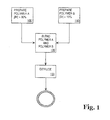
- Figure 1 shows a flowchart of one process of the invention.
- a first polymer such as the polyurethane described in the above example as polymer A (i.e., a polyurethane of diisocyanate, a polyol, and a chain extender having a bromine concentration greater than 30 percent of the weight of the polymer) is prepared according to known techniques.
- a second polymer such as the PELLETHANETM polymers described in the above example as polymer B having a bromine concentration less than about 10 percent is also prepared.
- step 120 such as for example, in a thermal extrusion apparatus, and thermally extruded in step 130 into a single apparatus such as a medical implant including, but not limited to, a catheter tubing or other implantable device that may be detected by X-ray.
- a medical implant including, but not limited to, a catheter tubing or other implantable device that may be detected by X-ray.
- FIG. 2 shows a schematic of a co-extrusion process to form a medical implant according to a second embodiment of the invention.
- a first polymer such as the polymer A described in Example 1
- step 200 is extruded along with a similar extrusion of the second polymer such as the polymer B described in Example 2, (step 210) in a conventional co-extrusion process (step 220).
- step 220 a conventional co-extrusion process
- the resulting medical implant is a layered structure, such as the layered tubing shown in Figure 2 . It is to be appreciated that the location of polymer A as the outer layer is optional and the desired co-extrusion process may reverse the layers.
- the polyurethane can be blended with other medical grade polymers such as polyether amide, polyether ester, and non-urethane-based thermoplastic elastomers.
Landscapes
- Health & Medical Sciences (AREA)
- Chemical & Material Sciences (AREA)
- Chemical Kinetics & Catalysis (AREA)
- Medicinal Chemistry (AREA)
- Epidemiology (AREA)
- Life Sciences & Earth Sciences (AREA)
- Animal Behavior & Ethology (AREA)
- General Health & Medical Sciences (AREA)
- Public Health (AREA)
- Veterinary Medicine (AREA)
- Organic Chemistry (AREA)
- Polymers & Plastics (AREA)
- Transplantation (AREA)
- Oral & Maxillofacial Surgery (AREA)
- Dermatology (AREA)
- Heart & Thoracic Surgery (AREA)
- Surgery (AREA)
- Vascular Medicine (AREA)
- Materials For Medical Uses (AREA)
- Polyurethanes Or Polyureas (AREA)
- Media Introduction/Drainage Providing Device (AREA)
Applications Claiming Priority (2)
| Application Number | Priority Date | Filing Date | Title |
|---|---|---|---|
| US22444498A | 1998-12-31 | 1998-12-31 | |
| US224444 | 1998-12-31 |
Publications (1)
| Publication Number | Publication Date |
|---|---|
| EP1016423A1 true EP1016423A1 (fr) | 2000-07-05 |
Family
ID=22840715
Family Applications (1)
| Application Number | Title | Priority Date | Filing Date |
|---|---|---|---|
| EP99310490A Withdrawn EP1016423A1 (fr) | 1998-12-31 | 1999-12-23 | Mélange polymère radio-opaque |
Country Status (11)
| Country | Link |
|---|---|
| EP (1) | EP1016423A1 (fr) |
| JP (1) | JP2000210378A (fr) |
| KR (1) | KR20000057122A (fr) |
| CN (1) | CN1258484A (fr) |
| AU (1) | AU6556899A (fr) |
| BR (1) | BR9906034A (fr) |
| CA (1) | CA2292189A1 (fr) |
| CO (1) | CO5111021A1 (fr) |
| SG (1) | SG91849A1 (fr) |
| TW (1) | TW589171B (fr) |
| ZA (1) | ZA997872B (fr) |
Cited By (2)
| Publication number | Priority date | Publication date | Assignee | Title |
|---|---|---|---|---|
| WO2009143198A3 (fr) * | 2008-05-23 | 2010-01-07 | Lubrizol Advanced Materials, Inc. | Composites tpu renforcés par des fibres |
| US8470294B2 (en) | 2000-11-16 | 2013-06-25 | Microspherix Llc | Flexible and/or elastic brachytherapy seed or strand |
Families Citing this family (1)
| Publication number | Priority date | Publication date | Assignee | Title |
|---|---|---|---|---|
| CN115093553B (zh) * | 2022-06-17 | 2023-12-19 | 万华化学(宁波)容威聚氨酯有限公司 | 四溴双酚a聚醚酯多元醇及制备方法、聚氨酯硬泡及制备方法 |
Citations (6)
| Publication number | Priority date | Publication date | Assignee | Title |
|---|---|---|---|---|
| US4722344A (en) * | 1986-05-23 | 1988-02-02 | Critikon, Inc. | Radiopaque polyurethanes and catheters formed therefrom |
| EP0452123A1 (fr) * | 1990-04-11 | 1991-10-16 | Becton, Dickinson and Company | Tubes médicaux radio-opaques et optiquement transparents |
| US5177170A (en) * | 1992-07-02 | 1993-01-05 | Miles Inc. | Radiopaque polyurethanes |
| EP0523928A2 (fr) * | 1991-07-12 | 1993-01-20 | Critikon, Inc. | Tube flexible de polyuréthane radio-opaque et résistant au tortillement et cathéters préparés à partir de ceci |
| US5346981A (en) * | 1993-01-13 | 1994-09-13 | Miles Inc. | Radiopaque polyurethanes |
| JPH0857034A (ja) * | 1994-08-25 | 1996-03-05 | Terumo Corp | X線造影性医療用成型品 |
-
1999
- 1999-12-06 CA CA002292189A patent/CA2292189A1/fr not_active Abandoned
- 1999-12-08 SG SG9906183A patent/SG91849A1/en unknown
- 1999-12-22 CO CO99080090A patent/CO5111021A1/es unknown
- 1999-12-23 ZA ZA9907872A patent/ZA997872B/xx unknown
- 1999-12-23 EP EP99310490A patent/EP1016423A1/fr not_active Withdrawn
- 1999-12-27 JP JP11371167A patent/JP2000210378A/ja active Pending
- 1999-12-30 CN CN99127519A patent/CN1258484A/zh active Pending
- 1999-12-30 AU AU65568/99A patent/AU6556899A/en not_active Abandoned
- 1999-12-30 TW TW088123265A patent/TW589171B/zh not_active IP Right Cessation
- 1999-12-30 KR KR1019990065910A patent/KR20000057122A/ko not_active Withdrawn
- 1999-12-31 BR BR9906034-5A patent/BR9906034A/pt not_active IP Right Cessation
Patent Citations (6)
| Publication number | Priority date | Publication date | Assignee | Title |
|---|---|---|---|---|
| US4722344A (en) * | 1986-05-23 | 1988-02-02 | Critikon, Inc. | Radiopaque polyurethanes and catheters formed therefrom |
| EP0452123A1 (fr) * | 1990-04-11 | 1991-10-16 | Becton, Dickinson and Company | Tubes médicaux radio-opaques et optiquement transparents |
| EP0523928A2 (fr) * | 1991-07-12 | 1993-01-20 | Critikon, Inc. | Tube flexible de polyuréthane radio-opaque et résistant au tortillement et cathéters préparés à partir de ceci |
| US5177170A (en) * | 1992-07-02 | 1993-01-05 | Miles Inc. | Radiopaque polyurethanes |
| US5346981A (en) * | 1993-01-13 | 1994-09-13 | Miles Inc. | Radiopaque polyurethanes |
| JPH0857034A (ja) * | 1994-08-25 | 1996-03-05 | Terumo Corp | X線造影性医療用成型品 |
Non-Patent Citations (1)
| Title |
|---|
| DATABASE WPI Section Ch Week 199619, Derwent World Patents Index; Class A96, AN 1996-182600, XP002135277 * |
Cited By (8)
| Publication number | Priority date | Publication date | Assignee | Title |
|---|---|---|---|---|
| US8470294B2 (en) | 2000-11-16 | 2013-06-25 | Microspherix Llc | Flexible and/or elastic brachytherapy seed or strand |
| US8821835B2 (en) | 2000-11-16 | 2014-09-02 | Microspherix Llc | Flexible and/or elastic brachytherapy seed or strand |
| US9636402B2 (en) | 2000-11-16 | 2017-05-02 | Microspherix Llc | Flexible and/or elastic brachytherapy seed or strand |
| US9636401B2 (en) | 2000-11-16 | 2017-05-02 | Microspherix Llc | Flexible and/or elastic brachytherapy seed or strand |
| US10493181B2 (en) | 2000-11-16 | 2019-12-03 | Microspherix Llc | Flexible and/or elastic brachytherapy seed or strand |
| US10994058B2 (en) | 2000-11-16 | 2021-05-04 | Microspherix Llc | Method for administering a flexible hormone rod |
| WO2009143198A3 (fr) * | 2008-05-23 | 2010-01-07 | Lubrizol Advanced Materials, Inc. | Composites tpu renforcés par des fibres |
| US9068076B2 (en) | 2008-05-23 | 2015-06-30 | Lubrizol Advanced Materials, Inc. | Fiber reinforced TPU composites |
Also Published As
| Publication number | Publication date |
|---|---|
| KR20000057122A (ko) | 2000-09-15 |
| CO5111021A1 (es) | 2001-12-26 |
| SG91849A1 (en) | 2002-10-15 |
| CA2292189A1 (fr) | 2000-06-30 |
| ZA997872B (en) | 2001-06-25 |
| TW589171B (en) | 2004-06-01 |
| BR9906034A (pt) | 2000-08-15 |
| JP2000210378A (ja) | 2000-08-02 |
| CN1258484A (zh) | 2000-07-05 |
| AU6556899A (en) | 2000-07-06 |
Similar Documents
| Publication | Publication Date | Title |
|---|---|---|
| US6200338B1 (en) | Enhanced radiopacity of peripheral and central catheter tubing | |
| US5453099A (en) | Catheter tubing of controlled in vivo softening | |
| AU631949B2 (en) | Catheter tubing of controlled in vivo softening | |
| US5226899A (en) | Catheter tubing of controlled in vivo softening | |
| US5061254A (en) | Thermoplastic elastomeric hydrophilic polyetherurethane expandable catheter | |
| EP0452123B1 (fr) | Tubes médicaux radio-opaques et optiquement transparents | |
| JPH0796026B2 (ja) | 疎水性表面を備えた膨張式カテーテル | |
| CA2039393C (fr) | Copolymeres de polyurethane-uree transformables a chaud; methode de preparation | |
| US5177170A (en) | Radiopaque polyurethanes | |
| US6623823B1 (en) | Radiopaque polymer coating | |
| KR102569711B1 (ko) | 맞춤화 계수 응답을 이용하는 카테터 튜브 | |
| EP0523928A2 (fr) | Tube flexible de polyuréthane radio-opaque et résistant au tortillement et cathéters préparés à partir de ceci | |
| AU6556899A (en) | Radiopaque polymer blend | |
| MXPA99011704A (es) | Mezcla de polimero radiopaco | |
| JP2809337B2 (ja) | インビボにおける軟化を調節したカテーテルチューブ | |
| MXPA99011708A (en) | Increased radiopacity of peripheral cateter tube and cent | |
| MXPA99011707A (en) | Polymer radio coating | |
| IE902199A1 (en) | Thermoplastic elastomer hydrophilic polyetherurethane¹expandable catheter | |
| IE902200A1 (en) | Thermoplastic elastomeric hydrophilic polyetherurethane¹expandable catheter |
Legal Events
| Date | Code | Title | Description |
|---|---|---|---|
| PUAI | Public reference made under article 153(3) epc to a published international application that has entered the european phase |
Free format text: ORIGINAL CODE: 0009012 |
|
| AK | Designated contracting states |
Kind code of ref document: A1 Designated state(s): AT BE CH CY DE DK ES FI FR GB GR IE IT LI LU MC NL PT SE |
|
| AX | Request for extension of the european patent |
Free format text: AL;LT;LV;MK;RO;SI |
|
| 17P | Request for examination filed |
Effective date: 20001212 |
|
| AKX | Designation fees paid |
Free format text: AT BE CH CY DE DK ES FI FR GB GR IE IT LI LU MC NL PT SE |
|
| 17Q | First examination report despatched |
Effective date: 20030404 |
|
| STAA | Information on the status of an ep patent application or granted ep patent |
Free format text: STATUS: THE APPLICATION IS DEEMED TO BE WITHDRAWN |
|
| 18D | Application deemed to be withdrawn |
Effective date: 20031015 |