EP1028721B1 - N,n'-bis (sulfonyl) hydrazine die als antineoplastische mittel nützlich sind - Google Patents
N,n'-bis (sulfonyl) hydrazine die als antineoplastische mittel nützlich sind Download PDFInfo
- Publication number
- EP1028721B1 EP1028721B1 EP98953830A EP98953830A EP1028721B1 EP 1028721 B1 EP1028721 B1 EP 1028721B1 EP 98953830 A EP98953830 A EP 98953830A EP 98953830 A EP98953830 A EP 98953830A EP 1028721 B1 EP1028721 B1 EP 1028721B1
- Authority
- EP
- European Patent Office
- Prior art keywords
- compound
- group
- nitrobenzyl
- carbon atoms
- substituted
- Prior art date
- Legal status (The legal status is an assumption and is not a legal conclusion. Google has not performed a legal analysis and makes no representation as to the accuracy of the status listed.)
- Expired - Lifetime
Links
- 0 CS(N(C*)N(C(OCOP(O)(O)=O)=O)S(C)(=O)=O)(=O)=O Chemical compound CS(N(C*)N(C(OCOP(O)(O)=O)=O)S(C)(=O)=O)(=O)=O 0.000 description 3
Images


Classifications
-
- A—HUMAN NECESSITIES
- A61—MEDICAL OR VETERINARY SCIENCE; HYGIENE
- A61K—PREPARATIONS FOR MEDICAL, DENTAL OR TOILETRY PURPOSES
- A61K31/00—Medicinal preparations containing organic active ingredients
- A61K31/13—Amines
- A61K31/15—Oximes (>C=N—O—); Hydrazines (>N—N<); Hydrazones (>N—N=) ; Imines (C—N=C)
-
- C—CHEMISTRY; METALLURGY
- C07—ORGANIC CHEMISTRY
- C07F—ACYCLIC, CARBOCYCLIC OR HETEROCYCLIC COMPOUNDS CONTAINING ELEMENTS OTHER THAN CARBON, HYDROGEN, HALOGEN, OXYGEN, NITROGEN, SULFUR, SELENIUM OR TELLURIUM
- C07F9/00—Compounds containing elements of Groups 5 or 15 of the Periodic Table
- C07F9/02—Phosphorus compounds
- C07F9/06—Phosphorus compounds without P—C bonds
- C07F9/08—Esters of oxyacids of phosphorus
- C07F9/09—Esters of phosphoric acids
- C07F9/12—Esters of phosphoric acids with hydroxyaryl compounds
-
- A—HUMAN NECESSITIES
- A61—MEDICAL OR VETERINARY SCIENCE; HYGIENE
- A61P—SPECIFIC THERAPEUTIC ACTIVITY OF CHEMICAL COMPOUNDS OR MEDICINAL PREPARATIONS
- A61P35/00—Antineoplastic agents
-
- A—HUMAN NECESSITIES
- A61—MEDICAL OR VETERINARY SCIENCE; HYGIENE
- A61P—SPECIFIC THERAPEUTIC ACTIVITY OF CHEMICAL COMPOUNDS OR MEDICINAL PREPARATIONS
- A61P35/00—Antineoplastic agents
- A61P35/02—Antineoplastic agents specific for leukemia
-
- C—CHEMISTRY; METALLURGY
- C07—ORGANIC CHEMISTRY
- C07C—ACYCLIC OR CARBOCYCLIC COMPOUNDS
- C07C311/00—Amides of sulfonic acids, i.e. compounds having singly-bound oxygen atoms of sulfo groups replaced by nitrogen atoms, not being part of nitro or nitroso groups
- C07C311/50—Compounds containing any of the groups, X being a hetero atom, Y being any atom
- C07C311/52—Y being a hetero atom
- C07C311/54—Y being a hetero atom either X or Y, but not both, being nitrogen atoms, e.g. N-sulfonylurea
- C07C311/57—Y being a hetero atom either X or Y, but not both, being nitrogen atoms, e.g. N-sulfonylurea having sulfur atoms of the sulfonylurea groups bound to carbon atoms of six-membered aromatic rings
- C07C311/61—Y being a hetero atom either X or Y, but not both, being nitrogen atoms, e.g. N-sulfonylurea having sulfur atoms of the sulfonylurea groups bound to carbon atoms of six-membered aromatic rings having nitrogen atoms of the sulfonylurea groups further bound to another hetero atom
-
- C—CHEMISTRY; METALLURGY
- C07—ORGANIC CHEMISTRY
- C07F—ACYCLIC, CARBOCYCLIC OR HETEROCYCLIC COMPOUNDS CONTAINING ELEMENTS OTHER THAN CARBON, HYDROGEN, HALOGEN, OXYGEN, NITROGEN, SULFUR, SELENIUM OR TELLURIUM
- C07F9/00—Compounds containing elements of Groups 5 or 15 of the Periodic Table
- C07F9/02—Phosphorus compounds
- C07F9/06—Phosphorus compounds without P—C bonds
- C07F9/08—Esters of oxyacids of phosphorus
- C07F9/09—Esters of phosphoric acids
- C07F9/091—Esters of phosphoric acids with hydroxyalkyl compounds with further substituents on alkyl
Definitions
- the invention relates to N,N '-bis(sulfonyl)hydrazines, and more particularly to alkoxy- and aryloxycarbonyl derivatives of N,N' -bis(sulfonyl)hydrazines that have antineoplastic activity.
- Solid tumors have been difficult to treat by chemotherapeutic and radiotherapeutic approaches.
- Inefficient vascularization of the solid tumor during its development results in hypoxic (i.e., oxygen deficient) areas within the tumor mass (Moulder, J.L. and Rockwell, S., Cancer Met. Rev. 5 : 313-341, 1987; Sartorelli, A.C., Cancer Res. 48 : 775-778 (1988)).
- This inefficient vascularization gives rise to unique problems in the treatment of tumors.
- inefficient vascularization of solid tumors results in cells that are starved of oxygen and nutrients, and are either noncycling or slowly progressing through the cell cycle. Thus, these cells are relatively resistant to cell cycle-specific chemotherapy and are more difficult to supply with adequate drug concentrations.
- oxygen deficiency of these cells further renders them resistant to oxygen-activated agents such as bleomycin and streptonigrin which require the formation of O 2 -derived species in order to be efficacious, and to ionizing radiation whose toxicity is oxygen-concentration dependent.
- oxygen-activated agents such as bleomycin and streptonigrin which require the formation of O 2 -derived species in order to be efficacious, and to ionizing radiation whose toxicity is oxygen-concentration dependent.
- GSH glutathione
- GST glutathione S-transferase
- Many neoplastic cell lines which have not been subjected to drug selection pressures also have intrinsically high levels of GSH, and relatively high levels of GST activity have been found in a variety of human tumors. It is thought that the protective effects are due to spontaneous and enzyme-catalyzed interactions between the sulfhydryl group of the glutathione molecule and the chemotherapeutic agent. Accordingly, in addition to hypoxia, the resistance of various cell lines and human tumors to a variety of chemotherapeutic agents has been attributed to their high non-protein thiol and GST contents.
- Radiotherapy treatments have also been largely unsuccessful in the treatment of solid tumors.
- Hypoxic cells in particular have proven to be resistant to ionizing radiation since the sensitivity to ionizing radiation is dependent upon the concentration of oxygen.
- nitro-containing synthetic hypoxia-selective agents include analogs of nitroimidazoles (Jenkins, T.C., The Chemistry of Antitumor Agents, Wilman, ed., pp. 342-369, Blackie, Glasgow (1990)), nitroacridines (Wilson, W.R., Denny, W.A., Twigden, S.J., Baguely, B.C. and Probert, J.C., Brit. J.
- 1,2-Bis(sulfonyl)-1-methyl- and 1-(2-chloroethyl)hydrazine compounds shown in formula 1 have been identified that possess antineoplastic activity (Shyam, K., Hrubiec, R.T., Furubayashi, R., Cosby, L.A. and Sartorelli, A.C., J. Med. Chem. 30 : 2157-2161 1987); Shyam, K., Penketh, P.G., Divo, A.A., Loomis, R.H., Patton, C.L. and Sartorelli, A.C., J. Med. Chem. 33 : 2259-2264 (1990)).
- the most active compound of this class is 1,2-bis(methylsulfonyl)-1-(2-chloroethyl)hydrazine (compound 2) and is described in U.S. Patent No. 4,892,887 to Sartorelli et al.:
- Prodrugs of compound 2 have been synthesized as compounds 3 and 4 (Shyam, K., Penketh, P.G., Loomis, R.H., Rose, W.C. and Sartorelli, A.C., J. Med. Chem. 39 : 796-801 (1996); Shyam, K., Penketh, P.G., Divo, A.A., Loomis, R.H., Rose, W.C. and Sartorelli, A.C., J. Med. Chem. 36 : 3496-3502 (1993)) and are disclosed in U.S. Patent Nos. 5,256,820 and 5,637,619:
- Both compounds 3 and 4 have broad-spectrum antitumor activity and arc-considerably less toxic to host animals than compound 2.
- compound 3 undergoes spontaneous decomposition in aqueous media similar to that found with compound 2.
- Compound 4 is more resistant to spontaneous decomposition in aqueous media, but is prone to nonspecific thiol, protease, and plasma catalyzed activation, a major disadvantage to the therapeutic usefulness of this compound.
- N,N' -bis(sulfonyl)hydrazines and related chemotherapeutic compounds are disclosed in U.S. Patent Nos. 5,281,715; 5,214,068; 5,101,072; 4,962,114; 4,849,563; and 4,684,747.
- the present invention relates to a compound of the formula wherein R 1 is selected from the group consisting of lower alkyl groups having 1-6 carbon atoms, substituted or unsubstituted aryl groups, and unsaturated alkyl groups having 1-6 carbon atoms; R 2 is selected from the group consisting of lower alkyl groups having 1-6 carbon atoms, substituted or unsubstituted aryl groups, and unsaturated alkyl groups having 1-6 carbon atoms; R 3 is a substituted or unsubstituted lower alkyl group having 1-6 carbons; and R 4 is selected from the group consisting of substituted or unsubstituted lower alkyl groups having 1-6 carbon atoms, substituted or unsubstituted aryl groups, and unsaturated alkyl groups having 1-6 carbon atoms.
- the present invention relates to a pharmaceutical composition for treating tumor cells, comprising an antineoplastic agent in a pharmaceutically acceptable carrier, the antineoplastic agent having the formula wherein R 1 is selected from the group consisting of lower alkyl groups having 1-6 carbon atoms, substituted or unsubstituted aryl groups, and unsaturated alkyl groups having 1-6 carbon atoms; R 2 is selected from the group consisting of lower alkyl groups having 1-6 carbon atoms, substituted or unsubstituted aryl groups, and unsaturated alkyl groups having 1-6 carbon atoms; R 3 is a substituted or unsubstituted lower alkyl group having 1-6 carbons; and R 4 is selected from a substituted or unsubstituted lower alkyl group having 1-6 carbon atoms, a substituted or unsubstituted aryl group, and an unsaturated alkyl group.
- R 1 is selected from the group consisting of lower alkyl groups having 1-6 carbon atoms,
- the present invention relates to a method of inhibiting the growth of L1210 leukemia or EMT6 mammary carcinoma in host organisms, comprising the step of administering to the host organism a growth-inhibiting effective amount of an antineoplastic agent in a carrier, the antineoplastic agent having the formula wherein R is selected from methyl, 2-chloroethyl, vinyl, phenyl, p-tolyl, p-chlorophenyl, p-methoxyphenyl, p-nitrobenzyl, benzyl, 4,5-dimethoxy-2-nitrobenzyl, 1-(4-nitrophenyl)ethyl, and a substituent of the formula or a pharmaceutically acceptable salt thereof.
- a solution is provided to the problem of efficiently and effectively treating neoplastic cells having resistance to conventional chemotherapeutic agents. More specifically, elevated thiol and/or GST levels or areas of hypoxia in solid tumors provide sites of vulnerability which can be preferentially targeted using the agents of the present invention.
- active antineoplastic agents can be generated from parent molecules that are effective against neoplastic cells having high levels of non-protein thiols or GSH/GST, or are hypoxic.
- Toxicity to tumor cells displaying these characteristics has been found to be significantly enhanced by including an alkoxy- or aryloxycarbonyl group (-COOR) in N,N' -bis(sulfonyl)hydrazines to give a carbamate ester:
- -COOR alkoxy- or aryloxycarbonyl group
- R 1 and R 2 are each independently lower alkyl groups having 1-6 carbon atoms, a substituted or unsubstituted aryl group, or an unsaturated alkyl group.
- R 1 and R 2 are most preferably methyl groups.
- R 3 is a substituted or unsubstituted lower alkyl group having 1-6 carbon atoms.
- R 3 is a methyl group (-CH 3 ) or a 2-haloethyl group (-CH 2 -CH 2 -X) where X is a halogen atom (e.g., 2-chloroethyl).
- R 4 is preferably a substituted or unsubstituted lower alkyl group having 1-6 carbon atoms, a substituted or unsubstituted aryl group, or an unsaturated alkyl group.
- substituents for R 4 include methyl, ethyl, propyl, butyl, haloalkyl (e.g., 2-chloroethyl, 2-bromoethyl), vinyl, phenyl, p-tolyl, halophenyl (e.g., p-chlorophenyl), alkoxyphenyl (e.g., p-methoxyphenyl, p-ethoxyphenyl), nitrophenyl, benzyl, nitrobenzyl, 4,5-dimethoxy-2-nitrobenzyl, halonitrobenzyl (e.g., 4-halo-2-nitrobenzyl, 5-halo-2-nitrobenzyl), 3-methoxy-4-nitrobenzyl,
- the N,N'-bis(sulfonyl)hydrazines of the present invention are also more stable in aqueous media than equivalent compounds containing acyl linkages.
- the initial rates of hydrolysis of 2-acetyl-1,2-bis(methylsulfonyl)-1-methylhydrazine (an acyl derivative shown in structural formula 5) and 1,2-bis(methylsulfonyl)-2-methoxycarbonyl- 1-methylhydrazine (a carbamate compound shown in structural formula 6) were 0.3% and 0.007% per minute, respectively, at pH 7.4 and 37°C.
- 2-alkoxycarbonyl-1,2-bis(methylsulfonyl)-1 -alkylhydrazines are stable in aqueous media at near-neutral pH values and in serum and can preferentially target tumor cells with elevated GSH and/or GST levels.
- these compounds have significant advantages over their acyl counterparts, which are more readily activated by other mechanisms.
- chloroethylating agents are more cytotoxic than methylating agents and are preferred for cancer chemotherapy.
- the preferred compounds of the invention are 2-alkoxycarbonyl- and 2-aryloxycarbonyl-1,2-bis(alkylsulfonyl)-1-(2-chloroethyl)hydrazines.
- Particularly preferred 2-alkoxycarbonyl- and 2-aryloxycarbonyl- 1,2-bis(alkylsulfonyl)-1-(2-chloroethyl)hydrazines include the following compounds based on compound 10: where R is a substituted or unsubstituted alkyl group, a substituted or unsubstituted aryl group, or an unsaturated alkyl group.
- Preferred substituents for R are selected from methyl, ethyl, propyl, butyl, haloalkyl (e.g., 2-chloroethyl, 2-bromoethyl), vinyl, phenyl, p-tolyl, halophenyl (e.g., o-, m-, or p-chlorophenyl), alkoxyphenyl (e.g., o-, m-, or p-methoxyphenyl, o-, m-, or p-ethoxyphenyl), nitrophenyl, benzyl, nitrobenzyl (e.g., 2-nitrobenzyl and 4-nitrobenzyl), 4,5-dimethoxy-2-nitrobenzyl, halonitrobenzyl (e.g., 4-halo-2-nitrobenzyl, 5-halo-2-nitrobenzyl), 3-methoxy-4-nitrobenzyl, 5-methyl-2-nitrobenzyl, 1-
- substituents for R are p-nitrobenzyl, 4,5-dimethoxy-2-nitrobenzyl, and 1-(4-nitrophenyl)ethyl.
- Such derivatives of the compound of the present invention are particularly effective in treating cells in hypoxic regions of the tumor mass.
- These particular compounds have the potential to be activated under hypoxic conditions by a reductive mechanism whereby the lability of the carbamate moiety can be induced by the enzymatic conversion of the electron-withdrawing nitro group to the electron-releasing amino group.
- the compounds of the invention have been found to be alkylating agents having antineoplastic activity in mice bearing the L1210 leukemia and to EMT6 mammary carcinoma cells in culture. These compounds display pronounced antitumor activity.
- the compounds of the invention are preferably administered internally, e.g., intravenously, in the form of conventional pharmaceutical preparations, for example in conventional enteral or parenteral pharmaceutically acceptable excipients containing organic and/or inorganic inert carriers, such as water, gelatin, lactose, starch, magnesium stearate, talc, plant oils, gums, alcohol, Vaseline, or the like.
- the pharmaceutical preparations can be in conventional solid forms, for example, tablets, dragees, suppositories, capsules, or the like, or conventional liquid forms, such as suspensions, emulsions, or the like.
- compositions can be sterilized and/or contain conventional pharmaceutical adjuvants, such as preservatives, stabilizing agents, wetting agents, emulsifying agents, buffers, or salts used for the adjustment of osmotic pressure.
- pharmaceutical adjuvants such as preservatives, stabilizing agents, wetting agents, emulsifying agents, buffers, or salts used for the adjustment of osmotic pressure.
- the pharmaceutical preparations may also contain other therapeutically active materials.
- the pharmaceutical preparation of the invention should include an amount of the compound of the invention effective for antineoplastic activity.
- the effective dosage will depend on the antineoplastic activity and toxicity of the particular compound employed and is thus within the ordinary skill of the art to determine for any particular host mammal or other host organism. Suitable dosages may be, for example, in the range of about 0.5-15 mg per kg for a human being.
- the claimed compounds may be used to control proliferation of neoplastic cells in vitro or they may be used as antineoplastic agents in nonhuman mammals.
- Example 1 1,2-Bis(methylsulfonyl)-2-(methoxycarbonyl)- -methylhydrazine (compound 6) was synthesized as follows: A mixture of 1,2-bis(methylsulfonyl)-1-methylhydrazine (Shyam et al., J. Med. Chem. 30 2157-2161 (1987)) (1.00 g, 0.005 mol), anhydrous sodium carbonate (1.9 g, 0.018 mol), methyl chloroformate (1.23 g, 0.013 mol) and acetone (30 ml) was heated under reflux for 18 hr. The reaction mixture was filtered and the filtrate evaporated to dryness in vacuo.
- Example 2 1,2-Bis(methylsulfonyl)-2-(ethoxycarbonyl)-1-methylhydrazine (compound 7) was prepared from 1,2-bis(methylsulfonyl)-1-methylhydrazine and ethyl chloroformate using a procedure similar to that described for compound 6.
- the recrystallization solvent was ether-petroleum ether. Yield was 51.0%, and the Mp was approximately 89-90°C.
- Example 3 1,2-Bis(methylsulfonyl)-2-(2-bromoethoxycarbonyl)-1-methylhydrazine (compound 8) was synthesized as follows: Triethylamine (1.45 g, 0.014 mol) was added in portions to a stirred solution of 1,2-bis(methylsulfonyl)-1-methylhydrazine (2.02 g, 0.01 mol) and 2-bromoethyl chloroformate (3.49 g, 0.019 mol) in acetone (100 ml) over a period of 15 min. The reaction mixture was stirred for an additional 18 hr, filtered, and the filtrate evaporated to dryness in vacuo.
- Example 4 1,2-Bis(methylsulfonyl)-2-[(4-methoxyphenoxy)carbonyl]-1-methylhydrazine (compound 9) was synthesized as follows: Triethylamine (0.269 g, 0.0029 mol) was added to a stirred solution of 1 ,2-bis(methylsulfonyl)- 1 -methylhydrazine (0.50 g, 0.0025 mol) and 4-methoxyphenyl chloroformate (0.63 g, 0.0033 mol) in acetone (30 ml) and the mixture stirred for 1 hr. The reaction mixture was filtered and the filtrate evaporated to dryness in vacuo.
- 2-Alkoxycarbonyl- and 2-aryloxycarbonyl-1,2-bis(methylsulfonyl)-1-(2-chloroethyl)hydrazines may be prepared generally by reacting the appropriate alkyl or aryl chloroformate with 1,2-bis(methylsulfonyl)-1-(2-chloroethyl)hydrazine in an appropriate solvent in the presence of a base such as triethylamine (TEA) or anhydrous sodium carbonate as shown in Scheme 2.
- a base such as triethylamine (TEA) or anhydrous sodium carbonate
- substituents for R include methyl (compound 10a), 2-chloroethyl (compound 10b), vinyl (compound 10c), phenyl (compound 10d), p-tolyl (compound 10e), p-chlorophenyl (compound 10f), p-methoxyphenyl (compound 10g), or p-nitrobenzyl (compound 10h). These compounds may be synthesized as follows:
- Example 5 1,2-Bis(methylsulfonyl)-1-(2-chloroethyl)-2-(methoxycarbonyl)hydrazine (compound 10a) may be synthesized as follows:. Triethylamine (1.45 g, 0.014 mol) was added to a stirred solution of compound 2 (Shyam et al., J. Med. Chem. 33 2259-2264 (1990))(1.25 g, 0.005 mol) and methyl chloroformate (2.46 g, 0.026 mol) in acetone (35 ml). The reaction mixture was stirred for an additional 16 hr, filtered, and the filtrate evaporated to dryness in vacuo.
- Triethylamine (1.45 g, 0.014 mol) was added to a stirred solution of compound 2 (Shyam et al., J. Med. Chem. 33 2259-2264 (1990))(1.25 g, 0.005 mol) and
- Example 6 1,2-Bis(methylsulfonyl)-1-(2-chloroethyl)-2-(2-chloroethoxycarbonyl)hydrazine (compound 10b) was synthesized as follows:. Triethylamine (1.20 g, 0.012 mol) was added to a stirred solution of compound 2 (1.25 g, 0.005 mol) and 2-chloroethyl chloroformate (1.00 g, 0.007 mol) in dry acetonitrile (10 ml). The reaction mixture was stirred for an additional 18 hr, filtered, and the filtrate evaporated to dryness in vacuo.
- Example 7 1,2-Bis(methylsulfonyl)-1-(2-chloroethyl)-2-(vinyloxycarbonyl)hydrazine (compound 10c) was prepared by reacting compound 2 with vinyl chloroformate using a procedure similar to that described for compound 10b. The product was recrystallized from ethanol, and the yield was about 39.4% by weight. The Mp of the product was approximately 85-86°C.
- Example 8 1,2-Bis(methylsulfonyl)-1-(2-chloroethyl)-2-(phenoxycarbonyl)hydrazine (compound 10d) was prepared by reacting compound 2 with phenyl chloroformate using a procedure similar to that described for compound 10b. However, the reaction time was decreased from 18 hr to 3 hr. The product was recrystallized from ethanol, and the yield was about 27.0% by weight. The Mp was approximately 75-76°C. 1 H NMR (CDCl 3 ,): ⁇ 7.1-7.6 (5H, m, aromatic H), 3.6-4.2 (4H, m, CH 2 CH 2 Cl), 3.5 and 3.2 (6H, 2s, 2 CH 3 SO 2 ).
- Example 9 1,2-Bis(methylsulfonyl)-1-(2-chloroethyl)-2-[(4-tolyloxy)carbonyl]hydrazine (compound 10e) was prepared by reacting compound 2 with 4-tolyl chloroformate using a procedure similar to that employed for compound 10d. The product was recrystallized from ethanol, and the yield was about 31.2% by weight. The Mp was approximately 85-86°C.
- Example 10 1,2-Bis(methylsulfonyl)-1-(-chloroethyl)-2-[(4-chlorophenoxy)carbonyl]hydrazine (compound 10f) was prepared by reacting compound 2 with 4-chlorophenyl chloroformate using a procedure similar to that employed for compound 10d. The product was recrystallized from ethanol, and the yield was about 54.4% by weight. The Mp was approximately 124-125°C. 1 H NMR (acetone-d 6 ): ⁇ 7.5 and 7.3 (4H, 2d, aromatic H), 3.9-4.2 (4H, m, CH 2 CH 2 Cl), 3.6 and 3.3 (6H, 2s, 2 CH 3 SO 2 ).
- Example 11 1,2-Bis(methylsulfonyl)-1-(2-chloroethyl)-2-[(4-methoxyphenoxy)carbonyl]hydrazine (compound 10g) was prepared by reacting compound 2 with 4-methoxyphenyl chloroformate using a procedure similar to the one employed for compound 10d. The product was recrystallized from ethanol, and the yield was about 30.0% by weight. The Mp of the product was approximately 119-121 °C.
- Example 12 1,2-Bis(methylsulfonyl)-1-(2-chloroethyl)-2-[(4-nitrobenzyloxy)carbonyl]hydrazine (compound 10h) was prepared by reacting compound 2 with 4-nitrobenzyl chloroformate using a procedure similar to that employed for compound 10b. The product was recrystallized from ethanol, and the yield was approximately 22.9% by weight. The Mp was approximately 132-133°C.
- Example 13 2-Benzyloxycarbonyl-1,2-bis(methylsulfonyl-1,2-(2-chloroethyl)hydrazine (compound 11) was prepared by reacting benzyl chloroformate with compound 2 using a procedure similar to that described for compound 10b. The compound was isolated as a thick oil in a yield of approximately 41.3% by weight.
- Example 14 1,2-Bis(methylsulfonyl)-1-(2-chloroethyl)-2-[(4,5-dimethoxy-2-nitrobenzyloxy)carbonyl]hydrazine (compound 12) was prepared by reacting 4,5-dimethoxy-2-nitrobenzyl chloroformate with compound 2 using a procedure similar to that described for compound 10b. The product was recrystallized from ethanol, and the Mp was about 154°C. Yield was about 17.6% by weight.
- Example 15 1,2-Bis(methylsulfonyl)-1-(2-chloroethyl)-2-[(2-nitrobenzyloxy)carbonyl]hydrazine (compound 13a) was prepared as follows: A solution of 2-nitrobenzyl alcohol (2.0 g, 0.013 mol) in dry dioxane (5 ml) was added to a stirred solution of phosgene in toluene (20% w/v, 20 ml) at -15°C. The mixture was then stirred at room temperature for 24 hr. The reaction mixture was evaporated to dryness in vacuo at ⁇ 40°C.
- Example 16 1,2-Bis(methylsulfonyl)-1-(2-chloroethyl)-2-[(4-chloro-2-nitrobenzyloxy)carbonyl]hydrazine (compound 13b) was prepared from 4-chloro-2-nitrobenzyl alcohol using a procedure similar to that described for compound 13a.
- the Mp was about 120-121°C, and the yield was approximately 40.0% by weight after recrystallization from ethanol.
- Example 17 1,2-Bis(methylsulfonyl)-1-(2-chloroethyl)-2-[(5-chloro-2-nitrobenzyloxy)carbonyl]hydrazine (compound 13c) was prepared from 5-chloro-2-nitrobenzyl alcohol using a procedure similar to that described for compound 13a.
- the Mp was approximately 100-102°C, and the yield was approximately 14.6% by weight after recrystallization from ethanol.
- Example 18 1,2-Bis(methylsulfonyl)-1-(2-chloroethyl)-2-[(3-methoxy-4-nitrobenzyloxy)carbonyl]hydrazine (compound 13d) was prepared from 3-methoxy-4-nitrobenzyl alcohol using a procedure similar to that described for compound 13a.
- the Mp was determined to be about 56-57°C, and the yield was about 29.4% by weight after recrystallization from ethanol.
- Example 19 1,2-Bis(methylsulfonyl)-1-(2-chloroethyl)-2-[(5-methyl-2-nitrobenzyloxy)carbonyl]hydrazine (compound 13e) was prepared from 5-methyl-2-nitrobenzyl alcohol using a procedure similar to that described for compound 13a. The Mp was found to be 112-113°C, and the yield was about 24.3% by weight after recrystallization from ethanol.
- Example 20 1,2-Bis(methylsulfonyl)-1-(2-chloroethyl)-2-[[1-(4-nitrophenyl)ethoxy]carbonyl]hydrazine (compound 14) was prepared as follows: 1-(4-Nitrophenyl)ethanol was prepared using a procedure analogous to that reported in the literature for the synthesis of 3-nitrobenzyl alcohol from 3-nitrobenzaldehyde (Furniss, B.S., Hannaford, A.J., Rogers, V., Smith, P.W.G., and Tatchell, A.R. Cognate preparation: m-nitrobenzyl alcohol.
- THF tetrahydrofuran
- O -Dibenzylphosphate-methyl carbamate (2.77 g, 4.74 mmol) was dissolved in ethyl acetate (60 ml). To this solution was added palladium on carbon (1.0 g, 10% palladium content, 0.95 mmol). The resulting mixture was subjected to hydrogenation at 30 psi pressure for 15 hr at room temperature. The reaction mixture was filtered through a pad of Celite with rinsing (ethyl acetate).
- the triethanolamine salt of the free acid acid of O -dibenzylphosphate-methyl carbamate was synthesized as follows: To an oily ethyl acetate solution (2 ml) of the free acid compound made in Example 22 (946 mg, 2.34 mmol) was added (at 0°C) 0.1 M triethanolamine in ethyl acetate (23.4 ml, 2.34 mmol). The reaction was stirred at 0°C for 1 hr and kept at -20°C overnight. The white precipitate that formed was collected by filtration and washed with cooled ethyl acetate. The sticky solids obtained were dried at high vacuum for 1 hr to provide 900 mg (70%) of the crude triethanolamine adduct (compound 16).
- the triethylamine salt of the free acid acid of O -dibenzylphosphate-methyl carbamate was synthesized as follows: To an ethyl acetate solution (14 ml) of the free acid compound made in Example 22 above (960 mg, 2.37 mmol) was added an ethyl acetate solution (10 ml) of triethylamine (0.33 ml, 2.37 mmol) at 0°C. The reaction was stirred at 0°C for 1 hr and kept at -20°C for 15 hr. The solvent was then removed and the oily residue was dried under high vacuum for 1 hr to provide 910 mg (76%) of the crude triethylamine adduct (compound 17).
- Table 3 shows the rates of activation of 2-alkoxycarbonyl- and 2-aryloxycarbonyl-1 ,2-bis(methylsulfonyl)- 1 -(2-chloroethyl)hydrazines (compounds 10a-h) under different conditions.
- the rates of activation of compounds 10a-h were measured in 1 mM phosphate buffer (pH 7.4, 37°C) alone, 1 mM phosphate buffer containing 5 mM GSH (pH 7.4, 37°C), and in 1 mM phosphate buffer containing 5 mM GSH and 17.5 U/ml of GST (pH 7.4, 37°C) (Table 3).
- the ascites cell form of leukemia L1210 was obtained from the Frederick Cancer Research Facility, Division of Cancer Treatment Tumor Repository of the National Cancer Institute, and was maintained by serial passage in tissue culture. Every 8 weeks, tumor cells were injected intraperitoneally into 5 donor CD 2 F 1 mice 8-10 weeks of age and were allowed to grow for 7 days. The peritoneal fluid was withdrawn, and the suspension was centrifuged for 5 min at 1600 x g. The supernatant was decanted, and 10 5 cells/ml were seeded into 10 ml of RPMI 1640 medium supplemented with 10% fetal bovine serum and 1% L-glutamine (200 mM) and once again maintained in culture.
- test compounds were administered over a wide range of dosage levels (12.5-60 mg/kg), beginning 24 hr after tumor implantation, and continued once daily for 6 consecutive days. Each drug was administered intraperitoneally as a solution in 100% dimethyl sulfoxide, in a volume not exceeding 25 ⁇ l.
- animals were distributed into groups of 5 mice of comparable weight and maintained throughout the course of the experiment on Purina Laboratory Chow pellets and water ad libitum. Control tumor-bearing mice given comparable volumes of vehicle were included in each experiment.
- mice were weighed during the course of the experiments, and the percentage change in body weight from onset to termination of therapy was used as an indication of drug toxicity. Determination of the sensitivity of neoplasms to these agents was based upon the prolongation of survival time afforded by the drug treatments.
- Compounds 10a to 10h and 16 displayed significant activity against the L1210 leukemia tumor.
- the aromatic compounds 10d-g were less toxic than the aliphatic analogs 10a-c, as evidenced by the major differences in the loss of host body weight produced by these two groups of compounds.
- all of the aliphatic analogs produced body weight losses of >10.0% at their optimum daily dosage levels.
- Interposition of a methylene (-CH 2 -) group between the aromatic ring and the carbamate nitrogen resulted in a slight lowering of antileukemic activity.
- Compound 10h produced a maximum %T/C of 222 at the optimum dosage level of 30 mg/kg per day for 6 consecutive days.
- compound 16 also showed significant antitumor activity.
- EMT6 mammary carcinoma The ability of compounds 10h, 11, 12, and 14 to exert preferential toxicity to hypoxic cells was evaluated using the EMT6 mammary carcinoma by methodology described previously (Rockwell, S., Keyes, S.R., and Sartorelli, A.C. Rad. Res. 116 : 100-113 (1988); Keyes, S.R., Rockwell, S., and Sartorelli, A.C. Cancer Res. 45 : 213-216 (1985)). Briefly, exponentially growing monolayers of EMT6 (or CHO-K1/dhfr clone) were exposed to a continuously flowing 95% N 2 /5% CO 2 humidified atmosphere for 2 h to produce radiobiologic hypoxia. Parallel flasks were maintained similarly in humidified 95% air/5% CO 2 . Without breaking the hypoxia, cells were exposed to various concentrations of the test agent for 1 hr. Cell survival was then measured by colony formation.
- CHO-K1/dhfr cells were used to examine the role of the reductive enzymes NADPH:cytochrome P 450 reductase and DT-diaphorase in the activation of compounds 10h and 12 in situ.
- Clones of CHO-K1/dhfr cells transfected with and overexpressing cDNAs for each of these enzymes were used for this purpose (Belcourt, M.F., Hodnick, W.F., Rockwell, S., and Sartorelli, A.C. Proc. Natl. Acad. Sci. USA 93 : 456-460 (1996); Belcourt, M.F., Hodnick, W.F., Rockwell, S., and Sartorelli, A.C. Biochem. Pharmacol. 51 : 1669-1678 (1996)).
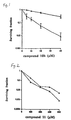
- Fig. 1 depicts the survival of EMT6 cells exposed to various concentrations of compound 10h for 1 hr under hypoxic or aerobic conditions in vitro. Points are the geometric means of two or more independent determinations of surviving fractions. The SEMs are shown where n ⁇ 3 and where the error is larger than the point size. Open triangles represent aerobic data points and filled triangles represent hypoxic data points. As shown in Fig. 1, at a concentration of 40 ⁇ M, a 1 hr exposure to compound 10h caused 2 logs of kill of hypoxic EMT6 cells, with relatively minor toxicity to corresponding aerobic cells.
- the unsubstituted benzyl derivative (compound 11) was evaluated against EMT6 cells under aerobic and hypoxic conditions as outlined above. As shown in Fig. 2, compound 11 was essentially equitoxic to EMT6 cells under both conditions of oxygenation. This finding suggests the nitro group is essential for preferential toxicity to hypoxic cells.
- cytotoxicity of compound 10h was evaluated in aerobic and hypoxic Chinese hamster ovary (CHO-K1/dhfr) cells transfected with and overexpressing cDNAs for NADPH:cytochrome P 450 reductase (27-fold more than parental cells, Fig. 3) or DT-diaphorase (133-fold more than parental cells, Fig. 4), two reductases with the potential to activate compound 10h.
- Figs. 3 and 4 points are means of duplicate determinations.
- Open triangles are parental-aerobic, filled triangles are parental-hypoxic, open circles are NADPH:cytochrome P 450 reductase-transfected-aerobic; filled circles are NADPH:cytochrome P 450 reductase-transfected-hypoxic; open squares are DT-diaphorase-transfected-aerobic; and filled squares are DT-diaphorase-transfected-hypoxic.
- CHO-K1/dhfr - cells were less sensitive to compound 10h than EMT6 cells, and hypoxic CHO-K1/dhfr - cells were more sensitive to compound 10h than their aerobic counterparts.
- FIG. 5 shows survival of EMT6 cells exposed to various concentrations of compound 12 for 1 hr under hypoxic or aerobic conditions in vitro. Points are geometric means of two or more independent determinations of surviving fractions. The SEMs are shown where n ⁇ 3 and where the error is larger than the point size. Open triangles are aerobic data points, and filled triangles are hypoxic data points.
- Figure 6 shows survivals of aerobic and hypoxic CHO-K1/dhfr cells, NADPH:cytochrome P 450 reductase cDNA transfected clone expressing 27-fold more NADPH:cytochrome P 450 reductase than parental cells. Points are means of duplicate determinations. Open triangles are parental-aerobic; filled triangles are parental-hypoxic; open circles are NADPH:cytochrome P 450 reductase-transfected-aerobic; filled circles are NADPH:cytochrome P 450 reductase-transfected-hypoxic.
- a 1 hr exposure to compound 12 caused greater than 3 logs of kill of hypoxic EMT6 cells, with relatively minor toxicity to corresponding aerobic cells.
- An evaluation of the cytotoxicity of this agent to aerobic and hypoxic CHO-K1/dhfr cells yielded results similar to those described for compound 10h.
- compound 12 was >3000-times more cytotoxic to hypoxic CHO-K1/dhfr cells transfected with and overexpressing cDNAs for NADPH-cytochrome P 450 reductase than to their aerobic counterparts.
- Fig. 7 To study the effect of replacing one of the benzylic hydrogens by a methyl group, compound 14 was evaluated for its ability to exert preferential toxicity to hypoxic EMT6 cells relative to aerobic cells (Fig. 7). Compound 14 appeared to be less toxic to aerobic EMT6 cells than compound 10h, while its hypoxic cell toxicity was essentially the same as that of compound 10h (compare Fig. 1 and Fig. 7). Points in Fig. 7 are-geometric means of two or more independent determinations. Open triangles are aerobic data points and filled triangles represent hypoxic data points.
Landscapes
- Chemical & Material Sciences (AREA)
- Organic Chemistry (AREA)
- Health & Medical Sciences (AREA)
- Life Sciences & Earth Sciences (AREA)
- General Health & Medical Sciences (AREA)
- Molecular Biology (AREA)
- Biochemistry (AREA)
- Veterinary Medicine (AREA)
- Medicinal Chemistry (AREA)
- Pharmacology & Pharmacy (AREA)
- Animal Behavior & Ethology (AREA)
- Public Health (AREA)
- Nuclear Medicine, Radiotherapy & Molecular Imaging (AREA)
- General Chemical & Material Sciences (AREA)
- Chemical Kinetics & Catalysis (AREA)
- Hematology (AREA)
- Oncology (AREA)
- Epidemiology (AREA)
- Pharmaceuticals Containing Other Organic And Inorganic Compounds (AREA)
- Organic Low-Molecular-Weight Compounds And Preparation Thereof (AREA)
- Acyclic And Carbocyclic Compounds In Medicinal Compositions (AREA)
Claims (11)
- Verbindung der Formeldadurch gekennzeichnet, dass
 R1 gewählt wird aus der Gruppe, bestehend aus Niederalkylgruppen mit 1-6 Kohlenstoffatomen, substituierten oder unsubstituierten Arylgruppen und ungesättigten Alkylgruppen mit 2-6 Kohlenstoffatomen;R2 gewählt wird aus der Gruppe, bestehend aus Niederalkylgruppen mit 1-6 Kohlenstoffatomen, substituierten oder unsubstituierten Arylgruppen und ungesättigten Alkylgruppen mit 2-6 Kohlenstoffatomen;R3 eine substituierte oder unsubstituierte Niederalkylgruppe mit 1-6 Kohlenstoffatomen ist; undR4 gewählt wird aus der Gruppe, bestehend aus substituierten oder unsubstituierten Niederalkylgruppen mit 1-6 Kohlenstoffatomen, substituierten oder unsubstituierten Arylgruppen und ungesättigten Alkylgruppen mit 2-6 Kohlenstoffatomen.
 - Verbindung nach Anspruch 1, dadurch gekennzeichnet, dass R1 und R2 individuell gewählt werden aus der Gruppe, bestehend aus Methyl, Ethyl, Propyl und Butyl.
- Verbindung nach Anspruch 1, dadurch gekennzeichnet, dass R3 gewählt wird aus der Gruppe, bestehend aus -CH3 und -CH2-CH2-X, wobei X ein Halogenatom ist.
- Verbindung nach Anspruch 1, dadurch gekennzeichnet, dass R4 gewählt wird aus der Gruppe, bestehend aus Methyl, Ethyl, Propyl, Butyl, Halogenalkyl, Vinyl, Phenyl, p-Tolyl, Halogenphenyl, Alkoxyphenyl, Nitrophenyl, Benzyl, Nitrobenzyl, 4,5-Dimethoxy-2-nitrobenzyl, Halogennitrobenzyl, 3-Methoxy-4-nitrobenzyl, 5-Methyl-2-nitrobenzyl, 1-(4-Nitrophenyl)ethyl, einem Substituent mit der Formeloder einem pharmazeutisch annehmbaren Salz davon, und einem Substituent mit der Formel
 oder einem pharmazeutisch annehmbaren Salz davon.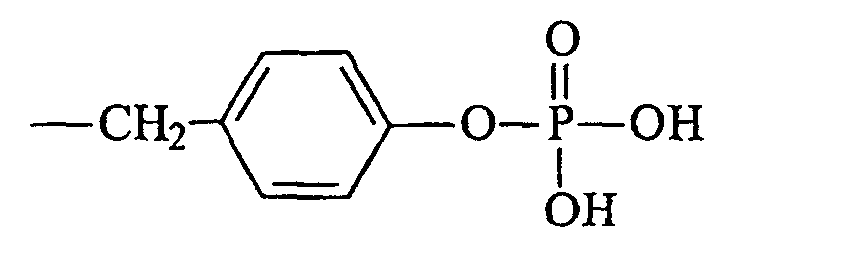
- Pharmazeutische Zusammensetzung zur Behandlung von Tumorzellen, gekennzeichnet durch ein antineoplastisches Mittel in einem pharmazeutisch annehmbaren Träger, wobei das antineoplastisches Mittel die Formelaufweist, worin
 R1 gewählt wird aus der Gruppe, bestehend aus Niederalkylgruppen mit 1-6 Kohlenstoffatomen, substituierten oder unsubstituierten Arylgruppen und ungesättigten Alkylgruppen mit 2-6 Kohlenstoffatomen;R2 gewählt wird aus der Gruppe, bestehend aus Niederalkylgruppen mit 1-6 Kohlenstoffatomen, substituierten oder unsubstituierten Arylgruppen und ungesättigten Alkylgruppen mit 2-6 Kohlenstoffatomen;R3 eine substituierte oder unsubstituierte Niederalkylgruppe mit 1-6 Kohlenstoffatomen ist; undR4 gewählt wird aus der Gruppe, bestehend aus substituierten oder unsubstituierten Niederalkylgruppen mit 1-6 Kohlenstoffatomen, einer substituierten oder unsubstituierten Arylgruppe und einer ungesättigten Alkylgruppe mit 2-6 Kohlenstoffatomen.
 - Die pharmazeutische Zusammensetzung nach Anspruch 5, dadurch gekennzeichnet, dass R1 und R2 individuell gewählt werden aus der Gruppe, bestehend aus Methyl, Ethyl, Propyl und Butyl.
- Die pharmazeutische Zusammensetzung nach Anspruch 5, dadurch gekennzeichnet, dass R3 gewählt wird aus der Gruppe, bestehend aus CH3 und -CH2-CH2-X, wobei X ein Halogenatom ist.
- Die pharmazeutische Zusammensetzung nach Anspruch 5, dadurch gekennzeichnet, dass R4 gewählt wird aus der Gruppe, bestehend aus Methyl, Ethyl, Propyl, Butyl, Halogenalkyl, Vinyl, Phenyl, p-Tolyl, Halogenphenyl, Alkoxyphenyl, Nitrophenyl, Benzyl, Nitrobenzyl, 4,5-Dimethoxy-2-nitrobenzyl, Halogennitrobenzyl, 3-Methoxy-4-nitrobenzyl, 5-Methyl-2-nitrobenzyl, 1-(4-Nitrophenyl)ethyl, einem Substituent mit der Formeloder einem pharmazeutisch annehmbaren Salz davon, und einem Substituent mit der Formel
 oder einem pharmazeutisch annehmbaren Salz davon.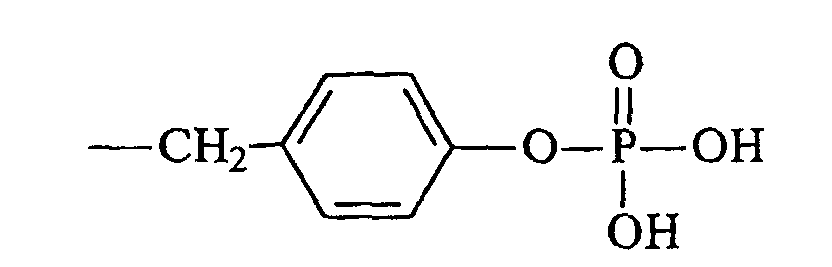
- Verwendung eines antineoplastischen Mittels mit der Formelworin R gewählt wird aus der Gruppe, bestehend aus Methyl, 2-Chlorethyl, Vinyl, Phenyl, p-Tolyl, Chlorphenyl, p-Methoxyphenyl, p-Nitrobenzyl, Benzyl, 4,5-Dimethoxy-2-nitrobenzyl, 1-(4-Nitrophenyl)ethyl und einem Substituent mit der Formel
 oder einem pharmazeutisch annehmbaren Salz davon, in einem Träger, für die Herstellung eines Medikaments zum Inhibieren des Wachstums von L1210-Leukemia oder EMT6-Brustkarzinom in Wirtsorganismen.
- Verbindung der Formelworin
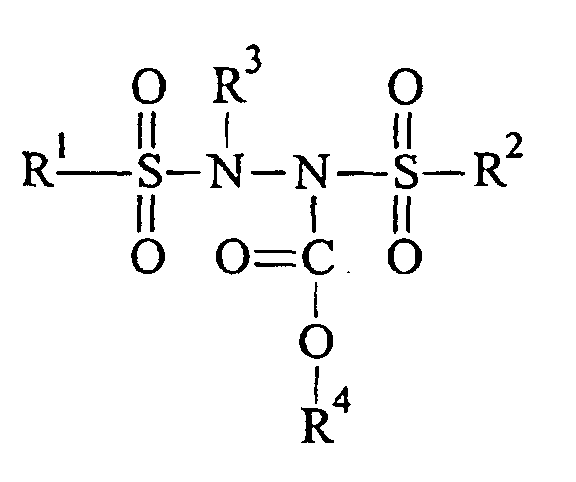 R1 und R2 jeweils Methyl sind;R3 2-Chlorethyl ist; undR4 gewählt wird aus der Gruppe, bestehend aus p-Nitrobenzyl, 4,5-Dimethoxy-2-nitrobenzyl, 1-(4-Nitrophenyl)ethyl, und Kombinationen hiervon.
 - Pharmazeutische Zusammensetzung zur Behandlung von Tumorzellen, umfassend ein antineoplastisches Mittel in einem pharmazeutisch annehmbaren Träger, wobei das antineoplastisches Mittel die Formelaufweist, worin
 R1 und R2 jeweils Methyl sind;R3 2-Chlorethyl ist; undR4 gewählt wird aus der Gruppe, bestehend aus p-Nitrobenzyl, 4,5-Dimethoxy-2-nitrobenzyl, 1-(4-Nitrophenyl)ethyl, und Kombinationen hiervon.
Applications Claiming Priority (3)
| Application Number | Priority Date | Filing Date | Title |
|---|---|---|---|
| US963182 | 1997-11-03 | ||
| US08/963,182 US6040338A (en) | 1997-11-03 | 1997-11-03 | N,n-bis(sulfonyl)hydrazines useful as antineoplastic agents |
| PCT/US1998/022266 WO1999022726A1 (en) | 1997-11-03 | 1998-10-21 | N,n'-bis(sulfonyl)hydrazines useful as antineoplastic agents |
Publications (3)
| Publication Number | Publication Date |
|---|---|
| EP1028721A1 EP1028721A1 (de) | 2000-08-23 |
| EP1028721A4 EP1028721A4 (de) | 2001-01-31 |
| EP1028721B1 true EP1028721B1 (de) | 2003-06-04 |
Family
ID=25506863
Family Applications (1)
| Application Number | Title | Priority Date | Filing Date |
|---|---|---|---|
| EP98953830A Expired - Lifetime EP1028721B1 (de) | 1997-11-03 | 1998-10-21 | N,n'-bis (sulfonyl) hydrazine die als antineoplastische mittel nützlich sind |
Country Status (12)
| Country | Link |
|---|---|
| US (1) | US6040338A (de) |
| EP (1) | EP1028721B1 (de) |
| JP (1) | JP4331889B2 (de) |
| KR (1) | KR100566688B1 (de) |
| CN (1) | CN1124846C (de) |
| AT (1) | ATE241976T1 (de) |
| AU (1) | AU735349B2 (de) |
| BR (1) | BR9813923A (de) |
| CA (1) | CA2308315C (de) |
| DE (1) | DE69815380T2 (de) |
| ES (1) | ES2200383T3 (de) |
| WO (1) | WO1999022726A1 (de) |
Families Citing this family (7)
| Publication number | Priority date | Publication date | Assignee | Title |
|---|---|---|---|---|
| US6715188B1 (en) * | 2002-09-24 | 2004-04-06 | 3M Innovative Properties Company | Hinged tab for slot and tab closure systems |
| WO2004098504A2 (en) * | 2003-04-30 | 2004-11-18 | Yale University | Antitumor 2-aminocarbonyl-1,2-bis(methylsulfonyl)-1-(2-chloroethyl)hydrazines and methods of treating tumors |
| US6855695B2 (en) * | 2003-06-13 | 2005-02-15 | Vion Pharmaceuticals, Inc. | Water-soluble SHPs as novel alkylating agents |
| WO2005094282A2 (en) * | 2004-03-26 | 2005-10-13 | Vion Pharmaceuticals, Inc. | Combination therapy comprising cloretazinetm |
| JP4814245B2 (ja) * | 2004-09-21 | 2011-11-16 | ヴァイオン ファーマシューティカルズ、インコーポレーテッド | 低酸素選択性抗腫瘍剤としてのスルホニルヒドラジンのリン酸含有プロドラッグ |
| EP2542696B1 (de) | 2010-03-01 | 2016-09-28 | Caris Life Sciences Switzerland Holdings GmbH | Theranostik-biomarker |
| JP2013526852A (ja) | 2010-04-06 | 2013-06-27 | カリス ライフ サイエンシズ ルクセンブルク ホールディングス | 疾患に対する循環バイオマーカー |
Family Cites Families (10)
| Publication number | Priority date | Publication date | Assignee | Title |
|---|---|---|---|---|
| US4684747A (en) * | 1984-12-20 | 1987-08-04 | Yale University | N,N'-bis(sulfonyl)hydrazines having antineoplastic activity |
| US4892887A (en) * | 1984-12-20 | 1990-01-09 | Yale University | N,N'-bis(sulfonyl)hydrazines having antineoplastic activity |
| US4962114A (en) * | 1986-01-21 | 1990-10-09 | Yale University | 1-alkyl-1-sulfonyl-2-alkoxycarbonylsulfenylhydrazines having antineoplastic activity |
| US4806531A (en) * | 1986-02-20 | 1989-02-21 | Yale University | 2,3-bis(aziridinyl)-1,4-naphthoquinone sulfonate derivatives having antineoplastic activity |
| JP2563176B2 (ja) * | 1986-08-05 | 1996-12-11 | 富士写真フイルム株式会社 | ハロゲン化銀カラ−写真感光材料 |
| US5101072A (en) * | 1989-09-06 | 1992-03-31 | Yale University | Sulfonylhydrazines and their use as antineoplastic agents and as antitrypanosomal agents |
| US5214068A (en) * | 1989-09-06 | 1993-05-25 | Yale University | Sulfonylhydrazines and their use as antineoplastic agents and as antitrypanosomal agents |
| US5256820A (en) * | 1991-11-08 | 1993-10-26 | Yale University | 1-alkyl-2-acyl-1,2-disulfonylhydrazines |
| US5281715A (en) * | 1992-05-13 | 1994-01-25 | Yale University | 2-formylpyridine thiosemicarbazone compounds |
| US5637619A (en) * | 1995-07-05 | 1997-06-10 | Yale University | Antitumor 2-aminocarbonyl-1, 2-bis(methylsulfonyl)-1-(substituted)hydrazines |
-
1997
- 1997-11-03 US US08/963,182 patent/US6040338A/en not_active Expired - Fee Related
-
1998
- 1998-10-21 EP EP98953830A patent/EP1028721B1/de not_active Expired - Lifetime
- 1998-10-21 JP JP2000518660A patent/JP4331889B2/ja not_active Expired - Fee Related
- 1998-10-21 BR BR9813923-1A patent/BR9813923A/pt not_active Application Discontinuation
- 1998-10-21 WO PCT/US1998/022266 patent/WO1999022726A1/en not_active Ceased
- 1998-10-21 AT AT98953830T patent/ATE241976T1/de not_active IP Right Cessation
- 1998-10-21 CA CA002308315A patent/CA2308315C/en not_active Expired - Fee Related
- 1998-10-21 CN CN98810755A patent/CN1124846C/zh not_active Expired - Fee Related
- 1998-10-21 DE DE69815380T patent/DE69815380T2/de not_active Expired - Lifetime
- 1998-10-21 KR KR1020007004771A patent/KR100566688B1/ko not_active Expired - Fee Related
- 1998-10-21 ES ES98953830T patent/ES2200383T3/es not_active Expired - Lifetime
- 1998-10-21 AU AU11103/99A patent/AU735349B2/en not_active Ceased
Also Published As
| Publication number | Publication date |
|---|---|
| CA2308315A1 (en) | 1999-05-14 |
| DE69815380T2 (de) | 2004-05-13 |
| CN1124846C (zh) | 2003-10-22 |
| BR9813923A (pt) | 2000-09-26 |
| US6040338A (en) | 2000-03-21 |
| ATE241976T1 (de) | 2003-06-15 |
| AU1110399A (en) | 1999-05-24 |
| EP1028721A1 (de) | 2000-08-23 |
| KR100566688B1 (ko) | 2006-04-03 |
| JP2001521893A (ja) | 2001-11-13 |
| WO1999022726A1 (en) | 1999-05-14 |
| AU735349B2 (en) | 2001-07-05 |
| CA2308315C (en) | 2009-01-06 |
| CN1278169A (zh) | 2000-12-27 |
| JP4331889B2 (ja) | 2009-09-16 |
| DE69815380D1 (de) | 2003-07-10 |
| EP1028721A4 (de) | 2001-01-31 |
| ES2200383T3 (es) | 2004-03-01 |
| KR20010031708A (ko) | 2001-04-16 |
| HK1032916A1 (en) | 2001-08-10 |
Similar Documents
| Publication | Publication Date | Title |
|---|---|---|
| US5190929A (en) | Cyclophosphamide analogs useful as anti-tumor agents | |
| US5472956A (en) | Phosphoramidates useful as antitumor agents | |
| EP0988285B1 (de) | Medikamentvorstufen der ribonukleotidreduktase-inhibitoren 3-ap und 3-amp | |
| EP1028721B1 (de) | N,n'-bis (sulfonyl) hydrazine die als antineoplastische mittel nützlich sind | |
| AU713128B2 (en) | Antitumor 2-aminocarbonyl-1,2-bis(methylsulfonyl)-1- (substituted)hydrazines | |
| US5101072A (en) | Sulfonylhydrazines and their use as antineoplastic agents and as antitrypanosomal agents | |
| US4908356A (en) | Aldophosphamide derivatives useful as antitumor agents | |
| EP0541322B1 (de) | 1-Alkyl-2-Acyl-1,2-Disulfonylhydrazine mit antineoplastischer Aktivität | |
| US4544501A (en) | Bis(2,2-dimethyl-1-aziridinyl)phosphinic amides for use in the treatment of tumors | |
| HK1032916B (en) | N,n'-bis(sulfonyl)hydrazines useful as antineoplastic agents | |
| WO1996000061A1 (en) | Glutathione n-hydroxycarbamoyl thioesters and method of inhibiting neoplastic growth | |
| WO1989011484A1 (en) | Phosphoramides useful as antitumor agents | |
| PT89063B (pt) | Processo para a preparacao de profarmacos derivados de dissulfureto-benzilcarbamatos e dissulfureto-benzilcarbonatos com avtividade anti-tumoral | |
| EP0062329B1 (de) | Nitrosoharnstoff-Verbindungen, Verfahren zu deren Herstellung und diese enthaltende therapeutische Zusammensetzungen | |
| US4112082A (en) | Pharmaceutical composition for treating glaucoma and compound 1,3,2-dioxaphospheringnes | |
| GB2056450A (en) | 1 - branched - alkyl - 3 - (2 - haloethyl)- 3 - nitroureas as antitumour agents | |
| MXPA98000129A (en) | 2-aminocarbonil-1, 2-bis (metilsulfonil) -1- (substitute) hydrains antitumora | |
| JPS6052750B2 (ja) | 5−フルオロウラシル系化合物およびそれからなる抗腫瘍剤 |
Legal Events
| Date | Code | Title | Description |
|---|---|---|---|
| PUAI | Public reference made under article 153(3) epc to a published international application that has entered the european phase |
Free format text: ORIGINAL CODE: 0009012 |
|
| 17P | Request for examination filed |
Effective date: 20000428 |
|
| AK | Designated contracting states |
Kind code of ref document: A1 Designated state(s): AT BE CH DE DK ES FI FR GB GR IE IT LI LU NL PT SE |
|
| RTI1 | Title (correction) |
Free format text: N,N'-BIS(SULFONYL)HYDRAZINES USEFUL AS ANTINEOPLASTIC AGENTS |
|
| RIN1 | Information on inventor provided before grant (corrected) |
Inventor name: CHEN, SHU-HUI Inventor name: PENKETH, PHILIP, G. Inventor name: SHYAM, KRISHNAMRUTHY Inventor name: SARTORELLI, ALAN, C. |
|
| RIC1 | Information provided on ipc code assigned before grant |
Free format text: 7A 61K 31/325 A, 7C 07C 271/44 B, 7C 07C 271/48 B, 7C 07C 271/58 B, 7C 07C 311/61 B, 7C 07F 9/09 B, 7C 07F 9/12 B |
|
| A4 | Supplementary search report drawn up and despatched |
Effective date: 20001213 |
|
| AK | Designated contracting states |
Kind code of ref document: A4 Designated state(s): AT BE CH DE DK ES FI FR GB GR IE IT LI LU NL PT SE |
|
| GRAH | Despatch of communication of intention to grant a patent |
Free format text: ORIGINAL CODE: EPIDOS IGRA |
|
| RIC1 | Information provided on ipc code assigned before grant |
Free format text: 7A 61K 31/325 A, 7A 61P 35/00 B, 7C 07C 271/44 B, 7C 07C 271/48 B, 7C 07C 271/58 B, 7C 07C 311/61 B, 7C 07F 9/09 B, 7C 07F 9/12 B |
|
| GRAH | Despatch of communication of intention to grant a patent |
Free format text: ORIGINAL CODE: EPIDOS IGRA |
|
| GRAA | (expected) grant |
Free format text: ORIGINAL CODE: 0009210 |
|
| AK | Designated contracting states |
Designated state(s): AT BE CH DE DK ES FI FR GB GR IE IT LI LU NL PT SE |
|
| PG25 | Lapsed in a contracting state [announced via postgrant information from national office to epo] |
Ref country code: NL Free format text: LAPSE BECAUSE OF FAILURE TO SUBMIT A TRANSLATION OF THE DESCRIPTION OR TO PAY THE FEE WITHIN THE PRESCRIBED TIME-LIMIT Effective date: 20030604 Ref country code: LI Free format text: LAPSE BECAUSE OF FAILURE TO SUBMIT A TRANSLATION OF THE DESCRIPTION OR TO PAY THE FEE WITHIN THE PRESCRIBED TIME-LIMIT Effective date: 20030604 Ref country code: FI Free format text: LAPSE BECAUSE OF FAILURE TO SUBMIT A TRANSLATION OF THE DESCRIPTION OR TO PAY THE FEE WITHIN THE PRESCRIBED TIME-LIMIT Effective date: 20030604 Ref country code: CH Free format text: LAPSE BECAUSE OF FAILURE TO SUBMIT A TRANSLATION OF THE DESCRIPTION OR TO PAY THE FEE WITHIN THE PRESCRIBED TIME-LIMIT Effective date: 20030604 Ref country code: BE Free format text: LAPSE BECAUSE OF FAILURE TO SUBMIT A TRANSLATION OF THE DESCRIPTION OR TO PAY THE FEE WITHIN THE PRESCRIBED TIME-LIMIT Effective date: 20030604 Ref country code: AT Free format text: LAPSE BECAUSE OF FAILURE TO SUBMIT A TRANSLATION OF THE DESCRIPTION OR TO PAY THE FEE WITHIN THE PRESCRIBED TIME-LIMIT Effective date: 20030604 |
|
| REG | Reference to a national code |
Ref country code: GB Ref legal event code: FG4D |
|
| REG | Reference to a national code |
Ref country code: CH Ref legal event code: EP |
|
| REG | Reference to a national code |
Ref country code: IE Ref legal event code: FG4D |
|
| REF | Corresponds to: |
Ref document number: 69815380 Country of ref document: DE Date of ref document: 20030710 Kind code of ref document: P |
|
| PG25 | Lapsed in a contracting state [announced via postgrant information from national office to epo] |
Ref country code: SE Free format text: LAPSE BECAUSE OF FAILURE TO SUBMIT A TRANSLATION OF THE DESCRIPTION OR TO PAY THE FEE WITHIN THE PRESCRIBED TIME-LIMIT Effective date: 20030904 Ref country code: PT Free format text: LAPSE BECAUSE OF FAILURE TO SUBMIT A TRANSLATION OF THE DESCRIPTION OR TO PAY THE FEE WITHIN THE PRESCRIBED TIME-LIMIT Effective date: 20030904 Ref country code: GR Free format text: LAPSE BECAUSE OF FAILURE TO SUBMIT A TRANSLATION OF THE DESCRIPTION OR TO PAY THE FEE WITHIN THE PRESCRIBED TIME-LIMIT Effective date: 20030904 Ref country code: DK Free format text: LAPSE BECAUSE OF FAILURE TO SUBMIT A TRANSLATION OF THE DESCRIPTION OR TO PAY THE FEE WITHIN THE PRESCRIBED TIME-LIMIT Effective date: 20030904 |
|
| PG25 | Lapsed in a contracting state [announced via postgrant information from national office to epo] |
Ref country code: LU Free format text: LAPSE BECAUSE OF NON-PAYMENT OF DUE FEES Effective date: 20031021 Ref country code: IE Free format text: LAPSE BECAUSE OF NON-PAYMENT OF DUE FEES Effective date: 20031021 |
|
| NLV1 | Nl: lapsed or annulled due to failure to fulfill the requirements of art. 29p and 29m of the patents act | ||
| REG | Reference to a national code |
Ref country code: CH Ref legal event code: PL |
|
| REG | Reference to a national code |
Ref country code: ES Ref legal event code: FG2A Ref document number: 2200383 Country of ref document: ES Kind code of ref document: T3 |
|
| ET | Fr: translation filed | ||
| PLBE | No opposition filed within time limit |
Free format text: ORIGINAL CODE: 0009261 |
|
| STAA | Information on the status of an ep patent application or granted ep patent |
Free format text: STATUS: NO OPPOSITION FILED WITHIN TIME LIMIT |
|
| 26N | No opposition filed |
Effective date: 20040305 |
|
| REG | Reference to a national code |
Ref country code: IE Ref legal event code: MM4A |
|
| PGFP | Annual fee paid to national office [announced via postgrant information from national office to epo] |
Ref country code: ES Payment date: 20091026 Year of fee payment: 12 Ref country code: DE Payment date: 20091028 Year of fee payment: 12 |
|
| PGFP | Annual fee paid to national office [announced via postgrant information from national office to epo] |
Ref country code: IT Payment date: 20091027 Year of fee payment: 12 Ref country code: GB Payment date: 20091026 Year of fee payment: 12 Ref country code: FR Payment date: 20091029 Year of fee payment: 12 |
|
| GBPC | Gb: european patent ceased through non-payment of renewal fee |
Effective date: 20101021 |
|
| PG25 | Lapsed in a contracting state [announced via postgrant information from national office to epo] |
Ref country code: FR Free format text: LAPSE BECAUSE OF NON-PAYMENT OF DUE FEES Effective date: 20101102 |
|
| REG | Reference to a national code |
Ref country code: FR Ref legal event code: ST Effective date: 20110630 |
|
| REG | Reference to a national code |
Ref country code: DE Ref legal event code: R119 Ref document number: 69815380 Country of ref document: DE Effective date: 20110502 |
|
| PG25 | Lapsed in a contracting state [announced via postgrant information from national office to epo] |
Ref country code: GB Free format text: LAPSE BECAUSE OF NON-PAYMENT OF DUE FEES Effective date: 20101021 |
|
| REG | Reference to a national code |
Ref country code: ES Ref legal event code: FD2A Effective date: 20111118 |
|
| PG25 | Lapsed in a contracting state [announced via postgrant information from national office to epo] |
Ref country code: IT Free format text: LAPSE BECAUSE OF NON-PAYMENT OF DUE FEES Effective date: 20101021 |
|
| PG25 | Lapsed in a contracting state [announced via postgrant information from national office to epo] |
Ref country code: ES Free format text: LAPSE BECAUSE OF NON-PAYMENT OF DUE FEES Effective date: 20101022 |
|
| PG25 | Lapsed in a contracting state [announced via postgrant information from national office to epo] |
Ref country code: DE Free format text: LAPSE BECAUSE OF NON-PAYMENT OF DUE FEES Effective date: 20110502 |