EP1034196B1 - Catalyseur et procedes de polymerisation de cyclo-olefines - Google Patents
Catalyseur et procedes de polymerisation de cyclo-olefines Download PDFInfo
- Publication number
- EP1034196B1 EP1034196B1 EP99950213A EP99950213A EP1034196B1 EP 1034196 B1 EP1034196 B1 EP 1034196B1 EP 99950213 A EP99950213 A EP 99950213A EP 99950213 A EP99950213 A EP 99950213A EP 1034196 B1 EP1034196 B1 EP 1034196B1
- Authority
- EP
- European Patent Office
- Prior art keywords
- branched
- linear
- borate
- tetrakis
- substituted
- Prior art date
- Legal status (The legal status is an assumption and is not a legal conclusion. Google has not performed a legal analysis and makes no representation as to the accuracy of the status listed.)
- Expired - Lifetime
Links
- 0 C*C(CCC1)CC11C2=CC2C1 Chemical compound C*C(CCC1)CC11C2=CC2C1 0.000 description 8
- IRTCJFCIQKNFPP-UHFFFAOYSA-N CC1OCCOC1 Chemical compound CC1OCCOC1 IRTCJFCIQKNFPP-UHFFFAOYSA-N 0.000 description 1
Images


Classifications
-
- C—CHEMISTRY; METALLURGY
- C08—ORGANIC MACROMOLECULAR COMPOUNDS; THEIR PREPARATION OR CHEMICAL WORKING-UP; COMPOSITIONS BASED THEREON
- C08F—MACROMOLECULAR COMPOUNDS OBTAINED BY REACTIONS ONLY INVOLVING CARBON-TO-CARBON UNSATURATED BONDS
- C08F32/00—Homopolymers and copolymers of cyclic compounds having no unsaturated aliphatic radicals in a side chain, and having one or more carbon-to-carbon double bonds in a carbocyclic ring system
- C08F32/08—Homopolymers and copolymers of cyclic compounds having no unsaturated aliphatic radicals in a side chain, and having one or more carbon-to-carbon double bonds in a carbocyclic ring system having two condensed rings
-
- C—CHEMISTRY; METALLURGY
- C08—ORGANIC MACROMOLECULAR COMPOUNDS; THEIR PREPARATION OR CHEMICAL WORKING-UP; COMPOSITIONS BASED THEREON
- C08F—MACROMOLECULAR COMPOUNDS OBTAINED BY REACTIONS ONLY INVOLVING CARBON-TO-CARBON UNSATURATED BONDS
- C08F32/00—Homopolymers and copolymers of cyclic compounds having no unsaturated aliphatic radicals in a side chain, and having one or more carbon-to-carbon double bonds in a carbocyclic ring system
-
- Y—GENERAL TAGGING OF NEW TECHNOLOGICAL DEVELOPMENTS; GENERAL TAGGING OF CROSS-SECTIONAL TECHNOLOGIES SPANNING OVER SEVERAL SECTIONS OF THE IPC; TECHNICAL SUBJECTS COVERED BY FORMER USPC CROSS-REFERENCE ART COLLECTIONS [XRACs] AND DIGESTS
- Y02—TECHNOLOGIES OR APPLICATIONS FOR MITIGATION OR ADAPTATION AGAINST CLIMATE CHANGE
- Y02P—CLIMATE CHANGE MITIGATION TECHNOLOGIES IN THE PRODUCTION OR PROCESSING OF GOODS
- Y02P20/00—Technologies relating to chemical industry
- Y02P20/50—Improvements relating to the production of bulk chemicals
- Y02P20/582—Recycling of unreacted starting or intermediate materials
Definitions
- An anionic hydrocarbyl ligand is any hydrocarbyl ligand which when removed from the metal center M in its closed shell electron configuration, has a negative charge.
- An example of a multicycloalkenyl moiety is a norbornenyl ligand.
- aryl ligand groups include phenyl and naphthyl.
- Structure I represents a cationic complex wherein R' is a cycloalkenyl ligand derived from 1,5-cyclooctadiene.
- Structures II and III illustrate cationic complexes wherein R' represents multicycloalkyl and multicycloalkenyl ligands, respectively.
- the norbornenyl ligand is substituted with a alkenyl group. wherein M, L', L", x and y are as previously defined.
- the cycloalkyl, aryl and aralkyl groups can be monosubstituted or multisubstituted, wherein the substituents are independently selected from hydrogen, linear and branched C 1 -C 12 alkyl, linear and branched C 1 -C 5 haloalkyl, linear and branched C 1 -C 5 alkoxy, C 6 -C 12 aryl, and halogen selected from chlorine, bromine, and fluorine.
- Representative amines include but are not limited to ethylamine, triethylamine, diisopropylamine, tributylamine, N,N-dimethylaniline, N,N-dimethyl-4- t -butylaniline, N,N-dimethyl-4- t -octylaniline, and N,N-dimethyl-4-hexadecylaniline.
- any two or 3 of R 7' can be taken together with the oxygen atoms to which they are attached to form a cyclic moiety.
- any two of R 7' can be taken together with the phosphorus atom to which they are attached to represent a phosphacycle of the formula: wherein R 7' is as previously defined and h' is an integer from 4 to 11.
- Representative phosphine ligands include, but are not limited to trimethylphosphine, triethylphosphine, tri-n-propylphosphine, triisopropylphosphine, tri- n -butylphosphine, tri- sec -butylphosphine, tri- i -butylphosphine, tri- t -butylphosphine, tricyclopentylphosphine, triallylphosphine, tricyclohexylphosphine, triphenylphosphine, trinaphthylphosphine, tri- p -tolylphosphine, tri- o -tolylphosphine, tri- m -tolylphosphine, tribenzylphosphine, tri( p -trifluoromethylphenyl)phosphine, tris(trifluoromethyl)phosphine, tri( p
- Exemplary bidentate phosphine ligands include but are not limited to(R)-(+)-2,2'-Bis(diphenylphosphino)-1,1'-binaphthy; bis(dicyclohexylphosphino)methane; bis(dicyclohexylphosphino)ethane; bis(diphenylphosphino)methane; bis(diphenylphosphino)ethane.
- the phosphine ligands can also be selected from phosphine compounds that are water soluble thereby imparting the resulting catalysts with solubility in aqueous media.
- Selected phosphines of this type include but are not limited to carboxylic substituted phosphines such as 4-(diphenylphosphine)benzoic acid, and 2-(diphenylphosphine)benzoic acid, sodium 2-(dicyclohexylphosphino)ethanesulfonate, 4.4'-(phenylphosphinidene)bis(benzene sulfonic acid) dipotassium salt, 3,3',3"-phosphinidynetris(benzene sulfonic acid) trisodium salt, 4-(dicyclohexylphosphino)-1,1-dimethylpiperidinium chloride, 4-(dicyclohexylphosphino)-1,1-dimethylpiperidinium
- tri- t -butylphosphite dicyclohexylphosphite, tricyclohexylphosphite, triphenylphosphite, tri- p -tolylphosphite, tris( p -trifluoromethylphenyl)phosphite, benzyldiethylphosphite, and tribenzylphosphite.
- chlorinated alkanes include but are not limited to dichloromethane, 1,2-dichloroethane, and carbon tetrachloride.
- Suitable alcohol ligands can be selected from alcohols of the formula R 9' OH, wherein R 9' represents linear and branched C 1 -C 20 alkyl, linear and branched C 1 -C 20 haloalkyl, substituted and unsubstituted C 3 -C 20 cycloalkyl, substituted and unsubstituted C 6 -C 18 aryl, and substituted and unsubstituted C 6 -C 18 aralkyl.
- the cycloalkyl, aryl and aralkyl groups can be monosubstituted or multisubstituted, wherein the substituents are independently selected from hydrogen, linear and branched C 1 -C 12 alkyl, linear and branched C 1 -C 5 haloalkyl, linear and branched C 1 -C 5 alkoxy, C 6 -C 12 aryl, and halogen selected from chlorine, bromine, and fluorine.
- Representative alcohols include but are not limited to methanol, ethanol, n-propanol, isopropanol, butanol, hexanol, t -butanol, neopentanol, phenol, 2,6-di- i -propylphenol, 4- t -octylphenol, 5-norbornene-2-methanol, and dodecanol.
- the cycloalkyl, aryl and aralkyl groups can be monosubstituted or multisubstituted, wherein the substituents are independently selected from hydrogen, linear and branched C 1 -C 12 alkyl, linear and branched C 1 -C 5 haloalkyl, linear and branched C 1 -C 5 alkoxy, C 6 -C 12 aryl, and halogen selected from chlorine, bromine, and fluorine.
- Representative nitriles include but are not limited to acetonitrile, propionitrile, benzonitrile, benzyl cyanide, and 5-norbornene-2-carbonitrile.
- Representative arenes include but are not limited to toluene, benzene, o -, m- , and p -xylenes, mesitylene, fluorobenzene, o -difluorobenzene, p -difluorobenzene, chlorobenzene, pentafluorobenzene, o -dichlorobenzene, and hexafluorobenzene.
- phosphine oxides include but are not limited to triphenylphosphine oxide, tributylphosphine oxide, trioctylphosphine oxide, tributylphosphate, and tris(2-ethylhexyl)phosphate.
- the aryl groups can be monosubstituted or multisubstituted, wherein the substituents are independently selected from linear and branched C 1 -C 5 alkyl, linear and branched C 1 -C 5 haloalkyl, linear and branched C 1 -C 5 alkoxy, linear and branched C 1 -C 5 haloalkoxy, linear and branched C 1 -C 12 trialkylsilyl, C 6 -C 18 triarylsilyl, and halogen selected from chlorine, bromine, and fluorine, preferably fluorine.
- Representative aluminate anions under Formula II include but are not limited to tetrakis(pentafluorophenyl)aluminate, tris(perfluorobiphenyl)fluoroaluminate, (octyloxy)tris(pentafluorophenyl)aluminate, tetrakis(3,5-bis(trifluoromethyl)phenyl)aluminate, and methyltris(pentafluorophenyl)aluminate.
- the aryl and aralkyl groups can be monosubstituted or multisubstituted, wherein the substituents are independently selected from linear and branched C 1 -C 5 alkyl, linear and branched C 1 -C 5 haloalkyl, linear and branched C 1 -C 5 alkoxy, linear and branched C 1 -C 10 haloalkoxy, and halogen selected from chlorine, bromine. and fluorine, preferably fluorine.
- the fluorinated and perfluorocarbyl ether substituents are represented by the formulae -(CH 2 ) m OR 36' , or -(CF 2 ) m OR 36' respectively, wherein R 36' is a fluorinated or perfluorocarbyl group as defined above, m is and integer of 0 to 5. It is to be noted that when m is 0 the oxygen atom in the ether moiety is directly bonded attached to the boron atom in the boratobenzene ring.
- Representative boratobenzene anions include but are not limited to [1,4-dihydro-4-methyl-1-(pentafluorophenyl)]-2-borate, 4-(1,1-dimethyl)-1,2-dihydro-1-(pentafluorophenyl)-2-borate, 1-fluoro-1,2-dihydro-4-(pentafluorophenyl)-2-borate, and 1-[3,5-bis(trifluoromethyl)phenyl]-1,2-dihydro-4-(pentafluorophenyl)-2-borate.
- the carborane and halocarborane anions useful as the weakly coordinating counteranion include but are not limited to CB 11 (CH 3 ) 12 - , CB 11 H 12 - , 1-C 2 H 5 CB 11 H 11 - , 1-Ph 3 SiCB 11 H 11 - , 1-CF 3 CB 11 H 11 - , 12-BrCB 11 H 11 - , 12-BrCB 11 H 11 - , 7,12-Br 2 CB 11 H 10 - , 12-ClCB 11 H 11 - , 7,12-Cl 2 CB 11 H 10 - , 1-H-CB 11 F 11 - , 1-CH 3 -CB 11 F 11 - , 1-CF 3 -CB 11 F 11 - , 12-CB 11 H 11 F - , 7,12-CB 11 H 11 F 2 - , 7,9,12-CB 11 H 11 F 3 - , CB 11 H 6 Br 6 - , 6-CB
- the catalysts of Formula I can be prepared as a preformed single component catalyst in solvent or can be prepared in situ by admixing the catalyst precursor components in the desired monomer to be polymerized.
- the single component catalyst of Formula I can be prepared by admixing the catalyst precursors in an appropriate solvent, allowing the reaction to proceed under appropriate temperature conditions, and isolating the catalyst product.
- a Group 10 metal procatalyst is admixed with a Group 15 electron donor compound and/or a labile neutral electron donor compound. and a salt of a weakly coordinating anion in an appropriate solvent to yield the preformed catalyst complex set forth under Formula I above.
- a Group 10 metal procatalyst containing a Group 15 electron donor ligand is admixed with a salt of a weakly coordinating anion in an appropriate solvent to yield the preformed catalyst complex.
- the molar ratio of procatalyst/Group 15 electron donor component/WCA salt is 1:1-10:1-100, more preferably, 1:1-5:1-20, and most preferably, 1:1-2:1-5.
- the procatalyst is ligated with a Group 15 electron donor ligand and/or a labile neutral electron donor ligand the molar ratio of procatalyst (based on the metal content) to WCA salt 1:1-100, preferably, 1:1-20, and more preferably, 1:1-5.
- a Group 10 metal procatalyst dimer of the formula [R'MA'] 2 is admixed with a Group 15 electron donor compound, (L'), and a salt of a suitable weakly coordinating anion in an appropriate solvent to produce the single component catalyst product as shown in equation (1) below. 1.
- procatalyst components suitable for use in the foregoing process include (Me 2 NCH 2 C 6 H 4 )Pd(O 3 SCF 3 )P(cyclohexyl) 3 (i.e., ortho-metallatedphenylmethlyenedimethylamino palladium tricyclohexylphosphine), (allyl)Pd(P- i -Pr 3 )C 6 F 5 , (allyl)Pd(PCy 3 )C 6 F 5 , (CH 3 )Pd(PMe 3 ) 2 Cl, (C 2 H 5 )Pd(PMe 3 ) 2 Cl (Ph)Pd(PMe 3 ) 2 Cl, (CH 3 )Pd(PMe 3 ) 2 Br, (CH 3 )Pd(PMe 2 Ph) 2 Cl, (C 2 H 5 )Pd(PMe 3 ) 2 Br, (C 2 H 5 )Pd(PMe 3 ) 2 Br, (C 2 H 5 )Pd
- the cycloalkyl and aryl moieties can optionally be substituted with a halogen substituent selected from bromine, chlorine, fluorine, and iodine, preferably fluorine.
- A' is protonated to yield the neutral moiety A'H.
- Methyl and pentafluorophenyl groups are representative examples of leaving groups under this embodiment.
- aryl or phenyl groups can contain one or more of linear and branched C 1 -C 5 alkyl, linear and branched C 1 -C 5 haloalkyl, chlorine, and bromine substituents. and combinations thereof.
- aluminate groups include but are not limited to tetraphenoxyaluminate, tetrakis(cyclohexanolato)aluminate, tetraethoxyaluminate, tetramethoxyaluminate, tetrakis(isopropoxy)aluminate, tetrakis(2-butanolato)aluminate, tetrapentyloxyaluminate, tetrakis(2-methyl-2-propanolato)aluminate, tetrakis(nonyloxy)aluminate, and bis(2-methoxyethanolate-O,O')bis(2-methoxyethanotate-O')aluminate, tetrakis(phenyl)aluminate, tetrakis( p -tolyl)aluminate, tetrakis( m -tolyl)aluminate, tetrakis(
- A' can also be selected from highly fluorinated and perfluorinated alkylsulfonyl and arylsulfonyl containing anions of the formulae (R 40' SO 2 ) 2 CH - , (R 40' SO 2 ) 3 C - , and (R 40' SO 2 ) 2 N - , wherein R 40' independently represents linear and branched C 1 -C 20 highly fluorinated and perfluorinated alkyl, C 5 -C 15 highly fluorinated and perfluorinated cycloalkyl, and highly fluorinated and perfluorinated C 6 -C 22 aryl.
- the alkali earth metal cations include Group 2 metals selected from beryllium, magnesium, calcium, strontium, and barium.
- the preferred Group 2 metal cations are magnesium, calcium, strontium, and barium.
- the transition metal cation is selected from zinc, silver, and thallium.
- Representative hydrocarbyl groups include but are not limited to linear and branched C 1 -C 20 alkyl. C 3 -C 20 cycloalkyl, linear and branched C 2 to C 20 alkenyl, C 3 -C 20 cycloalkenyl, C 6 -C 24 aryl, and C 7 -C 24 aralkyl. and organometallic cations.
- the preferred perhalohydrocarbyl groups include perhalogenated phenyl and alkyl groups.
- the halogenated alkyl groups useful in the invention are linear or branched and have the formula C z X" 2z+1 wherein X" is a halogen as set forth above and z is selected from an integer of 1 to 10.
- X" is fluorine.
- Preferred perfluorinated substituents include perfluorophenyl, perfluoromethyl, perfluoroethyl, perfluoropropyl, perfluorobutyl, and perfluorohexyl.
- R 5 Representative hydrocarbyl groups set forth under the definition of R 5 are the same as those identified above under the definition of R 1 to R 4 . As set forth above under R 1 to R 4 the hydrocarbyl groups defined under R 5 can be halogenated and perhalogenated.
- the R 6 radical represents an acid labile moiety selected from -C(CH 3 ) 3 , -Si(CH 3 ) 3 , -CH(R 7 )OCH 2 CH 3 , -CH(R 7 )OC(CH 3 ) 3 or the following cyclic groups: wherein R 7 represents hydrogen or a linear or branched (C 1 - C 5 ) alkyl group.
- R 6 radicals include 1-methyl-1-cyclohexyl, isobomyl, 2-methyl-2-isobornyl, 2-methyl-2-adamantyl, tetrahydrofuranyl, tetrahydropyranoyl, 3-oxocyclohexanonyl, mevalonic lactonyl, 1-ethoxyethyl, and 1-t-butoxy ethyl.
- R 1 and R 4 together with the two ring carbon atoms to which they are attached can represent a substituted or unsubstituted cycloaliphatic group containing 4 to 30 ring carbon atoms or a substituted or unsubstituted aryl group containing 6 to 18 ring carbon atoms or combinations thereof.
- the cycloaliphatic group can be monocyclic or polycyclic. When unsaturated the cyclic group can contain monounsaturation or multiunsaturation, with monounsaturated cyclic groups being preferred.
- the rings When substituted, the rings contain monosubstitution or multisubstitution wherein the substituents are independently selected from hydrogen, linear and branched C 1 -C 5 alkyl, linear and branched C 1 -C 5 haloalkyl, linear and branched C 1 -C 5 alkoxy, halogen, or combinations thereof.
- R 1 and R 2 independently represent a hydrocarbyl or functional substituent as defined above, and R 1D and R 2D may or may not be present and independently represent a deuterium atom or a deuterium enriched hydrocarbyl group containing at least one deuterium atom.
- the deuterated hydrocarbyl group is selected from linear and branched C 1 -C 10 alkyl wherein at least 40 percent, preferably at least 50 percent and more preferably at least 60 percent of the hydrogen atoms on the carbon backbone are replaced by deuterium.
- the divalent aromatic radicals are selected from divalent phenyl, and divalent naphthyl radicals.
- the divalent ether radicals are represented by the group -R 10 -O-R 10 -, wherein R 10 independently is the same as R 9 .
- Examples of specific linked multicyclic crosslinkers are represented as in Structures VIIIa to VIIIe as follows.
- the polymer in another embodiment of the invention can be crosslinked during a post polymerization curing step (latent crosslinking).
- a norbornene-type monomer containing a pendant post crosslinkable functional group is copolymerized into the polycyclic backbone whereupon the functional group is subsequently crosslinked via well known techniques.
- post crosslinkable functional group is meant that the functional group is inert to the initial polymerization reaction but is receptive to subsequent chemical reactions to effect the crosslinking of adjacent polymer chains.
- the latent crosslinkable pendant groups can be reacted via a variety chemistries known to initiate the reaction of the various functional groups.
- the alkenyl, cycloalkenyl, and alkylidenyl groups can be crosslinked via a free radical mechanism.
- the alkoxysilyl groups can be crosslinked via a cationic reaction mechanism.
- Representative monomers that contain post crosslinkable functional groups are represented below.
- Suitable organic peroxide include but are not limited to dibenzoyl peroxide, di(2,4-dichlorobenzoyl) peroxide, diacetyl peroxide, diisobutyryl peroxide, dilauroyl peroxide, t -butylperbenzoate, t -butylperacetate, 2,5-di(benzoylperoxy)-1,2-dimethylhexane, di- t -butyl diperoxyazelate, t -butyl peroxy-2-ethylhexanoate, t -amyl peroctoate, 2,5-di(2-ethylhexanoylperoxy)-2,5-dimethylhexane, t -butylperoxyneodecanoate, ethyl 3,3-di( t -butylperoxy)butyrate, 2,2-di( t -butylperoxy)but
- Suitable azo compounds include but are not limited to 2,2'-azobis[2,4-dimethyl]pentane, 2-( t -butylazo)-4-methoxy-2,4-dimethylpentanenitrile, 2.2'-azobis( i -butyronitrile), 2-( t -butylazo)-2,4-dimethylpentanenitrile, 2-( t -butylazo) i -butyronitrile, 2-( t -butylazo)-2-methylbutanenitrile, 1,1-azobis-cyclohexanecarbonitrile, 1-( t -amylazo)cyclohexanecarbonitrile, and 1-( t -butylazo)cyclohexanecarbonitrile.
- the decomposition temperatures of the foregoing free radical generator compounds are well known in the art and can be selected on the basis of the polymerization temperatures employed in initial reaction. In other words the initiator compound must be stable at the polymerization temperatures so it is available for the post polymerization crosslinking reaction. As discussed above latent crosslinking is can be effected by thermal or photochemical means.
- monomers containing trialkoxysilyl groups can be crosslinked by latent crosslinking in the presence of a cationic initiator agent.
- a polymerization stable cationic initiator can be can be thermally activated to induce the latent crosslinking of the silyl groups.
- Suitable cationic crosslinking initiators include, for example, dibutyltin diluarate, dimethyltin diluarate, and dioctyltin diluarate .
- the polymers prepared by the process of the invention are addition polymers of polycycloolefinic repeating units linked through 2,3-enchainment.
- the repeating units are polymerized from a polycycloolefin monomer or combination of polycycloolefin monomers that contain at least one norbomene-type moiety as described herein.
- the polymerization reaction can be carried out by adding a solution of the preformed catalyst or individual catalyst components to a solution of the cycloolefin monomer or mixtures of monomers to be polymerized.
- the amount of monomer in solvent preferably ranges from 10 to 50 weight percent, and more preferably 20 to 30 weight percent.
- the reaction medium is agitated (e.g., stirred) to ensure complete mixing of catalyst and monomer components.
- the polymerization reaction temperatures can range from about 0°C to about 150°C, preferably from about 10°C to about 100°C, and more preferably from about 20°C to about 80°C.
- solvents for the polymerization reaction include but are not limited to alkane and cycloakane solvents such as pentane. hexane, heptane, and cyclohexane; halogenated alkane solvents such as dichloromethane, chloroform, carbon tetrachloride, ethylchloride, 1,1-dichloroethane, 1,2-dichloroethane, 1-chloropropane, 2-chloropropane, 1-chlorobutane, 2-chlorobutane, 1-chloro-2-methylpropane, and 1-chloropentane; aromatic solvents such as benzene, xylene, toluene, mesitylene, chlorobenzene, and o -dichlorobenzene, Freon® 112 halocarbon solvent, water; or mixtures thereof.
- Preferred solvents include cyclohexane, toluene, mesitylene
- the emulsion polymerization can in general be carried out by emulsifying the monomers in water or a mixed solvent of water and a water-miscible organic solvent (such as methanol, or ethanol), preferably in the presence of at least one emulsifying agent and then carrying out the emulsion polymerization in the presence of the catalyst of the invention.
- Emulsifying agents include, for example, mixed acid soaps containing fatty and rosin acids, alkyl sulfonate soaps and soaps of oligomeric naphthalene sulfonates.
- a two component catalyst system is preferably employed in the polymerization of the cycloolefinic monomer(s).
- the term mass polymerization refers to a polymerization reaction which is generally carried out in the substantial absence of a solvent. In some cases, however, a small proportion of solvent is present in the reaction medium. Small amounts of solvent can be conveyed to the reaction medium via the introduction of the catalyst system components which are in some cases dissolved in solvent. Solvents also can be employed in the reaction medium to reduce the viscosity of the polymer at the termination of the polymerization reaction to facilitate the subsequent use and processing of the polymer.
- the amount of solvent that can be present in the reaction medium ranges from 0 to about 20 percent, preferably from 0 to about 10 percent and, more preferably from 0 to about 1 percent, based on the weight of the monomer(s) present in the reaction mixture.
- Preferred solvents are those that are utilized in dissolving the catalyst system components.
- the temperature maximum can optionally be held for a desired period of time until the desired cure state is attained.
- the temperature ramping can follow a stepwise curve on a temperature vs. time plot. In this embodiment the temperature ramping proceeds in step fashion from the desired minimum cure temperature to the desired maximum cure temperature in the cure cycle.
- the post cure can be effected by combining post cure embodiments (A and B)wherein the cure cycle encompasses a combination of steps and slopes from the desired minimum cure temperature to the desired maximum cure temperature.
- the polymers produced by the foregoing processes are useful inter alia in electronic and optical applications.
- electronic applications uses include but are not limited to dielectric films (i.e., multichip modules and flexible circuits), chip attach adhesives. underfill adhesives, chip encapsulants, glob tops, near hermetic board and chip protective coatings, embedded passives, laminating adhesives, capacitor dielectrics, high frequency insulator/connectors, high voltage insulators, high temperature wire coatings, conductive adhesives, reworkable adhesives, photosensitive adhesives and dielectric film, resistors, inductors, capacitors, antennas and printed circuit board substrates.
- optical applications uses include but are not limited to optical films, ophthalmic lenses, wave guides, optical fiber, photosensitive optical film, specialty lenses. windows, high refractive index film, laser optics, color filters, optical adhesives, and optical connectors.
- the amount of Group 10 residual metal in the polymer product is preferably less than about 100 ppm. more preferably less than about 50 ppm, even more preferably less than 10 ppm. and most preferably less than 5 ppm, wherein the residual metal to polymer is calculated on a weight to weight basis.
- Procatalyst D ⁇ 2-[(dimethylamino)methyl]phenyl- C , N - ⁇ palladium(tricyclohexylphospine) chloride.
- Di- ⁇ -chlorobis ⁇ 2-[(dimethylamino)methyl]phenyl- C , N - ⁇ dipalladium (1.00 g, 1.81 mmol) was dissolved in THF (60 ml). To this solution was added tricyclohexylphosphine (1.00, 3.57 mmol) in 10 ml of THF. The mixture was allowed to stir overnight after which the solvents were removed in vacuo. The resulting solid was dissolved in methylene chloride and allowed to stir for 1 hour.
- Procatalyst E ⁇ 2-[(dimethylamino)methyl]phenyl- C . N - ⁇ palladium(tricyclohexylphosphine) triflate. ⁇ 2-[(dimethylamino)methyl]phenyl- C . N - ⁇ palladium(tricyclohexylphosphine) chloride (0.500 g, 0.899 mmol) was dissolved in fluorobenzene. To this solution was added silver triflate (0.231 g, 0.899 mmol) in a fluorobenzene/ether solution. The reaction mixture turned yellow with precipitation of a white solid. The mixture was allowed to stir for 64 hours. The white solid was filtered off and the solvent was removed in vacuo from the yellow filtrate to give a white solid. 31 P NMR (CD 2 Cl 2 ): ⁇ 42.1 (s).
- Procatalyst F (Allyl)palladium(tri- o -tolylphosphine)chloride.
- Procatalyst G (Allyl)palladium(tri- o -tolylphosphine) triflate.
- a methylene chloride solution (10 ml) of (allyl)palladium chloride dimer (1.50 g, 4.10 mmol) was added a methylene chloride solution (10 ml) of tri- o -tolylphosphine (2.50 g, 8.22 mmol). This solution was added to a methylene chloride solution of silver triflate (1.81 g, 8.19 mmol). A precipitate formed immediately.
- the reaction mixture was shielded from room light and allowed to stir overnight. The resulting slurry was filtered through Celite® to yield an orange filtrate.
- N - ⁇ palladium(tricyclohexylphosphine chloride (Catalyst M, 1.1 mMol) was added to the monomer solution. The mixture was heated to 65°C for 4 hours. The resulting viscous mixture was diluted with toluene and poured into acetone to precipitate the polymer which was filtered and dried in vacuo overnight. Yield 5.0 g (100%).
- the mixture was heated to 65°C for 18 hours.
- the viscous solution was diluted with toluene and then the polymer was precipitated into an excess of acetone. After filtering and drying in vacuo overnight a conversion of 3.91 g of polymer was obtained. Yield 78%.
- the polymer contained approximately 5% 5 butenylnorbornene according to 1 H NMR analysis.
- the mixture was heated to 65°C for 18 hours.
- the viscous solution was diluted with toluene and then the polymer was precipitated into an excess of acetone. After filtering and drying in vacuo overnight a conversion of 3.70 g of polymer was obtained. Yield 74%.
- the polymer contained approximately 12% 5-butenylnorbornene according to 1 H NMR analysis.
- a 1.3 M solution of norbornene (2.0 g, 21 mmol) in toluene was prepared.
- about 100 ⁇ l of a 0.0088 M solution of lithium tetrakis(pentafluorophenyl)borate • 2.5 Et 2 O in toluene and about 100 ⁇ l of a 0.0018 M solution of (methallyl)nickel(tricyclohexylphosphine)(triflate) (Catalyst Q) in toluene were mixed.
- This mixture was added to the norbornene solution and heated to 65°C for 18 hours.
- the resulting viscous solution was diluted with toluene and poured into an excess of methanol to precipitate the polymer. Yield 1.8 g (92%).
- Lithium tetrakis(pentafluorophenyl)borate • 2.5 Et 2 O (1.2 mg, 0.0014 mmol), (allyl)palladium(trifluoroacetate) dimer (2.8 mg, 0.00014 mmol), and triphenylamine (2.7 mg, 0.00027 mmol) were premixed in 3 ml toluene and then added to the monomer mixture. The mixture was heated to 65°C for 64 hours. Polymer was precipitated by adding the reaction mixture to acetone. Yield 0.68 g (14%).
- Lithium tetrakis(pentafluorophenyl)borate • 2.5 Et 2 O (1.2 mg, 0.0014 mmol), (allyl)palladium(trifluoroacetate) dimer (2.8 mg, 0.00014 mmol), and triphenylstibine (3.8 mg, 0.00027 mmol) were premixed in 3 ml toluene and then added to the monomer mixture. The mixture was heated to 65°C for 64 hours. Polymer was precipitated by adding the reaction mixture to acetone. Yield 0.57 g (11%).
- (1,5-cyclooctadiene)palladium(methyl)chloride (100 ⁇ l of a 0.0027 M solution in toluene, 0.00027 mmol) and tricyclohexylphosphine (100 ⁇ l of a 0.0027 M solution in toluene, 0.00027 mmol) were mixed together.
- Hexylnorbornene (5.16 g, 29.0 mmol), 5-triethoxysilylnorbornene (0.82 g, mmol), and hexene-1 (0.26 g, 3.1 mmol) were diluted with toluene to 19 mi total volume along with lithium tetrakis(pentafluorophenyl)borate • 2.5 Et 2 O (1.4 mg, 0.0016 mmol). The contents were warmed to 65°C and (allyl)palladium(tricyclohexylphosphine)(triflate) (0.00032 mmol) was added in toluene.
- Hexylnorbornene (5.16 g, 29.0 mmol). 5-triethoxysilylnorbornene (0.82 g, 3.2 mmol), and hexene-1 (0.52 g, 6.2 mmol) were diluted with toluene to 19 ml total volume along with lithium tetrakis(pentafluorophenyl)borate • 2.5 Et 2 O (1.4 mg, 0.0016 mmol). The contents were warmed to 65°C and (allyl)palladium(tricyclohexylphosphine)(triflate) (0.00032 mmol) was added in toluene.
- Hexylnorbornene (3.73 g, 21.0 mmol), 5-triethoxysilylnorbornene (0.82 g, 3.2 mmol), cyclohexenylnorbornene (1.40 g, 8.1 mmol) and hexene-1 (0.13 g, 1.6 mmol) were diluted with toluene to 19 ml total volume along with lithium tetrakis(pentafluorophenyl)borate • 2.5 Et 2 O (1.4 mg, 0.0016 mmol).
- Hexylnorbornene (3.73 g, 21.0 mmol), 5-triethoxysilylnorbornene (0.82 g, 3.2 mmol), cyclohexenylnorbornene (1.40 g, 8.1 mmol) and hexene-1 (0.26 g, 3.2 mmol) were diluted with toluene to 19 ml total volume along with lithium tetrakis(pentafluorophenyl)borate • 2.5 Et 2 O (1.4 mg, 0.0016 mmol).
- Hexylnorbornene (3.73 g, 21.0 mmol), 5-triethoxysilylnorbornene (0.82 g, 3.2 mmol), cyclohexenylnorbornene (1.40 g, 8.1 mmol) and hexene-1 (0.52 g, 6.4 mmol) were diluted with toluene to 19 ml total volume along with lithium tetrakis(pentafluorophenyl)borate • 2.5 Et 2 O (1.4 mg, 0.0016 mmol).
- Hexylnorbornene (5.16 g, 29.0 mmol), 5-triethoxysilylnorbornene (0.82 g, 3.2 mmol), and hexene-1 (0.26 g, 3.2 mmol) were diluted with cyclohexane to 30 ml total volume along with lithium tetrakis(pentafluorophenyl)borate • 2.5 Et 2 O (1.4 mg, 0.0016 mmol). The contents were warmed to 65°C and (allyl)palladium(tricyclohexylphosphine) (trifluoroacetate) (0.00027 mmol) was added in toluene. After 18 hours the polymer was precipitated into acetone, filtered and dried. Yield 3.6 g (60%).
- Butylnorbornene (1.57 g, 10.5 mmol), 5-triethoxysilylnorbornene (0.41 g, 1.6 mmol), and dicyclopentadiene (0.53 g, 4.0 mmol) were diluted with toluene to 30 ml total volume along with lithium tetrakis(pentafluorophenyl)borate • 2.5 Et 2 O (0.7 mg, 0.0008 mmol).
- the contents were warmed to 65°C and (allyl)palladium(tricyclohexylphosphine) (trifluoroacetate) (0.00016 mmol) was added in toluene. After 18 hours the mixture had gelled indicating high conversion.
- Butylnorbornene (5.0 g, 33 mmol) was added to a deareated water (50 ml) solution of lithium tetrakis(pentafluorophenyl)borate • 2.5 Et 2 O (14.5 mg, 0.016 mmol). The mixture was placed into a blender under nitrogen. The catalyst, (allyl)palladium dimer (0.61 mg, 0.0017 mmol), and ligand, tricyclohexylphosphine (0.93 mg, 0.0033 mmol), in 0.5 ml of toluene was added to the blender. The mixture was stirred at high speed at room temperature for 6 min. The polymer formed was isolated by filtration and dried. Yield 0.9 g (18%).
- the mixture was stirred at room temperature for about 4 hours. A large portion of polymer with large particle size and a milky solution resulted. The large portion of polymer was dissolved in toluene, precipitated in acetone, filtered and dried to give 6.8 g (68 %) of polymer.
- the milky solution essentially an emulsion, was added to acetone (100 ml) to give 0.7 g (7 %) of white powder after filtering and drying.
- the mixture was stirred at room temperature for about 4 hours.
- a milky solution resulted.
- the milky solution essentially an emulsion, was added to acetone (100 ml) to give 0.25 g (2.5 %) of white powder after filtering and drying.
- Butylnorbornene (5.0 g, 33 mmol) was added to a deareated water (100 ml) solution of lithium tetrakis(pentafluorophenyl)borate • 2.5 Et 2 O (2.9 mg, 0.0033 mmol) in the presence of 0.5 wt % sodium lauryl sulfate.
- the mixture was stirred rapidly with a magnetic stirrer.
- the catalyst, (allyl)palladium dimer (0.12 mg, 0.00033 mmol)
- ligand, tricyclohexylphosphine (0.19 mg, 0.00067 mmol)
- Butylnorbornene (5.0 g, 33 mmol) was added to a deareated water (50 ml) solution of lithium tetrakis(pentafluorophenyl)borate • 2.5 Et 2 O (2.9 mg. 0.0033 mmol) in the presence of 1.0 wt % sodium lauryl sulfate.
- the mixture was stirred rapidly with a magnetic stirrer.
- the catalyst, (allyl)palladium dimer (0.12 mg, 0.00033 mmol), and ligand, tricyclohexylphosphine (0.19 mg, 0.00067 mmol), in 0.1 ml of toluene was added to the mixture.
- the mixture was stirred at room temperature for 4 hours. A milky solution and precipitated polymer resulted. About 1 g (20% yield) of polymer was isolated.
- Butylnorbornene (5.0 g, 33 mmol) was added to a deareated water (100 ml) solution of lithium tetrakis(pentafluorophenyl)borate • 2.5 Et 2 O (2.9 mg, 0.0033 mmol) in the presence of 0.5 wt % sodium lauryl sulfate.
- the mixture was stirred rapidly with a mechanical stirrer.
- the catalyst, (allyl)palladium dimer (0.12 mg, 0.00033 mmol), and ligand, tricyclohexylphosphine (0.19 mg. 0.00067 mmol), in 0.1 ml of toluene was added to the mixture.
- the mixture was stirred at room temperature for 4 hours at 65°C. A milky solution and precipitated polymer resulted.
- About 3.3 g (66%) of polymer was isolated after dissolving the polymer in toluene and precipitating in acetone, filtering, and drying.
- Butylnorbornene (5.0 g, 33 mmol) was added to a deareated water (5 ml) solution of lithium tetrakis(pentafluorophenyl)borate • 2.5 Et 2 O (5.4 mg, 0.0064 mmol) in the presence of 0.5 wt % sodium lauryl sulfate.
- the mixture was stirred rapidly with a magnetic stirrer.
- a milky solution and precipitated polymer resulted.
- the particle size of the polymer in the milky solution was determined to be about 181 nm with a polydispersity of 2.6.
- the amount of polymer contained in the water emulsion constituted about 0.31 g (6.2 % yield).
- the precipitated polymer was dried overnight and gave 2.0 g (40 %) yield.
- Butylnorbornene (5.0 g, 0.033 mol), triethoxysilylnorbornene (0.95 g, 0.0037 mol), and lithium tetrakis(pentafluorophenyl)borate•2.5 Et 2 O (0.0013 g, 0.0015 mmol) were dissolved in toluene (2 M solution of monomers).
- (Allyl)palladium(tricyclohexylphosphine)chloride (0.00031 mmol) and AgBF 4 (0.00031 mmol) were combined in toluene. This solution was added to the monomers. This mixture was heated to 80°C for 1 hour. A puck formed indicating high conversion.
- Butylnorbornene (5.0 g, 0.033 mol) and lithium tetrakis(pentafluorophenyl)borate ⁇ 2.5 Et 2 O (0.0013 g, 0.0015 mmol) were dissolved in toluene (2 M solution of monomers).
- About 100 ⁇ l of an (allyl)palladiumchloride dimer (1.4 mmol) solution in toluene was added to a 100 ⁇ l solution of Sb(SPh) 3 (2.8 mmol) solution in toluene. This mixture was added to the monomer mixture. After 64 hours at 80°C the mixture was poured into acetone to precipitate the polymer. which was filtered and dried. Yield 3.4 g (68%).
- Butylnorbornene (5.0 g, 0.033 mol) and lithium tetrakis(pentafluorophenyl)borate ⁇ 2.5 Et 2 O (0.0013 g, 0.0015 mmol) were dissolved in toluene (2 M solution of monomers).
- About 100 ⁇ l of an (allyl)palladiumchloride dimer (1.4 mmol) solution in toluene was added to a 100 ⁇ l solution of tris(2,4-di- t -butyl)phenylphosphite (2.8 mmol) solution in toluene. This mixture was added to the monomer mixture. After 1 minute at room temperature a polymeric puck formed indicating high conversion.
- Butylnorbornene (5.0 g, 0.033 mol) and lithium tetrakis(pentafluorophenyl)borate•2.5 Et 2 O (0.0013 g, 0.0015 mmol) were dissolved in toluene (2 M solution of monomers).
- About 100 ⁇ l of an (allyl)palladiumchloride dimer (1.4 mmol) solution in toluene was added to a 100 ⁇ l solution of bis(trimethylsilyl)aminobis(trimethylsilylimino)phosphine (2.8 mmol) solution in toluene. This mixture was added to the monomer mixture. After heating the mixture to 80°C for 2 hours the solution was added to acetone to precipitate the polymer. The polymer was filtered and dried. Yield 2.4 g (48%).
- Proton NMR revealed the polymer to be a copolymer of butylnorbornene and triethoxysilylnorbornene.
- the molecular weight (Mw) of the resulting copolymer was found to be 845,000.
- the resulting polymer was precipitated by pouring into excess acetone, filtered and washed with excess acetone prior to drying to constant weight under vacuum at 80°C.
- the dried, white polymer was found to weigh less than 0.1 g (less than 1.5 % conversion). This shows the dramatic improvement of added phosphine ligands on catalyst performance.
- the vial was placed in a heated oil bath at 70°C for 30 minutes, then the temperature was ramped to 100°C for a further 30 minutes. before being heated to 130°C for a final period of 60 minutes.
- the colorless, transparent solid puck was allowed to cool and was then isolated by breaking the vial.
- the conversion of the puck was measured using TGA methods (DuPont analyzer heated at 10°C per minute, under nitrogen, from 30°C to 450°C and measuring the weight loss at 350°C). The conversion was found to be 92%.
- the wafer was heated to about 265°C by ramping the temperature from ambient to 170°C, then 200°C, then 225°C, then to 265°C.
- the wafer was then cooled and immersed in water to facilitate removal of the transparent film. From thin film tensile measurements (ASTM D1708-93), a modulus of 62,500 ⁇ 18,100 psi and elongation at break of 55 ⁇ 21%. No detectable monomer or toluene was observed by 1 H NMR measurements.
- the mixture was poured onto a silicon wafer to form a thin film.
- the mixture was then heated to about 170°C and held for 30 minutes.
- the wafer was then cooled and immersed in water to facilitate removal of the transparent film. From thin film tensile measurements (ASTM D1708-93), a modulus of 43 700 psi and elongation at break of 11%.
- the wafer was then cooled and immersed in water to facilitate removal of the transparent film. From thin film tensile measurements (ASTM D1708-93), a modulus of 62,000 ⁇ 3400 psi and elongation at break of 68 ⁇ 7%. Dynamic thermogravimetric analysis of the film (10°C/minute, from 35 to 460°C) showed negligible weight loss at 350°C (1.0%).
- Dimethylanilinium tetrakis(bis(3,5-trifluoromethyl)phenyl)borate (0.002 g, 0.0016 mmol) was added to 5.44 g (30.6 mmol).
- This mixture was poured onto a silicon wafer and heated to 270°C for 15 minutes. A thin film was recovered.
- Lithium tetrakis(pentafluorophenyl)borate •2.5 Et 2 O (1.4 mg, 0.0016 mmol) was added to hexylnorbomene (5.44 g, 30.6 mmol).
- hexylnorbomene 5.44 g, 30.6 mmol.
- To this mixture was added about 0.05 ml of a 0.00623 M solution of (allyl)palladium(tricyclohexylphosphine) trifluoroacetate in toluene. This mixture was poured onto a silicon wafer and heated to 270°C for 30 minutes. A clear film was recovered.
- the vials were then stored at ambient temperature in air. After 3 days, more of the solution was cast in the same manner. A transparent film resulted. Dynamic thermogravimetric analysis of the film (10°C/minute, from 35 to 460°C) showed negligible weight loss at 350°C (2.0%). The vials were stored again at ambient temperature in air. After 4 more days, more of the solution was cast in the same manner. A transparent film resulted. Dynamic thermogravimetric analysis of the film (10°C/minute, from 35 to 460°C) showed still negligible weight loss at 350°C (2.7%).
- lithium tetrakis(pentafluorophenyl)borate •2.5 Et 2 O (3.3 mg, 0.0038 mmol) was dissolved in 5.5 g of ethylnorbornene (45 mmol) and 0.61 g of 5-triethoxysilylnorbornene (2.4 mmol).
- ethylnorbornene 45 mmol
- 5-triethoxysilylnorbornene 2.4 mmol
- (allyl)palladium(tricyclohexylphosphine) trifluoroacetate (0.30 ml of a 0.0062 M solution in toluene).
- the mixture was cast onto a silicon wafer in air and heated to 170°C for 20 minutes. A transparent film resulted.
- the mixture was poured from the bottle into a 3 inch diameter ring resting on top of a 4 inch oxidized silicon wafer coated with 8000 ⁇ of aluminum (aluminum had been coated by evaporation).
- the wafer was ramped from 70°C to 170°C in 4 minutes.
- the mixture was heated for 15 minutes at 170°C.
- the wafer and ring were removed from the hotplate and quenched in water.
- the film contracted due to its exposure to lukewarm water, the aluminum delaminated from the wafer, but the aluminum remained adhered to the film. This indicates that the adhesion of aluminum is better to the film produced than to the thin (8000 Angstroms) layer of silicon dioxide on top of the silicon wafer.
- the permittivity of the film averaged 9.8 over 1 MHz to 1.1 GHz frequency range, while the loss tangent averaged 0.023 over the same frequency range.
- the permittivity of the film averaged 15.8 over 1 MHz to 1.1 GHz frequency range, while the loss tangent averaged 0.016 over the same frequency range.
- Hexylnorbornene (10.88 g, 61.1 mmol), 5-triethoxysilylnorbornene (0.82 g, 3.2 mmol), and lithium tetrakis(pentafluorophenyl)borate •2.5 Et 2 O (0.011 g. 0.013 mmol) were combined in air.
- the permittivity of the film averaged 6.8 over 1 MHz to 1.1 GHz frequency range. while the loss tangent averaged 0.002 over the same frequency range.
- Lead magnesium niobate-lead titanate (24.72 g, TAMTRON® Y5V183U from Tam Ceramics) was crushed in a Siebtechnik reciprocating grinder for 1 minute. Then a solution of 5-triethoxysilylnorbornene (8.24 g, 32.2 mol), lithium tetrakis(pentafluorophenyl)borate •2.5 Et 2 O (0.011 grams, 0.013 mmol), and (allyl)palladium(tricyclohexylphosphine)(trifluoroacetate) (0.0064 mmol) was added to the lead magnesium niobate-lead titanate. The mixture was milled for an additional 3 minutes.
- the resulting smooth paste was spread onto a glass plate with a doctor blade with a setting of 20 mils.
- the plate was placed under vacuum and heated to 250°C over 75 minutes and held at held for 1 hour. Then the plate was cooled under vacuum overnight to give thin composite film was a smooth surface. Examination of cross-sectioned film revealed homogeneous dispersion of the composite.
- Hexylnorbornene (5.44 g, 31.0 mmol), 5-triethoxynorbornene (0.41 g, 1.6 mol), and lithium tetrakis(pentafluorophenyl)borate •2.5Et 2 O (2.8 mg, 0.0032 mmol) were mixed together in air.
- To this mixture was added (allyl)palladium(tricyclohexylphosphine)(trifluoroacetate) (0.00064 mmol) as a stock solution (0.0249 ml) in methylene chloride.
- the resulting mixture was heated to 70°C for about 10 minutes until significant thickening of the solution was observed.
- the mixture was then poured onto a glass plate and drawn with a doctor blade.
- the plate was placed in an oven and slowly ramped to 140°C and held there for 1 hour. After cooling, the thin film was removed from the glass plate with the aid of cool water. A transparent film measuring about 7 mils thick was recovered. The thickness of the film can be adjusted by changing the doctor blade setting.
- Hexylnorbornene (5.44 g, 30.6 mmol), 5-triethoxysilylnorbornene (0.41 g, 1.6 mmol), and divinyl-terminated polydimethylsiloxane (0.31 g, Gelest DMS-VO5), and lithium tetrakis(pentafluorophenyl)borate •2.5Et 2 O (2.8 mg, 0.0032 mmol) were combined in air.
- Approximately 0.10 ml of a 0.0062 M toluene solution of (ally))palladium(tricyclohexylphosphine)(trifluoroacetate) (0.00062 mmol).
- the mixture was then poured onto a silicon wafer and heated to 90°C for 15 minutes and then heated to 170°C for 15 minutes. A transparent film was recovered.
- Hexylnorbornene (5.44 g, 30.6 mmol), 5-triethoxysilylnorbornene (0.41 g, 1.6 mmol), and sodium tetrakis(3,5-bis(trifluoromethyl)phenyl)borate (2.9 mg, 0.0032 mmol) were combined in air.
- Approximately 0.10 ml of a 0.0062 M toluene solution of (allyl)palladium(tricyclohexylphosphine)(trifluoroacetate) (0.00062 mmol).
- the mixture was then poured onto a silicon wafer and heated to 90°C for 15 minutes and then heated to 170°C for 15 minutes. A transparent film was recovered.
- Hexylnorbornene (5.44 g) and triethoxysilylnorbornene (0.41 g) were combined with lithium tetrakis(pentafluorophenyl)borate •2.5Et 2 O (0.7 mg, 0.0008 mmol) in a vial in air.
- lithium tetrakis(pentafluorophenyl)borate •2.5Et 2 O 0.7 mg, 0.0008 mmol
- To this mixture was added (allyl)palladium(tricyclohexylphosphine)(triflate) 0.00016 mmol
- the vial was heated to 90°C for 30 minutes and then to 230°C for 30 min. A clear polymer rod resulted.
- Hexylnorbornene (5.44 g) and triethoxysilylnorbornene (0.41 g) were combined with lithium tetrakis(pentafluorophenyl)borate •2.5Et 2 O (0.6 mg, 0.0006 mmol) in a vial in air.
- lithium tetrakis(pentafluorophenyl)borate •2.5Et 2 O 0.6 mg, 0.0006 mmol
- To this mixture was added (allyl)palladium(tricyclohexylphosphine)(triflate) 0.00013 mmol
- the vial was heated to 90°C for 30 minutes and then to 230°C for 30 min. A clear polymer rod resulted.
- Hexylnorbornene (4.3 g, 24 mmol), triethoxysilylnorbornene (0.41 g, 1.6 mmol), and ethylester of 5-norbornene carboxylic acid (1.07 g, 6.4 mmol) were combined with lithium tetrakis(pentafluorophenyl)borate •2.5Et 2 O (1.1 mg, 0.013 mmol) in a vial.
- the mixture was then poured onto a silicon wafer, heated to 90°C for 15 minutes and then to 180°C for 30 minutes. A film resulted that showed only 2.7 percent weight loss at 350°C by TGA (10°/min).
- Triethoxysilylnorbornene (8.24 g, 32 mmol) and lithium tetrakis(pentafluorophenyl)borate •2.5Et 2 O (11 mg, 0.013 mmol) were mixed in a vial.
- To this mixture was added (allyl)palladium(tricyclohexylphosphine)(trifluoroacetate) (0.0064 mmol) from a 0.013 M solution in toluene.
- the mixture was then poured onto a polyimide film, heated to 90°C for 15 minutes and then to 180°C for 30 minutes. A film resulted that showed only 7.2 percent weight loss at 350°C by TGA (10°/min).
- Hexylnorbornene (5.16 g, 29 mmol), triethoxysilylnorbornene (0.41 g, 1.6 mmol), and benzylether of 5-norbornene methanol (0.34 g, 1.6 mmol) were combined with lithium tetrakis(pentafluorophenyl)borate •2.5Et 2 O (14 mg, 0.016 mmol) were mixed together.
- the catalyst, (allyl)palladium(tricyclohexylphosphine)trifluoroacetate (0.00032 mmol. 0.13 ml of a 0.025 M solution in methylene chloride), was added to the mixture. The mixture was poured onto a silicon wafer and heated to 90°C for 15 minutes and then to 170°C for 15 minutes. A transparent film resulted.
- Hexylnorbornene (5.16 g, 29 mmol), triethoxysilylnorbornene (0.41 g, 1.6 mmol), and phenylnorbornene (0.27 g, 1.6 mmol) were combined with lithium tetrakis(pentafluorophenyl)borate •2.5Et 2 O (14 mg, 0.016 mmol).
- the catalyst, (allyl)palladium(tricyclohexylphosphine)trifluoroacetate (0.00032 mmol, 0.13 ml of a 0.025 M solution in methylene chloride), was added to the mixture. The mixture was poured onto a silicon wafer and heated to 90°C for 15 minutes and then to 170°C for 15 minutes. A film resulted.
- Hexylnorbornene (5.44 g, 31 mmol), triethoxysilylnorbornene (0.41 g, 1.6 mmol), and Trilene®CP40 (Uniroyal Chemical Co.) (0.31 g) were combined with lithium tetrakis(pentafluorophenyl)borate •2.5Et 2 O (2.8 mg, 0.00032 mmol).
- Hexylnorbornene (5.44 g, 31 mmol), triethoxysilylnorbornene (0.41 g, 1.6 mmol), and Vistanex® LM-H-LC (Exxon) (0.12 g) were combined with lithium tetrakis(pentafluorophenyl)borate •2.5Et 2 O (2.8 mg, 0.00032 mmol) were mixed together.
- the catalyst, (allyl)palladium(tricyclohexylphosphine)trifluoroacetate (0.00064 mmol, 50 ⁇ l of a 0.013 M solution in methylene chloride), was added to the mixture. The mixture was poured onto a silicon wafer and heated to 90°C for 15 minutes and then to 170°C for 15 minutes. A clear film resulted.
- Hexylnorbornene (5.44 g, 31 mmol), triethoxysilylnorbornene (0.41 g, 1.6 mmol), and Vistanex®LM-MH (Exxon) (0.12 g) were combined with lithium tetrakis(pentafluorophenyl)borate •2.5Et 2 O (2.8 mg, 0.00032 mmol).
- Hexylnorbomene (5.44 g, 31 mmol), triethoxysilyinorbornene (0.41 g, 1.6 mmol), and Vistanex® MML-140 (Exxon) (0.12 g) were combined with lithium tetrakis(pentafluorophenyl)borate •2.5Et 2 O (2.8 mg, 0.00032 mmol).
- the catalyst (allyl)palladium(tricyclohexylphosphine)trifluoroacetate (0.00064 mmol, 50 ⁇ l of a 0.013 M solution in methylene chloride), was added to the mixture. The mixture was poured onto a silicon wafer and heated to 90°C for 15 minutes and then to 170°C for 15 minutes. A hazy film resulted.
- Hexylnorbornene (5.44 g, 31 mmol), triethoxysilylnorbornene (0.41 g, 1.6 mmol), tetracyclododecadiene (0.27 g, 1.7 mmol) and Visianex® LM-H-LC (Exxon) (0.12 g) were combined with lithium tetrakis(pentafluorophenyl)borate •2.5Et 2 O (5.6 mg, 0.00064 mmol) were mixed together.
- the catalyst, (allyl)palladium(tricyclohexylphosphine)trifluoroacetate (0.00013 mmol.
- Hexylnorbornene (5.44 g, 31 mmol), triethoxysilylnorbornene (0.41 g, 1.6 mmol), tetracyclododecadiene (0.27 g, 1.7 mmol) and Vistanex® LM-H-LC (Exxon) (0.24 g) were combined with lithium tetrakis(pentafluorophenyl)borate •2.5Et 2 O (5.6 mg, 0.00064 mmol) were mixed together.
- the catalyst (allyl)palladium(tricyclohexylphosphine)trifluoroacetate (0.00013 mmol, 0.10 ml of a 0.013 M solution in methylene chloride), was added to the mixture.
- the mixture was poured onto a silicon wafer and heated to 80°C for 15 minutes and then heated to 170°C for 15 minutes. A clear film resulted.
- Hexylnorbornene (5.44 g, 31 mmol), triethoxysilylnorbornene (0.41 g. 1.6 mmol), tetracyclododecadiene (0.27 g, 1.7 mmol) and Vistanex® LM-MH (Exxon) (0.24 g) were combined with lithium tetrakis(pentafluorophenyl)borate •2.5Et 2 O (5.6 mg, 0.00064 mmol).
- the catalyst (allyl)palladium(tricyclohexylphosphine)trifluoroacetate (0.00013 mmol, 0.10 ml of a 0.013 M solution in methylene chloride), was added to the mixture. The mixture was poured onto a silicon wafer and heated to 80°C for 15 minutes and then heated to 170°C for 15 minutes. A clear film resulted.
- Hexylnorbornene (5.44 g, 31 mmol), triethoxysilylnorbornene (0.41 g, 1.6 mmol), and Vistanex® LM-MH (Exxon) (0.12 g) were combined with lithium tetrakis(pentafluorophenyl)borate •2.5Et 2 O (5.6 mg, 0.00064 mmol) were mixed together.
- the mixture was poured onto a glass plate and pulled into a film using a doctor blade.
- the film was heated to 70°C for 30 minutes and then to 120°C for 30 minutes under a slight vacuum.
- the resulting film was transparent.
- ASTM D1938-94 the film demonstrated an average tear force of 31.9 g at 0.15 mm thickness.
- Hexylnorbornene (5.44 g, 31 mmol), triethoxysilylnorbornene (0.41 g, 1.6 mmol), and Vistanex® LM-H-LC (Exxon) (0.12 g) were combined with lithium tetrakis(pentafluorophenyl)borate •2.5Et 2 O (5.6 mg, 0.00064 mmol).
- the catalyst (allyl)palladium(tricyclohexylphosphine)trifluoroacetate (0.00013 mmol, 100 ⁇ l of a 0.013 M solution in methylene chloride), was added to the mixture. The mixture was allowed to stand at room temperature until the viscosity increased.
- the mixture was poured onto a glass plate and pulled into a film using a doctor blade.
- the film was heated to 70°C for 30 minutes and then to 120°C for 30 minutes under a slight vacuum.
- the resulting film was transparent.
- ASTM D1938-94 the film demonstrated an average tear force of 20.5 g at 0.11 mm thickness.
- the film exhibited 1.6% weight loss at 325°C.
- Hexylnorbomene (5.44 g, 31 mmol), triethoxysilylnorbornene (0.41 g, 1.6 mmol), and Vistanex® LM-MS-LC (Exxon) (0.12 g) were combined with lithium tetrakis(pentafluorophenyl)borate •2.5Et 2 O (5.6 mg, 0.00064 mmol).
- the catalyst (allyl)palladium(tricyclohexylphosphine)trifluoroacetate (0.00013 mmol, 100 ⁇ l of a 0.013 M solution in methylene chloride), was added to the mixture. The mixture was allowed to stand at room temperature until the viscosity increased.
- the mixture was poured onto a glass plate and pulled into a film using a doctor blade.
- the film was heated to 70°C for 30 minutes and then to 120°C for 30 minutes under a slight vacuum.
- the resulting film was transparent.
- ASTM D1938-94 the film demonstrated an average tear force of 39.9 g at 0.15 mm thickness.
- Hexylnorbomene (5.44 g, 29 mmol) and 5-norbomene methanol (0.20 g, 1.6 mmol) were combined with lithium tetrakis(pentafluorophenyl)borate •2.5Et 2 O (5.6 mg, 0.00064 mmol).
- the catalyst, (allyl)palladium(tricyclohexylphosphine)trifluoroacetate (0.00013 mmol, 100 ⁇ l of a 0.013 M solution in methylene chloride), was added to the mixture.
- the mixture was poured onto a silicon wafer in the air and heated to 90°C for 30 minutes then to 170°C for 15 minutes. A clear film resulted.
- Component A was prepared by combining hexylnorbornene (28.1 mmol), triethoxysilylnorbornene (3.3 mmol), norbomadiene dimer (1.6 mmol), and (allyl)palladium(tricyclohexylphosphine)(trifluoroacetate) (1.3 x 10 -6 ml).
- Component B was prepared by dissolving lithium tetrakis(pentafluorophenyl)borate•2.5 Et 2 O (3.0 mg, 3.4 x 10 -6 ml) in triethoxysilylnorbornene (3.3 mmol) followed by addition of hexylnorbornene (28.1 mmol), norbomadiene dimer (1.6 mmol).
- 6 ml of component A and 6 ml of component B were separately drawn into individual glass syringes, and combined after filtration through a 0.2 micron filter disk. The combined mixture was cast onto 7"x 9" area of glass. The mixture was heated at 65°C for 30 minutes, and cured at 180°C for 1 hour leaving an optically transparent. odorless thin film.
- Component A was prepared by combining hexylnorbornene (39.3 mmol), triethoxysilylnorbornene (4.6 mmol), tetracyclododecene (2.3 mmol), 0.09 g Irganox® 1076, and (allyl)palladium(tricyclohexylphosphine)(trifluoroacetate) (1.9 x 10 -6 ml).
- Component B was prepared by dissolving lithium tetrakis(pentafluorophenyl)borate•2.5 Et 2 O (4.7 mg, 5.4 x 10 -6 ml) in triethoxysilylnorbornene (4.6 mmol) followed by addition of hexylnorbornene (39.3 mmol), tetracyclododecene (2.3 mmol), and 0.09 g Irganox® 1076.
- Component A was prepared by combining hexylnorbornene (39.3 mmol), triethoxysilylnorbornene (4.6 mmol), tetracyclododecene (2.3 mmol), 0.09 g Irganox® 1076, and (allyl)palladium(tricyclohexylphosphine)(trifluoroacetate) (1.9 x 10 -6 mol).
- Component B was prepared by dissolving lithium tetrakis(pentafluorophenyl)borate•2.5 Et 2 O (4.7 mg, 5.4 x 10 -6 ml) in triethoxysilylnorbornene (4.6 mmol) followed by addition of hexylnorbornene (39.3 mmol), tetracyclododecene (2.3 rnmol), and 0.09 g Irganox® 1076.
- Component A was prepared by combining hexylnorbornene (39.3 mmol), triethoxysilylnorbornene (4.6 mmol), tetracyclododecene (2.3 mmol), 0.09 g Irganox® 1076, and (allyl)palladium(tricyclohexylphosphine)(trifluoroacetate)(1.9 x 10 -6 ml).
- Component B was prepared by dissolving lithium tetrakis(pentafluorophenyl)borate•2.5 Et 2 O (4.7 mg, 5.4 x 10 -6 ml) in triethoxysilylnorbornene (4.6 ml) followed by addition of hexylnorbornene (39.3 mmol), tetracyclododecene (2.3 mmol), and 0.09 g Irganox® 1076.
- Component B was prepared by dissolving lithium tetrakis(pentafluorophenyl)borate•2.5 Et 2 O (4.7 mg, 5.4 x 10 -6 ml) in triethoxysilylnorbornene (4.6 mmol) followed by addition of hexylnorbornene (39.3 mmol), tetracyclododecene (2.3 mmol), and 0.09 g Irganox® 1076.
- Component B was prepared by dissolving lithium tetrakis(pentafluorophenyl)borate•2.5 Et 2 O (4.7 mg, 5.4 x 10 -6 ml) in triethoxysilylnorbornene (4.6 mmol) followed by addition of hexylnorbomene (39.3 mmol), tetracyclododecene (2.3 mmol), and 0.09 g Irganox® 1076.
- Component A was prepared by combining hexylnorbornene (39.3 mmol), triethoxysilylnorbornene (4.6 mmol), tetracyclododecene (2.3 mmol), 0.09 g Irganox® 1076, and (allyl)palladium(tricyclohexylphosphine)(trifluoroacetate) (1.9 x 10 -6 ml).
- Component B was prepared by dissolving lithium tetrakis(pentafluorophenyl)borate ⁇ 2.5 Et 2 O (4.7 mg, 5.4 x 10 -6 ml) in triethoxysilylnorbornene (4.6 mmol) followed by addition of hexylnorbornene (39.3 mmol), tetracyclododecene (2.3 mmol), and 0.09 g Irganox® 1076.
- Component B was prepared by dissolving lithium tetrakis(pentafluorophenyl)borate•2.5 Et 2 O (4.7 mg, 5.4 x 10 -6 ml) in triethoxysilylnorbomene (4.6 mmol) followed by addition of hexylnorbornene (39.3 mmol), tetracyclododecene (2.3 mmol), and 0.09 g Irganox® 1076.
- Component A was prepared by combining hexylnorbomene (39.3 mmol), triethoxysilylnorbornene (4.6 mmol), tetracyclododecene (2.3 mmol), 0.09 g Irganox® 1076, and (allyl)palladium(tricyclohexylphosphine)(trifluoroacetate) (1.9 x 10 -6 ml).
- Component B was prepared by dissolving lithium tetrakis(pentafluorophenyl)borate•2.5 Et 2 O (4.7 mg, 5.4 x 10 -6 ml) in triethoxysilylnorbornene (4.6 mmol) followed by addition of hexylnorbomene (39.3 mmol), tetracyclododecene (2.3 mmol), and 0.09 g Irganox® 1076.
- Component A was prepared by combining hexylnorbornene (39.3 mmol), triethoxysilylnorbomene (4.6 mmol), tetracyclododecene (2.3 mmol), 0.09 g Irganox® 1076, and (allyl)palladium(tricyclohexylphosphine)(trifluoroacetate) (1.9 x 10 -6 ml).
- Component B was prepared by dissolving lithium tetrakis(pentafluorophenyl)borate*2.5 Et 2 O (4.7 mg, 5.4 x 10 -6 ml) in triethoxysilylnorbornene (4.6 mmol) followed by addition of hexylnorbornene (39.3 mmol), tetracyclododecene (2.3 mmol), and 0.09 g Irganox® 1076.
- Component B was prepared by dissolving lithium tetrakis(pentafluorophenyl)borate•2.5 Et 2 O (4.7 mg, 5.4 x 10 -6 ml) in triethoxysilylnorbornene (4.4 mmol) followed by addition of hexylnorbornene (39.3 mmol), and 0.09 g Irganox® 1076.
- Component A was prepared by combining hexylnorbornene (39.3 mmol), triethoxysilylnorbornene (2.0 mmol), 0.08 g Irganox® 1076, and (allyl)palladium(tricyclohexylphosphine)(triflate) (3.3 x 10 -6 ml).
- Component B was prepared by dissolving lithium tetrakis(pentafluorophenyl)borate•2.5 Et 2 O (4.6 mg, 5.3 x 10 -6 ml) in triethoxysilylnorbornene (2.0 mmol) followed by addition of hexylnorbornene (39.3 mmol), and 0.08 g Irganox® 1076.
- Component A was prepared by combining hexylnorbornene (28 mmol), triethoxysilylnorbomene (1.5 mmol), and (allyl)palladium(tricyclohexylphosphine)(trifluoroacetate) (1.7 x 10 -6 ml).
- Component B was prepared by dissolving lithium tetrakis(pentafluorophenyl)borate•2.5 Et 2 O (3.0 mg, 3.4 x 10 -6 ml) in triethoxysilylnorbornene (1.5 mmol) followed by addition of hexylnorbornene (28 mmol).
- 6 ml of viscous component A and 6 ml of viscous component B were separately drawn into individual glass syringes. and combined. The combined solution was cast onto a 7"x 9" area. The mixture was heated at 65°C for 30 minutes and cured at 180°C for 1 hour leaving an optically transparent, odorless thin film. No regions of phase separation were observed.
- Component A was prepared by combining hexylnorbornene (34 mmol), 5-triethoxysilylnorbornene (3.7 mmol), and (allyl)platinum(tricyclohexylphosphine) triflate (4.5 x 10 -6 ml).
- Component B was prepared by dissolving lithium tetrakis(pentafluorophenyl)borate ⁇ 2.5 Et 2 O (6.0 mg, 6.9 x 10 -6 ml) in 5-triethoxysilylnorbornene (3.7 mmol) followed by addition of hexylnorbornene (34 mmol).
- Components A and B were combined via syringe, heated while under nitrogen at 80°C for 8 hours until a solid slightly opaque puck was obtained.
- Component A was prepared by combining hexylnorbornene (34 mmol) and (methallyl) nickel (tricyclohexylphosphine) triflate (5.5 x 10 -5 ml).
- Component B was prepared by dissolving lithium tetrakis(pentafluorophenyl)borate•2.5 Et 2 O (60.0 mg, 6.9 x 10 -5 ml) in 150 ⁇ l dichloromethane followed by addition of hexylnorbomene (34 mmol).
- Components A and B were combined via syringe and while under nitrogen at 80°C for 8 hours until a solid, light orange puck was obtained.
- Component A was prepared by combining hexylnorbornene (34 mmol) and (allyl)platinum (tricyclohexylphosphine) triflate (3.8 x 10 -5 ml).
- Component B was prepared by dissolving lithium tetrakis(pentafluorophenyl)borate•2.5 Et 2 O (60.0 mg, 6.9 x 10 -5 ml) in 150 ⁇ l dichloromethane followed by addition of hexylnorbornene (34 mmol).
- Components A and B were combined via syringe, heated while under nitrogen at 80°C for 8 hours until a solid slightly opaque puck was obtained.
- Perfluorohexylnorbornene monomer (3 g, 7.3 mmol) was combined with lithium tetrakis(pentafluorophenyl)borate•2.5Et 2 O (3.0 mg, 0.0034 mmol). The mixture was sonicated in order to dissolve the solid in the monomer.
- the catalyst, (allyl)palladium(tricylcohexylphosphine)trifluoroacetate (0.03 ml of a 0.0128 M solution in methylene chloride) was added to the mixture. The mixture was then poured onto a mold placed on a hot plate maintained at 65°C.
- the solution was heated at 65 °C for 15 minutes, then at 90°C for 15 minutes, then at 130 °C for 15 minutes, and finally at 180 °C for 30 minutes.
- a clear, transparent film was obtained, which was insoluble in organic solvents and perfluorinated solvents.
- Hexylnorbomene (1g, 5.6 mmol) and 5-(perfluorobutyl) norbornene (1.17g, 3.7 mmol) were combined with lithium tetrakis(pentafluorophenyl)borate.2.5Et 2 O (1.6 mg, 0.0018 mmol).
- the catalyst (allyl)palladium(tricylcohexylphosphine)trifluoroacetate (0.03 ml of a 0.0128 M solution in methylene chloride) was added. The mixture was allowed to increase in viscosity and then poured onto a glass plate and spread out using a doctor-blade. The glass plate was placed in an oven at 65°C for 30 minutes and then under vacuum at 100°C for 60 minutes. An optically clear film was obtained.
- Method 1 This method is a modification of a procedure described in the literature : Renaud, R. N., Stephens, J.C J. Label. Compounds 1967, 3 (suppl. No. 1), 416-419.
- a high pressure autoclave equipped with an agitator was charged with freshly cracked cyclopentadiene (46.8 g, 0.71 mol). This was quickly followed by a solution of sodium carbonate (25g, 0.24 mol) in deuterium oxide (100 g). The temperature is increased to 160 °C and maintained at that temperature for 40 hours. After the reactor had cooled to room temperature, the resulting emulsion was removed from the reactor and allowed to separate. The organic layer was then separated from the aqueous layer. It is cracked to obtain the deuterated cyclopentadiene.
- Deuterocyclopentadiene (10 g, 0.14 mol) was combined with 1H, 1H, 2H-perfluoro-1-octene (50 g, 0.15 mol). The mixture was allowed to stir at 0°C for 2 hours and was heated to reflux for 2 hours. After the solution had cooled down, the product was obtained by vacuum distillation. Obtained pure product, 1,2,3,4,7,7-hexadeutero-5-(perfluorobutyl) norbornene (30 g, 52 % yield).
- Hexylnorbornene (2 g, 11.2 mmol) and 1,2,3,4,7,7-hexadeutero-5-(perfluorobutyl)norbomene (3.6 g, 11.2 mmol) were combined with lithium tetrakis(pentafluorophenyl)borate.2.5Et 2 O (3.9 g, 0.0044 mmol).
- the catalyst (allyl)palladium(tricylcohexylphosphine)trifluoroacetate (0.07 ml of a 0.0128 M solution in methylene chloride) was added. The solution was allowed to increase in viscosity and then poured onto a glass plate and spread out using a doctor-blade. The glass plate was placed in an oven at 65 °C for 30 minutes and under vacuum at 100'C for 60 minutes. An optically clear film was obtained.
- the mixture was filtered through a 0.2 micron PTFE syringe filter into a test tube. This was then placed in an oil bath maintained at 90°C for 60 minutes. The temperature was then increased to 200'C and the mixture was maintained at this temperature for 90 minutes. An optically clear rod of the polymer was obtained by carefully breaking the test tube.
- This mixture was filtered through a 0.2 micron PTFE filter and poured onto a mold on a glass plate and placed in an oven maintained at 65°C for 30 minutes. The glass plate was then heated at 180 °C for 60 minutes. An optically clear film was obtained.
- the catalyst (allyl)palladium(tricylcohexylphosphine)trifluoroacetate (0.25 ml of a 0.0128 M solution in methylene chloride) was added to the mixture. The mixture was then poured onto a mold on a glass plate and heated in an oven at 65°C for 30 minutes. It was then heated at 180°C for 60 minutes. The film obtained was optically clear.
- Component A was prepared by combining hexylnorbornene (28.1 mmol) triethoxysilylnorbornene (3.3 mmol), and (allyl)palladium(tricyclohexylphosphine)(trifluoroacetate) (2.5 x 10⁻⁶ ml).
- Component B was prepared by dissolving lithium tetrakis(pentafluorophenyl)borate ⁇ 2.5 Et 2 O (5 x 10⁻⁶ ml) in triethoxysilylnorbornene (3.3 mmol) followed by addition of hexylnorbornene (28.1 mmol).
- Hexylnorbornene (6 g, 33.7 mmol), triethoxysilyl norbornene (1.1 g, 4.3 mmol), benzylether of 5-norbornene methanol (0.45 g, 2.1 mmol) and tetracyclodecadiene (0.33 g, 2.1 mmol) were combined with lithium tetrakis(pentafluorophenyl)borate ⁇ 2.5Et 2 O (1.8 mg, 0.0021 mmol). To this mixture, the catalyst (allyl)palladium(tricyclohexylphosphine)trifluoroacetate (0.07 ml of a 0.0128 M solution in methylene chloride) was added.
- the mixture was filtered through a 0.2 micron PTFE syringe filter into a test tube. This was then placed in an oil bath maintained at 90°C for 60 minutes. The temperature was then increased to 180°C and the mixture was maintained at this temperature for 120 minutes. An optically clear rod of the polymer was obtained by carefully breaking the test tube.
- Hexylnorbomene (5 g, 28.1 mmol.) and triethoxysitylnorbornene (0.38 g, 1.5 mmol.) were combined with lithium tetrakis(pentafluorophenyl)borate ⁇ 2.5Et 2 O (1.2 mg, 0.001 mmol).
- the catalyst (allyl)palladium(tricyclohexylphosphine)trifluoroacetate (0.05 ml of a 0.0128 M solution in methylene chloride) was added.
- the mixture was filtered through a 0.2 micron PTFE syringe filter into a test tube. This was then placed in an oil bath maintained at 90°C for 60 minutes. The temperature was then increased to 200°C and the mixture was maintained at this temperature for 90 minutes.
- An optically clear rod of the polymer was obtained by carefully breaking the test tube.
- Hexylnorbornene (5 g, 28.1 mmol.), triethoxysilylnorbornene (0.85 g, 3.3 mmol.) and tetracyclododecadiene (0.26 g, 1.64 mmol.) were combined with lithium tetrakis(pentafluorophenyl)borate ⁇ 2.5Et 2 O (1.4 mg, 0.001 mmol).
- the catalyst allyl)palladium(tricyclohexylphosphine)trifluoroacetate (0.05 ml of a 0.0128 M solution in methylene chloride) was added.
- the mixture was filtered through a 0.2 micron PTFE syringe filter into a test tube. This was then placed in an oil bath maintained at 90°C for 60 minutes. The temperature was then increased to 200°C and the mixture was maintained at this temperature for 90 minutes. An optically clear rod of the polymer was obtained by carefully breaking the test tube.
- the plate was placed into an oven at 65°C for 10 min, then heated to 160°C for one hour.
- a transparent film resulted.
- the film exhibited 2.1% weight loss at 320°C by TGA (10°C/min).
- the film exhibited a glass transition temperature of 278°C as determined by the tan ⁇ peak in its DMA trace.
Landscapes
- Chemical & Material Sciences (AREA)
- Health & Medical Sciences (AREA)
- Chemical Kinetics & Catalysis (AREA)
- Medicinal Chemistry (AREA)
- Polymers & Plastics (AREA)
- Organic Chemistry (AREA)
- Transition And Organic Metals Composition Catalysts For Addition Polymerization (AREA)
- Addition Polymer Or Copolymer, Post-Treatments, Or Chemical Modifications (AREA)
Claims (101)
- Procédé de préparation d'un polymère contenant des motifs répétitifs polycycliques et comprenant la mise en contact d'au moins un monomère polycyclooléfine avec un complexe catalyseur à base de métal de transition du Groupe 10 de formule :
- Procédé selon la revendication 1, dans lequel ladite polycyclooléfine est choisie parmi les monomères de formule :où "a" représente une liaison simple ou double, m est un nombre entier valant de 0 à 5 et, lorsque "a" est une double liaison, l'un des radicaux R1, R2 et l'un des radicaux R3, R4 est absent ; R1 à R4 représentent indépendamment l'hydrogène, un groupe alkyle en C1 à C10 substitué ou non substitué, linéaire ou ramifié, haloalkyle en C1 à C10 linéaire ou ramifié, alcényle en C2 à C10 substitué ou non substitué, linéaire ou ramifié, haloalcényle en C2 à C10 linéaire ou ramifié, alcynyle en C2 à C10 substitué ou non substitué, linéaire ou ramifié, cycloalkyle en C4 à C12 substitué ou non substitué, halocycloalkyle en C4 à C12 substitué ou non substitué, cycloalcényle en C4 à C12 substitué ou non substitué, halocycloalcényle en C4 à C12 substitué ou non substitué, aryle en C6 à C12 substitué ou non substitué, haloaryle en C6 à C12 substitué ou non substitué ainsi qu'un groupe aralkyle en C7 à C24 substitué ou non substitué, les radicaux R1 et R2 ou R3 et R4 peuvent être pris conjointement pour constituer un groupe alkylidényle en C1 à C10, -(CH2)nC(O)NH2, -(CH2)nC(O)Cl, -(CH2)nC(O)OR5, -(CH2)n-OR5, -(CH2)n-OC(O)R5, -(CH2)n-C(O)R5 -(CH2)n-OC(O)OR5, -(CH2)nSiR5, -(CH2)nSi(OR5)3, -(CH2)nC(O)OR6, et le groupe :
 où n représente indépendamment un nombre entier valant de 0 à 10 et R5 représente indépendamment l'hydrogène, un groupe alkyle en C1 à C10 linéaire ou ramifié, alcényle en C2 à C10 linéaire ou ramifié, alcynyle en C2 à C10 linéaire ou ramifié, cycloalkyle en C5 à C12, aryle en C6 à C14 et aralkyle en C7 à C24 ; R6 représente un radical choisi parmi -C(CH3)3, -Si(CH3)3, -CH(R7)OCH2CH3, -CH(R7)OC(CH3)3, le groupe dicyclopropylméthyle, le groupe diméthylcyclopropylméthyle, ou les groupes cycliques suivants :
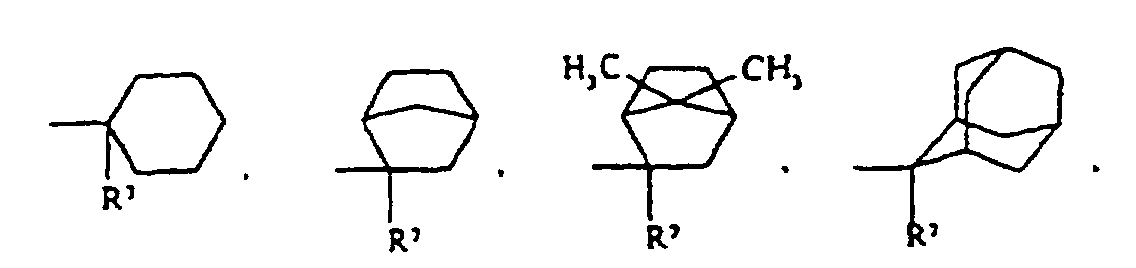 où R7 représente l'hydrogène ou un groupe alkyle en C1 à C5 linéaire ou ramifié ; R1 et R4 pris conjointement avec les deux atomes de carbone du cycle auxquels ils sont reliés peuvent représenter un groupe cycloaliphatique substitué ou non substitué contenant 4 à 30 atomes de carbone en cycle, un groupe aryle substitué ou non substitué contenant 6 à 18 atomes de carbone en cycle et leurs combinaisons ; R1 et R4 peuvent être pris conjointement pour former le groupe de pontage divalent, -C(O)-Q-(O)C- qui, lorsqu'il est pris conjointement avec les deux atomes de carbone du cycle auxquels ils sont reliés, forme un anneau pentacyclique, dans lequel Q représente un atome d'oxygène ou le groupe N(R8), où R8 est choisi parmi l'hydrogène, un halogène, un groupe alkyle en C1 à C10 linéaire ou ramifié et un groupe aryle en C6 à C18.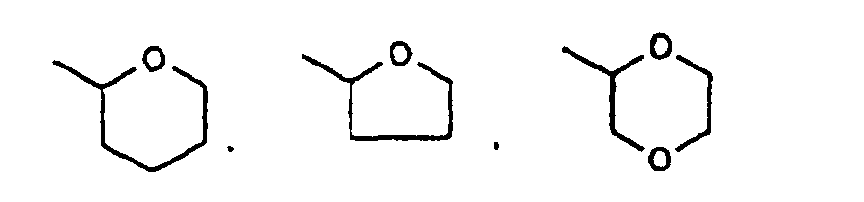
- Procédé selon la revendication 1, dans lequel ledit métal de transition M du Groupe 10 est choisi parmi le palladium, le platine et le nickel, et ledit ligand L' neutre du Groupe 15 donneur d'électron est choisi parmi les amines, les pyridines, les arsines, les stibines et les composés contenant de l'organophosphore.
- Procédé selon la revendication 3, dans lequel ledit ligand contenant de l'organophosphore est choisi parmi les composés de formule :où R7' est tel que défini précédemment et h' est un nombre entier compris entre 4 et 11.

- Procédé selon la revendication 3, dans lequel ledit ligand contenant de l'organophosphore est une phosphine bidentate choisie parmi les formules :où R7' est tel que défini et i vaut 0, 1, 2, ou 3.

- Procédé selon la revendication 4, dans lequel g vaut 3 et R7' est indépendamment choisi dans le groupe constitué de l'hydrogène, un groupe alkyle en C1 à C10 linéaire ou ramifié, cycloalkyle en C5 à C10, alcoxy en C1 à C10 linéaire ou ramifié, allyle, alcényle en C2 à C10 linéaire ou ramifié, aryle en C6 à C12, et aryloxy en C6 à 12.
- Procédé selon la revendication 1, dans lequel le complexe contre-anionique à faible indice de coordination est choisi dans le groupe constitué de borates, aluminates, anions boratobenzène, anions carborane et anions halocarborane.
- Procédé selon la revendication 7, dans lequel l'anion à faible indice de coordination est un borate ou un aluminate de formule :
- Procédé selon la revendication 8, dans lequel lesdits groupes aryles et aryloxy substitués peuvent être monosubstitués ou multisubstitués et lesdits substituants sont indépendamment choisis parmi un groupe alkyle en C1 à C5 linéaire ou ramifié, haloalkyle en C1 à C5 linéaire ou ramifié, alcoxy en C1 à C5 linéaire ou ramifié, haloalcoxy en C1 à C5 linéaire ou ramifié, trialkylsilyle en C1 à C12 linéaire ou ramifié, triarylsilyle en C6 à C18, et un halogène choisi parmi le chlore, le brome et le fluor.
- Procédé selon la revendication 8, dans lequel ledit borate est choisi dans le groupe constitué de tétrakis(pentafluorophényl)borate, tétrakis(3,5-bis(trifluorométhyl)phényl)borate, tétrakis(2-fluorophényl)borate, tétrakis(3-fluorophényl)borate, tétrakis(4-fluorophényl)borate, tétrakis(3,5-difluorophényl)borate, tétrakis(2,3,4,5-tétrafluorophényl)borate, tétrakis(3,4,5,6-tétrafluorophényl)borate, tétrakis(3,4,5-trifluorophényl)borate, méthyltris(perfluorophényl)borate, éthyltris(perfluorophényl)borate, phényltris(perfluorophényl)borate, tétrakis(1,2,2-trifluoroéthylènyl)borate, tétrakis(4-tri-i-propylsilyltétrafluorophényl)borate, tétrakis(4-diméthyl-tert-butylsilyltétrafluorophényl)borate, (triphénylsiloxy)tris(pentafluorophényl)borate, (octyloxy)tris(pentafluorophényl)borate, tétrakis[3,5-bis[1-méthoxy-2,2,2-trifluoro-1-(trifluorométhyl)éthyl]phényl]borate, tétrakis(3-[1-méthoxy-2,2,2-trifluoro-1-(trifluorométhyl)éthyl]-5-(trifluorométhyl)phényl]borate, et tétrakis(3-(2,2,2-trifluoro-1-(2,2,2-trifluoroéthoxy)-1-(trifluorométhyl)éthyl]-5-(trifluorométhyl)phényl]borate.
- Procédé selon la revendication 8, dans ledit aluminate est choisi dans le groupe constitué de tétrakis(pentafluorophényl)aluminate, tris(perfluorobiphényl)fluoroaluminate, (octyloxy)tris(pentafluorophényl)aluminate, tétrakis(3,5-bis(trifluorométhyl)phényl)aluminate, et méthyltris(pentafluorophényl)aluminate.
- Procédé selon la revendication 7, dans lequel l'anion à faible indice de coordination est un borate ou un aluminate de formule :
- Procédé selon la revendication 12, dans lequel lesdits groupes aryles et aralkyles substitués sont monosubstitués ou multisubstitués, et lesdits substituants sont indépendamment choisis parmi un groupe alkyle en C1 à C5 linéaire ou ramifié, haloalkyle en C1 à C5 linéaire ou ramifié, alcoxy en C1 à C5 linéaire ou ramifié, haloalcoxy en C1 à C10 linéaire ou ramifié, et un halogène choisi parmi le chlore, le brome et le fluor, de préférence le fluor.
- Procédé selon la revendication 12, dans lequel ledit borate est choisi dans le groupe constitué de [B(OC(CF3)3)4], [B(OC(CF3)2(CH3))4], [B(OC(CF3)2H)4], [B(OC(CF3)(CH3)H)4], et [B(OCH2(CF3)2)4].
- Procédé selon la revendication 12, dans lequel ledit aluminate est choisi dans le groupe constitué de [Al(OC(CF3)2Ph)4]-, [Al(OC(CF3)2C6H4CH3)4]-, [Al(OC(CF3)3)4]-, [Al(OC(CF3)(CH3)H)4]-, [Al(OC(CF3)2H)4]-, [Al(OC(CF3)2C6H4-4-i-Pr)4]-, [Al(OC(CF3)2C6H4-4-t-butyl)4]-, [Al(OC(CF3)2C6H4-4-SiMe3)4]-, [Al(OC(CF3)2C6H4-4-Si-i-Pr3)4,]-, [Al(OC(CF3)2C6H2-2,6-(CF3)2-4-Si-i-Pr3)4]-, [Al(OC(CF3)2C6H3-3,5-(CF3)2)4]-, [Al(OC(CF3)2C6H2-2,4,6-(CF3)3)4]-, et [Al(OC(CF3)2C6F5)4]-.
- Procédé de préparation d'un polymère contenant des motifs répétitifs polycycliques et comprenant la mise en contact d'au moins un monomère polycyclooléfine avec un complexe catalyseur à base de métal de transition du Groupe 10 de formule :
- Procédé selon la revendication 16, dans lequel ladite polycyclooléfine est choisie parmi les monomères de formule :où "a" représente une liaison simple ou double, m est un nombre entier valant de 0 à 5 et, lorsque "a" est une double liaison, l'un des radicaux R1, R2 et l'un des radicaux R3, R4 est absent ; R1 à R4 représentent indépendamment l'hydrogène, un groupe alkyle en C1 à C10 substitué ou non substitué, linéaire ou ramifié, haloalkyle en C1 à C10 linéaire ou ramifié, alcényle en C2 à C10 substitué ou non substitué, linéaire ou ramifié, haloalcényle en C2 à C10 linéaire ou ramifié, alcynyle en C2 à C10 substitué ou non substitué, linéaire ou ramifié, cycloalkyle en C4 à C12 substitué ou non substitué, halocycloalkyle en C4 à C12 substitué ou non substitué, cycloalcényle en C4 à C12 substitué ou non substitué, halocycloalcényle en C4 à C12 substitué ou non substitué, aryle en C6 à C12 substitué ou non substitué, haloaryle en C6 à C12 substitué ou non substitué et aralkyle en C7 à C24 substitué ou non substitué, les radicaux R1 et R2 ou R3 et R4 peuvent être pris conjointement pour constituer un groupe alkylidényle en C1 à C10, -(CH2)nC(O)NH2, -(CH2)nC(O)Cl, -(CH2)nC(O)OR5, -(CH2)n-OR5, -(CH2)n-OC(O)R5, -(CH2)n-C(O)R5 -(CH2)n-OC(O)OR5, -(CH2)nSiR5, -(CH2)nSi(OR5)3, -(CH2)nC(O)OR6, et le groupe :
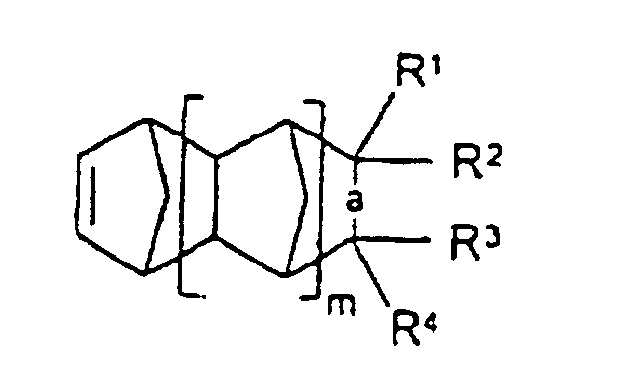 où n représente indépendamment un nombre entier valant de 0 à 10 et R5 représente indépendamment l'hydrogène, un groupe alkyle en C1 à C10 linéaire ou ramifié, alcényle en C2 à C10, alcynyle en C2 à C10 linéaire ou ramifié, cycloalkyle en C5 à C12, aryle en C6 à C14 et aralkyle en C7 à C24 ; R6 représente un radical choisi parmi -C(CH3)3, -Si(CH3)3, -CH(R7)OCH2CH3, -CH(R7)OC(CH3)3, le groupe dicyclopropylméthyle, diméthylcyclopropylméthyle, ou les groupes cycliques suivants :
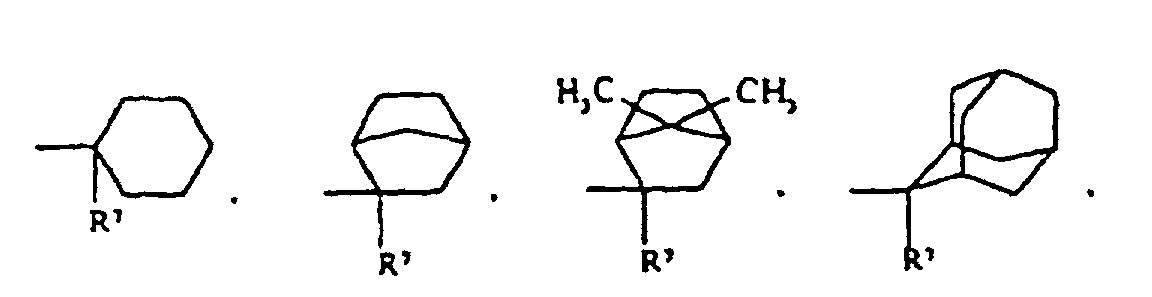 où R7 représente l'hydrogène ou un groupe alkyle en C1 à C5 linéaire ou ramifié ; R1 et R4 pris conjointement avec les deux atomes de carbone du cycle auxquels ils sont reliés peuvent représenter un groupe cycloaliphatique substitué ou non substitué contenant 4 à 30 atomes de carbone en cycle, un groupe aryle substitué ou non substitué contenant 6 à 18 atomes de carbone en cycle et leurs combinaisons ; R1 et R4 peuvent être pris conjointement pour former le groupe de pontage divalent, -C(O)-Q-(O)C- qui, lorsqu'il est pris conjointement avec les deux atomes de carbone du cycle auxquels il est relié, forme un anneau pentacyclique, dans lequel Q représente un atome d'oxygène ou le groupe N(R8), où R8 est choisi parmi l'hydrogène, un halogène, un groupe alkyle en C1 à C10 linéaire ou ramifié et un groupe aryle en C6 à C18.
- Procédé selon la revendication 16, dans lequel ledit métal de transition M du Groupe 10 est choisi parmi le palladium, le platine et le nickel, et ledit ligand L' neutre du Groupe 15 donneur d'électron est choisi parmi les amines, les pyridines, les arsines, les stibines et les ligands contenant de l'organophosphore.
- Procédé selon la revendication 18, dans lequel ledit ligand contenant de l'organophosphore est choisi parmi les composés de formule :où R7' est tel que défini précédemment et h' est un nombre entier compris entre 4 et 11.
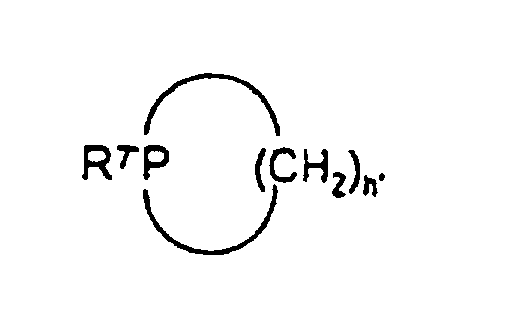
- Procédé selon la revendication 18, dans lequel ledit ligand contenant de l'organophosphore est une phosphine bidentate choisie parmi les formules :où R7' est tel que défini et i vaut 0, 1, 2 ou 3.

- Procédé selon la revendication 19, dans lequel g vaut 3 et R7' est indépendamment choisi dans le groupe constitué de l'hydrogène, un groupe alkyle en C1 à C10 linéaire ou ramifié, cycloalkyle en C5 à C10, alcoxy en C1 à C10 linéaire ou ramifié, allyle, alcényle en C2 à C10 linéaire ou ramifié, aryle en C6 à C12, et aryloxy en C6 à 12.
- Procédé selon la revendication 16, dans lequel le complexe contre-anionique à faible capacité de coordination est choisi dans le groupe consistant en borates, aluminates, anions boratobenzène, anions carborane et anions halocarborane.
- Procédé selon la revendication 22, dans lequel l'anion à faible indice de coordination est un borate ou un aluminate de formule :
- Procédé selon la revendication 23, dans lequel lesdits groupes aryles et aryloxy substitués sont monosubstitués ou multisubstitués et lesdits substituants sont indépendamment choisis parmi les groupes alkyle en C1 à C5 linéaire ou ramifié, haloalkyle en C1 à C5 linéaire ou ramifié, alcoxy en C1 à C5 linéaire ou ramifié, haloalcoxy en C1 à C5 linéaire ou ramifié, trialkylsilyle en C1 à C12 linéaire ou ramifié, triarylsilyle en C6 à C18, et un halogène choisi parmi le chlore, le brome et le fluor.
- Procédé selon la revendication 23, dans lequel ledit borate est choisi dans le groupe constitué de tétrakis(pentafluorophényl)borate, tétrakis(3,5-bis(trifluorométhyl)phényl)borate, tétrakis(2-fluorophényl)borate, tétrakis(3-fluorophényl)borate, tétrakis(4-fluorophényl)borate, tétrakis(3,5-difluorophényl)borate, tétrakis(2,3,4,5-tétrafluorophényl)borate, tétrakis(3,4,5,6-tétrafluorophényl)borate, tétrakis(3,4,5-trifluorophényl)borate, méthyltris(perfluorophényl)borate, éthyltris(perfluorophényl)borate, phényltris(perfluorophényl)borate, tétrakis( 1,2,2-trifluoroéthylènyl)borate, tétrakis(4-tri-i-propylsilyltétrafluorophényl)borate, tétrakis(4-diméthyl-tert-butylsilyltétrafluorophényl)borate, (triphénylsiloxy)tris(pentafluorophényl)borate, (octyloxy)tris(pentafluorophényl)borate, tétrakis[3,5-bis[1-méthoxy-2,2,2-trifluoro-1(trifluorométhyl)éthyl]phényl]borate, tétrakis(3-[1-méthoxy-2,2,2-trifluoro-1-(trifluorométhyl)éthyl]-5-(trifluorométhyl)phényl]borate, et tétrakis(3-[2,2,2-trifluoro-1-(2,2,2-trifluoroéthoxy)-1-(trifluorométhyl)éthyl]-5-(trifluorométhyl)phényl]borate.
- Procédé selon la revendication 23, dans ledit aluminate est choisi dans le groupe consistant en tétrakis(pentafluorophényl)aluminate, tris(perfluorobiphényl)fluoroaluminate, (octyloxy)tris(pentafluorophényl)aluminate, tétrakis(3,5-bis(trifluorométhyl)phényl)aluminate, et méthyltris(pentafluorophényl)aluminate.
- Procédé selon la revendication 22, dans lequel l'anion à faible indice de coordination est un borate ou un aluminate de formule :
- Procédé selon la revendication 27, dans lequel lesdits groupes aryles et aralkyles substitués sont monosubstitués ou multisubstitués, et lesdits substituants sont indépendamment choisis parmi les groupes alkyles en C1 à C5 linéaires ou ramifiés, haloalkyles en C1 à C5 linéaires ou ramifiés, alcoxy en C1 à C5 linéaires ou ramifiés, haloalcoxy en C1 à C10 linéaires ou ramifiés, et un halogène choisi parmi le chlore, le brome et le fluor, de préférence le fluor.
- Procédé selon la revendication 27, dans lequel ledit borate est choisi dans le groupe consistant en [B(OC(CF3)3)4]-, [B(OC(CF3)2(CH3))4]-, [B(OC(CF3)2H)4]-, [B(OC(CF3)(CH3)H)4]-, et [B(OCH2(CF3)2)4]-.
- Procédé selon la revendication 27, dans lequel ledit aluminate est choisi dans le groupe constitué de [Al(OC(CF3)2Ph)4]-, [Al(OC(CF3)2C6H4CH3)4]-, [Al(OC(CF3)3)4]-, [Al(OC(CF3)(CH3)H)4]-, [Al(OC(CF3)2H)4]-, [Al(OC(CF3)2C6H4-4-i-Pr)4]-, [Al(OC(CF3)2C6H4-4-t-butyl)4]-, [Al(OC(CF3)2C6H4-4-SiMe3)4]-, [Al(OC(CF3)2C6H4-4-Si-i-Pr3)4,]-, [Al(OC(CF3)2C6H2-2,6-(CF3)2-4-Si-i-Pr3)4]-, [Al(OC(CF3)2C6H3-3,5-(CF3)2)4]-, [Al(OC(CF3)2C6H2-2,4,6-(CF3)3)4]-, et [Al(OC(CF3)2C6F5)4]-.
- Procédé de préparation d'un polymère contenant des motifs répétitifs polycycliques et comprenant la mise en contact d'un monomère polycyclooléfine avec un complexe de métal palladium de formule [R'Pd(L')yA'], un sel WCA contenant un cation métallique du Groupe 1 et un contre-anion à faible indice de coordination et, éventuellement, une phosphine, formule où y vaut 1 ou 2, R' représente un groupe alkyle en C1 à C20 linéaire ou ramifié ou haloaryle en C6 à C30 ; L' représente un acétonitrile ou un diène ; et A' est un groupe halogène ; dans lequel ledit WCA est choisi parmi des borates.
- Procédé selon la revendication 1, dans lequel ladite polycyclooléfine est choisie parmi les monomères de formule :où "a" représente une liaison simple ou double, me est un nombre entier valant de 0 à 5, et lorsque "a" est une double liaison l'un des radicaux R1, R2 et l'un des radicaux R3, R4 est absent ; R1 à R4 représentent indépendamment l'hydrogène, un alkyle en C1 à C10 substitué et non substitué, linéaire et ramifié, un haloalkyle en C1 à C10 linéaire et ramifié, un alcényle en C2 à C10 substitué et non substitué, linéaire et ramifié, un haloalcényle en C2 à C10 linéaire et ramifié, un alcynyle en C2 à C10 substitué et non substitué, linéaire et ramifié, un cycloalkyle en C4 à C12 substitué et non substitué, un halocycloalkyle en C4 à C12 substitué et non substitué, un cycloalcényle en C4 à C12 substitué et non substitué, un halocycloalcényle en C4 à C12 substitué et non substitué, un aryle en C6 à C12 substitué et non substitué, un haloaryle en C6 à C12 substitué et non substitué ainsi qu'un aralkyle en C7 à C24 substitué et non substitué, les radicaux R1 et R2 ou R3 et R4 peuvent être pris ensemble pour constituer un groupe alkylidényle en C1 à C10, -(CH2)nC(O)NH2, -(CH2)nC(O)Cl, -(CH2)nC(O)OR5, -(CH2)n-OR5, -(CH2)n-OC(O)R5, -(CH2)n-C(O)R5, -(CH2)n-OC(O)OR5, -(CH2)nSiR5, -(CH2)nSi(OR5)3, -(CH2)nC(O)OR6, et le groupe :
 où n représente indépendamment un nombre entier valant de 0 à 10 et R5 représente indépendamment l'hydrogène, un groupe alkyle en C1 à C10 linéaire ou ramifié, alcényle en C2 à C10, alcynyle en C2 à C10 linéaire ou ramifié, cycloalkyle en C5 à C12, aryle en C6 à C14 et aralkyle en C7 à C24 ; R6 représente un radical choisi parmi -C(CH3)3, -Si(CH3)3, -CH(R7)OCH2CH3, -CH(R7)OC(CH3)3, le groupe dicyclopropylméthyle, diméthylcyclopropylméthyle, ou les groupes cycliques suivants :
 où R7 représente l'hydrogène ou un groupe alkyle en C1 à C5 linéaire ou ramifié ; R1 et R4 pris conjointement avec les deux atomes de carbone du cycle auxquels ils sont reliés peuvent représenter un groupe cycloaliphatique substitué ou non substitué contenant 4 à 30 atomes de carbone en cycle, un groupe aryle substitué ou non substitué contenant 6 à 18 atomes de carbone en cycle et leurs combinaisons ; R1 et R4 peuvent être pris conjointement pour former le groupe de pontage divalent, -C(O)-Q-(O)C-, lesquels forment un anneau pentacyclique lorsqu'ils sont pris conjointement avec les deux atomes de carbone du cycle auxquels ils sont reliés, groupe dans lequel Q représente un atome d'oxygène ou le groupe R(N8), où R8 est choisi parmi l'hydrogène, un halogène, un groupe alkyle en C1 à C10 linéaire ou ramifié et un groupe aryle en C6 à C18.
- Procédé selon la revendication 31, dans lequel le complexe de métal palladium est choisi dans le groupe consistant en [(1,5-cyclooctadiène)Pd(CH3)(Cl)] et [(C6F5)Pd(CH3CN)2(Br)].
- Procédé selon la revendication 33, dans lequel ladite phosphine facultative est P(C6H5)3, et le sel à faible indice de coordination WCA est le sel de sodium de tétrakis(3,5-bis(trifluorométhyl)phényl)borate.
- Procédé de préparation d'un polymère contenant des motifs répétitifs polycycliques et comprenant la mise en contact d'au moins un monomère polycyclooléfine avec un complexe catalyseur à base de métal de transition du Groupe 10 de formule :
- Procédé selon la revendication 35, dans lequel ladite polycyclooléfine est choisie parmi les monomères de formule :où "a" représente une liaison simple ou double, m est un nombre entier valant de 0 à 5 et, lorsque "a" est une double liaison, l'un des radicaux R1, R2 et l'un des radicaux R3, R4 est absent ; R1 à R4 représentent indépendamment l'hydrogène, un groupe alkyle en C1 à C10 substitué ou non substitué, linéaire ou ramifié, haloalkyle en C1 à C10 linéaire ou ramifié, alcényle en C2 à C10 substitué ou non substitué, linéaire ou ramifié, haloalcényle en C2 à C10 linéaire ou ramifié, alcynyle en C2 à C10 substitué ou non substitué, linéaire ou ramifié, cycloalkyle en C4 à C12 substitué ou non substitué, halocycloalkyle en C4 à C12 substitué ou non substitué, cycloalcényle en C4 à C12 substitué ou non substitué, halocycloalcényle en C4 à C12 substitué ou non substitué, aryle en C6 à C12 substitué ou non substitué, haloaryle en C6 à C12 substitué ou non substitué et aralkyle en C7 à C24 substitué ou non substitué, les radicaux R1 et R2 ou R3 et R4 peuvent être pris conjointement pour constituer un groupe alkylidényle en C1 à C10, -(CH2)nC(O)NH2, -(CH2)nC(O)Cl, -(CH2)nC(O)OR5, -(CH2)n-OR5, -(CH2)n-OC(O)R5, -(CH2)n-C(O)R5 -(CH2)n-OC(O)OR5, -(CH2)nSiR5, -(CH2)nSi(OR5)3, -(CH2)nC(O)OR6, et le groupe :
 où n représente indépendamment un nombre entier valant de 0 à 10 et R5 représente indépendamment l'hydrogène, un groupe alkyle en C1 à C10 linéaire ou ramifié, alcényle en C2 à C10, alcynyle en C2 à C10 linéaire ou ramifié, cycloalkyle en C5 à C12, aryle en C6 à C14 et aralkyle en C7 à C24 ; R6 représente un radical choisi parmi -C(CH3)3, -Si(CH3)3, -CH(R7)OCH2CH3, -CH(R7)OC(CH3)3, le groupe dicyclopropylméthyle, diméthylcyclopropylméthyle, ou les groupes cycliques suivants :
 où R7 représente l'hydrogène ou un groupe alkyle en C1 à C5 linéaire ou ramifié ; R1 et R4 pris conjointement avec les deux atomes de carbone du cycle auxquels ils sont reliés peuvent représenter un groupe cycloaliphatique substitué ou non substitué contenant 4 à 30 atomes de carbone en cycle, un groupe aryle substitué ou non substitué contenant 6 à 18 atomes de carbone en cycle et leurs combinaisons ; R1 et R4 peuvent être pris conjointement pour former le groupe de pontage divalent, -C(O)-Q-(O)C- qui, lorsqu'il est pris conjointement avec les deux atomes de carbone du cycle auxquels ils sont reliés, forme un anneau pentacyclique, dans lequel Q représente un atome d'oxygène ou le groupe N(R8), où R8 est choisi parmi l'hydrogène, un halogène, un groupe alkyle en C1 à C10 linéaire ou ramifié et un groupe aryle en C6 à C18.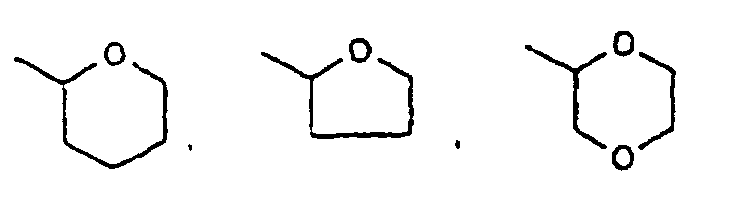
- Procédé selon la revendication 35, dans lequel ledit métal de transition M du Groupe 10 est choisi parmi le palladium, le platine et le nickel, et ledit ligand L' neutre du Groupe 15 donneur d'électron est choisi parmi les amines, les pyridines, les arsines, les stibines et les composés contenant de l'organophosphore.
- Procédé selon la revendication 37, dans lequel ledit ligand contenant de l'organophosphore est choisi parmi les composés de formule :où R7' est tel que défini précédemment et h' est un nombre entier compris entre 4 et 11.

- Procédé selon la revendication 37, dans lequel ledit ligand contenant de l'organophosphore est une phosphine bidentate choisie parmi les formules :où R7' est tel que défini et i vaut 0,1, 2 ou 3.
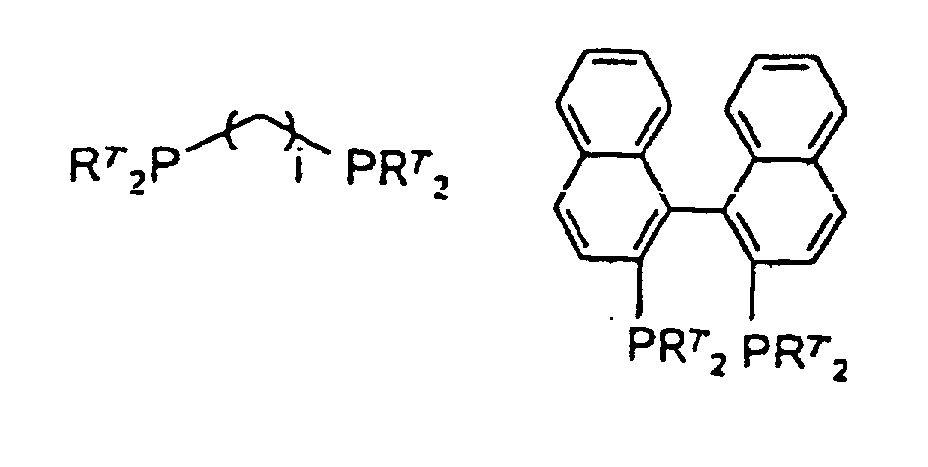
- Procédé selon la revendication 38, dans lequel g vaut 3 et R7' est indépendamment choisi dans le groupe constitué de l'hydrogène, un groupe alkyle en C1 à C10 linéaire ou ramifié, cycloalkyle en C5 à C10, alcoxy en C1 à C10 linéaire ou ramifié, allyle, alcényle en C2 à C10 linéaire ou ramifié, aryle en C6 à C12, et aryloxy en C6 à 12.
- Procédé selon la revendication 35, dans lequel le complexe contre-anionique à faible indice de coordination est choisi dans le groupe constitué de borates, aluminates, anions boratobenzène, anions carborane et anions halocarborane.
- Procédé selon la revendication 41, dans lequel l'anion à faible indice de coordination est un borate ou un aluminate de formule :
- Procédé selon la revendication 42, dans lequel lesdits groupes aryles et aryloxy substitués sont monosubstitués ou multisubstitués et lesdits substituants sont indépendamment choisis parmi les groupes alkyles en C1 à C5 linéaires ou ramifiés, haloalkyles en C1 à C5 linéaires ou ramifiés, alcoxy en C1 à C5 linéaires ou ramifiés, haloalcoxy en C1 à C5 linéaires ou ramifiés, trialkylsilyles en C1 à C12 linéaires ou ramifiés, triarylsilyles en C6 à C18, et un halogène choisi parmi le chlore, le brome et le fluor.
- Procédé selon la revendication 42, dans lequel ledit borate est choisi dans le groupe constitué de tétrakis(pentafluorophényl)borate, tétrakis(3,5-bis(trifluorométhyl)phényl)borate, tétrakis(2-fluorophényl)borate, tétrakis(3-fluorophényl)borate, tétrakis(4-fluorophényl)borate, tétrakis(3,5-difluorophényl)borate, tétrakis(2,3,4,5-tétrafluorophényl)borate, tétrakis(3,4,5,6-tétrafluorophényl)borate, tétrakis(3,4,5-trifluorophényl)borate, méthyltris(perfluorophényl)borate, éthyltris(perfluorophényl)borate, phényltris(perfluorophényl)borate, tétrakis( 1,2,2-trifluoroéthylènyl)borate, tétrakis(4-tri-i-propylsilyltétrafluorophényl)borate, tétrakis(4-diméthyl-tert-butylsilyltétrafluorophényl)borate, (triphénylsiloxy)tris(pentafluorophényl)borate, (octyloxy)tris(pentafluorophényl)borate, tétrakis[3,5-bis[1-méthoxy-2,2,2-trifluoro-1(trifluorométhyl)éthyl]phényl]borate, tétrakis(3-[1-méthoxy-2,2,2-trifluoro-1-(trifluorométhyl)éthyl]-5-(trifluorométhyl)phényl]borate, et tétrakis(3-[2,2,2-trifluoro-1-(2,2,2-trifluoroéthoxy)-1-(trifluorométhyl)éthyl]-5-(trifluorométhyl)phényl]borate.
- Procédé selon la revendication 42, dans ledit aluminate est choisi dans le groupe constitué de tétrakis(pentafluorophényl)aluminate, tris(perfluorobiphényl)fluoroaluminate, (octyloxy)tris(pentafluorophényl)-aluminate, tétrakis(3,5-bis(trifluorométhyl)phényl)aluminate, et méthyltris(pentafluorophényl)aluminate.
- Procédé selon la revendication 41, dans lequel l'anion à faible indice de coordination est un borate ou un aluminate de formule :
- Procédé selon la revendication 46, dans lequel lesdits groupes aryles et aralkyles substitués sont monosubstitués ou multisubstitués, et lesdits substituants sont indépendamment choisis parmi les groupes alkyles en C1 à C5 linéaires ou ramifiés, haloalkyles en C1 à C5 linéaires ou ramifiés, alcoxy en C1 à C5 linéaires ou ramifiés, haloalcoxy en C1 à C10 linéaires ou ramifiés, et un halogène choisi parmi le chlore, le brome et le fluor, de préférence le fluor.
- Procédé selon la revendication 46, dans lequel ledit borate est choisi dans le groupe consistant en [B(OC(CF3)3)4]-, [B(OC(CF3)2(CH3))4]-, [B(OC(CF3)2H)4]-, [B(OC(CF3)(CH3)H)4]-, et [B(OCH2(CF3)2)4]-.
- Procédé selon la revendication 46, dans lequel ledit aluminate est choisi dans le groupe constitué de [Al(OC(CF3)2Ph)4]-, [Al(OC(CF3)2C6H4CH3)4]-, [Al(OC(CF3)3)4]-, [Al(OC(CF3)(CH3)H)4]-, [Al(OC(CF3)2H)4]-, [Al(OC(CF3)2C6H4-4-i-Pr)4]-, [Al(OC(CF3)2C6H4-4-t-butyl)4]-, [Al(OC(CF3)2C6H4-4-SiMe3)4]-, [Al(OC(CF3)2C6H4-4-Si-i-Pr3)4]-, [Al(OC(CF3)2C6H2-2,6-(CF3)2-4-Si-i-Pr3)4]-, [Al(OC(CF3)2C6H3-3,5-(CF3)2)4]-, [Al(OC(CF3)2C6H2-2,4,6-(CF3)3)4]-, et [Al(OC(CF3)2C6F5)4]-.
- Procédé selon la revendication 36, dans lequel ledit monomère polycyclooléfine est choisi dans le groupe constitué de butyl norbornène, triéthoxysilyl norbornène, et leurs mélanges.
- Procédé selon la revendication 35, dans lequel ledit ligand contenant un hydrocarbyle est allylique et ledit complexe cationique est représenté par la formule :dans laquelle R20', R21' et R22' représentent chacun indépendamment l'hydrogène, un halogène, un groupe alkyle en C1 à C5 linéaire ou ramifié, cycloalkyle en C5 à C10, alcényle en C1 à C5 linéaire ou ramifié, aryle en C6 à C30 et aralkyle en C7 à C30, chacun des radicaux précédents étant éventuellement substitués par un substituant choisi parmi un groupe alkyle en C1 à C5 linéaire ou ramifié, haloalkyle en C1 à C5 linéaire ou ramifié, un halogène et un groupe phényle qui peut être éventuellement substitué par un groupe alkyle en C1 à C5 linéaire ou ramifié, haloalkyle en C1 à C5 linéaire ou ramifié et un halogène ; dans laquelle deux quelconques des radicaux R20', R21' et R22' peuvent être liés ensemble par les atomes de carbone auxquels ils sont fixés pour former un anneau cyclique ou multicyclique, chacun étant éventuellement substitué par un groupe alkyle en C1 à C5 linéaire ou ramifié, haloalkyle en C1 à C5 linéaire ou ramifié ou un halogène; et dans laquelle M, L', L", x et y sont tels que définis précédemment.

- Procédé selon la revendication 51, dans lequel L' est un ligand contenant de l'organophosphore choisi parmi les composés de formule :où R7' est tel que défini précédemment et h' est un nombre entier compris entre 4 et 11.
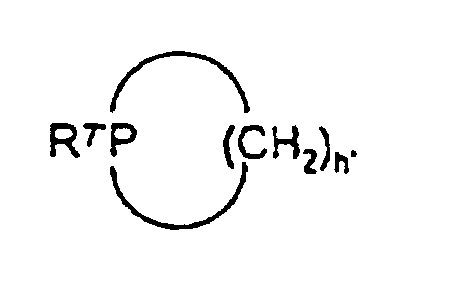
- Procédé selon la revendication 52, dans lequel ledit ligand contenant de l'organophosphore est une phosphine choisie dans le groupe constitué de triméthylphosphine, triéthylphosphine, tri-n-propylphosphine, triisopropylphosphine, tri-n-butylphosphine, tri-sec-butylphosphine, tri-i-butylphosphine, tri-t-butylphosphine, tricyclopentylphosphine, triallylphosphine, tricyclohexylphosphine, triphénylphosphine, trinaphtylphosphine, trip-p-tolylphosphine, tri-o-tolylphosphine, tri-m-tolylphosphine, tribenzylphosphine, tri(p-trifluorométhylphényl)phosphine, tris(trifluorométhyl)phosphine, tri(p-fluorophényl)phosphine, tri(p-trifluorométhylphényl)phosphine, allyldiphénylphosphine, benzyldiphénylphosphine, bis(2-furyl)phosphine, bis(4-méthoxyphényl)phénylphosphine, bis(4-méthylphényl)phosphine, bis(3,5-bis(trifluorométhyl)phényl)phosphine, t-butylbis(triméthylsilyl)phosphine, t-butyldiphénylphosphine, cyclohexyldiphénylphosphine, diallylphénylphosphine, dibenzylphosphine, dibutylphénylphosphine, dibutylphosphine, di-t-butylphosphine, dicyclohexylphosphine, diéthylphénylphosphine, di-i-butylphosphine, diméthylphénylphosphine, diméthyl(triméthylsilyl)phosphine, diphénylphosphine, diphénylpropylphosphine, diphenyl(p-tolyl)phosphine, diphényl(triméthylsilyl)phosphine, diphénylvinylphosphine, divinylphénylphosphine, éthyldiphénylphosphine, (2-méthoxyphényl)méthylphénylphosphine, tri-n-octylphosphine, tris(3,5-bis(trifluorométhyl)phényl)phosphine, tris(3-chlorophényl)phosphine, tris(4-chlorophényl)phosphine, tris(2,6-diméthoxyphényl)phosphine, tris(3-fluorophényl)phosphine, tris(2-furyl)phosphine, tris(2-méthoxyphényl)phosphine, tris(3-méthoxyphényl)phosphine, tris(4-méthoxyphényl)phosphine, tris(3-méthoxypropyl)phosphine, tris(2-thiényl)phosphine, tris(2,4,6-triméthylphényl)phosphine, tris(triméthylsilyl)phosphine, isopropyldiphénylphosphine, dicyclohexylphénylphosphine, (+)-néomenthyldiphénylphosphine, tribenzylphosphine, diphényl(2-méthoxyphényl)phosphine, diphényl(pentafluorophényl)phosphine, bis(pentafluorophényl)-phénylphosphine, et tris(pentafluorophényl)phosphine.
- Procédé de préparation d'un polymère contenant des motifs répétitifs polycycliques et comprenant la mise en contact d'au moins un monomère polycyclooléfine avec un complexe procatalyseur contenant un métal de transition du Groupe 10 et répondant à la formule [(R'M(L')x(A')], un complexe cationique contenant un sel anionique à faible indice de coordination et un complexe anionique à faible indice de coordination répondant à la formule [C(L")z"]b" [WCA]d" et, facultativement, un composé labile neutre donneur d'électron, dans 0 à 20 % de solvant, en poids de monomères présents, formules où M représente un métal de transition du Groupe 10 choisi dans le groupe constitué de nickel, de platine et de palladium ; R' est un ligand anionique contenant un groupe hydrocarbyle ; L' représente un ligand neutre du Groupe 15 donneur d'électron ; A' représente un groupe partant anionique pouvant être déplacé par ledit complexe anionique à faible indice de coordination ; L" représente un composé ligand labile neutre donneur d'électron ; C représente un cation choisi dans le groupe constitué d'un proton, d'un cation métallique du Groupe 1, d'un cation métallique du Groupe 2 et d'un cation contenant un groupe organique ; WCA représente un complexe anionique à faible indice de coordination ; x vaut 1 ou 2 ; z" est un nombre entier compris entre 0 et 8 ; et b" et d" représentent le nombre de fois où les complexes cationique et anionique dudit sel anionique à faible indice de coordination se répètent pour équilibrer la charge dudit sel.
- Procédé de préparation d'un polymère contenant des motifs répétitifs polycycliques et comprenant la mise en contact d'au moins un monomère polycyclooléfine avec un complexe procatalyseur contenant un métal de transition du Groupe 10 et répondant à la formule [M(A')2], un composé neutre du Groupe 15 donneur d'électron, un complexe cationique contenant un sel anionique à faible indice de coordination et un complexe anionique à faible indice de coordination répondant à la formule [C(L")z"]b" [WCA]d" dans 0 à 20 % de solvant, en poids de monomères présents, formules où M représente un métal de transition du Groupe 10 choisi dans le groupe constitué de nickel, de platine et de palladium ; A' représente un groupe partant anionique pouvant être déplacé par ledit complexe anionique à faible indice de coordination ; C représente un cation choisi dans le groupe constitué d'un proton, d'un cation métallique du Groupe 1, d'un cation métallique du Groupe 2 et d'un cation contenant un groupe organique ; WCA représente un complexe anionique à faible indice de coordination ; z" est un nombre entier compris entre 0 et 8 ; et b" et d" représentent le nombre de fois où les complexes cationique et anionique dudit sel anionique à faible indice de coordination se répètent pour équilibrer la charge dudit sel.
- Procédé selon la revendication 54, dans lequel L' est choisi dans le groupe constitué des amines, des pyridines, des arsines, des stibines et des composés contenant de l'organophosphore.
- Procédé selon la revendication 55, dans lequel le composé neutre du Groupe 15 donneur d'électron est choisi dans le groupe constitué des amines, des pyridines, des arsines, des stibines et des composés contenant de l'organophosphore.
- Procédé selon la revendication 56 ou 57, dans lequel ledit ligand contenant de l'organophosphore est choisi parmi les composés de formule :où R7' est tel que défini précédemment et h' est un nombre entier compris entre 4 et 11.

- Procédé selon la revendication 56 ou 57, dans lequel ledit ligand contenant de l'organophosphore est une phosphine bidentate choisie parmi les formules :où R7' est tel que défini précédemment et i vaut 0, 1, 2 ou 3.
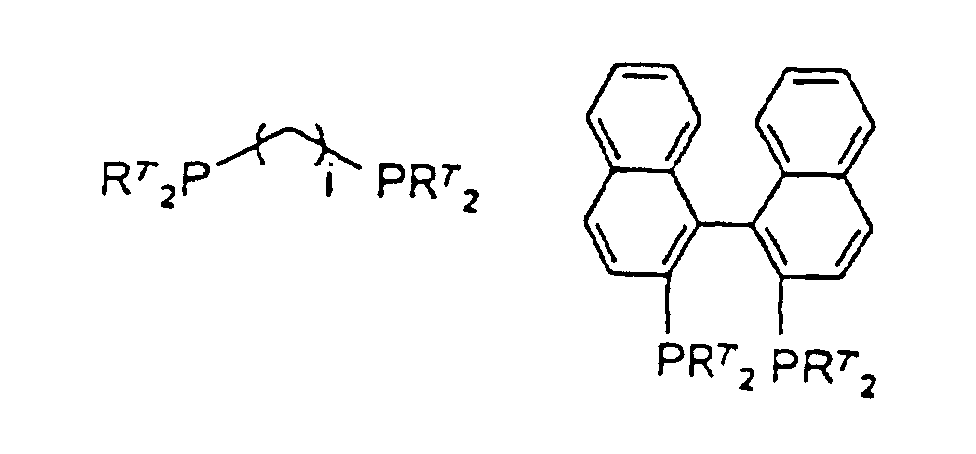
- Procédé selon la revendication 58, dans lequel ledit ligand contenant de l'organophosphore est une phosphine choisie dans le groupe constitué de triméthylphosphine, triéthylphosphine, tri-n-propylphosphine, triisopropylphosphine, tri-n-butylphosphine, tri-sec-butylphosphine, tri-i-butylphosphine, tri-t-butylphosphine, tricyclopentylphosphine, triallylphosphine, tricyclohexylphosphine, triphénylphosphine, trinaphtylphosphine, trip-p-tolylphosphine, tri-o-tolylphosphine, tri-m-tolylphosphine, tribenzylphosphine, tri(p-trifluorométhylphényl)phosphine, tris(trifluorométhyl)phosphine, tri(p-fluorophényl)phosphine, tri(p-trifluorométhylphényl)phosphine, allyldiphénylphosphine, benzyldiphénylphosphine, bis(2-furyl)phosphine, bis(4-méthoxyphényl)phénylphosphine, bis(4-méthylphényl)phosphine, bis(3,5-bis(trifluorométhyl)phényl)phosphine, t-butylbis(triméthylsilyl)phosphine, t-butyldiphénylphosphine, cyclohexyldiphénylphosphine, diallylphénylphosphine, dibenzylphosphine, dibutylphénylphosphine, dibutylphosphine, di-t-butylphosphine, dicyclohexylphosphine, diéthylphénylphosphine, di-i-butylphosphine, diméthylphénylphosphine, diméthyl(triméthylsilyl)phosphine, diphénylphosphine, diphénylpropylphosphine, diphenyl(p-tolyl)phosphine, diphényl(triméthylsilyl)phosphine, diphénylvinylphosphine, divinylphénylphosphine, éthyldiphénylphosphine, (2-méthoxyphényl)méthylphénylphosphine, tri-n-octylphosphine, tris(3,5-bis(trifluorométhyl)phényl)phosphine, tris(3-chlorophényl)phosphine, tris(4-chlorophényl)phosphine, tris(2,6-diméthoxyphényl)phosphine, tris(3-fluorophényl)phosphine, tris(2-furyl)phosphine, tris(2-méthoxyphényl)phosphine, tris(3-méthoxyphényl)phosphine, tris(4-méthoxyphényl)phosphine, tris(3-méthoxypropyl)phosphine, tris(2-thiényl)phosphine, tris(2,4,6-triméthylphényl)phosphine, tris(triméthylsilyl)phosphine, isopropyldiphénylphosphine, dicyclohexylphénylphosphine, (+)-néomenthyldiphénylphosphine, tribenzylphosphine, diphényl(2-méthoxyphényl)phosphine, diphényl(pentafluorophényl)phosphine, bis(pentafluorophényl)-phénylphosphine, et tris(pentafluorophényl)phosphine.
- Procédé selon la revendication 54 ou 55, dans lequel ledit groupe partant anionique est choisi dans le groupe constitué d'halogène, de nitrate, triflate, triflimide, trifluoroacétate, tosylate, AlBr4 -, AlF4 -, AlCl4 -, AlF3O3SCF3 -, AsCl6 -, SbCl6 -, SbF6 -, PF6 -, BF4 -, ClO4 -, HSO4 -, carboxylates, acétates, acétylacétonates, carbonates, aluminates, borates, un groupe hydrocarbyle et hydrocarbyle halogéné choisi parmi un hydrure, un groupe alkyle en C1 à C5 linéaire ou ramifié, haloalkyle en C1 à C5 linéaire ou ramifié, cycloalkyle en C5 à C10, cyclohaloalkyle en C5 à C10, aryle en C6 à C10 et haloaryle en C6 à C10, dans lequel lesdits groupes cyclohaloalkyle et haloaryle sont monosubstitués ou multisubstitués par un groupe halogène choisi parmi le brome, le chlore, le fluor et l'iode.
- Procédé selon la revendication 7, dans lequel ledit sel anionique à faible indice de coordination est un borate ou un aluminate de formule :
- Procédé selon la revendication 62, dans lequel lesdits groupes aryles et aryloxy substitués sont monosubstitués ou multisubstitués et lesdits substituants sont indépendamment choisis parmi un groupe alkyle en C1 à C5 linéaire ou ramifié, haloalkyle en C1 à C5 linéaire ou ramifié, alcoxy en C1 à C5 linéaire ou ramifié, haloalcoxy en C1 à C5 linéaire ou ramifié, trialkylsilyle en C1 à C12 linéaire ou ramifié, triarylsilyle en C6 à C18, et un halogène choisi parmi le chlore, le brome et le fluor.
- Procédé selon la revendication 62, dans lequel le sel anionique à faible indice de coordination est choisi dans le groupe constitué de tétrakis(2-fluorophényl)borate de lithium, tétrakis(2-fluorophényl)borate de sodium, tétrakis(2-fluorophényl)borate d'argent, tétrakis(2-fluorophényl)borate de thallium, tétrakis(3-fluorophényl)borate de lithium, tétrakis(3-fluorophényl)borate de sodium, tétrakis(3-fluorophényl)borate d'argent, tétrakis(3-fluorophényl)borate de thallium, tétrakis(3-fluorophényl)borate de ferrocénium, tétrakis(pentafluorophényl)borate de ferrocénium, tétrakis(4-fluorophényl)borate de lithium, tétrakis(4-fluorophényl)borate de sodium, tétrakis(4-fluorophényl)borate d'argent, tenakis(4-fluorophényl)borate de thallium, tétrakis(3,5-difluorophényl)borate de lithium, tétrakis(3,5-difluorophényl)borate de sodium, tétrakis(3,5-difluorophényl)borate de thallium, tétrakis(3,5-difluorophényl)borate de trityle, 2,6-diméthylanilinium tétrakis(3,5-difluorophényl)borate, tétrakis(pentafluorophényl)borate de lithium, (diéthyl ether) tétrakis(pentafluorophényl)borate de lithium, (diéthyl ether)2.5 tétrakis(pentafluorophényl)borate de lithium, tétrakis(2,3,4,5-tétrafluorophényl)borate de lithium, tétrakis(3.,4,5,6-tétrafluorophényl)borate de lithium, tétrakis(1.,2,2-trifluoroéthylenyl)borate de lithium, tétrakis(3,4,5-trifluorophényl)borate de lithium, méthyltris(perfluorophényl)borate de lithium, phényltris(perfluorophényl)borate de lithium, tris(isopropanol) tétrakis(pentafluorophényl)borate de lithium, tétrakis(méthanol) tétrakis(pentafluorophényl)borate de lithium, tétrakis(pentafluorophényl)borate d'argent, tétrakis(pentafluorophényl)borate de tris(toluène)argent, tétrakis(pentafluorophényl)borate de tris(xylène)argent, tétrakis(pentafluorophényl)borate de trityle, tétrakis(4-triisopropylsilyltétrafluorophényl)borate de trityle, tétrakis(4-diméthyl-tert-butylsilyltétrafluorophényl)borate de trityle, tétrakis(3,5-bis(trifluorométhyl)phényl)borate de thallium, 2,6-diméthylanilinium tétrakis(pentafluorophényl)borate, N,N-diméthylanilinium tétrakis(pentafluorophényl)borate, N,N-diméthylanilinium tétrakis(3,5-bis(trifluorométhyl)phényl)borate (triphénylsiloxy)tris(pentafluorophényl)borate de lithium, (triphénylsiloxy)tris(pentafluorophényl)borate de sodium, tétrakis(2,3,4,5-tétrafluorophényl)borate de sodium, tétrakis(3,4,5,6-tétrafluorophényl)borate de sodium, tétrakis(1,2,2-trifluoroéthylènyl)borate de sodium, tétrakis(3,4,5-trifluorophényl)borate de sodium, méthyltris(perfluorophényl)borate de sodium, phényltris(perfluorophényl)borate de sodium, tétrakis(2,3,4,5-tétrafluorophényl)borate de thallium, tétrakis(3,4,5,6-tétrafluorophényl)borate de thallium, tétrakis(1,2,2-trifluoroéthylenyl)borate de thallium, tétrakis(3,4,5-trifluorophényl)borate de thallium, sodium méthyltris(perfluorophényl)borate, phényltris(perfluorophényl)borate de thallium, tétrakis(2,3,4,5-tétrafluorophényl)borate de trityle, tétrakis(3,4,5,6-tétrafluorophényl)borate de trityle, tétrakis(1,2,2-trifluoroéthylènyl)borate de trityle, tétrakis(3,4,5-trifluorophényl)borate de trityle, méthyltris(pentafluorophényl)borate de trityle, phényltris(perfluorophényl)borate de trityle, tétrakis[3,5-bis(trifluorométhyl)phényl]borate d'argent, tétrakis[3,5-bis(trifluorométhyl)phényl]borate de (toluène)argent, tétrakis [3,5-bis(trifluorométhyl)phényl]borate de thallium, (hexyltris(pentafluorophényl)borate de lithium, triphénylsiloxytris(pentafluorophényl)borate de lithium, (octyloxy)tris(pentafluorophényl)borate de lithium, tétrakis(3,5-bis(trifluorométhyl)phényl)borate de lithium, tétrakis(pentafluorophényl)borate de sodium, tétrakis(pentafluorophényl)borate de trityl, (octyloxy)tris(pentafluorophényl)borate de sodium, tétrakis(3,5-bis(trifluorométhyl)phényl)borate de sodium, tétrakis(pentafluorophényl)borate de potassium, tétrakis(pentafluorophényl)borate de trityle, (octyloxy)tris(pentafluorophényl)borate de potassium, tétrakis(3,5-bis(trifluorométhyl)phényl)borate de potassium, tétrakis(pentafluorophényl)borate de magnésium, (octyloxy)tris(pentafluorophényl)borate de magnésium, tétrakis(3,5-bis(trifluorométhyl)phényl)borate de magnésium, tétrakis(pentafluorophényl)borate de calcium, (octyloxy)tris(pentafluorophényl)borate de calcium, tétrakis(3,5-bis(trifluorométhyl)phényl)borate de calcium, tétrakis[3,5-bis(1-méthoxy-2,2,2-trifluoro-1-(trifluorométhyl)éthyl]phényl]borate de lithium, tétrakis[3,5-bis[1-méthoxy-2,2,2-trifluoro-1-(trifluorométhyl)éthyl]phényl]borate de sodium, tétrakis[3,5-bis[ 1-méthoxy-2,2,2-trifluoro-1-(trifluorométhyl)éthyl]phényl]borate d'argent, tétrakis[3,5-bis[ 1-méthoxy-2,2,2-trifluoro-1-(trifluorométhyl)éthyl]phényl]borate de thallium, tétrakis[3-[1-méthoxy-2,2,2-trifluoro-1-(trifluorométhy])éthyl]-5-(trifluorométhyl)phényl]borate de lithium, tétrakis[3-[1-méthoxy-2,2,2-trifluoro-1-(trifluorométhyl)éthyl]-5-(trifluorométhyl)phényl]borate de sodium, tétrakis[3-[1-méthoxy-2,2,2-trifluoro-1-(trifluorométhyl)éthyl]-5-(trifluorométhyl)phényl]borate d'argent, tétrakis[3-[1-méthoxy-2,2,2-trifluoro-1-(trifluorométhyl)éthyl]-5-(trifluorométhyl)phényl]borate de thallium, tétrakis[3-[2,2,2-trifluoro-1-(2,2,2-trifluoroéthoxy)-1(trifluorométhyl)éthyl]-5-(trifluorométhyl)phényl]borate de lithium, tétrakis[3-[2,2,2-trifluoro-1-(2,2,2-trifluoroéthoxy)-1(trifluorométhyl)éthyl]-5-(trifluorométhyl)phényl]borate de sodium, tétrakis[3-[2,2,2-trifluoro-1-(2,2,2-trifluoroéthoxy)-1 (trifluorométhyl)éthyl]-5-(trifluorométhyl)phényl]borate d'argent, tétrakis[3-[2,2,2-trifluoro-1-(2,2,2-trifluoroéthoxy)-1 (trifluorométhyl)éthyl]-5-(trifluorométhyl)phényl]borate de thallium, tétrakis(pentafluorophényl)borate de triméthylsilylium, tétrakis(pentafluorophényl)borate d'étherate de triméthylsilylium, tétrakis(pentafluorophényl)borate de triéthylsilylium , tétrakis(pentafluorophényl)borate de triphénylsilylium, tétrakis(pentafluorophényl)borate de tris(mésityl)silylium, tétrakis(pentafluorophényl)borate de tribenzylsilylium, méthyltris(pentafluorophényl)borate de triméthylsilylium, méthyltris(pentafluorophényl)borate de triéthylsilylium, méthyltris(pentafluorophényl)borate de triphénylsilylium, méthyltris (pentafluorophényl)borate de tribenzylsilylium, tétrakis(2,3,4,5-tétrafluorophényl)borate de triméthylsilylium, tétrakis(2,3,4,5-tétrafluorophényl)borate de triéthylsilylium, tétrakis(2,3,4,5-tétrafluorophényl)borate de triphénylsilylium, tétrakis(2,3,4,5-tétrafluorophényl)borate de tribenzylsilylium, tétrakis(2,3,4,5-tétrafluorophényl)borate de triméthylsilylium, tétrakis(2,3,4,5-tétrafluorophényl)borate de triphénylsilylium, tétrakis(3,4,5-trifluorophényl)borate de triméthylsilylium, tétrakis(3,4,5-trifluorophényl)aluminate de tribenzylsilylium, méthyltris(3,4,5-trifluorophényl)aluminate de triphénylsilylium, tétrakis(1,2,2-trifluoroéthènyl)borate de triéthylsilylium, tétrakis(2,3,4,5-tétrafluorophényl)borate de tricyclohexylsilylium, tétrakis(pentafluorophényl)borate de diméthyloctadécylsilylium, méthyltris(2,3,4;5-tétrafluorophényl)borate de tris(triméthyl)silyl)silylium, tétrakis(pentafluorophényl)borate de 2,2'-diméthyl-1,1'-binaphtylméthylsilylium, tétrakis(3,5-bis(trifluorométhyl)phényl)borate de 2,2'-diméthyl-1,1'-binaphtylméthylsilylium, tétrakis(pentafluorophényl)aluminate de lithium, tétrakis(pentafluorophényl)aluminate de trityle, (perfluorobiphényl)fluoroaluminate de trityle, (octyloxy)tris(pentafluorophényl)aluminate de lithium, tétrakis(3,5-bis(trifluorométhyl)phényl)aluminate de lithium , tétrakis(pentafluorophényl)altuninate de sodium, tétrakis(pentafluorophényl)aluminate de trityle, (octyloxy)tris(pentafluorophényl)aluminate de sodium, tétrakis(3,5-bis(trifluorométhyl)phényl)aluminate de sodium, tétrakis(pentafluorophényl)aluminate de potassium, tétrakis(pentafluorophényl)aluminate de trityle, (octyloxy)tris(pentafluorophényl)aluminate de potassium, tétrakis(3,5-bis(trifluorométhyl)phényl)aluminate de potassium, tétrakis(pentafluorophényl)aluminate de magnésium, (octyloxy)tris(pentafluorophényl)aluminate de magnésium, tétrakis(3,5-bis(trifluorométhyl)phényl)aluminate de magnésium, tétrakis(pentafluorophényl)aluminate de calcium, (octyloxy)tris(pentafluorophényl)aluminate de calcium, et tétrakis(3,5-bis(trifluorométhyl)phényl)aluminate de calcium.
- Procédé selon la revendication 54 ou 55, dans lequel ledit sel anionique à faible indice de coordination est un borate ou un aluminate de formule :
- Procédé selon la revendication 65, dans lequel lesdits groupes aryles et aralkyles substitués sont monosubstitués ou multisubstitués, et lesdits substituants sont indépendamment choisis parmi les groupes alkyles en C1 à C5 linéaires ou ramifiés, haloalkyles en C1 à C5 linéaires ou ramifiés, alcoxy en C1 à C5 linéaires ou ramifiés, haloalcoxy en C1 à C10 linéaires ou ramifiés, et un halogène choisi parmi le chlore, le brome et le fluor, de préférence le fluor.
- Procédé selon la revendication 65, dans lequel ledit sel anionique à faible indice de coordination est choisi dans le groupe constitué de LiB(OC(CF3)3)4, LiB(OC(CF3)2(CH3))4, LiB(OC(CF3)2H)4, LiB(OC(CF3)(CH3)H)4, TlB(OC(CF3)3)4, TlB(OC(CF3)2H)4, TIB(OC(CF3)(CH3)H)4, TlB(OC(CF3)2(CH3))4, (Ph3C)B(OC(CF3)3)4, (Ph3C)B(OC(CF3)2(CH3))4, (Ph3C)B(OC(CF3)2H)4, (Ph3C)B(OC(CF3)(CH3)H)4, AgB(OC(CF3)3)4, AgB(OC(CF3)2H)4, AgB(OC(CF3)(CH3)H)4, LiB(O2C6F4)2, TlB(O2C6F4)2, Ag(toluène)2B(O2C6F4)2, et Ph3CB(O2C6F4)2, LiB(OCH2(CF3)2)4, [Li(HOCH3)4]B(O2C6C14)2, [Li(HOCH3)4]B(O2C6F4)2, [Ag(toluène)2]B(O2C6Cl4)2, LiB(O2C6Cl4)2, (LiAl(OC(CF3)2Ph)4), (TIAI(OC(CF3)2Ph)4), (AgAI(OC(CF3)2Ph)4), (Ph3CAI(OC(CF3)2Ph)4, (LiAI(OC(CF3)2C6H4CH3)4), (ThAI(OC(CF3)2C6H4CH3)4), (AgAl(OC(CF3)2C6H4CH3)4), (Ph3CAl(OC(CF3)2C6H4CH3)4), LiAl(OC(CF3)3)4, ThAl(OC(CF3)3)4, AgAl(OC(CF3)3)4, Ph3CAl(OC(CF3)3)4, LiAl(OC(CF3)(CH3)H)4, TlAl(OC(CF3)(CH3)H)4, AgAl(OC(CF3)(CH3)H)4, Ph3CAl(OC(CF3)(CH3)H)4, LiAl(OC(CF3)2H)4, TlAl(OC(CF3)2H)4, AgAl(OC(CF3)2H)4, Ph3CAl(OC(CF3)2H)4, LiAl(OC(CF3)2C6H.4-4-i-Pr)4, TlAl(OC(CF3)2C6H4-4- -Pr)4, AgAl(OC(CF3)2C6H4-4-i-Pr)4, Ph3CAl(OC(CF3)2C6H4-4-i-Pr)4, LiAl(OC(CF3)2C6H4-4-t-butyl)4, TlAl(OC(CF3)2C6H4-4-t-butyl)4, AgAl(OC(CF3)2C6H4-4-t-butyl)4, Ph3CAl(OC(CF3)C6H4-4-t-butyl)4, LiAl(OC(CF3)2C6H4-4-Si Me3)4, TlAl(OC(CF3)2C6H,-4-Si Me3)4, AgAl(OC(CF3)2C6H4-4-Si Me3)4, Ph3CAl(OC(CF3)2C6H4-4-Si Me3)4, LiAl(OC(CF3)2C6H4-4-Si-i-Pr3)4, TlAl(OC(CF3)2C6H4-4-Si-i-Pr3)4, AgAl(OC(CF3)2C6H4-4-Si-i-Pr3)4, Ph3CAl(OC(CF3)2C6H4-4-Si-i-Pr3)4, LiAl(OC(CF3)2C6H2-2,6-(CF3)2-4-Si-i-Pr3)4, TIAl(OC(CF3)2C6H2-2,6-(CF3)2-4-Si-i-Pr3)4, AgAl(OC(CF3)2C6H2-2,6-(CF3)2-4-Si-i-Pr3)4, Ph3CAl(OC(CF3)2C6H2-2,6-(CF3)2-4-Si-i-Pr3)4, LiAl(OC(CF3)2C6H3-3,5-(CF3)2)4, TlAl(OC(CF3)2C6H3-3,5-(CF3)2)4, AgAl(OC(CF3)2C6H3-3,5-(CF3)2)4, Ph3CAl(OC(CF3)2C6H3-3,5-(CF3)2)4, LiAl(OC(CF3)2C6H2-2,4,6-(CF3)3)4, TlAl(OC(CF3)2C6H2-2,4,6-(CF3)3)4, AgAl(OC(CF3)2C6H2-2,4,6-(CF3)3)4, Ph3CAl(OC(CF3)2C6H2-2,4,6-(CF3)3)4, LiAl(OC(CF3)2C6F5)4, TlAl(OC(CF3)2C6F5)4, AgAl(OC(CF3)2C6F5)4, et Ph3CAl(OC(CF3)2C6F5)4.
- Procédé selon la revendication 54 ou 55, dans lequel ladite polycyclooléfine est choisie parmi les monomères de formule :où "a" représente une liaison simple ou double, m est un nombre entier valant de 0 à 5 et, lorsque "a" est une double liaison, l'un des radicaux R1, R2 et l'un des radicaux R3, R4 est absent ; R1 à R4 représentent indépendamment l'hydrogène, un groupe alkyle en C1 à C10 substitué ou non substitué, linéaire ou ramifié, haloalkyle en C1 à C10 linéaire ou ramifié, alcényle en C2 à C10 substitué ou non substitué, linéaire ou ramifié, haloalcényle en C2 à C10 linéaire ou ramifié, alcynyle en C2 à C10 substitué ou non substitué, linéaire ou ramifié, cycloalkyle en C4 à C12 substitué ou non substitué, halocycloalkyle en C4 à C12 substitué ou non substitué, cycloalcényle en C4 à C12 substitué ou non substitué, halocycloalcényle en C4 à C12 substitué ou non substitué, aryle en C6 à C12 substitué ou non substitué, haloaryle en C6 à C12 substitué ou non substitué et aralkyle en C7 à C24 substitué ou non substitué, les radicaux R1 et R2 ou R3 et R4 peuvent être pris conjointement pour constituer un groupe alkylidényle en C1 à C10, -(CH2)nC(O)NH2, -(CH2)nC(O)Cl, -(CH2)nC(O)OR5, -(CH2)n-OR5, -(CH2)n-OC(O)R5, -(CH2)n-C(O)R5 -(CH2)n-OC(O)OR5, -(CH2)nSiR5, -(CH2)nSi(OR5)3, -(CH2)nC(O)OR6, et le groupe :
 où n représente indépendamment un nombre entier valant de 0 à 10 et R5 représente indépendamment l'hydrogène, un groupe alkyle en C1 à C10 linéaire ou ramifié, alcényle en C2 à C10, alcynyle en C2 à C10 linéaire ou ramifié, cycloalkyle en C5 à C12, aryle en C6 à C14 et aralkyle en C7 à C24 ; R6 représente un radical choisi parmi -C(CH3)3, -Si(CH3)3, -CH(R7)OCH2CH3, -CH(R7)OC(CH3)3, le groupe dicyclopropylméthyle, diméthylcyclopropylméthyle, ou les groupes cycliques suivants :
 où R7 représente l'hydrogène ou un groupe alkyle en C1 à C5 linéaire ou ramifié ; R1 et R4 pris conjointement avec les deux atomes de carbone du cycle auxquels ils sont reliés peuvent représenter un groupe cycloaliphatique substitué ou non substitué contenant 4 à 30 atomes de carbone en cycle, un groupe aryle substitué ou non substitué contenant 6 à 18 atomes de carbone en cycle et leurs combinaisons ; R1 et R4 peuvent être pris conjointement pour former le groupe de pontage divalent, -C(O)-Q-(O)C- qui, lorsqu'il est pris conjointement avec les deux atomes de carbone du cycle auxquels ils sont reliés, forme un anneau pentacyclique, dans lequel Q représente un atome d'oxygène ou le groupe N(R8), où R8 est choisi parmi l'hydrogène, un halogène, un groupe alkyle en C1 à C10 linéaire ou ramifié et un groupe aryle en C6 à C18.
- Procédé selon la revendication 68, comprenant en outre au moins un monomère réticulant polycyclooléfinique multifonctionnel.
- Procédé selon la revendication 69, dans lequel ledit monomère réticulant polycyclooléfinique multifonctionnel contient au moins deux doubles liaisons polymérisables de type norbornène dans sa structure.
- Procédé selon la revendication 70, dans lequel ledit monomère réticulant est choisi est choisi dans le groupe constitué des formules :


 et leurs mélanges, où m pris indépendamment est un nombre entier valant de 0 à 5 et R9 est un radical divalent choisi par les radicaux alkylènes, aromatiques et éthers.
- Procédé selon la revendication 1, 35, 54 ou 55, dans lequel ledit monomère polycyclooléfine est un monomère deutéré de type norbornène.
- Procédé selon la revendication 72, dans lequel ledit monomère deutéré de type norbornène est représenté par la formule :où RD est le deutérium, "i" est un nombre entier valant de 0 à 6, R1 et R2 représentent indépendamment un radical hydrocarbyle, et R1D et R2D peuvent être présents ou non et représentent indépendamment un atome de deutérium ou un groupe hydrocarbyle enrichi au deutérium, contenant au moins un atome de deutérium, à condition que lorsque "i" vaut 0, au moins un des groupes R1D et R2D est présent.

- Procédé selon la revendication 73, dans lequel R1 et R2 représentent indépendamment un groupe alkyle en C1 à C10 linéaire ou ramifié, alcényle en C2 à C10 linéaire ou ramifié et aryle en C6 à C12.
- Procédé selon la revendication 73, dans lequel ledit groupe hydrocarbyle deutéré est choisi parmi un groupe alkyle en C1 à C10 linéaire ou ramifié, et 40 % au moins des atomes d'hydrogène présents sur ledit groupe hydrocarbyle sont remplacés par le deutérium.
- Procédé selon la revendication 70 ou 74, dans lequel ledit polymère est post-durci à une température élevée pendant une durée d'au moins une heure.
- Procédé de préparation d'un polymère contenant des motifs répétitifs polycycliques, comprenant la mise en contact d'au moins une polycyclooléfine avec un complexe procatalyseur contenant un métal de transition du Groupe 10 et répondant à la formule :
- Procédé selon la revendication 77, dans lequel ledit ligand allylique est représenté par la formule :dans laquelle R20', R21' et R22' représentent chacun indépendamment l'hydrogène, un halogène, un groupe alkyle en C1 à C5 linéaire ou ramifié, cycloalkyle en C5 à C10, alcényle en C1 à C5 linéaire ou ramifié, aryle en C6 à C30, aralkyle en C7 à C30, chacun étant éventuellement substitué par un substituant choisi parmi un groupe alkyle en C1 à C5 linéaire ou ramifié, haloalkyle en C1 à C5 linéaire ou ramifié, un halogène et un groupe phényle qui peut être éventuellement substitué par un groupe alkyle en C1 à C5 linéaire ou ramifié, haloalkyle en C1 à C5 linéaire ou ramifié et un halogène. Deux quelconques des radicaux R20', R21' et R22' peuvent être liés ensemble par les atomes de carbone auxquels ils sont fixés pour former un anneau cyclique ou multicyclique, chacun étant éventuellement substitué par un groupe alkyle en C1 à C5 linéaire ou ramifié, haloalkyle en C1 à C5 linéaire ou ramifié ou un halogène.

- Procédé selon la revendication 77 ou 78, dans lequel L' est choisi dans le groupe constitué des amines, des pyridines, des arsines, des stibines et des composés contenant de l'organophosphore.
- Procédé selon la revendication 79, dans lequel ledit ligand contenant de l'organophosphore est choisi parmi les composés de formule :où R7' est tel que défini précédemment et h' est un nombre entier compris entre 4 et 11.

- Procédé selon la revendication 80, dans lequel ledit ligand contenant de l'organophosphore est une phosphine bidentate choisie parmi les formules :où R7' est tel que défini précédemment et i vaut 0, 1, 2 ou 3.

- Procédé selon la revendication 81, dans lequel g vaut 3 et R7' est indépendamment choisi dans le groupe constitué de l'hydrogène, un groupe alkyle en C1 à C10 linéaire ou ramifié, cycloalkyle en C5 à C10, alcoxy en C1 à C10 linéaire ou ramifié, allyle, alcényle en C2 à C10 linéaire ou ramifié, aryle en C6 à C12 substitué ou non substitué, et aryloxy en C6 à C12 substitué ou non substitué.
- Procédé selon la revendication 82, dans lequel lesdits groupes aryles et aryloxy sont monosubstitués ou multisubstitués et lesdits substituants sont choisis dans le groupe constitué d'un groupe alkyle en C1 à C10 linéaire ou ramifié, un halogène, un aryle et leurs combinaisons.
- Procédé selon la revendication 83, dans lequel R7' est choisi dans le groupe constitué d'un groupe cyclohexyle, isopropyle, phényle, naphtyle, o-tolyle, et leurs combinaisons.
- Procédé selon la revendication 77 ou 78, dans lequel A' est choisi dans le groupe constitué d'halogène, de nitrate, triflate, triflimide, trifluoroacétate et tosylate.
- Procédé selon la revendication 77 ou 78, dans lequel ledit sel anionique à faible indice de coordination est un borate ou un aluminate de formule :
- Procédé selon la revendication 86, dans lequel lesdits groupes aryles et aryloxy substitués sont monosubstitués ou multisubstitués et lesdits substituants sont indépendamment choisis parmi un groupe alkyle en C1 à C5 linéaire ou ramifié, haloalkyle en C1 à C5 linéaire ou ramifié, alcoxy en C1 à C5 linéaire ou ramifié, haloalcoxy en C1 à C5 linéaire ou ramifié, trialkylsilyle en C1 à C12 linéaire ou ramifié, triarylsilyle en C6 à C18, et un halogène choisi parmi le chlore, le brome et le fluor.
- Procédé selon la revendication 77 ou 78, dans lequel ledit sel anionique à faible indice de coordination est un borate ou un aluminate de formule :
- Procédé selon la revendication 88, dans lequel lesdits groupes aryles et aralkyles substitués sont monosubstitués ou multisubstitués, et lesdits substituants sont indépendamment choisis parmi un groupe alkyle en C1 à C5 linéaire ou ramifié, haloalkyle en C1 à C5 linéaire ou ramifié, alcoxy en C1 à C5 linéaire ou ramifié, haloalcoxy en C1 à C10 linéaire ou ramifié, et un halogène choisi parmi le chlore, le brome et le fluor, de préférence le fluor.
- Procédé selon la revendication 77 ou 78, dans lequel ladite polycyclooléfine est choisie parmi les monomères de formule :où "a" représente une liaison simple ou double, m est un nombre entier valant de 0 à 5 et, lorsque "a" est une double liaison, l'un des radicaux R1, R2 et l'un des radicaux R3, R4 n'est pas présent ; R1 à R4 représentent indépendamment l'hydrogène, un groupe alkyle en C1 à C10 substitué ou non substitué, linéaire ou ramifié, haloalkyle en C1 à C10 linéaire ou ramifié, alcényle en C2 à C10 substitué ou non substitué, linéaire ou ramifié, haloalcényle en C2 à C10 linéaire ou ramifié, alcynyle en C2 à C10 substitué ou non substitué, linéaire ou ramifié, cycloalkyle en C4 à C12 substitué ou non substitué, halocycloalkyle en C4 à C12 substitué ou non substitué, cycloalcényle en C4 à C12 substitué ou non substitué, halocycloalcényle en C4 à C12 substitué ou non substitué, aryle en C6 à C12 substitué ou non substitué, haloaryle en C6 à C12 substitué ou non substitué et aralkyle en C7 à C24 substitué ou non substitué, les radicaux R1 et R2 ou R3 et R4 peuvent être pris conjointement pour constituer un groupe alkylidényle en C1 à C10, -(CH2)nC(O)NH2, -(CH2)nC(O)Cl, -(CH2)nC(O)OR5, -(CH2)n-OR5, -(CH2)n-OC(O)R5, -(CH2)n-C(O)R5 -(CH2)n-OC(O)OR5, -(CH2)nSiR5, -(CH2)nSi(OR5)3, -(CH2)nC(O)OR6, et le groupe :
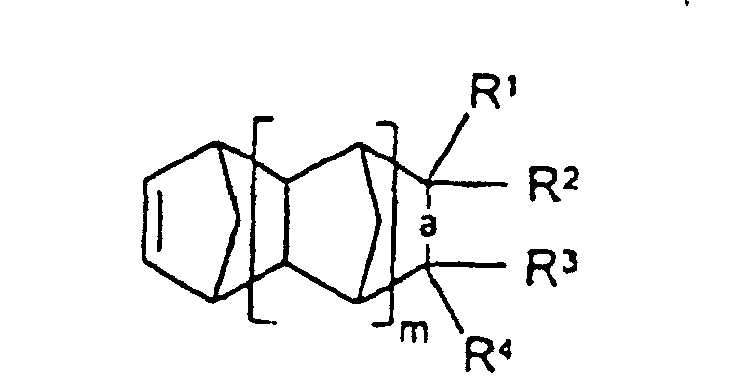 où n représente indépendamment un nombre entier valant de 0 à 10 et R5 représente indépendamment l'hydrogène, un groupe alkyle en C1 à C10 linéaire ou ramifié, alcényle en C2 à C10 linéaire ou ramifié, alcynyle en C2 à C10 linéaire ou ramifié, cycloalkyle en C5 à C12, aryle en C6 à C14 et aralkyle en C7 à C24 ; R6 représente un radical choisi parmi -C(CH3)3, -Si(CH3)3, -CH(R7)OCH2CH3, -CH(R7)OC(CH3)3, le groupe dicyclopropylméthyle, le groupe diméthylcyclopropylméthyle, ou les groupes cycliques suivants :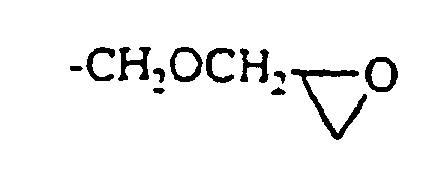
 où R7 représente l'hydrogène ou un groupe alkyle en C1 à C5 linéaire ou ramifié ; R1 et R4 pris conjointement avec les deux atomes de carbone du cycle auxquels ils sont reliés peuvent représenter un groupe cycloaliphatique substitué ou non substitué contenant 4 à 30 atomes de carbone en cycle, un groupe aryle substitué ou non substitué contenant 6 à 18 atomes de carbone en cycle et leurs combinaisons ; R1 et R4 peuvent être pris conjointement pour former le groupe de pontage divalent, -C(O)-Q-(O)C- qui, lorsqu'il est pris conjointement avec les deux atomes de carbone du cycle auxquels ils sont reliés, forme un anneau pentacyclique, dans lequel Q représente un atome d'oxygène ou le groupe N(R8), où R8 est choisi parmi l'hydrogène, un halogène, un groupe alkyle en C1 à C10 linéaire ou ramifié et un groupe aryle en C6 à C18.
- Procédé selon la revendication 90, comprenant en outre au moins un monomère réticulant polycyclooléfinique multifonctionnel.
- Procédé selon la revendication 91, dans lequel ledit monomère réticulant polycyclooléfinique multifonctionnel contient au moins deux doubles liaisons polymérisables de type norbomène dans sa structure.
- Procédé selon la revendication 92, dans lequel ledit monomère réticulant est choisi est choisi dans le groupe constitué des formules :


 et leurs mélanges, où m pris indépendamment est un nombre entier valant de 0 à 5 et R9 est un radical divalent choisi par les radicaux alkylènes, aromatiques et éthers.
- Procédé selon la revendication 83, dans lequel ledit polymère est post-durci à une température élevée pendant au moins une heure.
- Procédé selon la revendication 78, dans lequel ledit procatalyseur est choisi dans le groupe constitué d'(allyl)palladium(tricyclohexylphosphine)triflate, d'(allyl)palladium(tricyclohexylphosphine)trifluoroacétate, d'(allyl)palladium(tri-o-tolylphosphine)triflate, d'(allyl)palladium(tri-o-tolylphosphine)trifluoroacétate, d'(allyl)palladium(trinaphtylphosphine)triflate ; et d'(allyl)palladium(trinaphtylphosphine)trifluoroacétate.
- Procédé selon la revendication 95, dans lequel ledit sel WCA est choisi dans le groupe constitué de tétrakis(perfluorophényl)borate de lithium et de tétrakis(3,5-bis(trifluorométhyl)phényl)borate de sodium.
- Procédé selon la revendication 96, dans lequel ledit sel WCA est le tétrakis(perfluorophényl)borate de (lithium 2,5 Et2O).
- Composition de matière comprenant un composé choisi dans le groupe constitué d'(allyl)palladium(tricyclohexylphosphine)triflate, d'(allyl)palladium(tricyclohexylphosphine)trifluoroacétate, d'(allyl)palladium(tri-o-tolylphosphine)triflate, d'(allyl)palladium(tri-o-tolylphosphine)trifluoroacétate, d'(allyl)palladium(trinaphtylphosphine)triflate ; et d'(allyl)palladium(trinaphtylphosphine)trifluoroacétate.
- Composition de matière selon la revendication 98, comprenant en outre un composé choisi dans le groupe constitué de tétrakis(perfluorophényl)borate de lithium, tétrakis(3,5-bis(trifluorométhyl)phényl)borate de sodium, et de tétrakis(perfluorophényl)borate de (lithium 2.5 Et2O).
- Composition polymère comprenant des motifs répétitifs polycycliques, dont une partie au moins est représentée par la formule :où m représente un nombre entier valant de 0 à 5 ; R1 à R3 représentent indépendamment l'hydrogène, un groupe alkyle en C1 à C10 substitué ou non substitué, linéaire ou ramifié, haloalkyle en C1 à C10 linéaire ou ramifié, alcényle en C2 à C10 substitué ou non substitué, linéaire ou ramifié, haloalcényle en C2 à C10 linéaire ou ramifié, alcynyle en C2 à C10 substitué ou non substitué, linéaire ou ramifié, cycloalkyle en C4 à C12 substitué ou non substitué, halocycloalkyle en C4 à C12 substitué ou non substitué, cycloalcényle en C4 à C12 substitué ou non substitué, halocycloalcényle en C4 à C12 substitué ou non substitué, aryle en C6 à C12 substitué ou non substitué, haloaryle en C6 à C12 substitué ou non substitué et aralkyle en C7 à C24 substitué ou non substitué, les radicaux R1 et R2 peuvent être pris conjointement pour constituer un groupe alkylidényle en C1 à C10, -(CH2)nC(O)NH2, -(CH2)nC(O)Cl, -(CH2)nC(O)OR5, -(CH2)n-OR5, -(CH2)n-OC(O)R5, -(CH2)n-C(O)R5, -(CH2)nSiR5, -(CH2)nSi(OR5)3, -(CH2)nC(O)OR6, et le groupe :
 où n représente indépendamment un nombre entier valant de 0 à 10 et R5 représente indépendamment l'hydrogène, un groupe alkyle en C1 à C10 linéaire ou ramifié, alcényle en C2 à C10, alcynyle en C2 à C10 linéaire ou ramifié, cycloalkyle en C5 à C12, aryle en C6 à C14 et aralkyle en C7 à C24 ; R6 représente un radical choisi parmi -C(CH3)3, -Si(CH3)3, -CH(R7)OCH2CH3, -CH(R7)OC(CH3)3, le groupe dicyclopropylméthyle, diméthylcyclopropylméthyle, ou les groupes cycliques suivants :
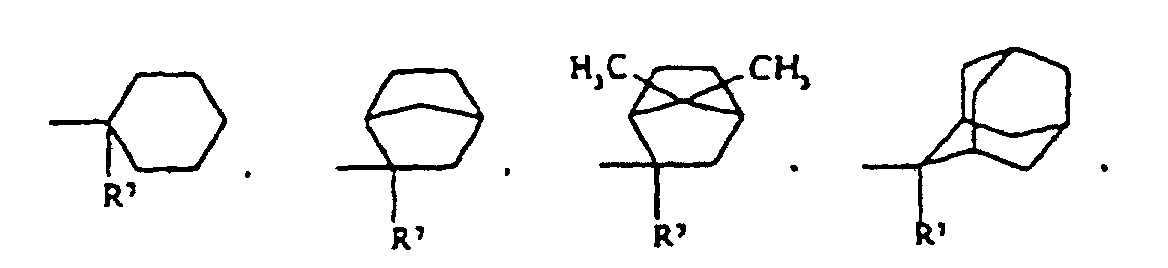 où R7 représente l'hydrogène ou un groupe alkyle en C1 à C5 linéaire ou ramifié.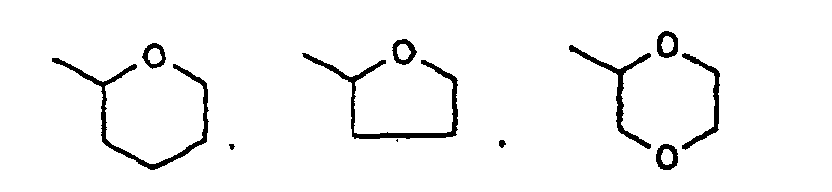
- Composition polymère selon la revendication 100, dans laquelle ledit polymère comprend en outre au moins un motif répétitif représenté par la formule :R1 à R4 représentent indépendamment l'hydrogène, un groupe alkyle en C1 à C10 substitué ou non substitué, linéaire ou ramifié, haloalkyle en C1 à C10 linéaire ou ramifié, alcényle en C2 à C10 substitué ou non substitué, linéaire ou ramifié, haloalcényle en C2 à C10 linéaire ou ramifié, alcynyle en C2 à C10 substitué ou non substitué, linéaire ou ramifié, cycloalkyle en C4 à C12 substitué ou non substitué, halocycloalkyle en C4 à C12 substitué ou non substitué, cycloalcényle en C4 à C12 substitué ou non substitué, halocycloalcényle en C4 à C12 substitué ou non substitué, aryle en C6 à C12 substitué ou non substitué, haloaryle en C6 à C12 substitué ou non substitué et aralkyle en C7 à C24 substitué ou non substitué, les radicaux R1 et R2 ou R3 et R4 peuvent être pris conjointement pour constituer un groupe alkylidényle en C1 à C10, -(CH2)nC(O)NH2, -(CH2)nC(O)Cl, -(CH2)nC(O)OR5, -(CH2)n-OR5, -(CH2)n-OC(O)R5, -(CH2)n-OC(O)OR5, -(CH2)nSiR5, -(CH2)nSi(OR5)3, -(CH2)nC(O)OR6, et le groupe :
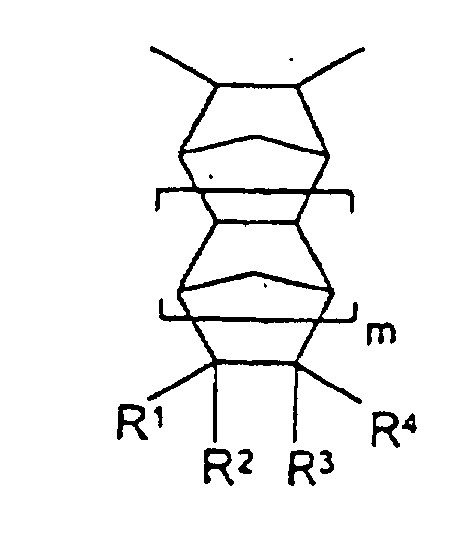 où n représente indépendamment un nombre entier valant de 0 à 10 et R5 représente indépendamment l'hydrogène, un groupe alkyle en C1 à C10 linéaire ou ramifié, alcényle en C2 à C10 linéaire ou ramifié, alcynyle en C2 à C10 linéaire ou ramifié, cycloalkyle en C5 à C12, aryle en C6 à C14 et aralkyle en C7 à C24 ; R6 représente un radical choisi parmi -C(CH3)3, -Si(CH3)3, -CH(R7)OCH2CH3, -CH(R7)OC(CH3)3, le groupe dicyclopropylméthyle, le groupe diméthylcyclopropylméthyle, ou les groupes cycliques suivants :
 où R7 représente l'hydrogène ou un groupe alkyle en C1 à C5 linéaire ou ramifié ; R1 et R4 pris conjointement avec les deux atomes de carbone du cycle auxquels ils sont reliés peuvent représenter un groupe cycloaliphatique substitué ou non substitué contenant 4 à 30 atomes de carbone en cycle, un groupe aryle substitué ou non substitué contenant 6 à 18 atomes de carbone en cycle et leurs combinaisons ; R1 et R4 peuvent être pris conjointement pour former le groupe de pontage divalent, -C(O)-Q-(O)C-, qui, lorsqu'il est pris conjointement avec les deux atomes de carbone du cycle auxquels ils sont reliés, forme un anneau pentacyclique, dans lequel Q représente un atome d'oxygène ou le groupe N(R8), où R8 est choisi parmi l'hydrogène, un halogène, un groupe alkyle en C1 à C10 linéaire ou ramifié et un groupe aryle en C6 à C18.
Applications Claiming Priority (5)
| Application Number | Priority Date | Filing Date | Title |
|---|---|---|---|
| US10312098P | 1998-10-05 | 1998-10-05 | |
| US103120P | 1998-10-05 | ||
| US11159098P | 1998-12-09 | 1998-12-09 | |
| US111590P | 1998-12-09 | ||
| PCT/US1999/023243 WO2000020472A1 (fr) | 1998-10-05 | 1999-10-05 | Catalyseur et procedes de polymerisation de cyclo-olefines |
Publications (2)
| Publication Number | Publication Date |
|---|---|
| EP1034196A1 EP1034196A1 (fr) | 2000-09-13 |
| EP1034196B1 true EP1034196B1 (fr) | 2005-01-12 |
Family
ID=26800106
Family Applications (1)
| Application Number | Title | Priority Date | Filing Date |
|---|---|---|---|
| EP99950213A Expired - Lifetime EP1034196B1 (fr) | 1998-10-05 | 1999-10-05 | Catalyseur et procedes de polymerisation de cyclo-olefines |
Country Status (8)
| Country | Link |
|---|---|
| US (2) | US6455650B1 (fr) |
| EP (1) | EP1034196B1 (fr) |
| CN (2) | CN1249105C (fr) |
| AT (1) | ATE286923T1 (fr) |
| AU (1) | AU6291999A (fr) |
| DE (1) | DE69923156T2 (fr) |
| ID (1) | ID26727A (fr) |
| WO (1) | WO2000020472A1 (fr) |
Families Citing this family (147)
| Publication number | Priority date | Publication date | Assignee | Title |
|---|---|---|---|---|
| JP4275311B2 (ja) | 1997-09-11 | 2009-06-10 | コロラド ステート ユニバーシティ リサーチ ファンデーション | ポリフルオロアルコキシド配位子を含有する弱配位結合アニオン |
| US6903171B2 (en) | 1998-10-05 | 2005-06-07 | Promerus, Llc | Polymerized cycloolefins using transition metal catalyst and end products thereof |
| EP1034196B1 (fr) | 1998-10-05 | 2005-01-12 | Promerus LLC | Catalyseur et procedes de polymerisation de cyclo-olefines |
| CA2366616A1 (fr) | 1999-03-10 | 2000-09-14 | Colorado State University Research Foundation | Anions a coordination faible contenant des ligands polyfluoroalcoxyde |
| US6476271B2 (en) * | 2000-06-19 | 2002-11-05 | Honeywell International, Inc. | Process for the preparation of ether-free salts of tetrakis(pentafluorophenyl) borate |
| AU2001280856A1 (en) | 2000-07-28 | 2002-02-13 | Goodrich Corporation | Polymeric compositions for forming optical waveguides; optical waveguides formed therefrom; and methods for making same |
| US6495484B1 (en) * | 2000-08-28 | 2002-12-17 | Univation Technologies, Llc | Catalyst system and its use in a polymerization process |
| KR100816931B1 (ko) * | 2000-10-04 | 2008-03-25 | 제이에스알 가부시끼가이샤 | 시클릭 올레핀 부가 공중합체 조성물 및 가교-결합된 물질 |
| ES2274005T3 (es) | 2001-01-26 | 2007-05-16 | Chugai Seiyaku Kabushiki Kaisha | Inhibidores de malonyl-coa decarboxilasa usados como moduladores metabolicos. |
| ES2284817T3 (es) | 2001-01-26 | 2007-11-16 | Chugai Seiyaku Kabushiki Kaisha | Procedimientos para el tratamiento de enfermedades con inhibidores de la malonil coa descarboxilasa. |
| KR100637564B1 (ko) | 2001-01-26 | 2006-10-20 | 추가이 세이야쿠 가부시키가이샤 | 대사 조절자로서 유용한 말로닐-코에이 데카르복실라제억제제 |
| US6946523B2 (en) | 2001-02-07 | 2005-09-20 | Henkel Corporation | Heterobifunctional monomers and uses therefor |
| US6423780B1 (en) * | 2001-02-07 | 2002-07-23 | Loctite | Heterobifunctional monomers and uses therefor |
| US7709510B2 (en) | 2001-02-20 | 2010-05-04 | Chugai Seiyaku Kabushiki Kaisha | Azoles as malonyl-CoA decarboxylase inhibitors useful as metabolic modulators |
| NZ526883A (en) | 2001-02-20 | 2005-11-25 | Chugai Pharmaceutical Co Ltd | Azoles as malonyl-coa decarboxylase inhibitors useful as metabolic modulators |
| US6838489B2 (en) | 2001-03-23 | 2005-01-04 | Cymetech, Llc | High activity metal carbene metathesis catalysts generated using a thermally activated N-heterocyclic carbene precursor |
| US7838708B2 (en) | 2001-06-20 | 2010-11-23 | Grt, Inc. | Hydrocarbon conversion process improvements |
| US7022790B2 (en) * | 2002-07-03 | 2006-04-04 | Sumitomo Bakelite Company, Ltd. | Photosensitive compositions based on polycyclic polymers |
| KR100526403B1 (ko) * | 2002-07-10 | 2005-11-08 | 주식회사 엘지화학 | 에스테르기 또는 아세틸기를 포함하는 노보넨계부가중합체의 제조방법 |
| EP1448617B1 (fr) * | 2002-07-10 | 2015-07-01 | LG Chem, Ltd. | Procede de preparation d'un polymere additionnel a base de norbornene contenant un groupe fonctionnel ester ou acetyle |
| US7989571B2 (en) * | 2002-07-10 | 2011-08-02 | Lg Chem, Ltd. | Method for producing norbornene monomer composition, norbornene polymer prepared therefrom, optical film comprising the norbornene polymer, and method for producing the norbornene polymer |
| WO2004007587A1 (fr) * | 2002-07-10 | 2004-01-22 | Lg Chem, Ltd. | Polymere d'addition a base d'ester de norbornene et son procede de preparation |
| US7718744B2 (en) * | 2002-12-05 | 2010-05-18 | Lg Chem, Ltd. | Method for polymerizing cycloolefin polymer containing polar functional groups and electronic devices employing the polymerized cycloolefins |
| US7332554B2 (en) | 2002-12-20 | 2008-02-19 | Exxonmobil Chemical Patents Inc. | Polymers with new sequence distributions |
| WO2004058827A1 (fr) | 2002-12-20 | 2004-07-15 | Exxonmobil Chemical Patents Inc. | Procedes de polymerisation |
| US7425601B2 (en) | 2002-12-20 | 2008-09-16 | Exxonmobil Chemical Patents Inc. | Polymers with new sequence distributions |
| CA2510860C (fr) | 2002-12-20 | 2012-10-09 | Exxonmobil Chemical Patents Inc. | Procede de polymerisation pour lequel on utilise des hydrofluorocarbures comme diluants |
| US7422836B2 (en) * | 2003-02-20 | 2008-09-09 | Promerus Llc | Dissolution rate modifiers for photoresist compositions |
| US7674847B2 (en) * | 2003-02-21 | 2010-03-09 | Promerus Llc | Vinyl addition polycyclic olefin polymers prepared with non-olefinic chain transfer agents and uses thereof |
| US20050171393A1 (en) | 2003-07-15 | 2005-08-04 | Lorkovic Ivan M. | Hydrocarbon synthesis |
| JP4727578B2 (ja) | 2003-08-01 | 2011-07-20 | 中外製薬株式会社 | マロニル−CoAデカルボキシラーゼ阻害剤として有用な複素環式化合物 |
| CA2533749C (fr) | 2003-08-01 | 2012-07-10 | Chugai Seiyaku Kabushiki Kaisha | Composes de piperidine utiles en tant qu'inhibiteurs de malonyl-coa decarboxylase |
| EP2208495B1 (fr) | 2003-08-01 | 2011-12-14 | Chugai Seiyaku Kabushiki Kaisha | Composes azole a base de cyanoguanidine-utilises comme inhibiteurs de malonyl-coa decarboxylase |
| WO2005011812A1 (fr) | 2003-08-01 | 2005-02-10 | Chugai Seiyaku Kabushiki Kaisha | Composes de cyanoamide utiles en tant qu'inhibiteurs de malonyl-coa decarboxylase |
| EP1657259A4 (fr) * | 2003-08-20 | 2006-08-02 | Jsr Corp | Procede de production d'un polymere d'addition de cycloolefines |
| JP4203739B2 (ja) * | 2003-08-20 | 2009-01-07 | Jsr株式会社 | 環状オレフィン系付加重合体の製造方法 |
| US7087687B2 (en) * | 2003-08-21 | 2006-08-08 | Rohm And Haas Company | Catalytic composition and its preparation and use for preparing polymers from ethylenically unsaturated monomers |
| US20050187398A1 (en) * | 2003-10-31 | 2005-08-25 | Andrew Bell | Single component cationic palladium proinitiators for the latent polymerization of cycloolefins |
| JP4075789B2 (ja) * | 2003-12-05 | 2008-04-16 | Jsr株式会社 | 環状オレフィン系付加重合体の製造方法 |
| BRPI0418130A (pt) * | 2003-12-23 | 2007-04-17 | Basell Polyolefine Gmbh | sistema catalisador para a polimerização de olefinas |
| US7101654B2 (en) | 2004-01-14 | 2006-09-05 | Promerus Llc | Norbornene-type monomers and polymers containing pendent lactone or sultone groups |
| KR100590474B1 (ko) * | 2004-01-29 | 2006-06-19 | 주식회사 엘지화학 | 벌크 밀도가 높은 고리형 올레핀 고분자의 제조 방법 및이에 의하여 제조된 고리형 올레핀 고분자 |
| US7378456B2 (en) * | 2004-01-30 | 2008-05-27 | Promerus Llc | Directly photodefinable polymer compositions and methods thereof |
| US7041758B2 (en) * | 2004-03-26 | 2006-05-09 | Rohm And Haas Company | Catalyst complexes for polymerization and co-polymerization of cyclic olefins |
| US20060100469A1 (en) | 2004-04-16 | 2006-05-11 | Waycuilis John J | Process for converting gaseous alkanes to olefins and liquid hydrocarbons |
| US20080275284A1 (en) | 2004-04-16 | 2008-11-06 | Marathon Oil Company | Process for converting gaseous alkanes to liquid hydrocarbons |
| US8173851B2 (en) | 2004-04-16 | 2012-05-08 | Marathon Gtf Technology, Ltd. | Processes for converting gaseous alkanes to liquid hydrocarbons |
| US7244867B2 (en) * | 2004-04-16 | 2007-07-17 | Marathon Oil Company | Process for converting gaseous alkanes to liquid hydrocarbons |
| US8642822B2 (en) | 2004-04-16 | 2014-02-04 | Marathon Gtf Technology, Ltd. | Processes for converting gaseous alkanes to liquid hydrocarbons using microchannel reactor |
| US7674941B2 (en) | 2004-04-16 | 2010-03-09 | Marathon Gtf Technology, Ltd. | Processes for converting gaseous alkanes to liquid hydrocarbons |
| US7172986B2 (en) * | 2004-06-14 | 2007-02-06 | Rohm And Haas Company | Catalytic composition and its preparation and use for preparing polymers from ethylenically unsaturated monomers |
| US7199074B2 (en) * | 2004-06-14 | 2007-04-03 | Rohm And Haas Company | Catalytic composition and its preparation and use for preparing polymers from ethylenically unsaturated monomers |
| WO2006009942A1 (fr) * | 2004-06-21 | 2006-01-26 | Exxonmobil Chemical Patents Inc. | Procédé de polymérisation |
| WO2006083303A1 (fr) * | 2004-06-21 | 2006-08-10 | Exxonmobil Chemical Patents Inc. | Procede de polymerisation |
| US7662892B2 (en) | 2004-06-21 | 2010-02-16 | Exxonmobil Chemical Patents Inc. | Impact copolymers |
| EP1765885A1 (fr) * | 2004-06-21 | 2007-03-28 | Exxonmobil Chemical Patents Inc. | Procédé de récupération de polymères |
| KR100733923B1 (ko) * | 2004-07-07 | 2007-07-02 | 주식회사 엘지화학 | 극성 작용기를 갖는 고리형 올레핀 중합체 제조용 촉매시스템, 이를 이용한 중합체 제조방법과 이 방법에 의해제조된 올레핀 중합체 및 상기 중합체를 포함하는 광학이방성 필름 |
| ATE414118T1 (de) * | 2004-07-07 | 2008-11-15 | Promerus Llc | Lichtempfindliche dielektrische harzzusammensetzungen und ihre verwendungen |
| JP5449649B2 (ja) * | 2004-07-07 | 2014-03-19 | エルジー・ケム・リミテッド | 極性作用基を含む環状オレフィン重合体の製造方法、これにより製造されたオレフィン重合体及びその重合体を含む光学異方性フィルム |
| US7875686B2 (en) * | 2004-08-18 | 2011-01-25 | Promerus Llc | Polycycloolefin polymeric compositions for semiconductor applications |
| US7294568B2 (en) * | 2004-08-20 | 2007-11-13 | Intel Corporation | Formation of air gaps in an interconnect structure using a thin permeable hard mask and resulting structures |
| WO2006031067A1 (fr) * | 2004-09-16 | 2006-03-23 | Lg Chem, Ltd. | Systeme de catalyseur destine a la polymerisation d'une olefine cyclique possedant un groupe fonctionnel polaire, procede de polymerisation utilisant le systeme de catalyseur, polymere d'olefine produit par ce procede et film anisotropique optique comprenant le polymere d'olefine |
| US20080125556A1 (en) * | 2004-12-22 | 2008-05-29 | Jsr Corporation | Method For Producing Cyclic Olefin Addition Copolymer, Cyclic Olefin Addition Copolymer And Use Thereof |
| US7799883B2 (en) | 2005-02-22 | 2010-09-21 | Promerus Llc | Norbornene-type polymers, compositions thereof and lithographic process using such compositions |
| ATE517370T1 (de) * | 2005-02-22 | 2011-08-15 | Promerus Llc | Norbornenpolymere und deren herstellungsverfahren |
| WO2006121058A1 (fr) * | 2005-05-06 | 2006-11-16 | Fujifilm Corporation | Composé organométallique, catalyseur pour la polymérisation d'un composé du norbornène contenant un groupe polaire et procédé servant à produire un polymère d'un composé du norbornène |
| US20060280099A1 (en) * | 2005-05-25 | 2006-12-14 | Konica Minolta Opto, Inc. | Optical element and optical pickup apparatus |
| US7799882B2 (en) * | 2005-06-20 | 2010-09-21 | Exxonmobil Chemical Patents Inc. | Polymerization process |
| KR100789248B1 (ko) | 2005-07-26 | 2008-01-02 | 주식회사 엘지화학 | 고리형 올레핀 중합체 제조용 포스포늄 화합물의 제조방법 |
| EP1913008B1 (fr) * | 2005-07-26 | 2015-04-01 | LG Chem, Ltd. | Procédé de polymerisation d'olefines cycliques |
| CA2623723A1 (fr) * | 2005-09-29 | 2007-04-12 | Amr Technology, Inc. | Procede pour la production de delta-9-tetrahydrocannabinol |
| KR100828728B1 (ko) * | 2005-10-05 | 2008-05-09 | 주식회사 엘지화학 | 고리형 올레핀 중합체 제조용 촉매 |
| KR100804822B1 (ko) * | 2005-10-17 | 2008-02-20 | 주식회사 엘지화학 | 고리형 올레핀 중합체 제조 방법 |
| EP1937731B1 (fr) * | 2005-10-17 | 2015-11-04 | LG Chem. Ltd. | Procedes de polymerisation utilisant des catalyseurs |
| JP4826242B2 (ja) * | 2005-12-12 | 2011-11-30 | Jsr株式会社 | 環状オレフィン系付加重合体の製造方法 |
| SG187456A1 (en) | 2006-02-03 | 2013-02-28 | Grt Inc | Separation of light gases from halogens |
| AP2673A (en) | 2006-02-03 | 2013-05-23 | Grt Inc | Continuous process for converting natural gas to liquid hydrocarbons |
| TW200804479A (en) | 2006-05-23 | 2008-01-16 | Zeon Corp | Oriented film of addition polymer of norbornene compound alone, process for producing the same and use thereof |
| WO2007141909A1 (fr) | 2006-06-07 | 2007-12-13 | Sumitomo Bakelite Co., Ltd. | Procédé de fabrication d'un appareil récepteur de lumière |
| US7964680B2 (en) * | 2006-06-16 | 2011-06-21 | Lg Chem, Ltd. | Method for polymerizing cyclic olefin having polar functional group, olefin polymer produced thereby, optical anisotropic film comprising the same, and catalyst composition for polymerizing the cyclic olefin |
| EP2039708A4 (fr) | 2006-07-07 | 2010-02-24 | Jsr Corp | Copolymère d'addition à base d'oléfines cycliques, procédé pour le produire et film retardant formé à partir dudit copolymère |
| WO2008038173A2 (fr) * | 2006-09-26 | 2008-04-03 | Sasol Technology (Pty) Limited | polymÉrisation (y compris oligomÉrisation) de composÉs olÉfiniques en prÉsence d'un catalyseur et d'un activateur de catalyseur comprenant un groupe organique halogÉnÉ |
| US7727705B2 (en) * | 2007-02-23 | 2010-06-01 | Fujifilm Electronic Materials, U.S.A., Inc. | High etch resistant underlayer compositions for multilayer lithographic processes |
| US7759439B2 (en) * | 2007-03-30 | 2010-07-20 | Promerus Llc | Use of a combination chain transfer and activating agent to control molecular weight and optical density of Pd catalyzed norbornene polymers |
| MX2009012581A (es) | 2007-05-24 | 2010-03-15 | Grt Inc | Reactor de zonas que incorpora captura y liberacion de haluro de hidrogeno reversible. |
| CN101679721A (zh) | 2007-06-12 | 2010-03-24 | 住友电木株式会社 | 树脂组合物、填埋材料、绝缘层以及半导体装置 |
| KR101137208B1 (ko) * | 2007-12-27 | 2012-04-19 | 주식회사 엘지화학 | 고리형 올레핀 조단량체를 이용한 고리형 올레핀 고분자화합물의 제조방법 |
| US8215496B2 (en) | 2008-01-28 | 2012-07-10 | Promerus Llc | Polynorbornene pervaporation membrane films, preparation and use thereof |
| JP2009256468A (ja) * | 2008-04-16 | 2009-11-05 | Asahi Glass Co Ltd | 含フッ素重合体の製造方法 |
| US8609574B2 (en) * | 2008-04-25 | 2013-12-17 | Promerus Llc | In situ olefin polymerization catalyst system |
| US8282810B2 (en) | 2008-06-13 | 2012-10-09 | Marathon Gtf Technology, Ltd. | Bromine-based method and system for converting gaseous alkanes to liquid hydrocarbons using electrolysis for bromine recovery |
| US8273929B2 (en) | 2008-07-18 | 2012-09-25 | Grt, Inc. | Continuous process for converting natural gas to liquid hydrocarbons |
| US20100266775A1 (en) * | 2009-04-20 | 2010-10-21 | Olympia Chimney Supply | Non-Smoking Connector Pipe |
| TW201043658A (en) * | 2009-06-15 | 2010-12-16 | Sumitomo Bakelite Co | Temporarily fixing agent for semiconductor wafer and method for producing semiconductor device using the same |
| US8753790B2 (en) * | 2009-07-01 | 2014-06-17 | Promerus, Llc | Self-imageable film forming polymer, compositions thereof and devices and structures made therefrom |
| CN102317294B (zh) | 2009-08-18 | 2015-04-01 | 株式会社Lg化学 | 化合物、含有该化合物的催化剂组合物和使用该组合物制备基于环烯烃的聚合物的方法 |
| KR101751249B1 (ko) * | 2009-08-31 | 2017-06-27 | 바이엘 인텔렉쳐 프로퍼티 게엠베하 | 테트라아릴보레이트를 사용한 치환된 비페닐의 제조 방법 |
| EP2363402A1 (fr) * | 2010-03-01 | 2011-09-07 | Evonik Oxeno GmbH | Ligands reliés à des silsesquioxanes polyhédrales oligomères et leur utilisation |
| US8198495B2 (en) | 2010-03-02 | 2012-06-12 | Marathon Gtf Technology, Ltd. | Processes and systems for the staged synthesis of alkyl bromides |
| US8367884B2 (en) | 2010-03-02 | 2013-02-05 | Marathon Gtf Technology, Ltd. | Processes and systems for the staged synthesis of alkyl bromides |
| US8541523B2 (en) | 2010-04-05 | 2013-09-24 | Promerus, Llc | Norbornene-type polymers, compositions thereof and lithographic process using such compositions |
| JP5212659B2 (ja) | 2010-07-30 | 2013-06-19 | 信越化学工業株式会社 | 高気体透過性環状オレフィン付加重合体の製造方法 |
| US8530133B2 (en) | 2010-09-28 | 2013-09-10 | Promerus, Llc | Preparation of norbornane-based PAC ballasts |
| US8815050B2 (en) | 2011-03-22 | 2014-08-26 | Marathon Gtf Technology, Ltd. | Processes and systems for drying liquid bromine |
| US8436220B2 (en) | 2011-06-10 | 2013-05-07 | Marathon Gtf Technology, Ltd. | Processes and systems for demethanization of brominated hydrocarbons |
| US8829256B2 (en) | 2011-06-30 | 2014-09-09 | Gtc Technology Us, Llc | Processes and systems for fractionation of brominated hydrocarbons in the conversion of natural gas to liquid hydrocarbons |
| US8802908B2 (en) | 2011-10-21 | 2014-08-12 | Marathon Gtf Technology, Ltd. | Processes and systems for separate, parallel methane and higher alkanes' bromination |
| US9193641B2 (en) | 2011-12-16 | 2015-11-24 | Gtc Technology Us, Llc | Processes and systems for conversion of alkyl bromides to higher molecular weight hydrocarbons in circulating catalyst reactor-regenerator systems |
| CN104105726B (zh) | 2012-02-15 | 2017-05-31 | 默克专利股份有限公司 | 用于有机电子器件的平坦化层 |
| RU2487895C1 (ru) * | 2012-02-28 | 2013-07-20 | Федеральное государственное бюджетное образовательное учреждение высшего профессионального образования "Иркутский государственный университет" | Способ аддитивной полимеризации норборнена |
| RU2487898C1 (ru) * | 2012-02-28 | 2013-07-20 | Федеральное государственное бюджетное образовательное учреждение высшего профессионального образования "Иркутский государственный университет" | Способ получения олигомеров норборнена с терминальной двойной связью |
| RU2487896C1 (ru) * | 2012-03-11 | 2013-07-20 | Федеральное государственное бюджетное образовательное учреждение высшего профессионального образования "Иркутский государственный университет" | Способ аддитивной полимеризации норборнена |
| US8716421B2 (en) | 2012-06-25 | 2014-05-06 | Promerus, Llc | Norbornene-type formate monomers and polymers and optical waveguides formed therefrom |
| TWI576147B (zh) | 2012-08-07 | 2017-04-01 | 住友電木股份有限公司 | 環烷基降莰烯單體、衍生自其的聚合物及其在滲透蒸發的用途 |
| JP6323225B2 (ja) * | 2013-11-01 | 2018-05-16 | セントラル硝子株式会社 | ポジ型感光性樹脂組成物、それを用いた膜の製造方法および電子部品 |
| EP3074700A4 (fr) | 2013-11-29 | 2018-05-16 | Kim, No Eul | Chaudière à eau chaude en plastique |
| JP6577482B2 (ja) | 2014-03-12 | 2019-09-18 | メルク パテント ゲーエムベーハー | 有機電子組成物及びそのデバイス |
| JP6225294B2 (ja) * | 2014-08-15 | 2017-11-01 | プロメラス, エルエルシー | ポリシクロオレフィンブロックポリマー、その製造方法、および重合組成物 |
| US10245562B2 (en) * | 2014-08-15 | 2019-04-02 | Promerus, Llc | Pervaporation membranes derived from polycyclo-olefinic block copolymers |
| TWI675059B (zh) * | 2015-09-01 | 2019-10-21 | 日商住友電木股份有限公司 | 作爲光學材料的聚環烯烴聚合物組成物 |
| US9896527B2 (en) * | 2016-03-01 | 2018-02-20 | Saudi Arabian Oil Company | Highly selective polynorbornene homopolymer membranes for natural gas upgrading |
| JP7122257B2 (ja) | 2016-05-18 | 2022-08-19 | メルク パテント ゲーエムベーハー | 有機誘電体層及び有機電子デバイス |
| WO2018021756A1 (fr) * | 2016-07-29 | 2018-02-01 | 주식회사 엘지화학 | Copolymère d'oléfine cyclique et son procédé de préparation |
| KR102083654B1 (ko) * | 2016-07-29 | 2020-03-02 | 주식회사 엘지화학 | 고리형 올레핀계 공중합체 및 이의 제조 방법 |
| KR102086766B1 (ko) * | 2016-07-29 | 2020-03-09 | 주식회사 엘지화학 | 고리형 올레핀계 공중합체 및 이의 제조 방법 |
| KR102123623B1 (ko) * | 2016-09-02 | 2020-06-16 | 주식회사 엘지화학 | 고리형 올레핀계 공중합체 및 이의 제조 방법 |
| TWI723243B (zh) | 2017-01-06 | 2021-04-01 | 日商住友電木股份有限公司 | 作為光學材料之聚環烯烴聚合物組成物 |
| TWI732111B (zh) | 2017-03-28 | 2021-07-01 | 日商住友電木股份有限公司 | 感光性組成物、彩色濾光片及由其衍生之微透鏡 |
| KR102450815B1 (ko) * | 2017-06-16 | 2022-10-05 | 에스케이이노베이션 주식회사 | 헤테로원자 리간드, 이를 포함하는 올리고머화 촉매 및 올리고머 제조방법 |
| CN109776700A (zh) * | 2017-11-14 | 2019-05-21 | 中国石油天然气股份有限公司 | 烯烃聚合催化剂及其制备方法和应用 |
| KR102729476B1 (ko) * | 2018-03-30 | 2024-11-14 | 다우 글로벌 테크놀로지스 엘엘씨 | 올레핀 중합 활성화제 |
| JP7495880B2 (ja) | 2018-03-30 | 2024-06-05 | ダウ グローバル テクノロジーズ エルエルシー | オレフィン重合のための助触媒としての高溶解性アルキル置換ホウ酸カルベニウム |
| JP7304880B2 (ja) | 2018-03-30 | 2023-07-07 | ダウ グローバル テクノロジーズ エルエルシー | 二核オレフィン重合活性化剤 |
| US12037440B2 (en) | 2018-03-30 | 2024-07-16 | Dow Global Technologies Llc | Highly soluble bis-borate as binuclear co-catalysts for olefin polymerization |
| EP3774942A1 (fr) | 2018-03-30 | 2021-02-17 | Dow Global Technologies LLC | Activateurs de polymérisation d'oléfines |
| US11760817B2 (en) * | 2020-06-08 | 2023-09-19 | Promerus, Llc | Mass polymerizable polycycloolefin compositions containing soluble photoacid generators |
| CN111606955B (zh) * | 2020-07-06 | 2023-05-02 | 长春三友智造科技发展有限公司 | 一种金属有机膦配合物及其制备方法、应用 |
| TWI878633B (zh) * | 2020-10-30 | 2025-04-01 | 日商住友電木股份有限公司 | 熱特性改良型低損耗膜用聚環烯烴組成物 |
| KR20230095975A (ko) | 2020-10-30 | 2023-06-29 | 프로메러스, 엘엘씨 | 저장수명이 안정적이고 덩이중합이 가능한 개선된 폴리시클로올레핀 조성물 |
| WO2022118175A1 (fr) | 2020-12-02 | 2022-06-09 | 3M Innovative Properties Company | Compositions durcissables, mousse composite, procédé de fabrication correspondant et article la comprenant |
| KR102486813B1 (ko) | 2021-01-18 | 2023-01-10 | 경북대학교 산학협력단 | 환형올레핀계 단량체 중합용 비스피라졸릴 리간드를 가진 코발트 착체 촉매 및 이를 이용한 환형올레핀계 중합체의 제조방법 |
| KR102486898B1 (ko) | 2021-02-09 | 2023-01-10 | 경북대학교 산학협력단 | 환형올레핀계 단량체 중합용 이민계 리간드 함유 코발트 착체 촉매 및 이를 이용한 환형올레핀계 중합체의 제조방법 |
| US20240279251A1 (en) | 2021-05-14 | 2024-08-22 | 3M Innovative Properties Company | Monomer, Polymerizable Composition, and Polymers Derived Therefrom |
| JP7764724B2 (ja) | 2021-10-19 | 2025-11-06 | 住友ベークライト株式会社 | ポリマーおよびワニス |
| TW202415692A (zh) * | 2022-09-07 | 2024-04-16 | 美商普羅梅勒斯有限公司 | 用於形成熱特性得到改善的低損耗膜之含有烯烴官能基的多環烯烴聚合物 |
| CN120152955A (zh) | 2022-10-31 | 2025-06-13 | 3M创新有限公司 | 包含衣康酰亚胺降冰片烯和柠康酰亚胺降冰片烯的异构体混合物的组合物 |
| WO2024100476A1 (fr) | 2022-11-07 | 2024-05-16 | 3M Innovative Properties Company | Compositions thermodurcissables durcissables et durcies |
Family Cites Families (16)
| Publication number | Priority date | Publication date | Assignee | Title |
|---|---|---|---|---|
| US3494897A (en) * | 1963-12-05 | 1970-02-10 | Union Carbide Corp | Ethylene/bicyclo(2.2.1)hept-2-ene copolymers |
| US5468819A (en) * | 1993-11-16 | 1995-11-21 | The B.F. Goodrich Company | Process for making polymers containing a norbornene repeating unit by addition polymerization using an organo (nickel or palladium) complex |
| US5677405A (en) * | 1995-05-24 | 1997-10-14 | The B.F. Goodrich Company | Homopolymers and copolymers of cationically polymerizable monomers and method of their preparation |
| US5705503A (en) * | 1995-05-25 | 1998-01-06 | Goodall; Brian Leslie | Addition polymers of polycycloolefins containing functional substituents |
| US5912313A (en) * | 1995-11-22 | 1999-06-15 | The B. F. Goodrich Company | Addition polymers of polycycloolefins containing silyl functional groups |
| WO1997033198A1 (fr) * | 1996-03-07 | 1997-09-12 | The B.F. Goodrich Company | Compositions de photoresist comprenant des polymeres polycycliques avec des groupes pendants labiles acides |
| DE19642866A1 (de) | 1996-10-17 | 1998-04-23 | Bayer Ag | Palladium-Katalysatoren für die Polymerisation |
| DE19714532A1 (de) | 1997-04-08 | 1998-10-15 | Basf Ag | Herstellung von Homo-, Co- oder Blockcopolymeren aus cycloolefinischen Monomereinheiten |
| DE19716312A1 (de) * | 1997-04-11 | 1998-10-15 | Hoechst Ag | Katalysator und Verwendung des Katalysators für die Polymerisation |
| WO1998056839A1 (fr) * | 1997-06-09 | 1998-12-17 | The B.F. Goodrich Company | Procede de preparation de copolymeres ethylene/monomeres de type norbornene a l'aide de catalyseurs cationiques au palladium |
| FI106561B (fi) | 1997-11-03 | 2001-02-28 | Elias Hakalehto | Menetelmä ja laite mikrobiologisten näytteiden rikastamista ja tutkimista varten |
| JP2002509955A (ja) | 1998-03-27 | 2002-04-02 | イー・アイ・デュポン・ドウ・ヌムール・アンド・カンパニー | 置換シクロペンテンのポリマー |
| CA2338847A1 (fr) | 1998-07-27 | 2000-02-10 | Basell Technology Company B.V. | Procede de polymerisation |
| EP1034196B1 (fr) | 1998-10-05 | 2005-01-12 | Promerus LLC | Catalyseur et procedes de polymerisation de cyclo-olefines |
| AU2001280856A1 (en) | 2000-07-28 | 2002-02-13 | Goodrich Corporation | Polymeric compositions for forming optical waveguides; optical waveguides formed therefrom; and methods for making same |
| KR100816931B1 (ko) | 2000-10-04 | 2008-03-25 | 제이에스알 가부시끼가이샤 | 시클릭 올레핀 부가 공중합체 조성물 및 가교-결합된 물질 |
-
1999
- 1999-10-05 EP EP99950213A patent/EP1034196B1/fr not_active Expired - Lifetime
- 1999-10-05 CN CNB99802712XA patent/CN1249105C/zh not_active Expired - Fee Related
- 1999-10-05 US US09/412,935 patent/US6455650B1/en not_active Expired - Lifetime
- 1999-10-05 DE DE69923156T patent/DE69923156T2/de not_active Expired - Lifetime
- 1999-10-05 CN CN200510104100XA patent/CN1847270B/zh not_active Expired - Fee Related
- 1999-10-05 ID IDW20001306A patent/ID26727A/id unknown
- 1999-10-05 AT AT99950213T patent/ATE286923T1/de not_active IP Right Cessation
- 1999-10-05 AU AU62919/99A patent/AU6291999A/en not_active Abandoned
- 1999-10-05 WO PCT/US1999/023243 patent/WO2000020472A1/fr not_active Ceased
-
2002
- 2002-07-16 US US10/196,525 patent/US6825307B2/en not_active Expired - Lifetime
Also Published As
| Publication number | Publication date |
|---|---|
| US6455650B1 (en) | 2002-09-24 |
| US6825307B2 (en) | 2004-11-30 |
| WO2000020472A1 (fr) | 2000-04-13 |
| DE69923156T2 (de) | 2005-12-29 |
| CN1249105C (zh) | 2006-04-05 |
| ID26727A (id) | 2001-02-01 |
| CN1847270A (zh) | 2006-10-18 |
| US20030023013A1 (en) | 2003-01-30 |
| HK1035545A1 (en) | 2001-11-30 |
| DE69923156D1 (de) | 2005-02-17 |
| ATE286923T1 (de) | 2005-01-15 |
| US20020052454A1 (en) | 2002-05-02 |
| EP1034196A1 (fr) | 2000-09-13 |
| CN1847270B (zh) | 2012-05-09 |
| AU6291999A (en) | 2000-04-26 |
| CN1290275A (zh) | 2001-04-04 |
Similar Documents
| Publication | Publication Date | Title |
|---|---|---|
| EP1034196B1 (fr) | Catalyseur et procedes de polymerisation de cyclo-olefines | |
| US7910674B2 (en) | Polymerized cycloolefins using transition metal catalyst and end products thereof | |
| KR100804249B1 (ko) | 광 도파관 형성용 중합 조성물; 이로부터 형성된 광도파관; 및 그 제조방법 | |
| US6350832B1 (en) | Mold addition polymerization of norbornene-type monomers using group 10 metal complexes | |
| EP0828764B1 (fr) | Polymeres d'addition de polycycloolefines contenant des substituants fonctionnels | |
| US7786231B2 (en) | Method for polymerizing cycloolefin polymer containing polar functional groups and electronic devices employing the polymerized cycloolefins | |
| US6949609B2 (en) | Polymeric compositions and uses therefor | |
| KR20060049922A (ko) | 극성 작용기를 갖는 고리형 올레핀 중합체 제조용 촉매시스템, 이를 이용한 중합체 제조방법과 이 방법에 의해제조된 올레핀 중합체 및 상기 중합체를 포함하는 광학이방성 필름 | |
| KR100477943B1 (ko) | 극성 작용기를 포함하는 고리형 올레핀 중합 방법 | |
| KR100876528B1 (ko) | 극성 작용기를 갖는 고리형 올레핀 중합체 제조용 촉매조성물 | |
| KR100762839B1 (ko) | 극성 작용기를 갖는 고리형 올레핀 중합체 제조용 촉매시스템, 이를 이용한 중합체 제조방법과 이 방법에 의해제조된 올레핀 중합체 및 상기 중합체를 포함하는 광학이방성 필름 |
Legal Events
| Date | Code | Title | Description |
|---|---|---|---|
| PUAI | Public reference made under article 153(3) epc to a published international application that has entered the european phase |
Free format text: ORIGINAL CODE: 0009012 |
|
| 17P | Request for examination filed |
Effective date: 20000629 |
|
| AK | Designated contracting states |
Kind code of ref document: A1 Designated state(s): AT BE CH CY DE DK ES FI FR GB GR IE IT LI LU MC NL PT SE |
|
| AX | Request for extension of the european patent |
Free format text: AL;LT;LV;MK;RO;SI |
|
| RIN1 | Information on inventor provided before grant (corrected) |
Inventor name: ELIA, CHRISTINE, N. Inventor name: HENNIS, APRIL, D. Inventor name: FONDRAN, JOHN, C. Inventor name: MIMNA, RICHARD, A. Inventor name: BELL, ANDREW Inventor name: GOODALL, BRIAN, L., THE ALBEMARLE CORPORATION Inventor name: RHODES, LARRY, F. Inventor name: LIPIAN, JOHN-HENRY |
|
| RAP1 | Party data changed (applicant data changed or rights of an application transferred) |
Owner name: THE PENN STATE RESEARCH FOUNDATION Owner name: GOODRICH CORPORATION |
|
| 17Q | First examination report despatched |
Effective date: 20020827 |
|
| RAP1 | Party data changed (applicant data changed or rights of an application transferred) |
Owner name: THE PENN STATE RESEARCH FOUNDATION Owner name: PROMERUS LLC |
|
| GRAP | Despatch of communication of intention to grant a patent |
Free format text: ORIGINAL CODE: EPIDOSNIGR1 |
|
| GRAS | Grant fee paid |
Free format text: ORIGINAL CODE: EPIDOSNIGR3 |
|
| GRAA | (expected) grant |
Free format text: ORIGINAL CODE: 0009210 |
|
| AK | Designated contracting states |
Kind code of ref document: B1 Designated state(s): AT BE CH CY DE DK ES FI FR GB GR IE IT LI LU MC NL PT SE |
|
| PG25 | Lapsed in a contracting state [announced via postgrant information from national office to epo] |
Ref country code: NL Free format text: LAPSE BECAUSE OF FAILURE TO SUBMIT A TRANSLATION OF THE DESCRIPTION OR TO PAY THE FEE WITHIN THE PRESCRIBED TIME-LIMIT Effective date: 20050112 Ref country code: LI Free format text: LAPSE BECAUSE OF FAILURE TO SUBMIT A TRANSLATION OF THE DESCRIPTION OR TO PAY THE FEE WITHIN THE PRESCRIBED TIME-LIMIT Effective date: 20050112 Ref country code: IT Free format text: LAPSE BECAUSE OF FAILURE TO SUBMIT A TRANSLATION OF THE DESCRIPTION OR TO PAY THE FEE WITHIN THE PRESCRIBED TIME-LIMIT;WARNING: LAPSES OF ITALIAN PATENTS WITH EFFECTIVE DATE BEFORE 2007 MAY HAVE OCCURRED AT ANY TIME BEFORE 2007. THE CORRECT EFFECTIVE DATE MAY BE DIFFERENT FROM THE ONE RECORDED. Effective date: 20050112 Ref country code: FI Free format text: LAPSE BECAUSE OF FAILURE TO SUBMIT A TRANSLATION OF THE DESCRIPTION OR TO PAY THE FEE WITHIN THE PRESCRIBED TIME-LIMIT Effective date: 20050112 Ref country code: CH Free format text: LAPSE BECAUSE OF FAILURE TO SUBMIT A TRANSLATION OF THE DESCRIPTION OR TO PAY THE FEE WITHIN THE PRESCRIBED TIME-LIMIT Effective date: 20050112 Ref country code: BE Free format text: LAPSE BECAUSE OF FAILURE TO SUBMIT A TRANSLATION OF THE DESCRIPTION OR TO PAY THE FEE WITHIN THE PRESCRIBED TIME-LIMIT Effective date: 20050112 Ref country code: AT Free format text: LAPSE BECAUSE OF FAILURE TO SUBMIT A TRANSLATION OF THE DESCRIPTION OR TO PAY THE FEE WITHIN THE PRESCRIBED TIME-LIMIT Effective date: 20050112 |
|
| REG | Reference to a national code |
Ref country code: GB Ref legal event code: FG4D |
|
| REG | Reference to a national code |
Ref country code: CH Ref legal event code: EP |
|
| REF | Corresponds to: |
Ref document number: 69923156 Country of ref document: DE Date of ref document: 20050217 Kind code of ref document: P |
|
| REG | Reference to a national code |
Ref country code: IE Ref legal event code: FG4D |
|
| PG25 | Lapsed in a contracting state [announced via postgrant information from national office to epo] |
Ref country code: SE Free format text: LAPSE BECAUSE OF FAILURE TO SUBMIT A TRANSLATION OF THE DESCRIPTION OR TO PAY THE FEE WITHIN THE PRESCRIBED TIME-LIMIT Effective date: 20050412 Ref country code: DK Free format text: LAPSE BECAUSE OF FAILURE TO SUBMIT A TRANSLATION OF THE DESCRIPTION OR TO PAY THE FEE WITHIN THE PRESCRIBED TIME-LIMIT Effective date: 20050412 |
|
| PG25 | Lapsed in a contracting state [announced via postgrant information from national office to epo] |
Ref country code: ES Free format text: LAPSE BECAUSE OF FAILURE TO SUBMIT A TRANSLATION OF THE DESCRIPTION OR TO PAY THE FEE WITHIN THE PRESCRIBED TIME-LIMIT Effective date: 20050423 |
|
| NLV1 | Nl: lapsed or annulled due to failure to fulfill the requirements of art. 29p and 29m of the patents act | ||
| REG | Reference to a national code |
Ref country code: CH Ref legal event code: PL |
|
| PG25 | Lapsed in a contracting state [announced via postgrant information from national office to epo] |
Ref country code: IE Free format text: LAPSE BECAUSE OF NON-PAYMENT OF DUE FEES Effective date: 20051005 Ref country code: CY Free format text: LAPSE BECAUSE OF FAILURE TO SUBMIT A TRANSLATION OF THE DESCRIPTION OR TO PAY THE FEE WITHIN THE PRESCRIBED TIME-LIMIT Effective date: 20051005 |
|
| PG25 | Lapsed in a contracting state [announced via postgrant information from national office to epo] |
Ref country code: MC Free format text: LAPSE BECAUSE OF NON-PAYMENT OF DUE FEES Effective date: 20051031 Ref country code: LU Free format text: LAPSE BECAUSE OF NON-PAYMENT OF DUE FEES Effective date: 20051031 |
|
| PLBE | No opposition filed within time limit |
Free format text: ORIGINAL CODE: 0009261 |
|
| STAA | Information on the status of an ep patent application or granted ep patent |
Free format text: STATUS: NO OPPOSITION FILED WITHIN TIME LIMIT |
|
| ET | Fr: translation filed | ||
| 26N | No opposition filed |
Effective date: 20051013 |
|
| REG | Reference to a national code |
Ref country code: IE Ref legal event code: MM4A |
|
| PG25 | Lapsed in a contracting state [announced via postgrant information from national office to epo] |
Ref country code: PT Free format text: LAPSE BECAUSE OF NON-PAYMENT OF DUE FEES Effective date: 20050612 |
|
| PG25 | Lapsed in a contracting state [announced via postgrant information from national office to epo] |
Ref country code: GR Free format text: LAPSE BECAUSE OF NON-PAYMENT OF DUE FEES Effective date: 20050112 |
|
| PGFP | Annual fee paid to national office [announced via postgrant information from national office to epo] |
Ref country code: DE Payment date: 20121029 Year of fee payment: 14 Ref country code: FR Payment date: 20121107 Year of fee payment: 14 |
|
| PGFP | Annual fee paid to national office [announced via postgrant information from national office to epo] |
Ref country code: GB Payment date: 20121025 Year of fee payment: 14 |
|
| GBPC | Gb: european patent ceased through non-payment of renewal fee |
Effective date: 20131005 |
|
| PG25 | Lapsed in a contracting state [announced via postgrant information from national office to epo] |
Ref country code: GB Free format text: LAPSE BECAUSE OF NON-PAYMENT OF DUE FEES Effective date: 20131005 |
|
| REG | Reference to a national code |
Ref country code: FR Ref legal event code: ST Effective date: 20140630 |
|
| REG | Reference to a national code |
Ref country code: DE Ref legal event code: R119 Ref document number: 69923156 Country of ref document: DE Effective date: 20140501 |
|
| PG25 | Lapsed in a contracting state [announced via postgrant information from national office to epo] |
Ref country code: FR Free format text: LAPSE BECAUSE OF NON-PAYMENT OF DUE FEES Effective date: 20131031 Ref country code: DE Free format text: LAPSE BECAUSE OF NON-PAYMENT OF DUE FEES Effective date: 20140501 |