EP1038868A2 - Sulfonamide als antivirale Mittel - Google Patents
Sulfonamide als antivirale Mittel Download PDFInfo
- Publication number
- EP1038868A2 EP1038868A2 EP00104463A EP00104463A EP1038868A2 EP 1038868 A2 EP1038868 A2 EP 1038868A2 EP 00104463 A EP00104463 A EP 00104463A EP 00104463 A EP00104463 A EP 00104463A EP 1038868 A2 EP1038868 A2 EP 1038868A2
- Authority
- EP
- European Patent Office
- Prior art keywords
- alkyl
- substituted
- optionally
- hydroxy
- group
- Prior art date
- Legal status (The legal status is an assumption and is not a legal conclusion. Google has not performed a legal analysis and makes no representation as to the accuracy of the status listed.)
- Withdrawn
Links
- 0 *CC(*)(*)*Nc(cc1)ccc1NS(*C(C=**)=O)(=O)=O Chemical compound *CC(*)(*)*Nc(cc1)ccc1NS(*C(C=**)=O)(=O)=O 0.000 description 1
Classifications
-
- C—CHEMISTRY; METALLURGY
- C07—ORGANIC CHEMISTRY
- C07D—HETEROCYCLIC COMPOUNDS
- C07D213/00—Heterocyclic compounds containing six-membered rings, not condensed with other rings, with one nitrogen atom as the only ring hetero atom and three or more double bonds between ring members or between ring members and non-ring members
- C07D213/02—Heterocyclic compounds containing six-membered rings, not condensed with other rings, with one nitrogen atom as the only ring hetero atom and three or more double bonds between ring members or between ring members and non-ring members having three double bonds between ring members or between ring members and non-ring members
- C07D213/04—Heterocyclic compounds containing six-membered rings, not condensed with other rings, with one nitrogen atom as the only ring hetero atom and three or more double bonds between ring members or between ring members and non-ring members having three double bonds between ring members or between ring members and non-ring members having no bond between the ring nitrogen atom and a non-ring member or having only hydrogen or carbon atoms directly attached to the ring nitrogen atom
- C07D213/60—Heterocyclic compounds containing six-membered rings, not condensed with other rings, with one nitrogen atom as the only ring hetero atom and three or more double bonds between ring members or between ring members and non-ring members having three double bonds between ring members or between ring members and non-ring members having no bond between the ring nitrogen atom and a non-ring member or having only hydrogen or carbon atoms directly attached to the ring nitrogen atom with hetero atoms or with carbon atoms having three bonds to hetero atoms with at the most one bond to halogen, e.g. ester or nitrile radicals, directly attached to ring carbon atoms
- C07D213/72—Nitrogen atoms
- C07D213/73—Unsubstituted amino or imino radicals
-
- A—HUMAN NECESSITIES
- A61—MEDICAL OR VETERINARY SCIENCE; HYGIENE
- A61P—SPECIFIC THERAPEUTIC ACTIVITY OF CHEMICAL COMPOUNDS OR MEDICINAL PREPARATIONS
- A61P31/00—Antiinfectives, i.e. antibiotics, antiseptics, chemotherapeutics
- A61P31/12—Antivirals
-
- A—HUMAN NECESSITIES
- A61—MEDICAL OR VETERINARY SCIENCE; HYGIENE
- A61P—SPECIFIC THERAPEUTIC ACTIVITY OF CHEMICAL COMPOUNDS OR MEDICINAL PREPARATIONS
- A61P31/00—Antiinfectives, i.e. antibiotics, antiseptics, chemotherapeutics
- A61P31/12—Antivirals
- A61P31/20—Antivirals for DNA viruses
- A61P31/22—Antivirals for DNA viruses for herpes viruses
-
- C—CHEMISTRY; METALLURGY
- C07—ORGANIC CHEMISTRY
- C07C—ACYCLIC OR CARBOCYCLIC COMPOUNDS
- C07C311/00—Amides of sulfonic acids, i.e. compounds having singly-bound oxygen atoms of sulfo groups replaced by nitrogen atoms, not being part of nitro or nitroso groups
- C07C311/15—Sulfonamides having sulfur atoms of sulfonamide groups bound to carbon atoms of six-membered aromatic rings
- C07C311/21—Sulfonamides having sulfur atoms of sulfonamide groups bound to carbon atoms of six-membered aromatic rings having the nitrogen atom of at least one of the sulfonamide groups bound to a carbon atom of a six-membered aromatic ring
-
- C—CHEMISTRY; METALLURGY
- C07—ORGANIC CHEMISTRY
- C07D—HETEROCYCLIC COMPOUNDS
- C07D207/00—Heterocyclic compounds containing five-membered rings not condensed with other rings, with one nitrogen atom as the only ring hetero atom
- C07D207/02—Heterocyclic compounds containing five-membered rings not condensed with other rings, with one nitrogen atom as the only ring hetero atom with only hydrogen or carbon atoms directly attached to the ring nitrogen atom
- C07D207/04—Heterocyclic compounds containing five-membered rings not condensed with other rings, with one nitrogen atom as the only ring hetero atom with only hydrogen or carbon atoms directly attached to the ring nitrogen atom having no double bonds between ring members or between ring members and non-ring members
- C07D207/10—Heterocyclic compounds containing five-membered rings not condensed with other rings, with one nitrogen atom as the only ring hetero atom with only hydrogen or carbon atoms directly attached to the ring nitrogen atom having no double bonds between ring members or between ring members and non-ring members with hetero atoms or with carbon atoms having three bonds to hetero atoms with at the most one bond to halogen, e.g. ester or nitrile radicals, directly attached to ring carbon atoms
- C07D207/12—Oxygen or sulfur atoms
-
- C—CHEMISTRY; METALLURGY
- C07—ORGANIC CHEMISTRY
- C07D—HETEROCYCLIC COMPOUNDS
- C07D209/00—Heterocyclic compounds containing five-membered rings, condensed with other rings, with one nitrogen atom as the only ring hetero atom
- C07D209/02—Heterocyclic compounds containing five-membered rings, condensed with other rings, with one nitrogen atom as the only ring hetero atom condensed with one carbocyclic ring
- C07D209/04—Indoles; Hydrogenated indoles
- C07D209/10—Indoles; Hydrogenated indoles with substituted hydrocarbon radicals attached to carbon atoms of the hetero ring
- C07D209/14—Radicals substituted by nitrogen atoms, not forming part of a nitro radical
-
- C—CHEMISTRY; METALLURGY
- C07—ORGANIC CHEMISTRY
- C07D—HETEROCYCLIC COMPOUNDS
- C07D211/00—Heterocyclic compounds containing hydrogenated pyridine rings, not condensed with other rings
- C07D211/04—Heterocyclic compounds containing hydrogenated pyridine rings, not condensed with other rings with only hydrogen or carbon atoms directly attached to the ring nitrogen atom
- C07D211/06—Heterocyclic compounds containing hydrogenated pyridine rings, not condensed with other rings with only hydrogen or carbon atoms directly attached to the ring nitrogen atom having no double bonds between ring members or between ring members and non-ring members
- C07D211/08—Heterocyclic compounds containing hydrogenated pyridine rings, not condensed with other rings with only hydrogen or carbon atoms directly attached to the ring nitrogen atom having no double bonds between ring members or between ring members and non-ring members with hydrocarbon or substituted hydrocarbon radicals directly attached to ring carbon atoms
- C07D211/18—Heterocyclic compounds containing hydrogenated pyridine rings, not condensed with other rings with only hydrogen or carbon atoms directly attached to the ring nitrogen atom having no double bonds between ring members or between ring members and non-ring members with hydrocarbon or substituted hydrocarbon radicals directly attached to ring carbon atoms with substituted hydrocarbon radicals attached to ring carbon atoms
- C07D211/20—Heterocyclic compounds containing hydrogenated pyridine rings, not condensed with other rings with only hydrogen or carbon atoms directly attached to the ring nitrogen atom having no double bonds between ring members or between ring members and non-ring members with hydrocarbon or substituted hydrocarbon radicals directly attached to ring carbon atoms with substituted hydrocarbon radicals attached to ring carbon atoms with hydrocarbon radicals, substituted by singly bound oxygen or sulphur atoms
- C07D211/22—Heterocyclic compounds containing hydrogenated pyridine rings, not condensed with other rings with only hydrogen or carbon atoms directly attached to the ring nitrogen atom having no double bonds between ring members or between ring members and non-ring members with hydrocarbon or substituted hydrocarbon radicals directly attached to ring carbon atoms with substituted hydrocarbon radicals attached to ring carbon atoms with hydrocarbon radicals, substituted by singly bound oxygen or sulphur atoms by oxygen atoms
-
- C—CHEMISTRY; METALLURGY
- C07—ORGANIC CHEMISTRY
- C07D—HETEROCYCLIC COMPOUNDS
- C07D211/00—Heterocyclic compounds containing hydrogenated pyridine rings, not condensed with other rings
- C07D211/04—Heterocyclic compounds containing hydrogenated pyridine rings, not condensed with other rings with only hydrogen or carbon atoms directly attached to the ring nitrogen atom
- C07D211/06—Heterocyclic compounds containing hydrogenated pyridine rings, not condensed with other rings with only hydrogen or carbon atoms directly attached to the ring nitrogen atom having no double bonds between ring members or between ring members and non-ring members
- C07D211/08—Heterocyclic compounds containing hydrogenated pyridine rings, not condensed with other rings with only hydrogen or carbon atoms directly attached to the ring nitrogen atom having no double bonds between ring members or between ring members and non-ring members with hydrocarbon or substituted hydrocarbon radicals directly attached to ring carbon atoms
- C07D211/18—Heterocyclic compounds containing hydrogenated pyridine rings, not condensed with other rings with only hydrogen or carbon atoms directly attached to the ring nitrogen atom having no double bonds between ring members or between ring members and non-ring members with hydrocarbon or substituted hydrocarbon radicals directly attached to ring carbon atoms with substituted hydrocarbon radicals attached to ring carbon atoms
- C07D211/30—Heterocyclic compounds containing hydrogenated pyridine rings, not condensed with other rings with only hydrogen or carbon atoms directly attached to the ring nitrogen atom having no double bonds between ring members or between ring members and non-ring members with hydrocarbon or substituted hydrocarbon radicals directly attached to ring carbon atoms with substituted hydrocarbon radicals attached to ring carbon atoms with hydrocarbon radicals, substituted by doubly bound oxygen or sulfur atoms or by two oxygen or sulfur atoms singly bound to the same carbon atom
- C07D211/32—Heterocyclic compounds containing hydrogenated pyridine rings, not condensed with other rings with only hydrogen or carbon atoms directly attached to the ring nitrogen atom having no double bonds between ring members or between ring members and non-ring members with hydrocarbon or substituted hydrocarbon radicals directly attached to ring carbon atoms with substituted hydrocarbon radicals attached to ring carbon atoms with hydrocarbon radicals, substituted by doubly bound oxygen or sulfur atoms or by two oxygen or sulfur atoms singly bound to the same carbon atom by oxygen atoms
-
- C—CHEMISTRY; METALLURGY
- C07—ORGANIC CHEMISTRY
- C07D—HETEROCYCLIC COMPOUNDS
- C07D211/00—Heterocyclic compounds containing hydrogenated pyridine rings, not condensed with other rings
- C07D211/04—Heterocyclic compounds containing hydrogenated pyridine rings, not condensed with other rings with only hydrogen or carbon atoms directly attached to the ring nitrogen atom
- C07D211/06—Heterocyclic compounds containing hydrogenated pyridine rings, not condensed with other rings with only hydrogen or carbon atoms directly attached to the ring nitrogen atom having no double bonds between ring members or between ring members and non-ring members
- C07D211/36—Heterocyclic compounds containing hydrogenated pyridine rings, not condensed with other rings with only hydrogen or carbon atoms directly attached to the ring nitrogen atom having no double bonds between ring members or between ring members and non-ring members with hetero atoms or with carbon atoms having three bonds to hetero atoms with at the most one bond to halogen, e.g. ester or nitrile radicals, directly attached to ring carbon atoms
- C07D211/40—Oxygen atoms
- C07D211/44—Oxygen atoms attached in position 4
- C07D211/46—Oxygen atoms attached in position 4 having a hydrogen atom as the second substituent in position 4
-
- C—CHEMISTRY; METALLURGY
- C07—ORGANIC CHEMISTRY
- C07D—HETEROCYCLIC COMPOUNDS
- C07D211/00—Heterocyclic compounds containing hydrogenated pyridine rings, not condensed with other rings
- C07D211/04—Heterocyclic compounds containing hydrogenated pyridine rings, not condensed with other rings with only hydrogen or carbon atoms directly attached to the ring nitrogen atom
- C07D211/06—Heterocyclic compounds containing hydrogenated pyridine rings, not condensed with other rings with only hydrogen or carbon atoms directly attached to the ring nitrogen atom having no double bonds between ring members or between ring members and non-ring members
- C07D211/36—Heterocyclic compounds containing hydrogenated pyridine rings, not condensed with other rings with only hydrogen or carbon atoms directly attached to the ring nitrogen atom having no double bonds between ring members or between ring members and non-ring members with hetero atoms or with carbon atoms having three bonds to hetero atoms with at the most one bond to halogen, e.g. ester or nitrile radicals, directly attached to ring carbon atoms
- C07D211/56—Nitrogen atoms
- C07D211/58—Nitrogen atoms attached in position 4
-
- C—CHEMISTRY; METALLURGY
- C07—ORGANIC CHEMISTRY
- C07D—HETEROCYCLIC COMPOUNDS
- C07D211/00—Heterocyclic compounds containing hydrogenated pyridine rings, not condensed with other rings
- C07D211/04—Heterocyclic compounds containing hydrogenated pyridine rings, not condensed with other rings with only hydrogen or carbon atoms directly attached to the ring nitrogen atom
- C07D211/06—Heterocyclic compounds containing hydrogenated pyridine rings, not condensed with other rings with only hydrogen or carbon atoms directly attached to the ring nitrogen atom having no double bonds between ring members or between ring members and non-ring members
- C07D211/36—Heterocyclic compounds containing hydrogenated pyridine rings, not condensed with other rings with only hydrogen or carbon atoms directly attached to the ring nitrogen atom having no double bonds between ring members or between ring members and non-ring members with hetero atoms or with carbon atoms having three bonds to hetero atoms with at the most one bond to halogen, e.g. ester or nitrile radicals, directly attached to ring carbon atoms
- C07D211/60—Carbon atoms having three bonds to hetero atoms with at the most one bond to halogen, e.g. ester or nitrile radicals
- C07D211/62—Carbon atoms having three bonds to hetero atoms with at the most one bond to halogen, e.g. ester or nitrile radicals attached in position 4
-
- C—CHEMISTRY; METALLURGY
- C07—ORGANIC CHEMISTRY
- C07D—HETEROCYCLIC COMPOUNDS
- C07D211/00—Heterocyclic compounds containing hydrogenated pyridine rings, not condensed with other rings
- C07D211/04—Heterocyclic compounds containing hydrogenated pyridine rings, not condensed with other rings with only hydrogen or carbon atoms directly attached to the ring nitrogen atom
- C07D211/68—Heterocyclic compounds containing hydrogenated pyridine rings, not condensed with other rings with only hydrogen or carbon atoms directly attached to the ring nitrogen atom having one double bond between ring members or between a ring member and a non-ring member
- C07D211/72—Heterocyclic compounds containing hydrogenated pyridine rings, not condensed with other rings with only hydrogen or carbon atoms directly attached to the ring nitrogen atom having one double bond between ring members or between a ring member and a non-ring member with hetero atoms or with carbon atoms having three bonds to hetero atoms, with at the most one bond to halogen, directly attached to ring carbon atoms
- C07D211/74—Oxygen atoms
-
- C—CHEMISTRY; METALLURGY
- C07—ORGANIC CHEMISTRY
- C07D—HETEROCYCLIC COMPOUNDS
- C07D213/00—Heterocyclic compounds containing six-membered rings, not condensed with other rings, with one nitrogen atom as the only ring hetero atom and three or more double bonds between ring members or between ring members and non-ring members
- C07D213/02—Heterocyclic compounds containing six-membered rings, not condensed with other rings, with one nitrogen atom as the only ring hetero atom and three or more double bonds between ring members or between ring members and non-ring members having three double bonds between ring members or between ring members and non-ring members
- C07D213/04—Heterocyclic compounds containing six-membered rings, not condensed with other rings, with one nitrogen atom as the only ring hetero atom and three or more double bonds between ring members or between ring members and non-ring members having three double bonds between ring members or between ring members and non-ring members having no bond between the ring nitrogen atom and a non-ring member or having only hydrogen or carbon atoms directly attached to the ring nitrogen atom
- C07D213/60—Heterocyclic compounds containing six-membered rings, not condensed with other rings, with one nitrogen atom as the only ring hetero atom and three or more double bonds between ring members or between ring members and non-ring members having three double bonds between ring members or between ring members and non-ring members having no bond between the ring nitrogen atom and a non-ring member or having only hydrogen or carbon atoms directly attached to the ring nitrogen atom with hetero atoms or with carbon atoms having three bonds to hetero atoms with at the most one bond to halogen, e.g. ester or nitrile radicals, directly attached to ring carbon atoms
- C07D213/72—Nitrogen atoms
- C07D213/74—Amino or imino radicals substituted by hydrocarbon or substituted hydrocarbon radicals
-
- C—CHEMISTRY; METALLURGY
- C07—ORGANIC CHEMISTRY
- C07D—HETEROCYCLIC COMPOUNDS
- C07D213/00—Heterocyclic compounds containing six-membered rings, not condensed with other rings, with one nitrogen atom as the only ring hetero atom and three or more double bonds between ring members or between ring members and non-ring members
- C07D213/02—Heterocyclic compounds containing six-membered rings, not condensed with other rings, with one nitrogen atom as the only ring hetero atom and three or more double bonds between ring members or between ring members and non-ring members having three double bonds between ring members or between ring members and non-ring members
- C07D213/04—Heterocyclic compounds containing six-membered rings, not condensed with other rings, with one nitrogen atom as the only ring hetero atom and three or more double bonds between ring members or between ring members and non-ring members having three double bonds between ring members or between ring members and non-ring members having no bond between the ring nitrogen atom and a non-ring member or having only hydrogen or carbon atoms directly attached to the ring nitrogen atom
- C07D213/60—Heterocyclic compounds containing six-membered rings, not condensed with other rings, with one nitrogen atom as the only ring hetero atom and three or more double bonds between ring members or between ring members and non-ring members having three double bonds between ring members or between ring members and non-ring members having no bond between the ring nitrogen atom and a non-ring member or having only hydrogen or carbon atoms directly attached to the ring nitrogen atom with hetero atoms or with carbon atoms having three bonds to hetero atoms with at the most one bond to halogen, e.g. ester or nitrile radicals, directly attached to ring carbon atoms
- C07D213/72—Nitrogen atoms
- C07D213/75—Amino or imino radicals, acylated by carboxylic or carbonic acids, or by sulfur or nitrogen analogues thereof, e.g. carbamates
-
- C—CHEMISTRY; METALLURGY
- C07—ORGANIC CHEMISTRY
- C07D—HETEROCYCLIC COMPOUNDS
- C07D231/00—Heterocyclic compounds containing 1,2-diazole or hydrogenated 1,2-diazole rings
- C07D231/02—Heterocyclic compounds containing 1,2-diazole or hydrogenated 1,2-diazole rings not condensed with other rings
- C07D231/10—Heterocyclic compounds containing 1,2-diazole or hydrogenated 1,2-diazole rings not condensed with other rings having two or three double bonds between ring members or between ring members and non-ring members
- C07D231/14—Heterocyclic compounds containing 1,2-diazole or hydrogenated 1,2-diazole rings not condensed with other rings having two or three double bonds between ring members or between ring members and non-ring members with hetero atoms or with carbon atoms having three bonds to hetero atoms with at the most one bond to halogen, e.g. ester or nitrile radicals, directly attached to ring carbon atoms
- C07D231/38—Nitrogen atoms
- C07D231/40—Acylated on said nitrogen atom
-
- C—CHEMISTRY; METALLURGY
- C07—ORGANIC CHEMISTRY
- C07D—HETEROCYCLIC COMPOUNDS
- C07D239/00—Heterocyclic compounds containing 1,3-diazine or hydrogenated 1,3-diazine rings
- C07D239/02—Heterocyclic compounds containing 1,3-diazine or hydrogenated 1,3-diazine rings not condensed with other rings
- C07D239/24—Heterocyclic compounds containing 1,3-diazine or hydrogenated 1,3-diazine rings not condensed with other rings having three or more double bonds between ring members or between ring members and non-ring members
- C07D239/28—Heterocyclic compounds containing 1,3-diazine or hydrogenated 1,3-diazine rings not condensed with other rings having three or more double bonds between ring members or between ring members and non-ring members with hetero atoms or with carbon atoms having three bonds to hetero atoms with at the most one bond to halogen, directly attached to ring carbon atoms
- C07D239/46—Two or more oxygen, sulphur or nitrogen atoms
- C07D239/47—One nitrogen atom and one oxygen or sulfur atom, e.g. cytosine
-
- C—CHEMISTRY; METALLURGY
- C07—ORGANIC CHEMISTRY
- C07D—HETEROCYCLIC COMPOUNDS
- C07D243/00—Heterocyclic compounds containing seven-membered rings having two nitrogen atoms as the only ring hetero atoms
- C07D243/06—Heterocyclic compounds containing seven-membered rings having two nitrogen atoms as the only ring hetero atoms having the nitrogen atoms in positions 1 and 4
- C07D243/08—Heterocyclic compounds containing seven-membered rings having two nitrogen atoms as the only ring hetero atoms having the nitrogen atoms in positions 1 and 4 not condensed with other rings
-
- C—CHEMISTRY; METALLURGY
- C07—ORGANIC CHEMISTRY
- C07D—HETEROCYCLIC COMPOUNDS
- C07D273/00—Heterocyclic compounds containing rings having nitrogen and oxygen atoms as the only ring hetero atoms, not provided for by groups C07D261/00 - C07D271/00
-
- C—CHEMISTRY; METALLURGY
- C07—ORGANIC CHEMISTRY
- C07D—HETEROCYCLIC COMPOUNDS
- C07D277/00—Heterocyclic compounds containing 1,3-thiazole or hydrogenated 1,3-thiazole rings
- C07D277/02—Heterocyclic compounds containing 1,3-thiazole or hydrogenated 1,3-thiazole rings not condensed with other rings
- C07D277/20—Heterocyclic compounds containing 1,3-thiazole or hydrogenated 1,3-thiazole rings not condensed with other rings having two or three double bonds between ring members or between ring members and non-ring members
- C07D277/32—Heterocyclic compounds containing 1,3-thiazole or hydrogenated 1,3-thiazole rings not condensed with other rings having two or three double bonds between ring members or between ring members and non-ring members with hetero atoms or with carbon atoms having three bonds to hetero atoms with at the most one bond to halogen, e.g. ester or nitrile radicals, directly attached to ring carbon atoms
- C07D277/38—Nitrogen atoms
- C07D277/44—Acylated amino or imino radicals
- C07D277/46—Acylated amino or imino radicals by carboxylic acids, or sulfur or nitrogen analogues thereof
-
- C—CHEMISTRY; METALLURGY
- C07—ORGANIC CHEMISTRY
- C07D—HETEROCYCLIC COMPOUNDS
- C07D295/00—Heterocyclic compounds containing polymethylene-imine rings with at least five ring members, 3-azabicyclo [3.2.2] nonane, piperazine, morpholine or thiomorpholine rings, having only hydrogen atoms directly attached to the ring carbon atoms
- C07D295/16—Heterocyclic compounds containing polymethylene-imine rings with at least five ring members, 3-azabicyclo [3.2.2] nonane, piperazine, morpholine or thiomorpholine rings, having only hydrogen atoms directly attached to the ring carbon atoms acylated on ring nitrogen atoms
- C07D295/18—Heterocyclic compounds containing polymethylene-imine rings with at least five ring members, 3-azabicyclo [3.2.2] nonane, piperazine, morpholine or thiomorpholine rings, having only hydrogen atoms directly attached to the ring carbon atoms acylated on ring nitrogen atoms by radicals derived from carboxylic acids, or sulfur or nitrogen analogues thereof
- C07D295/182—Radicals derived from carboxylic acids
- C07D295/192—Radicals derived from carboxylic acids from aromatic carboxylic acids
-
- C—CHEMISTRY; METALLURGY
- C07—ORGANIC CHEMISTRY
- C07D—HETEROCYCLIC COMPOUNDS
- C07D295/00—Heterocyclic compounds containing polymethylene-imine rings with at least five ring members, 3-azabicyclo [3.2.2] nonane, piperazine, morpholine or thiomorpholine rings, having only hydrogen atoms directly attached to the ring carbon atoms
- C07D295/16—Heterocyclic compounds containing polymethylene-imine rings with at least five ring members, 3-azabicyclo [3.2.2] nonane, piperazine, morpholine or thiomorpholine rings, having only hydrogen atoms directly attached to the ring carbon atoms acylated on ring nitrogen atoms
- C07D295/20—Heterocyclic compounds containing polymethylene-imine rings with at least five ring members, 3-azabicyclo [3.2.2] nonane, piperazine, morpholine or thiomorpholine rings, having only hydrogen atoms directly attached to the ring carbon atoms acylated on ring nitrogen atoms by radicals derived from carbonic acid, or sulfur or nitrogen analogues thereof
- C07D295/205—Radicals derived from carbonic acid
-
- C—CHEMISTRY; METALLURGY
- C07—ORGANIC CHEMISTRY
- C07D—HETEROCYCLIC COMPOUNDS
- C07D307/00—Heterocyclic compounds containing five-membered rings having one oxygen atom as the only ring hetero atom
- C07D307/02—Heterocyclic compounds containing five-membered rings having one oxygen atom as the only ring hetero atom not condensed with other rings
- C07D307/34—Heterocyclic compounds containing five-membered rings having one oxygen atom as the only ring hetero atom not condensed with other rings having two or three double bonds between ring members or between ring members and non-ring members
- C07D307/38—Heterocyclic compounds containing five-membered rings having one oxygen atom as the only ring hetero atom not condensed with other rings having two or three double bonds between ring members or between ring members and non-ring members with substituted hydrocarbon radicals attached to ring carbon atoms
- C07D307/52—Radicals substituted by nitrogen atoms not forming part of a nitro radical
-
- C—CHEMISTRY; METALLURGY
- C07—ORGANIC CHEMISTRY
- C07D—HETEROCYCLIC COMPOUNDS
- C07D471/00—Heterocyclic compounds containing nitrogen atoms as the only ring hetero atoms in the condensed system, at least one ring being a six-membered ring with one nitrogen atom, not provided for by groups C07D451/00 - C07D463/00
- C07D471/02—Heterocyclic compounds containing nitrogen atoms as the only ring hetero atoms in the condensed system, at least one ring being a six-membered ring with one nitrogen atom, not provided for by groups C07D451/00 - C07D463/00 in which the condensed system contains two hetero rings
- C07D471/04—Ortho-condensed systems
-
- C—CHEMISTRY; METALLURGY
- C07—ORGANIC CHEMISTRY
- C07D—HETEROCYCLIC COMPOUNDS
- C07D491/00—Heterocyclic compounds containing in the condensed ring system both one or more rings having oxygen atoms as the only ring hetero atoms and one or more rings having nitrogen atoms as the only ring hetero atoms, not provided for by groups C07D451/00 - C07D459/00, C07D463/00, C07D477/00 or C07D489/00
- C07D491/02—Heterocyclic compounds containing in the condensed ring system both one or more rings having oxygen atoms as the only ring hetero atoms and one or more rings having nitrogen atoms as the only ring hetero atoms, not provided for by groups C07D451/00 - C07D459/00, C07D463/00, C07D477/00 or C07D489/00 in which the condensed system contains two hetero rings
- C07D491/10—Spiro-condensed systems
-
- C—CHEMISTRY; METALLURGY
- C07—ORGANIC CHEMISTRY
- C07C—ACYCLIC OR CARBOCYCLIC COMPOUNDS
- C07C2601/00—Systems containing only non-condensed rings
- C07C2601/02—Systems containing only non-condensed rings with a three-membered ring
Definitions
- the present invention relates to new compounds which are suitable as medicaments are processes for their production and their use as pharmaceuticals, especially as an antiviral.
- ⁇ , ⁇ -Naphthyl linked phenylsulfonamides are predominantly from phototechnical Publications known [cf. see JP-06 122 669-A2, EP-684 515-A1; JP-59 174 836-A2, DE-2 902 074, US-3 925 347, US-4 035 401, US-3 622 603, US-3 482 971, EP 284 130].
- WO 90/09 787 discloses sulfonamides as radio or chemosensitizers and their use in the treatment of tumors.
- the compound is N- [4 - [[[5- (dimethylamino) -1-naphthalenyl] sulfonyl] amino] phenyl] acetamide known (J. Inst. Chem. (India) (1976), 48, Pt 6, 280-5).
- the substances according to the invention can also be present as salts.
- physiologically acceptable salts are preferred.
- Physiologically acceptable salts can be salts of the compounds according to the invention with inorganic or organic acids. Salts are preferred with inorganic acids such as hydrochloric acid, hydrobromic acid, Phosphoric acid or sulfuric acid, or salts with organic carbon or Sulfonic acids such as acetic acid, maleic acid, fumaric acid, malic acid, Citric acid, tartaric acid, lactic acid, benzoic acid, or methanesulfonic acid, Ethanesulfonic acid, phenylsulfonic acid, toluenesulfonic acid or naphthalenedisulfonic acid.
- inorganic acids such as hydrochloric acid, hydrobromic acid, Phosphoric acid or sulfuric acid
- organic carbon or Sulfonic acids such as acetic acid, maleic acid, fumaric acid, malic acid, Citric acid, tartaric acid, lactic acid, benzoic acid, or methanesulfonic acid, Ethanesulfonic acid,
- Physiologically acceptable salts can also be metal or ammonium salts compounds of the invention.
- metal or ammonium salts compounds of the invention For example, particular preference is given to Sodium-, Potassium, magnesium or calcium salts, as well as ammonium salts, which are derived are of ammonia, or organic amines, such as ethylamine, di- or Triethylamine, di- or triethanolamine, dicyclohexylamine, dimethylaminoethanol, Arginine, lysine, ethylenediamine or 2-phenylethylamine.
- the compounds of general formula (I) according to the invention can in Various stereochemical forms occur that are either like image and Mirror image (enantiomers), or which do not look like image and mirror image (diastereomers) behavior.
- the invention relates to both the antipodes and the racemic forms as well as the diastereomer mixtures.
- the racemic shapes can also be used as the diastereomers in a known manner in the stereoisomerically uniform Separate components.
- a straight-chain, branched or cyclic, saturated or unsaturated hydrocarbon group having 1 to 14 carbon atoms includes, for example, a straight-chain or branched alkyl radical having 1 to 14 carbon atoms, a straight-chain or branched alkenyl radical having 2 to 14 carbon atoms, a straight-chain or branched Alkynyl radical with 2 to 14 carbon atoms and a saturated or unsaturated cyclic hydrocarbon radical with 3 to 6 carbon atoms in the definition of R 1 .
- radicals in which 1 to 2 carbon atoms of the abovementioned hydrocarbon groups in the chain can be replaced by O or S include, for example (C 1 -C 6 ) alkoxyalkyl, (C 1 -C 6 ) alkylthioalkyl radicals.
- straight chain or branched alkyl group having 1 to 14 carbon atoms examples include: methyl, ethyl, propyl, isopropyl, butyl, Isobutyl, sec-butyl, pentyl, isopentyl, hexyl, isohexyl, heptyl, isoheptyl, octyl, Nonyl, decyl, undecyl and dodecyl.
- alkenyl group with 2 to 14 carbon atoms examples include: allyl, propenyl, isopropenyl, butenyl, isobutenyl, Pentenyl, isopentenyl, hexenyl, isohexenyl, heptenyl, isoheptenyl, octenyl and Isooctenyl.
- alkynyl group with 2 to 14 carbon atoms
- Residues are mentioned that have one or more C ⁇ C groups.
- cycloalkyl group having 3 to 6 carbon atoms includes, for example a cyclopropyl, cyclopentyl and cyclohexyl. Cyclopropyl is preferred.
- the straight-chain, branched or cyclic, saturated or unsaturated hydrocarbon group having 1 to 14 carbon atoms in the definition of R 1 is preferably a straight-chain alkyl group having 1 to 12 carbon atoms or a (C 1 -C 6 ) alkoxy (C 1 -C 6 ) alkyl group .
- (C 1 -C 6 ) alkoxy group reference is made to the definition mentioned below.
- (C 1 -C 6 ) alkyl generally represents straight-chain or branched-chain hydrocarbon radicals having 1 to 6 carbon atoms, and in this regard reference is made to the groups mentioned by way of example in the explanations for the alkyl group having 1 to 14 carbon atoms above.
- the (C 1 -C 6 ) alkoxy group as used in the present invention and as also defined in the definitions (C 1 -C 6 ) alkoxycarbonyl, (C 1 -C 6 ) alkoxycarbonyl (C 1 -C 6 ) alkyl and (C 1 -C 6 ) alkoxycarbonylamino is used includes, for example, straight-chain or branched-chain alkoxy groups having 1 to 6 carbon atoms, particularly preferably alkoxy groups having 1 to 4 carbon atoms, more preferably alkoxy groups having 1 to 3 carbon atoms.
- methoxy, ethoxy, propoxy, isopropoxy, butoxy, isobutoxy, pentoxy, isopentoxy, hexoxy and isohexoxy can be mentioned.
- Methoxy, ethoxy and propoxy are preferred.
- the straight chain, branched or cyclic, saturated or unsaturated hydrocarbon group with 1 to 10 carbon atoms in the definition of R 6 and R 7 includes, for example, the above for the definition of the straight chain, branched chain or cyclic, saturated or unsaturated hydrocarbon groups with 1 to 14 carbon atoms in the Definition of R 1 groups with 1 to 10 carbon atoms.
- a straight-chain or branched-chain (C 1 -C 6 ) alkyl group is preferred here.
- (C 1 -C 6 ) alkylamino includes the alkylamino groups whose alkyl groups have 1 to 6 carbon atoms. These can be symmetrical or asymmetrical alkylamino groups, such as dimethylamino, diethylamino, methylethylamino, etc.
- 3- to 8-membered rings which R 6 and R 7 can form together with the nitrogen atom to which they are attached include, for example, pyrrolidine, piperidine, morpholine, etc.
- (C 6 -C 10 ) aryl represents an aromatic radical having 6 to 10 carbon atoms.
- Preferred aryl radicals are phenyl and naphthyl.
- 5- to 10-membered heteroaryl stands for rings containing 5- to 10-membered heteroatoms, which may contain 1 to 4 heteroatoms which are selected from O, S and N and include, for example, pyridyl, furyl, thienyl, Pyrolyl, imidazolyl, pyrazolyl, pyrazinyl, pyrimidinyl, pyridazinyl, indolizinyl, indolyl, benzo [b] thienyl, indazolyl, quinolyl, isoquinolyl, naphthyridinyl, quinazolinyl, etc.
- Halogen in the context of the invention includes fluorine, chlorine, bromine and iodine. Prefers are chlorine or fluorine.
- Halogen (C 1 -C 6 ) alkyl in the context of the invention includes (C 1 -C 6 ) alkyl groups, as defined above, which can be substituted by 1 to 3 halogen atoms, preferably fluorine or chlorine, such as monofluoroalkyl groups having 1 to 3 Carbon atoms, monochloroalkyl groups with 1 to 3 carbon atoms, and difluoroalkyl groups with 1 to 6 carbon atoms, dichloroalkyl groups with 1 to 6 carbon atoms and trifluoro or trichloroalkyl groups with 1 to 6 carbon atoms.
- halogen atoms preferably fluorine or chlorine, such as monofluoroalkyl groups having 1 to 3 Carbon atoms, monochloroalkyl groups with 1 to 3 carbon atoms, and difluoroalkyl groups with 1 to 6 carbon atoms, dichloroalkyl groups with 1 to 6 carbon atoms and trifluoro or trichloroalky
- Fluoromethyl, chloromethyl and trifluoromethyl are particularly preferred.
- 5- to 10-membered heteroarylamino includes amino which is represented by one of the above mentioned 5 to 10-membered heteroaryl radicals is substituted.
- (C 6 -C 10 ) aryl (C 1 -C 6 ) alkylamino reference is made to the above-mentioned definitions for (C 6 -C 10 ) aryl and (C 1 -C 6 ) alkyl.
- a preferred example here is benzylamino.
- morpholino piperaz
- Fluorine (C 1 -C 3 ) alkyl in the context of the invention includes alkyl groups with 1 to 3 carbon atoms with up to 3 fluorine atoms, such as trifluoromethyl.
- hydroxy (C 1 -C 6 ) alkyl includes the above-mentioned straight-chain or branched-chain alkyl groups having 1 to 6 carbon atoms, which can be substituted by 1 to 3 hydroxyl groups. Hydroxymethyl is preferred.
- (C 1 -C 6 ) acyl and (C 1 -C 6 ) acyl in the definition (C 1 -C 6 ) acyloxy stand for straight-chain or branched-chain alkanoyl with 1 to 6 carbon atoms. Examples include: formyl, acetyl, propanoyl, isopropanoyl, butanoyl, isobutanoyl, pentanoyl and hexanoyl.
- the invention includes compounds of the following formula (I ) on:
- the invention includes compounds of the formula (I) or (I ) where A is naphthalenediyl.
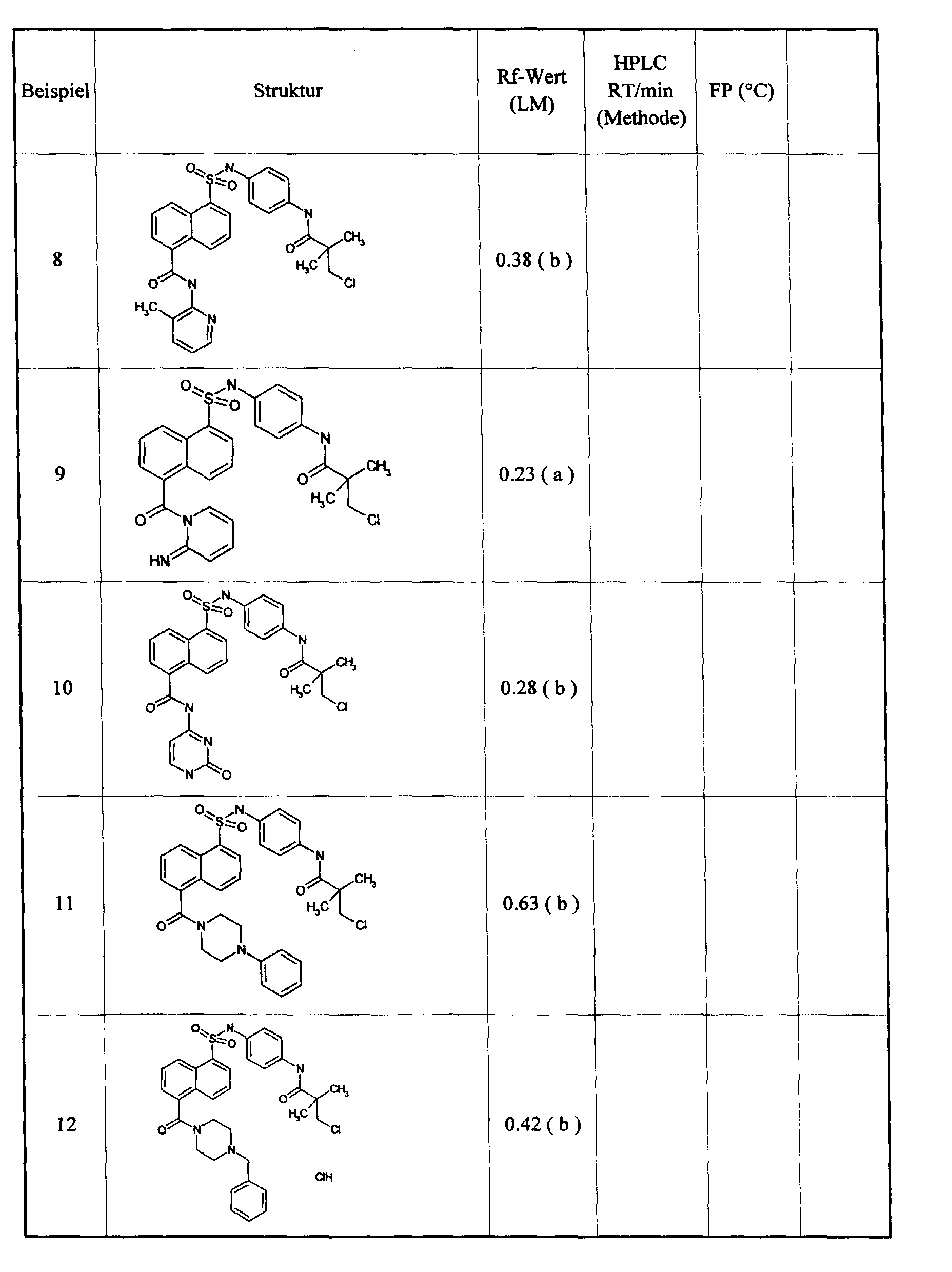
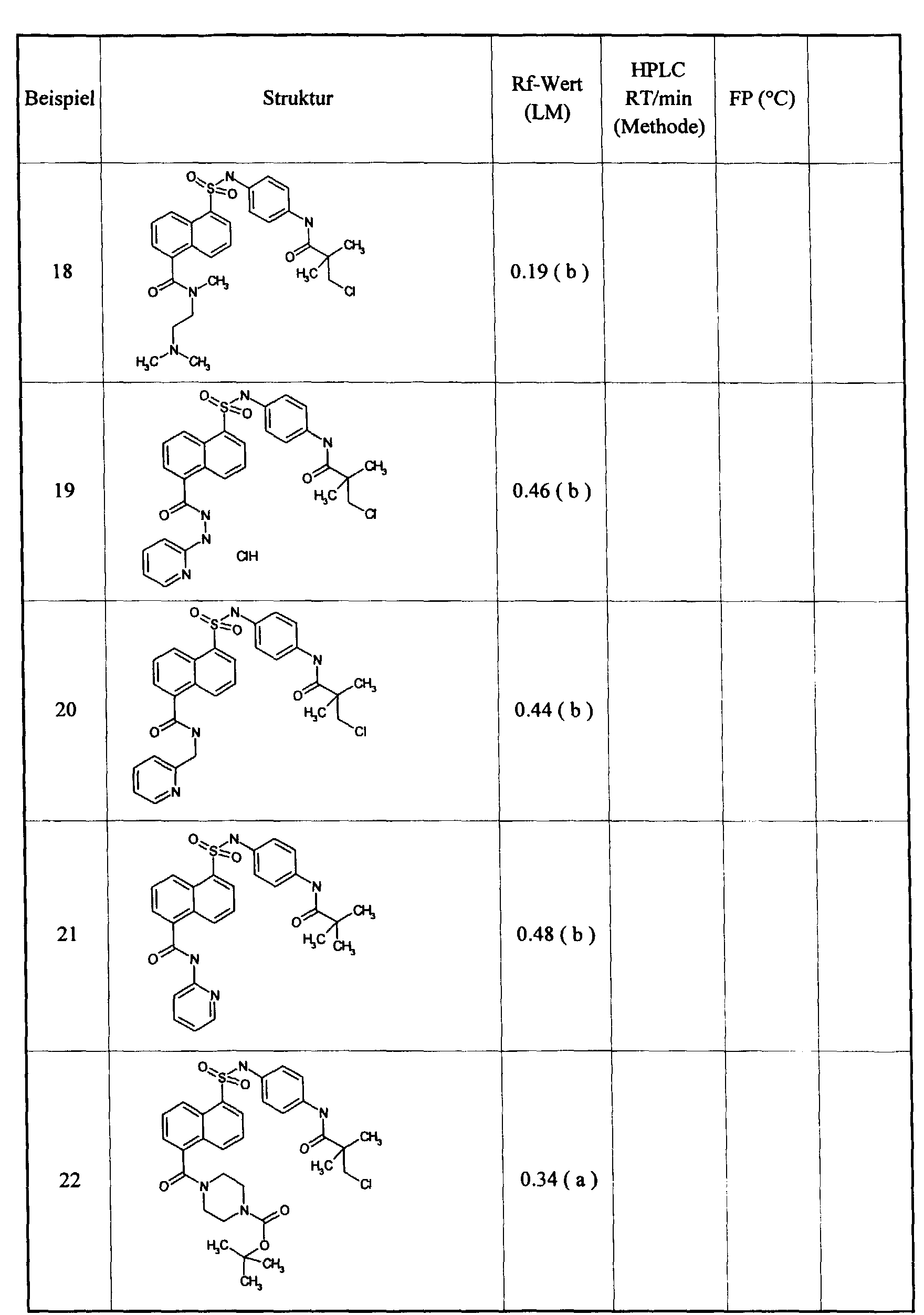
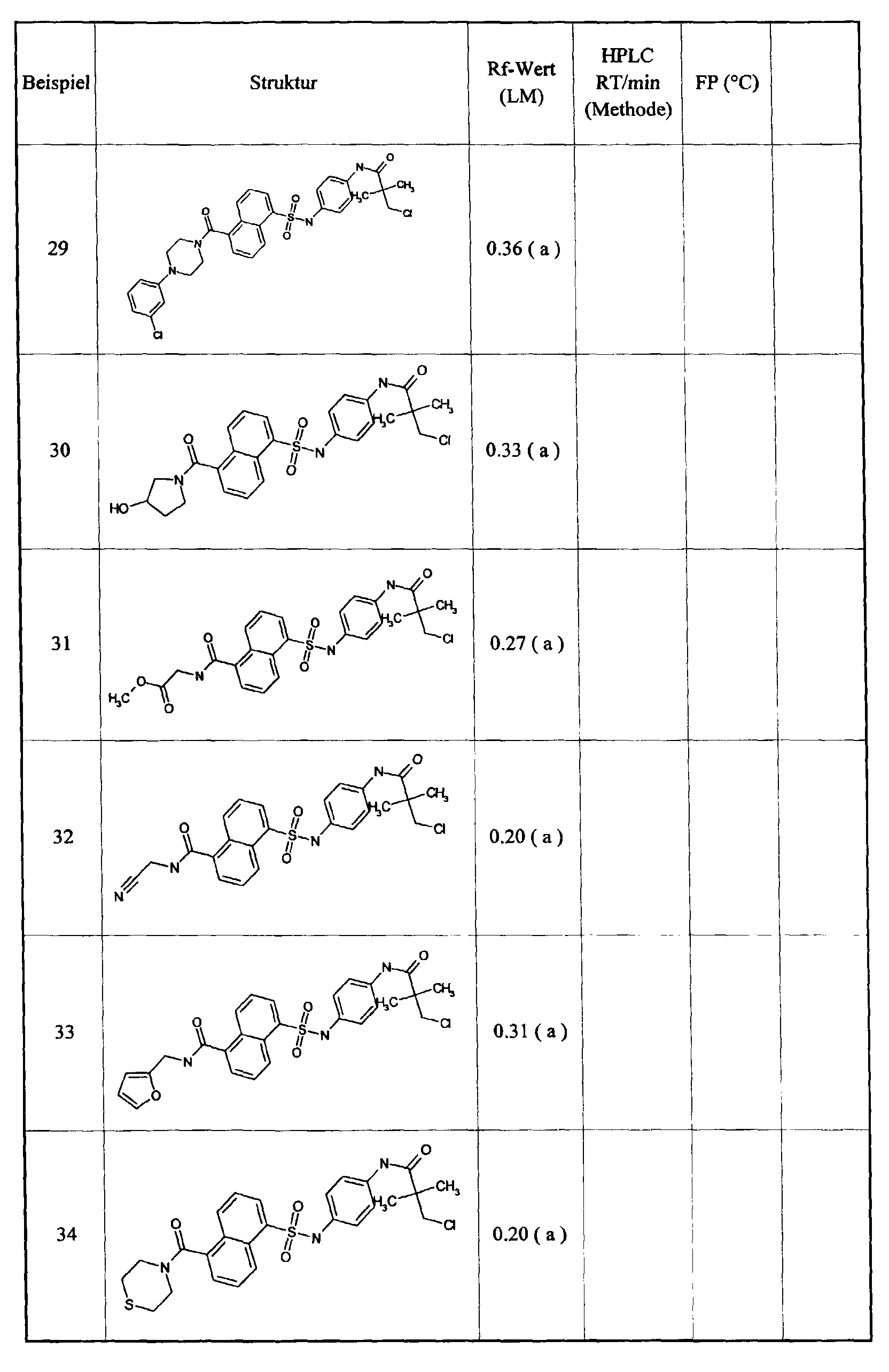
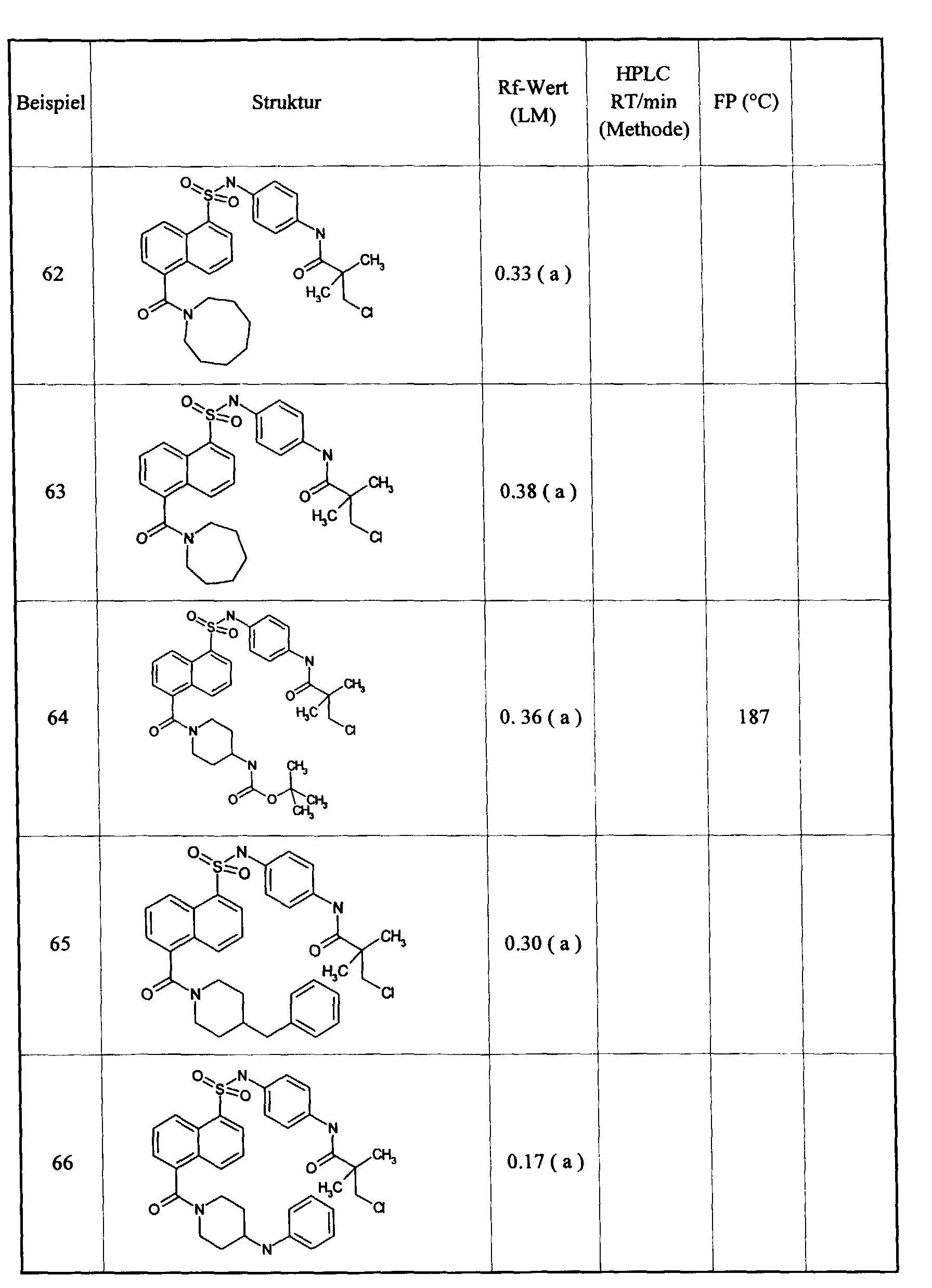
- the invention includes compounds of the formula (I) or (I ) a, in which R 1 is hydrogen and R 2 is selected from pyridyl, phenyl, hydroxyphenyl or (C 1 -C 4 ) alkoxycarbonylphenyl, or R 1 and R 2 together with the nitrogen atom to which they are attached, a ring of the formula : form, or for thiomorpholino, 4-oxopiperidino, 4-N- (cyclopropyl) piperazin-1-yl, piperidino, 1-azacyclooctan-1-yl, 1-azacycloheptan-1-yl or 1,3-thiazolidin-1-yl stand.
- the customary inert solvents are suitable for all process steps Solvents that do not change under the reaction conditions.
- organic solvents such as ethers e.g. Diethyl ether, glycol mono- or -dimethyl ether, dioxane or tetrahydrofuran, or hydrocarbons such as Benzene, toluene, xylene, cyclohexane or petroleum fractions or halogenated hydrocarbons such as methylene chloride, chloroform, carbon tetrachloride, or Dimethyl sulfoxide, dimethylformamide, hexamethylphosphoric triamide, ethyl acetate, Pyridine, triethylamine or picoline. It is also possible to use mixtures of the above Solvent, if necessary also to be used with water. Particularly preferred are methylene chloride, tetrahydrofuran, pyridine and dioxane.
- Suitable bases are organic amines, in particular trialkyl (C 1 -C 6 ) amines such as, for example, triethylamine or heterocycles such as pyridine, methylpiperidine, piperidine or N-methylmorpholine. Pyridine, triethylamine and N-methylmorpholine are preferred.
- the reactions can be carried out under normal pressure, but also under increased or reduced pressure Pressure (e.g. 0.5 to 3 bar). Generally one works at Normal pressure.
- the reactions are preferably in a temperature range from 0 ° C to 100 ° C carried out at 0 ° C to 30 ° C and at normal pressure.
- the invention further relates to compounds of the formula (I) or (I ') for Use as a medicine.
- the invention further relates to a pharmaceutical composition
- a pharmaceutical composition comprising a compound of the general formula (I) or (I ) in admixture with at least one pharmaceutically acceptable carrier or excipient.
- the invention further relates to the use of the compound of the general formula (I) or (I ) for the manufacture of a medicinal product.
- the invention further relates to the use of a compound of the general formula (I) or (I ) for the manufacture of a medicament for the treatment of viral infections, in particular infections by cytomegaloviruses.
- the compounds of the general formulas (I) according to the invention do not show one predictable surprising spectrum of action. They have an antiviral effect to representatives of the group of herpes viridae, especially to the human cytomegalovirus (HCMV). They are therefore suitable for treatment and Prophylaxis of diseases caused by herpes viruses, in particular diseases, caused by human cytomegalovirus (HCMV).
- the anti-HCMV activity was determined in a screening test system in 96-well microtiter plates with the aid of human embryonic pulmonary fibroblasts (HELF) cell cultures.
- the influence of the substances on the spread of the cytopathogenic effect was determined in comparison to the reference substance ganciclovir (Cymevene R sodium), a clinically approved anti-HCMV chemotherapeutic agent.
- the substances (50 mM) dissolved in DMSO (dimethyl sulfoxide) are examined on microtiter plates (96-well) in duplicate (4 substances / plate). Toxic and cytostatic effects are also included. After the corresponding substance dilutions (1: 2) on the microtiter plate, a suspension of 50 HCMV-infected HELF cells and 3 ⁇ 10 4 non-infected HELF cells in Eagle's MEM with 10% fetal calf serum is added to each well, and the plates at 37 ° C incubated in a CO 2 incubator for 6 days. After this time, the cell lawn in the substance-free virus controls, starting from 50 infectious centers, is completely destroyed by the cytopathogenic effect of HCMV (100% CPE). After staining with neutral red and fixation with formalin / methanol, the plates are evaluated using a projection microscope (plaque viewer).
- mice 5 week old male mice, strain NOD / LtSz-scid / j, were from one commercial breeders (The Jackson Lab., Bar Harbor). The animals were under sterile conditions (including bedding and feed) in isolators held.
- Murine cytomegalovirus (MCMV), Smith strain, was passaged in vivo (in BALB / c mice) and purified by fractional centrifugation. The titer was examined using a plaque assay for primary embryonic mouse fibroblasts. The mice were infected with a dose of 5x10 5 pfu in a total volume of 0.2 ml intraperitoneally. This dose leads to death in 100% of the infected animals after approx. 11 days.
- MCMV Murine cytomegalovirus
- mice 20 hours after infection, the mice were exposed for 8 days Treated with os twice a day (morning and evening). The dose was 25 mg / kg body mass, the application volume 10 ml / kg body mass. The The substances were formulated in the form of a 0.5% tylose suspension. 16 The animals were killed painlessly hours after the last substance application and saliva, liver and kidney.
- the MCMV-DNA was quantified by means of DNA dot blot hybridization.
- a digoxygenin-labeled Boehringer-Mannheim, also listed buffer, unless otherwise described
- 1.2 kb fragment from the MCMV range, Smith, HindIII J was used as the probe.
- the signals were detected by means of chemiluminescence.
- the membrane was washed in 1 x digoxygenin wash buffer 1 for 3 minutes.
- the filters were then incubated for 30 minutes at room temperature with shaking in 1 x digoxygenin blocking solution.
- the filters were then incubated for 30 minutes in 20 ml / 100 cm 2 membrane with the anti-DIG alkaline phosphatase conjugate solution (1: 20,000 in 1 x digoxygenin blocking solution).
- the new active ingredients can be introduced into the usual formulations in a known manner are transferred, such as tablets, coated tablets, pills, granules, aerosols, syrups, emulsions, Suspensions and solutions, using inert, non-toxic, pharmaceutically suitable carriers or solvents.
- the therapeutically active compound in a concentration of about 0.5 to 90% by weight of the total mixture is present, i.e. in amounts that are sufficient are in order to achieve the specified dosage range.
- the formulations are produced, for example, by stretching the active ingredients with solvents and / or carriers, optionally using emulsifiers and / or dispersants, e.g. in case of use of water as a diluent, optionally organic solvents as hoof solvents can be used.
- the application takes place in the usual way, preferably orally, parenterally or topically, especially perlingually, intravenously or intravitally, if necessary as a depot in an implant.
- intravenous administration Amounts from about 0.001 to 10 mg / kg, preferably about 0.01 to 5 mg / kg body weight to achieve effective results, and when administered orally the dosage is about 0.01 to 25 mg / kg, preferably 0.1 to 10 mg / kg Body weight.
Landscapes
- Chemical & Material Sciences (AREA)
- Organic Chemistry (AREA)
- Health & Medical Sciences (AREA)
- Life Sciences & Earth Sciences (AREA)
- Virology (AREA)
- General Chemical & Material Sciences (AREA)
- Oncology (AREA)
- Chemical Kinetics & Catalysis (AREA)
- Communicable Diseases (AREA)
- Medicinal Chemistry (AREA)
- Nuclear Medicine, Radiotherapy & Molecular Imaging (AREA)
- Pharmacology & Pharmacy (AREA)
- Animal Behavior & Ethology (AREA)
- General Health & Medical Sciences (AREA)
- Public Health (AREA)
- Veterinary Medicine (AREA)
- Engineering & Computer Science (AREA)
- Molecular Biology (AREA)
- Pharmaceuticals Containing Other Organic And Inorganic Compounds (AREA)
- Biotechnology (AREA)
- Nitrogen Condensed Heterocyclic Rings (AREA)
- Organic Low-Molecular-Weight Compounds And Preparation Thereof (AREA)
- Acyclic And Carbocyclic Compounds In Medicinal Compositions (AREA)
- Heterocyclic Carbon Compounds Containing A Hetero Ring Having Nitrogen And Oxygen As The Only Ring Hetero Atoms (AREA)
- Thiazole And Isothizaole Compounds (AREA)
- Furan Compounds (AREA)
- Pyrrole Compounds (AREA)
- Indole Compounds (AREA)
- Other In-Based Heterocyclic Compounds (AREA)
- Hydrogenated Pyridines (AREA)
- Pyridine Compounds (AREA)
- Plural Heterocyclic Compounds (AREA)
Abstract
Description
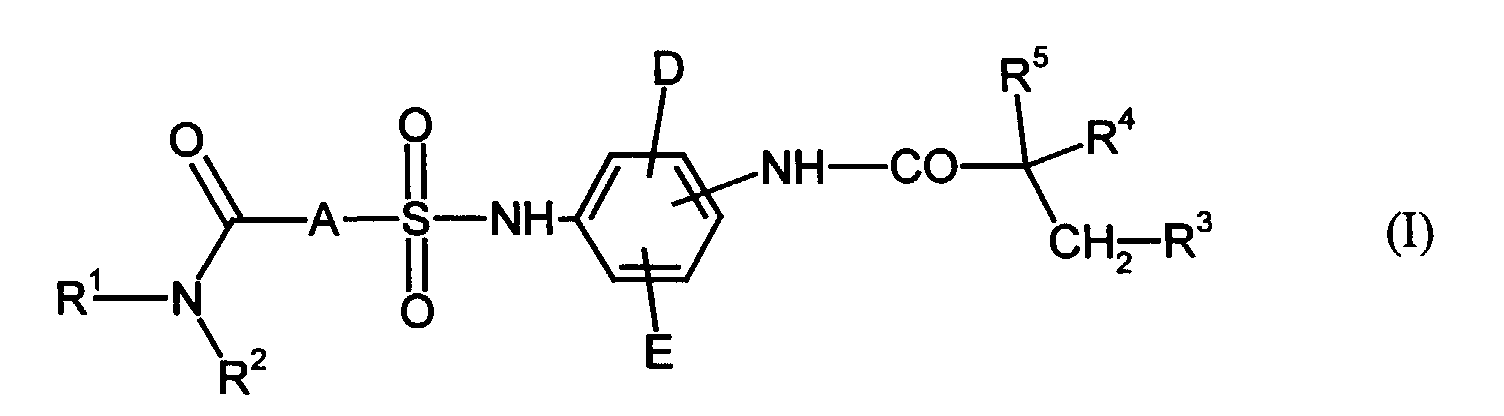
- R1
- für Wasserstoff oder eine geradkettige, verzweigte oder cyclische,
gesättigte oder ungesättigte Kohlenwasserstoffgruppe mit 1 bis 14
Kohlenstoffatomen steht, worin gegebenfalls ein bis zwei Kohlenstoffatome
in der Kette durch O oder S ersetzt sein können, und die
durch ein bis drei Substituenten substituiert sein kann, die aus der
Gruppe ausgewählt werden, die aus Hydroxy, Cyano, -N(R6)R7, (C1-C6)Alkoxycarbonyl,
(C6-C10)Aryl und 5- bis 10-gliedrigem Heteroaryl
besteht, wobei (C6-C10)Aryl und 5- bis 10-gliedriges Heteroaryl
ihrerseits durch ein bis drei Substituenten substituiert sein können, die
aus Hydroxy, (C1-C6)Alkyl, (C1-C6)Alkoxy, (C1-C6)-Alkoxycarbonyl,
Halogen und Halogen(C1-C6)alkyl ausgewählt werden,
und worin R6 und R7 gleich oder verschieden sind und für Wasserstoff, (C1-C6)Alkoxycarbonyl oder eine geradkettige, verzweigte oder cyclische, gesättigte oder ungesättigte Kohlenwasserstoffgruppe mit 1 bis 10 Kohlenstoffatomen, die gegebenfalls mit Di(C1-C6)Alkylamino substituiert ist, stehen, oder gemeinsam mit dem Stickstoffatom, an das sie gebunden sind, einen 3- bis 8-gliedrigen heterocyclischen Ring bilden, der gegebenfalls durch 1 bis 3 (C1-C6)Alkylgruppen substituiert sein kann und/oder ein oder zwei weitere Heteroatome ausgewählt aus O, S oder N enthalten kann,
oder - R1
- für (C6-C10)Aryl oder 5- bis 10-gliedriges Heteroaryl steht, die gegebenenfalls durch ein bis drei Substituenten substituiert sein können, die aus der Gruppe ausgewählt werden, die besteht aus (C1-C6)Alkyl, Hydroxy, (C1-C6)Alkoxycarbonyl, Halogen und Amino, oder
- R1
- für (5- bis 10-gliedriges Heteroaryl)amino oder (C6-C10)Aryl(C1-C6)alkylamino steht,
- R2
- für (C1-C6)Alkoxy, (C1-C6)Alkoxycarbonyl, Aminocarbonyl steht oder
eine der oben genannten Bedeutungen von R1 aufweisen kann und von
dieser Bedeutung gleich oder verschieden sein kann,
oder - R1 und R2
- gemeinsam mit dem Stickstoffatom, an das sie gebunden sind einen
gesättigten oder ungesättigten Ring bilden mit bis zu 14 C-Atomen,
dessen Ringkohlenstoffatome gegebenfalls durch 1 bis 4 Reste ausgewählt
aus der Gruppe, die aus O , S, S=O, C=O und N-R8 besteht,
ersetzt sein können, und wobei der Ring gegebenfalls substituiert sein
kann durch ein bis drei Substituenten, ausgewählt aus der Gruppe, die
besteht aus Hydroxy, (C1-C6)-Alkyl, Benzyl, Hydroxy(C1-C6)alkyl,
Phenylamino, Benzoyl, (C1-C6)Acyl, (C1 -C6)Alkoxycarbonyl, Aminocarbonyl,
Mono- oder Di(C1-C6)alkylaminocarbonyl, Morpholinocarbonyl,
Phenylaminocarbonyl, (C1-C6)Alkoxycarbonyl(C1-C6)alkyl,
(C1-C6)Alkoxyaminocarbonyl, (C1 -C6)-Alkoxycarbonylamino, 1,3-Dioxolan-2,2-diyl,
Piperidyl, Piperidino, Imino,
worin R8 für Wasserstoff, eine geradkettige, verzweigte oder cyclische, gesättigte oder ungesättigte Kohlenwasserstoffgruppe mit bis zu 10 Kohlenstoffatomen steht, die gegebenfalls durch 1 bis 3 Reste ausgewählt aus der Gruppe, die aus Hydroxy, Pyrrolidinyl, Pyridyl, Phenyl, Halogenphenyl, Halogen(C1-C3)alkylphenyl und (C1-C6)-Alkoxycarbonyl besteht, substituiert sein kann,
oder R8 für (C1-C6)Alkoxycarbonyl, (C6-C10)Aryl oder 5- bis 10-gliedriges Heteroaryl steht, wobei (C6-C10)Aryl und 5- bis 10-gliedriges Heteroaryl ihrerseits durch ein bis drei Substituenten substituiert sein können, die aus der Gruppe bestehend aus Halogen, Hydroxy, (C1-C6)Alkoxy, Nitro oder Fluor(C1-C3)alkyl besteht, - R3
- für Wasserstoff, Halogen, Hydroxy, (C1-C6)Acyl, Benzoyl oder (C1-C6)Acyloxy steht,
- R4 und R5
- unabhängig voneinander eine (C1-C3)Alkylgruppe sind oder gemeinsam mit dem Kohlenstoffatom, an das sie gebunden sind einen 3-bis 6-gliedrigen carbocyclischen Ring bilden,
- A
- für einen zweiwertigen (C6-C10)Arylrest oder einen zweiwertigen 5-bis 10-gliedrigen Heteroarylrest steht die gegebenenfalls substituiert sein können durch ein bis drei Substituenten, die aus der Gruppe ausgewählt werden, die aus (C1-C3)Alkyl, Hydroxy oder Halogenatomen besteht, und
- D und E
- gleich oder verschieden sind und für Wasserstoff, Fluor, Chlor, Nitro, Cyano, Hydroxy oder für (C1-C3)Alkyl (C1-C3)Alkoxy oder (C1-C3)-Alkoxycarbonyl stehen,
- R1
- für Wasserstoff, eine (C3-C6)-Cycloalkylgruppe, eine (C2-C6)-Alkenylgruppe oder eine geradkettige oder verzweigtkettige (C1-C12)-Alkylgruppe steht, in der gegebenenfalls ein Kettenkohlenstoffatom durch Sauerstoff ersetzt ist, und die gegebenenfalls durch 1 bis 3 Substituenten substituiert sein kann, die aus der Gruppe ausgewählt werden, die aus Hydroxy, Cyano, -N-(R6)R7, (C1-C6)-Alkoxycarbonyl, (C6-C10)-Aryl und 5- bis 10-gliedrigem Heteroaryl besteht, wobei (C6-C10)-Aryl und 5- bis 10-gliedriges Heteroaryl ihrerseits durch 1 bis 3 Substituenten substituiert sein können, die ausgewählt werden aus (C1-C3)-Alkoxy und (C1-C3)-Alkyl, und worin
- R6 und R7
- gleich oder verschieden sind und für Wasserstoff, (C1-C6)-Alkoxycarbonyl
und/oder (C1-C6)Alkyl, das gegebenfalls durch Di(C1-C6)Alkylamino
substituiert ist, stehen, oder gemeinsam mit dem
Stickstoffatom, an das sie gebunden sind, einen 3- bis 6-gliedrigen
heterocyclischen Ring bilden, der gegebenenfalls ein zusätzliches
Sauerstoffatom enthalten kann,
oder - R1
- für Phenyl oder 5- bis 10-gliedriges Heteroaryl, das 1 bis 2 Heteroatome ausgewählt aus Stickstoff und Schwefel enthalten kann, steht, die jeweils gegebenenfalls durch 1 bis 2 Substituenten, ausgewählt aus Amino, (C1-C3)-Alkyl, Hydroxy, (C1-C4)-Alkoxycarbonyl und Halogen, substituiert sein können, oder
- R1
- für (5- bis 6-gliedriges) Heteroarylamino oder (C6-C10)Aryl(C1-C3)alkylamino steht,
- R2
- für (C1-C6)Alkyl, (C1-C6)Alkoxy, und Aminocarbonyl steht, oder die oben genannte Bedeutung von R1 aufweisen kann und von dieser Bedeutung gleich oder verschieden sein kann, oder
- R1 und R2
- gemeinsam mit dem Stickstoffatom, an das sie gebunden sind
einen gesättigten oder ungesättigten Ring mit 4 bis 14 Kohlenstoffatomen
bilden, dessen Ringkohlenstoffatome gegebenenfalls durch 1
bis 4 Reste ausgewählt aus der Gruppe, die aus O, S, S=O, C=O und
N-R8 besteht, ersetzt sein können, und wobei der Ring gegebenenfalls
durch 1 bis 3 Substituenten substituiert sein kann, die aus der Gruppe
ausgewählt werden, die besteht aus Imino, Hydroxy, (C1-C3)Alkyl,
1,3-Dioxolan-2,2-diyl, (C1-C3)Alkoxycarbonyl, (C1-C6)Alkoxycarbonylamino,
Benzyl, Phenylamino, Piperidyl, Hydroxy-(C1-C3)alkyl,
Benzoyl, Aminocarbonyl, (C1-C3)Acyl, (C1-C6)Alkylaminocarbonyl,
Morpholinocarbonyl und Phenylaminocarbonyl besteht,
und worin - R8
- für Wasserstoff, eine geradkettige oder verzweigtkettige (C1-C6)Alkylgruppe, die gegebenenfalls durch 1 bis 2 Substituenten ausgewählt werden kann, die aus der Gruppe substituiert sein kann, die aus Phenyl, Hydroxy, Halogenphenyl, Pyrrolidinyl und (C1-C3)Alkoxycarbonyl besteht, oder
- R8
- für (C3-C6)Cycloalkyl oder Phenyl steht, das gegebenenfalls substituiert sein kann mit 1 bis 3 Substituenten, die aus der Gruppe ausgewählt werden, die besteht aus Halogen, Hydroxy, (C1-C3)Alkoxy, Nitro und Trifluormethyl, oder
- R8
- für Pyridyl oder (C1-C6)Alkoxycarbonyl steht,
- R3
- für Wasserstoff, Halogen, Hydroxy oder (C1-C3)Acyloxy steht,
und - R4 und R5
- jeweils unabhängig für eine (C1-C3)Alkylgruppe stehen,
- A
- für einen Naphthalindiylrest oder einen Phenylenrest steht, die gegebenenfalls durch eine (C1-C3)Alkylgruppe, Halogen oder Hydroxy substituiert sein können, und
- D und E
- für Wasserstoff stehen,
- R1
- für Wasserstoff, Cyclopropyl, (C2-C6)Alkenyl, (C1-C6)Alkoxy(C1-C6)alkyl
oder eine geradkettige oder verzweigtkettige (C1-C12)Alkylgruppe steht, die
gegebenenfalls durch 1 bis 3 Substituenten substituiert sein kann, die aus der
Gruppe ausgewählt werden die aus Hydroxy, Cyano, -N(R6)R7, Phenyl, das
gegebenenfalls durch (C1-C3)Alkoxy substituiert sein kann, Pyridyl, das
gegebenenfalls durch (C1-C3)Alkyl substituiert sein kann, Furyl, Indolyl und
(C1-C4)Alkoxycarbonyl besteht,
worin - R6 und R7
- gleich oder verschieden sein können und ausgewählt werden aus Wasserstoff, (C1-C6)Alkoxycarbonyl und (C1-C3)Alkyl, das gegebenenfalls durch Di(C1-C3)Alkylamino substituiert sein kann, oder
- R6 und R7
- gemeinsam mit dem Stickstoffatom, an das sie gebunden sind
Morpholino oder Piperidino bilden, das gegebenenfalls durch 1 bis 2
(C1-C3)Alkylgruppen substituiert sein kann,
oder - R1
- für Phenyl steht, das gegebenenfalls durch 1 bis 3 Substituenten substituiert sein kann, die ausgewählt werden aus der Gruppe die aus Hydroxy, (C1-C4)Alkoxycarbonyl, Halogen und (C1-C3)Alkyl besteht, oder für Isochinolinyl, Pyridyl, das gegebenenfalls durch (C1-C3)Alkyl oder Amino substituiert sein kann, Pyrimidinyl, das gegebenenfalls durch Hydroxy substituiert sein kann, Thiazolyl, Pyrazolyl oder für Naphthyridinyl steht, oder
- R1
- für Pyridylamino oder Benzylamino steht, und
- R2
- die gleiche Bedeutung wie die von R1, wie zuvor definiert, aufweisen kann, und mit dieser Bedeutung gleich oder verschieden sein kann oder
- R2
- für (C1-C3)Alkoxy oder Aminocarbonyl stehen kann,
oder - R1 und R2
- gemeinsam mit dem Stickstoffatom, an das sie gebunden sind,
einen Ring bilden, der ausgewählt wird aus der Gruppe die aus
Morpholino, das gegebenenfalls durch 1 bis 3 (C1-C3)Alkylgruppen
substituiert sein kann,
Thiomorpholino, das gegebenenfalls ein Sauerstoffatom am Schwefel tragen kann,
Thiazolidinyl,
1-Azacyclopent-3-en-1-yl,
1-Aza-4,7,10,13-tetraoxacyclopentadecan-1-yl,
einem 5- bis 8-gliedrigen gesättigten Ring, in dem gegebenenfalls ein Ringkohlenstoffatom durch eine Gruppe der Formel -NR8 ersetzt sein kann, worin
R8 ausgewählt wird aus Wasserstoff, gegebenfalls durch 1 bis 3 Substituenten ausgewählt aus Halogen, Hydroxy, (C1 -C3)Alkoxy, Trifluormethyl und/oder Nitro, substituiertem Phenyl, Halogenphenyl, gegebenfalls durch 1 bis 2 Halogenphenylgruppen, Phenyl und/oder Pyrrolidinyl substituiertem (C1-C3)Alkyl, Cyclopropyl, Hydroxy(C1-C3)alkyl, Pyridyl und (C1-C4)Alkoxycarbonyl,
und der gegebenfalls durch 1 bis 2 Substituenten ausgewählt aus (C1-C3)Alkyl, Hydroxy(C1-C3)alkyl, Hydroxy, 1,3-Dioxolan-2,2-diyl, Oxo, (C1-C4)Alkoxycarbonyl, (C1-C4)Alkoxycarbonylamino, Benzyl, Phenylamino, Piperidino, Benzoyl, Aminocarbonyl, (C1-C3)Acyl, (C1-C6)Alkylaminocarbonyl, Morpholinocarbonyl und Phenylaminocarbonyl substituiert sein kann,
und einem Rest der Formel:besteht,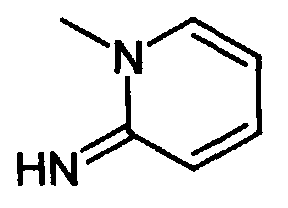
- R3
- für Wasserstoff, Chlor, Fluor, Acetyloxy, Hydroxy steht,
- R4 und R5
- für Methyl stehen,
- A
- für Naphthalin-1,5-diyl, Naphthalin-1,6-diyl oder 1,3-Phenylen steht, das gegebenenfalls durch Hydroxy, Chlor, Fluor oder (C1-C3)Alkyl substituiert sein kann, und worin
- D und E
- für Wasserstoff stehen, und deren Salze.

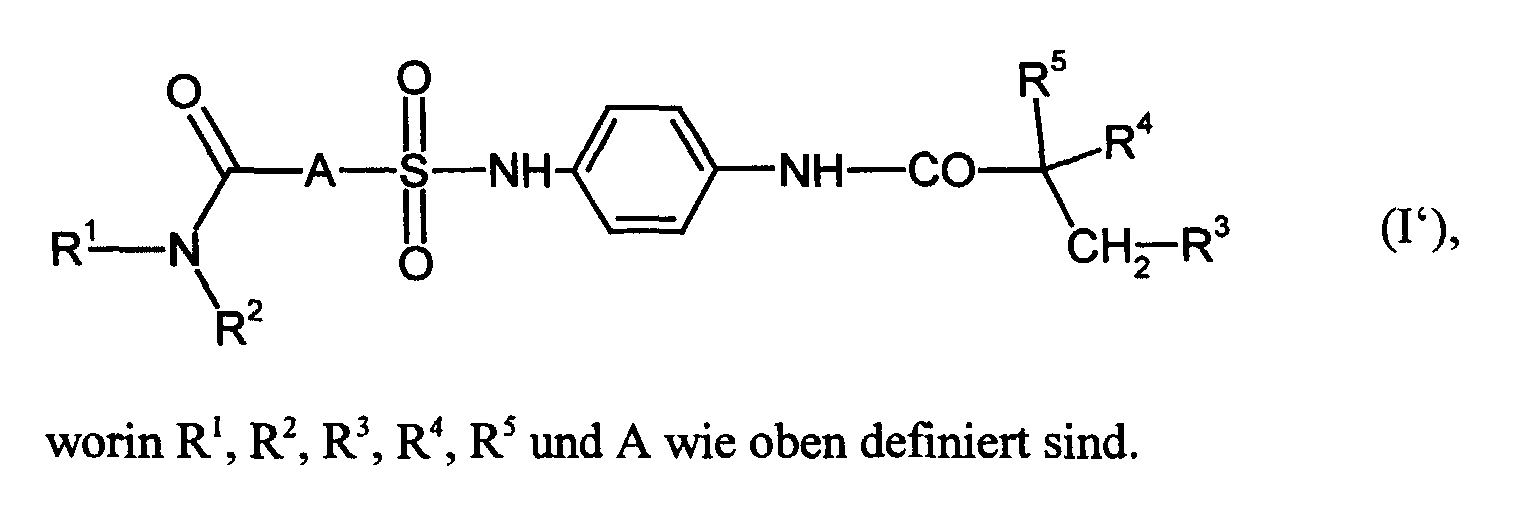

- R3
- für Wasserstoff oder Halogen steht
- R4 und R5
- jeweils für eine Methylgruppe stehen,
- A
- für einen Phenylen oder Naphthalindiyl-Rest steht, und
- D und E
- für Wasserstoff stehen.




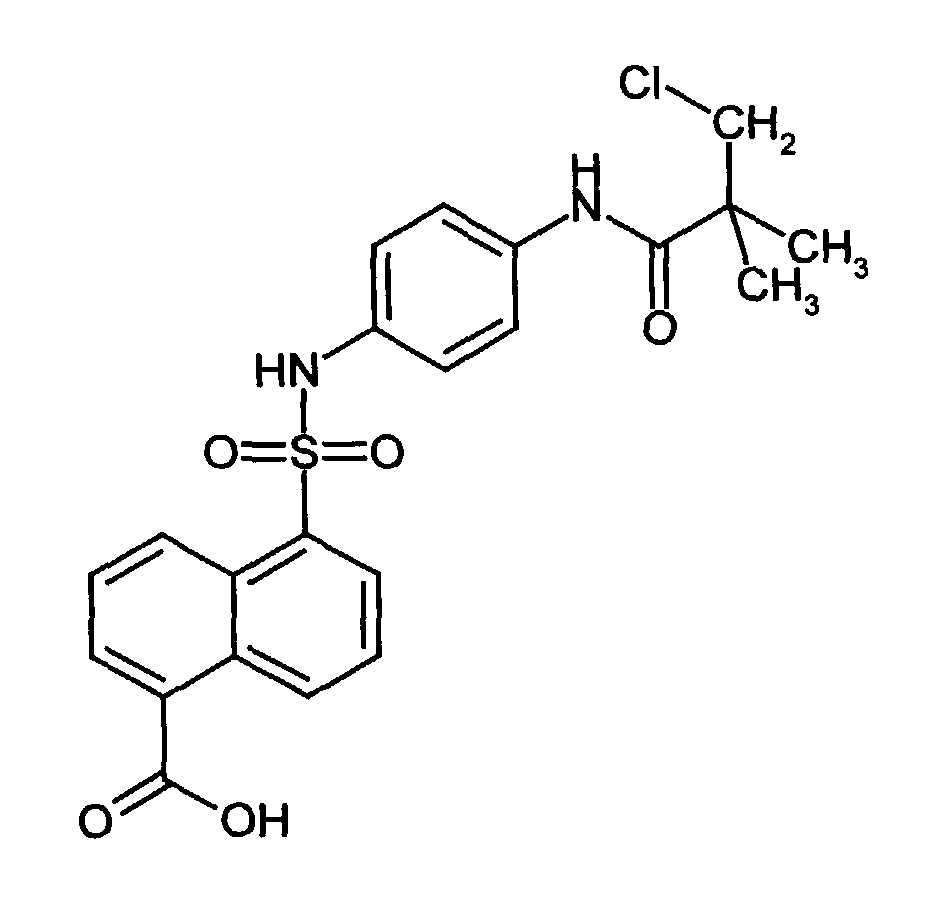

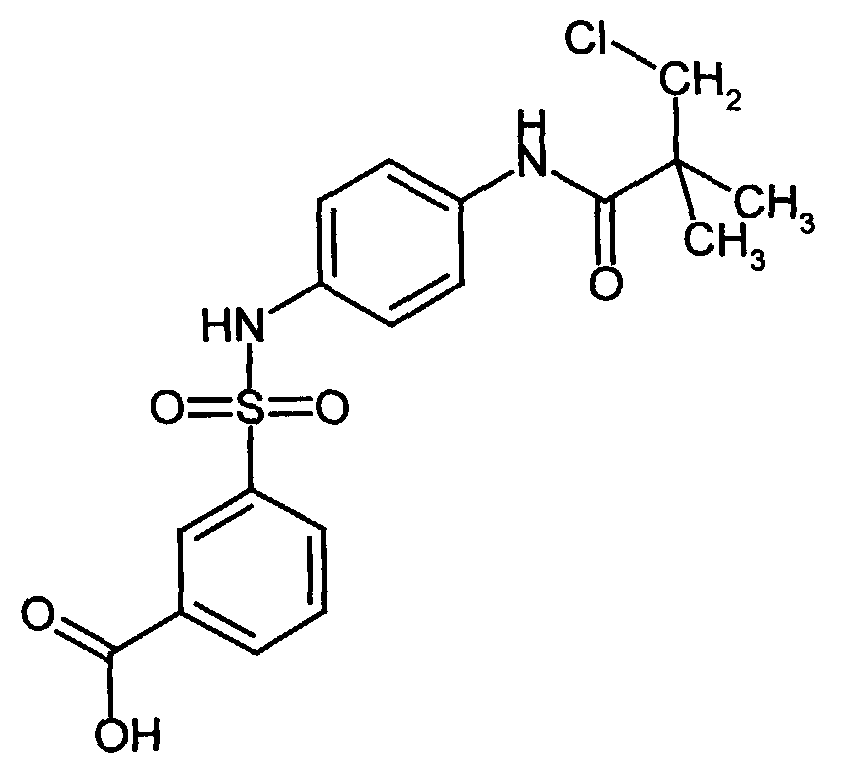
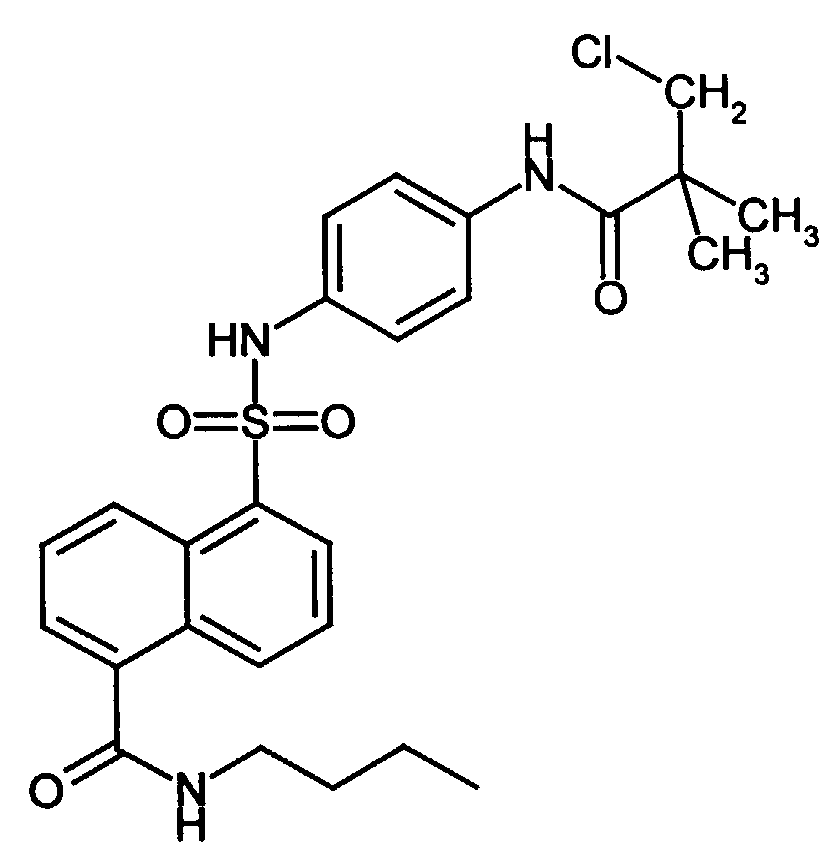

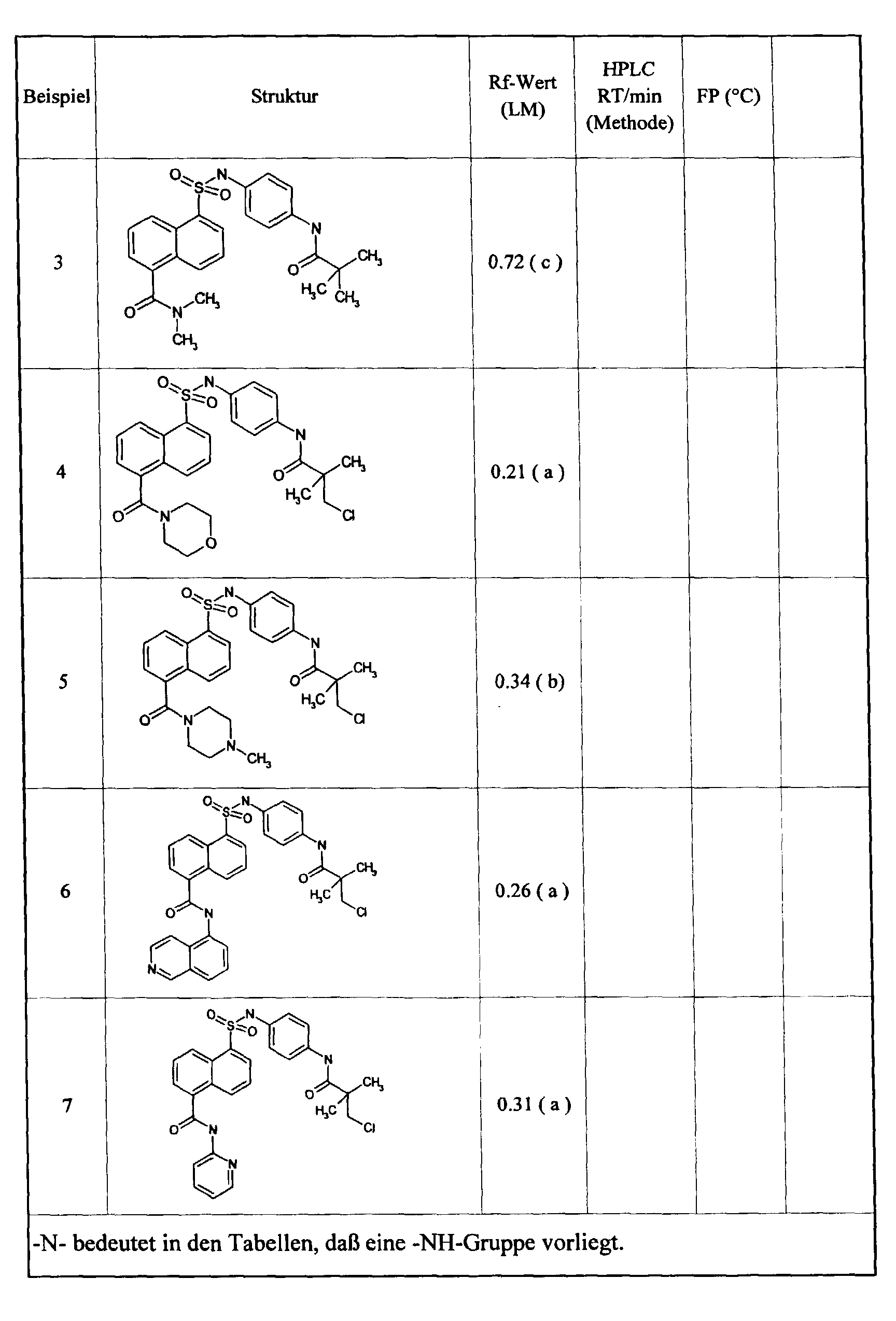






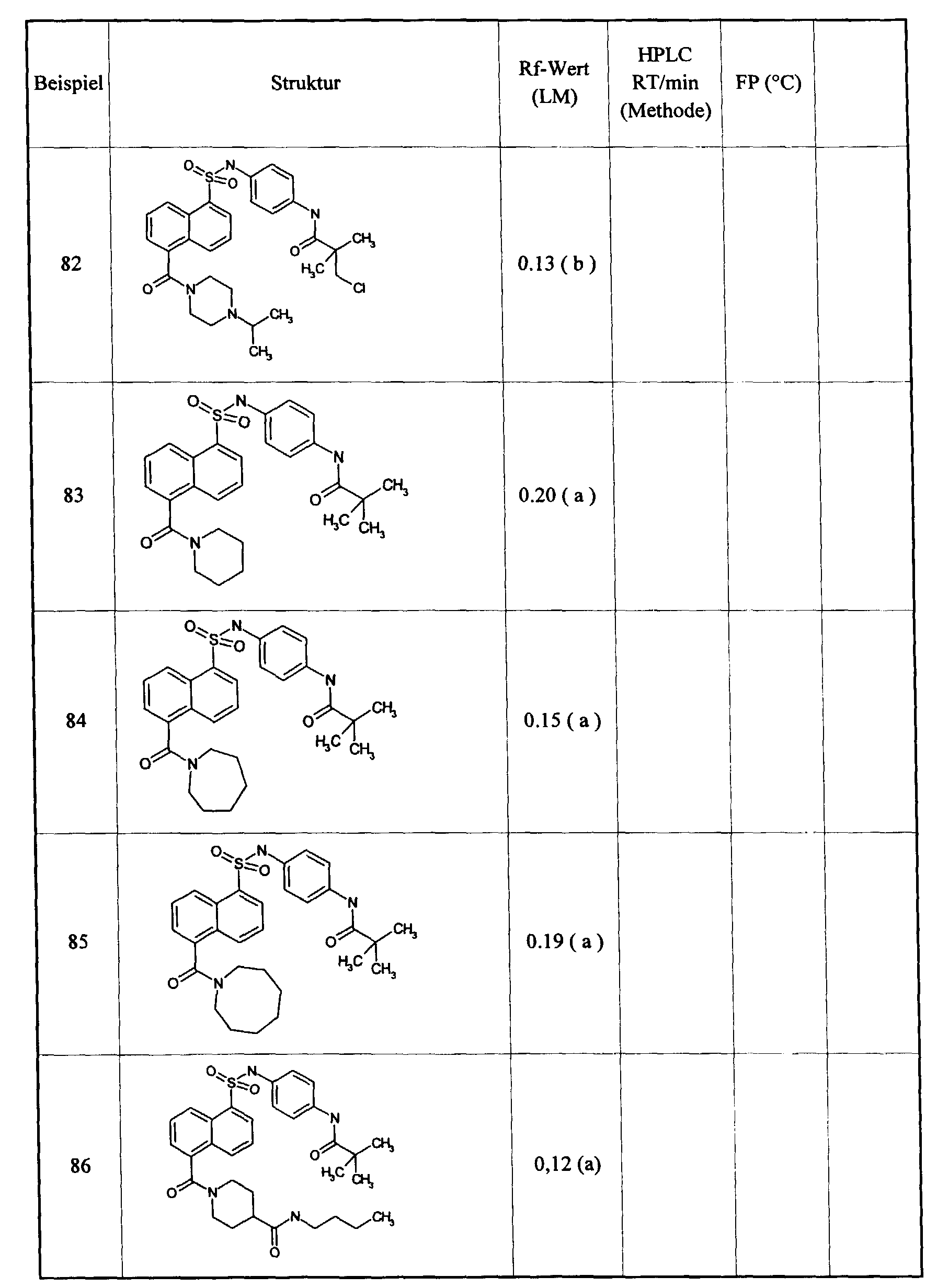

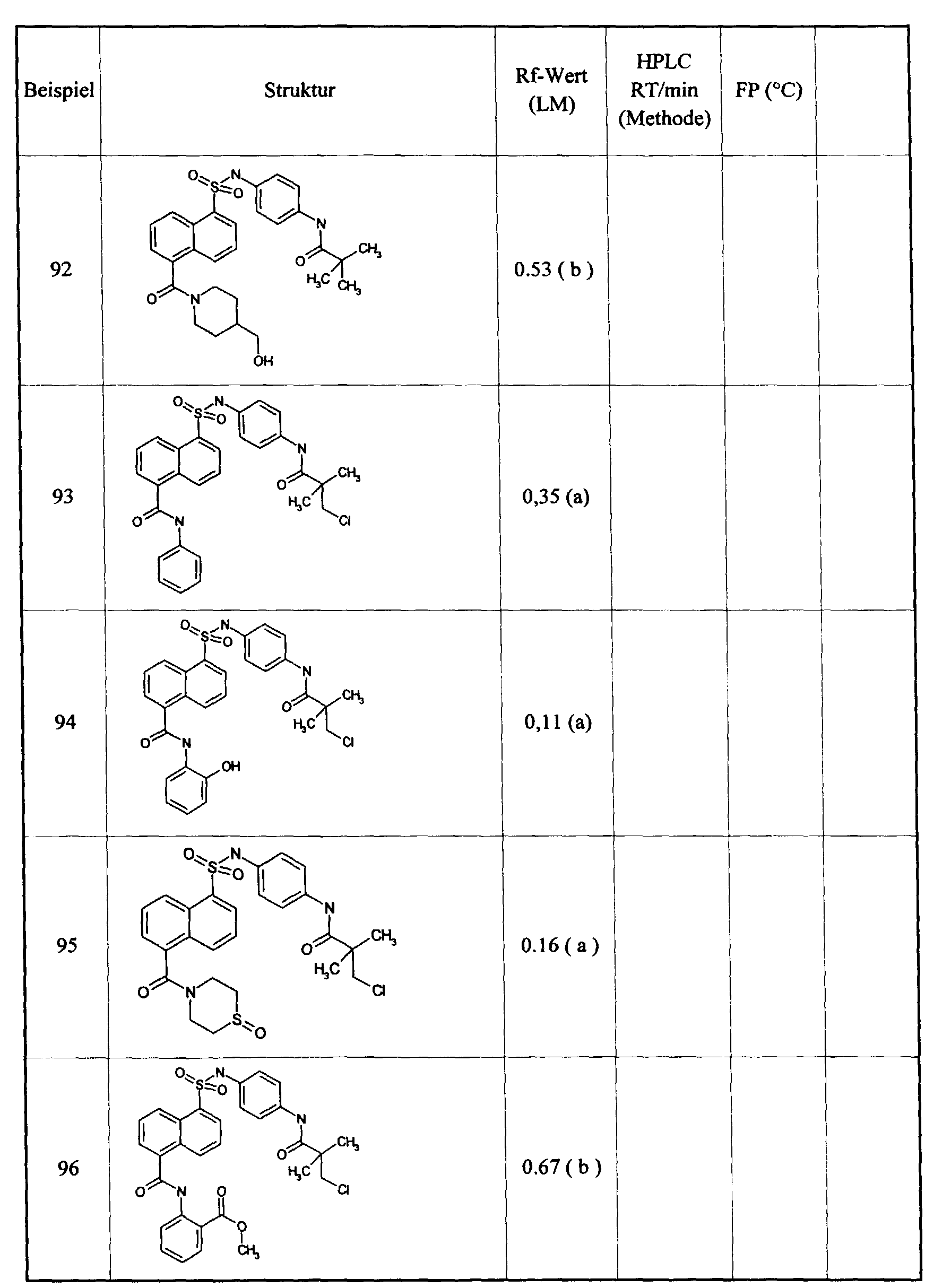

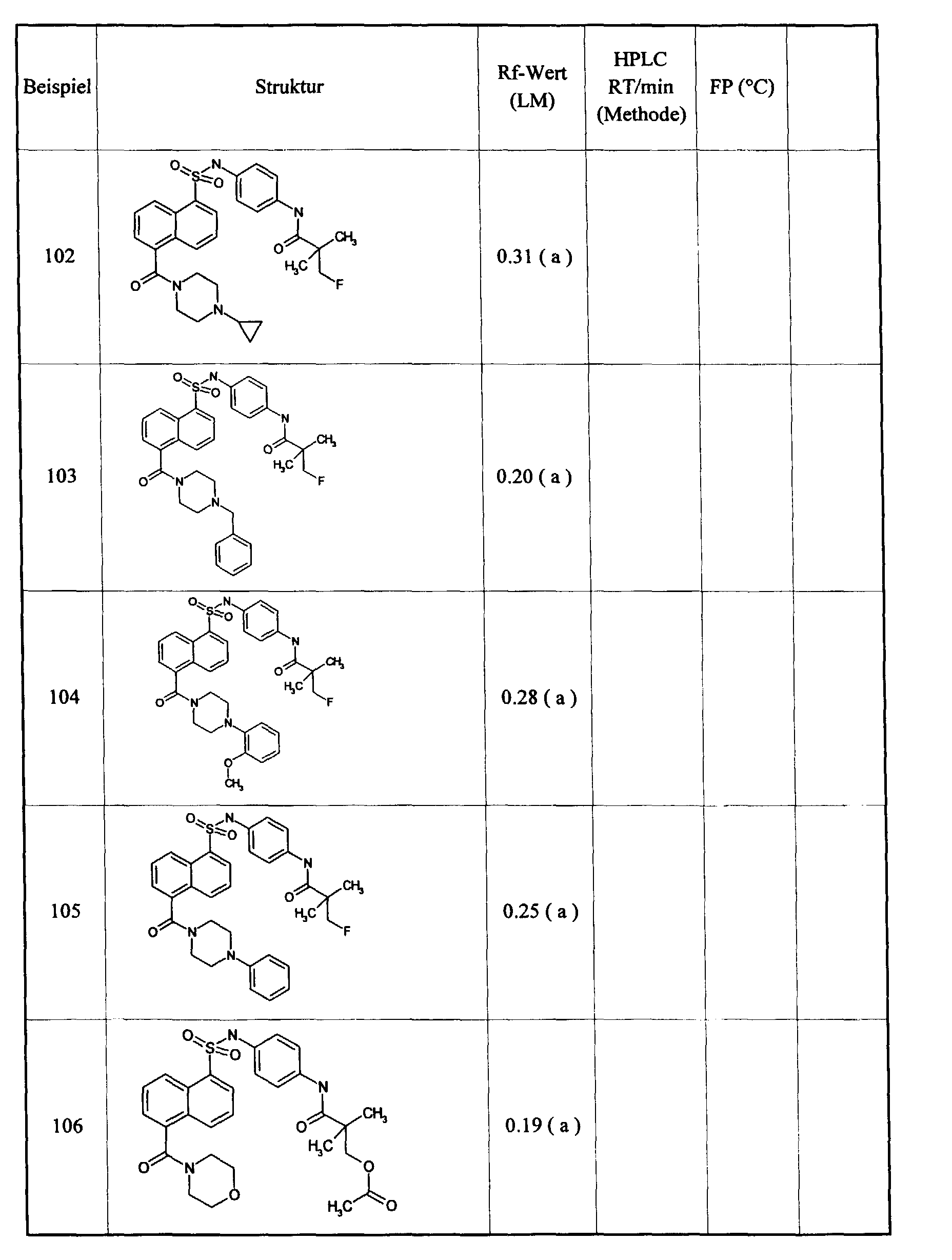
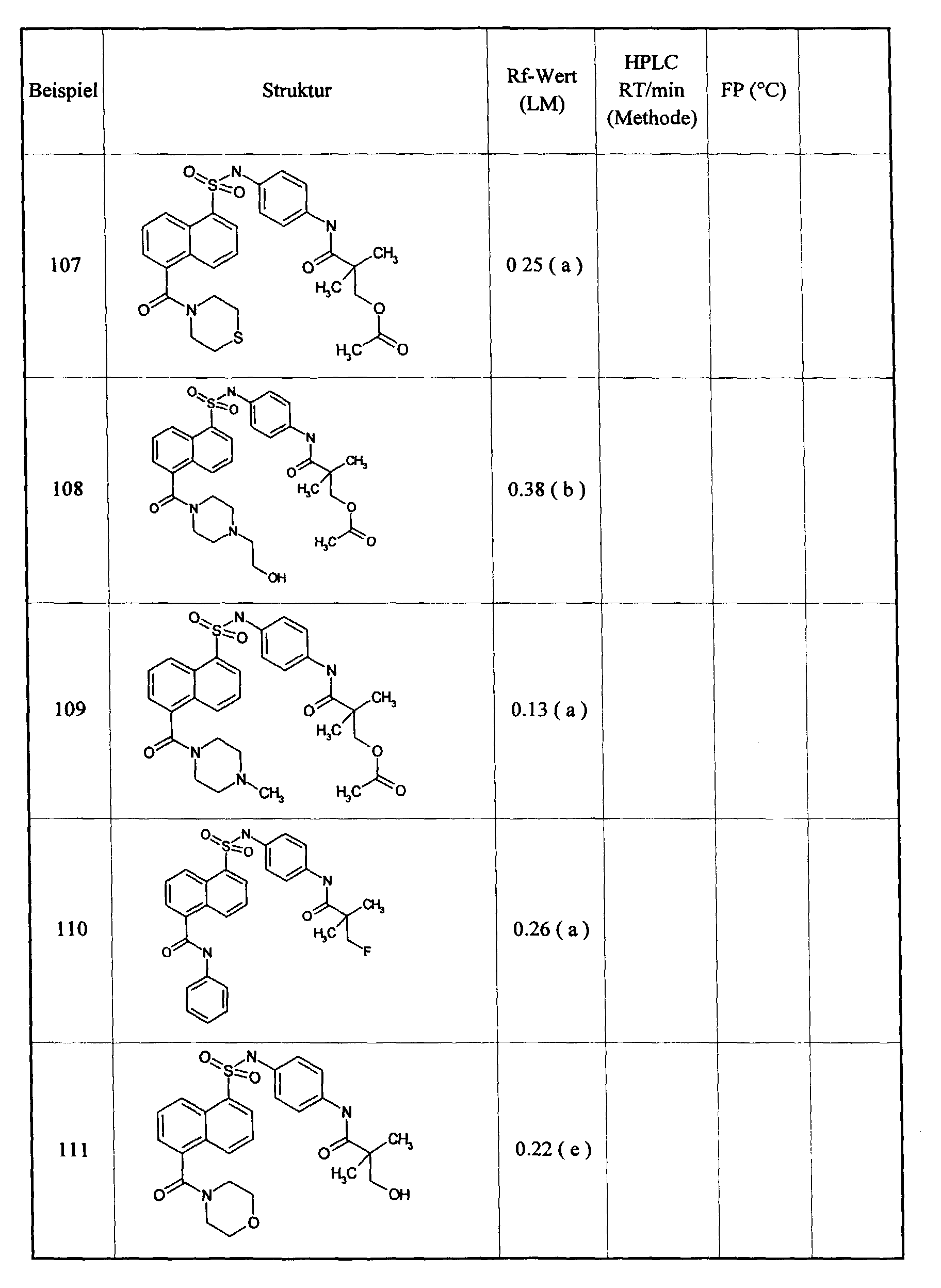
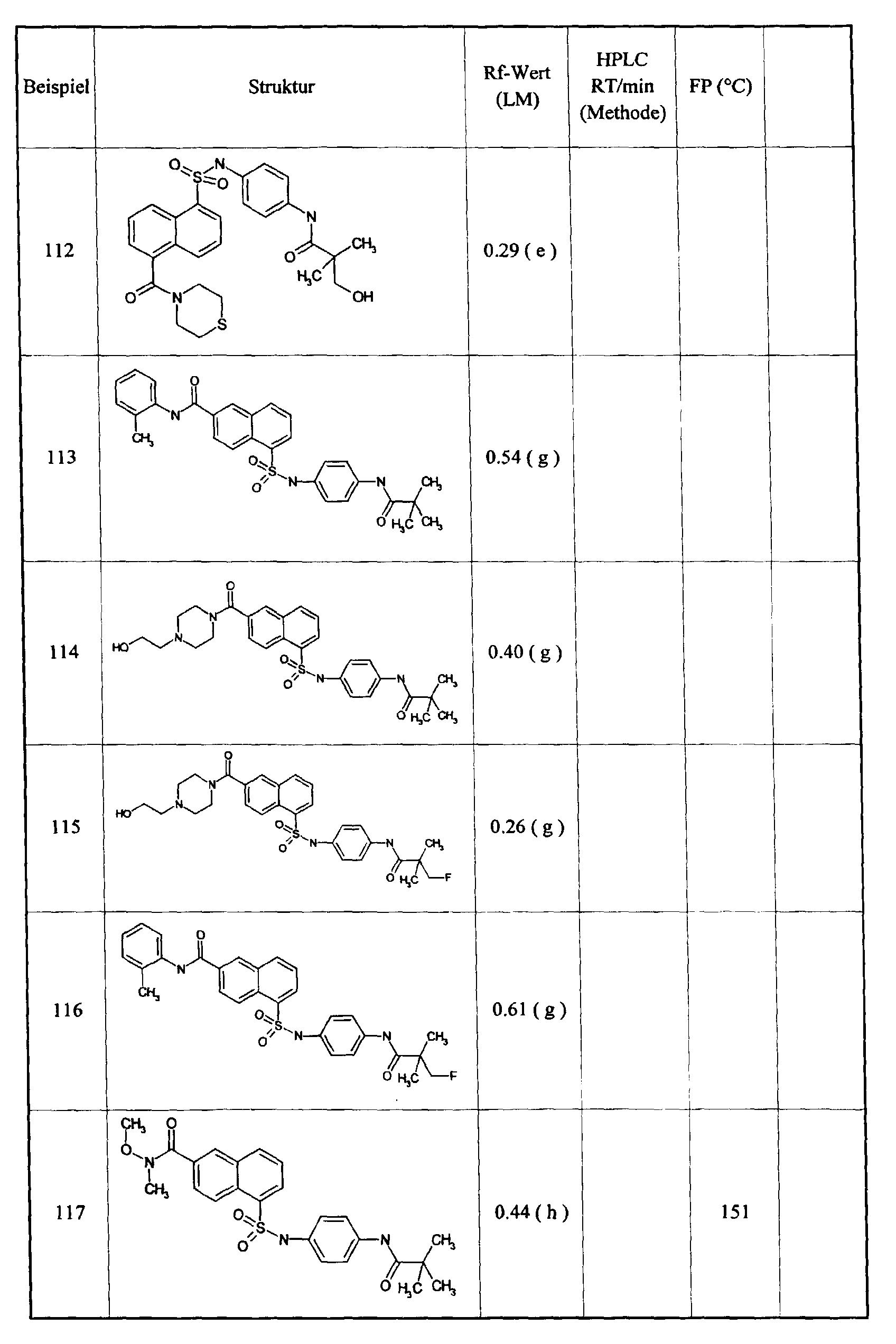


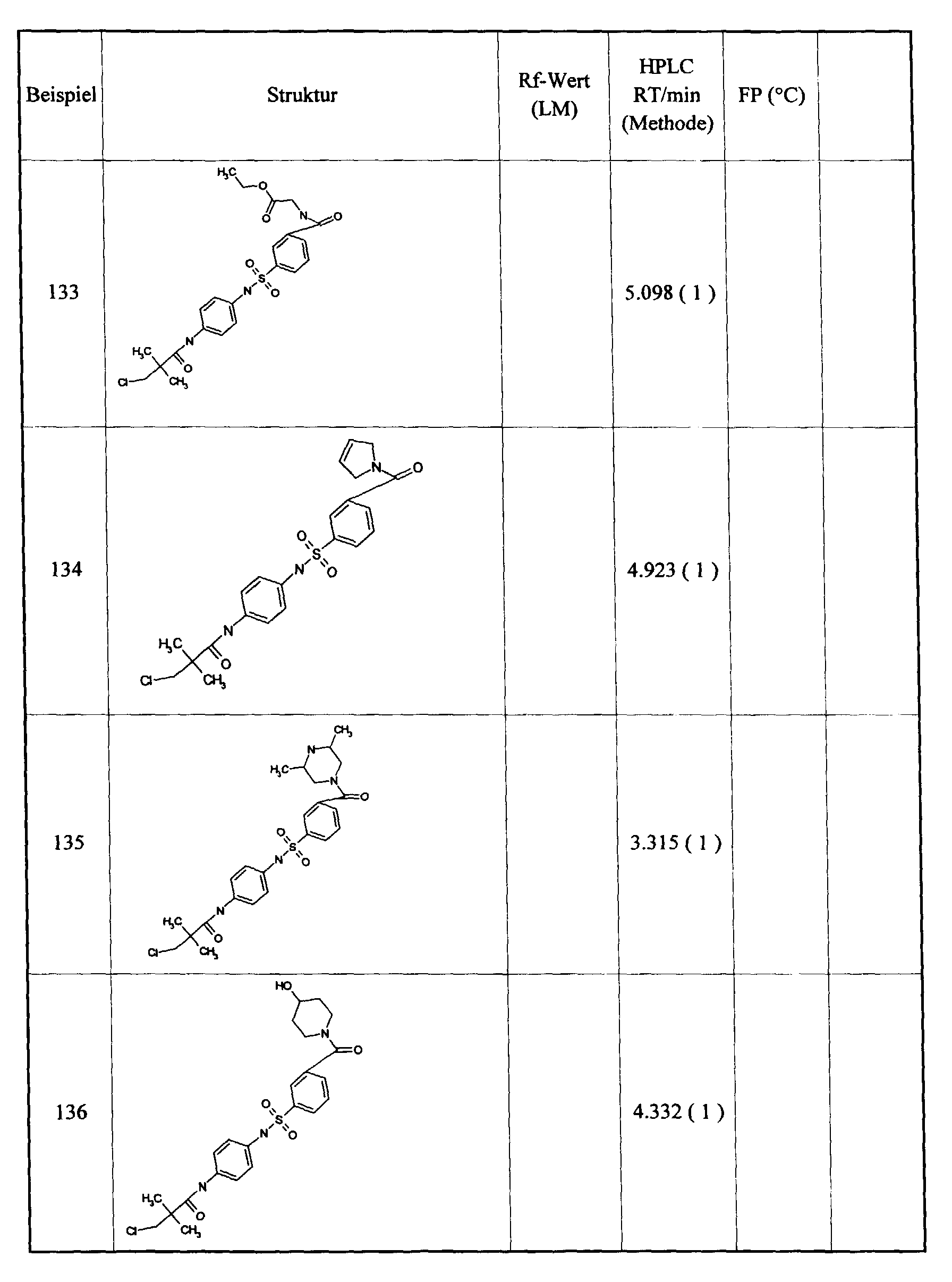
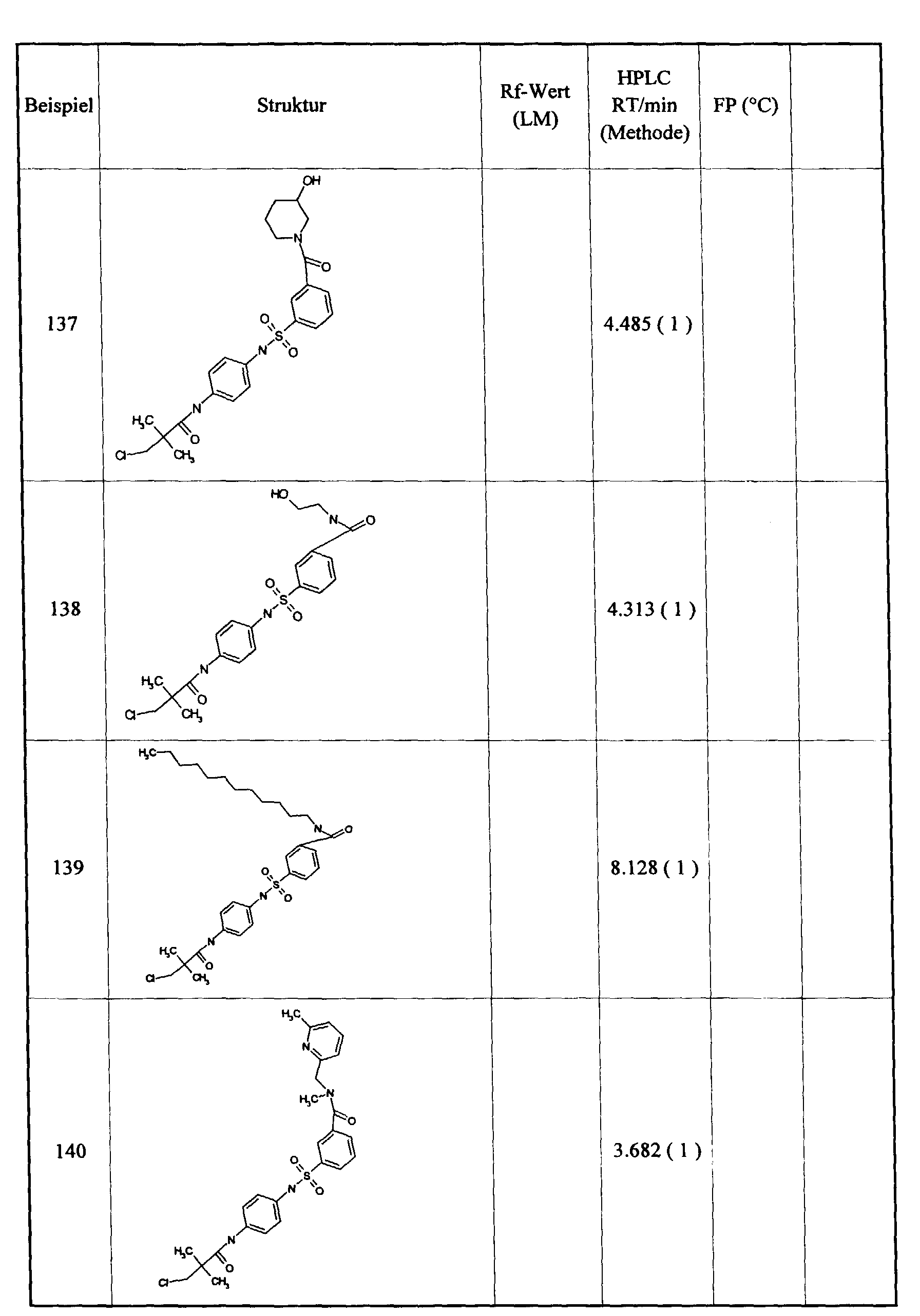

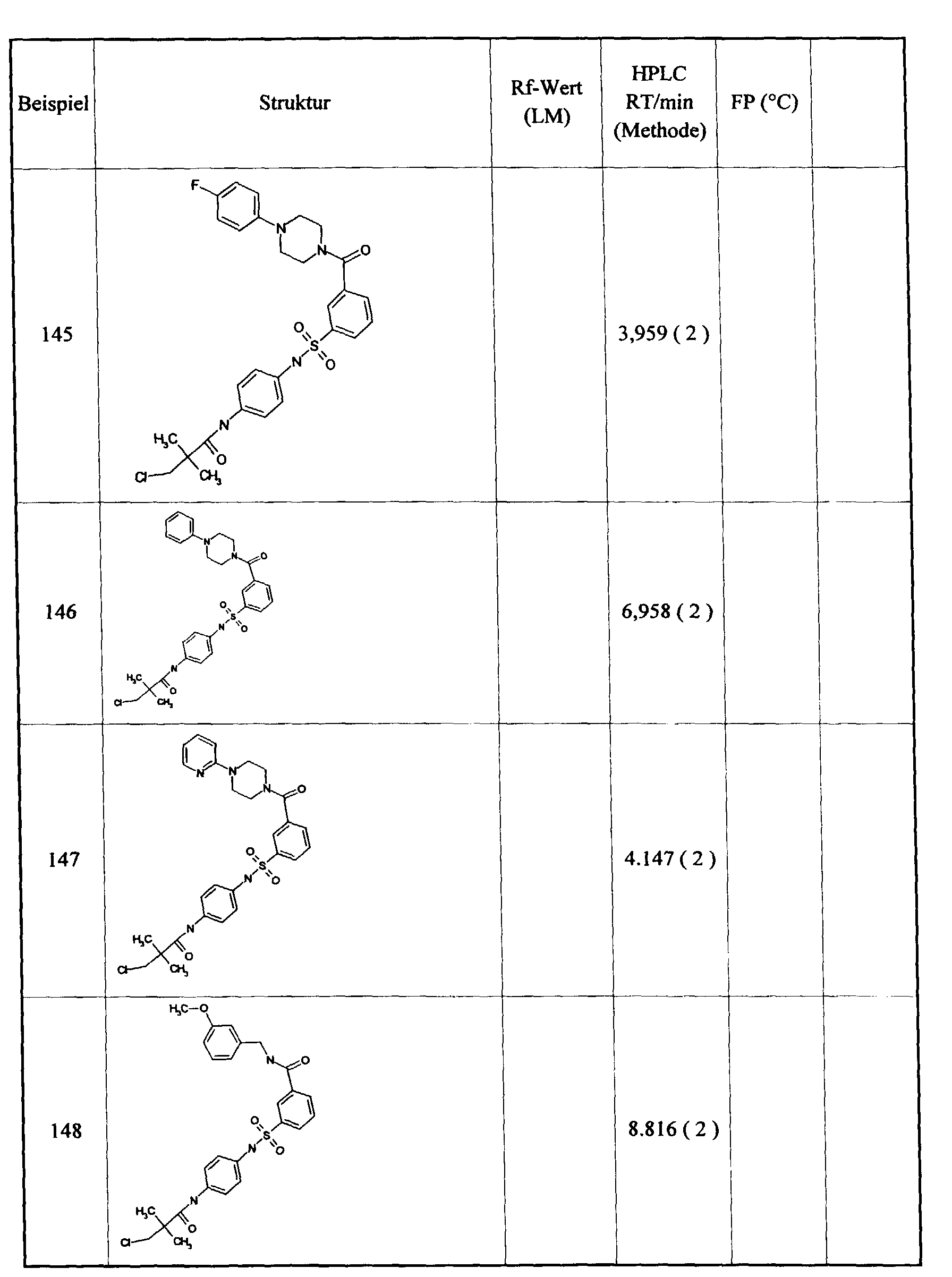

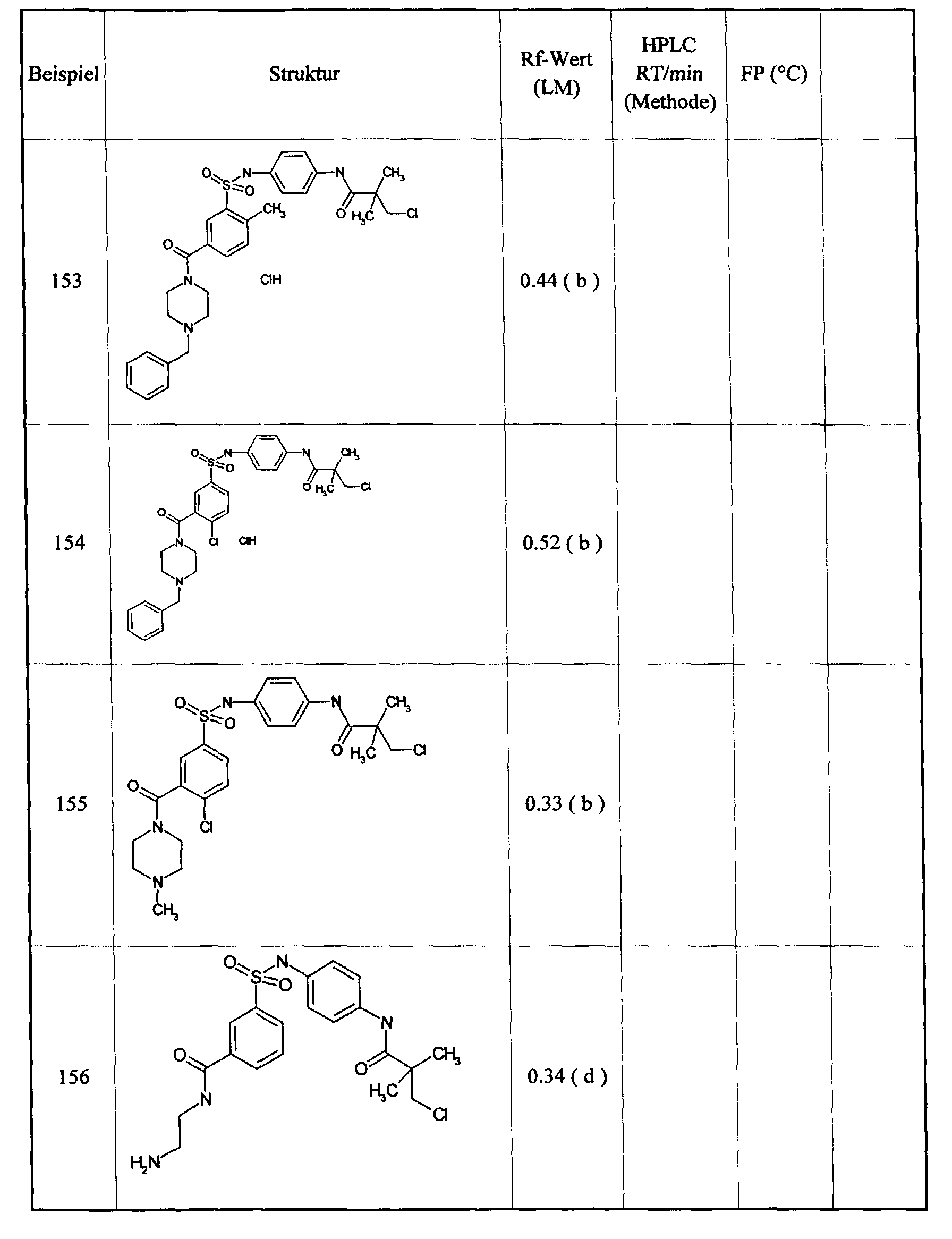
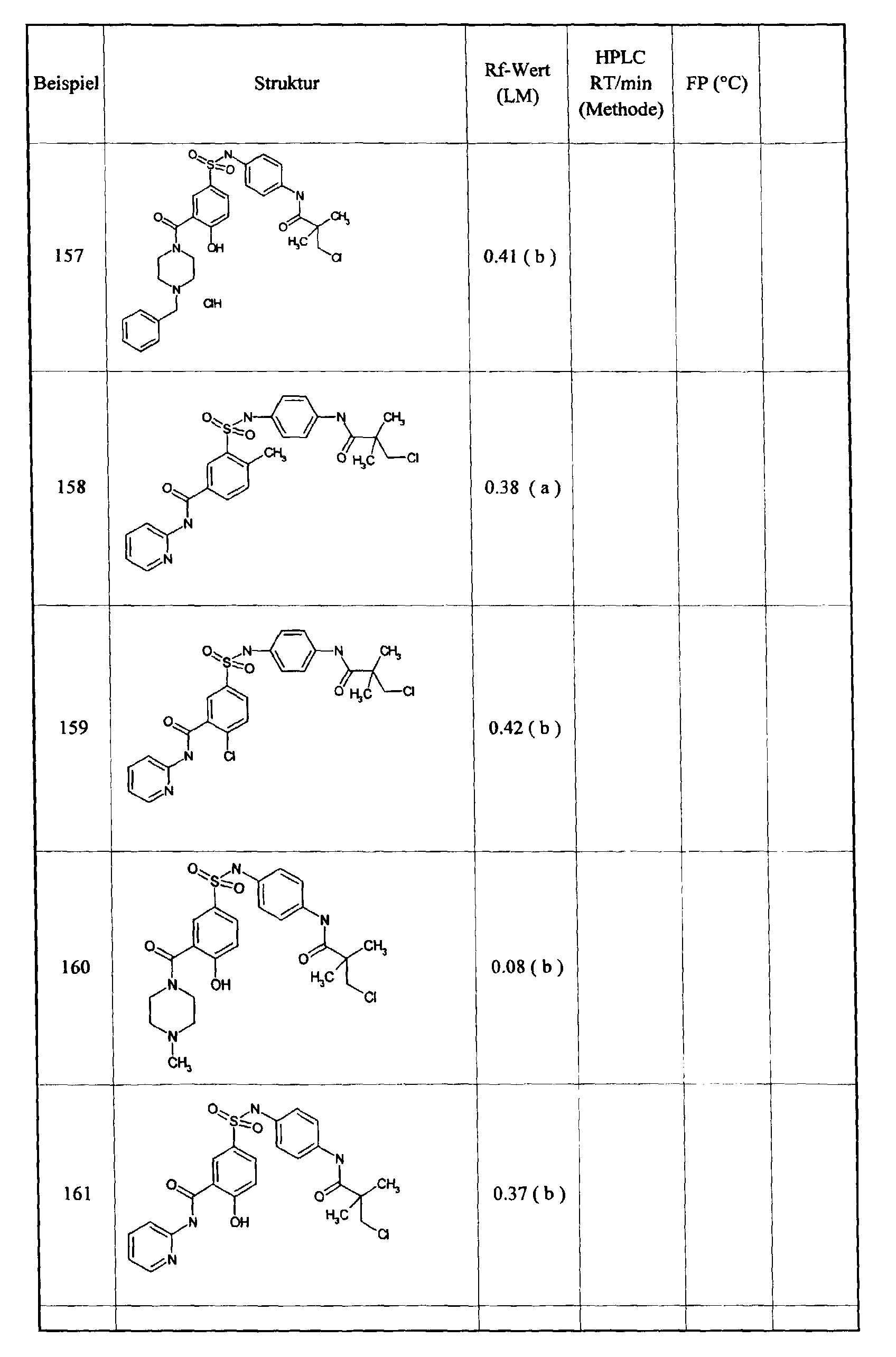

Claims (12)
- Verbindungen der allgemeinen Formel ( I ):worin
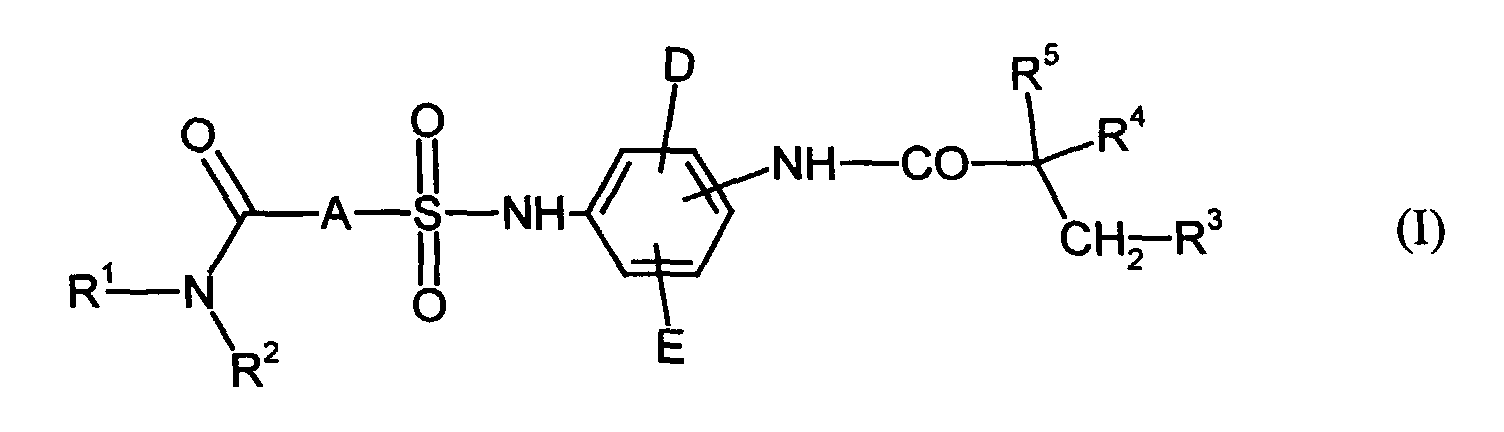
- R1
- für Wasserstoff oder eine geradkettige, verzweigte oder cyclische, gesättigte oder ungesättigte Kohlenwasserstoffgruppe mit 1 bis 14 Kohlenstoffatomen steht, worin gegebenfalls ein bis zwei Kohlenstoffatome in der Kette durch O oder S ersetzt sein können, und die durch ein bis drei Substituenten substituiert sein kann, die aus der Gruppe ausgewählt werden, die aus Hydroxy, Cyano, -N(R6)R7, (C1-C6)Alkoxycarbonyl, (C6-C10)Aryl und 5- bis 10-gliedrigem Heteroaryl besteht, wobei (C6-C10)Aryl und 5- bis 10-gliedriges Heteroaryl ihrerseits durch ein bis drei Substituenten substituiert sein können, die aus Hydroxy, (C1-C6)Alkyl, (C1-C6)Alkoxy, (C1-C6)-Alkoxycarbonyl, Halogen und Halogen(C1-C6)alkyl ausgewählt werden, und worin
- R6 und R7
- gleich oder verschieden sind und für Wasserstoff, (C1-C6)Alkoxycarbonyl
oder eine geradkettige, verzweigte oder
cyclische, gesättigte oder ungesättigte Kohlenwasserstoffgruppe
mit 1 bis 10 Kohlenstoffatomen, die gegebenfalls mit
Di(C1-C6)Alkylamino substituiert ist, stehen, oder gemeinsam
mit dem Stickstoffatom, an das sie gebunden sind, einen 3- bis
8-gliedrigen heterocyclischen Ring bilden, der gegebenfalls
durch 1 bis 3 (C1-C6)Alkylgruppen substituiert sein kann
und/oder ein oder zwei weitere Heteroatome ausgewählt aus O,
S oder N enthalten kann,
oder - R1
- für (C6-C10)Aryl oder 5- bis 10-gliedriges Heteroaryl steht, die gegebenenfalls durch ein bis drei Substituenten substituiert sein können, die aus der Gruppe ausgewählt werden, die besteht aus (C1-C6)Alkyl, Hydroxy, (C1-C6)Alkoxycarbonyl, Halogen und Amino, oder
- R1
- für (5- bis 10-gliedriges Heteroaryl)amino oder (C6-C10)Aryl(C1-C6)alkylamino steht,
- R2
- für (C1-C6)Alkoxy, (C1-C6)Alkoxycarbonyl, Aminocarbonyl steht oder
eine der oben genannten Bedeutungen von R1 aufweisen kann und von
dieser Bedeutung gleich oder verschieden sein kann,
oder - R1 und R2
- gemeinsam mit dem Stickstoffatom, an das sie gebunden sind einen gesättigten oder ungesättigten Ring bilden mit bis zu 14 C-Atomen, dessen Ringkohlenstoffatome gegebenfalls durch 1 bis 4 Reste ausgewählt aus der Gruppe, die aus O , S, S=O, C=O und N-R8 besteht, ersetzt sein können, und wobei der Ring gegebenfalls substituiert sein kann durch ein bis drei Substituenten, ausgewählt aus der Gruppe, die besteht aus Hydroxy, (C1-C6)-Alkyl, Benzyl, Hydroxy(C1-C6)alkyl, Phenylamino, Benzoyl, (C1-C6)Acyl, (C1-C6)Alkoxycarbonyl, Aminocarbonyl, Mono- oder Di(C1-C6)alkylaminocarbonyl, Morpholinocarbonyl, Phenylaminocarbonyl, (C1-C6)Alkoxycarbonyl(C1-C6)alkyl, (C1-C6)Alkoxyaminocarbonyl, (C1-C6)-Alkoxycarbonylamino, 1,3-Dioxolan-2,2-diyl, Piperidyl, Piperidino, Imino, worin
- R8
- für Wasserstoff, eine geradkettige, verzweigte oder cyclische, gesättigte oder ungesättigte Kohlenwasserstoffgruppe mit bis zu 10 Kohlenstoffatomen steht, die gegebenfalls durch 1 bis 3 Reste ausgewählt aus der Gruppe, die aus Hydroxy, Pyrrolidinyl, Pyridyl, Phenyl, Halogenphenyl, Halogen(C1-C3)alkylphenyl und (C1-C6)-Alkoxycarbonyl besteht, substituiert sein kann, oder
- R8
- für (C1-C6)Alkoxycarbonyl, (C6-C10)Aryl oder 5- bis 10-gliedriges Heteroaryl steht, wobei (C6-C10)Aryl und 5- bis 10-gliedriges Heteroaryl ihrerseits durch ein bis drei Substituenten substituiert sein können, die aus der Gruppe bestehend aus Halogen, Hydroxy, (C1-C6)Alkoxy, Nitro oder Fluor(C1-C3)alkyl ausgewählt werden,
- R3
- für Wasserstoff, Halogen, Hydroxy, (C1-C6)Acyl, Benzoyl oder (C1-C6)Acyloxy steht,
- R4 und R5
- unabhängig voneinander eine (C1-C3)Alkylgruppe sind oder gemeinsam mit dem Kohlenstoffatom, an das sie gebunden sind einen 3-bis 6-gliedrigen carbocyclischen Ring bilden,
- A
- für einen zweiwertigen (C6-C10)Arylrest oder einen zweiwertigen 5-bis 10-gliedrigen Heteroarylrest steht die gegebenenfalls substituiert sein können durch ein bis drei Substituenten, die aus der Gruppe ausgewählt werden, die aus (C1-C3)Alkyl, Hydroxy oder Halogenatomen besteht, und
- D und E
- gleich oder verschieden sind und für Wasserstoff, Fluor, Chlor, Nitro, Cyano, Hydroxy oder für (C1-C3)Alkyl, (C1-C3)Alkoxy oder (C1-C3)-Alkoxycarbonyl stehen,
- Verbindungen der allgemeinen Formel (I) nach Anspruch 1, worin
- R1
- für Wasserstoff, eine (C3-C6)-Cycloalkylgruppe, eine (C2-C6)-Alkenylgruppe oder eine geradkettige oder verzweigtkettige (C1-C12-Alkylgruppe steht, in der gegebenenfalls ein Kettenkohlenstoffatom durch Sauerstoff ersetzt ist, und die gegebenenfalls durch 1 bis 3 Substituenten substituiert sein kann, die aus der Gruppe ausgewählt werden, die aus Hydroxy, Cyano, -N-(R6)R7, (C1-C6)-Alkoxycarbonyl, (C6-C10)-Aryl und 5- bis 10-gliedrigem Heteroaryl besteht, wobei (C6-C10)-Aryl und 5- bis 10-gliedriges Heteroaryl ihrerseits durch 1 bis 3 Substituenten substituiert sein können, die ausgewählt werden aus (C1-C3)-Alkoxy und (C1-C3)-Alkyl, und worin
- R6 und R7
- gleich oder verschieden sind und für Wasserstoff,
(C1-C6)-Alkoxycarbonyl und/oder (C1-C6)Alkyl, das gegebenenfalls
durch Di(C1-C6)Alkylamino substituiert ist, stehen,
oder gemeinsam mit dem Stickstoffatom, an das sie gebunden
sind, einen 3- bis 6-gliedrigen heterocyclischen Ring bilden,
der gegebenenfalls ein zusätzliches Sauerstoffatom enthalten
kann,
oder - R1
- für Phenyl oder 5- bis 10-gliedriges Heteroaryl, das 1 bis 2 Heteroatome ausgewählt aus Stickstoff und Schwefel enthalten kann, steht, die jeweils gegebenenfalls durch 1 bis 2 Substituenten, ausgewählt aus Amino, (C1-C3)-Alkyl, Hydroxy, (C1-C4)-Alkoxycarbonyl und Halogen, substituiert sein können, oder
- R1
- für (5- bis 6-gliedriges) Heteroarylamino oder (C6-C10)Aryl(C1-C3)alkylamino steht,
- R2
- für (C1-C6)Alkyl, (C1-C6)Alkoxy, und Aminocarbonyl steht, oder die oben genannte Bedeutung von R1 aufweisen kann und von dieser Bedeutung gleich oder verschieden sein kann, oder
- R1 und R2
- gemeinsam mit dem Stickstoffatom, an das sie gebunden sind
einen gesättigten oder ungesättigten Ring mit 4 bis 14 Kohlenstoffatomen
bilden, dessen Ringkohlenstoffatome gegebenenfalls durch 1
bis 4 Reste ausgewählt aus der Gruppe, die aus O, S, S=O, C=O und
N-R8 besteht, ersetzt sein können, und wobei der Ring gegebenenfalls
durch 1 bis 3 Substituenten substituiert sein kann, die aus der Gruppe
ausgewählt werden, die besteht aus Imino, Hydroxy, (C1-C3)Alkyl,
1,3-Dioxolan-2,2-diyl, (C1-C3)Alkoxycarbonyl, (C1-C6)Alkoxycarbonylamino,
Benzyl, Phenylamino, Piperidyl, Hydroxy-(C1-C3)alkyl,
Benzoyl, Aminocarbonyl, (C1-C3)Acyl, (C1-C6)Alkylaminocarbonyl,
Morpholinocarbonyl und Phenylaminocarbonyl besteht,
und worin - R8
- für Wasserstoff, eine geradkettige oder verzweigtkettige (C1-C6)Alkylgruppe, die gegebenenfalls durch 1 bis 2 Substituenten substituiert sein kann, die aus der Gruppe ausgewählt werden, die aus Phenyl, Hydroxy, Halogenphenyl, Pyrrolidinyl und (C1-C3)Alkoxycarbonyl besteht, oder
- R8
- für (C3-C6)Cycloalkyl oder Phenyl steht, das gegebenenfalls substituiert sein kann mit 1 bis 3 Substituenten, die aus der Gruppe ausgewählt werden, die besteht aus Halogen, Hydroxy, (C1-C3)Alkoxy, Nitro und Trifluormethyl, oder
- R8
- für Pyridyl oder (C1-C6)Alkoxycarbonyl steht,
- R3
- für Wasserstoff, Halogen, Hydroxy oder (C1-C3)Acyloxy steht,
und - R4 und R5
- jeweils unabhängig für eine (C1-C3)Alkylgruppe stehen,
- A
- für einen Naphthalindiylrest oder einen Phenylenrest steht, die gegebenenfalls durch eine (C1-C3)Alkylgruppe, Halogen oder Hydroxy substituiert sein können, und
- D und E
- für Wasserstoff stehen,
- Verbindungen der allgemeinen Formel (I) nach Anspruch 1 oder 2, worin
- R1
- für Wasserstoff, Cyclopropyl, (C2-C6)Alkenyl, (C1-C6)Alkoxy(C1-C6)alkyl
oder eine geradkettige oder verzweigtkettige (C1-C12)-Alkylgruppe
steht, die gegebenenfalls durch 1 bis 3 Substituenten
substituiert sein kann, die aus der Gruppe ausgewählt werden die aus
Hydroxy, Cyano, -N(R6)R7, Phenyl, das gegebenenfalls durch
(C1-C3)Alkoxy substituiert sein kann, Pyridyl, das gegebenenfalls
durch (C1-C3)Alkyl substituiert sein kann, Furyl, Indolyl und
(C1-C4)Alkoxycarbonyl besteht,
worin - R6 und R7
- gleich oder verschieden sein können und ausgewählt werden aus Wasserstoff, (C1-C6)Alkoxycarbonyl und (C1-C3)Alkyl, das gegebenenfalls durch Di(C1-C3)Alkylamino substituiert sein kann, oder
- R6 und R7
- gemeinsam mit dem Stickstoffatom, an das sie gebunden
sind Morpholino oder Piperidino bilden, das gegebenenfalls
durch 1 bis 2 (C1-C3)Alkylgruppen substituiert sein kann,
oder - R1
- für Phenyl steht, das gegebenenfalls durch 1 bis 3 Substituenten substituiert sein kann, die ausgewählt werden aus der Gruppe die aus Hydroxy, (C1-C4)Alkoxycarbonyl, Halogen und (C1-C3)Alkyl besteht, oder für Isochinolinyl, Pyridyl, das gegebenenfalls durch (C1-C3)Alkyl oder Amino substituiert sein kann, Pyrimidinyl, das gegebenenfalls durch Hydroxy substituiert sein kann, Thiazolyl, Pyrazolyl oder für Naphthyridinyl steht, oder
- R1
- für Pyridylamino oder Benzylamino steht, und
- R2
- die gleiche Bedeutung wie die von R1, wie zuvor definiert, aufweisen kann, und mit dieser Bedeutung gleich oder verschieden sein kann oder
- R2
- für (C1-C3)Alkoxy oder Aminocarbonyl stehen kann,
oder - R1 und R2
- gemeinsam mit dem Stickstoffatom, an das sie gebunden sind,
einen Ring bilden, der ausgewählt wird aus der Gruppe die aus
Morpholino, das gegebenenfalls durch 1 bis 3 (C1-C3)Alkylgruppen
substituiert sein kann,
Thiomorpholino, das gegebenenfalls ein Sauerstoffatom am Schwefel fragen kann,
Thiazolidinyl,
1-Azacyclopent-3-en-1-yl,
1-Aza-4,7,10,13-tetraoxacyclopentadecan-1-yl,
einem 5- bis 8-gliedrigen gesättigten Ring, in dem gegebenenfalls ein Ringkohlenstoffatom durch eine Gruppe der Formel -NR8 ersetzt sein kann, worin
R8 ausgewählt wird aus Wasserstoff, gegebenfalls durch 1 bis 3 Substituenten ausgewählt aus Halogen, Hydroxy, (C1-C3)Alkoxy, Trifluormethyl und/oder Nitro, substituiertem Phenyl, Halogenphenyl, gegebenfalls durch 1 bis 2 Halogenphenylgruppen, Phenyl und/oder Pyrrolidinyl substituiertem (C1-C3)Alkyl, Cyclopropyl, Hydroxy(C1-C3)alkyl, Pyridyl und (C1-C4)Alkoxycarbonyl,
und der gegebenfalls durch 1 bis 2 Substituenten ausgewählt aus (C1-C3)Alkyl, Hydroxy(C1-C3)alkyl, Hydroxy, 1,3-Dioxolan-2,2-diyl, Oxo, (C1-C4)Alkoxycarbonyl, (C1-C4)Alkoxycarbonylamino, Benzyl, Phenylamino, Piperidino, Benzoyl, Aminocarbonyl, (C1-C3)-Acyl, (C1-C6)Alkylaminocarbonyl, Morpholinocarbonyl und Phenylaminocarbonyl substituiert sein kann,
und einem Rest der Formel:besteht,
- R3
- für Wasserstoff, Chlor, Fluor, Acetyloxy, Hydroxy steht,
- R4 und R5
- für Methyl stehen,
- A
- für Naphthalin-1,5-diyl, Naphthalin-1,6-diyl oder 1,3-Phenylen steht, das gegebenenfalls durch Hydroxy, Chlor, Fluor oder (C1-C3)Alkyl substituiert sein kann, und worin
- D und E
- für Wasserstoff stehen.
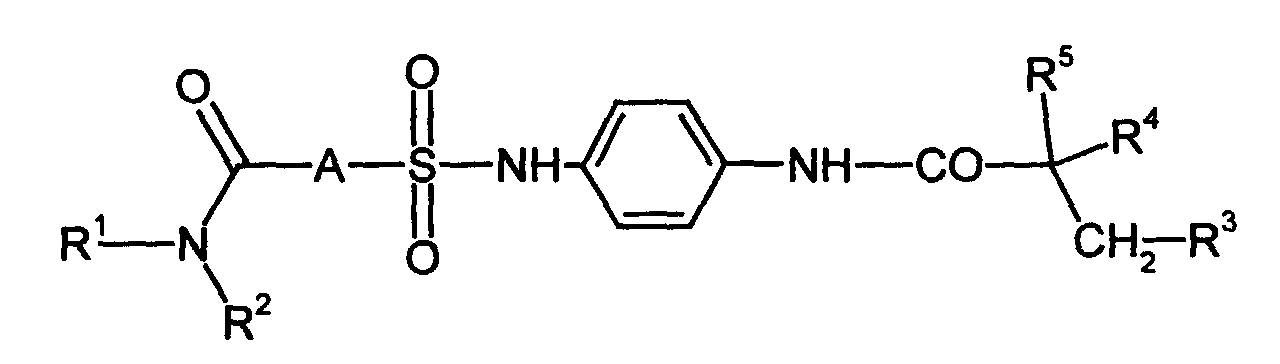
- Verbindungen nach irgendeinem der Ansprüche 1 bis 3 der Formel:worin R1,R2,R3,R4,R5 und A wie oben definiert sind.
- Verbindungen nach irgendeinem der Ansprüche 1 bis 4, worin A Naphthalindiyl ist.
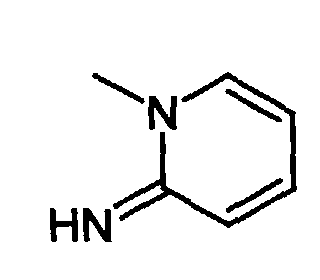
- Verbindungen nach irgendeinem der Ansprüche 1 bis 5, worin R1 Wasserstoff ist und R2 ausgewählt wird aus Pyridyl, Phenyl, Hydroxyphenyl oder (C1-C4)Alkoxycarbonylphenyl, oder R1 und R2 gemeinsam mit dem Stickstoffatom, an das sie gebunden sind, einen Ring der Formel:bilden, oder für Thiomorpholino, 4-Oxopiperidino, 4-N-(Cyclopropyl)piperazin-1-yl, Piperidino, 1-Azacyclooctan-1-yl, 1-Azacycloheptan-1-yl oder 1,3-Thiazolidin-1-yl stehen.
- Verbindungen nach irgendeinem der Ansprüche 1 bis 6, worin
- R3
- für Wasserstoff oder Halogen steht,
- R4 und R5
- jeweils für eine Methylgruppe stehen,
- A
- für einen Phenylen oder Naphthalindiyl-Rest steht, und
- D und E
- für Wasserstoff stehen.
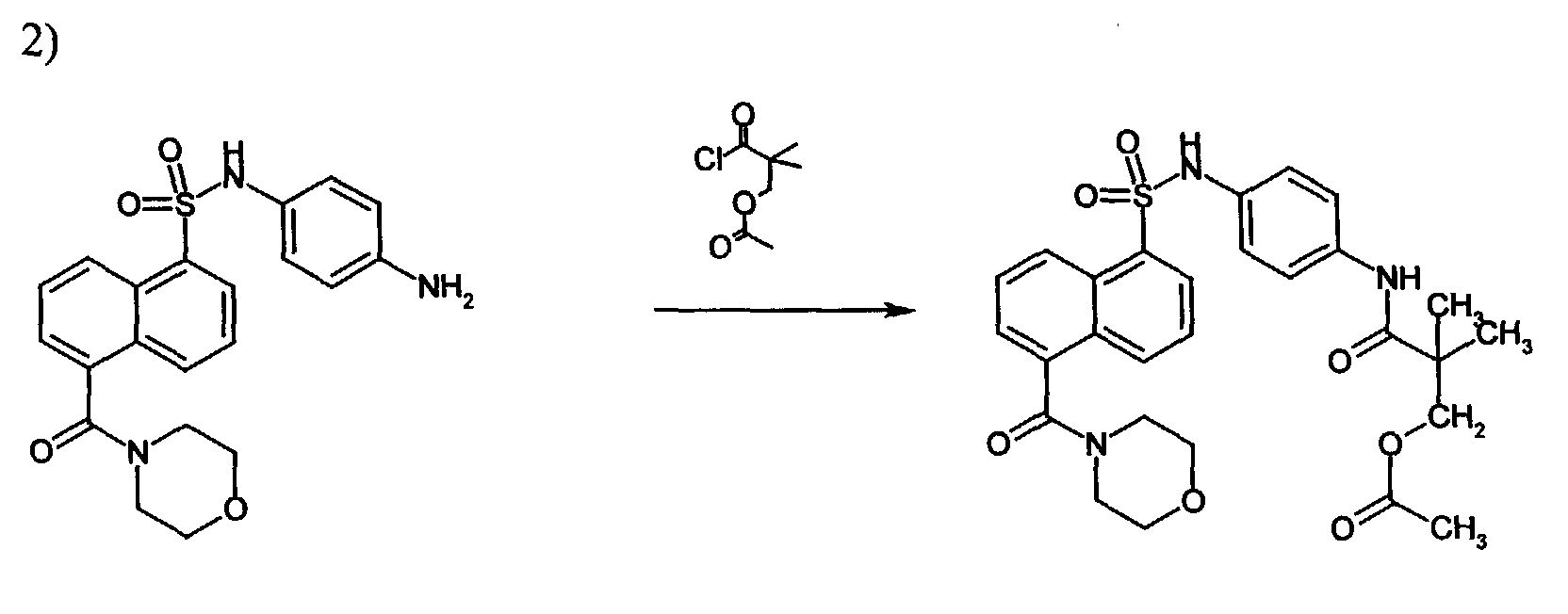
- Verfahren zur Herstellung von Verbindungen der allgemeinen Formel (I) nach Anspruch 1, dadurch gekennzeichnet, daß man Verbindungen der allgemeinen Formel (II)
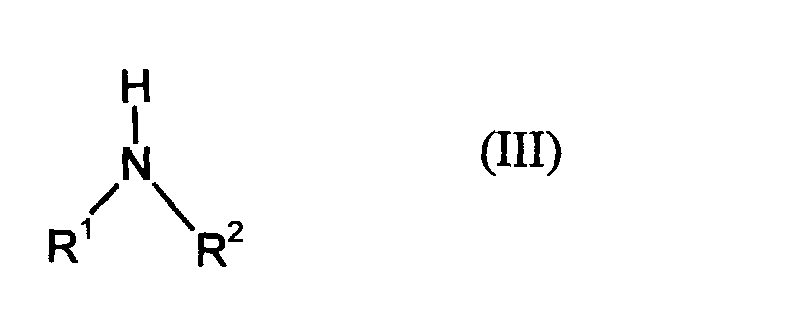
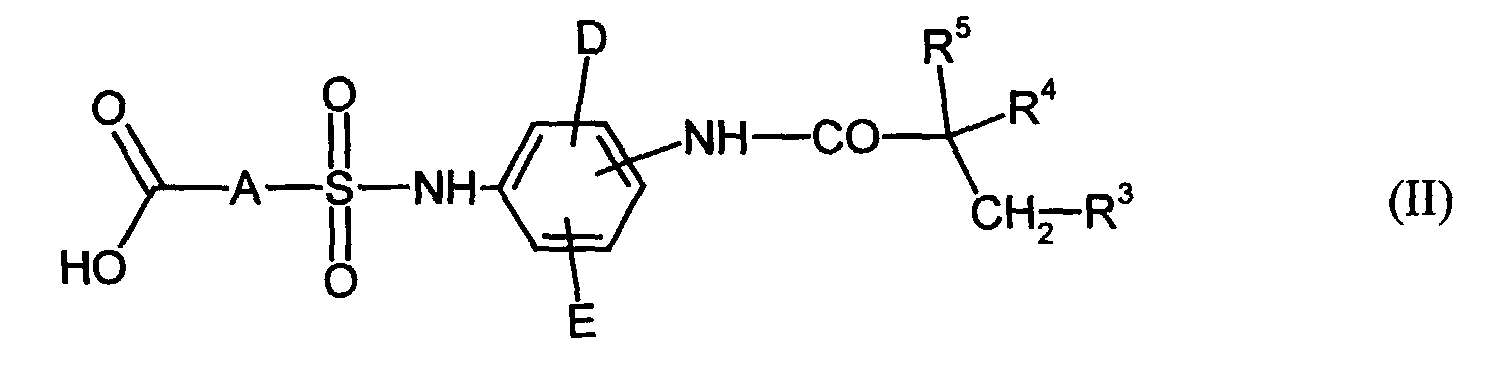 worin die Substituenten die obengenannte Bedeutung aufweisen, gegebenenfalls nach Überführung in das Säurechlorid oder nach Aktivierung nach literaturbekannten Verfahren, mit Aminen der allgemeinen Formel (III)umsetzt, oder
 Verbindungen der allgemeinen Formel (IV)
 worin die Substituenten die obengenannte Bedeutung besitzen, mit Carbonsäurechloriden der allgemeinen Formel (V) umsetzt
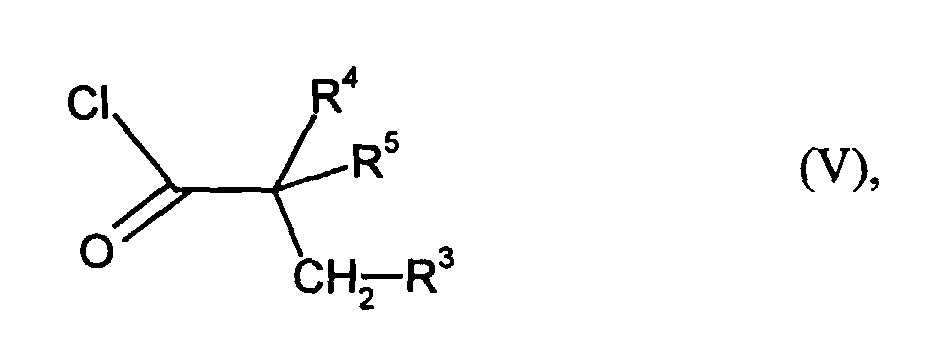 worin die Substituenten die obengenannte Bedeutung besitzen.
 - Verbindungen nach Anspruch 1, zur Verwendung als Arzneimittel.
- Pharmazeutische Zusammensetzung, die eine Verbindung der allgemeinen Formel (I) nach Anspruch 1 in Mischung mit mindestens einem pharmazeutisch verträglichen Träger oder Exzipienten umfaßt.
- Verwendung der Verbindung der allgemeinen Formel (I) nach Anspruch 1 zur Herstellung eines Arzneimittels.
- Verwendung einer Verbindung der allgemeinen Formel (I) nach Anspruch 1 zur Herstellung eines Arzneimittels zur Behandlung von viralen Infektionen, insbesondere Infektionen durch Cytomegalieviren.
Applications Claiming Priority (2)
| Application Number | Priority Date | Filing Date | Title |
|---|---|---|---|
| DE19912638A DE19912638A1 (de) | 1999-03-20 | 1999-03-20 | Naphthylcarbonsäureamid-substituierte Sulfonamide |
| DE19912638 | 1999-03-20 |
Publications (2)
| Publication Number | Publication Date |
|---|---|
| EP1038868A2 true EP1038868A2 (de) | 2000-09-27 |
| EP1038868A3 EP1038868A3 (de) | 2000-10-04 |
Family
ID=7901796
Family Applications (1)
| Application Number | Title | Priority Date | Filing Date |
|---|---|---|---|
| EP00104463A Withdrawn EP1038868A3 (de) | 1999-03-20 | 2000-03-07 | Sulfonamide als antivirale Mittel |
Country Status (3)
| Country | Link |
|---|---|
| EP (1) | EP1038868A3 (de) |
| JP (1) | JP2000319249A (de) |
| DE (1) | DE19912638A1 (de) |
Cited By (6)
| Publication number | Priority date | Publication date | Assignee | Title |
|---|---|---|---|---|
| WO2004058736A1 (en) * | 2002-12-23 | 2004-07-15 | Millennium Pharmaceuticals, Inc. | Ccr8 inhibitors |
| WO2004058709A1 (en) * | 2002-12-23 | 2004-07-15 | Millennium Pharmaceuticals, Inc. | Ccr8 inhibitors |
| US7491827B2 (en) | 2002-12-23 | 2009-02-17 | Millennium Pharmaceuticals, Inc. | Aryl sulfonamides useful as inhibitors of chemokine receptor activity |
| EP2659891A4 (de) * | 2010-12-27 | 2014-01-08 | Tets Viktor Veniaminovich | Arzneimittel mit aktivität gegen herpesvirus-familie |
| US9757396B2 (en) | 2013-06-07 | 2017-09-12 | Viktor Veniaminovich Tets | Method for treating recurring skin and mucous membrane diseases caused by HSV-1 and HSV-2 |
| US10584095B2 (en) | 2015-09-15 | 2020-03-10 | Viktor Veniaminovich Tets | Method of producing a sodium salt of (2,6-dichlorophenyl)amide carbopentoxysulfanilic acid |
Families Citing this family (26)
| Publication number | Priority date | Publication date | Assignee | Title |
|---|---|---|---|---|
| ES2378620T3 (es) | 2003-03-27 | 2012-04-16 | Cytokinetics, Inc. | Sulfonamidas para el tratamiento de insuficiencia cardiaca congestiva, sus composiciones y usos. |
| KR100793095B1 (ko) * | 2003-10-01 | 2008-01-10 | 주식회사 프로메디텍 | Bace 저해효능을 가진 신규한 술폰 아미드 유도체 |
| US8754114B2 (en) | 2010-12-22 | 2014-06-17 | Incyte Corporation | Substituted imidazopyridazines and benzimidazoles as inhibitors of FGFR3 |
| ES2704744T3 (es) | 2012-06-13 | 2019-03-19 | Incyte Holdings Corp | Compuestos tricíclicos sustituidos como inhibidores de FGFR |
| US9388185B2 (en) | 2012-08-10 | 2016-07-12 | Incyte Holdings Corporation | Substituted pyrrolo[2,3-b]pyrazines as FGFR inhibitors |
| US9266892B2 (en) | 2012-12-19 | 2016-02-23 | Incyte Holdings Corporation | Fused pyrazoles as FGFR inhibitors |
| EA035095B1 (ru) | 2013-04-19 | 2020-04-27 | Инсайт Холдингс Корпорейшн | Бициклические гетероциклы в качестве ингибиторов fgfr |
| US10851105B2 (en) | 2014-10-22 | 2020-12-01 | Incyte Corporation | Bicyclic heterocycles as FGFR4 inhibitors |
| MX373169B (es) | 2015-02-20 | 2020-04-24 | Incyte Holdings Corp | Heterociclos bicíclicos como inhibidores de receptores del factor de crecimiento fibroblástico (fgfr). |
| WO2016134294A1 (en) | 2015-02-20 | 2016-08-25 | Incyte Corporation | Bicyclic heterocycles as fgfr4 inhibitors |
| MA41551A (fr) | 2015-02-20 | 2017-12-26 | Incyte Corp | Hétérocycles bicycliques utilisés en tant qu'inhibiteurs de fgfr4 |
| WO2016199906A1 (ja) * | 2015-06-12 | 2016-12-15 | 国立大学法人筑波大学 | スルホンアミド誘導体またはその薬学的に許容される酸付加塩 |
| AR111960A1 (es) | 2017-05-26 | 2019-09-04 | Incyte Corp | Formas cristalinas de un inhibidor de fgfr y procesos para su preparación |
| CR20200590A (es) | 2018-05-04 | 2021-04-26 | Incyte Corp | Formas sólidas de un inhibidor de fgfr y procesos para prepararlas |
| MA52493A (fr) | 2018-05-04 | 2021-03-10 | Incyte Corp | Sels d'un inhibiteur de fgfr |
| WO2020185532A1 (en) | 2019-03-08 | 2020-09-17 | Incyte Corporation | Methods of treating cancer with an fgfr inhibitor |
| WO2021007269A1 (en) | 2019-07-09 | 2021-01-14 | Incyte Corporation | Bicyclic heterocycles as fgfr inhibitors |
| WO2021067374A1 (en) | 2019-10-01 | 2021-04-08 | Incyte Corporation | Bicyclic heterocycles as fgfr inhibitors |
| TWI891666B (zh) | 2019-10-14 | 2025-08-01 | 美商英塞特公司 | 作為fgfr抑制劑之雙環雜環 |
| WO2021076728A1 (en) | 2019-10-16 | 2021-04-22 | Incyte Corporation | Bicyclic heterocycles as fgfr inhibitors |
| EP4069696A1 (de) | 2019-12-04 | 2022-10-12 | Incyte Corporation | Tricyclische heterocyclen als fgfr-inhibitoren |
| BR112022010664A2 (pt) | 2019-12-04 | 2022-08-16 | Incyte Corp | Derivados de um inibidor de fgfr |
| WO2021146424A1 (en) | 2020-01-15 | 2021-07-22 | Incyte Corporation | Bicyclic heterocycles as fgfr inhibitors |
| TW202304459A (zh) | 2021-04-12 | 2023-02-01 | 美商英塞特公司 | 包含fgfr抑制劑及nectin-4靶向劑之組合療法 |
| EP4352059A1 (de) | 2021-06-09 | 2024-04-17 | Incyte Corporation | Tricyclische heterocyclen als fgfr-inhibitoren |
| WO2022261159A1 (en) | 2021-06-09 | 2022-12-15 | Incyte Corporation | Tricyclic heterocycles as fgfr inhibitors |
Family Cites Families (2)
| Publication number | Priority date | Publication date | Assignee | Title |
|---|---|---|---|---|
| GB9605437D0 (en) * | 1996-03-15 | 1996-05-15 | Iaf Biochem Int | Cytomegalovirus inhibiting compounds |
| DE19802436A1 (de) * | 1998-01-23 | 1999-07-29 | Bayer Ag | Neue Naphthyl- und heterocyclisch-substituierte Sulfonamide |
-
1999
- 1999-03-20 DE DE19912638A patent/DE19912638A1/de not_active Withdrawn
-
2000
- 2000-03-07 EP EP00104463A patent/EP1038868A3/de not_active Withdrawn
- 2000-03-15 JP JP2000071933A patent/JP2000319249A/ja active Pending
Cited By (12)
| Publication number | Priority date | Publication date | Assignee | Title |
|---|---|---|---|---|
| WO2004058736A1 (en) * | 2002-12-23 | 2004-07-15 | Millennium Pharmaceuticals, Inc. | Ccr8 inhibitors |
| WO2004058709A1 (en) * | 2002-12-23 | 2004-07-15 | Millennium Pharmaceuticals, Inc. | Ccr8 inhibitors |
| US7329755B2 (en) | 2002-12-23 | 2008-02-12 | Millennium Pharmaceuticals, Inc. | CCR8 inhibitors |
| US7378525B2 (en) | 2002-12-23 | 2008-05-27 | Millennium Pharmaceuticals, Inc. | CCR8 inhibitors |
| US7491827B2 (en) | 2002-12-23 | 2009-02-17 | Millennium Pharmaceuticals, Inc. | Aryl sulfonamides useful as inhibitors of chemokine receptor activity |
| US8063222B2 (en) | 2002-12-23 | 2011-11-22 | Millennium Pharmaceuticals, Inc. | Aryl sulfonamides useful as inhibitors of chemokine receptor activity |
| EP2659891A4 (de) * | 2010-12-27 | 2014-01-08 | Tets Viktor Veniaminovich | Arzneimittel mit aktivität gegen herpesvirus-familie |
| US9567295B2 (en) | 2010-12-27 | 2017-02-14 | Viktor Veniaminovich Tets | Drug with activity against the herpes virus family |
| US10098899B2 (en) | 2010-12-27 | 2018-10-16 | Viktor Veniaminovich Tets | Drug with activity against the herpes virus family |
| US9757396B2 (en) | 2013-06-07 | 2017-09-12 | Viktor Veniaminovich Tets | Method for treating recurring skin and mucous membrane diseases caused by HSV-1 and HSV-2 |
| US10080761B2 (en) | 2013-06-07 | 2018-09-25 | Viktor Veniaminovich Tets | Method for treating recurring skin and mucous membrane diseases caused by HSV-1 and HSV-2 |
| US10584095B2 (en) | 2015-09-15 | 2020-03-10 | Viktor Veniaminovich Tets | Method of producing a sodium salt of (2,6-dichlorophenyl)amide carbopentoxysulfanilic acid |
Also Published As
| Publication number | Publication date |
|---|---|
| DE19912638A1 (de) | 2000-09-21 |
| JP2000319249A (ja) | 2000-11-21 |
| EP1038868A3 (de) | 2000-10-04 |
Similar Documents
| Publication | Publication Date | Title |
|---|---|---|
| EP1038868A2 (de) | Sulfonamide als antivirale Mittel | |
| DE19920790A1 (de) | Bis-Sulfonamide mit anti-HCMV-Wirkung | |
| DE3881246T2 (de) | Durch Benzhydryl N-substituierte heterocyclische Derivate, ihre Herstellung und ihre Verwendung. | |
| EP1161423B1 (de) | Thiazolylharnstoff-derivate und ihre verwendung als antivirale mittel | |
| EP1218341B1 (de) | Sulfonylcarboxamidderivate, verfahren zu ihrer herstellung und ihre verwendung als arzneimittel | |
| DE69904600T2 (de) | Calcium (3s) tetrahydro-3-furanyl(1s,2r)-3-[[(4-aminophenyl) sulfonyl](isobutyl)amino]-1-benzyl-2-(phosphonooxy)propylcarbamat | |
| WO2001094300A1 (de) | Acylphenylharnstoffderivate, verfahren zu ihrer herstellung und ihre verwendung als arzneimittel | |
| DE3342164C2 (de) | ||
| DE69813605T2 (de) | Benzofuranderivate | |
| CH671958A5 (de) | ||
| EP1049666A1 (de) | Neue naphthyl- und anilid-substituierte sulfonamide | |
| DE19930075A1 (de) | Neue Amino- und Amidosulfonamide als antivirale Mittel | |
| DE69112192T2 (de) | Antiherpes-Castanosperminester. | |
| DE69325899T2 (de) | 3-ALKYLOXY-, ARYLOXY-, ODER ARYLALKYLOXY- BENZO[b]THIOPHEN- 2-CARBOXAMIDE ALS INHIBITOREN VON ZELLADHÄSION | |
| DE19927415A1 (de) | Indolinylharnstoffderivate | |
| DE19802437A1 (de) | Verwendung von substituierten Sulfonamiden als anitvirale Mittel und neue Stoffe | |
| EP1335720A1 (de) | Sulfonamiden zur behandlung von erkrankungen des zentralen nervensystems | |
| WO2001007403A1 (de) | Naphthyl-substituierte sulfonamide | |
| EP0000336B1 (de) | Amidino-benzylpyrimidine, Verfahren zu ihrer Herstellung und diese enthaltende Arzneimittel | |
| EP1177171A1 (de) | Substituirte indolsulfonamide als antivirale mittel | |
| WO2001007412A1 (de) | Antivirale tetrahydroisichinolinsulfonamide | |
| EP0011092A1 (de) | Alpha-Aminophenylessigsäurederivate zur Verwendung bei der Behandlung von Entzündungen sowie neue alpha-Aminophenylessigsäurederivate | |
| WO2001007402A1 (de) | Antivirale mittel | |
| DE19959958A1 (de) | Thiazolylharnstoff-Derivate | |
| DD275241A5 (de) | Verfahren zur herstellung von neuen 1-aryloxy-3-amimo-2-propanolen |
Legal Events
| Date | Code | Title | Description |
|---|---|---|---|
| PUAI | Public reference made under article 153(3) epc to a published international application that has entered the european phase |
Free format text: ORIGINAL CODE: 0009012 |
|
| PUAL | Search report despatched |
Free format text: ORIGINAL CODE: 0009013 |
|
| AK | Designated contracting states |
Kind code of ref document: A2 Designated state(s): AT BE CH CY DE DK ES FI FR GB GR IE IT LI LU MC NL PT SE |
|
| AX | Request for extension of the european patent |
Free format text: AL;LT;LV;MK;RO;SI |
|
| AK | Designated contracting states |
Kind code of ref document: A3 Designated state(s): AT BE CH CY DE DK ES FI FR GB GR IE IT LI LU MC NL PT SE |
|
| AX | Request for extension of the european patent |
Free format text: AL;LT;LV;MK;RO;SI |
|
| 17P | Request for examination filed |
Effective date: 20010404 |
|
| AKX | Designation fees paid |
Free format text: AT BE CH CY DE DK ES FI FR GB GR IE IT LI LU MC NL PT SE |
|
| 17Q | First examination report despatched |
Effective date: 20011206 |
|
| STAA | Information on the status of an ep patent application or granted ep patent |
Free format text: STATUS: THE APPLICATION IS DEEMED TO BE WITHDRAWN |
|
| 18D | Application deemed to be withdrawn |
Effective date: 20020417 |