EP1045103A2 - Sprossenfenster - Google Patents
Sprossenfenster Download PDFInfo
- Publication number
- EP1045103A2 EP1045103A2 EP00108343A EP00108343A EP1045103A2 EP 1045103 A2 EP1045103 A2 EP 1045103A2 EP 00108343 A EP00108343 A EP 00108343A EP 00108343 A EP00108343 A EP 00108343A EP 1045103 A2 EP1045103 A2 EP 1045103A2
- Authority
- EP
- European Patent Office
- Prior art keywords
- coupling
- rung
- rungs
- ssp
- dsp
- Prior art date
- Legal status (The legal status is an assumption and is not a legal conclusion. Google has not performed a legal analysis and makes no representation as to the accuracy of the status listed.)
- Granted
Links
- 230000008878 coupling Effects 0.000 claims abstract description 115
- 238000010168 coupling process Methods 0.000 claims abstract description 115
- 238000005859 coupling reaction Methods 0.000 claims abstract description 115
- 239000004952 Polyamide Substances 0.000 claims description 5
- 229920002647 polyamide Polymers 0.000 claims description 5
- 239000000203 mixture Substances 0.000 claims description 4
- 239000003365 glass fiber Substances 0.000 claims description 3
- 239000004033 plastic Substances 0.000 claims description 3
- 210000002414 leg Anatomy 0.000 claims 5
- 239000011324 bead Substances 0.000 claims 1
- 239000002131 composite material Substances 0.000 claims 1
- 239000011152 fibreglass Substances 0.000 claims 1
- 210000000689 upper leg Anatomy 0.000 claims 1
- 239000000463 material Substances 0.000 description 9
- 101100116570 Caenorhabditis elegans cup-2 gene Proteins 0.000 description 7
- 101100116572 Drosophila melanogaster Der-1 gene Proteins 0.000 description 7
- 238000013461 design Methods 0.000 description 7
- 238000004519 manufacturing process Methods 0.000 description 5
- 238000009434 installation Methods 0.000 description 3
- 230000015572 biosynthetic process Effects 0.000 description 2
- 230000000295 complement effect Effects 0.000 description 2
- 238000011161 development Methods 0.000 description 2
- 230000018109 developmental process Effects 0.000 description 2
- 239000002184 metal Substances 0.000 description 2
- 230000035939 shock Effects 0.000 description 2
- 238000013459 approach Methods 0.000 description 1
- 238000005452 bending Methods 0.000 description 1
- 230000000694 effects Effects 0.000 description 1
- 238000012549 training Methods 0.000 description 1
Images



Classifications
-
- E—FIXED CONSTRUCTIONS
- E06—DOORS, WINDOWS, SHUTTERS, OR ROLLER BLINDS IN GENERAL; LADDERS
- E06B—FIXED OR MOVABLE CLOSURES FOR OPENINGS IN BUILDINGS, VEHICLES, FENCES OR LIKE ENCLOSURES IN GENERAL, e.g. DOORS, WINDOWS, BLINDS, GATES
- E06B3/00—Window sashes, door leaves, or like elements for closing wall or like openings; Layout of fixed or moving closures, e.g. windows in wall or like openings; Features of rigidly-mounted outer frames relating to the mounting of wing frames
- E06B3/66—Units comprising two or more parallel glass or like panes permanently secured together
- E06B3/6604—Units comprising two or more parallel glass or like panes permanently secured together comprising false glazing bars or similar decorations between the panes
-
- E—FIXED CONSTRUCTIONS
- E06—DOORS, WINDOWS, SHUTTERS, OR ROLLER BLINDS IN GENERAL; LADDERS
- E06B—FIXED OR MOVABLE CLOSURES FOR OPENINGS IN BUILDINGS, VEHICLES, FENCES OR LIKE ENCLOSURES IN GENERAL, e.g. DOORS, WINDOWS, BLINDS, GATES
- E06B3/00—Window sashes, door leaves, or like elements for closing wall or like openings; Layout of fixed or moving closures, e.g. windows in wall or like openings; Features of rigidly-mounted outer frames relating to the mounting of wing frames
- E06B3/66—Units comprising two or more parallel glass or like panes permanently secured together
- E06B3/663—Elements for spacing panes
- E06B3/667—Connectors therefor
-
- E—FIXED CONSTRUCTIONS
- E06—DOORS, WINDOWS, SHUTTERS, OR ROLLER BLINDS IN GENERAL; LADDERS
- E06B—FIXED OR MOVABLE CLOSURES FOR OPENINGS IN BUILDINGS, VEHICLES, FENCES OR LIKE ENCLOSURES IN GENERAL, e.g. DOORS, WINDOWS, BLINDS, GATES
- E06B3/00—Window sashes, door leaves, or like elements for closing wall or like openings; Layout of fixed or moving closures, e.g. windows in wall or like openings; Features of rigidly-mounted outer frames relating to the mounting of wing frames
- E06B3/96—Corner joints or edge joints for windows, doors, or the like frames or wings
- E06B3/99—Corner joints or edge joints for windows, doors, or the like frames or wings for continuous frame members crossing each other with out interruption
Definitions
- Rung window with at least one, between multiple panes arranged, each from a continuous rung and two aligned side rungs and formed by each in the side rungs inserted, by means of pinnings in this held and with at least one coupling piece with each other non-positively held together connector elements connected, cross bars.
- Each connector element has a central channel with it offset oppositely arranged knobs, and a each inserted into the channels in a close fit at the ends and the continuous bar that encompasses the bars Connect.
- a disadvantage of such a connection is the lack of security against the twisting of the connector elements and thus the side rungs to each other. Besides, that is Alignment of the rungs in a plane between the panes and not secured at an angle to each other, so that the rattling the lattice window in the event of vibration or shock cannot be excluded.
- DE 197 14 557 A1 describes an arrangement of Rungs between window panes known by means of a Plastic connector cross are held together in one has free crossing area spring arms, which from the The intersection area protrudes towards the window panes and are resiliently supported there.
- a one-piece Cross connector cannot be used for dummy rungs because the Rung profile bars must be led over the cross.
- the above-mentioned cross connection for rungs arranged between the window panes to improve so that better flatness and angularity the rung insert is given and also with different Temperatures and shock loads when opening and closing the Window panes effectively prevent the rungs from rattling is.
- the object is achieved in such a way that the two connector elements in the side rungs by two coupling bars that are tight in Coupling slots are held, positive and non-positive are connected that the coupling webs in recesses in the continuous rung and that cross on the intersection of the Connector elements are two spring arms in the central Extend intersection area and of these perpendicular in the A cone crosses each other in opposite directions an associated hole in the continuous rung up to one of the two window panes, there each non-positive Fitting, centering the cross bars, extend.
- the rungs preferably from Light metal folded or pressed hollow profiles are.
- the continuous rung is usually arranged vertically.
- the Hollow profiles show through the window panes on the front and rear mirror surfaces on which the Profile cross-section is often tapered on both sides, preferably is concave, the tapered profile parts laterally by means of narrow side surfaces are connected.
- the ends of the side rungs on the crossing side are for Alignment of the rungs to each other and for the sake of view adapted to the outer profile of the continuous rung profiled.
- the connector elements have an outside on both sides Feathering on, which inhibits its orientation against one Taking off is directed towards the rung cross and built in Condition clamped on both sides in the interior of the rung is.
- the width corresponds to Feathering the inner dimension of the narrower rung profile side.
- the connector elements are according to the invention tightly by means of at least two in coupling slots held coupling webs connected to each other.
- the clutch slots are off-center, preferably at a mirror-like distance an imaginary center line, in the connector elements arranged.
- the angularity is advantageous due to recesses in the continuous rung in the crossing area, in which the Coupling webs are performed.
- the rungs have one wall Guide channels and contact surfaces, whereby in the built Condition the guide channels in continuation of the perpendicular to the inner top surfaces of the rungs standing cut edges of the Cutouts in the continuous rung and the contact surfaces in continuation of the parallel to the inner deck surfaces of the Rung cut edges of the recesses in the continuous rung.
- the arrangement of the side rungs to the continuous Rung is connected by means of two coupling bars, the recesses in the continuous rung and the guide channels and the contact surfaces in the rungs in any definable angle possible.
- the height of the coupling webs corresponds to the distance between the inner ones Cover surfaces of the rung profiles. Every coupling bridge is therefore on three sides, on both sides outside between the guide channels the rungs or in the recesses of the continuous rung and in height on the inner top surfaces of the window bars held in the rung profiles.
- the rungs For aligning the connector elements in the rung profiles parallel to the transom mirrors, the rungs have one advantageous continuation in the area of the side, tapered trained rung profiles support surfaces for the connector elements in such a way that these contact surfaces on both sides outside the coupling slots of the inserted connector elements the connector elements above and below in narrower Border fit.
- Tilting the side mirror surfaces is also advantageous from one level with the mirror surface of the continuous rung locked out.
- the recesses in the continuous rung are for receiving the coupling webs are as wide as the width of the inner cover surfaces and correspond in height to the distance of the inner ones Top surface.
- the coupling webs lie between the guide channels the continuous rung, the connector elements on the Contact surfaces of the continuous rung, these in Escape to the recesses.
- the Height of the connector elements the distance between the inner top surfaces the sprouts. Such is a twisting of the connector elements excluded in the side rung profiles.
- the coupling webs and the coupling slots are in this Design advantageously wider than in the first embodiment.
- the coupling webs partially protrude into the side areas of the tapered rung profiles and are installed in the Condition kept between the side contact surfaces.
- the coupling slots in the area that is not from the contact surfaces are limited, offset in height and sides arranged knobs on the coupling webs form-fitting hold.
- the recesses in the continuous rung are for receiving the coupling webs wider than the width of the inner cover surfaces and correspond in height to the distance between the contact surfaces.
- the coupling webs are on the contact surfaces of the continuous rung and side rungs on the Connector elements between the guide channels of the continuous Rung, these running in alignment with the recesses.
- the Height of the coupling webs the distance between the contact surfaces in the Hollow profiles of the rungs and the distance between the outer side surfaces the coupling webs the width of the inner mirror surfaces the sprouts.
- Each coupling slot of the connector elements has alignment webs on both sides along its entire length, the are connected in a web-like manner at their inner ends. In the coupling webs are on both sides along their entire length Grooves and end alignment slits incorporated. she grip with the grooves over the alignment webs and with the alignment slots in the part of the alignment webs, that connects the two.
- the recesses in the continuous rung are for receiving the coupling webs are as wide as the width of the inner cover surfaces and correspond in height to the distance between the contact surfaces.
- the coupling webs are on the contact surfaces of the continuous rung, the connector elements between the Guide channels of the continuous rung, these in flight to the recesses.
- connection Connector elements and coupling pieces and their tight fit inside the rung profiles are part of the solution Object of the invention possible.
- the connector elements are formed in a first advantageous embodiment such that the connector elements each have two coupling slots in which two separate coupling bars are kept tight.
- the connector elements are advantageously made of polyamide, the coupling webs are reinforced with glass fibers.
- the choice of material for the coupling bars is the relative weight ratio between polyamide and glass fiber 0.5: 1 to 2: 1, advantageous 1: 1.
- a second advantageous embodiment of the connector elements is the formation of a coupling web that is free on the one hand a connector element, the installation taking place such that the coupling web of a connector element the coupling slot the other connector element is arranged opposite.
- Pins arranged through holes in the through Rungs are led in the center of the intersection and on the inside of the window panes. These effect you Distance of the rungs to the window panes for rattle-free Arrangement in the intersection area.
- the distance of the window panes the rung cross is preferably almost on both sides same size.
- the arched spring arms acting on the crossing side provide a positive connection to the Spring-formed molded pins to the window pane.
- the cones are essentially cylindrical.
- these are approximately cylindrical Pin separately executed.
- the length of one essentially cylindrical pin corresponds to the distance between the Window pane and the rung profile plus the material thickness of the rung profile and a compensation measure for Compensate the difference in the material thickness of the cones by Temperature increase in the rung window.
- the free ends of the Spring arms press against the holes in the through Rung inserted plug ends.
- the rung is a bulge on the pins at both ends molded, which is to be passed through the bore in a press fit; the cylindrical shaft area, on the other hand, has a loose fit.
- the free Ends of the spring arms according to the invention centering fingers, which in, arranged in the center of the largely cylindrical pin, centric depressions are inserted.
- the separate design of the pin allows in particular simple way according to the invention the use of a UV lightfast Material for the cones and enables one simple stocking of pins of different lengths for different distances of the window panes.
- the other elements the rung connection can be made from an elastic, inexpensive non-UV lightfast material exist and are only that Design rung dimensions in accordance with.
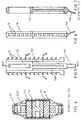
- FIG. 1 and 2 show a crossbar between window panes (F), consisting of a continuous, usually vertically arranged rung (DSP) and two lateral Rungs (SSP), one side rung (SSP) and the continuous rung (DSP) in its position after assembly are shown.
- This side rung (SSP) is with inserted Connector element (1A) and with in coupling slots (3Al, 3Ar) inserted in this connector element (1A), separate coupling bars (2l, 2r) completed.
- the assembly of the Cross bars are made by inserting the coupling slots (3Bl, 3Br) of the second connector element (1B) on the Coupling webs (2l, 2r) and attaching the second side Rung (SSP) on the second connector element (1B).
- the rungs (DSP, SSP) are preferably folded or made of light metal pressed hollow profiles. To align the coupling webs (2l, 2r) has the continuous rung (DSP) in recesses (7) the shape shown in Fig
- FIG. 1 shows, on both sides on the connector elements (1A, 1B) molded, a spring (12), which is a clamping seat of Connector elements (1A, 1B) in the side rungs (SSP) causes.
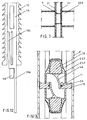
- the side view in Fig. 2 illustrates the arrangement of the Spring arms (4A, 4B) in the crossing area of the rungs (DSP, SSP).
- 13 shows the advantageous embodiment of the spring arms (4A, 4B) with integrally formed, centric, in depressions (11) in the pin (11) gripping fingers (5A, 5B).
- the pins (10) are through associated holes (6) in the continuous rung (DSP) and extend to the window panes (F). At the end, they have ridges that prevent the Pin (10) from the holes (6) of the continuous rung (DSP) fall.
- FIG. 5 to 7 and 14 to 16 show a connector element (1A) in a first embodiment
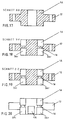
- Fig. 4 shows a section through a side rung (SSP) with such a connector element (1A) and complementary coupling webs (2l, 2r).
- Fig. 4 shows in cross-sectional view the arrangement of the connector element (1A) in the side rung (SSP) and the arrangement of the coupling webs (2l, 2r) in the coupling slots (3Al, 3Ar).
- the height of the connector element (1A) and the coupling webs (2l is the height of the connector element (1A) and the coupling webs (2l.
- FIG. 2r corresponds to the distance between the inner cover surfaces of the side rung (SSP), whereby a form-fitting arrangement of the connector element (1A) and the coupling webs (2l, 2r) is achieved .
- Guide channels (8) molded into the rungs also serve to align the coupling webs (2l, 2r).
- the pinnate is arranged extending to the narrower side surfaces and holds the connector element (1A) in a positive and non-positive manner in the side rung (SSP).
- 14 and 15 show cross sections of a connector element (1A, 1B) in the first embodiment in the area of the coupling slots (2l, 2r) and outside of it
- FIG. 16 shows the arrangement of a spring arm (4A) on a connector element (1A) .
- Figures 9 to 11 show a connector element (1A) in a second embodiment, Figure 8 in turn a section through a side rung (SSP) with a connector element (1A) of this type and complementary coupling webs (2l, 2r).
- the coupling webs (2l, 2r) are wider than in the first embodiment and protrude with approximately a third of their width in the part of the rung that is tapered, preferably concave, for reasons of view.
- the height of the coupling webs (2l, 2r) corresponds to the height of the side rung (SSP) in the tapered area.
- Shaped support surfaces (9) are used to align the coupling pieces (2l, 2r) in this area parallel to the inner cover surfaces.
- knobs (14) are used, which are formed on the connector element (1A) so as to be offset in height and side in such a way that they connect the coupling webs (2l, 2r) in the free interior of the rung (SSP ) include.
- the recesses (7) in the continuous rung (DSP) are adapted accordingly for such an arrangement.
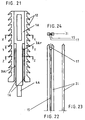
- FIG. 17 to 21 show a connector element (1A) in a third Embodiment, Fig. 22 to Fig. 24 a suitable one Coupling web (2l).
- FIG. 21 shows a change compared to FIG. 5
- Alignment bars arranged in the coupling slots (3Al, 3Ar) (16) on both sides in the coupling slots (3Al, 3Ar) are integrally formed and at the inner end of the coupling slots (3Al, 3Ar) are connected to one another in a web-like manner.
- 17 to 20 are different cross sections at different interfaces of the connector element (1A) shown.
- Coupling web (2l) shows in the middle over its entire length one at the front and one at the back in the view shown Groove (15). At its ends the coupling web (2l) one each in extension of the course of the groove (15) Alignment slot (17) by gripping the end connected web-like area of the alignment webs (16) in the coupling slots (3Al, 3Ar) of the connector element (1A) turning the coupling web (2l) in the coupling slot (3Al) prevented.
- Figure 12 shows a connector element (1A) with an integrally formed coupling web (2Al).
- two identical connector elements (1A, 1B), arranged in mirror image, are guided through the recesses (7) in the continuous rung (DSP), the coupling webs (2Al or 2Br) are inserted into the opposite coupling slots (3Bl or 3Ar) and then a side rung (SSP) is attached to each connector element (1A, 1B).
- the design corresponds to the 1st design type with a height of the connector elements (1A, 1B) and coupling pieces (2l, 2r) corresponding to the distance between the inner top surfaces of the side rung (SSP).
- This embodiment is advantageous in terms of its manufacture and assembly, since only one type of connector element is to be manufactured and only two plug connections are required for the assembly of the connector elements during assembly.
Landscapes
- Engineering & Computer Science (AREA)
- Civil Engineering (AREA)
- Structural Engineering (AREA)
- Mutual Connection Of Rods And Tubes (AREA)
- Lasers (AREA)
- Gripping On Spindles (AREA)
- Cylinder Crankcases Of Internal Combustion Engines (AREA)
- Fencing (AREA)
- Toys (AREA)
- Agricultural Chemicals And Associated Chemicals (AREA)
- Organic Low-Molecular-Weight Compounds And Preparation Thereof (AREA)
Abstract
Description
- Fig. 1
- eine Darstellung des Sprossenkreuzes mit einer seitlichen Sprosse nach dem Einbau mit eingestecktem Verbinder und einer seitlichen Sprosse vor dem Einbau mit eingestecktem Verbinder (Schnitt I - I);
- Fig. 2
- eine Ansicht durch die Fensterscheiben mit seitlichen Sprossen mit eingesteckten Verbinderelementen und Darstellung der Federarme (Schnitt II - II);
- Fig. 3
- eine Sicht auf die durchgehende Sprosse im Kreuzungsbereich mit Aussparungen und Kupplungsstegen;
- Fig. 4
- einen Schnitt durch die seitliche Sprosse mit innenseitigen Führungskanälen und Auflageflächen eingestecktem Verbinderelement und Kupplungsstück in der 1. Ausführungsart (Schnitt III - III in vergrößerter Ansicht);
- Fig. 5
- eine Vorderansicht eines Verbinderelementes in der 1. Ausführungsart;
- Fig. 6
- eine seitliche Ansicht eines Verbinderelementes in der 1. Ausführungsart;
- Fig. 7
- einen Längsschnitt eines Verbinderelementes in der 1. Ausführungsart (Schnitt C - C);
- Fig. 8
- einen Schnitt durch die seitliche Sprosse mit innenseitigen Führungskanälen und Auflageflächen eingestecktem Verbinderelement und Kupplungsstück in der 2. Ausführungsart (Schnitt E - E in vergrößerter Ansicht);
- Fig. 9
- eine Vorderansicht eines Verbinderelementes in der 2. Ausführungsart;
- Fig. 10
- eine seitliche Ansicht eines Verbinderelementes in der 2. Ausführungsart;
- Fig. 11
- einen Längsschnitt eines Verbinderelementes in der 2. Ausführungsart (Schnitt F - F);
- Fig. 12
- eine Vorderansicht eines Verbinderelementes in der Ausführung mit angeformtem Kupplungssteg;
- Fig. 13
- einen Schnitt im Kreuzungsbereich in der Ausführung mit Zapfen und Finger;
- Fig. 14
- einen Schnitt durch ein Verbinderelement in der 1. Ausführungsart im Bereich der Kupplungsschlitze (Schnitt B - B in vergrößerter Ansicht);
- Fig. 15
- einen Schnitt durch ein Verbinderelement in der 1. Ausführungsart im Bereich ohne Kupplungsschlitze (Schnitt A - A in vergrößerter Ansicht);
- Fig. 16
- eine Sicht von unten auf ein Verbinderelement in der 1. Ausführungsart;
- Fig. 17
- einen Schnitt durch ein Verbinderelement in der 3. Ausführungsart im Bereich ohne Kupplungsschlitze (Schnitt X - X in vergrößerter Ansicht);
- Fig. 18
- einen Schnitt durch ein Verbinderelement in der 3. Ausführungsart im Bereich des Ausrichtungssteges (Schnitt Y - Y in vergrößerter Ansicht);
- Fig. 19
- einen Schnitt durch ein Verbinderelement in der 3. Ausführungsart im Bereich der (Schnitt Z - Z in vergrößerter Ansicht);
- Fig. 20
- eine Sicht von unten auf ein Verbinderelement in der 3. Ausführungsart;
- Fig. 21
- eine Vorderansicht eines Verbinderelementes in der 3. Ausführungsart;
- Fig. 22
- eine Vorderansicht eines Kupplungssteges in der 3. Ausführungsart;
- Fig. 23
- eine Seitenansicht eines Kupplungssteges in der 3. Ausführungsart;
- Fig. 24
- eine Sicht von oben auf einen Kupplungssteg in der 3. Ausführungsart.
In den beidseitigen, verjüngt ausgebildeten Bereichen der seitlichen Sprosse (SSP) ist die Fiederung sich bis zu den schmaleren Seitenflächen erstreckend angeordnet und hält das Verbinderelement (1A) form- und kraftschlüssig in der seitlichen Sprosse (SSP).
Die Fig. 14 und 15 zeigen Querschnitte eines Verbinderelementes (1A, 1B) in der 1. Ausführungsart im Bereich der Kupplungsschlitze (2l, 2r) und außerhalb dieser, die Fig. 16 die Anordnung eines Federarmes (4A) an einem Verbinderelement (1A).
In dieser Ausführung sind die Kupplungsstege (2l, 2r) breiter als in der 1. Ausführungsart ausgebildet und ragen mit ca. einem Drittel ihrer Breite in den aus Gründen der Ansicht verjüngten, vorzugsweise konkav, ausgeführt Teil der Sprosse. Die Höhe der Kupplungsstege (2l, 2r) entspricht der Höhe der seitlichen Sprosse (SSP) in dem verjüngten Bereich. Zur Ausrichtung der Kupplungsstücke (2l, 2r) in diesem Bereich dienen parallel zu den inneren Deckflächen angeformte Auflageflächen (9). Zur Ausrichtung im Bereich zwischen den inneren Deckflächen der seitlichen Sprosse (SSP) dienen Noppen (14), die höhen- und seitenversetzt am Verbinderelement (1A) dergestalt angeformt sind, daß sie die Kupplungsstege (2l, 2r) in freien Innenraum der Sprosse (SSP) umfassen. Für eine derartige Anordnung sind die Aussparungen (7) in der durchgehenden Sprosse (DSP) entsprechend angepaßt.
Diese Ausführungsart ist in ihrer Herstellung und Montage vorteilhaft, da nur Verbinderelemente einer Bauart herzustellen und bei der Montage nur zwei Steckverbindungen zur Herstellung der Verbindung der Verbinderelemente notwendig sind.
Claims (21)
- Sprossenfenster mit mindestens einem, zwischen Mehrfachscheiben (F) angeordneten, aus jeweils einer durchgehenden Sprosse (DSP) und zwei fluchtenden seitlichen Sprossen (SSP) gebildeten Sprossenkreuz, das durch jeweils in den seitlichen Sprossen (SSP) eingesteckte, mittels Fiederungen (12) in diesen gehaltene und mit mindestens einem Kupplungsstück (2) miteinander kraftschlüssig zusammengehaltenen Verbinderelementen (1A, 1B) verbunden ist, dadurch gekennzeichnet, daß die zwei Verbinderelemente (1A, 1B) durch zwei eng in Kupplungsschlitzen (3Al, 3Ar, 3Bl, 3Br) gehaltenen Kupplungsstege (2l, 2r), die in Aussparungen (7) in der durchgehenden Sprosse (DSP) anliegen, form- und kraftschlüssig verbunden sind und kreuzungsseitig von den Verbinderelementen (1A, 1B) sich zwei Federarme (4A, 4B) in den zentralen Kreuzungsbereich erstrecken und von diesen senkrecht in der Kreuzung sich jeweils entgegengesetzt gerichtet ein Zapfen (10) durch eine zugehörige Bohrung (6) in der durchgehenden Sprosse (DSP) bis zu einer der Fensterscheiben (F), dort jeweils kraftschlüssig anliegend, das Sprossenkreuz zentrierend, erstrecken.
- Sprossenfenster nach Anspruch 1, dadurch gekennzeichnet, daß in einem Sprossenkreuz zwei gleiche Verbinderelemente (1A, 1B) jeweils zwei Kupplungsschlitze (3Al, 3Ar bzw. 3Bl, 3Br) aufweisen und gesonderte Kupplungsstege (2l bzw. 2r) in den jeweils gegenüberliegenden Kupplungsschlitzen (3Al, 3Bl bzw. 3Ar, 3Br) in enger Passung gehalten sind.
- Sprossenfenster nach Anspruch 1, dadurch gekennzeichnet, daß in einem Sprossenkreuz zwei gleiche Verbinderelemente (1A, 1B) in die seitlichen Sprossen (SSP) eingesteckt sind, jeweils einen auslegerartig angeformten Kupplungssteg (2Al bzw. 2Br) und ein Kupplungsschlitz (3Ar bzw. 3Bl) aufweisen und der jeweilige Kupplungssteg (2Al bzw. 2Br) eines Verbinderelementes (1A bzw. 1B) in dem gegenüberliegenden Kupplungsschlitz (3Bl bzw. 3Ar) des anderen Verbinderelementes (1B bzw. 1A) in enger Passung gehalten ist.
- Sprossenfenster nach Anspruch 1, dadurch gekennzeichnet, daß die Federarme (4A, 4B) verjüngt in Richtung ihres freien Endes ausgeführt sind und der Innenradius der Federarme (4A, 4B) größer ist als der Außenradius.
- Sprossenfenster nach einem der Ansprüche 1 oder 4, dadurch gekennzeichnet, daß die im wesentlichen zylindrischen Zapfen (10) an den freien Enden der Federarme (4A, 4B) angeformt sind.
- Sprossenfenster nach einem der Ansprüche 1 oder 4, dadurch gekennzeichnet, daß separate, im wesentlichen zylindrische Zapfen (10A, 10B) endseitig eine Wulst aufweisen und mittels der Federarme (4A, 4B) kraftschlüssig an den Fensterscheiben (F) gehalten sind.
- Sprossenfenster nach einem der Ansprüche 1, 4 oder 6, dadurch gekennzeichnet, daß an den freien Enden der Federarme (4A, 4B) befindliche Finger (5A, 5B) die in die Bohrungen (6) in der durchgehenden Sprosse (DSP) eingesteckten, im wesentlichen zylindrischen Zapfen (10A, 10B), die passend zu den Fingern (5A, 5B) zentrische Senkungen aufweisen, zentrieren.
- Sprossenfenster nach einem der Ansprüche 1 bis 3, dadurch gekennzeichnet, daß der innere Querschnitt des Hohlprofils der Sprossen (DSP, SSP) ausgebildet ist, indem an den kurzen Schenkeln einer rechteckigen Querschnittsform, dessen lange Schenkel die inneren Deckflächen der Sprossen (DSP, SSP) bilden, beidseitig rechteckige Querschnittsformen mit kürzerer Schenkellänge angeordnet sind, an die sich trapezähnliche Querschnittsformen anschließen, wobei die Schenkelbereiche, in denen die Querschnittsformen aneinandertreffen, ausgenommen sind und daß dergestalt an den kurzen Schenkeln des mittleren rechteckigen Querschnittsform Führungskanäle (8) und an den senkrecht auf diesen stehenden Schenkeln der beiden seitlichen rechteckigen Querschnittsformen Auflagefläche (9) ausgebildet sind.
- Sprossenfenster nach einem der Ansprüche 1 bis 3 oder 8, dadurch gekennzeichnet, daß die Führungskanäle (8) in den Sprossen (DSP, SSP) zu den Schnittkanten der Aussparungen (7), die senkrecht zu den inneren Deckflächen in der durchgehenden Sprosse (DSP) verlaufen, fluchtend angeordnet sind.
- Sprossenfenster nach einem der Ansprüche 1 bis 3 oder 8, dadurch gekennzeichnet, daß die Auflageflächen (9) in den Sprossen (DSP, SSP) zu den Schnittkanten der Aussparungen (7), die parallel zu den inneren Deckflächen in der durchgehenden Sprosse (DSP) verlaufen, fluchtend angeordnet sind.
- Sprossenfenster nach einem der Ansprüche 1 bis 3 oder 8 bis 10, dadurch gekennzeichnet, daß die Höhe der Verbinderelemente (1A, 1B) und der Kupplungsstege (2l, 2r) gleich dem Abstand der inneren Deckflächen der Sprossen (DSP, SSP) ist und daß die in die Kupplungsschlitze (3Al, 3Ar, 3Bl, 3Br) der Verbinderelemente (1A, 1B) eingesteckten Kupplungsstege (2l, 2r) seitlich zwischen den Führungskanälen (8) formschlüssig gehalten sind.
- Sprossenfenster nach einem der Ansprüche 1 bis 3 oder 8 bis 10, dadurch gekennzeichnet, daß die Höhe der Verbinderelemente (1A, 1B) gleich dem Abstand der inneren Deckflächen der Sprossen (DSP, SSP), die Höhe der Kupplungsstücke (2l, 2r) gleich dem Abstand der Auflageflächen (9) in den Hohlprofilen der Sprossen (DSP, SSP) ist und daß die Verbinderelemente (1A, 1B) in den Kupplungsschlitzen (3Al, 3Ar, 3Bl, 3Br) außenseitig höhen- und seitenversetzt angeordnete Noppen (14) aufweisen, die die Kupplungsstege (2l, 2r) kraftschlüssig halten.
- Sprossenfenster nach einem der Ansprüche 1 bis 3 oder 8 bis 10, dadurch gekennzeichnet, daß die Höhe der Verbinderelemente (1A, 1B) gleich dem Abstand der inneren Deckflächen der Sprossen (DSP, SSP) und die Höhe der Kupplungsstücke (2l, 2r) gleich dem Abstand der Auflageflächen (9) in den Hohlprofilen der Sprossen (DSP, SSP) ist, daß jedes Kupplungsstücke (2l, 2r) beidseitig über seine gesamten Länge jeweils eine Nut (15) aufweist, in die, in jedem Kupplungsschlitz (3Al, 3Ar, 3Bl, 3Br) der Verbinderelemente (1A, 1B) beidseitig angeordnete, in Richtung derer verlaufende, Ausrichtungsstege (16) greifen und jedes Kupplungsstücke (2l, 2r) endseitig Ausrichtungsschlitze (17) aufweist, in die die im Inneren der Kupplungsschlitze (3Al, 3Ar, 3Bl, 3Br) endseitig verbundenen Ausrichtungsstege (16) eines Kupplungsstegs (2l, 2r) greifen.
- Sprossenfenster nach Anspruch 1, dadurch gekennzeichnet, daß das Profil der seitlichen angeordneten Sprossen (SSP) stirnseitig an das Profil der durchgehenden Sprosse (DSP) angepaßt profiliert ist.
- Sprossenfenster nach Anspruch 1, dadurch gekennzeichnet, daß die Verbinderelemente (1A, 1B) und die Kupplungsstege (2l, 2r) aus Kunststoff bestehen.
- Sprossenfenster nach einem der vorigen Ansprüche, dadurch gekennzeichnet, daß die Verbinderelemente (1A, 1B) aus Polyamid bestehen.
- Sprossenfenster nach einem der vorigen Ansprüche, dadurch gekennzeichnet, daß die Kupplungsstege (2l, 2r) aus einer Mischung aus Polyamid und Glasfaser bestehen.
- Sprossenfenster nach einem der vorigen Ansprüche, dadurch gekennzeichnet, daß die Kupplungsstege (2l, 2r) aus einer Mischung aus Polyamid und Glasfaser im Gewichtsverhältnis von 0,5 : 1 bis 2 : 1, vorteilhaft 1:1 bestehen.
- Sprossenfenster nach einem der Ansprüche 1, 6 oder 7, dadurch gekennzeichnet, daß die zylindrischen Zapfen (10) aus einem UV-beständigen Kunststoff bestehen.
- Verbinder für, zwischen Mehrfachscheiben (F) eines Fensters anordbare, derartig aus Hohlprofilen bestehend und aus einer durchgehenden und zwei fluchtenden seitlichen ein Sprossenkreuz bildende, Sprossen (DSP, SSP), bestehend aus, in die seitlichen Sprossen (SSP) einsteckbaren, mittels Fiederungen (12) kraftschlüssig mit den Sprossen (SSP) verbindbaren, Verbinderelementen (1A, 1B) und aus mindestens einem Kupplungsstück (2) zur Verbindung der Verbinderelemente (1A, 1B) miteinander, dadurch gekennzeichnet, daß die Verbinderelemente (1A, 1B) Kupplungsschlitze (3Al, 3Ar, 3Bl, 3Br) zur Aufnahme von Kupplungsstegen (2l, 2r) und Federarme (4A, 4B) zur zentrischen Ausrichtung der Sprossen (DSP, SSP) zwischen den Mehrfachscheiben (F) aufweisen.
- Sprossenhohlprofil mit rechteckiger Außenkontur (Rl, Rk) und profilierten Eckbereichen (E) und im wesentlichen gleicher geringer Wandstärke für, durch endseitig und in Seitenausnehmungen (7) einsteckbare Verbinder (1, 2) verbindbare, kreuzförmige Sprossenanordnungen in Verbundfenstern, dadurch gekennzeichnet, daß in den außen profilierten Eckbereichen (E) innen Vorsprünge ausgeformt sind, die jeweils parallel zu den äußeren Rechteckflächen (Rl bzw. Rk) liegende Führungsflächen (9 bzw. 8) aufweisen.
Priority Applications (1)
| Application Number | Priority Date | Filing Date | Title |
|---|---|---|---|
| SI200030788T SI1045103T1 (sl) | 1999-04-15 | 2000-04-14 | Okno s preckami |
Applications Claiming Priority (2)
| Application Number | Priority Date | Filing Date | Title |
|---|---|---|---|
| DE19917036A DE19917036C2 (de) | 1999-04-15 | 1999-04-15 | Sprossenfenster |
| DE19917036 | 1999-04-15 |
Publications (3)
| Publication Number | Publication Date |
|---|---|
| EP1045103A2 true EP1045103A2 (de) | 2000-10-18 |
| EP1045103A3 EP1045103A3 (de) | 2003-05-21 |
| EP1045103B1 EP1045103B1 (de) | 2005-11-02 |
Family
ID=7904672
Family Applications (1)
| Application Number | Title | Priority Date | Filing Date |
|---|---|---|---|
| EP00108343A Expired - Lifetime EP1045103B1 (de) | 1999-04-15 | 2000-04-14 | Sprossenfenster |
Country Status (4)
| Country | Link |
|---|---|
| EP (1) | EP1045103B1 (de) |
| AT (1) | ATE308658T1 (de) |
| DE (2) | DE19917036C2 (de) |
| SI (1) | SI1045103T1 (de) |
Cited By (2)
| Publication number | Priority date | Publication date | Assignee | Title |
|---|---|---|---|---|
| CN100490003C (zh) * | 2001-03-19 | 2009-05-20 | 佳能株式会社 | 磁阻元件、使用其的存储器元件以及相关记录/再现方法 |
| CN1384503B (zh) * | 2001-04-02 | 2010-04-28 | 佳能株式会社 | 磁阻元件,具有其的存储元件及使用该存储元件的存储器 |
Families Citing this family (1)
| Publication number | Priority date | Publication date | Assignee | Title |
|---|---|---|---|---|
| DE10056501A1 (de) * | 2000-11-15 | 2002-06-06 | Cornelius Roob | Verfahren zur Herstellung von Fensterflügeln mit längentoleranzunempfindlichen Sprosseneinlagen mittels Fräsen |
Family Cites Families (7)
| Publication number | Priority date | Publication date | Assignee | Title |
|---|---|---|---|---|
| DE2929944A1 (de) * | 1979-07-24 | 1981-04-02 | Resicoat Gmbh Beschichtungspulver, 7410 Reutlingen | Vorrichtung zum fluidisieren von pulvern |
| DE3638355A1 (de) * | 1986-11-10 | 1988-05-11 | Fuehrer Andreas | Vorrichtung zur verbindung von profilkreuzen in sprossengittern |
| DE8805653U1 (de) * | 1988-04-28 | 1988-06-30 | Cera Handelsgesellschaft Mbh, 8954 Biessenhofen | Sprossenverbinder für einen aus einem Hohlprofil bestehenden Isolierglasscheiben-Abstandhalterrahmen |
| DE4311494C1 (de) * | 1993-04-07 | 1994-11-10 | Werner Dipl Ing Schmitz | Sprossenverbindung |
| DE4340302C2 (de) * | 1993-11-26 | 1995-11-16 | Erbsloeh Julius & August | Sprossenkreuz |
| EP0766774B1 (de) * | 1994-06-23 | 1999-03-10 | SHEATH, Gary | Kreuzverbindung für sprossenelemente |
| DE19714557C1 (de) * | 1997-04-09 | 1999-02-11 | Werner Dipl Ing Schmitz | Kreuzverbinder mit Klemmzungen |
-
1999
- 1999-04-15 DE DE19917036A patent/DE19917036C2/de not_active Expired - Fee Related
-
2000
- 2000-04-14 DE DE50011484T patent/DE50011484D1/de not_active Expired - Fee Related
- 2000-04-14 EP EP00108343A patent/EP1045103B1/de not_active Expired - Lifetime
- 2000-04-14 SI SI200030788T patent/SI1045103T1/sl unknown
- 2000-04-14 AT AT00108343T patent/ATE308658T1/de not_active IP Right Cessation
Cited By (2)
| Publication number | Priority date | Publication date | Assignee | Title |
|---|---|---|---|---|
| CN100490003C (zh) * | 2001-03-19 | 2009-05-20 | 佳能株式会社 | 磁阻元件、使用其的存储器元件以及相关记录/再现方法 |
| CN1384503B (zh) * | 2001-04-02 | 2010-04-28 | 佳能株式会社 | 磁阻元件,具有其的存储元件及使用该存储元件的存储器 |
Also Published As
| Publication number | Publication date |
|---|---|
| EP1045103A3 (de) | 2003-05-21 |
| EP1045103B1 (de) | 2005-11-02 |
| DE50011484D1 (de) | 2005-12-08 |
| DE19917036A1 (de) | 2000-10-19 |
| DE19917036C2 (de) | 2002-11-14 |
| SI1045103T1 (sl) | 2006-04-30 |
| ATE308658T1 (de) | 2005-11-15 |
Similar Documents
| Publication | Publication Date | Title |
|---|---|---|
| EP0333996B1 (de) | Spielbauelement mit einem Verbindungszapfen | |
| EP0056484A2 (de) | Mit einem Stulpschienenbeschlag ausgerüsteter Tür- oder Fensterflügel | |
| CH671429A5 (de) | ||
| DE9206625U1 (de) | Verbindung für winklig aneinanderstoßende Hohlprofilstäbe | |
| EP2177407B1 (de) | Anschlusselement zum gelenkigen Verbinden eines Wischblatts mit einem Wischarm | |
| EP0299187B1 (de) | Energieführungskette aus Kunststoff | |
| DE19917036C2 (de) | Sprossenfenster | |
| AT391515B (de) | Waermegedaemmtes verbundprofil | |
| DE69900068T2 (de) | Verbindungs- und Fugenabdeckungselement und Handlauf oder dergleichen mit mindestens einem solchen Element | |
| DE2609388B2 (de) | Stabilisierungs- und Ausrichtelement für Gehrungsstöße zwischen zwei Bauprofilen | |
| DE19822291C2 (de) | Glasfalzeinlage | |
| DE20202714U1 (de) | Fassaden- oder Lichtdachkonstruktion und Halteprofil | |
| EP1186723B1 (de) | Haltevorrichtung für eine Riegel-Pfosten-Fassade | |
| DE4441769C2 (de) | Steckverbinder für Sprossenprofile | |
| DE2703111C3 (de) | ||
| DE202006004607U1 (de) | Rahmenkonstruktion für ein aus Rahmenholmen zusammengesetztes Bauelement | |
| DE202008016295U1 (de) | Tür mit Profilrahmen und Einstecktürschloß sowie einer Stulpunterlage und Verwendung einer Stulpunterlage bei einer derartigen Tür | |
| DE4423413A1 (de) | Bauelement zur Wärmedämmung bei Gebäuden | |
| DE4228284A1 (de) | Scheibenwischerleiste mit mitteln zur laengsarretierung des wischblatts | |
| DE3403133A1 (de) | Sprossenfenster mit einem bevorzugt den ganzen fenster- oder fluegelrahmen ausfuellenden isolierglaseinsatz | |
| EP1318378A1 (de) | Wasserwaage mit einem Hohlprofil | |
| DE29601355U1 (de) | Verbindungsknoten für Baukonstruktionen | |
| DE102005023513B4 (de) | Sprossenverbinder für ein Sprossenkreuz zwischen Isolierglassscheiben | |
| DE8601780U1 (de) | Vorrichtung zur Verbindung zweier Profile | |
| DE29801925U1 (de) | Kämpferverbinder |
Legal Events
| Date | Code | Title | Description |
|---|---|---|---|
| PUAI | Public reference made under article 153(3) epc to a published international application that has entered the european phase |
Free format text: ORIGINAL CODE: 0009012 |
|
| AK | Designated contracting states |
Kind code of ref document: A2 Designated state(s): AT BE CH CY DE DK ES FI FR GB GR IE IT LI LU MC NL PT SE |
|
| AX | Request for extension of the european patent |
Free format text: AL;LT;LV;MK;RO;SI |
|
| PUAL | Search report despatched |
Free format text: ORIGINAL CODE: 0009013 |
|
| AK | Designated contracting states |
Designated state(s): AT BE CH CY DE DK ES FI FR GB GR IE IT LI LU MC NL PT SE |
|
| AX | Request for extension of the european patent |
Extension state: AL LT LV MK RO SI |
|
| RIC1 | Information provided on ipc code assigned before grant |
Ipc: 7E 06B 3/68 A Ipc: 7E 06B 3/66 B Ipc: 7E 06B 3/667 B Ipc: 7E 06B 3/96 B |
|
| 17P | Request for examination filed |
Effective date: 20031028 |
|
| AKX | Designation fees paid |
Designated state(s): AT BE CH CY DE DK ES FI FR GB GR IE IT LI LU MC NL PT SE |
|
| AXX | Extension fees paid |
Extension state: SI Payment date: 20031028 |
|
| GRAP | Despatch of communication of intention to grant a patent |
Free format text: ORIGINAL CODE: EPIDOSNIGR1 |
|
| 17Q | First examination report despatched |
Effective date: 20050318 |
|
| GRAS | Grant fee paid |
Free format text: ORIGINAL CODE: EPIDOSNIGR3 |
|
| GRAA | (expected) grant |
Free format text: ORIGINAL CODE: 0009210 |
|
| AK | Designated contracting states |
Kind code of ref document: B1 Designated state(s): AT BE CH CY DE DK ES FI FR GB GR IE IT LI LU MC NL PT SE |
|
| AX | Request for extension of the european patent |
Extension state: SI |
|
| PG25 | Lapsed in a contracting state [announced via postgrant information from national office to epo] |
Ref country code: IT Free format text: LAPSE BECAUSE OF FAILURE TO SUBMIT A TRANSLATION OF THE DESCRIPTION OR TO PAY THE FEE WITHIN THE PRESCRIBED TIME-LIMIT;WARNING: LAPSES OF ITALIAN PATENTS WITH EFFECTIVE DATE BEFORE 2007 MAY HAVE OCCURRED AT ANY TIME BEFORE 2007. THE CORRECT EFFECTIVE DATE MAY BE DIFFERENT FROM THE ONE RECORDED. Effective date: 20051102 Ref country code: GB Free format text: LAPSE BECAUSE OF FAILURE TO SUBMIT A TRANSLATION OF THE DESCRIPTION OR TO PAY THE FEE WITHIN THE PRESCRIBED TIME-LIMIT Effective date: 20051102 Ref country code: IE Free format text: LAPSE BECAUSE OF FAILURE TO SUBMIT A TRANSLATION OF THE DESCRIPTION OR TO PAY THE FEE WITHIN THE PRESCRIBED TIME-LIMIT Effective date: 20051102 Ref country code: FI Free format text: LAPSE BECAUSE OF FAILURE TO SUBMIT A TRANSLATION OF THE DESCRIPTION OR TO PAY THE FEE WITHIN THE PRESCRIBED TIME-LIMIT Effective date: 20051102 |
|
| REG | Reference to a national code |
Ref country code: GB Ref legal event code: FG4D Free format text: NOT ENGLISH |
|
| REG | Reference to a national code |
Ref country code: CH Ref legal event code: EP |
|
| REF | Corresponds to: |
Ref document number: 50011484 Country of ref document: DE Date of ref document: 20051208 Kind code of ref document: P |
|
| PG25 | Lapsed in a contracting state [announced via postgrant information from national office to epo] |
Ref country code: DK Free format text: LAPSE BECAUSE OF FAILURE TO SUBMIT A TRANSLATION OF THE DESCRIPTION OR TO PAY THE FEE WITHIN THE PRESCRIBED TIME-LIMIT Effective date: 20060202 Ref country code: GR Free format text: LAPSE BECAUSE OF FAILURE TO SUBMIT A TRANSLATION OF THE DESCRIPTION OR TO PAY THE FEE WITHIN THE PRESCRIBED TIME-LIMIT Effective date: 20060202 Ref country code: SE Free format text: LAPSE BECAUSE OF FAILURE TO SUBMIT A TRANSLATION OF THE DESCRIPTION OR TO PAY THE FEE WITHIN THE PRESCRIBED TIME-LIMIT Effective date: 20060202 |
|
| PG25 | Lapsed in a contracting state [announced via postgrant information from national office to epo] |
Ref country code: ES Free format text: LAPSE BECAUSE OF FAILURE TO SUBMIT A TRANSLATION OF THE DESCRIPTION OR TO PAY THE FEE WITHIN THE PRESCRIBED TIME-LIMIT Effective date: 20060213 |
|
| PG25 | Lapsed in a contracting state [announced via postgrant information from national office to epo] |
Ref country code: PT Free format text: LAPSE BECAUSE OF FAILURE TO SUBMIT A TRANSLATION OF THE DESCRIPTION OR TO PAY THE FEE WITHIN THE PRESCRIBED TIME-LIMIT Effective date: 20060403 |
|
| PG25 | Lapsed in a contracting state [announced via postgrant information from national office to epo] |
Ref country code: MC Free format text: LAPSE BECAUSE OF NON-PAYMENT OF DUE FEES Effective date: 20060430 |
|
| GBV | Gb: ep patent (uk) treated as always having been void in accordance with gb section 77(7)/1977 [no translation filed] |
Effective date: 20051102 |
|
| REG | Reference to a national code |
Ref country code: IE Ref legal event code: FD4D |
|
| ET | Fr: translation filed | ||
| PLBE | No opposition filed within time limit |
Free format text: ORIGINAL CODE: 0009261 |
|
| STAA | Information on the status of an ep patent application or granted ep patent |
Free format text: STATUS: NO OPPOSITION FILED WITHIN TIME LIMIT |
|
| 26N | No opposition filed |
Effective date: 20060803 |
|
| PGFP | Annual fee paid to national office [announced via postgrant information from national office to epo] |
Ref country code: CH Payment date: 20070329 Year of fee payment: 8 Ref country code: NL Payment date: 20070329 Year of fee payment: 8 |
|
| PGFP | Annual fee paid to national office [announced via postgrant information from national office to epo] |
Ref country code: AT Payment date: 20070430 Year of fee payment: 8 |
|
| PGFP | Annual fee paid to national office [announced via postgrant information from national office to epo] |
Ref country code: BE Payment date: 20070515 Year of fee payment: 8 |
|
| PGFP | Annual fee paid to national office [announced via postgrant information from national office to epo] |
Ref country code: DE Payment date: 20070526 Year of fee payment: 8 |
|
| PGFP | Annual fee paid to national office [announced via postgrant information from national office to epo] |
Ref country code: FR Payment date: 20070426 Year of fee payment: 8 |
|
| PG25 | Lapsed in a contracting state [announced via postgrant information from national office to epo] |
Ref country code: LU Free format text: LAPSE BECAUSE OF NON-PAYMENT OF DUE FEES Effective date: 20060414 |
|
| BERE | Be: lapsed |
Owner name: *SCHMITZ WERNER Effective date: 20080430 |
|
| PG25 | Lapsed in a contracting state [announced via postgrant information from national office to epo] |
Ref country code: CY Free format text: LAPSE BECAUSE OF FAILURE TO SUBMIT A TRANSLATION OF THE DESCRIPTION OR TO PAY THE FEE WITHIN THE PRESCRIBED TIME-LIMIT Effective date: 20051102 |
|
| REG | Reference to a national code |
Ref country code: CH Ref legal event code: PL |
|
| NLV4 | Nl: lapsed or anulled due to non-payment of the annual fee |
Effective date: 20081101 |
|
| PG25 | Lapsed in a contracting state [announced via postgrant information from national office to epo] |
Ref country code: CH Free format text: LAPSE BECAUSE OF NON-PAYMENT OF DUE FEES Effective date: 20080430 Ref country code: LI Free format text: LAPSE BECAUSE OF NON-PAYMENT OF DUE FEES Effective date: 20080430 Ref country code: DE Free format text: LAPSE BECAUSE OF NON-PAYMENT OF DUE FEES Effective date: 20081101 Ref country code: NL Free format text: LAPSE BECAUSE OF NON-PAYMENT OF DUE FEES Effective date: 20081101 |
|
| REG | Reference to a national code |
Ref country code: FR Ref legal event code: ST Effective date: 20081231 |
|
| PG25 | Lapsed in a contracting state [announced via postgrant information from national office to epo] |
Ref country code: AT Free format text: LAPSE BECAUSE OF NON-PAYMENT OF DUE FEES Effective date: 20080414 |
|
| REG | Reference to a national code |
Ref country code: SI Ref legal event code: KO00 Effective date: 20081208 |
|
| PG25 | Lapsed in a contracting state [announced via postgrant information from national office to epo] |
Ref country code: BE Free format text: LAPSE BECAUSE OF NON-PAYMENT OF DUE FEES Effective date: 20080430 |
|
| PG25 | Lapsed in a contracting state [announced via postgrant information from national office to epo] |
Ref country code: FR Free format text: LAPSE BECAUSE OF NON-PAYMENT OF DUE FEES Effective date: 20080430 |