EP1045549A1 - Système et méthode non intrusif pour la surveillance et la gestion des réseaux informatiques distribués - Google Patents
Système et méthode non intrusif pour la surveillance et la gestion des réseaux informatiques distribués Download PDFInfo
- Publication number
- EP1045549A1 EP1045549A1 EP99480023A EP99480023A EP1045549A1 EP 1045549 A1 EP1045549 A1 EP 1045549A1 EP 99480023 A EP99480023 A EP 99480023A EP 99480023 A EP99480023 A EP 99480023A EP 1045549 A1 EP1045549 A1 EP 1045549A1
- Authority
- EP
- European Patent Office
- Prior art keywords
- client networks
- client
- network
- supervisory center
- networks
- Prior art date
- Legal status (The legal status is an assumption and is not a legal conclusion. Google has not performed a legal analysis and makes no representation as to the accuracy of the status listed.)
- Withdrawn
Links
- 238000000034 method Methods 0.000 title claims description 17
- 238000012544 monitoring process Methods 0.000 title abstract description 14
- 238000004891 communication Methods 0.000 claims abstract description 15
- 230000000694 effects Effects 0.000 claims description 9
- 238000012545 processing Methods 0.000 claims description 4
- 238000007781 pre-processing Methods 0.000 claims 1
- 235000006508 Nelumbo nucifera Nutrition 0.000 description 8
- 240000002853 Nelumbo nucifera Species 0.000 description 8
- 235000006510 Nelumbo pentapetala Nutrition 0.000 description 8
- 238000007726 management method Methods 0.000 description 5
- 230000008520 organization Effects 0.000 description 5
- 238000012423 maintenance Methods 0.000 description 2
- 238000012946 outsourcing Methods 0.000 description 2
- 238000013459 approach Methods 0.000 description 1
- 238000013475 authorization Methods 0.000 description 1
- 230000004888 barrier function Effects 0.000 description 1
- 230000003247 decreasing effect Effects 0.000 description 1
- 238000011161 development Methods 0.000 description 1
- 230000010076 replication Effects 0.000 description 1
- 239000012086 standard solution Substances 0.000 description 1
- 230000000007 visual effect Effects 0.000 description 1
- 230000003442 weekly effect Effects 0.000 description 1
Images


Classifications
-
- H—ELECTRICITY
- H04—ELECTRIC COMMUNICATION TECHNIQUE
- H04L—TRANSMISSION OF DIGITAL INFORMATION, e.g. TELEGRAPHIC COMMUNICATION
- H04L43/00—Arrangements for monitoring or testing data switching networks
-
- H—ELECTRICITY
- H04—ELECTRIC COMMUNICATION TECHNIQUE
- H04L—TRANSMISSION OF DIGITAL INFORMATION, e.g. TELEGRAPHIC COMMUNICATION
- H04L41/00—Arrangements for maintenance, administration or management of data switching networks, e.g. of packet switching networks
- H04L41/22—Arrangements for maintenance, administration or management of data switching networks, e.g. of packet switching networks comprising specially adapted graphical user interfaces [GUI]
-
- H—ELECTRICITY
- H04—ELECTRIC COMMUNICATION TECHNIQUE
- H04L—TRANSMISSION OF DIGITAL INFORMATION, e.g. TELEGRAPHIC COMMUNICATION
- H04L41/00—Arrangements for maintenance, administration or management of data switching networks, e.g. of packet switching networks
- H04L41/50—Network service management, e.g. ensuring proper service fulfilment according to agreements
- H04L41/5003—Managing SLA; Interaction between SLA and QoS
-
- H—ELECTRICITY
- H04—ELECTRIC COMMUNICATION TECHNIQUE
- H04L—TRANSMISSION OF DIGITAL INFORMATION, e.g. TELEGRAPHIC COMMUNICATION
- H04L51/00—User-to-user messaging in packet-switching networks, transmitted according to store-and-forward or real-time protocols, e.g. e-mail
- H04L51/21—Monitoring or handling of messages
- H04L51/222—Monitoring or handling of messages using geographical location information, e.g. messages transmitted or received in proximity of a certain spot or area
-
- H—ELECTRICITY
- H04—ELECTRIC COMMUNICATION TECHNIQUE
- H04L—TRANSMISSION OF DIGITAL INFORMATION, e.g. TELEGRAPHIC COMMUNICATION
- H04L41/00—Arrangements for maintenance, administration or management of data switching networks, e.g. of packet switching networks
- H04L41/50—Network service management, e.g. ensuring proper service fulfilment according to agreements
- H04L41/5032—Generating service level reports
-
- H—ELECTRICITY
- H04—ELECTRIC COMMUNICATION TECHNIQUE
- H04L—TRANSMISSION OF DIGITAL INFORMATION, e.g. TELEGRAPHIC COMMUNICATION
- H04L43/00—Arrangements for monitoring or testing data switching networks
- H04L43/06—Generation of reports
Definitions
- the present invention generally relates to a centralized supervisory system, and more particularly to a supervisory system for administrating distributed independent data networks.
- a conventional centralized supervisory system has a hierarchical structure in which a central supervisory device, located at the nucleus of the system gathers performance data and trouble reports by polling all the pieces of equipment forming the network. Thus, upon request from the central supervisory device, interrogating in turn each individual piece, performance data, alarms or trouble reports are gathered.
- the hierarchy may be comprised of several layers of supervisory devices each gathering information from the lower situated supervisory devices in the hierarchy of such devices.
- the top supervisory device has a complete view of the network thus, is able to detect all sorts of troubles and alarms, may establish statistics regarding the network operation and performance and, generally speaking, is capable of collecting enough data and displaying them in a convenient way so that the attendant in charge, or the piece of software automatically managing the network, or the combination of, are provided with enough pertinent information to take any appropriate action, if any is required thus, always keeping the network running at its optimal level of performance in an attempt to fulfill the generally high level of expectation from the end user on the trouble-free running of the network he is connected to.
- a method and system for gathering performance data in a centralized supervisory center comprising storing, computing and communicating resources, from a plurality of independent client networks each comprising at least one server capable of sending mail messages through a common communications network on which the centralized supervisory center and the client networks are connected, are disclosed.
- the method assumes that the servers of the client networks are capable of collecting, over a fixed period of time, performance data indicative of the operational behavior of the client networks and to preprocess them. Then, at completion of each fixed period of time, the preprocessed performance data are formatted under the form of a common format report understandable by the supervisory center and forwarded to it, in one or more mail messages, through the common communications network.
- the method of the invention allows the administration of a remote client network to take place from a central supervisory unit not necessarily located within the client network itself so as it can easily be kept safe from any unwanted external intrusion preventing private client data from being unwillingly accessed from outside thanks to a one-way monitoring of the network i.e., only from network scheduled or unscheduled self generated messages.
- the method also permits that several independent networks be manageable from the same central unit while they are kept isolated and unaware of each other.
- the invention does not require that a permanent connection exists with the client networks provided communications can be established at regular intervals.
- Figure 1 illustrates the general concept of the invention where several independent client networks like [150] are monitored and administrated from a common supervisory center [100] through a communications network [110].
- the latter being likely the global Internet or an intranet or even more likely a combination of.
- the supervisory center [100] need not to be part of any of the client network provided it can communicate with each of them.
- Each of the client network is assumed to be a company, organization, institution or alike private network allowing the individuals belonging to these organizations to communicate and carry out their job over their own distributed data network. Keeping such a network running at a satisfactory level of performance and generally speaking administrating it require specialized skilled personnel very often not at all in the domain of activity of the organization itself.
- Such private network are equipped with a "firewall” like [140] which, if it does not generally put constraints on the outbound traffic [130], is a barrier to any direct access within the client network forbidding the polling of its computing resources and private data bases.
- a permanent full duplex communication line such as [160] may not just exist. If client_3 has no need to be permanently connected to the rest of the world, due to the nature of its activity, it may decide to reduce functional expenses by just connecting when needed or at scheduled intervals through a switched line instead.
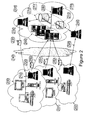
- FIG. 2 illustrates in more details the principles on which the centralized supervisory system is built.
- each of the client network like [200] is made of pieces of equipment such as personal computers and individual work stations however all interconnected, for example through a LAN (Local Area Network) [210], so they can communicate and cooperate to carry out together what the organization is intended to achieve.
- LAN Local Area Network
- this network there is at least one server [220] in charge of running a groupware type of software so that the individuals within the organization can indeed perform a team work exchanging mail and documents, accessing information from databases or storing it. Also, they need to access the external world, let's say, the Internet.
- the client network server [220] can then be instructed and configured to collect and send statistics and reports, on a regular basis, to the supervisory center [205] under the form of mail messages [250] through a network [240] which can be public e.g. the Internet, or an intranet or, more likely, a combination of.
- the supervisory center comprises in fact several servers for performance reasons if the supervisory center must manage many client networks and, this is an even much more important item, to contribute to reach a very high level of reliability so that the supervisory center is able to guarantee a continuous service to its clients.
- the servers have access to significant storage facilities [270] in which the various data bases built to reflect the activity of all the client networks are stored. Again, to reach the high level of availability the clients are expecting from an outside supervisory center replication of data bases is likely to be carried out over the various storage facilities and servers accessing them. Regardless of the actual implementation two broad categories of data bases are going to be managed.
- the information thus collected, processed and stored is conveniently displayed on at least one monitoring station [275], interconnected with all the here above servers and storage devices over a common network [280] so that operators can follow the activity on the client networks and are informed of alarms and incidents. It is important noting here that an absence of reporting from a client network, at a scheduled interval, is logged too. This will eventually generate an alarm if the rules set by the supervisory center and agreed by the client, on the reporting conditions, are violated.
- network [280] is symbolized here under the form of an Ethernet local area network nothing prevent from considering any other type of network be it local or wide area network.
- a product like Lotus Notes already mentioned, allow to access local and remote data bases and servers and does not necessarily assume that the pieces of equipment necessary to implement a supervisory center need all to be in physical close proximity thus, enabling the possibility of building very reliable supervisory centers. Therefore, a supervisory center like [205] may just be, if convenient, a virtual center with storing and computing facilities geographically dispersed. However, it can be as well, in part or in totality, located in the same locked room with a control access policy so as to better protect clients information.
- the supervisory center is a network by itself so that the information collected and formatted in the monitoring station [275] is view able from the other stations on the network or even, if authorized, from a remote browser, through Internet, e.g., by a client who wants to consult its own performance data.
- monitor machine [230] which, from the same data bases [270], can issue daily, weekly, monthly etc. .. type of (dashboard) reports. They synthesize over the corresponding time period the behavior of the networks so as the respective clients are made aware, through the delivery of specific mail reports [235], of the overall activity on their networks and can take corrective actions if there is such a need to do so. For example make a timely decision on when to add a server if a network constantly bears too much traffic.
- this latter type of monitor machine can be as well a physically different working station or just another virtual machine of a multitask operating system like UNIX operated by the same operators in the same environment.
- Figure 3 shows how the client server [300] is organized to carry out the scheme of the invention.
- Server is assumed to run a groupware software program [310] such as Lotus Notes, already mentioned, and more specifically a 'report task' [311] available in this type of software.
- groupware software program such as Lotus Notes, already mentioned, and more specifically a 'report task' [311] available in this type of software.
- all has been collected by the server on the client network activity and stored in a local data base 'LOG.NSF' [320] is further analyzed by the 'report task' of the groupware program and a report formatted. This report is assembled in a specific data base 'MAIL.BOX' [330] before it is sent under the form of one or more mail messages, at next scheduled time, to the supervisory center.
- outstanding events and alarms, detected by the client server [300] may be reported in the same way, any time, if a permanent connection to the supervisory center exists or if the connection can be established on request.
- the protocol used for the mail messages is not relevant of the invention. Any protocol and product, other than Lotus Notes here above mentioned, could be used as well such as those based on the well known Simple Network Management Protocol (SNMP) of the Internet suite of protocols.
- SNMP Simple Network Management Protocol
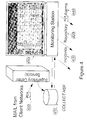
- Figure 4 gives more details on how the monitoring station and the supervisory center are organized. All the mail messages [400] arriving from the client networks and carrying the scheduled and outstanding (unscheduled) reports are collected and stored in a data base 'collect.nsf' [410] on the storage facility previously described in figure 2 [270] and further processed so as they are eventually logged into the 'repository' data base [420] or into the 'incidents' data base [430] that were previously discussed. Moreover, the reporting of alarms or the local discovery of anomalies as a result of a deeper analysis of the collected events may trigger the sending of alerts [440], under the form of mail messages, to specific accounts on the remote client networks impacted. All of this is conveniently displayed [450] on the monitor station and is discussed in the next figure.
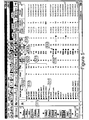
- Figure 5 is just an example (one view out of many) of how the information collected from the client networks, reflecting how well they operate, is displayed in order that an operator can easily watch it and take appropriate actions when needed.
- server name column ('Nom duquaint') [500] appears the client networks serviced from the supervisory center.
- IBM-EBS [510] comprising 8 servers [511].
- TPM ' the number of observed transactions per minutes
- column [530] the data base buffer pool (' DBP ') is reflecting how much, of the available storage allocated to the servers, is currently in use.
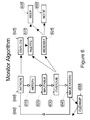
- Figure 6 illustrates the monitoring algorithm with its main steps.
- the first one or 'INITMON' [600] initializes all the links with the set of data bases previously discussed. Also, it sets all the necessary variables for the algorithm to operate properly.
- the second step [610] collects all the configuration data from the data bases such as the server names that supervisory center is due to control, the expected time interval between the reception of two regular mail messages, the name and coordinates of those in charge of the client networks so that alerts [615] may be forwarded to them, and so on. From this step internal tables are created reflecting the particularities of each client network.
- step [620] 'MAJTABLE' is essential since, after initialization has been carried out, it retrieves the incoming mail messages from the collect database [410] discussed in figure 4 so as to update the here above internal tables thus, reflecting the current status of the client networks.
- a next step [630] 'OVERDUE' takes care of those of the client networks from which no mail message has been received for an outstanding period of time which may end up in a 'Contact Loss' state triggering an alert towards the client network manager.
- the step [640] 'MAJETATSRV' performs housekeeping of the internal data bases and creates, for instance, specific Lotus Notes data bases that are view able from all the Lotus Notes stations connected on the supervisory center or accessible from outside in part, or in totality, depending on the level of authorization those accessing are granted. Obviously, the same level of functionality may be obtained with any other groupware type of software that would have characteristics equivalent to Lotus Notes, used as an example, in the particular implementation of the invention.
- 'ALERTE' [615] is in charge of forwarding alert messages to the administrators of the client networks and triggers the generation of any convenient visual or audible alarm 'BEEP' [635] to draw the attention of the operators.
- 'INCIDENT' task [625] is in charge of creating records in the corresponding data base shown in figure 2 [272], for the incidents that have been detected. This may also enable the alarm [635] while the administrators of the client networks are notified [645] of the recording of such incidents.
- the 'CLEANUP' task [655] is in charge, in case of error, of restarting the main loop [660].
Landscapes
- Engineering & Computer Science (AREA)
- Computer Networks & Wireless Communication (AREA)
- Signal Processing (AREA)
- Human Computer Interaction (AREA)
- Data Exchanges In Wide-Area Networks (AREA)
- Computer And Data Communications (AREA)
Priority Applications (2)
| Application Number | Priority Date | Filing Date | Title |
|---|---|---|---|
| EP99480023A EP1045549A1 (fr) | 1999-04-15 | 1999-04-15 | Système et méthode non intrusif pour la surveillance et la gestion des réseaux informatiques distribués |
| JP2000112685A JP2000354035A (ja) | 1999-04-15 | 2000-04-13 | 分散型独立データ・ネットワーク用の非侵入監視集中型のシステムおよび方法 |
Applications Claiming Priority (1)
| Application Number | Priority Date | Filing Date | Title |
|---|---|---|---|
| EP99480023A EP1045549A1 (fr) | 1999-04-15 | 1999-04-15 | Système et méthode non intrusif pour la surveillance et la gestion des réseaux informatiques distribués |
Publications (1)
| Publication Number | Publication Date |
|---|---|
| EP1045549A1 true EP1045549A1 (fr) | 2000-10-18 |
Family
ID=8242437
Family Applications (1)
| Application Number | Title | Priority Date | Filing Date |
|---|---|---|---|
| EP99480023A Withdrawn EP1045549A1 (fr) | 1999-04-15 | 1999-04-15 | Système et méthode non intrusif pour la surveillance et la gestion des réseaux informatiques distribués |
Country Status (2)
| Country | Link |
|---|---|
| EP (1) | EP1045549A1 (fr) |
| JP (1) | JP2000354035A (fr) |
Cited By (11)
| Publication number | Priority date | Publication date | Assignee | Title |
|---|---|---|---|---|
| EP1227380A2 (fr) * | 2000-12-04 | 2002-07-31 | General Electric Company | Système de collecte de données de fiabilité et maintenance (RAM) |
| EP1221785A3 (fr) * | 2001-01-05 | 2002-09-11 | Redfern Broadband Networks Inc. | Gestion de réseaux |
| EP1294125A1 (fr) * | 2001-09-17 | 2003-03-19 | Ricoh Company, Ltd. | Système, procédé, produit d'un programme d'ordinateur d' emission et de collecte des differents types d'information a un surveilleur par E-mail |
| EP1294127A1 (fr) * | 2001-09-17 | 2003-03-19 | Ricoh Company, Ltd. | Système et méthode pour envoyer des informations de configuration de dispositif à un moniteur en utilisant le courier électronique |
| GB2383713A (en) * | 2001-12-28 | 2003-07-02 | Inventec Corp | A system for automatic, real time, remote management of an apparatus over a network |
| WO2003019883A3 (fr) * | 2001-08-24 | 2003-10-23 | Windmill Microsystems Holding | Systeme pour l'acquisition de donnees a distance, sur la base d'une communication de messages electroniques sur des reseaux publics et prives |
| WO2004006502A1 (fr) * | 2002-07-02 | 2004-01-15 | Siemens Aktiengesellschaft | Systeme et procede pour generer et traiter des messages dans la technique d'automatisation |
| EP1417596A4 (fr) * | 2001-08-13 | 2006-05-24 | Gg21 Co Ltd | Procede permettant d'enregistrer et de rechercher des informations de position d'utilisateur et systeme correspondant |
| EP1963988A4 (fr) * | 2005-12-12 | 2009-04-15 | Microsoft Corp | Creation automatique de blog pour dispositif |
| US7523184B2 (en) | 2002-12-31 | 2009-04-21 | Time Warner Cable, Inc. | System and method for synchronizing the configuration of distributed network management applications |
| CN102938760A (zh) * | 2012-10-18 | 2013-02-20 | 北京奇虎科技有限公司 | 终端安全监控方法和装置 |
Families Citing this family (1)
| Publication number | Priority date | Publication date | Assignee | Title |
|---|---|---|---|---|
| US9288272B2 (en) * | 2014-07-10 | 2016-03-15 | Real Innovations International Llc | System and method for secure real-time cloud services |
Citations (2)
| Publication number | Priority date | Publication date | Assignee | Title |
|---|---|---|---|---|
| EP0520770A2 (fr) * | 1991-06-24 | 1992-12-30 | Compaq Computer Corporation | Système de diffusion d'avertissement en bande et hors bande |
| EP0903889A2 (fr) * | 1997-09-17 | 1999-03-24 | Hewlett-Packard Company | Gestion de système informatique utilisant Internet |
Family Cites Families (15)
| Publication number | Priority date | Publication date | Assignee | Title |
|---|---|---|---|---|
| JPS59190763A (ja) * | 1983-04-13 | 1984-10-29 | Fujitsu Ltd | デ−タ転送方式 |
| JPH0575628A (ja) * | 1991-09-13 | 1993-03-26 | Fuji Xerox Co Ltd | ネツトワーク資源監視システム |
| JPH08286990A (ja) * | 1995-04-12 | 1996-11-01 | Hitachi Electron Service Co Ltd | 電子メール連動型障害監視システム |
| JPH08329006A (ja) * | 1995-05-30 | 1996-12-13 | Toshiba Corp | 障害通知方式 |
| JPH09134297A (ja) * | 1995-11-13 | 1997-05-20 | Sumitomo Electric Ind Ltd | 遠隔管理システム |
| JPH09146859A (ja) * | 1995-11-28 | 1997-06-06 | Oki Electric Ind Co Ltd | 端末管理機能付ネットワークシステム |
| JPH09247144A (ja) * | 1996-03-01 | 1997-09-19 | Mitsubishi Electric Corp | 階層型ネットワーク管理方式 |
| JPH09325927A (ja) * | 1996-06-06 | 1997-12-16 | Sumitomo Electric Ind Ltd | ネットワーク遠隔管理システム |
| JPH09330283A (ja) * | 1996-06-13 | 1997-12-22 | Nippon Telegr & Teleph Corp <Ntt> | 電子メールによる警報監視方法およびシステム |
| JP3035225B2 (ja) * | 1996-08-16 | 2000-04-24 | ダイダン株式会社 | 電子メールとのインタフェースを備えたビル管理システム |
| JPH1097444A (ja) * | 1996-09-20 | 1998-04-14 | Hitachi Ltd | 動作状況管理システム |
| US5796942A (en) * | 1996-11-21 | 1998-08-18 | Computer Associates International, Inc. | Method and apparatus for automated network-wide surveillance and security breach intervention |
| JP3019789B2 (ja) * | 1996-11-25 | 2000-03-13 | 日本電気株式会社 | 監視装置 |
| JPH10173655A (ja) * | 1996-12-16 | 1998-06-26 | Nec Commun Syst Ltd | 障害情報通知方式 |
| JPH1131114A (ja) * | 1997-07-10 | 1999-02-02 | Matsushita Electric Works Ltd | ネットワークリモート管理システム |
-
1999
- 1999-04-15 EP EP99480023A patent/EP1045549A1/fr not_active Withdrawn
-
2000
- 2000-04-13 JP JP2000112685A patent/JP2000354035A/ja active Pending
Patent Citations (2)
| Publication number | Priority date | Publication date | Assignee | Title |
|---|---|---|---|---|
| EP0520770A2 (fr) * | 1991-06-24 | 1992-12-30 | Compaq Computer Corporation | Système de diffusion d'avertissement en bande et hors bande |
| EP0903889A2 (fr) * | 1997-09-17 | 1999-03-24 | Hewlett-Packard Company | Gestion de système informatique utilisant Internet |
Non-Patent Citations (3)
| Title |
|---|
| GAREISS R: "CASTING THE WEB OVER ATM", DATA COMMUNICATIONS, vol. 26, no. 8, 1 June 1997 (1997-06-01), pages 35/36, XP000659551, ISSN: 0363-6399 * |
| HEYWOOD P: "ADDED INSIGHT INTO CARRIER NETWORKS", DATA COMMUNICATIONS, vol. 26, no. 5, 1 April 1997 (1997-04-01), pages 31/32, XP000659592, ISSN: 0363-6399 * |
| MAGEDANZ T ET AL: "INTELLIGENT AGENTS AN EMERGING TECHNOLOGY FOR NEXT GENERATION TELECOMMUNICATIONS?", PROCEEDINGS OF IEEE INFOCOM 1996. CONFERENCE ON COMPUTER COMMUNICATIONS, FIFTEENTH ANNUAL JOINT CONFERENCE OF THE IEEE COMPUTER AND COMMUNICATIONS SOCIETIES. NETWORKING THE NEXT GENERATION SAN FRANCISCO, MAR. 24 - 28, 1996, vol. 2, no. CONF. 15, 24 March 1996 (1996-03-24), INSTITUTE OF ELECTRICAL AND ELECTRONICS ENGINEERS, pages 464 - 472, XP000621308, ISBN: 0-8186-7293-5 * |
Cited By (16)
| Publication number | Priority date | Publication date | Assignee | Title |
|---|---|---|---|---|
| EP1227380A2 (fr) * | 2000-12-04 | 2002-07-31 | General Electric Company | Système de collecte de données de fiabilité et maintenance (RAM) |
| EP1221785A3 (fr) * | 2001-01-05 | 2002-09-11 | Redfern Broadband Networks Inc. | Gestion de réseaux |
| EP1417596A4 (fr) * | 2001-08-13 | 2006-05-24 | Gg21 Co Ltd | Procede permettant d'enregistrer et de rechercher des informations de position d'utilisateur et systeme correspondant |
| WO2003019883A3 (fr) * | 2001-08-24 | 2003-10-23 | Windmill Microsystems Holding | Systeme pour l'acquisition de donnees a distance, sur la base d'une communication de messages electroniques sur des reseaux publics et prives |
| US7624148B2 (en) | 2001-08-24 | 2009-11-24 | Windmill Microsystems Holding Bv | System for remote data acquisition based on e-mail message communication through public and private networks |
| US7536450B2 (en) | 2001-09-17 | 2009-05-19 | Ricoh Company, Ltd. | System, method, and computer program product for sending remote device configuration information to a monitor using e-mail |
| US7490146B1 (en) | 2001-09-17 | 2009-02-10 | Ricoh Company, Ltd. | System, method, and computer program product for collecting and sending various types of information to a monitor using e-mail |
| EP1294127A1 (fr) * | 2001-09-17 | 2003-03-19 | Ricoh Company, Ltd. | Système et méthode pour envoyer des informations de configuration de dispositif à un moniteur en utilisant le courier électronique |
| EP1294125A1 (fr) * | 2001-09-17 | 2003-03-19 | Ricoh Company, Ltd. | Système, procédé, produit d'un programme d'ordinateur d' emission et de collecte des differents types d'information a un surveilleur par E-mail |
| GB2383713B (en) * | 2001-12-28 | 2004-11-17 | Inventec Corp | Automatic network management system |
| GB2383713A (en) * | 2001-12-28 | 2003-07-02 | Inventec Corp | A system for automatic, real time, remote management of an apparatus over a network |
| WO2004006502A1 (fr) * | 2002-07-02 | 2004-01-15 | Siemens Aktiengesellschaft | Systeme et procede pour generer et traiter des messages dans la technique d'automatisation |
| US7523184B2 (en) | 2002-12-31 | 2009-04-21 | Time Warner Cable, Inc. | System and method for synchronizing the configuration of distributed network management applications |
| EP1963988A4 (fr) * | 2005-12-12 | 2009-04-15 | Microsoft Corp | Creation automatique de blog pour dispositif |
| CN102938760A (zh) * | 2012-10-18 | 2013-02-20 | 北京奇虎科技有限公司 | 终端安全监控方法和装置 |
| CN102938760B (zh) * | 2012-10-18 | 2015-12-02 | 北京奇虎科技有限公司 | 终端安全监控方法和装置 |
Also Published As
| Publication number | Publication date |
|---|---|
| JP2000354035A (ja) | 2000-12-19 |
Similar Documents
| Publication | Publication Date | Title |
|---|---|---|
| US7231403B1 (en) | System and method for transformation and analysis of messaging data | |
| US8145742B1 (en) | Method of and apparatus for network administration | |
| US7185366B2 (en) | Security administration server and its host server | |
| US6058420A (en) | Alarm server systems, apparatus, and processes | |
| US6515968B1 (en) | Integrated interface for real time web based viewing of telecommunications network call traffic | |
| US7685269B1 (en) | Service-level monitoring for storage applications | |
| US7124183B2 (en) | Method and apparatus for secure distributed managed network information services with redundancy | |
| US6807265B2 (en) | System, method and apparatus for court-ordered surveillance of call records | |
| US20010044840A1 (en) | Method and system for real-tme monitoring and administration of computer networks | |
| CN106412113A (zh) | 一种能源云服务系统及其通信方法 | |
| AU2003234303A1 (en) | Security and property management system | |
| WO1999016198A1 (fr) | Interface integree permettant la visualisation en temps reel basee sur le web d'un trafic d'appels dans un reseau de telecommunications | |
| CN202424769U (zh) | 内网安全管理系统 | |
| CN110413485A (zh) | 一种基于Zabbix开源平台的一站式网络监控管理系统与方法 | |
| JP2006221376A (ja) | プラント緊急時情報表示システムと方法、Webサーバ | |
| JP2000354035A (ja) | 分散型独立データ・ネットワーク用の非侵入監視集中型のシステムおよび方法 | |
| US6542932B1 (en) | Domain access control for logging systems | |
| JP2002352361A (ja) | 建築物管理方法及び建築物管理システム | |
| WO2000002365A1 (fr) | Systemes et procedes mettant en oeuvre un reseau de communication pour fournir a des utilisateurs mobiles l'acces a des systemes existants | |
| US7359969B2 (en) | System and method to provide integrated device, user, and account information to users | |
| CN105721229A (zh) | 网络设备管理方法 | |
| US7554938B1 (en) | System and method for providing an instant messaging function using a personal computer equipped with a wireless digital packet-switched modem | |
| EP1626342A2 (fr) | Système et méthode pour l'intégration d'informations associées à un dispositif, un utilisateur et un compte | |
| EP1626370A1 (fr) | Système et procédé pour traiter une alerte d'un dispositif surveillé basé des informations d'ordre commercial | |
| WO2001027787A1 (fr) | Systeme de controle d'evenements et de reponse en boucle fermee |
Legal Events
| Date | Code | Title | Description |
|---|---|---|---|
| PUAI | Public reference made under article 153(3) epc to a published international application that has entered the european phase |
Free format text: ORIGINAL CODE: 0009012 |
|
| AK | Designated contracting states |
Kind code of ref document: A1 Designated state(s): DE |
|
| AX | Request for extension of the european patent |
Free format text: AL;LT;LV;MK;RO;SI |
|
| 17P | Request for examination filed |
Effective date: 20000918 |
|
| AKX | Designation fees paid |
Free format text: DE |
|
| 17Q | First examination report despatched |
Effective date: 20061002 |
|
| STAA | Information on the status of an ep patent application or granted ep patent |
Free format text: STATUS: THE APPLICATION IS DEEMED TO BE WITHDRAWN |
|
| 18D | Application deemed to be withdrawn |
Effective date: 20061101 |