EP1052796B1 - Converteur de signaux audios changeant de mode en présence de troubles sur le canal de communication de données - Google Patents
Converteur de signaux audios changeant de mode en présence de troubles sur le canal de communication de données Download PDFInfo
- Publication number
- EP1052796B1 EP1052796B1 EP00650031A EP00650031A EP1052796B1 EP 1052796 B1 EP1052796 B1 EP 1052796B1 EP 00650031 A EP00650031 A EP 00650031A EP 00650031 A EP00650031 A EP 00650031A EP 1052796 B1 EP1052796 B1 EP 1052796B1
- Authority
- EP
- European Patent Office
- Prior art keywords
- signal
- link
- signal processor
- operative mode
- audio data
- Prior art date
- Legal status (The legal status is an assumption and is not a legal conclusion. Google has not performed a legal analysis and makes no representation as to the accuracy of the status listed.)
- Expired - Lifetime
Links
- 230000006735 deficit Effects 0.000 title claims description 62
- 230000006854 communication Effects 0.000 title claims description 60
- 238000004891 communication Methods 0.000 title claims description 60
- 230000005236 sound signal Effects 0.000 title description 3
- 230000005540 biological transmission Effects 0.000 claims description 30
- 230000004044 response Effects 0.000 claims description 29
- 238000000034 method Methods 0.000 claims description 22
- 238000001514 detection method Methods 0.000 claims description 9
- 238000006243 chemical reaction Methods 0.000 claims description 7
- 238000012545 processing Methods 0.000 claims description 7
- 238000007619 statistical method Methods 0.000 claims description 3
- 230000003247 decreasing effect Effects 0.000 claims description 2
- 230000007175 bidirectional communication Effects 0.000 claims 2
- 230000008878 coupling Effects 0.000 claims 2
- 238000010168 coupling process Methods 0.000 claims 2
- 238000005859 coupling reaction Methods 0.000 claims 2
- 238000012544 monitoring process Methods 0.000 claims 2
- 230000006870 function Effects 0.000 description 8
- 230000002459 sustained effect Effects 0.000 description 7
- 230000007704 transition Effects 0.000 description 7
- 230000001413 cellular effect Effects 0.000 description 6
- 238000004458 analytical method Methods 0.000 description 5
- 238000010586 diagram Methods 0.000 description 5
- 230000000694 effects Effects 0.000 description 5
- 230000015556 catabolic process Effects 0.000 description 4
- 238000006731 degradation reaction Methods 0.000 description 4
- 230000007246 mechanism Effects 0.000 description 4
- 230000011664 signaling Effects 0.000 description 4
- 230000008569 process Effects 0.000 description 3
- 230000004913 activation Effects 0.000 description 2
- 230000003044 adaptive effect Effects 0.000 description 2
- 230000006399 behavior Effects 0.000 description 2
- 230000001351 cycling effect Effects 0.000 description 2
- 238000012360 testing method Methods 0.000 description 2
- 230000009471 action Effects 0.000 description 1
- 238000013459 approach Methods 0.000 description 1
- 230000008901 benefit Effects 0.000 description 1
- 230000008859 change Effects 0.000 description 1
- 230000001143 conditioned effect Effects 0.000 description 1
- 230000007547 defect Effects 0.000 description 1
- 230000001627 detrimental effect Effects 0.000 description 1
- 230000003993 interaction Effects 0.000 description 1
- 230000004048 modification Effects 0.000 description 1
- 238000012986 modification Methods 0.000 description 1
- 238000012552 review Methods 0.000 description 1
- 238000012546 transfer Methods 0.000 description 1
- 230000009466 transformation Effects 0.000 description 1
- 238000000844 transformation Methods 0.000 description 1
Images

Classifications
-
- H—ELECTRICITY
- H04—ELECTRIC COMMUNICATION TECHNIQUE
- H04L—TRANSMISSION OF DIGITAL INFORMATION, e.g. TELEGRAPHIC COMMUNICATION
- H04L1/00—Arrangements for detecting or preventing errors in the information received
- H04L1/0001—Systems modifying transmission characteristics according to link quality, e.g. power backoff
- H04L1/0015—Systems modifying transmission characteristics according to link quality, e.g. power backoff characterised by the adaptation strategy
- H04L1/0019—Systems modifying transmission characteristics according to link quality, e.g. power backoff characterised by the adaptation strategy in which mode-switching is based on a statistical approach
-
- H—ELECTRICITY
- H04—ELECTRIC COMMUNICATION TECHNIQUE
- H04L—TRANSMISSION OF DIGITAL INFORMATION, e.g. TELEGRAPHIC COMMUNICATION
- H04L1/00—Arrangements for detecting or preventing errors in the information received
- H04L1/0001—Systems modifying transmission characteristics according to link quality, e.g. power backoff
- H04L1/0014—Systems modifying transmission characteristics according to link quality, e.g. power backoff by adapting the source coding
Definitions
- This invention relates to signal processing and more particularly to a method and apparatus for enabling the transition of an audio data signal converter between the active mode and the inactive mode, when link impairments, either transitory or sustained, exist in the data communication channel.
- This invention finds applications in digital communication systems, such as a digital cellular system or a Voice-over-IP (VoIP) system, in particular vocoder bypass capable systems that can selectively enable the activation or de-activation of the decoding and encoding functions in the connection.
- VoIP Voice-over-IP
- an audio signal may be processed by a series of speech encoders and decoders as it is transmitted from one endpoint to another.
- the audio data signal is first encoded by a speech encoder at the first mobile telephone and transmitted in an encoded format to a base transceiver station of a cell site where it is transferred to the base station controller servicing that cell site.
- the encoded speech information is processed by a compatible speech decoder that converts the compressed speech stream into PCM samples.
- the PCM samples are then transported over the landline network, such as the PSTN, toward the case station controller servicing the cell site communicating with the other mobile telephone.
- the PCM speech samples are again processed by a speech encoder.
- the encoded information is sent from the base transceiver station of the cell site to the second mobile telephone where the compressed speech stream is converted one more time by a speech decoder into PCM samples that can be used to generate an audio signal
- codecs on both sides of the mobile-to-mobile call are connected in tandem, which is known to degrade the speech quality as a result of the successive encoding/decoding of the audio data signal.
- the "vocoder bypass” technique alleviates this problem.
- the codecs are switched off when they are made aware of their mutual existence.
- the encoded speech information arriving at the first base station controller flows in encoded format through the PSTN and arrives as such at the second base station controller. Therefore, when in bypass mcce, the data communication channel between the base station controllers transmits compressed data as opposed to speech samples.
- This procedure eliminates one decoding operation of the speech signal at the first base station controller and one re-encoding operation of the signal at the second base station controller. As a result, the audio quality is significantly improved.
- the codec in one base station controller can switch to the bypass mode as a result of an in-band hand-shaking operation with the codec in the other base station controller. Transmitting control information from one codec to the other over the audio data stream allows this hand-shaking operation to take place.
- the control information is transmitted by bit stealing. This is effected by inserting in selected PCM samples bits from the control information signal.
- An element of the bypass mode is the importance of ensuring the integrity of the data being transmitted between the two bypass capable devices. While the nature of a PCM speech sample is unlikely to be severely effected by possible bit manipulation that may arise during transmission over either the forward link or the return link of the data communication channel a small change to the bits of a compressed audio data signal will have important detrimental consequences on the quality of communication over the link. Thus, codec bypass operations rely on a clear data communication channel between the two bypass capable devices. Channel noise or impairments present on the inter-device link may alter the traffic and/or signaling information bit pattern transferred between the two devices and could disrupt bypass operations causing severe degradation to the communication.
- Inter-device link impairments can be generated by poorly engineered connections, by jitter due to a packet network or by In-Patn Equipment (IPE) such as A/D converters, D/A converters, echo cancellers, gain pads or conference bridges. Most of the IPEs alter the signal transferred on the link, completely prohibiting codec bypass operations before proceeding beyond the negotiation stage via PCM in-band signaling. Consequently, the communication remains in non-bypass moce with nc noticeable degradation due to the impairment. However, some improperly conditioned connections, jitter or IPEs alter the signal lightly or selectively but could nonetheless induce severe degradation to the vocoder bypassed communication.
- IPE In-Patn Equipment
- Codec bypass operations under the influence of such noise and impairments may manage to proceed beyond the negotiation stage such that the communication enters the codec bypass mode.
- Bypass traffic information or signaling information will then be subject to important distortion by the impairments.
- traffic information distortion end-to-end quality is poor for the duration of the codec-bypassed conversation.
- signaling information distortion bypass stability is perturbed. Overall, the effect on the communication can be severely objectionable and annoying.
- a particular problem also arises when the link impairment is of a magnitude such as to cause the bypass capable devices to exit the bypass mode momentarily.
- the existing bypass logic is such that the bypass capable devices will attempt immediately to re-engage the bypass mode. If they manage to do so under the same link impairment conditions, the bypass mode will be engaged and likely to be lost soon thereafter. This cycling is objectionable, as the quality of the transmission is highly degraded.
- the present invention provides a signal processor for effecting the conversion of an audio data signal from one format to another.
- the signal processor has a signal converter that can selectively acquire two operative modes, namely a first operative mode and a second operative mode.
- the signal converter transforms the audio data signal from one format to another and releases the converted audio data signal from the output of the signal processor.
- the signal converter is disabled and permits passage of the audio data signal to the output without conversion.
- the signal processor has a control unit for controlling the transition of the signal converter between operative modes.
- the control unit enables the signal converter from passing from the first operative mode to the second operative mode when at least one operating condition has been satisfied.
- the operating condition can be the reception from a companion signal pcocessor of a certain number of error-free control messages during a handshaking operation.
- the present invention also covers the situation where a plurality of operating conditions need to be met to allow the transition from the first operative mode to the second operative mode.
- the control unit reacts to a link impairment occurring on the data communication channel to alter an operating condition to be satisfied to enable passage from the first operable mode to the second operative mode.
- the modification to the operating condition can be such as to "tighten" the requirements for switching from the first to the second operative modes. For instance, when the original operating condition is the reception of a number of error-free control messages during the handshaking operation, the altered operating condition requires a higher number of error-free control messages to be received to allow the signal converter to switch subsequently from the first operative mode to the second operative mode. This feature prevents or at least reduces the likelihood of undesirable cycling of the signal converter between its operative modes.
- the signal processor can find applications in digital communication systems, such as a digital cellular system or a Voice-over-IP (VoIP) system, in particular codec bypass capable systems that can selectively enable the activation or de-activation of the encoding and decoding functions in the connection.
- the audio data signal is an encoded signal that includes a succession of data frames.
- the signal converter has a codec with a decoder, located at a base station of the network that receives the audio data signal from the mobile telephone.
- the decoder converts the audio data signal into PCM format and sends it to a remote base station over a landline network, such as the PSTN (Public Switched Telephone Network).
- PSTN Public Switched Telephone Network
- the signal converter passes the encoded audio data, namely one compressed data frames, to the output of the signal processor without decoding the data.
- the signal converter has a codec with an encoder.
- the encoder converts the audio data signal from PCM format to compressed format and sends the encoded data to the corresponding mobile telephone.
- the signal converter passes the encoded audio data received from the first base station to the corresponding mobile telephone without re-encoding the data.
- the invention also provides a method for processing an audio data signal.
- the audio data signal is converted from a first format to a second format, where in the first format the audio data signal is compressed data and in the second format the audio data signal is decompressed data.
- conversion of the audio data signal from a first format to a second format is omitted.
- the processing of the audio data signal can be switched from the first mode to the second mode when at least one operating condition is satisfied.
- the method comprises altering the operating condition what a link impairment develops, such that subsequent transition from the first to the second mode of operation will necessitate satisfying a different operating condition.
- the invention also extends to a transmission system using the signal processor described above.
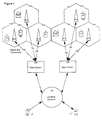
- FIG. 1 is a block diagram representation of a portion of a cellular wireless telecommunications network.
- Mobile Terminals MT
- Fixed wireless terminals FWT
- Each cell covers a predetermined geographical area and has a Base Transceiver Station (BTS), which communicates through radio channels with the MTs and FWTs.
- BTS Base Transceiver Station
- a typical communication protocol between the BTSs and the MTs and FWTs may be a TDMA protocol.
- the communication protocol could be a CDMA or GSM protocol, among others.
- a TDMA protocol is in effect.
- a number of these BTSs i.e.
- BSC Base Station Controller 100, 105
- Each BSC 100, 105 is connected to a landline network 130.
- the landline network 130 may include, among others, the Public Switched Telephone Network (PSTN), the Integrated Services Digital Network and the Internet.
- Land terminals 140 (LT) connected to the landline network 130 are also shown for completeness.
- a first subscriber 160 is communicating with a second subscriber 165 via a first cell site 170 and BSC 100 and a second cell site 175 and BSC 105.
- the BSCs 100 and 105 communicate with each other over the landline network 130.
- Each BSC 100, 105 comprises a digital signal processor.
- the signal processor 200 is associated with the BSC 100, while the signal processor 205 is associated with the BSC 105.
- the digital signal processor 200 includes a codec 210 that provides the capability of voice transcoding from mu-law (or A-law PCM depending on which format is being used) to a compressed format (in accordance with the standard being used), and vice versa.
- the digital signal processor 205 includes a codec 215 that carries out same transformations.
- the compressed format in use is VSELP (Vector Sum Excited Linear Prediction).
- the digital signal processors 200 and 205 are connected to one another by a transmission facility 231 that could be a data duplex communication channel through the landline network 130.
- the transmission facility 231 includes a T1 connection.
- the data communication channel 231 includes a forward link for transporting signals from the first signal processor 200 to the second signal processor 205 and a return link for transporting signals from the second signal processor 205 to the first signal processor 200.
- the digital signal processor 200 includes a control unit 220 that effects a handshaking procedure with the digital signal processor 205 to establish, if possible, a codec bypass condition.
- a control unit 225 is provided in the digital signal processor 205 to handle the handshaking function at the signal processor 205 side.
- the control units 220 and 225 exchange control signals over the data communication channel 231. These control signals are multiplexed with the audio data stream transported over the data communication channel 231. Alternatively, the control signals may be sent separately over the data communication channel 231, in parallel with the audio data stream.
- control unit 220 issues a local signal at input 211 to codec 210, so that the decoding function is disabled.
- control unit 225 issues its own local signal at input 212 to codec 215, so that the encoding function is disabled. For instance, encoded (compressed) audio data applied at the input 230 of the signal processor 200 is passed without being decoded through the transport facility 231. When the compressed audio data reaches the signal processor 205 it passes to the output 235 without being re-encoded and is directed to the mobile telephone 165 forming the end of the connection. This process will be described in greater detail later in this specification.
- Digital signal processors are generally comprised of multiple signal processors commercially available from a number of suppliers.
- One such processor is Motorola's 560001 DSP.
- TDMA mobile-to-mobile connection such as shown in Figure 1 and in Figure 2
- two digital signal processors are involved in the connection.
- audio data signal that is audio information in an encoded format (such encoding has been effected at the mobile telephone 160) is introduced at an input 230 of the digital signal processor 200.
- the audio data signal is passed to the decoder unit of the codec 210 and decoded into PCM format.
- the PCM samples are transported to the digital signal processor 205 over the transport facility.
- the encoder unit of the codec 215 re-encodes the PCM samples that can then be sent to the mobile telephone 165.
- This successive decoding/encoding operation introduces delay and perceptible coding noise that degrades the quality of voice signal. Note that such degradation of speech quality due to successive decoding/encoding operation may occur in a digital communication system other than a wireless system, for example a packet network implementing VoIP. Further, the present invention is applicable to network configurations in which a packet network may interconnect with another network type such as a circuit switched network or a wireless network.
- the digital signal processor 200 sends to the digital signal processor 205 a control information signal that is essentially an identifier. As briefly discussed earlier, this handshaking function is handled by the control units 220 and 225. When the control unit 225 of the digital signal processor 205 receives this signal, it returns to the control unit 220 of the digital signal processor 200 an acknowledgement message. Upon reception of the acknowledgement message the control unit 220 of the digital signal processor 200 issues yet another control message to the control unit 225 and activates the bypass mode (i.e. inactive mode) by sending to the codec 210 a control signal at input 211 so that the decoder of codec 210 is de-activated.
- the bypass mode i.e. inactive mode
- the control unit 225 of the digital signal processor 205 receives the bypass control message from the control unit 220, the control unit 225 issues a local control signal that causes tne encoder of codec 215 to acquire the bypass mode (i.e. inactive mode) such that the encoded audio frames are transmitted through the signal processor 205 without being re-encoded.
- each control unit 220, 225 implements bypass logic that reacts to link impairments.
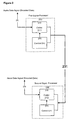
- a functional block diagram of the control unit 220 is depicted in Figure 3.
- the control unit 225 has an identical functional behavior and for that reason the description of one control unit will apply to the other control unit.
- the control unit 220 includes a link impairment monitor unit 300 whose basic function is to detect the occurrence of link impairments and also to collect statistical information about such impairments.
- the link impairment monitor unit is coupled to the data communication channel 231 and receives the audio data travelling on the return link of the data communication channel 231. That is to say that the control unit 220 of signal processor 200 effects link impairment analysis based on data issued by the companion signal processor 205.
- An alternative arrangement is also possible, where each signal processor will effect link impairment analysis on its own signals. This requires, however, that the signals originating from the signal processor be sampled at a point downstream the location where the link impairment occurs. This may be effected by providing a separate data transmission facility over which the signal samples can be transported.
- the link impairment monitor unit 300 observes the audio data signal on the return link of the data communication channel 231 for the presence of data transmission errors that are indicative of the presence of a link impairment.
- the link impairment monitor unit 300 will observe each frame of compressed audio data information and control information for possible corruption of the data that is protected by parity or by any other suitable error detection scheme.
- a statistical analysis is performed and the results of this analysis are stored in a data structure 302. The following are examples of statistics that may be collected, among other possibilities:
- the control unit 220 also comprises link error response unit 304 that is operative to react to the detection of a transmission error by the link impairment monitor unit 300, in dependence on the history of statistics maintained by the link impairment monitor unit 300 in the data structure 302.
- the link error response unit 304 also includes a data structure 306 that contains data elements representative of the operating condition(s) to be met to allow the signal processor 200 to switch to the bypass mode. The following is a non-limiting list of possible operating conditions:
- the data structure 306 holds parameters related to the four operating conditions listed above.
- the logic enforced by the link error response unit 304 is such that the signal processor 200 will be allowed to enter the bypass mode only when the conditions defined by the various parameters in the data structure 306 have been met.
- the link impairment monitor unit 300 is capable to transmit signals to the link error response unit 304.
- the first signal is a notification signal to advise the link error response unit 304 that a data transmission error has been detected on the return link of the data communication channel.
- the second signal is the transmission to the link error response unit of the contents of the data structure 302 that will enable the link error response unit 304 to determine the type and characteristics of the link impairment causing the data transmission error(s) and react accordingly.
- the link error response unit 304 has an output that generates the control signal applied at input 211 of codec 210 to enable the codec 210 to enter the bypass state.
- the signal applied to the input 211 also serves the opposite purpose that is to command the codec 210 to exit the bypass state.
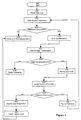
- Figure 4 is a flowchart illustrating an example of the operation of the above described signal processor 200 and in particular the events that take place at the control unit 220 for detecting and reacting to impairments over a duplex communication channel inter-connecting the two signal processors 200 and 205.
- the tolerance levels are reset.
- negotiation between the two signal processors 200 and 205 is initiated in order to enter the bypass mode.
- the link error response unit 304 applies two operating conditions that must be met before allowing the codec 210 to switch to the bypass mode.
- the first operating condition establishes a maximal amount of time to complete a successful bypass negotiation.
- the second operating condition is the minimal number of error-free control messages that must be received by the control unit 220 from the signal processor 205 to consider the negotiation successful.
- the parameters as to the maximal amount of time to complete a successful bypass negotiation and the minimal number of error-free control messages are read from the data structure 306.
- the link error response unit 304 basically establishes a timer mechanism to test the first operating condition and a counter mechanism to test the second operating condition. The timer mechanism and the counter mechanism are reset on a call establishment action such as a call setup or a handoff. A flag will be set at the link error response unit 304 if full duplex bypass mode of operations is not reached in a pre-defined time-out period, i.e.
- the flag is set if the timer expires before the signal processor 200 receives and transmits bypass compressed information.
- the flag is set even if a half duplex bypass mode of operations or intermittent half duplex bypass mode of operations is negotiated within the timeout period, resulting in the transmission or reception of bypass frames in only one of the forward or return directions.
- the flag is also set if the number of bypass/non-bypass transitions within a certain period of time exceeds a certain threshold.
- the link error response unit 304 will discontinue the bypass negotiation at step 408, effectively disabling the bypass feature for the remaining duration of the conversation, where this may include the provision to re-attempt bypass negotiation at a much later time.
- the bypass mode feature is enabled and the timer, the counter, the flag and any related parameters are all reset.
- the signal processors 200 and 205 both enter the bypass mode at step 410, such that compressed data is transmitted over the data communication channel 231 between the signal processors 200 and 205.
- the link impairment monitor unit 300 monitors bypass frames for the presence of impairments over the link, where such impairments will have manipulated the bypass frame bits such that the compressed (encoded) data and/or the control information is corrupted.
- the link impairment monitor unit 300 issues a signal to the link error response unit 304.
- the link error response unit 304 will issue a control signal to the codec 210 to cause the encoder of the codec 210 to exit from the bypass mode.
- the history of statistics maintained by the link impairment monitor unit 300 is updated and recorded in the data structure 302.
- the link impairment monitor unit 300 then sends another signal to the link error response unit 304 to communicate to the link error response unit 304 the updated statistics.
- the link error response unit uses the history of statistics to determine whether the data transmission error detected by the link impairment monitor unit 300 is transitory (i.e. not permanent) or sustained.
- the link error response unit analyses the statistics issued by the link impairment monitor unit 300 and determines whether the detected transmission error is likely to be transitory (i.e. whether it is likely to disappear) or sustained (i.e. whether it is likely to reoccur), by analyzing the history of statistics.
- the statistics are studied to determine whether they reveal a particular pattern, where this pattern may be:
- a statistic pattern representative of a sustained transmission error is one that reveals that the system has toggled between bypass mode and non-bypass mode greater than 10 times within a 1-second period of time.
- a statistic pattern representative of a transitory transmission error is one that reveals that the system has toggled between bypass mode and non-bypass mode twice within a 1-second period of time, and since the last toggle has remained in bypass mode for 2 seconds.
- the parameters on the operating condition(s) stored in the data structure 306 are altered such as to tighten the level of tolerance for such transmission errors at step 428.
- This tightening of the tolerance may include decreasing the maximal time interval to reach successful negotiation and/or increasing the number of error-free control messages to be received to complete the negotiation.
- Other operational characteristics that could also be altered are as follows:
- bypass mode negotiation is attempted again (i.e. re-initiated) at step 404.
- bypass negotiation is stopped at step 424, where this may include the provision to re-attempt bypass negotiation at a much later time. In other words, the interval between successive negotiation attempts is determined.
- the upper layer i.e. the system layer
- the system layer will react accordingly to such information, as it is operative to detect and recognize status messages arriving from lower layers within the telecommunications network.
- the system layer implements a multitude of different functionalities, each one initiated in response to notification of a particular event occurrence at a lower layer within the telecommunications network.
- the system layer is responsive to receipt of a sustained transmission error message from a base station controller to switch to use a different communication channel and/or to notify system operators of the communication channel defects, among many other possibilities.
- the link impairment monitor 300 does not detect a data transmission error at step 414, such that the communication continues in bypass mode for a period of time exceeding a pre-determined threshold, the tolerance levels are reset at step 416.
- the control unit 220 can be implemented in various ways. One possibility is to use software executed on a suitable computing platform that includes a Central Processing Unit (CPU), a memory connected to the CPU through a bus and suitable interfaces. The program element that implements the functionality of the control unit 220 is stored in the memory where the individual instructions of the program are executed by the CPU. An alternative approach is to use multiple digital signal processors, such as the Motorola's 560001 DSP.
- CPU Central Processing Unit
- the program element that implements the functionality of the control unit 220 is stored in the memory where the individual instructions of the program are executed by the CPU.
- An alternative approach is to use multiple digital signal processors, such as the Motorola's 560001 DSP.
Landscapes
- Engineering & Computer Science (AREA)
- Quality & Reliability (AREA)
- Computer Networks & Wireless Communication (AREA)
- Signal Processing (AREA)
- Physics & Mathematics (AREA)
- Probability & Statistics with Applications (AREA)
- Mobile Radio Communication Systems (AREA)
- Communication Control (AREA)
- Circuit For Audible Band Transducer (AREA)
Claims (21)
- Processeur de signaux (200, 205) pour un système de communication numérique, ledit processeur de signaux comprenant :caractérisé en ce que ladite unité de contrôle réagit à la détection (414) d'une perturbation de liaison sur le canal de communication de données afin de modifier (428) ladite condition d'exploitation au moins qui doit être satisfaite de manière à permettre le passage dudit premier mode d'exploitation audit second mode d'exploitation.une entrée destinée à recevoir un signal de données audio (231) possédant un premier format,une sortie destinée à être reliée à un canal de communication de données ;un convertisseur de signaux (210, 215) couplé à ladite entrée afin de traiter le signal de données audio au niveau de ladite entrée, ledit convertisseur de signaux étant capable d'acquérir sélectivement un premier mode d'exploitation (418) et un second mode d'exploitation (410), dans ledit premier mode d'exploitation, ledit convertisseur de signaux convertissant le signal de données audio dudit premier format en un second format, et émettant le signal de données audio dans ledit second format à partir de ladite sortie, dans ledit second mode d'exploitation, ledit convertisseur de signaux permettant le passage du signal de données audio vers ladite sortie sans conversion dans ledit second format ;une unité de contrôle (220, 225) couplée audit convertisseur de signaux, ladite unité de contrôle pouvant permettre (410) audit convertisseur de signaux de passer dudit premier mode d'exploitation audit second mode d'exploitation lorsqu'au moins une condition d'exploitation a été satisfaite,
- Processeur de signaux selon la revendication 1, dans lequel ledit processeur de signaux peut établir une communication bidirectionnelle avec une entité distante sur un canal de communication duplex possédant une liaison aller et une liaison retour, ladite sortie pouvant être couplée à la liaison aller afin de transmettre le signal de données audio vers l'entité distante sur la liaison aller, ledit processeur de signaux pouvant recevoir un signal de données audio de la part de l'entité distante sur la liaison retour, ladite unité de contrôle réagissant à la détection d'une perturbation de liaison se produisant sur la liaison retour du canal de communication de données afin de modifier ladite condition d'exploitation au moins qui doit être satisfaite de manière à permettre le passage dudit premier mode d'exploitation audit second mode d'exploitation.
- Processeur de signaux selon la revendication 2. dans lequel le signal de données audio achemine des informations de son de parole.
- Processeur de signaux selon la revendication 3, dans lequel le premier format est une version comprimée du signal de données audio dans le second format.
- Processeur de signaux selon la revendication 4. dans lequel ledit convertisseur de signaux comprend un décodeur (210, 215).
- Processeur de signaux selon la revendication 5, dans lequel ledit décodeur est un décodeur à prédicteur linéaire excité par une somme vectorielle.
- Processeur de signaux selon la revendication 4, dans lequel ladite unité de contrôle comprend un moniteur de perturbation de liaison (300) destiné à contrôler le signal de données audio dans le premier format sur la liaison retour du canal de communication de données afin de déceler la présence de perturbations sur la liaison retour.
- Processeur de signaux selon la revendication 7, dans lequel ladite unité de contrôle comprend une unité de réaction aux perturbations de liaisons (304) couplée audit moniteur de perturbation de liaison afin de recevoir, de la part dudit moniteur de perturbation de liaison, des informations relatives aux perturbations des liaisons acheminant les signaux de données.
- Processeur de signaux selon la revendication 8, dans lequel ladite unité de réaction aux perturbations de liaisons comprend une structure de données (306) contenant des éléments de données représentatifs des conditions d'exploitation devant être satisfaites afin de permettre le passage dudit premier mode d'exploitation audit second mode d'exploitation, ladite unité de réaction aux perturbations de liaisons pouvant modifier au moins l'un des éléments de données en réponse à la réception, de la part dudit moniteur de perturbation de liaison, d'un signal de données indiquant la survenance d'une perturbation de liaison.
- Processeur de signaux selon la revendication 9, dans lequel au moins l'un des éléments de données représentatifs des conditions d'exploitation devant être satisfaites afin de permettre le passage dudit premier mode d'exploitation audit second mode d'exploitation est modifié de manière à renforcer un niveau de tolérance par rapport à la survenance d'une perturbation de liaison sur la liaison retour du canal de communication de données.
- Processeur de signaux selon la revendication 10, dans lequel ledit moniteur de perturbation de liaison peut détecter une perturbation de liaison sur la liaison retour du canal de communication de données en détectant les erreurs de transmission de données sur la liaison retour du canal de communication de données.
- Processeur de signaux selon la revendication 11, dans lequel ledit moniteur de perturbation de liaison peut détecter des erreurs de transmission de données sur la liaison retour du canal de communication de données en observant les informations de parité contenues dans le signal de données audio, dans le premier format, sur la liaison retour du canal de communication de données.
- Processeur de signaux selon la revendication 12, dans lequel ledit moniteur de perturbation de liaison comprend une unité d'analyse statistique destinée à générer des données indiquant des informations sélectionnées dans le groupe consistant en la durée pendant laquelle ladite unité de contrôle est restée dans ledit second mode d'exploitation, la fréquence de survenance des erreurs de transmission de données sur la liaison retour du canal de communication de données, le taux d'erreur binaire pendant la négociation en termes de passage dudit premier mode d'exploitation audit second mode d'exploitation, le taux d'erreur binaire pendant ledit second mode d'exploitation, le niveau d'énergie pendant la négociation en termes de passage dudit premier mode d'exploitation audit second mode d'exploitation
- Processeur de signaux selon la revendication 13. dans lequel les informations relatives à la perturbation de la liaison d'acheminement du signal de données acheminent au moins en partie vers ladite unité de réaction aux perturbations de liaisons les données générées par ladite unité d'analyse statistique.
- Processeur de signaux selon la revendication 14, dans lequel ladite unité de contrôle, lorsqu'elle se trouve dans ledit second mode d'exploitation, réagit à la détection d'une perturbation de liaison se produisant sur le canal de communication de données afin de passer (418) audit premier mode d'exploitation.
- Processeur de signaux selon la revendication 15, dans lequel une condition d'exploitation devant être satisfaite afin de permettre le passage dudit premier mode d'exploitation audit second mode d'exploitation correspond à un intervalle de temps maximal pendant lequel doit être effectuée la négociation de passage dudit premier mode d'exploitation audit second mode d'exploitation
- Processeur de signaux selon la revendication 16. dans lequel ladite condition d'exploitation peut être modifiée de manière à renforcer un niveau de tolérance par rapport à la survenance d'une perturbation de liaison sur la liaison retour du canal de communication de données en diminuant l'intervalle de temps maximal pendant lequel la négociation de passage dudit premier mode d'exploitation audit second mode d'exploitation doit être effectuée.
- Procédé de traitement d'un signal de données audio dans un système de communication numérique, ledit procédé comprenant :caractérisé par :le fait de prévoir une entrée destinée à recevoir le signal de données audio possédant un premier format ;le fait de prévoir une sortie destinée à être reliée à un canal de communication de données ;le fait de prévoir un convertisseur de signaux couplé à ladite entrée afin de traiter le signal de données audio au niveau de ladite entrée, ledit convertisseur de signaux étant capable d'acquérir sélectivement un premier mode d'exploitation et un second mode d'exploitation, dans ledit premier mode d'exploitation, ledit convertisseur de signaux convertissant le signal de données audio entre ledit premier format et un second format, et émettant le signal de données audio dans ledit second format à partir de ladite sortie, et, dans ledit second mode d'exploitation, ledit convertisseur de signaux permettant le passage du signal de données audio vers ladite sortie sans conversion dans ledit second format ;le fait de prévoir une unité de contrôle couplée audit convertisseur de signaux, ladite unité de contrôle pouvant permettre audit convertisseur de signaux de passer dudit premier mode d'exploitation audit second mode d'exploitation lorsqu'au moins une condition d'exploitation a été satisfaite ;le contrôle du canal de communication de données afin de détecter des perturbations de liaisons ;en réaction à la détection d'une perturbation de liaison sur le canal de communication de données, la modification de ladite condition d'exploitation au moins de ladite unité de contrôle qui doit être satisfaite pour permettre le passage dudit convertisseur de signaux dudit premier mode d'exploitation audit second mode d'exploitation.
- Procédé selon la revendication 18, dans lequel ledit processeur de signaux peut établir une communication bidirectionnelle avec une entité distante sur un canal de communication duplex comprenant une liaison aller et une liaison retour, ladite sortie pouvant être couplée à la liaison aller afin de transmettre le signal de données audio vers l'entité distante sur la liaison aller, ledit procédé comprenant :la réception d'un signal de données audio de la part de l'entité distante sur la liaison retour ;en réaction à la détection d'une perturbation de liaison se produisant sur la liaison retour du canal de communication de données, la modification de ladite condition d'exploitation au moins qui doit être satisfaite afin de permettre le passage dudit premier mode d'exploitation audit second mode d'exploitation.
- Procédé selon la revendication 19, dans lequel le signal de données audio achemine des informations de son de parole.
- Système de transmission pour un système de communication numérique, ledit système de transmission comprenant :caractérisé en ce que ladite unité de contrôle réagit à la détection d'une perturbation de ligne sur ledit canal de communication de données duplex afin de modifier ladite condition d'exploitation au moins qui doit être satisfaite afin de permettre audit processeur de signaux de transmettre le signal de données audio sans conversion vers le second format de signal.un premier processeur de signaux ;un second processeur de signaux ; etune communication de données duplex reliant ledit premier processeur de signaux audit second processeur de signaux, ledit canal de communication de données duplex comprenant une liaison aller et une liaison retour ;ledit premier processeur de signaux étant capable de convertir un signal de données audio d'un premier format de signal à un second format de signal en vue de la transmission sur ladite liaison aller vers ledit second processeur de signaux.ledit second processeur de signaux étant capable de recevoir ledit signal de données audio dans n'importe lequel du premier et du second formats de signaux, ledit second processeur de signaux étant capable de reconvertir ledit signal de données audio du second format de signal vers le premier format de signal ;ledit premier processeur de signaux comprenant :a) une entrée destinée à recevoir le signal de données audio possédant ledit premier format ;b) une sortie couplée à ladite liaison aller afin de transmettre le signal de données audio dans n'importe lequel du premier et du second formats de signaux vers ledit second processeur de signaux ;c) une unité de contrôle pouvant permettre audit premier processeur de signaux de transmettre le signal de données audio sans conversion vers le second format de signal à ladite sortie lorsqu'au moins une condition d'exploitation a été satisfaite,
Applications Claiming Priority (4)
| Application Number | Priority Date | Filing Date | Title |
|---|---|---|---|
| US13420199P | 1999-05-14 | 1999-05-14 | |
| US134201 | 1999-05-14 | ||
| US09/469,464 US6721707B1 (en) | 1999-05-14 | 1999-12-22 | Method and apparatus for controlling the transition of an audio converter between two operative modes in the presence of link impairments in a data communication channel |
| US469464 | 1999-12-22 |
Publications (3)
| Publication Number | Publication Date |
|---|---|
| EP1052796A2 EP1052796A2 (fr) | 2000-11-15 |
| EP1052796A3 EP1052796A3 (fr) | 2002-04-17 |
| EP1052796B1 true EP1052796B1 (fr) | 2005-07-06 |
Family
ID=26832069
Family Applications (1)
| Application Number | Title | Priority Date | Filing Date |
|---|---|---|---|
| EP00650031A Expired - Lifetime EP1052796B1 (fr) | 1999-05-14 | 2000-04-12 | Converteur de signaux audios changeant de mode en présence de troubles sur le canal de communication de données |
Country Status (4)
| Country | Link |
|---|---|
| US (1) | US6721707B1 (fr) |
| EP (1) | EP1052796B1 (fr) |
| CA (1) | CA2299023C (fr) |
| DE (1) | DE60021146T2 (fr) |
Families Citing this family (10)
| Publication number | Priority date | Publication date | Assignee | Title |
|---|---|---|---|---|
| FR2803476B1 (fr) * | 1999-12-31 | 2003-01-10 | Cit Alcatel | Procede d'etablissement de mode de fonctionnement sans double transcodage dans un systeme cellulaire de radiocommunications mobiles |
| EP1126651A1 (fr) * | 2000-02-16 | 2001-08-22 | Lucent Technologies Inc. | Adaptation de liaison pour RT-EGPRS |
| DE10008148A1 (de) * | 2000-02-22 | 2001-08-23 | Bosch Gmbh Robert | Verfahren zum Betreiben eines Mobilfunknetzes |
| JP4591736B2 (ja) * | 2001-02-21 | 2010-12-01 | ソニー株式会社 | 情報処理装置および方法、記録媒体、並びにプログラム |
| JP2004061646A (ja) * | 2002-07-25 | 2004-02-26 | Fujitsu Ltd | Tfo機能を有する音声符号化器および方法 |
| US20050229046A1 (en) * | 2002-08-02 | 2005-10-13 | Matthias Marke | Evaluation of received useful information by the detection of error concealment |
| US7610190B2 (en) * | 2003-10-15 | 2009-10-27 | Fuji Xerox Co., Ltd. | Systems and methods for hybrid text summarization |
| US7873064B1 (en) | 2007-02-12 | 2011-01-18 | Marvell International Ltd. | Adaptive jitter buffer-packet loss concealment |
| US7895493B2 (en) * | 2008-04-28 | 2011-02-22 | International Business Machines Corporation | Bus failure management method and system |
| US9572198B1 (en) * | 2013-03-07 | 2017-02-14 | Sprint Spectrum L.P. | Inter-technology diversity in wireless communications |
Family Cites Families (10)
| Publication number | Priority date | Publication date | Assignee | Title |
|---|---|---|---|---|
| US4730312A (en) | 1986-02-21 | 1988-03-08 | San/Bar Corporation | Voice, data or both over one telephone line in a T-1 carrier system |
| US5490168A (en) * | 1994-07-08 | 1996-02-06 | Motorola, Inc. | Method and system for automatic optimization of data throughput using variable packet length and code parameters |
| US5768308A (en) | 1994-12-19 | 1998-06-16 | Northern Telecom Limited | System for TDMA mobile-to-mobile VSELP codec bypass |
| US5956673A (en) * | 1995-01-25 | 1999-09-21 | Weaver, Jr.; Lindsay A. | Detection and bypass of tandem vocoding using detection codes |
| GB2317084B (en) | 1995-04-28 | 2000-01-19 | Northern Telecom Ltd | Methods and apparatus for distinguishing speech intervals from noise intervals in audio signals |
| KR100248272B1 (ko) * | 1997-06-30 | 2000-03-15 | 김영환 | 보코더의 pcm데이터형식에 따른 바이패스모드 동작시기의 제어방법 |
| US6920150B1 (en) * | 1997-09-30 | 2005-07-19 | Lucent Technologies Inc. | Adaptive communications transcoding and error control |
| US6009383A (en) * | 1997-10-30 | 1999-12-28 | Nortel Networks Corporation | Digital connection for voice activated services on wireless networks |
| US6272358B1 (en) * | 1998-06-04 | 2001-08-07 | Lucent Technologies Inc. | Vocoder by-pass for digital mobile-to-mobile calls |
| US6091969A (en) * | 1998-08-21 | 2000-07-18 | Motorola, Inc. | Method and apparatus for inband signaling control of vocoder bypass |
-
1999
- 1999-12-22 US US09/469,464 patent/US6721707B1/en not_active Expired - Lifetime
-
2000
- 2000-02-18 CA CA002299023A patent/CA2299023C/fr not_active Expired - Lifetime
- 2000-04-12 EP EP00650031A patent/EP1052796B1/fr not_active Expired - Lifetime
- 2000-04-12 DE DE60021146T patent/DE60021146T2/de not_active Expired - Lifetime
Also Published As
| Publication number | Publication date |
|---|---|
| CA2299023A1 (fr) | 2000-11-14 |
| DE60021146T2 (de) | 2005-12-22 |
| US6721707B1 (en) | 2004-04-13 |
| EP1052796A2 (fr) | 2000-11-15 |
| CA2299023C (fr) | 2005-05-10 |
| DE60021146D1 (de) | 2005-08-11 |
| EP1052796A3 (fr) | 2002-04-17 |
Similar Documents
| Publication | Publication Date | Title |
|---|---|---|
| EP1061753B1 (fr) | Changement de mode pour un transcodeur audio dépendent des caractéristiques du signal entrant | |
| US8200215B2 (en) | Codec rate adaptation for radio channel rate change | |
| US6785557B2 (en) | Method of transmitting data, in particular GSM data | |
| EP1052796B1 (fr) | Converteur de signaux audios changeant de mode en présence de troubles sur le canal de communication de données | |
| EP0852888B1 (fr) | Procede et systeme pour traiter des appels telephoniques impliquant deux postes numeriques sans fil d'abonnes, evitant le vocodage double | |
| US7203226B1 (en) | Methods and apparatus for data communication | |
| CA2243004C (fr) | Systeme de communication mobile | |
| EP1254569B1 (fr) | Signalisation multifrequence avec des liaisons de communication tfo | |
| US7206589B1 (en) | Method and device for handling a multimedia call | |
| EP1051051B1 (fr) | Procédé et appareil pour la transmission de données de commande sur un train de données audio | |
| CN100579105C (zh) | 一种数据流处理的方法和装置 | |
| US6650895B1 (en) | In-call DTMF transport for geostationary mobile satellite communication system | |
| US8515769B2 (en) | Single channel EVRCx, ISLP and G.711 transcoding in packet networks | |
| EP1850605A1 (fr) | Dispositif de routage de trafics locaux au sein d'un réseau de communication radio par détection de données correspondants à des copies de trames montantes dans des copies de trames descendantes | |
| US20070019620A1 (en) | Monitoring of coded data | |
| CA2290307A1 (fr) | Methode et appareillage d'utilisation efficace de la largeur de bande dans un reseau de commutation par paquets | |
| CN100461906C (zh) | 一种提高cdma系统语音接口传输效率的方法和装置 | |
| AU703600B2 (en) | A fixed cellular terminal | |
| JP2616675B2 (ja) | ハンドオーバー処理回路 | |
| US20090209226A1 (en) | Communication device, communication control method, and recording medium | |
| GB2366477A (en) | Communication system supporting half-duplex calls via full-duplex connexions | |
| JP3376940B2 (ja) | 音声データ多重伝送装置 | |
| JPH08274889A (ja) | 伝送装置 | |
| US20010005362A1 (en) | Handling of certain messages in a telecommunication system | |
| JPH09182118A (ja) | 音声符号化装置および中継交換方法 |
Legal Events
| Date | Code | Title | Description |
|---|---|---|---|
| PUAI | Public reference made under article 153(3) epc to a published international application that has entered the european phase |
Free format text: ORIGINAL CODE: 0009012 |
|
| AK | Designated contracting states |
Kind code of ref document: A2 Designated state(s): AT BE CH CY DE DK ES FI FR GB GR IE IT LI LU MC NL PT SE Kind code of ref document: A2 Designated state(s): DE FR GB |
|
| AX | Request for extension of the european patent |
Free format text: AL;LT;LV;MK;RO;SI |
|
| RIN1 | Information on inventor provided before grant (corrected) |
Inventor name: CHU, CHUNG CHEUNG C. Inventor name: SLOAN DAVID G. Inventor name: RABIPOUR, RAFI |
|
| PUAL | Search report despatched |
Free format text: ORIGINAL CODE: 0009013 |
|
| AK | Designated contracting states |
Kind code of ref document: A3 Designated state(s): AT BE CH CY DE DK ES FI FR GB GR IE IT LI LU MC NL PT SE |
|
| AX | Request for extension of the european patent |
Free format text: AL;LT;LV;MK;RO;SI |
|
| 17P | Request for examination filed |
Effective date: 20021017 |
|
| AKX | Designation fees paid |
Free format text: DE FR GB |
|
| 17Q | First examination report despatched |
Effective date: 20021220 |
|
| RAP1 | Party data changed (applicant data changed or rights of an application transferred) |
Owner name: NORTEL NETWORKS LIMITED |
|
| GRAP | Despatch of communication of intention to grant a patent |
Free format text: ORIGINAL CODE: EPIDOSNIGR1 |
|
| GRAS | Grant fee paid |
Free format text: ORIGINAL CODE: EPIDOSNIGR3 |
|
| GRAA | (expected) grant |
Free format text: ORIGINAL CODE: 0009210 |
|
| AK | Designated contracting states |
Kind code of ref document: B1 Designated state(s): DE FR GB |
|
| REG | Reference to a national code |
Ref country code: GB Ref legal event code: FG4D |
|
| REF | Corresponds to: |
Ref document number: 60021146 Country of ref document: DE Date of ref document: 20050811 Kind code of ref document: P |
|
| ET | Fr: translation filed | ||
| PLBE | No opposition filed within time limit |
Free format text: ORIGINAL CODE: 0009261 |
|
| STAA | Information on the status of an ep patent application or granted ep patent |
Free format text: STATUS: NO OPPOSITION FILED WITHIN TIME LIMIT |
|
| 26N | No opposition filed |
Effective date: 20060407 |
|
| REG | Reference to a national code |
Ref country code: GB Ref legal event code: 732E Free format text: REGISTERED BETWEEN 20130502 AND 20130508 |
|
| REG | Reference to a national code |
Ref country code: GB Ref legal event code: 732E Free format text: REGISTERED BETWEEN 20130509 AND 20130515 |
|
| REG | Reference to a national code |
Ref country code: FR Ref legal event code: TP Owner name: APPLE INC., US Effective date: 20130515 |
|
| REG | Reference to a national code |
Ref country code: DE Ref legal event code: R081 Ref document number: 60021146 Country of ref document: DE Owner name: APPLE INC., US Free format text: FORMER OWNER: NORTEL NETWORKS LTD., ST. LAURENT, CA Effective date: 20140313 Ref country code: DE Ref legal event code: R082 Ref document number: 60021146 Country of ref document: DE Representative=s name: BARDEHLE PAGENBERG PARTNERSCHAFT MBB PATENTANW, DE Effective date: 20130801 Ref country code: DE Ref legal event code: R082 Ref document number: 60021146 Country of ref document: DE Representative=s name: BARDEHLE PAGENBERG PARTNERSCHAFT MBB PATENTANW, DE Effective date: 20140313 Ref country code: DE Ref legal event code: R081 Ref document number: 60021146 Country of ref document: DE Owner name: APPLE INC., CUPERTINO, US Free format text: FORMER OWNER: NORTEL NETWORKS LTD., ST. LAURENT, QUEBEC, CA Effective date: 20140313 |
|
| REG | Reference to a national code |
Ref country code: FR Ref legal event code: PLFP Year of fee payment: 17 |
|
| REG | Reference to a national code |
Ref country code: FR Ref legal event code: PLFP Year of fee payment: 18 |
|
| REG | Reference to a national code |
Ref country code: FR Ref legal event code: PLFP Year of fee payment: 19 |
|
| PGFP | Annual fee paid to national office [announced via postgrant information from national office to epo] |
Ref country code: FR Payment date: 20190313 Year of fee payment: 20 |
|
| PGFP | Annual fee paid to national office [announced via postgrant information from national office to epo] |
Ref country code: DE Payment date: 20190402 Year of fee payment: 20 |
|
| PGFP | Annual fee paid to national office [announced via postgrant information from national office to epo] |
Ref country code: GB Payment date: 20190410 Year of fee payment: 20 |
|
| REG | Reference to a national code |
Ref country code: DE Ref legal event code: R071 Ref document number: 60021146 Country of ref document: DE |
|
| REG | Reference to a national code |
Ref country code: GB Ref legal event code: PE20 Expiry date: 20200411 |
|
| PG25 | Lapsed in a contracting state [announced via postgrant information from national office to epo] |
Ref country code: GB Free format text: LAPSE BECAUSE OF EXPIRATION OF PROTECTION Effective date: 20200411 |