EP1056022A2 - Système automatique d'organisation de contenus digitaux et support d'enregistrement de contenus digitaux automatiquement enregistrés - Google Patents
Système automatique d'organisation de contenus digitaux et support d'enregistrement de contenus digitaux automatiquement enregistrés Download PDFInfo
- Publication number
- EP1056022A2 EP1056022A2 EP00110966A EP00110966A EP1056022A2 EP 1056022 A2 EP1056022 A2 EP 1056022A2 EP 00110966 A EP00110966 A EP 00110966A EP 00110966 A EP00110966 A EP 00110966A EP 1056022 A2 EP1056022 A2 EP 1056022A2
- Authority
- EP
- European Patent Office
- Prior art keywords
- page
- database
- digital content
- information
- storing
- Prior art date
- Legal status (The legal status is an assumption and is not a legal conclusion. Google has not performed a legal analysis and makes no representation as to the accuracy of the status listed.)
- Withdrawn
Links
Images












Classifications
-
- G—PHYSICS
- G06—COMPUTING OR CALCULATING; COUNTING
- G06F—ELECTRIC DIGITAL DATA PROCESSING
- G06F40/00—Handling natural language data
- G06F40/10—Text processing
- G06F40/166—Editing, e.g. inserting or deleting
Definitions
- This invention relates to a digital content-organizing system. More particularly, it relates to an automatic digital content-organizing system and a record medium having automatically organized digital content recorded therein, such as an on-line system (e.g., WWW or World Wide Web on the Internet and personal computer-to-personal computer communication), an electronic catalog, and a CD (compact disk)-ROM.
- an on-line system e.g., WWW or World Wide Web on the Internet and personal computer-to-personal computer communication
- an electronic catalog e.g., a CD (compact disk)-ROM.
- Digital content such as the homepage and electronic catalog for use in such on-line shopping has heretofore been made up by either a manual organizing process or a dynamic organizing process based on a database.
- manual organizing process individual pages are manually prepared, and further a menu page linked to such individual pages is manually drawn up. In this way, the homepage is organized.
- dynamic organizing process in which the homepage is created on the basis of the database, a variety of proposals such as Active Server Page (hereinafter called "ASP") provided by the Microsoft Inc. as well as CGI (Common Gateway Interface) has been made and then utilized.
- ASP Active Server Page
- CGI Common Gateway Interface
- a first problem incurred with the dynamic organizing process is that design of a created HTML page is difficult to change.
- an HTML page having a complicated design is difficult to create.
- CGI For CGI, in some cases, CGI itself is written in script language such as "perl.” In other cases, CGI is a dedicated execute form program that is described in C-language and is then compiled. As a result, design of a created HTML file is embedded in a program by a system developer, and it is nearly impossible for a user to change the design. Further, it is laborious for the system developer to change the design, and a relatively upper amount of development cost is required to pay when the user passes an order to the system developer to change the design.
- a second problem with the dynamic organizing process is that a site page structure is fixed, and is difficult for the user to change.
- a Web site page structure created by a plurality of HTML pages such as a top page of " index.html" and subsequent pages that include a retrieval-indicating page, a retrieval result-displaying page, a descriptive page as to how an order is placed, and a shop guide page. Then, a portion of the above page structure, which is created by CGI, is difficult to change.
- an object of the present invention is to provide an automatic digital content-organizing system and a record medium having automatically organized digital content recorded therein, which is designed to allow a user and a Web designer to easily change design of a created HTML page without the aid of a programmer.
- a further object of the present invention is to provide an automatic digital content-organizing system and a record medium having automatically organized digital content recorded therein, which is designed to allow a user and a Web designer to easily change a structure and design of a HTML page to be created by referenced data in a database being embedded in the HTML page.
- an automatic digital content-organizing system creates HTML pages by the steps of: indicating to a program types of the HTML pages and a method for creating the HTML pages, all of which HTML pages form a site; defining designs of the created HTML pages in combination with such indicated types and method; regularly extracting data such as commodities from a single or multiple databases: and, permitting the extracted data to be embedded in the HTML pages based on templates that include such defined designs.
- an aspect of the present invention provides an automatic digital content-organizing system comprising:
- a preferred embodiment of the present invention provides an automatic digital content-organizing system as described above, further comprising:
- a further preferred embodiment of the present invention provides an automatic digital content-organizing system as previously described, further comprising:
- Another aspect of the present invention provides a record medium having digital content recorded therein, which digital content is automatically organized by the above-described automatic digital content-organizing system.
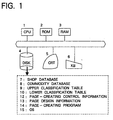
- Fig. 1 is a block diagram, illustrating a system for automatically organizing an on-line shopping Web site which includes two main databases and two subsidiary databases.
- the main databases include a shop database and a commodity database.
- the shop database stores information on an on-line shopping store.
- the subsidiary databases include upper and lower classification tables, which are referenced from the commodity database.
- the above system includes a CPU 1, a boot ROM 2, a RAM 3, a disk 4, a display (CRT) 5, and a keyboard (KB) 6.
- the boot ROM 2 is read when the system is activated. Further, when the system is activated, then an OS (operating system) 15 is read from the disk 4, while the RAM 3 is used as a working area for various programs.
- the display 5 and the keyboard 6 are responsible for a man-machine interface.
- the disk 4 stores data or programs that follow: a shop database (shopinfo.DB) 7; a commodity database (catalog.DB) 8; a upper classification table 9; a lower classification table 10; a database management system (DBMS) 11; a data file of page-creating control information 12; a template file as page design information 13; and, a page-creating program 14.
- shop database shopinfo.DB
- commodity database catalog.DB
- DBMS database management system
- the upper and lower classification tables 9, 10 are referenced from the commodity database 8.
- the database management system (DBMS) 11 is actuated when data are fed into and out of the database.
- the page-creating program 14 functions to create pages.
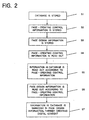
- Fig. 2 is a flowchart, showing one embodiment of an automatic digital content-organizing system according to the present invention.
- a single or multiple databases as a source of information for creating digital content is or are stored.
- the database is either saved in advance by a user or reproduced from any other storage means to a database information storage means that constitutes the automatic digital content-organizing system.
- the page-creating control information containing a page structure and a method for creating the page structure is stored.
- the page structure consists of a plurality of kinds of pages such as a top page, annexed pages, commodity menu pages, and a list page enumerating the commodity menu pages.
- the page design information in a template that contains tags is stored.
- One of the tags specifies respective designs of the above-described page structure and respective positions at which fields of the database are displayed.
- the other tag is a link failure prevention-indicating tag as a preventive against a disordered display on a screen which otherwise would be attributable to a link error in the absence of image information and linked pages, as detailed afterwards.
- the page-creating control information is read out from a page-creating control information storage means.
- information in the database is read out from the database information storage means according to the page-creating control information that is stored at step S2. In this case, the information in the database is read out in a predetermined format under the control of any management means such as the database management system.
- step S6 optimum page design information is read out from a page design information storage means according to the page-creating control information that is stored at step S2.
- step S7 the information in the database, which has been read out at step S5, is embedded in the page design information, thereby producing pages that form digital content.
- a preferred embodiment of the present invention is that a template containing a substitution-specifying tag is stored at step S3.
- the substitution-specifying tag replaces a predetermined field of the database with a predetermined description, and then displays such a replaced description when the database has a predetermined value in the above-mentioned predetermined field.
- a further preferred embodiment is that such substitutional specification is executed at step S7.
- a yet further preferred embodiment is that the page-creating control information having condition output-indicating information added thereto is stored at step S2.
- the condition output-indicating information determines, on the basis of a value in a particular field of the database, whether a particular page is created.
- the page design information having a condition output-indicating tag added thereto is stored at step S3.
- the condition output-indicating tag indicates, depending upon a value in a particular field of the database, whether a predetermined character string including a link to any other page is output.
- such condition output indication is executed at step S7.
- a page-creating control means for providing such page-creating control indicates the following for each kind of a page to be created: a type of the page; a title of the page; a created HTML filename; conditions to select a record of a commodity database to be output; conditions to recognize whether the page is updated; a template filename to be used; the number of output (blocking factor) in which a plurality of records of the commodity database are output to a page in list pages; and, field names of the commodity database to be output when the above records of the commodity database are output to the page.
- the page-creating control means corresponds to a programmatic description for CGI and ASP.
- a page-designing means for drawing the above-mentioned page design includes a template file and a memory or any other storage medium for storing the template file.
- the template file is an HTML file in which variable tags are contained and embedded for each kind of a page to be created.
- the page-designing means corresponds to a descriptive portion of an HTML file for CGI and ASP.
- a template stored in the page design information storage means contains a description characteristic of the present invention. More specifically, such a characteristic description include the link failure prevention-indicating tag and a character string substitution-indicating tag.
- the former tag prevents a display on a screen from being disordered when an image file is absent.
- the link failure prevention-indicating tag inhibits a description of a link from one commodity page to another from being created when the number of retrieval is fewer than the blocking factor.
- the character sting substitution-indicating tag indicates replacement of data in the database, and such indication only written to a template provides a display comparable to that is acquired when a partitioned table is look up.
- the character string substitution-indicating tag makes a change in design.
- the template stored in the page design information storage means contains a condition output-indicating tag. This tag indicates whether a particular page is created, depending upon a value in a predetermined field of a shop database.
- the above-described template creates a perfect HTML file, and a site structure is controlled. Further details on the above-mentioned three types of tags are discussed afterwards.
- Fig. 3 illustrates a site structure that is generated according embodiments given in this specification.
- a top page is an index.htm page. The top page is shown branched into links in a tree fashion. A list of the upper classification table is displayed in the top page.
- the annexed pages ranging from a site guide to a home visit sales law are limited to displaying information on a shop database.
- creation of such pages is controlled by the condition output-indicating tag that is placed in an under-mentioned field of "processing condition" of a page-creating control file.
- the upper classification page displays a list of lower classification pages, and thus may be called a lower classification list page.
- a list of lower classifications is displayed, which are branched from a commodity that belongs to a certain upper classification.
- the lower classification page displays a list of commodity pages, and thus may be called a commodity list page.
- the lower classification page is a commodity-enumerated page in which a predetermined combination of upper and lower classifications are provided.
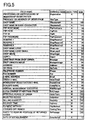
- Fig. 4 is an illustration, showing definitions in fields of a commodity database.
- a feature of the definitions is that one field of "record-updating time & date" and another field of "local page-updating time & date” are provided to minimize commodity pages in order to avoid creating unnecessary pages.
- a further feature of the definitions is that a field of "custom template” is provided. The custom template is used when a user or a Web designer wants to change a page design for each record of the commodity database.
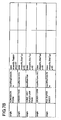
- Figs. 5 and 6 are illustrations, showing definitions in fields of a shop database.
- important fields are "processing or unprocessing of membership registration” and "presence or absence of order page.” Respective values in these fields are used for undermentioned condition output indication.
- Some shopping sites are provided for membership registration, but others are not. Further, aside from the shopping site, there may be a desire to establish a catalog site without the ability to accept orders. In such cases, a predetermined value (01) is entered into the above fields of the shop database, thereby creating membership registration-related and order-related pages.
- a field of "page update-reserving date & time” is provided to permit data on a new commodity to be opened to the public on scheduled date and time, which data are saved in advance.
- the field of "page update-reserving date & time” is provided to permit seasonal commodities to be changed at one time on a specified date.
- a field of "option" is used to create a new commodity page.
- a commodity page is generated for each commodity.
- detailed information on a commodity including an image of the commodity is displayed.
- three or fewer images can be registered, and are then usable within the range of such a quantity, depending upon intended use of each commodity.
- the under-mentioned link failure prevention-indicating tag is placed at an image portion on a template of the commodity page.
- the field of "option" of the commodity database controls a new commodity list and a new commodity page.
- the commodities to be displayed in the new commodity list and new commodity page are limited to those identified by "N's” that are input in the field of "option”, and are further limited to five or fewer commodities enumerated in counter-chronological order of "record-updating time & date.”
- Such a commodity record-selecting condition is described in a field of "record-selecting condition" of the page-creating control file in SQL sentence, and can be changed by a user.
- the field of "option” can be used for other purposes such as, e.g., a special sale or a year-end bargain sale.
- a field of "color & size external filename” is used to display a table of commodities defined by a plurality of standards in which different colors and sizes are available.
- a template file includes a tag of "external file reference output option” ([@%file catalog - SizeColorFN@] ⁇ , then a filename of a HTML tagged external file is input into the field of "color & size external filename", with the result that the content of the file is output.
- a table in which a variety of colors and sizes are provided for selection can easily be integrated into the commodity page.
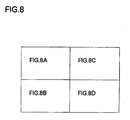
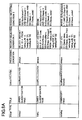
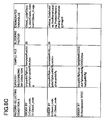
- Figs. 7 and 8 are illustrations, showing one embodiment of a page-creating control file that is made up as page-creating control information.
- the page-creating control file is prepared in the form of a tab-separated text file. In the file, each line generates a kind of a page.
- a record consists of fifteen fields. Respective titles and functions of the fields are outlined as follows:
- the page-creating control file is designed to allow various page-producing conditions to be easily customized by such conditions being written to an external file as much as possible, which external file is independent of a program. Since the above-listed functions are briefly described, supplementary descriptions uncovered by the above brief description will now be mainly provided.
- a page-creating program for reading in and then processing a file includes respective routines that correspond to page types.
- the page-creating program executes a condition decision and calculation using inherent codes.
- a description in the "field of page type” serves a function of indicating a code inherent to each page type. For example, referring to Fig. 3, respective page types: “categ_u” for the top page; “categ - l” for the upper classification page; “menu” for the lower classification page; “single” for the annexed pages ranging from the site guide to the home visit sales law and further displaying only shop database information; "option” for the new commodity list; and, “option_catalog” for the new commodity page.
- the page types are set on the basis of kinds of databases as a source of information, the number of pages to be created, and kinds of links to be created.
- the "field of created HTML filename” has the same value as an HTML filename when being of a page type to generate only one page, such as "single”, “categ - u", and "option.”
- a filename-creating method is expressed in a simulative manner. For example, in the upper classification page (catUUnn.htm), a fixed character string of "cat” is combined with a two-digit value in a field of "upper classification code", and further with two-digit consecutive numbers (01, 02, 03, etc.), thereby creating an HTML file.
- a value in a field of "commodity code” is a main filename, to which an extension of "htm” is added, thereby creating an HTML file. Characters improper as a filename are appropriately replaced, thereby automatically creating an HTML file.
- the "field of processing condition" defines conditions to create a page. More specifically, a predetermined description is made to the field of the processing condition on a row (record) of a related page in the page-creating control file, thereby providing control as to whether the related page is created.
- the use of the under-mentioned condition output-indicating tag controls a description of link to the related page in a template file that stores page design information. Thus, a link error is prevented, which otherwise would occur when the related page is not created.
- the "field of update-recognizing information” determines whether any database referenced by a created page has been updated, and then decides whether a record of the database is processed only when the database has been updated.
- the "field of update-recognizing information” indicates which one is referenced among flag files that corresponds to the databases. When any one of such indicated flag files has been updated after previous automatic organization, then an HTML file is created.
- the database and the flag file are related as follows:
- the "field of blocking factor” refers to the number of records of the commodity database to be output to a page in list pages. Needless to say, enumerated variables as many as the blocking factor must be given in a template of the page. In addition, for example, in the upper and lower classification pages, there is an upper limit to the number of lists to be displayed on one page. Such an upper limit appears in the "field of blocking factor" of the page-creating control file. When the number of the records of the commodity database to be displayed on a page are greater than the upper limit, then a plurality of pages are created, each of which is linked to the previous and following pages through links.
- the "field of enumerated variable” represents fields of the commodity database to be displayed on list pages.
- the fields of the commodity database which can be displayed on the upper and lower classification pages, and a combination of such fields are written in the "field of enumerated variable", and are then controlled.
- restrictions are placed such that twenty or fewer enumerated variables are described in a template as a standard in order to permit twenty enumerated variables to be described in an HTML page.
- the under-mentioned link failure prevention-indicating tag inhibits a description of a link to each remaining area or each blank portion from being created, thereby preventing the occurrence of a link error.
- a restriction is to limit the number of the enumerated variables to be provided in a template, in view of an aesthetic appearance when the enumerated variables are displayed using a browser.
- other numerals may be used, depending upon a data status of the database to be actually used as well as designs of HTML pages.
- the above-described structure allows a user to flexibly change specification of the system.
- no programmatic description is included in a template file.
- the template file is described using variable tags in simpler expression.
- Such a system of design allows for a designer's free design as well as a flexible change in the system.
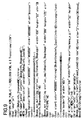
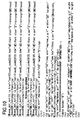
- Figs. 9-11 are illustrations, showing one embodiment of a template of a " top page.”
- the template itself is an HTML file, and has variable tags inherent to the present invention embedded therein. For convenience of description, an intermediate portion of enumerated variables in the template is partially omitted.
- variable tag starts with a beginning tag that follows:
- variable tag terminates with an ending tag that follows:
- This tag may also be called a null-inhibiting tag.
- the link failure prevention-indicating tag functions to inhibit output of character strings including the previous and following descriptions with respect to the variable.
- An example of the link failure prevention-indicating tag is shown below: where "! is a separation character.
- Fig. 11 the following tag is shown positioned at line 14:
- the field of "presence or absence of order page” in the shop database has a value of 01
- all descriptions in the tag are output, thereby displaying "How to Order” on the screen, and further creating a link to "order page.”
- an order page is created by a description of the page-creating control file. In this way, a site structure is controlled according to the present invention.
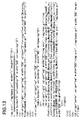
- Figs. 12-16 are illustrations, showing one embodiment of a template of a "commodity page.”
- the template contains the null-inhibiting tags) and are further written in such a manner that two or fewer images of commodities are displayed.
- a substitution-specifying tag is used in a field of "descriptive sentence" of the commodity database. The following is the substitution-specifying tag:
- substitution-specifying tag can be utilized to provide a display similar to that is obtained when a partitioned table is looked up.
- a field of sex (“Sex") has a value of 01, then a character of "male” is displayed.
- a character of "female” is displayed.
- a field name of "sex" is specified as null inhibition.
- substitution-specifying tag can be utilized for an application in which an image file of an icon is changed according to a field of "upper classification code" of the commodity database.
- An example is shown below:
- Fig. 17 shows a "top page" displayed using a browser.
- the top page is created by the automatic digital content-organizing system according to the present invention.
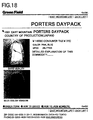
- Fig. 18 illustrates a "commodity page” displayed by means of the browser.
- the commodity page is produced by the automatic digital content-organizing system according to the present invention.
- Such a refined design is difficult to acquire when the art of CGI or ASP is used.
- the present invention allows for easy creation of such illustrated pages.
- the disclosed art of the present invention is not limited thereto, but is applicable to a news site, a site of public relations, a BBS site, and others. Furthermore, the present invention is applicable to automatic organization of HTML as well as other types of digital content with a hypertext link, such as XML.
- the automatic digital content-organizing system creates HTML pages by the steps of: indicating to a program types of the HTML pages and a method for creating the HTML pages, all of which HTML pages form a site; defining designs of the created HTML pages in combination with such indicated types and method; regularly extracting data such as commodities from a single or multiple databases: and, permitting the extracted data to be embedded in the HTML pages based on templates that include such defined designs.
- a program element is separated from a design element. Therefore, a user and a designer are allowed to create HTML pages having enhanced designability and a Web site, and further to change designs of the HTML pages without the risk of run-away or malfunction of a program.
- the user and the designer are free to have all sites structured in accordance with their original designs.
- the created Web site has enhanced appeal to the viewer, thereby more successfully accomplishing an object in establishing the site.
- the user can simply enter data into the database, and then make up image data; therefore, less labor is required to add or change commodities, with consequential rapid maintenance of the Web site.
- a template does not contain any programmatic description such as database search conditions and output indication, but is a usual HTML file having variable, tags added thereto. Therefore, for the Web designer having a profound acquaintance with HTML, it is easy to understand such a template, and further to add any description thereto. Thus, the user is allowed to flexibly change a site structure.
Landscapes
- Engineering & Computer Science (AREA)
- Theoretical Computer Science (AREA)
- Audiology, Speech & Language Pathology (AREA)
- Health & Medical Sciences (AREA)
- Computational Linguistics (AREA)
- General Health & Medical Sciences (AREA)
- Physics & Mathematics (AREA)
- General Engineering & Computer Science (AREA)
- General Physics & Mathematics (AREA)
- Artificial Intelligence (AREA)
- Information Transfer Between Computers (AREA)
- Information Retrieval, Db Structures And Fs Structures Therefor (AREA)
- Computer And Data Communications (AREA)
Applications Claiming Priority (2)
| Application Number | Priority Date | Filing Date | Title |
|---|---|---|---|
| JP14844299 | 1999-05-27 | ||
| JP11148442A JP2000339251A (ja) | 1999-05-27 | 1999-05-27 | デジタルコンテンツの自動編成システム及び自動編成されたデジタルコンテンツの記録された記録媒体 |
Publications (1)
| Publication Number | Publication Date |
|---|---|
| EP1056022A2 true EP1056022A2 (fr) | 2000-11-29 |
Family
ID=15452903
Family Applications (1)
| Application Number | Title | Priority Date | Filing Date |
|---|---|---|---|
| EP00110966A Withdrawn EP1056022A2 (fr) | 1999-05-27 | 2000-05-26 | Système automatique d'organisation de contenus digitaux et support d'enregistrement de contenus digitaux automatiquement enregistrés |
Country Status (2)
| Country | Link |
|---|---|
| EP (1) | EP1056022A2 (fr) |
| JP (1) | JP2000339251A (fr) |
Cited By (7)
| Publication number | Priority date | Publication date | Assignee | Title |
|---|---|---|---|---|
| GB2377520A (en) * | 2001-02-23 | 2003-01-15 | Amt Sybex | A utility hub system |
| EP1338987A1 (fr) * | 2002-02-19 | 2003-08-27 | Hewlett-Packard Company | Diffusion d'informations dans un réseau informatique |
| US6795830B1 (en) | 2000-09-08 | 2004-09-21 | Oracle International Corporation | Techniques for providing off-host storage for a database application |
| US6993657B1 (en) | 2000-09-08 | 2006-01-31 | Oracle International Corporation | Techniques for managing database systems with a community server |
| EP1588289A4 (fr) * | 2003-01-06 | 2007-01-10 | Concept Dev Pty Ltd | Procede et systeme de construction d'un site web |
| US7536686B2 (en) | 2000-09-08 | 2009-05-19 | Oracle International Corporation | Techniques for automatically installing and configuring database applications |
| US7849174B2 (en) | 2002-02-28 | 2010-12-07 | Canon Kabushiki Kaisha | Network management system, display method, and program |
Families Citing this family (11)
| Publication number | Priority date | Publication date | Assignee | Title |
|---|---|---|---|---|
| JP2002007271A (ja) * | 2000-06-22 | 2002-01-11 | Tyd:Kk | ホームぺージ開設支援方法、ホームページ開設支援装置及びホームページ開設支援プログラムが記録された記録媒体 |
| JP4677673B2 (ja) * | 2000-12-28 | 2011-04-27 | ブラザー工業株式会社 | 電子商店管理システム |
| JP2002215519A (ja) * | 2001-01-22 | 2002-08-02 | Sumisho Computer Systems Corp | ウェブページ生成方法およびシステム、ウェブページ生成プログラム、記録媒体 |
| JP2002269450A (ja) * | 2001-03-13 | 2002-09-20 | Bisco Kk | マルチメディア人材広告システム |
| US6832196B2 (en) * | 2001-03-30 | 2004-12-14 | International Business Machines Corporation | Speech driven data selection in a voice-enabled program |
| JP2003006105A (ja) * | 2001-06-18 | 2003-01-10 | Akio Sado | ホームページ作成プログラム |
| JP2006252257A (ja) * | 2005-03-11 | 2006-09-21 | Dainippon Printing Co Ltd | データベーステキスト出力システム、テキスト出力サーバ、プログラム、及び記録媒体 |
| JP5322403B2 (ja) * | 2007-05-31 | 2013-10-23 | 株式会社デジタルステージ | ホームページ作成装置とそのホームページ作成プログラム及びホームページ作成方法 |
| JP5665212B2 (ja) * | 2009-10-23 | 2015-02-04 | 楽天株式会社 | 情報提供装置および方法、並びにプログラム |
| JP6022964B2 (ja) * | 2013-02-15 | 2016-11-09 | 有限会社トピックメーカー | ホームページ作成方法およびホームページ作成システム |
| JP6918057B2 (ja) * | 2019-08-05 | 2021-08-11 | 三菱電機株式会社 | 画面開発支援装置、画面開発支援方法及び画面開発支援プログラム |
-
1999
- 1999-05-27 JP JP11148442A patent/JP2000339251A/ja active Pending
-
2000
- 2000-05-26 EP EP00110966A patent/EP1056022A2/fr not_active Withdrawn
Cited By (12)
| Publication number | Priority date | Publication date | Assignee | Title |
|---|---|---|---|---|
| US9047322B2 (en) | 1999-01-29 | 2015-06-02 | Oracle International Corporation | Techniques for automatically discovering a database device on a network |
| US6795830B1 (en) | 2000-09-08 | 2004-09-21 | Oracle International Corporation | Techniques for providing off-host storage for a database application |
| US6993657B1 (en) | 2000-09-08 | 2006-01-31 | Oracle International Corporation | Techniques for managing database systems with a community server |
| US7536686B2 (en) | 2000-09-08 | 2009-05-19 | Oracle International Corporation | Techniques for automatically installing and configuring database applications |
| US7739308B2 (en) | 2000-09-08 | 2010-06-15 | Oracle International Corporation | Techniques for automatically provisioning a database over a wide area network |
| US8321457B2 (en) * | 2000-09-08 | 2012-11-27 | Oracle International Corporation | Techniques for automatically developing a web site |
| US8478778B2 (en) | 2000-09-08 | 2013-07-02 | Oracle International Corporation | Techniques for automatically provisioning a database over a wide area network |
| US8849850B2 (en) | 2000-09-08 | 2014-09-30 | Oracle International Corporation | Techniques for automatically provisioning a database over a wide area network |
| GB2377520A (en) * | 2001-02-23 | 2003-01-15 | Amt Sybex | A utility hub system |
| EP1338987A1 (fr) * | 2002-02-19 | 2003-08-27 | Hewlett-Packard Company | Diffusion d'informations dans un réseau informatique |
| US7849174B2 (en) | 2002-02-28 | 2010-12-07 | Canon Kabushiki Kaisha | Network management system, display method, and program |
| EP1588289A4 (fr) * | 2003-01-06 | 2007-01-10 | Concept Dev Pty Ltd | Procede et systeme de construction d'un site web |
Also Published As
| Publication number | Publication date |
|---|---|
| JP2000339251A (ja) | 2000-12-08 |
Similar Documents
| Publication | Publication Date | Title |
|---|---|---|
| EP1056022A2 (fr) | Système automatique d'organisation de contenus digitaux et support d'enregistrement de contenus digitaux automatiquement enregistrés | |
| US6014677A (en) | Document management device and method for managing documents by utilizing additive information | |
| US7096422B2 (en) | Markup language visual mapping | |
| US7325196B1 (en) | Method and system for manipulating page control content | |
| US8528103B2 (en) | System for managing display and retrieval of image content on a network with image identification and linking to network content | |
| US7698167B2 (en) | Catalog building method and system | |
| US6424979B1 (en) | System for presenting and managing enterprise architectures | |
| US8549097B2 (en) | Web application for accessing media streams | |
| US7293228B1 (en) | Maltweb multi-axis viewing interface and higher level scoping | |
| US20050210414A1 (en) | Auto thumbnail gallery | |
| US20020077930A1 (en) | Contextual merchandising system for an electronic network | |
| US7240294B2 (en) | Method of constructing a composite image | |
| US10372811B2 (en) | Configuration of displays for targeted user communities | |
| US5905979A (en) | Abstract manager system and method for managing an abstract database | |
| US20020152245A1 (en) | Web publication of newspaper content | |
| GB2383662A (en) | Creating XML documents using a word processing application | |
| GB2416468A (en) | Document display system | |
| GB2359645A (en) | Using scripts to generate style and content for XML documents | |
| US20050289473A1 (en) | Method and system for providing search information via a communications network | |
| WO2002042928A1 (fr) | Systeme et procede de traitement d'informations, et support d'enregistrement sur lequel est enregistre un logiciel de traitement d'informations | |
| US20020158902A1 (en) | Method and apparatus for automatically publishing associate information | |
| JP2000112962A (ja) | 電子情報表示装置及び電子情報閲覧方法 | |
| EP0971295A1 (fr) | Systeme d'organisation automatique de contenus numeriques et support d'enregistrement sur lequel sont enregistres les contenus numeriques automatiquement organises | |
| KR100495034B1 (ko) | 인포박스를 이용한 정보제공 시스템 및 방법 | |
| US20020099623A1 (en) | System for automatically organizing digital contents and recording medium on which automatically organized digital contents are recorded |
Legal Events
| Date | Code | Title | Description |
|---|---|---|---|
| PUAI | Public reference made under article 153(3) epc to a published international application that has entered the european phase |
Free format text: ORIGINAL CODE: 0009012 |
|
| AK | Designated contracting states |
Kind code of ref document: A2 Designated state(s): AT BE CH CY DE DK ES FI FR GB GR IE IT LI LU MC NL PT SE |
|
| AX | Request for extension of the european patent |
Free format text: AL;LT;LV;MK;RO;SI |
|
| STAA | Information on the status of an ep patent application or granted ep patent |
Free format text: STATUS: THE APPLICATION IS DEEMED TO BE WITHDRAWN |
|
| 18D | Application deemed to be withdrawn |
Effective date: 20031201 |