EP1061947B1 - Solutions aqueuses stabilisees de glucagon comprenant des detergents - Google Patents
Solutions aqueuses stabilisees de glucagon comprenant des detergents Download PDFInfo
- Publication number
- EP1061947B1 EP1061947B1 EP99906095A EP99906095A EP1061947B1 EP 1061947 B1 EP1061947 B1 EP 1061947B1 EP 99906095 A EP99906095 A EP 99906095A EP 99906095 A EP99906095 A EP 99906095A EP 1061947 B1 EP1061947 B1 EP 1061947B1
- Authority
- EP
- European Patent Office
- Prior art keywords
- peptide
- detergent
- glucagon
- glp
- lysophosphatidylcholine
- Prior art date
- Legal status (The legal status is an assumption and is not a legal conclusion. Google has not performed a legal analysis and makes no representation as to the accuracy of the status listed.)
- Expired - Lifetime
Links
- 239000003599 detergent Substances 0.000 title claims abstract description 62
- 102000051325 Glucagon Human genes 0.000 title claims abstract description 48
- MASNOZXLGMXCHN-ZLPAWPGGSA-N glucagon Chemical compound C([C@@H](C(=O)N[C@H](C(=O)N[C@@H](CCC(N)=O)C(=O)N[C@@H](CC=1C2=CC=CC=C2NC=1)C(=O)N[C@@H](CC(C)C)C(=O)N[C@@H](CCSC)C(=O)N[C@@H](CC(N)=O)C(=O)N[C@@H]([C@@H](C)O)C(O)=O)C(C)C)NC(=O)[C@H](CC(O)=O)NC(=O)[C@H](CCC(N)=O)NC(=O)[C@H](C)NC(=O)[C@H](CCCNC(N)=N)NC(=O)[C@H](CCCNC(N)=N)NC(=O)[C@H](CO)NC(=O)[C@H](CC(O)=O)NC(=O)[C@H](CC(C)C)NC(=O)[C@H](CC=1C=CC(O)=CC=1)NC(=O)[C@H](CCCCN)NC(=O)[C@H](CO)NC(=O)[C@H](CC=1C=CC(O)=CC=1)NC(=O)[C@H](CC(O)=O)NC(=O)[C@H](CO)NC(=O)[C@@H](NC(=O)[C@H](CC=1C=CC=CC=1)NC(=O)[C@@H](NC(=O)CNC(=O)[C@H](CCC(N)=O)NC(=O)[C@H](CO)NC(=O)[C@@H](N)CC=1NC=NC=1)[C@@H](C)O)[C@@H](C)O)C1=CC=CC=C1 MASNOZXLGMXCHN-ZLPAWPGGSA-N 0.000 title claims abstract description 48
- 229960004666 glucagon Drugs 0.000 title claims abstract description 48
- 108060003199 Glucagon Proteins 0.000 title claims abstract description 45
- 108090000765 processed proteins & peptides Proteins 0.000 claims abstract description 49
- 239000000203 mixture Substances 0.000 claims abstract description 31
- 230000000087 stabilizing effect Effects 0.000 claims abstract description 8
- 230000003381 solubilizing effect Effects 0.000 claims abstract description 7
- FAPWRFPIFSIZLT-UHFFFAOYSA-M Sodium chloride Chemical compound [Na+].[Cl-] FAPWRFPIFSIZLT-UHFFFAOYSA-M 0.000 claims description 24
- 229910019142 PO4 Inorganic materials 0.000 claims description 16
- NBIIXXVUZAFLBC-UHFFFAOYSA-K phosphate Chemical compound [O-]P([O-])([O-])=O NBIIXXVUZAFLBC-UHFFFAOYSA-K 0.000 claims description 16
- 239000010452 phosphate Substances 0.000 claims description 16
- 239000011780 sodium chloride Substances 0.000 claims description 12
- VXUOFDJKYGDUJI-UHFFFAOYSA-N (2-hydroxy-3-tetradecanoyloxypropyl) 2-(trimethylazaniumyl)ethyl phosphate Chemical compound CCCCCCCCCCCCCC(=O)OCC(O)COP([O-])(=O)OCC[N+](C)(C)C VXUOFDJKYGDUJI-UHFFFAOYSA-N 0.000 claims description 9
- FBPFZTCFMRRESA-KVTDHHQDSA-N D-Mannitol Chemical compound OC[C@@H](O)[C@@H](O)[C@H](O)[C@H](O)CO FBPFZTCFMRRESA-KVTDHHQDSA-N 0.000 claims description 9
- 229930195725 Mannitol Natural products 0.000 claims description 8
- 239000000594 mannitol Substances 0.000 claims description 8
- 235000010355 mannitol Nutrition 0.000 claims description 8
- BWKILASWCLJPBO-UHFFFAOYSA-N (3-dodecanoyloxy-2-hydroxypropyl) 2-(trimethylazaniumyl)ethyl phosphate Chemical compound CCCCCCCCCCCC(=O)OCC(O)COP([O-])(=O)OCC[N+](C)(C)C BWKILASWCLJPBO-UHFFFAOYSA-N 0.000 claims description 7
- QTBSBXVTEAMEQO-UHFFFAOYSA-M Acetate Chemical compound CC([O-])=O QTBSBXVTEAMEQO-UHFFFAOYSA-M 0.000 claims description 7
- GCYXWQUSHADNBF-AAEALURTSA-N preproglucagon 78-108 Chemical compound C([C@@H](C(=O)N[C@@H]([C@@H](C)CC)C(=O)N[C@@H](C)C(=O)N[C@@H](CC=1C2=CC=CC=C2NC=1)C(=O)N[C@@H](CC(C)C)C(=O)N[C@@H](C(C)C)C(=O)N[C@@H](CCCCN)C(=O)NCC(=O)N[C@@H](CCCNC(N)=N)C(=O)NCC(O)=O)NC(=O)[C@H](CCC(O)=O)NC(=O)[C@H](CCCCN)NC(=O)[C@H](C)NC(=O)[C@H](C)NC(=O)[C@H](CCC(N)=O)NC(=O)CNC(=O)[C@H](CCC(O)=O)NC(=O)[C@H](CC(C)C)NC(=O)[C@H](CC=1C=CC(O)=CC=1)NC(=O)[C@H](CO)NC(=O)[C@H](CO)NC(=O)[C@@H](NC(=O)[C@H](CC(O)=O)NC(=O)[C@H](CO)NC(=O)[C@@H](NC(=O)[C@H](CC=1C=CC=CC=1)NC(=O)[C@@H](NC(=O)CNC(=O)[C@H](CCC(O)=O)NC(=O)[C@H](C)NC(=O)[C@@H](N)CC=1N=CNC=1)[C@@H](C)O)[C@@H](C)O)C(C)C)C1=CC=CC=C1 GCYXWQUSHADNBF-AAEALURTSA-N 0.000 claims description 7
- HZAXFHJVJLSVMW-UHFFFAOYSA-N 2-Aminoethan-1-ol Chemical compound NCCO HZAXFHJVJLSVMW-UHFFFAOYSA-N 0.000 claims description 6
- WVDDGKGOMKODPV-UHFFFAOYSA-N Benzyl alcohol Chemical compound OCC1=CC=CC=C1 WVDDGKGOMKODPV-UHFFFAOYSA-N 0.000 claims description 6
- PEDCQBHIVMGVHV-UHFFFAOYSA-N Glycerine Chemical compound OCC(O)CO PEDCQBHIVMGVHV-UHFFFAOYSA-N 0.000 claims description 6
- 238000000034 method Methods 0.000 claims description 6
- 208000001072 type 2 diabetes mellitus Diseases 0.000 claims description 5
- ISWSIDIOOBJBQZ-UHFFFAOYSA-N Phenol Natural products OC1=CC=CC=C1 ISWSIDIOOBJBQZ-UHFFFAOYSA-N 0.000 claims description 4
- RLSSMJSEOOYNOY-UHFFFAOYSA-N m-cresol Chemical compound CC1=CC=CC(O)=C1 RLSSMJSEOOYNOY-UHFFFAOYSA-N 0.000 claims description 4
- MTCFGRXMJLQNBG-REOHCLBHSA-N (2S)-2-Amino-3-hydroxypropansäure Chemical compound OC[C@H](N)C(O)=O MTCFGRXMJLQNBG-REOHCLBHSA-N 0.000 claims description 3
- AYFVYJQAPQTCCC-GBXIJSLDSA-N L-threonine Chemical compound C[C@@H](O)[C@H](N)C(O)=O AYFVYJQAPQTCCC-GBXIJSLDSA-N 0.000 claims description 3
- MTCFGRXMJLQNBG-UHFFFAOYSA-N Serine Natural products OCC(N)C(O)=O MTCFGRXMJLQNBG-UHFFFAOYSA-N 0.000 claims description 3
- AYFVYJQAPQTCCC-UHFFFAOYSA-N Threonine Natural products CC(O)C(N)C(O)=O AYFVYJQAPQTCCC-UHFFFAOYSA-N 0.000 claims description 3
- 239000004473 Threonine Substances 0.000 claims description 3
- OEYIOHPDSNJKLS-UHFFFAOYSA-N choline Chemical compound C[N+](C)(C)CCO OEYIOHPDSNJKLS-UHFFFAOYSA-N 0.000 claims description 3
- 229960001231 choline Drugs 0.000 claims description 3
- 239000003814 drug Substances 0.000 claims description 3
- 238000002360 preparation method Methods 0.000 claims description 3
- KRKNYBCHXYNGOX-UHFFFAOYSA-K Citrate Chemical compound [O-]C(=O)CC(O)(CC([O-])=O)C([O-])=O KRKNYBCHXYNGOX-UHFFFAOYSA-K 0.000 claims description 2
- 208000008589 Obesity Diseases 0.000 claims description 2
- 206010067584 Type 1 diabetes mellitus Diseases 0.000 claims description 2
- 235000019445 benzyl alcohol Nutrition 0.000 claims description 2
- 230000003139 buffering effect Effects 0.000 claims description 2
- 235000020824 obesity Nutrition 0.000 claims description 2
- 239000003755 preservative agent Substances 0.000 claims description 2
- 230000002335 preservative effect Effects 0.000 claims description 2
- 208000035408 type 1 diabetes mellitus 1 Diseases 0.000 claims description 2
- 230000003019 stabilising effect Effects 0.000 claims 2
- 239000012928 buffer substance Substances 0.000 claims 1
- 239000007951 isotonicity adjuster Substances 0.000 claims 1
- DTHNMHAUYICORS-KTKZVXAJSA-N Glucagon-like peptide 1 Chemical compound C([C@@H](C(=O)N[C@@H]([C@@H](C)CC)C(=O)N[C@@H](C)C(=O)N[C@@H](CC=1C2=CC=CC=C2NC=1)C(=O)N[C@@H](CC(C)C)C(=O)N[C@@H](C(C)C)C(=O)N[C@@H](CCCCN)C(=O)NCC(=O)N[C@@H](CCCNC(N)=N)C(N)=O)NC(=O)[C@H](CCC(O)=O)NC(=O)[C@H](CCCCN)NC(=O)[C@H](C)NC(=O)[C@H](C)NC(=O)[C@H](CCC(N)=O)NC(=O)CNC(=O)[C@H](CCC(O)=O)NC(=O)[C@H](CC(C)C)NC(=O)[C@H](CC=1C=CC(O)=CC=1)NC(=O)[C@H](CO)NC(=O)[C@H](CO)NC(=O)[C@@H](NC(=O)[C@H](CC(O)=O)NC(=O)[C@H](CO)NC(=O)[C@@H](NC(=O)[C@H](CC=1C=CC=CC=1)NC(=O)[C@@H](NC(=O)CNC(=O)[C@H](CCC(O)=O)NC(=O)[C@H](C)NC(=O)[C@@H](N)CC=1N=CNC=1)[C@@H](C)O)[C@@H](C)O)C(C)C)C1=CC=CC=C1 DTHNMHAUYICORS-KTKZVXAJSA-N 0.000 abstract description 32
- 102100040918 Pro-glucagon Human genes 0.000 abstract description 13
- 101710198884 GATA-type zinc finger protein 1 Proteins 0.000 abstract 1
- 239000000243 solution Substances 0.000 description 29
- 101800000224 Glucagon-like peptide 1 Proteins 0.000 description 16
- 239000000654 additive Substances 0.000 description 12
- 101800004266 Glucagon-like peptide 1(7-37) Proteins 0.000 description 7
- 125000000539 amino acid group Chemical group 0.000 description 7
- 102000004196 processed proteins & peptides Human genes 0.000 description 7
- 150000001413 amino acids Chemical class 0.000 description 6
- 230000000694 effects Effects 0.000 description 6
- DBMJMQXJHONAFJ-UHFFFAOYSA-M Sodium laurylsulphate Chemical compound [Na+].CCCCCCCCCCCCOS([O-])(=O)=O DBMJMQXJHONAFJ-UHFFFAOYSA-M 0.000 description 5
- 108010063245 glucagon-like peptide 1 (7-36)amide Proteins 0.000 description 5
- 230000002209 hydrophobic effect Effects 0.000 description 4
- 230000002218 hypoglycaemic effect Effects 0.000 description 4
- -1 GLP-1 compounds Chemical class 0.000 description 3
- 102400000324 Glucagon-like peptide 1(7-37) Human genes 0.000 description 3
- WQZGKKKJIJFFOK-GASJEMHNSA-N Glucose Natural products OC[C@H]1OC(O)[C@H](O)[C@@H](O)[C@@H]1O WQZGKKKJIJFFOK-GASJEMHNSA-N 0.000 description 3
- DHMQDGOQFOQNFH-UHFFFAOYSA-N Glycine Chemical compound NCC(O)=O DHMQDGOQFOQNFH-UHFFFAOYSA-N 0.000 description 3
- 208000013016 Hypoglycemia Diseases 0.000 description 3
- 230000001154 acute effect Effects 0.000 description 3
- 229940024606 amino acid Drugs 0.000 description 3
- 230000015572 biosynthetic process Effects 0.000 description 3
- 239000008280 blood Substances 0.000 description 3
- 210000004369 blood Anatomy 0.000 description 3
- 125000002091 cationic group Chemical group 0.000 description 3
- QBHFVMDLPTZDOI-UHFFFAOYSA-N dodecylphosphocholine Chemical compound CCCCCCCCCCCCOP([O-])(=O)OCC[N+](C)(C)C QBHFVMDLPTZDOI-UHFFFAOYSA-N 0.000 description 3
- 238000009472 formulation Methods 0.000 description 3
- 239000008103 glucose Substances 0.000 description 3
- 230000003993 interaction Effects 0.000 description 3
- 239000000693 micelle Substances 0.000 description 3
- 239000000546 pharmaceutical excipient Substances 0.000 description 3
- 230000007928 solubilization Effects 0.000 description 3
- 238000005063 solubilization Methods 0.000 description 3
- ASWBNKHCZGQVJV-UHFFFAOYSA-N (3-hexadecanoyloxy-2-hydroxypropyl) 2-(trimethylazaniumyl)ethyl phosphate Chemical compound CCCCCCCCCCCCCCCC(=O)OCC(O)COP([O-])(=O)OCC[N+](C)(C)C ASWBNKHCZGQVJV-UHFFFAOYSA-N 0.000 description 2
- LZZYPRNAOMGNLH-UHFFFAOYSA-M Cetrimonium bromide Chemical compound [Br-].CCCCCCCCCCCCCCCC[N+](C)(C)C LZZYPRNAOMGNLH-UHFFFAOYSA-M 0.000 description 2
- 238000002835 absorbance Methods 0.000 description 2
- 230000000996 additive effect Effects 0.000 description 2
- 125000000129 anionic group Chemical group 0.000 description 2
- 230000000844 anti-bacterial effect Effects 0.000 description 2
- 239000007864 aqueous solution Substances 0.000 description 2
- 230000008901 benefit Effects 0.000 description 2
- 230000033228 biological regulation Effects 0.000 description 2
- 229920001222 biopolymer Polymers 0.000 description 2
- 239000000872 buffer Substances 0.000 description 2
- 150000001875 compounds Chemical class 0.000 description 2
- 201000010099 disease Diseases 0.000 description 2
- 208000037265 diseases, disorders, signs and symptoms Diseases 0.000 description 2
- 239000012634 fragment Substances 0.000 description 2
- 230000002430 glycogenolytic effect Effects 0.000 description 2
- 238000003384 imaging method Methods 0.000 description 2
- 125000000400 lauroyl group Chemical group O=C([*])C([H])([H])C([H])([H])C([H])([H])C([H])([H])C([H])([H])C([H])([H])C([H])([H])C([H])([H])C([H])([H])C([H])([H])C([H])([H])[H] 0.000 description 2
- 229920001184 polypeptide Polymers 0.000 description 2
- 239000006228 supernatant Substances 0.000 description 2
- XLYOFNOQVPJJNP-UHFFFAOYSA-N water Substances O XLYOFNOQVPJJNP-UHFFFAOYSA-N 0.000 description 2
- PORPENFLTBBHSG-MGBGTMOVSA-N 1,2-dihexadecanoyl-sn-glycerol-3-phosphate Chemical compound CCCCCCCCCCCCCCCC(=O)OC[C@H](COP(O)(O)=O)OC(=O)CCCCCCCCCCCCCCC PORPENFLTBBHSG-MGBGTMOVSA-N 0.000 description 1
- ZPDQFUYPBVXUKS-YADHBBJMSA-N 1-stearoyl-sn-glycero-3-phosphoserine Chemical compound CCCCCCCCCCCCCCCCCC(=O)OC[C@@H](O)COP(O)(=O)OC[C@H](N)C(O)=O ZPDQFUYPBVXUKS-YADHBBJMSA-N 0.000 description 1
- GYJNVSAUBGJVLV-UHFFFAOYSA-N 3-(dimethylazaniumyl)propane-1-sulfonate Chemical compound CN(C)CCCS(O)(=O)=O GYJNVSAUBGJVLV-UHFFFAOYSA-N 0.000 description 1
- QGZKDVFQNNGYKY-UHFFFAOYSA-O Ammonium Chemical compound [NH4+] QGZKDVFQNNGYKY-UHFFFAOYSA-O 0.000 description 1
- 208000009773 Insulin Coma Diseases 0.000 description 1
- 102000015731 Peptide Hormones Human genes 0.000 description 1
- 108010038988 Peptide Hormones Proteins 0.000 description 1
- 102000035554 Proglucagon Human genes 0.000 description 1
- 108010058003 Proglucagon Proteins 0.000 description 1
- 102000007327 Protamines Human genes 0.000 description 1
- 108010007568 Protamines Proteins 0.000 description 1
- 206010040576 Shock hypoglycaemic Diseases 0.000 description 1
- QAOWNCQODCNURD-UHFFFAOYSA-L Sulfate Chemical compound [O-]S([O-])(=O)=O QAOWNCQODCNURD-UHFFFAOYSA-L 0.000 description 1
- PTFCDOFLOPIGGS-UHFFFAOYSA-N Zinc dication Chemical compound [Zn+2] PTFCDOFLOPIGGS-UHFFFAOYSA-N 0.000 description 1
- 239000008351 acetate buffer Substances 0.000 description 1
- 239000003929 acidic solution Substances 0.000 description 1
- 230000002378 acidificating effect Effects 0.000 description 1
- 230000010933 acylation Effects 0.000 description 1
- 238000005917 acylation reaction Methods 0.000 description 1
- 230000029936 alkylation Effects 0.000 description 1
- 238000005804 alkylation reaction Methods 0.000 description 1
- 238000010640 amide synthesis reaction Methods 0.000 description 1
- 239000013011 aqueous formulation Substances 0.000 description 1
- 230000006399 behavior Effects 0.000 description 1
- 230000004071 biological effect Effects 0.000 description 1
- 230000037396 body weight Effects 0.000 description 1
- 210000004899 c-terminal region Anatomy 0.000 description 1
- 238000005119 centrifugation Methods 0.000 description 1
- 238000002144 chemical decomposition reaction Methods 0.000 description 1
- 239000003795 chemical substances by application Substances 0.000 description 1
- 239000007979 citrate buffer Substances 0.000 description 1
- 230000000295 complement effect Effects 0.000 description 1
- 238000002425 crystallisation Methods 0.000 description 1
- 230000008025 crystallization Effects 0.000 description 1
- 230000001236 detergent effect Effects 0.000 description 1
- 230000037213 diet Effects 0.000 description 1
- 235000005911 diet Nutrition 0.000 description 1
- 239000003085 diluting agent Substances 0.000 description 1
- 229940079593 drug Drugs 0.000 description 1
- 230000002774 effect on peptide Effects 0.000 description 1
- 150000002148 esters Chemical class 0.000 description 1
- 229940031098 ethanolamine Drugs 0.000 description 1
- 238000001914 filtration Methods 0.000 description 1
- 238000005189 flocculation Methods 0.000 description 1
- 230000016615 flocculation Effects 0.000 description 1
- 230000002496 gastric effect Effects 0.000 description 1
- 238000001879 gelation Methods 0.000 description 1
- 239000011521 glass Substances 0.000 description 1
- 230000000344 gluconeogenetic effect Effects 0.000 description 1
- 230000006872 improvement Effects 0.000 description 1
- 238000010348 incorporation Methods 0.000 description 1
- 230000001939 inductive effect Effects 0.000 description 1
- 238000002347 injection Methods 0.000 description 1
- 239000007924 injection Substances 0.000 description 1
- 230000003914 insulin secretion Effects 0.000 description 1
- 210000000936 intestine Anatomy 0.000 description 1
- 210000004185 liver Anatomy 0.000 description 1
- 230000007774 longterm Effects 0.000 description 1
- 239000008176 lyophilized powder Substances 0.000 description 1
- 239000000463 material Substances 0.000 description 1
- 238000005259 measurement Methods 0.000 description 1
- 238000002156 mixing Methods 0.000 description 1
- 230000004899 motility Effects 0.000 description 1
- 125000001419 myristoyl group Chemical group O=C([*])C([H])([H])C([H])([H])C([H])([H])C([H])([H])C([H])([H])C([H])([H])C([H])([H])C([H])([H])C([H])([H])C([H])([H])C([H])([H])C([H])([H])C([H])([H])[H] 0.000 description 1
- 230000023187 negative regulation of glucagon secretion Effects 0.000 description 1
- 230000007935 neutral effect Effects 0.000 description 1
- 239000012053 oil suspension Substances 0.000 description 1
- 210000000496 pancreas Anatomy 0.000 description 1
- 239000002245 particle Substances 0.000 description 1
- 239000000813 peptide hormone Substances 0.000 description 1
- 150000002989 phenols Chemical class 0.000 description 1
- 239000008363 phosphate buffer Substances 0.000 description 1
- 230000037081 physical activity Effects 0.000 description 1
- 229920000642 polymer Polymers 0.000 description 1
- 239000002861 polymer material Substances 0.000 description 1
- 230000029537 positive regulation of insulin secretion Effects 0.000 description 1
- 238000001556 precipitation Methods 0.000 description 1
- 125000002924 primary amino group Chemical group [H]N([H])* 0.000 description 1
- 230000002035 prolonged effect Effects 0.000 description 1
- 229940048914 protamine Drugs 0.000 description 1
- 229960001153 serine Drugs 0.000 description 1
- 210000002460 smooth muscle Anatomy 0.000 description 1
- 230000002048 spasmolytic effect Effects 0.000 description 1
- 230000006641 stabilisation Effects 0.000 description 1
- 238000011105 stabilization Methods 0.000 description 1
- 239000000126 substance Substances 0.000 description 1
- 229910021653 sulphate ion Inorganic materials 0.000 description 1
- 229960002898 threonine Drugs 0.000 description 1
- 210000001519 tissue Anatomy 0.000 description 1
- 230000000007 visual effect Effects 0.000 description 1
Images




Classifications
-
- A—HUMAN NECESSITIES
- A61—MEDICAL OR VETERINARY SCIENCE; HYGIENE
- A61K—PREPARATIONS FOR MEDICAL, DENTAL OR TOILETRY PURPOSES
- A61K47/00—Medicinal preparations characterised by the non-active ingredients used, e.g. carriers or inert additives; Targeting or modifying agents chemically bound to the active ingredient
- A61K47/06—Organic compounds, e.g. natural or synthetic hydrocarbons, polyolefins, mineral oil, petrolatum or ozokerite
- A61K47/24—Organic compounds, e.g. natural or synthetic hydrocarbons, polyolefins, mineral oil, petrolatum or ozokerite containing atoms other than carbon, hydrogen, oxygen, halogen, nitrogen or sulfur, e.g. cyclomethicone or phospholipids
-
- A—HUMAN NECESSITIES
- A61—MEDICAL OR VETERINARY SCIENCE; HYGIENE
- A61K—PREPARATIONS FOR MEDICAL, DENTAL OR TOILETRY PURPOSES
- A61K38/00—Medicinal preparations containing peptides
- A61K38/16—Peptides having more than 20 amino acids; Gastrins; Somatostatins; Melanotropins; Derivatives thereof
- A61K38/17—Peptides having more than 20 amino acids; Gastrins; Somatostatins; Melanotropins; Derivatives thereof from animals; from humans
- A61K38/22—Hormones
- A61K38/26—Glucagons
-
- A—HUMAN NECESSITIES
- A61—MEDICAL OR VETERINARY SCIENCE; HYGIENE
- A61K—PREPARATIONS FOR MEDICAL, DENTAL OR TOILETRY PURPOSES
- A61K38/00—Medicinal preparations containing peptides
- A61K38/16—Peptides having more than 20 amino acids; Gastrins; Somatostatins; Melanotropins; Derivatives thereof
- A61K38/17—Peptides having more than 20 amino acids; Gastrins; Somatostatins; Melanotropins; Derivatives thereof from animals; from humans
- A61K38/22—Hormones
- A61K38/28—Insulins
-
- A—HUMAN NECESSITIES
- A61—MEDICAL OR VETERINARY SCIENCE; HYGIENE
- A61P—SPECIFIC THERAPEUTIC ACTIVITY OF CHEMICAL COMPOUNDS OR MEDICINAL PREPARATIONS
- A61P3/00—Drugs for disorders of the metabolism
- A61P3/04—Anorexiants; Antiobesity agents
-
- A—HUMAN NECESSITIES
- A61—MEDICAL OR VETERINARY SCIENCE; HYGIENE
- A61P—SPECIFIC THERAPEUTIC ACTIVITY OF CHEMICAL COMPOUNDS OR MEDICINAL PREPARATIONS
- A61P3/00—Drugs for disorders of the metabolism
- A61P3/08—Drugs for disorders of the metabolism for glucose homeostasis
- A61P3/10—Drugs for disorders of the metabolism for glucose homeostasis for hyperglycaemia, e.g. antidiabetics
Definitions
- the present invention relates to stable, injectable aqueous solutions of peptides such as glucagon, glucagon-like peptide-1 (GLP-1, e.g. GLP-1 (7-37) and GLP-1 (7-36) amide) and analogues and derivatives thereof.
- GLP-1 glucagon-like peptide-1
- GLP-1 e.g. GLP-1 (7-37) and GLP-1 (7-36) amide
- Glucagon and glucagon-like peptide 1 are polypeptide hormones both derived from proglucagon. Upon tissue-specific processing, glucagon is produced in the pancreas, while GLP-1 is predominantly secreted in the intestine. Physiologically, both peptides play major roles in the regulation of blood glucose. Glucagon is directly involved via glycogenolytic as well as gluconeogenetic effects. GLP-1 is indirectly involved via stimulation of insulin and inhibition of glucagon secretion. Thus, the two peptides affect the blood glucose in opposite directions.
- glucagon Due to its glycogenolytic effect on the liver, glucagon is used for the treatment of acute hypoglycemia (e.g. "insulin shock”). In addition, glucagon excerts a spasmolytic effect on smooth muscles, and this effect is used clinically in connection with several imaging procedures, especially radiology.
- acute hypoglycemia e.g. "insulin shock”
- glucagon excerts a spasmolytic effect on smooth muscles, and this effect is used clinically in connection with several imaging procedures, especially radiology.
- GLP-1 fragments such as GLP-1(7-37), GLP-1 (7-36) amide and functional analogues thereof (hereinafter designated GLP-1 compounds) stimulate pancreatic insulin release in the presence of glucose, and this finding suggests that GLP-1 compounds may be useful in the treatment of type II diabetes.
- Glucagon 29 amino acids; see e.g. The Merck Index , 10 th Edition for the amino acid sequence
- GLP-1 compounds typically about 29-31 amino acids
- Glucagon 29 amino acids
- GLP-1 compounds typically about 29-31 amino acids
- the peptide exhibits very low solubility in water at a pH in the range of about 4-9. Outside this region, aqueous solutions are generally metastable and prone to gel formation or flocculation within hours of their preparation.
- glucagon compositions for injection are currently marketed in the form of a lyophilized powder which is to be reconstituted using a suitable diluent shortly before use. The resulting acidic solution may then be injected.
- the utility of GLP-1 compounds for the treatment of type II diabetes generally involves multiple-dose soluble compositions. Given the instability of glucagon, the formulation of such compositions is inherently difficult.
- glucagon the availability of a ready-to-use composition is desirable for emergency treatment of acute hypoglycemia, enabling the patient or another person present to treat the hypoglycemic incidence immediately.
- the availability of a ready-to-use aqueous composition provides obvious advantages in terms of convenience and safety.
- Glucagon compositions solubilized by the addition of detergent have received relatively little attention in the literature.
- British patent No. 1 202 607 describes the use of either cationic (quarternary ammonium bases) or anionic (alkyl-aryl-sulphonates). monovalent detergents. These compounds provide enhanced solubilization of 1 mg/ml glucagon over a limited pH range using a 6-fold molar excess of detergent.
- lysolecithin was found more efficient than the anionic detergents dipalmitoyl phosphatidic acid and sodium dodecyl sulfate (SDS) in inducing partial helical structure in glucagon (Biopolymers 21, 1217-1228 (1982); Biopolymers 22, 1003-1021 (1983)).
- glucagon and concentrated detergent solutions characterizing the interaction between glucagon and concentrated detergent solutions. These include the binding of dilute glucagon to micelles of the anionic detergent SDS at 25 mM, pH 2 (Biochemistry 19, 2117-2122, (1980)), and the solubilization of glucagon (up to 20 mg/ml) via binding to micelles of the amphoteric dodecylphosphocholine present in a 40-fold molar excess (e.g. 3.5 mg/ml glucagon is solubilized using 40 mM detergent at neutral pH; Biochim.Biophys.Acta 603, 298-312, (1980))
- soluble and stable formulations of glucagon and GLP-1 compounds may be prepared by means of addition of detergents according to claim 1 carrying multiple charges (i.e. two or more negative, two or more positive, or both positive and negative charges).
- this class of detergents When added in an amount corresponding to e.g. about 0.5-20 moles of detergent per mole of peptide, this class of detergents is capable of solubilizing pharmaceutically relevant concentrations of glucagon and GLP-1 compounds in the entire pH range from 4 to 9.
- the expanded pH range allows optimal selection of conditions to suppress chemical degradation of the solubilized peptide.
- preferred detergents consist of naturally occurring building blocks which are more biologically acceptable than those previously described.
- the invention relates to an aqueous composition in the form of a solution comprising at least one peptide selected from glucagon, GLP-1, and analogues and derivatives thereof together with a stabilizing and solubilizing amount of at least one detergent as defined in the claims, said detergent having at least 2 positive charges, at least 2 negative charges, or a combination of at least one positive charge and at least one negative charge, the peptide or analogue or derivative thereof being present in a concentration of at least about 0.1 mg/ml, with the proviso that the detergent is not dodecyl phosphocholine.
- Another aspect of the invention relates to a method for stabilizing an aqueous composition in the form of a solution comprising at least one peptide selected from glucagon, GLP-1 and analogues and derivatives thereof by adding to the composition a stabilizing and solubilizing amount of at least one such detergent as defined in the claims having multiple charges.
- the invention relates to the provision of a medicament for treating insulin dependent or non-insulin dependent diabetes mellitus or obesity in a patient in need of such treatment, comprising administering to the patient a therapeutically effective amount of an appropriate stabilized aqueous composition as defined in the claims.
- Glucagon and GLP-1 compounds belong to a class of polypeptides which have the potential of forming amphiphatic helices, i.e., one face of the helical structure displays mainly hydrophobic amino acid side chains, while the other face exposes hydrophilic and:or charged side chains.
- the formation of the amphiphatic helical structure is often linked to inter-peptide helix self-association along the interfaces defined by the hydrophobic patches.
- Gly 8 -GLP-1 (7-37) designates a fragment of GLP-1 formally derived from GLP-1 by deleting the amino acid residues Nos. 1 to 6 and substituting the naturally occurring amino acid residue in position 8 (Ala) by Gly.
- Lys 34 (N ⁇ -tetradecanoyl)-GLP-1(7-37) designates GLP-1(7-37) wherein the ⁇ -amino group of the Lys residue in position 34 has been tetradecanoylated.
- GLP-1 (7-36)amide and GLP-1 (7-37) are as given in the general formula (I) below: which shows GLP-1(7-36)amide when X is NH 2 and GLP-1 (7-37) when X is Gly-OH.
- analogue is used to designate a peptide wherein one or more amino acid residues of the basic GLP-1 peptide have been substituted by another amino acid residue and/or wherein one or more amino acid residues of the peptide have been deleted and/or wherein one or more amino acid residues have been added to the peptide. Such addition can take place either at the N-terminal end or at the C-terminal end or both.
- derivative is used in the present text to designate a peptide in which one or more of the amino acid residues of the peptide have been chemically modified, e.g. by alkylation, acylation, ester formation or amide formation.
- the term “peptide” will generally be used herein to refer to the glucagon and GLP-1 peptides as such as well as analogues and derivatives thereof.
- the present invention is based on situations where the hydrophilic patch of the putative amphiphatic helix displays two or more charges.
- a stabilizing and solubilizing helix-forming effect will result from a combination of two factors, i.e. 1) charge-charge interactions between the polar head of the detergent and the charged amino acid side chains of the helix; and 2) the hydrophobic tail of the detergent serving as a template for association with the hydrophobic patch of the same or that of a neighboring helix.
- the stabilized solutions of the invention can be used for parenteral, pulmonal or nasal administration. Such solutions remain stable and retain biological activity when stored at temperatures of e.g. 4°-25°C for extended periods of time.
- Suitable detergents according to the invention are characterized by having multiple charges, i.e. two or more positive charges, two or more negative charges, or a combination of at least one positive charge and at least one negative charge.
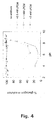
- the advantage of multiple charges as opposed to monovalent ionic detergents is illustrated in the appended Figure 1. This figure compares the pH-dependence of the equilibrium solubility in 1 mg/ml solutions of glucagon in the absence of additives and in the presence of 1 mM of each of the following detergents: a) cetyl-trimethylammonium bromide (CTAB, i.e. monovalent cationic), b) sodium dodecyl sulfate (SDS, i.e. monovalent anionic) and c) myristoyl lysophosphatidylcholine (LPCM, i.e. amphoteric).
- CTAB cetyl-trimethylammonium bromide
- SDS sodium dodecyl sulfate
- LPCM myristo
- the detergents used in accordance with the present invention are selected from the group consisting of 1-acyl-sn-glycero-3-phosphate esters of ethanolamine, choline, serine or threonine. Lauroyl and myristoyl derivatives of lysophosphatidylcholine, lysophosphatidylserine and lysophosphatidylthreonine are particularly useful.
- An example of a suitable composition according to the invention is one comprising about 0.5-2.5 mg of peptide per ml, e.g. about 1 mg of peptide per ml, and about 1-3 mM, e.g. about 2 mM of the detergent, e.g. lauroyl or myristoyl lysophosphatidylcholine.
- the stable aqueous, injectable solutions of glucagon and GLP-1 compounds according to the invention may be prepared by bringing together the peptide, water and a stabilizing and solubilizing amount of detergent.
- the solutions will contain other excipients to adjust ionic strength and provide buffering capacity and antibacterial action as needed.
- the final peptide concentration will be at least about 0.1 mg/ml, typically about 0.2-5 mg/ml, e.g.
- the detergent is typically employed in an amount corresponding to at least about 0.3 mole of detergent per mole of peptide, more typically at least about 0.5 mole detergent/mole of peptide and up to about 40 moles detergent/mole of peptide, typically up to about 30 moles detergent/mole peptide, e.g. about 1-20 moles detergent/mole peptide, such as about 1-10 moles detergent/mole peptide.
- a suitable detergent concentration that results in the desired stabilization.
- Isotonic ionic strength may be provided by conventional pharmaceutically acceptable agents such as NaCl, glycerol or mannitol. pH is buffered in the desired range between about 4 and about 8, typically by using acetate, citrate or phosphate buffers at 1-10 mM concentration as is well-known in the art. Finally, when a preservative is needed, appropriate antibacterial action is secured by the addition of, typically, phenol, m-cresol or benzyl alcohol or mixtures thereof.
- compositions of the invention can be used in the treatment of various diseases that can be treated by administering glucagon, GLP-1, or analogues or derivatives thereof.
- the particular peptide to be used and the optimal dose level for any patient will depend on the disease to be treated and on a variety of factors, including the efficacy of the specific peptide employed, the age, body weight, physical activity, and diet of the patient, on a possible combination with other drugs, and on the severity of the case.
- a typical dose of GLP-1 for regulation of the blood sugar level may e.g. be about 0.5-1 mg, for example once a day.
- a typical dose for glucagon may be approximately 1 mg, e.g. for gastro-intestinal imaging. It is recommended that the dosage of the active compound in question be determined for each individual patient in each case by those skilled in the art.
- solutions containing the peptide and additives (detergent and, where indicated, other excipients) at the appropriate concentrations were prepared at pH 9-10.
- the solutions were filtered, samples were withdrawn, and the pH was adjusted to the desired value in the range of 3-8.
- the samples were left for 24 hours at 23°C to attain solubility equilibrium. After centrifugation (20,000 g for 20 minutes, 23°C) of each sample, the pH was measured, and the solubility was determined from measurement of the absorbance at 276 nm of the supernatant.
- Glucagon and GLP-1 (7-37) were dissolved at twice the desired final concentration and incubated briefly ( ⁇ 10 minutes) at pH 11.5, 23°C before filtration and mixing with an equal volume of a filtered solution containing all the excipients in twice the desired final concentration. The pH was then measured and adjusted as needed. The solution was transferred to pen-fill cartridges containing a small glass ball (to allow visual determination of changes in solution viscosity). The containers were sealed and incubated at the desired temperature between 4°C and 37°C. At appropriate time intervals, the samples were gently turned and visually examined using a light box. When physical changes were apparent (precipitation, crystallization or gelation), the sample was centrifuged and the absorbance was measured in the supernatant to determine whether the component coming out of solution was the peptide or not.
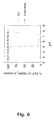
- Equilibrium solubility was determined as a function of pH in the pH range of 6-8 for 2 mg/ml solutions of glucagon in the absence of additives and in the presence of 2.5 mM of the detergents LPSP (palmitoyl lysophosphatidyl-L-serine) and LPCM (myristoyl lysophosphatidyl choline). The results are shown in Figure 3. Both additives provided 100% solubility within the tested pH range of 6-8.
- glucagon solutions prepared according to the invention were clear, i.e. the glucagon remained completely soluble, for at least the duration of the observation period of four weeks: mg/ml Glucagon mM detergent buffer, pH Other additive Temperature 2 5.0 LPCM 5 mM phosphate, 7.2 4 °C 2 5.0 LPCM 5 mM phosphate, 7.2 0.2 M mannitol 4 °C 1 5.0 LPCM 5 mM phosphate, 6.0 0.12 M NaCl 4 °C 1 5.0 LPCM 5 mM phosphate, 6.5 0.2 M mannitol 4 °C 1 2.0 LPCM 5 mM phosphate, 7.2 4 °C 1 2.0 LPCM 5 mM phosphate, 7.2 0.12 M NaCl 4 °C 1 2.0 LPCM 5 mM phosphate, 6.0 0.12 M NaCl 4 °C 1 2.0 LPCM 5 mM phosphate, 6.0 0.12 M NaCl 4
Landscapes
- Health & Medical Sciences (AREA)
- Life Sciences & Earth Sciences (AREA)
- Chemical & Material Sciences (AREA)
- Animal Behavior & Ethology (AREA)
- Diabetes (AREA)
- Engineering & Computer Science (AREA)
- Veterinary Medicine (AREA)
- Public Health (AREA)
- Medicinal Chemistry (AREA)
- Pharmacology & Pharmacy (AREA)
- General Health & Medical Sciences (AREA)
- Bioinformatics & Cheminformatics (AREA)
- General Chemical & Material Sciences (AREA)
- Endocrinology (AREA)
- Epidemiology (AREA)
- Chemical Kinetics & Catalysis (AREA)
- Proteomics, Peptides & Aminoacids (AREA)
- Nuclear Medicine, Radiotherapy & Molecular Imaging (AREA)
- Gastroenterology & Hepatology (AREA)
- Organic Chemistry (AREA)
- Immunology (AREA)
- Zoology (AREA)
- Obesity (AREA)
- Hematology (AREA)
- Biophysics (AREA)
- Child & Adolescent Psychology (AREA)
- Oil, Petroleum & Natural Gas (AREA)
- Molecular Biology (AREA)
- Emergency Medicine (AREA)
- Medicines That Contain Protein Lipid Enzymes And Other Medicines (AREA)
- Medicinal Preparation (AREA)
Abstract
Claims (8)
- Composition aqueuse sous la forme d'une solution comprenant au moins un peptide choisi parmi le glucagon, le peptide-1 de type glucagon (GLP-1), et des analogues et dérivés de ceux-ci, le peptide étant présent en une concentration d'environ 0,1 à 10 mg/ml, conjointement avec une quantité stabilisante et solubilisante d'au moins un détergent, dans laquelle le détergent est un ester 1-acyl-sn-glycéro-3-phosphate d'éthanolamine, de choline, de sérine ou de thréonine ou la lauroyl lysophosphatidylcholine ou la myristoyl lysophosphatidylcholine.
- Composition selon la revendication 1, dans laquelle le peptide est présent en une concentration d'environ 0,1 à 10 mg/ml, de préférence d'environ 0,2 à 5 mg/ml, par exemple d'environ 0,5 à 3 mg/ml.
- Composition selon la revendication 1 ou la revendication 2, dans laquelle le détergent est présent en une quantité d'environ 0,3 à 40 moles de détergent par mole de peptide, de préférence d'environ 0,5 à 30 moles de détergent par mole de peptide, de manière davantage préférée d'environ 1 à 20 moles de détergent par mole de peptide, comme par exemple d'environ 1 à 10 moles de détergent par mole de peptide.
- composition selon la revendication 1, comprenant d'environ 0,5 à 2,5 mg de peptide par ml et environ 1 à 3 mM de lauroyl lysophosphatidylcholine ou de myristoyl lysophosphatidylcholine.
- Composition selon l'une quelconque des revendications précédentes, comprenant en outre un agent isotonique tel que le NaCl, le glycerol ou le mannitol, une substance tampon telle qu'un tampon acétate, citrate ou phosphate à pH 4 à 8, et, facultativement, un conservateur tel que le m-crésol, le phénol ou l'alcool benzylique.
- Procédé de stabilisation d'une composition aqueuse sous la forme d'une solution comprenant au moins un peptide choisi parmi le glucagon, le peptide-1 de type glucagon (GLP-1), et des analogues et dérivés de ceux-ci, dans lequel le peptide est présent en une concentration d'environ 0,1 à 10 mg/ml, le procédé comprenant l'addition à ladite composition d'une quantité stabilisante et solubilisante d'au moins un détergent, dans lequel le au moins un peptide est stabilisé dans la composition aqueuse, et dans lequel le détergent stabilisant et solubilisant est un ester 1-acyl-sn-glycéro-3-phosphate d'éthanolamine, de choline, de sérine ou de thréonine ou la lauroyl lysophosphatidylcholine ou la myristoyl lysophosphatidylcholine.
- Procédé selon la revendication 6, dans lequel la composition aqueuse est telle que définie dans l'une quelconque des revendication 2 à 5.
- Utilisation d'une composition aqueuse selon l'une quelconque des revendications 1 à 5 pour la préparation d'un médicament destiné au traitement du diabète sucré insulinodépendant ou non insulinodépendant ou de l'obésité chez un patient.
Applications Claiming Priority (5)
| Application Number | Priority Date | Filing Date | Title |
|---|---|---|---|
| EP98610006 | 1998-03-13 | ||
| EP98610006 | 1998-03-13 | ||
| US7842298P | 1998-03-18 | 1998-03-18 | |
| US78422P | 1998-03-18 | ||
| PCT/DK1999/000115 WO1999047160A1 (fr) | 1998-03-13 | 1999-03-08 | Solutions peptidiques aqueuses stabilisees |
Publications (2)
| Publication Number | Publication Date |
|---|---|
| EP1061947A1 EP1061947A1 (fr) | 2000-12-27 |
| EP1061947B1 true EP1061947B1 (fr) | 2004-06-16 |
Family
ID=26151838
Family Applications (1)
| Application Number | Title | Priority Date | Filing Date |
|---|---|---|---|
| EP99906095A Expired - Lifetime EP1061947B1 (fr) | 1998-03-13 | 1999-03-08 | Solutions aqueuses stabilisees de glucagon comprenant des detergents |
Country Status (4)
| Country | Link |
|---|---|
| EP (1) | EP1061947B1 (fr) |
| JP (1) | JP4072319B2 (fr) |
| AU (1) | AU2612599A (fr) |
| WO (1) | WO1999047160A1 (fr) |
Families Citing this family (31)
| Publication number | Priority date | Publication date | Assignee | Title |
|---|---|---|---|---|
| FR2686899B1 (fr) | 1992-01-31 | 1995-09-01 | Rhone Poulenc Rorer Sa | Nouveaux polypeptides biologiquement actifs, leur preparation et compositions pharmaceutiques les contenant. |
| DE69739172D1 (de) | 1996-08-08 | 2009-01-29 | Amylin Pharmaceuticals Inc | Regulation gastrointestinaler beweglichkeit |
| CA2312190A1 (fr) | 1997-12-05 | 1999-06-17 | Eli Lilly And Company | Formulations de glp-1 |
| EP1274720A4 (fr) | 2000-04-12 | 2004-08-18 | Human Genome Sciences Inc | Proteines fusionnees a l'albumine |
| US20020061838A1 (en) * | 2000-05-17 | 2002-05-23 | Barton Holmquist | Peptide pharmaceutical formulations |
| EP1301200A2 (fr) * | 2000-05-19 | 2003-04-16 | Bionebraska, Inc. | Preparations pharmaceutiques peptidiques |
| PT1463751E (pt) | 2001-12-21 | 2013-08-26 | Human Genome Sciences Inc | Proteínas de fusão de albumina |
| CA2513213C (fr) | 2003-01-22 | 2013-07-30 | Human Genome Sciences, Inc. | Proteines hybrides d'albumine |
| DE102004043750A1 (de) * | 2004-09-10 | 2006-03-30 | Sanofi-Aventis Deutschland Gmbh | Formulierungen des Peptids p277 oder dessen Varianten mit optimierter Stabilität |
| GB0716385D0 (en) * | 2007-08-22 | 2007-10-03 | Camurus Ab | Formulations |
| DK2490708T3 (da) | 2009-10-22 | 2013-04-15 | Biodel Inc | Stabiliserede glucagon-opløsninger |
| US9610329B2 (en) | 2009-10-22 | 2017-04-04 | Albireo Pharma, Inc. | Stabilized glucagon solutions |
| EP2635296B1 (fr) | 2010-11-03 | 2014-12-24 | Arecor Limited | Nouvelle composition contenant de glucagon |
| UA116217C2 (uk) | 2012-10-09 | 2018-02-26 | Санофі | Пептидна сполука як подвійний агоніст рецепторів glp1-1 та глюкагону |
| WO2014096440A2 (fr) * | 2012-12-21 | 2014-06-26 | Novozymes Biopharma Dk A/S | Composition |
| JP2016506401A (ja) | 2012-12-21 | 2016-03-03 | サノフイ | 二重glp1/gipまたは三方glp1/gip/グルカゴンアゴニストとしてのエキセンジン−4誘導体 |
| CN103405753B (zh) * | 2013-08-13 | 2016-05-11 | 上海仁会生物制药股份有限公司 | 稳定的促胰岛素分泌肽水针药物组合物 |
| TW201609799A (zh) | 2013-12-13 | 2016-03-16 | 賽諾菲公司 | 雙重glp-1/gip受體促效劑 |
| WO2015086733A1 (fr) | 2013-12-13 | 2015-06-18 | Sanofi | Agonistes mixtes des récepteurs du glp-1/glucagon |
| EP3080150B1 (fr) | 2013-12-13 | 2018-08-01 | Sanofi | Analogues peptidiques d'exendine-4 en tant qu'agonistes du récepteur gip/glp-1 double |
| TW201609796A (zh) | 2013-12-13 | 2016-03-16 | 賽諾菲公司 | 非醯化之艾塞那肽-4(exendin-4)胜肽類似物 |
| TW201625670A (zh) | 2014-04-07 | 2016-07-16 | 賽諾菲公司 | 衍生自exendin-4之雙重glp-1/升糖素受體促效劑 |
| TW201625669A (zh) | 2014-04-07 | 2016-07-16 | 賽諾菲公司 | 衍生自艾塞那肽-4(Exendin-4)之肽類雙重GLP-1/升糖素受體促效劑 |
| TW201625668A (zh) | 2014-04-07 | 2016-07-16 | 賽諾菲公司 | 作為胜肽性雙重glp-1/昇糖素受體激動劑之艾塞那肽-4衍生物 |
| US9932381B2 (en) | 2014-06-18 | 2018-04-03 | Sanofi | Exendin-4 derivatives as selective glucagon receptor agonists |
| TN2017000349A1 (en) | 2015-02-17 | 2019-01-16 | Lilly Co Eli | Nasal powder formulation for treatment of hypoglycemia |
| AR105319A1 (es) | 2015-06-05 | 2017-09-27 | Sanofi Sa | Profármacos que comprenden un conjugado agonista dual de glp-1 / glucagón conector ácido hialurónico |
| TW201706291A (zh) | 2015-07-10 | 2017-02-16 | 賽諾菲公司 | 作為選擇性肽雙重glp-1/升糖素受體促效劑之新毒蜥外泌肽(exendin-4)衍生物 |
| GB201611077D0 (en) | 2016-06-24 | 2016-08-10 | Arecor Ltd | Novel composition |
| HUE066356T2 (hu) | 2017-08-24 | 2024-07-28 | Novo Nordisk As | GLP-1 készítmények és alkalmazásaik |
| PE20221575A1 (es) | 2020-02-18 | 2022-10-06 | Novo Nordisk As | Formulaciones farmaceuticas |
Family Cites Families (2)
| Publication number | Priority date | Publication date | Assignee | Title |
|---|---|---|---|---|
| GB1202607A (en) * | 1968-01-10 | 1970-08-19 | Novo Terapeutisk Labor As | Improvements in or relating to stable glucagon solutions and their preparation |
| US5652216A (en) * | 1994-05-26 | 1997-07-29 | Novo Nordisk A/S | Pharmaceutical preparation |
-
1999
- 1999-03-08 EP EP99906095A patent/EP1061947B1/fr not_active Expired - Lifetime
- 1999-03-08 AU AU26125/99A patent/AU2612599A/en not_active Abandoned
- 1999-03-08 JP JP2000536399A patent/JP4072319B2/ja not_active Expired - Fee Related
- 1999-03-08 WO PCT/DK1999/000115 patent/WO1999047160A1/fr not_active Ceased
Also Published As
| Publication number | Publication date |
|---|---|
| AU2612599A (en) | 1999-10-11 |
| WO1999047160A1 (fr) | 1999-09-23 |
| EP1061947A1 (fr) | 2000-12-27 |
| JP4072319B2 (ja) | 2008-04-09 |
| JP2003526599A (ja) | 2003-09-09 |
Similar Documents
| Publication | Publication Date | Title |
|---|---|---|
| US6384016B1 (en) | Stabilized aqueous peptide solutions | |
| JP4072319B2 (ja) | 安定化水溶性ペプチド溶液 | |
| US5866538A (en) | Insulin preparations containing NaCl | |
| CN102940879B (zh) | 稳定化的药物肽组合物 | |
| JP5241849B2 (ja) | インスリン及びインスリン分泌性ペプチドを含む薬学的組成物 | |
| EP1044016B1 (fr) | Compositions d'insuline stabilisees | |
| EP1633390B1 (fr) | Compositions pharmaceutiques de peptides glp-1 stabilisees | |
| CA2258097C (fr) | Preparations d'insuline contenant du nacl | |
| US8158583B2 (en) | Soluble pharmaceutical compositions for parenteral administration comprising a GLP-1 peptide and an insulin peptide of short time action for treatment of diabetes and bulimia | |
| CN1812808B (zh) | 稳定化的药物肽组合物 | |
| JP4353544B2 (ja) | アミリン作動薬ペプチド用製剤 | |
| JP2009530249A (ja) | アミリンとインスリンの混合物 | |
| US6150331A (en) | Human growth hormone-containing aqueous pharmaceutical composition | |
| JP4874989B2 (ja) | 可溶性で安定なインスリン含有調合物 | |
| US20080249017A1 (en) | Pharmaceutical formulations of ghrh molecules | |
| US20260053895A1 (en) | Pharmaceutical compositions and their uses, and methods for improving the storage stability of pharmaceutical compositions | |
| EP2918286B1 (fr) | Formulation pharmaceutique comprenant de l'insuline en forme crystalline autant que sous forme dissoute |
Legal Events
| Date | Code | Title | Description |
|---|---|---|---|
| PUAI | Public reference made under article 153(3) epc to a published international application that has entered the european phase |
Free format text: ORIGINAL CODE: 0009012 |
|
| 17P | Request for examination filed |
Effective date: 20001013 |
|
| AK | Designated contracting states |
Kind code of ref document: A1 Designated state(s): AT BE CH CY DE DK ES FI FR GB GR IE IT LI LU MC NL PT SE |
|
| 17Q | First examination report despatched |
Effective date: 20021213 |
|
| GRAP | Despatch of communication of intention to grant a patent |
Free format text: ORIGINAL CODE: EPIDOSNIGR1 |
|
| RIC1 | Information provided on ipc code assigned before grant |
Ipc: 7A 61P 3/04 B Ipc: 7A 61K 38/26 A Ipc: 7A 61P 3/10 B |
|
| RTI1 | Title (correction) |
Free format text: STABILIZED AQUEOUS GLUCAGON SOLUTIONS COMPRISING DETERGENTS |
|
| RIN1 | Information on inventor provided before grant (corrected) |
Inventor name: KAARSHOLM, NIELS, C. |
|
| GRAS | Grant fee paid |
Free format text: ORIGINAL CODE: EPIDOSNIGR3 |
|
| GRAA | (expected) grant |
Free format text: ORIGINAL CODE: 0009210 |
|
| AK | Designated contracting states |
Kind code of ref document: B1 Designated state(s): AT BE CH CY DE DK ES FI FR GB GR IE IT LI LU MC NL PT SE |
|
| PG25 | Lapsed in a contracting state [announced via postgrant information from national office to epo] |
Ref country code: NL Free format text: LAPSE BECAUSE OF FAILURE TO SUBMIT A TRANSLATION OF THE DESCRIPTION OR TO PAY THE FEE WITHIN THE PRESCRIBED TIME-LIMIT Effective date: 20040616 Ref country code: IT Free format text: LAPSE BECAUSE OF FAILURE TO SUBMIT A TRANSLATION OF THE DESCRIPTION OR TO PAY THE FEE WITHIN THE PRE;WARNING: LAPSES OF ITALIAN PATENTS WITH EFFECTIVE DATE BEFORE 2007 MAY HAVE OCCURRED AT ANY TIME BEFORE 2007. THE CORRECT EFFECTIVE DATE MAY BE DIFFERENT FROM THE ONE RECORDED.SCRIBED TIME-LIMIT Effective date: 20040616 Ref country code: FI Free format text: LAPSE BECAUSE OF FAILURE TO SUBMIT A TRANSLATION OF THE DESCRIPTION OR TO PAY THE FEE WITHIN THE PRESCRIBED TIME-LIMIT Effective date: 20040616 Ref country code: BE Free format text: LAPSE BECAUSE OF FAILURE TO SUBMIT A TRANSLATION OF THE DESCRIPTION OR TO PAY THE FEE WITHIN THE PRESCRIBED TIME-LIMIT Effective date: 20040616 Ref country code: AT Free format text: LAPSE BECAUSE OF FAILURE TO SUBMIT A TRANSLATION OF THE DESCRIPTION OR TO PAY THE FEE WITHIN THE PRESCRIBED TIME-LIMIT Effective date: 20040616 |
|
| REG | Reference to a national code |
Ref country code: GB Ref legal event code: FG4D |
|
| REG | Reference to a national code |
Ref country code: CH Ref legal event code: EP |
|
| REF | Corresponds to: |
Ref document number: 69918070 Country of ref document: DE Date of ref document: 20040722 Kind code of ref document: P |
|
| REG | Reference to a national code |
Ref country code: IE Ref legal event code: FG4D |
|
| PG25 | Lapsed in a contracting state [announced via postgrant information from national office to epo] |
Ref country code: GR Free format text: LAPSE BECAUSE OF FAILURE TO SUBMIT A TRANSLATION OF THE DESCRIPTION OR TO PAY THE FEE WITHIN THE PRESCRIBED TIME-LIMIT Effective date: 20040916 Ref country code: DK Free format text: LAPSE BECAUSE OF FAILURE TO SUBMIT A TRANSLATION OF THE DESCRIPTION OR TO PAY THE FEE WITHIN THE PRESCRIBED TIME-LIMIT Effective date: 20040916 |
|
| PG25 | Lapsed in a contracting state [announced via postgrant information from national office to epo] |
Ref country code: ES Free format text: LAPSE BECAUSE OF FAILURE TO SUBMIT A TRANSLATION OF THE DESCRIPTION OR TO PAY THE FEE WITHIN THE PRESCRIBED TIME-LIMIT Effective date: 20040927 |
|
| REG | Reference to a national code |
Ref country code: SE Ref legal event code: TRGR |
|
| REG | Reference to a national code |
Ref country code: CH Ref legal event code: NV Representative=s name: MICHELI & CIE INGENIEURS-CONSEILS |
|
| NLV1 | Nl: lapsed or annulled due to failure to fulfill the requirements of art. 29p and 29m of the patents act | ||
| PG25 | Lapsed in a contracting state [announced via postgrant information from national office to epo] |
Ref country code: LU Free format text: LAPSE BECAUSE OF NON-PAYMENT OF DUE FEES Effective date: 20050308 Ref country code: IE Free format text: LAPSE BECAUSE OF NON-PAYMENT OF DUE FEES Effective date: 20050308 Ref country code: CY Free format text: LAPSE BECAUSE OF FAILURE TO SUBMIT A TRANSLATION OF THE DESCRIPTION OR TO PAY THE FEE WITHIN THE PRESCRIBED TIME-LIMIT Effective date: 20050308 |
|
| ET | Fr: translation filed | ||
| PG25 | Lapsed in a contracting state [announced via postgrant information from national office to epo] |
Ref country code: MC Free format text: LAPSE BECAUSE OF NON-PAYMENT OF DUE FEES Effective date: 20050331 |
|
| PLBE | No opposition filed within time limit |
Free format text: ORIGINAL CODE: 0009261 |
|
| STAA | Information on the status of an ep patent application or granted ep patent |
Free format text: STATUS: NO OPPOSITION FILED WITHIN TIME LIMIT |
|
| 26N | No opposition filed |
Effective date: 20050317 |
|
| REG | Reference to a national code |
Ref country code: IE Ref legal event code: MM4A |
|
| PG25 | Lapsed in a contracting state [announced via postgrant information from national office to epo] |
Ref country code: PT Free format text: LAPSE BECAUSE OF NON-PAYMENT OF DUE FEES Effective date: 20041116 |
|
| PGFP | Annual fee paid to national office [announced via postgrant information from national office to epo] |
Ref country code: CH Payment date: 20080228 Year of fee payment: 10 |
|
| PGFP | Annual fee paid to national office [announced via postgrant information from national office to epo] |
Ref country code: SE Payment date: 20080306 Year of fee payment: 10 Ref country code: GB Payment date: 20080305 Year of fee payment: 10 |
|
| PGFP | Annual fee paid to national office [announced via postgrant information from national office to epo] |
Ref country code: FR Payment date: 20080311 Year of fee payment: 10 Ref country code: DE Payment date: 20080306 Year of fee payment: 10 |
|
| REG | Reference to a national code |
Ref country code: CH Ref legal event code: PL |
|
| EUG | Se: european patent has lapsed | ||
| GBPC | Gb: european patent ceased through non-payment of renewal fee |
Effective date: 20090308 |
|
| REG | Reference to a national code |
Ref country code: FR Ref legal event code: ST Effective date: 20091130 |
|
| PG25 | Lapsed in a contracting state [announced via postgrant information from national office to epo] |
Ref country code: LI Free format text: LAPSE BECAUSE OF NON-PAYMENT OF DUE FEES Effective date: 20090331 Ref country code: DE Free format text: LAPSE BECAUSE OF NON-PAYMENT OF DUE FEES Effective date: 20091001 Ref country code: CH Free format text: LAPSE BECAUSE OF NON-PAYMENT OF DUE FEES Effective date: 20090331 |
|
| PG25 | Lapsed in a contracting state [announced via postgrant information from national office to epo] |
Ref country code: GB Free format text: LAPSE BECAUSE OF NON-PAYMENT OF DUE FEES Effective date: 20090308 Ref country code: FR Free format text: LAPSE BECAUSE OF NON-PAYMENT OF DUE FEES Effective date: 20091123 |
|
| PG25 | Lapsed in a contracting state [announced via postgrant information from national office to epo] |
Ref country code: SE Free format text: LAPSE BECAUSE OF NON-PAYMENT OF DUE FEES Effective date: 20090309 |