EP1064256B1 - Bicyclo [2.2.1] heptanes et composes apparentes - Google Patents
Bicyclo [2.2.1] heptanes et composes apparentes Download PDFInfo
- Publication number
- EP1064256B1 EP1064256B1 EP99905122A EP99905122A EP1064256B1 EP 1064256 B1 EP1064256 B1 EP 1064256B1 EP 99905122 A EP99905122 A EP 99905122A EP 99905122 A EP99905122 A EP 99905122A EP 1064256 B1 EP1064256 B1 EP 1064256B1
- Authority
- EP
- European Patent Office
- Prior art keywords
- alkyl
- formula
- exo
- compound
- pharmaceutically acceptable
- Prior art date
- Legal status (The legal status is an assumption and is not a legal conclusion. Google has not performed a legal analysis and makes no representation as to the accuracy of the status listed.)
- Expired - Lifetime
Links
Classifications
-
- C—CHEMISTRY; METALLURGY
- C07—ORGANIC CHEMISTRY
- C07C—ACYCLIC OR CARBOCYCLIC COMPOUNDS
- C07C229/00—Compounds containing amino and carboxyl groups bound to the same carbon skeleton
- C07C229/46—Compounds containing amino and carboxyl groups bound to the same carbon skeleton having amino or carboxyl groups bound to carbon atoms of rings other than six-membered aromatic rings of the same carbon skeleton
- C07C229/50—Compounds containing amino and carboxyl groups bound to the same carbon skeleton having amino or carboxyl groups bound to carbon atoms of rings other than six-membered aromatic rings of the same carbon skeleton with amino groups and carboxyl groups bound to carbon atoms being part of the same condensed ring system
-
- A—HUMAN NECESSITIES
- A61—MEDICAL OR VETERINARY SCIENCE; HYGIENE
- A61P—SPECIFIC THERAPEUTIC ACTIVITY OF CHEMICAL COMPOUNDS OR MEDICINAL PREPARATIONS
- A61P1/00—Drugs for disorders of the alimentary tract or the digestive system
- A61P1/08—Drugs for disorders of the alimentary tract or the digestive system for nausea, cinetosis or vertigo; Antiemetics
-
- A—HUMAN NECESSITIES
- A61—MEDICAL OR VETERINARY SCIENCE; HYGIENE
- A61P—SPECIFIC THERAPEUTIC ACTIVITY OF CHEMICAL COMPOUNDS OR MEDICINAL PREPARATIONS
- A61P13/00—Drugs for disorders of the urinary system
-
- A—HUMAN NECESSITIES
- A61—MEDICAL OR VETERINARY SCIENCE; HYGIENE
- A61P—SPECIFIC THERAPEUTIC ACTIVITY OF CHEMICAL COMPOUNDS OR MEDICINAL PREPARATIONS
- A61P21/00—Drugs for disorders of the muscular or neuromuscular system
- A61P21/02—Muscle relaxants, e.g. for tetanus or cramps
-
- A—HUMAN NECESSITIES
- A61—MEDICAL OR VETERINARY SCIENCE; HYGIENE
- A61P—SPECIFIC THERAPEUTIC ACTIVITY OF CHEMICAL COMPOUNDS OR MEDICINAL PREPARATIONS
- A61P25/00—Drugs for disorders of the nervous system
-
- A—HUMAN NECESSITIES
- A61—MEDICAL OR VETERINARY SCIENCE; HYGIENE
- A61P—SPECIFIC THERAPEUTIC ACTIVITY OF CHEMICAL COMPOUNDS OR MEDICINAL PREPARATIONS
- A61P25/00—Drugs for disorders of the nervous system
- A61P25/04—Centrally acting analgesics, e.g. opioids
-
- A—HUMAN NECESSITIES
- A61—MEDICAL OR VETERINARY SCIENCE; HYGIENE
- A61P—SPECIFIC THERAPEUTIC ACTIVITY OF CHEMICAL COMPOUNDS OR MEDICINAL PREPARATIONS
- A61P25/00—Drugs for disorders of the nervous system
- A61P25/06—Antimigraine agents
-
- A—HUMAN NECESSITIES
- A61—MEDICAL OR VETERINARY SCIENCE; HYGIENE
- A61P—SPECIFIC THERAPEUTIC ACTIVITY OF CHEMICAL COMPOUNDS OR MEDICINAL PREPARATIONS
- A61P25/00—Drugs for disorders of the nervous system
- A61P25/08—Antiepileptics; Anticonvulsants
-
- A—HUMAN NECESSITIES
- A61—MEDICAL OR VETERINARY SCIENCE; HYGIENE
- A61P—SPECIFIC THERAPEUTIC ACTIVITY OF CHEMICAL COMPOUNDS OR MEDICINAL PREPARATIONS
- A61P25/00—Drugs for disorders of the nervous system
- A61P25/14—Drugs for disorders of the nervous system for treating abnormal movements, e.g. chorea, dyskinesia
-
- A—HUMAN NECESSITIES
- A61—MEDICAL OR VETERINARY SCIENCE; HYGIENE
- A61P—SPECIFIC THERAPEUTIC ACTIVITY OF CHEMICAL COMPOUNDS OR MEDICINAL PREPARATIONS
- A61P25/00—Drugs for disorders of the nervous system
- A61P25/14—Drugs for disorders of the nervous system for treating abnormal movements, e.g. chorea, dyskinesia
- A61P25/16—Anti-Parkinson drugs
-
- A—HUMAN NECESSITIES
- A61—MEDICAL OR VETERINARY SCIENCE; HYGIENE
- A61P—SPECIFIC THERAPEUTIC ACTIVITY OF CHEMICAL COMPOUNDS OR MEDICINAL PREPARATIONS
- A61P25/00—Drugs for disorders of the nervous system
- A61P25/18—Antipsychotics, i.e. neuroleptics; Drugs for mania or schizophrenia
-
- A—HUMAN NECESSITIES
- A61—MEDICAL OR VETERINARY SCIENCE; HYGIENE
- A61P—SPECIFIC THERAPEUTIC ACTIVITY OF CHEMICAL COMPOUNDS OR MEDICINAL PREPARATIONS
- A61P25/00—Drugs for disorders of the nervous system
- A61P25/22—Anxiolytics
-
- A—HUMAN NECESSITIES
- A61—MEDICAL OR VETERINARY SCIENCE; HYGIENE
- A61P—SPECIFIC THERAPEUTIC ACTIVITY OF CHEMICAL COMPOUNDS OR MEDICINAL PREPARATIONS
- A61P25/00—Drugs for disorders of the nervous system
- A61P25/24—Antidepressants
-
- A—HUMAN NECESSITIES
- A61—MEDICAL OR VETERINARY SCIENCE; HYGIENE
- A61P—SPECIFIC THERAPEUTIC ACTIVITY OF CHEMICAL COMPOUNDS OR MEDICINAL PREPARATIONS
- A61P25/00—Drugs for disorders of the nervous system
- A61P25/28—Drugs for disorders of the nervous system for treating neurodegenerative disorders of the central nervous system, e.g. nootropic agents, cognition enhancers, drugs for treating Alzheimer's disease or other forms of dementia
-
- A—HUMAN NECESSITIES
- A61—MEDICAL OR VETERINARY SCIENCE; HYGIENE
- A61P—SPECIFIC THERAPEUTIC ACTIVITY OF CHEMICAL COMPOUNDS OR MEDICINAL PREPARATIONS
- A61P25/00—Drugs for disorders of the nervous system
- A61P25/30—Drugs for disorders of the nervous system for treating abuse or dependence
-
- A—HUMAN NECESSITIES
- A61—MEDICAL OR VETERINARY SCIENCE; HYGIENE
- A61P—SPECIFIC THERAPEUTIC ACTIVITY OF CHEMICAL COMPOUNDS OR MEDICINAL PREPARATIONS
- A61P27/00—Drugs for disorders of the senses
- A61P27/02—Ophthalmic agents
-
- A—HUMAN NECESSITIES
- A61—MEDICAL OR VETERINARY SCIENCE; HYGIENE
- A61P—SPECIFIC THERAPEUTIC ACTIVITY OF CHEMICAL COMPOUNDS OR MEDICINAL PREPARATIONS
- A61P43/00—Drugs for specific purposes, not provided for in groups A61P1/00-A61P41/00
-
- A—HUMAN NECESSITIES
- A61—MEDICAL OR VETERINARY SCIENCE; HYGIENE
- A61P—SPECIFIC THERAPEUTIC ACTIVITY OF CHEMICAL COMPOUNDS OR MEDICINAL PREPARATIONS
- A61P9/00—Drugs for disorders of the cardiovascular system
- A61P9/04—Inotropic agents, i.e. stimulants of cardiac contraction; Drugs for heart failure
-
- A—HUMAN NECESSITIES
- A61—MEDICAL OR VETERINARY SCIENCE; HYGIENE
- A61P—SPECIFIC THERAPEUTIC ACTIVITY OF CHEMICAL COMPOUNDS OR MEDICINAL PREPARATIONS
- A61P9/00—Drugs for disorders of the cardiovascular system
- A61P9/08—Vasodilators for multiple indications
-
- A—HUMAN NECESSITIES
- A61—MEDICAL OR VETERINARY SCIENCE; HYGIENE
- A61P—SPECIFIC THERAPEUTIC ACTIVITY OF CHEMICAL COMPOUNDS OR MEDICINAL PREPARATIONS
- A61P9/00—Drugs for disorders of the cardiovascular system
- A61P9/10—Drugs for disorders of the cardiovascular system for treating ischaemic or atherosclerotic diseases, e.g. antianginal drugs, coronary vasodilators, drugs for myocardial infarction, retinopathy, cerebrovascula insufficiency, renal arteriosclerosis
-
- C—CHEMISTRY; METALLURGY
- C07—ORGANIC CHEMISTRY
- C07C—ACYCLIC OR CARBOCYCLIC COMPOUNDS
- C07C2602/00—Systems containing two condensed rings
- C07C2602/36—Systems containing two condensed rings the rings having more than two atoms in common
- C07C2602/42—Systems containing two condensed rings the rings having more than two atoms in common the bicyclo ring system containing seven carbon atoms
Definitions
- the present invention relates to compounds of the formula I, as described below, their pharmaceutically acceptable salts, pharmaceutical compositions containing them and their use in treating neurological and psychiatric disorders.
- Excitatory amino acid receptors are classified into two general types. Receptors that are directly coupled to the opening of cation channels in the cell membrane of the neurons are termed "ionotropic.” This type of receptor has been subdivided into at least three subtypes, which are defined by the depolarizing actions of the selective agonists N-methyl-D-aspartate (NMDA), ⁇ -amino-3-hydroxy-5-methylisoxazole-4-propionic acid (AMPA), and kainic acid (KA).
- NMDA N-methyl-D-aspartate
- AMPA ⁇ -amino-3-hydroxy-5-methylisoxazole-4-propionic acid
- KA kainic acid
- the second general type is the G-protein or second messenger-linked "metabotropic" receptor.
- This second type when activated by the agonists quisqualate, ibotenate, or trans-1-aminocyclopentane-1,3-dicarboxylic acid or 2-amino-4-phosphonobutyric acid activates second messenger systems.
- a subset of these second messenger-linked recptors is negatively coupled to adenylate cyclase.
- Both types of receptors appear not only to mediate normal synaptic transmission along excitatory pathways, but also participate in the modification of synaptic connection during development and changes in the efficiency of synaptic transmission throughout life. Schoepp, Bockaert, and Sladeczek. Trends in Pharmacol. Sci., 11, 508 (1990); McDonald and Johnson, Brain Research Reviews, 15, 41 (1990).
- Excitatory amino acid excitotoxicity has been implicated in the pathophysiology of a number of neurological disorders. This excitotoxicity has been implicated in the pathophysiology of acute and chronic neurodegenerative conditions including stroke, cerebral ischemia, spinal cord trauma, head trauma, Alzheimer's Disease, Huntington's Chorea, amyotrophic lateral sclerosis, epilepsy, AIDS-induced dementia, perinatal hypoxia, hypoxia (such as conditions caused by strangulation, surgery, smoke inhalation, asphyxiation, drowning, choking, electrocution or drug or alcohol overdose), cardiac arrest, hypoglycemic neuronal damage, ocular damage and retinopathy, idiopathic and drug-induced Parkinson's Disease and cerebral deficits subsequent to cardiac bypass surgery and grafting.
- hypoxia such as conditions caused by strangulation, surgery, smoke inhalation, asphyxiation, drowning, choking, electrocution or drug or alcohol overdose
- cardiac arrest hypoglycemic neuronal damage, o
- Neuromodulation Other neurological conditions that are caused by glutamate dysfunction require neuromodulation. These other neurological conditions include muscular spasms, migraine headaches, urinary incontinence, psychosis, addiction withdrawal (such as alcoholism and drug addiction including opiate, cocaine and nicotine addiction), opiate tolerance, anxiety, emesis, brain edema, chronic and acute pain, convulsions, retinal neuropathy, tinnitus and tardive dyskinesia.
- a neuroprotective agent such as an AMPA receptor antagonist
- the excitatory amino acid receptor (EAA) antagonists are also believed to be useful as analgesic agents.
- the metabotropic glutamate receptors are a highly heterogeneous family of glutamate receptors that are linked to multiple second-messenger pathways. Generally, these receptors function to modulate the presynaptic release of glutamate, and the postsynaptic sensitivity of the neuronal cell to glutamate excitation.
- the metabotropic glutamate receptors (mGluR) have been pharmacologically divided into three subtypes. One group of receptors (“Class I receptors”) is positively coupled to phospholipase C, which causes hydrolysis of cellular phosphoinositides (PI). This first group are termed PI-linked metabotropic glutamate receptors.
- the second group of receptors (“Class II and Class III receptors”) is negatively coupled to adenylate cyclase, which prevents the forskolin-stimulated accumulation of cyclic adenosine monophosphate (cAMP). Schoepp and Conn, Trends Pharmacol. Sci. , 14, 13 (1993). Class II and Class III receptors are distinquished by selective activation with trans-1-aminocyclopentane-1,3-dicarboxylic acid and 2-amino-4-phosphonobutyric acid, respectively. Receptors within this second group are termed cAMP-linked metabotropic glutamate receptors. Agonists of the cAMP-linked metabotropic glutamate receptors should be useful for the treatment of acute and chronic neurological conditions and psychiatric conditions.
- (1S,3R)-1-Aminocyclopentane-1,3-dicarboxylic acid (1S,3R-ACPD) is an agonist of PI-linked and cAMP-linked metabotropic glutamate receptors. Schoepp, Johnson, True, and Monn., Eur. J. Pharmacol., 207, 351 (1991); Schoepp, Johnson, and Monn, J. Neurochem., 58, 1184 (1992).
- (2S,3S,4S)-2-(carboxycyclopropyl) glycine (L-CCG-1) was recently described as a selective CAMP-linked metabotropic glutamate receptor agonist: however, at higher concentrations, this compound has activity at PI-linked metabotropic receptors.
- Nakagawa, et al. Eur J. Pharmacol., 184 , 205 (1990): Hayashi, et al. , Br. J. Pharmacol. , 197, 539 (1992): Schoepp et al., J. Neurochem. , 63., 769-772 (1994).
- European Patent Application EP 696577Al which was published on February 14, 1996, refers to certain synthetic amino acids that are described as being selective for the negatively coupled cAMP linked metabotropic glutamate receptors (i.e., Class II metabotropic glutamate receptors).
- the compounds of formula I and their pharmaceutically acceptable salts are metabotropic glutamate receptor ligands that are selective for Class II metabotropic glutamate receptors.
- This invention relates to compounds of the formula wherein n is 0-6; X is CH 2 , CH 2 CH 2 or oxygen; Z is CHR 2 or NR 2 ; and R 1 and R 2 are selected independently, from hydrogen, (C 1 -C 6 )alkyl, aryl and heteroaryl, wherein said aryl is selected from phenyl and naphthyl and said heteroaryl is selected from 5 and 6 membered aromatic heterocyclic rings that contain from one to four heteroatoms selected, independently, from nitrogen, oxygen and sulfur, and wherein said aryl and heteroaryl moieties can optionally be substituted with one or more substituents, preferably with one or two substituents, that are selected, independently, from halo ( e.g ., fluoro, chloro, bromo or iodo), -S(C 1 -C 6 )alkyl, -S(O)(C 1 -C 6 )alkyl, -S(O) 2 (C 1
- heteroaryl moieties of said heteroaryl-(C 0 -C 6 )alkyl are the following: oxazolyl, isoxazoyl, thiazolyl, isothiazolyl, furanyl, pyrazolyl, pyrrolyl, tetrazolyl, triazolyl, thienyl. imidazolyl, pyridinyl, and pyrimidinyl.
- This invention also relates to compounds of the formula wherein X and Z are defined as for formula I above and R 7 is (C 1 -C 6 )alkyl or benzyl.
- Compounds of the formula II are intermediates in the synthesis of compounds of the formula I.
- Preferred compounds of the formula I include those wherein R 1 is a pyrid-3-yl or pyrid-4-yl group.
- R 1 is hydrogen, unsubstituted phenyl, or phenyl substituted with one or two substitutents.
- R 1 is a substituted phenyl
- preferred substitutents on said phenyl are independently selected from (C 1 -G 8 )alkyl, nitro, cyano, halo, CF 3 , (C 1 -C 5 )alkyl substituted with CF 3 , (C 1 -C 5 )alkoxy substituted with CF 3 , and -O-CF 3 .
- Preferred compounds of formula I include, but are not limited to:
- a compound of formula IV includes R 7 , wherein R 7 is (C 1 -C 6 ) t -alkyl, for example t -butyl.
- the compounds of formula I and their pharmaceutically acceptable salts are metabotropic glutamate receptor ligands and are useful in the treatment of a variety of neurological and psychiatric disorders.
- neurological disorders that can be treated with the compounds of formula I and their pharamaceutically acceptable salts are cerebral deficits subsequent to cardiac bypass surgery and grafting, cerebral ischemia (e.g ., stroke and cardiac arrest), spinal cord trauma, head trauma, Alzheimer's Disease, Huntington's disease, amyotrophic lateral sclerosis, AIDS-induced dementia, muscular spasms, migrane headache, urinary incontinence, convulsions, perinatal hypoxia, hypoglycemic neuronal damage, chemical dependencies and addictions ( e.g ., a dependency on, or addiction to opiates, benzodiazepines, cocaine, nicotine or ethanol), drug or alcohol withdrawal symptoms, ocular damage and retinopathy, cognitive disorders, idiopathic and drug-induced Parkinson's Disease, emesis, brain e
- psychiatric disorders that can be treated with the compounds of formula I and their pharamaceutically acceptable salts are schizophrenia, anxiety and related disorders (e.g ., General Anxiety Disorder, panic attack and stress-related disorders such as Post Traumatic Stress Syndrome), depression, bipolar disorders, psychosis, and obsessive compulsive disorders.
- schizophrenia e.g ., General Anxiety Disorder, panic attack and stress-related disorders such as Post Traumatic Stress Syndrome
- depression e.g ., depression, bipolar disorders, psychosis, and obsessive compulsive disorders.
- the present invention also relates to the pharmaceutically acceptable acid addition salts of compounds of the formula I.
- the acids which are used to prepare the pharmaceutically acceptable acid addition salts of the aforementioned base compounds of this invention are those which form non-toxic acid addition salts, i.e., salts containing pharmacologically acceptable anions, such as the hydrochloride, hydrobromide, hydroiodide, nitrate, sulfate, bisulfate, phosphate, acid phosphate, acetate, lactate, citrate, acid citrate, tartrate, bitartrate, succinate, maleate, fumarate, gluconate, saccharate, benzoate, methanesulfonate, ethanesulfonate, benzenesulfonate, p-toluenesulfonate and pamoate [ i.e. , 1,1'-methylene-bis-(2-hydroxy-3-naphthoate)]salts.
- the present invention also relates to the pharmaceutically acceptable base addition salts of compounds of the forumula I. These salts are all prepared by conventional techniques.
- the chemical bases that are used as reagents to prepare the pharmaceutically acceptable base salts of this invention are those which form non-toxic base salts with the acidic compounds of formula I.
- Such non-toxic base salts include those derived from such pharmacologically acceptable cations as sodium, potassium, calcium and magnesium, etc.
- This invention also relates to a pharmaceutical composition for treating a disorder or condition, the treatment or prevention of which can be effected or facilitated by modulating (i.e., increasing or decreasing) glutamate neurotransmission in a mammal, comprising an amount of a compound of the formula I, or a pharmaceutically effective salt thereof, that is effective in treating such disorder or condition and a pharmaceutically acceptable carrier.
- This invention also relates to the use of a compound of the formula I, or a pharmaceutically effective salt thereof, for the manufacture of a medicament for the treatment of a disorder or condition, the treatment of which can be effected or facilitated by modulating glutamate neurotransmission in a mammal.
- This invention also relates to a pharmaceutical composition for treating a condition selected from stroke, cerebral ischemia, spinal cord trauma, head trauma, Alzheimer's Disease, Huntington's Chorea, amyotrophic lateral sclerosis, epilepsy, AIDS-induced dementia, muscular spasms, migraine headaches, urinary incontinence, psychosis, convulsions, perinatal hypoxia, hypoxia (such as conditions caused by strangulation, surgery, smoke inhalation, asphyxiation, drowning, choking, electrocution or drug or alcohol overdose), cardiac arrest, hypoglycemic neuronal damage, chemical dependencies and addictions (e.g.
- This invention also relates to the use of a compound of the formula I, or a pharmaceutically acceptable salt thereof, for the manufacture of a medicament for the treatment of a condition selected from stroke, cerebral ischemia, spinal cord trauma, head trauma, Alzheimer's Disease, Huntington's Chorea, amyotrophic lateral sclerosis, epilepsy, AIDS-induced dementia, muscular spasms, migraine headaches, urinary incontinence, psychosis, convulsions, perinatal hypoxia, hypoxia (such as conditions caused by strangulation, surgery, smoke inhalation, asphyxiation, drowning, choking, electrocution or drug or alcohol overdose), cardiac arrest, hypoglycemic neuronal damage, chemical dependencies and addictions (e.g ., addictions to or dependencies on alcohol, opiates, benzodiazepines, nicotine, heroin or cocaine), ocular damage, retinopathy, retinal neuropathy, tinnitus, idiopathic and drug induced Parkinson's Disease, anxiety (
- This invention also relates to a pharmaceutical composition for treating a disorder or condition, the treatment of which can be effected or facilitated by modulating glutamate neurotransmission in a mammal, comprising a glutamate neurotransmission modulating effective amount of a compound of the formula I, or a pharmaceutically acceptable salt thereof, and a pharmaceutically acceptable carrier.
- This invention also relates to a pharmaceutical composition for treating a condition selected from stroke, cerebral ischemia, spinal cord trauma, head trauma, Alzheimer's Disease, Huntington's Chorea, amyotrophic lateral sclerosis, epilepsy, AIDS-induced dementia, muscular spasms, migraine headaches, urinary incontinence, psychosis, convulsions, perinatal hypoxia, hypoxia (such as conditions caused by strangulation, surgery, smoke inhalation, asphyxiation, drowning, choking, electrocution or drug or alcohol overdose), cardiac arrest, hypoglycemic neuronal damage, chemical dependencies and addictions ( e.g ., addictions to or dependencies on alcohol, opiates, benzodiazepines, nicotine, heroin or cocaine), ocular damage, retinopathy, retinal neuropathy, tinnitus, idiopathic and drug induced Parkinson's Disease, anxiety ( e.g ., panic disorder, Post Traumatic Stress Syndrome, General Anxiety Disorder, simple phobia
- This invention also relates to the use of:
- This invention also relates to a pharmaceutical composition for treating a disorder or condition, the treatment of which can effected or facilitated by modulating glutamate neurotransmission in a mammal, comprising:
- This invention also relates to a the use of:
- This invention also relates to a pharmaceutical composition for treating a disorder or condition selected from stroke, cerebral ischemia, spinal cord trauma, head trauma, Alzheimer's Disease, Huntington's Chorea, amyotrophic lateral sclerosis, epilepsy, AIDS-induced dementia, muscular spasms, migraine headaches, urinary incontinence, psychosis, convulsions, perinatal hypoxia, hypoxia (such as conditions caused by strangulation, surgery, smoke inhalation, asphyxiation, drowning, choking, electrocution or drug or alcohol overdose), cardiac arrest, hypoglycemic neuronal damage, chemical dependencies and addictions (e.g ., addictions to or dependencies on alcohol, opiates, benzodiazepines, nicotine, heroin or cocaine), ocular damage, retinopathy, retinal neuropathy, tinnitus, idiopathic and drug induced Parkinson's Disease, anxiety (e.g.
- alkyl groups referred to herein, as well as the alkyl moieties of other groups referred to herein (e.g ., alkoxy), may be linear or branched ( e.g. , t butyl), and they may also be cyclic ( e.g ., cyclopropyl, cyclobutyl, cyclopentyl, or cyclohexyl) or be linear or branched and contain cyclic moieties.
- treating refers to reversing, alleviating, inhibiting the progress of, or preventing the disorder or condition to which such term applies, or one or more symptoms of such disorder or condition.
- treatment refers to the act of treating, as “treating” is defined immediately above.
- halo and halogen, as used herein, refer to fluorine, bromine, chlorine or iodine.
- Compounds of the formula I may have chiral centers and therefore may exist in different enantiomeric and diastereomic forms.
- This invention relates to all optical isomers and all other stereoisomers of compounds of the formula I, and to all racemic and other mixtures thereof, and to all pharmaceutical compositions and methods of treatment defined above that contain or employ such isomers or mixtures.
- the subject invention also includes isotopically-labelled compounds, which are identical to those recited in formula I, but for the fact that one or more atoms are replaced by an atom having an atomic mass or mass number different from the atomic mass or mass number usually found in nature.
- isotopes that can be incorporated into compounds of the invention include isotopes of hydrogen, carbon, nitrogen, oxygen, phosphorous, fluorine and chlorine, such as 2 H, 3 H, 13 C, 14 C, 15 N, 18 O, 17 O, 31 P, 32 P, 35 S, 18 F, and 36 Cl, respectively.
- isotopically-labelled compounds of the present invention for example those into which radioactive isotopes such as 3 H and 14 C are incorporated, are useful in drug and/or substrate tissue distribution assays. Tritiated, i.e. , 3 H, and carbon-14, i.e., 14 C, isotopes are particularly preferred for their ease of preparation and detectability.
- Isotopically labelled compounds of formula I of this invention can generally be prepared by carrying out the procedures disclosed in the Schemes and/or in the Examples and Preparations below, by substituting a readily available isotopically labelled reagent for a non-isotopically labelled reagent.
- Scheme 1 illustrates the preparation of all compounds of the formula I wherein n is zero and R 1 is hydrogen. Such compounds are referred to in Scheme 1 and hereinafter as compounds of the formula IA.
- a diene of the formula VI is reacted with a dienophile of the formula VII using the well known Diels Alder reaction. (See Organic Reactions, 1948, Vol IV, pp. 1-173).
- Diels Alder reaction See Organic Reactions, 1948, Vol IV, pp. 1-173
- This reaction may be conducted in the absence of a solvent, or in any of a variety of solvents, including water, ether, tetrahydrofuran, benzene, toluene, and dichloroethane. It may be run at atmospheric pressure or in a closed vessel under 1-10 atmospheres of pressure.
- the reaction time will vary depending on the particular Diels Alder reaction.
- the reaction may occur upon admixing of the reagents or may require up to several days to complete.
- Z is NR 2
- the starting material of formula VII may be formed in situ from the corresponding aldehyde wherein Z is oxygen and an amine of the formula NH 2 R 2 . and the reaction may be performed in water (Tetrahedron Lett., 1990, 31 , 2603; J. Amer. Chem. Soc., 1985, 107, 1768-1769; Bull. Chem. Soc. Japan, 1992, 65, 61).
- the Diels Alder reaction product of formula VIII wherein R 7 is other than H may be hydrolyzed to the free acid using an aqueous acid such as hydrochloric acid (HCl), hydromoromic acid (HBr) or sulfuric acid (H 2 SO 4 ), or using an aqueous hydroxide.
- a diluent such as tetrahydrofuran, methanol, ethanol or isopropanol may be added.
- the hydrolysis may be conducted at a temperature from about 0°C to about 150°C, and is preferably conducted at a temperature from about room temperature to about 65°C.
- the resulting compound of formula IX is further reacted with iodine and a base in an iodolactonization reaction (J. Org. Chem., 1976, 41 , 1229), to form the corresponding compound of formula X.
- This reaction is generally carried out in a solvent such as water, methanol, ether, or tetrahydrofuran, or mixtures of two or more of the foregoing solvents, and the base is generally an alkali metal bicarbonate.
- the reaction is typically conducted at a temperature from about 0°C to about 50°C, and is preferably conducted at about ambient temperature for a period of about 30 minutes to about 48 hours, usually for about 8 to 24 hours.
- the iodolactone intermediate of formula X is then treated with a base, generally an alkali metal hydroxide in water, methanol or ethanol, or a mixture of two or more of these solvents, according to the procedure of Bastiaansen (J. Org. Chem., 1995, 60, 4240) to prepare the corresponding intermediate having formula XI.
- a base generally an alkali metal hydroxide in water, methanol or ethanol, or a mixture of two or more of these solvents
- the compound of formula XI is then esterfied according to standard conditions well known in the art (e.g ., reaction with diazomethane or trimethylsilyldiazomethane, or with trimethylsilyl chloride and an alcohol, or with an acid such as hydrochloric or sulfuric acid and an alcohol, or with a chloroformate such as methyl, ethyl or benzyl chloroformate.
- the ketone of the resulting ketoester of formula XII may be protected as a ketal by treatment with ethylene glycol or an orthoformate such as trimethylorthoformate, under dehydrating conditions such as molecular seives or azeotropic removal of water, to produce the protected intermediate of formula XIII.
- a catalyst such as trimethylsilyl chloride, or an acid such as para-toluenesulfonic acid, sulfuric acid or benzenesulfonic acid, or pyridinium tosylate may be employed to facilitate this reaction.
- the reaction temperature can range from about ambient temperature to about the reflux temperature of the solvent.
- Suitable solvents include aprotic solvents such as toluene, benzene, tetrahydrofuran, dimethoxyethane, methylene chloride and dichloroethane.
- aprotic solvents such as toluene, benzene, tetrahydrofuran, dimethoxyethane, methylene chloride and dichloroethane.
- a base such as sodium methoxide or sodium ethoxide
- the compound of formula XV is further reacted under Bucherer hydantoin forming conditions (See J. Org. Chem., 1982, 47 , 4081 and the references cited therein; Vogel's Textbook of Practical Organic Chemistry, 4th Ed., 1978, p. 876) to afford the hydantoin intermediate of formula XI.
- Such conditions include for example, reaction with an alkali metal cyanide and ammonium carbonate in water, methanol or ethanol, at a temperature from about ambient temperature to about 150°C, and a pressure from about ambient pressure to about 150 psi, for about 30 minutes to about 48 hours.
- the compound of formula XV can be reacted under Strecker synthesis conditions (Jerry March, Advanced Organic Chemistry, 4th Ed, 1992, p. 965; Vogel, Textbook of Practical Organic Chemistry 4th Ed., 1978, p. 546) to prepare the alpha amino nitrile intermediate of formula III.
- Such conditions include, for example, using either (a) ammonia and hydrogen cyanide, (b) ammonium cyanide, (c) an alkali metal cyanide and ammonium chloride, or (d) trimethylsilyl cyanide, in an alcoholic solvent such as methanol or ethanol, optionally adding an acid such as acetic acid, at a temperature from about 20°C to about 100°C. for about 0.5 to about 24 hours, generally at a temperature between about 40°C and 80°C for about 1-8 hours. Hydrolysis of this intermediate, as described above for hydrolysis of the hydantoin, affords the desired final product of formula IA.
- compounds of formula IA may be esterified to form the corresponding diesters of formula IVA using the standard conditions described above.
- the resulting diesters containing a free amino group may be further functionalized on the amino group by standard reductive amination procedures to form the corresponding compounds of formulas IVB (n is not zero), IVC (n is zero and R 1 is aryl) and IVD (n is zero and R 1 is heteroaryl).
- This reaction is typically carried out in the presence of a reducing agent such as sodium cyanoborohydride, sodium triacetoxyborohydride, sodium borohydride, hydrogen (or a chemical hydrogen source such as formic acid or ammonium formate) and a metal catalyst such as platinum, palladium or rhodium, zinc and hydrochloric acid, borane dimethylsulfide or formic acid, at a temperature from about -60°C to about 50°C.
- Suitable reaction inert solvents for this reaction include lower alcohols ( e.g ., methanol, ethanol and isopropanol), dioxane, methylene chloride, dichloroethane, acetic acid and tetrahydrofuran (THF).
- the solvent is methylene chloride or dichloroethane
- the temperature is about 25°C
- the reducing agent is sodium triacetoxyborohydride.
- Compounds of the formula IVC and IVD are compounds identical to those of formula IVB except that n is zero and R 1 is aryl or heteroaryl, respectively. Such compounds can also be formed from the corresponding compounds of the formula IVA. This is accomplished by reacting the corresponding compounds of the formula IVA with a compound of the formula R 1 X, wherein X is a leaving group such as halo, triflate, mesylate or tosylate.
- This reaction is generally carried out in a solvent such as ethanol, N,N-dimethylformamide (DMF), N,N-dimethylacetamide, acetonitrile, nitromethene, dioxane or dichloroethane, preferably DMF, at a temperature from about 0°C to about 160°C, preferably from about 80°C to about 150°C.
- a solvent such as ethanol, N,N-dimethylformamide (DMF), N,N-dimethylacetamide, acetonitrile, nitromethene, dioxane or dichloroethane, preferably DMF
- compounds of the formula IVD can be prepared by reacting the corresponding compound of formula IVA with a heteroaromatic compound of the formula AX, wherein A is a nitrogen containing heterocycle and X is a leaving group, as defined above, which is ortho to a ring nitrogen.
- AX is a nitrogen containing heterocycle
- X is a leaving group, as defined above, which is ortho to a ring nitrogen.
- Examples of compounds of the formula AX are the following: The presence on the above heteroaryl groups of electron withdrawing groups, for example esters, nitriles, sulfones, and nitro groups, further activates them.
- the compounds of formulas IVB, IVC and IVD formed in the above reaction can be converted onto the corresponding desired compounds of formulas IB, IC and ID by subjecting them to acid or base hydrolysis, using methods well known to those of skill in the art.
- Suitable acids for the use in acid hydrolysis of compounds of the formula IVB include mineral acids such as hydrofluoric acid, sulfuric acid, hydrochloric acid and hydrobromic acid.
- Suitable bases for use in base hydrolysis of compounds of the formula IVB include alkali metal hydroxides and barium hydroxide.
- the reaction temperature for the acid and base hydrolysis reactions can range from about 0°C to about 100°C. Preferably, these reactions are carried out at about the reflux temperature of the reaction mixture.
- Additional compounds of the formula IC or ID, wherein R 1 is substituted aryl or heteroaryl, respectively, may be obtained from compounds of the formula IC or ID wherein R 1 is a nitroaryl or nitroheteroraryl group, respectively, by employing well known synthetic chemical methods. For example, following procedures such as those described by Jerry March, Advanced Organic Chemistry, 4th edition, pp. 721-725 and 1216-1217, the nitro group can be reduced to an amine. The newly formed amine can be replaced with other substituents by diazotization and further reaction as summarized in the above reference. For example, compounds of the formula I wherein R 1 is an aryl or heteroaryl group substituted with amino, mercapto, halo, cyano, or phenyl can be prepared in this manner.
- the pressure of each of the above reactions is not critical. Generally, the reactions will be conducted at a pressure of about one to about three atmospheres, preferably at ambient pressure (about one atmosphere).
- the compounds of the formula I that are basic in nature are capable of forming a wide variety of different salts with various inorganic and organic acids.
- the acid that can be used to prepare the pharmaceutically acceptable acid addition salts of the base compounds of this invention are those which form non-toxic acid addition salts, i.e., salts containing pharmacologically acceptable anions, such as hydrochloride, hydrobromide, hydroiodide, nitrate, sulfate or bisulfate, phosphate or acid phosphate, acetate, lactate, citrate or acid citrate, tartrate or bitartrate, succinate, maleate, fumarate, gluconate, saccharate, benzoate, methanesulfonate and pamoate [ i.e ., 1,1'-methylene-bis-(2-hydroxy-3-naphthoate)) salts.
- salts must be pharmaceutically acceptable for administration to animals, it is often desirable in practice to initially isolate a compound of the formula I from the reaction mixture as a pharmaceutically unacceptable salt and then simply convert the latter back to the free base compound by treatment with an alkaline reagent, and subsequently convert the free base to a pharmaceutically acceptable acid addition salt.
- the acid addition salts of the base compounds of this invention are readily prepared by treating the base compound with a substantially equivalent amount of the chosen mineral or organic acid in an aqueous solvent medium or in a suitable organic solvent such as methanol or ethanol. Upon careful evaporation of the solvent, the desired solid salt is obtained.
- Compounds of the formula that are acidic in nature are capable of forming base salts with various pharmacologically acceptable cations. These salts are all prepared by conventional techniques.
- the chemical bases that are used as reagents to prepare the pharmaceutically acceptable base salts of this invention are those which form non-toxic base salts with the acidic compounds of formula I.
- Such non-toxic base salts include those derived from such pharmacologically acceptable cations as sodium, potassium, calcium and magnesium, etc.
- These salts can easily be prepared by treating the corresponding acidic compounds with an aqueous solution containing the desired pharmacologically acceptable cations, and then evaporating the resulting solution to dryness, preferably under reduced pressure.
- they may also be prepared by mixing lower alkanolic solutions of the acidic compounds and the desired alkali metal alkoxide together, and then evaporating the resulting solution to dryness in the same manner as before.
- stoichiometric quantities of reagents are preferably employed in order to ensure completeness of reaction and maximum yields of the desired final product.
- the compounds of the formula I and the pharmaceutically acceptable salts thereof are useful for the treatment of neurodegenerative, psychotropic and drug or alcohol induced deficits and are potent metabotropic glutamate receptor ligands antagonists.
- the active compounds of the invention may therefore be used in the treatment or prevention of stroke, cerebral ischemia, spinal cord trauma, head trauma, Alzheimea's Disease, Huntington's Chorea, amyotrophic lateral sclerosis, epilepsy, AIDS-induced dementia, muscular spasms, migraine headaches, urinary incontinence, psychosis, convulsions, perinatal hypoxia, hypoxia (such as conditions caused by strangulation, surgery, smoke inhalation, asphyxiation, drowning, choking, electrocution or drug or alcohol overdose), cardiac arrest, hypoglycemic neuronal damage, chemical dependencies and addictions ( e.g ., addictions to or dependencies on alcohol, opiates, benzodiazepines, nicotine, heroin or cocaine), ocular damage, retinopathy, retinal neuropathy, tinnitus, idiopathic and drug induced Parkinson's Disease, anxiety, emesis, brain edema, chronic and acute pain, tardive dyskinesi
- the following procedure can be used to determine the activity of the therapeutic agents of this invention as agonists and as antagonists of metabotropic glutamate receptors.
- CHO cells Chinese hamster ovary (CHO) cells were transfected with cDNA (mGluR2 and pcDNA3) using a calcium-phosphate method. Positive clones were selected for using geneticin (G418, Gibco, 500-700 ⁇ g/ml), and analyzed with RT-PCR for the presence of mGluR2 mRNA (primers for mGtuR2: 5'-AAG TGC CCG GAG AAC TTC AAC GAA-3' AND 5'-AAA GCG ACG ACG TTG TTG AGT CCA-3'). Positive clones were grown to confluency and cAMP responses were measured in the presence of 10 ⁇ M forskolin. Confluent clones were frozen and stored in liquid nitrogen.
- CHO cells stably transfected with the rat metabotropic glutamate receptor, mGluR2, were grown to confluence in Dulbecco's Modified Eagle Medium (DMEM) (Gibco catalog # 11960-044), containing 10% dialysed fetal bovine serum, 1% proline, 0.11 mg/ml sodium pyruvate, 0.5 mg/ml Geneticin, 2 mM I-glutamine, and penicillin/streptomycin. Cells were harvested using a 5 mM ethylenediaminetetraacetic acid (EDTA) solution, and then spun down at 800 rpm in a 4°C refrigerated centrifuge.
- EDTA ethylenediaminetetraacetic acid
- the remaining pellet was resuspended in a phosphate-buffered saline solution containing 30mM HEPES (Giboo, catino.15630-080) 5 mM magnesium chloride (MgCl 2 ), 300 ⁇ M 3-Isobutyl-I-methylxanthine (IBMX), and 0.1% dextrose
- the cell suspension was added in 200 ⁇ l aliquots to flat bottomed polypropylene tubes that were then placed in a 37°C heated water bath for 22 minutes. If a compound was being tested for antagonist activity, it was allowed to preincubate with the cells in the bath during the first 11 minutes.
- CPMs from the Betaplate reader were converted to pmoles cAMP/mg protein/minute of incubation with forskolin using an Excel spreadsheet.
- EC 50 's and IC 50 's can be calculated from linear regression of the concentration response data.
- CHO cells stably transfected with the rat metabotropic glutamate receptor, mGluR2, were grown to confluence in DMEM (Gibco catalog # 11960-044), containing 10% dialyzed fetal bovine serum, 1% proline, 0.11 mg/ml sodium pyruvate, 0.5 mg/ml Geneticin, 2 mM I-glutamine, and penicillin/streptomycin.
- Cells are harvested using a 5 mM EDTA solution, and homogenized for 10 strokes with a glass-teflon hand held homogenizer, then 50 volumes of a phosphate buffered saline solution (PBS) are added and the solution is spun at 18,000 RPM for 10 minutes at 4°C. The pellet is rehomogenized and resuspended in assay buffer (100 mM HEPES, 1 mM EGTA, pH 7.5) at a concentration that will result in approx. 0.009 mg protein/well.
- assay buffer 100 mM HEPES, 1 mM EGTA, pH 7.5
- a reaction mix containing 6mM MgCl 2 , 0.5 mM adenosine triphosphate (ATP), 0.5 mM 3-isobutyl-1-methylxanthine (IBMX), 0.1 mM guanosine triphosphate (GTP), 10 mM phosphocreatine, 0.31 mg/ml creatine phosphokinase (final concentrations in assay) is prepared just prior to the initiation of the experiment.
- 20 ⁇ l of test compound, 20 ⁇ l of forskolin (5 ⁇ M final), 20 ⁇ l of reaction mix, and 40 ⁇ l of tissue are added in consecutive order to a 96-well polypropaline plate. The plate is incubated at 37°C in a heated water bath for 15 minutes.
- the reaction is stopped with the addition of 50 ⁇ l of 40 mM EDTA.
- the plate is then transferred to ice and shaken for 10-15 minutes before a 25 ⁇ l aliquot is removed for analysis in a commercial competitive binding kit (Amersham TRK.432).
- a commercial competitive binding kit (Amersham TRK.432)
- the samples are harvested onto GF/B filters coated in 0.5% polyethylenimine (PEI) using a 96-well Skatron harvester. Samples were quantified using a 1205 Betaplate liquid scintillation counter.
- CPMs from the Betaplate reader are converted to pmoles cAMP/well using an Excel spreadsheet.
- Agonist compounds are identified by percent reduction of the forskolin signal, also in Excel.
- EC 50 's are calculated from linear regression of the concentration response data.
- compositions of the present invention may be formulated in a conventional manner using one or more pharmaceutically acceptable carriers.
- the active compounds of the invention may be formulated for oral, buccal, transdermal (e.g. , patch), intranasal, parenteral (e.g., intravenous, intramuscular or subcutaneous) or rectal administration or in a form suitable for administration by inhalation or insufflation.
- the pharmaceutical compositions may take the form of, for example, tablets or capsules prepared by conventional means with pharmaceutically acceptable excipients such as binding agents (e.g. , pregelatinised maize starch, polyvinylpyrrolidone or hydroxypropyl methylcellulose); fillers ( e.g. , lactose, microcrystalline cellulose or calcium phosphate); lubricants ( e.g. , magnesium stearate, talc or silica); disintegrants ( e.g. , potato starch or sodium starch glycollate); or wetting agents (e.g. , sodium lauryl sulphate).
- binding agents e.g. , pregelatinised maize starch, polyvinylpyrrolidone or hydroxypropyl methylcellulose
- fillers e.g. , lactose, microcrystalline cellulose or calcium phosphate
- lubricants e.g. , magnesium stearate, talc or silica
- Liquid preparations for oral administration may take the form of, for example, solutions, syrups or suspensions, or they may be presented as a dry product for constitution with water or other suitable vehicle before use.
- Such liquid preparations may be prepared by conventional means with pharmaceutically acceptable additives such as suspending agents (e.g ., sorbitol syrup, methyl cellulose or hydrogenated edible fats); emulsifying agents (e.g ., lecithin or acacia); non-aqueous vehicles (e.g ., almond oil, oily esters or ethyl alcohol); and preservatives (e.g ., methyl or propyl p-hydroxybenzoates or sorbic acid).
- suspending agents e.g ., sorbitol syrup, methyl cellulose or hydrogenated edible fats
- emulsifying agents e.g ., lecithin or acacia
- non-aqueous vehicles e.g ., almond oil, oily esters or e
- composition may take the form of tablets or lozenges formulated in conventional manner.
- the active compounds of the invention may be formulated for parenteral administration by injection, including using conventional catheterization techniques or infusion.
- Formulations for injection may be presented in unit dosage form, e.g ., in ampules or in multi-dose containers, with an added preservative.
- the compositions may take such forms as suspensions, solutions or emulsions in oily or aqueous vehicles, and may contain formulating agents such as suspending, stabilizing and/or dispersing agents.
- the active ingredient may be in powder form for reconstitution with a suitable vehicle, e.g ., sterile pyrogen-free water, before use.
- the active compounds of the invention may also be formulated in rectal compositions such as suppositories or retention enemas, e.g. , containing conventional suppository bases such as cocoa butter or other glycerides.
- the active compounds of the invention are conveniently delivered in the form of a solution or suspension from a pump spray container that is squeezed or pumped by the patient or as an aerosol spray presentation from a pressurized container or a nebulizer, with the use of a suitable propellant, e.g ., dichlorodifluoromethane, trichlorofluoromethane, dichlorotetrafluoroethane, carbon dioxide or other suitable gas.
- a suitable propellant e.g ., dichlorodifluoromethane, trichlorofluoromethane, dichlorotetrafluoroethane, carbon dioxide or other suitable gas.
- the dosage unit may be determined by providing a valve to deliver a metered amount.
- the pressurized container or nebulizer may contain a solution or suspension of the active compound.
- Capsules and cartridges for use in an inhaler or insufflator may be formulated containing a powder mix of a compound of the invention and a suitable powder base such as lactose or starch.
- a proposed dose of the active compounds of the invention for oral, parenteral or buccal administration to the average adult human for the treatment of the conditions referred to above is 0.01 to 50 mg/kg of the active ingredient per unit dose which could be administered, for example, 1 to 4 times per day.
- Aerosol formulations for treatment of the conditions referred to above (e.g ., stroke) in the average adult human are preferably arranged so that each metered dose or "puff" of aerosol contains 20mg to 1000mg of the compound of the invention.
- the overall daily dose with an aerosol will be within the range 100 mg to 10 mg.
- Administration may be several times daily, for example 2, 3, 4 or 8 times, giving for example, 1, 2 or 3 doses each time.
- the title compound of the current Example was prepared from dimethyl 2-(endo)-aminobicyclo[2.2.1]heptane-2-(exo)-6-(exo)-dicarboxylate (0.015 g, 0.066 mmol), methylene chloride (2 mL), phenylacetaldehyde (0.01 mL, 0.08 mmol), and sodium triacetoxyborohydride (0.07 g, 0.33 mmol).
Landscapes
- Health & Medical Sciences (AREA)
- Chemical & Material Sciences (AREA)
- Organic Chemistry (AREA)
- Engineering & Computer Science (AREA)
- Bioinformatics & Cheminformatics (AREA)
- Pharmacology & Pharmacy (AREA)
- Animal Behavior & Ethology (AREA)
- Chemical Kinetics & Catalysis (AREA)
- General Chemical & Material Sciences (AREA)
- Medicinal Chemistry (AREA)
- Nuclear Medicine, Radiotherapy & Molecular Imaging (AREA)
- Veterinary Medicine (AREA)
- Public Health (AREA)
- Life Sciences & Earth Sciences (AREA)
- General Health & Medical Sciences (AREA)
- Neurology (AREA)
- Biomedical Technology (AREA)
- Neurosurgery (AREA)
- Pain & Pain Management (AREA)
- Cardiology (AREA)
- Psychiatry (AREA)
- Heart & Thoracic Surgery (AREA)
- Hospice & Palliative Care (AREA)
- Urology & Nephrology (AREA)
- Psychology (AREA)
- Addiction (AREA)
- Vascular Medicine (AREA)
- Ophthalmology & Optometry (AREA)
- Otolaryngology (AREA)
- Orthopedic Medicine & Surgery (AREA)
- Physical Education & Sports Medicine (AREA)
- Pharmaceuticals Containing Other Organic And Inorganic Compounds (AREA)
- Acyclic And Carbocyclic Compounds In Medicinal Compositions (AREA)
- Organic Low-Molecular-Weight Compounds And Preparation Thereof (AREA)
- Indole Compounds (AREA)
- Nitrogen Condensed Heterocyclic Rings (AREA)
- Nitrogen And Oxygen Or Sulfur-Condensed Heterocyclic Ring Systems (AREA)
- Thiazole And Isothizaole Compounds (AREA)
- Low-Molecular Organic Synthesis Reactions Using Catalysts (AREA)
- Heterocyclic Carbon Compounds Containing A Hetero Ring Having Oxygen Or Sulfur (AREA)
Claims (15)
- Composé de formuledans laquelle n a une valeur de 0 à 6 ;
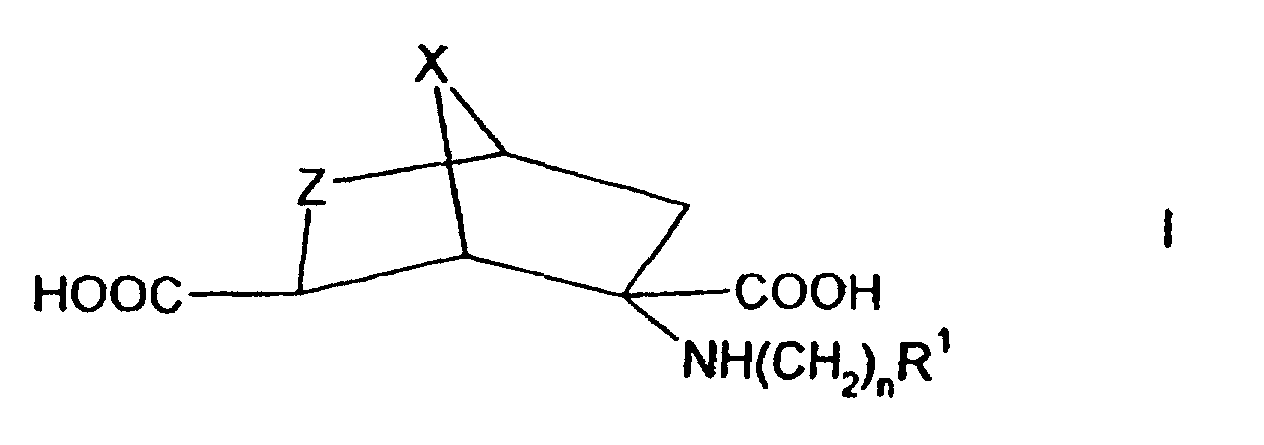
X représente un groupe CH2, CH2CH2 ou un atome d'oxygène ;
Z représente un groupe CHR2 ou NR2,
R1 et R2 sont choisis indépendamment entre un atome d'hydrogène, des groupes alkyle en C1 à C6, aryle et hétéroaryle, ledit groupe aryle étant choisi entre les groupes phényle et naphtyle et ledit groupe hétéroaryle étant choisi parmi des noyaux hétérocycliques aromatiques penta- et hexagonaux qui contiennent un à quatre hétéroatomes choisis, indépendamment, entre des atomes d'azote, d'oxygène et de soufre, et lesdits groupements aryle et hétéroaryle pouvant être facultativement substitués avec un ou plusieurs substituants qui sont choisis, indépendamment, entre des substituants halogène, -S(alkyle en C1 à C6), -S(O)(alkyle en C1 à C6), -S(O)2(alkyle en C1 à C6), alkyle en C1 à C6 facultativement substitué avec un à sept atomes de fluor, alkoxy en C1 à C6 facultativement substitué avec un à sept atomes de fluor, amino, nitro, cyano, carboxy, -CO2 (alkyle en C1 à C6), alkylamino en C1 à C6, di(alkyle en C1 à C6)amino phénoxy, aniline et phénylthio ;
sous réserve qu'aucun desdits groupements hétéroaryle ne contienne plus d'un atome d'oxygène de noyau ou plus d'un atome de soufre de noyau ;
ou un sel pharmaceutiquement acceptable de ce composé. - Composé suivant la revendication 1, dans lequel Z représente un groupe CH2.
- Composé suivant la revendication 1, dans lequel R1 est choisi dans le groupe consistant en un atome d'hydrogène, un groupe phényle non substitué et un groupe phényle substitué avec un ou deux substituants.
- Composé suivant la revendication 1, dans lequel n est égal à 0, 1 ou 2.
- Composé suivant la revendication 1, dans lequel X représente un groupe CH2.
- Composé suivant la revendication 1, choisi dans le groupe consistant en :l'acide 2-(endo)-aminobicyclo[2,2,1]heptane-2-(exo)-6-(exo)-dicarboxylique ;l'acide (+)-2-(endo)-aminobicyclo[2,2,1]heptane-2-(exo)-6-(exo)-dicarboxyliquel'acide (-)-2-(endo)-aminobicyclo[2,2,1]heptane-2-(exo)-6-(exo)-dicarboxyliquel'acide 2-(endo)-benzylaminobicyclo[2,2,1]heptane-2-(exo)-6-(exo)-dicarboxylique ; etl'acide 2-(endo)-phényléthylaminobicyclo[2,2,1]heptane-2-(exo)-6-(exo)-dicarboxylique.
- Composition pharmaceutique comprenant un composé de formule (I), ou un de ses sels pharmaceutiquement acceptables, telle que défini dans l'une quelconque des revendications 1 à 6, et un support pharmaceutiquement acceptable.
- Composé de formule (I), ou un de ses sels pharmaceutiquement acceptables, telle que définie dans l'une quelconque des revendications 1 à 6, destinée à être utilisée comme médicament.
- Utilisation d'un composé de formule (I), ou d'un de ses sels pharmaceutiquement acceptables, telle que définie dans l'une quelconque des revendications 1 à 6, pour la production d'un médicament destiné au traitement d'un trouble ou d'une affection choisi entre un ictus, une ischémie cérébrale, un traumatisme de la moelle épinière, un traumatisme crânien, la maladie d'Alzheimer, la chorée de Hungtington, la sclérose latérale amyotrophique, la démence induite par le SIDA, les spasmes musculaires, les céphalées provoquées par la migraine, l'incontinence urinaire, la psychose, les convulsions, l'hypoxie périnatale, une hypoxie, un arrêt cardiaque, une altération neuronale hypoglycémique, des dépendances et accoutumances chimiques, une altération oculaire et la rétinopathie, la maladie de Parkinson idiopathique et une maladie de Parkinson induite par un médicament, l'anxiété, y compris les crises de panique, le trouble d'anxiété généralisée, le syndrome de stress post-traumatique, les phobies simples et les névroses phobiques, la schizophrénie, la dépression, un trouble bipolaire, le trouble obsessionnel compulsif, le syndrome de Tourette, les vomissements, l'oedème cérébral, la douleur chronique et la douleur aiguë, la dyskinésie tardive et des déficiences cérébrales faisant suite à une intervention chirurgicale de dérivation cardiaque et à une greffe.
- Utilisation d'un composé de formule (I), ou d'un de ses sels pharmaceutiquement acceptables, telle que définie dans l'une quelconque des revendications 1 à 6, pour la production d'un médicament destiné au traitement d'un trouble ou d'une affection, dont le traitement ou la prévention peut être effectué ou facilité par modulation de la neurotransmission du glutamate.
- Composition pharmaceutique suivant la revendication 7, comprenant en outre un inhibiteur de réabsorption de sérotonine ou un ligand du récepteur de sérotonine 1A ( 5HT1A) .
- Composition pharmaceutique suivant la revendication 11, dans laquelle l'inhibiteur de réabsorption de sérotonine est choisi entre la sertraline, la fluoxétine, la fluvoxamine, la paroxétine, le citalopram, le fenfluramine et la fémoxétine.
- Utilisation suivant la revendication 9 ou 10, dans laquelle un inhibiteur de réabsorption de sérotonine ou un ligand du récepteur de sérotonine 1A (5HT1A) est en outre utilisé dans la production du médicament.
- Utilisation suivant la revendication 13, dans laquelle l'inhibiteur de réabsorption de sérotonine est choisi entre la sertraline, le fluoxétine, la fluvoxamine, la paroxétine, le citalopram, la fenfluramine et la fémoxétine.
- Composé de formuledans laquelle n a une valeur de 0 à 6 ;
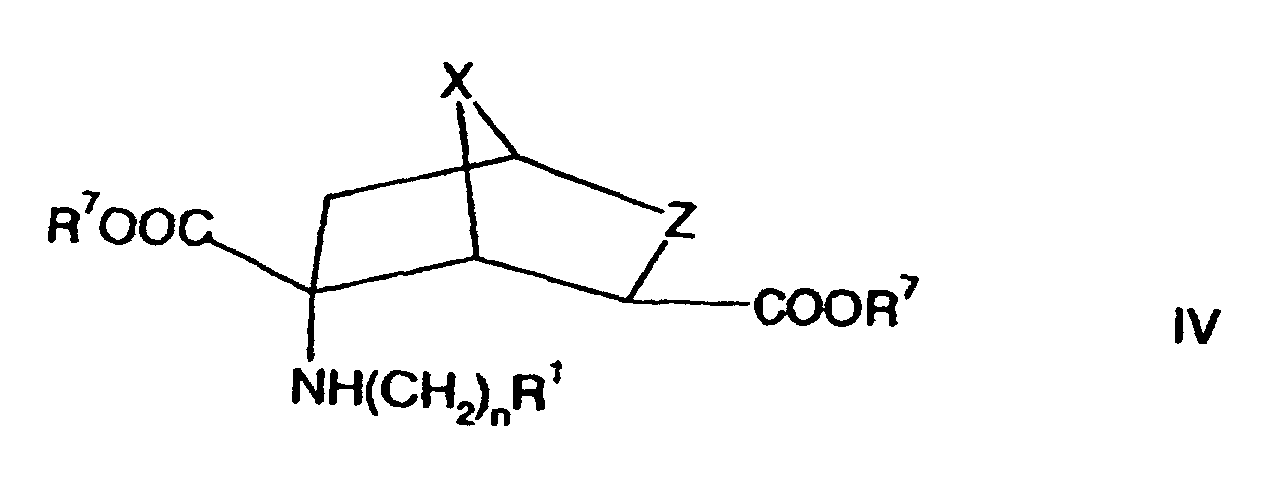
X représente un groupe CH2, CH2CH2 ou un atome d'oxygène ;
Z représente un groupe CHR2 ou NR2,
R1 et R2 sont choisis indépendamment entre un atome d'hydrogène, des groupes alkyle en C1 à C6, aryle et hétéroaryle, ledit groupe aryle étant choisi entre les groupes phényle et naphtyle et ledit groupe hétéroaryle étant choisi parmi des noyaux hétérocycliques aromatiques penta- et hexagonaux qui contiennent un à quatre hétéroatomes choisis, indépendamment, entre des atomes d'azote, d'oxygène et de soufre, et lesdits groupements aryle et hétéroaryle pouvant être facultativement substitués avec un ou plusieurs substituants qui sont choisis, indépendamment, entre des substituants halogéno, -S(alkyle en C1 à C6), -S(O)(alkyle en C1 à C6), -S(O)2 (alkyle en C1 à C6), alkyle en C1 à C6 facultativement substitué avec un à sept atomes de fluor, alkoxy en C1 à C6 facultativement substitué avec un à sept atomes de fluor, amino, nitro, cyano, carboxy, -CO2(alkyle en C1 à C6), alkylamino en C1 à C6, di(alkyle en C1 à C6)amino phénoxy, anilino et phénylthio ; et
R7 représente un groupe alkyle en C1 à C6 ou benzyle
sous réserve qu'aucun desdits groupements hétéroaryle ne contienne plus d'un atome d'oxygène de noyau ou plus d'un atome de soufre de noyau.
Priority Applications (3)
| Application Number | Priority Date | Filing Date | Title |
|---|---|---|---|
| SI9930634T SI1064256T1 (en) | 1998-03-17 | 1999-03-04 | Bicyclo (2.2.1) heptanes and related compounds |
| EP03028415A EP1396273A1 (fr) | 1998-03-17 | 1999-03-04 | Bicyclo(2.2.1.)heptanes et composés associés |
| DK99905122T DK1064256T3 (da) | 1999-03-04 | 1999-03-04 | Bicyclo[2.2.1]heptaner og beslægtede forbindelser |
Applications Claiming Priority (3)
| Application Number | Priority Date | Filing Date | Title |
|---|---|---|---|
| US7834698P | 1998-03-17 | 1998-03-17 | |
| US78346P | 1998-03-17 | ||
| PCT/IB1999/000376 WO1999047490A1 (fr) | 1998-03-17 | 1999-03-04 | Bicyclo [2.2.1] heptanes et composes apparentes |
Related Child Applications (1)
| Application Number | Title | Priority Date | Filing Date |
|---|---|---|---|
| EP03028415A Division EP1396273A1 (fr) | 1998-03-17 | 1999-03-04 | Bicyclo(2.2.1.)heptanes et composés associés |
Publications (2)
| Publication Number | Publication Date |
|---|---|
| EP1064256A1 EP1064256A1 (fr) | 2001-01-03 |
| EP1064256B1 true EP1064256B1 (fr) | 2004-08-04 |
Family
ID=22143450
Family Applications (1)
| Application Number | Title | Priority Date | Filing Date |
|---|---|---|---|
| EP99905122A Expired - Lifetime EP1064256B1 (fr) | 1998-03-17 | 1999-03-04 | Bicyclo [2.2.1] heptanes et composes apparentes |
Country Status (40)
| Country | Link |
|---|---|
| US (1) | US6136861A (fr) |
| EP (1) | EP1064256B1 (fr) |
| JP (1) | JP3665567B2 (fr) |
| KR (1) | KR100372981B1 (fr) |
| CN (1) | CN1231461C (fr) |
| AP (1) | AP1116A (fr) |
| AR (1) | AR017236A1 (fr) |
| AT (1) | ATE272608T1 (fr) |
| AU (1) | AU753422B2 (fr) |
| BG (1) | BG104837A (fr) |
| BR (1) | BR9908850A (fr) |
| CA (1) | CA2321639C (fr) |
| CO (1) | CO5090835A1 (fr) |
| CZ (1) | CZ20003355A3 (fr) |
| DE (1) | DE69919142T2 (fr) |
| DZ (1) | DZ2745A1 (fr) |
| EA (1) | EA003946B1 (fr) |
| ES (1) | ES2224604T3 (fr) |
| GT (1) | GT199900040A (fr) |
| HR (1) | HRP20000611A2 (fr) |
| HU (1) | HUP0101031A3 (fr) |
| ID (1) | ID25651A (fr) |
| IL (1) | IL138342A0 (fr) |
| IS (1) | IS5592A (fr) |
| MA (1) | MA26614A1 (fr) |
| MY (1) | MY121047A (fr) |
| NO (1) | NO20004626L (fr) |
| NZ (1) | NZ506227A (fr) |
| OA (1) | OA11488A (fr) |
| PE (1) | PE20000339A1 (fr) |
| PL (1) | PL343278A1 (fr) |
| PT (1) | PT1064256E (fr) |
| SK (1) | SK13532000A3 (fr) |
| TN (1) | TNSN99039A1 (fr) |
| TR (1) | TR200002671T2 (fr) |
| TW (1) | TW509667B (fr) |
| UA (1) | UA53781C2 (fr) |
| WO (1) | WO1999047490A1 (fr) |
| YU (1) | YU53700A (fr) |
| ZA (1) | ZA992094B (fr) |
Families Citing this family (44)
| Publication number | Priority date | Publication date | Assignee | Title |
|---|---|---|---|---|
| WO2000051590A2 (fr) * | 1999-03-04 | 2000-09-08 | The Board Of Trustees Of The University Of Illinois | Traitement neuropharmacologique des troubles de respiration lies au sommeil |
| US6313159B1 (en) | 1999-08-20 | 2001-11-06 | Guilford Pharmaceuticals Inc. | Metabotropic glutamate receptor ligand derivatives as naaladase inhibitors |
| UA73981C2 (en) * | 2000-03-10 | 2005-10-17 | Merck Patent Gmbh | (r)-(-)-2-[5-(4-fluorophenyl)-3-pyridylmethylaminomethyl]-chromane for treatment of extrapyramidal movement disorders (variants), pharmaceutical composition and kit |
| EP1372620A2 (fr) * | 2001-03-15 | 2004-01-02 | Saegis Pharmaceuticals | Methodes permettant de retablir la fonction cognitive suite a un stress systemique |
| US6750364B2 (en) | 2001-06-29 | 2004-06-15 | Wyeth | Bridged tricyclic analogs of 2-(carboxycyclopropyl)glycine as inhibitors of glutamate transport |
| US6689904B2 (en) | 2001-06-29 | 2004-02-10 | Wyeth | Bridged tricyclic analogs of 2-(carboxycyclopropyl)glycine |
| US6689905B2 (en) | 2001-06-29 | 2004-02-10 | Wyeth | Stereoisomers of 3-aminotricyclo[2.2.1.0(2.6)]heptane-1,3-dicarboxylic acid |
| WO2003018585A1 (fr) * | 2001-08-24 | 2003-03-06 | Pharmacia & Upjohn Company | Heteroaryl-7-aza[2.2.1]bicycloheptanes substitues destines au traitement de maladies |
| US7232798B2 (en) * | 2001-11-13 | 2007-06-19 | Tran Loi H | Neuroprotection and neuroegenisis by administering cyclic prolyl glycine |
| FR2872045B1 (fr) * | 2004-06-28 | 2006-09-29 | Centre Nat Rech Scient Cnrse | Medicaments pour le traitement specifique de symptomes de la maladie de parkinson |
| TWI417095B (zh) * | 2006-03-15 | 2013-12-01 | Janssen Pharmaceuticals Inc | 1,4-二取代之3-氰基-吡啶酮衍生物及其作為mGluR2-受體之正向異位性調節劑之用途 |
| TW200845978A (en) * | 2007-03-07 | 2008-12-01 | Janssen Pharmaceutica Nv | 3-cyano-4-(4-tetrahydropyran-phenyl)-pyridin-2-one derivatives |
| TW200900065A (en) | 2007-03-07 | 2009-01-01 | Janssen Pharmaceutica Nv | 3-cyano-4-(4-pyridinyloxy-phenyl)-pyridin-2-one derivatives |
| JP5647519B2 (ja) | 2007-09-13 | 2014-12-24 | コンサート ファーマシューティカルズ インコーポレイテッド | 重水素化カテコールおよびベンゾ[d][1,3]ジオキソールおよびその誘導体の合成 |
| KR20100065191A (ko) | 2007-09-14 | 2010-06-15 | 오르토-맥닐-얀센 파마슈티칼스 인코포레이티드 | 1,3-이치환된 4-(아릴-x-페닐)-1h-피리딘-2-온 |
| KR20100080597A (ko) * | 2007-09-14 | 2010-07-09 | 오르토-맥닐-얀센 파마슈티칼스 인코포레이티드 | 1,3-이치환된-4-페닐-1h-피리딘-2-온 |
| CA2696948C (fr) | 2007-09-14 | 2013-04-30 | Jose Maria Cid-Nunez | 4-phenyl-3,4,5,6-tetrahydro-2h,1'h-[1, 4'] bipyridinyl-2'-ones 1', 3'-disusbstituees |
| EP2220083B1 (fr) * | 2007-11-14 | 2017-07-19 | Janssen Pharmaceuticals, Inc. | Dérivés d'imidazo[1,2-a]pyridines et leur utilisation en tant que modulateurs allostériques positifs de récepteurs mglur2 |
| CA2735764C (fr) | 2008-09-02 | 2016-06-14 | Ortho-Mcneil-Janssen Pharmaceuticals, Inc. | Derives de 3-azabicyclo[3.1.0]hexyle comme modulateurs des recepteurs metabotropiques du glutamate |
| AU2009304293B2 (en) | 2008-10-16 | 2012-04-26 | Addex Pharma S.A. | Indole and benzomorpholine derivatives as modulators of metabotropic glutamate receptors |
| BRPI0921333A2 (pt) | 2008-11-28 | 2015-12-29 | Addex Pharmaceuticals Sa | derivados de indol e benzoxazina como moduladores de receptores de glutamato metabotrópicos |
| NZ596078A (en) | 2009-05-12 | 2013-06-28 | Janssen Pharmaceuticals Inc | 1,2,4-TRIAZOLO [4,3-a] PYRIDINE DERIVATIVES AND THEIR USE FOR THE TREATMENT OR PREVENTION OF NEUROLOGICAL AND PSYCHIATRIC DISORDERS |
| EA020671B1 (ru) | 2009-05-12 | 2014-12-30 | Янссен Фармасьютикалз, Инк. | ПРОИЗВОДНЫЕ 1,2,4-ТРИАЗОЛО[4,3-a]ПИРИДИНА И ИХ ПРИМЕНЕНИЕ В КАЧЕСТВЕ ПОЛОЖИТЕЛЬНЫХ АЛЛОСТЕРИЧЕСКИХ МОДУЛЯТОРОВ РЕЦЕПТОРОВ mGluR2 |
| MY153913A (en) | 2009-05-12 | 2015-04-15 | Janssen Pharmaceuticals Inc | 7-aryl-1,2,4-triazolo[4,3-a]pyridine derivatives and their use as positive allosteric modulators of mglur2 receptors |
| CN103298810B (zh) | 2010-11-08 | 2016-03-16 | 杨森制药公司 | 1,2,4-三唑并[4,3-a]吡啶衍生物及其作为MGLUR2受体的正变构调节剂的用途 |
| CA2815002C (fr) | 2010-11-08 | 2019-10-22 | Janssen Pharmaceuticals, Inc. | Derives 1,2,4-triazolo[4,3-a]pyridine et leur utilisation en tant que modulateurs allosteriques positifs des recepteurs mglur2 |
| EP2643320B1 (fr) | 2010-11-08 | 2015-03-04 | Janssen Pharmaceuticals, Inc. | Dérivés de la 1,2,4-triazolo [4,3-a] pyridine et leur utilisation en tant que modulateurs allostériques positifs des récepteurs mglur2 |
| TWI520935B (zh) * | 2010-11-18 | 2016-02-11 | 美國禮來大藥廠 | 作為mGluR2/3拮抗劑之4-經取代-3-苯基磺醯基甲基-雙環[3.1.0]己烷化合物 |
| WO2012068041A1 (fr) | 2010-11-18 | 2012-05-24 | Eli Lilly And Company | Composés 3-benzyloxy-bicyclo[3.1.0]hexanes 4-substitués en tant qu'antagonistes de mglur 2/3 |
| US9447025B2 (en) | 2013-03-14 | 2016-09-20 | Kalyra Pharmaceuticals, Inc. | Bicyclic analgesic compounds |
| JO3368B1 (ar) | 2013-06-04 | 2019-03-13 | Janssen Pharmaceutica Nv | مركبات 6، 7- ثاني هيدرو بيرازولو [5،1-a] بيرازين- 4 (5 يد)- اون واستخدامها بصفة منظمات تفارغية سلبية لمستقبلات ميجلور 2 |
| JO3367B1 (ar) | 2013-09-06 | 2019-03-13 | Janssen Pharmaceutica Nv | مركبات 2،1، 4- ثلاثي زولو [3،4-a] بيريدين واستخدامها بصفة منظمات تفارغية موجبة لمستقبلات ميجلور 2 |
| EP3080072A4 (fr) | 2013-12-12 | 2017-07-19 | Kalyra Pharmaceuticals, inc. | Composés d'alkyle bicyclique et synthèse |
| LT3431106T (lt) | 2014-01-21 | 2021-02-10 | Janssen Pharmaceutica Nv | Deriniai, apimantys 2 potipio metabotropinio glutamaterginio receptoriaus teigiamus alosterinius moduliatorius arba ortosterinius agonistus, ir jų panaudojimas |
| KR102414246B1 (ko) | 2014-01-21 | 2022-06-27 | 얀센 파마슈티카 엔.브이. | 대사 조절형 글루탐산 작동성 수용체 제2아형의 양성 알로스테릭 조절제 또는 오르토스테릭 작동제를 포함하는 조합 및 그 용도 |
| CN113336653A (zh) | 2014-03-07 | 2021-09-03 | 里科瑞尔姆Ip控股有限责任公司 | 螺桨烷衍生物及合成 |
| CN106999451B (zh) | 2014-09-17 | 2021-04-02 | 里科瑞尔姆Ip控股有限责任公司 | 双环化合物 |
| US20190060257A1 (en) * | 2016-03-16 | 2019-02-28 | Zeno Royalties & Milestones, LLC | Analgesic compounds |
| KR20200018440A (ko) | 2017-05-15 | 2020-02-19 | 리커리엄 아이피 홀딩스, 엘엘씨 | 진통제 화합물 |
| BR112020023252A2 (pt) | 2018-05-15 | 2021-02-23 | Lloyd Hung Loi Tran | composição do agente terapêutico e método de uso para tratamento de deficiência cognitiva leve, depressão e distúrbios psicológicos. |
| KR102157141B1 (ko) | 2018-11-27 | 2020-09-17 | 주식회사 파미니티 | 으아리 추출물을 유효 성분으로 포함하는 인지 기능 개선용 조성물 |
| KR102172916B1 (ko) | 2018-12-07 | 2020-11-02 | 주식회사 파미니티 | 실크 펩타이드 및 천연 추출물을 포함하는 인지 기능 개선용 조성물 |
| US11198908B2 (en) | 2019-06-17 | 2021-12-14 | Biorchestra Co., Ltd. | Method for diagnosis of Alzheimer's disease using microRNA |
| US10844380B1 (en) | 2019-06-17 | 2020-11-24 | Biorchestra Co., Ltd. | Uses for prevention or treatment of brain diseases using microrna |
Family Cites Families (4)
| Publication number | Priority date | Publication date | Assignee | Title |
|---|---|---|---|---|
| DK0762877T3 (da) * | 1994-06-03 | 2001-07-16 | Thejmde Trust | Meta-substituerede arylalkylaminer og terapeutiske og diagnostiske anvendelser deraf |
| PL182285B1 (pl) * | 1994-08-12 | 2001-12-31 | Lilly Co Eli | Syntetyczne aminokwasy oraz ich estry i srodki farmaceutyczne je zawierajace PL PL PL PL PL PL PL |
| GB9605429D0 (en) * | 1995-11-16 | 1996-05-15 | Lilly Co Eli | Excitatory amino acid receptor antagonists |
| KR19990067597A (ko) * | 1995-11-16 | 1999-08-25 | 피터 지. 스트링거 | 흥분성 아미노산 수용체 길항제 |
-
1999
- 1999-03-04 IL IL13834299A patent/IL138342A0/xx unknown
- 1999-03-04 HR HR20000611A patent/HRP20000611A2/hr not_active Application Discontinuation
- 1999-03-04 WO PCT/IB1999/000376 patent/WO1999047490A1/fr not_active Ceased
- 1999-03-04 CZ CZ20003355A patent/CZ20003355A3/cs unknown
- 1999-03-04 CN CNB998040401A patent/CN1231461C/zh not_active Expired - Fee Related
- 1999-03-04 AU AU25409/99A patent/AU753422B2/en not_active Ceased
- 1999-03-04 AT AT99905122T patent/ATE272608T1/de not_active IP Right Cessation
- 1999-03-04 ES ES99905122T patent/ES2224604T3/es not_active Expired - Lifetime
- 1999-03-04 YU YU53700A patent/YU53700A/sh unknown
- 1999-03-04 ID IDW20001811A patent/ID25651A/id unknown
- 1999-03-04 SK SK1353-2000A patent/SK13532000A3/sk unknown
- 1999-03-04 NZ NZ506227A patent/NZ506227A/xx unknown
- 1999-03-04 CA CA002321639A patent/CA2321639C/fr not_active Expired - Fee Related
- 1999-03-04 EA EA200000842A patent/EA003946B1/ru not_active IP Right Cessation
- 1999-03-04 JP JP2000536687A patent/JP3665567B2/ja not_active Expired - Fee Related
- 1999-03-04 TR TR2000/02671T patent/TR200002671T2/xx unknown
- 1999-03-04 BR BR9908850-9A patent/BR9908850A/pt not_active Application Discontinuation
- 1999-03-04 US US09/380,727 patent/US6136861A/en not_active Expired - Fee Related
- 1999-03-04 EP EP99905122A patent/EP1064256B1/fr not_active Expired - Lifetime
- 1999-03-04 KR KR10-2000-7010264A patent/KR100372981B1/ko not_active Expired - Fee Related
- 1999-03-04 PT PT99905122T patent/PT1064256E/pt unknown
- 1999-03-04 PL PL99343278A patent/PL343278A1/xx unknown
- 1999-03-04 DE DE69919142T patent/DE69919142T2/de not_active Expired - Fee Related
- 1999-03-04 HU HU0101031A patent/HUP0101031A3/hu unknown
- 1999-03-10 AP APAP/P/1999/001482A patent/AP1116A/en active
- 1999-03-12 TW TW088103874A patent/TW509667B/zh not_active IP Right Cessation
- 1999-03-12 PE PE1999000198A patent/PE20000339A1/es not_active Application Discontinuation
- 1999-03-15 AR ARP990101118A patent/AR017236A1/es unknown
- 1999-03-15 MY MYPI99000966A patent/MY121047A/en unknown
- 1999-03-16 DZ DZ990046A patent/DZ2745A1/fr active
- 1999-03-16 MA MA25498A patent/MA26614A1/fr unknown
- 1999-03-16 GT GT199900040A patent/GT199900040A/es unknown
- 1999-03-16 ZA ZA9902094A patent/ZA992094B/xx unknown
- 1999-03-16 TN TNTNSN99039A patent/TNSN99039A1/fr unknown
- 1999-03-17 CO CO99016567A patent/CO5090835A1/es unknown
- 1999-04-03 UA UA2000095327A patent/UA53781C2/uk unknown
-
2000
- 2000-08-18 IS IS5592A patent/IS5592A/is unknown
- 2000-09-15 NO NO20004626A patent/NO20004626L/no not_active Application Discontinuation
- 2000-09-18 OA OA1200000258A patent/OA11488A/en unknown
- 2000-10-11 BG BG104837A patent/BG104837A/bg unknown
Also Published As
Similar Documents
| Publication | Publication Date | Title |
|---|---|---|
| US6136861A (en) | Bicyclo[2.2.1]heptanes and related compounds | |
| EP0870760B1 (fr) | Dérivés de la cyclopropyl glycine ayant des propriétés pharmaceutiques | |
| SK13397A3 (en) | Synthetic excitatory amino acids, preparation method thereof and pharmaceutical compositions containing same | |
| JP2001525825A (ja) | 興奮性アミノ酸レセプターモジュレーター | |
| JP2000072731A (ja) | 4−置換−2−アミノビシクロ[3.1.0]ヘキサン−2,6−ジカルボン酸誘導体及び製薬用組成物 | |
| AU2003227614B2 (en) | Isoquinoline derivatives | |
| US8138377B2 (en) | Arylbicyclo[3.1.0]hexylamines and methods and compositions for their preparation and use | |
| US6124361A (en) | Bicyclo[3.1.0]hexanes and related compounds | |
| US5225596A (en) | Halo substituted aminotetralins | |
| US5210276A (en) | Phenylethanolamino- and phenylethanolaminomethyl-tetralines, process for the preparation thereof, intermediates in said process and pharmaceutical compositions containing them | |
| WO1990007490A1 (fr) | Aminotetralines a substitution halo | |
| EP1396273A1 (fr) | Bicyclo(2.2.1.)heptanes et composés associés | |
| EP0928792B1 (fr) | Hexanes (3.1.0) bicycliques et composés apparentés | |
| MXPA00009062A (en) | Bicyclo[2.2.1]heptanes and related compounds | |
| MXPA99000392A (en) | Bicycle [3.1.0] hexants and related compounds | |
| HK1036050A (en) | Bicyclo[2.2.1]heptanes and related compounds | |
| EP1885693A1 (fr) | Peptidomimetiques a haute selectivite pour les sous-types 1 et/ou 4 des recepteurs de la somatostatine |
Legal Events
| Date | Code | Title | Description |
|---|---|---|---|
| PUAI | Public reference made under article 153(3) epc to a published international application that has entered the european phase |
Free format text: ORIGINAL CODE: 0009012 |
|
| 17P | Request for examination filed |
Effective date: 20000915 |
|
| AK | Designated contracting states |
Kind code of ref document: A1 Designated state(s): AT BE CH CY DE DK ES FI FR GB GR IE IT LI LU NL PT SE |
|
| AX | Request for extension of the european patent |
Free format text: AL PAYMENT 20000915;LT PAYMENT 20000915;LV PAYMENT 20000915;MK PAYMENT 20000915;RO PAYMENT 20000915;SI PAYMENT 20000915 |
|
| 17Q | First examination report despatched |
Effective date: 20020718 |
|
| GRAP | Despatch of communication of intention to grant a patent |
Free format text: ORIGINAL CODE: EPIDOSNIGR1 |
|
| GRAS | Grant fee paid |
Free format text: ORIGINAL CODE: EPIDOSNIGR3 |
|
| GRAA | (expected) grant |
Free format text: ORIGINAL CODE: 0009210 |
|
| AK | Designated contracting states |
Kind code of ref document: B1 Designated state(s): AT BE CH CY DE DK ES FI FR GB GR IE IT LI LU NL PT SE |
|
| AX | Request for extension of the european patent |
Extension state: AL LT LV MK RO SI |
|
| REG | Reference to a national code |
Ref country code: GB Ref legal event code: FG4D |
|
| REG | Reference to a national code |
Ref country code: CH Ref legal event code: EP |
|
| REG | Reference to a national code |
Ref country code: CH Ref legal event code: NV Representative=s name: E. BLUM & CO. PATENTANWAELTE |
|
| REG | Reference to a national code |
Ref country code: IE Ref legal event code: FG4D |
|
| REF | Corresponds to: |
Ref document number: 69919142 Country of ref document: DE Date of ref document: 20040909 Kind code of ref document: P |
|
| PGFP | Annual fee paid to national office [announced via postgrant information from national office to epo] |
Ref country code: PT Payment date: 20040913 Year of fee payment: 7 |
|
| REG | Reference to a national code |
Ref country code: GR Ref legal event code: EP Ref document number: 20040402507 Country of ref document: GR |
|
| REG | Reference to a national code |
Ref country code: SE Ref legal event code: TRGR |
|
| REG | Reference to a national code |
Ref country code: PT Ref legal event code: SC4A Free format text: AVAILABILITY OF NATIONAL TRANSLATION Effective date: 20040827 |
|
| PGFP | Annual fee paid to national office [announced via postgrant information from national office to epo] |
Ref country code: FR Payment date: 20041105 Year of fee payment: 7 |
|
| REG | Reference to a national code |
Ref country code: DK Ref legal event code: T3 |
|
| REG | Reference to a national code |
Ref country code: SI Ref legal event code: IF |
|
| PGFP | Annual fee paid to national office [announced via postgrant information from national office to epo] |
Ref country code: BE Payment date: 20050113 Year of fee payment: 7 |
|
| PGFP | Annual fee paid to national office [announced via postgrant information from national office to epo] |
Ref country code: GR Payment date: 20050118 Year of fee payment: 7 |
|
| PGFP | Annual fee paid to national office [announced via postgrant information from national office to epo] |
Ref country code: CY Payment date: 20050208 Year of fee payment: 7 |
|
| PGFP | Annual fee paid to national office [announced via postgrant information from national office to epo] |
Ref country code: CH Payment date: 20050211 Year of fee payment: 7 |
|
| REG | Reference to a national code |
Ref country code: ES Ref legal event code: FG2A Ref document number: 2224604 Country of ref document: ES Kind code of ref document: T3 |
|
| ET | Fr: translation filed | ||
| PGFP | Annual fee paid to national office [announced via postgrant information from national office to epo] |
Ref country code: FI Payment date: 20050304 Year of fee payment: 7 |
|
| PGFP | Annual fee paid to national office [announced via postgrant information from national office to epo] |
Ref country code: DK Payment date: 20050314 Year of fee payment: 7 |
|
| PGFP | Annual fee paid to national office [announced via postgrant information from national office to epo] |
Ref country code: LU Payment date: 20050316 Year of fee payment: 7 |
|
| PGFP | Annual fee paid to national office [announced via postgrant information from national office to epo] |
Ref country code: AT Payment date: 20050323 Year of fee payment: 7 |
|
| PGFP | Annual fee paid to national office [announced via postgrant information from national office to epo] |
Ref country code: NL Payment date: 20050331 Year of fee payment: 7 |
|
| PLBE | No opposition filed within time limit |
Free format text: ORIGINAL CODE: 0009261 |
|
| STAA | Information on the status of an ep patent application or granted ep patent |
Free format text: STATUS: NO OPPOSITION FILED WITHIN TIME LIMIT |
|
| 26N | No opposition filed |
Effective date: 20050506 |
|
| PGFP | Annual fee paid to national office [announced via postgrant information from national office to epo] |
Ref country code: IE Payment date: 20060125 Year of fee payment: 8 |
|
| PG25 | Lapsed in a contracting state [announced via postgrant information from national office to epo] |
Ref country code: FI Free format text: LAPSE BECAUSE OF NON-PAYMENT OF DUE FEES Effective date: 20060304 Ref country code: CY Free format text: LAPSE BECAUSE OF NON-PAYMENT OF DUE FEES Effective date: 20060304 Ref country code: AT Free format text: LAPSE BECAUSE OF NON-PAYMENT OF DUE FEES Effective date: 20060304 |
|
| PGFP | Annual fee paid to national office [announced via postgrant information from national office to epo] |
Ref country code: ES Payment date: 20060313 Year of fee payment: 8 |
|
| PGFP | Annual fee paid to national office [announced via postgrant information from national office to epo] |
Ref country code: DE Payment date: 20060330 Year of fee payment: 8 |
|
| PG25 | Lapsed in a contracting state [announced via postgrant information from national office to epo] |
Ref country code: LU Free format text: LAPSE BECAUSE OF NON-PAYMENT OF DUE FEES Effective date: 20060331 Ref country code: LI Free format text: LAPSE BECAUSE OF NON-PAYMENT OF DUE FEES Effective date: 20060331 Ref country code: DK Free format text: LAPSE BECAUSE OF NON-PAYMENT OF DUE FEES Effective date: 20060331 Ref country code: CH Free format text: LAPSE BECAUSE OF NON-PAYMENT OF DUE FEES Effective date: 20060331 Ref country code: BE Free format text: LAPSE BECAUSE OF NON-PAYMENT OF DUE FEES Effective date: 20060331 |
|
| PGFP | Annual fee paid to national office [announced via postgrant information from national office to epo] |
Ref country code: IT Payment date: 20060331 Year of fee payment: 8 |
|
| PG25 | Lapsed in a contracting state [announced via postgrant information from national office to epo] |
Ref country code: PT Free format text: LAPSE BECAUSE OF NON-PAYMENT OF DUE FEES Effective date: 20060904 |
|
| PG25 | Lapsed in a contracting state [announced via postgrant information from national office to epo] |
Ref country code: NL Free format text: LAPSE BECAUSE OF NON-PAYMENT OF DUE FEES Effective date: 20061001 |
|
| LTLA | Lt: lapse of european patent or patent extension |
Effective date: 20060304 |
|
| REG | Reference to a national code |
Ref country code: DK Ref legal event code: EBP |
|
| REG | Reference to a national code |
Ref country code: PT Ref legal event code: MM4A Effective date: 20060904 |
|
| REG | Reference to a national code |
Ref country code: CH Ref legal event code: PL |
|
| NLV4 | Nl: lapsed or anulled due to non-payment of the annual fee |
Effective date: 20061001 |
|
| REG | Reference to a national code |
Ref country code: SI Ref legal event code: KO00 Effective date: 20061120 |
|
| PG25 | Lapsed in a contracting state [announced via postgrant information from national office to epo] |
Ref country code: SE Free format text: LAPSE BECAUSE OF NON-PAYMENT OF DUE FEES Effective date: 20070305 |
|
| EUG | Se: european patent has lapsed | ||
| GBPC | Gb: european patent ceased through non-payment of renewal fee |
Effective date: 20070304 |
|
| REG | Reference to a national code |
Ref country code: IE Ref legal event code: MM4A |
|
| BERE | Be: lapsed |
Owner name: *PFIZER PRODUCTS INC. Effective date: 20060331 |
|
| REG | Reference to a national code |
Ref country code: FR Ref legal event code: ST Effective date: 20071130 |
|
| PG25 | Lapsed in a contracting state [announced via postgrant information from national office to epo] |
Ref country code: IE Free format text: LAPSE BECAUSE OF NON-PAYMENT OF DUE FEES Effective date: 20070305 Ref country code: DE Free format text: LAPSE BECAUSE OF NON-PAYMENT OF DUE FEES Effective date: 20071002 |
|
| PGFP | Annual fee paid to national office [announced via postgrant information from national office to epo] |
Ref country code: SE Payment date: 20060306 Year of fee payment: 8 |
|
| PG25 | Lapsed in a contracting state [announced via postgrant information from national office to epo] |
Ref country code: GB Free format text: LAPSE BECAUSE OF NON-PAYMENT OF DUE FEES Effective date: 20070304 |
|
| REG | Reference to a national code |
Ref country code: ES Ref legal event code: FD2A Effective date: 20070305 |
|
| PG25 | Lapsed in a contracting state [announced via postgrant information from national office to epo] |
Ref country code: FR Free format text: LAPSE BECAUSE OF NON-PAYMENT OF DUE FEES Effective date: 20070402 Ref country code: ES Free format text: LAPSE BECAUSE OF NON-PAYMENT OF DUE FEES Effective date: 20070305 |
|
| PG25 | Lapsed in a contracting state [announced via postgrant information from national office to epo] |
Ref country code: FR Free format text: LAPSE BECAUSE OF NON-PAYMENT OF DUE FEES Effective date: 20060331 |
|
| PG25 | Lapsed in a contracting state [announced via postgrant information from national office to epo] |
Ref country code: GR Free format text: LAPSE BECAUSE OF NON-PAYMENT OF DUE FEES Effective date: 20061002 |
|
| PGFP | Annual fee paid to national office [announced via postgrant information from national office to epo] |
Ref country code: GB Payment date: 20060206 Year of fee payment: 8 |
|
| PG25 | Lapsed in a contracting state [announced via postgrant information from national office to epo] |
Ref country code: IT Free format text: LAPSE BECAUSE OF NON-PAYMENT OF DUE FEES Effective date: 20070304 |