EP1066604B1 - Appareil et procede pour recevoir et accepter des jetons - Google Patents
Appareil et procede pour recevoir et accepter des jetons Download PDFInfo
- Publication number
- EP1066604B1 EP1066604B1 EP99911625A EP99911625A EP1066604B1 EP 1066604 B1 EP1066604 B1 EP 1066604B1 EP 99911625 A EP99911625 A EP 99911625A EP 99911625 A EP99911625 A EP 99911625A EP 1066604 B1 EP1066604 B1 EP 1066604B1
- Authority
- EP
- European Patent Office
- Prior art keywords
- criteria
- token
- tokens
- parameters
- new type
- Prior art date
- Legal status (The legal status is an assumption and is not a legal conclusion. Google has not performed a legal analysis and makes no representation as to the accuracy of the status listed.)
- Revoked
Links
Images
Classifications
-
- G—PHYSICS
- G07—CHECKING-DEVICES
- G07D—HANDLING OF COINS OR VALUABLE PAPERS, e.g. TESTING, SORTING BY DENOMINATIONS, COUNTING, DISPENSING, CHANGING OR DEPOSITING
- G07D5/00—Testing specially adapted to determine the identity or genuineness of coins, e.g. for segregating coins which are unacceptable or alien to a currency
-
- G—PHYSICS
- G07—CHECKING-DEVICES
- G07D—HANDLING OF COINS OR VALUABLE PAPERS, e.g. TESTING, SORTING BY DENOMINATIONS, COUNTING, DISPENSING, CHANGING OR DEPOSITING
- G07D2205/00—Coin testing devices
- G07D2205/001—Reconfiguration of coin testing devices
- G07D2205/0011—Reconfiguration of coin testing devices by downloading test parameters, e.g. remotely
Definitions
- the present invention relates to an apparatus for receiving and accepting tokens and especially to an apparatus, which may be, remote controlled to accept tokens not previously accepted by the apparatus.
- Apparatus of the present type are typically apparatus performing a service, such as pay phones, performing the service after insertion and acceptance of a coin.
- apparatus of this type have a part generating parameters relating to tokens received thereby. These parameters are compared to criteria, which the parameters of a given token are to fulfil, before the token is accepted. Different types of tokens, such as coins with different monetary values, normally have different parameters and therefore different criteria.
- the parameters derived from a given token will differ between apparatus, as the measurements or derivations of these parameters normally comprise an uncertainty relating to the manufacturing processes used for manufacturing the apparatus. Such differences may stem from mechanical uncertainties in the positioning or manufacturing of the parts defining the positions where the measurements are performed at the tokens, or the parts of the apparatus performing these measurements.
- the apparatus normally when apparatus of this type are to be calibrated to accept a new type of token, the apparatus, or at least the part thereof evaluating the token, is brought to a central location where a number of tokens of the new type are introduced in the apparatus or part thereof in order to generate or provide parameters for these tokens. These generated parameters are subsequently used for calculating or generating the criteria for use in that specific apparatus for that specific new type of token, where after these criteria are fed to the apparatus.
- This is a labour intensive step, which also removes the apparatus from their operating positions or renders these inoperative during calibration.
- An alternative way is to have a trusted person visit and calibrate all apparatus at their sites of operation using a set of calibration tokens.
- WO97 127567 discloses the features of the preamble of claim 1.
- the invention addresses this problem, and in a first aspect, the invention relates to an apparatus for performing a service upon receiving and accepting a token, the apparatus comprising:
- a standard calibration may be provided and transmitted to a number of apparatus, where after, in each apparatus, an apparatus specific calibration is performed on the basis of parameters derived by the specific deriving means - parameters derived from a number of subsequently received tokens of the new type.
- the apparatus performs the service expected by the user
- the user of the apparatus will not note that the apparatus is, in fact, in the process of being calibrated to the new type of token.
- the apparatus may, during this process, accept tokens, which might not be accepted, when the apparatus is fully calibrated. This is not possible for the user to notice.
- performing the service will make the users think that the apparatus has already been calibrated, and fraudulent attempts to diverge the calibration will be prevented or at least greatly reduced. Also, a certain amount of fraud or monetary loss may be accepted due to the large savings on manpower relating to the previous labour-consuming manner of calibrating the apparatus.
- a new type of token is a token, which was not acceptable by the apparatus at the time of receipt of the initial information relating to that type of token.
- narrower criteria means criteria which, compared to the wider criteria, are fulfilled by a relatively smaller number of tokens of a given type, where the tokens have differing parameters.
- the criteria comprise a number of intervals, the means for accepting the token being adapted to accept the token, if the derived parameters lie within the intervals. Normally, there will be one interval for each derived parameter, and the token will only be accepted if all parameters lie within their respective intervals.
- the initial criteria suitably comprise a number of initial intervals of initial sizes, and wherein the generating means are adapted to narrow the initial intervals - such as to final intervals of predetermined widths.
- the criteria may specify a relation, which should exist between the parameters in order for the token to be acceptable.
- the apparatus will be adapted to receive and accept not only a single type of token but a number of types at the time of calibration to yet another type of token.
- the apparatus will be adapted to receive and accept not only a single type of token but a number of types at the time of calibration to yet another type of token.
- a number of different schemes may be derived for the generation of the final criteria.
- the main feature is that parameters relating to a number of tokens of the new type are used in the apparatus specific calibration.
- the generating means may be adapted to generate the final criteria on the basis of parameters derived from subsequently received tokens, the number of which is less than a total number of subsequently received tokens of the new type of token. In this situation, it should be determined which of the subsequently received tokens are to be used in the generation of the final criteria. This determination may be a stochastical selection - or tokens with a predetermined spacing - such as every third token - may be selected.
- the generating means may be adapted to generate the final criteria on the basis of parameters derived from subsequently received tokens, the number of which is at least substantially equal to a total number of subsequently received tokens of the new type of token. In this situation, no selection may be required
- a further alternative or option is one wherein the generating means are adapted to generate the final criteria on the basis of parameters derived from a predetermined number of subsequently received tokens of the new type of token. This number of tokens will depend on the desired precision of the calibration or the expected variation of the parameters of the tokens. Normally, parameters from at least 10 tokens, such as at least 50 tokens, preferably at least 100 tokens, such as 100-200 tokens are used in the calibration.
- the calibration may proceed until the criteria have been altered to a given degree compared to the initial criteria.
- the calibration may proceed until all intervals are reduced to a given degree or to predetermined widths.
- the means for receiving the initial information preferably comprise means for communicating with a remote computer means generating or providing the initial information.
- the calibration is remote controllable to a degree where new schemes, for e.g. selecting which of subsequently received tokens are to be used in the calibration, may be subsequently devised and programmed centrally. Also, the manner in which the initial criteria are narrowed into the final criteria may be devised and altered without having to remove the apparatus from their operative positions.
- the set of instructions may be parameters for use in a more fixed calibration procedure taking place in the apparatus.
- Parameters of this type may specify the number of tokens to be used in the calibration, how, if applicable, to select these from those received, how to reduce the initial criteria to the final criteria - and any demands put on to the final criteria.
- calibration may be performed with the apparatus in its operative position. The possibility to calibrate the apparatus in its operative position, has several advantage over the existing factory calibration. There is no need to remove the apparatus, or at least a part of it, and transport it to the factory. Since the users of the apparatus are supplying the tokens used for calibration during normal operation, a large number of tokens can be used in determining the correct final criteria, and thus giving a better confidence.
- the remote computer may be adapted to generate or provide, in the set of instructions, instructions relating to
- the remote computer may be adapted to generate or provide the initial information comprising initial criteria determined on the basis of parameters derived from a number of tokens of the new type of token having been introduced into one or more means for deriving one or more parameters relating to the tokens.
- the initial criteria may be derived in a manner so as to be sufficiently broad to take into account the variation of the parameters of the tokens of the new type and the variation of the derived parameters due to manufacturing variations of the deriving means of the apparatus.
- the one or more means for deriving the one or more parameters may be selected at the factory due to their standard or typical responses and retained for subsequent initial calibration of the remaining means which are used in the field.
- the generating means may be adapted to generate the final criteria in a number of steps, where the tokens of the new type received subsequently to the receipt of the initial information are received over a period of time during which the steps take place, each step being performed on the basis of parameters derived from previously received tokens.
- the generating means may be adapted to, in a step, generate intermediate criteria representing criteria more narrow than the initial criteria and broader than the final criteria. In that manner, the criteria relating to the new type of token gradually approach the final criteria.
- the accepting means are adapted to accept tokens of the new type of token (subsequent to that step and before the next step), if parameters derived from a received token of the new type fulfil the intermediate criteria, and wherein the generating means are adapted to perform a subsequent step of the generation of the final criteria on the basis of the parameters derived from the accepted token of the new type.
- the criteria gradually narrow, and only tokens of the new type fulfilling the gradually narrowing criteria are accepted and used in the subsequent steps in the calibration.
- the criteria, which the tokens of the new type are to fulfil are restricted gradually, as knowledge is obtained relating to the actual read-outs of the deriving means.
- the decision to use or discard parameters from a received token fulfilling the intermediate criteria, in the generation of the next intermediate criteria can be made to depend on how close the parameters of the received token are to a current statistical measure of the parameters. It is preferred to use a median estimate as the statistical measure of a parameter. By comparing a parameter of the received token with its median estimate, a decision is made to either use or discard the parameter value in the calculation of the next intermediate criteria. In one situation the decision is derived from the median estimate, the parameter, and a predetermined value.
- the decision making property described above is a special case of utilising a general function to derive a weight factor for the current parameter value, and use this weight factor in the calculation of the next intermediate criteria.
- the generating means may be adapted to generate the final criteria in a single step. In that manner, the parameters relating to the all required subsequently received tokens of the new type are firstly derived, where after the generation of the final criteria takes place.
- the present apparatus may be used for receiving and accepting any type of token.
- the most widely used apparatus of that type would be one used for tokens representing a monetary value, such as coins or notes.
- the parameters derived from the tokens and used in the determination of whether the tokens are acceptable will depend on the actual token. Naturally, the parameters should be ones varying between the types of tokens.
- the new type of token may be a token having, compared to previously acceptable tokens, a different
- the apparatus preferably further comprises means for holding received tokens.
- the holding means are adapted to store those tokens of the new type of token the parameters of which are used by the generating means, it is firstly ensured that the same token cannot be used repeatedly and thereby "misguide" the calibration into assuming that the variation of the parameters of the tokens of the new type is very small, and secondly, fraudulent or incorrect tokens used for misguiding the calibration will be revealed when collected.
- An alternative or optional manner of revealing or preventing fraud would be one wherein the apparatus is adapted to forward information relating to the final criteria to the remote computer, when the final criteria have been generated. In this manner, it may be evaluated whether the final criteria could have been obtained by using tokens of the new type or whether the final criteria deviate sufficiently for it to be possible that they may be obtained by using other tokens. In that manner, the apparatus may be "reset" by annulling the previous calibration relating to the new type of token and provided with initial information in order to start a new calibration.
- Apparatus according to the invention comprise pay phones and pay terminals used at gas stations or for offering other products for sale.
- the means for performing the service are means for enabling a user to perform a telephone conversation or means enabling a user to purchase gas or other products.
- the invention relates to a method according to claim 24.
- the generation of the final criteria is obtained in a number of steps wherein intermediate criteria are generated which are narrower than the initial criteria and broader than the final criteria.
- the intermediate criteria relating to a step may be generated from the intermediate criteria relating to a previous step and parameters derived from one or more received tokens of the new type which fulfil the intermediate criteria relating to the previous step.
- the method may comprise generating, at a location remote from the apparatus, the initial information comprising the initial criteria and additional information for controlling the generation of the final criteria, where the initial criteria may be generated on the basis of parameters provided by inserting a number of tokens of the new type of token into at least one means for providing parameters.
- the generation of the final criteria may be based on parameters derived from a predetermined number of subsequently received tokens of the new type, or the generation of the final criteria may be based on parameters derived from a subset of the subsequently received tokens of the new type, where the tokens of the subset of the subsequently received tokens can be selected randomly from the subsequently received tokens.
- the method further comprises the step of holding those of the tokens of the new type the derived parameters of which are used in the generation of the final criteria.
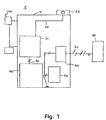
- Fig. 1 is a schematic view of a pay phone according to the preferred embodiment of the invention.
- Fig.1 diagrammatically illustrates the key components of a pay phone 5 set to operate according to the invention.
- the outer housing 10 of the pay phone contains a coin check unit 30, a modem circuit 70, a MPU system 40, an EEPROM memory device 50 connected to the MPU system 40 through a data line 60.
- the pay phone 5 is connected to the telephone network with the line cable 20.
- the line cable 20 is also connected to a remote facility computer 80.
- a handset 100 and a coin inlet 95 are provided for the pay-phone user.
- the line cable 20 is used to transmit a voice signal from the person using the handset 100 to make an ordinary phone call.
- the line cable 20 is also during quiet periods typically at night, utilised to transmit data information regarding the current operation status of the payphone 5 to the remote facility computer 80, by utilising the modem 70.
- This ensures that the condition of a large number of pay phones can be monitored from the central facility computer 80, and it ensures that an error or a need for maintenance occurring on any pay phone 5 is quickly detected.
- the data transmitting capability of the pay-phone 5, likewise makes it possible for the remote computer 80 to transmit data to the pay-phone 5, and this possibility is used in the present invention to adapt the pay-phone 5 to accept new coin denominations.
- the MPU system 40 comprises a microprocessor (not illustrated) which controls the operation of the coin check unit 30.
- the microprocessor loads an operation program from the EEPROM 50 through data line 60, and this operation program is responsible for the functions of the coin check unit 30.
- the coin runs through a channel 35 to the coin check unit 30.
- the coin check unit 30 includes a coin measurement unit, which contains two magnetic coupled coils physically arranged to lie on the same longitudinal axis with a narrow air gap between them. The air gap is suitable for the passage of a coin runway.
- One coil is used as a transmission coil and is supplied with a 32 kHz sine wave signal from an oscillator.
- the sine wave signal is transmitted to the second coil by means of a mutual magnetic coupling between the coils.
- an inductive measurement is triggered at known positions of the passing coin.
- Five values are extracted from the four measurements, since a measurement of the minimum coupling between the coils is performed along with the four measurements of coupling at the positions mentioned above.
- the five measurement values P1, P2, P3, P4, P5 are coin parameters which are specific for a coin denomination.
- the coin parameters P1 - P5, which are the results of a passing coin, are latched in a register in the coin check unit 30, and the register is accessible by the CPU contained in the MPU system 40, by means of data line 90.
- the role of the operation program in the MPU system 40 is to read the five coin parameters P1 - P5 obtained during the coin measurement procedure and compare the parameters with values contained in a coin table in the EEPROM 50.
- the operation program accepts the coin as valid, if P1 - P5 all fit within corresponding parameter intervals or acceptance windows around the parameter mean values for a given coin denomination.
- the mean value and acceptance window for each parameter P1 - P5, for each coin denomination in the coin table have previously been found during a calibration procedure of the coin check unit 30 at the factory.
- the calibration procedure has to be carried out on each coin check unit 30, due to a unit to unit random variation in measurement results from a given population of coins.
- the variation in measurement results is the result of production tolerances on the coin check unit 30, which include: sensitivity of LED's, phototransistor sensitivity, magnetic coupling between coils, mechanical tolerances.
- the correct mean values and acceptance windows for each coin denomination on a specific coin check unit 30 have previously been obtained by inserting a known coin population in each unit 30, recording the readout values, transferring the values to a PC program for statistical analysis, and letting the PC program calculate suitable mean values and acceptance windows for the unit 30 in question.
- the calculated mean values and acceptance windows for a coin denomination are finally transferred to the coin table in the EEPROM 50.
- the operation program in the MPU system 40 includes a sub-program, which can be activated from the remote facility computer 80.
- the sub-program performs a dynamic calibration of the coin check unit 30 in order to make the pay phone 5 accept a new coin denomination.
- An initial coin table for the new coin denomination, which the pay-phone 5 has to accept, is transmitted from the remote facility computer 80 to the MPU system 40, and the dynamic calibration sub-program is activated.
- This initial coin table has wider acceptance windows for coin parameters of the new coin denomination than the ordinary acceptance windows obtained by the described factory calibration procedure. The wider windows are necessary due to the unit-to-unit random variation on measurement values of coin parameters.
- the initial coin table and the calibration algorithm uses the following variables:
- MEDIAN is a byte holding the current value of the median for a coin parameter.
- COUNT is a 2 byte variable holding the current number of coins that have passed the window defined by TRACKWIN.
- FLAG is a 2-byte variable storing possible MEDIAN adjustments of all parameters P1 - P5, until the next coin is cashed. A total of 5 FLAG variables are used.
- ADJUST is a byte variable containing a signed counter for a coin parameter.
- MINWIN is a byte variable for a coin parameter, in which byte the 4 MSB represent the minimum allowed distance from the MEDIAN to the upper limit of the acceptance window, and the 4 LSB represent the minimum distance to the lower limit of the acceptance window. So, the acceptance window for a coin parameter is never allowed to be narrower than the sum of the values represented by these bits.
- TRACKWIN is a byte variable, which holds the width of the acceptance window for a coin parameter. TRACKWIN is centred around the current value of the variable MEDIAN. The measurement value of a coin parameter, has to be within this window to affect an adjustment of the MEDIAN.
- THRESHOLD is a byte variable, its value determines whether a given value of ADJUST will trigger a movement of the MEDIAN.
- MINCOUNT is a byte. A number of approved coins larger than this variable has to be inserted in a coin check unit 30 before a boundary movement of the acceptance window is approved.
- STOPCOUNT is a byte. The calibration procedure terminates when this value has been reached for variable COUNT.
- MIN, MAX is the smallest and the largest value respectfully of a coin parameter in the coin table.
- the difference between MIN, MAX is the width of the acceptance window for the coin parameter.
- the values of MIN and MAX are altered dynamically during the calibration procedure in order to make the acceptance window narrower.
- TRACKWIN ensures that only coins, which parameter values are reasonably close to the current median estimates, are used in the adjustment of the medians. This ensures that a large number of counterfeit coins with parameter values close to MIN values or MAX values, are not used to move the MEDIAN value in a wrong direction.
- the dynamic calibration sub-program When the preset minimum value for the width of the acceptance window, defined by means of MINWIDTH, has been reached, the dynamic calibration sub-program has completed its task.
- the modified values for variables MIN and MAX of parameters P1 - P5 in the coin table are stored permanently in the EEPROM 50.
- the control of the pay phone 5 is transferred back to the main part of the operation program, and the pay phone 5 accepts the new coin denomination.
- the coin table acceptance window width for the new coin denomination has been contracted to the final value defined by variable MINWIDTH.
- This final value for the acceptance window width is equal to the window width found by the traditional factory calibration procedure, and thus a good rejection of counterfeit coins for the new denomination is obtained without ever bringing the coin check unit 30 back to the factory for calibration.
- Each pay phone 5 just has to receive a standardised file, which is sent from the remote computer 80 by means of modem 70 and line cable 20.
- the file contains the initial coin table and the calibration algorithm variables for the new coin denomination, and the pay-phone 5 is adjusted to the new coin denomination by means of the calibration sub-program which utilises coins inserted by the users during normal operation of the pay-phone 5, to find the correct coin parameter values P1 - P5 for each coin check unit 30.
Landscapes
- Physics & Mathematics (AREA)
- General Physics & Mathematics (AREA)
- Testing Of Coins (AREA)
- Burglar Alarm Systems (AREA)
- Cash Registers Or Receiving Machines (AREA)
- Small-Scale Networks (AREA)
Claims (32)
- Dispositif pour effectuer un service lors de la réception et de l'acceptation d'un jeton, le dispositif comportant :caractérisé en ce que le dispositif est adapté pour effectuer le service en réponse à la réception et l'acceptation de chacun de plusieurs jetons reçus par la suite du nouveau type de jeton.des moyens (95) pour recevoir un jeton,des moyens (30) pour dériver un ou plusieurs paramètres relatifs au jeton,des moyens de mémorisation (50) destinés à garder des critères concernant le ou les plusieurs paramètres dérivés, etdes moyens (40) pour accepter le jeton sur la base de la détermination du fait que le ou les paramètres dérivés remplissent les critères,des moyens (70) pour recevoir des informations initiales comportant des critères initiaux concernant les paramètres de jeton d'un nouveau type de jeton,des moyens (40) pour, sur la base des critères initiaux, produire des critères finaux sur la base de paramètres dérivés par la suite concernant plusieurs jetons reçus par la suite du nouveau type de jeton, les critères finaux étant plus restrictifs que les critères initiaux, etdes moyens pour (40, 60) transférer les critères finaux vers les moyens de mémorisation (50), de manière à adapter les moyens d'acceptation pour accepter par la suite un jeton du nouveau type de jeton, lorsque les paramètres dérivés concernant celui-ci remplissent les critères finaux,
- Dispositif selon la revendication 1, dans lequel les critères comportent plusieurs intervalles, les moyens (40) pour accepter le jeton étant adaptés pour accepter le jeton si les paramètres dérivés se trouvent dans les intervalles.
- Dispositif selon la revendication 2, dans lequel les critères initiaux comportent plusieurs intervalles initiaux de dimensions initiales, et dans lequel les moyens de production (40) sont adaptés pour rétrécir les intervalles initiaux.
- Dispositif selon l'une quelconque des revendications précédentes, dans lequel :les moyens de réception (95) sont adaptés pour recevoir des jetons de plusieurs types prédéterminés,les moyens de dérivation (30) sont adaptés pour dériver un ou plusieurs paramètres concernant des jetons des types prédéterminés, les paramètres concernant un type de jeton pouvant être distingués de ceux concernant un autre type de jeton,les moyens de mémorisation (50) sont adaptés pour garder des critères concernant des paramètres dérivés à partir de chacun des plusieurs types prédéterminés de jetons.
- Dispositif selon l'une quelconque des revendications précédentes, dans lequel les moyens de production (40) sont adaptés pour produire les critères finaux sur la base de paramètres dérivés de jetons reçus par la suite, dont le nombre est plus petit qu'un nombre total de jetons reçus par la suite du nouveau type de jeton.
- Dispositif selon l'une quelconque des revendications 1 à 4, dans lequel les moyens de production (40) sont adaptés pour produire les critères finaux sur la base des paramètres dérivés de jetons reçus par la suite, dont le nombre est au moins pratiquement égal au nombre total de jetons reçus par la suite du nouveau type de jeton.
- Dispositif selon l'une quelconque des revendications précédentes, dans lequel les moyens de production (40) sont adaptés pour produire les critères finaux sur la base de paramètres dérivés d'un nombre prédéterminé de jetons reçus par la suite du nouveau type de jeton.
- Dispositif selon la revendication 3, dans lequel les moyens de production (40) sont adaptés pour rétrécir les intervalles initiaux en des intervalles finaux de largeurs prédéterminées.
- Dispositif selon l'une quelconque des revendications précédentes, dans lequel les moyens (70) pour recevoir les informations initiales comportent des moyens pour communiquer avec des moyens d'ordinateur éloignés (80) produisant ou fournissant les informations initiales.
- Dispositif selon la revendication 9, dans lequel :les moyens de production (40) comportent des moyens de commande adaptés pour effectuer des actions définies par un ensemble d'instructions,les moyens de production (40) peuvent être commandés par les moyens de commande,l'ordinateur éloigné (80) est adapté pour produire ou fournir l'ensemble d'instructions, etles moyens (70) pour recevoir les informations initiales sont adaptés pour recevoir l'ensemble d'instructions et envoyer celles-ci vers les moyens de commande.
- Dispositif selon la revendication 9 ou 10, dans lequel l'ordinateur éloigné (80) est adapté pour produire ou fournir les informations initiales comportant des critères initiaux déterminés sur la base de paramètres dérivés de plusieurs jetons du nouveau type de jeton introduits dans un ou plusieurs moyens de dérivation d'un ou plusieurs paramètres concernant les jetons.
- Dispositif selon la revendication 10 ou 11, dans lequel l'ordinateur éloigné (80) est adapté pour produire ou fournir, dans l'ensemble d'instructions, des instructions concernant :dont les paramètres sont utilisés par les moyens de production (40) dans la production des critères finaux.un nombre ultérieur de jetons reçus par la suite du nouveau type de jeton, et/oudes informations concernant ceux des jetons reçus par la suite du nouveau type de jeton,
- Dispositif selon l'une quelconque des revendications précédentes, dans lequel les moyens de production (40) sont adaptés pour produire les critères finaux en plusieurs étapes.
- Dispositif selon la revendication 13, dans lequel les moyens de production (40) sont adaptés pour produire des critères finaux en une seule étape.
- Dispositif selon la revendication 13, dans lequel les moyens de production (40) sont adaptés pour, dans une étape, produire des critères intermédiaires représentant des critères plus étroits que les critères initiaux et plus larges que les critères finaux.
- Dispositif selon la revendication 15, dans lequel les moyens d'acceptation (40) sont adaptés pour accepter des jetons du nouveau type de jeton, si des paramètres dérivés d'un jeton reçu du nouveau type remplissent les critères intermédiaires, et dans lequel les moyens de production (40) sont adaptés pour effectuer une étape ultérieure consistant à créer les critères finaux sur la base des paramètres dérivés du jeton accepté du nouveau type.
- Dispositif selon la revendication 15, dans lequel les moyens d'acceptation (40) sont adaptés pour accepter des jetons du nouveau type de jeton, si des paramètres dérivés d'un jeton reçu du nouveau type remplissent les critères intermédiaires, et dans lequel les moyens de production (40) sont adaptés pour effectuer une étape ultérieure consistant à produire les critères finaux sur la base des paramètres dérivés du jeton accepté du nouveau type, seulement si les paramètres remplissent des critères concernant les critères intermédiaires limités d'une manière prédéterminée.
- Dispositif selon l'une quelconque des revendications précédentes, dans lequel le jeton est une pièce ou un billet.
- Dispositif selon l'une quelconque des revendications précédentes, dans lequel le nouveau type de jeton est un jeton ayant, comparé aux jetons pouvant être acceptés au préalable, une différence :et/ou dans lequel les jetons du nouveau type ont ou n'ont pas de filigrane et/ou autres caractéristiques, telles que des creux, des contours extérieurs pouvant être reconnus, et/ou des caractéristiques enrobées, telles que des fils métalliques.de dimension physique, telle que différence de poids, d'épaisseur, de largeur, de hauteur et/ou de diamètre,de valeur monétaire,de propriétés électriques et/ou magnétiques,de composition du matériau formant le jeton, tel qu'un alliage, un métal, un papier d'une qualité différente et/oude propriétés optiques telles qu'une réflexion, une transmission, une fluorescence différentes, à une ou plusieurs longueurs d'onde prédéterminées,
- Dispositif selon l'une quelconque des revendications précédentes et comportant en outre des moyens pour retenir les jetons reçus.
- Dispositif selon la revendication 20, dans lequel les moyens de retenue sont adaptés pour stocker les jetons du nouveau type de jeton dont les paramètres sont utilisés par les moyens de production.
- Dispositif selon l'une quelconque des revendications précédentes et constituant un téléphone payant (5), dans lequel les moyens pour effectuer le service sont des moyens pour permettre à un utilisateur d'avoir une conversation téléphonique.
- Dispositif selon l'une quelconque des revendications 1 à 21 et constituant un terminal de paiement au niveau d'une station service, dans lequel les moyens pour effectuer le service sont des moyens permettant à un utilisateur d'acheter de l'essence.
- Procédé de mise à jour d'un dispositif destiné à effectuer un service de manière à accepter un nouveau type de jeton, le dispositif étant adapté pour effectuer un service lors de la réception et de l'acceptation d'un jeton, le procédé comportant les étapes consistant à :recevoir des informations initiales comportant des critères initiaux concernant des paramètres de jeton d'un nouveau type de jeton et dériver à partir de ceux-ci les critères initiaux,recevoir un jeton,dériver un ou plusieurs paramètres concernant le jeton,accepter le jeton sur la base de la détermination qu'un ou plusieurs paramètres dérivés remplissent les critères,par la suite accepter un jeton du nouveau type, effectuer le service,produire, sur la base des critères initiaux, des critères finaux sur la base de paramètres dérivés par la suite concernant plusieurs jetons reçus par la suite du nouveau type de jeton, les critères finaux étant plus restrictifs que les critères initiaux, etadapter le dispositif pour accepter par la suite un jeton du nouveau type de jeton, lorsque les paramètres dérivés concernant celui-ci remplissent les critères finaux.
- Procédé selon la revendication 24, dans lequel la production des critères finaux est obtenue en plusieurs étapes dans lesquelles les critères intermédiaires sont plus restrictifs que les critères initiaux et moins restrictifs que les critères finaux.
- Procédé selon la revendication 25, dans lequel les critères intermédiaires concernant une étape sont produits à partir des critères intermédiaires concernant une étape précédente et de paramètres dérivés à partir d'un ou plusieurs jetons reçus du nouveau type et remplissant les critères intermédiaires concernant l'étape précédente.
- Procédé selon l'une quelconque des revendications 24 à 26, dans lequel les informations initiales sont produites à un emplacement situé à distance du dispositif, les informations initiales comportant les critères initiaux et les informations supplémentaires destinées à commander la production des critères finaux.
- Procédé selon la revendication 27, dans lequel les critères initiaux sont produits sur la base de paramètres fournis par l'insertion de plusieurs jetons du nouveau type de jeton dans au moins un moyen pour fournir des paramètres.
- Procédé selon l'une quelconque des revendications 24 à 28, dans lequel la production des critères finaux est basée sur des paramètres dérivés à partir d'un nombre prédéterminé de jetons reçus du nouveau type.
- Procédé selon l'une quelconque des revendications 24 à 29, dans lequel la production des critères finaux est basée sur des paramètres dérivés d'un sous-ensemble de jetons reçus du nouveau type.
- Procédé selon la revendication 30, dans lequel le sous-ensemble de jetons reçus est sélectionné de manière aléatoire à partir des jetons reçus.
- Procédé selon l'une quelconque des revendications 24 à 31, comportant de plus l'étape consistant à retenir ceux des jetons du nouveau type, dont les paramètres dérivés sont utilisés dans la production des critères finaux.
Applications Claiming Priority (3)
| Application Number | Priority Date | Filing Date | Title |
|---|---|---|---|
| DK41898 | 1998-03-24 | ||
| DK41898 | 1998-03-24 | ||
| PCT/DK1999/000172 WO1999049423A1 (fr) | 1998-03-24 | 1999-03-24 | Appareil pour recevoir et accepter des jetons |
Publications (2)
| Publication Number | Publication Date |
|---|---|
| EP1066604A1 EP1066604A1 (fr) | 2001-01-10 |
| EP1066604B1 true EP1066604B1 (fr) | 2002-09-18 |
Family
ID=8093299
Family Applications (1)
| Application Number | Title | Priority Date | Filing Date |
|---|---|---|---|
| EP99911625A Revoked EP1066604B1 (fr) | 1998-03-24 | 1999-03-24 | Appareil et procede pour recevoir et accepter des jetons |
Country Status (5)
| Country | Link |
|---|---|
| EP (1) | EP1066604B1 (fr) |
| AT (1) | ATE224570T1 (fr) |
| AU (1) | AU3024199A (fr) |
| DE (1) | DE69903010D1 (fr) |
| WO (1) | WO1999049423A1 (fr) |
Families Citing this family (8)
| Publication number | Priority date | Publication date | Assignee | Title |
|---|---|---|---|---|
| DE10151854A1 (de) * | 2001-10-24 | 2003-05-08 | Giesecke & Devrient Gmbh | Wertdokumentbearbeitungsvorrichtung, Verfahren zur Funktionsprüfung, Justierung und/oder Kalibrierung der Wertdokumentbearbeitungsvorrichtung und Testmedien zur Durchführung des Verfahrens |
| US7014029B2 (en) | 2001-12-05 | 2006-03-21 | Coinstar, Inc. | Methods and systems for detecting coin fraud in coin-counting machines and other devices |
| EP1324278A1 (fr) | 2001-12-28 | 2003-07-02 | Mars Incorporated | Calibration des contrôleurs de moyens de paiement |
| EP1324279A1 (fr) | 2001-12-28 | 2003-07-02 | Mars Incorporated | Dispositif pour la validation d'objets monétaires et procédé pour configurer un tel dispositif |
| EP1391852B1 (fr) | 2002-08-23 | 2016-02-24 | Crane Payment Innovations, Inc. | Accepteur de devises |
| US9036890B2 (en) | 2012-06-05 | 2015-05-19 | Outerwall Inc. | Optical coin discrimination systems and methods for use with consumer-operated kiosks and the like |
| US9443367B2 (en) | 2014-01-17 | 2016-09-13 | Outerwall Inc. | Digital image coin discrimination for use with consumer-operated kiosks and the like |
| US11574516B2 (en) * | 2019-03-22 | 2023-02-07 | Asahi Seiko Co., Ltd. | Method, system, and computer readable medium for setting discrimination criterion information |
Family Cites Families (9)
| Publication number | Priority date | Publication date | Assignee | Title |
|---|---|---|---|---|
| US4538719A (en) * | 1983-07-01 | 1985-09-03 | Hilgraeve, Incorporated | Electronic coin acceptor |
| GB2199978A (en) | 1987-01-16 | 1988-07-20 | Mars Inc | Coin validators |
| US4951799A (en) | 1988-02-10 | 1990-08-28 | Tamura Electric Works, Ltd. | Method of correcting coin data and apparatus for inspecting coins |
| US5067604A (en) | 1988-11-14 | 1991-11-26 | Bally Manufacturing Corporation | Self teaching coin discriminator |
| JPH0731324Y2 (ja) * | 1989-04-21 | 1995-07-19 | サンデン株式会社 | 硬貨判別装置 |
| JPH02143640U (fr) | 1989-04-28 | 1990-12-05 | ||
| ES2098044T3 (es) * | 1992-08-13 | 1997-04-16 | Landis & Gyr Tech Innovat | Calibracion de verificadores de monedas. |
| GB2293039B (en) | 1994-09-09 | 1998-04-22 | Mars Inc | Apparatus for validating items of value, and method of calibrating such apparatus |
| GB9601335D0 (en) | 1996-01-23 | 1996-03-27 | Coin Controls | Coin validator |
-
1999
- 1999-03-24 DE DE69903010T patent/DE69903010D1/de not_active Expired - Lifetime
- 1999-03-24 AU AU30241/99A patent/AU3024199A/en not_active Abandoned
- 1999-03-24 AT AT99911625T patent/ATE224570T1/de not_active IP Right Cessation
- 1999-03-24 EP EP99911625A patent/EP1066604B1/fr not_active Revoked
- 1999-03-24 WO PCT/DK1999/000172 patent/WO1999049423A1/fr not_active Ceased
Also Published As
| Publication number | Publication date |
|---|---|
| EP1066604A1 (fr) | 2001-01-10 |
| DE69903010D1 (de) | 2002-10-24 |
| AU3024199A (en) | 1999-10-18 |
| ATE224570T1 (de) | 2002-10-15 |
| WO1999049423A1 (fr) | 1999-09-30 |
Similar Documents
| Publication | Publication Date | Title |
|---|---|---|
| EP1324279A1 (fr) | Dispositif pour la validation d'objets monétaires et procédé pour configurer un tel dispositif | |
| EP0155126B1 (fr) | Système à auto-accordement pour la reconnaissance de pièces de monnaie | |
| JPH06195543A (ja) | 紙幣識別装置 | |
| EP1066604B1 (fr) | Appareil et procede pour recevoir et accepter des jetons | |
| US5462149A (en) | Money validators | |
| EP0706698B1 (fr) | Validation de moyens de paiement | |
| CN1945637B (zh) | 货币验证装置的校准 | |
| HK1001929B (en) | Validating value carriers | |
| JP4482166B2 (ja) | 硬貨選別装置 | |
| EP1391852B1 (fr) | Accepteur de devises | |
| EP0904580B1 (fr) | Etalonnage d'un appareil de validation de pieces de monnaie | |
| US20050061605A1 (en) | Fraud prevention | |
| EP1434176A1 (fr) | Validateur de billet de banque | |
| US5988347A (en) | Coin validator for a payphone | |
| EP0781439B2 (fr) | Appareil de validation d'articles de valeur et procede d'etalonnage de cet appareil | |
| JP3799793B2 (ja) | 釣り銭保留筒の硬貨残量管理装置 | |
| RO118233B1 (ro) | Metodă de calibrare a verificatoarelor de monede şi verificator de monede | |
| EP0919962B1 (fr) | Dispositif pour la validation de billets de banque et méthode | |
| EP1434177B1 (fr) | Dispositif de validation de billets de banque | |
| JP4111434B2 (ja) | 硬貨識別基準補正方法および硬貨処理装置 | |
| JP2000348232A (ja) | 硬貨識別装置 | |
| JP2953339B2 (ja) | 硬貨選別装置 | |
| EP1003133A2 (fr) | Dispositif pour calibrer un appareil accepteur de pièces de monnaie à identifier des pièces de monnaie | |
| EP0607741A2 (fr) | Nouveau système pour programmer les sélecteurs de pièces de monnaie | |
| CA2280490A1 (fr) | Valideuse de pieces a tarif initiale variable pour telephones payants |
Legal Events
| Date | Code | Title | Description |
|---|---|---|---|
| PUAI | Public reference made under article 153(3) epc to a published international application that has entered the european phase |
Free format text: ORIGINAL CODE: 0009012 |
|
| 17P | Request for examination filed |
Effective date: 20001024 |
|
| AK | Designated contracting states |
Kind code of ref document: A1 Designated state(s): AT BE CH CY DE DK ES FI FR GB GR IE IT LI LU MC NL PT SE |
|
| GRAG | Despatch of communication of intention to grant |
Free format text: ORIGINAL CODE: EPIDOS AGRA |
|
| RTI1 | Title (correction) |
Free format text: AN APPARATUS AND A METHOD FOR RECEIVING AND ACCEPTING TOKENS |
|
| 17Q | First examination report despatched |
Effective date: 20010504 |
|
| GRAG | Despatch of communication of intention to grant |
Free format text: ORIGINAL CODE: EPIDOS AGRA |
|
| GRAH | Despatch of communication of intention to grant a patent |
Free format text: ORIGINAL CODE: EPIDOS IGRA |
|
| GRAH | Despatch of communication of intention to grant a patent |
Free format text: ORIGINAL CODE: EPIDOS IGRA |
|
| GRAA | (expected) grant |
Free format text: ORIGINAL CODE: 0009210 |
|
| RIC1 | Information provided on ipc code assigned before grant |
Free format text: 7G 07D 5/00 A |
|
| AK | Designated contracting states |
Kind code of ref document: B1 Designated state(s): AT BE CH CY DE DK ES FI FR GB GR IE IT LI LU MC NL PT SE |
|
| PG25 | Lapsed in a contracting state [announced via postgrant information from national office to epo] |
Ref country code: NL Free format text: LAPSE BECAUSE OF FAILURE TO SUBMIT A TRANSLATION OF THE DESCRIPTION OR TO PAY THE FEE WITHIN THE PRESCRIBED TIME-LIMIT Effective date: 20020918 Ref country code: LI Free format text: LAPSE BECAUSE OF FAILURE TO SUBMIT A TRANSLATION OF THE DESCRIPTION OR TO PAY THE FEE WITHIN THE PRESCRIBED TIME-LIMIT Effective date: 20020918 Ref country code: IT Free format text: LAPSE BECAUSE OF FAILURE TO SUBMIT A TRANSLATION OF THE DESCRIPTION OR TO PAY THE FEE WITHIN THE PRESCRIBED TIME-LIMIT;WARNING: LAPSES OF ITALIAN PATENTS WITH EFFECTIVE DATE BEFORE 2007 MAY HAVE OCCURRED AT ANY TIME BEFORE 2007. THE CORRECT EFFECTIVE DATE MAY BE DIFFERENT FROM THE ONE RECORDED. Effective date: 20020918 Ref country code: GR Free format text: LAPSE BECAUSE OF FAILURE TO SUBMIT A TRANSLATION OF THE DESCRIPTION OR TO PAY THE FEE WITHIN THE PRESCRIBED TIME-LIMIT Effective date: 20020918 Ref country code: FI Free format text: LAPSE BECAUSE OF FAILURE TO SUBMIT A TRANSLATION OF THE DESCRIPTION OR TO PAY THE FEE WITHIN THE PRESCRIBED TIME-LIMIT Effective date: 20020918 Ref country code: CH Free format text: LAPSE BECAUSE OF FAILURE TO SUBMIT A TRANSLATION OF THE DESCRIPTION OR TO PAY THE FEE WITHIN THE PRESCRIBED TIME-LIMIT Effective date: 20020918 Ref country code: BE Free format text: LAPSE BECAUSE OF FAILURE TO SUBMIT A TRANSLATION OF THE DESCRIPTION OR TO PAY THE FEE WITHIN THE PRESCRIBED TIME-LIMIT Effective date: 20020918 Ref country code: AT Free format text: LAPSE BECAUSE OF FAILURE TO SUBMIT A TRANSLATION OF THE DESCRIPTION OR TO PAY THE FEE WITHIN THE PRESCRIBED TIME-LIMIT Effective date: 20020918 |
|
| REF | Corresponds to: |
Ref document number: 224570 Country of ref document: AT Date of ref document: 20021015 Kind code of ref document: T |
|
| REG | Reference to a national code |
Ref country code: GB Ref legal event code: FG4D |
|
| REG | Reference to a national code |
Ref country code: CH Ref legal event code: EP |
|
| REG | Reference to a national code |
Ref country code: IE Ref legal event code: FG4D |
|
| REF | Corresponds to: |
Ref document number: 69903010 Country of ref document: DE Date of ref document: 20021024 |
|
| PG25 | Lapsed in a contracting state [announced via postgrant information from national office to epo] |
Ref country code: SE Free format text: LAPSE BECAUSE OF FAILURE TO SUBMIT A TRANSLATION OF THE DESCRIPTION OR TO PAY THE FEE WITHIN THE PRESCRIBED TIME-LIMIT Effective date: 20021218 Ref country code: DK Free format text: LAPSE BECAUSE OF FAILURE TO SUBMIT A TRANSLATION OF THE DESCRIPTION OR TO PAY THE FEE WITHIN THE PRESCRIBED TIME-LIMIT Effective date: 20021218 |
|
| PG25 | Lapsed in a contracting state [announced via postgrant information from national office to epo] |
Ref country code: PT Free format text: LAPSE BECAUSE OF FAILURE TO SUBMIT A TRANSLATION OF THE DESCRIPTION OR TO PAY THE FEE WITHIN THE PRESCRIBED TIME-LIMIT Effective date: 20021219 Ref country code: DE Free format text: LAPSE BECAUSE OF FAILURE TO SUBMIT A TRANSLATION OF THE DESCRIPTION OR TO PAY THE FEE WITHIN THE PRESCRIBED TIME-LIMIT Effective date: 20021219 |
|
| PGFP | Annual fee paid to national office [announced via postgrant information from national office to epo] |
Ref country code: FR Payment date: 20030211 Year of fee payment: 5 |
|
| ET | Fr: translation filed | ||
| NLV1 | Nl: lapsed or annulled due to failure to fulfill the requirements of art. 29p and 29m of the patents act | ||
| PG25 | Lapsed in a contracting state [announced via postgrant information from national office to epo] |
Ref country code: LU Free format text: LAPSE BECAUSE OF NON-PAYMENT OF DUE FEES Effective date: 20030324 Ref country code: IE Free format text: LAPSE BECAUSE OF NON-PAYMENT OF DUE FEES Effective date: 20030324 Ref country code: GB Free format text: LAPSE BECAUSE OF NON-PAYMENT OF DUE FEES Effective date: 20030324 Ref country code: CY Free format text: LAPSE BECAUSE OF FAILURE TO SUBMIT A TRANSLATION OF THE DESCRIPTION OR TO PAY THE FEE WITHIN THE PRESCRIBED TIME-LIMIT Effective date: 20030324 |
|
| PG25 | Lapsed in a contracting state [announced via postgrant information from national office to epo] |
Ref country code: ES Free format text: LAPSE BECAUSE OF FAILURE TO SUBMIT A TRANSLATION OF THE DESCRIPTION OR TO PAY THE FEE WITHIN THE PRESCRIBED TIME-LIMIT Effective date: 20030328 |
|
| PG25 | Lapsed in a contracting state [announced via postgrant information from national office to epo] |
Ref country code: MC Free format text: LAPSE BECAUSE OF NON-PAYMENT OF DUE FEES Effective date: 20030331 |
|
| REG | Reference to a national code |
Ref country code: CH Ref legal event code: PL |
|
| PLBQ | Unpublished change to opponent data |
Free format text: ORIGINAL CODE: EPIDOS OPPO |
|
| PLBI | Opposition filed |
Free format text: ORIGINAL CODE: 0009260 |
|
| PLAX | Notice of opposition and request to file observation + time limit sent |
Free format text: ORIGINAL CODE: EPIDOSNOBS2 |
|
| 26 | Opposition filed |
Opponent name: MARS INCORPORATED Effective date: 20030618 |
|
| PLBB | Reply of patent proprietor to notice(s) of opposition received |
Free format text: ORIGINAL CODE: EPIDOSNOBS3 |
|
| GBPC | Gb: european patent ceased through non-payment of renewal fee |
Effective date: 20030324 |
|
| REG | Reference to a national code |
Ref country code: IE Ref legal event code: MM4A |
|
| PLAS | Information related to reply of patent proprietor to notice(s) of opposition deleted |
Free format text: ORIGINAL CODE: EPIDOSDOBS3 |
|
| RDAF | Communication despatched that patent is revoked |
Free format text: ORIGINAL CODE: EPIDOSNREV1 |
|
| RDAG | Patent revoked |
Free format text: ORIGINAL CODE: 0009271 |
|
| STAA | Information on the status of an ep patent application or granted ep patent |
Free format text: STATUS: PATENT REVOKED |
|
| 27W | Patent revoked |
Effective date: 20040513 |