EP1067447A2 - Support d'enregistrement et méthode de protection du contenu utilisant le support d'enregistrement - Google Patents
Support d'enregistrement et méthode de protection du contenu utilisant le support d'enregistrement Download PDFInfo
- Publication number
- EP1067447A2 EP1067447A2 EP00112701A EP00112701A EP1067447A2 EP 1067447 A2 EP1067447 A2 EP 1067447A2 EP 00112701 A EP00112701 A EP 00112701A EP 00112701 A EP00112701 A EP 00112701A EP 1067447 A2 EP1067447 A2 EP 1067447A2
- Authority
- EP
- European Patent Office
- Prior art keywords
- storage medium
- electronic device
- identification information
- contents
- area
- Prior art date
- Legal status (The legal status is an assumption and is not a legal conclusion. Google has not performed a legal analysis and makes no representation as to the accuracy of the status listed.)
- Granted
Links
Images



Classifications
-
- G—PHYSICS
- G06—COMPUTING OR CALCULATING; COUNTING
- G06F—ELECTRIC DIGITAL DATA PROCESSING
- G06F1/00—Details not covered by groups G06F3/00 - G06F13/00 and G06F21/00
-
- G—PHYSICS
- G06—COMPUTING OR CALCULATING; COUNTING
- G06F—ELECTRIC DIGITAL DATA PROCESSING
- G06F21/00—Security arrangements for protecting computers, components thereof, programs or data against unauthorised activity
- G06F21/70—Protecting specific internal or peripheral components, in which the protection of a component leads to protection of the entire computer
- G06F21/78—Protecting specific internal or peripheral components, in which the protection of a component leads to protection of the entire computer to assure secure storage of data
-
- H—ELECTRICITY
- H04—ELECTRIC COMMUNICATION TECHNIQUE
- H04L—TRANSMISSION OF DIGITAL INFORMATION, e.g. TELEGRAPHIC COMMUNICATION
- H04L9/00—Cryptographic mechanisms or cryptographic arrangements for secret or secure communications; Network security protocols
- H04L9/32—Cryptographic mechanisms or cryptographic arrangements for secret or secure communications; Network security protocols including means for verifying the identity or authority of a user of the system or for message authentication, e.g. authorization, entity authentication, data integrity or data verification, non-repudiation, key authentication or verification of credentials
- H04L9/3263—Cryptographic mechanisms or cryptographic arrangements for secret or secure communications; Network security protocols including means for verifying the identity or authority of a user of the system or for message authentication, e.g. authorization, entity authentication, data integrity or data verification, non-repudiation, key authentication or verification of credentials involving certificates, e.g. public key certificate [PKC] or attribute certificate [AC]; Public key infrastructure [PKI] arrangements
- H04L9/3268—Cryptographic mechanisms or cryptographic arrangements for secret or secure communications; Network security protocols including means for verifying the identity or authority of a user of the system or for message authentication, e.g. authorization, entity authentication, data integrity or data verification, non-repudiation, key authentication or verification of credentials involving certificates, e.g. public key certificate [PKC] or attribute certificate [AC]; Public key infrastructure [PKI] arrangements using certificate validation, registration, distribution or revocation, e.g. certificate revocation list [CRL]
-
- G—PHYSICS
- G06—COMPUTING OR CALCULATING; COUNTING
- G06F—ELECTRIC DIGITAL DATA PROCESSING
- G06F2221/00—Indexing scheme relating to security arrangements for protecting computers, components thereof, programs or data against unauthorised activity
- G06F2221/21—Indexing scheme relating to G06F21/00 and subgroups addressing additional information or applications relating to security arrangements for protecting computers, components thereof, programs or data against unauthorised activity
- G06F2221/2121—Chip on media, e.g. a disk or tape with a chip embedded in its case
-
- G—PHYSICS
- G06—COMPUTING OR CALCULATING; COUNTING
- G06F—ELECTRIC DIGITAL DATA PROCESSING
- G06F2221/00—Indexing scheme relating to security arrangements for protecting computers, components thereof, programs or data against unauthorised activity
- G06F2221/21—Indexing scheme relating to G06F21/00 and subgroups addressing additional information or applications relating to security arrangements for protecting computers, components thereof, programs or data against unauthorised activity
- G06F2221/2141—Access rights, e.g. capability lists, access control lists, access tables, access matrices
Definitions
- the present invention relates to a storage medium for use in recording and reproducing contents such as image data and music data, and more particularly to a storage medium suitable for preventing recording/reproducing of contents by improper electronic devices and a contents protection method using the storage medium.
- the storage medium used in electronic devices such as a personal computer, a settop box and a player are, in most cases, reversible and can be recorded/reproduced in another devices. Further, the specifications of such a storage medium are basically open. Since the digital contents can be freely moved/copied, it is difficult in practice to protect the contents stored in the medium from unlawful copying/moving.
- contents may be protected by providing an access disable region (secret region), which can be accessed by a secret procedure alone and cannot be accessed by a user, and storing in the secrete region important information necessary for the use of contents, such as copy control information and move control information.
- secret region an access disable region
- the electronic device and the storage medium may mutually authenticate each other to confirm that they are lawful ones and share a predetermined contents protection function relating to the copyright protection (contents protection). If they are properly authenticated, key exchange may be performed in accordance with a shared key generation algorithm and a common authentication key may be acquired individually, and the authentication key may be used to encrypt/decrypt a contents key (i.e., a key for decrypting contents) or encrypt/decrypt the contents.
- a storage medium comprising: a specified storage area on which revocation information is registered, the revocation information designating at least one electronic device in which use of the storage medium by the designated electronic device is to be revoked, wherein an electronic device which attempts to access the storage medium is controlled in accordance with the revocation information.
- the storage medium may further comprise a controller for receiving from the electronic device which attempts to access, identification information indicative of the electronic device, and checking whether identification information corresponding to the received identification information is contained in the revocation information, thereby determining whether or not use of the storage medium by the electronic device which attempts to access should be revoked.
- a subsequent process may be halted.
- the controller may send the identification information indicative of the storage medium to the electronic device which attempts to access, and contents encrypted with the identification information indicative of the storage medium may be written on a predetermined storage area of the storage medium by the electronic device.
- the controller may send the identification information indicative of the storage medium to the electronic device which attempts to access, and contents encrypted with the identification information indicative of the storage medium may be read out from a predetermined storage area of the storage medium by the electronic device.
- the specified storage area may be a storage area provided on a read-only non-volatile memory.
- the specified storage area may be a storage area which is provided on a rewritable read-only non-volatile memory and can be accessed only by a secret specific procedure.
- a contents protection method comprising the steps of: providing a specified storage area on storage medium and registering revocation information on the specified storage area, the revocation information designating at least one electronic device in which use of the storage medium by the designated electronic device is to be revoked; and controlling an electronic device which attempts to access the storage medium in accordance with the revocation information.
- the controlling step may comprise the steps of: receiving from the electronic device which attempts to access, identification information indicative of the electronic device; and checking whether identification information corresponding to the received identification information is contained in the revocation information, thereby determining whether or not use of the storage medium by the electronic device which attempts to access should be revoked.
- a subsequent process may be halted.
- the controlling step may comprise the step of sending, when it is not determined in the checking step that use of the storage medium by the electronic device should be revoked, the identification information indicative of the storage medium to the electronic device which attempts to access, wherein contents encrypted with the identification information indicative of the storage medium may be written on a predetermined storage area of the storage medium by the electronic device.
- the controlling step may comprise the step of sending, when it is not determined in the checking step that use of the storage medium by the electronic device should be revoked, the identification information indicative of the storage medium to the electronic device which attempts to access, wherein contents encrypted with the identification information indicative of the storage medium may be read out from a predetermined storage area of the storage medium by the electronic device.
- the specified storage area may be a storage area provided on a read-only non-volatile memory.
- the specified storage area may be a storage area which is provided on a rewritable read-only non-volatile memory and can be accessed only by a secret specific procedure.
- FIG. 1 shows an example of the structure of a contents use management system according to an embodiment of the present invention.
- music data is used as contents (digital contents).
- the contents may be movie data, game software data, etc.
- An EMD Electronic Music Distributor
- An EMD is a music distribution server or music distribution broadcast station.
- a contents use management system (hereinafter referred to as LCM (License (SDMI-)Compliant Module) 1 is implemented, for example, by a personal computer (PC).
- LCM Locense (SDMI-)Compliant Module
- a contents protection method in the LCM 1 is based on a technique in which encrypting/decrypting of contents is managed by using identification information (medium ID) for identifying a storage medium 13 in which contents are to be recorded.
- the LCM 1 includes receivers #1 to #3 corresponding to a plurality of EMDs (EMD #1 to EMD #3 in this case).
- the LCM 1 receives, through the receivers #1 to #3, encrypted contents or their licenses (the use condition and decryption key for the encrypted contents), and the like distributed by the EMDs.
- Receivers #1 to #3 may have a reproducing function or charging function. Also, the user can purchase the contents he or she likes using the charging function.
- the LCM 1 includes a secure contents server (Secure Music Server: SMS in this case; to be also simply referred to as an SMS hereinafter) 2.
- the SMS 2 receives via an EMD interface (I/F) 3 the encrypted contents purchased by a user.
- the encrypted contents music contents in this case
- the encrypted contents are decrypted by the EMD I/F 3 as needed, and undergo format conversion and re-encryption.
- the SMS 2 stores the received contents in a music data memory 10, and a music data decryption key (contents decryption key) in a license memory 9.
- the SMS 2 may have a reproducing function for permitting the user to test-listen to the distributed music contents. In this case, the music contents managed by the SMS 2 can be reproduced on the PC.
- the SMS 2 has a function of outputting, via a medium I/F 6, contents data (digital contents) to the storage medium (to be also referred to as a PM (Portable Memory) hereinafter) 13, such as a memory card, which can be loaded in the medium I/F 6.
- a PM Portable Memory
- PD Portable Device
- the SMS 2 records contents on the PM 13 directly via a medium I/F 6 or with the intervention of the PD 12.
- the check-out process means making a copy of "parent" contents stored in the LCM 1 on the PM 13 as "child” contents.
- the "child” contents can be freely reproduced by the PD 12, but it is not allowed to form “grandchild” contents from the "child”.
- the number of "children” "parent” can have is defined as an attribute of "parent”.
- the check-in process means erasing (or disabling to use) "child” contents by the LCM 1 when the PM 13 is loaded in the LCM 1, thereby recovering the right of "parent” contents in the LCM 1 to form one "child”. This process is also called check-in at "parent”.
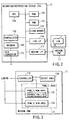
- the PM 13, as shown in FIG. 3, includes a controller 130 and a storage portion having a public area 131 and a secret area 134.
- the secret area 134 can be accessed only by a non-public procedure (i.e., a specific secret procedure) via the controller 130.
- the secret area 134 is used for storing information necessary for decrypting the contents.
- the secret area 134 includes a secret ROM area for storing constants such as medium identification information (hereinafter "medium key”) K M , which is inherent to the associated PM 13, and a secret R/W (read/write) area for storing variables such as a license decryption key, which is secret data (called “medium mark”) provided from a licensing side.
- medium key medium identification information
- K M medium identification information
- R/W read/write
- the medium key K M is inherent to each PM 13, and various identification information such as a serial number or a product number (a product number or a product lot number of each PM 13) may be used.
- the medium key K M may be produced from the identification information inherent to each PM 13 and the license decryption key.
- the secret ROM area is provided on, e.g., a ROM (a read-only non-volatile memory), and the secret R/W area is provided on, e.g., a specific area of a flash memory (rewritable non-volatile memory).
- the public area 131 is an area other than the secret area, which can be accessed by an ordinary procedure.
- the public area 131 includes a read-only public area (hereinafter "public ROM area”) 132 and a rewritable public area (“public R/W area”) 133.
- the public ROM area 132 is provided on, e.g., a ROM, and the public R/W area 133 is provided on, e.g., a flash memory.
- the public ROM area 132 and public R/W area 133 may be provided on the aforementioned ROM, on which the secret ROM area is provided, and on the aforementioned flash memory on which the secret R/W area is provided.
- revocation information relating directly to the present invention is pre-registered at a stage of shipment of the associated PM 13.
- the revocation information serves to designate an electronic device (LCM, PD) in which use of the PM 13 by the designated electronic device is to be revoked so as to protect the contents, and more specifically, an electronic device (LCM, PD) whose access request for recording/reproducing digital contents in the PM 13 (the public R/W area 133 of PM 13) is to be revoked.
- the revocation information is a list of identification information (device ID) of electronic devices whose access requests are to be revoked.
- the revocation information is referred to as "revocation list RL".
- a revocation list RL is pre-registered on the public ROM area 132.
- the public R/W area 133 may store encrypted contents key (contents decryption key) and encrypted contents, as needed.
- the encrypted contents key is obtained by encrypting a contents key K C (inherent to contents C) for decrypting the contents C with a medium key K M depending on the PM 13.
- the encrypted contents (doubly encrypted contents in this embodiment) are obtained by encrypting the contents (K C [C]) encrypted by K C with the medium key K M depending on the PM 13 (i.e., K M [K C [C]]).
- the LCM 1 as shown in FIG. 4A, includes a public area 111 having a public ROM area 112 and a public R/W area 113, and a secret area 114 which can be accessed only by a non-public procedure.
- the music data memory 10, as shown in FIG. 1 is provided on the public R/W area 113.
- Identification information (device ID) ID LCM of the LCM 1 is pre-stored on the secret area 114.
- the contents key K C of the respective contents are stored on the secret area 114, as needed.
- a guest book memory 8, as shown in FIG. 1, is provided on the secret area 114.
- All the music contents stored in the music data memory 10 (public R/W area 113), which is under control of the SMS 2, have as their attribute information the contents ID (TID), or identification information, a predetermined number of copiable contents, i.e. the number of remaining children, and a check-out list.
- This attribute information is referred to as "guest book” and stored in the guest book memory 8 (in the secret area 114).
- the LCM 1 has a secret area driver 7 for reading data out of the guest book memory 8 (provided by the secret area 114), after a secret specific procedure for accessing the guest book memory 8 is performed by the SMS 2. Since the guest book does not directly relate to the present invention, the details of the method for using it are not described.
- the PD 12 includes a public area 121 having a public ROM area 122 and a public R/W area 123, and a secret area 124 which can be accessed only by a non-public procedure.
- Identification information ID PD of the PD 12 is pre-stored on the secret area 124 in a fixed fashion.
- the contents keys K C for respective contents are stored on the secret area 124, as needed.
- FIG. 2 shows an example of the structure of the PD 12.
- the PM 13 When the PM 13 is used, it is loaded in a medium I/F 12f of the PD 12.
- the secret area 134 (see FIG. 3) of the PM 13 is accessed via a PD I/F 5 in the LCM 1, and an LCM I/F 12e and a medium I/F 12f in the PD 12.
- the medium I/F 12f has a secret area access section (not shown) for accessing the secret area 134 of PM 13.
- the public R/W area 123 and secret area 124 (see FIG. 4B) in the PD 12 are provided, for example, on a flash memory 12d.
- the public ROM area 122 (see FIG.
- the ROM 12c stores a program for effecting mutual authentication with the PM 13.
- the PD 12 executes a process for mutual authentication, etc. with the PM 13 in accordance with this program under control of a CPU 12a.
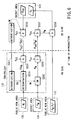
- a check-out instruction is issued via, e.g., a user interface (I/F) 15 of the LCM 1, and the PM 13 is loaded in the medium I/F 6 of the LCM 1.
- mutual authentication is effected between the medium I/F 6 of LCM 1 and the controller 130 of PM 13 (step S101).
- the mutual authentication is performed, as described below, assuming that the LCM 1 is a device A and the PM 13 is a device B.
- the device A authenticates the device B.
- the device A has a public key kp and the device B has a secret key ks corresponding to the public key kp, if the device B shares a predetermined contents protection function with the device A.
- the device A generates a random number R and sends it to the device B.
- the device B receives the random number R and encrypts it with the secret key ks.
- the device B returns the encrypted random number (expressed by ks[R]) to the device A.
- the device A decrypts the random number ks[R] using the public key kp. If the decrypted result is equal to the random number R, the device A determines that the device B is a proper counterpart.
- the device B performs the same procedure for the device A, thereby to effect mutual authentication.
- the device B has a public key
- the device A has a secret key
- the device A encrypts a random number generated by the device B with the secret key
- the device B decrypts the encrypted random number using the public key and determines whether the decrypted result is equal to the previously generated random number.
- key exchange is made between the medium I/F 6 of LCM 1 and the controller 130 of PM 13 and the same authentication key (K X1 ) is shared.
- the key exchange is performed, for example, by a method using a random challenge response represented by CSS (Content Scrambling System) employed as a content encrypting algorithm for DVD-ROMs.
- the authentication key (K X1 ) is a variable key which varies from operation to operation.
- the medium I/F 6 of LCM 1 reads out its own identification information ID LCM kept in secrecy on the secret area 114, and encrypts the read-out information ID LCM using the authentication key (K X1 ).
- the controller 130 of the PM 13 decrypts the information K X1 [ID LCM ] from the LCM 1 with the key (K X1 ) acquired by the previous key exchange, and obtains the information ID LCM (step S103).
- the controller 130 of the PM 13 refers to the revocation list RL in the public ROM area 132, using the decrypted identification information ID LCM of the LCM 1, and determines whether identification information corresponding to the ID LCM is registered. Thereby, it is determined whether use of the PM 13 by the LCM 1 is to be revoked or not (step S104).
- the controller 130 determines that the use of the PM 13 by the LCM 1 should be revoked, and halts the subsequent process.
- the medium I/F 6 of LCM 1 decrypts the K X2 [K M ] from the PM 13, using the authentication key (K X2 ) acquired by the key exchange, and obtains the medium key K M (step S107).
- the LCM 1 receives from the PM 13 the (encrypted) medium key K M , which would not be delivered from the PM 13 to the LCM 1 if the use of the PM 13 is revoked in accordance with the revocation list RL.
- the LCM 1 encrypts the contents key K C kept in secrecy on the secret area 114 of LCM 1.
- the encrypted key is written in the public R/W area 133 of the PM 13.
- the use of the PM 13 by the LCM which is an object of revocation designated in the revocation list, can be surely revoked (excluded).
- the encrypted contents K C [C]
- the encrypted contents may be further encrypted using the acquired medium key K M .
- step S101 mutual authentication is effected (like step S101) between the CPU 12a of PD 12 and the controller 130 of PM 13 (step S201). If it is confirmed that the PD 12 and the PM 13 are mutually proper counterparts by the mutual authentication, key exchange is made between the CPU 12a of PD 12 and the controller 130 of PM 13 and the same authentication key (K X3 ) is shared.
- the CPU 12a of PD 12 reads out its own identification information ID PD kept in secrecy on the secret area 124, and encrypts the read-out information ID PD using the authentication key (K X3 ).
- the controller 130 of the PM 13 decrypts the information K X3 [ID PD ] from the PD 12 with the key (K X3 ) acquired by the previous key exchange, and obtains the information ID PD (step S203).
- the controller 130 of the PM 13 refers to the revocation list RL in the public ROM area 132, using the decrypted identification information ID PD of the PD 12, and determines whether identification information corresponding to the ID PD is registered. Thereby, it is determined whether use of the PM 13 by the PD 12 is to be revoked or not (step S204).
- the controller 130 determines that the use of the PM 13 by the PD 12 should be revoked, and halts the subsequent process.
- the CPU 12a of PD 12 decrypts the K X4 [K M ] from the PM 13, using the authentication key (K X4 ) acquired by the previous key exchange, and obtains the medium key K M (step S207).
- the decrypted contents key K C is written on the secret area 124 and kept in secrecy (step S208). Accordingly, using the decrypted contents key K C (and, if necessary, the previously decrypted medium key K M ), the PD 12 can decipher and reproduce the encrypted contents stored on the public R/W area 133 of PM 13.
- the PD 12 receives from the PM 13 the (encrypted) medium key K M , which would not be delivered from the PM 13 to the PD 12 if the use of the PM 13 is revoked in accordance with the revocation list RL.
- the medium key K M the PD 12 decrypts the encrypted contents key (K M [K C ]) kept in secrecy on the secret area 134 of PM 13.
- the encrypted key is written on the secret area 124 of the PD 12.
- the use of the PM 13 by the PD which is an object of revocation designated in the revocation list, can be surely revoked (excluded).
- the revocation list RL is registered on the public ROM area 132. However, it may be registered anywhere if falsification of the list RL is prevented. For example, the revocation list RL may be registered on the secret area 134 which can be accessed only by a secret specific procedure.
Landscapes
- Engineering & Computer Science (AREA)
- Computer Security & Cryptography (AREA)
- Theoretical Computer Science (AREA)
- Computer Hardware Design (AREA)
- Physics & Mathematics (AREA)
- General Engineering & Computer Science (AREA)
- General Physics & Mathematics (AREA)
- Software Systems (AREA)
- Computer Networks & Wireless Communication (AREA)
- Signal Processing (AREA)
- Storage Device Security (AREA)
- Signal Processing For Digital Recording And Reproducing (AREA)
Applications Claiming Priority (2)
| Application Number | Priority Date | Filing Date | Title |
|---|---|---|---|
| JP16998099A JP4621314B2 (ja) | 1999-06-16 | 1999-06-16 | 記憶媒体 |
| JP16998099 | 1999-06-16 |
Publications (4)
| Publication Number | Publication Date |
|---|---|
| EP1067447A2 true EP1067447A2 (fr) | 2001-01-10 |
| EP1067447A3 EP1067447A3 (fr) | 2005-09-14 |
| EP1067447B1 EP1067447B1 (fr) | 2011-10-05 |
| EP1067447B8 EP1067447B8 (fr) | 2012-03-14 |
Family
ID=15896379
Family Applications (1)
| Application Number | Title | Priority Date | Filing Date |
|---|---|---|---|
| EP00112701A Expired - Lifetime EP1067447B8 (fr) | 1999-06-16 | 2000-06-15 | Support d'enregistrement pour protection du contenu |
Country Status (6)
| Country | Link |
|---|---|
| US (1) | US7137012B1 (fr) |
| EP (1) | EP1067447B8 (fr) |
| JP (1) | JP4621314B2 (fr) |
| KR (1) | KR20010015037A (fr) |
| CN (1) | CN1145160C (fr) |
| TW (1) | TW479166B (fr) |
Cited By (5)
| Publication number | Priority date | Publication date | Assignee | Title |
|---|---|---|---|---|
| EP1684287A1 (fr) * | 2005-01-24 | 2006-07-26 | Thomson Licensing S.A. | Support d'enregistrement de données numériques sécurisé |
| EP2172844A1 (fr) * | 2008-10-01 | 2010-04-07 | Canon Kabushiki Kaisha | Procédé de protection de la mémoire, appareil de traitement d'informations, programme et support de stockage lisible sur ordinateur |
| US8024583B2 (en) | 2005-04-27 | 2011-09-20 | Panasonic Corporation | Confidential information processing host device and confidential information processing method |
| EP2704353A4 (fr) * | 2011-04-25 | 2015-04-22 | Panasonic Corp | Appareil de support d'enregistrement et dispositif de commande |
| US9178702B2 (en) | 2011-04-22 | 2015-11-03 | Panasonic Corporation | Revocation list generation device, revocation list generation method, and content management system |
Families Citing this family (42)
| Publication number | Priority date | Publication date | Assignee | Title |
|---|---|---|---|---|
| WO2001015380A1 (fr) * | 1999-08-20 | 2001-03-01 | Sony Corporation | Systeme et procede d'emission d'informations, lecteur et procede d'acces, support d'enregistrement d'informations, et dispositif et procede de production de supports d'enregistrement |
| US6850914B1 (en) * | 1999-11-08 | 2005-02-01 | Matsushita Electric Industrial Co., Ltd. | Revocation information updating method, revocation informaton updating apparatus and storage medium |
| JP4674396B2 (ja) * | 2000-10-20 | 2011-04-20 | ソニー株式会社 | データ再生装置、データ記録装置、およびデータ再生方法、データ記録方法、並びにプログラム提供媒体 |
| JP4300705B2 (ja) * | 2000-12-05 | 2009-07-22 | ソニー株式会社 | データ転送システム、データ転送装置、データ転送方法、記録媒体 |
| US9613483B2 (en) | 2000-12-27 | 2017-04-04 | Proxense, Llc | Personal digital key and receiver/decoder circuit system and method |
| FR2829603A1 (fr) * | 2001-09-11 | 2003-03-14 | St Microelectronics Sa | Procede et dispositif de stockage et de lecture de donnees numeriques sur un support physique |
| JP2003333030A (ja) * | 2002-05-16 | 2003-11-21 | Nec Corp | タイムシフト出力方法及びタイムシフト出力装置 |
| JP3924227B2 (ja) * | 2002-09-26 | 2007-06-06 | シャープ株式会社 | 画像処理装置 |
| CN1512357A (zh) * | 2002-12-30 | 2004-07-14 | �ʼҷ����ֵ��ӹɷ�����˾ | 一种增加光盘防拷贝系统扩展性的方法及系统 |
| JP4043388B2 (ja) * | 2003-03-20 | 2008-02-06 | ソニー株式会社 | 再生装置および再生方法 |
| JP2004295373A (ja) * | 2003-03-26 | 2004-10-21 | Sony Corp | 情報記録媒体、情報処理装置、情報記録媒体製造装置、および方法、並びにコンピュータ・プログラム |
| US7526802B2 (en) * | 2003-05-16 | 2009-04-28 | Fisher-Rosemount Systems, Inc. | Memory authentication for intrinsically safe field maintenance tools |
| JP4222110B2 (ja) * | 2003-05-28 | 2009-02-12 | ソニー株式会社 | 情報記録媒体、並びに情報処理装置及び方法 |
| CN1302382C (zh) * | 2003-06-13 | 2007-02-28 | 联想(北京)有限公司 | 基于usb闪存盘存储介质私有空间的验证方法 |
| JP4059185B2 (ja) | 2003-10-15 | 2008-03-12 | ソニー株式会社 | 情報処理装置、情報記録媒体、および情報処理方法、並びにコンピュータ・プログラム |
| JP4608886B2 (ja) * | 2004-01-16 | 2011-01-12 | 株式会社日立製作所 | コンテンツ送信装置および方法 |
| WO2005086802A2 (fr) | 2004-03-08 | 2005-09-22 | Proxense, Llc | Systeme de compte lie utilisant une cle numerique personnelle |
| JP4515793B2 (ja) | 2004-03-11 | 2010-08-04 | 株式会社東芝 | メモリカード装置およびメモリカード制御方法 |
| AU2005319019A1 (en) | 2004-12-20 | 2006-06-29 | Proxense, Llc | Biometric personal data key (PDK) authentication |
| EP1684286A1 (fr) * | 2005-01-24 | 2006-07-26 | Thomson Licensing | Support d'enregistrement de données numériques sécurisé |
| JP4763368B2 (ja) * | 2005-07-12 | 2011-08-31 | パナソニック株式会社 | 通信カード、機密情報処理システム、機密情報転送方法およびプログラム |
| US11206664B2 (en) | 2006-01-06 | 2021-12-21 | Proxense, Llc | Wireless network synchronization of cells and client devices on a network |
| US8340672B2 (en) | 2006-01-06 | 2012-12-25 | Proxense, Llc | Wireless network synchronization of cells and client devices on a network |
| JP4589258B2 (ja) * | 2006-03-17 | 2010-12-01 | 富士通株式会社 | コンテンツ蓄積装置 |
| US8412949B2 (en) | 2006-05-05 | 2013-04-02 | Proxense, Llc | Personal digital key initialization and registration for secure transactions |
| JP4956143B2 (ja) * | 2006-11-02 | 2012-06-20 | 株式会社東芝 | 半導体メモリカード、ホスト装置、及びデータ転送方法 |
| US9269221B2 (en) | 2006-11-13 | 2016-02-23 | John J. Gobbi | Configuration of interfaces for a location detection system and application |
| KR100800589B1 (ko) | 2006-12-20 | 2008-02-04 | 엘지전자 주식회사 | 정보 처리 장치 및 그 운용방법 |
| US8452967B2 (en) | 2007-08-31 | 2013-05-28 | Microsoft Corporation | Using flash storage device to prevent unauthorized use of software |
| US8659427B2 (en) | 2007-11-09 | 2014-02-25 | Proxense, Llc | Proximity-sensor supporting multiple application services |
| US8312269B2 (en) * | 2007-11-28 | 2012-11-13 | Hitachi Global Storage Technologies Netherlands, B.V. | Challenge and response access control providing data security in data storage devices |
| US8171528B1 (en) | 2007-12-06 | 2012-05-01 | Proxense, Llc | Hybrid device having a personal digital key and receiver-decoder circuit and methods of use |
| WO2009079666A1 (fr) | 2007-12-19 | 2009-06-25 | Proxense, Llc | Système de sécurité et procédé de contrôle d'accès à des ressources informatiques |
| US8508336B2 (en) | 2008-02-14 | 2013-08-13 | Proxense, Llc | Proximity-based healthcare management system with automatic access to private information |
| US11120449B2 (en) | 2008-04-08 | 2021-09-14 | Proxense, Llc | Automated service-based order processing |
| JP2011013789A (ja) * | 2009-06-30 | 2011-01-20 | Toshiba Corp | 情報処理装置および情報処理方法 |
| US9418205B2 (en) | 2010-03-15 | 2016-08-16 | Proxense, Llc | Proximity-based system for automatic application or data access and item tracking |
| US8918854B1 (en) | 2010-07-15 | 2014-12-23 | Proxense, Llc | Proximity-based system for automatic application initialization |
| US8857716B1 (en) | 2011-02-21 | 2014-10-14 | Proxense, Llc | Implementation of a proximity-based system for object tracking and automatic application initialization |
| US9405898B2 (en) | 2013-05-10 | 2016-08-02 | Proxense, Llc | Secure element as a digital pocket |
| JP6489050B2 (ja) * | 2016-03-24 | 2019-03-27 | 株式会社オートネットワーク技術研究所 | 情報処理装置及び情報処理システム |
| US11228423B2 (en) | 2020-01-12 | 2022-01-18 | Advanced New Technologies Co., Ltd. | Method and device for security assessment of encryption models |
Citations (1)
| Publication number | Priority date | Publication date | Assignee | Title |
|---|---|---|---|---|
| EP0809244A2 (fr) | 1996-05-20 | 1997-11-26 | Fujitsu Limited | Système de copie de logiciel |
Family Cites Families (26)
| Publication number | Priority date | Publication date | Assignee | Title |
|---|---|---|---|---|
| JPS63253493A (ja) * | 1987-04-09 | 1988-10-20 | Mitsubishi Electric Corp | 情報記録システム |
| US5237609A (en) | 1989-03-31 | 1993-08-17 | Mitsubishi Denki Kabushiki Kaisha | Portable secure semiconductor memory device |
| EP0935255A2 (fr) * | 1989-04-13 | 1999-08-11 | SanDisk Corporation | Système EEprom avec effacement en bloc |
| US5251304A (en) * | 1990-09-28 | 1993-10-05 | Motorola, Inc. | Integrated circuit microcontroller with on-chip memory and external bus interface and programmable mechanism for securing the contents of on-chip memory |
| JPH04232586A (ja) * | 1990-12-27 | 1992-08-20 | Pentel Kk | ハンディタ−ミナル |
| JP3084969B2 (ja) | 1992-10-16 | 2000-09-04 | 松下電器産業株式会社 | 再生装置と記録装置とケース入り記録媒体と記録媒体の初期化装置 |
| JP3434539B2 (ja) * | 1993-06-24 | 2003-08-11 | 日本銀行 | 電子小口決済システム |
| JPH0765139A (ja) * | 1993-08-23 | 1995-03-10 | Mitsubishi Electric Corp | Icメモリカード |
| JP3536219B2 (ja) * | 1993-10-05 | 2004-06-07 | 日本電信電話株式会社 | 分散メモリ保護管理装置 |
| US5805551A (en) * | 1994-04-18 | 1998-09-08 | Matsushita Electric Industrial Co., Ltd. | Method and apparatus for preventing illegal copy or illegal installation of information of optical recording medium |
| JPH08129508A (ja) | 1994-10-31 | 1996-05-21 | Toshiba Corp | コンピュータシステム及びその共有メモリ制御方法 |
| US7162635B2 (en) * | 1995-01-17 | 2007-01-09 | Eoriginal, Inc. | System and method for electronic transmission, storage, and retrieval of authenticated electronic original documents |
| JP2953343B2 (ja) * | 1995-04-29 | 1999-09-27 | 日本電気株式会社 | 分散メモリ型マルチプロセッサのキャッシュ制御システム |
| US5687235A (en) | 1995-10-26 | 1997-11-11 | Novell, Inc. | Certificate revocation performance optimization |
| US6085320A (en) * | 1996-05-15 | 2000-07-04 | Rsa Security Inc. | Client/server protocol for proving authenticity |
| JP3540543B2 (ja) * | 1996-05-20 | 2004-07-07 | 富士通株式会社 | ソフトウェアコピー処理装置、ソフトウェアコピー処理方法およびソフトウェアをコピーするプログラムを記録したコンピュータ読み取り可能な記録媒体 |
| US6052780A (en) * | 1996-09-12 | 2000-04-18 | Open Security Solutions, Llc | Computer system and process for accessing an encrypted and self-decrypting digital information product while restricting access to decrypted digital information |
| US5818771A (en) * | 1996-09-30 | 1998-10-06 | Hitachi, Ltd. | Semiconductor memory device |
| JPH10187826A (ja) * | 1996-12-19 | 1998-07-21 | Nec Corp | 偽造カード使用防止方法およびカード読取書込装置ならびに偽造カード使用防止システム |
| US5949877A (en) * | 1997-01-30 | 1999-09-07 | Intel Corporation | Content protection for transmission systems |
| JP3104646B2 (ja) * | 1997-06-04 | 2000-10-30 | ソニー株式会社 | 外部記憶装置 |
| US6128740A (en) * | 1997-12-08 | 2000-10-03 | Entrust Technologies Limited | Computer security system and method with on demand publishing of certificate revocation lists |
| JP4496440B2 (ja) * | 1998-01-12 | 2010-07-07 | ソニー株式会社 | 暗号化コンテンツ送信装置 |
| US7143445B1 (en) * | 1999-05-31 | 2006-11-28 | Sony Corporation | Information processing apparatus, information processing method, and program storage medium |
| US6273334B1 (en) * | 1999-06-15 | 2001-08-14 | Hitachi, Ltd. | Electronic-money rewarding system for lost and found IC card |
| US6850914B1 (en) * | 1999-11-08 | 2005-02-01 | Matsushita Electric Industrial Co., Ltd. | Revocation information updating method, revocation informaton updating apparatus and storage medium |
-
1999
- 1999-06-16 JP JP16998099A patent/JP4621314B2/ja not_active Expired - Lifetime
-
2000
- 2000-06-15 EP EP00112701A patent/EP1067447B8/fr not_active Expired - Lifetime
- 2000-06-15 US US09/594,011 patent/US7137012B1/en not_active Expired - Lifetime
- 2000-06-16 TW TW089111890A patent/TW479166B/zh not_active IP Right Cessation
- 2000-06-16 KR KR1020000033177A patent/KR20010015037A/ko not_active Ceased
- 2000-06-16 CN CNB001186027A patent/CN1145160C/zh not_active Expired - Lifetime
Patent Citations (1)
| Publication number | Priority date | Publication date | Assignee | Title |
|---|---|---|---|---|
| EP0809244A2 (fr) | 1996-05-20 | 1997-11-26 | Fujitsu Limited | Système de copie de logiciel |
Cited By (5)
| Publication number | Priority date | Publication date | Assignee | Title |
|---|---|---|---|---|
| EP1684287A1 (fr) * | 2005-01-24 | 2006-07-26 | Thomson Licensing S.A. | Support d'enregistrement de données numériques sécurisé |
| US8024583B2 (en) | 2005-04-27 | 2011-09-20 | Panasonic Corporation | Confidential information processing host device and confidential information processing method |
| EP2172844A1 (fr) * | 2008-10-01 | 2010-04-07 | Canon Kabushiki Kaisha | Procédé de protection de la mémoire, appareil de traitement d'informations, programme et support de stockage lisible sur ordinateur |
| US9178702B2 (en) | 2011-04-22 | 2015-11-03 | Panasonic Corporation | Revocation list generation device, revocation list generation method, and content management system |
| EP2704353A4 (fr) * | 2011-04-25 | 2015-04-22 | Panasonic Corp | Appareil de support d'enregistrement et dispositif de commande |
Also Published As
| Publication number | Publication date |
|---|---|
| US7137012B1 (en) | 2006-11-14 |
| KR20010015037A (ko) | 2001-02-26 |
| JP4621314B2 (ja) | 2011-01-26 |
| JP2000357126A (ja) | 2000-12-26 |
| CN1145160C (zh) | 2004-04-07 |
| CN1278642A (zh) | 2001-01-03 |
| TW479166B (en) | 2002-03-11 |
| EP1067447B1 (fr) | 2011-10-05 |
| EP1067447A3 (fr) | 2005-09-14 |
| EP1067447B8 (fr) | 2012-03-14 |
Similar Documents
| Publication | Publication Date | Title |
|---|---|---|
| US7137012B1 (en) | Storage medium and contents protection method using the storage medium | |
| US7392225B2 (en) | Revocation information updating method, revocation information updating apparatus and storage medium | |
| US7181008B1 (en) | Contents management method, content management apparatus, and recording medium | |
| US7065648B1 (en) | Mutual authentication method, recording apparatus, reproducing apparatus, and recording medium | |
| US6789177B2 (en) | Protection of data during transfer | |
| CN1329909C (zh) | 安全的单驱动器复制方法和设备 | |
| USRE42106E1 (en) | Digital data file encryption apparatus and method and recording medium for recording digital data file encryption program thereon | |
| US6993135B2 (en) | Content processing system and content protecting method | |
| KR100359885B1 (ko) | 컴퓨터 시스템 및 콘텐츠 보호 방법 | |
| JP5362675B2 (ja) | メモリ装置による鍵配布 | |
| JP2010268417A (ja) | 記録装置及びコンテンツデータ再生システム | |
| JP2010267240A (ja) | 記録装置 | |
| JP2005316994A (ja) | 光ディスク記録再生装置、光ディスク再生装置、光ディスク、光ディスク記録再生方法、光ディスク再生方法、およびコンテンツ保護プログラム | |
| JP2006020154A (ja) | コンテンツ管理方法及びコンテンツ管理用プログラム、並びに電子機器 | |
| JP3983937B2 (ja) | 記憶媒体及び同媒体を使用したコンテンツ管理方法 | |
| JP3846230B2 (ja) | コンテンツ情報認証再生装置 | |
| CA2462676C (fr) | Appareil et procede pour l'acces a un materiel a l'aide d'un registre securise verrouille par entite | |
| JP5030426B2 (ja) | セキュア事前記録媒体 | |
| US20090175445A1 (en) | Electronic Device, Home Network System and Method for Protecting Unauthorized Distribution of Digital Contents | |
| JP4745377B2 (ja) | 記憶媒体及びコンテンツ保護方法 | |
| JP2006506762A (ja) | セキュアなローカルコピープロテクション | |
| JP2011120292A (ja) | 情報処理装置およびプログラム | |
| JP2005017875A (ja) | コンテンツ管理方法、コンテンツ管理装置、およびコンテンツ管理プログラム |
Legal Events
| Date | Code | Title | Description |
|---|---|---|---|
| PUAI | Public reference made under article 153(3) epc to a published international application that has entered the european phase |
Free format text: ORIGINAL CODE: 0009012 |
|
| 17P | Request for examination filed |
Effective date: 20000712 |
|
| AK | Designated contracting states |
Kind code of ref document: A2 Designated state(s): AT BE CH CY DE DK ES FI FR GB GR IE IT LI LU MC NL PT SE |
|
| AX | Request for extension of the european patent |
Free format text: AL;LT;LV;MK;RO;SI |
|
| PUAL | Search report despatched |
Free format text: ORIGINAL CODE: 0009013 |
|
| AK | Designated contracting states |
Kind code of ref document: A3 Designated state(s): AT BE CH CY DE DK ES FI FR GB GR IE IT LI LU MC NL PT SE |
|
| AX | Request for extension of the european patent |
Extension state: AL LT LV MK RO SI |
|
| AKX | Designation fees paid |
Designated state(s): DE FR GB |
|
| 17Q | First examination report despatched |
Effective date: 20061025 |
|
| RAP1 | Party data changed (applicant data changed or rights of an application transferred) |
Owner name: KABUSHIKI KAISHA TOSHIBA Owner name: PANASONIC CORPORATION |
|
| REG | Reference to a national code |
Ref country code: DE Ref legal event code: R079 Ref document number: 60046496 Country of ref document: DE Free format text: PREVIOUS MAIN CLASS: G06F0001000000 Ipc: G06F0021020000 |
|
| GRAP | Despatch of communication of intention to grant a patent |
Free format text: ORIGINAL CODE: EPIDOSNIGR1 |
|
| RIC1 | Information provided on ipc code assigned before grant |
Ipc: G06F 21/02 20060101AFI20110317BHEP |
|
| RTI1 | Title (correction) |
Free format text: STORAGE MEDIUM FOR CONTENTS PROTECTION |
|
| GRAS | Grant fee paid |
Free format text: ORIGINAL CODE: EPIDOSNIGR3 |
|
| GRAA | (expected) grant |
Free format text: ORIGINAL CODE: 0009210 |
|
| AK | Designated contracting states |
Kind code of ref document: B1 Designated state(s): DE FR GB |
|
| REG | Reference to a national code |
Ref country code: GB Ref legal event code: FG4D |
|
| REG | Reference to a national code |
Ref country code: DE Ref legal event code: R096 Ref document number: 60046496 Country of ref document: DE Effective date: 20111208 |
|
| RIN2 | Information on inventor provided after grant (corrected) |
Inventor name: ISHIBASHI, YASUHIRO Inventor name: YAMADA, HISASHI Inventor name: TAMURA, MASAFUMI Inventor name: IWASAKI, HIROSHI Inventor name: KATO, TAKU Inventor name: KATSUTA, NOBORU Inventor name: TATEBAYASHI, MAKOTO Inventor name: KAMIBAYASHI, TOORU Inventor name: HARADA, SHUNJI |
|
| PLBE | No opposition filed within time limit |
Free format text: ORIGINAL CODE: 0009261 |
|
| STAA | Information on the status of an ep patent application or granted ep patent |
Free format text: STATUS: NO OPPOSITION FILED WITHIN TIME LIMIT |
|
| 26N | No opposition filed |
Effective date: 20120706 |
|
| REG | Reference to a national code |
Ref country code: DE Ref legal event code: R097 Ref document number: 60046496 Country of ref document: DE Effective date: 20120706 |
|
| REG | Reference to a national code |
Ref country code: FR Ref legal event code: PLFP Year of fee payment: 17 |
|
| REG | Reference to a national code |
Ref country code: FR Ref legal event code: PLFP Year of fee payment: 18 |
|
| REG | Reference to a national code |
Ref country code: FR Ref legal event code: PLFP Year of fee payment: 19 |
|
| PGFP | Annual fee paid to national office [announced via postgrant information from national office to epo] |
Ref country code: DE Payment date: 20190604 Year of fee payment: 20 |
|
| PGFP | Annual fee paid to national office [announced via postgrant information from national office to epo] |
Ref country code: FR Payment date: 20190510 Year of fee payment: 20 |
|
| PGFP | Annual fee paid to national office [announced via postgrant information from national office to epo] |
Ref country code: GB Payment date: 20190612 Year of fee payment: 20 |
|
| REG | Reference to a national code |
Ref country code: DE Ref legal event code: R071 Ref document number: 60046496 Country of ref document: DE |
|
| REG | Reference to a national code |
Ref country code: GB Ref legal event code: PE20 Expiry date: 20200614 |
|
| PG25 | Lapsed in a contracting state [announced via postgrant information from national office to epo] |
Ref country code: GB Free format text: LAPSE BECAUSE OF EXPIRATION OF PROTECTION Effective date: 20200614 |