EP1068760B1 - Procede et appareil permettant de gerer la quantite de trafic dans un reseau cellulaire - Google Patents
Procede et appareil permettant de gerer la quantite de trafic dans un reseau cellulaire Download PDFInfo
- Publication number
- EP1068760B1 EP1068760B1 EP99918407A EP99918407A EP1068760B1 EP 1068760 B1 EP1068760 B1 EP 1068760B1 EP 99918407 A EP99918407 A EP 99918407A EP 99918407 A EP99918407 A EP 99918407A EP 1068760 B1 EP1068760 B1 EP 1068760B1
- Authority
- EP
- European Patent Office
- Prior art keywords
- dummy
- traffic load
- traffic
- load
- generated
- Prior art date
- Legal status (The legal status is an assumption and is not a legal conclusion. Google has not performed a legal analysis and makes no representation as to the accuracy of the status listed.)
- Expired - Lifetime
Links
Images
Classifications
-
- H—ELECTRICITY
- H04—ELECTRIC COMMUNICATION TECHNIQUE
- H04W—WIRELESS COMMUNICATION NETWORKS
- H04W16/00—Network planning, e.g. coverage or traffic planning tools; Network deployment, e.g. resource partitioning or cells structures
- H04W16/18—Network planning tools
-
- H—ELECTRICITY
- H04—ELECTRIC COMMUNICATION TECHNIQUE
- H04W—WIRELESS COMMUNICATION NETWORKS
- H04W24/00—Supervisory, monitoring or testing arrangements
- H04W24/06—Testing, supervising or monitoring using simulated traffic
-
- H—ELECTRICITY
- H04—ELECTRIC COMMUNICATION TECHNIQUE
- H04W—WIRELESS COMMUNICATION NETWORKS
- H04W24/00—Supervisory, monitoring or testing arrangements
- H04W24/08—Testing, supervising or monitoring using real traffic
Definitions
- the present invention relates to the testing of cellular networks, and in particular to controlling the load in cellular networks for test purposes.
- the performance in a mobile telephone network is highly dependent on the traffic load of the system.
- a high traffic load leads to interference in the system, reducing the performance of the system.
- the traffic load that is, the number of people calling and the location of the mobile terminals.
- the optimization of a mobile network is usually done by trying different parameter settings. This may involve the testing of several hundred parameters. The parameter setting that generated the best result in terms of dropped calls, handover performance etc. is then used. Often, the traffic load changes from test case to test case and it is often difficult to determine if a change in performance was caused by the new test case or by fluctuations in traffic load. This means that the parameters are set according to a combination of test results and guesswork.
- German Utility Model (Gebrauchsmuster) DE 297 03 948 discloses an arrangement for generating bidirectional traffic load in a mobile communications system.
- the traffic load is generated by a central computer which, for the test traffic, forms an interface between the mobile terminals and the radio base station.
- the test traffic is transmitted on a data bus such as a CAN bus.
- a data bus such as a CAN bus.
- the apparatus may also comprise means for controlling the power and/or the utilization of DTX of the dummy traffic generated.
- Creating a dummy traffic load means occupying one or more channels by transmitting useless information ("dummy bursts") in these channels, that is, information that is neither payload nor control information.
- the amount of dummy traffic to be generated may be determined in different ways:
- the invention offers the following advantages:
- the possibility to create a work load enables the performance of tests requiring high loads in low traffic areas or at times when the traffic load is low, such as the night time.
- the possibility to keep the load in a system constant makes the tests and measurements performed in the systems more reliable.
- the traffic generator enables network operators to predict the performance of the network for a given number of subscribers.
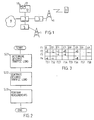
- FIG. 1 is an example of a cellular network comprising load generating means according to the invention.
- the network comprises a number of base stations 1 to which subscribers 3 can connect through the air interface.
- the base stations are connected to base station controller (BSC) nodes 5 performing basic functions such as resource allocation.
- BSC nodes 5 are connected to a mobile switching (MSC) node 7 which carries out switching functions in the cellular network.
- MSC node 7 is usually connected to another network, such as the Public Services Telephone Network (PSTN) 9.
- PSTN Public Services Telephone Network
- the MSC node 7 and BSC nodes 5 are also connected to an Operation and Maintenance (O&M) centre 11, from which the O&M functions in the system are carried out.
- OFDM Operation and Maintenance
- the O&M centre comprises a traffic load generating means 15 for generating an increased interference in the form of a dummy traffic load to be transmitted through the air interface, thereby generating an increased interference in the air interface.
- a traffic load generating means 15 for generating an increased interference in the form of a dummy traffic load to be transmitted through the air interface, thereby generating an increased interference in the air interface.
- the amount of dummy load to be generated depends on the traffic in the network at a given time. This information is always available in the network.
- the traffic load generating means 15 generates traffic load by ordering the base station 1 or the BSC 5 to transmit dummy bursts on a number of idle channels.
- the O&M centre also comprises a control means 17 for adjusting the output power and the Downlink Discontinuous Transmission DTX of the dummy cells, as will be discussed in more detail below.
- the control means 17 instructs the base station 1 or the BSC 5 which then carries out the adjustment according to the instructions.
- load generating means 15 and the control means 17 do not have to be located in an O&M centre but may be located at any convenient place in the network. They also do not have to be located in the same node.
- the network shown in Figure 1 is only an example of a cellular network.
- the functionality may be implemented, and shared between different nodes, in a number of ways known in the art.
- Figure 2 is a flow chart of the method according to the invention.
- the operator wants to test the behaviour of the system if the number of subscribers is increased by, for example, 25%, this may be tested by adding, at all times, 25% to the current traffic load in each cell.
- TDMA Time Division Multiple Access
- the information is carried in frames comprising a number of time slots.
- the same time slot, for example the third time slot in a number of consecutive frames is referred to as a physical channel.
- one connection occupies one physical channel, but a connection may also occupy several physical channels. Several connections may also share one physical channel.
- generating dummy traffic means transmitting dummy bursts on idle channels. How many channels, and which ones, to occupy may be selected in different ways.
- the power level of most of the channels transmitted by a base station varies in dependence of the distance between the base station and the mobile terminal participating in the connection.
- Downlink Discontinuous Transmission (DTX) is often used, implying that the transmission rate of the BTS is reduced when there is no information to be transmitted.
- the dummy traffic has the same variation in power level and the same utilization of DTX as the ordinary traffic. According to a preferred embodiment of the invention, this is achieved in that each channel used to carry dummy load is associated with a connection carrying ordinary traffic. The dummy connection can then follow power level and the DTX utilization used for the real connection. For example, in a TDMA system, a channel carrying dummy load may always be inserted next to an occupied traffic channel. The transmission on a channel carrying dummy load always has the same DTX and the same output power as the traffic channel with which it is associated.
- FIG. 3 shows an example in which each connection carrying dummy traffic is associated with an ordinary connection.
- the table shows the eight time slots TS1-TS8 of each of four frequencies f1-f4.
- the power of each ordinary connection is shown in bold, in terms of dB down regulation, whereas the dummy connections are shown in normal text.
- the first frequency f1 is the frequency carrying the broadcast control channel in a TDMA system. This channel always transmits on full power, denoted FP. On this frequency no dummy traffic is generated.
- time slots TS1, TS3 and TS6 carry ordinary connections.
- time slot TS3 carries an ordinary connection.
- the fourth frequency f4 the first TS1 and the sixth TS6 time slot carry ordinary connections.
- a total of six ordinary connections are transmitted on the three frequencies f2, f3, f4.
- dummy traffic has been generated to increase the total amount of traffic by 67%.
- four dummy connections are generated, in time slots TS2 and TS4 of the second frequency f2, time slot TS4 of the third frequency f3 and in time slot TS2 of the fourth frequency f4.
- each dummy connection is generated in a time slot following an ordinary connection, and the power level of each of the dummy connection is the same as the power level of the ordinary connection that it follows.
- the DTX of each dummy connection also follows the DTX of the associated ordinary connection, although this is not shown in the figure.
- the example above is related to GSM; however, the principle of transmitting dummy load in order to emulate a certain traffic load on the downlink can be applied in any mobile communications system. Also, the principle of associating dummy channels with ordinary channels in order to emulate the same variation in power level and the same utilization of DTX can be applied in any mobile communications system.
- the dummy load should only be transmitted in cases where the real traffic to which it is associated creates additional interference. For example, in GSM, this means that no dummy load should be transmitted on channels transmitted on the frequency to which the BCCH is allocated.
- a predefined pattern is used for the output power and the DTX of the channels carrying dummy load.
- different patterns may be used for different dummy channels.
Landscapes
- Engineering & Computer Science (AREA)
- Computer Networks & Wireless Communication (AREA)
- Signal Processing (AREA)
- Mobile Radio Communication Systems (AREA)
Abstract
Claims (14)
- Procédé de commande de la charge de trafic dans un système de télécommunications cellulaires dans lequel la communication entre des terminaux et le réseau se déroule sur une interface radio, caractérisé par les étapes consistant à :- déterminer une interférence à produire ;- déterminer la quantité de charge de trafic fictif qui correspond à l'interférence déterminée ;- produire ladite quantité de charge de trafic fictif sur l'interface radio.
- Procédé selon la revendication 1, dans lequel le trafic fictif est produit en produisant un certain nombre de rafales de trafic fictif.
- Procédé selon la revendication 1 ou 2, caractérisé par l'étape consistant à déterminer la charge de trafic à produire sur la base de la charge courante de trafic.
- Procédé selon la revendication 1, 2 ou 3, caractérisé par l'étape consistant à maintenir la charge totale de trafic à un niveau constant.
- Procédé selon la revendication 1, 2 ou 3, caractérisé par l'étape consistant à ajouter une charge de trafic fictif à la charge de trafic ordinaire, en fonction de la charge courante de trafic ordinaire.
- Procédé selon l'une quelconque des revendications précédentes, caractérisé par l'étape consistant à commander la puissance de sortie du trafic fictif produit.
- Procédé selon la revendication 6, caractérisé par l'étape consistant à commander la puissance de chaque canal de trafic fictif en fonction de la puissance de sortie d'un canal de trafic occupé.
- Procédé selon l'une quelconque des revendications précédentes, caractérisé par l'étape consistant à commander l'utilisation de l'émission discontinue par le trafic fictif produit.
- Procédé selon l'une quelconque des revendications précédentes, caractérisé par l'étape consistant à commander l'émission discontinue de chaque canal transportant une charge fictive en fonction de l'émission discontinue d'un canal de trafic occupé.
- Appareil destiné à commander la charge de trafic dans un système de télécommunications cellulaires, caractérisé en ce qu'il comprend :- un moyen destiné à déterminer une interférence à produire ;- un moyen destiné à déterminer la quantité de charge de trafic fictif en fonction de l'interférence déterminée ;- un moyen (15) destiné à produire ladite quantité de charge de trafic fictif sur l'interface radio.
- Appareil selon la revendication 10, adapté pour produire des interférences en produisant un certain nombre de rafales de trafic fictif.
- Appareil selon la revendication 10 ou 11, caractérisé en ce qu'il comprend un moyen (15) destiné à déterminer la charge de trafic à produire sur la base de la charge courante de trafic.
- Appareil selon la revendication 10, 11 ou 12, caractérisé en ce qu'il comprend un moyen (17) destiné à commander la puissance du trafic fictif produit.
- Appareil selon la revendication 10, 11, 12 ou 13, caractérisé en ce qu'il comprend un moyen (17) destiné à commander l'utilisation de l'émission discontinue par le trafic fictif produit.
Applications Claiming Priority (3)
| Application Number | Priority Date | Filing Date | Title |
|---|---|---|---|
| SE9801096 | 1998-03-30 | ||
| SE9801096A SE513988C2 (sv) | 1998-03-30 | 1998-03-30 | Förfarande och anordning för alstring av interferens över luftgränssnittet i ett cellulärt nät |
| PCT/SE1999/000509 WO1999051053A1 (fr) | 1998-03-30 | 1999-03-29 | Procede et appareil permettant de gerer la quantite de trafic dans un reseau cellulaire |
Publications (2)
| Publication Number | Publication Date |
|---|---|
| EP1068760A1 EP1068760A1 (fr) | 2001-01-17 |
| EP1068760B1 true EP1068760B1 (fr) | 2006-03-01 |
Family
ID=20410779
Family Applications (1)
| Application Number | Title | Priority Date | Filing Date |
|---|---|---|---|
| EP99918407A Expired - Lifetime EP1068760B1 (fr) | 1998-03-30 | 1999-03-29 | Procede et appareil permettant de gerer la quantite de trafic dans un reseau cellulaire |
Country Status (6)
| Country | Link |
|---|---|
| US (1) | US6529739B1 (fr) |
| EP (1) | EP1068760B1 (fr) |
| CN (1) | CN1124768C (fr) |
| AU (1) | AU753640B2 (fr) |
| SE (1) | SE513988C2 (fr) |
| WO (1) | WO1999051053A1 (fr) |
Cited By (1)
| Publication number | Priority date | Publication date | Assignee | Title |
|---|---|---|---|---|
| US20220141094A1 (en) * | 2019-02-06 | 2022-05-05 | Nippon Telegraph And Telephone Corporation | Topology deduction system, traffic addition device, and traffic addition method |
Families Citing this family (9)
| Publication number | Priority date | Publication date | Assignee | Title |
|---|---|---|---|---|
| SE0000908L (sv) * | 2000-03-20 | 2001-09-21 | Ericsson Telefon Ab L M | Load regulation |
| DE60225238T2 (de) * | 2002-01-15 | 2009-05-07 | Koninklijke Kpn N.V. | Verfahren und System zur Planung und/oder Einschätzung der Zellkapazität in CDMA Funknetzwerken |
| JP3629017B2 (ja) * | 2002-08-20 | 2005-03-16 | 松下電器産業株式会社 | アウターループ送信電力制御方法および無線通信装置 |
| SE0302804D0 (sv) * | 2003-10-20 | 2003-10-20 | Ericsson Telefon Ab L M | Positioning method using a local virtual network |
| FI20055589A0 (fi) * | 2005-11-02 | 2005-11-02 | Nokia Corp | Emulointilaite |
| CN100433883C (zh) * | 2005-12-07 | 2008-11-12 | 华为技术有限公司 | 实现自适应下行模拟负载的NodeB及方法 |
| US7738386B2 (en) * | 2007-05-18 | 2010-06-15 | Welch Allyn, Inc. | Method to ensure that life-critical data is transported effectively and safely |
| EP2207277A4 (fr) * | 2007-10-16 | 2015-08-12 | Fujitsu Ltd | Dispositif de station relais, dispositif de station terminale, système de communication sans fil et procédé de distribution de charge |
| WO2021037376A1 (fr) * | 2019-08-30 | 2021-03-04 | Telefonaktiebolaget Lm Ericsson (Publ) | Procédé et appareil d'estimation de capacité de système dans un réseau de communication sans fil |
Family Cites Families (11)
| Publication number | Priority date | Publication date | Assignee | Title |
|---|---|---|---|---|
| US5377327A (en) | 1988-04-22 | 1994-12-27 | Digital Equipment Corporation | Congestion avoidance scheme for computer networks |
| US5086467A (en) | 1989-05-30 | 1992-02-04 | Motorola, Inc. | Dummy traffic generation |
| US5134709A (en) | 1990-12-14 | 1992-07-28 | At&T Bell Laboratories | Process and apparatus for flexible channel assignment in cellular radiotelephone systems |
| EP0528075A1 (fr) | 1991-08-19 | 1993-02-24 | ALCATEL BELL Naamloze Vennootschap | Dispositif et procédé pour la mesure de l'efficacité d'une voie de télécommunication |
| JPH0583291A (ja) | 1991-09-19 | 1993-04-02 | Fujitsu Ltd | Atm試験方式 |
| EP0619661A1 (fr) | 1993-04-08 | 1994-10-12 | Alcatel STR AG | Epreuve de charge d'un commutateur ATM |
| US5408465A (en) * | 1993-06-21 | 1995-04-18 | Hewlett-Packard Company | Flexible scheme for admission control of multimedia streams on integrated networks |
| ZA955600B (en) * | 1994-07-13 | 1996-04-02 | Qualcomm Inc | System and method for simulating interference received by subscriber units in a spread spectrum communication network |
| US5850596A (en) * | 1995-05-24 | 1998-12-15 | Mci Corporation | Method and system for making unlicensed priority transmissions |
| WO1997008847A1 (fr) | 1995-08-31 | 1997-03-06 | Nokia Telecommunications Oy | Procede de regulation de la puissance d'emission d'un emetteur radio dans un systeme de communication cellulaire |
| DE29703948U1 (de) | 1997-01-09 | 1997-04-24 | CONDAT DV-Beratung Organisation Software GmbH, 10559 Berlin | Anordnung zum gesteuerten Erzeugen einer Verkehrslast in Mobilfunksystemen |
-
1998
- 1998-03-30 SE SE9801096A patent/SE513988C2/sv not_active IP Right Cessation
-
1999
- 1999-03-29 EP EP99918407A patent/EP1068760B1/fr not_active Expired - Lifetime
- 1999-03-29 US US09/277,607 patent/US6529739B1/en not_active Expired - Lifetime
- 1999-03-29 WO PCT/SE1999/000509 patent/WO1999051053A1/fr not_active Ceased
- 1999-03-29 AU AU36337/99A patent/AU753640B2/en not_active Ceased
- 1999-03-29 CN CN99804368A patent/CN1124768C/zh not_active Expired - Fee Related
Cited By (2)
| Publication number | Priority date | Publication date | Assignee | Title |
|---|---|---|---|---|
| US20220141094A1 (en) * | 2019-02-06 | 2022-05-05 | Nippon Telegraph And Telephone Corporation | Topology deduction system, traffic addition device, and traffic addition method |
| US12237976B2 (en) * | 2019-02-06 | 2025-02-25 | Nippon Telegraph And Telephone Corporation | Topology deduction system, traffic addition device, and traffic addition method |
Also Published As
| Publication number | Publication date |
|---|---|
| CN1294830A (zh) | 2001-05-09 |
| SE9801096D0 (sv) | 1998-03-30 |
| AU753640B2 (en) | 2002-10-24 |
| AU3633799A (en) | 1999-10-18 |
| CN1124768C (zh) | 2003-10-15 |
| US6529739B1 (en) | 2003-03-04 |
| WO1999051053A1 (fr) | 1999-10-07 |
| SE9801096L (fr) | |
| EP1068760A1 (fr) | 2001-01-17 |
| SE513988C2 (sv) | 2000-12-04 |
Similar Documents
| Publication | Publication Date | Title |
|---|---|---|
| CA2614467C (fr) | Suppression des parasites entre cellules | |
| EP1943759B1 (fr) | Procedes et dispositifs permettant de diffuser des informations de charge correspondant a des stations de base avoisinantes | |
| US5732328A (en) | Method for power control in wireless networks for communicating multiple information classes | |
| EP1574096B1 (fr) | Procede de regulation adaptatif pour exploiter des environnements de communications | |
| US6035208A (en) | Cellular type mobile communication system capable of efficiently utilizing frequencies | |
| CN101521540A (zh) | 混合无线tdma/cdma系统及其时隙分配方法 | |
| WO1999014972A2 (fr) | Procede avance d'execution de transfert | |
| US20070105561A1 (en) | Method and apparatus for uplink resource allocation in a cellular communication system | |
| EP1068760B1 (fr) | Procede et appareil permettant de gerer la quantite de trafic dans un reseau cellulaire | |
| CA2335882A1 (fr) | Procede pour le controle de puissance de liaisons point-multipoint dans des systemes de telecommunication sans fil en mode d'exploitation du systeme sans licence non coordonne | |
| US6957087B1 (en) | Power control in MCPA equipped base stations | |
| JP2001275155A (ja) | アップリンクの資源割り当てを改良した移動体無線通信システム | |
| EP1181783B2 (fr) | Procede de commande de puissance | |
| KR20060044425A (ko) | 무선 이동통신 네트워크, 및 모바일 사용자 단말과 접속을위해 기지국 안테나들을 선택하는 방법 | |
| EP1473948B1 (fr) | Procede d'affectation de canaux de trafic en communications mobiles gsm | |
| US20040117504A1 (en) | Communication channel | |
| CA2396585A1 (fr) | Programmateur de paquets et procede correspondant | |
| KR20080039062A (ko) | 과부하 제어 장치 및 그 방법 | |
| CA2380447A1 (fr) | Systeme de communication et procede permettant de gerer les connexions dans ce systeme | |
| JP2908991B2 (ja) | 無線チャネル割当方法 | |
| JP2850619B2 (ja) | 移動通信システムの送信電力制御方式 | |
| CN100534004C (zh) | 集群系统中下行共享信道功率控制的方法 | |
| KR20040054827A (ko) | Cdma 시스템의 기지국에서의 par 감소를 위한 채널할당장치 | |
| KR100194602B1 (ko) | Ds/cdma 셀룰라 시스템에서의 트래픽 제어방법 |
Legal Events
| Date | Code | Title | Description |
|---|---|---|---|
| PUAI | Public reference made under article 153(3) epc to a published international application that has entered the european phase |
Free format text: ORIGINAL CODE: 0009012 |
|
| 17P | Request for examination filed |
Effective date: 20001005 |
|
| AK | Designated contracting states |
Kind code of ref document: A1 Designated state(s): ES FI GB |
|
| RAP1 | Party data changed (applicant data changed or rights of an application transferred) |
Owner name: TELEFONAKTIEBOLAGET LM ERICSSON (PUBL) |
|
| RIC1 | Information provided on ipc code assigned before grant |
Ipc: 7H 04Q 7/36 B Ipc: 7H 04Q 7/38 A |
|
| 17Q | First examination report despatched |
Effective date: 20050419 |
|
| GRAP | Despatch of communication of intention to grant a patent |
Free format text: ORIGINAL CODE: EPIDOSNIGR1 |
|
| GRAS | Grant fee paid |
Free format text: ORIGINAL CODE: EPIDOSNIGR3 |
|
| GRAA | (expected) grant |
Free format text: ORIGINAL CODE: 0009210 |
|
| AK | Designated contracting states |
Kind code of ref document: B1 Designated state(s): ES FI GB |
|
| PG25 | Lapsed in a contracting state [announced via postgrant information from national office to epo] |
Ref country code: FI Free format text: LAPSE BECAUSE OF FAILURE TO SUBMIT A TRANSLATION OF THE DESCRIPTION OR TO PAY THE FEE WITHIN THE PRESCRIBED TIME-LIMIT Effective date: 20060301 |
|
| REG | Reference to a national code |
Ref country code: GB Ref legal event code: FG4D |
|
| PG25 | Lapsed in a contracting state [announced via postgrant information from national office to epo] |
Ref country code: ES Free format text: LAPSE BECAUSE OF FAILURE TO SUBMIT A TRANSLATION OF THE DESCRIPTION OR TO PAY THE FEE WITHIN THE PRESCRIBED TIME-LIMIT Effective date: 20060612 |
|
| PLBE | No opposition filed within time limit |
Free format text: ORIGINAL CODE: 0009261 |
|
| STAA | Information on the status of an ep patent application or granted ep patent |
Free format text: STATUS: NO OPPOSITION FILED WITHIN TIME LIMIT |
|
| 26N | No opposition filed |
Effective date: 20061204 |
|
| PGFP | Annual fee paid to national office [announced via postgrant information from national office to epo] |
Ref country code: GB Payment date: 20150327 Year of fee payment: 17 |
|
| GBPC | Gb: european patent ceased through non-payment of renewal fee |
Effective date: 20160329 |
|
| PG25 | Lapsed in a contracting state [announced via postgrant information from national office to epo] |
Ref country code: GB Free format text: LAPSE BECAUSE OF NON-PAYMENT OF DUE FEES Effective date: 20160329 |