EP1069136A1 - Verfahren zur rekombinanten Herstellung von Ribonukleoproteinen - Google Patents
Verfahren zur rekombinanten Herstellung von Ribonukleoproteinen Download PDFInfo
- Publication number
- EP1069136A1 EP1069136A1 EP00114542A EP00114542A EP1069136A1 EP 1069136 A1 EP1069136 A1 EP 1069136A1 EP 00114542 A EP00114542 A EP 00114542A EP 00114542 A EP00114542 A EP 00114542A EP 1069136 A1 EP1069136 A1 EP 1069136A1
- Authority
- EP
- European Patent Office
- Prior art keywords
- ssa60
- ribonucleoprotein
- protein
- recombinant
- rna
- Prior art date
- Legal status (The legal status is an assumption and is not a legal conclusion. Google has not performed a legal analysis and makes no representation as to the accuracy of the status listed.)
- Granted
Links
Images



Classifications
-
- C—CHEMISTRY; METALLURGY
- C07—ORGANIC CHEMISTRY
- C07K—PEPTIDES
- C07K14/00—Peptides having more than 20 amino acids; Gastrins; Somatostatins; Melanotropins; Derivatives thereof
- C07K14/435—Peptides having more than 20 amino acids; Gastrins; Somatostatins; Melanotropins; Derivatives thereof from animals; from humans
- C07K14/46—Peptides having more than 20 amino acids; Gastrins; Somatostatins; Melanotropins; Derivatives thereof from animals; from humans from vertebrates
- C07K14/47—Peptides having more than 20 amino acids; Gastrins; Somatostatins; Melanotropins; Derivatives thereof from animals; from humans from vertebrates from mammals
Definitions
- the invention relates to a method for the recombinant production of a Ribonucleoproteins in prokaryotic cells.
- the SSA60 antigen is an RNA binding molecule that is found in the cytoplasm and in the Nucleus of different cell types occurs.
- the SSA60 antigen is common bound to a HY-RNA, e.g. HY1, HY3, HY4 or HY5, each are about 100 bases long and have a very similar structure.
- HY RNA molecules which has been demonstrated in many eukaryotic organisms prokaryotes do not occur.
- the SSA60 antigen is often referred to as SSA / Ro. It deals is a protein with a size of about 60 kD. Of which is both the SSA52 antigen in terms of sequence and function differ, but under certain conditions in vivo a Association of the SSA52 protein with the SSA60 protein can occur.
- RNAs were by Hendrick et al., J. Mol. Biol. 1 (1981), 1138-1149 and by Wolin et al., Proc. Natl. Acad. Sci. USA 81 (1984), 1996-2000 described.
- the method according to the invention is a good one reproducible and inexpensive method with which an SSA60 antigen with good immunological reactivity for detection disease-relevant SSA60 autoantibodies can be produced.
- the ribonucleoproteins can be derived from the prokaryotic cells or / and obtained from the medium used to cultivate the cells become. Gram-negative cells and in particular E. coli are preferred Cells used.
- the DNA coding for the ribonucleic acid component and that for the DNA encoding protein component can be in the prokaryotic Host cell are introduced on a DNA construct. It is also possible, the DNAs coding for the individual components introduce separate DNA constructs. With the invention Any ribonucleoproteins can be produced using suitably the protein component (s) and the corresponding one (s) associated nucleic acid component (s) expressed in a host cell become.
- a eukaryote in particular a mammal, is preferred particularly preferably a human ribonucleoprotein or a derivative thereof forth.
- a derivative is opposite to the native form in the sequence of Modified ribonucleic acid and / or the sequence of the protein, for example by substitution, deletion, insertion and / or addition of single or more amino acids or nucleobases, but the ability of components to associate with ribonucleoprotein remains.
- an SSA60 ribonucleoprotein expressed in a preferred embodiment, is a protein with 525 (form a) or 538 (form b) amino acids (see Deutscher et al., supra). On different splicing of the same primary transcript leads to the two different forms of the SSA60 protein. The two proteins differ only from amino acid 515, where the amino acids 1 to 514 are constant. Is preferred with the invention Method expresses an SSA60 protein that covers the constant region of the Amino acids 1 to 514, and SSA60 protein derivatives modified from the native form in the sequence, however the antigen epitope properties are retained.
- the ribonucleic acid component is preferably a HY-RNA, especially HY1, HY3, HY4 or / and HY5, most preferably around HY3.
- the HY-RNA molecules are highly conserved molecules with a very similar secondary structure. They are made in vivo Polymerase III transcribes and are between 84 and 112 in size Nucleotides.
- Cytoplasmic RNA especially human RNA, preferably hY-RNA, makes an important contribution to the development of the native conformation of the SSA60 antigen.
- the SSA60 antigen is one with SSB, SSA52 and hY-RNA associated ribo-nucleo-particle (RNP).
- nucleic acid construct comprising a section encoding a protein component Contains DNA and a section that is one for a ribonucleic acid component contains coding DNA.
- the coding sections are preferably operatively linked to a sequence that enables the expression of the components in prokaryotic cells.
- the construct comprises a section that is one for an SSA60 protein or a portion encoding a derivative thereof.
- the construct comprises one for HY-RNA coding section.
- the association can be supported by a simultaneous induction of the expression of ribonucleic acid component and protein component takes place. This can be achieved in that both the gene for the ribonucleic acid component and the gene for the protein component under the control of the same regulatable Expression systems, e.g. of lac expression systems.
- Another aspect of the invention relates to a recombinant prokaryotic Cell that (i) at least one for a ribonucleic acid component of the Contains DNA encoding ribonucleoproteins and (ii) at least one for one Contains DNA encoding protein component of the ribonucleoprotein.
- the coding areas can be within a single cell Present construct or separately on several constructs.
- the coding areas can be extrachromosomal, e.g. on plasmids or / and be arranged chromosomally.
- Another object of the invention is a recombinant Ribonucleoprotein obtainable by the method described above is.
- a ribonucleoprotein By coexpressing protein and ribonucleic acid in prokaryotic cells a ribonucleoprotein is formed, which is not is glycosylated and thereby from in eukaryotic host cells formed ribonucleoproteins differs.
- the Protein component of the recombinant ribonucleoprotein heterologous that improve expression and / or purification facilitate.
- These auxiliary sequences can optionally protease cleavage sequences included so that after extracting the product can be removed.
- An example of an auxiliary sequence is one Sequence section comprising His residues (His tag).
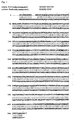
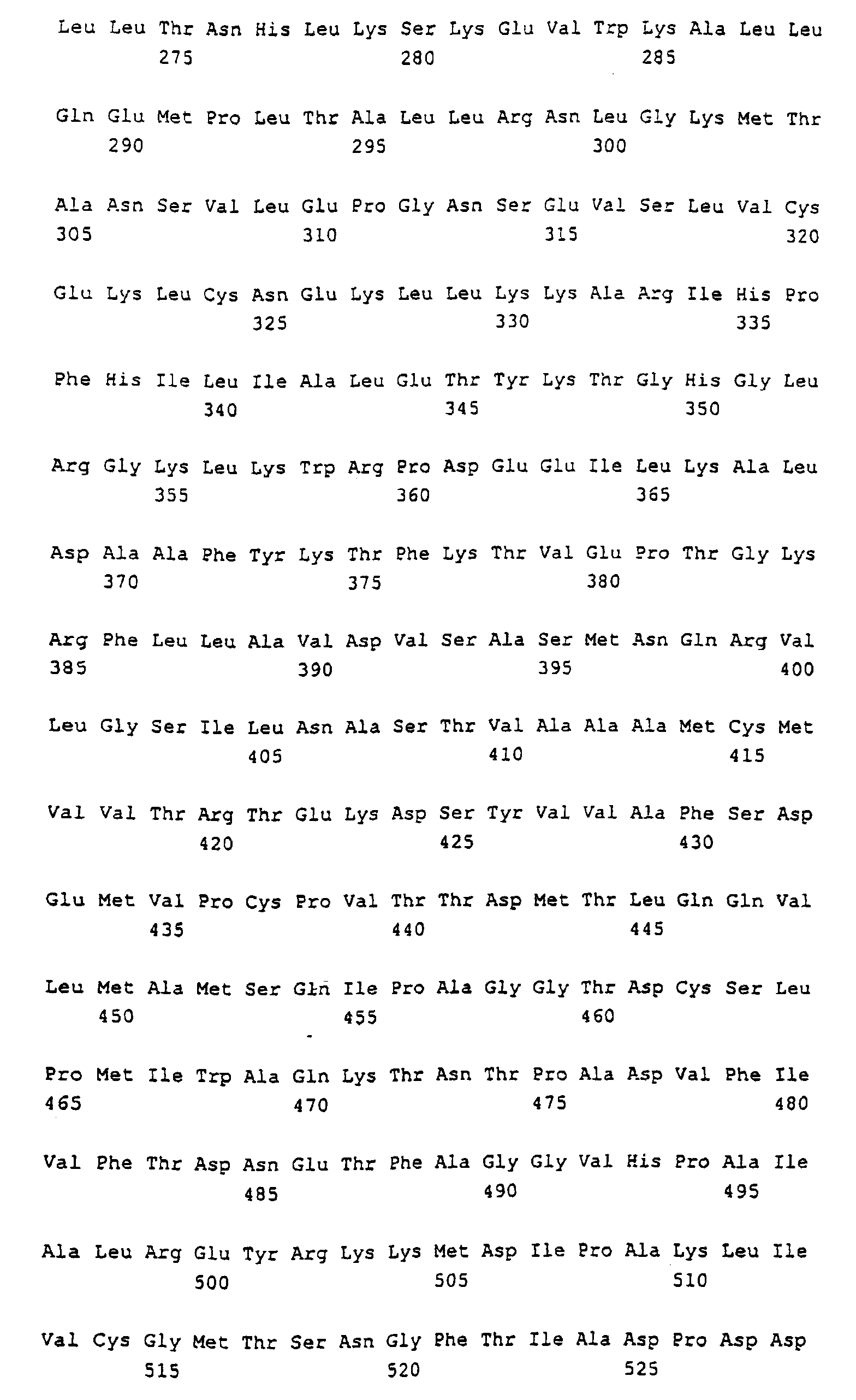
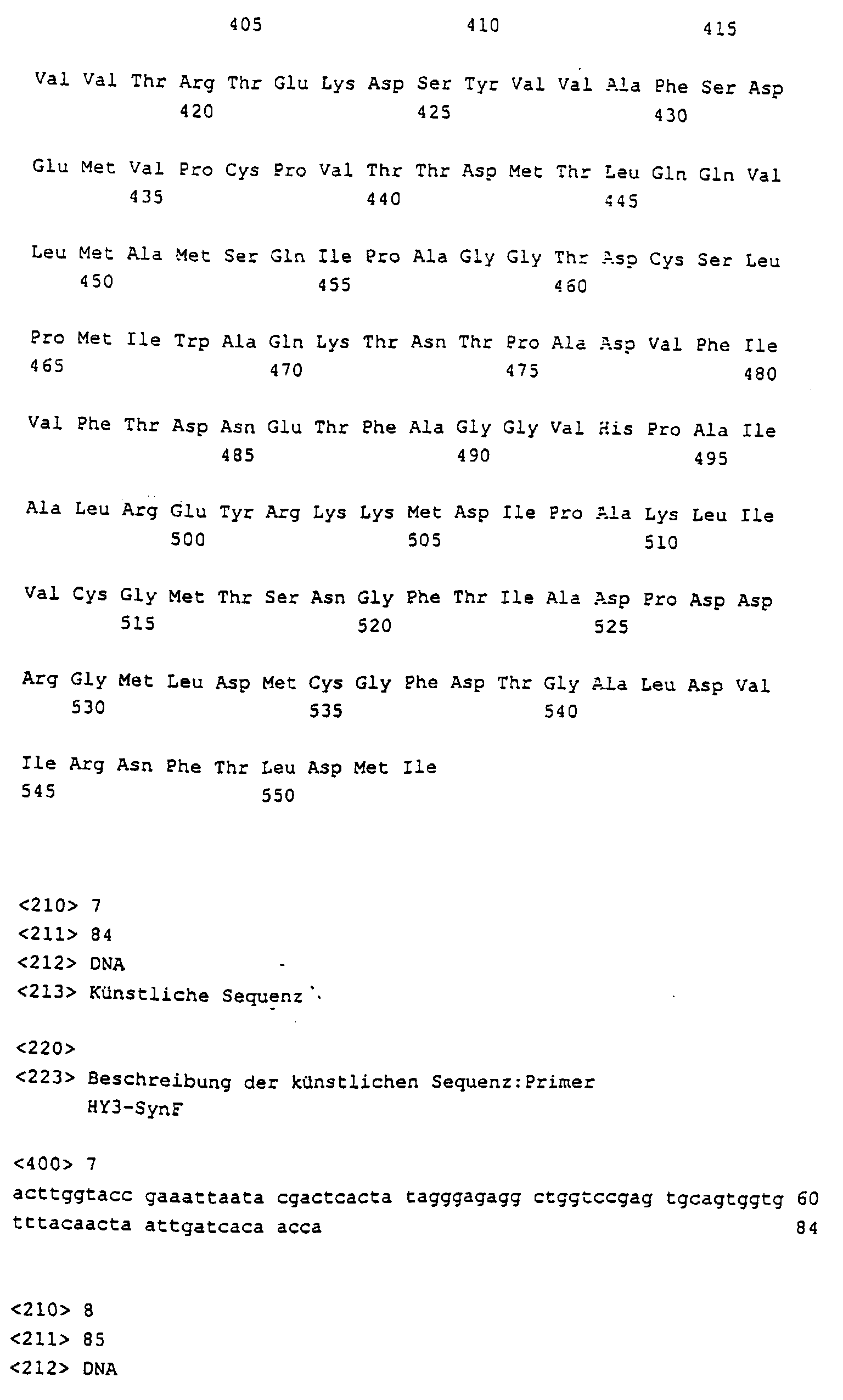
- Another object of the invention is an SSA60 protein with the in figure 1 sequence shown SSA60M56.
- the SSA60 protein according to the invention has an auxiliary sequence at the N-terminus which, in addition to 6 His residues Cleavage sequence DDDK for the proteolytic enzyme bovine enterokinase contains.
- the invention further relates to the use of recombinant Ribonucleoproteins from prokaryotes for diagnostic procedures.
- the Formation of ribonucleoproteins in native, especially in associated Form enables the delivery of antigens with which one Improvement in diagnostic procedures can be achieved.
- Prefers is a recombinant SSA60 ribonucleoprotein or a derivative thereof, especially in connection with HY3, for the diagnosis of Autoimmune diseases, e.g. SLE or Sjogren syndrome type A, used.
- Beads are used in particular as the solid phase, but they can other solid phases, e.g. Surfaces of reaction vessels or Biochips are used, the solid phase can only be used with the Ribonucleoprotein or additionally with other molecules, e.g. recombinant and / or native antigens or antigen mixtures, be coated.
- the ribonucleoproteins can be adsorptive directly or immobilized covalently on the solid phase or indirectly via a specific binding pair, in particular biotin / streptavidin, first the bunny with a partner of the specific Binding pair is coated and that with the second partner of the specific binding pair coupled ribonucleoprotein then on the precoated solid phase is applied.
- marker groups especially electrochemiluminescent labels, Fluorescent labels, enzyme labels, sol particles such as e.g. Latex particles or gold particles and radioactive labels use.
- SSA60-M56 An antigen called SSA60-M56 was used, which is a modified recombinant SSA60 protein with changes at the N- and C-terminal The end is what opens up the possibility of a recombinant protein with the amino acid sequence of the native SSA60 protein no amino acids are encoded by the vector, as well as a recombinant SSA60 antigen, which is cleavable only at the N-terminal end Has marking.
- HY3 encodes a short RNA with which the recombinant SSA60 protein is associated or bound.
- the association of SSA60 with HY3 induces conformation epitopes of the antigen leading to a different immunological behavior compared to one SSA60 protein that does not contain HY3 RNA.
- the two Autoimmune antigens SSB and SSA60 bind to the same RNA molecule, while SSA52 is probably directly associated with the SSA60 protein.
- the recombinant human SSA60 protein used here is it is form b, which translates in clone pQE30 HY3 SSA60 M56 becomes. It codes for a total of 553 amino acids. The first twelve Amino acids at the N-terminal end of the protein are from Expression vector encoded. This cleavable marker contains a charged group of amino acids that indicate the solubility of the antigen raised and a group of six His for affinity purification over Ni-NTA.
- a DDDK sequence after the Section with 6 His amino acids introduced which is a cleavage sequence for Protease Bovine Enterokinase is.
- This enables the elimination of the MRGSHHHHHHGDDDDK peptide after purification of the antigen over Ni-NTa.
- the C-terminal end of the recombinant antigen was from ... IRNFTLDMIVD ** changed (previously used clone) to ... IRNFTLDMI **.
- the sequence ... DMI represents the C-terminal end of the native and recombinant antigen.
- HY3 is a small RNA with 101 bases and has a defined one Secondary structure.
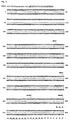
- SSA60 binds to the base of the fixed Structure. Compared to the structure published in the prior art by HY3 (Wolin et al., PNAS USA 81 (1984), 1996-2000) points this out used sequence a difference in the loop 2 of the RNA (see Figure 2).
- the expression vector pQE30 which is a small one, was used 3,462 bp plasmid (available from Qiagen). This expression vector was specially designed for expression of proteins in E. coli. He contains an adjustable promoter / operator element and a strong one Ribosome binding site in front of several cloning sites (BamHI and HindIII among others) that are downstream of a group of 6 His. The expression of the gene under the control of the promoter / operator element is at a given cell density induced by addition of IPTG, which the Repressor inactivated and the promoter released.
- the recombinant plasmid pQE30 HY3 SSA60 M56, clone 4 gives one intracellular coexpression of the recombinant human SSA60 protein and the HY3 RNA in E. coli. Together these components form one Complex with conformation epitopes.
- the marking with 6 His allows the Purification of the antigen by metal chelate affinity chromatography. Non-denaturing cleaning conditions are required to achieve the Obtain conformational epitopes of the complex.
- the lac repressor is encoded by a separate plasmid, the pREP4 is called, which is compatible with the expression vector pDS56 RBSII is.
- the plasmid pREP4 (from Qiagen) carries a kanamycin resistance factor, while the expression vector versus the antibiotic ampicillin is resistant.
- the selection of the desired clone pQE30 HY3 SSA60 M56, clone 4, with pREP4 is obtained by growing in the presence of the two antibiotics Ampicillin and Kanamycin performed.
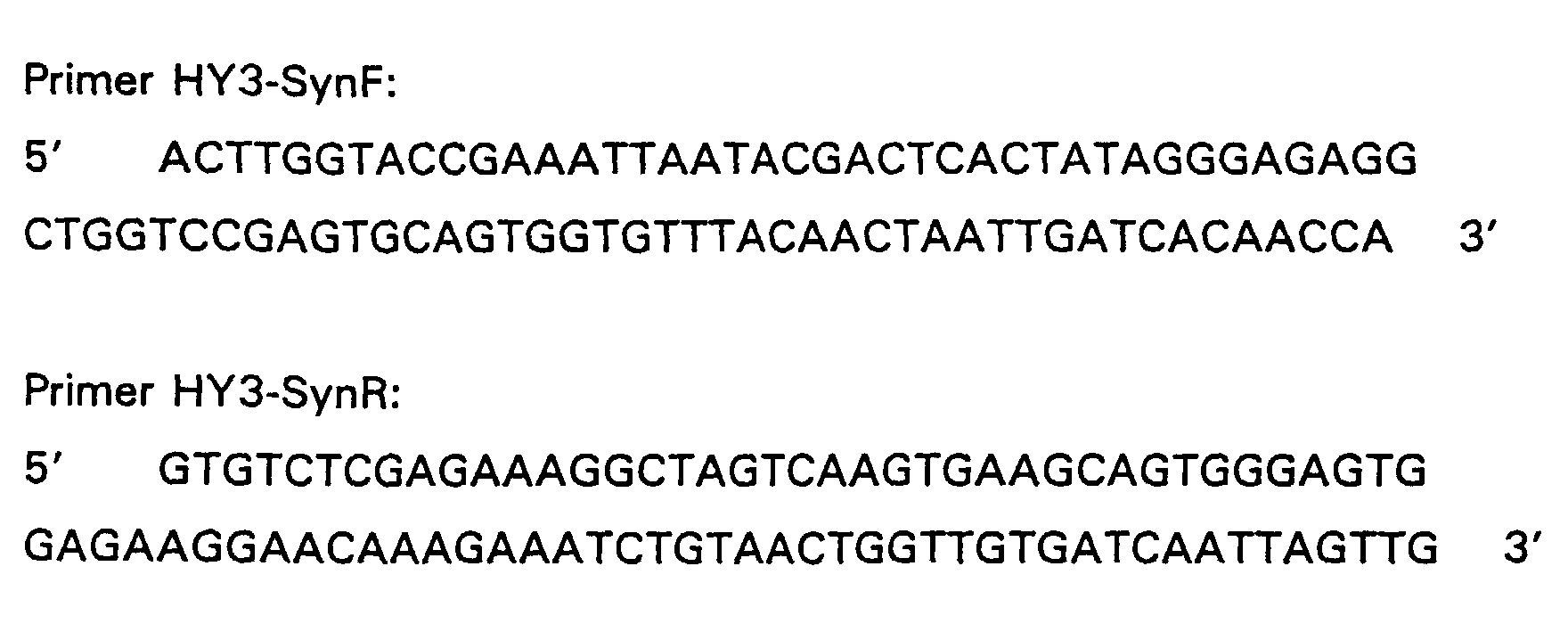
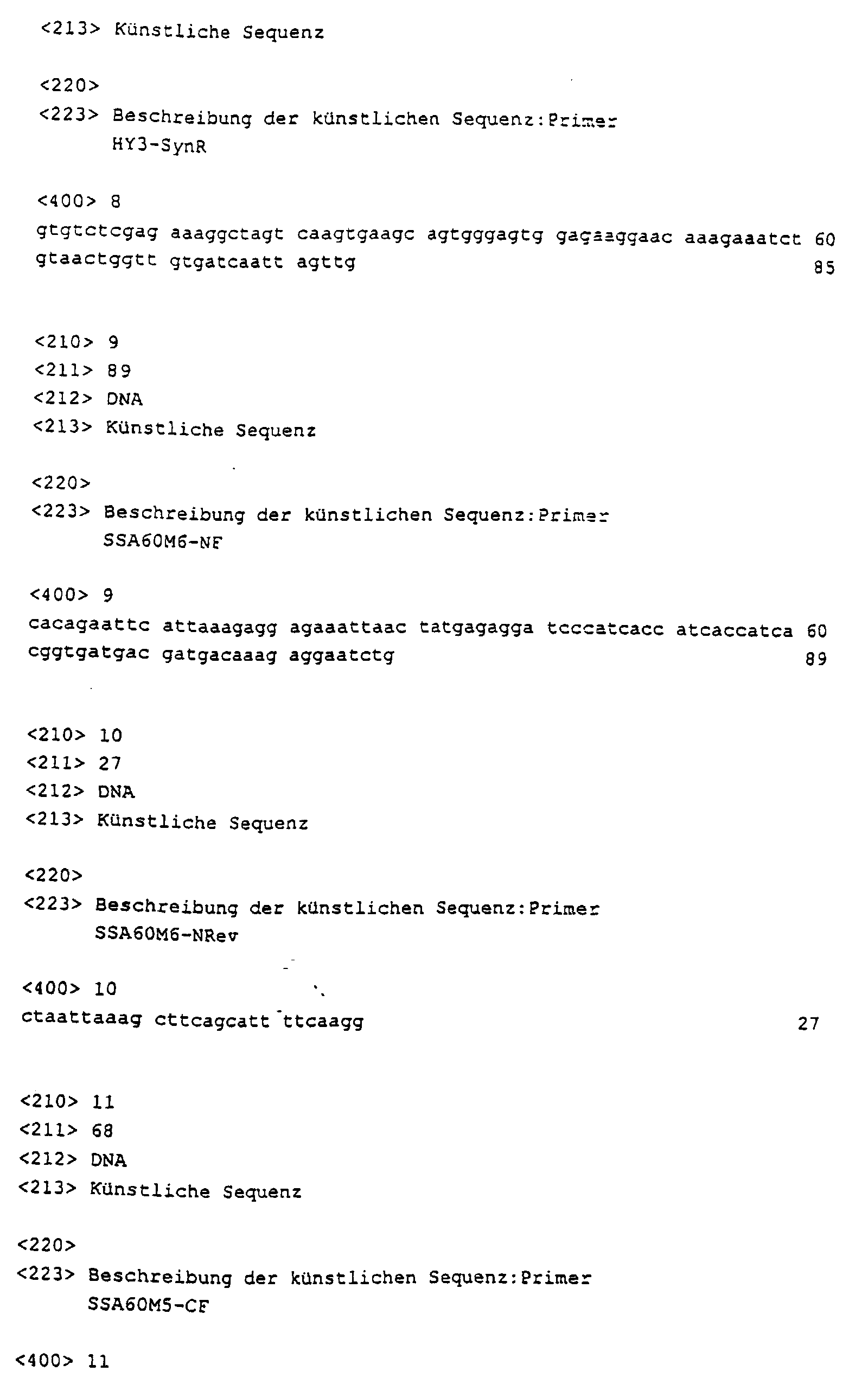
- the HY3-RNA was first synthesized in vitro by PCR (polymerase chain reaction) using the primers HY3F and HY3R.
- the sequence of the primers was as follows:
- PCR fragments were collected with the restriction enzymes Xhol and Kpnl cut, cleaned over agarose gel and in a Bluescript II KS vector cloned, with the HY3 gene for transcription studies under the Control of the T7 polymerase promoter was made. This resulted in the clone pBSII-HY3RNA3-1.
- HY3 RNA transcribed in vitro was used for the renaturation of SSA60 antigen, which is a increased positive immunological reactivity of the antigen resulted.
- the 260 bp amplified DNA was cut to replace that EcoRI / HindIII fragment of clone SSA60-M4-C6.
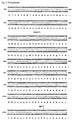
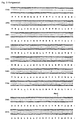
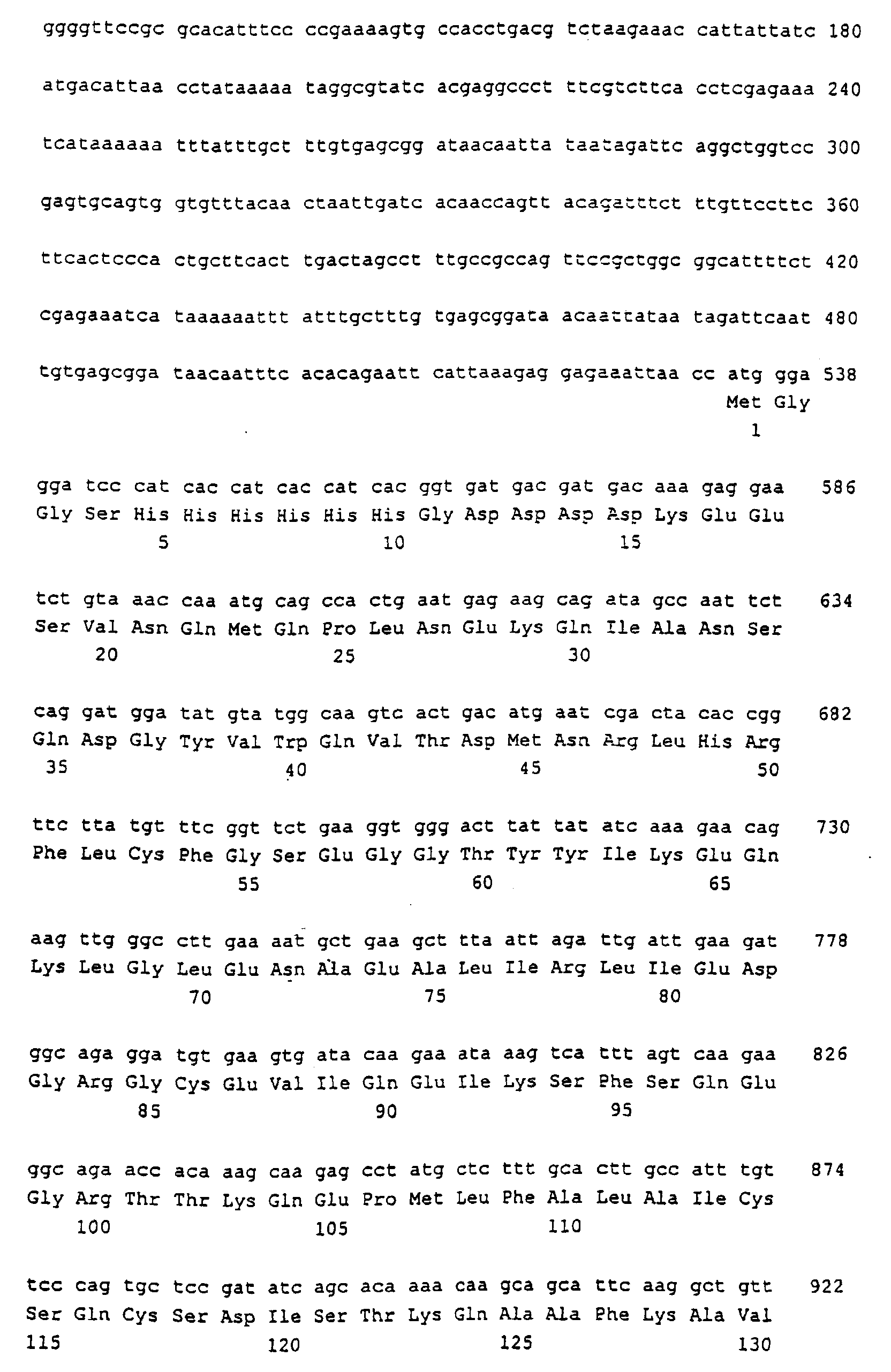
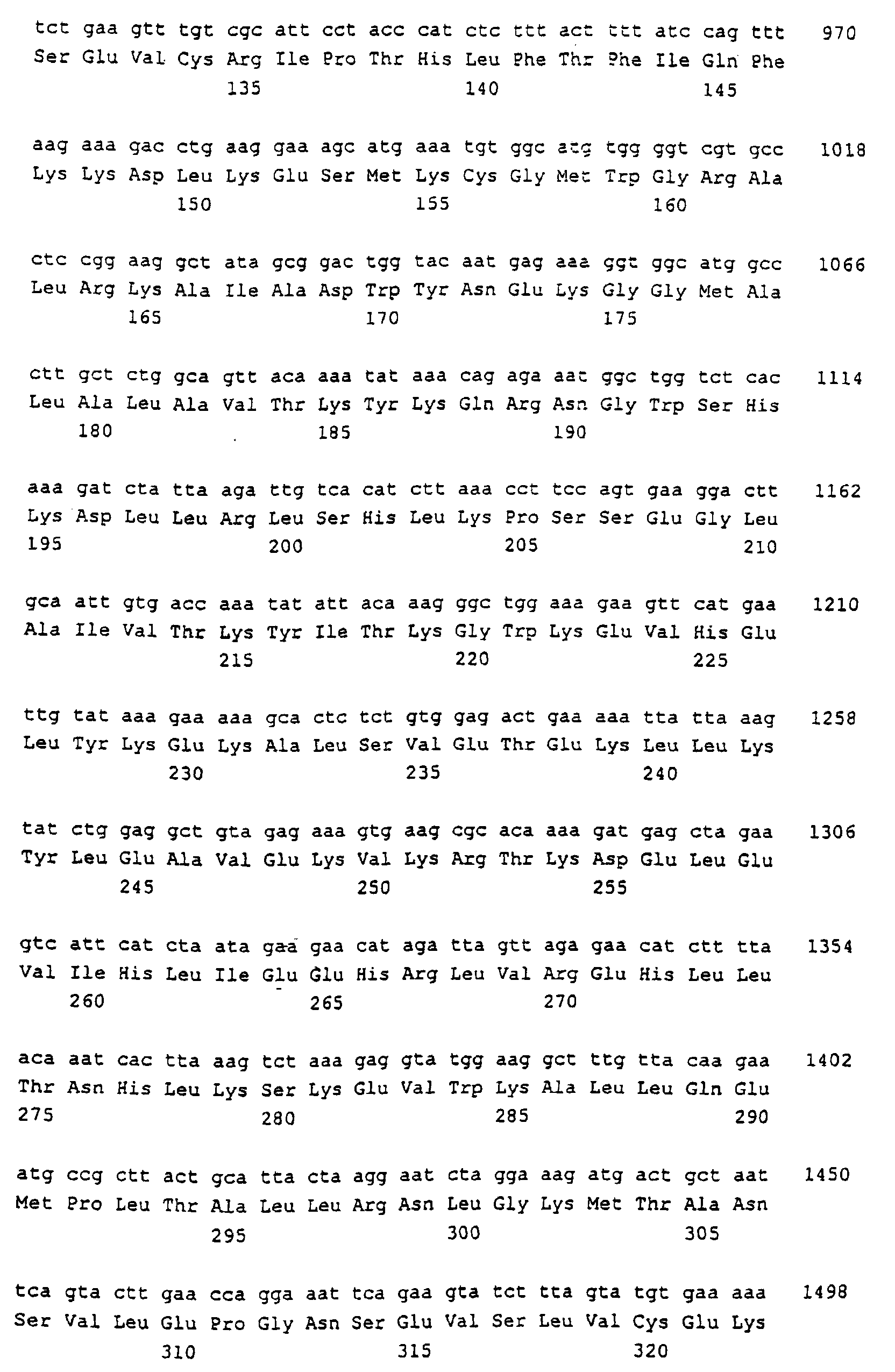
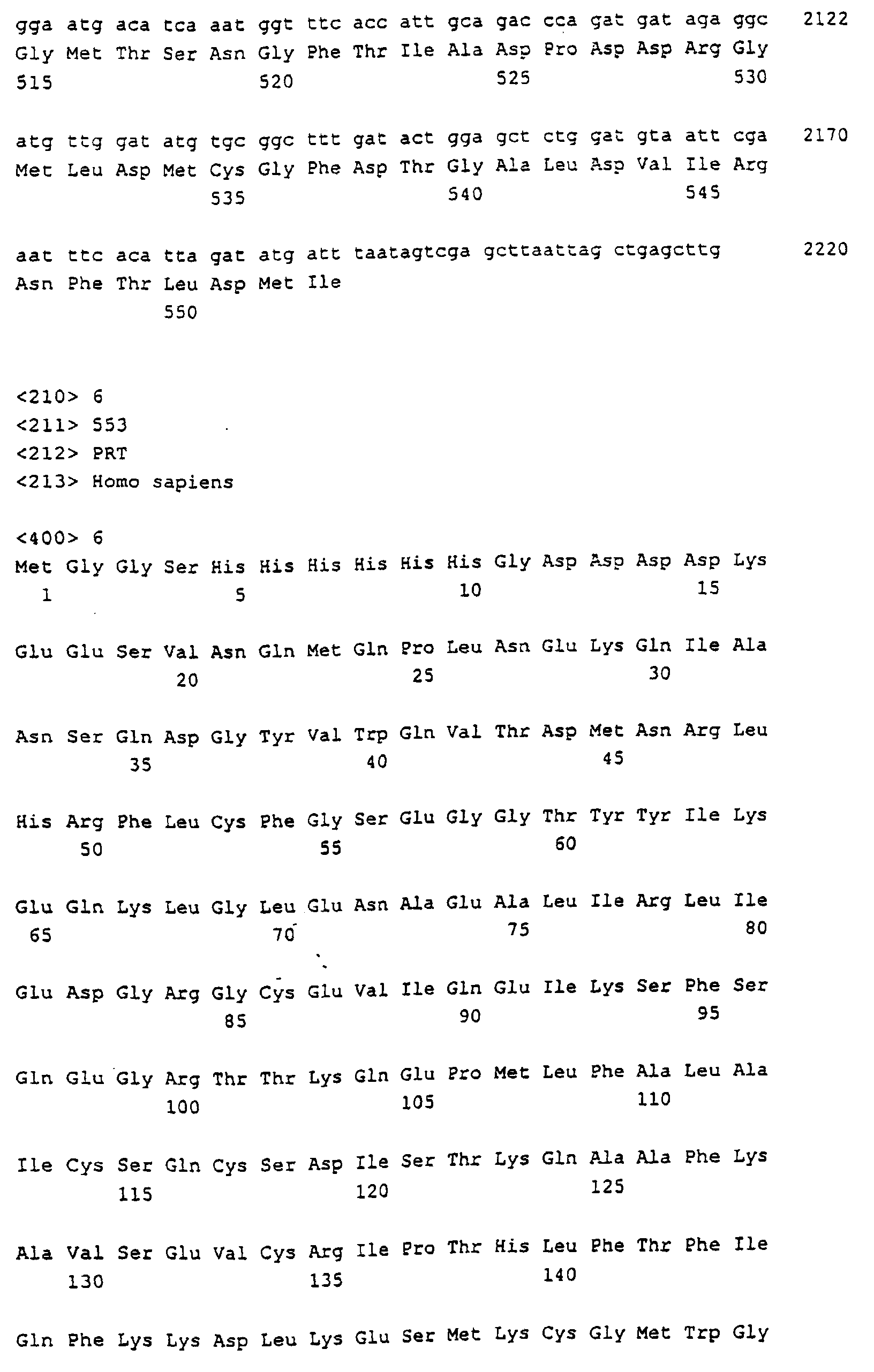
- the sequence of the new Clones are shown in Figure 3.
- the 1200 bp amplified DNA was analyzed with the restriction enzymes Sacl and Xbal cut and the purified fragment in SSA60M4-C6 inserted, which replaced the previous Sacl-Xbal fragment (in FIG 3 shows the location of the fragment downstream of Sacl at bp 2.155; Xbal is not shown since it is localized in the vector pQE).
- a clone was synthesized that co-expresses HY3 and SSA60 in E. coli and pQE30-HY3-SSA60M56 # 4.
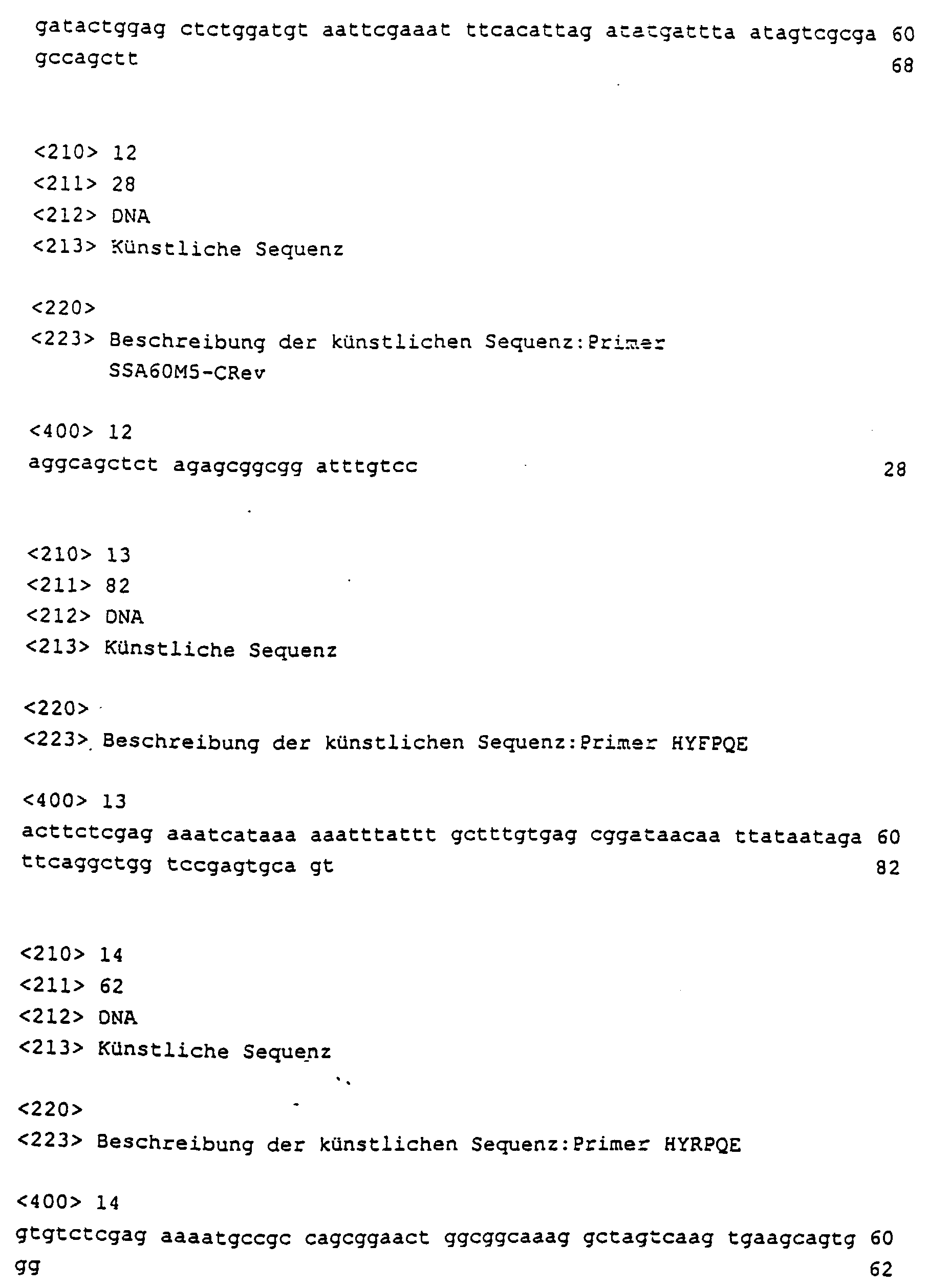
- the HY3 gene was prepared for insertion into the Xhol site of pQE30 by changing its sequence as described above with the help of the primers HYFPQE and HYRPQE by PCR modification.
- the sequences of the two primers were:
- the one for overexpression of the recombinant ribonucleoprotein complex E. coli strain used in HY3-SSA60 is an XL1 Blue (Stratagene) called E. coli C derivative.
- E. coli C derivative For the overexpression of the recombinant HY3-SSA60 complex becomes a culture of pQE30-HY3-SSA60M56 # 4 in XL1 with pREP4 at 28 ° C in a selective TB medium (containing ampicillin and kanamycin).
- a selective TB medium containing ampicillin and kanamycin.
- Bacterial pellets that are the recombinant Containing protein are collected by centrifugation and the cell pellet frozen until the overexpressed recombinant antigen is purified stored.
- a mixture of 1 mM PMSF (prepared from 0.2 M PMSF in 2-propanol), aprotinin (10 mg / ml in water) in one amount of 10 ⁇ g / g biomass, leupeptin (1 mg / ml in water) in an amount of 15 ⁇ g / g biomass, pepstatin (1 mg / ml in methanol) in an amount of 15 ⁇ g / g biomass and lysozyme (10 mg / ml in lysis buffer) in an amount of 100 ⁇ l / g biomass used.
- the buffer was at room temperature added, with an extraction ratio of 1 g biomass / 5 ml buffer comprising 10 mM Tris, pH 7.0, 500 mM NaCl, 10% glycerin and 0.2% Tween 20 was observed.
- the suspension was extracted in Ice water ultrasonically treated for 10 minutes at 5 second intervals. The centrifugation was carried out at 4 ° C. for 10 minutes at 10,000 g.
- the desired ribonucleoprotein HY3-RNA-SSA60 is in the supernatant Solution before. The supernatant was analyzed with SDS-PAGE and Western blot treated.
- the positive was then cleaned with nickel Supernatants under native running conditions using a Column running buffer, the 10 mM TRIS, pH 7.0, 500 mM NaCl, 10% glycerin and comprised 0.2% Tween 20.
- the elution was carried out with 5 mM, 10 mM, 20 mM, 50 mM and 100 mM imidazole in column running buffer.
- the Elution fractions were analyzed by SDS-PAGE and Western blot and the fractions containing the desired ribonucleoprotein collected.
- Cobas Core Anti-SSA60 used for the SSA60 comparison experiment EIA test format is shown in Figure 5. It is comparable to that Test format for the Cobas Core HEp2 ANA EIA (combination test, see Fig. 4), however, only SSA60 antigen has been used for coating.
- SSA60 antigens were in phosphate buffer with 0.15 M NaCl (PBS) and 2 mM EDTA at room temperature (RT) for 14 to 16 h with gamma radiation Polystyrene balls (NUNC, Denmark) up to saturation (max. SSA60 binding capacity) incubated.
- the sera tested are partly more commercial (Serum A: BM69660, Serum B: BM6020, Serum C: BM 7529, Serum D: BM69440, Serum E: M48 / 4713), partly of clinical (serum F: SS12) origin. With the latter is a very rare serum from a patient with Sjögren's syndrome.
- the reactivity of SSA60 antibodies was with various commercially available tests (ELISA).
- the Commercial tests used include either native or recombinant SSA60 antigen. All positive sera were coated with the native SSA60 antigen positively detectable by Immunovision, while some of these samples are coated with the pure SSA60 protein from E.coli (denatured) gave a negative test result. The latter samples converted by using natively purified hY3-RNA-SSA60 instead denatured SSA60 from negative to positive.
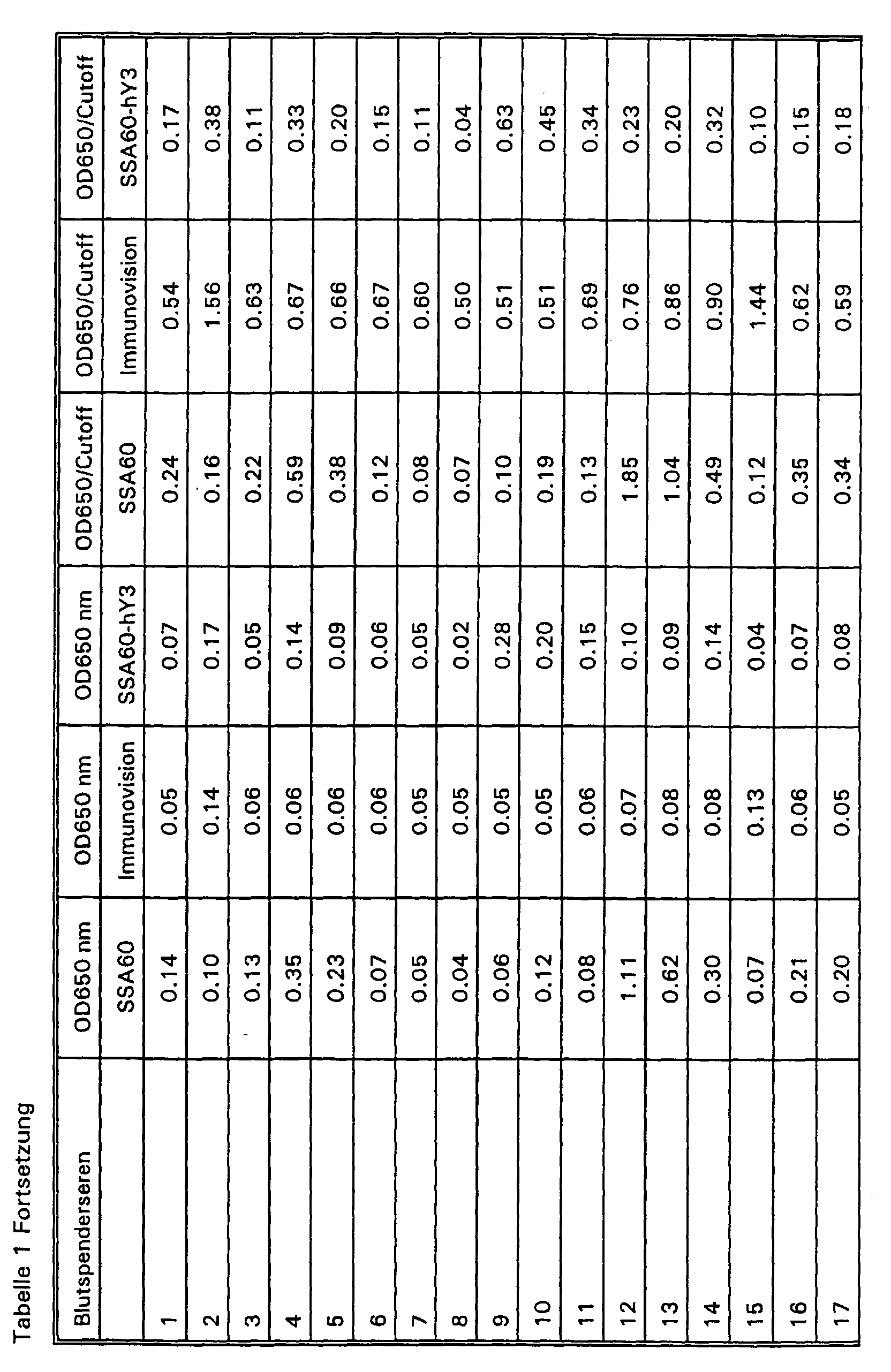
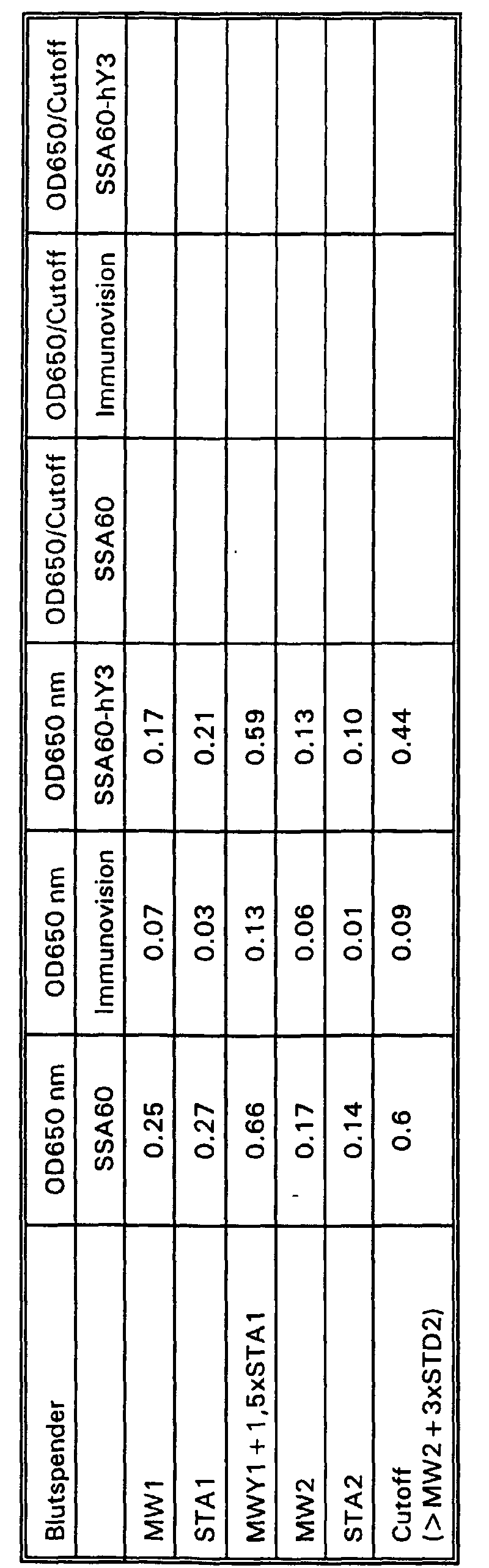
- Table 1 shows the results for positive and negative sera (Blood donor sera), which are recombinantly used in E. coli without RNA-produced SSA60, SSA60 from Immunovision (native SSA60 Bovine spleen) and SSA60-hY3 prepared according to the invention become.
- the sensitivity of the SSA60-hY3 produced according to the invention is significantly higher than that of the SSA60 without RNA.
- a sample was rated negative when OD650 nm / cutoff ⁇ 1 and classified as positive if OD650 nm / cutoff> 1.
- the SSA60-hY3 produced according to the invention also has a higher specificity than SSA60 without RNA or SSA60 from Immunovision, as can be seen in the second part of Table 1.
- the results of 17 blood donors (negative sera) are listed there. While here two negative sera (No. 12 and 13, or No. 2 and 15) were classified as positive with SSA60 and also with SSA60 from Immunovision, all sera were correctly recognized as negative with the SSA60-hY3 produced according to the invention.
Landscapes
- Chemical & Material Sciences (AREA)
- Health & Medical Sciences (AREA)
- Life Sciences & Earth Sciences (AREA)
- Organic Chemistry (AREA)
- General Health & Medical Sciences (AREA)
- Gastroenterology & Hepatology (AREA)
- Biochemistry (AREA)
- Biophysics (AREA)
- Zoology (AREA)
- Genetics & Genomics (AREA)
- Medicinal Chemistry (AREA)
- Molecular Biology (AREA)
- Proteomics, Peptides & Aminoacids (AREA)
- Toxicology (AREA)
- Preparation Of Compounds By Using Micro-Organisms (AREA)
- Peptides Or Proteins (AREA)
- Micro-Organisms Or Cultivation Processes Thereof (AREA)
Abstract
Description
- Figur 1
- die Aminosäuresequenz der rekombinanten Antigene SSA60 M4-C6 (obere Sequenz) und SSA60 M56 (untere Sequenz) darstellt;
- Figur 2
- einen Vergleich der von Wolin et al. in Proc. Natl. Acad. Sci. USA 81 (1984), 1996-2000 veröffentlichten Sequenz von HY3 (obere Sequenz) und der im Klon HY3-SSA60 M56 (untere Sequenz) verwendeten Gensequenz. Die Punktmutation ist durch einen dicker gedruckten Buchstaben gekennzeichnet;
- Figur 3
- die DNA- und Aminosäuresequenz von pQE30-HY3-SSA60 M56 #4 zeigt, wobei das HY3-Gen zwischen den zwei Xhol-Stellen (bp 232 - 419) angeordnet ist, während das SSA60 M56 stromab der EcoRI-Stelle (Translationsstart bei bp 533) zu finden ist. Charakteristische Restriktionsstellen sind angegeben. Die unterstrichenen Aminosäuren werden vom Vektor codiert, die anderen gehören zur humanen SSA60-Sequenz.
- Figur 4
- zeigt ein Testformat mit beschichteten Beads, wobei die Beads neben den erfindungsgemäßen Ribonukleoproteinen weitere Erkennungsmoleküle tragen können, beispielsweise einen HEp2-Extrakt, SSA52, SSA60, SSB, Scl70, Jo1, CENP-B oder/und dsDNA. Die beschichteten Beats werden dann mit unverdünnter Probe, beispielsweise 25 µl, und einem Puffer, beispielsweise 250 µl, inkubiert, beispielsweise für 30 Minuten. Nach einem Waschschritt wird ein Nachweisreagenz, beispielsweise 250 ml Maus-Anti-Human-IgG-POD-Konjugat zugegeben und 15 Minuten inkubiert. Nach einem weiteren Waschschritt folgt der Nachweis mit TMB.
- Figur 5
- zeigt ein Testformat mit Beads, die mit SSA60 beschichtet sind. Die beschichteten Beads werden mit 10 µl Serum als Probe und 250 µl Probepuffer für 15 min inkubiert. Nach einem Waschschritt wird 250 µl Maus-Anti-Human-IgG-POD-Konjugat zugegeben und 15 min inkubiert. Nach einem weiteren Waschschritt erfolgt die Auswertung mit TMB.
- 30 Sekunden bei 98°C
- 2 Minuten bei 60°C
- 30 Sekunden bei 72°C
- 30 Sekunden bei 95°C
- 20 Sekunden bei 65°C
- 30 Sekunden bei 72°C

5' ctaattaaagcttcagcattttcaagg 3'

5' aggcagctctagagcggcggatttgtcc 3'







Claims (15)
- Verfahren zur rekombinanten Herstellung eines Ribonukleoproteins umfassend die Schritte:(a) Bereitstellen einer prokaryontischen Wirtszelle, die (i) mindestens eine für eine Ribonukleinsäurekomponente des Ribonukleoproteins codierende DNA und (ii) mindestens eine für eine Proteinkomponente des Ribonukleoproteins codierende DNA enthält,(b) Exprimieren der DNAs (i) und (ii) unter Bedingungen, bei denen ein Ribonukleoprotein gebildet wird und(c) Gewinnen des Ribonukleoproteins.
- Verfahren nach Anspruch 1,
dadurch gekennzeichnet,
daß man ein Eukaryonten-Ribonukleoprotein oder ein Derivat davon herstellt. - Verfahren nach Anspruch 1 oder 2,
dadurch gekennzeichnet,
daß ein SSA60-Ribonukleoprotein exprimiert wird. - Verfahren nach einem der Ansprüche 1 bis 3,
dadurch gekennzeichnet,
daß es sich bei der Ribonukleinsäurekomponente um eine HY-RNA handelt. - Nukleinsäurekonstrukt umfassend einen Abschnitt, der eine für eine Proteinkomponente codierende DNA enthält und einen Abschnitt, der eine für eine Ribonukleinsäurekomponente codierende DNA enthält.
- Konstrukt nach Anspruch 5,
dadurch gekennzeichnet,
daß es einen für ein SSA60-Protein codierenden Abschnitt umfaßt. - Konstrukt nach Anspruch 5 oder 6,
dadurch gekennzeichnet,
daß es einen für eine HY-RNA codierenden Abschnitt umfaßt. - Konstrukt nach einem der Ansprüche 5 bis 7,
dadurch gekennzeichnet,
daß es eine gleichzeitige Induktion der Ribonukleinsäurekomponente und der Proteinkomponente ermöglicht. - Konstrukt nach einem der Ansprüche 5 bis 8,
dadurch gekennzeichnet,
daß die codierenden Bereiche jeweils operativ mit einem Iac-Operator verknüpft sind. - Rekombinante prokaryontische Zelle,
dadurch gekennzeichnet,
daß sie (i) mindestens eine für eine Ribonukleinsäurekomponente eines Ribonukleoproteins codierende DNA und (ii) mindestens eine für eine Proteinkomonente des Ribonukleoproteins codierende DNA enthält. - Rekombinantes Ribonukleoprotein erhältlich mit einem Verfahren nach einem der Ansprüche 1 bis 4.
- SSA60-Protein mit der in Figur 1 gezeigten Sequenz SSA60M56 gegebenenfalls in Assoziation mit RNA.
- Verwendung eines Ribonukleoproteins nach Anspruch 11 oder 12 für diagnostische Verfahren.
- Verwendung nach Anspruch 13,
dadurch gekennzeichnet,
daß ein rekombinantes SSA60-Ribonukleoprotein für die Diagnostik von Autoimmunerkrankungen eingesetzt wird. - Verfahren zum Nachweis eines Analyten in einer Probe unter Verwendung eines Analyt-spezifischen Rezeptors,
dadurch gekennzeichnet,
daß man als Rezeptor ein Ribonukleoprotein nach Anspruch 11 einsetzt.
Applications Claiming Priority (2)
| Application Number | Priority Date | Filing Date | Title |
|---|---|---|---|
| DE19931380 | 1999-07-07 | ||
| DE19931380A DE19931380A1 (de) | 1999-07-07 | 1999-07-07 | Verfahren zur rekombinanten Herstellung von Ribonukleoproteinen |
Publications (2)
| Publication Number | Publication Date |
|---|---|
| EP1069136A1 true EP1069136A1 (de) | 2001-01-17 |
| EP1069136B1 EP1069136B1 (de) | 2012-02-29 |
Family
ID=7913958
Family Applications (1)
| Application Number | Title | Priority Date | Filing Date |
|---|---|---|---|
| EP00114542A Expired - Lifetime EP1069136B1 (de) | 1999-07-07 | 2000-07-06 | Verfahren zur rekombinanten Herstellung von Ribonukleoproteinen |
Country Status (5)
| Country | Link |
|---|---|
| US (1) | US7122346B2 (de) |
| EP (1) | EP1069136B1 (de) |
| JP (1) | JP4838412B2 (de) |
| AT (1) | ATE547427T1 (de) |
| DE (1) | DE19931380A1 (de) |
Families Citing this family (2)
| Publication number | Priority date | Publication date | Assignee | Title |
|---|---|---|---|---|
| GB0100750D0 (en) * | 2001-01-11 | 2001-02-21 | Inpharmatica Ltd | Novel proteins |
| US20170298450A1 (en) * | 2014-09-10 | 2017-10-19 | The Regents Of The University Of California | Reconstruction of ancestral cells by enzymatic recording |
-
1999
- 1999-07-07 DE DE19931380A patent/DE19931380A1/de not_active Ceased
-
2000
- 2000-07-06 AT AT00114542T patent/ATE547427T1/de active
- 2000-07-06 EP EP00114542A patent/EP1069136B1/de not_active Expired - Lifetime
- 2000-07-07 JP JP2000207024A patent/JP4838412B2/ja not_active Expired - Fee Related
-
2002
- 2002-11-06 US US10/288,858 patent/US7122346B2/en not_active Expired - Lifetime
Non-Patent Citations (10)
| Title |
|---|
| DEUTSCHER ET AL., PROC. NATL. ACD. SCI. USA, vol. 85, 1988, pages 9479 - 9483 |
| DEUTSCHER, S.L. ET AL.: "Molecular analysis of the 60-kDa human Ro ribonucleoprotein", PNAS, vol. 85, 1988, pages 9479 - 9483, XP000941349 * |
| FARRIS, A. D. ET AL.: "Conserved features of Y RNAs revealed by automated phylogenetic secondary structure analysis", NUCLEIC ACIDS RESEARCH, vol. 27, 15 February 1999 (1999-02-15), pages 1070 - 1078, XP000941352 * |
| FERRIS ET AL., NUCLEIC ACIDS RESEARCH, vol. 27, 1999, pages 1070 - 1078 |
| GRANGER ET AL., CLIN. EXP. IMMUNOL., vol. 106, 1996, pages 498 - 503 |
| GRANGER, D. ET AL.: "RNA-labelled Ro and La ribonucleoprotein complexes reassembled in vitro; characterization by gel shift analysis", CLIN. EXP. IMMUNOL., vol. 106, 1996, pages 498 - 503, XP000942733 * |
| HENDRICK ET AL., J. MOL. BIOL., vol. 1, 1981, pages 1138 - 1149 |
| WANG ET AL., MOLECULAR BIOLOGY REPORTS, vol. 23, 1996, pages 205 - 210 |
| WANG, D. ET AL.: "Cloning and expression of mouse 60 kDa ribonucleoprotein SS-A/Ro", MOLECULAR BIOLOGY REPORTS, vol. 23, 1996, pages 205 - 210, XP000942707 * |
| WOLIN ET AL., PROC. NATL. ACAD. SCI. USA, vol. 81, 1984, pages 1996 - 2000 |
Also Published As
| Publication number | Publication date |
|---|---|
| JP2001046087A (ja) | 2001-02-20 |
| DE19931380A1 (de) | 2001-01-11 |
| US20030109001A1 (en) | 2003-06-12 |
| EP1069136B1 (de) | 2012-02-29 |
| US7122346B2 (en) | 2006-10-17 |
| JP4838412B2 (ja) | 2011-12-14 |
| ATE547427T1 (de) | 2012-03-15 |
Similar Documents
| Publication | Publication Date | Title |
|---|---|---|
| DE69434520T3 (de) | Biotinylierung von proteinen | |
| DE60207740T2 (de) | Muteine von menschlichem mit neutrophiler Gelatinase-assoziiertem Lipocalin und damit verwandte Proteine | |
| DE68929529T2 (de) | Rekombinante HIV-2 Antigene, abgeleitet aus synthetischen DNA | |
| EP0612325B1 (de) | Rekombinantes core-streptavidin | |
| DE60305643T2 (de) | Protein-marker der eine biotinylierungsdomaine enthält und verwendung zur erhöhung der löslichkeit und zur ermittlung vom faltungsstatus | |
| WO2000075308A1 (de) | Muteine des bilin-bindungsproteins | |
| DE19641876A1 (de) | Streptavidinmuteine | |
| EP1318401B1 (de) | Verfahren zur Früherkennung der Serokonversion eines gegen Hepatitis C-Virus gerichteten Antikörpers | |
| WO2002083906A9 (de) | Mhc-tetramere | |
| WO2004033497A1 (de) | Mhc-multimere | |
| DE69504795T2 (de) | Methoden zur synthese und reinigung von peptiden | |
| DE3619720A1 (de) | Hauptglykoprotein des menschlichen cytomegalovirus, seine herstellung und verwendung | |
| EP0938679B1 (de) | Rezeptorbindungsassay, für den rezeptorbindungsassay geeigneter rekombinanter fusionsrezeptor, vektor zu dessen herstellung sowie reagenziensatz für die durchführung des rezeptorbindungsassays | |
| EP1069136B1 (de) | Verfahren zur rekombinanten Herstellung von Ribonukleoproteinen | |
| DE69926606T2 (de) | Plazentaprotein 13 | |
| DE69534263T2 (de) | Expression kassette eines proteines p30 aus toxoplasma gondii | |
| EP0729580B1 (de) | Nachweisverfahren für hdm-2-spezifische antikörper | |
| DE69025689T2 (de) | Verfahren zur Herstellung von menschlicher Thiroid-Peroxydase | |
| DE602004004312T2 (de) | Allergenes Kautschuk-Protein | |
| DE10155862A1 (de) | Produktion von rekombinanten Antikörpern mittels Fusion mit Elastin-ähnlichen Peptiden | |
| DE4339533C2 (de) | Nachweisverfahren für hdm-2 spezifische Antikörper | |
| DE19645729C1 (de) | Rezeptorbindungsassay, für den Rezeptorbindungsassay geeigneter rekombinanter Fusionsrezeptor, Vektor zu dessen Herstellung sowie Reagenziensatz für die Durchführung des Rezeptorbindungsassays | |
| DE102004040370A1 (de) | Verfahren zur Identifizierung atypischer p-ANCA | |
| DE102006059574A1 (de) | Verfahren und Reagenzien zur spezifischen Detektion von Autoantikörpern bei Patienten mit blasenbildenden Autoimmundermatosen | |
| WO1994010297A1 (de) | Verfahren zur herstellung hochreiner humaner gad-1- und gad-2-proteine |
Legal Events
| Date | Code | Title | Description |
|---|---|---|---|
| PUAI | Public reference made under article 153(3) epc to a published international application that has entered the european phase |
Free format text: ORIGINAL CODE: 0009012 |
|
| AK | Designated contracting states |
Kind code of ref document: A1 Designated state(s): AT BE CH CY DE DK ES FI FR GB GR IE IT LI LU MC NL PT SE |
|
| AX | Request for extension of the european patent |
Free format text: AL;LT;LV;MK;RO;SI |
|
| 17P | Request for examination filed |
Effective date: 20001229 |
|
| AKX | Designation fees paid |
Free format text: AT BE CH CY DE DK ES FI FR GB GR IE IT LI LU MC NL PT SE |
|
| 17Q | First examination report despatched |
Effective date: 20070221 |
|
| GRAP | Despatch of communication of intention to grant a patent |
Free format text: ORIGINAL CODE: EPIDOSNIGR1 |
|
| GRAS | Grant fee paid |
Free format text: ORIGINAL CODE: EPIDOSNIGR3 |
|
| GRAA | (expected) grant |
Free format text: ORIGINAL CODE: 0009210 |
|
| AK | Designated contracting states |
Kind code of ref document: B1 Designated state(s): AT BE CH CY DE DK ES FI FR GB GR IE IT LI LU MC NL PT SE |
|
| REG | Reference to a national code |
Ref country code: GB Ref legal event code: FG4D Free format text: NOT ENGLISH Ref country code: CH Ref legal event code: EP |
|
| REG | Reference to a national code |
Ref country code: AT Ref legal event code: REF Ref document number: 547427 Country of ref document: AT Kind code of ref document: T Effective date: 20120315 |
|
| REG | Reference to a national code |
Ref country code: IE Ref legal event code: FG4D Free format text: LANGUAGE OF EP DOCUMENT: GERMAN |
|
| REG | Reference to a national code |
Ref country code: DE Ref legal event code: R096 Ref document number: 50016208 Country of ref document: DE Effective date: 20120426 |
|
| REG | Reference to a national code |
Ref country code: NL Ref legal event code: VDEP Effective date: 20120229 |
|
| PG25 | Lapsed in a contracting state [announced via postgrant information from national office to epo] |
Ref country code: NL Free format text: LAPSE BECAUSE OF FAILURE TO SUBMIT A TRANSLATION OF THE DESCRIPTION OR TO PAY THE FEE WITHIN THE PRESCRIBED TIME-LIMIT Effective date: 20120229 |
|
| PG25 | Lapsed in a contracting state [announced via postgrant information from national office to epo] |
Ref country code: FI Free format text: LAPSE BECAUSE OF FAILURE TO SUBMIT A TRANSLATION OF THE DESCRIPTION OR TO PAY THE FEE WITHIN THE PRESCRIBED TIME-LIMIT Effective date: 20120229 Ref country code: GR Free format text: LAPSE BECAUSE OF FAILURE TO SUBMIT A TRANSLATION OF THE DESCRIPTION OR TO PAY THE FEE WITHIN THE PRESCRIBED TIME-LIMIT Effective date: 20120530 Ref country code: PT Free format text: LAPSE BECAUSE OF FAILURE TO SUBMIT A TRANSLATION OF THE DESCRIPTION OR TO PAY THE FEE WITHIN THE PRESCRIBED TIME-LIMIT Effective date: 20120629 |
|
| REG | Reference to a national code |
Ref country code: IE Ref legal event code: FD4D |
|
| PG25 | Lapsed in a contracting state [announced via postgrant information from national office to epo] |
Ref country code: CY Free format text: LAPSE BECAUSE OF FAILURE TO SUBMIT A TRANSLATION OF THE DESCRIPTION OR TO PAY THE FEE WITHIN THE PRESCRIBED TIME-LIMIT Effective date: 20120229 |
|
| PG25 | Lapsed in a contracting state [announced via postgrant information from national office to epo] |
Ref country code: IE Free format text: LAPSE BECAUSE OF FAILURE TO SUBMIT A TRANSLATION OF THE DESCRIPTION OR TO PAY THE FEE WITHIN THE PRESCRIBED TIME-LIMIT Effective date: 20120229 Ref country code: DK Free format text: LAPSE BECAUSE OF FAILURE TO SUBMIT A TRANSLATION OF THE DESCRIPTION OR TO PAY THE FEE WITHIN THE PRESCRIBED TIME-LIMIT Effective date: 20120229 Ref country code: SE Free format text: LAPSE BECAUSE OF FAILURE TO SUBMIT A TRANSLATION OF THE DESCRIPTION OR TO PAY THE FEE WITHIN THE PRESCRIBED TIME-LIMIT Effective date: 20120229 |
|
| PG25 | Lapsed in a contracting state [announced via postgrant information from national office to epo] |
Ref country code: IT Free format text: LAPSE BECAUSE OF FAILURE TO SUBMIT A TRANSLATION OF THE DESCRIPTION OR TO PAY THE FEE WITHIN THE PRESCRIBED TIME-LIMIT Effective date: 20120229 |
|
| PLBE | No opposition filed within time limit |
Free format text: ORIGINAL CODE: 0009261 |
|
| STAA | Information on the status of an ep patent application or granted ep patent |
Free format text: STATUS: NO OPPOSITION FILED WITHIN TIME LIMIT |
|
| BERE | Be: lapsed |
Owner name: F. HOFFMANN-LA ROCHE A.G. Effective date: 20120731 |
|
| 26N | No opposition filed |
Effective date: 20121130 |
|
| PG25 | Lapsed in a contracting state [announced via postgrant information from national office to epo] |
Ref country code: MC Free format text: LAPSE BECAUSE OF NON-PAYMENT OF DUE FEES Effective date: 20120731 |
|
| REG | Reference to a national code |
Ref country code: CH Ref legal event code: PL |
|
| REG | Reference to a national code |
Ref country code: DE Ref legal event code: R097 Ref document number: 50016208 Country of ref document: DE Effective date: 20121130 |
|
| PG25 | Lapsed in a contracting state [announced via postgrant information from national office to epo] |
Ref country code: ES Free format text: LAPSE BECAUSE OF FAILURE TO SUBMIT A TRANSLATION OF THE DESCRIPTION OR TO PAY THE FEE WITHIN THE PRESCRIBED TIME-LIMIT Effective date: 20120609 Ref country code: CH Free format text: LAPSE BECAUSE OF NON-PAYMENT OF DUE FEES Effective date: 20120731 Ref country code: LI Free format text: LAPSE BECAUSE OF NON-PAYMENT OF DUE FEES Effective date: 20120731 |
|
| PG25 | Lapsed in a contracting state [announced via postgrant information from national office to epo] |
Ref country code: BE Free format text: LAPSE BECAUSE OF NON-PAYMENT OF DUE FEES Effective date: 20120731 |
|
| REG | Reference to a national code |
Ref country code: AT Ref legal event code: MM01 Ref document number: 547427 Country of ref document: AT Kind code of ref document: T Effective date: 20120731 |
|
| PG25 | Lapsed in a contracting state [announced via postgrant information from national office to epo] |
Ref country code: AT Free format text: LAPSE BECAUSE OF NON-PAYMENT OF DUE FEES Effective date: 20120731 |
|
| PGFP | Annual fee paid to national office [announced via postgrant information from national office to epo] |
Ref country code: DE Payment date: 20130731 Year of fee payment: 14 |
|
| PG25 | Lapsed in a contracting state [announced via postgrant information from national office to epo] |
Ref country code: LU Free format text: LAPSE BECAUSE OF NON-PAYMENT OF DUE FEES Effective date: 20120706 |
|
| REG | Reference to a national code |
Ref country code: DE Ref legal event code: R119 Ref document number: 50016208 Country of ref document: DE |
|
| PG25 | Lapsed in a contracting state [announced via postgrant information from national office to epo] |
Ref country code: DE Free format text: LAPSE BECAUSE OF NON-PAYMENT OF DUE FEES Effective date: 20150203 |
|
| REG | Reference to a national code |
Ref country code: DE Ref legal event code: R119 Ref document number: 50016208 Country of ref document: DE Effective date: 20150203 |
|
| REG | Reference to a national code |
Ref country code: FR Ref legal event code: PLFP Year of fee payment: 16 |
|
| REG | Reference to a national code |
Ref country code: FR Ref legal event code: PLFP Year of fee payment: 17 |
|
| PGFP | Annual fee paid to national office [announced via postgrant information from national office to epo] |
Ref country code: GB Payment date: 20160624 Year of fee payment: 17 |
|
| PGFP | Annual fee paid to national office [announced via postgrant information from national office to epo] |
Ref country code: FR Payment date: 20160621 Year of fee payment: 17 |
|
| GBPC | Gb: european patent ceased through non-payment of renewal fee |
Effective date: 20170706 |
|
| REG | Reference to a national code |
Ref country code: FR Ref legal event code: ST Effective date: 20180330 |
|
| PG25 | Lapsed in a contracting state [announced via postgrant information from national office to epo] |
Ref country code: GB Free format text: LAPSE BECAUSE OF NON-PAYMENT OF DUE FEES Effective date: 20170706 |
|
| PG25 | Lapsed in a contracting state [announced via postgrant information from national office to epo] |
Ref country code: FR Free format text: LAPSE BECAUSE OF NON-PAYMENT OF DUE FEES Effective date: 20170731 |