EP1069879B1 - Absorbierende struktur und produkt aus rohmaterialien mit einem hohen erneuerungsgrad - Google Patents
Absorbierende struktur und produkt aus rohmaterialien mit einem hohen erneuerungsgrad Download PDFInfo
- Publication number
- EP1069879B1 EP1069879B1 EP99910898A EP99910898A EP1069879B1 EP 1069879 B1 EP1069879 B1 EP 1069879B1 EP 99910898 A EP99910898 A EP 99910898A EP 99910898 A EP99910898 A EP 99910898A EP 1069879 B1 EP1069879 B1 EP 1069879B1
- Authority
- EP
- European Patent Office
- Prior art keywords
- starch
- superabsorbent
- absorbent structure
- absorbent
- weight
- Prior art date
- Legal status (The legal status is an assumption and is not a legal conclusion. Google has not performed a legal analysis and makes no representation as to the accuracy of the status listed.)
- Expired - Lifetime
Links
- 239000002250 absorbent Substances 0.000 title claims abstract description 110
- 230000002745 absorbent Effects 0.000 title claims abstract description 110
- 239000002994 raw material Substances 0.000 title abstract description 15
- 229920002472 Starch Polymers 0.000 claims abstract description 87
- 235000019698 starch Nutrition 0.000 claims abstract description 85
- 239000008107 starch Substances 0.000 claims abstract description 79
- 150000003254 radicals Chemical class 0.000 claims abstract description 34
- 239000003999 initiator Substances 0.000 claims abstract description 22
- 229920000881 Modified starch Polymers 0.000 claims abstract description 17
- 235000019426 modified starch Nutrition 0.000 claims abstract description 17
- 239000000178 monomer Substances 0.000 claims abstract description 14
- 239000004368 Modified starch Substances 0.000 claims abstract description 10
- 206010021639 Incontinence Diseases 0.000 claims abstract description 8
- 238000007334 copolymerization reaction Methods 0.000 claims abstract description 6
- 230000002209 hydrophobic effect Effects 0.000 claims abstract description 6
- 238000004519 manufacturing process Methods 0.000 claims abstract description 6
- 239000010410 layer Substances 0.000 claims description 56
- 239000000047 product Substances 0.000 claims description 46
- 239000000463 material Substances 0.000 claims description 44
- 150000002148 esters Chemical class 0.000 claims description 16
- -1 sulphonyl groups Chemical group 0.000 claims description 15
- 150000001875 compounds Chemical class 0.000 claims description 14
- 238000006116 polymerization reaction Methods 0.000 claims description 11
- 229920001059 synthetic polymer Polymers 0.000 claims description 9
- 229920002261 Corn starch Polymers 0.000 claims description 8
- RTZKZFJDLAIYFH-UHFFFAOYSA-N Diethyl ether Chemical compound CCOCC RTZKZFJDLAIYFH-UHFFFAOYSA-N 0.000 claims description 8
- 230000004888 barrier function Effects 0.000 claims description 8
- 239000002253 acid Substances 0.000 claims description 6
- 230000001747 exhibiting effect Effects 0.000 claims description 6
- 239000001257 hydrogen Substances 0.000 claims description 6
- 229910052739 hydrogen Inorganic materials 0.000 claims description 6
- 125000004435 hydrogen atom Chemical group [H]* 0.000 claims description 6
- 125000005499 phosphonyl group Chemical group 0.000 claims description 6
- VZCYOOQTPOCHFL-UHFFFAOYSA-N trans-butenedioic acid Natural products OC(=O)C=CC(O)=O VZCYOOQTPOCHFL-UHFFFAOYSA-N 0.000 claims description 6
- 125000003903 2-propenyl group Chemical group [H]C([*])([H])C([H])=C([H])[H] 0.000 claims description 5
- 235000019759 Maize starch Nutrition 0.000 claims description 5
- 125000003178 carboxy group Chemical group [H]OC(*)=O 0.000 claims description 5
- VZCYOOQTPOCHFL-UPHRSURJSA-N maleic acid Chemical compound OC(=O)\C=C/C(O)=O VZCYOOQTPOCHFL-UPHRSURJSA-N 0.000 claims description 5
- 125000002057 carboxymethyl group Chemical group [H]OC(=O)C([H])([H])[*] 0.000 claims description 4
- 239000007795 chemical reaction product Substances 0.000 claims description 4
- 125000001495 ethyl group Chemical group [H]C([H])([H])C([H])([H])* 0.000 claims description 4
- 125000002496 methyl group Chemical group [H]C([H])([H])* 0.000 claims description 4
- 229920005615 natural polymer Polymers 0.000 claims description 4
- 229920001592 potato starch Polymers 0.000 claims description 4
- KDYFGRWQOYBRFD-UHFFFAOYSA-L succinate(2-) Chemical compound [O-]C(=O)CCC([O-])=O KDYFGRWQOYBRFD-UHFFFAOYSA-L 0.000 claims description 4
- NIXOWILDQLNWCW-UHFFFAOYSA-M Acrylate Chemical compound [O-]C(=O)C=C NIXOWILDQLNWCW-UHFFFAOYSA-M 0.000 claims description 3
- CERQOIWHTDAKMF-UHFFFAOYSA-M Methacrylate Chemical compound CC(=C)C([O-])=O CERQOIWHTDAKMF-UHFFFAOYSA-M 0.000 claims description 3
- 125000000751 azo group Chemical group [*]N=N[*] 0.000 claims description 3
- MHAJPDPJQMAIIY-UHFFFAOYSA-M hydroperoxide group Chemical group [O-]O MHAJPDPJQMAIIY-UHFFFAOYSA-M 0.000 claims description 3
- 239000002356 single layer Substances 0.000 claims description 3
- 125000004178 (C1-C4) alkyl group Chemical group 0.000 claims description 2
- 125000000954 2-hydroxyethyl group Chemical group [H]C([*])([H])C([H])([H])O[H] 0.000 claims description 2
- JOYRKODLDBILNP-UHFFFAOYSA-N Ethyl urethane Chemical compound CCOC(N)=O JOYRKODLDBILNP-UHFFFAOYSA-N 0.000 claims description 2
- BDAGIHXWWSANSR-UHFFFAOYSA-M Formate Chemical compound [O-]C=O BDAGIHXWWSANSR-UHFFFAOYSA-M 0.000 claims description 2
- 229920001612 Hydroxyethyl starch Polymers 0.000 claims description 2
- 240000003183 Manihot esculenta Species 0.000 claims description 2
- 235000016735 Manihot esculenta subsp esculenta Nutrition 0.000 claims description 2
- 229910002651 NO3 Inorganic materials 0.000 claims description 2
- NHNBFGGVMKEFGY-UHFFFAOYSA-N Nitrate Chemical compound [O-][N+]([O-])=O NHNBFGGVMKEFGY-UHFFFAOYSA-N 0.000 claims description 2
- 229910019142 PO4 Inorganic materials 0.000 claims description 2
- MKRNVBXERAPZOP-UHFFFAOYSA-N Starch acetate Chemical compound O1C(CO)C(OC)C(O)C(O)C1OCC1C(OC2C(C(O)C(OC)C(CO)O2)OC(C)=O)C(O)C(O)C(OC2C(OC(C)C(O)C2O)CO)O1 MKRNVBXERAPZOP-UHFFFAOYSA-N 0.000 claims description 2
- QAOWNCQODCNURD-UHFFFAOYSA-L Sulfate Chemical compound [O-]S([O-])(=O)=O QAOWNCQODCNURD-UHFFFAOYSA-L 0.000 claims description 2
- ZJCCRDAZUWHFQH-UHFFFAOYSA-N Trimethylolpropane Chemical compound CCC(CO)(CO)CO ZJCCRDAZUWHFQH-UHFFFAOYSA-N 0.000 claims description 2
- QYKIQEUNHZKYBP-UHFFFAOYSA-N Vinyl ether Chemical compound C=COC=C QYKIQEUNHZKYBP-UHFFFAOYSA-N 0.000 claims description 2
- 150000001241 acetals Chemical class 0.000 claims description 2
- 125000001931 aliphatic group Chemical group 0.000 claims description 2
- 239000008346 aqueous phase Substances 0.000 claims description 2
- QVGXLLKOCUKJST-UHFFFAOYSA-N atomic oxygen Chemical compound [O] QVGXLLKOCUKJST-UHFFFAOYSA-N 0.000 claims description 2
- WPYMKLBDIGXBTP-UHFFFAOYSA-N benzoic acid Chemical compound OC(=O)C1=CC=CC=C1 WPYMKLBDIGXBTP-UHFFFAOYSA-N 0.000 claims description 2
- 125000004181 carboxyalkyl group Chemical group 0.000 claims description 2
- 125000004122 cyclic group Chemical group 0.000 claims description 2
- ZOOODBUHSVUZEM-UHFFFAOYSA-N ethoxymethanedithioic acid Chemical compound CCOC(S)=S ZOOODBUHSVUZEM-UHFFFAOYSA-N 0.000 claims description 2
- 125000002768 hydroxyalkyl group Chemical group 0.000 claims description 2
- 150000007522 mineralic acids Chemical class 0.000 claims description 2
- 238000002156 mixing Methods 0.000 claims description 2
- 230000003647 oxidation Effects 0.000 claims description 2
- 238000007254 oxidation reaction Methods 0.000 claims description 2
- 235000013808 oxidized starch Nutrition 0.000 claims description 2
- 239000001301 oxygen Substances 0.000 claims description 2
- 229910052760 oxygen Inorganic materials 0.000 claims description 2
- NBIIXXVUZAFLBC-UHFFFAOYSA-K phosphate Chemical compound [O-]P([O-])([O-])=O NBIIXXVUZAFLBC-UHFFFAOYSA-K 0.000 claims description 2
- 239000010452 phosphate Substances 0.000 claims description 2
- 125000002924 primary amino group Chemical group [H]N([H])* 0.000 claims description 2
- 229910021653 sulphate ion Inorganic materials 0.000 claims description 2
- 229940100445 wheat starch Drugs 0.000 claims description 2
- 239000012991 xanthate Substances 0.000 claims description 2
- YCIGYTFKOXGYTA-UHFFFAOYSA-N 4-(3-cyanopropyldiazenyl)butanenitrile Chemical compound N#CCCCN=NCCCC#N YCIGYTFKOXGYTA-UHFFFAOYSA-N 0.000 claims 1
- 239000001341 hydroxy propyl starch Substances 0.000 claims 1
- 229940050526 hydroxyethylstarch Drugs 0.000 claims 1
- 239000001254 oxidized starch Substances 0.000 claims 1
- 125000002081 peroxide group Chemical group 0.000 claims 1
- 230000000379 polymerizing effect Effects 0.000 claims 1
- 239000007788 liquid Substances 0.000 description 24
- 239000000203 mixture Substances 0.000 description 19
- 239000012530 fluid Substances 0.000 description 15
- 229920005372 Plexiglas® Polymers 0.000 description 12
- 239000004926 polymethyl methacrylate Substances 0.000 description 12
- 238000003892 spreading Methods 0.000 description 12
- 238000012360 testing method Methods 0.000 description 12
- 230000008901 benefit Effects 0.000 description 10
- 230000007480 spreading Effects 0.000 description 10
- 238000010521 absorption reaction Methods 0.000 description 9
- 239000000499 gel Substances 0.000 description 7
- 229920000642 polymer Polymers 0.000 description 7
- 238000000034 method Methods 0.000 description 6
- XLYOFNOQVPJJNP-UHFFFAOYSA-N water Substances O XLYOFNOQVPJJNP-UHFFFAOYSA-N 0.000 description 6
- 238000009736 wetting Methods 0.000 description 6
- 229920003043 Cellulose fiber Polymers 0.000 description 5
- 210000001124 body fluid Anatomy 0.000 description 5
- 239000010839 body fluid Substances 0.000 description 5
- 238000005259 measurement Methods 0.000 description 5
- 239000002245 particle Substances 0.000 description 5
- 238000010998 test method Methods 0.000 description 5
- 150000007513 acids Chemical class 0.000 description 4
- 239000003431 cross linking reagent Substances 0.000 description 4
- 150000002978 peroxides Chemical group 0.000 description 4
- 239000007787 solid Substances 0.000 description 4
- SMZOUWXMTYCWNB-UHFFFAOYSA-N 2-(2-methoxy-5-methylphenyl)ethanamine Chemical compound COC1=CC=C(C)C=C1CCN SMZOUWXMTYCWNB-UHFFFAOYSA-N 0.000 description 3
- NIXOWILDQLNWCW-UHFFFAOYSA-N 2-Propenoic acid Natural products OC(=O)C=C NIXOWILDQLNWCW-UHFFFAOYSA-N 0.000 description 3
- PEDCQBHIVMGVHV-UHFFFAOYSA-N Glycerine Chemical compound OCC(O)CO PEDCQBHIVMGVHV-UHFFFAOYSA-N 0.000 description 3
- 239000003638 chemical reducing agent Substances 0.000 description 3
- 238000001035 drying Methods 0.000 description 3
- 238000002474 experimental method Methods 0.000 description 3
- 239000000835 fiber Substances 0.000 description 3
- HEBKCHPVOIAQTA-UHFFFAOYSA-N meso ribitol Natural products OCC(O)C(O)C(O)CO HEBKCHPVOIAQTA-UHFFFAOYSA-N 0.000 description 3
- 229920003023 plastic Polymers 0.000 description 3
- 239000004033 plastic Substances 0.000 description 3
- 229920000573 polyethylene Polymers 0.000 description 3
- 230000008569 process Effects 0.000 description 3
- 238000007493 shaping process Methods 0.000 description 3
- 210000002700 urine Anatomy 0.000 description 3
- OZAIFHULBGXAKX-UHFFFAOYSA-N 2-(2-cyanopropan-2-yldiazenyl)-2-methylpropanenitrile Chemical compound N#CC(C)(C)N=NC(C)(C)C#N OZAIFHULBGXAKX-UHFFFAOYSA-N 0.000 description 2
- KUDUQBURMYMBIJ-UHFFFAOYSA-N 2-prop-2-enoyloxyethyl prop-2-enoate Chemical compound C=CC(=O)OCCOC(=O)C=C KUDUQBURMYMBIJ-UHFFFAOYSA-N 0.000 description 2
- CIWBSHSKHKDKBQ-JLAZNSOCSA-N Ascorbic acid Chemical compound OC[C@H](O)[C@H]1OC(=O)C(O)=C1O CIWBSHSKHKDKBQ-JLAZNSOCSA-N 0.000 description 2
- UNXHWFMMPAWVPI-UHFFFAOYSA-N Erythritol Natural products OCC(O)C(O)CO UNXHWFMMPAWVPI-UHFFFAOYSA-N 0.000 description 2
- VZCYOOQTPOCHFL-OWOJBTEDSA-N Fumaric acid Chemical compound OC(=O)\C=C\C(O)=O VZCYOOQTPOCHFL-OWOJBTEDSA-N 0.000 description 2
- CERQOIWHTDAKMF-UHFFFAOYSA-N Methacrylic acid Chemical compound CC(=C)C(O)=O CERQOIWHTDAKMF-UHFFFAOYSA-N 0.000 description 2
- NBIIXXVUZAFLBC-UHFFFAOYSA-N Phosphoric acid Chemical compound OP(O)(O)=O NBIIXXVUZAFLBC-UHFFFAOYSA-N 0.000 description 2
- 239000004743 Polypropylene Substances 0.000 description 2
- 150000001408 amides Chemical class 0.000 description 2
- 230000000903 blocking effect Effects 0.000 description 2
- 239000001913 cellulose Substances 0.000 description 2
- 229920002678 cellulose Polymers 0.000 description 2
- 238000006243 chemical reaction Methods 0.000 description 2
- 230000001143 conditioned effect Effects 0.000 description 2
- 150000002170 ethers Chemical class 0.000 description 2
- 150000004676 glycans Chemical class 0.000 description 2
- LEQAOMBKQFMDFZ-UHFFFAOYSA-N glyoxal Chemical compound O=CC=O LEQAOMBKQFMDFZ-UHFFFAOYSA-N 0.000 description 2
- FUZZWVXGSFPDMH-UHFFFAOYSA-N hexanoic acid Chemical compound CCCCCC(O)=O FUZZWVXGSFPDMH-UHFFFAOYSA-N 0.000 description 2
- QYZFTMMPKCOTAN-UHFFFAOYSA-N n-[2-(2-hydroxyethylamino)ethyl]-2-[[1-[2-(2-hydroxyethylamino)ethylamino]-2-methyl-1-oxopropan-2-yl]diazenyl]-2-methylpropanamide Chemical compound OCCNCCNC(=O)C(C)(C)N=NC(C)(C)C(=O)NCCNCCO QYZFTMMPKCOTAN-UHFFFAOYSA-N 0.000 description 2
- 125000000466 oxiranyl group Chemical group 0.000 description 2
- 229920000728 polyester Polymers 0.000 description 2
- 229920005862 polyol Polymers 0.000 description 2
- 150000003077 polyols Chemical class 0.000 description 2
- 229920001155 polypropylene Polymers 0.000 description 2
- 229920001282 polysaccharide Polymers 0.000 description 2
- 239000005017 polysaccharide Substances 0.000 description 2
- 238000003825 pressing Methods 0.000 description 2
- 150000003839 salts Chemical class 0.000 description 2
- 239000000126 substance Substances 0.000 description 2
- 150000005846 sugar alcohols Polymers 0.000 description 2
- 229920002994 synthetic fiber Polymers 0.000 description 2
- ZTWTYVWXUKTLCP-UHFFFAOYSA-N vinylphosphonic acid Chemical compound OP(O)(=O)C=C ZTWTYVWXUKTLCP-UHFFFAOYSA-N 0.000 description 2
- USVVENVKYJZFMW-ONEGZZNKSA-N (e)-carboxyiminocarbamic acid Chemical compound OC(=O)\N=N\C(O)=O USVVENVKYJZFMW-ONEGZZNKSA-N 0.000 description 1
- JHSWSKVODYPNDV-UHFFFAOYSA-N 2,2-bis(prop-2-enoxymethyl)propane-1,3-diol Chemical compound C=CCOCC(CO)(CO)COCC=C JHSWSKVODYPNDV-UHFFFAOYSA-N 0.000 description 1
- BJELTSYBAHKXRW-UHFFFAOYSA-N 2,4,6-triallyloxy-1,3,5-triazine Chemical compound C=CCOC1=NC(OCC=C)=NC(OCC=C)=N1 BJELTSYBAHKXRW-UHFFFAOYSA-N 0.000 description 1
- JAHNSTQSQJOJLO-UHFFFAOYSA-N 2-(3-fluorophenyl)-1h-imidazole Chemical compound FC1=CC=CC(C=2NC=CN=2)=C1 JAHNSTQSQJOJLO-UHFFFAOYSA-N 0.000 description 1
- XHZPRMZZQOIPDS-UHFFFAOYSA-N 2-Methyl-2-[(1-oxo-2-propenyl)amino]-1-propanesulfonic acid Chemical compound OS(=O)(=O)CC(C)(C)NC(=O)C=C XHZPRMZZQOIPDS-UHFFFAOYSA-N 0.000 description 1
- QDFKKOFHVURAMR-UHFFFAOYSA-N 2-methylbuta-2,3-dienamide Chemical compound C=C=C(C)C(N)=O QDFKKOFHVURAMR-UHFFFAOYSA-N 0.000 description 1
- FYRWKWGEFZTOQI-UHFFFAOYSA-N 3-prop-2-enoxy-2,2-bis(prop-2-enoxymethyl)propan-1-ol Chemical compound C=CCOCC(CO)(COCC=C)COCC=C FYRWKWGEFZTOQI-UHFFFAOYSA-N 0.000 description 1
- VFXXTYGQYWRHJP-UHFFFAOYSA-N 4,4'-azobis(4-cyanopentanoic acid) Chemical compound OC(=O)CCC(C)(C#N)N=NC(C)(CCC(O)=O)C#N VFXXTYGQYWRHJP-UHFFFAOYSA-N 0.000 description 1
- YNLNUDICLOWMRO-UHFFFAOYSA-N C1OC1COP(=O)OCC1CO1 Chemical compound C1OC1COP(=O)OCC1CO1 YNLNUDICLOWMRO-UHFFFAOYSA-N 0.000 description 1
- 244000025254 Cannabis sativa Species 0.000 description 1
- 235000012766 Cannabis sativa ssp. sativa var. sativa Nutrition 0.000 description 1
- 235000012765 Cannabis sativa ssp. sativa var. spontanea Nutrition 0.000 description 1
- 229920000742 Cotton Polymers 0.000 description 1
- FBPFZTCFMRRESA-FSIIMWSLSA-N D-Glucitol Natural products OC[C@H](O)[C@H](O)[C@@H](O)[C@H](O)CO FBPFZTCFMRRESA-FSIIMWSLSA-N 0.000 description 1
- FBPFZTCFMRRESA-KVTDHHQDSA-N D-Mannitol Chemical compound OC[C@@H](O)[C@@H](O)[C@H](O)[C@H](O)CO FBPFZTCFMRRESA-KVTDHHQDSA-N 0.000 description 1
- HEBKCHPVOIAQTA-QWWZWVQMSA-N D-arabinitol Chemical compound OC[C@@H](O)C(O)[C@H](O)CO HEBKCHPVOIAQTA-QWWZWVQMSA-N 0.000 description 1
- FBPFZTCFMRRESA-JGWLITMVSA-N D-glucitol Chemical compound OC[C@H](O)[C@@H](O)[C@H](O)[C@H](O)CO FBPFZTCFMRRESA-JGWLITMVSA-N 0.000 description 1
- UNXHWFMMPAWVPI-QWWZWVQMSA-N D-threitol Chemical compound OC[C@@H](O)[C@H](O)CO UNXHWFMMPAWVPI-QWWZWVQMSA-N 0.000 description 1
- BVTJGGGYKAMDBN-UHFFFAOYSA-N Dioxetane Chemical class C1COO1 BVTJGGGYKAMDBN-UHFFFAOYSA-N 0.000 description 1
- BRLQWZUYTZBJKN-UHFFFAOYSA-N Epichlorohydrin Chemical compound ClCC1CO1 BRLQWZUYTZBJKN-UHFFFAOYSA-N 0.000 description 1
- 239000004386 Erythritol Substances 0.000 description 1
- 241000219146 Gossypium Species 0.000 description 1
- 240000006240 Linum usitatissimum Species 0.000 description 1
- 235000004431 Linum usitatissimum Nutrition 0.000 description 1
- 229930195725 Mannitol Natural products 0.000 description 1
- 239000004677 Nylon Substances 0.000 description 1
- ABLZXFCXXLZCGV-UHFFFAOYSA-N Phosphorous acid Chemical compound OP(O)=O ABLZXFCXXLZCGV-UHFFFAOYSA-N 0.000 description 1
- 229920002845 Poly(methacrylic acid) Polymers 0.000 description 1
- 229920001744 Polyaldehyde Polymers 0.000 description 1
- 229920002873 Polyethylenimine Polymers 0.000 description 1
- OFOBLEOULBTSOW-UHFFFAOYSA-N Propanedioic acid Natural products OC(=O)CC(O)=O OFOBLEOULBTSOW-UHFFFAOYSA-N 0.000 description 1
- 229920000297 Rayon Polymers 0.000 description 1
- 229920002125 Sokalan® Polymers 0.000 description 1
- DAKWPKUUDNSNPN-UHFFFAOYSA-N Trimethylolpropane triacrylate Chemical compound C=CC(=O)OCC(CC)(COC(=O)C=C)COC(=O)C=C DAKWPKUUDNSNPN-UHFFFAOYSA-N 0.000 description 1
- TVXBFESIOXBWNM-UHFFFAOYSA-N Xylitol Natural products OCCC(O)C(O)C(O)CCO TVXBFESIOXBWNM-UHFFFAOYSA-N 0.000 description 1
- LXEKPEMOWBOYRF-UHFFFAOYSA-N [2-[(1-azaniumyl-1-imino-2-methylpropan-2-yl)diazenyl]-2-methylpropanimidoyl]azanium;dichloride Chemical compound Cl.Cl.NC(=N)C(C)(C)N=NC(C)(C)C(N)=N LXEKPEMOWBOYRF-UHFFFAOYSA-N 0.000 description 1
- 239000012190 activator Substances 0.000 description 1
- 125000005370 alkoxysilyl group Chemical group 0.000 description 1
- 229910000147 aluminium phosphate Inorganic materials 0.000 description 1
- QGZKDVFQNNGYKY-UHFFFAOYSA-O ammonium group Chemical group [NH4+] QGZKDVFQNNGYKY-UHFFFAOYSA-O 0.000 description 1
- 150000008064 anhydrides Chemical class 0.000 description 1
- 229960005070 ascorbic acid Drugs 0.000 description 1
- 235000010323 ascorbic acid Nutrition 0.000 description 1
- 239000011668 ascorbic acid Substances 0.000 description 1
- 239000012298 atmosphere Substances 0.000 description 1
- 125000005603 azodicarboxylic group Chemical group 0.000 description 1
- 239000011230 binding agent Substances 0.000 description 1
- 230000015572 biosynthetic process Effects 0.000 description 1
- ZPOLOEWJWXZUSP-WAYWQWQTSA-N bis(prop-2-enyl) (z)-but-2-enedioate Chemical compound C=CCOC(=O)\C=C/C(=O)OCC=C ZPOLOEWJWXZUSP-WAYWQWQTSA-N 0.000 description 1
- CDQSJQSWAWPGKG-UHFFFAOYSA-N butane-1,1-diol Chemical compound CCCC(O)O CDQSJQSWAWPGKG-UHFFFAOYSA-N 0.000 description 1
- 238000003490 calendering Methods 0.000 description 1
- 235000009120 camo Nutrition 0.000 description 1
- 235000005607 chanvre indien Nutrition 0.000 description 1
- 238000010276 construction Methods 0.000 description 1
- 229920001577 copolymer Polymers 0.000 description 1
- 239000010779 crude oil Substances 0.000 description 1
- 230000007547 defect Effects 0.000 description 1
- 229920006238 degradable plastic Polymers 0.000 description 1
- 125000004386 diacrylate group Chemical group 0.000 description 1
- GYZLOYUZLJXAJU-UHFFFAOYSA-N diglycidyl ether Chemical compound C1OC1COCC1CO1 GYZLOYUZLJXAJU-UHFFFAOYSA-N 0.000 description 1
- AFOSIXZFDONLBT-UHFFFAOYSA-N divinyl sulfone Chemical compound C=CS(=O)(=O)C=C AFOSIXZFDONLBT-UHFFFAOYSA-N 0.000 description 1
- 230000000694 effects Effects 0.000 description 1
- 238000004049 embossing Methods 0.000 description 1
- UNXHWFMMPAWVPI-ZXZARUISSA-N erythritol Chemical compound OC[C@H](O)[C@H](O)CO UNXHWFMMPAWVPI-ZXZARUISSA-N 0.000 description 1
- 235000019414 erythritol Nutrition 0.000 description 1
- 229940009714 erythritol Drugs 0.000 description 1
- UYMKPFRHYYNDTL-UHFFFAOYSA-N ethenamine Chemical compound NC=C UYMKPFRHYYNDTL-UHFFFAOYSA-N 0.000 description 1
- FFYWKOUKJFCBAM-UHFFFAOYSA-N ethenyl 2-methylprop-2-enoate Chemical compound CC(=C)C(=O)OC=C FFYWKOUKJFCBAM-UHFFFAOYSA-N 0.000 description 1
- 239000001530 fumaric acid Substances 0.000 description 1
- FBPFZTCFMRRESA-GUCUJZIJSA-N galactitol Chemical compound OC[C@H](O)[C@@H](O)[C@@H](O)[C@H](O)CO FBPFZTCFMRRESA-GUCUJZIJSA-N 0.000 description 1
- 239000007789 gas Substances 0.000 description 1
- 229940015043 glyoxal Drugs 0.000 description 1
- 239000011487 hemp Substances 0.000 description 1
- 239000008240 homogeneous mixture Substances 0.000 description 1
- 239000000017 hydrogel Substances 0.000 description 1
- 125000002887 hydroxy group Chemical group [H]O* 0.000 description 1
- 230000001771 impaired effect Effects 0.000 description 1
- FPCCSQOGAWCVBH-UHFFFAOYSA-N ketanserin Chemical compound C1=CC(F)=CC=C1C(=O)C1CCN(CCN2C(C3=CC=CC=C3NC2=O)=O)CC1 FPCCSQOGAWCVBH-UHFFFAOYSA-N 0.000 description 1
- 239000011976 maleic acid Substances 0.000 description 1
- 239000000594 mannitol Substances 0.000 description 1
- 235000010355 mannitol Nutrition 0.000 description 1
- 230000007246 mechanism Effects 0.000 description 1
- 238000002844 melting Methods 0.000 description 1
- 230000008018 melting Effects 0.000 description 1
- VNLHWLYAOHNSCH-UHFFFAOYSA-N methyl-bis(prop-2-enyl)azanium;chloride Chemical compound [Cl-].C=CC[NH+](C)CC=C VNLHWLYAOHNSCH-UHFFFAOYSA-N 0.000 description 1
- LVHBHZANLOWSRM-UHFFFAOYSA-N methylenebutanedioic acid Natural products OC(=O)CC(=C)C(O)=O LVHBHZANLOWSRM-UHFFFAOYSA-N 0.000 description 1
- ZIUHHBKFKCYYJD-UHFFFAOYSA-N n,n'-methylenebisacrylamide Chemical compound C=CC(=O)NCNC(=O)C=C ZIUHHBKFKCYYJD-UHFFFAOYSA-N 0.000 description 1
- WVFLGSMUPMVNTQ-UHFFFAOYSA-N n-(2-hydroxyethyl)-2-[[1-(2-hydroxyethylamino)-2-methyl-1-oxopropan-2-yl]diazenyl]-2-methylpropanamide Chemical compound OCCNC(=O)C(C)(C)N=NC(C)(C)C(=O)NCCO WVFLGSMUPMVNTQ-UHFFFAOYSA-N 0.000 description 1
- BUGISVZCMXHOHO-UHFFFAOYSA-N n-[1,3-dihydroxy-2-(hydroxymethyl)propan-2-yl]-2-[[1-[[1,3-dihydroxy-2-(hydroxymethyl)propan-2-yl]amino]-2-methyl-1-oxopropan-2-yl]diazenyl]-2-methylpropanamide Chemical compound OCC(CO)(CO)NC(=O)C(C)(C)N=NC(C)(C)C(=O)NC(CO)(CO)CO BUGISVZCMXHOHO-UHFFFAOYSA-N 0.000 description 1
- 239000012299 nitrogen atmosphere Substances 0.000 description 1
- 229920001778 nylon Polymers 0.000 description 1
- 239000003415 peat Substances 0.000 description 1
- WXZMFSXDPGVJKK-UHFFFAOYSA-N pentaerythritol Chemical compound OCC(CO)(CO)CO WXZMFSXDPGVJKK-UHFFFAOYSA-N 0.000 description 1
- 150000002976 peresters Chemical group 0.000 description 1
- 239000012071 phase Substances 0.000 description 1
- 238000011020 pilot scale process Methods 0.000 description 1
- 229920000962 poly(amidoamine) Polymers 0.000 description 1
- 239000004584 polyacrylic acid Substances 0.000 description 1
- 229920000768 polyamine Polymers 0.000 description 1
- 238000012545 processing Methods 0.000 description 1
- QLNJFJADRCOGBJ-UHFFFAOYSA-N propionamide Chemical compound CCC(N)=O QLNJFJADRCOGBJ-UHFFFAOYSA-N 0.000 description 1
- 229940080818 propionamide Drugs 0.000 description 1
- 230000001681 protective effect Effects 0.000 description 1
- 230000005855 radiation Effects 0.000 description 1
- 239000002964 rayon Substances 0.000 description 1
- 230000009257 reactivity Effects 0.000 description 1
- 230000009467 reduction Effects 0.000 description 1
- 230000002787 reinforcement Effects 0.000 description 1
- 230000000717 retained effect Effects 0.000 description 1
- HEBKCHPVOIAQTA-ZXFHETKHSA-N ribitol Chemical compound OC[C@H](O)[C@H](O)[C@H](O)CO HEBKCHPVOIAQTA-ZXFHETKHSA-N 0.000 description 1
- MWNQXXOSWHCCOZ-UHFFFAOYSA-L sodium;oxido carbonate Chemical compound [Na+].[O-]OC([O-])=O MWNQXXOSWHCCOZ-UHFFFAOYSA-L 0.000 description 1
- 239000011122 softwood Substances 0.000 description 1
- 239000002904 solvent Substances 0.000 description 1
- 239000000600 sorbitol Substances 0.000 description 1
- 235000010356 sorbitol Nutrition 0.000 description 1
- 239000007858 starting material Substances 0.000 description 1
- LSNNMFCWUKXFEE-UHFFFAOYSA-L sulfite Chemical compound [O-]S([O-])=O LSNNMFCWUKXFEE-UHFFFAOYSA-L 0.000 description 1
- 229920000247 superabsorbent polymer Polymers 0.000 description 1
- 238000010557 suspension polymerization reaction Methods 0.000 description 1
- 125000000999 tert-butyl group Chemical group [H]C([H])([H])C(*)(C([H])([H])[H])C([H])([H])[H] 0.000 description 1
- 229920001169 thermoplastic Polymers 0.000 description 1
- 239000004416 thermosoftening plastic Substances 0.000 description 1
- VPYJNCGUESNPMV-UHFFFAOYSA-N triallylamine Chemical compound C=CCN(CC=C)CC=C VPYJNCGUESNPMV-UHFFFAOYSA-N 0.000 description 1
- 238000002604 ultrasonography Methods 0.000 description 1
- NLVXSWCKKBEXTG-UHFFFAOYSA-N vinylsulfonic acid Chemical compound OS(=O)(=O)C=C NLVXSWCKKBEXTG-UHFFFAOYSA-N 0.000 description 1
- 239000000811 xylitol Substances 0.000 description 1
- HEBKCHPVOIAQTA-SCDXWVJYSA-N xylitol Chemical compound OC[C@H](O)[C@@H](O)[C@H](O)CO HEBKCHPVOIAQTA-SCDXWVJYSA-N 0.000 description 1
- 235000010447 xylitol Nutrition 0.000 description 1
- 229960002675 xylitol Drugs 0.000 description 1
Images


Classifications
-
- A—HUMAN NECESSITIES
- A61—MEDICAL OR VETERINARY SCIENCE; HYGIENE
- A61L—METHODS OR APPARATUS FOR STERILISING MATERIALS OR OBJECTS IN GENERAL; DISINFECTION, STERILISATION OR DEODORISATION OF AIR; CHEMICAL ASPECTS OF BANDAGES, DRESSINGS, ABSORBENT PADS OR SURGICAL ARTICLES; MATERIALS FOR BANDAGES, DRESSINGS, ABSORBENT PADS OR SURGICAL ARTICLES
- A61L15/00—Chemical aspects of, or use of materials for, bandages, dressings or absorbent pads
- A61L15/16—Bandages, dressings or absorbent pads for physiological fluids such as urine or blood, e.g. sanitary towels, tampons
- A61L15/42—Use of materials characterised by their function or physical properties
- A61L15/60—Liquid-swellable gel-forming materials, e.g. super-absorbents
-
- A—HUMAN NECESSITIES
- A61—MEDICAL OR VETERINARY SCIENCE; HYGIENE
- A61F—FILTERS IMPLANTABLE INTO BLOOD VESSELS; PROSTHESES; DEVICES PROVIDING PATENCY TO, OR PREVENTING COLLAPSING OF, TUBULAR STRUCTURES OF THE BODY, e.g. STENTS; ORTHOPAEDIC, NURSING OR CONTRACEPTIVE DEVICES; FOMENTATION; TREATMENT OR PROTECTION OF EYES OR EARS; BANDAGES, DRESSINGS OR ABSORBENT PADS; FIRST-AID KITS
- A61F13/00—Bandages or dressings; Absorbent pads
- A61F13/15—Absorbent pads, e.g. sanitary towels, swabs or tampons for external or internal application to the body; Supporting or fastening means therefor; Tampon applicators
- A61F13/15203—Properties of the article, e.g. stiffness or absorbency
- A61F13/15211—Properties of the article, e.g. stiffness or absorbency soluble or disintegratable in liquid
-
- A—HUMAN NECESSITIES
- A61—MEDICAL OR VETERINARY SCIENCE; HYGIENE
- A61F—FILTERS IMPLANTABLE INTO BLOOD VESSELS; PROSTHESES; DEVICES PROVIDING PATENCY TO, OR PREVENTING COLLAPSING OF, TUBULAR STRUCTURES OF THE BODY, e.g. STENTS; ORTHOPAEDIC, NURSING OR CONTRACEPTIVE DEVICES; FOMENTATION; TREATMENT OR PROTECTION OF EYES OR EARS; BANDAGES, DRESSINGS OR ABSORBENT PADS; FIRST-AID KITS
- A61F13/00—Bandages or dressings; Absorbent pads
- A61F13/15—Absorbent pads, e.g. sanitary towels, swabs or tampons for external or internal application to the body; Supporting or fastening means therefor; Tampon applicators
- A61F13/53—Absorbent pads, e.g. sanitary towels, swabs or tampons for external or internal application to the body; Supporting or fastening means therefor; Tampon applicators characterised by the absorbing medium
Definitions
- the invention relates to an absorbent structure which includes a highly absorbent polymer, i.e. a superabsorbent, which has been produced from one or more hydrophilic monomers by free radical copolymerization in the presence of starch and/or chemically modified starch.
- a highly absorbent polymer i.e. a superabsorbent
- the invention relates to an absorbent product, such as a nappy, an incontinence shield, a sanitary towel or the like, which product includes the absorbent structure.
- the absorbent structure and the product are based on raw materials which have a high degree of renewability and which are in the main derived from non-fossil raw material sources.
- superabsorbents in absorbent structures for use, for example, in absorbent products which are intended for absorbing body fluids. Examples of such products are nappies, incontinence shields and sanitary towels.
- superabsorbents are understood to be polymers which are able to absorb several times their own weight of the fluid which is to be absorbed and which, during absorption, form fluid-containing gels.
- superabsorbents or materials having superabsorbent properties, in absorbent structures present in absorbent products affords a number of advantages.
- the volume of an absorbent product can be reduced substantially as compared with the volume of an absorbent product which only makes use of conventional absorptive materials such as, for example, cellulose-based fluff pulp, soft paper, nonwoven material and the like. This reduction in volume can be obtained without the absorption properties being impaired.
- Another advantage of superabsorbents is that they have a superior ability, as compared with many other absorptive materials, to retain absorbed fluid under pressure.
- Good ability to retain fluid is an advantage when an absorptive material is used in nappies, incontinence shields or sanitary towels, since the absorbed body fluid is retained in the product and is not pressed out of it when, for example, a user sits down.
- a feature of many of the superabsorbents which have been used to date which can be regarded as being a disadvantage is, therefore, that these superabsorbents are not biologically degradable and that they are not based on renewable raw materials either.
- the superabsorbents which have been used to date have commonly made use of synthetic polymers, such as acrylic acid, as the principal raw material.
- US 5,549,590 discloses a high performance absorbent particle which contain a non-colloidal water resistant solid core encapsulated by a hydrogel forming polymer and wherein the solid core is, for example starch.
- a process for making such absorbent particles and an absorbent article comprising these particles are also disclosed in US 5,549,590.
- DE 196 19 680 discloses a method to produce a superabsorbent polymer with hydrophilic monomers in the presence of starch in bulk. As no solvent is used in the polymerization pprocess in DE 196 19 680 organophilic radical initiators must be used in the process.
- a first object of the present invention is therefore that of providing an absorbent structure which is to a high degree based on renewable raw materials exhibiting high biological degradability and which nevertheless does not require any special shaping processes during its production.
- the absorbent structure according to the invention in accordance with the attached Patent Claim 1, including a superabsorbent which has been produced from one or more hydrophilic monomers by free radical copolymerization in the presence of starch and/or chemically modified starch, and by use having been made, during production of the superabsorbent, of a free radical initiator which forms three or more radical sites tigr molecule, and by the absorbent structure including hydrophilic and/or hydrophobic fibres which, together with the superabsorbent, impart a hydrophilic character to the absorbent structure, and also by the superabsorbent constituting, in the dry state, between 10 and 75% of the dry weight of the absorbent structure.
- a second object of the present invention is that of utilizing the absorbent structure according to the invention for providing an absorbent product having excellent absorption properties, which product is to a high degree based on renewable raw materials exhibiting high biological degradability.
- the absorbent product according to the invention in accordance with the attached Patent Claim 13, including an absorptive body which is enclosed by an enveloping material which is at least partially fluid-permeable, with the absorptive body including an absorbent structure which includes a superabsorbent which has been produced from one or more hydrophilic monomers by free radical copolymerization in the presence of starch and/or chemically modified starch, and by use having been made, during production of the superabsorbent, of a free radical initiator which forms three or more radical sites per molecule, and by the absorbent structure including hydrophilic and/or hydrophobic fibres which, together with the superabsorbent, impart a hydrophilic character to the absorbent structure, and also by the superabsorbent constituting, in the dry state, between 10 and 75% of the dry weight of the absorbent structure.
- Fig. 1 shows a diagrammatic cross section of an absorbent structure according to a first embodiment of the invention.
- structure 1 comprises a single layer 2, which consists of a mixture of fluff pulp, i.e. native cellulose fibres and a superabsorbent of a type which is specific for the invention.
- a superabsorbent of a type which is specific for the invention.
- elongated cellulose fibres and granular superabsorbent particles have been indicated diagrammatically.
- the ratio in which the cellulose fibres and the superabsorbent are mixed is essentially constant through the whole of the absorbent structure 1.
- the dry superabsorbent preferably constitutes between 20 and 30% by weight of the dry weight of the absorbent structure while the remainder is principally made up of cellulose fibres, which, together with the superabsorbent, impart a hydrophilic character, with a high level of ability to absorb and retain body fluids, to the absorbent structure 1.
- Fig. 2 shows a second, particularly preferred embodiment of an absorbent structure 3 according to the invention.
- structure 3 comprises several layers 4, 5, 6, of which at least a first layer 4 has a higher content of the superabsorbent which is specific for the invention than do the other layers 5, 6.
- the superabsorbent preferably constitutes between 40 and 60% by weight of the dry weight of the first layer 4, with two opposite sides of the first layer 4 advantageously being in contact with the second layer, 5, and the third layer, 6, respectively, of the said several layers.
- the first layer 4, having a higher content of superabsorbent is covered on two opposite sides by layers 5, 6 having a lower content of superabsorbent.
- An embodiment of this nature has several advantages.
- One advantage is that the absorptive properties of the different layers 4, 5, 6 can be arranged to be different, depending on the intended application.
- Another advantage when using the absorbent structure in an absorbent product according to the invention is that the superabsorbent comes to be located further away from the surface of the product, as a result of which the gel which is formed when the superabsorbent absorbs body fluid becomes less visible and perceptible. This can be an advantage, since it has been found that users can sometimes think that such a jelly-like substance, which is visible or felt from the outside of the product, can seem unpleasant or be regarded as being a sign of a defect in the quality of the absorbent product.
- the specific superabsorbent which is utilized in the absorbent material structure and in the absorbent product according to the present invention can be said to be a hybrid superabsorbent which is based on a combination of a synthetic polymer and a natural polymer in the form of a starch and/or a starch derivative.
- the superabsorbent is based on a hydrophilic polymeric composition which can be produced by the free radical (co)polymerization of the monomers which underlie the synthetic polymer in the presence of starch and/or starch derivatives.
- the polymerization is characterized by the use of a free radical initiator which can form triradicals or polyradicals. While the ratio of the weight of the synthetic polymer components and the starch or starch derivative components is between 90: 10 and 10:90, it is preferably between 60:40 and 30:70.
- Monomers which are suitable for forming the basis for the synthetic polymer component and which may be mentioned are a number of polymerizable acids such as acrylic acid, methacrylic acid, caproic acid, vinylsulphonic acid, vinylphosphonic acid, maleic acid including its anhydride, fumaric acid, itaconic acid, 2-acrylamido-2-methylpropanesulphonic acid and its amides, hydroxyalkyl ester and esters and amides which contain amino or ammonium groups, and also water-soluble N-vinyl amide or diallylmethylammonium chloride.
- polymerizable acids such as acrylic acid, methacrylic acid, caproic acid, vinylsulphonic acid, vinylphosphonic acid, maleic acid including its anhydride, fumaric acid, itaconic acid, 2-acrylamido-2-methylpropanesulphonic acid and its amides, hydroxyalkyl ester and esters and amides which contain amino or ammonium groups, and also water-soluble N-vinyl amide or
- the superabsorbent preferably contains hydrophilic monomers according to the general formula: in which R 1 is hydrogen, methyl or ethyl; R 2 is -COOR 4 groups, sulphonyl groups, phosphonyl groups, phosphonyl groups which are esterified with (C 1 -C 4 )-alkanol or a group having the formula and R 3 is hydrogen, methyl, ethyl or carboxyl groups; R 4 is hydrogen, or amino- or hydroxy-(C 1 -C 4 )-alkyl; and R 5 is sulphonyl groups, phosphonyl groups or carboxyl groups.
- Acrylic acid and methacrylic acid are particularly preferred hydrophilic monomers for use as the basis for the synthetic polymer component.
- starch types can be used as the basis for the natural polymer component, such as maize starch, wax-maize starch, potato starch, wheat starch, amylo-maize starch and tapioca starch. These can be used both in native and in pregelatinized form. In this context, pregelatinized maize starch and pregelatinized potato starch are particularly suitable.
- starch ester such as, for example, starch monocarboxylic ester such as starch formate, starch acetate, starch acrylate, starch methacrylate or starch benzoate, starch ester from dicarboxylic or polycarboxylic acids, such as starch succinate or starch maleate, starch carbamic ester (starch urethane), starch dithiocarbonic ester (starch xanthate), or starch ester of inorganic acids such as starchch ether, allyl starch or hydroxyalkyl starches such as 2-hydroxyethyl starches, 2-hydroxypropyl starches or 2-hydroxy-3-trimethylammonionopropyl starches, or carboxyalkyl starches such as carboxymethyl starches, starch ester such as, for example, starch monocarboxylic ester such as starch formate, starch acetate, starch acrylate, starch methacrylate or starch benzoate, starch ester from dicar
- radical initiators In principle, all compounds which, with or without the influence of additional activators such as light, radiation, heat, ultrasound, reducing agents, etc., give rise to three or more radical sites per molecule can be used as free radical initiators. This implies that these free radical initiators contain three, four or more groups which can form free radicals. While the radical sites can be formed simultaneously in this context, they are usually formed one after the other. Examples of suitable compounds are those which contain at least three hydroperoxide units, peroxide units or azo units. Suitable compounds of this nature are polyhydroperoxides which can be obtained by the anodic oxidation of polycarboxylic acids, in particular of polyacrylic acid and polymethacrylic acid in the presence of oxygen.
- Peroxide units can be present, for example, as percarbonate, perketal or perester units.
- Examples of compounds of this nature are dioxetane compounds and tert-butyl peresters, such as, for example, methacrylate-tert-butyl peracrylate copolymers.
- free radical initiators which contain peroxide units together with a reducing agent.
- suitable reducing agents are Fe 2+ , ascorbic acid, sulphinic acid, sulphite and formamidinesulphinic acids and their salts.
- Suitable compounds which contain three or four azo units which can be mentioned by way of example are reaction products of azodicarboxylic acids with compounds which contain more than two oxirane functions, with a preferred azodicarboxylic acid being 4,4'-azobis(4-cyanovaleric acid), which forms suitable free radical initiators with, for example, polyglycerol-polyglycidyl ethers.
- Other suitable compounds within this group are products from the reaction of hydroxy- and amino-functional azo compounds with compounds which contain more than two oxirane groups.
- suitable compounds of this nature are 2,2'-azobis(N,N-dimethyleneisobutyramidine) or its corresponding dihydrochloride, 2,2'-azobis(2-amidinopropane) dihydrochloride, 2,2'-azobis(2-methyl-N-(1,1-bis(hydroxymethyl)-2-hydroxyethyl)propionamide), 2,2'-azobis(2-methyt-N-(1,1-bis(hydroxymethyl)ethyl)propionamide) or 2,2'-azobis(2-methyl-N-(2-hydroxyethyl)propionamide), which form suitable free radical initiators with, for example, polyglycerol-polyglycidyl ethers.
- Azobisnitriles with tri- or polyalcohols may also be mentioned.
- products from the reaction of 2,2'-azobisisobutyronitrile with glycerol, trimethylolpropane, threitol, erythritol, pentaerythritol, arabitol, adonitol, xylitol, sorbitol, mannitol or dulcitol are particularly preferred.
- the previously mentioned free radical initiators may be used on their own or in arbitrary mixtures with each other. From 0.001 to 20% by weight, and preferably from 0.05 to 3.0% by weight, of the free radical initiator, calculated on the total quantity of monomer, is added in this context. While the molecular weight which is suitable for the free radical initiators employed can vary within wide limits, it is, in particular, within the range 100-10,000,000.
- free radical initiators When producing the superabsorbent in question, it is particularly preferred to use free radical initiators whose free radical-forming functions possess different reactivities, i.e. which are activated by different mechanisms. Such initiators consequently contain both azo and peroxide or hydroperoxide functions, for example, which functions are activated one after the other in a predetermined manner and can consequently be used, for example, for producing block polymers.
- Suitable crosslinking agents i.e. compounds which possess at least two double bonds and which can be polymerized into the lattice which is formed by the synthetic polymer component.
- Suitable crosslinking agents are, in particular, methylenebisacrylamide and methylenemethacrylamide, respectively, unsaturated mono- or polycarboxylic esters of polyols, such as diacrylate or triacrylate, e.g.
- butanediol or ethylene glycol diacrylate or methacrylate, trimethylolpropane triacrylate, as well as vinyl methacrylate and allyl compounds such as allyl (meth)acrylate, triallyl cyanurate, diallyl maleate, polyallyl esters, allyl ethers of polyols, such as, for example, pentaerythritol diallyl ether and pentaerythritol triallyl ether, tetraallyloxetane, triallylamine, tetraallylethylenediamine, allyl esters of phosphoric acid and also vinylphosphonic acid derivatives. From 0 to 20% by weight, and preferably from 0 to 3% by weight, of crosslinking agent, calculated on the total monomer fraction, is added in this context.
- the superabsorbent in question can be produced using previously known polymerization processes, for example by polymerization in aqueous phase in accordance with an inverse suspension polymerization process in the presence of the previously mentioned free radical initiator.
- a water-containing solution i.e. so-called gel polymerization
- the dry matter content in the water-containing solution being between 15 and 60% by weight
- the temperature being between 0 and 130°C, preferably between 10 and 100°C
- the pressure can also be carried out under a protective gas atmosphere, for example a nitrogen atmosphere.
- the basic polymerization process will not be described in more detail in this present document since it is well known to the skilled person in the field and lies outside the scope of the present invention.
- the superabsorbent in question can also be crosslinked subsequently, in a manner known per se, in the water-containing gel phase and/or be crosslinked finally as ground and screened polymer particles.
- Compounds which contain at least two groups which can form covalent bonds with the carboxyl groups and/or hydroxyl groups of the polymer composition are suitable crosslinking agents for these purposes.
- di- or polyglycidyl compounds such as phosphonic acid diglycidyl ester, alkoxysilyl compounds, polyaziridine, polyamine, polyamidoamine and its reaction products with epichlorohydrin, di- or polyalcohols, divinyl sulphone, or di- or polyaldehydes such as glyoxal, for example.
- Phosphonic acid glycidyl ether and polyamidoamine-epichlorohydrin adducts are particularly preferred in this context.
- the quality properties of the polymerizate can be further improved by the water-containing polymerizate gel being heat-treated for a number of hours at 50-130°C, preferably at 70-100°C.
- the gelatinous superabsorbent which has been obtained in this way can be dried by means of a previously known drying process in order to provide a superabsorbent in solid form which is suitable for use.
- a particularly preferred drying process in this context is cylinder drying, which enables the product to be dried under mild conditions.
- the superabsorbent which is employed in absorbent structures according to the invention imparts absorptive properties which are entirely satisfactory for the intended applications. Due to the fact that both the superabsorbent employed and other components in absorbent structures and products according to the invention are at least partially biologically degradable and at least partially based on renewable raw materials, the absorbent structures and products according to the invention offer great advantages as compared with conventional absorbent structures and products, which are often to a high degree based on synthetic raw materials which are non-degradable and often based on crude oil. These advantages are particularly evident in relation to disposable absorbent products, such as nappies, incontinence shields, sanitary towels or the like.
- Absorbent structures and products according to the invention preferably comprise mixtures or combinations of the specific superabsorbent and various fibres such as fluff pulp consisting of cellulose, rayon, peat, cotton, hemp, flax or the like.
- various synthetic fibres such as polyethene, polypropene, polyester, nylon, bicomponent fibres, split fibres, or the like, can be admixed. It is thus possible to use both hydrophobic and hydrophilic fibres, which can be of value with regard to ensuring different absorption properties in different layers in absorbent structures according to the invention.
- the absorbent structure according to the invention can be bound or consolidated in different ways, for example by melting thermoplastic fibres which are included in the absorbent structure, or by adding a special binding agent.
- the absorbent structure according to the invention can have been subjected to additional processing such as pressing, embossing, calendering, needling, hydroentangling, mechanical softening or the like.
- Figures 3 and 4 show an absorbent product 11 according to a preferred embodiment of the invention.
- the absorbent product 11 is shown as seen from the side which is intended, during use, to be facing the body of a user.
- the absorbent product is a nappy 11 and includes a fluid-permeable surface material 12 on the side which is intended to be facing a wearer during use.
- the nappy 11 includes a fluid-impermeable barrier material 13 on the side which is intended to be facing away from the wearer during use.
- the fluid-permeable surface material 12 and the fluid-impermeable barrier material 13 together enclose an absorbent structure 3 according to the invention and can be said to constitute an enveloping material for the nappy 11.
- the nappy 11 has an elongated form with wider front and rear sections 15, 16 and a narrower crotch section 17.
- the front section 15 is that part of the nappy 11 which, during use, is intended to be applied to the front side of a user while the rear section 16 is that part of the nappy 11 which, during use, is applied to the rear side of the user.
- the nappy 11 has two longitudinal, inwardly curved side edges 18, 19, a front edge 20 and a rear edge 21.
- the nappy 11 is of the type which, during use, is fastened together in order thereby to enclose the lower part of the user's body in the manner of a pair of pants.
- a tape tab 22, 23 is arranged at, and projecting from, each side edge 18, 19 in the vicinity of the rear edge 21 of the nappy.
- the tape tabs 22, 23 are designed to interact with a fastening surface 24, which is arranged on the fluid-impermeable barrier material 13 on the front section 15 of the nappy 11.
- the fastening surface 24 preferably includes some form of reinforcement such as, for example, a further layer of plastic or a lining which has been applied to the fluid-impermeable barrier material 13.
- Alternative types of arrangements for fastening nappies together, such as buttons and buttonholes, hooks and eyes, press-studs, or the like, can, of course, also be used.
- the nappy 11 is provided with longitudinal, elastic elements 25, 26, which are advantageously arranged along the side edges 18, 19.
- the elastic elements 25, 26 shape the nappy 11 and function during use as leg elastic. This means that the elastic elements 25, 26 hold the side edges 18, 19 of the nappy 11 in contact with the user's legs during use and prevent the formation of gaps between the nappy and the user's body, which gaps could otherwise lead to fluid leaking out from the nappy 11. It is also, of course, possible to conceive of embodiments of the product according to the invention in which the elastic elements are arranged in another manner which is suitable for the application.
- elastic elements 27, 28 are arranged along the front edge 20 and the rear edge 21, with the aim of creating elastic seals around the user's waist.
- the absorbent structure 3 according to the invention can be said to constitute an absorptive core in the described nappy 11, as is evident from the attached Fig. 4.
- the previously mentioned second layer 5, immediately inside the fluid-permeable surface material 12 can be said to constitute a fluid reception layer whose task is rapidly to transport fluid into the previously mentioned first layer 4, which has a higher content of superabsorbent than the other layers 5, 6.
- the task of the first layer 4 is to absorb, store and bind fluid.
- the third layer 6 of the absorbent structure 3 functions as a spreading layer, whose task is to transport fluid onwards to unused parts of the first layer 4, in order to permit renewed absorption in those parts of the first layer 4 from which fluid has been transported away with the aid of the third layer 6.
- a spreading layer whose task is to transport fluid onwards to unused parts of the first layer 4, in order to permit renewed absorption in those parts of the first layer 4 from which fluid has been transported away with the aid of the third layer 6.
- a suitable separate fluid reception layer in such an embodiment advantageously consists of a relatively thick, bulky fibre material which exhibits high resilience both in the dry and wet states in order to avoid collapse in the wet state.
- suitable fibre materials in this context are nonwoven materials which are based on stiffened cellulose fibres and/or synthetic fibres such as polyethene fibres, polypropene fibres, polyester fibres or the like.
- the absorbent structure is advantageously of the type which has previously been described with reference to the attached Fig. 1, i.e. comprising a single layer with essentially the same mixing ratio between superabsorbent and fibres.
- the spreading layer in such an embodiment advantageously consists of a separate, powerfully compressed layer of hydrophilic fibres which provide small capillaries and, as a result, strong capillary forces and good spreading ability. Materials which have been found to be particularly suitable for this application, and which may be mentioned, are those which are described in WO 94/10953 and WO 94/10956.
- absorptive bodies were manufactured in a standardized manner using a pilot-scale shaping device, a so-called sheet former, in accordance with a technique which is well known to the skilled person.
- the resulting absorptive bodies were then evaluated using test methods which have been found to be suitable for absorbent structures which are intended for use in absorbent products for absorbing body fluids.
- the absorptive bodies were manufactured by fluff pulp consisting of bleached chemical softwood pulp being mixed with different superabsorbents in a device intended for the purpose and subsequently being shaped in the sheet former into an absorptive core having one or more layers, after which the absorptive core was provided with surface material in order to form an absorptive body for evaluating absorptive properties.
- the absorptive bodies were provided with conventional surface materials, namely a fluid-impermeable polyethene film on the outside of the absorptive core on that side which, in an absorbent product, should, during use, be facing a user, while the opposite side of the absorptive core, i.e. the front side, was provided with a thin, hydrophobic but fluid-permeable, nonwoven.
- absorptive bodies having the four different types of absorptive cores were then evaluated with regard to absorptive properties which were important for the application using the following test methods:
- the test method is principally intended for evaluating different superabsorbents in an absorptive body.
- the method comprises measuring the fluid-holding ability of the absorptive body on loading and also measuring absorption time.
- the test method is carried out in the following manner:
- MIX REF absorptive body containing a homogeneous mixture of fluff pulp and superabsorbent
- MIX INV absorptive body according to the invention
- MIX REF absorptive body containing a homogeneous mixture of fluff pulp and superabsorbent
- test results show that all the absorptive bodies produced in the experiments possess sufficiently good values with regard to both admission time and rewetting to be able to function extremely well in an absorbent product, such as a nappy, an incontinence shield or a sanitary towel.
- the absorptive bodies according to the invention each exhibited a somewhat lower liquid-spreading ability than did the corresponding conventional absorptive body (MIX REF and LAYER REF, respectively).
- absorbent structures according to the invention offer fully satisfactory absorptive properties for use in absorbent products, without any specially adapted shaping processes and the like being required during manufacture.
- the invention offers further advantages such as the fact that absorbent structures and products according to the invention are to a high degree based on renewable raw materials exhibiting high biological degradability.
- the content of starch or starch derivatives in the superabsorbent employed by the invention can, for example, be varied within wide limits.
- one of the main aims of the invention is to provide absorbent structures and products which are based on raw materials having high renewability, embodiments are particularly advantageous in which the dry superabsorbent contains more than 30% by weight of starch and/or chemically modified starch and in which, at the same time, the dry superabsorbent constitutes between 15 and 65% of the dry weight of the absorbent structure.
- the enveloping material is also at least partially biologically degradable, with the aim of improving compostibility, and at least partially based on raw materials exhibiting high renewability.
- the content of biologically degradable material preferably starch, is preferably greater than 10% by weight of the weight of the enveloping material.
Landscapes
- Health & Medical Sciences (AREA)
- Chemical & Material Sciences (AREA)
- Public Health (AREA)
- Veterinary Medicine (AREA)
- Engineering & Computer Science (AREA)
- Materials Engineering (AREA)
- Epidemiology (AREA)
- Life Sciences & Earth Sciences (AREA)
- Animal Behavior & Ethology (AREA)
- General Health & Medical Sciences (AREA)
- Dispersion Chemistry (AREA)
- Hematology (AREA)
- Absorbent Articles And Supports Therefor (AREA)
- Orthopedics, Nursing, And Contraception (AREA)
- Fats And Perfumes (AREA)
- Addition Polymer Or Copolymer, Post-Treatments, Or Chemical Modifications (AREA)
- Laminated Bodies (AREA)
- Solid-Sorbent Or Filter-Aiding Compositions (AREA)
- Organic Low-Molecular-Weight Compounds And Preparation Thereof (AREA)
- Compositions Of Macromolecular Compounds (AREA)
Claims (15)
- Absorbierende Struktur, die einen Superabsorber enthält, der aus einem oder mehreren hydrophilen Monomeren durch freie radikalische Copolymerisation in Gegenwart von Stärke und/oder chemisch modifizierter Stärke hergestellt wurde, dadurch gekennzeichnet, dass während der Herstellung des Superabsorbers von einem freien Radikalstarter Gebrauch gemacht wurde, der drei oder mehr radikalische Stellen pro Molekül bildet, und dass die freie radikalische Copolymerisation in wässriger Phase durchgeführt wurde, und dass die absorbierende Struktur (1, 3) hydrophile und/oder hydrophobe Fasern beinhaltet, die zusammen mit einem Superabsorber der absorbierenden Struktur einen hydrophilen Charakter verleihen und dass im trockenen Zustand der Superabsorber ein Hybrid-Superabsorber ist, der auf einer Kombination eines synthetischen Polymers und eines natürlichen Polymers in Form von Stärke und/oder einem Stärkederivat beruht, und der Superabsorber zwischen 10 und 75 % des Trockengewichts der absorbierenden Struktur ausmacht.
- Absorbierende Struktur gemäss Anspruch 1, dadurch gekennzeichnet, dass der trockene Superabsorber mehr als 30 Gew.% Stärke und/oder chemisch modifizierte Stärke enthält, und dass in trockenem Zustand der Superabsorber zwischen 15 und 65 Gew.% des Trockengewichts der absorbierenden Struktur (1, 3) ausmacht.
- Absorbierende Struktur gemäss Anspruch 1 oder 2, dadurch gekennzeichnet, dass die absorbierende Struktur (1) eine einzelne Schicht (2) umfasst, die im wesentlichen ein konstantes Mischverhältnis zwischen den Fasern und dem Superabsorber aufweist, und dass in trockenem Zustand der Superabsorber zwischen 20 und 30 Gew.% des Trockengewichts der absorbierenden Struktur (1) ausmacht.
- Absorbierende Struktur gemäss Anspruch 1 oder 2, dadurch gekennzeichnet, dass die absorbierende Struktur (3) verschiedene Schichten (4, 5, 6) beinhaltet, von denen mindestens eine erste Schicht (4) einen höheren Gehalt an Superabsorber aufweist als die anderen Schichten (5, 6), und dass in trockenem Zustand der Superabsorber [in diesem Zusammenhang] zwischen 40 und 60 Gew.% des Trockengewichts der ersten Schicht (4) ausmacht.
- Absorbierende Struktur gemäss Anspruch 4, dadurch gekennzeichnet, dass sich die erste Schicht (4) auf zwei gegenüberliegenden Seiten in Kontakt mit Schichten (5, 6) der besagten mehreren Schichten befindet, die einen geringeren Gehalt an Superabsorber aufweisen als die erste Schicht (4).
- Absorbierende Struktur gemäss einem der vorangehenden Ansprüche, dadurch gekennzeichnet, dass der Superabsorber hydrophile Monomere entsprechend der folgenden allgemeinen Formel beinhaltet:worin R1 Wasserstoff, Methyl oder Ethyl ist; R2 -COOR4-Gruppen, Sulfonylgruppen, Phosphonylgruppen, Phosphonylgruppen, die mit einem (C1-4)-Alkanol verestert sind, oder eine Gruppe der folgenden Formel ist:
 und R3 ist Wasserstoff, Methyl, Ethyl oder Carboxylgruppen; R4 ist Wasserstoff oder Amino oder Hydroxy-(C1-4)-alkyl; und R5 ist Sulfonylgruppen, Phosphonylgruppen oder Carboxylgruppen.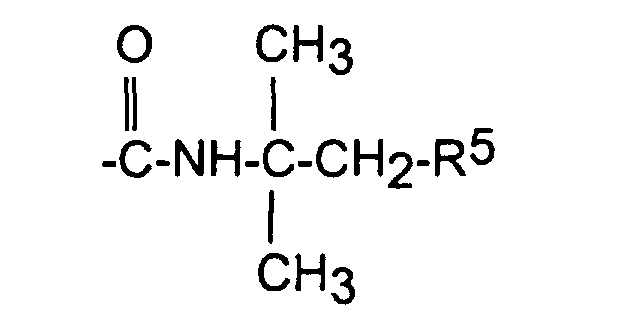
- Absorbierende Struktur gemäss einem der vorangehenden Ansprüche, dadurch gekennzeichnet, dass die im Superabsorber enthaltene Stärke natürliche oder vorgelatinierte Maisstärke, natürliche oder vorgelatinierte Wachsmaisstärke, natürliche oder vorgelatinierte Kartoffelstärke, natürliche oder vorgelatinierte Weizenstärke, natürliche oder vorgelatinierte Amylomaisstärke oder natürliche oder vorgelatinierte Tapiocastärke ist und/oder dass die im Superabsorber enthaltene, chemisch modifizierte Stärke Säure-katalytisch, enzymatisch oder thermisch abgebaute Stärke, oxidierte Stärke, Stärkeether, wie Allylstärke, oder Hydroxyalkylstärke, wie 2-Hydroxyethylstärke, 2-Hydroxypropylstärke oder 2-Hydroxy-3-trimethyl-ammonionopropylstärke, oder Carboxyalkylstärke, wie Carboxymethylstärke, Stärkeester, wie Stärkeformiat, Stärkeacetat, Stärkeacrylat, Stärkemethacrylat oder Stärkebenzoat, Stärkeester, wie Stärkesuccinat oder Stärkemaleat, Stärkecarbaminsäureester (Stärkeurethan), Stärkedithiokohlensäureester (Stärkexanthat) oder Stärkeester von anorganischen Säuren, wie Stärkesulfat, Stärkenitrat oder Stärkephosphat, Stärkeesterether, wie 2-Hydroxyalkyl-stärkeacetat, oder Vollacetale der Stärke, wie Reaktionsprodukte aus Stärke mit aliphatischen oder cyclischen Vinylethern ist.
- Absorbierende Struktur gemäss einem der vorangehenden Ansprüche, dadurch gekennzeichnet, dass die im Superabsorber enthaltene Stärke vorgelatinierte Maisstärke oder vorgelatinierte Kartoffelstärke ist und/oder dass die im Superabsorber enthaltene, chemisch modifizierte Stärke Carboxymethylstärke, Stärkesuccinat oder Stärkemaleat ist.
- Absorbierende Struktur gemäss einem der vorangehenden Ansprüche, dadurch gekennzeichnet, dass der bei der Herstellung des Superabsorbers eingesetzte freie Radikalstarter eine Verbindung ist, die mindestens drei Hydroperoxideinheiten, Peroxideinheiten oder Azoeinheiten enthält.
- Absorbierende Struktur gemäss einem der vorangehenden Ansprüche, dadurch gekennzeichnet, dass der bei der Herstellung des Superabsorbers eingesetzte freie Radikalstarter ein Reaktionsprodukt aus Azobisbutyronitril und Trimethylolpropan ist.
- Absorbierende Struktur gemäss einem der vorangehenden Ansprüche, dadurch gekennzeichnet, dass der bei der Herstellung des Superabsorbers eingesetzte freie Radikalstarter ein Polyhydroperoxid ist, das man durch anodische Oxidation einer Polycarbonsäure in Gegenwart von Sauerstoff erhalten hat.
- Absorbierende Struktur gemäss einem der vorangehenden Ansprüche, dadurch gekennzeichnet, dass der Superabsorber dadurch erhalten wurde, dass eine Lösung, die zwischen 15 und 60 Gew.% eines oder mehrerer hydrophiler Monomere enthält, in Gegenwart von Stärke und/oder chemisch modifizierter Stärke mittels eines Gelpolymerisationsverfahrens in Gegenwart eines freien Radikalstarters polymerisiert wurde, der in der Lage ist, Triradikale oder Polyradikale zu bilden.
- Absorbierendes Produkt (11), wie eine Windel, ein Inkontinenzschutz oder eine Damenbinde, welches einen absorbierenden Körper beinhaltet, der von einem einhüllenden Material umschlossen wird, welches zumindest teilweise flüssigkeitsdurchlässig ist, dadurch gekennzeichnet, dass der absorbierende Körper eine absorbierende Struktur gemäss einem der Ansprüche 1 bis 12 aufweist.
- Absorbierendes Produkt gemäss Anspruch 13, worin das einhüllende Material ein flüssigkeitsdurchlässiges Oberflächenmaterial (12) auf der Seite der absorbierenden Struktur (3), welche dem Träger während des Gebrauchs zugewandt sein soll, und ein flüssigkeitsundurchlässiges Barrierematerial (13) auf der Seite der absorbierenden Struktur (3) enthält, welche dem Träger während des Gebrauchs abgewandt sein soll dadurch gekennzeichnet, dass das flüssigkeitsdurchlässige Oberflächenmaterial (12) und/oder das Barrierematerial (13) ein oder mehrere biologisch abbaubare Materialien mit einem hohen Erneuerungsgrad in einer Beimischung enthält, die grösser als etwa 10 Gew.% des Gesamtgewichts des einhüllenden Materials ist.
- Absorbierendes Produkt gemäss Anspruch 14, dadurch gekennzeichnet, dass Stärke im biologisch abbaubaren Material enthalten ist.
Priority Applications (1)
| Application Number | Priority Date | Filing Date | Title |
|---|---|---|---|
| DK99910898T DK1069879T3 (da) | 1998-03-16 | 1999-03-01 | Absorberende struktur og produkt baseret på råmaterialer, der har en höj grad af fornyelighed |
Applications Claiming Priority (3)
| Application Number | Priority Date | Filing Date | Title |
|---|---|---|---|
| SE9800846A SE521501C2 (sv) | 1998-03-16 | 1998-03-16 | Absorberande struktur med stärkelsebaserad superabsorbent framställd via radikalsampolymerisation |
| SE9800846 | 1998-03-16 | ||
| PCT/SE1999/000284 WO1999047093A1 (en) | 1998-03-16 | 1999-03-01 | Absorbent structure and product based on raw materials having a high degree of renewability |
Publications (2)
| Publication Number | Publication Date |
|---|---|
| EP1069879A1 EP1069879A1 (de) | 2001-01-24 |
| EP1069879B1 true EP1069879B1 (de) | 2004-06-16 |
Family
ID=20410548
Family Applications (1)
| Application Number | Title | Priority Date | Filing Date |
|---|---|---|---|
| EP99910898A Expired - Lifetime EP1069879B1 (de) | 1998-03-16 | 1999-03-01 | Absorbierende struktur und produkt aus rohmaterialien mit einem hohen erneuerungsgrad |
Country Status (13)
| Country | Link |
|---|---|
| EP (1) | EP1069879B1 (de) |
| JP (1) | JP2002506714A (de) |
| AT (1) | ATE269043T1 (de) |
| AU (1) | AU2965999A (de) |
| CO (1) | CO5090863A1 (de) |
| DE (1) | DE69918080T2 (de) |
| DK (1) | DK1069879T3 (de) |
| PL (1) | PL342940A1 (de) |
| SE (1) | SE521501C2 (de) |
| SK (1) | SK11862000A3 (de) |
| TN (1) | TNSN99036A1 (de) |
| TW (1) | TW482666B (de) |
| WO (1) | WO1999047093A1 (de) |
Families Citing this family (4)
| Publication number | Priority date | Publication date | Assignee | Title |
|---|---|---|---|---|
| EP1621561A1 (de) * | 2004-07-28 | 2006-02-01 | The Procter & Gamble Company | Superabsorbierende Polymere |
| EP1624002B1 (de) * | 2004-08-07 | 2019-04-03 | The Procter & Gamble Company | Superabsorbierende polymerteilchen mit funktionalisierungen und ein verfahren zu deren herstellung |
| DE102010012183A1 (de) * | 2010-03-19 | 2011-09-22 | Fresenius Medical Care Deutschland Gmbh | Veresterte Polysaccharid-Osmotika |
| CN113116636B (zh) * | 2021-04-06 | 2022-08-23 | 美佳爽(中国)有限公司 | 一种可降解卫生巾的制备方法 |
Family Cites Families (6)
| Publication number | Priority date | Publication date | Assignee | Title |
|---|---|---|---|---|
| US3997484A (en) * | 1974-04-03 | 1976-12-14 | The United States Of America As Represented By The Secretary Of Agriculture | Highly-absorbent starch-containing polymeric compositions |
| EP0525245A1 (de) * | 1991-08-01 | 1993-02-03 | NOVAMONT S.p.A. | Absorbierender Einwegartikel |
| US5506277A (en) * | 1994-06-30 | 1996-04-09 | Kimberly-Clark Corporation | Starch foams for absorbent articles |
| US5549590A (en) * | 1994-08-01 | 1996-08-27 | Leonard Pearlstein | High performance absorbent particles and methods of preparation |
| IT1267184B1 (it) * | 1994-12-06 | 1997-01-28 | P & G Spa | Materiale assorbente, ad esempio del tipo superassorbente, e relativo impiego. |
| FI100852B (fi) * | 1996-09-10 | 1998-03-13 | Matti Karesoja | Kompostoitava kertakäyttöinen absorboiva tuote sekä menetelmä ja välit uote sen valmistamiseksi |
-
1998
- 1998-03-16 SE SE9800846A patent/SE521501C2/sv not_active IP Right Cessation
-
1999
- 1999-02-26 TW TW088102976A patent/TW482666B/zh active
- 1999-03-01 DE DE69918080T patent/DE69918080T2/de not_active Expired - Lifetime
- 1999-03-01 PL PL99342940A patent/PL342940A1/xx unknown
- 1999-03-01 JP JP2000536335A patent/JP2002506714A/ja not_active Withdrawn
- 1999-03-01 DK DK99910898T patent/DK1069879T3/da active
- 1999-03-01 EP EP99910898A patent/EP1069879B1/de not_active Expired - Lifetime
- 1999-03-01 SK SK1186-2000A patent/SK11862000A3/sk unknown
- 1999-03-01 AT AT99910898T patent/ATE269043T1/de not_active IP Right Cessation
- 1999-03-01 AU AU29659/99A patent/AU2965999A/en not_active Abandoned
- 1999-03-01 WO PCT/SE1999/000284 patent/WO1999047093A1/en not_active Ceased
- 1999-03-15 TN TNTNSN99036A patent/TNSN99036A1/fr unknown
- 1999-03-16 CO CO99016185A patent/CO5090863A1/es unknown
Also Published As
| Publication number | Publication date |
|---|---|
| DE69918080D1 (de) | 2004-07-22 |
| TNSN99036A1 (fr) | 2001-12-31 |
| SE9800846L (sv) | 1999-09-17 |
| EP1069879A1 (de) | 2001-01-24 |
| WO1999047093A1 (en) | 1999-09-23 |
| DK1069879T3 (da) | 2004-10-25 |
| SE9800846D0 (sv) | 1998-03-16 |
| PL342940A1 (en) | 2001-07-16 |
| DE69918080T2 (de) | 2005-07-07 |
| ATE269043T1 (de) | 2004-07-15 |
| SK11862000A3 (sk) | 2001-02-12 |
| JP2002506714A (ja) | 2002-03-05 |
| CO5090863A1 (es) | 2001-10-30 |
| TW482666B (en) | 2002-04-11 |
| AU2965999A (en) | 1999-10-11 |
| SE521501C2 (sv) | 2003-11-04 |
Similar Documents
| Publication | Publication Date | Title |
|---|---|---|
| EP0530438B1 (de) | Superabsorbierendes Polymer mit verbesserten Absorbiereigenschaften | |
| US5635239A (en) | Absorbent structure possessing improved integrity | |
| US5720736A (en) | Absorbent material, absorbent article, and method for production thereof | |
| US8021998B2 (en) | Absorbent structure with superabsorbent material | |
| US5453323A (en) | Superabsorbent polymer having improved absorbency properties | |
| JP2918808B2 (ja) | 吸収体および吸収性物品 | |
| CA1065075A (en) | Powdered grafted cellulose | |
| US6743391B2 (en) | Superabsorbent polymers having delayed water absorption characteristics | |
| JP3205168B2 (ja) | 紙おむつ用吸収剤組成物 | |
| JP4001350B2 (ja) | 液体吸収性ポリマー、その製造方法及びその応用 | |
| KR100362266B1 (ko) | 흡수성 물품 및 그의 제조방법 | |
| US6417425B1 (en) | Absorbent article and process for preparing an absorbent article | |
| JPH10508528A (ja) | 基板と橋かけ可能なハイドロゲルポリマー粒子とから成る吸収性複合構造体 | |
| EP0629411A1 (de) | Absorbierende Zusammensetzung und Wegwerfwindel mit dieser Zusammensetzung | |
| JP4241380B2 (ja) | トコフェロール含有高吸収体 | |
| JP3466318B2 (ja) | 吸水剤組成物およびその製法、並びにこれら吸水剤組成物を含有する吸収物品 | |
| EP1069879A1 (de) | Absorbierende struktur und produkt aus rohmaterialien mit einem hohen erneuerungsgrad | |
| MXPA00007563A (en) | Absorbent structure and product based on raw materials having a high degree of renewability | |
| JP2003088554A (ja) | 吸収体およびそれを用いた吸収性物品 |
Legal Events
| Date | Code | Title | Description |
|---|---|---|---|
| PUAI | Public reference made under article 153(3) epc to a published international application that has entered the european phase |
Free format text: ORIGINAL CODE: 0009012 |
|
| 17P | Request for examination filed |
Effective date: 20000901 |
|
| AK | Designated contracting states |
Kind code of ref document: A1 Designated state(s): AT BE CH CY DE DK ES FI FR GB GR IE IT LI LU MC NL PT SE |
|
| 17Q | First examination report despatched |
Effective date: 20010515 |
|
| GRAP | Despatch of communication of intention to grant a patent |
Free format text: ORIGINAL CODE: EPIDOSNIGR1 |
|
| GRAS | Grant fee paid |
Free format text: ORIGINAL CODE: EPIDOSNIGR3 |
|
| GRAA | (expected) grant |
Free format text: ORIGINAL CODE: 0009210 |
|
| AK | Designated contracting states |
Kind code of ref document: B1 Designated state(s): AT BE CH CY DE DK ES FI FR GB GR IE IT LI LU MC NL PT SE |
|
| PG25 | Lapsed in a contracting state [announced via postgrant information from national office to epo] |
Ref country code: FI Free format text: LAPSE BECAUSE OF FAILURE TO SUBMIT A TRANSLATION OF THE DESCRIPTION OR TO PAY THE FEE WITHIN THE PRESCRIBED TIME-LIMIT Effective date: 20040616 Ref country code: AT Free format text: LAPSE BECAUSE OF FAILURE TO SUBMIT A TRANSLATION OF THE DESCRIPTION OR TO PAY THE FEE WITHIN THE PRESCRIBED TIME-LIMIT Effective date: 20040616 |
|
| REG | Reference to a national code |
Ref country code: GB Ref legal event code: FG4D |
|
| REG | Reference to a national code |
Ref country code: CH Ref legal event code: EP |
|
| REF | Corresponds to: |
Ref document number: 69918080 Country of ref document: DE Date of ref document: 20040722 Kind code of ref document: P |
|
| REG | Reference to a national code |
Ref country code: IE Ref legal event code: FG4D |
|
| REG | Reference to a national code |
Ref country code: SE Ref legal event code: TRGR |
|
| PG25 | Lapsed in a contracting state [announced via postgrant information from national office to epo] |
Ref country code: GR Free format text: LAPSE BECAUSE OF FAILURE TO SUBMIT A TRANSLATION OF THE DESCRIPTION OR TO PAY THE FEE WITHIN THE PRESCRIBED TIME-LIMIT Effective date: 20040916 |
|
| PG25 | Lapsed in a contracting state [announced via postgrant information from national office to epo] |
Ref country code: ES Free format text: LAPSE BECAUSE OF FAILURE TO SUBMIT A TRANSLATION OF THE DESCRIPTION OR TO PAY THE FEE WITHIN THE PRESCRIBED TIME-LIMIT Effective date: 20040927 |
|
| REG | Reference to a national code |
Ref country code: CH Ref legal event code: NV Representative=s name: BOVARD AG PATENTANWAELTE |
|
| REG | Reference to a national code |
Ref country code: DK Ref legal event code: T3 |
|
| PG25 | Lapsed in a contracting state [announced via postgrant information from national office to epo] |
Ref country code: LU Free format text: LAPSE BECAUSE OF NON-PAYMENT OF DUE FEES Effective date: 20050301 Ref country code: IE Free format text: LAPSE BECAUSE OF NON-PAYMENT OF DUE FEES Effective date: 20050301 Ref country code: CY Free format text: LAPSE BECAUSE OF FAILURE TO SUBMIT A TRANSLATION OF THE DESCRIPTION OR TO PAY THE FEE WITHIN THE PRESCRIBED TIME-LIMIT Effective date: 20050301 |
|
| ET | Fr: translation filed | ||
| PGFP | Annual fee paid to national office [announced via postgrant information from national office to epo] |
Ref country code: NL Payment date: 20050316 Year of fee payment: 7 |
|
| PGFP | Annual fee paid to national office [announced via postgrant information from national office to epo] |
Ref country code: CH Payment date: 20050317 Year of fee payment: 7 |
|
| PGFP | Annual fee paid to national office [announced via postgrant information from national office to epo] |
Ref country code: BE Payment date: 20050324 Year of fee payment: 7 |
|
| PGFP | Annual fee paid to national office [announced via postgrant information from national office to epo] |
Ref country code: DK Payment date: 20050330 Year of fee payment: 7 |
|
| PG25 | Lapsed in a contracting state [announced via postgrant information from national office to epo] |
Ref country code: MC Free format text: LAPSE BECAUSE OF NON-PAYMENT OF DUE FEES Effective date: 20050331 |
|
| PGFP | Annual fee paid to national office [announced via postgrant information from national office to epo] |
Ref country code: SE Payment date: 20050331 Year of fee payment: 7 |
|
| PLBE | No opposition filed within time limit |
Free format text: ORIGINAL CODE: 0009261 |
|
| STAA | Information on the status of an ep patent application or granted ep patent |
Free format text: STATUS: NO OPPOSITION FILED WITHIN TIME LIMIT |
|
| 26N | No opposition filed |
Effective date: 20050317 |
|
| REG | Reference to a national code |
Ref country code: IE Ref legal event code: MM4A |
|
| PG25 | Lapsed in a contracting state [announced via postgrant information from national office to epo] |
Ref country code: SE Free format text: LAPSE BECAUSE OF NON-PAYMENT OF DUE FEES Effective date: 20060302 |
|
| PG25 | Lapsed in a contracting state [announced via postgrant information from national office to epo] |
Ref country code: LI Free format text: LAPSE BECAUSE OF NON-PAYMENT OF DUE FEES Effective date: 20060331 Ref country code: DK Free format text: LAPSE BECAUSE OF NON-PAYMENT OF DUE FEES Effective date: 20060331 Ref country code: CH Free format text: LAPSE BECAUSE OF NON-PAYMENT OF DUE FEES Effective date: 20060331 Ref country code: BE Free format text: LAPSE BECAUSE OF NON-PAYMENT OF DUE FEES Effective date: 20060331 |
|
| PGFP | Annual fee paid to national office [announced via postgrant information from national office to epo] |
Ref country code: IT Payment date: 20060331 Year of fee payment: 8 |
|
| PG25 | Lapsed in a contracting state [announced via postgrant information from national office to epo] |
Ref country code: NL Free format text: LAPSE BECAUSE OF NON-PAYMENT OF DUE FEES Effective date: 20061001 |
|
| REG | Reference to a national code |
Ref country code: DK Ref legal event code: EBP |
|
| REG | Reference to a national code |
Ref country code: CH Ref legal event code: PL |
|
| EUG | Se: european patent has lapsed | ||
| NLV4 | Nl: lapsed or anulled due to non-payment of the annual fee |
Effective date: 20061001 |
|
| BERE | Be: lapsed |
Owner name: *SCA HYGIENE PRODUCTS A.B. Effective date: 20060331 |
|
| PG25 | Lapsed in a contracting state [announced via postgrant information from national office to epo] |
Ref country code: PT Free format text: LAPSE BECAUSE OF NON-PAYMENT OF DUE FEES Effective date: 20041116 |
|
| PG25 | Lapsed in a contracting state [announced via postgrant information from national office to epo] |
Ref country code: IT Free format text: LAPSE BECAUSE OF NON-PAYMENT OF DUE FEES Effective date: 20070301 |
|
| REG | Reference to a national code |
Ref country code: FR Ref legal event code: PLFP Year of fee payment: 18 |
|
| PGFP | Annual fee paid to national office [announced via postgrant information from national office to epo] |
Ref country code: DE Payment date: 20160223 Year of fee payment: 18 |
|
| PGFP | Annual fee paid to national office [announced via postgrant information from national office to epo] |
Ref country code: GB Payment date: 20160224 Year of fee payment: 18 Ref country code: FR Payment date: 20160208 Year of fee payment: 18 |
|
| REG | Reference to a national code |
Ref country code: DE Ref legal event code: R119 Ref document number: 69918080 Country of ref document: DE |
|
| GBPC | Gb: european patent ceased through non-payment of renewal fee |
Effective date: 20170301 |
|
| REG | Reference to a national code |
Ref country code: FR Ref legal event code: ST Effective date: 20171130 |
|
| PG25 | Lapsed in a contracting state [announced via postgrant information from national office to epo] |
Ref country code: FR Free format text: LAPSE BECAUSE OF NON-PAYMENT OF DUE FEES Effective date: 20170331 Ref country code: DE Free format text: LAPSE BECAUSE OF NON-PAYMENT OF DUE FEES Effective date: 20171003 |
|
| PG25 | Lapsed in a contracting state [announced via postgrant information from national office to epo] |
Ref country code: GB Free format text: LAPSE BECAUSE OF NON-PAYMENT OF DUE FEES Effective date: 20170301 |