EP1074397B1 - Automatisches System zur Vorbereitung auf Anfrage eines Hefts - Google Patents
Automatisches System zur Vorbereitung auf Anfrage eines Hefts Download PDFInfo
- Publication number
- EP1074397B1 EP1074397B1 EP00402208A EP00402208A EP1074397B1 EP 1074397 B1 EP1074397 B1 EP 1074397B1 EP 00402208 A EP00402208 A EP 00402208A EP 00402208 A EP00402208 A EP 00402208A EP 1074397 B1 EP1074397 B1 EP 1074397B1
- Authority
- EP
- European Patent Office
- Prior art keywords
- booklet
- documents
- module
- elementary
- booklets
- Prior art date
- Legal status (The legal status is an assumption and is not a legal conclusion. Google has not performed a legal analysis and makes no representation as to the accuracy of the status listed.)
- Expired - Lifetime
Links
Images

Classifications
-
- H—ELECTRICITY
- H04—ELECTRIC COMMUNICATION TECHNIQUE
- H04N—PICTORIAL COMMUNICATION, e.g. TELEVISION
- H04N1/00—Scanning, transmission or reproduction of documents or the like, e.g. facsimile transmission; Details thereof
- H04N1/00567—Handling of original or reproduction media, e.g. cutting, separating, stacking
- H04N1/00639—Binding, stapling, folding or perforating, e.g. punching
-
- B—PERFORMING OPERATIONS; TRANSPORTING
- B41—PRINTING; LINING MACHINES; TYPEWRITERS; STAMPS
- B41F—PRINTING MACHINES OR PRESSES
- B41F17/00—Printing apparatus or machines of special types or for particular purposes, not otherwise provided for
- B41F17/02—Printing apparatus or machines of special types or for particular purposes, not otherwise provided for for printing books or manifolding sets
-
- B—PERFORMING OPERATIONS; TRANSPORTING
- B42—BOOKBINDING; ALBUMS; FILES; SPECIAL PRINTED MATTER
- B42C—BOOKBINDING
- B42C19/00—Multi-step processes for making books
- B42C19/02—Multi-step processes for making books starting with single sheets
-
- H—ELECTRICITY
- H04—ELECTRIC COMMUNICATION TECHNIQUE
- H04N—PICTORIAL COMMUNICATION, e.g. TELEVISION
- H04N1/00—Scanning, transmission or reproduction of documents or the like, e.g. facsimile transmission; Details thereof
- H04N1/32—Circuits or arrangements for control or supervision between transmitter and receiver or between image input and image output device, e.g. between a still-image camera and its memory or between a still-image camera and a printer device
- H04N1/32101—Display, printing, storage or transmission of additional information, e.g. ID code, date and time or title
- H04N1/32106—Display, printing, storage or transmission of additional information, e.g. ID code, date and time or title separate from the image data, e.g. in a different computer file
-
- H—ELECTRICITY
- H04—ELECTRIC COMMUNICATION TECHNIQUE
- H04N—PICTORIAL COMMUNICATION, e.g. TELEVISION
- H04N1/00—Scanning, transmission or reproduction of documents or the like, e.g. facsimile transmission; Details thereof
- H04N1/32—Circuits or arrangements for control or supervision between transmitter and receiver or between image input and image output device, e.g. between a still-image camera and its memory or between a still-image camera and a printer device
- H04N1/32101—Display, printing, storage or transmission of additional information, e.g. ID code, date and time or title
- H04N1/32128—Display, printing, storage or transmission of additional information, e.g. ID code, date and time or title attached to the image data, e.g. file header, transmitted message header, information on the same page or in the same computer file as the image
-
- B—PERFORMING OPERATIONS; TRANSPORTING
- B42—BOOKBINDING; ALBUMS; FILES; SPECIAL PRINTED MATTER
- B42P—INDEXING SCHEME RELATING TO BOOKS, FILING APPLIANCES OR THE LIKE
- B42P2261/00—Manufacturing; Forming
- B42P2261/04—Producing books by printing sheets in following order, e.g. for ordering via the Internet
-
- B—PERFORMING OPERATIONS; TRANSPORTING
- B65—CONVEYING; PACKING; STORING; HANDLING THIN OR FILAMENTARY MATERIAL
- B65H—HANDLING THIN OR FILAMENTARY MATERIAL, e.g. SHEETS, WEBS, CABLES
- B65H2511/00—Dimensions; Position; Numbers; Identification; Occurrences
- B65H2511/30—Numbers, e.g. of windings or rotations
-
- H—ELECTRICITY
- H04—ELECTRIC COMMUNICATION TECHNIQUE
- H04N—PICTORIAL COMMUNICATION, e.g. TELEVISION
- H04N2201/00—Indexing scheme relating to scanning, transmission or reproduction of documents or the like, and to details thereof
- H04N2201/32—Circuits or arrangements for control or supervision between transmitter and receiver or between image input and image output device, e.g. between a still-image camera and its memory or between a still-image camera and a printer device
- H04N2201/3201—Display, printing, storage or transmission of additional information, e.g. ID code, date and time or title
- H04N2201/3212—Display, printing, storage or transmission of additional information, e.g. ID code, date and time or title of data relating to a job, e.g. communication, capture or filing of an image
- H04N2201/3216—Display, printing, storage or transmission of additional information, e.g. ID code, date and time or title of data relating to a job, e.g. communication, capture or filing of an image of a job size, e.g. a number of images, pages or copies, size of file, length of message
-
- H—ELECTRICITY
- H04—ELECTRIC COMMUNICATION TECHNIQUE
- H04N—PICTORIAL COMMUNICATION, e.g. TELEVISION
- H04N2201/00—Indexing scheme relating to scanning, transmission or reproduction of documents or the like, and to details thereof
- H04N2201/32—Circuits or arrangements for control or supervision between transmitter and receiver or between image input and image output device, e.g. between a still-image camera and its memory or between a still-image camera and a printer device
- H04N2201/3201—Display, printing, storage or transmission of additional information, e.g. ID code, date and time or title
- H04N2201/3225—Display, printing, storage or transmission of additional information, e.g. ID code, date and time or title of data relating to an image, a page or a document
- H04N2201/3232—Display, printing, storage or transmission of additional information, e.g. ID code, date and time or title of data relating to an image, a page or a document of a page, copy or picture number
-
- H—ELECTRICITY
- H04—ELECTRIC COMMUNICATION TECHNIQUE
- H04N—PICTORIAL COMMUNICATION, e.g. TELEVISION
- H04N2201/00—Indexing scheme relating to scanning, transmission or reproduction of documents or the like, and to details thereof
- H04N2201/32—Circuits or arrangements for control or supervision between transmitter and receiver or between image input and image output device, e.g. between a still-image camera and its memory or between a still-image camera and a printer device
- H04N2201/3201—Display, printing, storage or transmission of additional information, e.g. ID code, date and time or title
- H04N2201/3278—Transmission
Definitions
- the present invention relates to the field of mail processing and more particularly relates to an automated system for preparing booklets.
- this machine especially because of its autonomous operation, remains quite limited in its functionality. Thus, it does not allow automatic insertion of rigid inserts or transparencies and the thickness of the booklets that the machine makes can in no case exceed the maximum thickness imposed by its stapling module. The construction of large size work is therefore difficult to envisage with this type of machine of the prior art.
- the present invention provides a fully automated system that can be used very simply in a conventional office environment and is intended to completely prepare a booklet.
- An object of the invention is to enable the production of booklets of all thicknesses, the thinnest and the thickest.
- Another object of the invention is also to provide a system whose high rates of treatment are not degraded by the insertion of even rigid inserts.
- the digital image forming device comprises at least one document feeding means, a printing module connected to the means supplying documents for printing the documents, and at least one document output connected to the printing module for delivering the documents thus printed to the assembly to be connected, a control module being further provided to ensure the control of printing and synchronization of the transport of documents according to orders received from the general-purpose computer.
- the assembly to be connected comprises an accumulation module connected to a document input intended to cooperate with the document output of said digital image forming device, a stapling module for stapling the various documents forming an elementary booklet, and an assembly module for assembling between them the various elementary booklets forming the booklet to be connected, a control module being further provided to ensure the control and synchronization of these different modules according to orders received from the computer to use general.
- this assembly to be connected further comprises a folding module connected to the stapling module for folding the documents and a cutting module connected at the output of this folding module to finish the elementary booklet before its ejection to the module. assembly. It can also include an additional power module in cover pages and / or inserts.
- the general purpose computer, the digital image forming device and the assembly to be connected are interconnected through a local communication network.
- the digital image forming device and the assembly to be bonded can form a common set.
- the invention also relates to the corresponding method for the preparation of the booklets in which firstly the number of pages of the booklet to be linked is determined from the recognition of the first control signals extracted from the associated digital document, then, if this number is greater than a predetermined maximum number of sheets that can be connected together, it is determined firstly the number of elementary booklets that should be created to form the booklet to bind and secondly the number of pages of each of these elementary booklets, and finally we print and then connect separately and successively each of the elementary booklets thus determined.
- the determination of the number of pages of each of the elementary booklets is made from the recognition of second control signals extracted from the digital document.
- the first control signals correspond to the characters of the beginning of the page and the end of the file of the digital document and the second control signals to end-of-chapter and end-of-paragraph characters of the digital document.
- each elementary booklet other than the first elementary booklet, is provided with a complementary guard page printed in the digital image forming device or introduced directly into the assembly to be connected.
- the digital documents to be printed come from the scanning of original documents carried out directly at an optical reading module of the digital image forming device.
- the digital documents to be printed are created directly by typing on the keyboard of the general-purpose computer.
- Figure 1 illustrates jointly (essentially for the sake of simplification) and schematically two examples of architecture of an automated booklet preparation system according to the invention.
- this system comprises a computer or microcomputer 10 connected both to a digital imaging device 12 and to a set to be connected.
- this system is constructed. around a local communication network 16 to which are connected a computer or microcomputer 20, a digital image forming device 22 and a set to be connected 24.
- the computer 10, 20 ensures the creation of digital documents (for example by direct keyboard input) and their processing (layout, possible modification including the addition of graphic elements) for printing in the digital device 12, 22 and their final assembly in booklets (binding) in the set to bind 14, 24.
- the digital documents thus created, and possibly reprocessed, at the computer can also be received, for example in the form of fax or e-mail, from an external communication network 18 connected to this computer 10, 20, such as the global network known as the "Internet network".
- an external communication network 18 connected to this computer 10, 20, such as the global network known as the "Internet network”.
- Internet network the global network known as the "Internet network”.
- the aforementioned printing and binding operations, as well as any retrieval of the documents to be printed through the network 18 are carried out under the instructions of the computer 10, 20.
- the computer 10, 20 includes means, including software, to ensure automatic formatting of the booklets (ie a split of the booklet to be linked into several elementary booklets) when these booklets have a number of pages exceeding the maximum stapling capacity of the assembly to be bonded.
- These means essentially comprise means for recognizing in the digital documents associated with the booklet to link different control signals from which this automatic formatting of the booklet can to be done.
- These control signals which are at least three in number, and preferably four in number, are generated automatically, when the documents are created at the computer 10, 20, by the document processing software used for this creation. (eg Microsoft WORD company ® software).
- a first control signal (S1) is constituted by the start page character generated at the beginning of the page
- a second control signal (S2) is constituted by the end-of-file character generally indicating the last page of the booklet in front of the page. to be printed then connected
- a third control signal (S3) is constituted by an end-of-chapter character generated after each chapter
- a fourth control signal (S4) is constituted by an end-of-paragraph character generated at the end of each paragraph. Note that when the digital document is received by the external communication network, these different control signals are in principle also present in the imported documents.
- the computer will determine the number of pages of the booklet to be printed and, if this number is greater than a predetermined maximum number of sheets that can be connected by the assembly to be connected, it will determine the number of booklets elementary to be created to form this booklet as well as the number of pages of each of these elementary booklets.
- Each elementary booklet can then be printed separately and successively at the digital image forming device and then connected at the level of the assembly to be connected.
- the elementary booklets, other than the first one, can if necessary be provided with a specific page of guard.
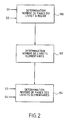
- Figure 2 illustrates the process of determining the number of pages of the elementary booklets.
- the number of pages of the booklet to be linked is determined from the first (S1) and second (S2) control signals, and the number of elementary booklets is determined in a step 102.
- the number of booklets is performed by dividing the number of pages of the booklet to be linked by the predetermined maximum number of sheets accepted by the set to be linked.
- the number of elementary booklets to be printed then corresponds to the whole part of the result of this division increased by one unit.
- the number of pages of each of the elementary booklets is then determined in a following step 104, preferably by dividing the number of pages of the booklet to be printed by the number of elementary booklets previously determined, the end of booklet page (the closest to the theoretical cutoff page) to correspond to a page of the booklet to be connected preferably comprising an end of chapter (marked by the signal S3) and if not a end of paragraph (indicated by the signal S4).
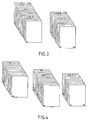
- Figures 3 and 4 show two examples of booklet formatting of 70 and 112 pages, respectively.
- Figure 3 there is a booklet of 5 chapters beginning respectively on pages 1, 7, 18, 33, 45.
- the second elementary booklet will consist of 38 numbered pages from page 33 to page 70.
- Figure 4 shows a 112-page booklet of which the first chapter alone contains 54 pages, ie a number of pages greater than the number of pages. stapling the assembly to be connected. A determination of the cut-off is therefore no longer possible on the sole determination of the chapter ends and the use of the determination of the ends of a paragraph proves to be indispensable in this case.
- We will proceed as follows. By dividing the number of pages of the booklet to be connected 112 by the number of elementary booklets 3 (as indicated above), a theoretical number of pages is obtained per elementary booklet of 37 pages. The 37th and 74th pages of the booklet do not include end of chapter, one will seek on the pages immediately anterior or posteriores such end of chapter. Pages 54 and 80 both meet this criterion.
- page 54 being greater than the capacity of the assembly to connect, one will look for a close end of the page of theoretical break (page 37), and it is thus actually the page 38 corresponding to the end of paragraph 7 of Chapter 1 which will be retained as the end page of this first elementary booklet of 38 pages.
- the second basic booklet will contain 42 pages from pages 39 to 80 and the third elementary booklet 32 pages from page 81 to the last page 112 of the booklet.
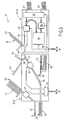
- FIG. 5 illustrates in greater detail the various constituent material elements of the digital image forming device and the assembly to be connected.
- the digital image forming device 12, 22 is preferably a general-purpose multifunction device providing both an advantageously color, laser or ink jet printing function and a scanning function, preferably also in color. Its implementation, in stand-alone mode or from the computer 10 (possibly through the local network 16), is performed in a very conventional manner via software means known per se.
- this device can be used on the one hand as any document printing terminal in conjunction with standard office software market such as Word, Excel, or Access for example (software company Microsoft Corporation) located in the computer 10, 20 and on the other hand, as any color scanning terminal (scanner) or color reproduction of documents (copier).
- This device 12, 22 conventionally comprises a first feed means 30 for receiving blank documents 31 to be printed and which will form the booklets and a second feed means 32 to receive inserts 33 (or transparencies) intended for example to form the cover of the booklets.
- the document supplying means 30 may be made for example in the form of an external loading container or, as illustrated, in the form of a side-loading insert magazine.
- the insert feed means 32 may be made for example as a side-loading insert or, as illustrated, as a loading tray. external.
- Transport paths 34, 35 make it possible to transport these documents and inserts to a printing module 36 (alternatively, the inserts can be directed directly to an output of the device) .
- This module advantageously consists of either a printing drum (in the case of laser printing) or a thermal printing head (in the case of ink jet printing).
- another transport path 37 makes it possible to direct the printed document to first 38 or second 39 outputs of the device.
- the first output 38 allows the feeding of a first receiving tray 40, conventionally placed on an upper part of the device, and intended to receive the printed documents in the context of a conventional use in standalone mode (scanner or copier function) or in conjunction with the general-purpose computer 10, 20 (printer function), the second output 39, advantageously placed at the rear of the device, being intended to supply directly to the connection assembly 14, 24 at its input of document.
- This digital device 12, 22 further comprises a third feed means made for example in the form of an external front loading bin 42 for receiving documents to be digitized 41 which will constitute original documents from which virgin documents (from 30) can be printed to make booklets. These documents, after passing an optical reading module 43 will then be available on a front portion of the device at a second receiving tray 44.
- a control module preferably microprocessor 45, is of course provided in the device for control both scanning (in connection with the module 43) and printing (in connection with the module 36) and synchronize the transport of documents along the various transport paths 34, 35, 37 of the device.
- This control module has of course an external connection with the computer directly (for the computer 10) or through the local network 16 (for the computer 20).
- the binding assembly 14, 24 is derived from a conventional assembly, for example of the type described in the patent application. FR 2,739,846 supra. It consists essentially of an accumulation module 50 connected to an input 49 of this assembly and intended to receive one by one the documents (and possibly the inserts 51 introduced by a feed tray 53) to form the booklet to bind , a stapling module 52 for stapling the bundles of documents thus stacked (preferably with loop staples), a folding module 54 disposed at the outlet of the accumulation module to possibly fold these bundles and a trimming module 56 disposed in exit of the folding module to cut and equalize the bundles thus folded.
- a control module advantageously with a microprocessor 60, is of course provided in the device for controlling both the stapling (in connection with the module 52), the folding (in connection with the module 54), the trimming (in connection with the module 56) and the final assembly (in connection with the module 58) and to synchronize the transport of documents between the different modules of the device.
- This control module 60 also has an external connection with the computer directly (for the computer 10) or through the local network 16 (for the computer 20).
- the computer 10, 20 is a general-purpose computer, for example a personal computer of the PC type or the like (but a workstation or a network computer may also be suitable), typically comprising a central unit to which are connected by a computer.
- standardized link bus program memories eg type ROM, EEPROM or the like
- data memories type RAM or equivalent
- modules conventionally provide the interface between the central unit of this computer and on the one hand the digital image forming device 12, 22 and the assembly to be connected 14, 24 and on the other hand various associated peripherals.
- this central unit such as a keyboard, a pointing set (in particular a trackball or mouse), a display terminal (for example, plasma or liquid crystal), a data storage device (such as a hard disk, a magnetic cassette, a CD or DVD-ROM), a modulator / demodulator (analog, ADSL or cable-modem type depending on the nature of the connection to the networks 16, 18).
- a keyboard for example, a keyboard, a pointing set (in particular a trackball or mouse), a display terminal (for example, plasma or liquid crystal), a data storage device (such as a hard disk, a magnetic cassette, a CD or DVD-ROM), a modulator / demodulator (analog, ADSL or cable-modem type depending on the nature of the connection to the networks 16, 18).
- a pointing set in particular a trackball or mouse
- a display terminal for example, plasma or liquid crystal
- a data storage device such as a hard disk, a magnetic cassette, a CD or DVD-ROM
- the computer comprises, besides various software means to ensure the different functions of document processing (in particular graphic) and of preparation of the booklets described above, means for providing conventional facsimile functions for transmission and reception as well as functions for receiving and sending e-mails over the Internet.
- the complete preparation of a booklet is carried out as follows. After the documents comprising the booklet to be linked have been created on the computer 10, 20 (or received via the external network 18), the latter will proceed to the recognition of the different control signals to determine the number and the thickness of the elementary booklets to be connected, before ordering (via the control module 45) the successive printing of these elementary booklets to the digital image forming device 12, 22 from the blank documents 31 contained in the selection bin 30 The printed documents are then, still under the control of the computer, directed one by one to the assembly to be connected 14, 24 where they are stored in the accumulation module 50 before being stapled (to the module 52). and possibly folded by the folding module 54.
- the connected elementary booklet is then directed to the assembly module 58 (after trimming 56 in case of prior folding) of the assembly to be connected (in the absence of folding the book t is directed directly to this module 58) where it is stored while waiting to receive the following elementary booklets to form the complete booklet to be connected.
- these basic booklets received by the assembly module these booklets are assembled in a single booklet which is ejected by the exit 57 or 59.
- the pages of guards of the various booklets are introduced directly in the assembly to be connected at the level of feed tray 53 or from the image forming device (after printing or not).
- the document to be printed extracted from the magazine 30 can also be developed internally in the device 12, 22 from the scanning of one or more documents by the optical reading module 43, the digitization data then being addressed. to the computer 10, 20, via the control module 45, which performs the recognition of the control signals for subsequent printing of these documents by the print module 36.
- the various functions provided by the present invention make it a true office automation machine, well suited to small structures and a set of booklet preparation which it optimizes the equation performance / quality / price.
- the present invention is not limited to the single preferred embodiment described and variants or supplements may be envisaged without departing from the scope of the invention.
- the assembly of the elementary booklets by the association of stems and loop staples can also be achieved by a combination of conventional staples with blades or any equivalent assembly assembly.
- the digital image forming device and the assembly to be connected can be validly integrated into a single assembly, which is then in the form of a specific, completely autonomous office automation machine for the preparation of booklets.
Landscapes
- Engineering & Computer Science (AREA)
- Multimedia (AREA)
- Signal Processing (AREA)
- General Engineering & Computer Science (AREA)
- Folding Of Thin Sheet-Like Materials, Special Discharging Devices, And Others (AREA)
- Record Information Processing For Printing (AREA)
Claims (18)
- Automatisiertes Verfahren zur Herstellung von Broschüren aus digitalen Dokumenten, die diesen Broschüren zugeordnet sind und die zuvor gedruckt werden sollen, dadurch gekennzeichnet, daß zunächst die Seitenanzahl der zu bindenden Broschüre anhand der Erkennung eines aus dem zugeordneten digitalen Dokument gewonnenen ersten (S1) und zweiten (S2) Kontrollsignals bestimmt wird, anschließend - wenn diese Anzahl größer ist als eine vorbestimmte maximale Anzahl von Blättern, die zusammengebunden werden können - einerseits die Anzahl von Einzelbroschüren bestimmt wird, die es sich nun zu erstellen empfiehlt, um die zu bindende Broschüre zu bilden, und andererseits die Seitenanzahl einer jeden dieser Einzelbroschüren festgelegt wird, und schließlich eine jede der auf diese Weise bestimmten Einzelbroschüren separat und nacheinander gedruckt und dann gebunden wird.
- Verfahren nach Anspruch 1, dadurch gekennzeichnet, daß ferner die verschiedenen Einzelbroschüren zusammengefügt werden, um die zu bindende Broschüre zu bilden.
- Verfahren nach Anspruch 1, dadurch gekennzeichnet, daß das erste und das zweite Kontrollsignal Seitenanfangszeichen bzw. Dateiendzeichen des digitalen Dokuments entsprechen.
- Verfahren nach Anspruch 1, dadurch gekennzeichnet, daß die Festlegung der Seitenanzahl einer jeden der Einzelbroschüren anhand der Erkennung eines aus dem digitalen Dokument gewonnenen dritten (S3) und vierten (S4) Kontrollsignals erfolgt.
- Verfahren nach Anspruch 4, dadurch gekennzeichnet, daß das dritte und das vierte Kontrollsignal Kapitelendzeichen bzw. Absatzendzeichen des digitalen Dokuments entsprechen.
- Verfahren nach Anspruch 1, dadurch gekennzeichnet, daß die Bestimmung der Anzahl von Einzelbroschüren die Bestimmung des Ganzteils umfaßt, der aus der Division der Seitenanzahl der zu bindenden Broschüre durch die vorbestimmte maximale Blätteranzahl hervorgeht.
- Verfahren nach irgendeinem der Ansprüche 1 bis 6, dadurch gekennzeichnet, daß die digitalen Dokumente mittels einer digitalen Bildererzeugungseinrichtung (12, 22) gedruckt werden, die am Eingang einer Bindeeinheit (14, 24) angeordnet ist, wobei die Steuerung der digitalen Bildererzeugungseinrichtung und der Bindeeinheit mit Hilfe eines Computers für den allgemeinen Gebrauch (10, 20) vollzogen wird, der sowohl mit der digitalen Bildererzeugungseinrichtung als auch mit der Bindeeinheit verbunden ist.
- Verfahren nach Anspruch 7, dadurch gekennzeichnet, daß jede Einzelbroschüre, mit Ausnahme der ersten Broschüre, mit einem ergänzenden Vorsatzblatt versehen ist, das in der digitalen Bilderzeugungseinrichtung gedruckt oder direkt (51, 53) in die Bindeeinheit eingeführt wird.
- Verfahren nach Anspruch 7, dadurch gekennzeichnet, daß die zu druckenden digitalen Dokumente aus der Digitalisierung von Originaldokumenten hervorgegangen sind, die direkt im Bereich eines Moduls zum optischen Lesen (43) der digitalen Bilderzeugungseinrichtung (12, 22) durchgeführt wird.
- Verfahren nach Anspruch 7, dadurch gekennzeichnet, daß die zu druckenden digitalen Dokumente direkt durch Erfassen über die Tastatur des Computers für den allgemeinen Gebrauch (10, 20) erzeugt werden.
- Automatisiertes System zur Herstellung von Broschüren in einer Bindeinheit (14, 24) aus digitalen Dokumenten, die durch eine digitale Bilderzeugungseinrichtung (12, 22), welche am Eingang dieser Bindeeinheit angeordnet ist, gedruckt werden sollen, wobei die Steuerung der digitalen Bilderzeugungseinrichtung und der Bindeeinheit mit Hilfe eines Computers für den allgemeinen Gebrauch (10, 20) vollzogen wird, der sowohl mit der digitalen Bildererzeugungseinrichtung als auch mit der Bindeeinheit verbunden ist, wobei das System folgendes umfaßt:- Mittel (10, 20), um in den zu druckenden digitalen Dokumenten erste Kontrollsignale (S1) zu erkennen, die jedem Seitenanfang entsprechen,- Mittel (10, 20), um in den zu druckenden digitalen Dokumenten ein zweites Kontrollsignal (S2) zu erkennen, das der letzten Seite der zu druckenden Broschüre entspricht,- Mittel (10, 20), um die Seitenanzahl der Broschüre festzulegen,- Mittel (10. 20), um zu ermitteln, ob diese Seitenanzahl größer ist als eine vorbestimmte maximale Anzahl von Blättern, die durch die Bindeeinheit gebunden werden können,- Mittel (10, 20), um in den zu druckenden digitalen Dokumenten entweder ein drittes Kontrollsignal (S3), das einem bestimmten Kapitelende entspricht, oder ein viertes Kontrollsignal (S4), das einem bestimmten Absatzende entspricht, zu erkennen, wenn diese Seitenanzahl größer als die vorbestimmte maximale Anzahl von Blättern ist, die durch die Bindeeinheit gebunden werden können,- Mittel (10, 20, 45), um das Drucken durch ein Druckmodul (36) der digitalen Bilderzeugungseinrichtung (12, 22) eines ersten Teils von Dokumenten zu steuern, dessen Seiten dem bestimmten Kapitel- oder Absatzende vorangehen,- Mittel (10, 20, 60), um das Binden durch ein Heftmodul (52) der Bindeeinheit (14, 24) der so gedruckten Dokumente zu einer ersten Einzelbroschüre zu steuern,- Mittel (10, 20, 45), um das Drucken durch ein Druckmodul (36) der digitalen Bilderzeugungseinrichtung (12, 22) wenigstens eines zweiten Teils von Dokumenten zu steuern, dessen Seiten dem bestimmten Kapitel- oder Absatzende folgen, und- Mittel (10, 20, 60), um das Binden durch ein Heftmodul (52) der Bindeeinheit (14, 24) der so gedruckten Dokumente zu wenigstens einer zweiten Einzelbroschüre zu steuern.
- System nach Anspruch 11, dadurch gekennzeichnet, daß es ferner Mittel (58) umfaßt, um die Einzelbroschüren zu einer einzigen gebundenen Broschüre zusammenzufügen.
- System nach Anspruch 11, dadurch gekennzeichnet, daß die digitale Bilderzeugungseinrichtung wenigstens ein Dokumentenzuführmittel (30), das mit dem Dokumentenzuführmittel verbundene Druckmodul (36), um das Drucken der Dokumente sicherzustellen, sowie wenigstens einen mit dem Druckmodul verbundenen Dokumentenausgang (39) umfaßt, um die so gedruckten Dokumente an die Bindeeinheit (14, 24) zu liefern, wobei das Steuermodul (45) außerdem vorgesehen ist, um die Steuerung des Druckens und die Synchronisierung des Transports der Dokumente in Abhängigkeit von vom Computer für den allgemeinen Gebrauch (10, 20) empfangenen Befehlen sicherzustellen.
- System nach Anspruch 11, dadurch gekennzeichnet, daß die Bindeeinheit ein Sammelmodul (50), das mit einem Dokumenteneingang (49) verbunden ist, welcher dazu bestimmt ist, mit dem Dokumentenausgang (39) der digitalen Bilderzeugungseinrichtung zusammenzuwirken, das Heftmodul (52) zum Heften der verschiedenen, eine Einzelbroschüre bildenden Dokumente sowie ein Verbindungsmodul (58), um die verschiedenen, die zu bindende Broschüre bildenden Einzelbroschüren zusammenzufügen, umfaßt, wobei das Steuermodul (60) ferner vorgesehen ist, um die Steuerung und die Synchronisierung dieser verschiedenen Module in Abhängigkeit von vom Computer für den allgemeinen Gebrauch (10, 20) empfangenen Befehlen sicherzustellen.
- System nach Anspruch 12, dadurch gekennzeichnet, daß die Bindeeinheit ferner ein mit dem Heftmodul verbundenes Falzmodul (54) zum Falzen der Dokumente sowie ein an den Ausgang dieses Falzmoduls angeschlossenes Schneidemodul (56) umfaßt, um die Einzelbroschüre vor ihrem Auswerfen zu dem Verbindungsmodul (58) fertig zu stellen.
- System nach Anspruch 12, dadurch gekennzeichnet, daß die Bindeeinheit außerdem ein Modul (53) zum zusätzlichen Zuführen von Vorsatzblättern und/oder unterschiedlichen Einlagen (51) umfaßt.
- System nach Anspruch 11, dadurch gekennzeichnet, daß der Computer für den allgemeinen Gebrauch (20), die digitale Bilderzeugungseinrichtung (22) und die Bindeeinheit (24) untereinander durch ein lokales Kommunikationsnetz (16) verbunden sind.
- System nach irgendeinem der Ansprüche 11 bis 17, dadurch gekennzeichnet, daß die digitale Bilderzeugungseinrichtung (12) und die Bindeeinheit (14) ein gemeinsames Ganzes (15) bilden.
Applications Claiming Priority (2)
| Application Number | Priority Date | Filing Date | Title |
|---|---|---|---|
| FR9910067A FR2797220B1 (fr) | 1999-08-03 | 1999-08-03 | Systeme automatise de preparation de livrets a la demande |
| FR9910067 | 1999-08-03 |
Publications (2)
| Publication Number | Publication Date |
|---|---|
| EP1074397A1 EP1074397A1 (de) | 2001-02-07 |
| EP1074397B1 true EP1074397B1 (de) | 2007-10-17 |
Family
ID=9548836
Family Applications (1)
| Application Number | Title | Priority Date | Filing Date |
|---|---|---|---|
| EP00402208A Expired - Lifetime EP1074397B1 (de) | 1999-08-03 | 2000-08-02 | Automatisches System zur Vorbereitung auf Anfrage eines Hefts |
Country Status (4)
| Country | Link |
|---|---|
| US (1) | US6622624B1 (de) |
| EP (1) | EP1074397B1 (de) |
| DE (1) | DE60036757T2 (de) |
| FR (1) | FR2797220B1 (de) |
Families Citing this family (16)
| Publication number | Priority date | Publication date | Assignee | Title |
|---|---|---|---|---|
| JP3937777B2 (ja) | 2001-09-14 | 2007-06-27 | キヤノン株式会社 | 文書処理システム、情報処理装置、及びそれらの設定方法、プログラム、記録媒体 |
| ATE396945T1 (de) | 2001-09-25 | 2008-06-15 | Ricoh Kk | Blattendbearbeitungsgerät und dieses verwendende bilderzeugungsgerät |
| JP4143426B2 (ja) * | 2002-02-01 | 2008-09-03 | キヤノン株式会社 | 文書処理装置及び方法 |
| CN100442220C (zh) * | 2002-02-01 | 2008-12-10 | 佳能株式会社 | 文档处理装置和方法 |
| US20030189726A1 (en) * | 2002-04-09 | 2003-10-09 | Nexpress Solutions Llc | Variable data printing dynamic imposition template |
| DE10357429B4 (de) * | 2003-12-09 | 2018-07-19 | Heidelberger Druckmaschinen Ag | Modulare Bogenrotationsdruckmaschine |
| JP3814626B2 (ja) * | 2004-04-05 | 2006-08-30 | キヤノン株式会社 | 画像形成システムおよび制御方法および記憶媒体およびプログラムおよび画像形成装置 |
| CN101369112B (zh) * | 2004-04-05 | 2012-06-06 | 佳能株式会社 | 图像形成系统和控制方法 |
| US7503555B2 (en) * | 2004-08-09 | 2009-03-17 | Epac Technologies | System for and a method of producing a book on demand |
| JP4785469B2 (ja) * | 2005-09-06 | 2011-10-05 | キヤノン株式会社 | 画像形成装置、画像形成システム及び画像形成システムの制御方法 |
| US8004713B2 (en) * | 2007-01-12 | 2011-08-23 | Ricoh Company, Ltd. | Creating and manufacturing documents that initially exceed equipment finishing capacity |
| US8798366B1 (en) | 2010-12-28 | 2014-08-05 | Amazon Technologies, Inc. | Electronic book pagination |
| US9846688B1 (en) | 2010-12-28 | 2017-12-19 | Amazon Technologies, Inc. | Book version mapping |
| US9069767B1 (en) | 2010-12-28 | 2015-06-30 | Amazon Technologies, Inc. | Aligning content items to identify differences |
| US9881009B1 (en) | 2011-03-15 | 2018-01-30 | Amazon Technologies, Inc. | Identifying book title sets |
| JP6494278B2 (ja) * | 2014-12-25 | 2019-04-03 | キヤノン株式会社 | 印刷システム、印刷システムの制御方法、プログラム、及び印刷装置 |
Family Cites Families (14)
| Publication number | Priority date | Publication date | Assignee | Title |
|---|---|---|---|---|
| US4368972A (en) * | 1981-04-15 | 1983-01-18 | Xerox Corporation | Very high speed duplicator with finishing function |
| US5140380A (en) * | 1989-11-09 | 1992-08-18 | Canon Kabushiki Kaisha | Image forming apparatus with book binding mechanism |
| JPH0616324A (ja) * | 1992-07-06 | 1994-01-25 | Fujitsu Ltd | カット紙印刷装置 |
| DE4491655T1 (de) * | 1993-03-17 | 1995-04-27 | Ricoh Kk | Bildaufzeichnungseinrichtung |
| US5531429A (en) * | 1995-03-29 | 1996-07-02 | National Computer Systems, Inc. | Variable printing and selective binding of booklets |
| US5823529A (en) * | 1995-10-05 | 1998-10-20 | Xerox Corporation | Single stack height sensor for plural sheet stacking bins system |
| US5815764A (en) * | 1995-10-05 | 1998-09-29 | Xerox Corporation | Document job routing system for a printing system |
| US5599009A (en) * | 1995-10-05 | 1997-02-04 | Xerox Corporation | Stacking height estimation correction system |
| FR2739846B1 (fr) | 1995-10-12 | 1997-12-19 | C P Bourg Sa | Machine de finition de livrets |
| US6307637B1 (en) * | 1996-02-07 | 2001-10-23 | Canon Kabushiki Kaisha | Printing control apparatus and method |
| IT1285719B1 (it) * | 1996-05-24 | 1998-06-18 | Gd Spa | Dispositivo per la formazione ed il trasferimento di pile ordinate di foglietti, in particolare banconote |
| US5805950A (en) * | 1996-12-20 | 1998-09-08 | Eastman Kodak Company | Automatic identification of accessories in a reproduction apparatus |
| US6213456B1 (en) * | 1997-01-08 | 2001-04-10 | Minolta Co., Ltd. | Finisher for use with an image forming apparatus |
| DE19757163A1 (de) * | 1997-12-20 | 1999-06-24 | Heidelberger Druckmasch Ag | Bogendruckmaschine mit Nachverarbeitungseinheit |
-
1999
- 1999-08-03 FR FR9910067A patent/FR2797220B1/fr not_active Expired - Fee Related
-
2000
- 2000-08-02 US US09/631,295 patent/US6622624B1/en not_active Expired - Lifetime
- 2000-08-02 DE DE60036757T patent/DE60036757T2/de not_active Expired - Lifetime
- 2000-08-02 EP EP00402208A patent/EP1074397B1/de not_active Expired - Lifetime
Also Published As
| Publication number | Publication date |
|---|---|
| DE60036757D1 (de) | 2007-11-29 |
| US6622624B1 (en) | 2003-09-23 |
| FR2797220B1 (fr) | 2001-11-30 |
| DE60036757T2 (de) | 2008-07-17 |
| FR2797220A1 (fr) | 2001-02-09 |
| EP1074397A1 (de) | 2001-02-07 |
Similar Documents
| Publication | Publication Date | Title |
|---|---|---|
| EP1074397B1 (de) | Automatisches System zur Vorbereitung auf Anfrage eines Hefts | |
| EP1386482B1 (de) | Verfahren zur versionsauswahl von ausführbarer software | |
| US5602936A (en) | Method of and apparatus for document data recapture | |
| CN100495225C (zh) | 图像记录系统、记录材料后处理装置及中继单元 | |
| FR2752130A1 (fr) | Procede de selection de programmes, notamment de programmes de television et dispositif et interface graphique mettant en oeuvre ce procede | |
| US20090268232A1 (en) | Digital printing system having optimized paper usage | |
| FR2768828A1 (fr) | Systeme de preparation d'articles de courrier | |
| Klijn et al. | The current state-of-art in newspaper digitization | |
| AU2008205134A1 (en) | A document management system | |
| EP1024461A1 (de) | Multifunktionelles autonomes System zur Vorbereitung von Post | |
| CN105389140A (zh) | 图像处理装置及打印处理方法 | |
| FR2651947A1 (fr) | Telecopieur a format multiple. | |
| CN1090421C (zh) | 传真机所使用的组合式给纸盘和接纸盘 | |
| CN103802500B (zh) | 薄片处理设备及其控制方法 | |
| FR2590431A1 (fr) | Machine de reproduction en fac-simile avec impression de pages | |
| CN101472031A (zh) | 再现方法及再现装置 | |
| CA2647251A1 (fr) | Systeme de gestion de documents sans reconnaissance de marquage imprime | |
| EP3795366B1 (de) | Vorrichtung zum robotergestützten drucken von einzeln hergestellten büchern, und entsprechendes verfahren | |
| FR2602181A1 (fr) | Dispositif d'assemblage en liasses de documents concordants | |
| EP3566879A1 (de) | Automatisiertes verfahren der digitalen herstellung von werkstücken | |
| JP2000151940A (ja) | 画像出力処理装置 | |
| EP2177019A2 (de) | Verfahren zum senden von ausführbarem code zu einer empfangseinrichtung und verfahren zum ausführen dieses codes | |
| EP1943106B1 (de) | Verfahren zum zusammenfügen mehrerer seiten | |
| JPH03106725A (ja) | ファクシミリ装置 | |
| JP3836482B2 (ja) | 画像出力処理装置 |
Legal Events
| Date | Code | Title | Description |
|---|---|---|---|
| PUAI | Public reference made under article 153(3) epc to a published international application that has entered the european phase |
Free format text: ORIGINAL CODE: 0009012 |
|
| AK | Designated contracting states |
Kind code of ref document: A1 Designated state(s): DE FR GB |
|
| AX | Request for extension of the european patent |
Free format text: AL;LT;LV;MK;RO;SI |
|
| RIN1 | Information on inventor provided before grant (corrected) |
Inventor name: DIVINE, MARC Inventor name: MAESTRIMI, YVES Inventor name: MAZEILLER, DOMINIQUE |
|
| 17P | Request for examination filed |
Effective date: 20010719 |
|
| AKX | Designation fees paid |
Free format text: DE FR GB |
|
| RAP1 | Party data changed (applicant data changed or rights of an application transferred) |
Owner name: NEOPOST TECHNOLOGIES |
|
| GRAP | Despatch of communication of intention to grant a patent |
Free format text: ORIGINAL CODE: EPIDOSNIGR1 |
|
| GRAS | Grant fee paid |
Free format text: ORIGINAL CODE: EPIDOSNIGR3 |
|
| GRAA | (expected) grant |
Free format text: ORIGINAL CODE: 0009210 |
|
| AK | Designated contracting states |
Kind code of ref document: B1 Designated state(s): DE FR GB |
|
| REG | Reference to a national code |
Ref country code: GB Ref legal event code: FG4D Free format text: NOT ENGLISH |
|
| REF | Corresponds to: |
Ref document number: 60036757 Country of ref document: DE Date of ref document: 20071129 Kind code of ref document: P |
|
| GBT | Gb: translation of ep patent filed (gb section 77(6)(a)/1977) |
Effective date: 20080116 |
|
| PLBE | No opposition filed within time limit |
Free format text: ORIGINAL CODE: 0009261 |
|
| STAA | Information on the status of an ep patent application or granted ep patent |
Free format text: STATUS: NO OPPOSITION FILED WITHIN TIME LIMIT |
|
| 26N | No opposition filed |
Effective date: 20080718 |
|
| PGFP | Annual fee paid to national office [announced via postgrant information from national office to epo] |
Ref country code: DE Payment date: 20100823 Year of fee payment: 11 Ref country code: FR Payment date: 20100901 Year of fee payment: 11 |
|
| PGFP | Annual fee paid to national office [announced via postgrant information from national office to epo] |
Ref country code: GB Payment date: 20100819 Year of fee payment: 11 |
|
| GBPC | Gb: european patent ceased through non-payment of renewal fee |
Effective date: 20110802 |
|
| REG | Reference to a national code |
Ref country code: FR Ref legal event code: ST Effective date: 20120430 |
|
| REG | Reference to a national code |
Ref country code: DE Ref legal event code: R119 Ref document number: 60036757 Country of ref document: DE Effective date: 20120301 |
|
| PG25 | Lapsed in a contracting state [announced via postgrant information from national office to epo] |
Ref country code: FR Free format text: LAPSE BECAUSE OF NON-PAYMENT OF DUE FEES Effective date: 20110831 Ref country code: GB Free format text: LAPSE BECAUSE OF NON-PAYMENT OF DUE FEES Effective date: 20110802 |
|
| PG25 | Lapsed in a contracting state [announced via postgrant information from national office to epo] |
Ref country code: DE Free format text: LAPSE BECAUSE OF NON-PAYMENT OF DUE FEES Effective date: 20120301 |