EP1075935B1 - Bande ou tube en alliage d'aluminium pour la fabrication d'échangeurs de chaleur brasés - Google Patents
Bande ou tube en alliage d'aluminium pour la fabrication d'échangeurs de chaleur brasés Download PDFInfo
- Publication number
- EP1075935B1 EP1075935B1 EP00420159A EP00420159A EP1075935B1 EP 1075935 B1 EP1075935 B1 EP 1075935B1 EP 00420159 A EP00420159 A EP 00420159A EP 00420159 A EP00420159 A EP 00420159A EP 1075935 B1 EP1075935 B1 EP 1075935B1
- Authority
- EP
- European Patent Office
- Prior art keywords
- alloy
- plate
- strip
- brazing
- fabrication
- Prior art date
- Legal status (The legal status is an assumption and is not a legal conclusion. Google has not performed a legal analysis and makes no representation as to the accuracy of the status listed.)
- Expired - Lifetime
Links
Images


Classifications
-
- C—CHEMISTRY; METALLURGY
- C22—METALLURGY; FERROUS OR NON-FERROUS ALLOYS; TREATMENT OF ALLOYS OR NON-FERROUS METALS
- C22C—ALLOYS
- C22C21/00—Alloys based on aluminium
- C22C21/06—Alloys based on aluminium with magnesium as the next major constituent
- C22C21/08—Alloys based on aluminium with magnesium as the next major constituent with silicon
-
- B—PERFORMING OPERATIONS; TRANSPORTING
- B32—LAYERED PRODUCTS
- B32B—LAYERED PRODUCTS, i.e. PRODUCTS BUILT-UP OF STRATA OF FLAT OR NON-FLAT, e.g. CELLULAR OR HONEYCOMB, FORM
- B32B15/00—Layered products comprising a layer of metal
- B32B15/01—Layered products comprising a layer of metal all layers being exclusively metallic
- B32B15/016—Layered products comprising a layer of metal all layers being exclusively metallic all layers being formed of aluminium or aluminium alloys
-
- C—CHEMISTRY; METALLURGY
- C22—METALLURGY; FERROUS OR NON-FERROUS ALLOYS; TREATMENT OF ALLOYS OR NON-FERROUS METALS
- C22C—ALLOYS
- C22C21/00—Alloys based on aluminium
-
- C—CHEMISTRY; METALLURGY
- C22—METALLURGY; FERROUS OR NON-FERROUS ALLOYS; TREATMENT OF ALLOYS OR NON-FERROUS METALS
- C22C—ALLOYS
- C22C21/00—Alloys based on aluminium
- C22C21/12—Alloys based on aluminium with copper as the next major constituent
- C22C21/16—Alloys based on aluminium with copper as the next major constituent with magnesium
-
- F—MECHANICAL ENGINEERING; LIGHTING; HEATING; WEAPONS; BLASTING
- F28—HEAT EXCHANGE IN GENERAL
- F28F—DETAILS OF HEAT-EXCHANGE AND HEAT-TRANSFER APPARATUS, OF GENERAL APPLICATION
- F28F21/00—Constructions of heat-exchange apparatus characterised by the selection of particular materials
- F28F21/08—Constructions of heat-exchange apparatus characterised by the selection of particular materials of metal
- F28F21/081—Heat exchange elements made from metals or metal alloys
- F28F21/084—Heat exchange elements made from metals or metal alloys from aluminium or aluminium alloys
-
- F—MECHANICAL ENGINEERING; LIGHTING; HEATING; WEAPONS; BLASTING
- F28—HEAT EXCHANGE IN GENERAL
- F28F—DETAILS OF HEAT-EXCHANGE AND HEAT-TRANSFER APPARATUS, OF GENERAL APPLICATION
- F28F21/00—Constructions of heat-exchange apparatus characterised by the selection of particular materials
- F28F21/08—Constructions of heat-exchange apparatus characterised by the selection of particular materials of metal
- F28F21/089—Coatings, claddings or bonding layers made from metals or metal alloys
-
- B—PERFORMING OPERATIONS; TRANSPORTING
- B23—MACHINE TOOLS; METAL-WORKING NOT OTHERWISE PROVIDED FOR
- B23K—SOLDERING OR UNSOLDERING; WELDING; CLADDING OR PLATING BY SOLDERING OR WELDING; CUTTING BY APPLYING HEAT LOCALLY, e.g. FLAME CUTTING; WORKING BY LASER BEAM
- B23K35/00—Rods, electrodes, materials, or media, for use in soldering, welding, or cutting
- B23K35/02—Rods, electrodes, materials, or media, for use in soldering, welding, or cutting characterised by mechanical features, e.g. shape
- B23K35/0222—Rods, electrodes, materials, or media, for use in soldering, welding, or cutting characterised by mechanical features, e.g. shape for use in soldering or brazing
- B23K35/0233—Sheets or foils
- B23K35/0238—Sheets or foils layered
-
- B—PERFORMING OPERATIONS; TRANSPORTING
- B23—MACHINE TOOLS; METAL-WORKING NOT OTHERWISE PROVIDED FOR
- B23K—SOLDERING OR UNSOLDERING; WELDING; CLADDING OR PLATING BY SOLDERING OR WELDING; CUTTING BY APPLYING HEAT LOCALLY, e.g. FLAME CUTTING; WORKING BY LASER BEAM
- B23K35/00—Rods, electrodes, materials, or media, for use in soldering, welding, or cutting
- B23K35/22—Rods, electrodes, materials, or media, for use in soldering, welding, or cutting characterised by the composition or nature of the material
- B23K35/24—Selection of soldering or welding materials proper
- B23K35/28—Selection of soldering or welding materials proper with the principal constituent melting at less than 950°C
- B23K35/286—Al as the principal constituent
-
- Y—GENERAL TAGGING OF NEW TECHNOLOGICAL DEVELOPMENTS; GENERAL TAGGING OF CROSS-SECTIONAL TECHNOLOGIES SPANNING OVER SEVERAL SECTIONS OF THE IPC; TECHNICAL SUBJECTS COVERED BY FORMER USPC CROSS-REFERENCE ART COLLECTIONS [XRACs] AND DIGESTS
- Y10—TECHNICAL SUBJECTS COVERED BY FORMER USPC
- Y10S—TECHNICAL SUBJECTS COVERED BY FORMER USPC CROSS-REFERENCE ART COLLECTIONS [XRACs] AND DIGESTS
- Y10S165/00—Heat exchange
- Y10S165/905—Materials of manufacture
-
- Y—GENERAL TAGGING OF NEW TECHNOLOGICAL DEVELOPMENTS; GENERAL TAGGING OF CROSS-SECTIONAL TECHNOLOGIES SPANNING OVER SEVERAL SECTIONS OF THE IPC; TECHNICAL SUBJECTS COVERED BY FORMER USPC CROSS-REFERENCE ART COLLECTIONS [XRACs] AND DIGESTS
- Y10—TECHNICAL SUBJECTS COVERED BY FORMER USPC
- Y10S—TECHNICAL SUBJECTS COVERED BY FORMER USPC CROSS-REFERENCE ART COLLECTIONS [XRACs] AND DIGESTS
- Y10S428/00—Stock material or miscellaneous articles
- Y10S428/922—Static electricity metal bleed-off metallic stock
- Y10S428/9265—Special properties
- Y10S428/933—Sacrificial component
-
- Y—GENERAL TAGGING OF NEW TECHNOLOGICAL DEVELOPMENTS; GENERAL TAGGING OF CROSS-SECTIONAL TECHNOLOGIES SPANNING OVER SEVERAL SECTIONS OF THE IPC; TECHNICAL SUBJECTS COVERED BY FORMER USPC CROSS-REFERENCE ART COLLECTIONS [XRACs] AND DIGESTS
- Y10—TECHNICAL SUBJECTS COVERED BY FORMER USPC
- Y10T—TECHNICAL SUBJECTS COVERED BY FORMER US CLASSIFICATION
- Y10T428/00—Stock material or miscellaneous articles
- Y10T428/12—All metal or with adjacent metals
- Y10T428/12229—Intermediate article [e.g., blank, etc.]
-
- Y—GENERAL TAGGING OF NEW TECHNOLOGICAL DEVELOPMENTS; GENERAL TAGGING OF CROSS-SECTIONAL TECHNOLOGIES SPANNING OVER SEVERAL SECTIONS OF THE IPC; TECHNICAL SUBJECTS COVERED BY FORMER USPC CROSS-REFERENCE ART COLLECTIONS [XRACs] AND DIGESTS
- Y10—TECHNICAL SUBJECTS COVERED BY FORMER USPC
- Y10T—TECHNICAL SUBJECTS COVERED BY FORMER US CLASSIFICATION
- Y10T428/00—Stock material or miscellaneous articles
- Y10T428/12—All metal or with adjacent metals
- Y10T428/12431—Foil or filament smaller than 6 mils
-
- Y—GENERAL TAGGING OF NEW TECHNOLOGICAL DEVELOPMENTS; GENERAL TAGGING OF CROSS-SECTIONAL TECHNOLOGIES SPANNING OVER SEVERAL SECTIONS OF THE IPC; TECHNICAL SUBJECTS COVERED BY FORMER USPC CROSS-REFERENCE ART COLLECTIONS [XRACs] AND DIGESTS
- Y10—TECHNICAL SUBJECTS COVERED BY FORMER USPC
- Y10T—TECHNICAL SUBJECTS COVERED BY FORMER US CLASSIFICATION
- Y10T428/00—Stock material or miscellaneous articles
- Y10T428/12—All metal or with adjacent metals
- Y10T428/12431—Foil or filament smaller than 6 mils
- Y10T428/12438—Composite
-
- Y—GENERAL TAGGING OF NEW TECHNOLOGICAL DEVELOPMENTS; GENERAL TAGGING OF CROSS-SECTIONAL TECHNOLOGIES SPANNING OVER SEVERAL SECTIONS OF THE IPC; TECHNICAL SUBJECTS COVERED BY FORMER USPC CROSS-REFERENCE ART COLLECTIONS [XRACs] AND DIGESTS
- Y10—TECHNICAL SUBJECTS COVERED BY FORMER USPC
- Y10T—TECHNICAL SUBJECTS COVERED BY FORMER US CLASSIFICATION
- Y10T428/00—Stock material or miscellaneous articles
- Y10T428/12—All metal or with adjacent metals
- Y10T428/12493—Composite; i.e., plural, adjacent, spatially distinct metal components [e.g., layers, joint, etc.]
- Y10T428/12736—Al-base component
- Y10T428/12764—Next to Al-base component
-
- Y—GENERAL TAGGING OF NEW TECHNOLOGICAL DEVELOPMENTS; GENERAL TAGGING OF CROSS-SECTIONAL TECHNOLOGIES SPANNING OVER SEVERAL SECTIONS OF THE IPC; TECHNICAL SUBJECTS COVERED BY FORMER USPC CROSS-REFERENCE ART COLLECTIONS [XRACs] AND DIGESTS
- Y10—TECHNICAL SUBJECTS COVERED BY FORMER USPC
- Y10T—TECHNICAL SUBJECTS COVERED BY FORMER US CLASSIFICATION
- Y10T428/00—Stock material or miscellaneous articles
- Y10T428/13—Hollow or container type article [e.g., tube, vase, etc.]
Definitions
- the invention relates to thin spun strips or tubes (generally of thickness between 0.1 and 1.5 mm) of aluminum-manganese alloy (series 3000 according to nomenclature of the Aluminum Association), possibly plated on one or two faces of a cover alloy, most often an aluminum-silicon brazing alloy (4000 series according to the nomenclature of the Aluminum Association).
- These bands and tubes are intended for the manufacture of elements, such as tubes, fins, collectors and plates, heat exchangers assembled by brazing, these exchangers particularly entering the cooling systems of engines and air conditioning of car interiors. Brazing techniques of alloys of aluminum are described for example in the article by J.C. Kucza, A. Uhry and J.C.
- Strips or tubes according to the invention are used in particular in non-flux soldering techniques. corrosive type NOCOLOK ® or CAB (controlled atmosphere brazing).
- the alloy commonly used as base alloy is the composition 3003 (% by weight according to EN 573-3): If ⁇ 0.6 Fe ⁇ 0.7 Cu; 0.05 - 0.20 Mn: 1.0 - 1.5 Zn ⁇ 0.10 other elements ⁇ 0.05 each and ⁇ 0.15 in total, aluminum balance.
- Many alloys have been proposed in recent years to improve one or the other of the aforementioned employment properties, especially the corrosion resistance, hence the name of "long-life" alloys which is sometimes given to them in the profession.
- US Pat. No. 5,125,452 (Sumitomo Light Metal Industries and Nippondenso) discloses clad strips whose base alloy has the following composition: If ⁇ 0.1 Fe ⁇ 0.3 Cu: 0.05 - 0.35 Mn: 0.3 - 1.5 Mg: 0.05 - 0.5 Ti: 0.05 - 0.35 with Cu - 0 , 2 ⁇ Mg ⁇ Cu + 0.2.
- Patent EP 0326337 (Alcan International) describes a plated strip whose base alloy has for composition: If ⁇ 0.15 Fe ⁇ 0.4 Cu: 0.1 - 0.6 Mn: 0.7 -1.5 Mg ⁇ 0.8
- the low Si content preferably ⁇ 0.05%, allows the formation of a layer dense Mn precipitates, which acts as a barrier to the diffusion of silicon from the coating alloy, and increases the corrosion resistance.
- WO 94/22633 is a variant of the preceding which differs only in a higher Cu content (0.6 - 0.9%).
- US Pat. No. 5,350,436 (Kobe Alcoa and Nippondenso) discloses a base alloy of composition: Si: 0.3 -1.3 Cu ⁇ 0.2 Mn: 0.3 -1.5 Mg ⁇ 0.2 Ti: 0.02 - 0.3 Fe not mentioned.
- the high content of Si (0.8% in the examples) makes it possible to compensate for the absence of Cu and Mg for mechanical strength.
- the presence of Ti and the absence of Mg contribute to the good resistance to corrosion.
- EP 0718072 (Hoogovens Aluminum Walz oper) discloses an alloy of base composition: Si> 0.15 Fe ⁇ 0.8 Cu: 0.2 - 2 Mn: 0.7 - 1.5 Mg: 0.1 - 0.6 with Cu + Mg> 0.7 and possible addition of Ti, Cr, Zr or V. examples show Si contents of 0.5%.
- Patent Application EP 1059362 (Corus Aluminum Walz area), published after the priority date of this application, describes an alloy of composition spinning: Si: 0.15 - 1.0 Fe ⁇ 0.8 Cu: 0.2 - 2.0 Mn: 1.0 - 1.4 Mg: 0.1 - 0.6.
- a first category of alloys has a very low content of Si ( ⁇ 0.15 and preferably ⁇ 0.05%) with or without a low Fe content, but in all cases less demanding than for Si. These very low levels of Si can be obtained only from pure bases, which costs the manufacturing costs.
- a second category of alloys calling into question the need for very low in Si to obtain a good resistance to corrosion, present at contrary a rather high content of Si (0.5 to 0.8%), possibly to compensate the loss of mechanical strength associated with low levels of Mg hardeners and Cu.
- the Applicant has determined a compositional area to improve the compromise between the various properties of use (mechanical resistance, ductility, corrosion resistance and solderability) while remaining in acceptable, by associating a narrow domain of Si content located between those disclosed in the two prior art alloy categories, and one reduced to Fe, but still remaining at a reasonable level that does not require pure base.
- the subject of the invention is therefore a thin spun strip or tube intended for manufacture of brazed heat exchangers, of alloy composition (% by weight): Si: 0.15 - 0.30 Fe ⁇ 0.25 Cu: 0.4 - 0.7 Mn: 1.0 - 1.4 Mg ⁇ 0.01 Zn ⁇ 0.2 Ti ⁇ 0.1 other elements ⁇ 0.05 each and ⁇ 0.15 total, rest aluminum, with: Fe ⁇ Si.
- This strip or this tube may be plated on one or both sides of an alloy aluminum, usually an AlSi solder alloy containing 5 to 13% Si.
- the strips or tubes according to the invention have a thickness generally between 0.1 and 1.5 mm depending on the type of part manufactured, and can be plated with cover alloy, which may be either a brazing alloy or an alloy role of sacrificial anode to protect the part from corrosion such as an alloy at zinc as 7072 alloy.
- cover alloy which may be either a brazing alloy or an alloy role of sacrificial anode to protect the part from corrosion such as an alloy at zinc as 7072 alloy.
- composition limits of the base alloy can be justified in the way next.
- a minimum silicon content of 0.15% makes it possible to avoid using a pure base, the cost is high. Beyond 0.30%, silicon can have a adverse influence on corrosion resistance, and also on formability, because of the formation of manganese dispersoids AlMnSi and AlMnFeSi.
- An iron content limited to less than 0.25% is also favorable to resistance to corrosion and formability, but it is not necessary to go down to very low levels ⁇ 0.15% which would lead to high cost prices. We have to however, keep the iron content equal to or lower than the silicon content.
- Copper is a hardening element that contributes to mechanical strength, but beyond 1.1%, coarse intermetallic compounds are formed in the casting which affect the homogeneity of the metal and constitute corrosion initiation sites.
- Manganese is within limits close to those of alloy 3003; it helps to mechanical resistance and corrosion resistance, increasing the difference electrochemical potential between the base alloy and the plating layer. As for all AlMn alloys, it is hardly possible to go beyond 1.4% because the alloy does not flow easily.
- Magnesium is detrimental to solderability, as it migrates to the surface of the plating and, when it is not a vacuum brazing, it comes to form a layer of oxide which modifies in an unfavorable direction the properties of the solder. For this Because of this, its content should be limited to 0.01%. We must then have at least 0.4% of copper to compensate for the loss of mechanical strength.
- a limited addition of zinc may have a beneficial effect on resistance to corrosion, by modifying the electrochemical mechanisms, in particular for copper-laden alloys. However, it must remain below 0.2% to avoid too much susceptibility to generalized corrosion.
- Titanium at a content of less than 0.1%, is known to have an influence favorable on the resistance to corrosion.
- brazing alloy For strips or tubes plated with a brazing alloy, it must have a liquidus temperature sufficiently low compared to the base alloy for have a temperature range sufficient for brazing, a resistance acceptable mechanics and good wettability.
- AlSi alloys containing between 5 and 13% of silicon for example alloys 4004, 4104, 4045, 4047, 4343 or 4843. These alloys may contain elements addition, for example strontium.
- the thickness of the plated layer can vary between 0.01 and 0.2 mm and is most often about 10% of the total thickness.
- the method of manufacturing the strips comprises casting a plate of the alloy of base and, where appropriate, one or two plates of the cover alloy, depending on whether aims a plated one or two sides. The whole is hot rolled, then cold up to the desired thickness.
- the strip can be used in the annealed state (state O) by carrying out a final annealing at a temperature between 320 and 380 ° C, continuously for the thicker strips, or in batch for the thinnest strips. This annealing leads to the recrystallization of the alloy and a fine-grained microstructure.
- the method of manufacturing the tubes comprises casting a billet, the homogenization of this billet, the spinning of the tube and its drawing to dimensions desired.
- the tube can be used as a rough drawing (H18 state) or annealing (O state).
- the strips and tubes according to the invention have, compared to the products of the art previous compromise between the various properties of more favorable employment without to add difficulties of elaboration and of implementation, nor of increase of the cost Manufacturing.
- radiators including automobiles, such as engine cooling radiators, oil radiators, heating radiators and air radiators from supercharging, as well as in air conditioning systems.
- Three alloys A, B and C were cast, the latter corresponding to a base alloy of strip according to the invention, as well as an alloy D according to the prior art and an alloy 3003.
- the alloys were cast into plates, covered with 1 alloy face 4343, rolled before homogenization and cold-rolled at H24 (according to standard NF EN 515) up to the total thickness of 0.27 mm, with an annealing of restoration at 270 ° C, the brazing alloy being about 10% of the thickness.
- solderability is measured using two parameters: the width of the joint brazed (in ⁇ m) and the dissolution depth (in ⁇ m), by a soldering test, describes below, simulating the tube-fin brazing of an automobile heat exchanger.
- the solderability is better the greater the width of the joint, and that the depth of dissolution is lower.
- a sandwich test specimen made of 2 clad plates, 60 x 25 mm enclosing a corrugated bare fin with 10 undulations. Surfaces are degreased by thermal degreasing at 250 ° C for 15 minutes. The 3 pieces are then clamped together with a slight pressure (0.1 to 0.2 MPa), and the test tube assembly is soaked in a flux solution at a concentration of 10 to 30% in water, then placed in a brazing oven at a temperature of 600 ° C 5 minutes.
- the observations are made under an optical microscope from specimens previously cut into the width, coated and finely polished.
- connection radius of the assembly as shown in FIG. Figure 3, to measure the width of the brazed joint.
- the minimum thickness e between the tormented interfaces of the filler metal, and the depth of dissolution is defined intergranular d by the difference E - e, where E is the thickness of the alloy of base before brazing.
- E the thickness of the alloy of base before brazing.
- the value d is divided by 2, considering that the process of dissolution is symmetrical for a 2-sided tape.
- the indicated values are the average of 10 measured values for a sample.
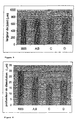
- the results for the width of the joint and the depth of intergranular dissolution are represented respectively in Figures 5 and 6.
- alloys A, B and C have improved mechanical characteristics, B being the most efficient, a depth of weaker pitting, C according to the invention being the best, a width of joint brazed approximately similar and a lower dissolution depth, especially for C.
- the alloy D With respect to the alloy D, R m is always higher and R 0.2 is higher for A and B, C being very slightly lower.
- the pitting depth is the lowest for C.
- the width of the brazed joint is practically identical, and the depth of dissolution is smaller for C, and slightly higher for A and B.
- the alloy C according to the invention thus has a improved corrosion resistance.
- the alloy of the invention does not require, unlike D, a very low silicon content which leads to a higher production cost.
Landscapes
- Engineering & Computer Science (AREA)
- Chemical & Material Sciences (AREA)
- Mechanical Engineering (AREA)
- Materials Engineering (AREA)
- Organic Chemistry (AREA)
- Metallurgy (AREA)
- General Engineering & Computer Science (AREA)
- Physics & Mathematics (AREA)
- Thermal Sciences (AREA)
- Laminated Bodies (AREA)
- Extrusion Of Metal (AREA)
- Metal Rolling (AREA)
- Heat-Exchange Devices With Radiators And Conduit Assemblies (AREA)
- Details Of Heat-Exchange And Heat-Transfer (AREA)
- Conductive Materials (AREA)
- Electroplating Methods And Accessories (AREA)
- Coating With Molten Metal (AREA)
- Metal Extraction Processes (AREA)
- Other Surface Treatments For Metallic Materials (AREA)
Description
Si < 0,6 Fe < 0,7 Cu ; 0,05 - 0,20 Mn : 1,0 - 1,5 Zn < 0,10 autres éléments < 0,05 chacun et < 0,15 au total, balance aluminium. De nombreux alliages ont été proposés au cours des dernières années pour améliorer l'une ou l'autre des propriétés d'emploi mentionnées précédemment, plus particulièrement la résistance à la corrosion, d'où l'appellation d'alliages " long-life " qui leur est parfois donnée dans la profession.
Si : 0,05 - 0,30 Fe < 0,8 Cu : 0,1 - 1 Mn : 0,6 - 1,5 Mg : 0,1 - 0,75 et éventuellement Zr, Ti, Cr ou V à des teneurs < 0,25%
Si < 0,1 Fe < 0,3 Cu : 0,05 - 0,35 Mn : 0,3 - 1,5 Mg : 0,05 - 0,5 Ti : 0,05 - 0,35 avec Cu - 0,2 < Mg < Cu + 0,2. Un exemple comparatif n° 17 décrit la composition : Si = 0,19 Fe = 0,24 Cu = 0,23 Mn = 1,2 Mg = 0,20.
Si < 0,15 Fe < 0,4 Cu : 0,1 - 0,6 Mn : 0,7 -1,5 Mg < 0,8
| Alliage | Si | Fe | Cu | Mn | Mg | Ti |
| A | 0,20 | 0,19 | 0,36 | 1,36 | 0,23 | 0,01 |
| B | 0,19 | 0,18 | 0,80 | 1,35 | 0,13 | 0,01 |
| C | 0,18 | 0,18 | 0,60 | 1,30 | 6 ppm | 0,008 |
| D | 0,04 | 0,17 | 0,25 | 1,10 | 0,18 | 0,03 |
| 3003 | 0,23 | 0,62 | 0,08 | 1,13 | 59 ppm |
Claims (6)
- Bande ou tube filé, destiné à la fabrication d'échangeurs thermiques brasés, en alliage de composition (% en poids):
Si : 0,15 - 0,30 Fe < 0,25 Cu : 0,4 - 0,7 Mn : 1,0 -1,4 Mg < 0,01 Zn < 0,2 Ti < 0,1 autres éléments < 0,05 chacun et < 0,15 au total, reste aluminium, avec : Fe ≤ Si. - Bande selon la revendication 1, caractérisée en ce qu'elle est plaquée sur une ou deux faces d'un alliage d'aluminium de brasage, de préférence un alliage AlSi contenant de 5 à 13% de Si.
- Bande selon l'une des revendications 1 ou 2, caractérisée en ce qu'après brasage, elle présente une microstructure à grains allongés avec un facteur de forme F > 2.
- Bande selon l'une des revendications 1 ou 2, caractérisée en ce qu'après brasage, elle présente une microstructure à grains approximativement équiaxes.
- Procédé de fabrication d'une bande selon la revendication 3 comportant la coulée d'une plaque, le laminage à chaud de cette plaque sans homogénéisation préalable, le laminage à froid à l'épaisseur désirée et un recuit de restauration à une température comprise entre 250 et 300°C.
- Procédé de fabrication d'une bande selon la revendication 4 comportant la coulée d'une plaque, l'homogénéisation de cette plaque entre 590 et 630°C, le laminage à chaud de la plaque homogénéisée, le laminage à froid à l'épaisseur désirée et un recuit final à une température comprise entre 320 et 380°C.
Priority Applications (1)
| Application Number | Priority Date | Filing Date | Title |
|---|---|---|---|
| EP03022659A EP1413427A3 (fr) | 1999-08-12 | 2000-07-18 | Bande ou tube en alliage d'aluminium pour la fabriction d'échangeurs de chaleur brasés |
Applications Claiming Priority (2)
| Application Number | Priority Date | Filing Date | Title |
|---|---|---|---|
| FR9910536A FR2797454B1 (fr) | 1999-08-12 | 1999-08-12 | Bande ou tube en alliage d'aluminium pour la fabrication d'echangeurs de chaleur brases |
| FR9910536 | 1999-08-12 |
Related Child Applications (1)
| Application Number | Title | Priority Date | Filing Date |
|---|---|---|---|
| EP03022659A Division EP1413427A3 (fr) | 1999-08-12 | 2000-07-18 | Bande ou tube en alliage d'aluminium pour la fabriction d'échangeurs de chaleur brasés |
Publications (2)
| Publication Number | Publication Date |
|---|---|
| EP1075935A1 EP1075935A1 (fr) | 2001-02-14 |
| EP1075935B1 true EP1075935B1 (fr) | 2004-05-12 |
Family
ID=9549175
Family Applications (2)
| Application Number | Title | Priority Date | Filing Date |
|---|---|---|---|
| EP00420159A Expired - Lifetime EP1075935B1 (fr) | 1999-08-12 | 2000-07-18 | Bande ou tube en alliage d'aluminium pour la fabrication d'échangeurs de chaleur brasés |
| EP03022659A Withdrawn EP1413427A3 (fr) | 1999-08-12 | 2000-07-18 | Bande ou tube en alliage d'aluminium pour la fabriction d'échangeurs de chaleur brasés |
Family Applications After (1)
| Application Number | Title | Priority Date | Filing Date |
|---|---|---|---|
| EP03022659A Withdrawn EP1413427A3 (fr) | 1999-08-12 | 2000-07-18 | Bande ou tube en alliage d'aluminium pour la fabriction d'échangeurs de chaleur brasés |
Country Status (6)
| Country | Link |
|---|---|
| US (1) | US6451453B1 (fr) |
| EP (2) | EP1075935B1 (fr) |
| JP (2) | JP2001105175A (fr) |
| AT (1) | ATE266524T1 (fr) |
| DE (3) | DE1075935T1 (fr) |
| FR (1) | FR2797454B1 (fr) |
Cited By (1)
| Publication number | Priority date | Publication date | Assignee | Title |
|---|---|---|---|---|
| WO2015132482A1 (fr) | 2014-03-06 | 2015-09-11 | Constellium Neuf-Brisach | Tôle de brasage à placages multiples |
Families Citing this family (26)
| Publication number | Priority date | Publication date | Assignee | Title |
|---|---|---|---|---|
| FR2816534B1 (fr) * | 2000-11-16 | 2003-01-31 | Pechiney Rhenalu | Procede de fabrication d'une bande plaquee en alliage d'aluminium pour la fabrication d'echangeurs de chaleur brases |
| US6923876B2 (en) | 2000-11-16 | 2005-08-02 | Pechiney Rhenalu | Aluminum alloy strip manufacturing process for the manufacture of brazed heat exchangers |
| ES2441259T5 (es) * | 2008-01-18 | 2017-09-15 | Hydro Aluminium Rolled Products Gmbh | Material compuesto con capa de protección contra la corrosión y procedimiento para su producción |
| FR2931713B1 (fr) * | 2008-06-02 | 2010-05-14 | Alcan Int Ltd | Bandes en alliage d'aluminium pour tubes d'echangeurs thermiques brases |
| US20100051247A1 (en) * | 2008-09-02 | 2010-03-04 | Calsonic Kansei Corporation | Heat exchanger made of aluminum alloy and method of producing same |
| EP2236240B1 (fr) | 2009-03-31 | 2018-08-08 | MAHLE Behr GmbH & Co. KG | Procédé de fabrication d'un dispositif d'aluminium comprenant une étape de brasage et de préchauffage |
| SE0950756A1 (sv) | 2009-10-13 | 2011-04-14 | Sapa Heat Transfer Ab | Sandwichmaterial med hög hållfasthet vid hög temperatur för tunna band i värmeväxlare |
| JP5658227B2 (ja) | 2010-03-02 | 2015-01-21 | 三菱アルミニウム株式会社 | アルミニウム合金製熱交換器 |
| JP5793336B2 (ja) | 2010-09-21 | 2015-10-14 | 株式会社Uacj | 高強度アルミニウム合金ブレージングシート及びその製造方法 |
| RU2635675C2 (ru) | 2012-05-23 | 2017-11-15 | Гренгес Свиден Аб | Сверхстойкий к прогибу и плавлению материал оребрения с очень высокой прочностью |
| ES2621871T3 (es) * | 2013-02-21 | 2017-07-05 | Hydro Aluminium Rolled Products Gmbh | Aleación de aluminio para la fabricación de productos semiacabados o componentes para automóviles, procedimiento para la fabricación de una cinta de aleación de aluminio de esta aleación de aluminio así como cinta de aleación de aluminio y usos de la misma |
| US9545777B2 (en) | 2013-03-13 | 2017-01-17 | Novelis Inc. | Corrosion-resistant brazing sheet package |
| ES2795293T3 (es) | 2013-03-13 | 2020-11-23 | Novelis Inc | Aleación de núcleo de chapa de soldadura fuerte para intercambiador de calor |
| PT3449026T (pt) | 2016-04-29 | 2021-01-20 | Rio Tinto Alcan Int Ltd | Liga resistente à corrosão para produtos extrudidos e brasados |
| JP6836887B2 (ja) * | 2016-11-30 | 2021-03-03 | 三菱アルミニウム株式会社 | 伝熱管、熱交換器および伝熱管の製造方法 |
| US20190291182A1 (en) * | 2018-03-23 | 2019-09-26 | GM Global Technology Operations LLC | Aluminum alloy powders for powder bed fusion additive manufacturing processes |
| EP3797034B1 (fr) * | 2018-05-22 | 2024-03-20 | Novelis Koblenz GmbH | Échangeur de chaleur brasé |
| CN109266888A (zh) * | 2018-12-03 | 2019-01-25 | 东北轻合金有限责任公司 | 一种308合金铸锭的及其制备方法和应用 |
| CN109909640B (zh) * | 2019-02-25 | 2021-04-20 | 江苏港缆新材料科技有限公司 | 一种高强度的铝镁合金焊丝及其加工工艺 |
| FR3093450A1 (fr) | 2019-03-04 | 2020-09-11 | Constellium Neuf-Brisach | Bande en alliage d’aluminium pour la fabrication d’échangeurs de chaleur brasés |
| FR3093448A1 (fr) | 2019-03-04 | 2020-09-11 | Constellium Neuf-Brisach | Bande en alliage d’aluminium pour la fabrication d’échangeurs de chaleur brasés |
| US12359285B2 (en) | 2019-03-04 | 2025-07-15 | Constellium Neuf-Brisach | Strip of aluminium alloy for manufacturing brazed heat exchangers |
| WO2020178507A1 (fr) | 2019-03-04 | 2020-09-10 | Constellium Neuf-Brisach | Bande en alliage d'aluminium pour la fabrication d'échangeurs de chaleur brasés |
| FR3134119B1 (fr) | 2022-04-02 | 2025-05-16 | Constellium Neuf Brisach | Tôle en alliage 6xxx de recyclage et procédé de fabrication |
| CN115478184B (zh) * | 2022-09-06 | 2024-02-13 | 甘肃东兴铝业有限公司 | 一种3102铝合金箔材的制备方法 |
| CN219181929U (zh) * | 2022-11-11 | 2023-06-13 | 蔚来汽车科技(安徽)有限公司 | 车载热管散热控制器和车辆 |
Citations (1)
| Publication number | Priority date | Publication date | Assignee | Title |
|---|---|---|---|---|
| EP1059362A1 (fr) * | 1999-06-11 | 2000-12-13 | Corus Aluminium Walzprodukte GmbH | Alliage d'aluminium d'extrusion |
Family Cites Families (17)
| Publication number | Priority date | Publication date | Assignee | Title |
|---|---|---|---|---|
| JPS60248859A (ja) * | 1984-05-25 | 1985-12-09 | Sumitomo Light Metal Ind Ltd | 超高圧用プレ−トフイン型熱交換器のフイン材 |
| JPS6182992A (ja) * | 1984-09-28 | 1986-04-26 | Furukawa Alum Co Ltd | Al合金ブレ−ジングシ−ト |
| US4649087A (en) * | 1985-06-10 | 1987-03-10 | Reynolds Metals Company | Corrosion resistant aluminum brazing sheet |
| JPS63195240A (ja) * | 1987-02-10 | 1988-08-12 | Furukawa Alum Co Ltd | Al製ブレ−ジングシ−ト |
| JPH0816257B2 (ja) * | 1987-02-10 | 1996-02-21 | 古河電気工業株式会社 | アルミニウム合金ブレ−ジングシ−ト |
| CA1309322C (fr) | 1988-01-29 | 1992-10-27 | Paul Emile Fortin | Methode visant a ameliorer la resistance a la corrosion d'une feuille de brasage |
| JP2564190B2 (ja) * | 1988-09-12 | 1996-12-18 | 株式会社神戸製鋼所 | ろう付け用アルミニウム合金複合材 |
| JP2753634B2 (ja) * | 1989-09-06 | 1998-05-20 | 株式会社神戸製鋼所 | チューブ材用アルミニウム合金複合材シート |
| JPH0755373B2 (ja) * | 1990-09-18 | 1995-06-14 | 住友軽金属工業株式会社 | アルミニウム合金クラッド材および熱交換器 |
| JP3448296B2 (ja) * | 1993-04-06 | 2003-09-22 | アルキャン・インターナショナル・リミテッド | ロウ付け合金及びロウ付け合金シート |
| JP3359115B2 (ja) * | 1993-08-26 | 2002-12-24 | 古河電気工業株式会社 | 熱交換器用アルミニウム合金フィン材 |
| US5422191A (en) * | 1994-02-14 | 1995-06-06 | Kaiser Aluminum & Chemical Corporation | Aluminum-lithium filler alloy for brazing |
| EP0718072B1 (fr) * | 1994-12-19 | 2003-07-09 | Corus Aluminium Walzprodukte GmbH | Feuille de brasage |
| JPH08283891A (ja) * | 1995-04-17 | 1996-10-29 | Shinko Alcoa Yuso Kizai Kk | ろう付用アルミニウム合金複合材 |
| JPH09268339A (ja) * | 1996-04-03 | 1997-10-14 | Furukawa Electric Co Ltd:The | 真空ろう付け用Al合金製ブレージングシート |
| JP3765327B2 (ja) * | 1996-04-26 | 2006-04-12 | 神鋼アルコア輸送機材株式会社 | ろう付用アルミニウム合金複合部材及びろう付方法 |
| DE19926229C1 (de) | 1999-06-10 | 2001-02-15 | Vaw Ver Aluminium Werke Ag | Verfahren zum prozeßintegrierten Wärmebehandeln |
-
1999
- 1999-08-12 FR FR9910536A patent/FR2797454B1/fr not_active Expired - Lifetime
-
2000
- 2000-07-18 AT AT00420159T patent/ATE266524T1/de not_active IP Right Cessation
- 2000-07-18 EP EP00420159A patent/EP1075935B1/fr not_active Expired - Lifetime
- 2000-07-18 DE DE1075935T patent/DE1075935T1/de active Pending
- 2000-07-18 EP EP03022659A patent/EP1413427A3/fr not_active Withdrawn
- 2000-07-18 DE DE03022659T patent/DE03022659T1/de active Pending
- 2000-07-18 DE DE60010593T patent/DE60010593T2/de not_active Expired - Lifetime
- 2000-07-20 US US09/620,597 patent/US6451453B1/en not_active Expired - Lifetime
- 2000-08-14 JP JP2000245490A patent/JP2001105175A/ja active Pending
-
2011
- 2011-05-17 JP JP2011110174A patent/JP2011202279A/ja active Pending
Patent Citations (1)
| Publication number | Priority date | Publication date | Assignee | Title |
|---|---|---|---|---|
| EP1059362A1 (fr) * | 1999-06-11 | 2000-12-13 | Corus Aluminium Walzprodukte GmbH | Alliage d'aluminium d'extrusion |
Cited By (2)
| Publication number | Priority date | Publication date | Assignee | Title |
|---|---|---|---|---|
| WO2015132482A1 (fr) | 2014-03-06 | 2015-09-11 | Constellium Neuf-Brisach | Tôle de brasage à placages multiples |
| EP3363584A1 (fr) * | 2014-03-06 | 2018-08-22 | Constellium Neuf Brisach | Tole de brasage a placages multiples |
Also Published As
| Publication number | Publication date |
|---|---|
| JP2001105175A (ja) | 2001-04-17 |
| DE60010593T2 (de) | 2005-05-25 |
| ATE266524T1 (de) | 2004-05-15 |
| FR2797454A1 (fr) | 2001-02-16 |
| EP1413427A3 (fr) | 2005-03-30 |
| DE60010593D1 (de) | 2004-06-17 |
| EP1413427A2 (fr) | 2004-04-28 |
| DE1075935T1 (de) | 2001-07-05 |
| JP2011202279A (ja) | 2011-10-13 |
| DE03022659T1 (de) | 2004-09-30 |
| FR2797454B1 (fr) | 2001-08-31 |
| US6451453B1 (en) | 2002-09-17 |
| EP1075935A1 (fr) | 2001-02-14 |
Similar Documents
| Publication | Publication Date | Title |
|---|---|---|
| EP1075935B1 (fr) | Bande ou tube en alliage d'aluminium pour la fabrication d'échangeurs de chaleur brasés | |
| CN101641454B (zh) | 铝合金制硬钎焊板及其制造方法 | |
| US6921584B2 (en) | Brazing sheet | |
| US5041343A (en) | Process for improving the corrosion resistance of brazing sheet | |
| EP3029169B1 (fr) | Élément de gaine en alliage d'aluminium et son procédé de production | |
| JP4912555B2 (ja) | 改善された電気伝導率及び高い強度をもつアルミニウム合金複合材料並びに製法及び使用 | |
| EP3121301B1 (fr) | Matériau d'alliage d'aluminium enrobé et son procédé de production, et échangeur de chaleur utilisant ledit matériau en alliage d'aluminium enrobé et son procédé de production | |
| CN105814219B (zh) | 铝合金包层材料及其制造方法、以及使用该铝合金包层材料的热交换器及其制造方法 | |
| EP1339887B1 (fr) | Procede de fabrication d'une bande plaquee en alliage d'aluminium pour la fabrication d'echangeurs de chaleur brases | |
| FR2876606A1 (fr) | Procede de production d'une feuille de brasage en alliage d'aluminium et d'ensembles legers et brases pour echangeur de chaleur. | |
| MXPA06002005A (es) | Hoja de aleacion de aluminio de alta tenacidad para soldadura fuerte, montaje de soldadura fuerte y metodo para su produccion. | |
| CN105745343A (zh) | 铝合金包层材料及其制造方法、以及使用该铝合金包层材料的热交换器及其制造方法 | |
| EP0823489A1 (fr) | Produit pour construction soudée en alliage AlMgMn à tenue à la corrosion améliorée | |
| FR2832497A1 (fr) | Bandes en alliage d'aluminium pour echangeurs thermiques | |
| JP3533434B2 (ja) | アルミニウム合金製熱交換器用ブレージングシート | |
| JP7737850B2 (ja) | ブレージングシート及びその製造方法 | |
| WO2020178507A1 (fr) | Bande en alliage d'aluminium pour la fabrication d'échangeurs de chaleur brasés | |
| JPH0790442A (ja) | 熱交換器用アルミニウム合金ブレージングシートおよびアルミニウム合金製熱交換器の製造方法 | |
| JPH09296243A (ja) | Al合金製ブレージングシート | |
| EP3934908A1 (fr) | Bande en alliage d'aluminium pour la fabrication d'échangeurs de chaleur brasés | |
| JPH10121174A (ja) | Al合金製ブレージングシート | |
| EP3934840A1 (fr) | Bande en alliage d'aluminium pour la fabrication d'echangeurs de chaleur brases | |
| FR3093449A1 (fr) | Bande en alliage d’aluminium pour la fabrication d’échangeurs de chaleur brasés | |
| JP2025514741A (ja) | ろう付けによって得られるアルミニウム合金ベースの熱交換器 |
Legal Events
| Date | Code | Title | Description |
|---|---|---|---|
| PUAI | Public reference made under article 153(3) epc to a published international application that has entered the european phase |
Free format text: ORIGINAL CODE: 0009012 |
|
| AK | Designated contracting states |
Kind code of ref document: A1 Designated state(s): AT BE CH CY DE DK ES FI FR GB GR IE IT LI LU MC NL PT SE |
|
| AX | Request for extension of the european patent |
Free format text: AL;LT;LV;MK;RO;SI |
|
| TPAD | Observations filed by third parties |
Free format text: ORIGINAL CODE: EPIDOS TIPA |
|
| DET | De: translation of patent claims | ||
| 17P | Request for examination filed |
Effective date: 20010713 |
|
| AKX | Designation fees paid |
Free format text: AT BE CH CY DE DK ES FI FR GB GR IE IT LI LU MC NL PT SE |
|
| 17Q | First examination report despatched |
Effective date: 20030811 |
|
| GRAP | Despatch of communication of intention to grant a patent |
Free format text: ORIGINAL CODE: EPIDOSNIGR1 |
|
| GRAS | Grant fee paid |
Free format text: ORIGINAL CODE: EPIDOSNIGR3 |
|
| GRAA | (expected) grant |
Free format text: ORIGINAL CODE: 0009210 |
|
| AK | Designated contracting states |
Kind code of ref document: B1 Designated state(s): AT BE CH CY DE DK ES FI FR GB GR IE IT LI LU MC NL PT SE |
|
| PG25 | Lapsed in a contracting state [announced via postgrant information from national office to epo] |
Ref country code: CY Free format text: LAPSE BECAUSE OF FAILURE TO SUBMIT A TRANSLATION OF THE DESCRIPTION OR TO PAY THE FEE WITHIN THE PRESCRIBED TIME-LIMIT Effective date: 20040512 Ref country code: IT Free format text: LAPSE BECAUSE OF FAILURE TO SUBMIT A TRANSLATION OF THE DESCRIPTION OR TO PAY THE FEE WITHIN THE PRESCRIBED TIME-LIMIT;WARNING: LAPSES OF ITALIAN PATENTS WITH EFFECTIVE DATE BEFORE 2007 MAY HAVE OCCURRED AT ANY TIME BEFORE 2007. THE CORRECT EFFECTIVE DATE MAY BE DIFFERENT FROM THE ONE RECORDED. Effective date: 20040512 Ref country code: AT Free format text: LAPSE BECAUSE OF FAILURE TO SUBMIT A TRANSLATION OF THE DESCRIPTION OR TO PAY THE FEE WITHIN THE PRESCRIBED TIME-LIMIT Effective date: 20040512 Ref country code: FI Free format text: LAPSE BECAUSE OF FAILURE TO SUBMIT A TRANSLATION OF THE DESCRIPTION OR TO PAY THE FEE WITHIN THE PRESCRIBED TIME-LIMIT Effective date: 20040512 Ref country code: GB Free format text: LAPSE BECAUSE OF FAILURE TO SUBMIT A TRANSLATION OF THE DESCRIPTION OR TO PAY THE FEE WITHIN THE PRESCRIBED TIME-LIMIT Effective date: 20040512 Ref country code: IE Free format text: LAPSE BECAUSE OF FAILURE TO SUBMIT A TRANSLATION OF THE DESCRIPTION OR TO PAY THE FEE WITHIN THE PRESCRIBED TIME-LIMIT Effective date: 20040512 Ref country code: NL Free format text: LAPSE BECAUSE OF FAILURE TO SUBMIT A TRANSLATION OF THE DESCRIPTION OR TO PAY THE FEE WITHIN THE PRESCRIBED TIME-LIMIT Effective date: 20040512 |
|
| REG | Reference to a national code |
Ref country code: GB Ref legal event code: FG4D Free format text: NOT ENGLISH |
|
| REG | Reference to a national code |
Ref country code: CH Ref legal event code: EP |
|
| REG | Reference to a national code |
Ref country code: IE Ref legal event code: FG4D Free format text: FRENCH |
|
| REF | Corresponds to: |
Ref document number: 60010593 Country of ref document: DE Date of ref document: 20040617 Kind code of ref document: P |
|
| PG25 | Lapsed in a contracting state [announced via postgrant information from national office to epo] |
Ref country code: LU Free format text: LAPSE BECAUSE OF NON-PAYMENT OF DUE FEES Effective date: 20040718 |
|
| PG25 | Lapsed in a contracting state [announced via postgrant information from national office to epo] |
Ref country code: LI Free format text: LAPSE BECAUSE OF NON-PAYMENT OF DUE FEES Effective date: 20040731 Ref country code: BE Free format text: LAPSE BECAUSE OF NON-PAYMENT OF DUE FEES Effective date: 20040731 Ref country code: CH Free format text: LAPSE BECAUSE OF NON-PAYMENT OF DUE FEES Effective date: 20040731 Ref country code: MC Free format text: LAPSE BECAUSE OF NON-PAYMENT OF DUE FEES Effective date: 20040731 |
|
| REG | Reference to a national code |
Ref country code: SE Ref legal event code: TRGR |
|
| PG25 | Lapsed in a contracting state [announced via postgrant information from national office to epo] |
Ref country code: GR Free format text: LAPSE BECAUSE OF FAILURE TO SUBMIT A TRANSLATION OF THE DESCRIPTION OR TO PAY THE FEE WITHIN THE PRESCRIBED TIME-LIMIT Effective date: 20040812 Ref country code: DK Free format text: LAPSE BECAUSE OF FAILURE TO SUBMIT A TRANSLATION OF THE DESCRIPTION OR TO PAY THE FEE WITHIN THE PRESCRIBED TIME-LIMIT Effective date: 20040812 |
|
| PG25 | Lapsed in a contracting state [announced via postgrant information from national office to epo] |
Ref country code: ES Free format text: LAPSE BECAUSE OF FAILURE TO SUBMIT A TRANSLATION OF THE DESCRIPTION OR TO PAY THE FEE WITHIN THE PRESCRIBED TIME-LIMIT Effective date: 20040823 |
|
| NLV1 | Nl: lapsed or annulled due to failure to fulfill the requirements of art. 29p and 29m of the patents act | ||
| GBV | Gb: ep patent (uk) treated as always having been void in accordance with gb section 77(7)/1977 [no translation filed] |
Effective date: 20040512 |
|
| REG | Reference to a national code |
Ref country code: IE Ref legal event code: FD4D |
|
| BERE | Be: lapsed |
Owner name: PECHINEY RHENALU Effective date: 20040731 |
|
| PLBQ | Unpublished change to opponent data |
Free format text: ORIGINAL CODE: EPIDOS OPPO |
|
| PLBI | Opposition filed |
Free format text: ORIGINAL CODE: 0009260 |
|
| REG | Reference to a national code |
Ref country code: CH Ref legal event code: PL |
|
| PLAX | Notice of opposition and request to file observation + time limit sent |
Free format text: ORIGINAL CODE: EPIDOSNOBS2 |
|
| 26 | Opposition filed |
Opponent name: CORUS ALUMINIUM WALZPRODUKTE GMBH Effective date: 20050127 |
|
| PLBB | Reply of patent proprietor to notice(s) of opposition received |
Free format text: ORIGINAL CODE: EPIDOSNOBS3 |
|
| RDAF | Communication despatched that patent is revoked |
Free format text: ORIGINAL CODE: EPIDOSNREV1 |
|
| REG | Reference to a national code |
Ref country code: FR Ref legal event code: CD |
|
| APBP | Date of receipt of notice of appeal recorded |
Free format text: ORIGINAL CODE: EPIDOSNNOA2O |
|
| APAH | Appeal reference modified |
Free format text: ORIGINAL CODE: EPIDOSCREFNO |
|
| APBQ | Date of receipt of statement of grounds of appeal recorded |
Free format text: ORIGINAL CODE: EPIDOSNNOA3O |
|
| APAL | Date of receipt of statement of grounds of an appeal modified |
Free format text: ORIGINAL CODE: EPIDOSCNOA3O |
|
| PLAB | Opposition data, opponent's data or that of the opponent's representative modified |
Free format text: ORIGINAL CODE: 0009299OPPO |
|
| R26 | Opposition filed (corrected) |
Opponent name: CORUS ALUMINIUM WALZPRODUKTE GMBH Effective date: 20050127 |
|
| RAP2 | Party data changed (patent owner data changed or rights of a patent transferred) |
Owner name: ALCAN RHENALU |
|
| BERE | Be: lapsed |
Owner name: *PECHINEY RHENALU Effective date: 20040731 |
|
| PG25 | Lapsed in a contracting state [announced via postgrant information from national office to epo] |
Ref country code: PT Free format text: LAPSE BECAUSE OF NON-PAYMENT OF DUE FEES Effective date: 20041012 |
|
| PLAB | Opposition data, opponent's data or that of the opponent's representative modified |
Free format text: ORIGINAL CODE: 0009299OPPO |
|
| R26 | Opposition filed (corrected) |
Opponent name: ALERIS ALUMINUM KOBLENZ GMBH Effective date: 20050127 |
|
| APBU | Appeal procedure closed |
Free format text: ORIGINAL CODE: EPIDOSNNOA9O |
|
| PLCK | Communication despatched that opposition was rejected |
Free format text: ORIGINAL CODE: EPIDOSNREJ1 |
|
| PLBN | Opposition rejected |
Free format text: ORIGINAL CODE: 0009273 |
|
| STAA | Information on the status of an ep patent application or granted ep patent |
Free format text: STATUS: OPPOSITION REJECTED |
|
| 27O | Opposition rejected |
Effective date: 20080207 |
|
| REG | Reference to a national code |
Ref country code: FR Ref legal event code: CD Owner name: CONSTELLIUM FRANCE, FR Effective date: 20111123 |
|
| REG | Reference to a national code |
Ref country code: DE Ref legal event code: R082 Ref document number: 60010593 Country of ref document: DE Representative=s name: BEETZ & PARTNER PATENT- UND RECHTSANWAELTE, DE |
|
| REG | Reference to a national code |
Ref country code: DE Ref legal event code: R082 Ref document number: 60010593 Country of ref document: DE Representative=s name: BEETZ & PARTNER PATENT- UND RECHTSANWAELTE, DE Effective date: 20120622 Ref country code: DE Ref legal event code: R081 Ref document number: 60010593 Country of ref document: DE Owner name: CONSTELLIUM FRANCE, FR Free format text: FORMER OWNER: PECHINEY RHENALU, PARIS, FR Effective date: 20120622 Ref country code: DE Ref legal event code: R082 Ref document number: 60010593 Country of ref document: DE Representative=s name: BEETZ & PARTNER MBB, DE Effective date: 20120622 Ref country code: DE Ref legal event code: R081 Ref document number: 60010593 Country of ref document: DE Owner name: CONSTELLIUM NEUF BRISACH, FR Free format text: FORMER OWNER: PECHINEY RHENALU, PARIS, FR Effective date: 20120622 Ref country code: DE Ref legal event code: R082 Ref document number: 60010593 Country of ref document: DE Representative=s name: BEETZ & PARTNER MBB PATENTANWAELTE, DE Effective date: 20120622 Ref country code: DE Ref legal event code: R082 Ref document number: 60010593 Country of ref document: DE Representative=s name: BEETZ & PARTNER MBB PATENT- UND RECHTSANWAELTE, DE Effective date: 20120622 |
|
| REG | Reference to a national code |
Ref country code: FR Ref legal event code: PLFP Year of fee payment: 16 |
|
| REG | Reference to a national code |
Ref country code: DE Ref legal event code: R082 Ref document number: 60010593 Country of ref document: DE Representative=s name: BEETZ & PARTNER MBB, DE Ref country code: DE Ref legal event code: R081 Ref document number: 60010593 Country of ref document: DE Owner name: CONSTELLIUM NEUF BRISACH, FR Free format text: FORMER OWNER: CONSTELLIUM FRANCE, PARIS, FR Ref country code: DE Ref legal event code: R082 Ref document number: 60010593 Country of ref document: DE Representative=s name: BEETZ & PARTNER MBB PATENTANWAELTE, DE Ref country code: DE Ref legal event code: R082 Ref document number: 60010593 Country of ref document: DE Representative=s name: BEETZ & PARTNER MBB PATENT- UND RECHTSANWAELTE, DE |
|
| REG | Reference to a national code |
Ref country code: FR Ref legal event code: TP Owner name: CONSTELLIUM NEUF-BRISACH, FR Effective date: 20151013 |
|
| REG | Reference to a national code |
Ref country code: FR Ref legal event code: PLFP Year of fee payment: 17 |
|
| REG | Reference to a national code |
Ref country code: FR Ref legal event code: PLFP Year of fee payment: 18 |
|
| REG | Reference to a national code |
Ref country code: FR Ref legal event code: PLFP Year of fee payment: 19 |
|
| PGFP | Annual fee paid to national office [announced via postgrant information from national office to epo] |
Ref country code: DE Payment date: 20190729 Year of fee payment: 20 Ref country code: SE Payment date: 20190729 Year of fee payment: 20 Ref country code: FR Payment date: 20190725 Year of fee payment: 20 |
|
| REG | Reference to a national code |
Ref country code: DE Ref legal event code: R071 Ref document number: 60010593 Country of ref document: DE |
|
| REG | Reference to a national code |
Ref country code: SE Ref legal event code: EUG |
|
| REG | Reference to a national code |
Ref country code: SE Ref legal event code: EUG |