EP1083246B1 - Konversionsüberzug aus Zinn mit Kobalt und Wismut für Aluminiumgleitflächen - Google Patents
Konversionsüberzug aus Zinn mit Kobalt und Wismut für Aluminiumgleitflächen Download PDFInfo
- Publication number
- EP1083246B1 EP1083246B1 EP00306480A EP00306480A EP1083246B1 EP 1083246 B1 EP1083246 B1 EP 1083246B1 EP 00306480 A EP00306480 A EP 00306480A EP 00306480 A EP00306480 A EP 00306480A EP 1083246 B1 EP1083246 B1 EP 1083246B1
- Authority
- EP
- European Patent Office
- Prior art keywords
- cobalt
- coating
- bismuth
- tin
- aluminium
- Prior art date
- Legal status (The legal status is an assumption and is not a legal conclusion. Google has not performed a legal analysis and makes no representation as to the accuracy of the status listed.)
- Expired - Lifetime
Links
- 229910052718 tin Inorganic materials 0.000 title claims description 75
- ATJFFYVFTNAWJD-UHFFFAOYSA-N Tin Chemical compound [Sn] ATJFFYVFTNAWJD-UHFFFAOYSA-N 0.000 title claims description 72
- 229910052797 bismuth Inorganic materials 0.000 title claims description 64
- 229910017052 cobalt Inorganic materials 0.000 title claims description 64
- 239000010941 cobalt Substances 0.000 title claims description 64
- GUTLYIVDDKVIGB-UHFFFAOYSA-N cobalt atom Chemical compound [Co] GUTLYIVDDKVIGB-UHFFFAOYSA-N 0.000 title claims description 64
- JCXGWMGPZLAOME-UHFFFAOYSA-N bismuth atom Chemical compound [Bi] JCXGWMGPZLAOME-UHFFFAOYSA-N 0.000 title claims description 55
- XAGFODPZIPBFFR-UHFFFAOYSA-N aluminium Chemical compound [Al] XAGFODPZIPBFFR-UHFFFAOYSA-N 0.000 title claims description 40
- 229910052782 aluminium Inorganic materials 0.000 title claims description 39
- 238000007739 conversion coating Methods 0.000 title claims description 38
- 238000000576 coating method Methods 0.000 claims description 86
- 239000011248 coating agent Substances 0.000 claims description 71
- 239000004411 aluminium Substances 0.000 claims description 39
- 239000002345 surface coating layer Substances 0.000 claims description 33
- 229910000838 Al alloy Inorganic materials 0.000 claims description 24
- 238000000034 method Methods 0.000 claims description 23
- 229910052710 silicon Inorganic materials 0.000 claims description 17
- 239000010703 silicon Substances 0.000 claims description 17
- GVPFVAHMJGGAJG-UHFFFAOYSA-L cobalt dichloride Chemical compound [Cl-].[Cl-].[Co+2] GVPFVAHMJGGAJG-UHFFFAOYSA-L 0.000 claims description 11
- KKMOSYLWYLMHAL-UHFFFAOYSA-N 2-bromo-6-nitroaniline Chemical compound NC1=C(Br)C=CC=C1[N+]([O-])=O KKMOSYLWYLMHAL-UHFFFAOYSA-N 0.000 claims description 9
- 239000000956 alloy Substances 0.000 claims description 9
- 229910045601 alloy Inorganic materials 0.000 claims description 8
- 239000000126 substance Substances 0.000 claims description 6
- 150000001869 cobalt compounds Chemical class 0.000 claims description 2
- KMWBBMXGHHLDKL-UHFFFAOYSA-N [AlH3].[Si] Chemical compound [AlH3].[Si] KMWBBMXGHHLDKL-UHFFFAOYSA-N 0.000 claims 1
- 239000011135 tin Substances 0.000 description 79
- 239000000243 solution Substances 0.000 description 26
- 238000012360 testing method Methods 0.000 description 16
- 238000006243 chemical reaction Methods 0.000 description 15
- XUIMIQQOPSSXEZ-UHFFFAOYSA-N Silicon Chemical compound [Si] XUIMIQQOPSSXEZ-UHFFFAOYSA-N 0.000 description 12
- IOUCSUBTZWXKTA-UHFFFAOYSA-N dipotassium;dioxido(oxo)tin Chemical compound [K+].[K+].[O-][Sn]([O-])=O IOUCSUBTZWXKTA-UHFFFAOYSA-N 0.000 description 12
- 239000000463 material Substances 0.000 description 11
- 229910052751 metal Inorganic materials 0.000 description 9
- 239000002184 metal Substances 0.000 description 9
- 230000001815 facial effect Effects 0.000 description 8
- 230000000052 comparative effect Effects 0.000 description 7
- XLYOFNOQVPJJNP-UHFFFAOYSA-N water Substances O XLYOFNOQVPJJNP-UHFFFAOYSA-N 0.000 description 7
- 238000005299 abrasion Methods 0.000 description 6
- 239000007789 gas Substances 0.000 description 6
- -1 aluminium-silicon magnesium Chemical compound 0.000 description 5
- 239000013078 crystal Substances 0.000 description 5
- 238000010943 off-gassing Methods 0.000 description 5
- 239000000758 substrate Substances 0.000 description 5
- PXHVJJICTQNCMI-UHFFFAOYSA-N Nickel Chemical compound [Ni] PXHVJJICTQNCMI-UHFFFAOYSA-N 0.000 description 4
- 239000000654 additive Substances 0.000 description 4
- 238000004140 cleaning Methods 0.000 description 4
- 230000008021 deposition Effects 0.000 description 4
- 230000000694 effects Effects 0.000 description 4
- 238000004519 manufacturing process Methods 0.000 description 4
- 239000011159 matrix material Substances 0.000 description 4
- 239000003507 refrigerant Substances 0.000 description 4
- KRKNYBCHXYNGOX-UHFFFAOYSA-K Citrate Chemical compound [O-]C(=O)CC(O)(CC([O-])=O)C([O-])=O KRKNYBCHXYNGOX-UHFFFAOYSA-K 0.000 description 3
- KWYUFKZDYYNOTN-UHFFFAOYSA-M Potassium hydroxide Chemical compound [OH-].[K+] KWYUFKZDYYNOTN-UHFFFAOYSA-M 0.000 description 3
- 150000001622 bismuth compounds Chemical class 0.000 description 3
- 238000009713 electroplating Methods 0.000 description 3
- RXPAJWPEYBDXOG-UHFFFAOYSA-N hydron;methyl 4-methoxypyridine-2-carboxylate;chloride Chemical compound Cl.COC(=O)C1=CC(OC)=CC=N1 RXPAJWPEYBDXOG-UHFFFAOYSA-N 0.000 description 3
- 230000001965 increasing effect Effects 0.000 description 3
- 230000035484 reaction time Effects 0.000 description 3
- QYIGOGBGVKONDY-UHFFFAOYSA-N 1-(2-bromo-5-chlorophenyl)-3-methylpyrazole Chemical compound N1=C(C)C=CN1C1=CC(Cl)=CC=C1Br QYIGOGBGVKONDY-UHFFFAOYSA-N 0.000 description 2
- QTBSBXVTEAMEQO-UHFFFAOYSA-M Acetate Chemical compound CC([O-])=O QTBSBXVTEAMEQO-UHFFFAOYSA-M 0.000 description 2
- RYGMFSIKBFXOCR-UHFFFAOYSA-N Copper Chemical compound [Cu] RYGMFSIKBFXOCR-UHFFFAOYSA-N 0.000 description 2
- KCXVZYZYPLLWCC-UHFFFAOYSA-N EDTA Chemical compound OC(=O)CN(CC(O)=O)CCN(CC(O)=O)CC(O)=O KCXVZYZYPLLWCC-UHFFFAOYSA-N 0.000 description 2
- XEEYBQQBJWHFJM-UHFFFAOYSA-N Iron Chemical compound [Fe] XEEYBQQBJWHFJM-UHFFFAOYSA-N 0.000 description 2
- 229910001128 Sn alloy Inorganic materials 0.000 description 2
- HCHKCACWOHOZIP-UHFFFAOYSA-N Zinc Chemical compound [Zn] HCHKCACWOHOZIP-UHFFFAOYSA-N 0.000 description 2
- 230000000996 additive effect Effects 0.000 description 2
- 230000008901 benefit Effects 0.000 description 2
- 230000015572 biosynthetic process Effects 0.000 description 2
- 239000011247 coating layer Substances 0.000 description 2
- 150000001875 compounds Chemical class 0.000 description 2
- 229910052802 copper Inorganic materials 0.000 description 2
- 239000010949 copper Substances 0.000 description 2
- 229920001971 elastomer Polymers 0.000 description 2
- 230000005496 eutectics Effects 0.000 description 2
- 150000002500 ions Chemical group 0.000 description 2
- 239000010410 layer Substances 0.000 description 2
- 239000011133 lead Substances 0.000 description 2
- 239000007788 liquid Substances 0.000 description 2
- 229910052759 nickel Inorganic materials 0.000 description 2
- 239000006174 pH buffer Substances 0.000 description 2
- 239000002904 solvent Substances 0.000 description 2
- 239000007921 spray Substances 0.000 description 2
- 239000012085 test solution Substances 0.000 description 2
- YXVCLPJQTZXJLH-UHFFFAOYSA-N thiamine(1+) diphosphate chloride Chemical compound [Cl-].CC1=C(CCOP(O)(=O)OP(O)(O)=O)SC=[N+]1CC1=CN=C(C)N=C1N YXVCLPJQTZXJLH-UHFFFAOYSA-N 0.000 description 2
- 229910052725 zinc Inorganic materials 0.000 description 2
- 239000011701 zinc Substances 0.000 description 2
- 229920000298 Cellophane Polymers 0.000 description 1
- VEXZGXHMUGYJMC-UHFFFAOYSA-M Chloride anion Chemical compound [Cl-] VEXZGXHMUGYJMC-UHFFFAOYSA-M 0.000 description 1
- VYZAMTAEIAYCRO-UHFFFAOYSA-N Chromium Chemical compound [Cr] VYZAMTAEIAYCRO-UHFFFAOYSA-N 0.000 description 1
- 229910000881 Cu alloy Inorganic materials 0.000 description 1
- UFHFLCQGNIYNRP-UHFFFAOYSA-N Hydrogen Chemical compound [H][H] UFHFLCQGNIYNRP-UHFFFAOYSA-N 0.000 description 1
- 229910002651 NO3 Inorganic materials 0.000 description 1
- NHNBFGGVMKEFGY-UHFFFAOYSA-N Nitrate Chemical compound [O-][N+]([O-])=O NHNBFGGVMKEFGY-UHFFFAOYSA-N 0.000 description 1
- OAICVXFJPJFONN-UHFFFAOYSA-N Phosphorus Chemical compound [P] OAICVXFJPJFONN-UHFFFAOYSA-N 0.000 description 1
- BQCADISMDOOEFD-UHFFFAOYSA-N Silver Chemical compound [Ag] BQCADISMDOOEFD-UHFFFAOYSA-N 0.000 description 1
- 229910000831 Steel Inorganic materials 0.000 description 1
- HQZAMCPKJXSAJX-UHFFFAOYSA-N [Bi].[Co].[Sn] Chemical compound [Bi].[Co].[Sn] HQZAMCPKJXSAJX-UHFFFAOYSA-N 0.000 description 1
- YVIMHTIMVIIXBQ-UHFFFAOYSA-N [SnH3][Al] Chemical compound [SnH3][Al] YVIMHTIMVIIXBQ-UHFFFAOYSA-N 0.000 description 1
- 239000002253 acid Substances 0.000 description 1
- 230000001464 adherent effect Effects 0.000 description 1
- 238000004378 air conditioning Methods 0.000 description 1
- 229910052783 alkali metal Inorganic materials 0.000 description 1
- 150000008044 alkali metal hydroxides Chemical class 0.000 description 1
- QRRWWGNBSQSBAM-UHFFFAOYSA-N alumane;chromium Chemical compound [AlH3].[Cr] QRRWWGNBSQSBAM-UHFFFAOYSA-N 0.000 description 1
- 150000004645 aluminates Chemical class 0.000 description 1
- PNEYBMLMFCGWSK-UHFFFAOYSA-N aluminium oxide Inorganic materials [O-2].[O-2].[O-2].[Al+3].[Al+3] PNEYBMLMFCGWSK-UHFFFAOYSA-N 0.000 description 1
- 239000007864 aqueous solution Substances 0.000 description 1
- 230000005540 biological transmission Effects 0.000 description 1
- 229910001451 bismuth ion Inorganic materials 0.000 description 1
- 239000003054 catalyst Substances 0.000 description 1
- 239000000919 ceramic Substances 0.000 description 1
- 239000013522 chelant Substances 0.000 description 1
- 229910052804 chromium Inorganic materials 0.000 description 1
- 239000011651 chromium Substances 0.000 description 1
- 239000008199 coating composition Substances 0.000 description 1
- UFMZWBIQTDUYBN-UHFFFAOYSA-N cobalt dinitrate Chemical compound [Co+2].[O-][N+]([O-])=O.[O-][N+]([O-])=O UFMZWBIQTDUYBN-UHFFFAOYSA-N 0.000 description 1
- 229910001429 cobalt ion Inorganic materials 0.000 description 1
- 229910001981 cobalt nitrate Inorganic materials 0.000 description 1
- WDHWFGNRFMPTQS-UHFFFAOYSA-N cobalt tin Chemical compound [Co].[Sn] WDHWFGNRFMPTQS-UHFFFAOYSA-N 0.000 description 1
- XLJKHNWPARRRJB-UHFFFAOYSA-N cobalt(2+) Chemical compound [Co+2] XLJKHNWPARRRJB-UHFFFAOYSA-N 0.000 description 1
- 229940097267 cobaltous chloride Drugs 0.000 description 1
- 238000004891 communication Methods 0.000 description 1
- 239000012141 concentrate Substances 0.000 description 1
- 238000001816 cooling Methods 0.000 description 1
- 230000003247 decreasing effect Effects 0.000 description 1
- 230000007812 deficiency Effects 0.000 description 1
- 239000008367 deionised water Substances 0.000 description 1
- 238000009792 diffusion process Methods 0.000 description 1
- 238000007599 discharging Methods 0.000 description 1
- 201000010099 disease Diseases 0.000 description 1
- 208000037265 diseases, disorders, signs and symptoms Diseases 0.000 description 1
- 239000000806 elastomer Substances 0.000 description 1
- 230000002708 enhancing effect Effects 0.000 description 1
- 229910052738 indium Inorganic materials 0.000 description 1
- APFVFJFRJDLVQX-UHFFFAOYSA-N indium atom Chemical compound [In] APFVFJFRJDLVQX-UHFFFAOYSA-N 0.000 description 1
- 238000007689 inspection Methods 0.000 description 1
- 239000011229 interlayer Substances 0.000 description 1
- 229910000765 intermetallic Inorganic materials 0.000 description 1
- 229910052742 iron Inorganic materials 0.000 description 1
- 238000005461 lubrication Methods 0.000 description 1
- 238000003754 machining Methods 0.000 description 1
- WPBNNNQJVZRUHP-UHFFFAOYSA-L manganese(2+);methyl n-[[2-(methoxycarbonylcarbamothioylamino)phenyl]carbamothioyl]carbamate;n-[2-(sulfidocarbothioylamino)ethyl]carbamodithioate Chemical compound [Mn+2].[S-]C(=S)NCCNC([S-])=S.COC(=O)NC(=S)NC1=CC=CC=C1NC(=S)NC(=O)OC WPBNNNQJVZRUHP-UHFFFAOYSA-L 0.000 description 1
- 150000002739 metals Chemical class 0.000 description 1
- 239000000203 mixture Substances 0.000 description 1
- 239000003921 oil Substances 0.000 description 1
- 239000002245 particle Substances 0.000 description 1
- 239000011574 phosphorus Substances 0.000 description 1
- 229910052698 phosphorus Inorganic materials 0.000 description 1
- 238000007747 plating Methods 0.000 description 1
- 239000000843 powder Substances 0.000 description 1
- 230000036632 reaction speed Effects 0.000 description 1
- 238000005057 refrigeration Methods 0.000 description 1
- 230000001105 regulatory effect Effects 0.000 description 1
- 150000003839 salts Chemical class 0.000 description 1
- 229910052709 silver Inorganic materials 0.000 description 1
- 239000004332 silver Substances 0.000 description 1
- 239000007787 solid Substances 0.000 description 1
- 229940071182 stannate Drugs 0.000 description 1
- 239000010959 steel Substances 0.000 description 1
- 230000002195 synergetic effect Effects 0.000 description 1
- 229910001432 tin ion Inorganic materials 0.000 description 1
- 238000011282 treatment Methods 0.000 description 1
- 238000005406 washing Methods 0.000 description 1
Images
Classifications
-
- C—CHEMISTRY; METALLURGY
- C22—METALLURGY; FERROUS OR NON-FERROUS ALLOYS; TREATMENT OF ALLOYS OR NON-FERROUS METALS
- C22C—ALLOYS
- C22C13/00—Alloys based on tin
- C22C13/02—Alloys based on tin with antimony or bismuth as the next major constituent
-
- C—CHEMISTRY; METALLURGY
- C23—COATING METALLIC MATERIAL; COATING MATERIAL WITH METALLIC MATERIAL; CHEMICAL SURFACE TREATMENT; DIFFUSION TREATMENT OF METALLIC MATERIAL; COATING BY VACUUM EVAPORATION, BY SPUTTERING, BY ION IMPLANTATION OR BY CHEMICAL VAPOUR DEPOSITION, IN GENERAL; INHIBITING CORROSION OF METALLIC MATERIAL OR INCRUSTATION IN GENERAL
- C23C—COATING METALLIC MATERIAL; COATING MATERIAL WITH METALLIC MATERIAL; SURFACE TREATMENT OF METALLIC MATERIAL BY DIFFUSION INTO THE SURFACE, BY CHEMICAL CONVERSION OR SUBSTITUTION; COATING BY VACUUM EVAPORATION, BY SPUTTERING, BY ION IMPLANTATION OR BY CHEMICAL VAPOUR DEPOSITION, IN GENERAL
- C23C22/00—Chemical surface treatment of metallic material by reaction of the surface with a reactive liquid, leaving reaction products of surface material in the coating, e.g. conversion coatings, passivation of metals
-
- B—PERFORMING OPERATIONS; TRANSPORTING
- B32—LAYERED PRODUCTS
- B32B—LAYERED PRODUCTS, i.e. PRODUCTS BUILT-UP OF STRATA OF FLAT OR NON-FLAT, e.g. CELLULAR OR HONEYCOMB, FORM
- B32B15/00—Layered products comprising a layer of metal
- B32B15/01—Layered products comprising a layer of metal all layers being exclusively metallic
- B32B15/017—Layered products comprising a layer of metal all layers being exclusively metallic one layer being formed of aluminium or an aluminium alloy, another layer being formed of an alloy based on a non ferrous metal other than aluminium
-
- C—CHEMISTRY; METALLURGY
- C22—METALLURGY; FERROUS OR NON-FERROUS ALLOYS; TREATMENT OF ALLOYS OR NON-FERROUS METALS
- C22C—ALLOYS
- C22C13/00—Alloys based on tin
-
- C—CHEMISTRY; METALLURGY
- C23—COATING METALLIC MATERIAL; COATING MATERIAL WITH METALLIC MATERIAL; CHEMICAL SURFACE TREATMENT; DIFFUSION TREATMENT OF METALLIC MATERIAL; COATING BY VACUUM EVAPORATION, BY SPUTTERING, BY ION IMPLANTATION OR BY CHEMICAL VAPOUR DEPOSITION, IN GENERAL; INHIBITING CORROSION OF METALLIC MATERIAL OR INCRUSTATION IN GENERAL
- C23C—COATING METALLIC MATERIAL; COATING MATERIAL WITH METALLIC MATERIAL; SURFACE TREATMENT OF METALLIC MATERIAL BY DIFFUSION INTO THE SURFACE, BY CHEMICAL CONVERSION OR SUBSTITUTION; COATING BY VACUUM EVAPORATION, BY SPUTTERING, BY ION IMPLANTATION OR BY CHEMICAL VAPOUR DEPOSITION, IN GENERAL
- C23C22/00—Chemical surface treatment of metallic material by reaction of the surface with a reactive liquid, leaving reaction products of surface material in the coating, e.g. conversion coatings, passivation of metals
- C23C22/05—Chemical surface treatment of metallic material by reaction of the surface with a reactive liquid, leaving reaction products of surface material in the coating, e.g. conversion coatings, passivation of metals using aqueous solutions
- C23C22/60—Chemical surface treatment of metallic material by reaction of the surface with a reactive liquid, leaving reaction products of surface material in the coating, e.g. conversion coatings, passivation of metals using aqueous solutions using alkaline aqueous solutions with pH greater than 8
- C23C22/66—Treatment of aluminium or alloys based thereon
-
- F—MECHANICAL ENGINEERING; LIGHTING; HEATING; WEAPONS; BLASTING
- F04—POSITIVE - DISPLACEMENT MACHINES FOR LIQUIDS; PUMPS FOR LIQUIDS OR ELASTIC FLUIDS
- F04B—POSITIVE-DISPLACEMENT MACHINES FOR LIQUIDS; PUMPS
- F04B27/00—Multi-cylinder pumps specially adapted for elastic fluids and characterised by number or arrangement of cylinders
- F04B27/08—Multi-cylinder pumps specially adapted for elastic fluids and characterised by number or arrangement of cylinders having cylinders coaxial with, or parallel or inclined to, main shaft axis
- F04B27/10—Multi-cylinder pumps specially adapted for elastic fluids and characterised by number or arrangement of cylinders having cylinders coaxial with, or parallel or inclined to, main shaft axis having stationary cylinders
- F04B27/1036—Component parts, details, e.g. sealings, lubrication
- F04B27/1054—Actuating elements
-
- F—MECHANICAL ENGINEERING; LIGHTING; HEATING; WEAPONS; BLASTING
- F05—INDEXING SCHEMES RELATING TO ENGINES OR PUMPS IN VARIOUS SUBCLASSES OF CLASSES F01-F04
- F05C—INDEXING SCHEME RELATING TO MATERIALS, MATERIAL PROPERTIES OR MATERIAL CHARACTERISTICS FOR MACHINES, ENGINES OR PUMPS OTHER THAN NON-POSITIVE-DISPLACEMENT MACHINES OR ENGINES
- F05C2201/00—Metals
- F05C2201/04—Heavy metals
- F05C2201/0433—Iron group; Ferrous alloys, e.g. steel
- F05C2201/0463—Cobalt
-
- F—MECHANICAL ENGINEERING; LIGHTING; HEATING; WEAPONS; BLASTING
- F05—INDEXING SCHEMES RELATING TO ENGINES OR PUMPS IN VARIOUS SUBCLASSES OF CLASSES F01-F04
- F05C—INDEXING SCHEME RELATING TO MATERIALS, MATERIAL PROPERTIES OR MATERIAL CHARACTERISTICS FOR MACHINES, ENGINES OR PUMPS OTHER THAN NON-POSITIVE-DISPLACEMENT MACHINES OR ENGINES
- F05C2201/00—Metals
- F05C2201/04—Heavy metals
- F05C2201/0469—Other heavy metals
-
- F—MECHANICAL ENGINEERING; LIGHTING; HEATING; WEAPONS; BLASTING
- F05—INDEXING SCHEMES RELATING TO ENGINES OR PUMPS IN VARIOUS SUBCLASSES OF CLASSES F01-F04
- F05C—INDEXING SCHEME RELATING TO MATERIALS, MATERIAL PROPERTIES OR MATERIAL CHARACTERISTICS FOR MACHINES, ENGINES OR PUMPS OTHER THAN NON-POSITIVE-DISPLACEMENT MACHINES OR ENGINES
- F05C2201/00—Metals
- F05C2201/04—Heavy metals
- F05C2201/0469—Other heavy metals
- F05C2201/0493—Tin
-
- F—MECHANICAL ENGINEERING; LIGHTING; HEATING; WEAPONS; BLASTING
- F05—INDEXING SCHEMES RELATING TO ENGINES OR PUMPS IN VARIOUS SUBCLASSES OF CLASSES F01-F04
- F05C—INDEXING SCHEME RELATING TO MATERIALS, MATERIAL PROPERTIES OR MATERIAL CHARACTERISTICS FOR MACHINES, ENGINES OR PUMPS OTHER THAN NON-POSITIVE-DISPLACEMENT MACHINES OR ENGINES
- F05C2253/00—Other material characteristics; Treatment of material
- F05C2253/12—Coating
-
- Y—GENERAL TAGGING OF NEW TECHNOLOGICAL DEVELOPMENTS; GENERAL TAGGING OF CROSS-SECTIONAL TECHNOLOGIES SPANNING OVER SEVERAL SECTIONS OF THE IPC; TECHNICAL SUBJECTS COVERED BY FORMER USPC CROSS-REFERENCE ART COLLECTIONS [XRACs] AND DIGESTS
- Y10—TECHNICAL SUBJECTS COVERED BY FORMER USPC
- Y10S—TECHNICAL SUBJECTS COVERED BY FORMER USPC CROSS-REFERENCE ART COLLECTIONS [XRACs] AND DIGESTS
- Y10S428/00—Stock material or miscellaneous articles
- Y10S428/922—Static electricity metal bleed-off metallic stock
- Y10S428/923—Physical dimension
- Y10S428/924—Composite
- Y10S428/926—Thickness of individual layer specified
-
- Y—GENERAL TAGGING OF NEW TECHNOLOGICAL DEVELOPMENTS; GENERAL TAGGING OF CROSS-SECTIONAL TECHNOLOGIES SPANNING OVER SEVERAL SECTIONS OF THE IPC; TECHNICAL SUBJECTS COVERED BY FORMER USPC CROSS-REFERENCE ART COLLECTIONS [XRACs] AND DIGESTS
- Y10—TECHNICAL SUBJECTS COVERED BY FORMER USPC
- Y10S—TECHNICAL SUBJECTS COVERED BY FORMER USPC CROSS-REFERENCE ART COLLECTIONS [XRACs] AND DIGESTS
- Y10S428/00—Stock material or miscellaneous articles
- Y10S428/922—Static electricity metal bleed-off metallic stock
- Y10S428/9335—Product by special process
- Y10S428/936—Chemical deposition, e.g. electroless plating
-
- Y—GENERAL TAGGING OF NEW TECHNOLOGICAL DEVELOPMENTS; GENERAL TAGGING OF CROSS-SECTIONAL TECHNOLOGIES SPANNING OVER SEVERAL SECTIONS OF THE IPC; TECHNICAL SUBJECTS COVERED BY FORMER USPC CROSS-REFERENCE ART COLLECTIONS [XRACs] AND DIGESTS
- Y10—TECHNICAL SUBJECTS COVERED BY FORMER USPC
- Y10T—TECHNICAL SUBJECTS COVERED BY FORMER US CLASSIFICATION
- Y10T428/00—Stock material or miscellaneous articles
- Y10T428/12—All metal or with adjacent metals
- Y10T428/12493—Composite; i.e., plural, adjacent, spatially distinct metal components [e.g., layers, joint, etc.]
- Y10T428/12535—Composite; i.e., plural, adjacent, spatially distinct metal components [e.g., layers, joint, etc.] with additional, spatially distinct nonmetal component
- Y10T428/12583—Component contains compound of adjacent metal
-
- Y—GENERAL TAGGING OF NEW TECHNOLOGICAL DEVELOPMENTS; GENERAL TAGGING OF CROSS-SECTIONAL TECHNOLOGIES SPANNING OVER SEVERAL SECTIONS OF THE IPC; TECHNICAL SUBJECTS COVERED BY FORMER USPC CROSS-REFERENCE ART COLLECTIONS [XRACs] AND DIGESTS
- Y10—TECHNICAL SUBJECTS COVERED BY FORMER USPC
- Y10T—TECHNICAL SUBJECTS COVERED BY FORMER US CLASSIFICATION
- Y10T428/00—Stock material or miscellaneous articles
- Y10T428/12—All metal or with adjacent metals
- Y10T428/12493—Composite; i.e., plural, adjacent, spatially distinct metal components [e.g., layers, joint, etc.]
- Y10T428/12535—Composite; i.e., plural, adjacent, spatially distinct metal components [e.g., layers, joint, etc.] with additional, spatially distinct nonmetal component
- Y10T428/12583—Component contains compound of adjacent metal
- Y10T428/1259—Oxide
-
- Y—GENERAL TAGGING OF NEW TECHNOLOGICAL DEVELOPMENTS; GENERAL TAGGING OF CROSS-SECTIONAL TECHNOLOGIES SPANNING OVER SEVERAL SECTIONS OF THE IPC; TECHNICAL SUBJECTS COVERED BY FORMER USPC CROSS-REFERENCE ART COLLECTIONS [XRACs] AND DIGESTS
- Y10—TECHNICAL SUBJECTS COVERED BY FORMER USPC
- Y10T—TECHNICAL SUBJECTS COVERED BY FORMER US CLASSIFICATION
- Y10T428/00—Stock material or miscellaneous articles
- Y10T428/12—All metal or with adjacent metals
- Y10T428/12493—Composite; i.e., plural, adjacent, spatially distinct metal components [e.g., layers, joint, etc.]
- Y10T428/12708—Sn-base component
-
- Y—GENERAL TAGGING OF NEW TECHNOLOGICAL DEVELOPMENTS; GENERAL TAGGING OF CROSS-SECTIONAL TECHNOLOGIES SPANNING OVER SEVERAL SECTIONS OF THE IPC; TECHNICAL SUBJECTS COVERED BY FORMER USPC CROSS-REFERENCE ART COLLECTIONS [XRACs] AND DIGESTS
- Y10—TECHNICAL SUBJECTS COVERED BY FORMER USPC
- Y10T—TECHNICAL SUBJECTS COVERED BY FORMER US CLASSIFICATION
- Y10T428/00—Stock material or miscellaneous articles
- Y10T428/12—All metal or with adjacent metals
- Y10T428/12493—Composite; i.e., plural, adjacent, spatially distinct metal components [e.g., layers, joint, etc.]
- Y10T428/12736—Al-base component
-
- Y—GENERAL TAGGING OF NEW TECHNOLOGICAL DEVELOPMENTS; GENERAL TAGGING OF CROSS-SECTIONAL TECHNOLOGIES SPANNING OVER SEVERAL SECTIONS OF THE IPC; TECHNICAL SUBJECTS COVERED BY FORMER USPC CROSS-REFERENCE ART COLLECTIONS [XRACs] AND DIGESTS
- Y10—TECHNICAL SUBJECTS COVERED BY FORMER USPC
- Y10T—TECHNICAL SUBJECTS COVERED BY FORMER US CLASSIFICATION
- Y10T428/00—Stock material or miscellaneous articles
- Y10T428/12—All metal or with adjacent metals
- Y10T428/12493—Composite; i.e., plural, adjacent, spatially distinct metal components [e.g., layers, joint, etc.]
- Y10T428/12736—Al-base component
- Y10T428/1275—Next to Group VIII or IB metal-base component
Definitions
- the present invention relates to a cobalto-bismutho-tin coating provided on aluminium or aluminium alloy by chemical conversion to reduce the sliding friction of the surface and reduce wear of contacted components.
- the coating may be applied to surfaces such on swashplate surfaces of swashplate type compressors or other aluminium surfaces, such as pistons.
- a swash plate type compressor is used in systems such as an air conditioning system of an automobile.
- the transmission of motive power is carried out, as a swash plate and a piston reciprocate, thereby suctioning, compressing and discharging the gas.
- the swash plate is usually composed of aluminium or aluminium alloy and makes slideable contact when it rotates with shoes which are composed of iron or light weight ceramics such as alumina.
- the metal on metal contact at the shoe and swash plate interface can be subject to undue wear and possible seizure of the shoe with the swash plate.
- Treatments have been developed to improve the lubricity at the shoe/swash plate interface and lessen the swashplate surface wear.
- Conventionally swashplates are tin coated to improve lubricity.
- tin is relatively soft and while enhancing lubricity, has less than optimal hardness and durability.
- US patent 5,056,417 treats the swashplate body with a surface coating layer made of tin and at least one metal selected from the group consisting of copper, nickel, zinc, lead and indium. While any of these five materials are alloyed with tin to improve its wear resistance, none of them are described as also acting to bind the coating to the swashplate.
- US 5,655,432 treated the swash plate with a cross-linked polyfluoro elastomer bonded directly to the aluminium, a lubricious additive and a load bearing additive.
- the coating process described adds to manufacturing complexity, and makes it more difficult to hold manufacturing tolerances than with a conventional tin conversion coating.
- a copper based flame-sprayed material which includes an unmelted structure of an atomised copper alloy powder is disclosed for coating swashplates.
- the coating may include one or more of lead, tin, phosphorus, aluminium, silver, silicon, manganese, chromium, nickel, and zinc not to exceed 50% of the coating.
- US patent 4,252,618 discloses a electroplating process for tin wherein the bath contains tin ions, an alkali metal hydroxide, and bismuth citrate. This bath is taught to inhibit tin "disease" through the use of the citrate. Electroplating is known to add to the dimension of the electroplated part by the coating thickness, and electroplating requires the use of electric current which adds to the complexity of the coating process.
- the invention is an article having an aluminium or aluminium alloy surface which during use of the article is exposed to sliding friction. It carries a conversion coating on a least a portion of the surface, the coating is tin with 0.2 to 10 wt. % cobalt and 0.1 to 12 wt. % bismuth.
- the coating is formed by chemical conversion when the surface is contacted with an aqueous alkaline chemical conversion bath for aluminium, the bath containing soluble tin, cobalt, and bismuth compounds in amounts sufficient to provide said conversion coating. Examples of such article include swashplates and pistons.
- the present invention also discloses a method of coating an article having a surface of aluminium or aluminium alloy.
- a swash plate compressor has a cylinder block that has a cylinder bore disposed parallel to the axis of said cylinder block.
- a rotary shaft rotatably mounted within said cylinder block and a piston reciprocally fitted in the cylinder bore.
- the shoes slideably intervene between the piston and the swash plate.
- the swash plate comprises a matrix composed of aluminium or aluminium alloy and on at least a part of the swash plate surface the tin conversion coating layer disclosed above. The coated part of the surface of the swash plate is that which in slideable contact with the shoes during compressor operation.
- the present invention discloses a tin-cobalt-bismuth coating formed using conversion coating techniques which overcomes the deficiencies of prior art coatings. It provides a conversion coating which exhibits improved wear resistance and also excellent adhesion to aluminium or aluminium alloy surfaces which experience during use, sliding friction, e.g., surfaces of swashplates, pistons, etc. The coating also retains the high-lubricity of tin on the aluminium swashplate. The metals of the coating diffuse into the aluminium with no net part dimension growth observed.
- the added cobalt provides improved adhesion over a conventional tin conversion coating.
- bismuth was unexpectedly found to smoothen out the tin alloy coating surface believed to take place by regulation of the tin conversion coating deposition reaction. And the bismuth was unexpectedly found to also enhance tin lubricity. Both the cobalt and the bismuth thus contribute to improvement of the wear resistance of the aluminium surface.
- the invention relates to providing conversion coatings on aluminium or aluminium alloy, which may comprise an entire article or only a surface of the article, as when the article is steel or some other metal with a surface of aluminium provided thereon.
- the article or substrate may be, for example, a swashplate of an automotive compressor, or pistons, any article whose aluminium surface would benefit from increased lubricity and decreased wear provided by an adherent coating. These may also include connecting rods for piston engines or crankshaft based refrigeration/AC compressors.
- the article may also be a non-automotive article.
- a substrate is reacted with other materials (e.g., which may be a solids, liquids or gas) so that its surface is chemically converted into different compounds which have different properties. Further the process usually takes place at an elevated temperature where diffusion is often an essential aspect of the conversion.
- the conversion coating process and resultant coating is thus significantly different from coating processes like electrolytic deposition which is primarily concerned with deposition of ions, e.g., positive ions being deposited onto the cathode (negative electrode).
- electrolytic deposition which is primarily concerned with deposition of ions, e.g., positive ions being deposited onto the cathode (negative electrode).
- the surface aluminium by means of alkalinity in the coating bath, solubilises as an aluminate into the bath.
- the present invention combines with the conversion coating materials, including cobalt, bismuth and tin, to redeposit on the aluminium surface as a complex including tin, cobalt, and bismuth which is tightly chemically bonded and diffused into the aluminium surface.
- the conversion coating materials including cobalt, bismuth and tin
- redeposit on the aluminium surface as a complex including tin, cobalt, and bismuth which is tightly chemically bonded and diffused into the aluminium surface.
- a material is spray coated as by thermal spray or plated onto the surface of a metal.
- an interlayer is applied between an aluminium substrate and the outer lubricious layer to bond the two together.
- the present invention conversion coating process invention thus avoids the manufacturing complexity associated with providing this interlayer-outer layer system.
- thermal sprayed or electroplated coating increase the dimension of the part by the thickness of the coating, the present invention conversion coating was found to not increase the part dimension.
- the swashplate is an example of aluminium or aluminium alloy surfaces which may be conversion coated according to the present invention and will hereafter be described in detail merely for exemplary purposes. As discussed above, however, other articles having an aluminium or aluminium alloy surface, especially like those materials described, may optimally be conversion coated according to the present invention.
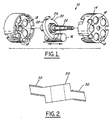
- FIG. 1 Illustrated in FIG. 1 is a perspective and exploded view of an automotive swash plate type compressor 10 for propelling refrigerant gas through a cooling circuit.
- the compressor 10 comprises a two-piece cylinder block 12, 14 which is provided with a plurality of reciprocating pistons 16.
- FIG. 1 depicts only one of such reciprocating piston 16.
- each piston 16 reciprocates within cylinder bore 18.
- Each piston 16 is in communication with the swash plate 20 which is fixably mounted on an axially extending rotatable shaft 22.
- the reciprocating motion of each piston 16 within its associated cylinder bore successively siphons, compresses, and discharges refrigerant gas.
- a pair of pivoting shoes 24 are positioned between each piston 16 and swash plate 20.
- the shoe 24 transfers the rotational motion of the swash plate 20 to the linear motion of the piston 16.
- the swash plate 20 has two facial surfaces 26 (only one shown for clarity) which contact the shoe 24.
- Rotation of the shaft 22 causes the swash plate 20 to rotate between the cylinder blocks 12, and 14.
- the facial surfaces 26 contact the shoes 24 and are subjected to a shear-type frictional contact with shoe 24.
- An end surface 28 may contact the piston 16 if the piston 16 is slightly skewed or bent. End surface 28 and the facial surfaces 26 are coated to prevent wear from the contact with piston 16 and shoes 24.
- the surface coating 30 should also have a low coefficient of friction to increase the efficiency of the compressor.
- the shape of swash plate 20 according to the present invention may be the same as those of the conventional swash plates.
- the material composing the matrix of swash plate body 20 should be aluminium or aluminium alloy.
- the aluminium alloy can be, for example, aluminium-high-silicon type alloy, aluminium-silicon magnesium type alloy, aluminium-silicon-copper-magnesium type alloy and, aluminium alloys containing no silicon.
- Swash plate 20 is usually made from an aluminium or aluminium alloy material to make it light-weight and strong. Aluminium and aluminium alloys containing hypereutectic silicon, that is more silicon than is required to form a eutectic crystalline structure, are often used. While the surface coating 30 (shown in FIG. 2) of the present invention may be used with hypereutectic aluminium, it is primarily intended for use on non-hypereutectic aluminium and aluminium alloys having less than 12.5% by weight of silicon.
- Hard grains as used herein means grains having average particle diameters of 20 through 100 micrometer and a hardness greater than 300 on the Vickers hardness scale or, more preferably, having a hardness greater than 600 on the Vickers hardness scale, such as a primary crystal silicon.
- aluminium-high-silicon type alloy can be considered as one of materials suitable materials for swash plate body 20.
- alsil alloy contains about 13% to 30% by weight of silicon meaning that alsil alloy contains more silicon than is required to form a eutectic crystal structure, alsil alloy has primary crystal silicon dispersed in the matrix structure. Also alsil has superior characteristics and could withstand very severe sliding operations at the swash plate.
- Other materials having the hard grains and possibly applicable to swash plate body 20 are the intermetallic compounds of: aluminium-manganese; aluminium-silicon-manganese; aluminium-iron-manganese; aluminium-chromium and the like.
- swashplate body 20 is made of aluminium or aluminium alloy directly contacts shoes 24.
- surface coating layer 30 on swash plate body 20 contacts shoes 24 so that the frictional resistance with the shoes is greatly reduced. While it is only necessary to coat facial surface 26 having contact with shoes 24, for ease of manufacture the entire swash plate body 20 is coated.
- the swash plate body 20 has a surface coating layer 30.
- the surface coating layer 30 is formed on the surface of swash plate body 20 at least on the part of the surface having sliceable contact with shoes 24.
- the surface coating layer 30 may, however, be formed over the whole surface of the swash plate body 20.
- the surface coating layer 30 acts to reduce frictional resistance with shoes 24 and prevents the occurrence of seizure at the sliding facial surface 26 of the swash plate 20.
- the present invention surface conversion coating layer 30 is composed primarily of tin, modified with cobalt. If surface coating layer 30 is composed only of tin the coefficient of friction will be lowered but at the same time, the surface coating layer becomes rather soft due to the characteristics of tin and, as a result, surface coating layer 30 will be susceptive to abrasion.
- it comprises 0.2-10 wt.% cobalt, more preferably 0.2 - 2.1 wt. % cobalt, 0.1 to 12 wt. % bismuth, more preferably being 0.2 to 5 wt.
- the coating's cobalt to bismuth content ratio is between 3:8 and 5:2. Most preferably, the cobalt to bismuth content ratio is between 4:5 and 3:2.
- Surface coating 30 is applied to the swash plate 20 by means of a convention conversion coating process. It is known in the art that conversion coating formation involves chemical reaction of the metal of the surface with components of the conversion coating bath.
- the pH of the bath is basic or alkaline, that is, the pH is greater than 7 and the aluminium is oxidised and the tin reduced in the process of forming the coating.
- An aqueous tin bath is prepared according to convention usually from an alkali metal stannate and then a soluble cobalt compound, e.g., a chloride and a soluble bismuth compound, e.g. a citrate, acetate, or nitrate are dissolved in the bath and the alkaline aqueous solution is heated to a temperature above 49°C (120°F).
- a soluble cobalt compound e.g., a chloride and a soluble bismuth compound, e.g. a citrate, acetate, or nitrate
- Other soluble salts of these baths metal are also useable.
- the concentration of cobalt and bismuth in the bath is that necessary to provide a coating on the swash plate of 0.2 - 10 wt. cobalt and 0.1 to 12 wt. % bismuth, with the balance being tin.
- the bath is in between 49°C and 66°C (120°F and 150°F).
- the bath in one preferred embodiment, comprises 0.0063 to 0.63 wt. % cobalt chloride, 0.0038 to 0.077 wt % bismuth citrate and 6-7.2 wt. % potassium stannate. More preferably, maintaining the same amount of potassium stannate, 0.017-0.32 wt.% cobalt chloride with 0.0058-0.058 wt % bismuth citrate and most preferably 0.021-0.21 wt.% cobalt chloride with 0.0096 - 0.029 wt % bismuth citrate.
- the bath comprises conventional materials used in such baths like chelates and pH buffers. Increasing the amount of cobalt in the conversion coating increases its durability and adhesion to the aluminium substrate.
- the source of the cobalt ion is cobalt chloride, compounds such as cobalt nitrate do not demonstrate the same results.
- the source of the bismuth ion is a citrate or acetate thereof.
- the swash plate 20 Before applying surface coating 30, the swash plate 20 is exposed to a cleaning solution which removes surface oils and prepares the part for the coating application. Cleaning methods typically include solvent, acid or alkaline washings. The parts are then optimally exposed to the solution for 5-6 minutes to conversion coat to an optimal thickness. The time to deposit a desired thickness of a coating is influenced by the concentration of the components, the bath temperature and catalysts as is known to those skilled in the art. Selection of other conditions would be within the skill of one in the art in view of the present disclosure.
- the thickness of the surface coating 30 is preferably from 0.8 to 2.5 ⁇ m. Applicants found that if the surface coating layer 30 has a thickness of less than 0.8 microns, the coefficient of friction will not be sufficiently lowered. On the other hand, if the surface coating layer 30 has a thickness of more than 2.5 micrometers, the surface coating layer 30 will be susceptive to problems concerning its strength such as to resist peeling-off during extended use.
- the coefficient of friction between swash plate 20 and shoe 24 is small so that the smooth sliding of shoe 24 on the swash plate 20 is ensured.
- the surface coating layer 30 is superior in strength thereby reducing the amount of abrasion which occurs thereon. Still further, seizure of the shoe 24 to the surface of swash plate 20 is prevented even when a liquid refrigerant is compressed or the compressor is operated under unfavourable circumstances such as insufficient lubrication of the sliding parts caused by leaks of refrigerant gas to the outside of the compressor. Consequently, by the effects described above, the swash plate compressor according to the present invention can satisfactory withstand very severe use and achieve long service life.
- Example 1 This is a comparative example not according to the present invention in which a swash plate body was coated with a Sn coating composition not containing either cobalt or bismuth as follows:
- the swash plate 20 is composed of a swash plate body 20 made of an aluminium alloy containing 10-12.5% by weight of silicon, and the surface coating layer 30 formed on the whole surface of the swash plate body 20.
- the surface coating layer 30 was formed by the following process:
- the swash plate 20 was cleaned with alkaline cleaner at 60°C (140°F) for 5 minutes.
- the swash plate body 20 is immersed for 5 minutes into a aqueous bath solution which contains 6.6 wt.% potassium stannate and which was kept at 54-64°C (130°-147° F). It was then taken out from the Sn bath and water washed.
- a surface coating layer 30 having a thickness of 1.0 micrometers was composed of 100 wt.% tin was formed over the whole surface of the swash plate body 20.
- the resultant surface coating layer 30 had a thickness of 1.0 micrometers.
- the coating process was repeated on five different swashplate samples.
- Example 2 This is a comparative example where the conversion coating comprises only cobalt and tin, without the bismuth required in the present invention coating.
- Example 1 a swash plate was coated by chemical conversion according to the described steps except that the coating bath contains 6.6 wt.% potassium stannate and 0.020 wt.% cobalt chloride (0.005 wt. % Co) and which was kept at 54-64°C (130°-147° F).
- a surface coating layer 30 consisting of tin and cobalt was formed over the whole surface of the swash plate body 20.
- the resultant surface coating layer 30 composed of 0.36 wt.% cobalt and the balance being tin had a thickness of 1.0 micrometers. This coating procedure was repeated on five additional swashplate samples.
- Example 3 This is a comparative example, not according to the present invention.
- the conversion coating comprises only tin and cobalt, without bismuth as required in the present invention coating.
- a swash plate as in the prior examples is coated after cleaning as above using a aqueous bath solution which contains 6.6 wt.% potassium stannate and 0.028 wt.% cobalt chloride (0.007 wt. % Co) by weight.
- this example has more cobalt than that of Example 2. It was then taken out from the Sn/Co bath and water washed. As a result, a surface coating layer 30 consisting of tin and cobalt was formed over the whole surface of the swash plate body 20.
- the resultant surface coating layer 30 composed of 99.5 wt.% tin and 0.5 wt.% cobalt by weight had a thickness of 1.0 micrometers. The procedure was repeated on 9 additional swashplate samples.
- Example 4 This is a comparative example, not according to the present invention.
- the conversion coating comprises only tin and cobalt, without bismuth as required in the present invention coating.
- a swash plate as in the prior examples is coated after cleaning in alkaline cleaner using a aqueous bath solution which contains 6.6 wt.% potassium stannate and 0.052 wt.% cobalt chloride (0.013 wt. % Co) by weight.
- this example has more cobalt than that of Example 3. It was then taken out from the Sn/Co bath and water washed.
- a surface coating layer 30 consisting of tin and cobalt was formed over the whole surface of the swash plate body 20.
- the resultant surface coating layer 30 composed of 99.1 wt.% tin and 0.9 wt.% cobalt by weight had a thickness of 1.5 micrometers.
- the procedure of this example was repeated on 5 additional swashplate samples.
- Example 5 This is a conversion coating comprising tin, cobalt, and bismuth formed according to an embodiment of the present invention. It was formed along the lines of those in the above examples.
- the swash plate 20 was cleaned with alkaline cleaner for 5 minutes.
- the swash plate body 20 is immersed for 5 minutes into a aqueous bath solution which contains 6.6 wt.% potassium stannate, 0.020 wt.% cobalt chloride, and 0.01 wt. % bismuth citrate by weight, and which was kept at 54-64°C (130°-147° F).
- the swashplate was then taken out from the Sn/Co/Bi bath and water washed.
- a surface coating layer 30 consisting of tin, cobalt, and bismuth was formed over the whole surface of the swash plate body 20.
- the resultant surface coating layer 30 composed of 0.3 wt.% cobalt, 0.4 wt.% bismuth, and the balance being tin had a thickness of 1.3 micrometers.
- the example procedure was repeated on 3 additional swashplate samples.
- Example 6 This is a conversion coating comprising tin, cobalt, and bismuth formed according to an embodiment of the present invention. It was formed along the lines of those in the above examples.
- the swash plate 20 was cleaned with alkaline cleaner for 5 minutes.
- the swash plate body 20 is immersed for 5 minutes into a aqueous bath solution which contains 6.6 wt.% potassium stannate, 0.052 wt.% cobalt chloride, and 0.019 wt. % bismuth nitrate by weight, and which was kept at 54-64°C (130°-147° F).
- the bismuth nitrate formed a milky white solution when added to the de-ionised water used as a solvent. When added to the tin solution, the cloudiness slowly disappeared. This indicates that while bismuth nitrate can provide a bismuth source for the present invention, the uptake into the tin solution is rather slow.
- a bismuth compound that more quickly dissolves is the preferred source.
- the swashplate was then taken out from the Sn/Co/Bi bath and water washed.
- a surface coating layer 30 consisting of tin, cobalt, and bismuth was formed over the whole surface of the swash plate body 20.
- the resultant surface coating layer 30 composed of 0.9 wt.% cobalt, 1.0 wt.% bismuth, and the balance being tin had a thickness of 1.5 micrometers.
- the procedure of this example was repeated on three additional swashplate samples.
- This table illustrates the advantage of including bismuth and cobalt with tin in forming conversion coatings on aluminium for improved wear properties.
- the test involved two hour calorimeter test administered to the six different coatings prepared above. That is, more specifically, the third column of Table 1 shows loss of coating adhesion area in square millimetres on front facial surface of swash plate with comparative coatings (examples 1-4) with present invention embodiment samples coatings (examples 5-6). Table 1, the fourth column, shows loss of coating adhesion data for the swash plate rear facial surface in same manner as for the front surface. As indicated in Table 1, the adhesion measured for swash plates 20 having the surface coating layer 30 in accordance with the Example 5 and 6 embodiments of the present invention was much higher than that for the conventional type coating described in comparative Examples 1-4.
- a standard tape adhesion test was administered on the samples prepared in examples 1-6. The test measures the amount of coating that can be removed when placed under stress. 3M 610 cellophane tape was applied to the coated swashplates in 2-3 mm strips. The tape was rubbed with a rubber eraser to ensure the adhesion of the tape and then the tape was removed in one quick motion in which a 90 degree angle was kept between the tape and the surface of swash plate 20. The Example 1 all tin coating showed poorest adhesion.
- adding bismuth with the cobalt in the tin conversion coating unexpectedly allowed the cobalt concentration to be reduced while still providing excellent adhesion. That is, the tape test results for the Sn/Co/Bi coating with 0.004 wt. % Co and 0.005% wt. % Bi were approximately the same as Sn/Co coatings having either 0.007 % Co or 0.013% Co.
- adding in the bismuth has a significant effect on regulating the tin deposition reaction during the conversion coating formation. This results in a smoother tin alloy coating which improves the adhesion as shown in Example 6. Being able to reduce the amount of cobalt when adding bismuth while maintaining excellent adhesion is advantageous because of cobalt's importance as a strategic metal and its higher cost relative to bismuth.
- Example 7 To further demonstrate the enhanced adhesion properties provided by the addition of bismuth, a tin bath without the powerful chelate, EDTA which is also known to promote adhesion and which was included in the bath solutions for examples 1-6 was made. This test solution consisted of 6.6% potassium stannate, and other additives, such as potassium hydroxide and pH buffers.
- Example 8 To demonstrate bismuth's ability to regulate the tin reaction's speed and give a smoother coating, a stock tin solution of the same composition as examples 1-6 was produced. Into one portion, 0.013 wt % Co was added. The other contained 0.013 wt. % Co and 0.01 wt. % Bi. As in the conversion coating of the other examples, the coating reaction liberates hydrogen gas. The reaction time interval is defined by the beginning and end of vigorous out-gassing. The reaction was timed for both portions of this example. For the Co only solution, reaction times were 43, 42, and 45 seconds. For the Co-Bi solution, reaction times were 55 and 56 seconds. Upon inspection, the Co-Bi parts had a smoother, significantly brighter surface than the Co only. This brightness is a measure of the surface smoothness of the coating.
- Example 9 This is a comparative example not according to the present invention in which a swash plate was coated with a conversion coating comprising only of bismuth and tin, without the cobalt required in the present invention coating.
- a swash plate was cleaned in alkaline cleaner for 5 minutes.
- the swash plate body 20 is immersed for 5 minutes into an aqueous bath solution consisting of 6.6% potassium stannate, made from the same commercially available concentrate that contains EDTA, as used in examples 1-6 and 8, and 0.01 wt % bismuth citrate (0.005% Bi in solution) by weight, which was kept at 54-64°C (130 - 147 deg F).
- the reaction outgassing stopped between 30 and 35 seconds, about 10 seconds shorter than cobalt and tin, and about 20 seconds shorter than cobalt, bismuth, and tin.
- the swashplate was then taken out of the Sn/Bi bath and water washed.
- the sample had a standard tape adhesion test performed on it in the same manner as previous examples. A slight amount of tin was pulled off on the tape, approximately 1% coverage on the tape contact area.
- a second swash plate was cleaned in the same manner as the first in this example. It was then immersed into an aqueous bath solution consisting of 6.6% potassium stannate as above and 0.02% bismuth citrate (0.01% Bi in solution) by weight, which was kept at 54-64°C (130 - 147 deg F). Again, the vigorous outgassing, more violent than other examples, was noted. This outgassing again stopped between 30 and 35 seconds, a more accurate reading was made difficult by the gas activity.
- This second swashplate was taken out of the Sn/Bi bath and water washed. Again, a standard tape adhesion test was performed and slight tin pull-off (about 1%) was noted on the tape contact area.
- Example 10 To test the use of bismuth acetate as a source for bismuth, a bath was made with 6.6% potassium stannate, 0.013 wt.% cobalt, added as cobaltous chloride, and 0.010 wt. % bismuth, added as bismuth acetate. The procedure for coating was as in Example 6. Two swashplates were tested and passed tape adhesion with no pull off. Appearance and coating thickness were also the same as those coated with bismuth citrate as the source of bismuth.
- the primary crystal silicon dispersed on the surface of the swash plate body 20 was exposed and sticks on the swash plate surface 20. Since primary crystal silicon has a great hardness, the further abrasion of the surface coating layer 30 is prevented.
Landscapes
- Chemical & Material Sciences (AREA)
- Engineering & Computer Science (AREA)
- Mechanical Engineering (AREA)
- Materials Engineering (AREA)
- Metallurgy (AREA)
- Organic Chemistry (AREA)
- General Chemical & Material Sciences (AREA)
- Chemical Kinetics & Catalysis (AREA)
- General Engineering & Computer Science (AREA)
- Compressors, Vaccum Pumps And Other Relevant Systems (AREA)
- Chemical Treatment Of Metals (AREA)
- Compressor (AREA)
Claims (10)
- Gegenstand mit einer Aluminium- oder Aluminiumlegierungsoberfläche, die beim Gebrauch des Gegenstandes (20) Gleitreibung ausgesetzt ist und auf wenigstens einem Teil desselben eine durch chemische Konversion bzw. Wandlung erzeugte Beschichtung (30) aus Zinn mit 0,2 bis 10,0 Gew.-% Kobalt und 0,1 bis 12 Gew.-% Wismut aufweist, wobei die Beschichtung (30) durch den Kontakt mit einem wäßrigen alkalinen Konversionsbeschichtungsbad hergestellt wird, wobei das Bad lösliche Zinn-, Wismut- und Kobaltverbindungen in solchen Mengen enthält, die ausreichen, besagte Konversionsbeschichtung auf besagter Aluminiumoberfläche zu erzeugen.
- Gegenstand nach Anspruch 1, worin besagte Aluminiumlegierung 13 bis 30 Gewichts-% Silizium enthält.
- Gegenstand nach Anspruch 1, worin besagte Aluminiumlegierung 13 Gewichts-% oder weniger an Silizium enthält.
- Gegenstand nach Anspruch 2, worin besagte Aluminiumlegierung eine Aluminium-Silizium-Legierung mit etwa 10-12,5 Gewichts-% Siliziumanteil ist.
- Gegenstand nach Anspruch 1, worin die Stärke der besagten Oberflächenbeschichtung zwischen 0,8 und 2,5 Mikrometer liegt.
- Gegenstand nach Anspruch 1, worin die Beschichtung 92,9-99,7 Gew.-% Zinn, 0,2-2,1 Gew.-% Kobalt und 0,2-5 Gew.-% Wismut enthält.
- Verfahren zur Beschichtung eines Gegenstandes mit einer Aluminium- oder Aluminiumlegierungsoberfläche durch Anwenden von Konversions- bzw. Wandlungsbeschichtungstechniken, folgende Schritte aufweisend:Aussetzen wenigstens eines Teiles der besagten Aluminium- oder Aluminiumlegierungsoberfläche einem wäßrigen alkalinen Konversionsbeschichtungsbad für Aluminium bei erhöhten Temperaturen, wobei besagtes Bad Zinn, Kobalt und Wismut enthält, undBildung, auf besagter Oberfläche, einer Konversionsbeschichtung mit 0,2 bis 10 Gew.-% Kobalt, 0,1 bis 12 Gew.-% Wismut, wobei der Rest Zinn ist.
- Verfahren nach Anspruch 7, worin besagtes Kobalt in besagtem Bad von Kobaltchlorid gestellt wird, und besagtes Wismut durch Wismutzitrat gestellt wird.
- Verfahren nach Anspruch 7, worin die Temperatur des Bades 49-66°C (120-150°F) beträgt.
- Verfahren nach Anspruch 7, worin die Beschichtung ein Gewichtsverhältnis von Kobalt zu Wismut zwischen 3:8 und 5:2 hat.
Applications Claiming Priority (2)
| Application Number | Priority Date | Filing Date | Title |
|---|---|---|---|
| US09/375,251 US6129996A (en) | 1999-08-16 | 1999-08-16 | Conversion coatings of tin with cobalt and bismuth for aluminum sliding surfaces |
| US375251 | 1999-08-16 |
Publications (2)
| Publication Number | Publication Date |
|---|---|
| EP1083246A1 EP1083246A1 (de) | 2001-03-14 |
| EP1083246B1 true EP1083246B1 (de) | 2002-10-16 |
Family
ID=23480141
Family Applications (1)
| Application Number | Title | Priority Date | Filing Date |
|---|---|---|---|
| EP00306480A Expired - Lifetime EP1083246B1 (de) | 1999-08-16 | 2000-07-28 | Konversionsüberzug aus Zinn mit Kobalt und Wismut für Aluminiumgleitflächen |
Country Status (5)
| Country | Link |
|---|---|
| US (1) | US6129996A (de) |
| EP (1) | EP1083246B1 (de) |
| JP (1) | JP2001081574A (de) |
| KR (1) | KR20010021292A (de) |
| DE (1) | DE60000599T2 (de) |
Cited By (1)
| Publication number | Priority date | Publication date | Assignee | Title |
|---|---|---|---|---|
| DE102010030214A1 (de) | 2010-06-17 | 2011-12-22 | Federal-Mogul Nürnberg GmbH | Verfahren zur Herstellung von Verbundgussteilen, Kolben oder Zylinderkopf eines Verbrennungsmotors und Verwendung von Wismut in einem Tauchmetall |
Families Citing this family (10)
| Publication number | Priority date | Publication date | Assignee | Title |
|---|---|---|---|---|
| US6694864B2 (en) | 1997-10-09 | 2004-02-24 | Kabushiki Kaisha Toyota Jidoshokki | Swash plate type compressor |
| US7005404B2 (en) * | 2000-12-20 | 2006-02-28 | Honda Motor Co., Ltd. | Substrates with small particle size metal oxide and noble metal catalyst coatings and thermal spraying methods for producing the same |
| JP4777533B2 (ja) * | 2001-04-18 | 2011-09-21 | 大豊工業株式会社 | コンプレッサの摺動部材 |
| JP2002317757A (ja) * | 2001-04-20 | 2002-10-31 | Toyota Industries Corp | 容量可変型斜板式圧縮機における斜板 |
| RU2197567C1 (ru) * | 2001-06-25 | 2003-01-27 | Тюменский государственный нефтегазовый университет | Электролит для осаждения сплава кобальт-висмут |
| JP2003172254A (ja) * | 2001-12-06 | 2003-06-20 | Sanden Corp | 斜板式圧縮機 |
| US9765764B2 (en) | 2014-04-07 | 2017-09-19 | Hanon Systems | Hinge mechanism for a variable displacement compressor |
| US9908637B2 (en) * | 2014-05-23 | 2018-03-06 | The Boeing Company | Modified shank fasteners for electromagnetic effect (EME) technology |
| US11426818B2 (en) | 2018-08-10 | 2022-08-30 | The Research Foundation for the State University | Additive manufacturing processes and additively manufactured products |
| US11137014B2 (en) | 2019-01-08 | 2021-10-05 | The Boeing Company | Conductive fastening system and method for improved EME performance |
Family Cites Families (7)
| Publication number | Priority date | Publication date | Assignee | Title |
|---|---|---|---|---|
| GB463258A (en) * | 1935-06-21 | 1937-03-22 | Roy Barnard Mccauley | Process of immunizing metal articles |
| US4252618A (en) * | 1980-02-11 | 1981-02-24 | Pitt Metals & Chemicals, Inc. | Method of electroplating tin and alkaline electroplating bath therefor |
| JPH0697033B2 (ja) * | 1988-11-11 | 1994-11-30 | 株式会社豊田自動織機製作所 | 斜板式圧縮機 |
| DE69514994T3 (de) * | 1994-03-16 | 2008-07-03 | Taiho Kogyo Co., Ltd., Toyota | Taumelscheibe für taumelscheibenverdichter |
| US5655432A (en) * | 1995-12-07 | 1997-08-12 | Ford Motor Company | Swash plate with polyfluoro elastomer coating |
| KR100312933B1 (ko) * | 1996-05-08 | 2002-05-13 | 이시카와 타다시 | 왕복운동형압축기 |
| US5911809A (en) * | 1998-03-30 | 1999-06-15 | Ford Motor Company | Cobalt-tin alloy coating on aluminum by chemical conversion |
-
1999
- 1999-08-16 US US09/375,251 patent/US6129996A/en not_active Expired - Fee Related
-
2000
- 2000-07-28 EP EP00306480A patent/EP1083246B1/de not_active Expired - Lifetime
- 2000-07-28 DE DE60000599T patent/DE60000599T2/de not_active Expired - Fee Related
- 2000-08-11 JP JP2000243798A patent/JP2001081574A/ja active Pending
- 2000-08-14 KR KR1020000046862A patent/KR20010021292A/ko not_active Withdrawn
Cited By (1)
| Publication number | Priority date | Publication date | Assignee | Title |
|---|---|---|---|---|
| DE102010030214A1 (de) | 2010-06-17 | 2011-12-22 | Federal-Mogul Nürnberg GmbH | Verfahren zur Herstellung von Verbundgussteilen, Kolben oder Zylinderkopf eines Verbrennungsmotors und Verwendung von Wismut in einem Tauchmetall |
Also Published As
| Publication number | Publication date |
|---|---|
| JP2001081574A (ja) | 2001-03-27 |
| DE60000599D1 (de) | 2002-11-21 |
| EP1083246A1 (de) | 2001-03-14 |
| DE60000599T2 (de) | 2003-02-20 |
| US6129996A (en) | 2000-10-10 |
| KR20010021292A (ko) | 2001-03-15 |
Similar Documents
| Publication | Publication Date | Title |
|---|---|---|
| EP1083246B1 (de) | Konversionsüberzug aus Zinn mit Kobalt und Wismut für Aluminiumgleitflächen | |
| JP4285634B2 (ja) | 摺動部材 | |
| US6289785B1 (en) | Swash plate type compressor | |
| JP2682784B2 (ja) | スクロール型圧縮機のオルダムリング | |
| EP0777058B1 (de) | Gleitwerkstoff und Verfahren zu seiner Herstellung | |
| JPH1150296A (ja) | 摺動部材 | |
| JP3570607B2 (ja) | 摺動部材 | |
| US6136454A (en) | Cobalt-tin alloy coating on aluminum by chemical conversion | |
| JPH10330871A (ja) | 摺動部材 | |
| WO2023112630A1 (ja) | 摺動部材用の無電解Ni-Pめっき皮膜及びその製造方法 | |
| EP0911517A2 (de) | Taumelscheibenkompressor | |
| EP3460095B1 (de) | Gleitelement | |
| US6543333B2 (en) | Enriched cobalt-tin swashplate coating alloy | |
| JPS583950A (ja) | Ohc型動弁系 | |
| JP2992100B2 (ja) | すべり軸受 | |
| JP4777533B2 (ja) | コンプレッサの摺動部材 | |
| JP3865214B2 (ja) | Cu−Al系溶射摺動材料 | |
| JPH04116278A (ja) | 冷媒圧縮用レシプロ型圧縮機 | |
| JPH0972288A (ja) | 疲労強度に優れたスクロール部材及びスクロール型流体機械 | |
| JPH10183366A (ja) | 金属摺動部材用表面処理液および表面処理方法 | |
| KR100667897B1 (ko) | 표면윤활 특성이 향상된 스와시 플레이트 | |
| RU2165449C1 (ru) | Ремонтный состав для нанесения сервовитного покрытия на трущиеся поверхности деталей | |
| JPH11303994A (ja) | ピストンリングとの接触面の耐摩耗性を改善したピストン及びピストンとシリンダとの組合せ | |
| JPS59211785A (ja) | ロ−タリ−コンプレツサ−用ベ−ン材料 | |
| MXPA00009158A (en) | Swash plate with cobalt-tin alloy coating |
Legal Events
| Date | Code | Title | Description |
|---|---|---|---|
| PUAI | Public reference made under article 153(3) epc to a published international application that has entered the european phase |
Free format text: ORIGINAL CODE: 0009012 |
|
| AK | Designated contracting states |
Kind code of ref document: A1 Designated state(s): DE FR GB SE |
|
| AX | Request for extension of the european patent |
Free format text: AL;LT;LV;MK;RO;SI |
|
| 17P | Request for examination filed |
Effective date: 20010730 |
|
| AKX | Designation fees paid |
Free format text: DE FR GB SE |
|
| GRAG | Despatch of communication of intention to grant |
Free format text: ORIGINAL CODE: EPIDOS AGRA |
|
| 17Q | First examination report despatched |
Effective date: 20020402 |
|
| GRAG | Despatch of communication of intention to grant |
Free format text: ORIGINAL CODE: EPIDOS AGRA |
|
| GRAH | Despatch of communication of intention to grant a patent |
Free format text: ORIGINAL CODE: EPIDOS IGRA |
|
| GRAH | Despatch of communication of intention to grant a patent |
Free format text: ORIGINAL CODE: EPIDOS IGRA |
|
| GRAA | (expected) grant |
Free format text: ORIGINAL CODE: 0009210 |
|
| AK | Designated contracting states |
Kind code of ref document: B1 Designated state(s): DE FR GB SE |
|
| PG25 | Lapsed in a contracting state [announced via postgrant information from national office to epo] |
Ref country code: FR Free format text: LAPSE BECAUSE OF FAILURE TO SUBMIT A TRANSLATION OF THE DESCRIPTION OR TO PAY THE FEE WITHIN THE PRESCRIBED TIME-LIMIT Effective date: 20021016 |
|
| REG | Reference to a national code |
Ref country code: GB Ref legal event code: FG4D |
|
| REF | Corresponds to: |
Ref document number: 60000599 Country of ref document: DE Date of ref document: 20021121 |
|
| PG25 | Lapsed in a contracting state [announced via postgrant information from national office to epo] |
Ref country code: SE Free format text: LAPSE BECAUSE OF FAILURE TO SUBMIT A TRANSLATION OF THE DESCRIPTION OR TO PAY THE FEE WITHIN THE PRESCRIBED TIME-LIMIT Effective date: 20030116 |
|
| EN | Fr: translation not filed | ||
| PLBE | No opposition filed within time limit |
Free format text: ORIGINAL CODE: 0009261 |
|
| STAA | Information on the status of an ep patent application or granted ep patent |
Free format text: STATUS: NO OPPOSITION FILED WITHIN TIME LIMIT |
|
| 26N | No opposition filed |
Effective date: 20030717 |
|
| PGFP | Annual fee paid to national office [announced via postgrant information from national office to epo] |
Ref country code: GB Payment date: 20050725 Year of fee payment: 6 |
|
| PG25 | Lapsed in a contracting state [announced via postgrant information from national office to epo] |
Ref country code: GB Free format text: LAPSE BECAUSE OF NON-PAYMENT OF DUE FEES Effective date: 20060728 |
|
| GBPC | Gb: european patent ceased through non-payment of renewal fee |
Effective date: 20060728 |
|
| PGFP | Annual fee paid to national office [announced via postgrant information from national office to epo] |
Ref country code: DE Payment date: 20070719 Year of fee payment: 8 |
|
| PG25 | Lapsed in a contracting state [announced via postgrant information from national office to epo] |
Ref country code: DE Free format text: LAPSE BECAUSE OF NON-PAYMENT OF DUE FEES Effective date: 20090203 |