EP1086251B1 - Composés et procédés pour la détection de biomolécules - Google Patents
Composés et procédés pour la détection de biomolécules Download PDFInfo
- Publication number
- EP1086251B1 EP1086251B1 EP99949531A EP99949531A EP1086251B1 EP 1086251 B1 EP1086251 B1 EP 1086251B1 EP 99949531 A EP99949531 A EP 99949531A EP 99949531 A EP99949531 A EP 99949531A EP 1086251 B1 EP1086251 B1 EP 1086251B1
- Authority
- EP
- European Patent Office
- Prior art keywords
- oligonucleotide
- composition
- photocleavable
- phosphoramidite
- marker
- Prior art date
- Legal status (The legal status is an assumption and is not a legal conclusion. Google has not performed a legal analysis and makes no representation as to the accuracy of the status listed.)
- Expired - Lifetime
Links
- 150000001875 compounds Chemical class 0.000 title claims abstract description 36
- 238000000034 method Methods 0.000 title claims abstract description 21
- 150000008300 phosphoramidites Chemical class 0.000 claims abstract description 75
- 230000002194 synthesizing effect Effects 0.000 claims abstract 4
- 108091034117 Oligonucleotide Proteins 0.000 claims description 66
- 239000000203 mixture Substances 0.000 claims description 41
- 239000003550 marker Substances 0.000 claims description 36
- 230000015572 biosynthetic process Effects 0.000 claims description 26
- 238000003786 synthesis reaction Methods 0.000 claims description 23
- 108090000765 processed proteins & peptides Proteins 0.000 claims description 19
- 239000011324 bead Substances 0.000 claims description 11
- YBJHBAHKTGYVGT-ZKWXMUAHSA-N (+)-Biotin Chemical compound N1C(=O)N[C@@H]2[C@H](CCCCC(=O)O)SC[C@@H]21 YBJHBAHKTGYVGT-ZKWXMUAHSA-N 0.000 claims description 10
- 238000004949 mass spectrometry Methods 0.000 claims description 7
- 229960002685 biotin Drugs 0.000 claims description 5
- 235000020958 biotin Nutrition 0.000 claims description 5
- 239000011616 biotin Substances 0.000 claims description 5
- SHIBSTMRCDJXLN-KCZCNTNESA-N digoxigenin Chemical class C1([C@@H]2[C@@]3([C@@](CC2)(O)[C@H]2[C@@H]([C@@]4(C)CC[C@H](O)C[C@H]4CC2)C[C@H]3O)C)=CC(=O)OC1 SHIBSTMRCDJXLN-KCZCNTNESA-N 0.000 claims description 5
- 238000002515 oligonucleotide synthesis Methods 0.000 claims description 5
- 102000004196 processed proteins & peptides Human genes 0.000 claims description 5
- 229920001184 polypeptide Polymers 0.000 claims description 4
- 238000004611 spectroscopical analysis Methods 0.000 claims description 4
- WGTODYJZXSJIAG-UHFFFAOYSA-N tetramethylrhodamine chloride Chemical class [Cl-].C=12C=CC(N(C)C)=CC2=[O+]C2=CC(N(C)C)=CC=C2C=1C1=CC=CC=C1C(O)=O WGTODYJZXSJIAG-UHFFFAOYSA-N 0.000 claims description 4
- SHIBSTMRCDJXLN-UHFFFAOYSA-N Digoxigenin Natural products C1CC(C2C(C3(C)CCC(O)CC3CC2)CC2O)(O)C2(C)C1C1=CC(=O)OC1 SHIBSTMRCDJXLN-UHFFFAOYSA-N 0.000 claims description 3
- QONQRTHLHBTMGP-UHFFFAOYSA-N digitoxigenin Natural products CC12CCC(C3(CCC(O)CC3CC3)C)C3C11OC1CC2C1=CC(=O)OC1 QONQRTHLHBTMGP-UHFFFAOYSA-N 0.000 claims description 3
- PCHJSUWPFVWCPO-UHFFFAOYSA-N gold Chemical compound [Au] PCHJSUWPFVWCPO-UHFFFAOYSA-N 0.000 claims description 2
- 239000010931 gold Substances 0.000 claims description 2
- 229910052737 gold Inorganic materials 0.000 claims description 2
- 230000005670 electromagnetic radiation Effects 0.000 claims 6
- 150000001615 biotins Chemical class 0.000 claims 2
- 150000007523 nucleic acids Chemical class 0.000 abstract description 39
- 238000009396 hybridization Methods 0.000 abstract description 28
- 108020004707 nucleic acids Proteins 0.000 abstract description 27
- 102000039446 nucleic acids Human genes 0.000 abstract description 27
- 239000002773 nucleotide Substances 0.000 abstract description 18
- 125000003729 nucleotide group Chemical group 0.000 abstract description 18
- 239000003795 chemical substances by application Substances 0.000 abstract description 12
- WEVYAHXRMPXWCK-UHFFFAOYSA-N Acetonitrile Chemical compound CC#N WEVYAHXRMPXWCK-UHFFFAOYSA-N 0.000 description 33
- XEKOWRVHYACXOJ-UHFFFAOYSA-N Ethyl acetate Chemical compound CCOC(C)=O XEKOWRVHYACXOJ-UHFFFAOYSA-N 0.000 description 31
- 239000000243 solution Substances 0.000 description 30
- 108020004414 DNA Proteins 0.000 description 29
- OKKJLVBELUTLKV-UHFFFAOYSA-N Methanol Chemical compound OC OKKJLVBELUTLKV-UHFFFAOYSA-N 0.000 description 21
- ZMANZCXQSJIPKH-UHFFFAOYSA-N Triethylamine Chemical compound CCN(CC)CC ZMANZCXQSJIPKH-UHFFFAOYSA-N 0.000 description 21
- JLCPHMBAVCMARE-UHFFFAOYSA-N [3-[[3-[[3-[[3-[[3-[[3-[[3-[[3-[[3-[[3-[[3-[[5-(2-amino-6-oxo-1H-purin-9-yl)-3-[[3-[[3-[[3-[[3-[[3-[[5-(2-amino-6-oxo-1H-purin-9-yl)-3-[[5-(2-amino-6-oxo-1H-purin-9-yl)-3-hydroxyoxolan-2-yl]methoxy-hydroxyphosphoryl]oxyoxolan-2-yl]methoxy-hydroxyphosphoryl]oxy-5-(5-methyl-2,4-dioxopyrimidin-1-yl)oxolan-2-yl]methoxy-hydroxyphosphoryl]oxy-5-(6-aminopurin-9-yl)oxolan-2-yl]methoxy-hydroxyphosphoryl]oxy-5-(6-aminopurin-9-yl)oxolan-2-yl]methoxy-hydroxyphosphoryl]oxy-5-(6-aminopurin-9-yl)oxolan-2-yl]methoxy-hydroxyphosphoryl]oxy-5-(6-aminopurin-9-yl)oxolan-2-yl]methoxy-hydroxyphosphoryl]oxyoxolan-2-yl]methoxy-hydroxyphosphoryl]oxy-5-(5-methyl-2,4-dioxopyrimidin-1-yl)oxolan-2-yl]methoxy-hydroxyphosphoryl]oxy-5-(4-amino-2-oxopyrimidin-1-yl)oxolan-2-yl]methoxy-hydroxyphosphoryl]oxy-5-(5-methyl-2,4-dioxopyrimidin-1-yl)oxolan-2-yl]methoxy-hydroxyphosphoryl]oxy-5-(5-methyl-2,4-dioxopyrimidin-1-yl)oxolan-2-yl]methoxy-hydroxyphosphoryl]oxy-5-(6-aminopurin-9-yl)oxolan-2-yl]methoxy-hydroxyphosphoryl]oxy-5-(6-aminopurin-9-yl)oxolan-2-yl]methoxy-hydroxyphosphoryl]oxy-5-(4-amino-2-oxopyrimidin-1-yl)oxolan-2-yl]methoxy-hydroxyphosphoryl]oxy-5-(4-amino-2-oxopyrimidin-1-yl)oxolan-2-yl]methoxy-hydroxyphosphoryl]oxy-5-(4-amino-2-oxopyrimidin-1-yl)oxolan-2-yl]methoxy-hydroxyphosphoryl]oxy-5-(6-aminopurin-9-yl)oxolan-2-yl]methoxy-hydroxyphosphoryl]oxy-5-(4-amino-2-oxopyrimidin-1-yl)oxolan-2-yl]methyl [5-(6-aminopurin-9-yl)-2-(hydroxymethyl)oxolan-3-yl] hydrogen phosphate Polymers Cc1cn(C2CC(OP(O)(=O)OCC3OC(CC3OP(O)(=O)OCC3OC(CC3O)n3cnc4c3nc(N)[nH]c4=O)n3cnc4c3nc(N)[nH]c4=O)C(COP(O)(=O)OC3CC(OC3COP(O)(=O)OC3CC(OC3COP(O)(=O)OC3CC(OC3COP(O)(=O)OC3CC(OC3COP(O)(=O)OC3CC(OC3COP(O)(=O)OC3CC(OC3COP(O)(=O)OC3CC(OC3COP(O)(=O)OC3CC(OC3COP(O)(=O)OC3CC(OC3COP(O)(=O)OC3CC(OC3COP(O)(=O)OC3CC(OC3COP(O)(=O)OC3CC(OC3COP(O)(=O)OC3CC(OC3COP(O)(=O)OC3CC(OC3COP(O)(=O)OC3CC(OC3COP(O)(=O)OC3CC(OC3COP(O)(=O)OC3CC(OC3CO)n3cnc4c(N)ncnc34)n3ccc(N)nc3=O)n3cnc4c(N)ncnc34)n3ccc(N)nc3=O)n3ccc(N)nc3=O)n3ccc(N)nc3=O)n3cnc4c(N)ncnc34)n3cnc4c(N)ncnc34)n3cc(C)c(=O)[nH]c3=O)n3cc(C)c(=O)[nH]c3=O)n3ccc(N)nc3=O)n3cc(C)c(=O)[nH]c3=O)n3cnc4c3nc(N)[nH]c4=O)n3cnc4c(N)ncnc34)n3cnc4c(N)ncnc34)n3cnc4c(N)ncnc34)n3cnc4c(N)ncnc34)O2)c(=O)[nH]c1=O JLCPHMBAVCMARE-UHFFFAOYSA-N 0.000 description 21
- XLYOFNOQVPJJNP-UHFFFAOYSA-N water Chemical compound O XLYOFNOQVPJJNP-UHFFFAOYSA-N 0.000 description 17
- 238000006243 chemical reaction Methods 0.000 description 15
- 230000000295 complement effect Effects 0.000 description 15
- VLKZOEOYAKHREP-UHFFFAOYSA-N n-Hexane Chemical compound CCCCCC VLKZOEOYAKHREP-UHFFFAOYSA-N 0.000 description 15
- HEDRZPFGACZZDS-UHFFFAOYSA-N Chloroform Chemical compound ClC(Cl)Cl HEDRZPFGACZZDS-UHFFFAOYSA-N 0.000 description 14
- 108091028043 Nucleic acid sequence Proteins 0.000 description 14
- 150000001412 amines Chemical class 0.000 description 14
- 238000001514 detection method Methods 0.000 description 13
- 235000019439 ethyl acetate Nutrition 0.000 description 12
- 239000000523 sample Substances 0.000 description 12
- FAPWRFPIFSIZLT-UHFFFAOYSA-M Sodium chloride Chemical compound [Na+].[Cl-] FAPWRFPIFSIZLT-UHFFFAOYSA-M 0.000 description 11
- 108091032973 (ribonucleotides)n+m Proteins 0.000 description 10
- 125000003277 amino group Chemical group 0.000 description 10
- 239000011541 reaction mixture Substances 0.000 description 9
- 239000000047 product Substances 0.000 description 8
- 125000006239 protecting group Chemical group 0.000 description 8
- 239000007787 solid Substances 0.000 description 8
- 229910019142 PO4 Inorganic materials 0.000 description 7
- 239000012044 organic layer Substances 0.000 description 7
- 239000010452 phosphate Substances 0.000 description 7
- 238000005160 1H NMR spectroscopy Methods 0.000 description 6
- QGZKDVFQNNGYKY-UHFFFAOYSA-N Ammonia Chemical compound N QGZKDVFQNNGYKY-UHFFFAOYSA-N 0.000 description 6
- JGFZNNIVVJXRND-UHFFFAOYSA-N N,N-Diisopropylethylamine (DIPEA) Chemical compound CCN(C(C)C)C(C)C JGFZNNIVVJXRND-UHFFFAOYSA-N 0.000 description 6
- HEMHJVSKTPXQMS-UHFFFAOYSA-M Sodium hydroxide Chemical compound [OH-].[Na+] HEMHJVSKTPXQMS-UHFFFAOYSA-M 0.000 description 6
- -1 but not limited to Chemical class 0.000 description 6
- 239000003153 chemical reaction reagent Substances 0.000 description 6
- 150000002148 esters Chemical class 0.000 description 6
- 238000004128 high performance liquid chromatography Methods 0.000 description 6
- 125000005647 linker group Chemical group 0.000 description 6
- 150000002923 oximes Chemical class 0.000 description 6
- 239000011780 sodium chloride Substances 0.000 description 6
- 125000003088 (fluoren-9-ylmethoxy)carbonyl group Chemical group 0.000 description 5
- VEXZGXHMUGYJMC-UHFFFAOYSA-N Hydrochloric acid Chemical compound Cl VEXZGXHMUGYJMC-UHFFFAOYSA-N 0.000 description 5
- VYPSYNLAJGMNEJ-UHFFFAOYSA-N Silicium dioxide Chemical compound O=[Si]=O VYPSYNLAJGMNEJ-UHFFFAOYSA-N 0.000 description 5
- HEDRZPFGACZZDS-MICDWDOJSA-N Trichloro(2H)methane Chemical compound [2H]C(Cl)(Cl)Cl HEDRZPFGACZZDS-MICDWDOJSA-N 0.000 description 5
- 239000000872 buffer Substances 0.000 description 5
- 229910052739 hydrogen Inorganic materials 0.000 description 5
- 239000001257 hydrogen Substances 0.000 description 5
- 238000000816 matrix-assisted laser desorption--ionisation Methods 0.000 description 5
- 239000000741 silica gel Substances 0.000 description 5
- 229910002027 silica gel Inorganic materials 0.000 description 5
- 239000000126 substance Substances 0.000 description 5
- IAZDPXIOMUYVGZ-WFGJKAKNSA-N Dimethyl sulfoxide Chemical compound [2H]C([2H])([2H])S(=O)C([2H])([2H])[2H] IAZDPXIOMUYVGZ-WFGJKAKNSA-N 0.000 description 4
- ZHNUHDYFZUAESO-UHFFFAOYSA-N Formamide Chemical compound NC=O ZHNUHDYFZUAESO-UHFFFAOYSA-N 0.000 description 4
- KDLHZDBZIXYQEI-UHFFFAOYSA-N Palladium on carbon Substances [Pd] KDLHZDBZIXYQEI-UHFFFAOYSA-N 0.000 description 4
- JUJWROOIHBZHMG-UHFFFAOYSA-N Pyridine Chemical compound C1=CC=NC=C1 JUJWROOIHBZHMG-UHFFFAOYSA-N 0.000 description 4
- PMZURENOXWZQFD-UHFFFAOYSA-L Sodium Sulfate Chemical compound [Na+].[Na+].[O-]S([O-])(=O)=O PMZURENOXWZQFD-UHFFFAOYSA-L 0.000 description 4
- UIIMBOGNXHQVGW-UHFFFAOYSA-M Sodium bicarbonate Chemical compound [Na+].OC([O-])=O UIIMBOGNXHQVGW-UHFFFAOYSA-M 0.000 description 4
- DFYRUELUNQRZTB-UHFFFAOYSA-N apocynin Chemical compound COC1=CC(C(C)=O)=CC=C1O DFYRUELUNQRZTB-UHFFFAOYSA-N 0.000 description 4
- 238000003776 cleavage reaction Methods 0.000 description 4
- 239000012634 fragment Substances 0.000 description 4
- 238000010348 incorporation Methods 0.000 description 4
- 238000001906 matrix-assisted laser desorption--ionisation mass spectrometry Methods 0.000 description 4
- 238000005259 measurement Methods 0.000 description 4
- 238000007899 nucleic acid hybridization Methods 0.000 description 4
- NBIIXXVUZAFLBC-UHFFFAOYSA-K phosphate Chemical compound [O-]P([O-])([O-])=O NBIIXXVUZAFLBC-UHFFFAOYSA-K 0.000 description 4
- 108091033319 polynucleotide Proteins 0.000 description 4
- 102000040430 polynucleotide Human genes 0.000 description 4
- 239000002157 polynucleotide Substances 0.000 description 4
- 238000002360 preparation method Methods 0.000 description 4
- 230000007017 scission Effects 0.000 description 4
- 238000012163 sequencing technique Methods 0.000 description 4
- 239000000725 suspension Substances 0.000 description 4
- NRKYWOKHZRQRJR-UHFFFAOYSA-N 2,2,2-trifluoroacetamide Chemical compound NC(=O)C(F)(F)F NRKYWOKHZRQRJR-UHFFFAOYSA-N 0.000 description 3
- FPCPONSZWYDXRD-UHFFFAOYSA-N 6-(9h-fluoren-9-ylmethoxycarbonylamino)hexanoic acid Chemical compound C1=CC=C2C(COC(=O)NCCCCCC(=O)O)C3=CC=CC=C3C2=C1 FPCPONSZWYDXRD-UHFFFAOYSA-N 0.000 description 3
- 101150041968 CDC13 gene Proteins 0.000 description 3
- YMWUJEATGCHHMB-UHFFFAOYSA-N Dichloromethane Chemical compound ClCCl YMWUJEATGCHHMB-UHFFFAOYSA-N 0.000 description 3
- UFHFLCQGNIYNRP-UHFFFAOYSA-N Hydrogen Chemical compound [H][H] UFHFLCQGNIYNRP-UHFFFAOYSA-N 0.000 description 3
- 238000013459 approach Methods 0.000 description 3
- 238000003556 assay Methods 0.000 description 3
- QVGXLLKOCUKJST-UHFFFAOYSA-N atomic oxygen Chemical compound [O] QVGXLLKOCUKJST-UHFFFAOYSA-N 0.000 description 3
- 230000027455 binding Effects 0.000 description 3
- 229940125898 compound 5 Drugs 0.000 description 3
- 238000010511 deprotection reaction Methods 0.000 description 3
- 238000002474 experimental method Methods 0.000 description 3
- 239000000706 filtrate Substances 0.000 description 3
- 238000002372 labelling Methods 0.000 description 3
- 238000001869 matrix assisted laser desorption--ionisation mass spectrum Methods 0.000 description 3
- 230000009871 nonspecific binding Effects 0.000 description 3
- 229910052760 oxygen Inorganic materials 0.000 description 3
- 239000001301 oxygen Substances 0.000 description 3
- HMFHBZSHGGEWLO-UHFFFAOYSA-N pentofuranose Chemical group OCC1OC(O)C(O)C1O HMFHBZSHGGEWLO-UHFFFAOYSA-N 0.000 description 3
- 102000004169 proteins and genes Human genes 0.000 description 3
- 238000004809 thin layer chromatography Methods 0.000 description 3
- 239000011534 wash buffer Substances 0.000 description 3
- WXTMDXOMEHJXQO-UHFFFAOYSA-N 2,5-dihydroxybenzoic acid Chemical compound OC(=O)C1=CC(O)=CC=C1O WXTMDXOMEHJXQO-UHFFFAOYSA-N 0.000 description 2
- BRARRAHGNDUELT-UHFFFAOYSA-N 3-hydroxypicolinic acid Chemical compound OC(=O)C1=NC=CC=C1O BRARRAHGNDUELT-UHFFFAOYSA-N 0.000 description 2
- QTBSBXVTEAMEQO-UHFFFAOYSA-N Acetic acid Chemical compound CC(O)=O QTBSBXVTEAMEQO-UHFFFAOYSA-N 0.000 description 2
- CSCPPACGZOOCGX-UHFFFAOYSA-N Acetone Chemical compound CC(C)=O CSCPPACGZOOCGX-UHFFFAOYSA-N 0.000 description 2
- 229920000936 Agarose Polymers 0.000 description 2
- OKKJLVBELUTLKV-MZCSYVLQSA-N Deuterated methanol Chemical compound [2H]OC([2H])([2H])[2H] OKKJLVBELUTLKV-MZCSYVLQSA-N 0.000 description 2
- KCXVZYZYPLLWCC-UHFFFAOYSA-N EDTA Chemical compound OC(=O)CN(CC(O)=O)CCN(CC(O)=O)CC(O)=O KCXVZYZYPLLWCC-UHFFFAOYSA-N 0.000 description 2
- 108090000790 Enzymes Proteins 0.000 description 2
- 102000004190 Enzymes Human genes 0.000 description 2
- WTDHULULXKLSOZ-UHFFFAOYSA-N Hydroxylamine hydrochloride Chemical compound Cl.ON WTDHULULXKLSOZ-UHFFFAOYSA-N 0.000 description 2
- TWRXJAOTZQYOKJ-UHFFFAOYSA-L Magnesium chloride Chemical compound [Mg+2].[Cl-].[Cl-] TWRXJAOTZQYOKJ-UHFFFAOYSA-L 0.000 description 2
- 238000000636 Northern blotting Methods 0.000 description 2
- XYFCBTPGUUZFHI-UHFFFAOYSA-N Phosphine Chemical compound P XYFCBTPGUUZFHI-UHFFFAOYSA-N 0.000 description 2
- 238000002105 Southern blotting Methods 0.000 description 2
- 208000037065 Subacute sclerosing leukoencephalitis Diseases 0.000 description 2
- 206010042297 Subacute sclerosing panencephalitis Diseases 0.000 description 2
- 239000002253 acid Substances 0.000 description 2
- 125000001931 aliphatic group Chemical group 0.000 description 2
- 229960002684 aminocaproic acid Drugs 0.000 description 2
- 229910021529 ammonia Inorganic materials 0.000 description 2
- 238000004458 analytical method Methods 0.000 description 2
- 229940125782 compound 2 Drugs 0.000 description 2
- 229940126214 compound 3 Drugs 0.000 description 2
- LOKCTEFSRHRXRJ-UHFFFAOYSA-I dipotassium trisodium dihydrogen phosphate hydrogen phosphate dichloride Chemical compound P(=O)(O)(O)[O-].[K+].P(=O)(O)([O-])[O-].[Na+].[Na+].[Cl-].[K+].[Cl-].[Na+] LOKCTEFSRHRXRJ-UHFFFAOYSA-I 0.000 description 2
- 238000002330 electrospray ionisation mass spectrometry Methods 0.000 description 2
- 238000000921 elemental analysis Methods 0.000 description 2
- 238000000605 extraction Methods 0.000 description 2
- 238000002509 fluorescent in situ hybridization Methods 0.000 description 2
- VKYKSIONXSXAKP-UHFFFAOYSA-N hexamethylenetetramine Chemical compound C1N(C2)CN3CN1CN2C3 VKYKSIONXSXAKP-UHFFFAOYSA-N 0.000 description 2
- 230000003993 interaction Effects 0.000 description 2
- 238000002844 melting Methods 0.000 description 2
- 230000008018 melting Effects 0.000 description 2
- 230000004048 modification Effects 0.000 description 2
- 238000012986 modification Methods 0.000 description 2
- 239000003607 modifier Substances 0.000 description 2
- 239000002953 phosphate buffered saline Substances 0.000 description 2
- 125000002467 phosphate group Chemical group [H]OP(=O)(O[H])O[*] 0.000 description 2
- 150000004713 phosphodiesters Chemical class 0.000 description 2
- 230000026731 phosphorylation Effects 0.000 description 2
- 238000006366 phosphorylation reaction Methods 0.000 description 2
- 230000000704 physical effect Effects 0.000 description 2
- BWHMMNNQKKPAPP-UHFFFAOYSA-L potassium carbonate Chemical compound [K+].[K+].[O-]C([O-])=O BWHMMNNQKKPAPP-UHFFFAOYSA-L 0.000 description 2
- 239000002244 precipitate Substances 0.000 description 2
- 108090000623 proteins and genes Proteins 0.000 description 2
- 238000000746 purification Methods 0.000 description 2
- UMJSCPRVCHMLSP-UHFFFAOYSA-N pyridine Natural products COC1=CC=CN=C1 UMJSCPRVCHMLSP-UHFFFAOYSA-N 0.000 description 2
- 230000002285 radioactive effect Effects 0.000 description 2
- 238000004007 reversed phase HPLC Methods 0.000 description 2
- 150000003839 salts Chemical class 0.000 description 2
- 239000002002 slurry Substances 0.000 description 2
- 229910000030 sodium bicarbonate Inorganic materials 0.000 description 2
- 239000012279 sodium borohydride Substances 0.000 description 2
- 229910000033 sodium borohydride Inorganic materials 0.000 description 2
- 229910052938 sodium sulfate Inorganic materials 0.000 description 2
- 235000011152 sodium sulphate Nutrition 0.000 description 2
- KDYFGRWQOYBRFD-UHFFFAOYSA-N succinic acid Chemical compound OC(=O)CCC(O)=O KDYFGRWQOYBRFD-UHFFFAOYSA-N 0.000 description 2
- 125000003396 thiol group Chemical group [H]S* 0.000 description 2
- QAEDZJGFFMLHHQ-UHFFFAOYSA-N trifluoroacetic anhydride Chemical compound FC(F)(F)C(=O)OC(=O)C(F)(F)F QAEDZJGFFMLHHQ-UHFFFAOYSA-N 0.000 description 2
- 238000005406 washing Methods 0.000 description 2
- 239000003643 water by type Substances 0.000 description 2
- KYVBNYUBXIEUFW-UHFFFAOYSA-N 1,1,3,3-tetramethylguanidine Chemical compound CN(C)C(=N)N(C)C KYVBNYUBXIEUFW-UHFFFAOYSA-N 0.000 description 1
- RYHBNJHYFVUHQT-UHFFFAOYSA-N 1,4-Dioxane Chemical compound C1COCCO1 RYHBNJHYFVUHQT-UHFFFAOYSA-N 0.000 description 1
- QKNYBSVHEMOAJP-UHFFFAOYSA-N 2-amino-2-(hydroxymethyl)propane-1,3-diol;hydron;chloride Chemical compound Cl.OCC(N)(CO)CO QKNYBSVHEMOAJP-UHFFFAOYSA-N 0.000 description 1
- FYMROLWPUWRMPR-UHFFFAOYSA-N 2-nitroso-1-phenylethanone Chemical class O=NCC(=O)C1=CC=CC=C1 FYMROLWPUWRMPR-UHFFFAOYSA-N 0.000 description 1
- WDBQJSCPCGTAFG-QHCPKHFHSA-N 4,4-difluoro-N-[(1S)-3-[4-(3-methyl-5-propan-2-yl-1,2,4-triazol-4-yl)piperidin-1-yl]-1-pyridin-3-ylpropyl]cyclohexane-1-carboxamide Chemical compound FC1(CCC(CC1)C(=O)N[C@@H](CCN1CCC(CC1)N1C(=NN=C1C)C(C)C)C=1C=NC=CC=1)F WDBQJSCPCGTAFG-QHCPKHFHSA-N 0.000 description 1
- QCQCHGYLTSGIGX-GHXANHINSA-N 4-[[(3ar,5ar,5br,7ar,9s,11ar,11br,13as)-5a,5b,8,8,11a-pentamethyl-3a-[(5-methylpyridine-3-carbonyl)amino]-2-oxo-1-propan-2-yl-4,5,6,7,7a,9,10,11,11b,12,13,13a-dodecahydro-3h-cyclopenta[a]chrysen-9-yl]oxy]-2,2-dimethyl-4-oxobutanoic acid Chemical compound N([C@@]12CC[C@@]3(C)[C@]4(C)CC[C@H]5C(C)(C)[C@@H](OC(=O)CC(C)(C)C(O)=O)CC[C@]5(C)[C@H]4CC[C@@H]3C1=C(C(C2)=O)C(C)C)C(=O)C1=CN=CC(C)=C1 QCQCHGYLTSGIGX-GHXANHINSA-N 0.000 description 1
- SLXKOJJOQWFEFD-UHFFFAOYSA-N 6-aminohexanoic acid Chemical compound NCCCCCC(O)=O SLXKOJJOQWFEFD-UHFFFAOYSA-N 0.000 description 1
- 241000972773 Aulopiformes Species 0.000 description 1
- 108050001427 Avidin/streptavidin Proteins 0.000 description 1
- BIZULEWPNGZPNN-WBGPXRNDSA-N C(CCCC[C@@H]1SC[C@@H]2NC(=O)N[C@H]12)(=O)NC(C(=O)O)CCCC Chemical compound C(CCCC[C@@H]1SC[C@@H]2NC(=O)N[C@H]12)(=O)NC(C(=O)O)CCCC BIZULEWPNGZPNN-WBGPXRNDSA-N 0.000 description 1
- 0 CC(c1cc(**)ccc1[N+]([O-])=O)O[P@](*)*=CC Chemical compound CC(c1cc(**)ccc1[N+]([O-])=O)O[P@](*)*=CC 0.000 description 1
- 102000014914 Carrier Proteins Human genes 0.000 description 1
- 108020004638 Circular DNA Proteins 0.000 description 1
- 102000053602 DNA Human genes 0.000 description 1
- 108020003215 DNA Probes Proteins 0.000 description 1
- 108010008286 DNA nucleotidylexotransferase Proteins 0.000 description 1
- 102100033215 DNA nucleotidylexotransferase Human genes 0.000 description 1
- 239000003298 DNA probe Substances 0.000 description 1
- 108010014303 DNA-directed DNA polymerase Proteins 0.000 description 1
- 102000016928 DNA-directed DNA polymerase Human genes 0.000 description 1
- 229920001917 Ficoll Polymers 0.000 description 1
- 108091036060 Linker DNA Proteins 0.000 description 1
- GRYLNZFGIOXLOG-UHFFFAOYSA-N Nitric acid Chemical compound O[N+]([O-])=O GRYLNZFGIOXLOG-UHFFFAOYSA-N 0.000 description 1
- 239000000020 Nitrocellulose Substances 0.000 description 1
- 108091005461 Nucleic proteins Proteins 0.000 description 1
- 239000004677 Nylon Substances 0.000 description 1
- 239000002202 Polyethylene glycol Substances 0.000 description 1
- 239000004743 Polypropylene Substances 0.000 description 1
- 101710086015 RNA ligase Proteins 0.000 description 1
- 229920005654 Sephadex Polymers 0.000 description 1
- 239000012507 Sephadex™ Substances 0.000 description 1
- 238000004847 absorption spectroscopy Methods 0.000 description 1
- 229960000583 acetic acid Drugs 0.000 description 1
- 230000002378 acidificating effect Effects 0.000 description 1
- 230000003213 activating effect Effects 0.000 description 1
- 238000001261 affinity purification Methods 0.000 description 1
- 238000000137 annealing Methods 0.000 description 1
- 230000000692 anti-sense effect Effects 0.000 description 1
- 239000008346 aqueous phase Substances 0.000 description 1
- 108091008324 binding proteins Proteins 0.000 description 1
- 239000012267 brine Substances 0.000 description 1
- 238000012219 cassette mutagenesis Methods 0.000 description 1
- 230000015556 catabolic process Effects 0.000 description 1
- 150000001768 cations Chemical class 0.000 description 1
- 125000003636 chemical group Chemical group 0.000 description 1
- 239000002299 complementary DNA Substances 0.000 description 1
- 229940125904 compound 1 Drugs 0.000 description 1
- 230000008878 coupling Effects 0.000 description 1
- 238000010168 coupling process Methods 0.000 description 1
- 238000005859 coupling reaction Methods 0.000 description 1
- 239000012043 crude product Substances 0.000 description 1
- 238000000354 decomposition reaction Methods 0.000 description 1
- 238000006731 degradation reaction Methods 0.000 description 1
- 230000003111 delayed effect Effects 0.000 description 1
- 238000004925 denaturation Methods 0.000 description 1
- 230000036425 denaturation Effects 0.000 description 1
- 238000013461 design Methods 0.000 description 1
- 238000003795 desorption Methods 0.000 description 1
- 229960000633 dextran sulfate Drugs 0.000 description 1
- 239000005546 dideoxynucleotide Substances 0.000 description 1
- 230000000694 effects Effects 0.000 description 1
- 238000010828 elution Methods 0.000 description 1
- 239000012467 final product Substances 0.000 description 1
- 238000013467 fragmentation Methods 0.000 description 1
- 238000006062 fragmentation reaction Methods 0.000 description 1
- 238000002523 gelfiltration Methods 0.000 description 1
- 239000012362 glacial acetic acid Substances 0.000 description 1
- 239000011521 glass Substances 0.000 description 1
- 230000036541 health Effects 0.000 description 1
- 239000004312 hexamethylene tetramine Substances 0.000 description 1
- 235000010299 hexamethylene tetramine Nutrition 0.000 description 1
- 238000005286 illumination Methods 0.000 description 1
- 238000007901 in situ hybridization Methods 0.000 description 1
- 230000005764 inhibitory process Effects 0.000 description 1
- 150000002500 ions Chemical class 0.000 description 1
- 238000002955 isolation Methods 0.000 description 1
- 239000010410 layer Substances 0.000 description 1
- 239000003446 ligand Substances 0.000 description 1
- 238000004020 luminiscence type Methods 0.000 description 1
- 229910001629 magnesium chloride Inorganic materials 0.000 description 1
- 238000001819 mass spectrum Methods 0.000 description 1
- 239000011159 matrix material Substances 0.000 description 1
- 238000001840 matrix-assisted laser desorption--ionisation time-of-flight mass spectrometry Methods 0.000 description 1
- 230000007246 mechanism Effects 0.000 description 1
- 230000001404 mediated effect Effects 0.000 description 1
- 239000012528 membrane Substances 0.000 description 1
- QAWFLJGZSZIZHO-UHFFFAOYSA-N methyl 4-bromobutanoate Chemical compound COC(=O)CCCBr QAWFLJGZSZIZHO-UHFFFAOYSA-N 0.000 description 1
- 125000001570 methylene group Chemical group [H]C([H])([*:1])[*:2] 0.000 description 1
- 239000003068 molecular probe Substances 0.000 description 1
- 229910017604 nitric acid Inorganic materials 0.000 description 1
- 229920001220 nitrocellulos Polymers 0.000 description 1
- 229910000069 nitrogen hydride Inorganic materials 0.000 description 1
- 229920001778 nylon Polymers 0.000 description 1
- 239000012074 organic phase Substances 0.000 description 1
- NMHMNPHRMNGLLB-UHFFFAOYSA-N phloretic acid Chemical compound OC(=O)CCC1=CC=C(O)C=C1 NMHMNPHRMNGLLB-UHFFFAOYSA-N 0.000 description 1
- 229910000073 phosphorus hydride Inorganic materials 0.000 description 1
- 229920001223 polyethylene glycol Polymers 0.000 description 1
- 229920001155 polypropylene Polymers 0.000 description 1
- 238000012987 post-synthetic modification Methods 0.000 description 1
- 229910000027 potassium carbonate Inorganic materials 0.000 description 1
- 230000008569 process Effects 0.000 description 1
- 238000000425 proton nuclear magnetic resonance spectrum Methods 0.000 description 1
- 239000012070 reactive reagent Substances 0.000 description 1
- 238000011084 recovery Methods 0.000 description 1
- 238000011160 research Methods 0.000 description 1
- PYWVYCXTNDRMGF-UHFFFAOYSA-N rhodamine B Chemical compound [Cl-].C=12C=CC(=[N+](CC)CC)C=C2OC2=CC(N(CC)CC)=CC=C2C=1C1=CC=CC=C1C(O)=O PYWVYCXTNDRMGF-UHFFFAOYSA-N 0.000 description 1
- 235000019515 salmon Nutrition 0.000 description 1
- 230000035945 sensitivity Effects 0.000 description 1
- 235000017557 sodium bicarbonate Nutrition 0.000 description 1
- AJPJDKMHJJGVTQ-UHFFFAOYSA-M sodium dihydrogen phosphate Chemical compound [Na+].OP(O)([O-])=O AJPJDKMHJJGVTQ-UHFFFAOYSA-M 0.000 description 1
- 229910000162 sodium phosphate Inorganic materials 0.000 description 1
- HPALAKNZSZLMCH-UHFFFAOYSA-M sodium;chloride;hydrate Chemical compound O.[Na+].[Cl-] HPALAKNZSZLMCH-UHFFFAOYSA-M 0.000 description 1
- 239000007790 solid phase Substances 0.000 description 1
- 125000006850 spacer group Chemical group 0.000 description 1
- 238000001228 spectrum Methods 0.000 description 1
- 238000010561 standard procedure Methods 0.000 description 1
- 238000003756 stirring Methods 0.000 description 1
- 239000001384 succinic acid Substances 0.000 description 1
- CZDYPVPMEAXLPK-UHFFFAOYSA-N tetramethylsilane Chemical compound C[Si](C)(C)C CZDYPVPMEAXLPK-UHFFFAOYSA-N 0.000 description 1
- 238000013518 transcription Methods 0.000 description 1
- 230000035897 transcription Effects 0.000 description 1
- 238000013519 translation Methods 0.000 description 1
- AVBGNFCMKJOFIN-UHFFFAOYSA-N triethylammonium acetate Chemical compound CC(O)=O.CCN(CC)CC AVBGNFCMKJOFIN-UHFFFAOYSA-N 0.000 description 1
- 125000002221 trityl group Chemical group [H]C1=C([H])C([H])=C([H])C([H])=C1C([*])(C1=C(C(=C(C(=C1[H])[H])[H])[H])[H])C1=C([H])C([H])=C([H])C([H])=C1[H] 0.000 description 1
- 238000002371 ultraviolet--visible spectrum Methods 0.000 description 1
- 238000011144 upstream manufacturing Methods 0.000 description 1
- 238000010626 work up procedure Methods 0.000 description 1
Images




Classifications
-
- C—CHEMISTRY; METALLURGY
- C07—ORGANIC CHEMISTRY
- C07H—SUGARS; DERIVATIVES THEREOF; NUCLEOSIDES; NUCLEOTIDES; NUCLEIC ACIDS
- C07H21/00—Compounds containing two or more mononucleotide units having separate phosphate or polyphosphate groups linked by saccharide radicals of nucleoside groups, e.g. nucleic acids
-
- C—CHEMISTRY; METALLURGY
- C07—ORGANIC CHEMISTRY
- C07F—ACYCLIC, CARBOCYCLIC OR HETEROCYCLIC COMPOUNDS CONTAINING ELEMENTS OTHER THAN CARBON, HYDROGEN, HALOGEN, OXYGEN, NITROGEN, SULFUR, SELENIUM OR TELLURIUM
- C07F9/00—Compounds containing elements of Groups 5 or 15 of the Periodic Table
- C07F9/02—Phosphorus compounds
- C07F9/06—Phosphorus compounds without P—C bonds
- C07F9/22—Amides of acids of phosphorus
- C07F9/24—Esteramides
- C07F9/2404—Esteramides the ester moiety containing a substituent or a structure which is considered as characteristic
- C07F9/2408—Esteramides the ester moiety containing a substituent or a structure which is considered as characteristic of hydroxyalkyl compounds
-
- C—CHEMISTRY; METALLURGY
- C07—ORGANIC CHEMISTRY
- C07F—ACYCLIC, CARBOCYCLIC OR HETEROCYCLIC COMPOUNDS CONTAINING ELEMENTS OTHER THAN CARBON, HYDROGEN, HALOGEN, OXYGEN, NITROGEN, SULFUR, SELENIUM OR TELLURIUM
- C07F9/00—Compounds containing elements of Groups 5 or 15 of the Periodic Table
- C07F9/02—Phosphorus compounds
- C07F9/06—Phosphorus compounds without P—C bonds
- C07F9/22—Amides of acids of phosphorus
- C07F9/24—Esteramides
- C07F9/2404—Esteramides the ester moiety containing a substituent or a structure which is considered as characteristic
- C07F9/2429—Esteramides the ester moiety containing a substituent or a structure which is considered as characteristic of arylalkanols
Definitions
- the present invention relates to compounds and methods for detecting biomolecules, and in particular, the detection of nucleic acid and nucleic acid hybridization using photocleavable phosphoramidites.
- Such amino groups allow the post-synthetic addition of a variety of molecules including fluorescent markers, biotin, haptens or enzymes which can be used as hybridization probes for non-radioactive detection of specific target DNA/RNA or as sequencing primers.
- Amino-modified oligonucleotides have also been used for preparation of affinity matrices and as immobilized PCR primers.
- covalent labeling and immobilization of oligonucleotides is that the covalent bond is not selectively cleavable, and, therefore does not allow for the recovery/release of oligonucleotide or the removal of the label.
- approaches have been proposed based on chemical cleavage. These include the use of cleavable disulfide bonds or the introduction of acid cleavable linkers. See W Bannwarth and J. Wippler, Helv. Chim. Acta 73:1139 (1990 ); B.D. Gildea et al., Tetrahedron Lett.
- the present invention is defined in the claims and relates to compounds and methods for detecting biomolecules, and in particular, the detection of nucleic acid and nucleic acid hybridization using photocleavable agents, including photocleavable detectable moieties, photocleavable nucleotides (e.g. photocleavable NTPs) and photocleavable phosphoramidites. It is not intended that the present invention be limited to the type of biomolecule detected. Both nucleic acids and proteins can be detected using the photocleavable agents of the present invention. The details regarding detection of various biomolecules (including proteins) are set forth in Attachments A, B, C, D and E hereto, all of which constitute the disclosure and specification of the present application.
- the present invention contemplates a photocleavable nucleotide.
- the photocleavable nucleotide is a photocleavable dideoxynucleotide. The latter is useful in a variety of formats and assays, including but not limited to, nucleic acid sequencing.
- the present invention contemplates a composition, comprising a photocleavable aminotag phosphoramidite selected from the group consisting of compounds 6 and 7 of Figure 2. From Figure 2, it should be clear that the present invention contemplates particular protecting groups ("PG") suitable for such compounds, including but not limited to, 9-fluorenylmethoxycarbonyl (FMOC).
- PG protecting groups
- FMOC 9-fluorenylmethoxycarbonyl
- the photocleavable aminotag phosphoramidite is incorporated into an oligonucleotide during synthesis at the 5' end of an oligonucleotide.
- the present invention contemplates a composition, comprising a photocleavable sulfhydryltag phosphoramidite such as that shown in Figure 4.
- a photocleavable sulfhydryltag phosphoramidite such as that shown in Figure 4.
- the photocleavable sulfhydryltag phosphoramidite is incorporated at the 5' end of an oligonucleotide.
- the present invention also contemplates methods of synthesis of photocleavable phosphoramidites and methods of synthesis of oligonucleotides containing such photocleavable phosphoramidites. Moreover, the present invention contemplates methods of incorporating detectable moieties or markers ("M") to a phosphoramidite and photocleaving so as to release said marker.
- M detectable moieties or markers
- the present invention contemplates oligonucleotides linked to a solid support or surface via a photocleavable linkage.
- the oligonucleotide can be released from the solid support (e.g. a bead) or a surface (e.g. a gold surface) by photocleavage.
- detectable and “marker molecule” refer to a detectable moiety, i.e. a chemical group, structure of compound that possesses a specifically identifiable physical property which can be distinguished from the physical properties of other chemicals present in the heterologous mixture. It is not intended that the present invention be limited to a particular detectable moiety.
- the present invention contemplates detectable moieties having the properties of fluorescence, phosphorescence and luminescence. A variety of molecules have such properties as set forth in U.S. 5,986,076 .
- Preferred detectable moieties are those that are detectable by spectrometry, and in particular, by mass spectrometry.
- Nucleic acid sequence and “nucleotide sequence” as used herein refer to an oligonucleotide or polynucleotide, and fragments or portions thereof, and to DNA or RNA of genomic or synthetic origin which may be single- or double-stranded, and represent the sense or antisense strand.
- the photocleavable agents of the present invention can be "linked” or "incorporated” into proteins and nucleic acids. By use of the term “linked” or “incorporated” it is not meant that the entire photocleavable agent need be part of the final molecule.
- Some photocleavable agents of the present invention have reactive groups (i.e. the agent is an "activated agent") and leaving groups such that the photocleavable agent upon incorporation or linkage loses one or more groups.
- portion when used in reference to a nucleotide sequence refers to fragments of that nucleotide sequence.
- the fragments may range in size from 1 nucleotide residues (and more preferably 5 or greater) to the entire nucleotide sequence minus one nucleic acid residue.
- the present invention contemplates, for example, that the photocleavable agents may be incorporated into just a portion of a nucleic acid.
- the terms “complementary” or “complementarity” are used in reference to “polynucleotides” and “oligonucleotides” (which are interchangeable terms that refer to a sequence of nucleotides) related by the base-pairing rules. For example, for the sequence 5'-AGT-3' is complementary to the sequence 5'-ACT-3'. Complementarity can be “partial” or “total.” “Partial” complementarity is where one or more nucleic acid bases is not matched according to the base pairing rules. “Total” or “complete” complementarity between nucleic acids is where each and every nucleic acid base is matched with another base under the base pairing rules.
- the degree of complementarity between nucleic acid strands has significant effects on the efficiency and strength of hybridization between nucleic acid strands.
- the present invention contemplates hybridization (e.g. complete, partial, low and high stringency) using oligonucleotides having photocleavable agents incorporated therein.
- nucleotide sequences refer to a degree of complementarity with other nucleotide sequences. There may be partial homology or complete homology (i.e., identity).
- a nucleotide sequence which is partially complementary, i.e., “substantially homologous,” to a nucleic acid sequence is one that at least partially inhibits a completely complementary sequence from hybridizing to a target nucleic acid sequence. The inhibition of hybridization of the completely complementary sequence to the target sequence may be examined using a hybridization assay (Southern or Northern blot, solution hybridization and the like) under conditions of low stringency.
- a substantially homologous sequence or probe will compete for and inhibit the binding (i.e., the hybridization) of a completely homologous sequence to a target sequence under conditions of low stringency. This is not to say that conditions of low stringency are such that non-specific binding is permitted; low stringency conditions require that the binding of two sequences to one another be a specific (i.e., selective) interaction.
- the absence of non-specific binding may be tested by the use of a second target sequence which lacks even a partial degree of complementarity (e.g., less than about 30% identity); in the absence of non-specific binding the probe will not hybridize to the second non-complementary target.
- Low stringency conditions comprise conditions equivalent to binding or hybridization at 42°C in a solution consisting of 5X SSPE (43.8 g/l NaCl, 6.9 g/l NaH 2 PO 4 •H 2 O and 1.85 g/l EDTA, pH adjusted to 7.4 with NaOH), 0.1 % SDS, 5X Denhardt's reagent [50X Denhardt's contains per 500 ml: 5 g Ficoll (Type 400, Pharmacia), 5 g BSA (Fraction V; Sigma)] and 100 ⁇ g/ml denatured salmon sperm DNA followed by washing in a solution comprising 5X SSPE, 0.1% SDS at 42°C when a probe of about 500 nucleotides in length is employed.
- 5X SSPE 43.8 g/l NaCl, 6.9 g/l NaH 2 PO 4 •H 2 O and 1.85 g/l EDTA, pH adjusted to 7.4 with NaOH
- 5X Denhardt's reagent 50X Den
- low stringency conditions factors such as the length and nature (DNA, RNA, base composition) of the probe and nature of the target (DNA, RNA, base composition, present in solution or immobilized, etc .) and the concentration of the salts and other components (e.g ., the presence or absence of formamide, dextran sulfate, polyethylene glycol), as well as components of the hybridization solution may be varied to generate conditions of low stringency hybridization different from, but equivalent to, the above listed conditions.
- conditions which promote hybridization under conditions of high stringency e.g., increasing the temperature of the hybridization and/or wash steps, the use of formamide in the hybridization solution, etc.).
- substantially homologous refers to any probe which can hybridize to either or both strands of the double-stranded nucleic acid sequence under conditions of low stringency as described above.
- substantially homologous refers to any probe which can hybridize (i.e., it is the complement of) to the single-stranded nucleic acid sequence under conditions of low stringency as described above.
- hybridization is used in reference to the pairing of complementary nucleic acids using any process by which a strand of nucleic acid joins with a complementary strand through base pairing to form a hybridization complex.
- Hybridization and the strength of hybridization is impacted by such factors as the degree of complementarity between the nucleic acids, stringency of the conditions involved, the T m of the formed hybrid, and the G:C ratio within the nucleic acids.
- hybridization complex refers to a complex formed between two nucleic acid sequences by virtue of the formation of hydrogen bounds between complementary G and C bases and between complementary A and T bases; these hydrogen bonds may be further stabilized by base stacking interactions.
- the two complementary nucleic acid sequences hydrogen bond in an antiparallel configuration.
- a hybridization complex may be formed in solution (as determined, e.g., by C 0 t or R 0 t analysis) or between one nucleic acid sequence present in solution and another nucleic acid sequence immobilized to a solid support [e.g., a nylon membrane or a nitrocellulose filter as employed in Southern and Northern blotting, dot blotting or a glass slide as employed in in situ hybridization, including FISH (fluorescent in situ hybridization)].
- a solid support e.g., a nylon membrane or a nitrocellulose filter as employed in Southern and Northern blotting, dot blotting or a glass slide as employed in in situ hybridization, including FISH (fluorescent in situ hybridization)].
- Stringent hybridization when used in reference to nucleic acid hybridization typically occurs in a range from about T m 5°C (5°C below the T m of the probe) to about 20°C to 25°C below T m .
- T m is used in reference to the "melting temperature.”
- the melting temperature is the temperature at which a population of double-stranded nucleic acid molecules becomes half dissociated into single strands.
- a stringent hybridization can be used to identify or detect identical polynucleotide sequences or to identify or detect similar or related polynucleotide sequences. Under “stringent conditions” a sequence or fragments thereof will hybridize to the sequence's exact complement and closely related sequences.
- DNA molecules are said to have "5' ends” and "3' ends” because mononucleotides are reacted to make oligonucleotides in a manner such that the 5' phosphate of one mononucleotide pentose ring is attached to the 3' oxygen of its neighbor in one direction via a phosphodiester linkage. Therefore, an end of an oligonucleotide is referred to as the "5' end” if its 5' phosphate is not linked to the 3' oxygen of a mononucleotide pentose ring.
- an end of an oligonucleotide is referred to as the "3' end” if its 3' oxygen is not linked to a 5' phosphate of another mononucleotide pentose ring.
- a nucleic acid sequence even if internal to a larger oligonucleotide, also may be said to have 5' and 3' ends.
- discrete elements are referred to as being "upstream” or 5' of the "downstream” or 3' elements. This terminology reflects the fact that transcription proceeds in a 5' to 3' fashion.
- the present invention is defined in the claims and relates to compounds and methods for detecting biomolecules, and in particular, the detection of nucleic acid and nucleic acid hybridization using photocleavable agents, including photocleavable detectable moieties, photocleavable nucleotides and photocleavable phosphoramidites.
- Figure 1 schematically shows a generic structure for the photocleavable phosphoramidites of the present invention
- the present invention contemplates non-nucleosidic photocleavable phosphoramidites. These reagents introduce a photocleavable amino group on the 5'-terminal phosphate of synthetic oligonucleotides and are fully compatible with automated solid support synthesis.
- the 5' photocleavable amino group enables introduction of a variety of amine-reactive markers onto synthetic oligonucleotides as well as immobilization on activated solid supports.
- the photocleavable (“PC") bond on the 5'-phosphate can then be selectively cleaved by near-UV illumination thereby enabling release of the marker or detachment of the oligonucleotide from a solid support.
- the present invention be limited to the particular marker linked to the 5' terminal phosphate of the oligonucleotide.
- the preparation of photocleavable conjugates with polypeptides, biotin, digoxigenin, and tetramethylrhodamine are contemplated.
- the 5'-PC-amino group can be used as an affinity tag for photocleavagc-mediated affinity purification and phosphorylation of synthetic oligonucleotides in conjunction with activated supports. Upon irradiation with 300-350 nm light, the 5'-PC-amino group is cleaved with high efficiency, resulting in rapid release of 5'-phosphorylated oligonucleotides into solution.
- Such 5'-PC-amino labeled oligonucleotides are useful in a variety of applications in molecular biology including multiple non-radioactive probing of DNA/RNA blots, affinity isolation and purification of nucleic acids binding proteins, diagnostic assays requiring release of the probe-target complex or specific marker, cassette mutagenesis and PCR. They enable the spatially-addressable photorelease of the probe-target complexes or marker molecules for diagnostic purposes.
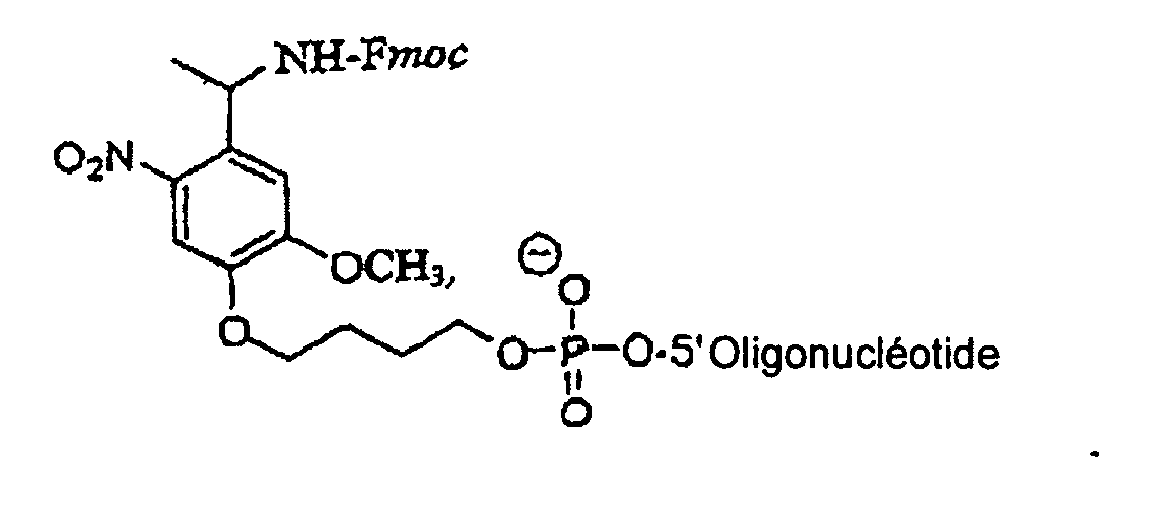
- the PC-aminotag phosphoramidite (compound 6) comprises a protected amino group linked through a methylene group to a photocleavable 1-(2-nitrophenyl)ethyl linker derivatized with N,N'-diisopropyl-2-cyanoethyl phosphoramidite.
- the present invention contemplates a "PC-X-aminotag" ( Figure 2, compound 7) which comprises an additional spacer (e.g. 6-aminocaproic acid, referred to as "X") between the amino group and the photocleavable linker.
- X additional spacer
- PC-aminotag-phosphoramidite introduces a photocleavable amino group onto the 5'end of an oligonucleotide. As such it can be used to react with a wide variety of activated surfacs and molecules, thereby facilitating the formation of many different PC-linkers and PC-markers.
- the photocleavable-aminotag phosphoramidites of the present invention can be readily used in any automated DNA/RNA synthesizer employing standard phosphoramidite chemistry (i.e. an oligonucleotide synthesis means).
- standard phosphoramidite chemistry i.e. an oligonucleotide synthesis means.
- oligonucleotides can also be used to attach synthetic oligonucleotides to activated solid supports for a variety of applications requiring immobilization and release of DNA molecules.
- the phosphodiester bond between the photocleavable linker and the phosphate is cleaved, resulting in the formation of a 5'-monophosphate on the released oligonucleotide.
- the 1-(2-nitrophenyl)ethyl moiety is converted into a 2-nitrosoacetophenone derivative and is released together with the attached marker molecule M.
- the present invention also contemplates sulfhydryltag phosphoramidites.
- the design of such compounds ( Figure 4) is similar to that for the aminotag phosphoramidites such that the photocleavable sulfhydryl group can be incorporated at the 5'-end of an oligonucleotide.
- This phosphoramidite allows for reactions with a variety of thiol-activated supports and biomolecules.
- a trityl protective group is also incorporated for protection purposes.
- the present invention contemplates photocleavable phosphoramidites comprising peptide markers.
- Peptides as markers have a number of desirable features when used as mass markers, including a large set of distinct masses which are easily resolved by MALDI-MS.
- the resulting conjugate can be used in a wide variety of applications in DNA-analysis by mass spectrometry.
- the compounds can be made using a conventional solid phase nucleic acid synthesizer (e.g. a synthesis means).
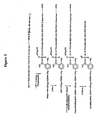
- the DNA probe is first asembled on an automated DNA synthesizer in the conventional fashion ( Figure 5).
- the amintotag phosphoramidite is incorporated at the 5' end of the sequence.
- the support is treated with base, which selectively removes the Fmoc protective group from the linker.
- an N-Fmoc protected peptide marker is introduced and an activating mixture is added, resulting in the formation of the peptide bond between the peptide marker and photocleavable linker DNA.
- Conventional cleavage and deprotection with ammonia yields the desired conjugate with a free amino group on the peptide marker.
- the present invention contemplates the detection of markers, including but not limited to peptide markers.
- the present invention contemplates detection by mass spectrometry (e.g. MALDI-MS).
- mass spectrometry e.g. MALDI-MS
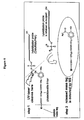
- the DNA moeity of the mass marker is hybridized to an immobilized target DNA single strand.
- the bond between the hybridization probe and the mass tag is then cleaved by the UV-MALDI desorption laser pulse ( Figure 6) and the released mass tag (e.g. an octapeptide mass tag) is detected in the mass spectrum indicating the presence of the complementary sequence of its hybridization probe.
- This method potentially offers both higher sensitivity compared to the direct detection of the DNA hybridization probe and is less prone to signal degradation due to metastable fragmentation and cation adduct formation. Furthermore, it allows for simultaneous detection of several target sequences, since peptide mass markers can be readily synthesized with easily resolvable mass differences.
- PC-nucleotides photocleavable nucleotides
- PC-tags photocleavable tags
- PCR terminal deoxynucleotidyl transferase
- T4 DNA polymerase multiple label incorporation
- T4 RNA ligase can be used to join 3'-labeled (deoxy)nucleotide 5'-monophosphate to target RNA.
- Dideoxy-PC-nucleotides can be used to end-label the products of polymerase based sequencing reactions thereby facilitating MALDI-MS based sequencing.
- Biotinamidohexanoic acid NHS ester was purchased from Sigma (St. Louis, MO), digoxigenin-X-NHS ester (digoxigenin-3-O-methylcarbonyl-(-aminocaproic acid N-hydroxysuccinimide ester) was obtained from Boehringer-Mannheim (Indianapolis, IN) and tetramethylrhodamine-X-NHS ester (6-tetramethylrhodamine-5-(and-6)-carboxamidohexanoic acid succinimidyl ester, TAMRA-X-NHS) was from Molecular Probes (Eugene, OR).
- Fmoc-NHS and N-Fmoc-6-aminocaproic acid were from Novabiochem (La Jolla, CA). 1H NMR spectra were recorded in CDC13 on a Varian Unity Plus (Palo Alto, CA) spectrometer at 400 MHz with chemical shifts ((, ppm) reported relative to a tetramethylsilane internal standard. Oligonucleotide synthesis was performed on an Applied Biosystem DNA/RNA synthesizer, model 392 (Foster City, CA).
- This example describes the synthesis of 5-N-Fmoc(aminomethyl)-1-(2-nitrophenyl)-ethanol (Figure 2, compound 4).
- this compound can be obtained from 5-bromomethyl-2-nitroacetophenone (compound 1) through a quarternization reaction with hexamethylenetetramine and decomposition of the resulting quaternary salt (compound 2) under acidic conditions.
- Crude 5-aminomethyl-2-nitroacetophenone hydrochloride (2.5 mmole) was resuspended in 12 ml of methanol and cooled in an ice bath. 48 mg (1.26 mmole, 2.0 eq.) of sodium borohydride was added in small portions with continous stirring during 10 minutes.
- This example describes the synthesis of yet another photocleavable aminotag phosphoramidite of the present invention, namely 5-N-Fmoc-(aminomethyl)-1-(2-nitrophenyl)ethyl-2-cyanoethyl-N,N-diisopropylamino-phosphoramidite (compound 6, Figure 2).
- compound 4 200mg, 0.52 mmole was dried in vacuo over P 2 O 5 for 5 hrs.
- This example describes the synthesis of an oligonucleotide comprising a photocleavable aminotag phosphoramidite, namely Compound 7 ( Figure 2).
- This compound was prepared from compound 5 (1.0 g; 1.92 mmol) N,N-diisopropylethylamine (1.3 ml; 4 eq.) and cyanoethoxy-N,N-diisopropylchlorophosphine (1.5 eq.) in 12 ml acetonitrile using a procedure similar to that described for compound 6.
- This example describes the syntheses of 5'-PC-amino-olignucleotides.
- the reaction was carried out using a commercially available synthesizer in the Trityl-On mode.
- Coupling efficiency for PC-aminotag phosphoramidites was determined by HPLC analysis of several sequences and found to be in the range 95-98%. Standard cleavage and deprotection procedures were used.
- composition of 5'-PC-amino-(dT) 7 and 5'-PC-amino-X-(dT) 7 was verified before and after photocleavage reaction by MALDI-TOF: 5'-PC-amino-(dT) 7 - 2326.3 (uncleaved) 2,148.4 (cleaved); 5'-PC-amino-X-(dT) 7 2,438.4 (uncleaved) 2,147.2 (cleaved).
- Control 5'-phosphorylated sequences were synthesized using the chemical phosphorylation reagent Phosphalink" (Applied Biosystem, Foster City, CA) according to the manufacturer's instructions.
- This example describes reactions with activated supports.
- Two oligonucleotides, 44-mer (5'-H2N-PC-GGC-CGC-TAC-CTC-TCA-(CCA)6-CTG-ATG-AGC-T-3') and 35-mer (5'-H2N-PC-CAT-CAG-(TGG)6-TGA-GAG-GTA-GC-3') were synthesized at 0.2 ⁇ mol scale with 5'-PC-aminotag modifier. These were cleaved and deprotected using standard procedures (28% NH3, 1 hr RT, 18 hrs 55 °C) and then freeze-dried.
- 6-aminohexanoic acid-NHS agarose 100 mg (Sigma, St. Louis, MO) was suspended in 300 ⁇ l of water, vortexed briefly and spin-filtered using a 0.22 ⁇ m Ultrafree MC filter (Millipore, Bedford, MA), then resuspended in 300 ⁇ l of water.
- the beads were resuspended in 300 ⁇ l of wash buffer and irradiated with near UV light for 5 minutes. After irradiation, the suspension was spin-filtered and the beads were washed with wash buffer (100 ⁇ l). The combined filtrates were then desalted on a NAP-10 column, analyzed by UV absorption spectroscopy and by denaturing PAGE.
- This example describes the detection of a peptide mass marker. All DNA syntheses were performed on an Expedite 8909 synthesizer (PerSeptive Biosystems, Framingham, MA) using phosphoramidite chemistry at either 0.2 or 1.0 ⁇ mol scale. For the preparation of photocleavable peptide-DNA mass markers, DNA was assembled in the synthesizer at 1.0 ⁇ mol scale and modified on the 5'-end with PC-Aminotag phosphoramidite. The Fmoc protective group was then removed by brief treatment with tetramethylguanidine, the support was washed with acetonitrile, dried and coupled with activated, Fmoc protected peptide for 2 h.
- the support was washed with DMF and acetonitrile, dried and then deprotected with ammonia and freeze-dried.
- the conjugate was purified to homogeneity using RP-HPLC. For this presentation 3 different mass markers were synthesized (see Table 1).
- a 0.5 - 1 ⁇ l aliquot of the bead suspension was codeposited on the target with 1-2 ⁇ l of matrix solution (dried droplet preparation).
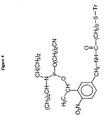
- Figure 9 schematically shows one embodiment of a synthesis scheme for a novel photocleavable aminotag phosphoramidite.
- the present invention contemplates utilizing such novel phosphoramidites in the synthesis of oligonucleotides containing such photocleavable phosphoramidites.
- acetovanillone (1) (4.1 g; 24.7 mmol) was dissolved in 20 ml of anhydrous DMF. To this solution was added methyl 4-bromobutyrate (5 g; 28 mmol) and finely powdered anhydrous K 2 CO 3 (5.13 g 37 mmol). The resulting slurry was stirred at room temperature overnight. The reaction mixture was partitioned between brine and EtOAc, and acidified with 1N HCl. The organic layer was dried and evaporated to give (2) as yellowish oil ( ⁇ 6.8g).
- the oxime (3) (8.45 g; 30.04 mmol) was dissolved in glacial acetic acid (48 ml) and to this solution was added 10% Pd/C (300 mg). The slurry was placed under vaccum for 5 min. and then connected to the hydrogen tank with ⁇ 1 atm (15 psi) pressure and stirred overnight. Another 300 mg of 10% Pd/C was added and the mixture stirred under hydrogen for another 24 hrs. The Pd/C was filtered off and the filtrate acidified with 1.2 eq. of IN HCl, followed by extraction with CHCl 3 . Filtrate was discarded and the aqeous layer evaporated to dryness under reduced pressure to give amine (4) as hydrochloride salt.
- the amine (4) (3.66 g; 13.6 mmol) was dissolved in 28 ml of pyridine and cooled in an ice bath. To this solution trifluoroacetic anhydride (2.9 ml; 20.5 mmol) was added gradually over a period of 5 minutes. The reaction mixture was stirred for additional 30 min., and then partitioned between saline and EtOAc. Organic layer was dried and evaporated to dryness to give the trifluoroacetamide (5) (4.64 g; 96.5% yield).
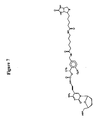
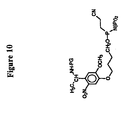
- Figure 10 shows compound 9 of Figure 9 where the protecting group is indicated generically as "PG".
Landscapes
- Chemical & Material Sciences (AREA)
- Organic Chemistry (AREA)
- Biochemistry (AREA)
- Health & Medical Sciences (AREA)
- Molecular Biology (AREA)
- Life Sciences & Earth Sciences (AREA)
- General Health & Medical Sciences (AREA)
- Engineering & Computer Science (AREA)
- Biotechnology (AREA)
- Genetics & Genomics (AREA)
- Measuring Or Testing Involving Enzymes Or Micro-Organisms (AREA)
- Cephalosporin Compounds (AREA)
- Investigating Or Analysing Biological Materials (AREA)
Claims (36)
- Composition, comprenant un phosphoramidite marqué par un groupe aminé photoclivable choisi dans le groupe des composés :


- Composition selon la revendication 1, dans laquelle ledit phosphoramidite marqué par un groupe aminé photoclivable est incorporé à l'extrémité 5' d'un oligonucléotide pour obtenir ainsi les structures :


- Composition selon la revendication 2, dans laquelle ledit oligonucléotide est immobilisé.
- Composition selon la revendication 3, dans laquelle ledit oligonucléotide est immobilisé par l'intermédiaire dudit marqueur aminé.
- Composition selon la revendication 3, dans laquelle ledit oligonucléotide est immobilisé sur une surface activée.
- Composition selon la revendication 5, dans laquelle ladite surface est la surface d'une bille.
- Composition selon la revendication 2, dans laquelle une molécule de marquage est liée audit phosphoramidite marqué par un groupe aminé.
- Composition selon la revendication 7, dans laquelle ladite molécule de marquage est choisie dans le groupe constitué par les polypeptides activés, la biotine activée, la digoxigénine activée et la tétraméthylrhodamine activée.
- Composition selon la revendication 7, dans laquelle ledit marqueur est détectable par spectrométrie.
- Composition selon la revendication 9, dans laquelle ledit marqueur est détectable par spectrométrie de masse.
- Composition, comprenant un phosphoramidite marqué par un groupe aminé photoclivable choisi dans le groupe des composés :


- Composition selon la revendication 11, dans laquelle ledit phosphoramidite marqué par un groupe aminé photoclivable est incorporé à l'extrémité 5' d'un oligonucléotide pour obtenir ainsi la structure :
- Composition selon la revendication 12, dans laquelle ledit oligonucléotide est immobilisé.
- Composition selon la revendication 13, dans laquelle ledit oligonucléotide est immobilisé par l'intermédiaire dudit marqueur aminé.
- Composition selon la revendication 13, dans laquelle ledit oligonucléotide est immobilisé sur une surface activée.
- Composition selon la revendication 15, dans laquelle ladite surface est la surface d'une bille.
- Composition selon la revendication 12, dans laquelle une molécule de marquage est liée audit phosphoramidite marqué par un groupe aminé.
- Composition selon la revendication 17, dans laquelle ladite molécule de marquage est choisie dans le groupe constitué par les polypeptides activés, la biotine activée, la digoxigénine activée et la tétraméthylrhodamine activée.
- Composition selon la revendication 17, dans laquelle ledit marqueur est détectable par spectrométrie.
- Composition selon la revendication 19, dans laquelle ledit marqueur est détectable par spectrométrie de masse.
- Composition, comprenant le sulfhydryl phosphoramidite photoclivable :

- Composition selon la revendication 21, dans laquelle ledit phosphoramidite marqué par un groupe sulfhydryle photoclivable est incorporé à l'extrémité 5' d'un oligonucléotide pour obtenir ainsi la structure :

- Composition selon la revendication 22, dans laquelle ledit oligonucléotide est immobilisé.
- Composition selon la revendication 23, dans laquelle ledit oligonucléotide est immobilisé par l'intermédiaire dudit marqueur sulfhydryle.
- Composition selon la revendication 23, dans laquelle ledit oligonucléotide est immobilisé sur une surface.
- Composition selon la revendication 25, dans laquelle ladite surface est une surface d'or.
- Composition selon la revendication 22, dans laquelle une molécule de marquage est liée audit phosphoramidite marqué par un groupe sulfhydryle.
- Composition selon la revendication 27, dans laquelle ladite molécule de marquage est choisie dans le groupe constitué par les polypeptides, la biotine, la digoxigénine et la tétraméthylrhodamine.
- Composition selon la revendication 27, dans laquelle ledit marqueur est détectable par spectrométrie.
- Composition selon la revendication 29, dans laquelle ledit marqueur est détectable par spectrométrie de masse.
- Procédé comprenant les étapes consistant à :a) fournir :i) un phosphoramidite photoclivable ;ii) un moyen de synthèse d'oligonucléotides ; etb) synthétiser un oligonucléotide avec ledit moyen de synthèse et ledit phosphoramidite photoclivable dans des conditions telles qu'un oligonucléotide ayant une extrémité 3' et une extrémité 5' est produit, dans lequel ledit phosphoramidite photoclivable est incorporé à ladite extrémité 5', dans lequel ledit phosphoramidite photoclivable est choisi parmi les composés :et un phosphoramidite marqué par un groupe sulfhydryle.


- Procédé selon la revendication 31, dans lequel ledit phosphoramidite marqué par un groupe sulfhydryle est :

- Procédé comprenant les étapes consistant à :a) fournir :i) un phosphoramidite photoclivable ;ii) un moyen de synthèse d'oligonucléotides,iii) une molécule de marquage,iv) une source de rayonnement électromagnétique ;b) synthétiser un oligonucléotide avec ledit moyen de synthèse et ledit phosphoramidite photoclivable dans des conditions telles qu'un oligonucléotide ayant une extrémité 3' et une extrémité 5' est produit, dans lequel ledit phosphoramidite photoclivable est incorporé à ladite extrémité 5' ;c) lier ladite molécule de marquage audit oligonucléotide synthétisé obtenu à l'étape (b) pour produire un complexe marqueur photoclivable/oligonucléotide ; etd) exposer ledit complexe à un rayonnement électromagnétique émis par ladite source de rayonnement électromagnétique dans des conditions telles que ledit oligonucléotide est libéré dudit marqueur, dans lequel ledit phosphoramidite photoclivable est choisi parmi les composés :et un phosphoramidite marqué par un groupe sulfhydryle.


- Procédé selon la revendication 33, dans lequel ledit phosphoramidite marqué par un groupe sulfhydryle est :

- Procédé comprenant les étapes consistant à :a) fournir :i) un phosphoramidite photoclivable ;ii) un moyen de synthèse d'oligonucléotides,iii) une surface,iv) une source de rayonnement électromagnétique ;b) synthétiser un oligonucléotide avec ledit moyen de synthèse et ledit phosphoramidite photoclivable dans des conditions telles qu'un oligonucléotide ayant une extrémité 3' et une extrémité 5' est produit, dans lequel ledit phosphoramidite photoclivable est incorporé à ladite extrémité 5' ;c) fixer ledit oligonucléotide synthétisé obtenu à l'étape (b) sur une surface pour créer un oligonucléotide immobilisé ; etd) exposer ledit oligonucléotide immobilisé à un rayonnement électromagnétique émis par ladite source de rayonnement électromagnétique dans des conditions telles que ledit oligonucléotide est libéré de ladite surface, dans lequel ledit phosphoramidite photoclivable est choisi parmi les composés :et un phosphoramidite marqué par un groupe sulfhydryle.


- Procédé selon la revendication 44, dans lequel ledit phosphoramidite marqué par un groupe sulfhydryle est :

Applications Claiming Priority (4)
| Application Number | Priority Date | Filing Date | Title |
|---|---|---|---|
| US8764198P | 1998-06-02 | 1998-06-02 | |
| US87641P | 1998-06-02 | ||
| US09/323,424 US6218530B1 (en) | 1998-06-02 | 1999-06-01 | Compounds and methods for detecting biomolecules |
| PCT/US1999/012328 WO1999067619A2 (fr) | 1998-06-02 | 1999-06-02 | Composes et procedes pour la detection de biomolecules |
Publications (3)
| Publication Number | Publication Date |
|---|---|
| EP1086251A2 EP1086251A2 (fr) | 2001-03-28 |
| EP1086251A4 EP1086251A4 (fr) | 2002-04-03 |
| EP1086251B1 true EP1086251B1 (fr) | 2007-09-12 |
Family
ID=22206377
Family Applications (1)
| Application Number | Title | Priority Date | Filing Date |
|---|---|---|---|
| EP99949531A Expired - Lifetime EP1086251B1 (fr) | 1998-06-02 | 1999-06-02 | Composés et procédés pour la détection de biomolécules |
Country Status (7)
| Country | Link |
|---|---|
| US (1) | US6218530B1 (fr) |
| EP (1) | EP1086251B1 (fr) |
| AT (1) | ATE373105T1 (fr) |
| AU (1) | AU759399B2 (fr) |
| CA (2) | CA2333987C (fr) |
| DE (1) | DE69937108T2 (fr) |
| WO (1) | WO1999067619A2 (fr) |
Families Citing this family (33)
| Publication number | Priority date | Publication date | Assignee | Title |
|---|---|---|---|---|
| US20060057565A1 (en) * | 2000-09-11 | 2006-03-16 | Jingyue Ju | Combinatorial fluorescence energy transfer tags and uses thereof |
| US9708358B2 (en) | 2000-10-06 | 2017-07-18 | The Trustees Of Columbia University In The City Of New York | Massive parallel method for decoding DNA and RNA |
| AU2001296645A1 (en) | 2000-10-06 | 2002-04-15 | The Trustees Of Columbia University In The City Of New York | Massive parallel method for decoding dna and rna |
| CA2447240C (fr) * | 2001-05-18 | 2013-02-19 | Wisconsin Alumni Research Foundation | Procede de synthese de sequences d'adn |
| WO2003006625A2 (fr) | 2001-07-13 | 2003-01-23 | Ambergen, Inc. | Compositions nucleotidiques renfermant des marqueurs photoclivables et procedes de preparation |
| US7057026B2 (en) * | 2001-12-04 | 2006-06-06 | Solexa Limited | Labelled nucleotides |
| GB0129012D0 (en) * | 2001-12-04 | 2002-01-23 | Solexa Ltd | Labelled nucleotides |
| WO2004018497A2 (fr) * | 2002-08-23 | 2004-03-04 | Solexa Limited | Nucleotides modifies |
| US11008359B2 (en) | 2002-08-23 | 2021-05-18 | Illumina Cambridge Limited | Labelled nucleotides |
| US7414116B2 (en) | 2002-08-23 | 2008-08-19 | Illumina Cambridge Limited | Labelled nucleotides |
| WO2004055160A2 (fr) * | 2002-12-13 | 2004-07-01 | The Trustees Of Columbia University In The City Of New York | Methodes de couplage biomoleculaire par cycloaddition 1,3-dipolaire |
| US20040248162A1 (en) * | 2002-12-17 | 2004-12-09 | Affymetrix, Inc. | Releasable polymer arrays |
| US20040185473A1 (en) * | 2002-12-17 | 2004-09-23 | Affymetrix, Inc. | Releasable polymer arrays |
| WO2006073436A2 (fr) * | 2004-04-29 | 2006-07-13 | The Trustees Of Columbia University In The City Of New York | Pcr a marqueur de masse permettant de proceder a un diagnostic multiplex |
| US7547775B2 (en) * | 2004-12-31 | 2009-06-16 | Affymetrix, Inc. | Parallel preparation of high fidelity probes in an array format |
| US9169510B2 (en) * | 2005-06-21 | 2015-10-27 | The Trustees Of Columbia University In The City Of New York | Pyrosequencing methods and related compositions |
| GB0517097D0 (en) | 2005-08-19 | 2005-09-28 | Solexa Ltd | Modified nucleosides and nucleotides and uses thereof |
| WO2007062105A2 (fr) * | 2005-11-21 | 2007-05-31 | The Trustees Of Columbia University In The City Of New York | Immunocapture numerique multiplex utilisant une bibliotheque de marqueurs de masse photoclivable |
| JP4984990B2 (ja) * | 2006-03-28 | 2012-07-25 | 富士通株式会社 | 機能性分子の製造方法 |
| WO2008042067A2 (fr) | 2006-09-28 | 2008-04-10 | Illumina, Inc. | Compositions et procédés de séquencage nucléotidique |
| GB2457402B (en) | 2006-12-01 | 2011-10-19 | Univ Columbia | Four-color DNA sequencing by synthesis using cleavable fluorescent nucleotide reversible terminators |
| DK2725107T3 (da) | 2007-10-19 | 2019-01-02 | Univ Columbia | DNA-sekventering med ikke-fluorescerende nukleotidreversible terminatorer og ddNTP'er modificeret med spaltbart mærke og nukleinsyre omfattende inosin med reversible terminatorer |
| WO2009051807A1 (fr) | 2007-10-19 | 2009-04-23 | The Trustees Of Columbia University In The City Of New York | Conception et synthèse de nucléotides fluorescents clivables en tant que terminateurs réversibles pour le séquençage de l'adn par synthèse |
| US20090286286A1 (en) * | 2007-11-06 | 2009-11-19 | Ambergen , Inc. | Methods for controlling amplification |
| US9347092B2 (en) * | 2009-02-25 | 2016-05-24 | Roche Molecular System, Inc. | Solid support for high-throughput nucleic acid analysis |
| US9523680B2 (en) | 2010-06-30 | 2016-12-20 | Ambergen, Inc. | Global Proteomic screening of random bead arrays using mass spectrometry imaging |
| ES2676183T3 (es) | 2010-07-02 | 2018-07-17 | Ventana Medical Systems, Inc. | Detección de dianas usando marcas de masa y espectrometría de masas |
| US9624539B2 (en) | 2011-05-23 | 2017-04-18 | The Trustees Of Columbia University In The City Of New York | DNA sequencing by synthesis using Raman and infrared spectroscopy detection |
| WO2014144883A1 (fr) | 2013-03-15 | 2014-09-18 | The Trustees Of Columbia University In The City Of New York | Molecules marquees par des amas de raman destinees a l'imagerie biologique |
| WO2014139596A1 (fr) | 2013-03-15 | 2014-09-18 | Illumina Cambridge Limited | Nucléosides ou nucléotides modifiés |
| EP3372610A1 (fr) * | 2017-03-08 | 2018-09-12 | ETH Zurich | Nouveaux réactifs de phosphorylation et leurs utilisations |
| WO2019104070A1 (fr) * | 2017-11-21 | 2019-05-31 | Nanostring Technologies, Inc. | Lieur bifonctionnel photoclivable o-nitrobenzyle |
| GB2628478A (en) | 2020-10-29 | 2024-09-25 | Ambergen Inc | Novel photocleavable mass-tags for multiplexed mass spectrometric imaging of tissues using biomolecular probes |
Family Cites Families (4)
| Publication number | Priority date | Publication date | Assignee | Title |
|---|---|---|---|---|
| US5258506A (en) * | 1984-10-16 | 1993-11-02 | Chiron Corporation | Photolabile reagents for incorporation into oligonucleotide chains |
| US5744101A (en) * | 1989-06-07 | 1998-04-28 | Affymax Technologies N.V. | Photolabile nucleoside protecting groups |
| US5986076A (en) | 1994-05-11 | 1999-11-16 | Trustees Of Boston University | Photocleavable agents and conjugates for the detection and isolation of biomolecules |
| US5643722A (en) | 1994-05-11 | 1997-07-01 | Trustees Of Boston University | Methods for the detection and isolation of proteins |
-
1999
- 1999-06-01 US US09/323,424 patent/US6218530B1/en not_active Expired - Lifetime
- 1999-06-02 EP EP99949531A patent/EP1086251B1/fr not_active Expired - Lifetime
- 1999-06-02 WO PCT/US1999/012328 patent/WO1999067619A2/fr not_active Ceased
- 1999-06-02 CA CA2333987A patent/CA2333987C/fr not_active Expired - Lifetime
- 1999-06-02 CA CA2717107A patent/CA2717107A1/fr not_active Abandoned
- 1999-06-02 AU AU62382/99A patent/AU759399B2/en not_active Ceased
- 1999-06-02 AT AT99949531T patent/ATE373105T1/de not_active IP Right Cessation
- 1999-06-02 DE DE69937108T patent/DE69937108T2/de not_active Expired - Lifetime
Also Published As
| Publication number | Publication date |
|---|---|
| DE69937108T2 (de) | 2008-06-12 |
| US6218530B1 (en) | 2001-04-17 |
| CA2333987C (fr) | 2011-01-18 |
| AU6238299A (en) | 2000-01-10 |
| WO1999067619A2 (fr) | 1999-12-29 |
| CA2717107A1 (fr) | 1999-12-29 |
| EP1086251A2 (fr) | 2001-03-28 |
| AU759399B2 (en) | 2003-04-17 |
| CA2333987A1 (fr) | 1999-12-29 |
| ATE373105T1 (de) | 2007-09-15 |
| DE69937108D1 (de) | 2007-10-25 |
| WO1999067619A3 (fr) | 2000-04-20 |
| EP1086251A4 (fr) | 2002-04-03 |
Similar Documents
| Publication | Publication Date | Title |
|---|---|---|
| EP1086251B1 (fr) | Composés et procédés pour la détection de biomolécules | |
| AU598946B2 (en) | Nucleoside derivatives | |
| Haralambidis et al. | Preparation of base-modified nucleosides suitable for non-radioactive label attachment and their incorporation into synthetic oligodeoxyribonucleotides | |
| JP2511005B2 (ja) | インビトロにおけるオリゴヌクレオチド合成法並びにそれに用いる試薬 | |
| US5656744A (en) | Methods for making nucleotide polymers using novel linking reagents | |
| EP0313219B1 (fr) | Agent de couplage non-nucléotides pour sondes nucléotides | |
| JP2710756B2 (ja) | 新規ヌクレオシドホスホルアミダイトおよびその製造方法 | |
| US20030113769A1 (en) | Aminooxy functionalized oligomers, oligomer arrays and methods of using them | |
| EP0954606B1 (fr) | Reactifs de liaison non nucleotidiques | |
| AU626305B2 (en) | Nucleoside and polynucleotide thiophosphoramidite and phosphorodithioate compounds and processes | |
| CN103889999B (zh) | 用于合成寡核糖核苷酸的离子标记 | |
| US6166239A (en) | Oligonucleotide protecting groups | |
| Guzaev et al. | Solid support synthesis of ester linked hydrophobic conjugates of oligonucleotides | |
| US5218102A (en) | Nucleic acid probe containing a terminal carbamyl linking non-radioactive labeling and preparating processes | |
| US6211354B1 (en) | Optically active DNA probe having phosphonic diester linkage | |
| JPH08511678A (ja) | 5’(oh)および/または3’(oh)部位に1以上の放射活性のない標識要素を導入するために5’(oh)および/または3’(oh)が化学的に修飾された核酸プローブ、およびそれらの製造方法 | |
| US6486313B1 (en) | Oligonucleotides having alkylphosphonate linkages and methods for their preparation | |
| JP2723360B2 (ja) | オリゴヌクレオチド−ポリアミドコンジュゲート | |
| O'Donnel et al. | The stereospecific introduction of reporter groups to oligodeoxynucleotides by the labeling of individual phosphorus diastereomers | |
| Shi | Syntheses of Fluorescent Pteridinyl Base-Containing Phosphoramidite Analogs for Use in Ribosyl Oligonucleotide Syntheses | |
| JP2000119199A (ja) | ヌクレオチドプローブ用非ヌクレオチド連結試薬 |
Legal Events
| Date | Code | Title | Description |
|---|---|---|---|
| PUAI | Public reference made under article 153(3) epc to a published international application that has entered the european phase |
Free format text: ORIGINAL CODE: 0009012 |
|
| 17P | Request for examination filed |
Effective date: 20001218 |
|
| AK | Designated contracting states |
Kind code of ref document: A2 Designated state(s): AT BE CH CY DE DK ES FI FR GB GR IE IT LI LU MC NL PT SE |
|
| RIC1 | Information provided on ipc code assigned before grant |
Free format text: 7C 12Q 1/68 A, 7C 12P 19/34 B, 7C 07H 19/00 B, 7C 07H 21/00 B, 7C 07H 21/02 B, 7C 07H 21/04 B |
|
| RIC1 | Information provided on ipc code assigned before grant |
Free format text: 7C 12Q 1/68 A, 7C 12P 19/34 B, 7C 07H 19/00 B, 7C 07H 21/00 B, 7C 07H 21/02 B, 7C 07H 21/04 B, 7C 07F 9/24 B |
|
| A4 | Supplementary search report drawn up and despatched |
Effective date: 20020218 |
|
| AK | Designated contracting states |
Kind code of ref document: A4 Designated state(s): AT BE CH CY DE DK ES FI FR GB GR IE IT LI LU MC NL PT SE |
|
| GRAP | Despatch of communication of intention to grant a patent |
Free format text: ORIGINAL CODE: EPIDOSNIGR1 |
|
| RTI1 | Title (correction) |
Free format text: COMPOUNDS AND METHODS FOR DETECTING BIOMOLECULES |
|
| GRAS | Grant fee paid |
Free format text: ORIGINAL CODE: EPIDOSNIGR3 |
|
| GRAA | (expected) grant |
Free format text: ORIGINAL CODE: 0009210 |
|
| AK | Designated contracting states |
Kind code of ref document: B1 Designated state(s): AT BE CH CY DE DK ES FI FR GB GR IE IT LI LU MC NL PT SE |
|
| REG | Reference to a national code |
Ref country code: GB Ref legal event code: FG4D |
|
| REG | Reference to a national code |
Ref country code: CH Ref legal event code: EP |
|
| REF | Corresponds to: |
Ref document number: 69937108 Country of ref document: DE Date of ref document: 20071025 Kind code of ref document: P |
|
| REG | Reference to a national code |
Ref country code: IE Ref legal event code: FG4D |
|
| RAP2 | Party data changed (patent owner data changed or rights of a patent transferred) |
Owner name: AMBERGEN, INC. |
|
| REG | Reference to a national code |
Ref country code: CH Ref legal event code: NV Representative=s name: TROESCH SCHEIDEGGER WERNER AG |
|
| PG25 | Lapsed in a contracting state [announced via postgrant information from national office to epo] |
Ref country code: FI Free format text: LAPSE BECAUSE OF FAILURE TO SUBMIT A TRANSLATION OF THE DESCRIPTION OR TO PAY THE FEE WITHIN THE PRESCRIBED TIME-LIMIT Effective date: 20070912 |
|
| NLT2 | Nl: modifications (of names), taken from the european patent patent bulletin |
Owner name: AMBERGEN, INC. Effective date: 20071128 |
|
| PG25 | Lapsed in a contracting state [announced via postgrant information from national office to epo] |
Ref country code: AT Free format text: LAPSE BECAUSE OF FAILURE TO SUBMIT A TRANSLATION OF THE DESCRIPTION OR TO PAY THE FEE WITHIN THE PRESCRIBED TIME-LIMIT Effective date: 20070912 |
|
| NLV1 | Nl: lapsed or annulled due to failure to fulfill the requirements of art. 29p and 29m of the patents act | ||
| PG25 | Lapsed in a contracting state [announced via postgrant information from national office to epo] |
Ref country code: BE Free format text: LAPSE BECAUSE OF FAILURE TO SUBMIT A TRANSLATION OF THE DESCRIPTION OR TO PAY THE FEE WITHIN THE PRESCRIBED TIME-LIMIT Effective date: 20070912 |
|
| PG25 | Lapsed in a contracting state [announced via postgrant information from national office to epo] |
Ref country code: NL Free format text: LAPSE BECAUSE OF FAILURE TO SUBMIT A TRANSLATION OF THE DESCRIPTION OR TO PAY THE FEE WITHIN THE PRESCRIBED TIME-LIMIT Effective date: 20070912 Ref country code: GR Free format text: LAPSE BECAUSE OF FAILURE TO SUBMIT A TRANSLATION OF THE DESCRIPTION OR TO PAY THE FEE WITHIN THE PRESCRIBED TIME-LIMIT Effective date: 20071213 Ref country code: ES Free format text: LAPSE BECAUSE OF FAILURE TO SUBMIT A TRANSLATION OF THE DESCRIPTION OR TO PAY THE FEE WITHIN THE PRESCRIBED TIME-LIMIT Effective date: 20071223 |
|
| PG25 | Lapsed in a contracting state [announced via postgrant information from national office to epo] |
Ref country code: PT Free format text: LAPSE BECAUSE OF FAILURE TO SUBMIT A TRANSLATION OF THE DESCRIPTION OR TO PAY THE FEE WITHIN THE PRESCRIBED TIME-LIMIT Effective date: 20080212 |
|
| PG25 | Lapsed in a contracting state [announced via postgrant information from national office to epo] |
Ref country code: SE Free format text: LAPSE BECAUSE OF FAILURE TO SUBMIT A TRANSLATION OF THE DESCRIPTION OR TO PAY THE FEE WITHIN THE PRESCRIBED TIME-LIMIT Effective date: 20071212 |
|
| PLBE | No opposition filed within time limit |
Free format text: ORIGINAL CODE: 0009261 |
|
| STAA | Information on the status of an ep patent application or granted ep patent |
Free format text: STATUS: NO OPPOSITION FILED WITHIN TIME LIMIT |
|
| PG25 | Lapsed in a contracting state [announced via postgrant information from national office to epo] |
Ref country code: DK Free format text: LAPSE BECAUSE OF FAILURE TO SUBMIT A TRANSLATION OF THE DESCRIPTION OR TO PAY THE FEE WITHIN THE PRESCRIBED TIME-LIMIT Effective date: 20070912 |
|
| 26N | No opposition filed |
Effective date: 20080613 |
|
| PG25 | Lapsed in a contracting state [announced via postgrant information from national office to epo] |
Ref country code: MC Free format text: LAPSE BECAUSE OF NON-PAYMENT OF DUE FEES Effective date: 20080630 |
|
| PG25 | Lapsed in a contracting state [announced via postgrant information from national office to epo] |
Ref country code: IE Free format text: LAPSE BECAUSE OF NON-PAYMENT OF DUE FEES Effective date: 20080602 |
|
| PG25 | Lapsed in a contracting state [announced via postgrant information from national office to epo] |
Ref country code: CY Free format text: LAPSE BECAUSE OF FAILURE TO SUBMIT A TRANSLATION OF THE DESCRIPTION OR TO PAY THE FEE WITHIN THE PRESCRIBED TIME-LIMIT Effective date: 20070912 |
|
| PG25 | Lapsed in a contracting state [announced via postgrant information from national office to epo] |
Ref country code: LU Free format text: LAPSE BECAUSE OF NON-PAYMENT OF DUE FEES Effective date: 20080602 |
|
| PG25 | Lapsed in a contracting state [announced via postgrant information from national office to epo] |
Ref country code: IT Free format text: LAPSE BECAUSE OF NON-PAYMENT OF DUE FEES Effective date: 20080630 |
|
| PGFP | Annual fee paid to national office [announced via postgrant information from national office to epo] |
Ref country code: CH Payment date: 20140626 Year of fee payment: 16 Ref country code: DE Payment date: 20140625 Year of fee payment: 16 |
|
| REG | Reference to a national code |
Ref country code: DE Ref legal event code: R119 Ref document number: 69937108 Country of ref document: DE |
|
| REG | Reference to a national code |
Ref country code: CH Ref legal event code: PL |
|
| PG25 | Lapsed in a contracting state [announced via postgrant information from national office to epo] |
Ref country code: CH Free format text: LAPSE BECAUSE OF NON-PAYMENT OF DUE FEES Effective date: 20150630 Ref country code: DE Free format text: LAPSE BECAUSE OF NON-PAYMENT OF DUE FEES Effective date: 20160101 Ref country code: LI Free format text: LAPSE BECAUSE OF NON-PAYMENT OF DUE FEES Effective date: 20150630 |
|
| PG25 | Lapsed in a contracting state [announced via postgrant information from national office to epo] |
Ref country code: FR Free format text: LAPSE BECAUSE OF FAILURE TO SUBMIT A TRANSLATION OF THE DESCRIPTION OR TO PAY THE FEE WITHIN THE PRESCRIBED TIME-LIMIT Effective date: 20070912 |
|
| PGFP | Annual fee paid to national office [announced via postgrant information from national office to epo] |
Ref country code: GB Payment date: 20180620 Year of fee payment: 20 |
|
| REG | Reference to a national code |
Ref country code: GB Ref legal event code: PE20 Expiry date: 20190601 |
|
| PG25 | Lapsed in a contracting state [announced via postgrant information from national office to epo] |
Ref country code: GB Free format text: LAPSE BECAUSE OF EXPIRATION OF PROTECTION Effective date: 20190601 |